





Hida Takayama, Gifu Prefecture] Held in spring and fall! The Takayama Festival, with its gorgeous stalls, is a must-see event!

![Hida Takayama, Gifu Prefecture] Held in spring and fall! The Takayama Festival, with its gorgeous stalls, is a must-see event!](https://hoshinoresorts.com/guide/wp-content/uploads/2025/10/578_秋の高山祭(祭屋台)16-1024x769.jpg)
The Takayama Festival, held annually on April 14 and 15 and October 9 and 10 in Takayama City, Gifu Prefecture, is a historic festival representing Japan, designated as an Important Intangible Folk Cultural Property of Japan and registered as a UNESCO Intangible Cultural Heritage.
The festival is one of the three most beautiful festivals in Japan, along with Kyoto's Gion Festival and Saitama's Chichibu Night Festival, and its majestic floats are as fascinating as "moving works of art. The spring and fall Takayama Festivals are known as two of the best float festivals in Japan, and here are some of the highlights of each.
The Takayama Festival is held in spring and fall, dividing the former Takayama Castle Town in two, from north to south.
22.jpg)
The Takayama Festival is said to have originated in the late 16th or 17th century. It is the collective name for two festivals, the Sanno Matsuri and the Hachiman Matsuri, both of which take place in the former Takayama Castle Town, where the traditional townscape still remains.
The spring Takayama Festival (Sanno Matsuri), held on April 14 and 15, is an annual festival of Hie Shrine, the guardian deity of the southern half of the former Takayama Castle Town. On the other hand, the autumn Takayama Festival (Hachiman Festival) held on October 9 and 10 is an annual festival of Sakurayama Hachimangu Shrine, the guardian deity of the northern half of the town.
In both spring and fall, the star of the festival is a large float called a "yatai. The 23 yatai, 12 for the Sanno Festival and 11 for the Hachiman Festival, each with its own unique flavor, are typical of the festival floats that developed in the late Edo period (1603-1868) and were designated as National Important Tangible Folk Cultural Properties in 1960.
Furthermore, the Takayama Matsuri yatai event was designated as a National Important Intangible Folk Cultural Property in 1979 (Showa 54), and in 2016 (Heisei 28), together with 32 other festivals throughout Japan, it was registered as a UNESCO Intangible Cultural Heritage as "Yama, Hoko, Yatai events" and recognized as a world property.
12.jpg)
The Takayama Festival's yatai began as a kaguradai at the Hachiman Festival in 1708. More than 40 years later, the Sanno Festival yatai is said to have appeared. The evolution of the Edo style yatai into the gorgeous yatai of today is attributed to the strong belief of the yataigumi, a local community organization, that "their yatai is a treasure. They repaired their yatai after each fire or damage, and added designs and decorations so that they would not be outdone by other yatai groups.
The beautiful yatai, decorated with elaborate carvings, lacquering, and ornaments, was completed by the masterful skills of Hida craftsmen supported by wealthy merchants and masters. The appearance of the yatai is also known as the "moving Yangmyongmon.
25.jpg)
The Takayama Festival is a great opportunity to see these traditional yatai up close and personal. Let us introduce the different attractions and highlights of the spring and fall festivals.
The spring Takayama Festival (Sanno Festival) is decorated with elegant cherry blossoms.
5.jpg)
The first is the Sanno Festival, which heralds the arrival of spring in Takayama, and is held on April 14 and 15, coinciding with the blooming of the cherry blossoms, and attracting many tourists. The sight of magnificent floats crossing the vermilion-lacquered Naka Bridge is breathtaking.
Yatai Hikisarae (parade of floats)
18.jpg)
During the Sanno Festival, an annual festival of Hie Shrine, as many as 12 gorgeous and gorgeous floats appear on the south side of Yasukawa Street in Kamimachi. Four of the floats, including a kagura-dai, are presented at the Otabisho (a place of worship) located at the foot of the Naka-bashi (middle bridge).
The other floats will be pulled along Shinmei-cho Street on the 14th and Kami-Ichinomachi to Kami-Ninomachi and Sanmachi Streets on the 15th. This is a rare opportunity to view the beautiful designs of the yatai up close.
Karakuri dedication
14.jpg)
Karakuri dedication is a traditional dedication event in which karakuri dolls on the floats are manipulated by skilled rope-walkers to perform delicate and skillful dances and tricks.
During the spring Takayama Festival, three of the 12 yatai, Sanbaso, Shakkyo-tai, and Ryujin-tai, perform karakuri dedication in turn in the plaza in front of the Otabisho.
First, Sanbaso manipulates the puppets to the sounds of the play "Urashima. The audience was thrilled to see the puppet's rapid transformation from the face of a child to that of an old man in an instant. On the Ishibashidai, a beautiful dancing woman's uchikake (a type of kimono) flips open and she is transformed into a raging lioness. The powerful scene was a sight to behold. Finally, there is the Dragon God Stand. When the dragon god leaps out of the jar held by Karako and performs a wild dance, the area in front of the camp is filled with applause.
Goshunko (procession)
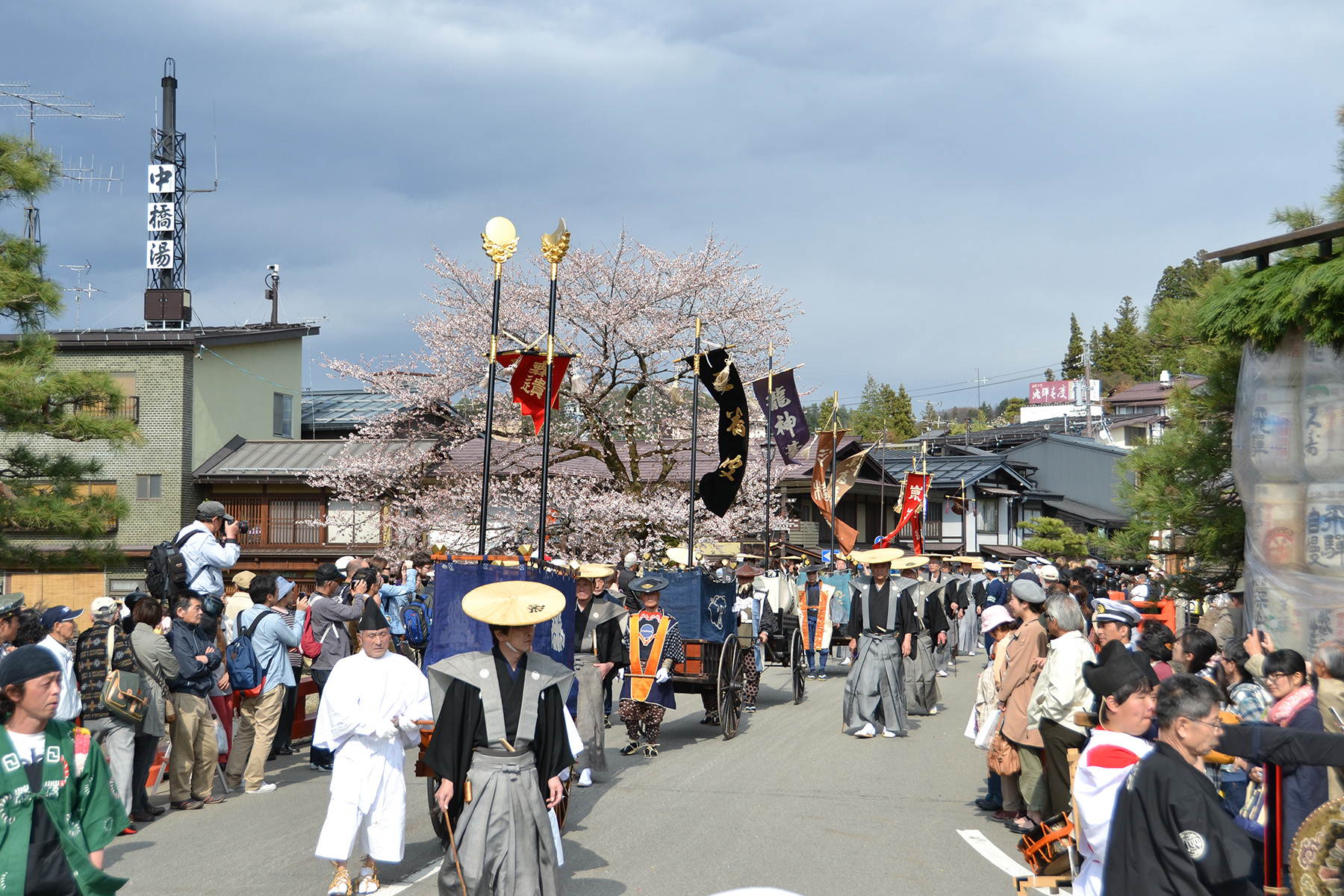
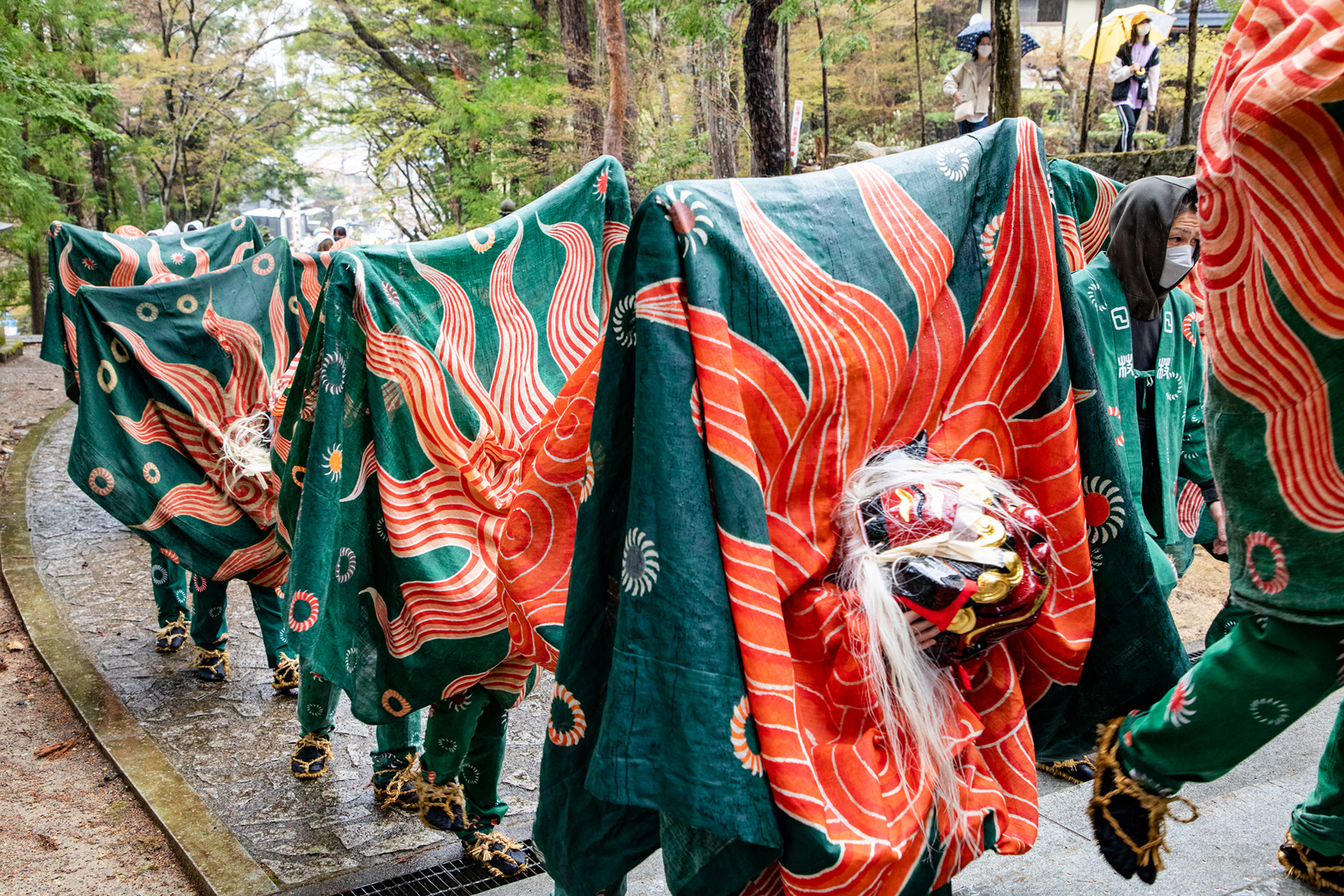
The portable shrine is the center of a lion dance and cockfighting music, Kamishimo (Kamishimo) dressed in kamishimo (ceremonial samurai costume) and others. The procession of several hundred people, including the portable shrine, lion dancers, cockfighting troupes, and guards in kamishimo (ceremonial dress), is as spectacular as a picture scroll. The procession is as gorgeous as a picture scroll, The procession slowly makes its way through the festival area.
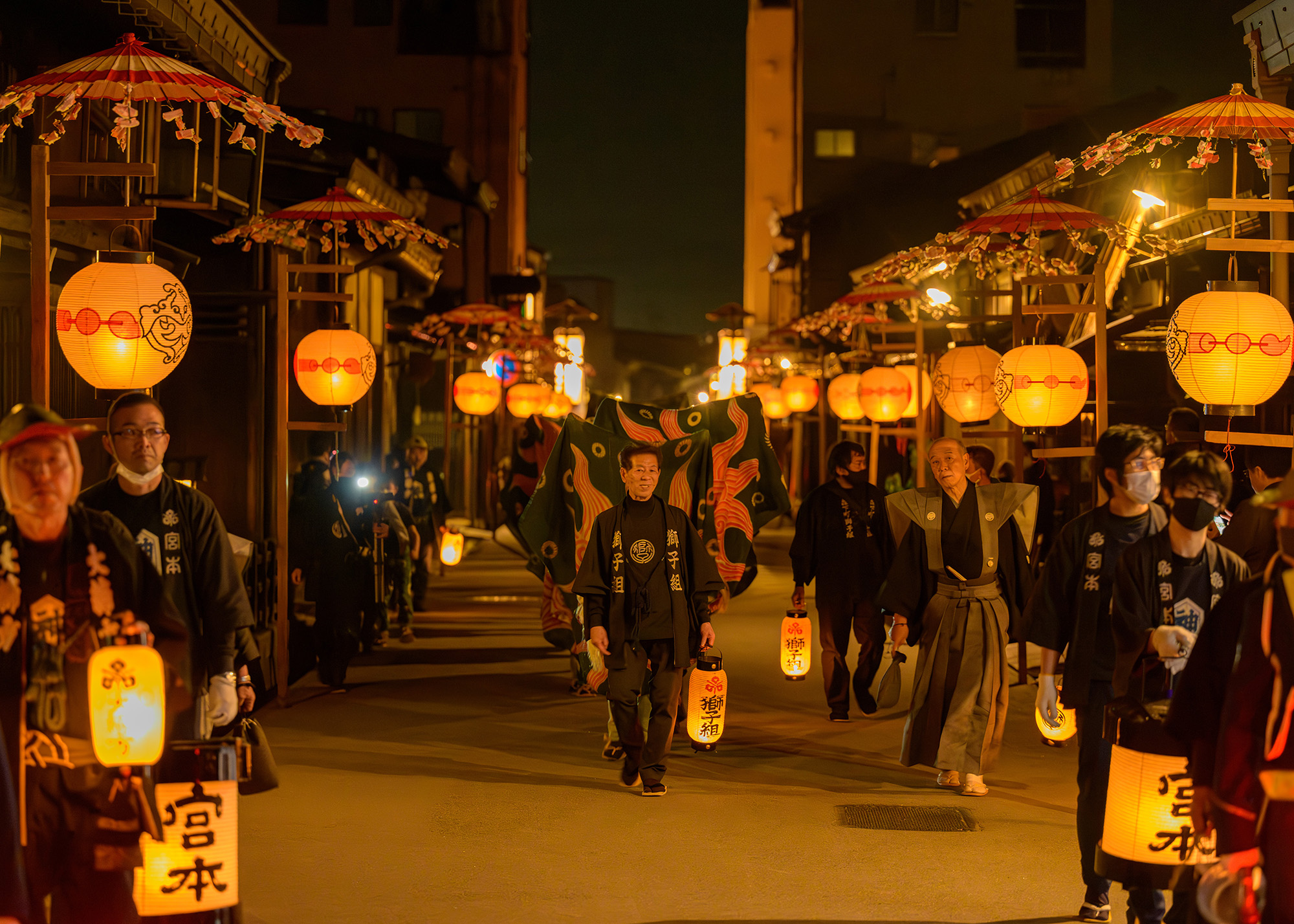
In front of the houses of Ujiko (shrine parishioners), each stall group is decorated with lanterns and Japanese umbrellas of different designs, adding to the atmosphere of the festival. After sunset, the lanterns are lit by candles, creating a fantastic atmosphere.
Night festival
28.jpg)
The night festival on the evening of the 14th is a different world of fantasy from that of the daytime. The festival's countless lantern-lit stalls tour around the town, creating a graceful coexistence with the nighttime cherry blossoms. When they pass the Jundojo, the traditional Hiki-Farewell song "Takakayama" echoes, and the floats return to their respective yatai warehouses.
30.jpg)
Spring Takayama Matsuri (Sanno Matsuri) events and schedules (previous years)
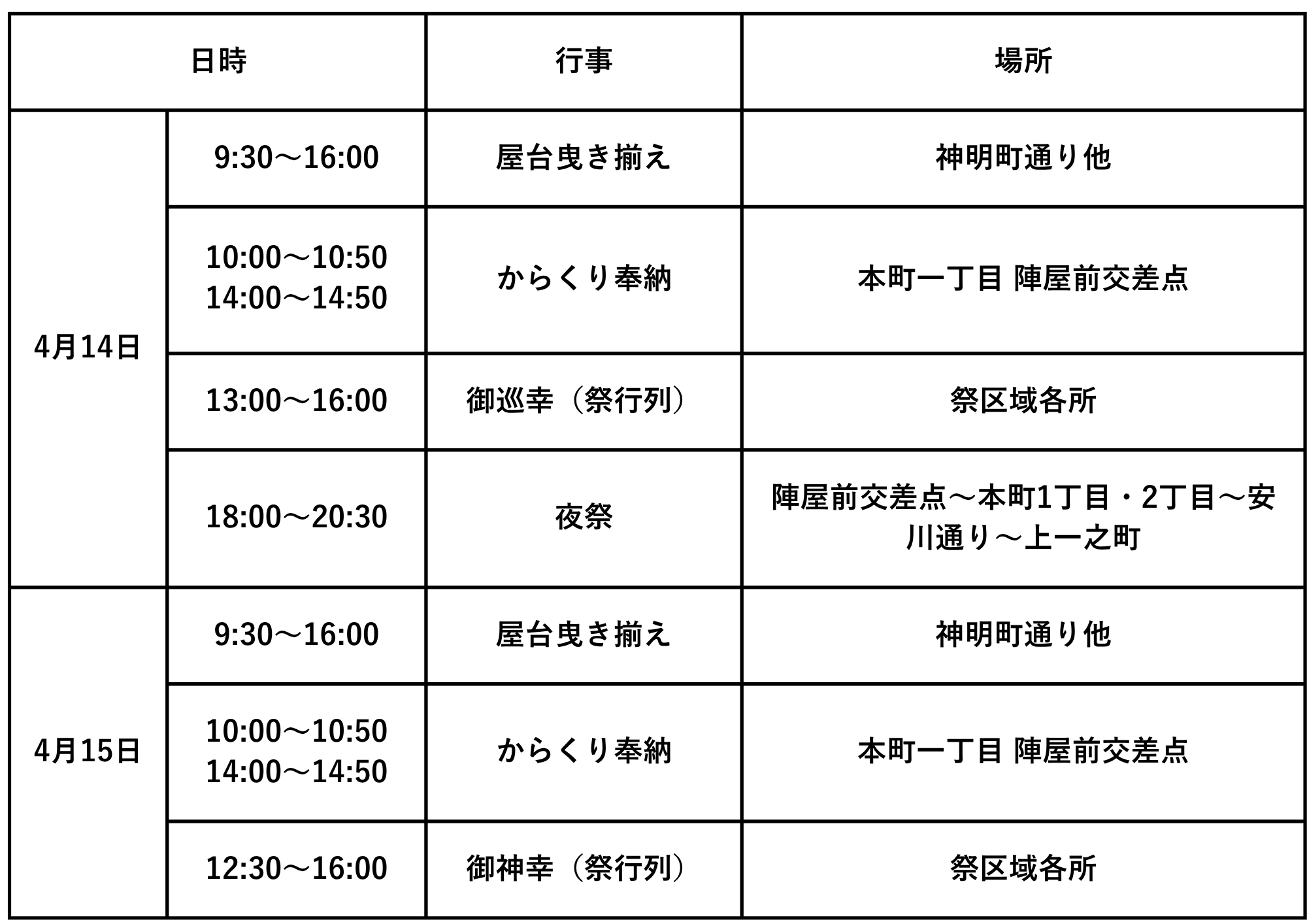
In the event of rain, the yatai pulling procession and karakuri dedication will be held at the respective yatai warehouses, The night festival will be canceled.
Spring Takayama Festival (Sanno Matsuri )
Venue: Around Hie Shrine
Period: April 14-15
TEL: 0577-35-3156 (Takayama Yatai Preservation Association Office, Cultural Properties Division, Takayama City Board of Education)
3. Experience the dynamic atmosphere of the festival. The autumn Takayama Festival (Hachiman Festival), where yatai floats are pulled around
The Hachiman Festival, which colors Hida Takayama in autumn, is held at the Sakurayama Hachiman Shrine, the guardian deity of the northern half of the former Takayama Castle Town. The "Yatai Hikimawashi," in which 11 floats parade through the town, is a special autumn event that is not held in the spring. The town is filled with excitement and splendor for two days, including the historical "Goshinko" and the fantastic "Yoimatsuri".
Yatai Hikisarae (parade of floats)
10.jpg)
The spectacle of "Yatai Hiki-agerei," in which 11 yatai floats line up at Sakurayama Hachimangu Shrine under the autumn sky, is truly a sight to behold.
On both the 9th and 10th, the only yatai decorated with karakuri dolls, the "Hotei-tai", will be located on the grounds of the shrine, while the others will be lined up along the main approach. The people surrounding the floats are in awe of the carvings on the floats, the large farewell curtain that adorns the rear of the float, and the detailed structure of the float.
Karakuri dedication
30.jpg)
In the precincts of Hachimangu Shrine, a "Karakuri Dedication" will be performed by a "Hotei" (a stand for a machete) with Karakuri dolls on it.
The highlight of the festival is the scene in which the male and female karako (children) walk across the three trapeze bars, spinning like gymnasts on a giant wheel, and finally jump onto the shoulders of Hotei-sama (the god of war). The nine Tsunagata puppeteers manipulate 36 strings, and the lively movements of the puppets are unforgettably entrancing.
Goshinko (procession)
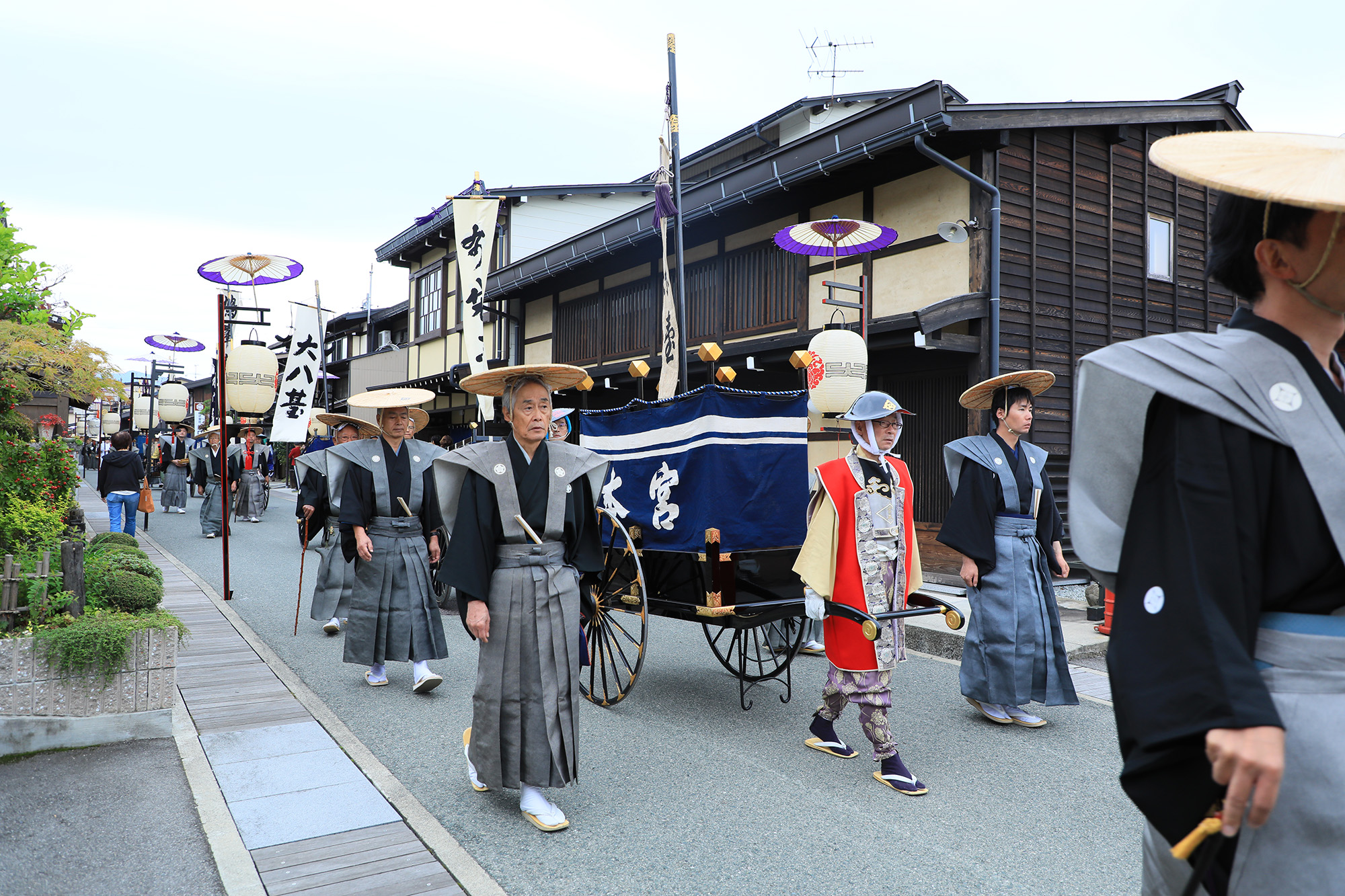
The procession of the portable shrine is called "Gojunko" in the spring Takayama Festival and "Goshinko" in the autumn Takayama Festival.
During the Goshinko, which is believed to be a two-day and one-night journey by the gods to pray for the prosperity of the local shrine parishioners, hundreds of people in traditional costumes parade through the town, including a "tokeiraku," or cockfighting band that plays a gong and shimedaiko while marching, and "kamishimo," or guards wearing a kamishimo (ceremonial samurai costume). The sight of the parade, accompanied by the sounds of gagaku (traditional Japanese court music), is like stepping back in time to the Edo period.
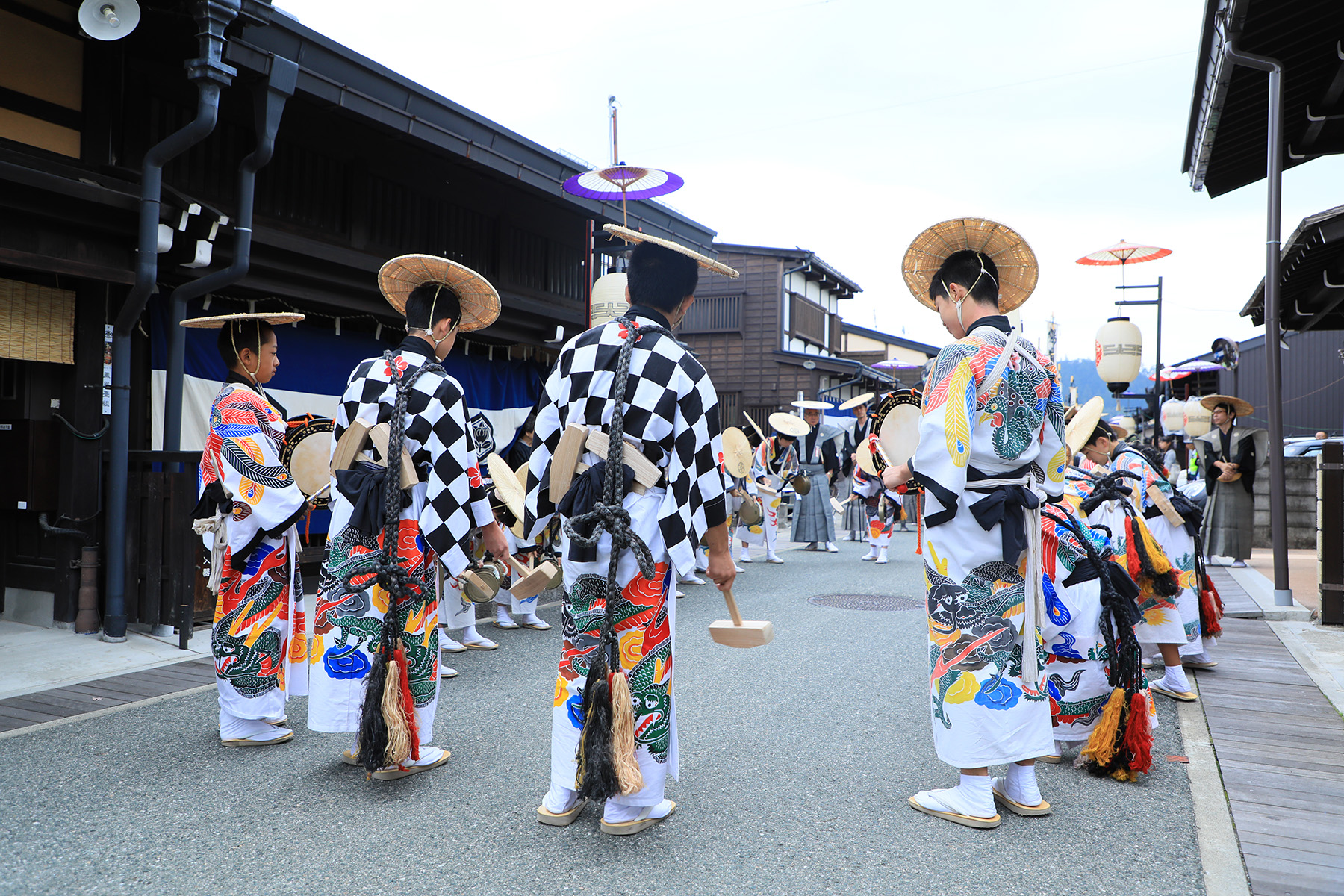
Yatai Hikimawashi (festival floats)
18.jpg)
On the afternoon of the 9th, a special event called "Yatai Hikimiyoshi," which is not held during the spring Takayama Festival, is held. A total of four floats (Kagura-dai, Ho-oh-dai, and two other floats selected by lottery that year) make their way around the festival area from the main approach to the Sakurayama Hachiman Shrine.
Not only will you be able to see the elaborate carvings and lacquered decorations up close, but you will also be able to appreciate the beauty of their calculated and graceful movements. This is a unique autumn highlight that allows visitors to directly experience the dynamism of the festival.
Yoimatsuri (evening festival)
37.jpg)
The "night festival" event of the spring Takayama Matsuri is known as the "Yoimatsuri" of the autumn Takayama Matsuri. When the sun goes down, After sunset, about 100 lantern-lit floats make a slow parade through the town. The daytime splendor of the festival is contrasted by the ethereal world of the yatai floats.
When the yatai reach the Jun Dojo, the floats go to their respective yatai warehouses while singing the "Takaku Yama" Hiki-Farewell Song. The swaying lanterns float in the darkness, creating a nostalgic scene.
45.jpg)
Hachiman Festival (autumn Takayama Festival) events and schedule (2025)
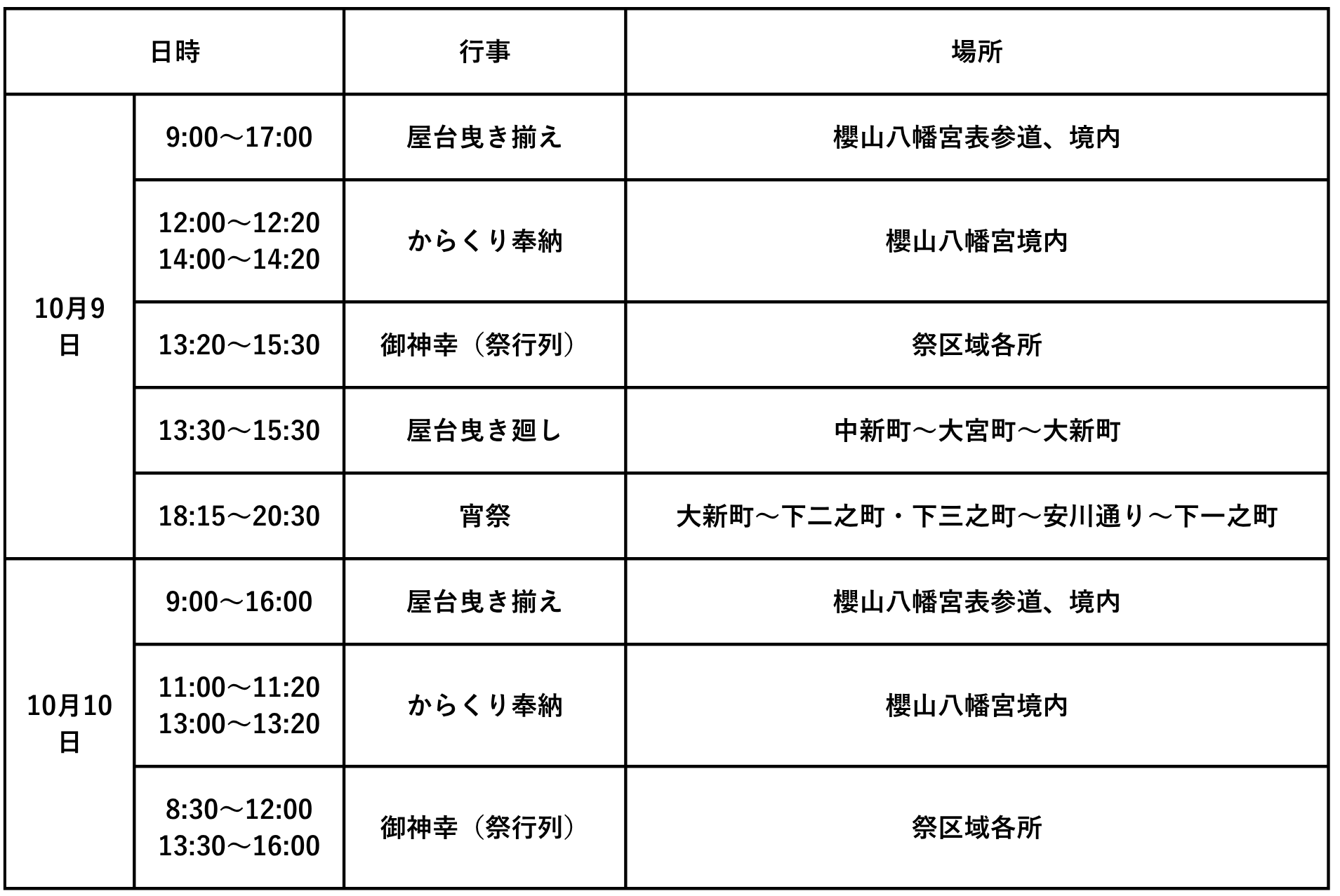
In the event of rain, the yatai pull-out procession is unveiled at the yatai warehouses and yatai halls. Karakuri Dedication, Yatai Pulling parade, yatai-pulling The Yoimatsuri is canceled, Yoimatsuri will be cancelled.
Autumn Takayama Festival "Hachiman Festival
Venue: Around Sakurayama Hachimangu Shrine
Period: October 9-10
TEL: 0577-35-3156 (Takayama Yatai Preservation Association Office, Cultural Properties Division, Takayama City Board of Education)
4. View real yatai outside of the festival period at the Takayama Matsuri Yatai Kaikan.
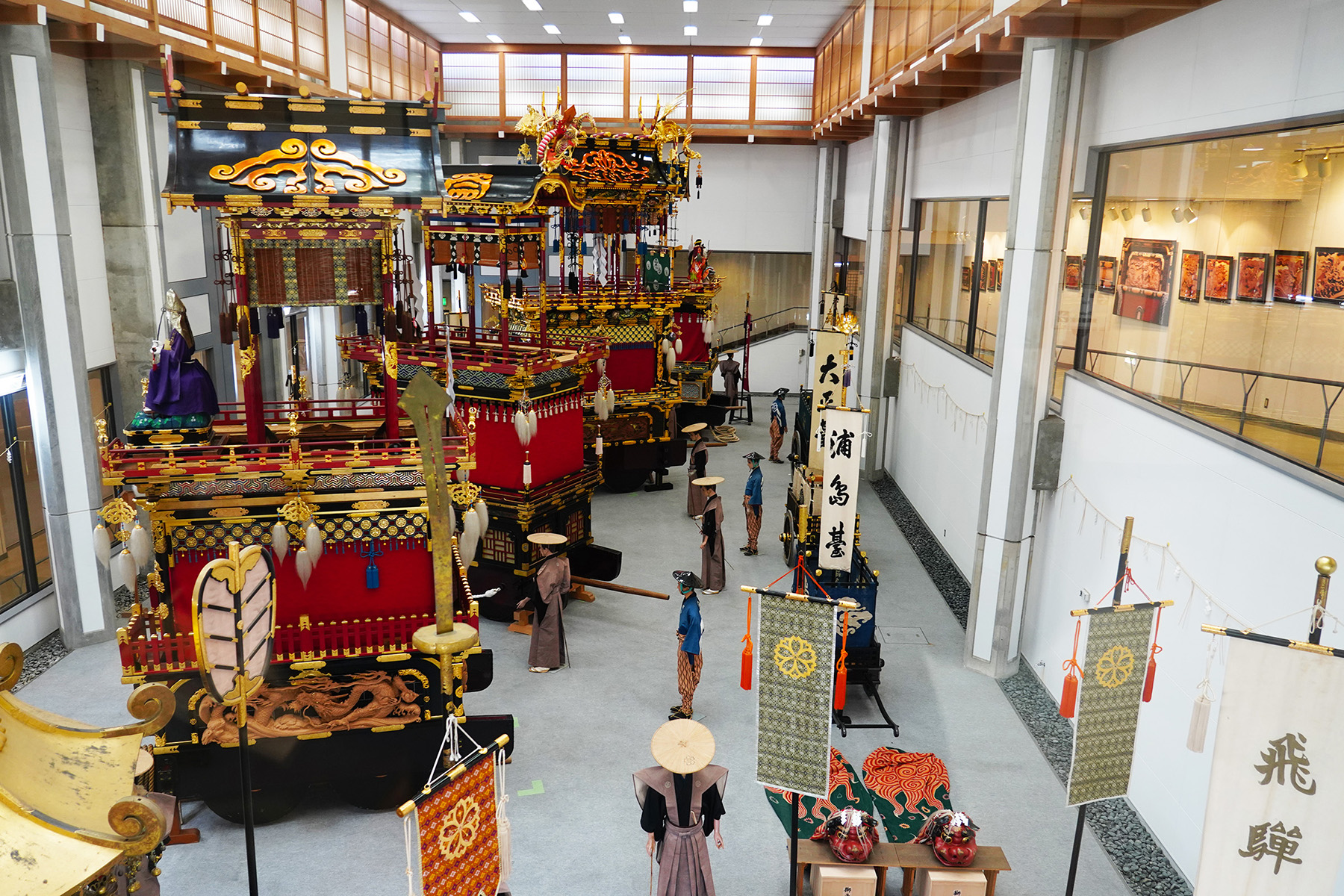
The Takayama Matsuri Yatai Kaikan, located within the precincts of Sakurayama Hachimangu Shrine, permanently exhibits an octagonal-shaped portable shrine and the yatai actually used in the festival. Visitors can appreciate the magnificent craftsmanship of Hida's masters by taking a closer look at the elegant decorations. This is a spot where you can experience the history and culture of the Takayama Matsuri and learn more about its charms.
- Takayama Matsuri Yatai Kaikan
-
 Sakurayama Hachimangu Shrine, 178 Sakura-machi, Takayama City, Gifu Prefecture MAP
 Approximately 7 minutes by car from JR Takayama Station
 Take a bus from JR Takayama Station Hakusan Exit, get off at "Daishinmachi 2-chome" and walk about 4 minutes.
 9:00-17:00 (December-February: ~16:30)
 Adults 1,000 yen, elementary/junior high school students 500 yen
 0577-32-5100
 Charged (300 yen per hour)
Hot spring ryokan "KAI Okuhida" KAI Okuhida, a hot spring ryokan surrounded by the traditional crafts of Hida
.jpg)
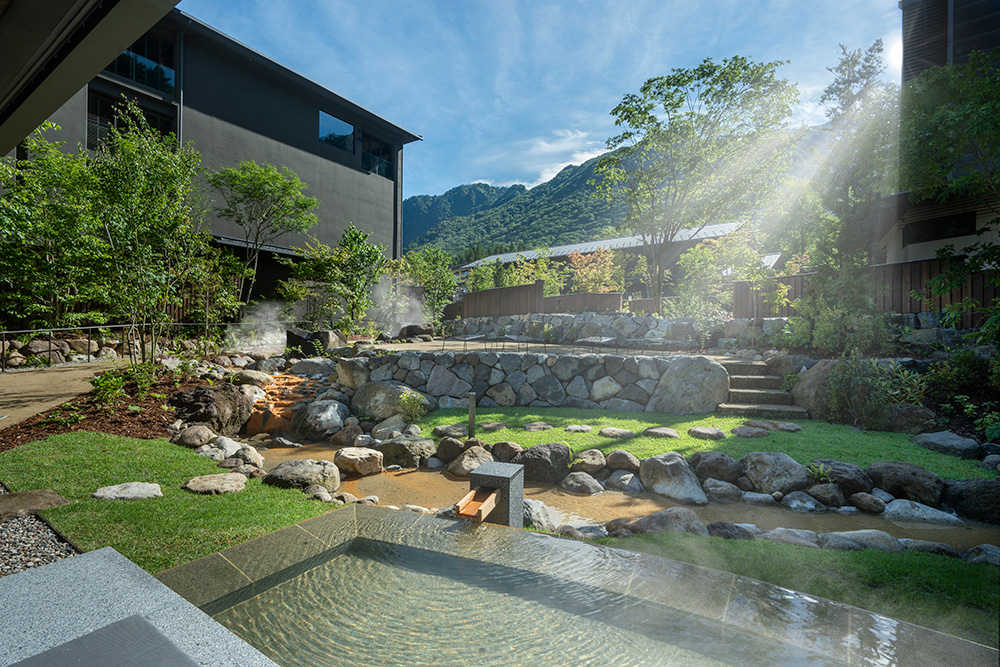
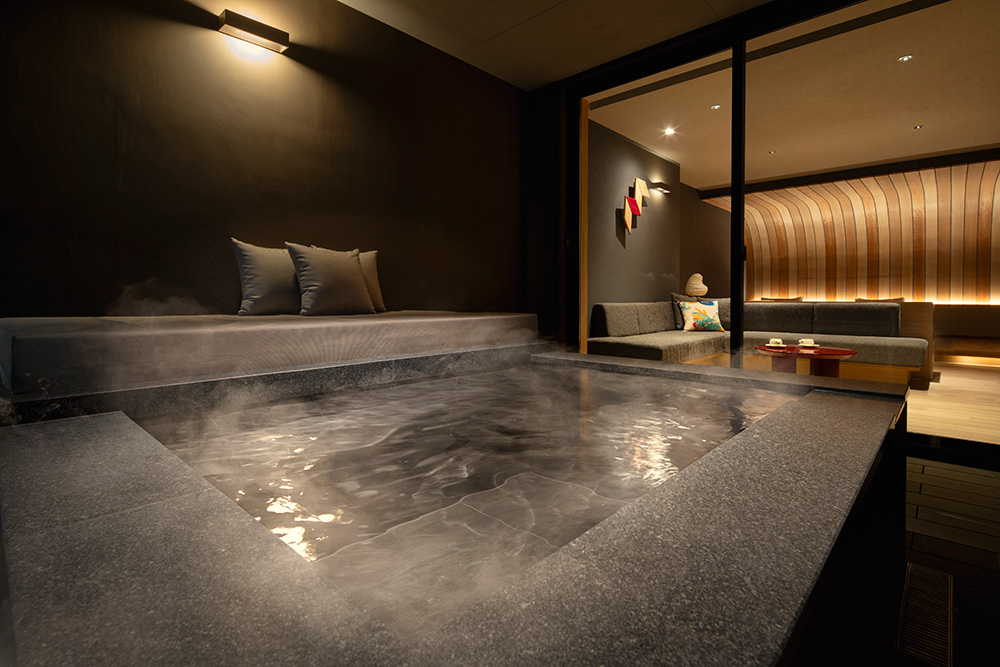
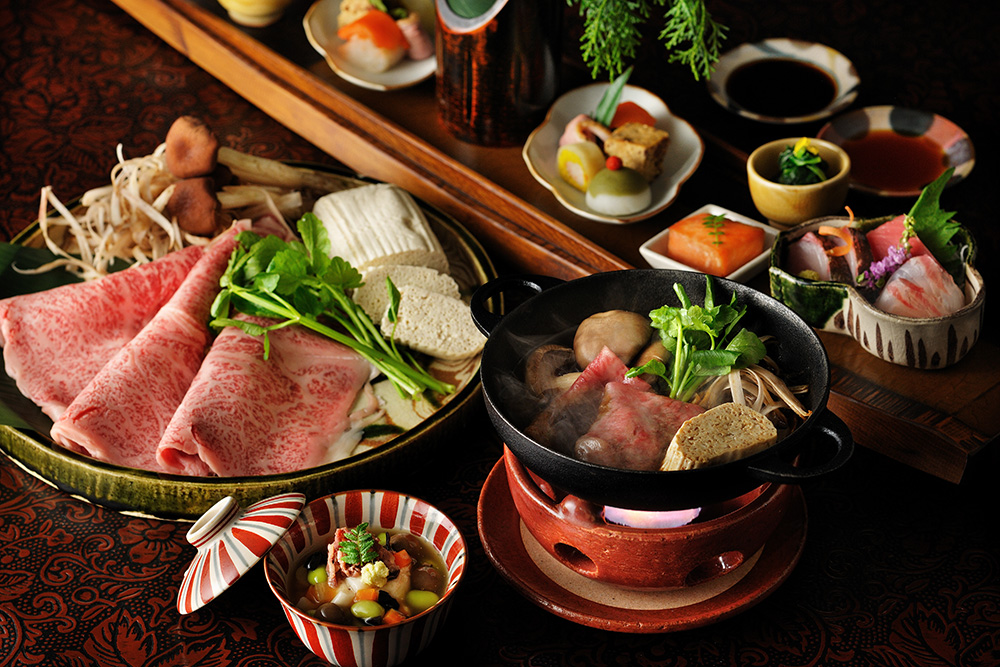
After enjoying the Takayama Festival to your heart's content, why not extend your visit to Okuhida Hot Spring Resort at the foot of the Northern Alps? Hoshino Resorts KAI Okuhida, located in the mountains about 45 minutes by car from the festival site, is an artistic and warm hot spring hotel that incorporates traditional Hida crafts into a modern style.
Relax your body and soul in the mountain hot springs, and enjoy the lingering memories of the festival while experiencing the artisanal craftsmanship that lives on within the hotel.

Local Guide who was in charge of this article
Hoshino Resorts KAI Okuhida
Okuhida Hot Spring Village, Gifu Prefecture
Located in Okuhida Hot Spring Village, which boasts one of the largest hot springs in Japan and is nestled in the bosom of the Northern Alps, this modern inn features beautiful natural woodworking by Hida wood craftsmen.
-1-1.jpg)
Access by bus Take a local bus from JR Takayama Station, get off at Hirayu Bus Terminal, and walk 3 minutes.
- Example of Accommodation Rates
- 1 person per night From 21,000 yen