





[2025 year edition] 6 elections of recommendation spot of colored leaves in Kaga and Komatsu area
![[2025 year edition] 6 elections of recommendation spot of colored leaves in Kaga and Komatsu area](https://hoshinoresorts.com/guide/wp-content/uploads/2023/09/加賀_紅葉_江沼神社-main-1024x683.jpg)
Kaga and Komatsu area located in the south in Ishikawa Prefecture . It's also this area that "Nata-dera" popular with "Senkei Tsuru" who takes pride in his best canyon's beauty and a visit to Japan foreigner, too has Hokuriku area. It's the area which flooded charm through one year, but it's possible to pray the superb view which is to the extent itself is difficult to devote to an explanation time of the colored leaves, in particular at each place. I'll introduce 6 spots I'd like to visit in colored leaves season at Kaga and Komatsu area by this article.
Kaga (hot spring in the mountains and Daisho-ji) area
- 1Senkei Tsuru (Kei who can't hide it)
- 2Fuji sha KE mountain (By FUJI SHA, hold.)
- 3Cultural house of Mt. Kyuuya-Fukada
- 4Enuma shrine
Komatsu area
Kaga (hot spring in the mountains and Daisho-ji) area
1Senkei Tsuru (Kei who can't hide it)
It's a riverbed after walk of colored leaves, sweets.
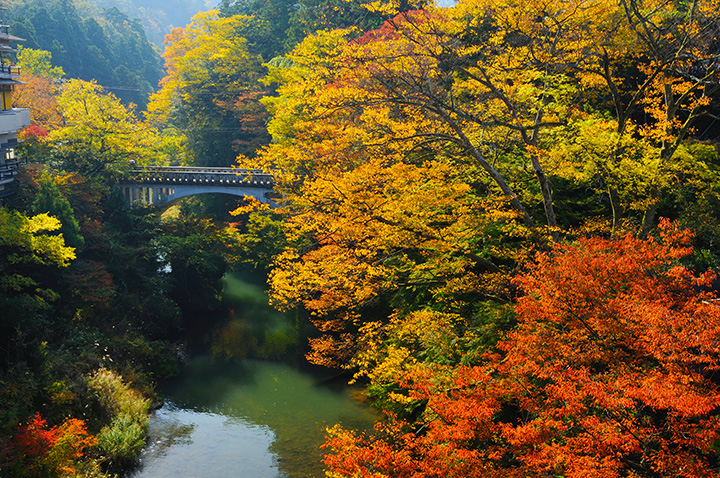
Hot spring in the mountains which also loved Matsuo Basho. When a ravine on the Daisho-ji (Daisho-ji) river which flows along hot spring district "Senkei Tsuru" will be around the middle of November, a Japanese Maple is blooming. A deciduous tree of a maple maple gingko dyes a ravine in red and yellow. About 1300 m of esplanade is even provided Kurotani Hashi with from an upstream cricket bridge, and above all, a maple is outstanding in many impressions around the cricket bridge. It spans in October, 2019 and the beautiful scenery a new bridge built with changed general hinoki and colored leaves interweave can be enjoyed.
An old artwork is appreciated at "infinite hermitage" of a samurai family Shoin style of the Kaga feudal clan near the bridge, loving colored leaves and it can be satisfied with an autumn scene and sweets at a riverbed near the cat's cradle chopsticks in the walk way. There is a "Japanese banana plant hall" where Kuroya Hashi deified Matsuo Basho in the side, so how about driving expectation in the Japanese banana plant which traveled this place?
[Start of coloring] at the beginning of ordinary year November.
[Best time] at the middle ofordinary year November-at the end of November.
[The kind of colored leaves] maple, maple and gingko and others
- Senkei Tsuru (Kei who can't hide it)
-
 Hot spring Azuma-machi 1 in Ishikawa-ken Kaga Ichiyama-cricket town MAP
 I get off a Kagahot spring bus ride for Kayano for 34 minutes "Yunomae of a chrysanthemum" from JRKagahot spring station, about 4 minutes on foot
 0761-78-0330 (hot spring tourist association in the mountains)
 I don't have that.
2Fuji sha KE mountain (By FUJI SHA, hold.)
The excursion for viewing scarlet maple leaves which starts from a photogenic suspension bridge
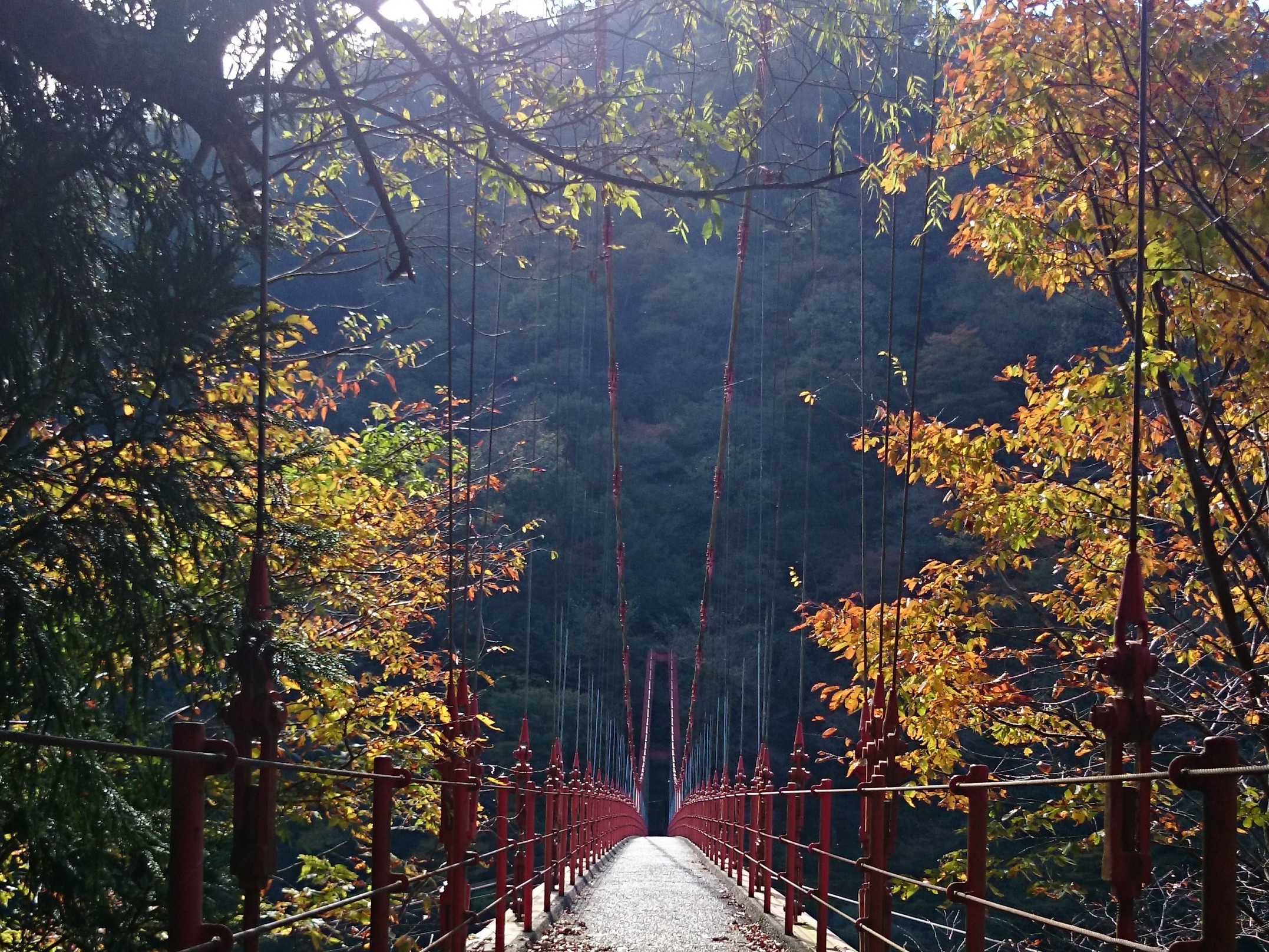
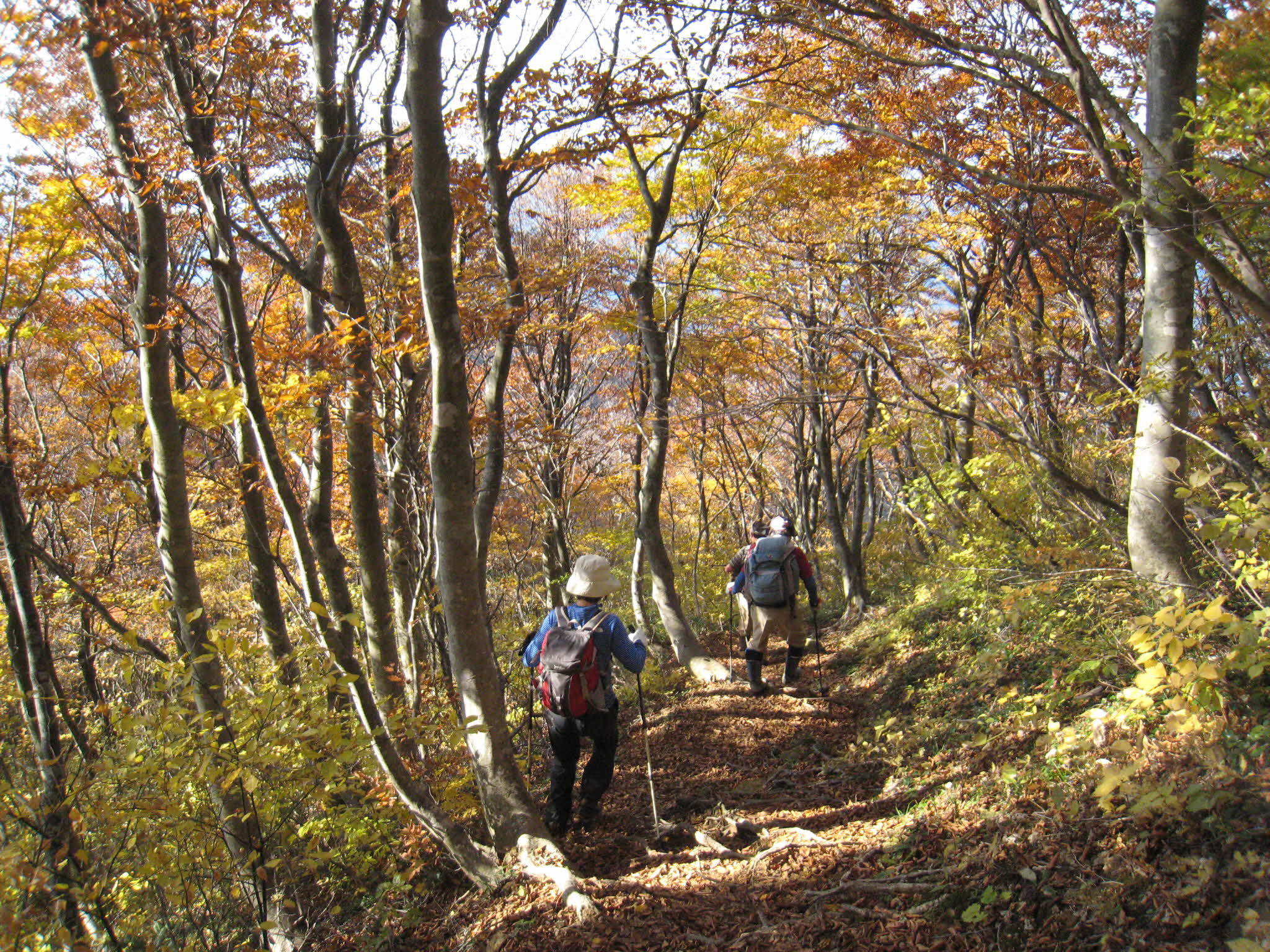
The pile of the altitude 942m located in the inside in hot spring in the mountains where a Kagahot spring village is one. Because it's similar to Mt. Fuji when it's seen from hot spring district, it's said that this name stuck. The author of "Japan one hundred famous mountain" from whom everyone learns about the person who climbs and Kyuuya-Fukada (1903-1971) are also famous as the mountain climbed for the first time in a life. There are a lot of people who climb rhododendron of dark pink pleasantly in spring, and the mountaineering visitor who visits in an excursion for viewing scarlet maple leaves doesn't cease in autumn.
There is 4 of mountain trail in a Fuji sha KE mountain mainly, that it's very popular, "Waretani course". You can reach the top in about 2 hours. Waretani course crosses Waretani dam lake by a red suspension bridge, and starts, but when it itself is photogenic, a view from a suspension bridge and a suspension bridge are also a secret popular spot besides the mountaineering visitor. You can have a good sweat for one-day visit hot water from hot spring in the mountains after an excursion for viewing scarlet maple leaves, and it's kill two birds with one stone.
[Start of coloring] at the beginning of ordinary year November.
[Best time] at the middle ofordinary year November-at the end of November.
[The kind of colored leaves] beech other ones
- Fuji sha KE mountain (FUJI SHA can be burned.)
-
- Hot spring Ouchi-machi in Ishikawa-ken Kaga Ichiyama MAP
 It's a car from JRKagahot spring station, about 40 minutes (Waretani starting point for a climb)
- 0761-78-0330 (hot spring tourist association in the mountains)
3Cultural house of Mt. Kyuuya-Fukada
A sacred place of a mountain fancier is dyed in turning of a gingko.
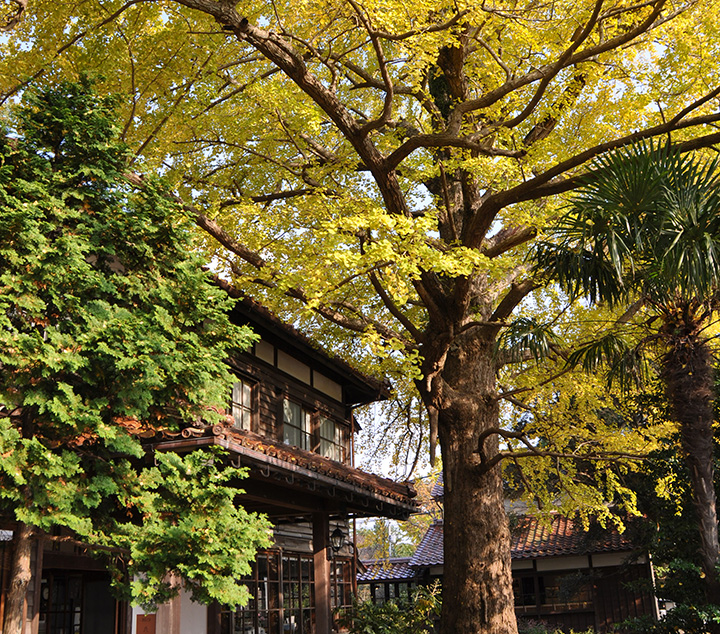
Museum of a man of letters and Kyuuya-Fukada in the mountain where the one in the distance between about 10 minutes is an author of mountaineer's Bible-like existence "Japan one hundred famous mountain" by car from Kagahot spring station. I possess more than 500 points of material focusing on his work and posthumous writings in the inside of the building where a built factory of silk fabrics was repaired in 1910 (1910). Even temporary exhibition in addition to a permanent exhibition is the spot which can touch history in a mountain and culture. After satisfying intellectual curiosity concerning inside of the building, it's to a garden. When a maple also becomes 3 gingkoes including an old tree of an estimated age of the tree for more than 650 years at the middle of October, I begin to color a little, and you tell me of a visit in autumn. A fallen leaves of a gingko is spread and is in the landscape which seems to be autumn in gold Isshiki from the middle November when colored leaves will be a peak to a little past the 20th. If it's visited in Kaga in autumn, it's 1 of the spots full of aim at which I'd like to drop in by all means.
[Start of coloring] at the middle of ordinary year October.
[Best time] at the middle ofordinary year November-at the end of November.
[The kind of colored leaves] gingko and maple
- Cultural house of Mt. Kyuuya-Fukada
-
- Ishikawa Prefecture Kaga city 18-2, Daishojibanbacho MAP
- From JR Daishoji Station, about 20 minutes on foot
 9:00-17:00 (16:30 last entry)
 Tuesday (It's opened in case of a holiday.) and December 30-January 1
 No charge below the public of 350 yen and the high school student and a (more than 75 years old) of senior citizen of 170 yen
- 0761-72-3313
- Free
4Enuma shrine
The Izumi Ike circuit system garden with the admirable autumnal tints of the artistic quiet shade
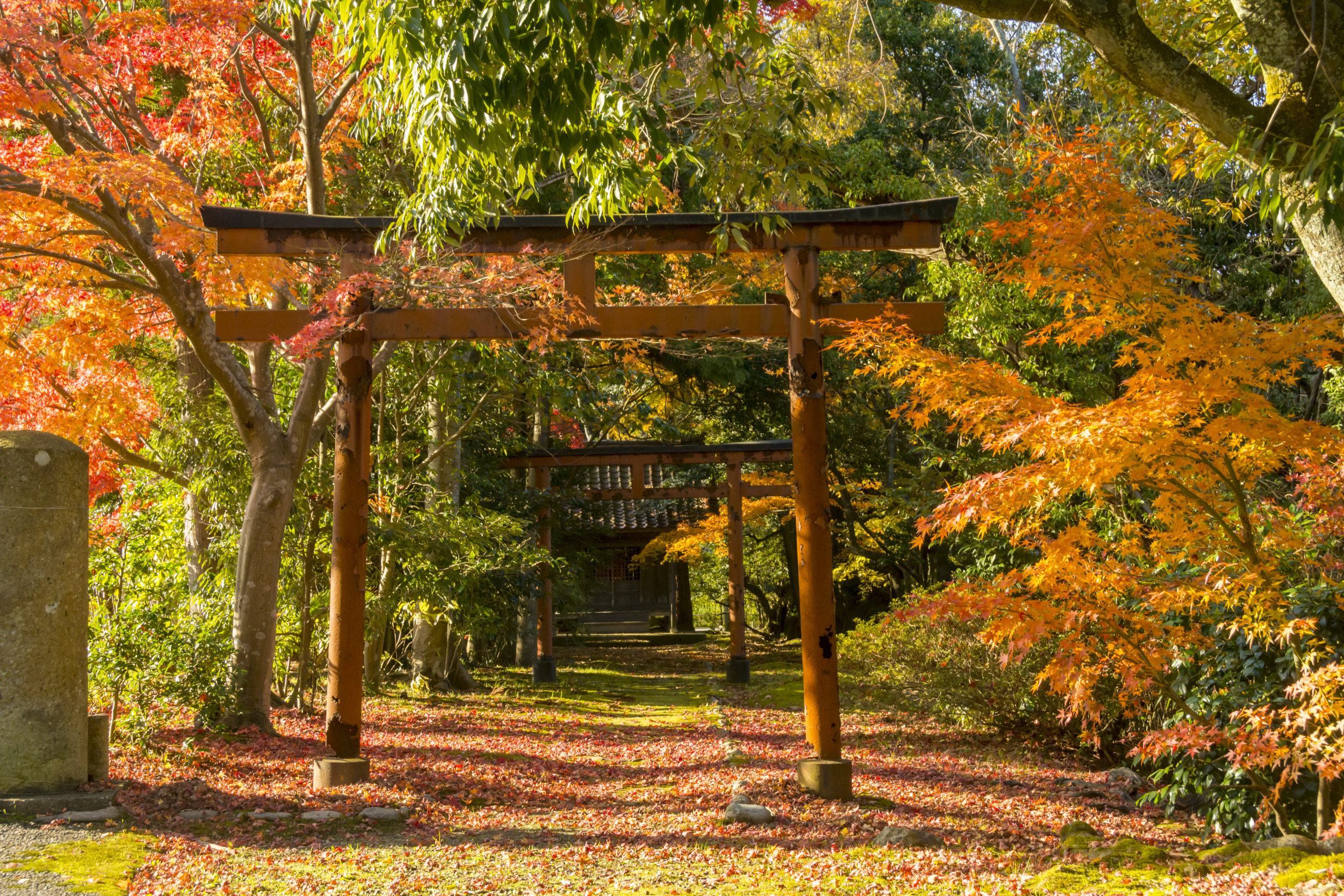
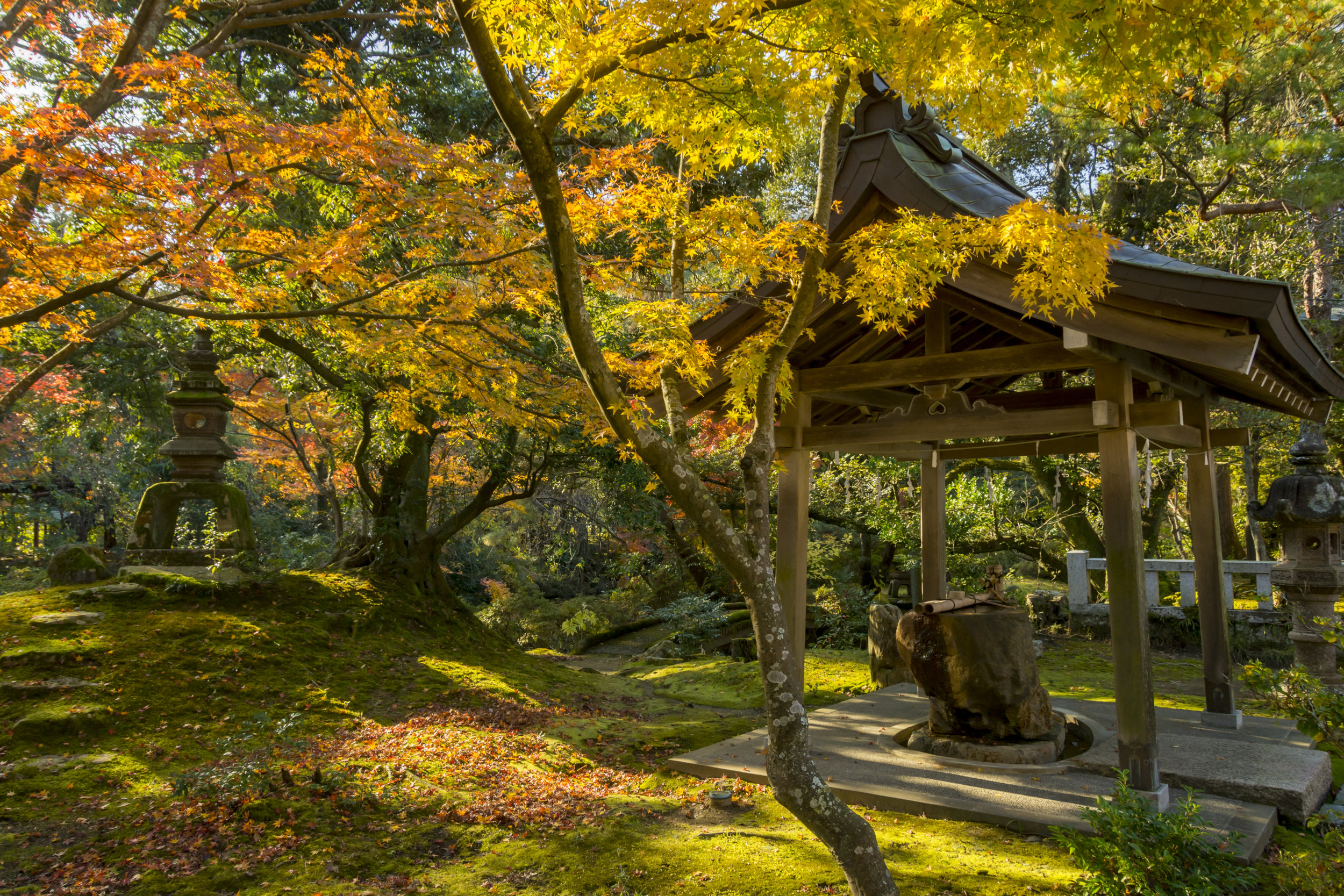
The shrine where the first seigneur of Kaga country Daisho-ji feudal clan, Toshiharu Maeda (They assume that it's the front and it's spread.) and Sugawarano Michizane on Maeda family relation are deified. Many citizens are being called "Mr. Tenma" from a local person and are enjoying, and visit in walk colored leaves season in November every year. A samurai family garden uncommon to a precinct exists. There are many highlights a pond, Yatsuhashi cracknels and spring water by the Izumi Ike tour garden which underwent influence in Kenroku-en.
And the time when they're colored leaves that a garden looks most beautiful. It's possible to pray the artistic autumnal tints also similar to taste of the Daisho-ji which is a castle town. There is also a "Nagaru bower" which was built as a roost in the Toshinao Maeda's summer when I'm a Daisho-ji feudal clan Mijiro seigneur in one corner. Being designated as a national important cultural property, and when making a reservation by the previous day, a 杮tour inside (chip roof) covers one built with yoritou and is also possible.
[Start of coloring] at the beginning of ordinary year November.
[Best time] the middle of ordinary year November-last ten days
[The kind of colored leaves] gingko and maple
- Enuma shrine
-
- Ishikawa Kaga city 55, Daishojihachikenmichi MAP
- From JR Daishoji Station, about 16 minutes on foot
- 3-October 9: 00-16:00 or 11-February 9:00-15:00 (Nagaru bower)
- The time of a (Nagaru, bower)※ galay can't be visited on December 29-on January 3 (Nagaru bower).
- 400 yen (Nagaru bower)
- 0761-72-0551
- Free
 A tour in Nagaru bower needs reservation.
Komatsu area
5Aramata kyou (oh, today)
Colored leaves which suit the surface of a river, taste, much. The canyon's beauty by which a color print is just like
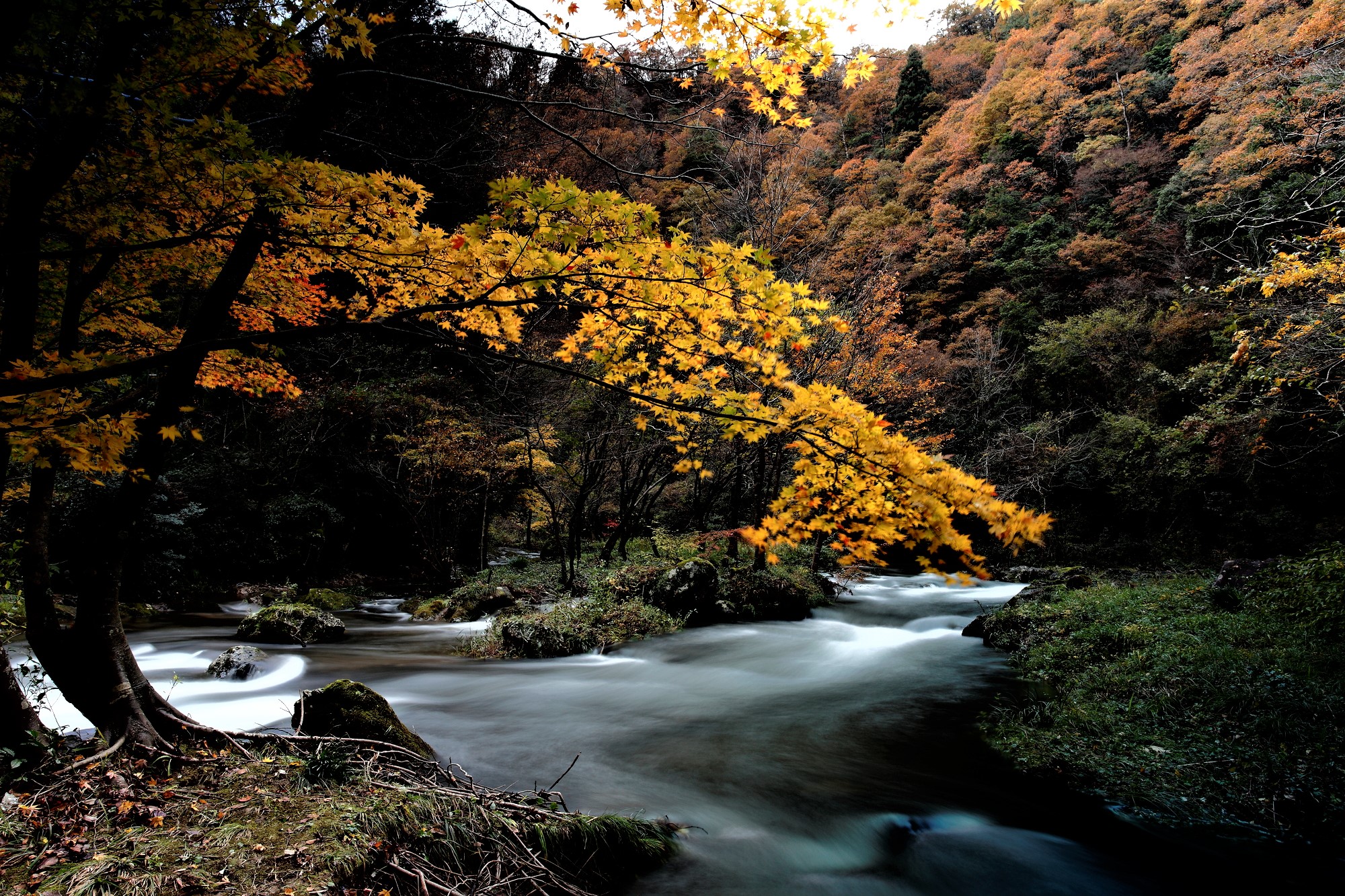
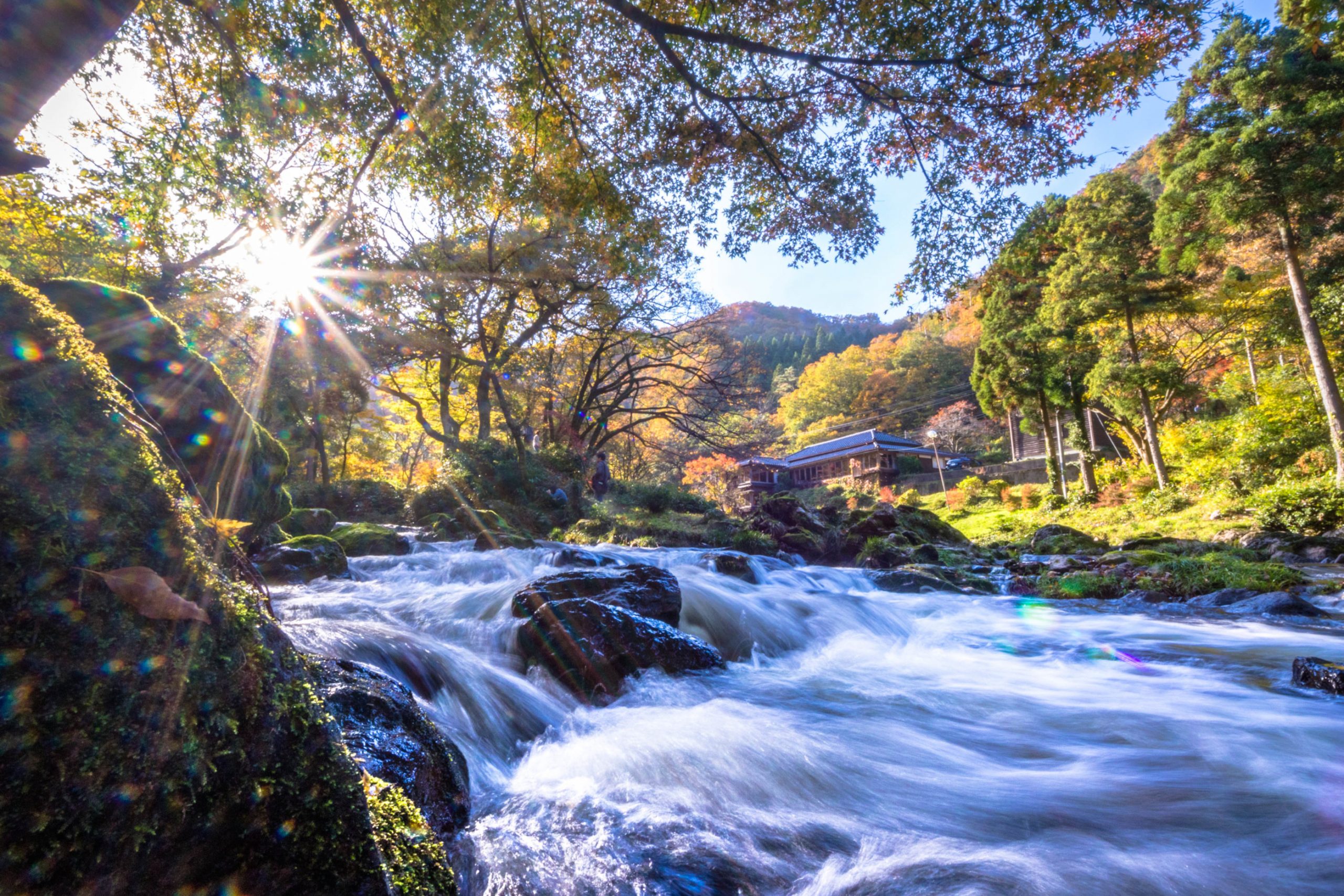
Midstream in Osugi mountain stream which flows through a mountainous region in Komatsu-shi and scenic area located at narrow TTA in a valley most. Though it's usually a quiet ravine, I bustle with many tourists in colored leaves season. A maple and zelkova serrata will change to yellow and orange from the surface of a river to the peak at time at the middle of ordinary year November, and the excellent cityscape which makes them think of a color print at all spreads. About 400 m of esplanade is maintained along a ravine, and it's also a wonderful point that colored leaves can be enjoyed while taking a walk slowly. The ideal scenic area where "Yasuna Hashi" who spans (YASUNA, when, with the selling point of) can wish for colored leaves and a ravine together near the starting point on the esplanade. It can be satisfied with the trees which project in a river, the flow by which a surface of a mountain in a riverside colored and meandered and the canyon's beauty a strangely shaped rock produces to its heart's content.
[Start of coloring] at the middle of ordinary year November.
[Best time] at the middle ofordinary year November-at the end of November.
[The kind of colored leaves] maple, Japanese oak, chestnuts, zelkova serrata, yew and maple and others
- Aramata kyou
-
- Akazemachi, Komatsu-shi, Ishikawa. MAP
- It's a car from JR Komatsu Station, about 30 minutes
- A ride for Komatsu bus Osugi Uemachi for about 37 minutes "Aramata kyou" gets off JR Komatsu Station, about 2 minutes on foot
- 0761-22-4111 (Komatsu city office Representative)
- Free
6Nata-dera (Nata-dera)
The maple which shines by a dynamic white rock surface is magnificent.
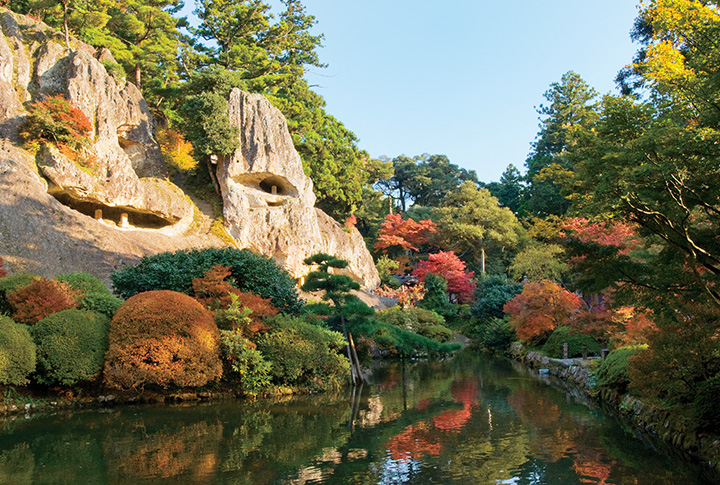
If I'd like to enjoy dynamic colored leaves harmonized with nature, it's to a historic old temple of Hakusan belief with history for 1300 years per about 15 minutes by car from Kagahot spring station. A building of national important cultural property designation is here and there in the scenic beauty using the rocky mountain, and 1 is spangled with "Michelin green guide snake pong" in a star from full of the highlight. 15 kinds, 1000 are planted in a mountain maple and Japanese enkianthus centering on "strangely shaped rock yuu cloudland" a rock with a strange shape equals in the wide precinct where it's here about 23 ha, and when it's met around the middle of November, it's dyed in red and yellow. The scenery from the observatory where a magnificent one can get a bird's-eye view of the whole precinct in particular. Red of a nen YURU maple is conspicuous in a white rock surface in a strangely shaped rock yuu cloudland, and it's dragged into the view which is profound and quiet elegance-like and full of life force.
[Start of coloring] at the beginning of November.
[Best time] at the middle ofNovember-at the end of November.
[The kind of colored leaves] mountain maple, Japanese enkianthus and gingko and others
- Nata-dera (Nata-dera)
-
- YU 122, Natamachi, Komatsu-shi, Ishikawa MAP
- I get off Komatsu bus Awazu A linear descent ride for about 10 minutes "Nata-dera" more than JR Awazu Station, immediately.
- 9:15-16:00
- Adult (students over junior high school) of 1000 yen, 300 yen for a schoolchild and infant no charge
- 0761-65-2111
- Free
MAP
- Kaga (hot spring in the mountains and Daisho-ji) area
- Komatsu area
- Hoshino ResortsProperty around here

Local Guide which took charge of this article

- Pine saki ShinoCharm Hunter from Kaga
Hoshino Resorts KAI Kaga
Ishikawa and Yamashiro hot spring
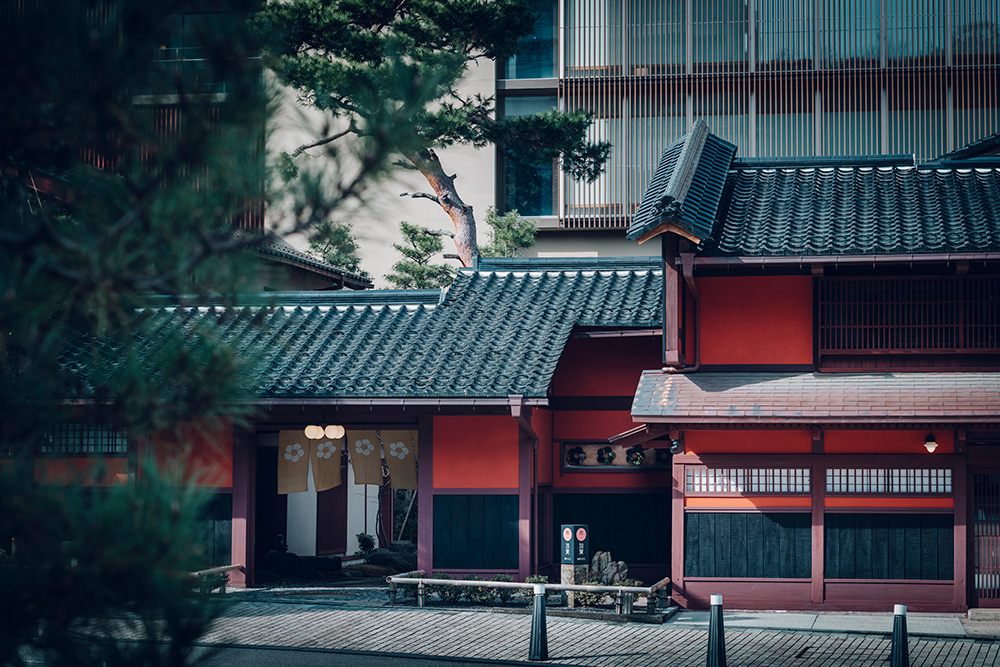
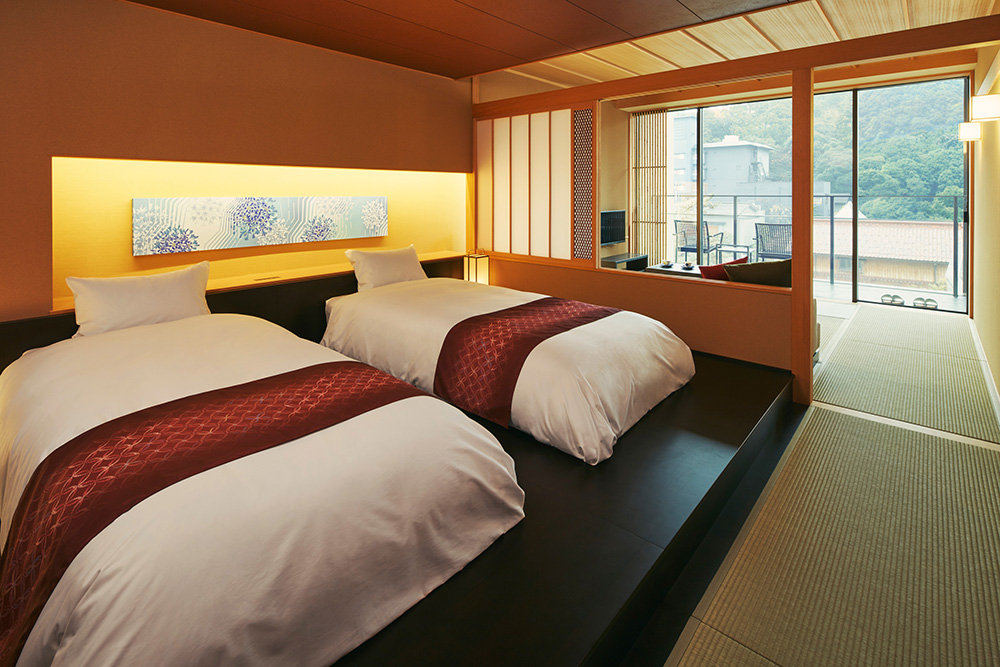
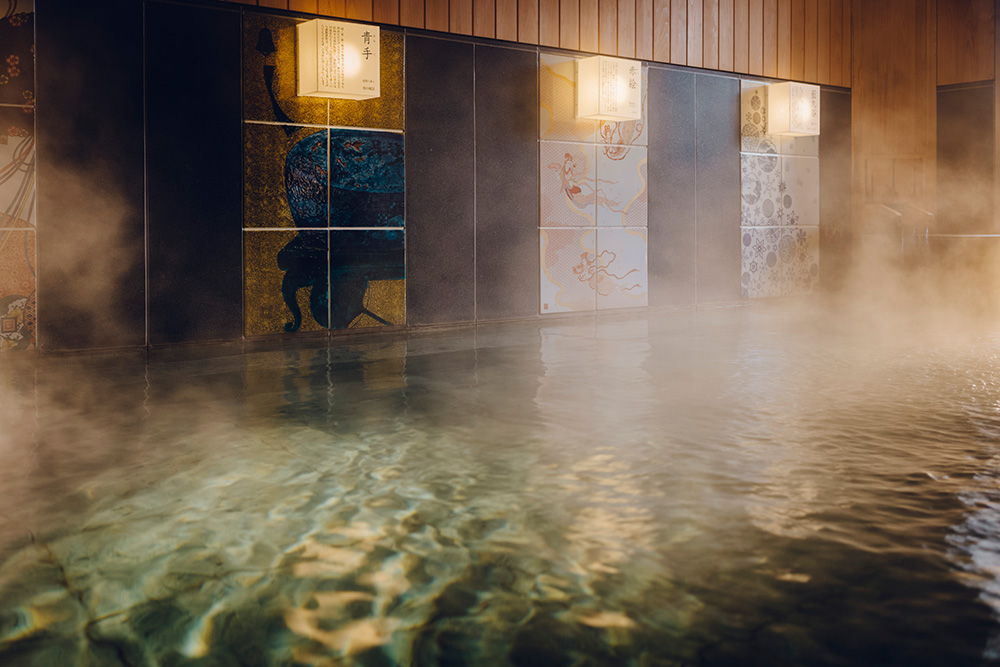
Hot spring inn of the Kaga tradition with which the new sensitivity gasps. The traditional construction ridge where a red shell grid is striking is national registered tangible cultural property.
It's a taxi from the Direction IR ISHIKAWA railroad Kagahot spring station, about 10 minutes
- A room charge example
- 1 night, 1 person \19,000-