





[2025 year edition] Lake Kawaguchi in the autumn when a superb view of Mt. Fuji and colored leaves is enjoyed 8 elections of recommendation
![[2025 year edition] Lake Kawaguchi in the autumn when a superb view of Mt. Fuji and colored leaves is enjoyed 8 elections of recommendation](https://hoshinoresorts.com/guide/wp-content/uploads/2018/10/fujiyamakouyou.jpg)
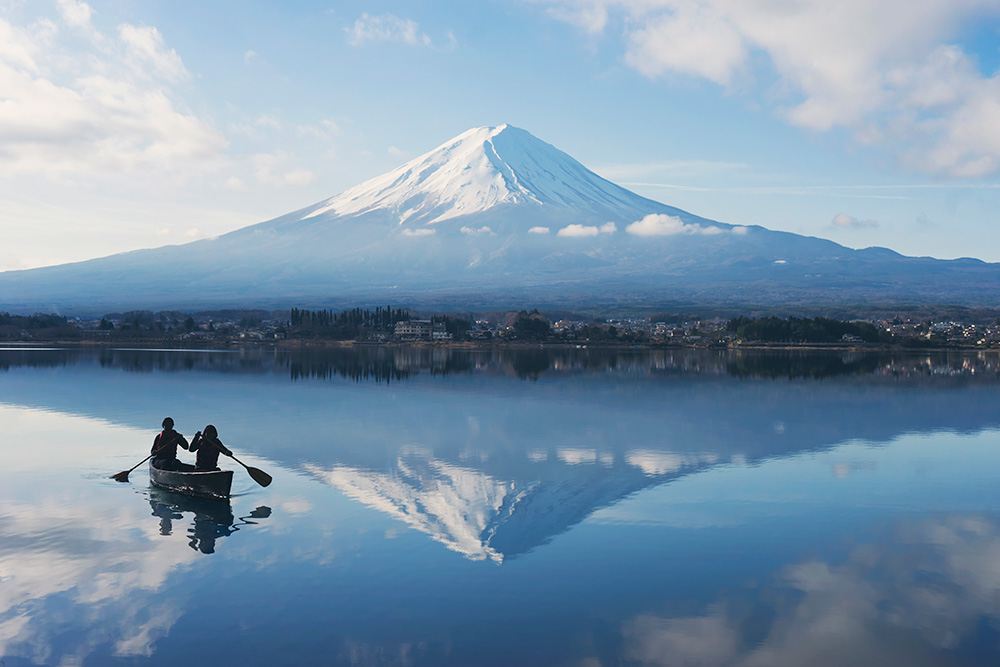
The Lake Kawaguchi in the height of the altitude 830m begins to color around the beginning of November from the middle of ordinary year October, and meets a visit in autumn earlier than downtown. A highlight in a season of colored leaves is the superb view where I wish for Mt. Fuji over the colored leaves with the vivid color. I'll introduce the spot which recommends in the beautiful landscape everyone fascinates in particular.
1Fuji Lake Kawaguchi festival of colored leaves
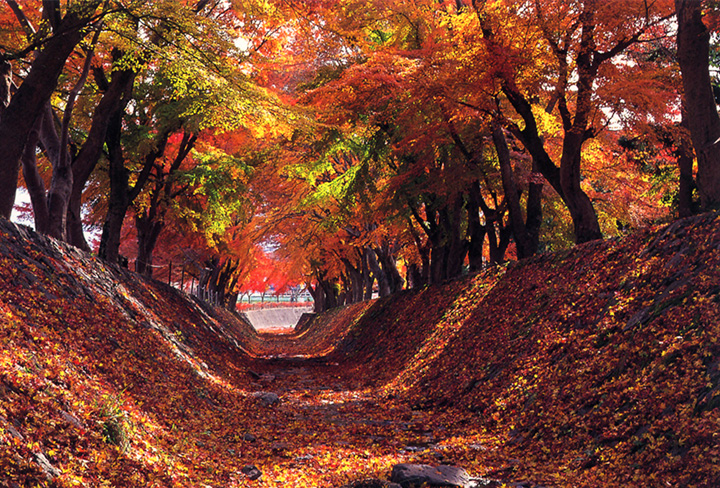
The autumnal tints dyed in flamboyant autumn at the front and the form of the surface of the lake and grand Fuji that Lake Kawaguchi is quiet in the inside. It's the area exposed to a northern coast of Lake Kawaguchi that you can wish for the autumnal tints like such one painting. A grave event "Fuji Lake Kawaguchi festival of colored leaves" is held at the middle of November which becomes best time of colored leaves. A branch of eating and drinking and a gift can enjoy the walk of colored leaves which colors the trees in the roadside and the neighborhood which develop along lakeside and also stands in a row, and the event is also plenty. The "corridor of colored leaves" where a highlight of the colored leaves which are most is on the west side of the main stadium. The vivid red space where I line up is with the value of the glance so that a river may be covered with approximately 60 of Furuki's stately maples over about 150 m of both banks on pear river. The fantastic world lights up during a period from sunset to 22:00, and appears.
[Best time] at the middle of ordinary year November.
[The kind of colored leaves] maple
- Fuji Lake Kawaguchi festival of colored leaves
-
 Around the estuary lakeside estuary pear river MAP
 A "a Lake Kawaguchi tour, bus" ride for about 25 minutes "in front of Itchiku Kubota Art Museum" gets off Fuji express line Kawaguchiko Station, immediately.
 2025 year November 1 (Sat)-November 30 (Sun)
Lighting Sunset-21:30.
 0555-72-3168 (Fuji Kawaguchiko-machi Tourism Section)
 Payment required With special Parking of※ no charge.
2Tunnel of colored leaves
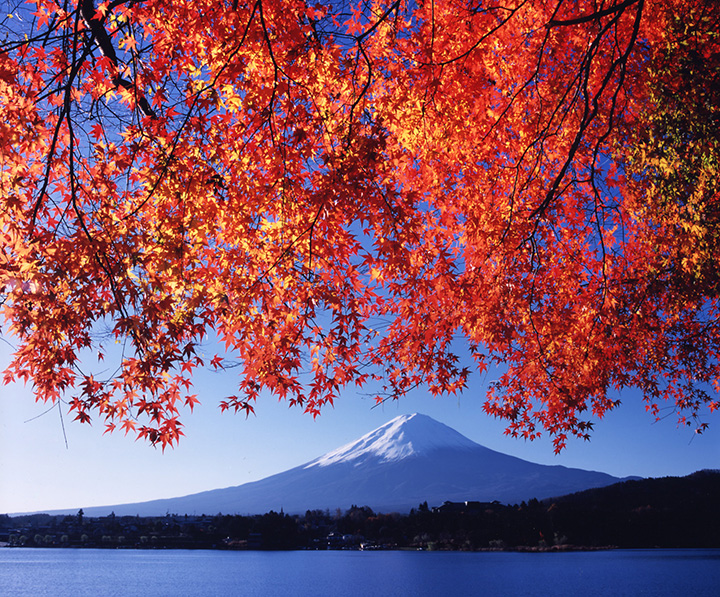
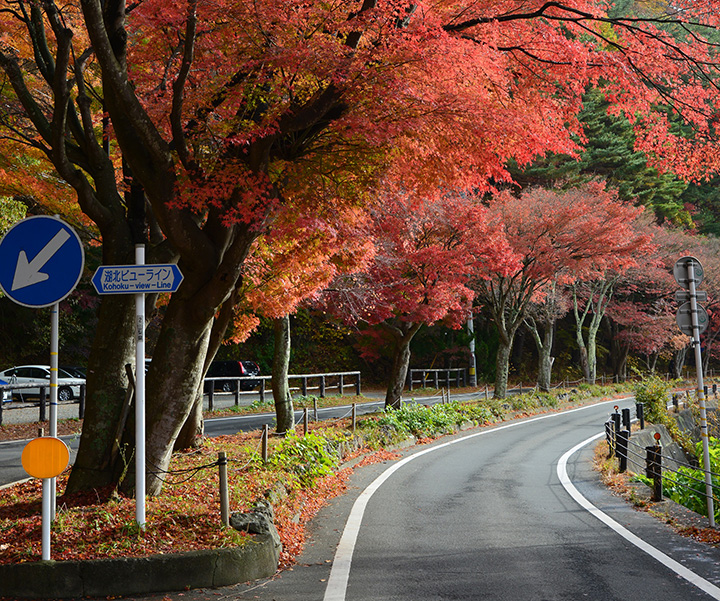
A popular spot of colored leaves of Lake Kawaguchi as well as "corridor of colored leaves" is "tunnel of colored leaves" for about 15 minutes by car to west from the pear river circumference where a festival of colored leaves is also a meeting place. Route 21 of prefectural highway and an avenue of a maple which protrudes so that I may cover a common name "Kohoku view line" will be dyed in red at time of colored leaves, and feeling just goes through the vivid space, and rises.
It's also famous as a photogenic spot and Ingres who wishes for Mt. Lake Kawaguchi and Fuji between the grove of a maple is found and a crowd is being shown by the tourist who enjoys photography of colored leaves. Roadside will be the shade in late afternoon, and that the color takes a picture of Namiki of the maple which colored who lines up the road center vividly becomes difficult. It isn't lit up like a corridor of colored leaves, so I'll visit rather early time.
[Best time] around the middle of ordinary year November-last ten days
[The kind of colored leaves] Japanese maple
- Tunnel of colored leaves
-
- Minamitsuru-gun, Yamanashi Fuji Kawaguchiko-machi Oishi MAP
- It's a car from Fuji express Kawaguchiko Station, about 15 minutes
- 0555-72-3168 (Fuji Kawaguchiko-machi Tourism Section)
- Free
3Oishi park
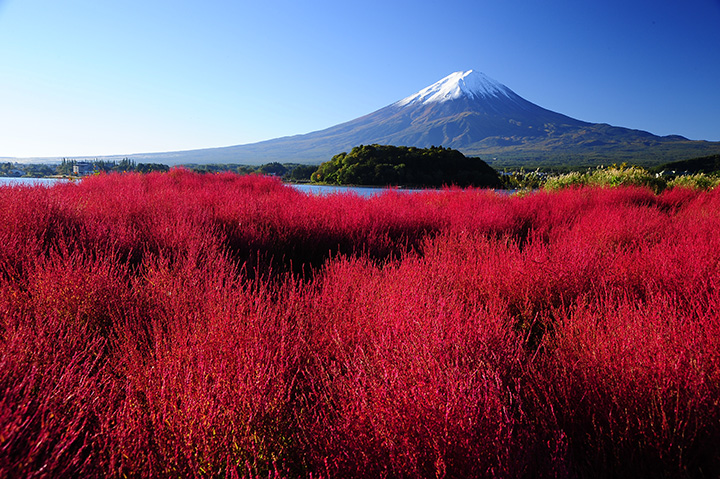
Oishi park located in a northern coast of Lake Kawaguchi. Mt. Fuji, Lake Kawaguchi and flowers feel a drawn autumn scene is wide on the esplanade called "the red-light district way". Because you can meet the impressed view which is to the extent I'd like to put in photograph, it's also famous as a photography spot. Dense woodland in KOKIA where to color one this red-light district way from the early middle of ordinary year October more than a maple colors in deep red. When maybe the form that it was made conical Moco Moco is a wool ball, and that's in space which equals the ground orderly, the sense which strayed into the world of a picture book is remembered. There is an aim from which a member is different with the autumnal tints of the deciduous tree, and the landscape Mt. Fuji and KOKIA can charm is also enough for the impression.
After enjoying walk fully, it's to the cafe Mt. Fuji in the park sees. You can relax comfortably while looking at Mt. Fuji which put on a headdress of floss silk.
[Best time] around the middle of ordinary year October-last ten days
[The kind of colored leaves] KOKIA.
- Oishi park
-
- Fuji Kawaguchiko-machi Oishi 2525-11 MAP
 A Fuji express bus "Lake Kawaguchi tour bus" takes it more than Kawaguchiko Station, about 25 and last stop "Lake Kawaguchi natural living house" getting off for 1 minute
- It's free for 24 hours.
※ An agricultural produce direct sales place "it's a lot and, ya", 9:00-15:00 and "Lake Kawaguchi natural living house", 9:00-18:00 (in winter 11 Monday-March, to 17:30)  I don't have that.
- 0555-72-3168 (Fuji Kawaguchiko-machi Tourism Section)
- Free
4Kouyoudai (Kouyoudai rest house)
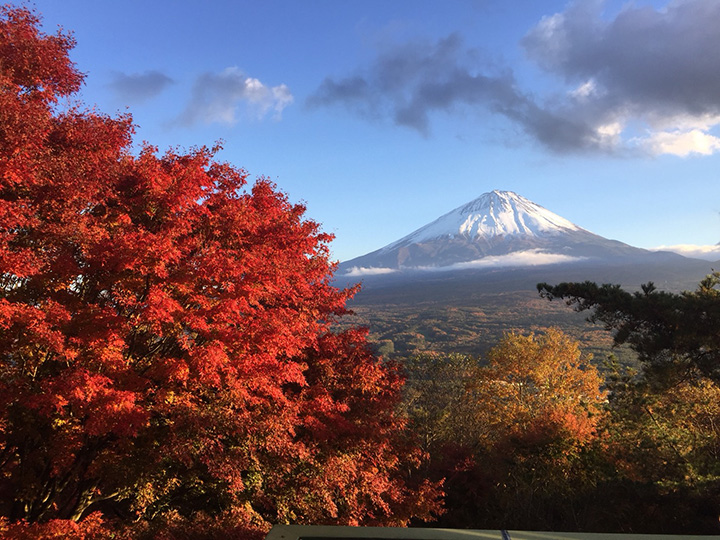
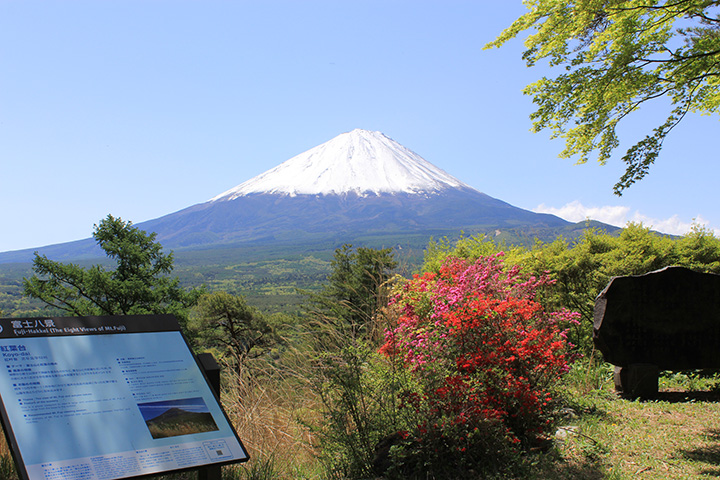
The "Kouyoudai rest house" in the place where the ridge way was climbed for about 30 minutes from Parking. You can get a bird's-eye view of an autumn scene of 360 times of great panorama from observatory. The south side is overwhelmed by the large-scale scenery by which Aokigahara Jukai is spread in Mt. Fuji and the foot of mountain in immediateness. The dense woodland like the picture brocade with which red and green of the deciduous tree and the coniferous tree dyed yellow as well as deepening in autumn mixed is also vivid in an eye. On the other hand, 1 Lake Sai and the west side in Fuji five lake can look Lake Motosu around on the north side.
The autumnal tints of three lake level in the place where I went up a gentle slope for about 20 minutes from a rest house are also special. You can wish for a lake of 3, the Lake Sai, the Lake Motosu and the Lake Shojin dyed in autumn scenery as the name together. If three lake stand will be visited, it's recommended to have a plenty of leeway in time and enjoy colored leaves by hike feeling.
[Best time] around the end of ordinary year October-middle of November
[The kind of colored leaves] maple, bra and Japanese oak
- Kouyoudai (Kouyoudai rest house)
-
- Narusawa-mura, Minamitsuru-gun, Yamanashi MAP
- I get off a Fuji express bus "Lake Motosu rest house" way ride for about 25 minutes "Kouyoudai entrance" more than Kawaguchiko Station, about 40 minutes
- 0555-85-2312 (Narusawa village office)
- Kouyoudai rest house Parking and Kouyoudai drive-in Parking are used.
5Tengachaya
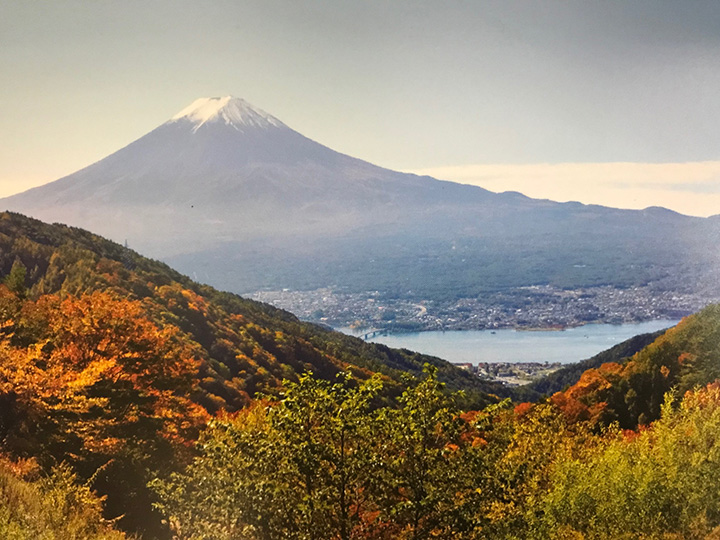
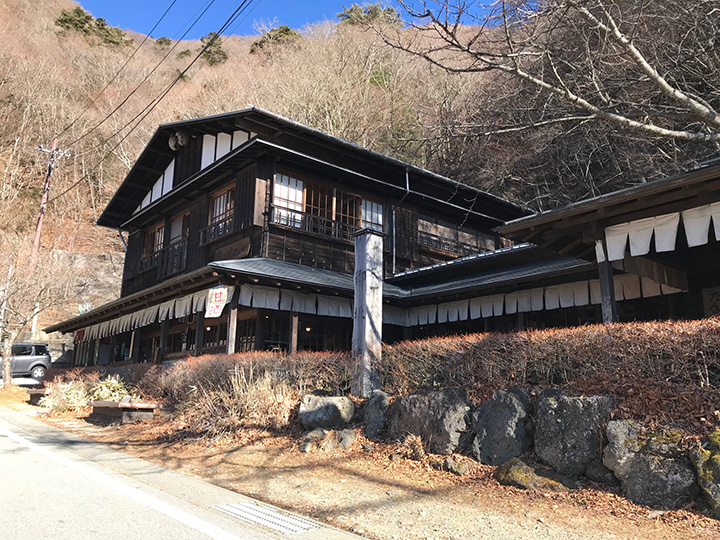
The foundation of "Tengachaya" which became a stage of Osamu Dazai's novel learned about by a phrase of "I'd like an evening primrose in Fuji, jigou bran" "tomigokuhyakukei", 1934 (1934). Many literati were learned about widely at the superb view where they wish for Mt. Fuji at the front, and visited including Masuji Ibuse and Osamu Dazai. Dazai also does chief staying in about 3 months at a store at the inside, and I say that "tomigokuhyakukei" was finished writing. When standing in front of the store, a superb view in the autumn when I wish for Mt. colored leaves of the mountains, Lake Kawaguchi and Fuji which expands the foot of mountain big over it at the front can be enjoyed fully.
The feature of the store is the Yamanashi-style Noodle with Miso Soup pot Dazai tasted, too. A pot like the broad noodles which have homemade appropriate firmness and the fermented soybean paste which boiled enough vegetables even heats up a core of a body. After it was satisfied with a meal, it's to "Osamu Dazai literary museum" in the 2nd floor of store by all means. When the room where Dazai was staying is being restored, used desk and brazier are put.
[Best time] around the middle of ordinary year October-beginning of November
[The kind of colored leaves] cherry tree, maple, mountain ash and Japanese oak and others
- Tengachaya
-
- Minamitsuru-gun, Yamanashi Fuji Kawaguchiko-machi estuary 2739 MAP
- From Fuji express line Kawaguchiko Station, a Fuji sudden bus "for Tengachaya" ride for about 30 minutes and last stop getting off, immediately.
- 10:00-17:00 I have that in case of※ change.
- Open everyday
※ Winter closes down by the weather. - 0555-76-6659
- Free
6Lake Kawaguchi-Mt. Fuji, panoramic ropeway-
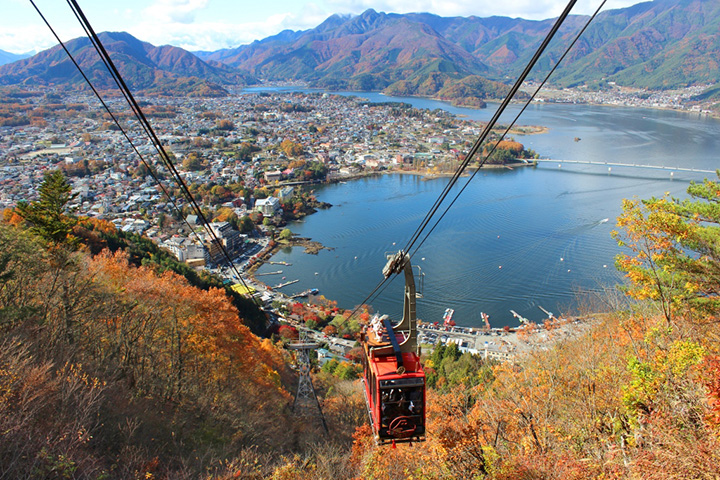
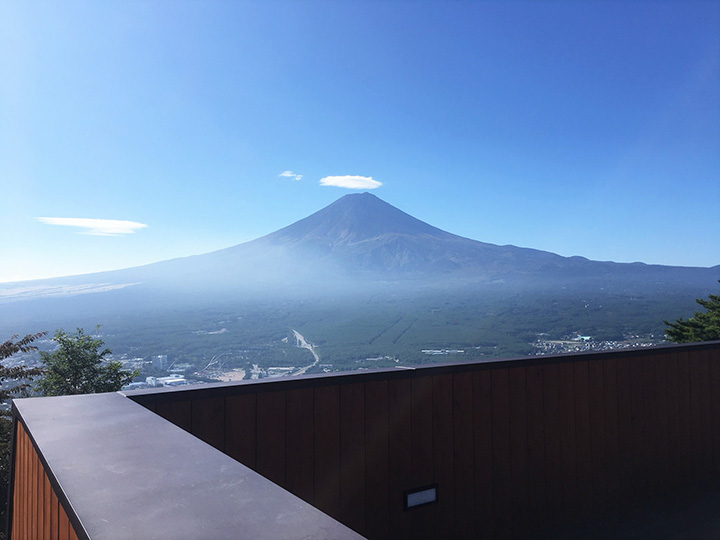
It has been loved more than half a century, "Mt. tick, ropeway" also remodels the name in April, 2018 newly, open. It's tied from Lake Kawaguchi Kohan Station to the Fuji bookstand station in Tenjouzan peak. When the gondola which departed the base is raising the height, Lake Kawaguchi is spread big under the eyes, and a maple can enjoy the cityscape with which the trees which turned red edge lakeside. If I arrive at peak, it's to observatory first. A great panorama of Mt. Fuji where GURATESHON to Susono which turned red from the top where a coat of snow is dressed is beautiful is the landscape I'd like to see sometime.
The power spot which is immediately near the observatory "heavenly bell" is also must-see. When I ring a bell, it's said that there is divine favor in love and wife safety. Additionally rabbit is the divine object and a unique spot is here and there the "tile throw" which does several wish accomplishment in "rabbit shrine" and heavenly misses with "Koma rabbit".
[Best time] at the end ofordinary year October-at the beginning of November.
[The kind of colored leaves] maple other ones
- Lake Kawaguchi-Mt. Fuji, panoramic ropeway-
-
- Minamitsuru-gun, Yamanashi Fuji Kawaguchiko-machi Asakawa 1163-1 MAP
- From Fuji express Kawaguchiko Station, about 12 minutes on foot
- 8:30-17:00 (descent last 17:20)
On July 20-on August 31, 8:30-18:00 (descent last 18:20)
※ There is busy days in consecutive holidays, Lantern Festival and New Year's in case of change. It's subject to confirmation in formal HP for details. - Open everyday (It's absent in case of bad weather.)
 Students over junior high school one way of 600 yen and a round trip of 1000 yen/elementary students one way of 300 yen and a round trip of 500 yen
※ Even 1 person sticks to 1 elementary students sheep full adult, and is free.- 0555-72-0363
- Free (Prefectural Parking in a Kohan Station neighborhood is also available for free of charge.)
7Lake Sai lyashi-no-Sato Nenba (the one of the case love coconut palm, NE, when)
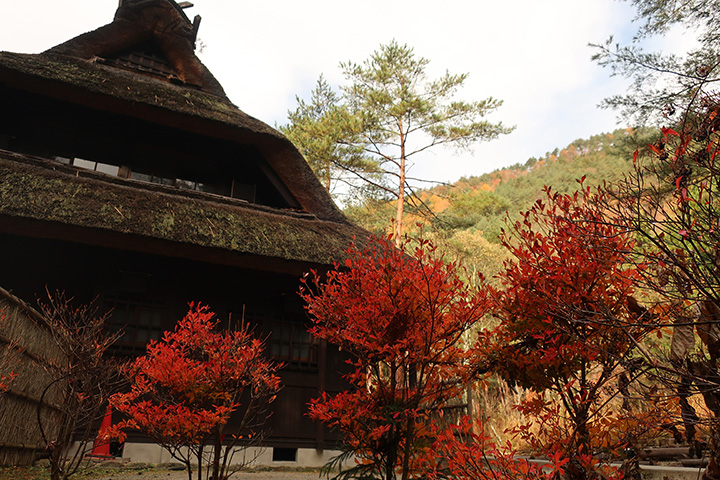
There was an area as "Nemba" each house on a thatched roof equals with its back to Fuji in lakeside of Lake Sai formerly. But its form is in something in the past by a typhoon accident in 1966 (1966). It's "Lake Sai iyashi-no-Sato Nenba" that a house on a thatched roof where it can also be said such Japanese primal scene made the village which lines up be revived.
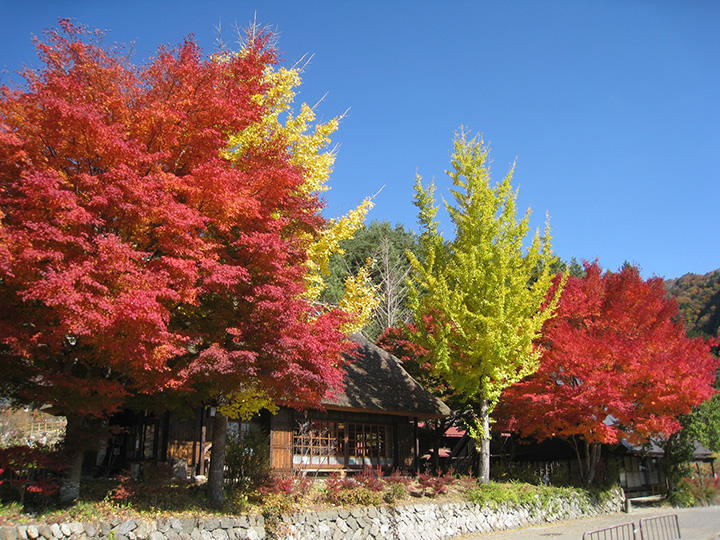
It's dotted with a building on a thatched roof of 20 houses in now, and it's utilized as the store where homemade Experience can be enjoyed, Dining Area and a store of a local stockbroker product. The cityscape when autumn comes, the trees of a maple, a gingko and a dough done color around the house, and which wishes for the house on a thatched roof and colored leaves, indeed, "autumn in Satoyama". When taking a walk through an esplanade freely, it'll be to be invited to nostalgia.
[Best time] around the end of ordinary year October-middle of November
[The kind of colored leaves] maple, gingko and dough done and others
- Lake Sai iyashi-no-Sato Nenba
-
- Minamitsuru-gun, Yamanashi Fuji Kawaguchiko-machi Lake Sai Nemba 2710 MAP
- I get off retrospective embussment about 40 minutes and "Lake Sai iyashi-no-Sato Nenba" more than Fuji express line Kawaguchiko Station, immediately.
- 3 Monday-November 9:00-17:00
12 Monday-February 9:30-16:30
※ 30 minutes before for each of last entrance - Open everyday (There is temporary closing.)
- 500 yen and elementary and junior high schoolers of •250 yen
- 0555-20-4677
- Free
8Forest park of a Lake Sai wild bird
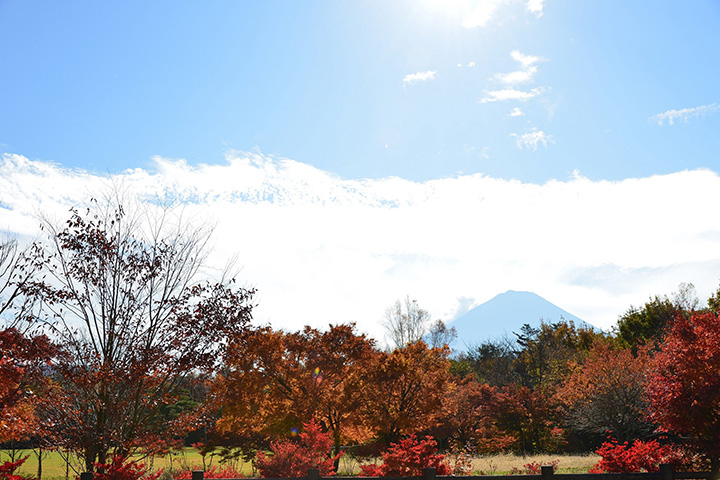
The "forest park of" a Lake Sai wild bird circled by Aokigahara Jukai is as the name suggests and a treasury of a wild bird. The coming of the other wild birds as much as 150 kinds by which about 60 kinds of wild birds live in the park a varied titmouse, a bunting and a white-eye is confirmed. There is a bird watching office" which had a telescope in a dense woodland gallery in the park, and even if it's visited empty-handed, it's charm that birdwatching can be done casually.
Vast lawn square and forest promenade in the park are the place by the relaxation where cityscape in each season can be enjoyed. When autumn comes, a maple, a white birch, a mountain ash and Japanese enkianthus turn red, and the taste in which Mt. Fuji appears can wish for abundant cityscape in the inside.
Twitter of a bird, the form a wild bird takes a walk through a forest of colored leaves in BGM, and that's lovely is observed, and if, the natural delicious taste of the autumn can be enjoyed fully.
[Best time] around the end of ordinary year October-middle of November
[The kind of colored leaves] beech, Japanese oak, maple, mountain ash and white birch and others
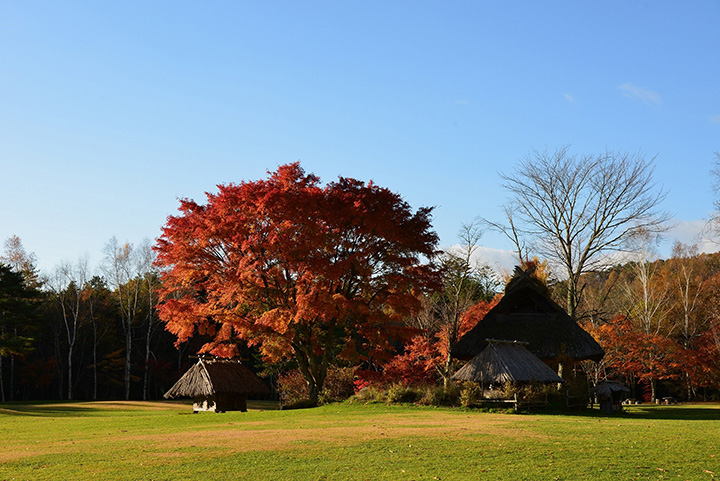
- Forest park of a Lake Sai wild bird
-
- Minamitsuru-gun, Yamanashi Fuji Kawaguchiko-machi Lake Sai 2068 MAP
- About 40 minutes and "forest park getting off of" a Lake Sai wild bird walk by Lake Sai tour bus from Fuji express Kawaguchiko Station, immediately.
- Dense woodland gallery 9:00-17:00
- Dense woodland gallery Thursday.
- Free
- 0555-82-2160
- Free
MAP
- Hoshino ResortsProperty around here

Local Guide which took charge of this article

- Saori Sakamoto.Lightly, my Fuji daughter
HOSHINOYA Fuji
Yamanashi and Fuji Lake Kawaguchi
The Japan's first Grand ping resort where I pause in the Fuji foot of a mountain. The camp satisfied with nature at estuary lakeside, glamorously.
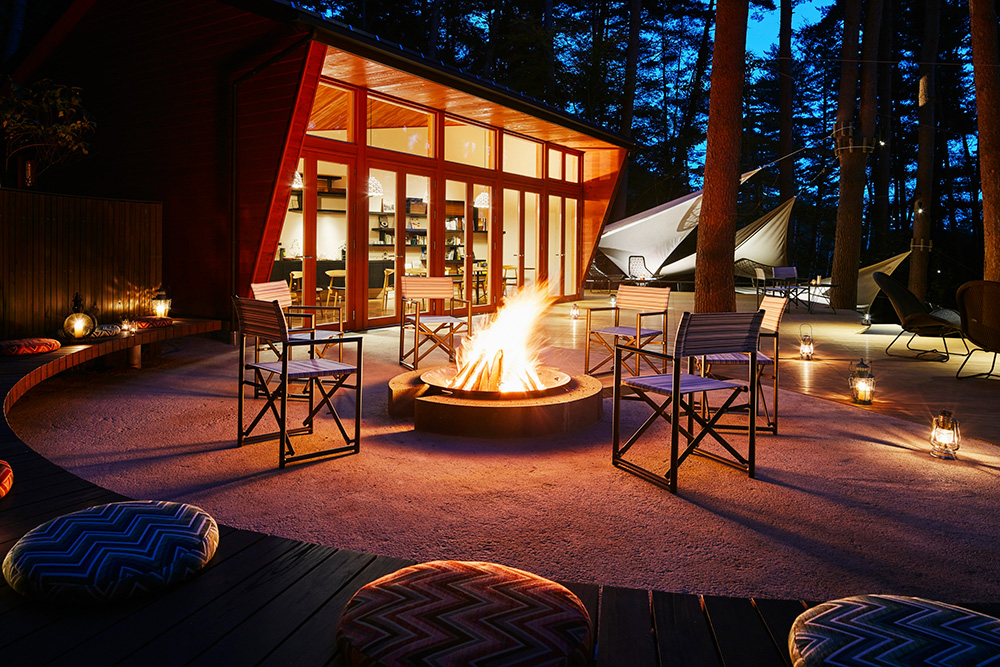
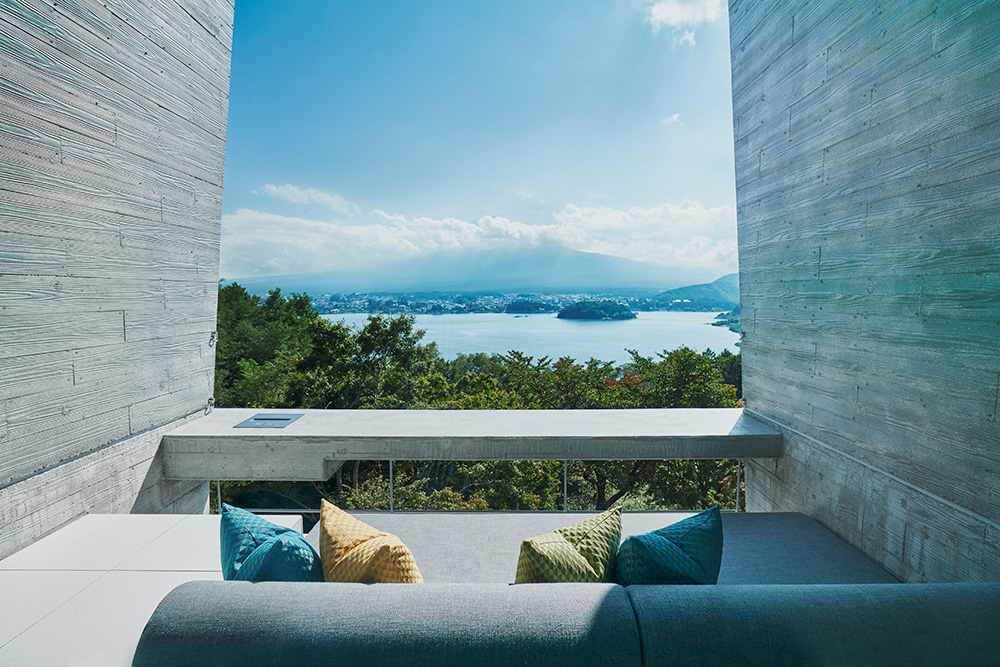
It's a taxi from Direction Fuji express line Kawaguchiko Station, about 20 minutes
- A room charge example
- 1 night, 1 person \28,182-