





You also introduce a worship route, "Izumo Taisha Sightseeing perfect guide"

I'll introduce the power spot called a sacred place of a matchmaking at a typical tourist spot of Shimane . Deifying God is enjoying "Izumo Taisha (If IZU also covers, do.)" widely as God of a matchmaking by "Okuninushinokami" famous for a myth of "white hare in Inaba" (Okuninushinokami). A peak of sightseeing, nationwide, throughout the length and breadth of the land, the old Japanese calendar October when you assume that God gathers in one hall at the place by Izumo (November). Therefore it's made "October" at the whole country, but also November is called "the Kamiari month (it's involved and is here, attachment)" at a place by Izumo.
Because manners aren't understood, the shrine visited for the first time is confused. So the worship route where Izumo Taisha is recommended and manners are introduced. I'll read before worship and enjoy travel of a nice matchmaking.
<What kind of place is Izumo Taisha?>
<Recommendation worship route in Izumo Taisha>
- 3I pass through Torii, and it's to a precinct.
- 4Hall of worship (I don't creep out.)
- 5Main shrine (It's coff, oh.)
- 6motogasha (YA which is SO,)
- 7Kaguraden (sniffed mother-of-pearl)
<I'd like to know more! Charm in Izumo Taisha>
<What kind of place is Izumo Taisha?>
1Izumo Taisha, "sacred place of a matchmaking"?
"God gathering" with which God discusses the relationship of the people
Why doesn't the one made "place by the matchmaking" or a certain thing understand Izumo Taisha? Because the belief with which the heaven by which they gathered discusses the relationship of the people spread over another view by done "god gathering" when gods of eight million were collected in Izumo from the whole country in the old Japanese calendar October (November), I came to be called "sacred place of a matchmaking" and.
There is also a lot of Shinto Ceremony in November and all Shinto Ceremony is held to the festival which will see "Shinji festival" "love knot grand festival" and the gods held at a precinct off "kaminadokyoshutsumatsuri (pungently, case)" with "kamigeimatsuri" which will receive God into Izumo (in case of involved reception) as a start.
2What kind of God is "I'm here, Mr. body"?
The God of good match prayer who also appears on The Kojiki
The "Okuninushinokami" which is a deity in Izumo Taisha famous as God of a matchmaking. You're also enjoying as an another name "I'm here, Mr. body". It's said that koju in addition to "good match prayer", conjugal harmony, productiveness of grains and Mr. prosperity etc. have a condition for typical divine favor.
The story which was learned about as the God of nation building who got over much difficulty and reclaimed a country and transferred the country to "handing over dominion myth" in Amaterasuomikami (Amaterasuomikami). And it's done as the company which was origin in Izumo Taisha to have been built as the compensation of the handing over dominion.
<Recommendation worship route in Izumo Taisha>
3I pass through Torii, and it's to a precinct.
I recommend "Torii of seitame (cause silence)" for a start of worship.
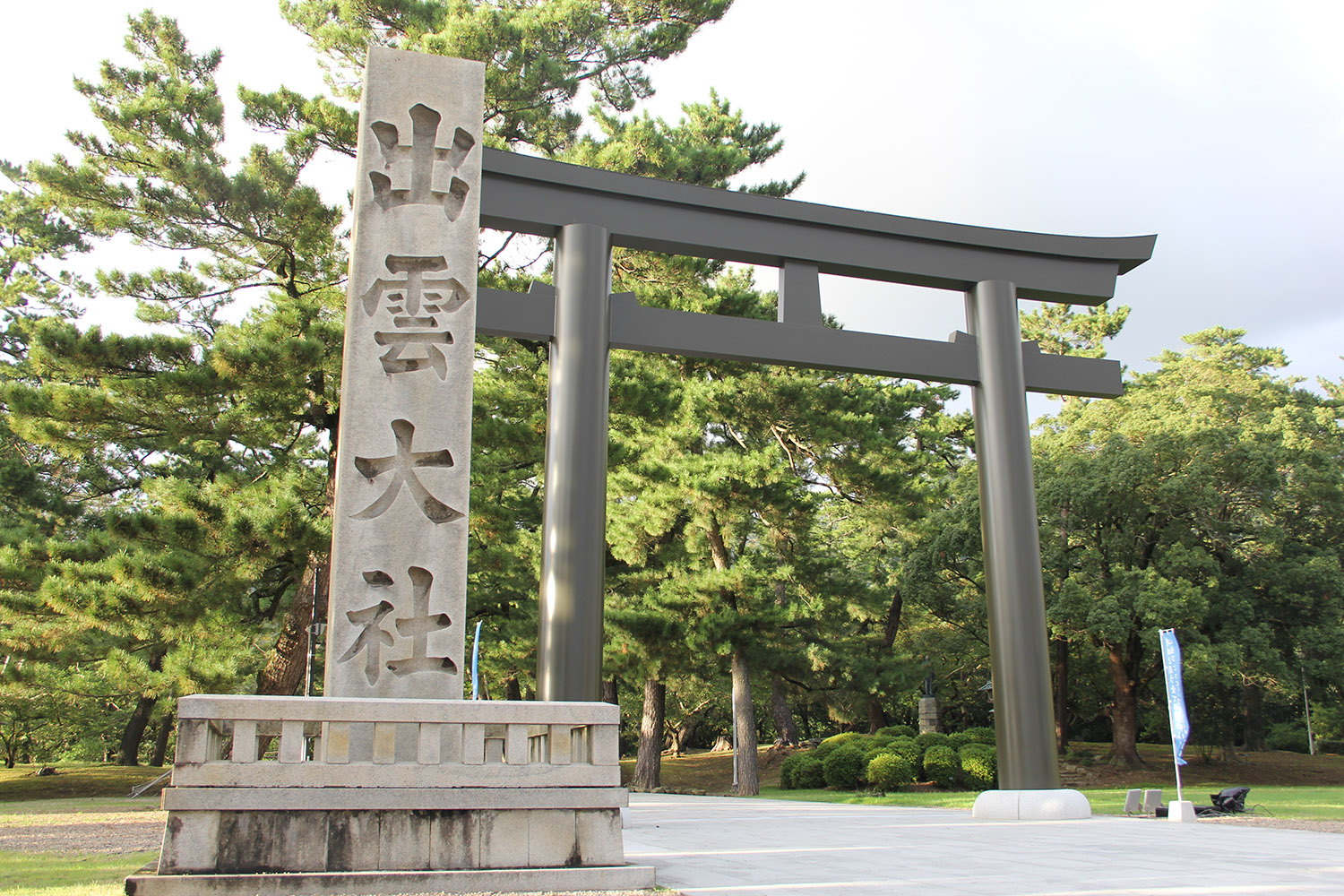
4 of Torii in Izumo Taisha is installed altogether, it's made of wood made of the ferroconcrete and that iron is made of copper, it's made with the different material. The person who would like to enjoy a purchase and a gourmet before and after worship recommends to park in free Parking in a cathedral town and start worship from Torii of two which is immediately near the cathedral town "Torii of seitame".
The person who would like to pass through all Torii tightly will begin to go and worship from Torii of one in the place I walked for about 10 minutes "Otorii of Uga Hashi (Would, but, of BA SHI, it's inferior, I'm here.)"
A mind and body is purified by "futsusha (Pay, NO and, do.)"

When I pass through Torii of seitame, there is also unusual "Sando of" descent at the whole country. "futsusha" in the while traveling and the right hand is the small company many people will often overlook, the place very important actually. It's said that they can purify a mind and body by coming, so I'll drop in by all means.
By the way, when I go around to the back of futsusha, there are small stairs, and when I get off, "Pond in jou (Rather clean, go.)" spreads. There is also Waiting Room, so it's also recommended to stroll through the turn of the pond freely by a loitering sense.
Before passing through Torii of four, it's to "image of a deity of MUSUBI".
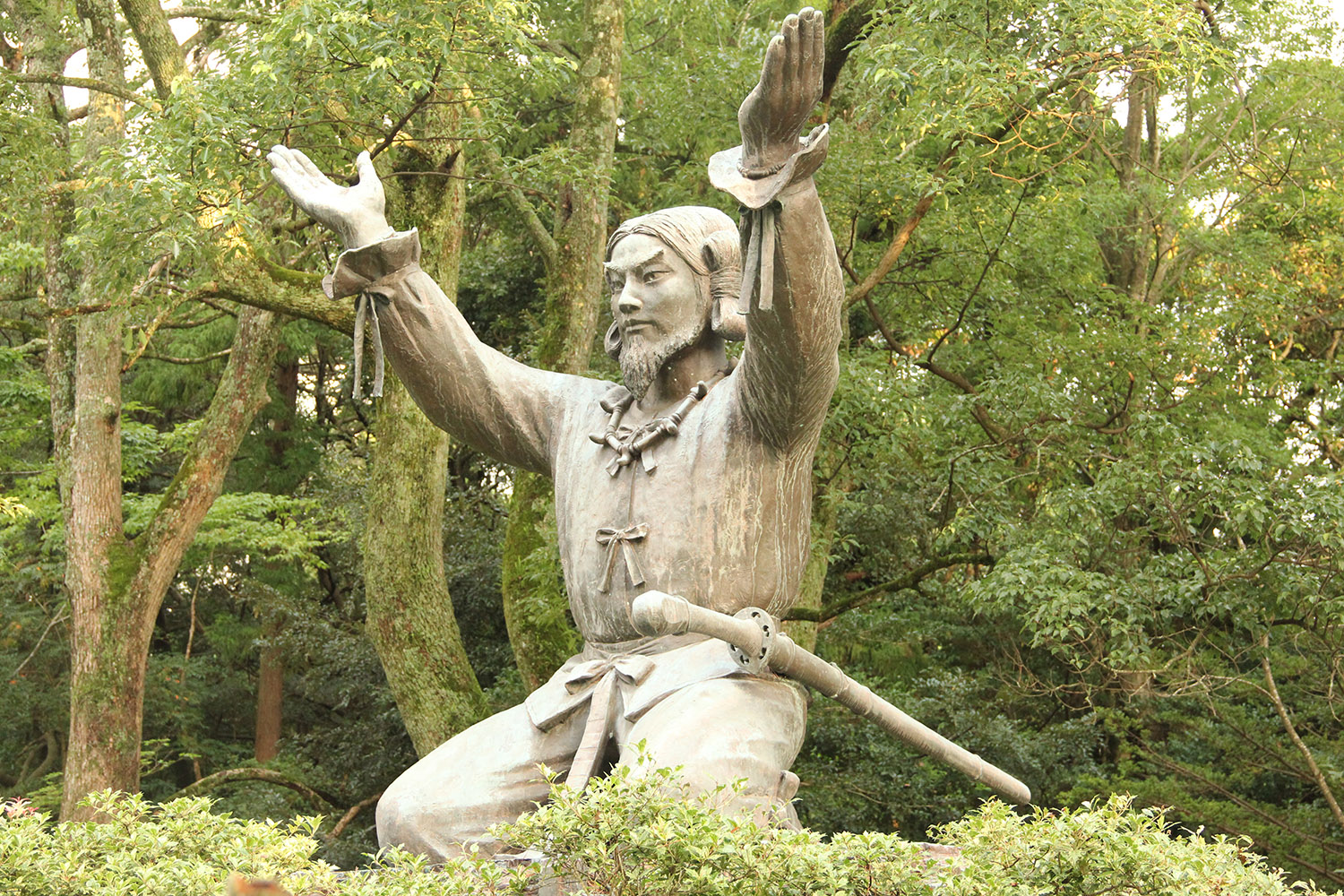
If it goes through an approach to Shrine in an avenue of pines, I'll purify both hands by Chozuya. Before going to the hall of worship, it's installed "image of a deity of" MUSUBI to want to drop in just before the "copper Torii" which is Torii of four.
I put on knowledge as God and education by the major power All-father's meeting a soul of 2, a happiness soul (It was torn and seen, oh.) and a strange soul (A comb was seen, oh.) in "The Kojiki", and it's said that it was a god as "Ogami in MUSUBI". The thing by which "Ogami in MUSUBI" is an another name of the major power All-father it means that. An image is expressing the situation by which the large country All-father receives the happiness soul which showed and a strange soul from a raging wave in Sea of Japan.
4Hall of worship (I don't creep out.)
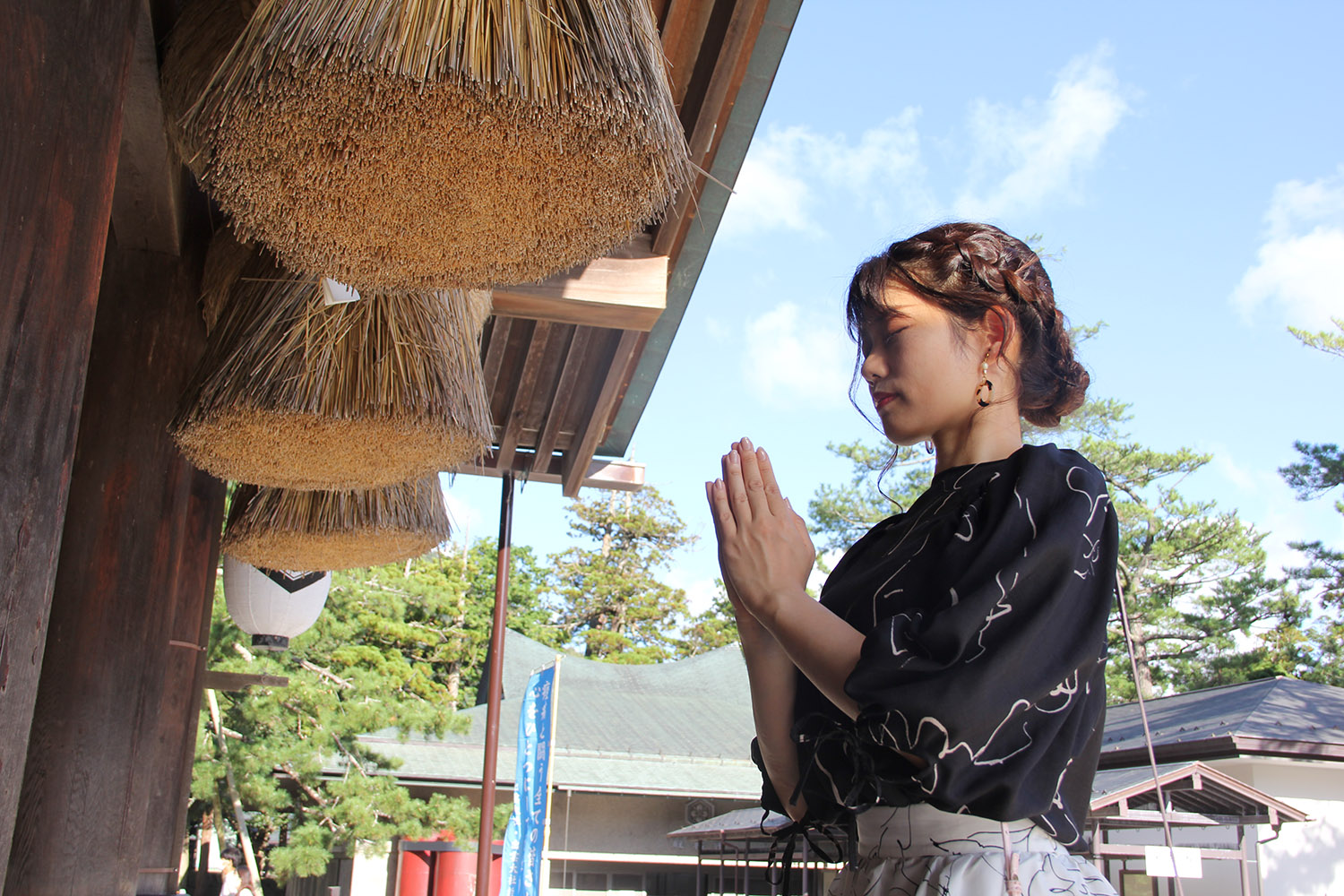
Worship manners in Izumo Taisha, "a bow of 2 fee 4 clapping"
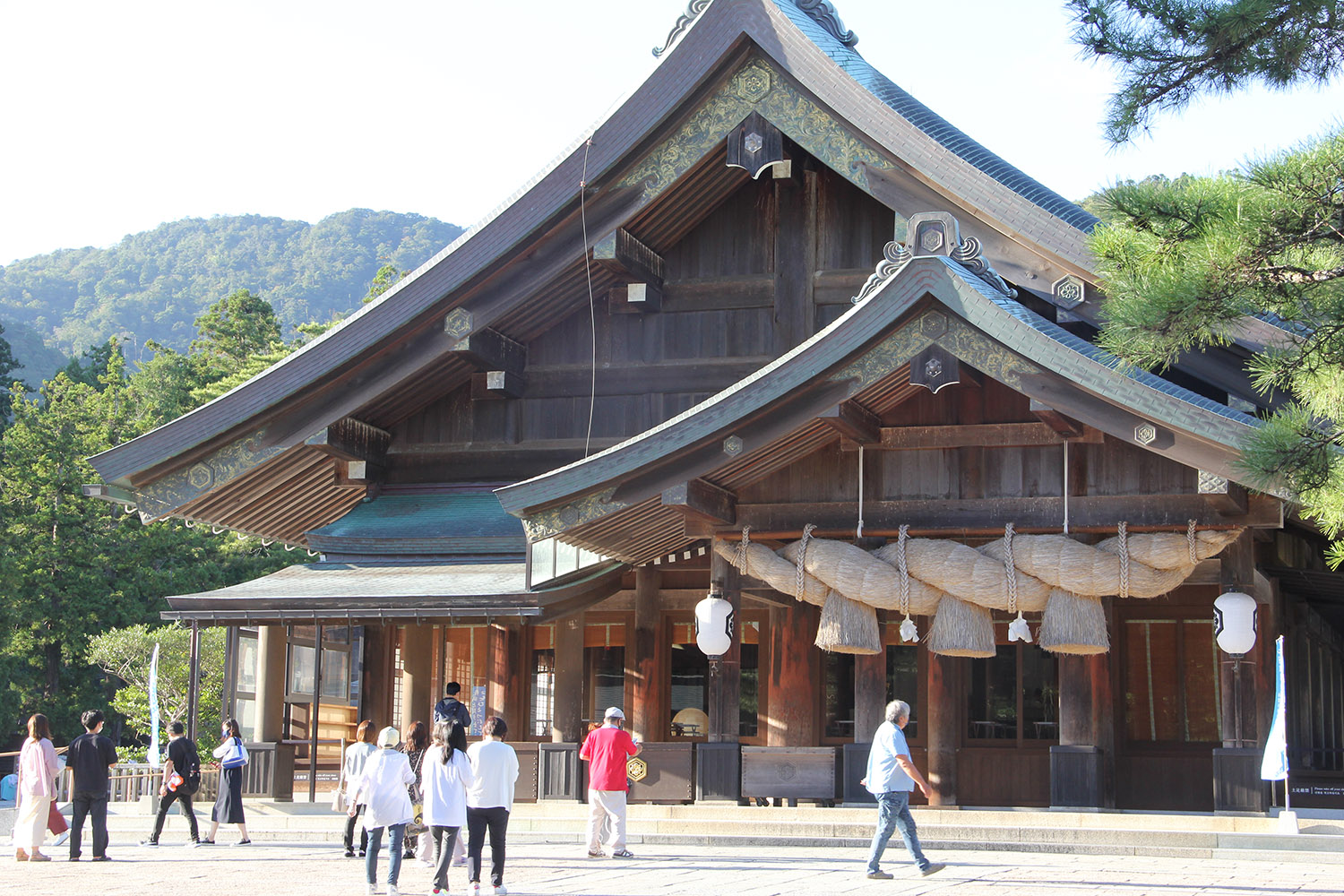
I curtsy, pass through Torii of copper and go and worship by "Hall of worship (I don't creep out.)" It's built and is said to be the biggest wooden shrine architecture after the war in 1963 (1963). Generally, at a shrine, "a bow of 2 fee 2 clapping", but, worship manners in Izumo Taisha, "a bow of 2 fee 4 clapping". I bow twice, strike clapping hands 4 times and bow once in the end.
Shrine building in a Izumo Taisha precinct as well as a hall of worship goes and worship by manners like everything. While "8 clapping" is done by an annual festival of the annual once opened on May 14 every year, I'll praise God by the half of "4 clapping" daily.
5Main shrine (It's coff, oh.)
I'll go and worship in front of "eight pair gate (one foot gate)" while wishing for main shrine.
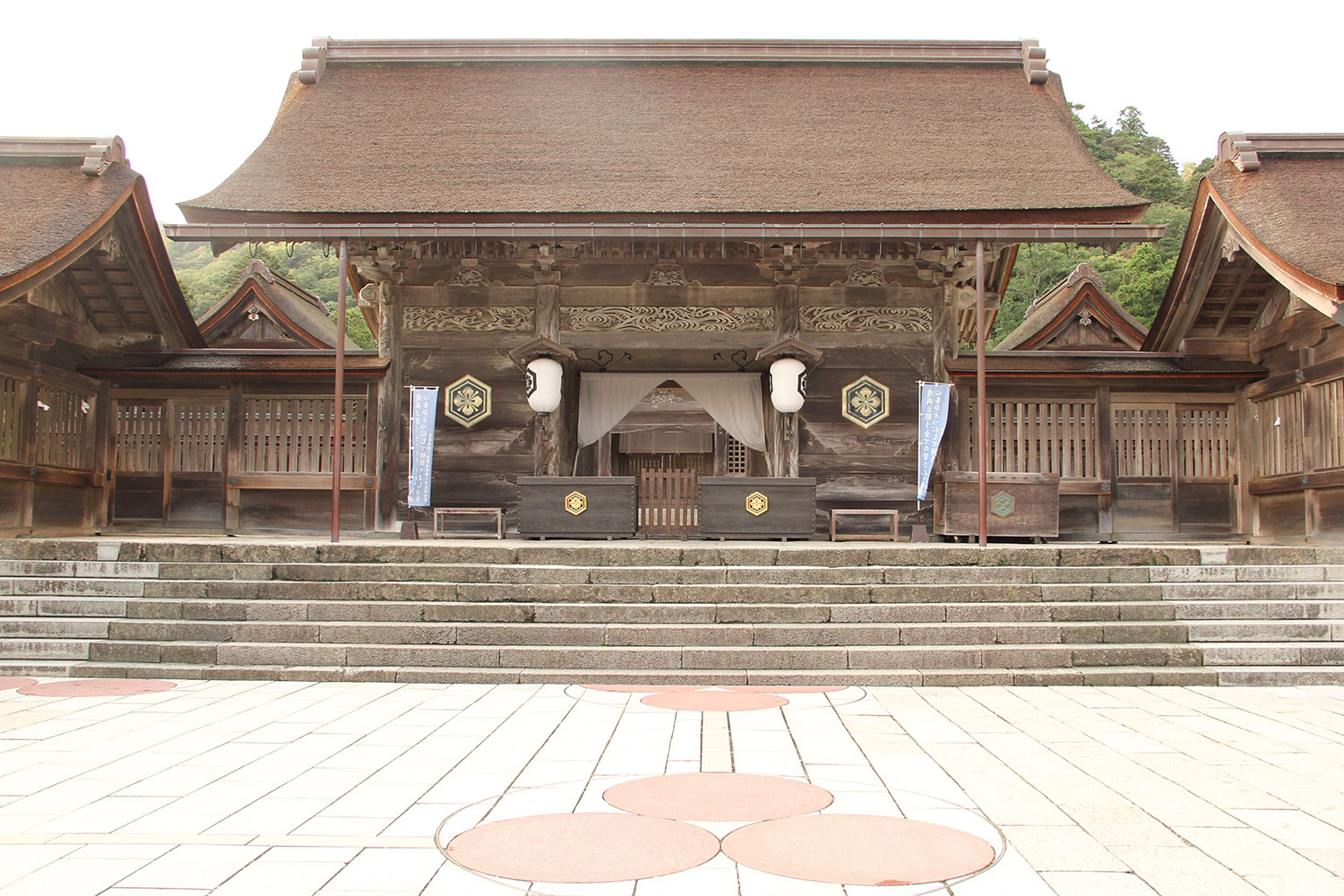
When I walk to the back of the hall of worship, "main shrine" where Okuninushinokami is enshrined (It's coff, oh.) is being seen. I'll go up stone steps in front of the main shrine, and goes and worship while wishing for eight pairs of main shrine in front of the gate. It isn't possible to advance ahead of the gate by usual worship, but a period New Year's (until around the approximately 5th) is freed, and it's possible to advance towards the inside.
Building with the decoration for which it's conspicuous in case of one even in the precinct such as a gate uses eight pairs of beautiful zelkova serrata material for a pillar. A big roof of the main shrine and etc. of ornamental crossbeams on the gable of a Shinto shrine (CHIGI) were remodeled in case of the "big removal of a shrine in" Heisei held from 2008.
God's inn "nineteen companies (JUUKUSHA)" will also go and worship.
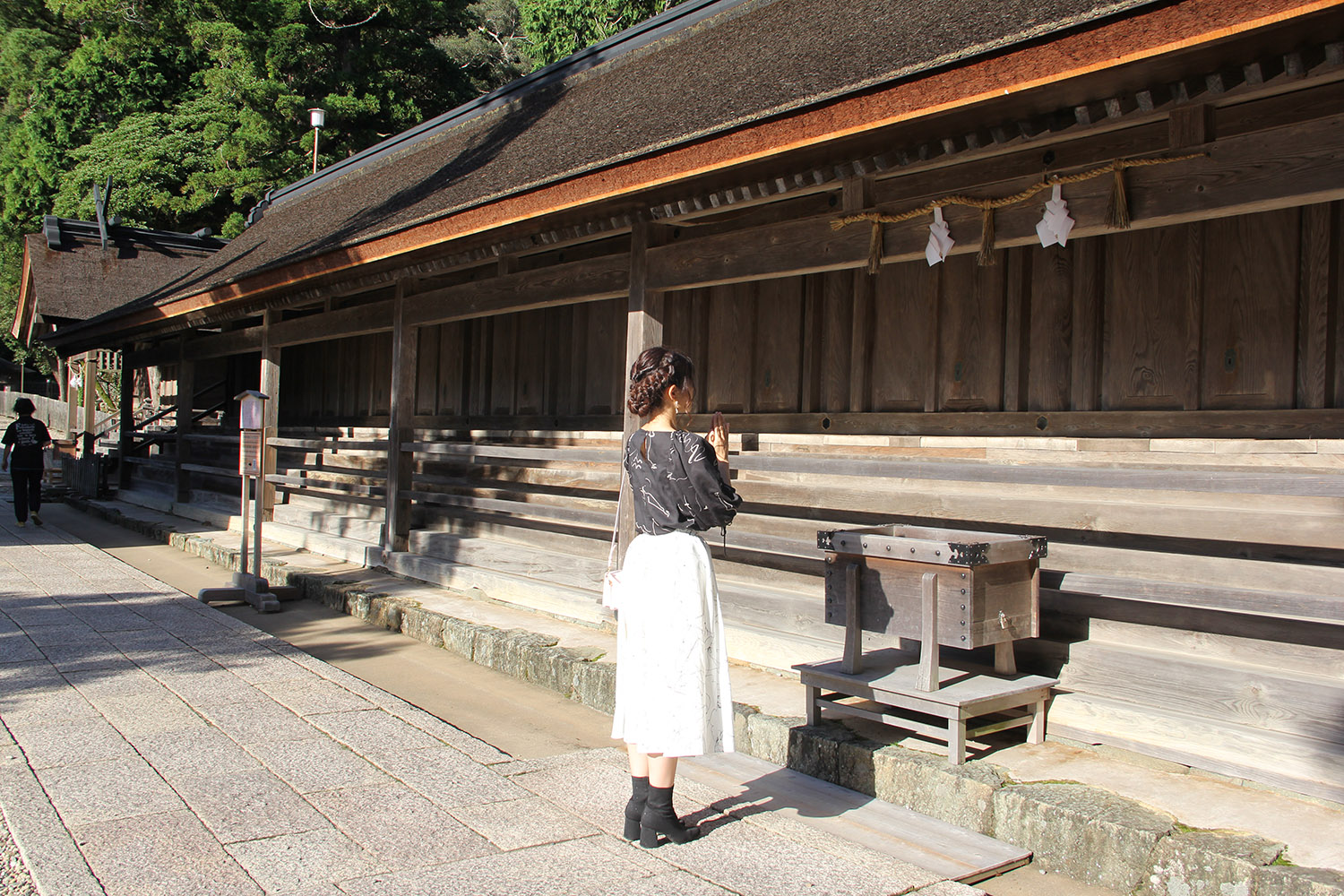
That it's in the way to "motogasha (YA which is SO,)" from a main shrine, slender company Izumo Taisha "nineteen companies". A room of 19 ranges in a ridge at Yashiro which becomes the God's inn where they were collected from the whole country on Kamiari month, and all doors are opened for whole time frame of Jinzai festival.
It's usually said to be the shrine building where worshipping from a distance (So that, yes.) does God in the whole country, to be able to make the matrix of the worship visitor the Kamiari month because you can go and worship at God in the whole country. There are 2 nineteen companies in east and west centering on a main shrine, and it's built for the shape that I face each other.
6motogasha (YA which is SO,)
It's enshrined in the main shrine back, the biggest power spot from which I hid
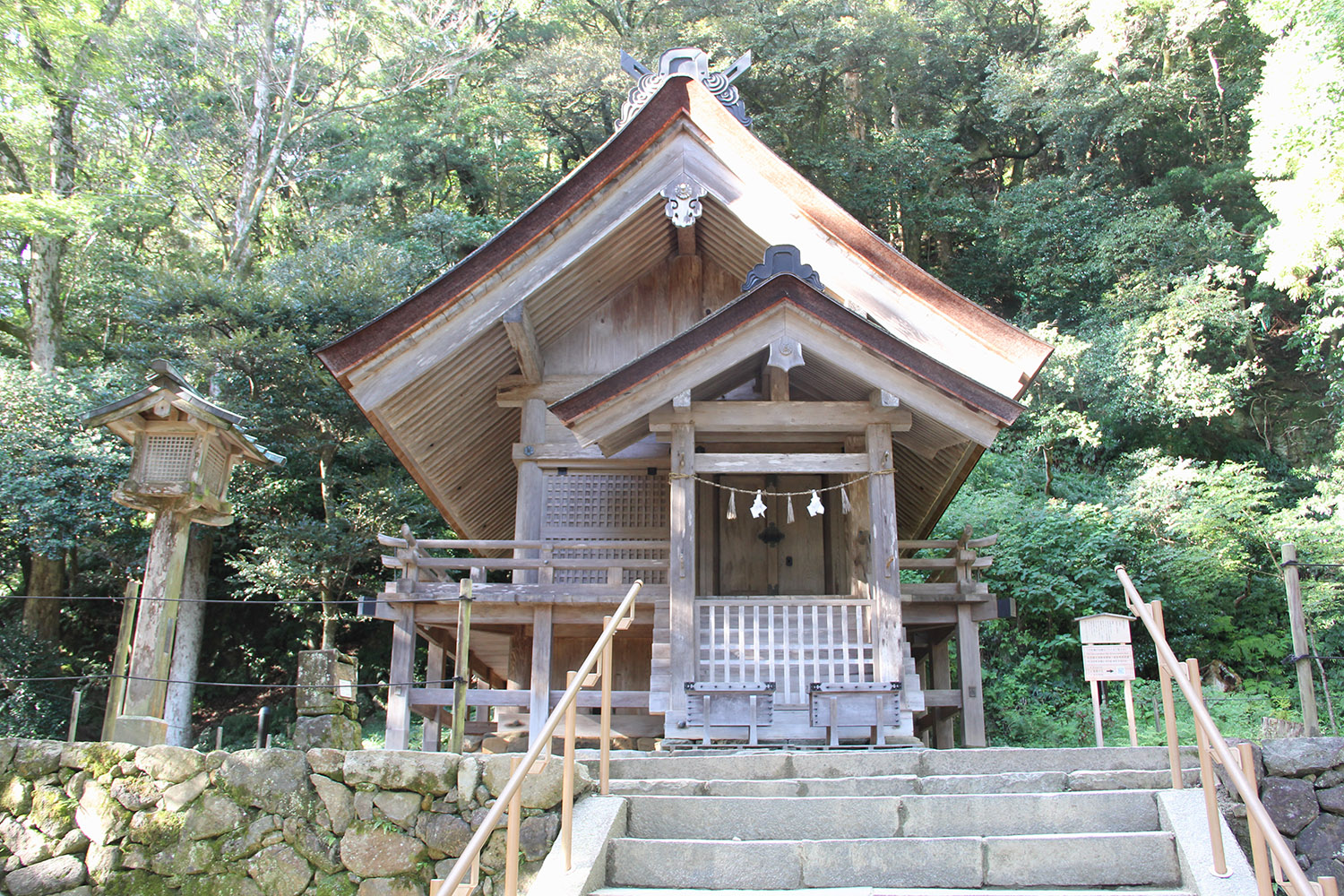
There are also a lot of ones to the "kaguraden" on the west side after worship of main shrine, I'll go around to behind in a right or wrong main shrine and go to "motogasha". Even "Yamata-no-Orochi (and, it's again, giant snake) extermination" of a myth is the company by which famous SUSANOONOMIKOTO is deified in case of an ancestor of Okuninushinokami.
When big Tsutomu lodges in particular, built motogasha is so that the whole precinct may be watched against the background of the bedrock in Mt. Yakumo, the power spot from which I hid. When I approach in the place where a precinct is quiet relatively, it's the place where a wonder and strong energy can be felt.
I touch a rock in Mt. Yakumo and feel energy.
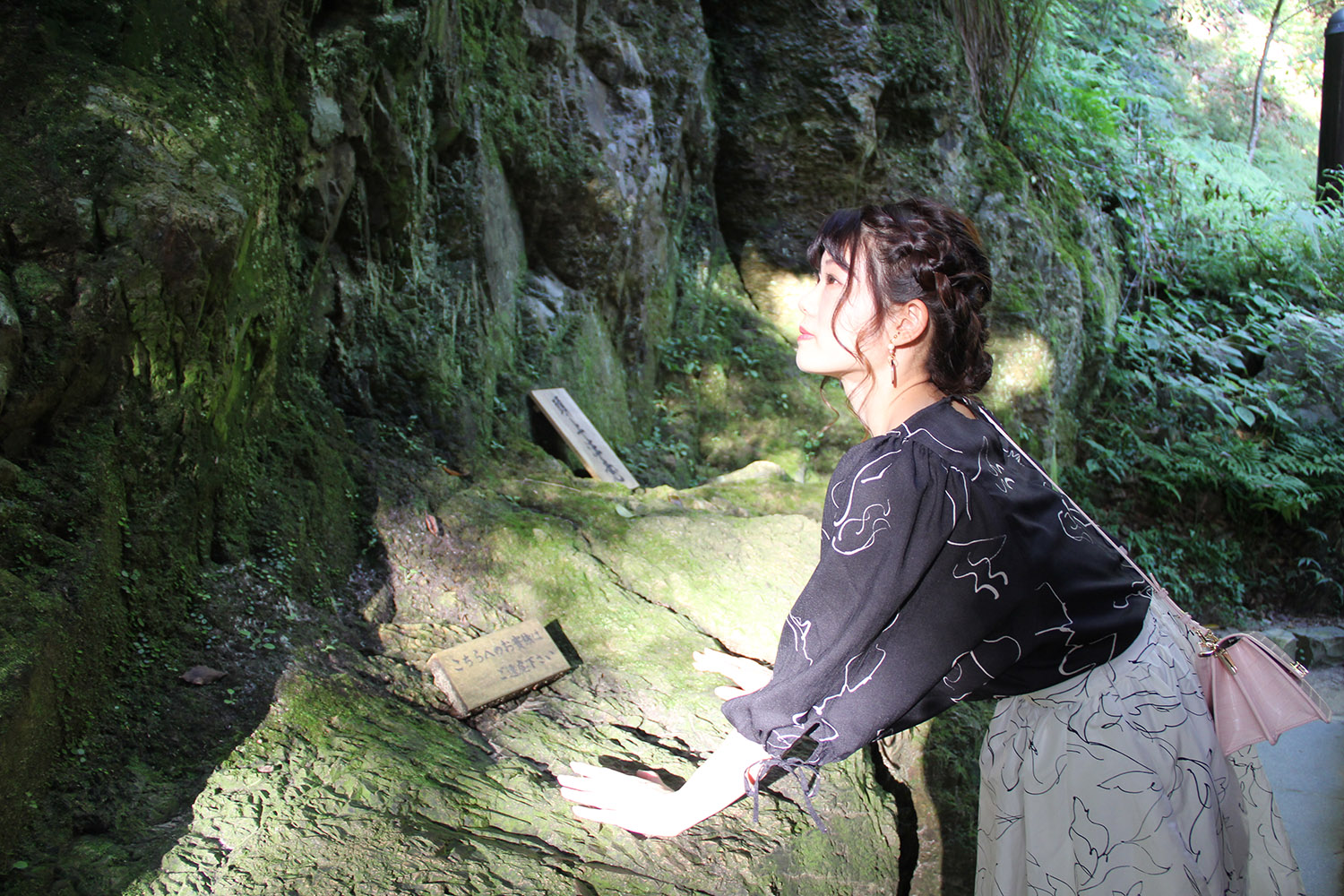
motogasha in the base in Mt. Yakumo made the divine object. It'll be possible to touch a rock surface in Mt. Yakumo immediately at the back of the company. Mt. Yakumo which is a confinement place is the place which can touch itself only, and when he touches, the people who feel strong energy are a lot of spots, too.
There is a wooden box with sand in a place by kamigei "beach in Inasa" on the floor of the company, and when there is divine favor which purifies land by scattering, the sand purified in motogasha is called. When bringing the sand adopted at a beach in Inasa and offering at motogasha, I can receive sand of the same quantity instead, so the person who hopes will bring it by all means.
7Kaguraden (sniffed mother-of-pearl)
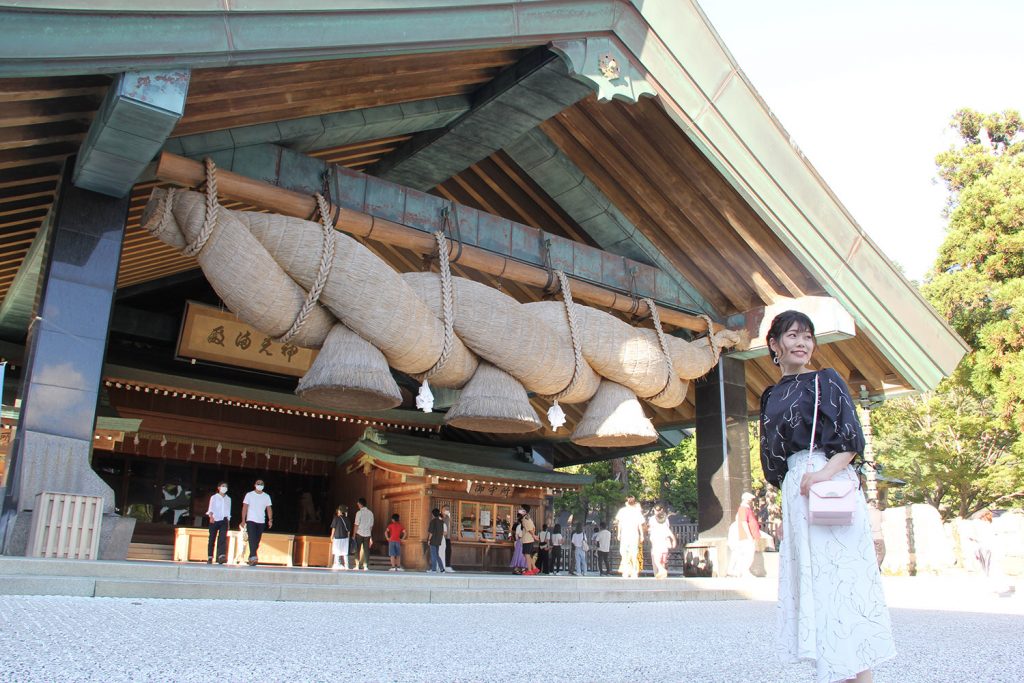
Big sacred straw ropes of the Japanese maximum level. "Kaguraden (sniffed mother-of-pearl)" I'll go and worship.
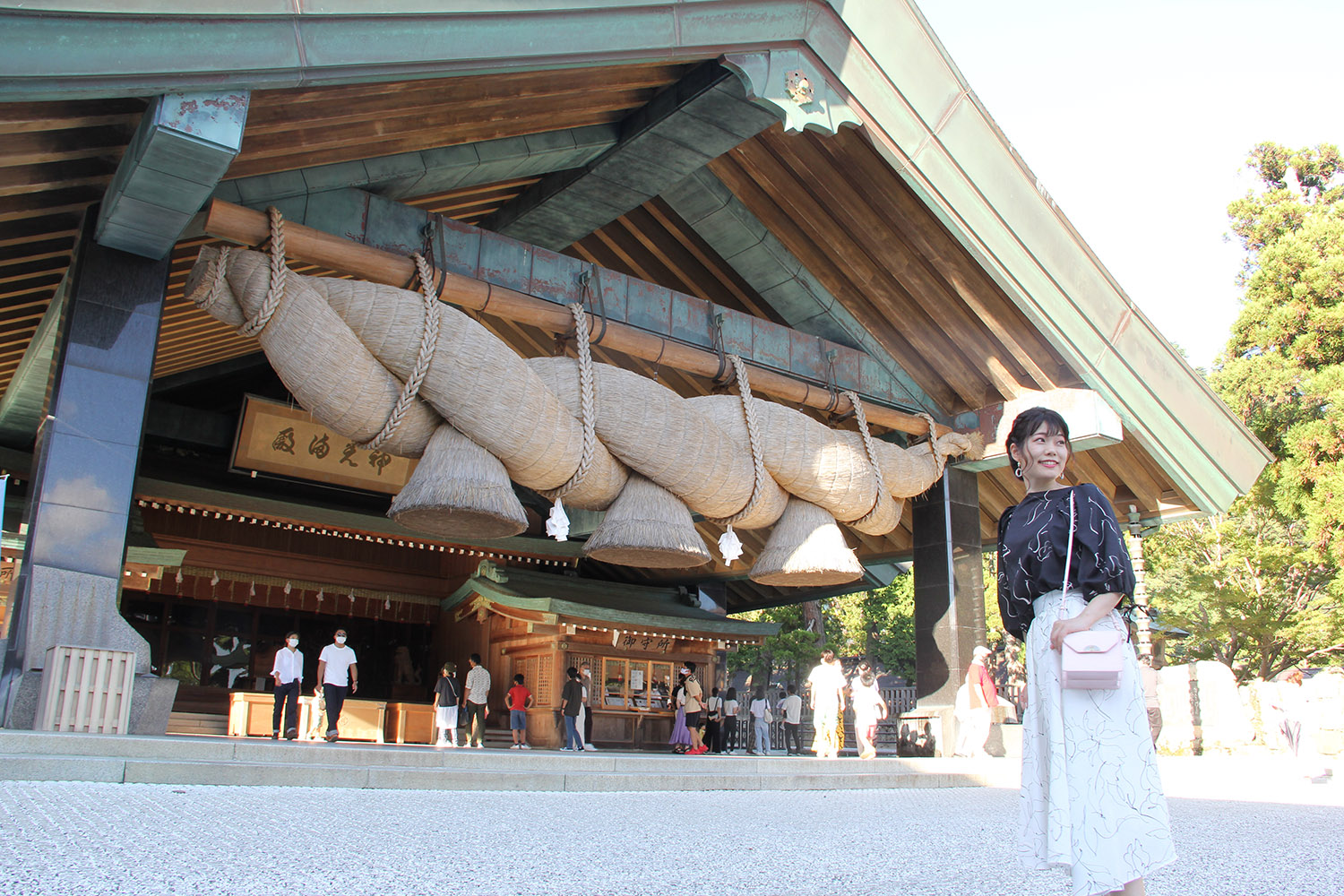
The "kaguraden" on which that it's here before crossing motogakawa which flows through a precinct, could hang big sacred straw ropes of the Japanese maximum level. The sacred straw ropes in which I also equal 5.2t is the size of the highlights, and while going and worship about 13 m of length and the weight are the place where the person who takes a ceremonial picture in a background comes across a symbol in Izumo Taisha much, too.
There is size of 270 mats in a great hall in the company, usually, I often come across a bridegroom of the hakama form and a bride of the white kimono form at the circumference because I pray and various festival events are holding a wedding ceremony.
<I'd like to know more! Charm in Izumo Taisha>
8Stone statue of rabbit
I'll find a stone statue of a cute rabbit.

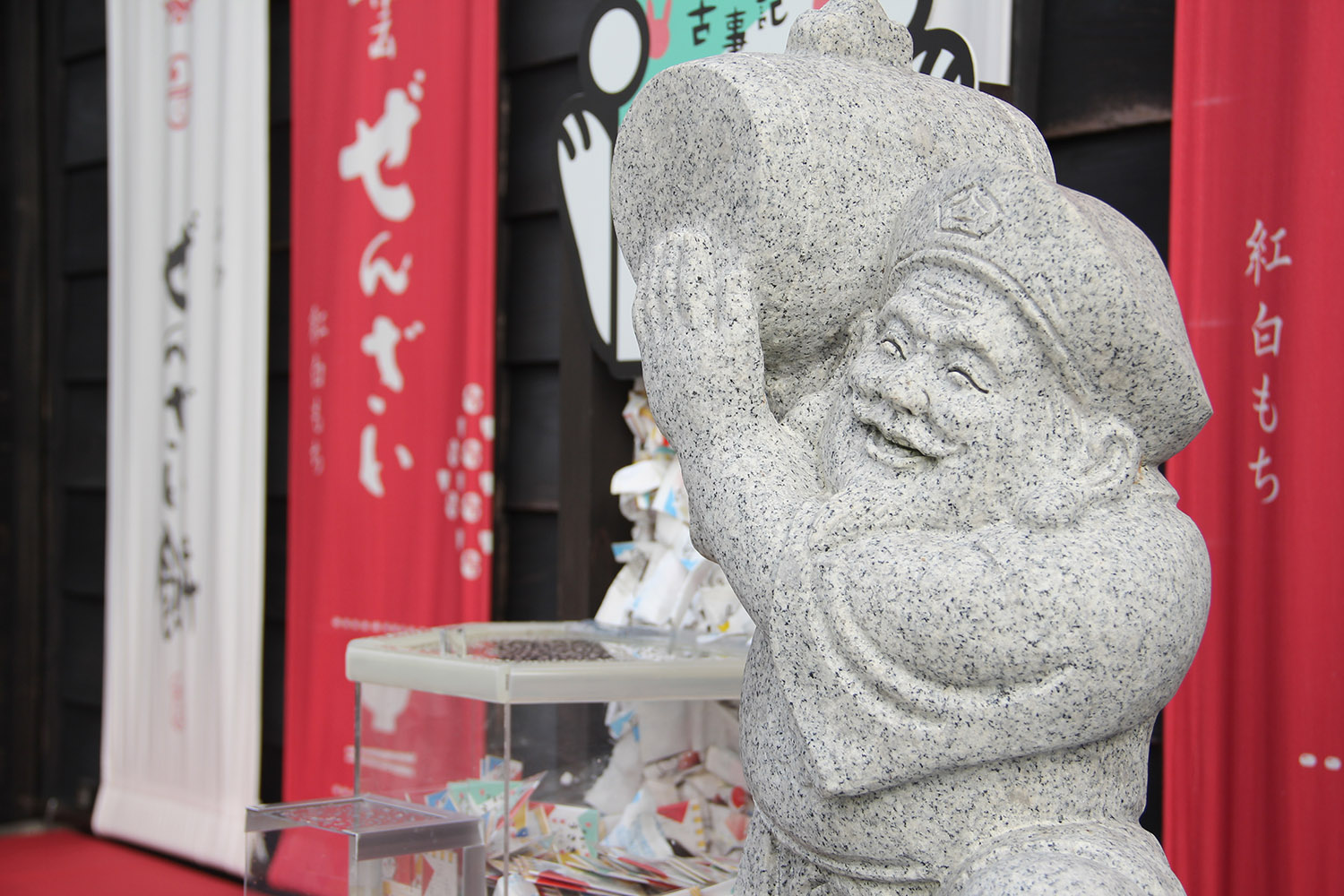
About 60 stone statues of a cute rabbit for a myth of "white hare in Inaba" are installed in a precinct. I hope, and I have a drink together conjugally, and if, an expression and the form of the rabbit which tightened turning in front of "Nomi sukune (Only, it became vacant.) shrine" it's various and that God of sumo wrestling is deified.
The existence from which a white hare is learned about as the "symbol of" a matchmaking which mediated between Okuninushinokami and between the princess on eight who is the first princess (and, KAMIHIME) in the story. It's also one of how to enjoy oneself Izumo Taisha to look for a stone statue and walk while going and worship.
9I'll have a red seal.
A red seal book of the Izumo Taisha original. I'll get a red seal at a precinct.
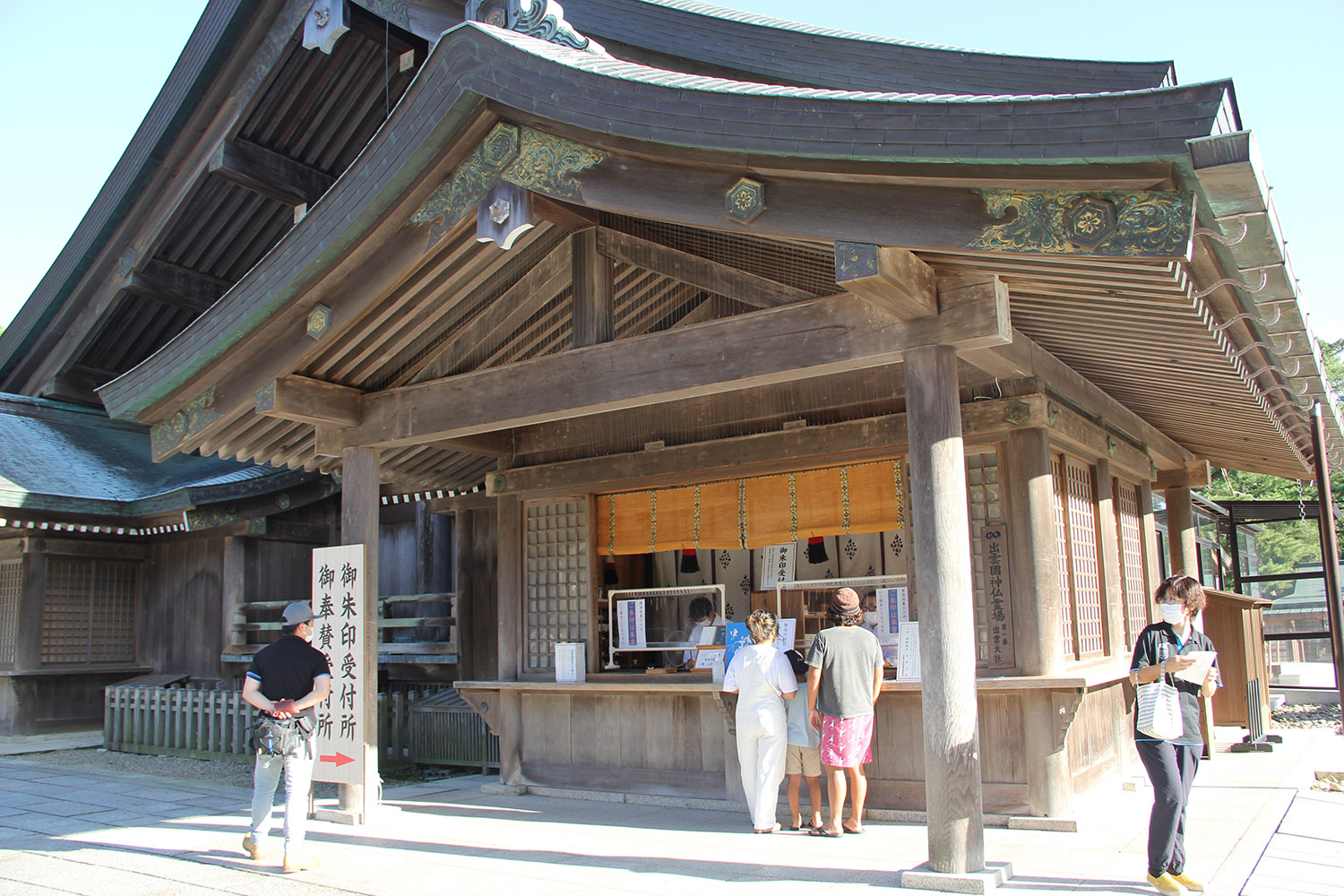
I can receive 4 kinds of original red seal at Izumo Taisha. I can also receive 2 kinds of red seal at the Kitajima Kuninomiyatuko house" on the east side of Izumo Taisha in addition to a red seal of kaguraden with a reception place on the left side to the red seal and the kaguraden in a main shrine with a reception place in the back of the hall of worship.
A red seal book of the Izumo Taisha original is 2 kinds, the white background by which main shrine was designed and Konji by whom the cloud which imagined Yakumo was designed. Though both are simple, the design which has dignity is popular. A red seal book can buy at the reception desk in the hall of worship back in addition to kaguraden.
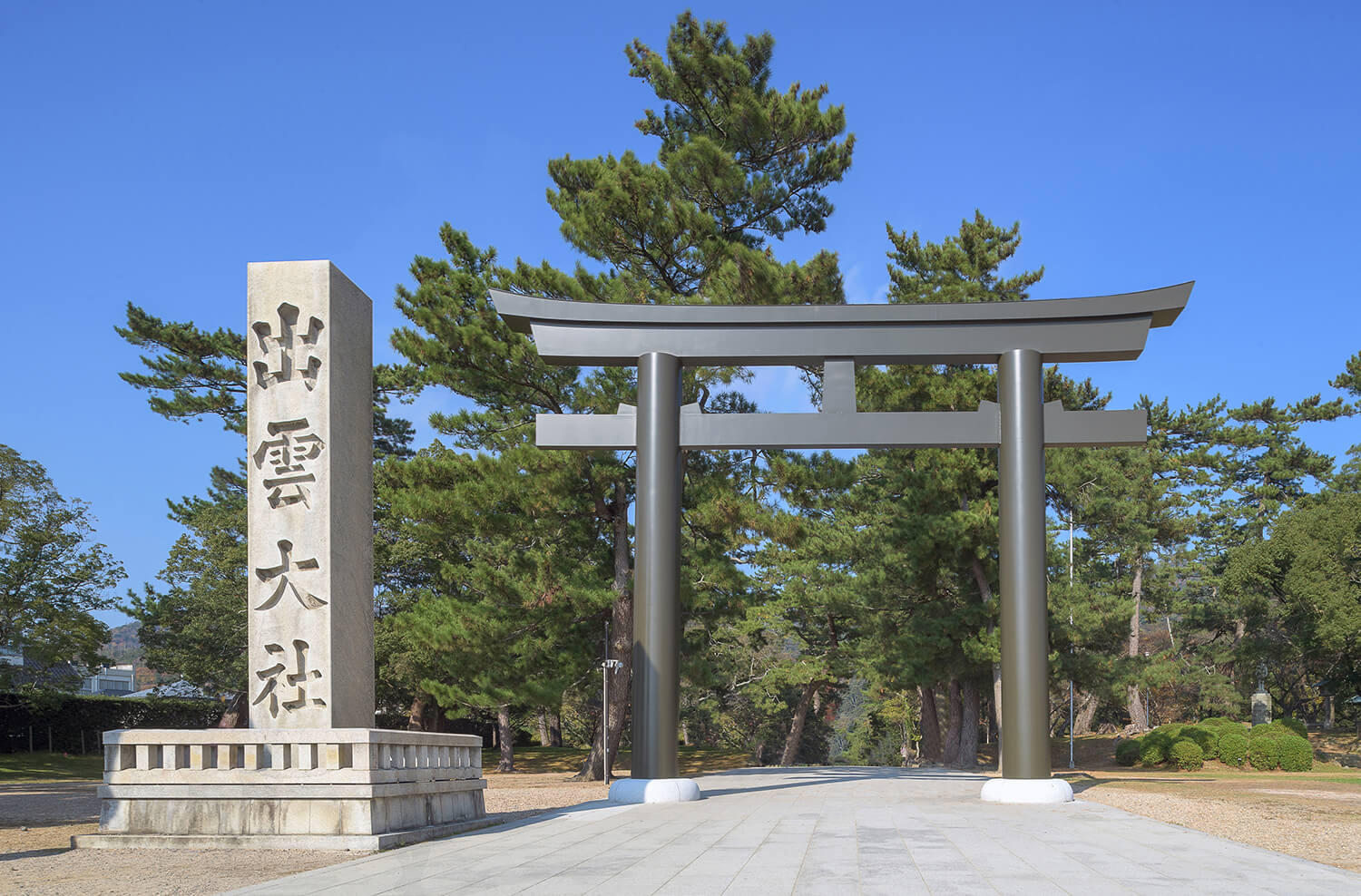
- Izumo Taisha
-
 Shimane Izumo city 195, Kizukihigashi, Taisha-machi MAP
 Ichibata Electric Railway, ", Izumo Taisha, with the station" vanity for about 5 minutes on foot
 JR "Izumo, Ichi Station" empty Ichibata Bus (the Izumo Taisha Hinomisaki line) ride and "Seimon-mae" getting off. There is a Izumo Taisha direct shuttle bus from the Izumo airport (flight 2 a day).
 Worship At 6:00-19:00 and the charm 6:00-19:00 and Homotsuden 8:30-16:30.
 Open everyday
 Free
Free 0853-53-3100 (8:30-16:30)
 Free
Free Guard arranges for it more than 16:30 and, you can't go any more from nineteen companies to the north side.
MAP
- <What kind of place is Izumo Taisha?>
-
- <Recommendation worship route in Izumo Taisha>
- <I'd like to know more! Charm in Izumo Taisha>
- Hoshino ResortsProperty around here

Local Guide which took charge of this article
Hoshino Resorts KAI Tamatsukuri
Shimane and Tamatsukurihot spring
Inn with whole Guest roomOutdoor hot spring which can enjoy hot water of a clear skin. The sake called Shinto music and dance numbers and Shimane origination can be enjoyed.
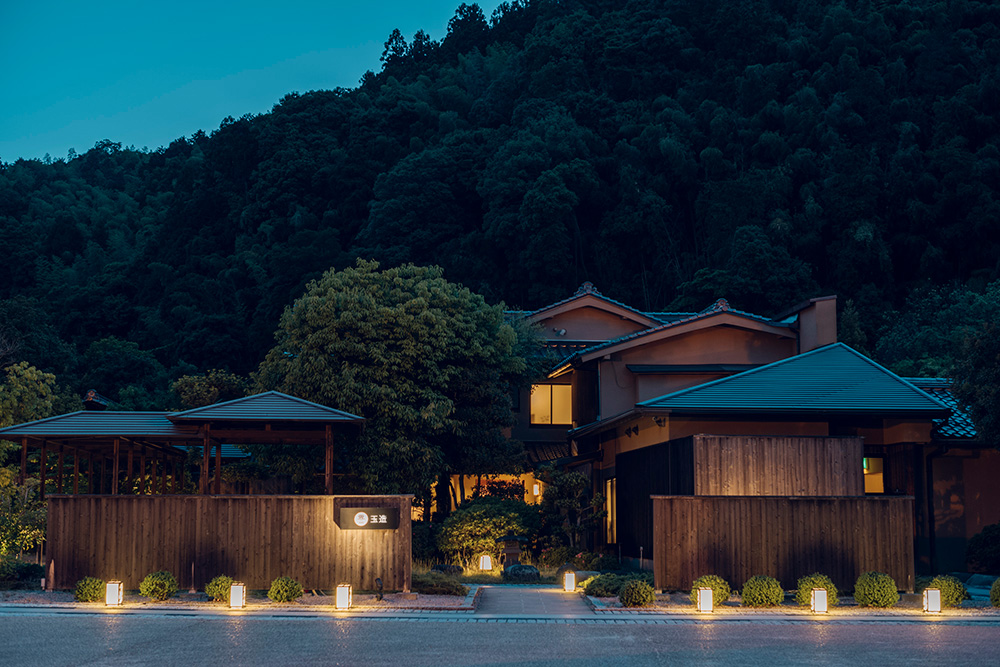
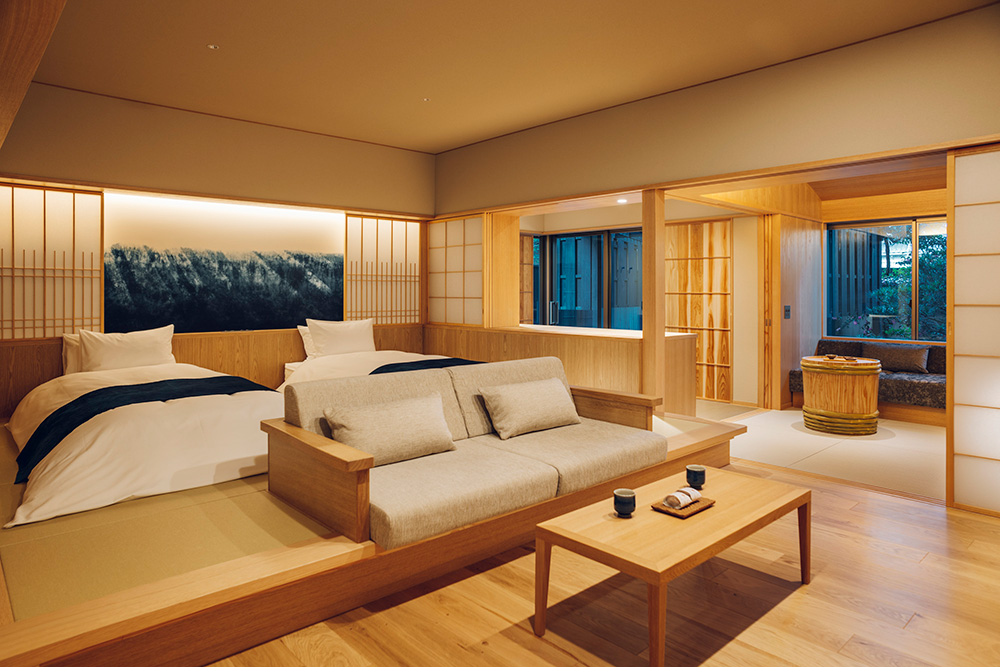
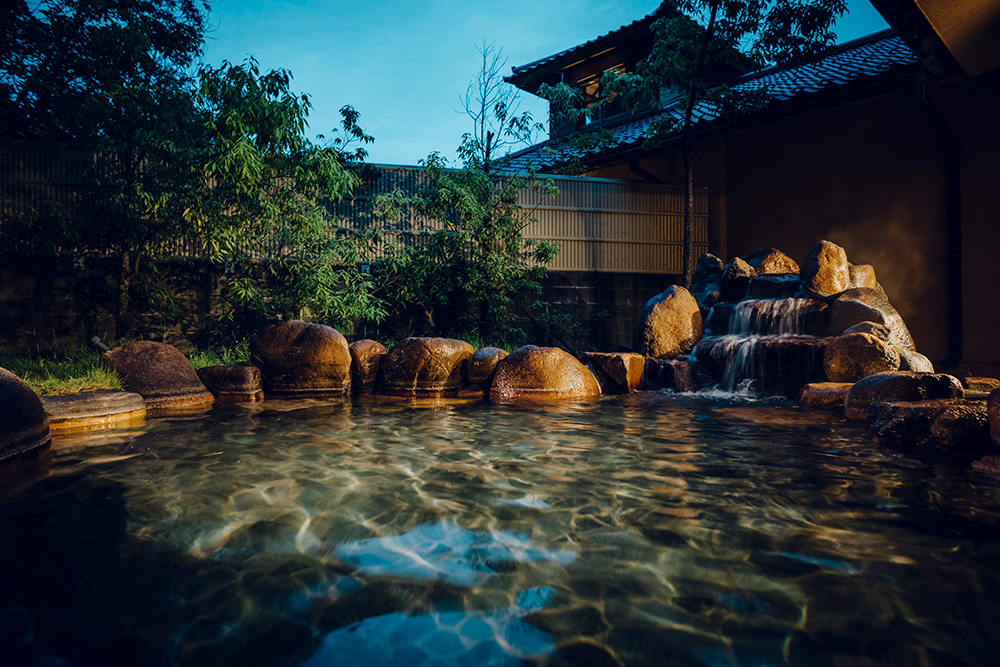
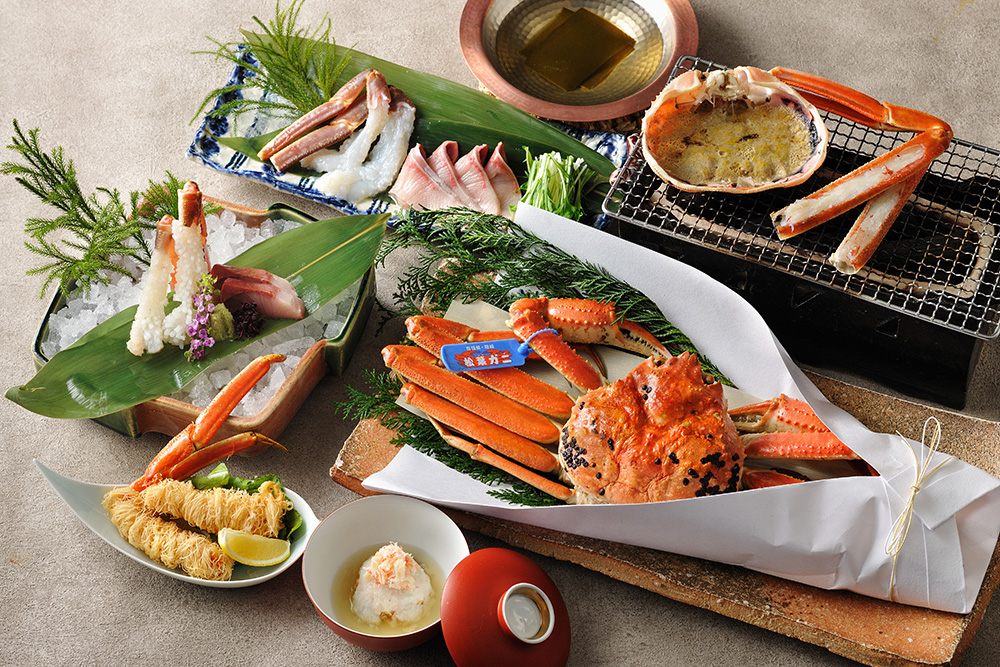
It's a taxi from Direction JRTamatsukuriHot spring station, about 5 minutes
- A room charge example
- 1 night, 1 person \31,000-
Hoshino Resorts KAI Izumo
Only Shimane and a Izumo day bloom, hot spring.
The hot spring inn where I pause in Hinomisaki where a Izumo myth roots (Only a day blooms.) Location also convenient for kei RI to Izumo Taisha.
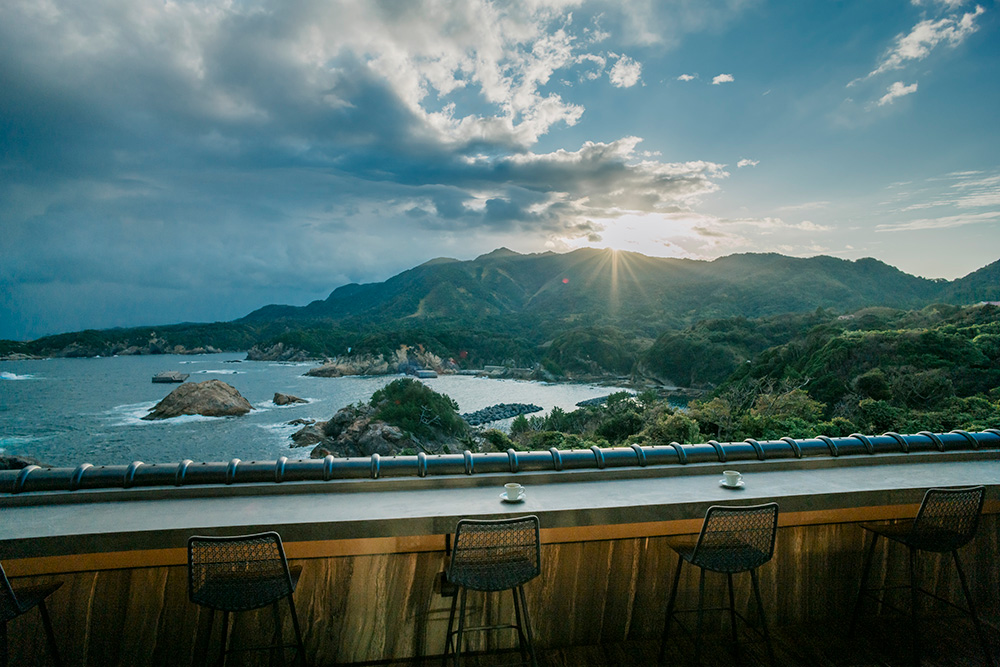
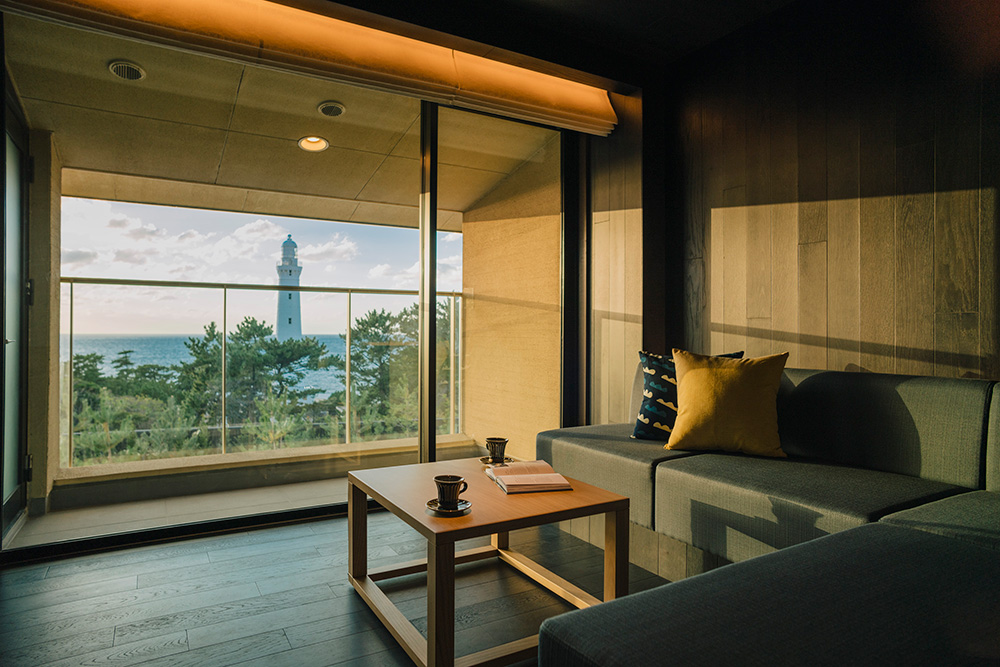
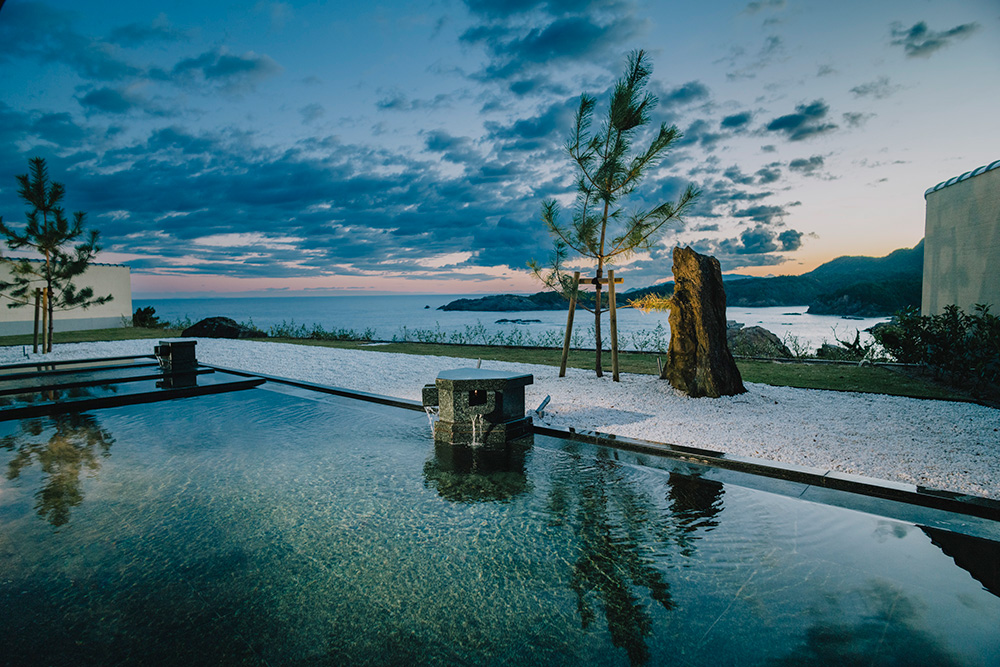
From Direction JRIzumo Ichi Station, a Ichibata Bus ride and "Hinomisaki, lighthouse" getting off for 1 minute on foot
- A room charge example
- 1 night, 1 person \19,000-