





[2026 year edition] 4 elections of flower viewing spot in Tokyo and Otemachi area

![[2026 year edition] 4 elections of flower viewing spot in Tokyo and Otemachi area](https://hoshinoresorts.com/guide/wp-content/uploads/2022/03/tyhs-main-1024x683.jpg)
When severe cold winter passes, and spring is met, it's an arrival in a cherry-blossom season increasingly. There are many famous places where "Chidorigafuchi" and "Imperial Palace east Imperial garden" are going flower viewing in Tokyo and Otemachi area which are a center of the downtown centers. It's within the walking range more than "HOSHINOYA Tokyo" from the inside of a flower viewing spot in such Otemachi area, Direction, can, I'll introduce a spot.
1Chidorigafuchi
Japan will enjoy a cherry tree fully by an eminent flower viewing spot.

"Chidorigafuchi" where I had the function as the dam in Edo opening of the shogunate. It's the part of the moat and is also left as a water moat at present in case of Edo Castle expansion. A cherry tree along the approximately 700 m of esplanade maintained along Kitanomaru Garden from Yasukuni Dori meets full bloom from the end of March to the beginning of April, and the scenery of the highlights charms all people who visit.
A boat place is in the site, and it's possible to look up at a cherry tree from a surface of the water. Chidorigafuchi is also DE can go flower viewing by a viewpoint different from usual.
[Bloom time] at the middle ofordinary year March-at the end of March.
[Best time] at the end ofordinary year March-at the beginning of April.
[The kind of cherry trees] Someiyoshino cherry tree, double flowering cherry tree and weeping cherry and others
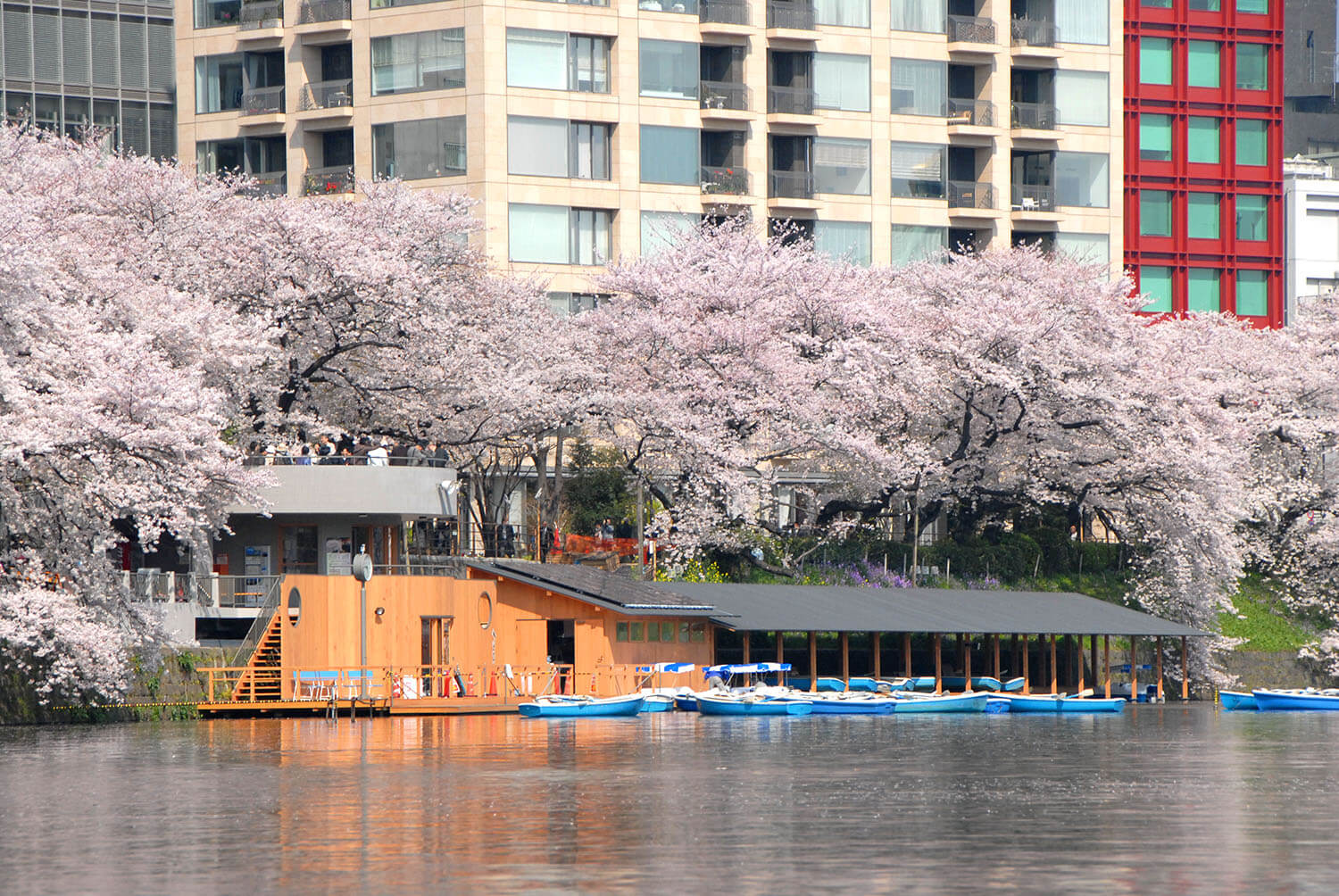
- Chidorigafuchi
-
 Tokyo capital Sanbancho, Chiyoda-ku 2 destination MAP
 Toei Shinjuku Line Tokyo Metro Tokyo Metro Tozai Line and Hanzomon Line "Kudanshita Station", than the 2nd exit, about 5 minutes on foot
Tokyo Metro Hanzomon Line "Hanzomon Station", than the 5th exit, about 5 minutes on foot Linchpin inquiry (It's different depending on time.)
Chidorigafuchi boat place, 11:00-17:30 (from March 1 to November 30)
※ A cherry blossom viewing period is 9:00-17:30.
 Chidorigafuchi boat place A cherry blossom viewing period is 1500 yen per 30 minutes and 3000 yen per 60 minutes.
 03-3234-1948 (Chidorigafuchi boat place)
2Edo cherry tree street
Superb view spot downtown where you can look at a cherry tree as well as a historic landmark
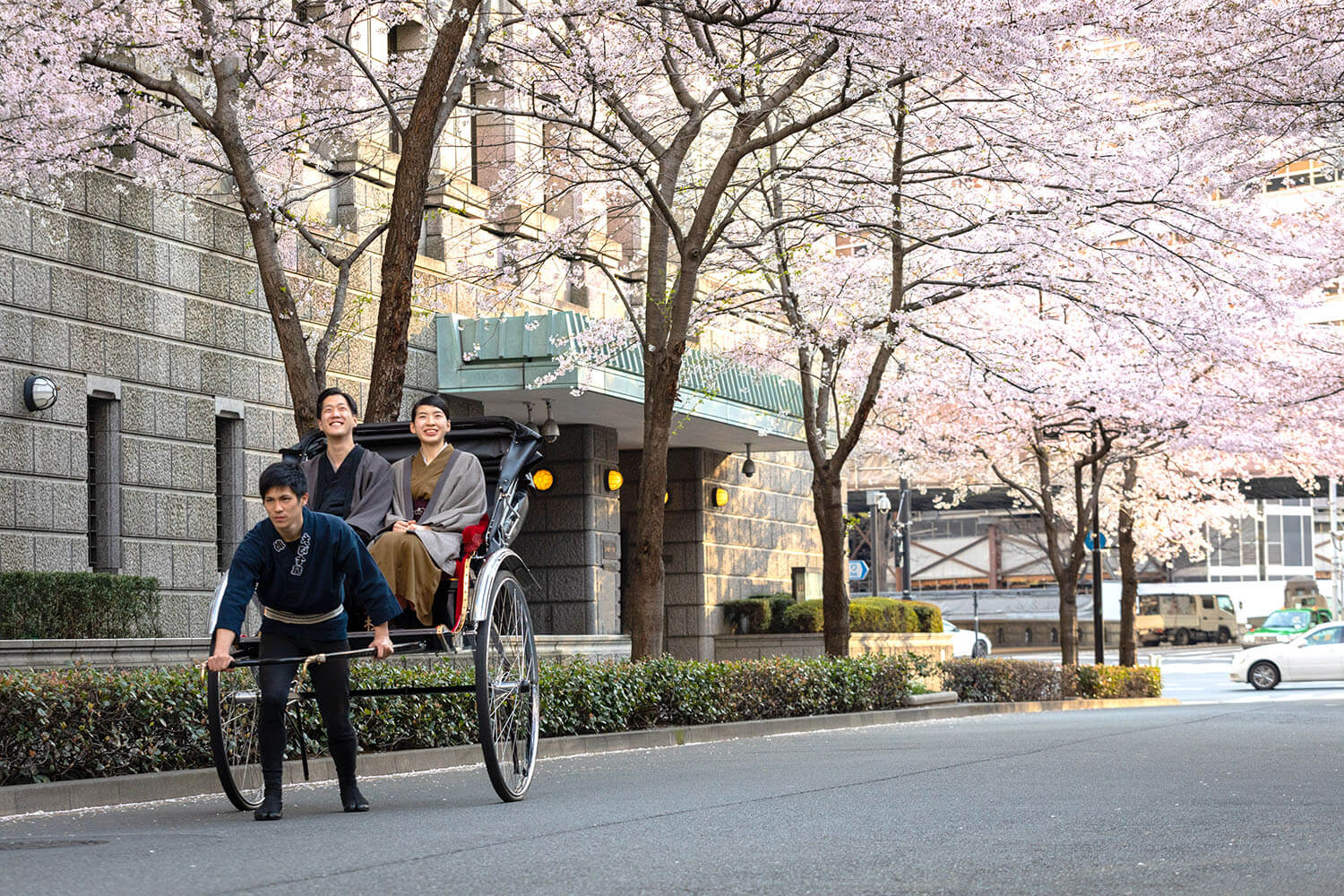
Edo cherry tree street" which leads to Nihonbashihoncho from Nihonbashihongokucho with Bank of Japan. That a called trigger is called a specialty of Ichikawa dan Juro in the Edo Period. Nihonbashi Mitsukoshi main store and a historic landmark of Mitsui Life main building are also lined up in addition to the Bank of Japan along a street.
Approximately 80 Someiyoshino cherry trees are planted in both sides on the way, and the wonderful view is seen by the time of full bloom like a tunnel of a cherry tree. As well as taking a walk it's also fresh to get on rickshaw and love a cherry tree from the height of the eye different from usual.
[Bloom time] at the end ofordinary year March-at the beginning of April.
[Best time] ordinary year first April
[The kind of cherry trees] Someiyoshino cherry tree other ones
- Edo cherry tree street
-
- Tokyo capital 2-1-1, Nihonbashihongokucho, Chuo-ku (Bank of Japan) MAP
- From a Tokyo Metro Hanzomon Line "Mitsukoshimae Station" B1 exit, about 5 minutes on foot (Bank of Japan)
3Kanda Myojin Shrine
General local deity in Edo with history in approximately 1300
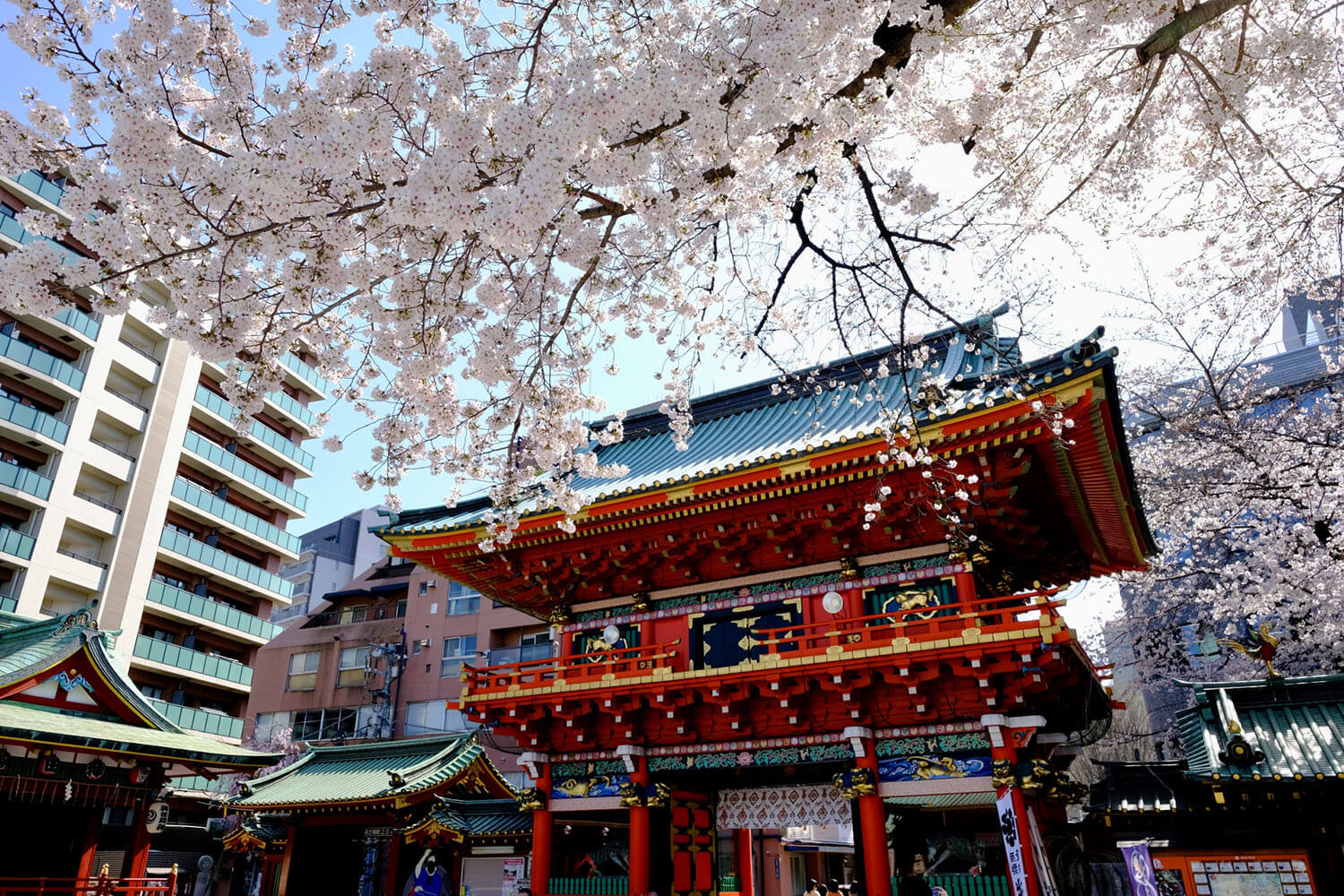
The shrine established in 730. It's also famous as the stage of "Kanda festival" where three grand festivals of the other ones and Japan called a general local deity in Edo are one. The shrine building reconstructed after Great Kanto Earthquake in 1923 (1923) is general vermilion lacquer coating of remarkable steel-reinforced concrete as at that time, and a worship visitor is being also met as a symbol at present.
A cherry tree in a precinct can bloom and be satisfied with the cityscape full of Japanese feelings in spring.
[Bloom time] at the end ofordinary year March-at the beginning of April.
[Best time] ordinary year first April
[The kind of cherry trees] Someiyoshino cherry tree, double flowering cherry tree and weeping cherry and others
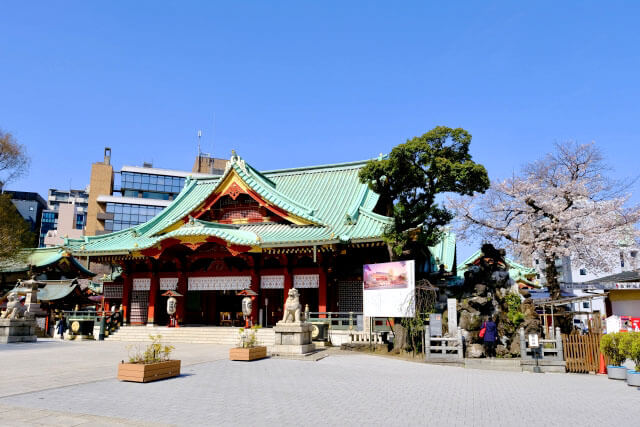
- Kanda Myojin Shrine
-
- Tokyo capital 2-16-2, Sotokanda, Chiyoda-ku MAP
- Than Chuo Line and St. Sobu Line "Ochanomizu Station" Hashiguchi, about 5 minutes on foot
Tokyo Metro Marunouchi Line "Ochanomizu Station", most, than an exit, about 5 minutes on foot - The worship is possible for 24 hours (for illumination in a precinct, to 23:00).
 I don't have that (There is gate closing time at 1:00 in the last day of the year.)
- Free
- 03-3254-0753
 Than a shrine, approximately, 5 minutes on foot, there is pay Parking at the place.
4Imperial Palace east Imperial garden
The part of old Edo Castle is maintained as a park.
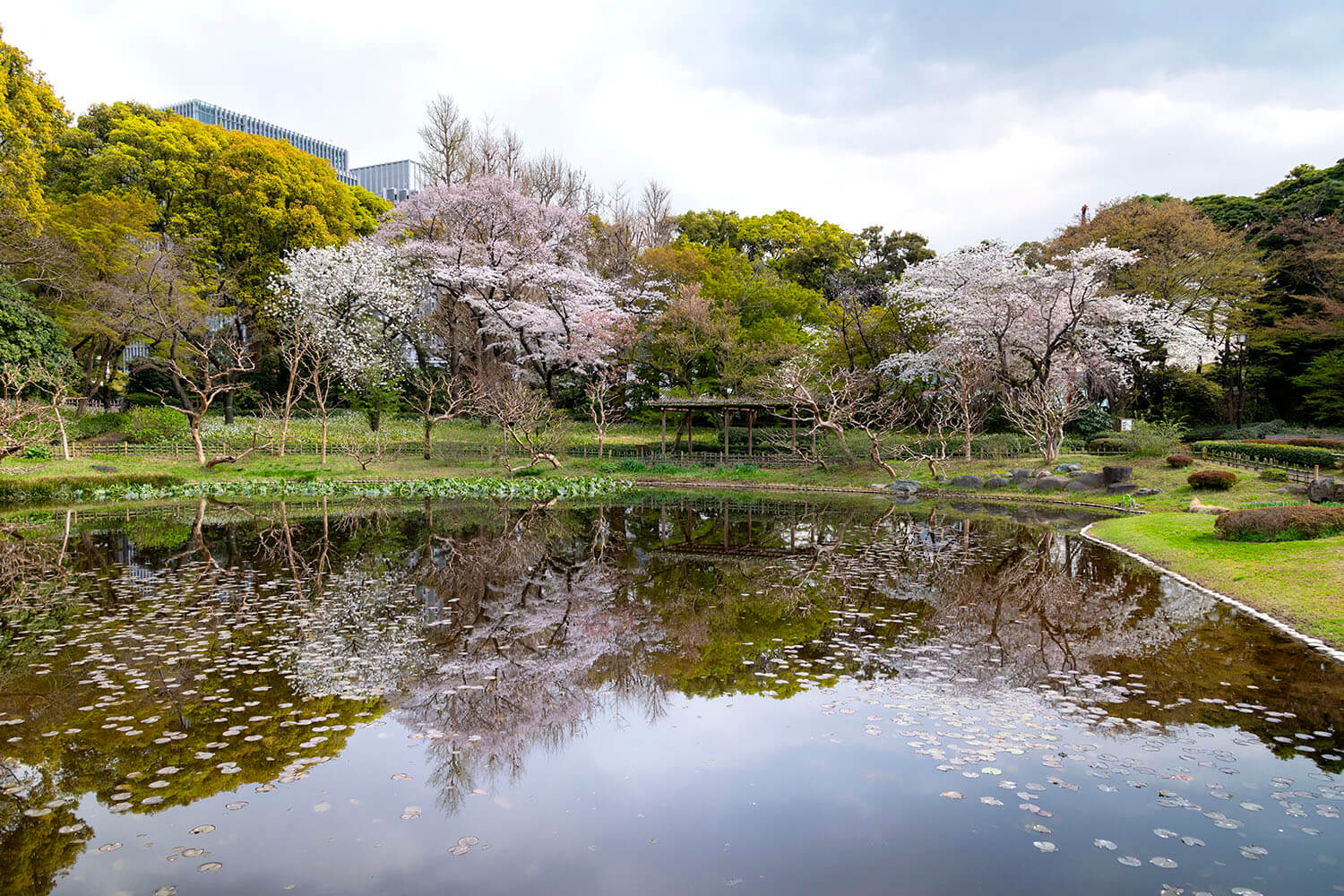
The garden where the part of the inner citadel, the Ninomaru and the Sannomaru in old Edo Castle was maintained when building Imperial Palace. A large number of historic site and seasonal plants are opened from 1968 (1968), and are seen a lot in a vast site as much as 210,000 square meters.
In the site in the east Imperial garden, a Someiyoshino cherry tree, Scarlet cherry blossom, a mountain cherry and SATOZAKURA bloom in turn as the beginning. It's an inner citadel with vast land that there are most kinds of cherry trees, and a large number of kinds are planted in an island of a cherry tree in particular.
[Bloom time] at the end ofordinary year March-at the beginning of April.
[Best time] ordinary year first April
[The kind of cherry trees] Someiyoshino cherry tree, Scarlet cherry blossom, mountain cherry and SATOZAKURA and others

- Imperial Palace east Imperial garden
-
- Tokyo capital 1-1, Chiyoda, Chiyoda-ku MAP
- Toei Mita Line/Tokyo Metro Marunouchi Line, Tokyo Metro Tozai Line, Chiyoda Line and Hanzomon Line
"Otemachi Station" than C13a exit, about 5 minutes on foot - March 1-April 14 9:00-17:00 (for entrance, to 16:30)
The last day of April 15-August 9:00-18:00 (for entrance, to 17:30)
※ And so on check HP, please. - Monday and Friday (Besides the Emperor's Birthday, "the holiday when the country is holidays" is removed. When Monday is holiday, next Tuesday is closed.)
Implementation of December 28-January 3 of next year and an event and the day when a trouble is here because additionally it's an inevitable reason - Free
- 03-3213-2050
MAP
- Hoshino ResortsProperty around here

Local Guide which took charge of this article
HOSHINOYA Tokyo
Tokyo capital and Otemachi
The new Japanese a Japanese-style hotel which keeps evolving originally according to the today while esteeming the institution of the traditional total.
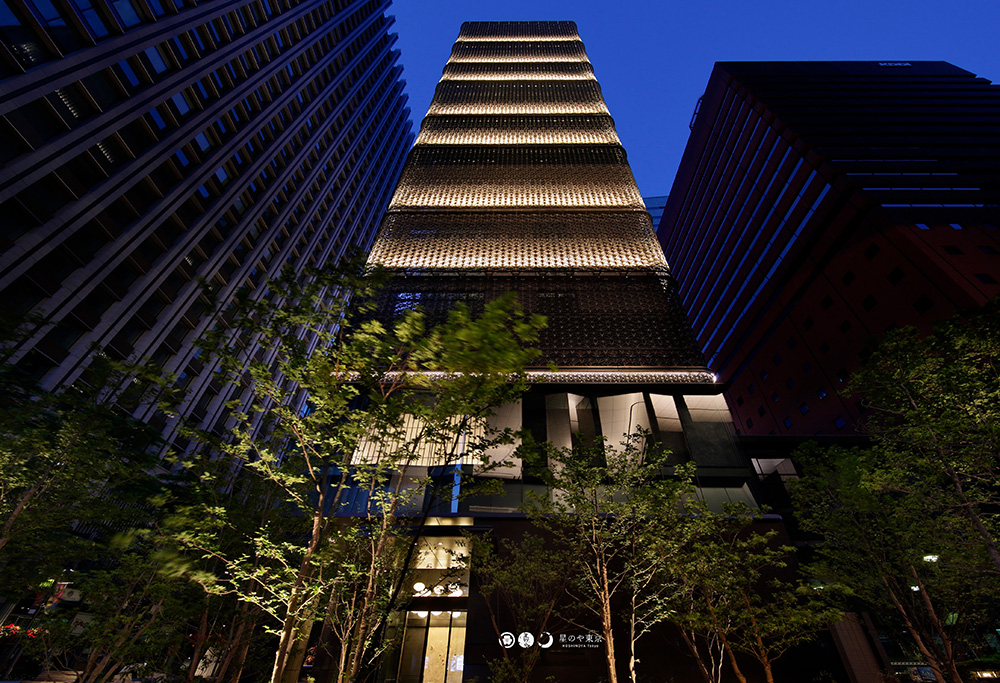
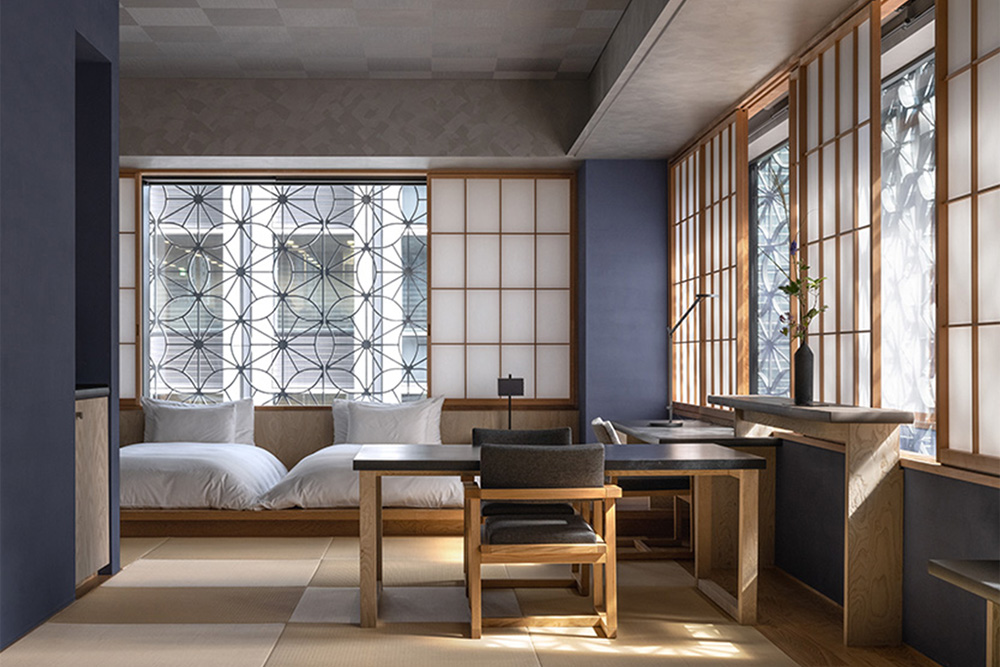
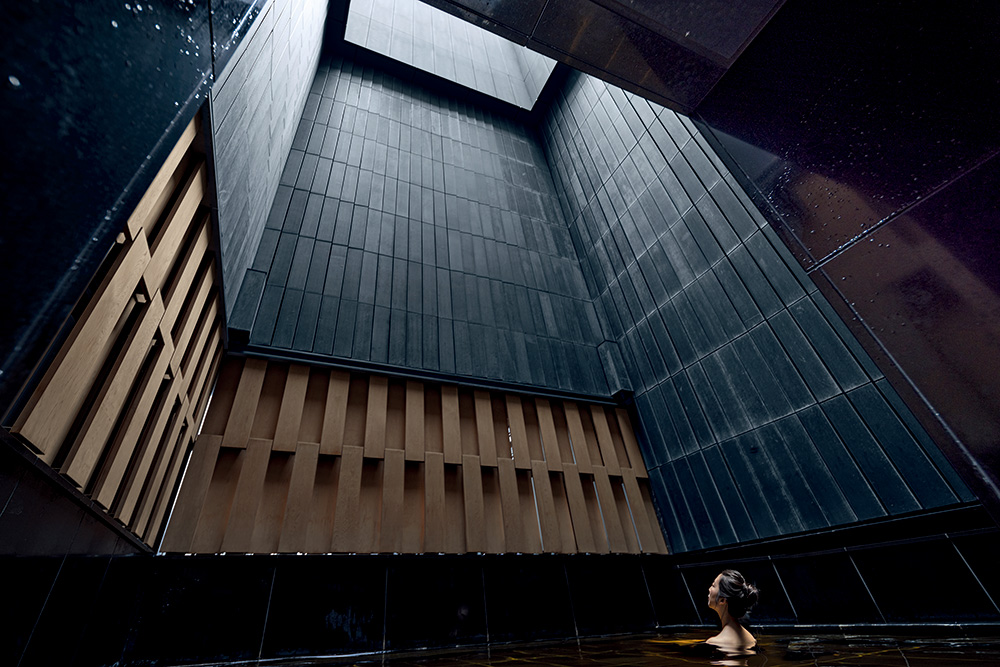
From Direction JRTokyo station, about 10 minutes on foot
- A room charge example
- 1 night, 1 person \39,996-