





A myth legend will know the climate and clothes in the Kagoshima Kirishima city which breathes.


The Kagoshima Kirishima city which is the place where a myth of the god's descendants to earth which appear on "The Kojiki" and "Japanese clerk" is transmitted and is also learned about as Sakamoto Ryoma's honeymoon place. Kinkouwan Bay is spread in a Kirishima mountain range in a volcano group and the south in the north in the city, and Sakurajima is emitting fumes. Both are in the Kirishima Kinkouwan Bay national park, and it's dotted with the place where gods got off on the ground from heaven, transmitted Takachihonomine and the spot with which the "Kirishima shrine" etc. history called foundation in the 6th century gasps.
4 large hot spring village such as "Mt. daily allowance (A sunny place and, oh.), hot spring" Saigo Takamori often visited is also famous as hot spring place which represents Kagoshima, and popular. It's mild through the year, but the climate is learned about by the rainfall of the whole country top class, so the time of the rainy season and the case when autumn passes time of the long rain are also important to a rainy measure of a foot. The height of the humidity of the summer is also the whole country dominance, and sultriness leads to a city, but the average temperature is 25 ℃ and the comfortable climate in Kirishima high plain of altitude 500m. Temperature gap in the morning and evening becomes great around the Kirishima mountain range, so plus 1 is against the cold every season, arrive, I'll prepare it.
▼ The annual temperature Kirishima city and clothes
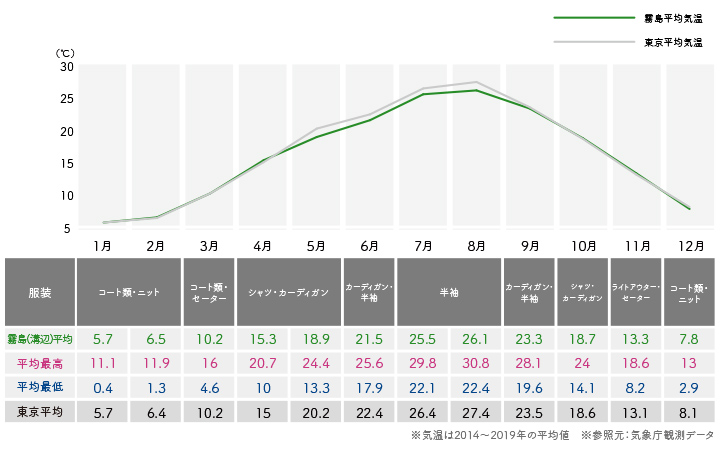
< the climate of Kirishima city and recommended clothes>
The climate of the spring (3-May) and clothes in Kirishima city

At the beginning of March the lowest temperature also has the day when the highest temperature will be 20 ℃ 2 ℃, and when the three cold days followed by four warm ones continue. A cherry tree will bloom at the last ten days when the average highest temperature exceeds 15 ℃. Sakura of a historic old temple and a park in a Kirishima shrine is in full bloom at the beginning of April. A knit and a cardigan are enough for daytime flower viewing, in the evening, the temperature, much, it falls, so I'll prepare a court.
A Kirishima mountain range after the middle of April when opening of the mountain in summer is performed is colored by flowers. The middle of April-middle of May is in best time in "NOKAIDOU" of the rose family apple genus which grows naturally only in Ebino Plateau. More than 1500 m of mountains is dyed by dark pink of "MIYAMAKIRISHIMA" Takachihonomine after "HIKAGETSUTSUJI" and the middle of May which make a yellow flower bloom at Ebino mountain at the end of April. The form that "Hal Gentiana" etc. is pretty in a footing. The temperature of this time a flower viewing mountaineering visitor becomes a lot when is about 19 ℃. I take notice to fall 0.6 ℃ every 100m, choose clothes and shoulder at highlands.
The climate of the summer (6-August) and clothes in Kirishima city

Beginning of the rainy season, at the end ofordinary year May-at the beginning of June. There is a lot of precipitation and it isn't also unusual that rain continues for about 1 week. The average temperature of the rainy season is about 23 ℃. Still the rainy season gets cold, so I come to want a thin jacket. When going to walk to highlands and mountaineering,* against the cold will choose clothes with the wind protection function.
The average temperature of 7 and August is about 26 ℃. From summer of Tokyo, 1-about 2 ℃, it's low, but the humidity becomes high about 5 %. The heat peculiar Kagoshima made damp starts at the end of July of the end of the rainy season, so well ventilated clothes are most suitable. The "woodland therapy load" which was made around Kirishima Kanzui kyou and the Kirishima high plain where I have the one I'd like to visit by all means in hot summer for 500 m-700 m of altitude. Forest bathing can be enjoyed while feeling a refreshing wind. "Kokubu camp beach" in the Kinkouwan Bay northern coast where you can get a bird's-eye view of Sakurajima is also bustle. It's also recommended to cool from the inside of a body for an ice of local specialty "white bear".
The climate of the autumn (9-November) and clothes in Kirishima city
.jpg)
An event is plenty in autumn of Kirishima. The soldier matrix of Kagoshimajinguu "bounds striped Hayato beach descent" and November 10 follow "sacred fire festival of god's descendants to earth" and November 23 in a Kirishima shrine with the Niiname festival (I'm not here rather, case) at the middle of October with held Kirishima city Fireworks Festival" as a start at the end of September. Shinto Ceremony at the shrine where history is here and the one visited according to the tour of power spots much are recommended.
The heat is still left, but the average temperature is about 20 ℃ at the middle ofSeptember-in October, so the beginning of September can have time pleasantly by a shirt and a cardigan. The fine day is also most suitable for much going out. The origin of the colored leaves is from the end of October. There are a lot of crater lakes in Mt. Kirishima where the surrounding mountains is dyed in brocade "Oonamiike (Ordinary, go.)" and "Ebino Plateau" etc. famous places where Susukino spreads. The lowest average temperature goes down to about 8 ℃ in November of best time, so a coat and stoles are warm clothes, and colored leaves will go out to an excursion for viewing scarlet maple leaves.
The climate of the winter (12-February) and clothes in Kirishima city

Even winter is Kagoshima with a mild image, but there are many days when the lowest temperature is the freezing point in Kirishima city where a Kirishima mountain range towers. A Kirishima mountain range is covered with snow all in December when an ordinary year and the average lowest temperature will be about 3 ℃, and a fog deposit is also seen. You can keep off the cold at a thick court by town walk, but it's cold protection by snow boots and a down coat at highlands. The peak where January when I greet the New Year by "Kirishima nine side drum of god's descendants to earth" and February offered up at a Kirishima shrine are cold. The average temperature goes down to about 6 ℃.
Many people visit famous Kirishima in an efficacious hot spring in 4 large hot spring village in the base in a Kirishima mountain range as hot spring place, and the tour of hot spring where the hot-spring quality and effect are different is being enjoyed. The sign which is spring when a yellow flower "Japanese witch hazel" begins to bloom around Oonamiike of a thaw at the end of February. More than 10 ℃ and the lowest temperature are still the freezing point and the time when temperature gap is great for the highest temperature, so it'll be steady, and I spend the prevention cold season by warm clothes.

Local Guide which took charge of this article
Hoshino Resorts KAI Kirishima
Kagoshima and Kirishimahot spring
Hot spring ryokan which can wish for Sakurajima from whole Guest room and enjoy a superb view in vast grassland by Outdoor hot spring in Public hot spring.
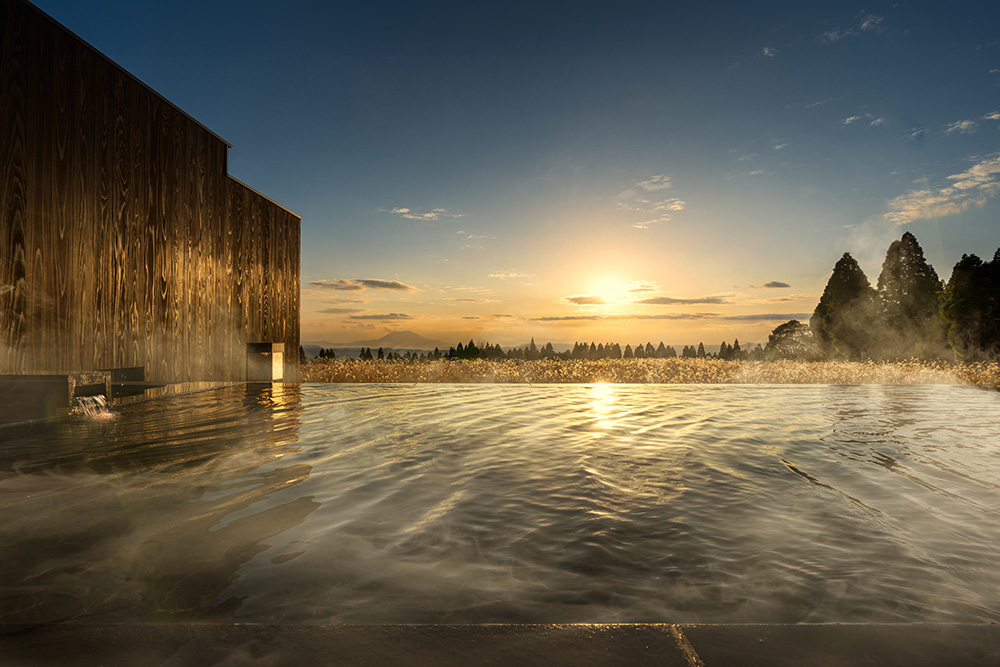
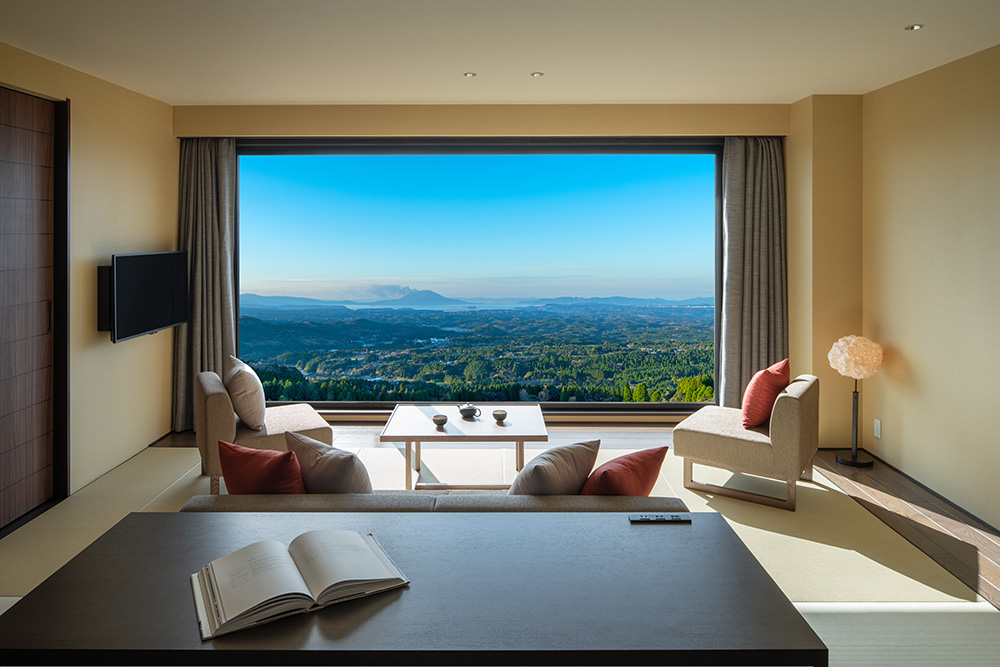
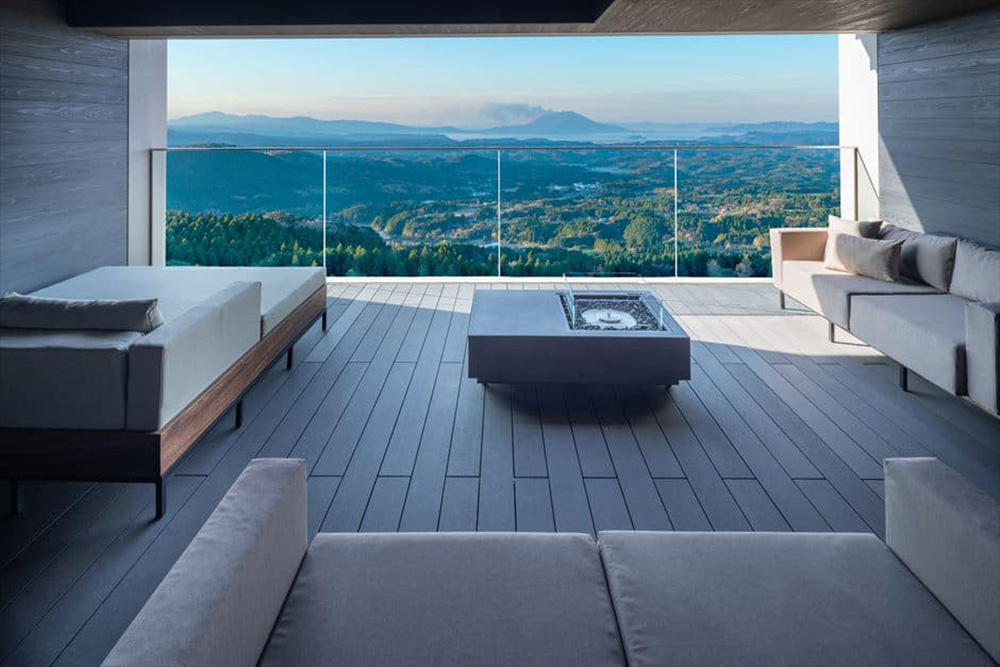
It's a taxi from the Direction JRKirishima shrine station, about 15 minutes
- A room charge example
- 1 night, 1 person \19,000-