





8 recommended sightseeing spots in Kumamoto City, from classic to hidden gems.
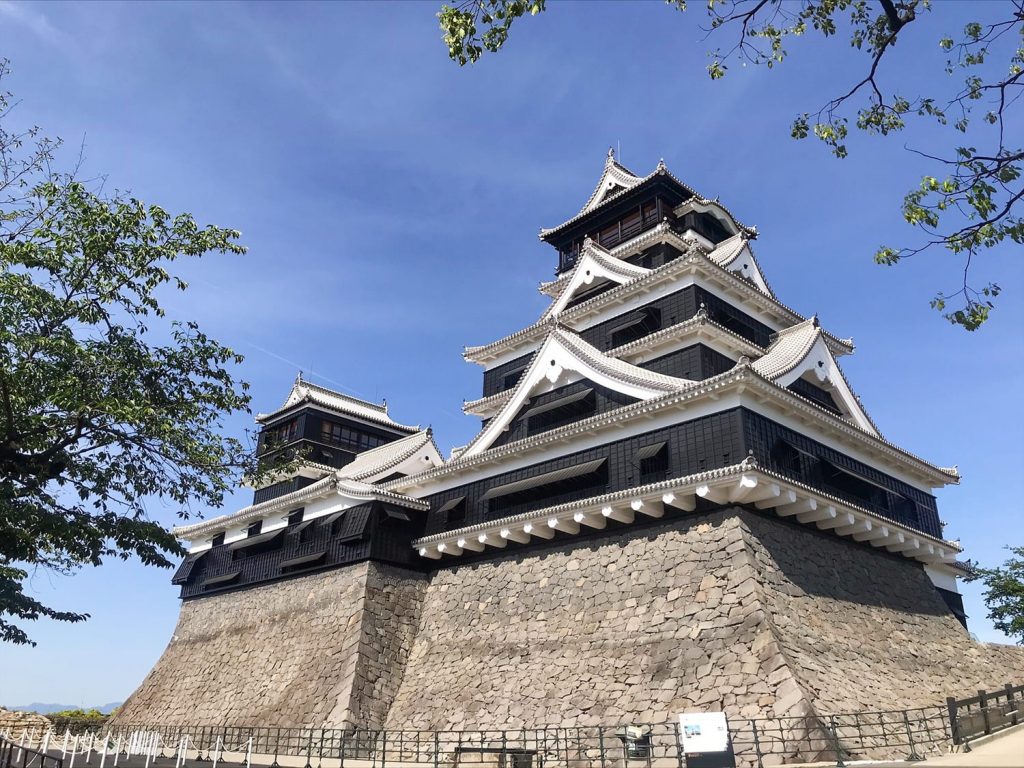
Kumamoto City has a rich history and culture centered on Kumamoto Castle. The culture left behind by the Kato family, who developed the castle town, and the Hosokawa family, who established the gorgeous Higo culture in Kumamoto after the Edo period, can still be seen today in every corner of the city. Here are some of the major tourist attractions as well as some of the more well-known spots where you can get a taste of Kumamoto's deep charm.
1Kumamoto Castle
A famous castle that has watched over the town of Kumamoto for more than 400 years
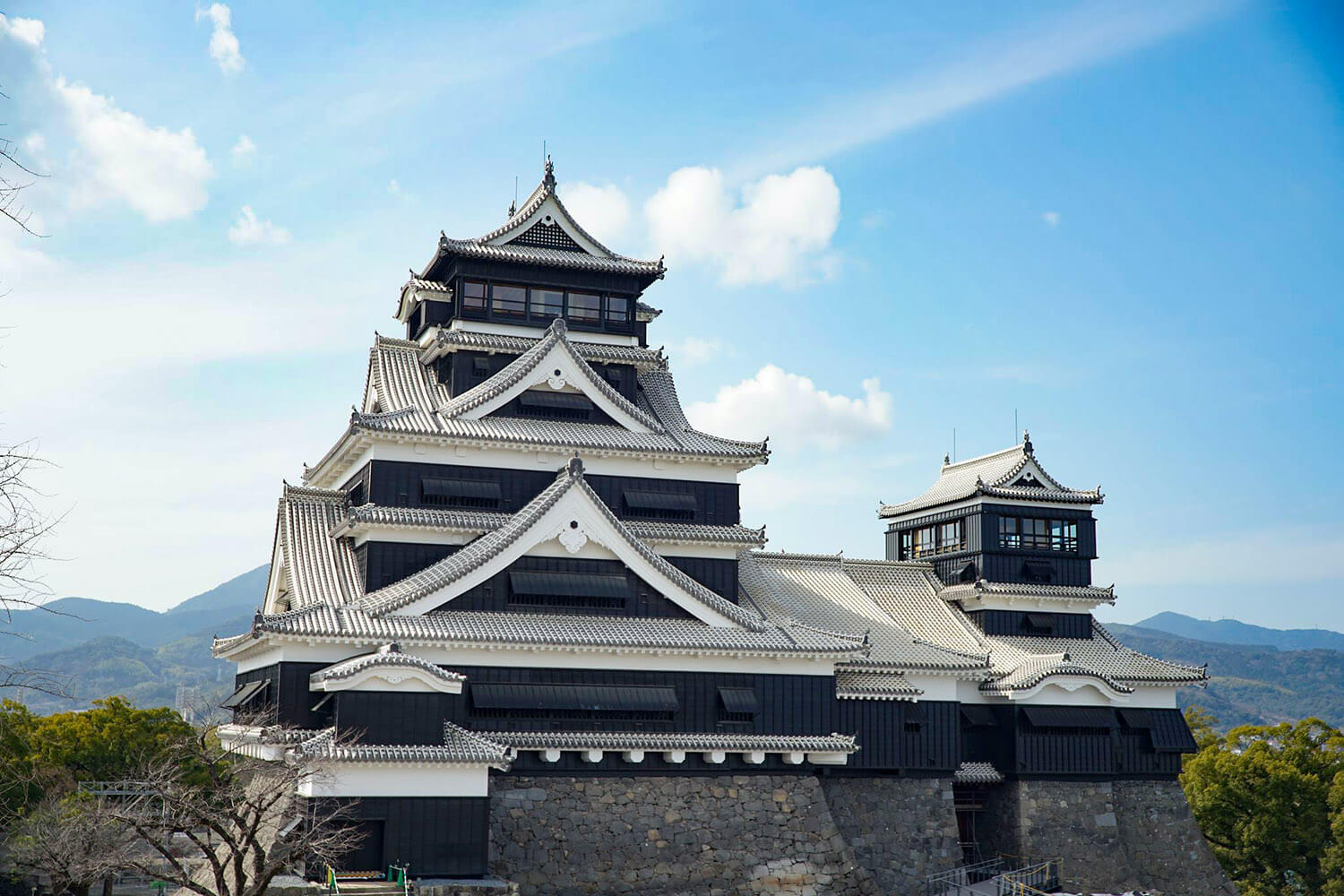
Kiyomasa Kato laid the foundation for Kumamoto's nation-building. Known locally as "Seisho-san" (Lord Kiyomasa), the "Kumamoto Castle" built by Kiyomasa is one of the three most famous castles in Japan.
Kumamoto Castle features a vast site with a castle area of 98 hectares and a perimeter of 5.3 km. The castle tower has a staggered gable roof on two sides, an irimoya gable roof on the other two sides, and a graceful karahafu roof on the top floor from north to south. The stone wall, the most distinctive feature of the building, is also known as the "warrior's back wall" because of its unique sloping design, which even warriors could not easily climb. The castle is a glimpse into the pride of Kiyomasa Kato, a master castle builder, who brought together the latest civil engineering and architectural technologies of the time.
The history of Kumamoto Castle, full of turmoil and prosperity, can be read from the exhibits.
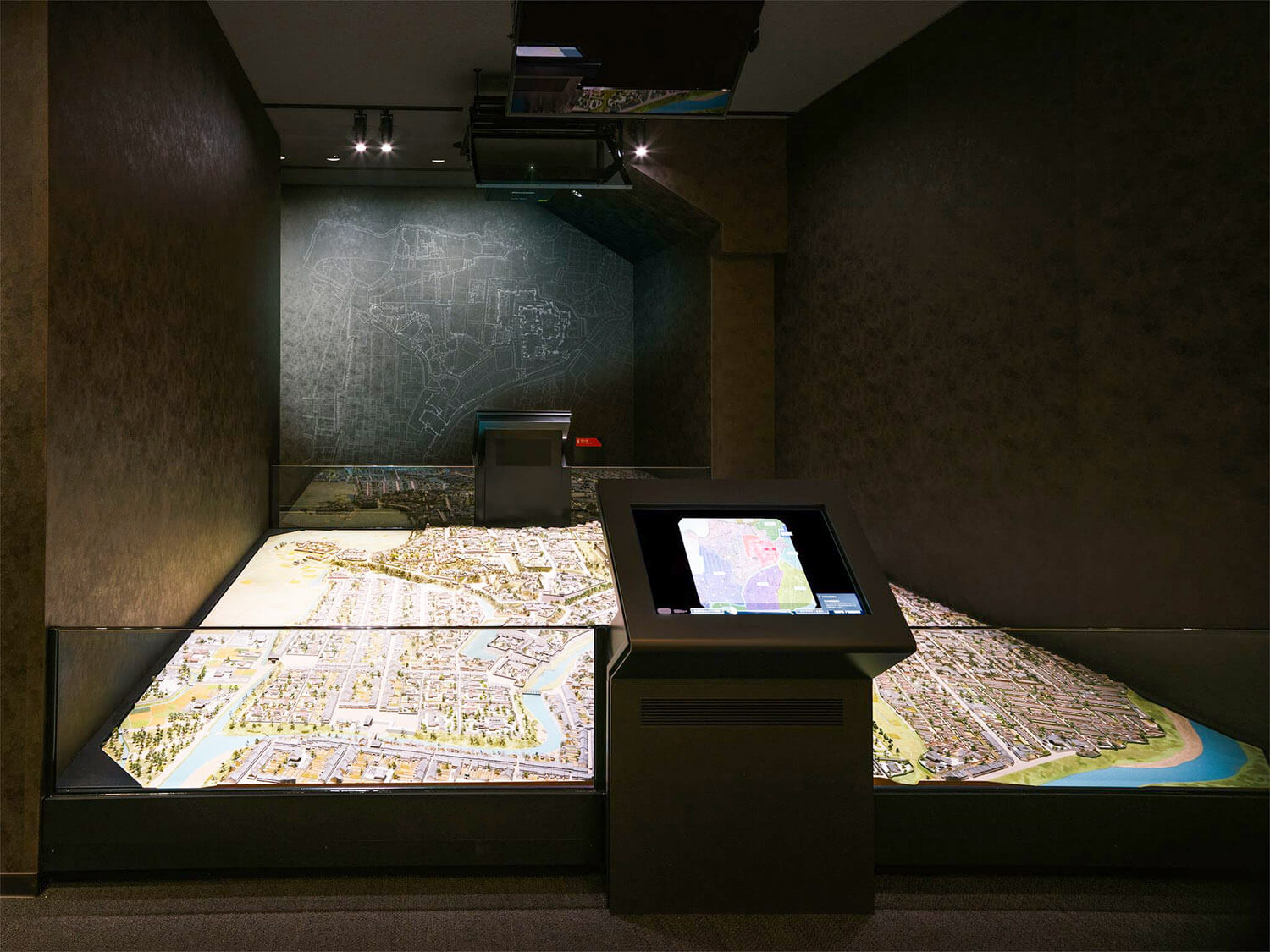
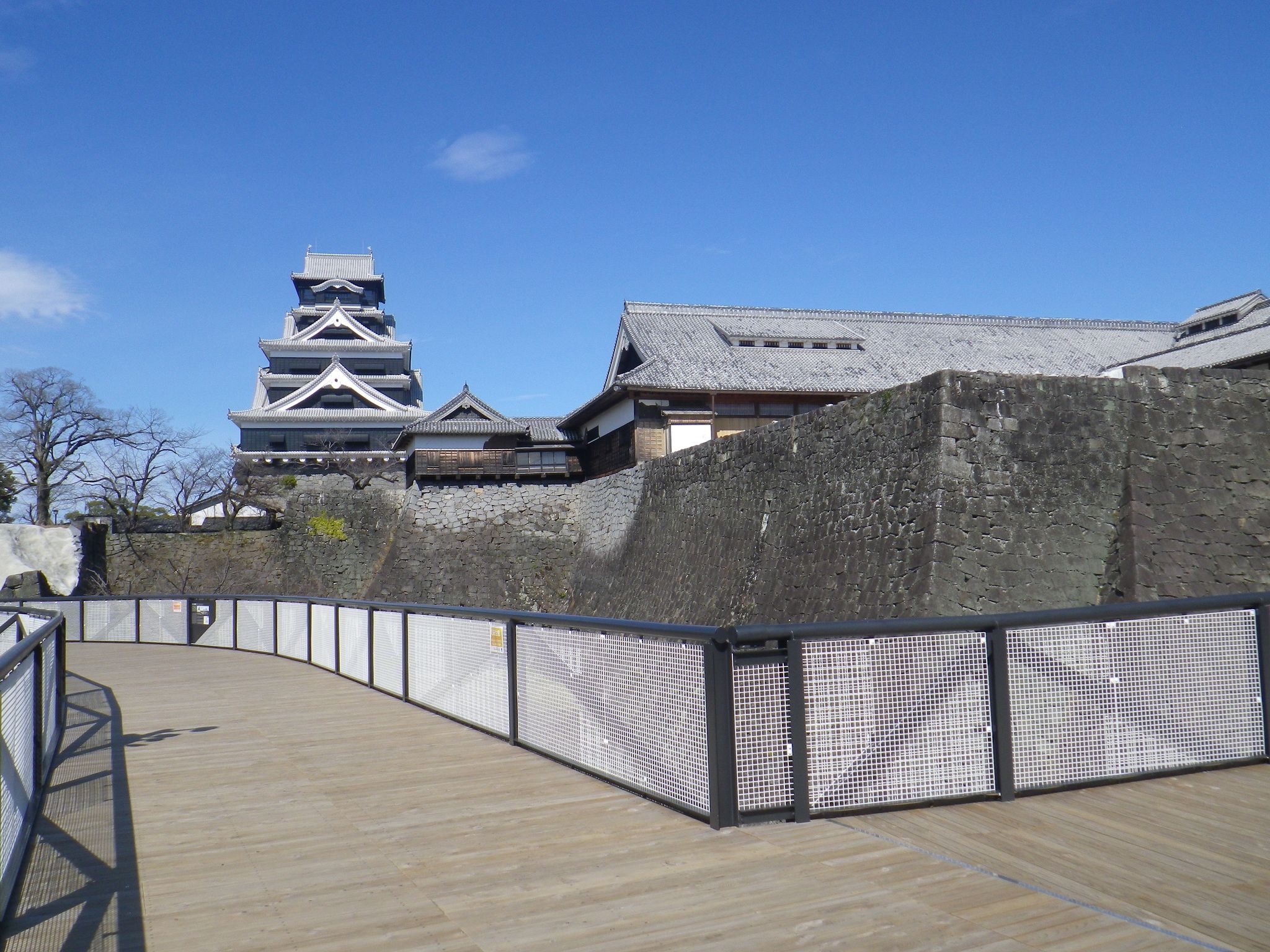
After the Kumamoto Earthquake in 2016 caused extensive damage to the castle, including collapsed stonewalls and fallen roof tiles, the castle tower reopened to the public in June 2021, and as of 2023, various exhibits have been installed in the castle tower, where visitors can learn about the history of the castle from its construction to the present day through models and videos. In addition, there is a special viewing corridor where visitors can get a close-up view of the progress of reconstruction after the earthquake, and many other attractions.
The view of the castle from the street (Prefectural Road 28), where streetcars run, is a typical Kumamoto sight.

Local Guide
Supporters
Kumamoto Castle is the pride of the people of the prefecture and a great symbol. You can see the grandeur and magnificence of Kumamoto Castle from the "Convex and Concave Terrace" of "OMO5 Kumamoto by Hoshino Resorts".
- Kumamoto Castle
-
 1-1 Honmaru, Chuo-ku, Kumamoto City, Kumamoto Prefecture MAP
 10 minutes walk from Kumamoto City Tram "Kumamoto Castle/Shiyakusho-mae Station".
 From JR Kumamoto Station, take the "Shiromegurin" (Kumamoto Castle excursion bus) and get off at "Sakura-no-Baba/Josaien".
 9:00-17:00 (last admission at 16:30)
 December 29 (subject to change)
 Admission: High school students and older: 800 yen, elementary and junior high school students: 300 yen, preschool children: free
 096-352-5900 (Kumamoto Castle General Office)
 Charged
2Suizenji Seishuen
A scenic garden that conveys the Higo Hosokawa culture to the present
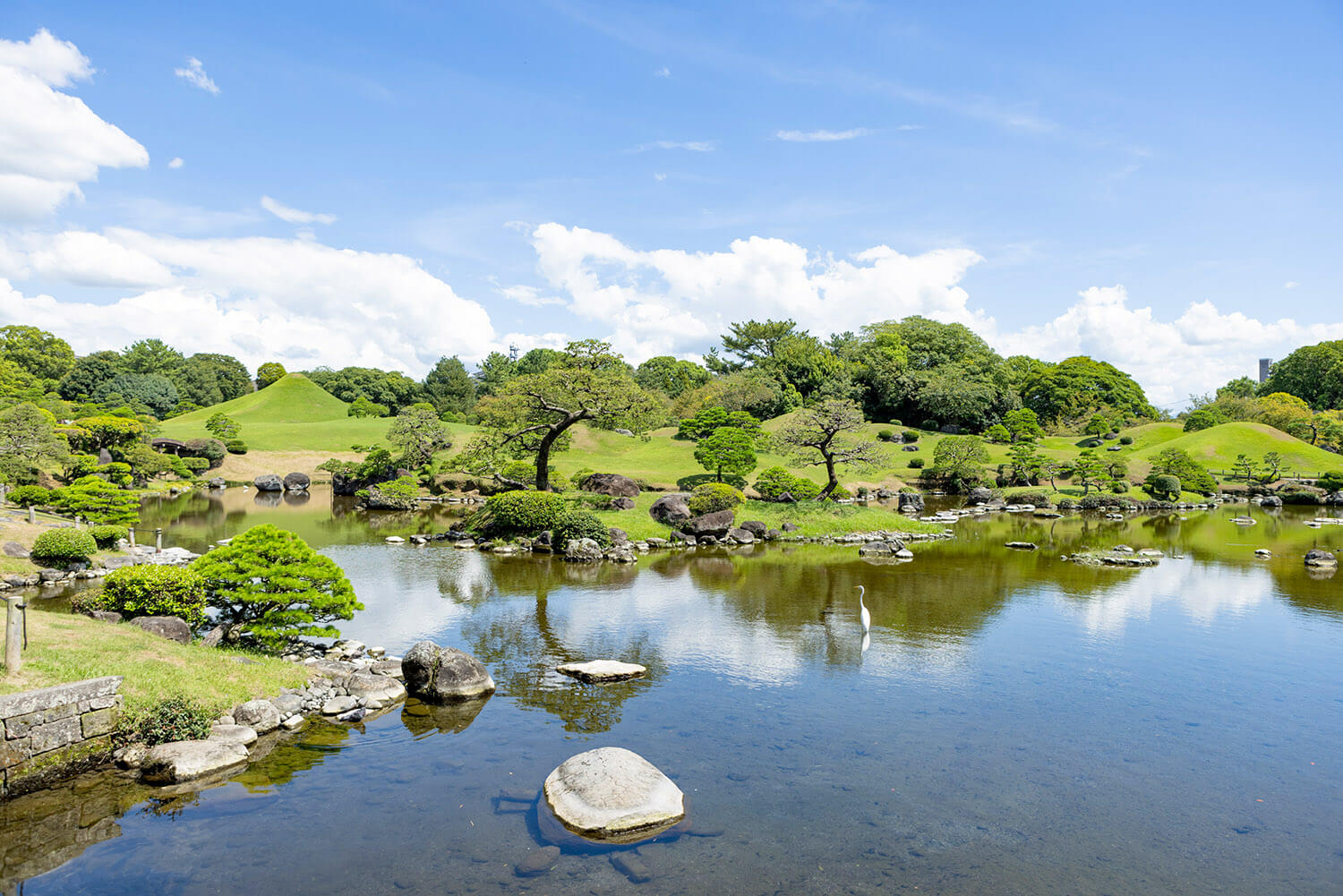
The Kaiyushiki Garden, designated as a national scenic and historic spot, is said to have been created in 1632 when Tadatoshi Hosokawa, the first feudal lord of the Kumamoto Domain, liked this place with its abundant spring water and built a teahouse there.
As you walk into the park, you are struck by the picturesque beauty of the garden. Fuji, and well-maintained trees. Its elegant appearance and the clean air in the area make it a popular place for citizens to relax and enjoy themselves.
The beauty of the spring water and the seasonal plants add color to your stroll.
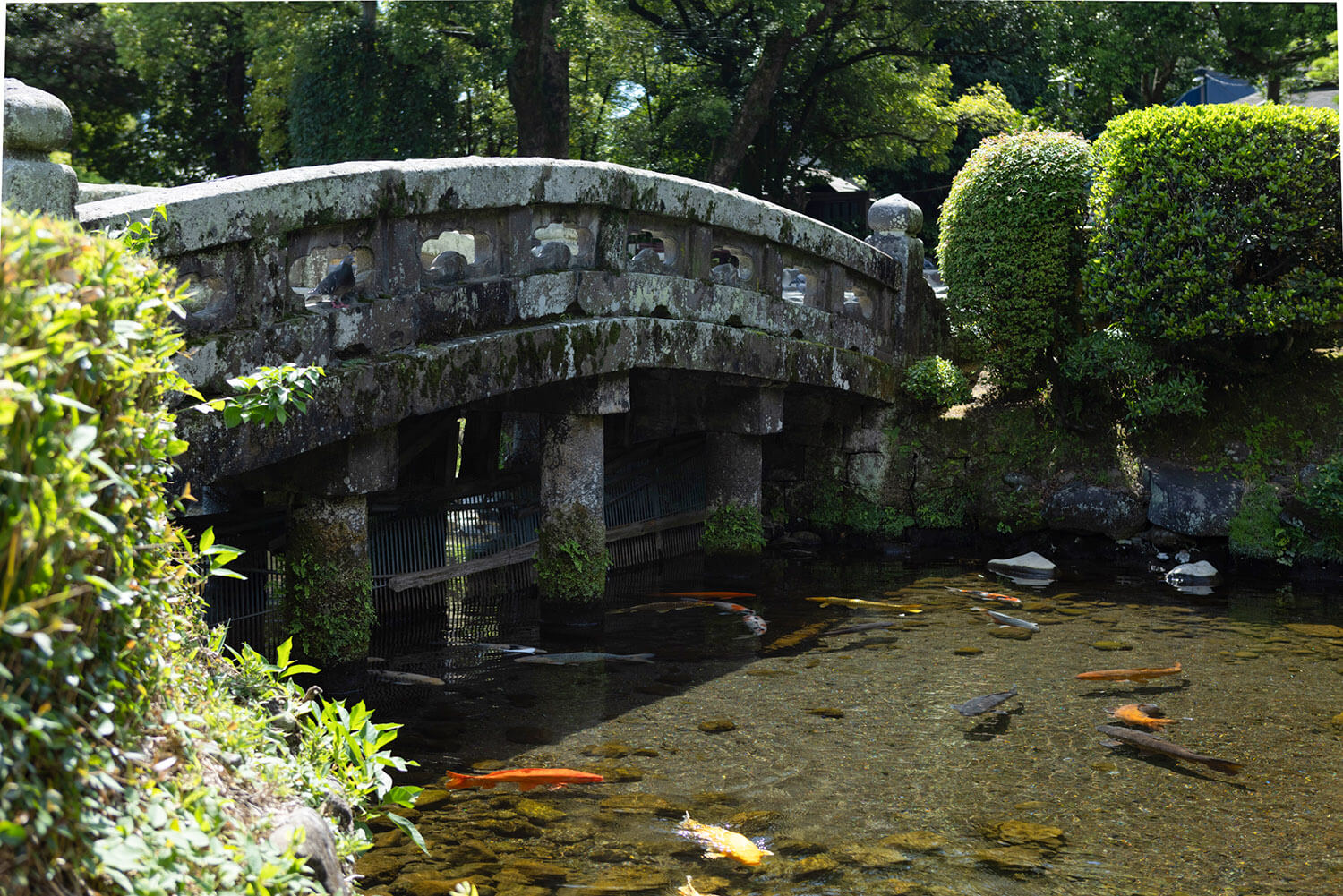
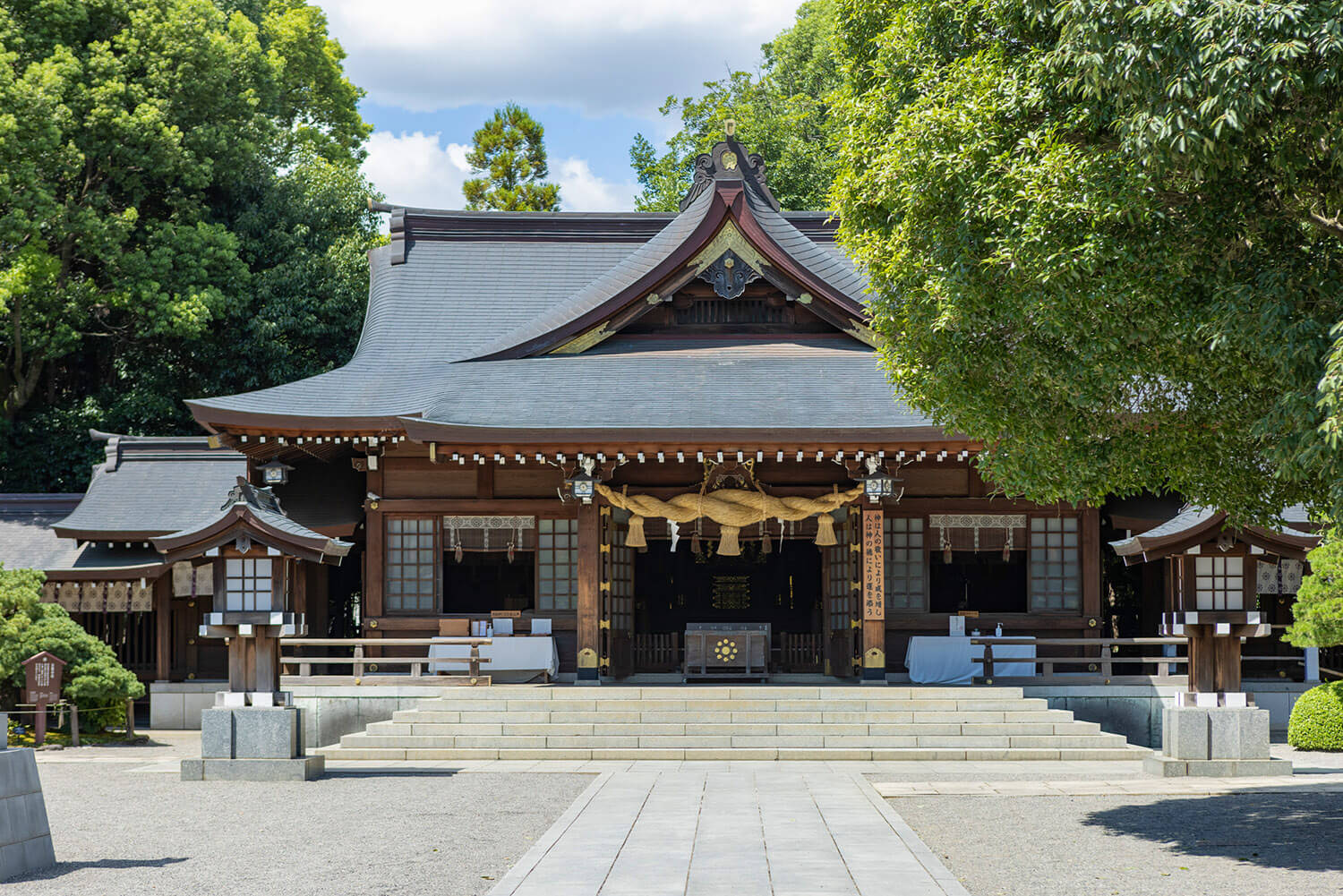
Within the park, there is the "Demizu Shrine," which enshrines successive lords of the Hosokawa family, the "Noh Theater," where Shinto Noh plays are dedicated during the spring and fall festivals, and an area where the Higo Rokka, or the six flowers of Kumamoto, including the Higo camellia and Higo chrysanthemum, are in full bloom, making for a relaxing stroll. The view of the garden from the "Kokin-denju-no-Ma," which was moved from the Imperial Palace in Kyoto in 1912, is especially beautiful.
In addition, from late March to early April, the cherry trees planted along the walking path are in full bloom. The garden is tinted a pale pink, making the scenery even more beautiful.
Local Guide
Supporters
You can also enjoy tea and sweets in the tranquil Shoin-style Kokin-Denju-No-Ma room. It is also recommended to spend a relaxing time while enjoying the view of the garden.
- Suizenji Seishuen (Suizenji Juuen)
-
- 8-1 Suizenji Koen, Chuo-ku, Kumamoto City, Kumamoto Prefecture MAP
- 3 min. walk from "Suizenji Koen" station on the Kumamoto City Tram.
- 8:30-17:00 (last admission 16:30)
- No holidays
- 16 years old and over: 400 yen, 6-15 years old: 200 yen
- 096-383-0074
- None
3Shinmachi and Furumachi
Two distinctive areas that prospered as a castle town
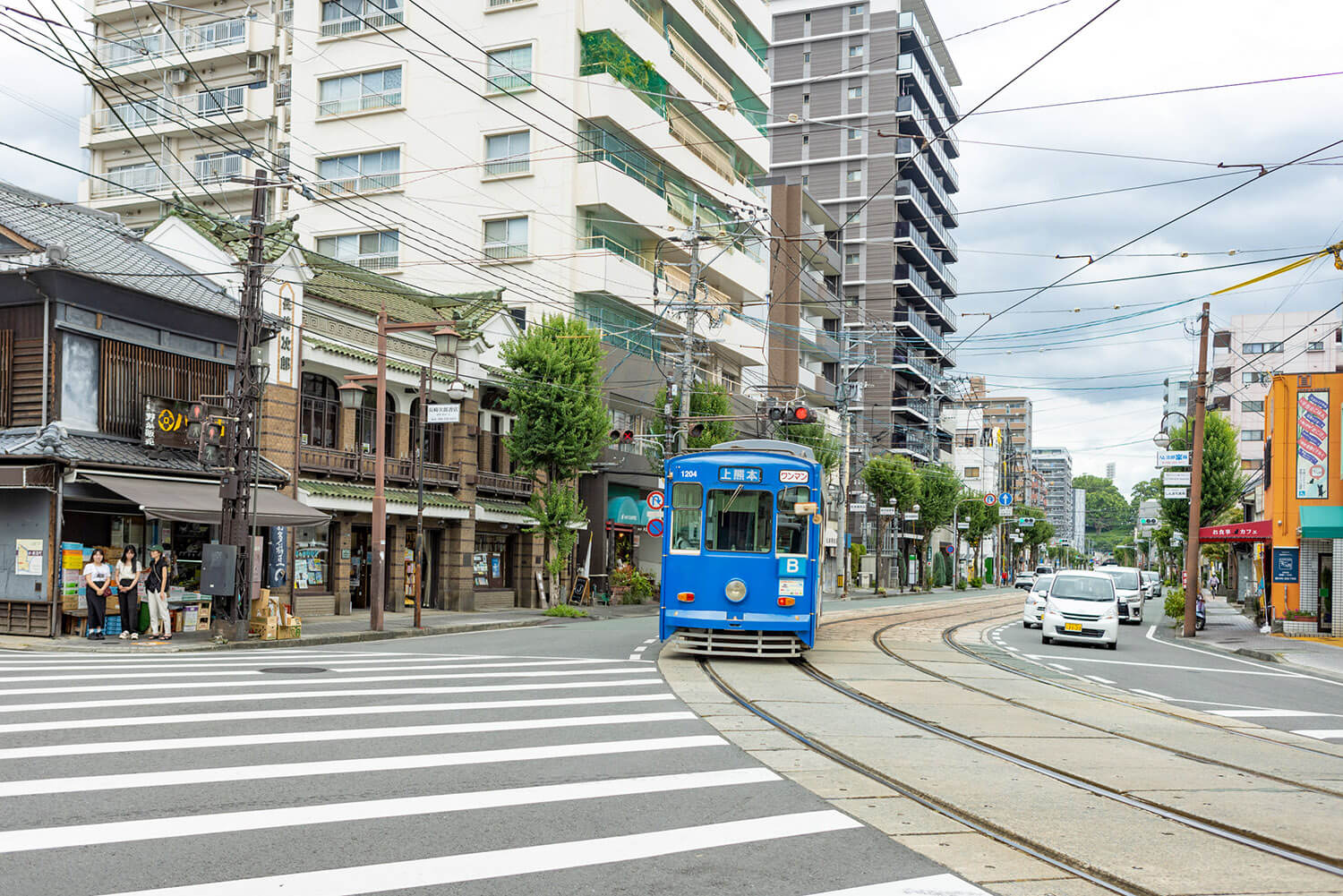
The Shinmachi and Furumachi areas, located between Kumamoto Castle and Kumamoto Station, are castle towns built by Kiyomasa Kato when he built Kumamoto Castle, and they retain strong traces of their former days.
Located in front of Kumamoto Castle, Shinmachi is a rare area in Japan with a mix of samurai residences and merchants, and is dotted with long-established stores that are still in business today, such as Yoshida Shokado, a medicine wholesaler that has been in business since the 1830s, and Hyogoya Honten, a soy sauce and miso manufacturer and seller that was established in 1715 (Shotoku 5). In addition, the ruins of Gokakuya, where Ryoma Sakamoto and Takamori Saigo are said to have stayed, are also scattered throughout the area.
The ever-changing scenery of the historic castle town
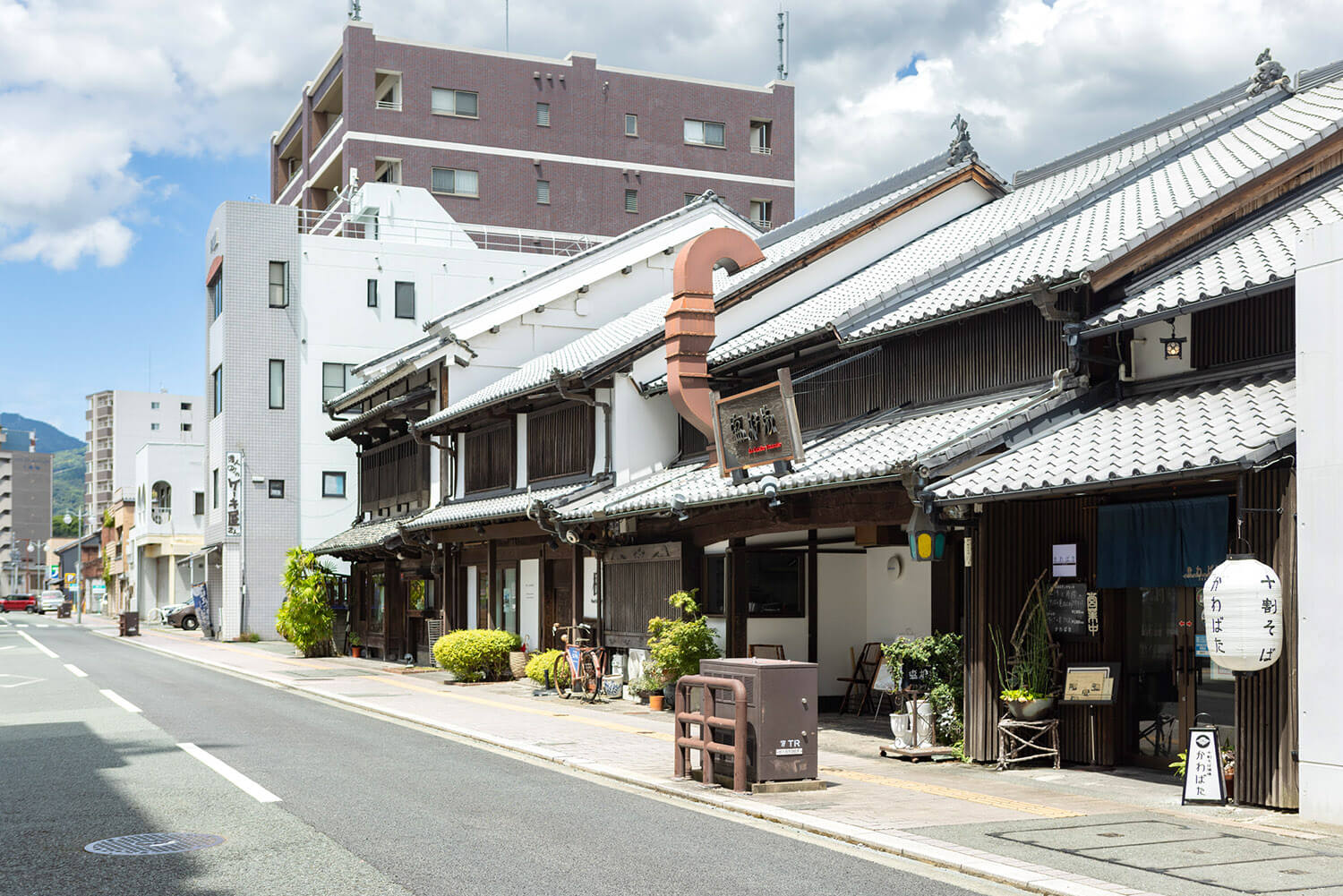
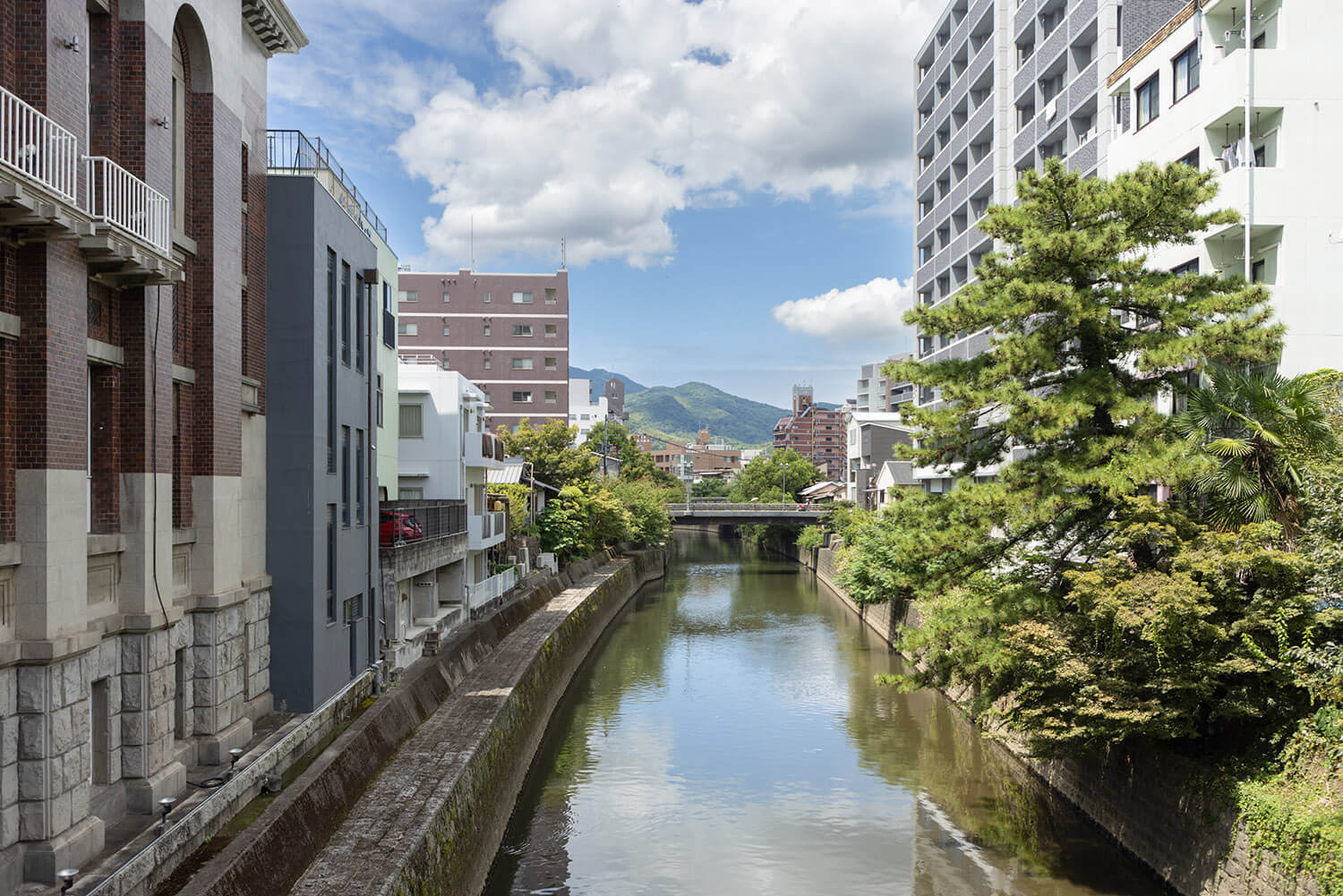
On the other hand, Furumachi is characterized by the "Ichimachi Ichidera" layout, in which a temple is placed in the center of a grid pattern and surrounded by town houses. This was Kiyomasa Kato's idea to use the temples as a defense base in case of emergency, and the town is protected by an iron wall. Walking around the town, one can experience this revolutionary town layout.
Today, cafes and stores using machiya townhouses are springing up one after another. The Nishimura Residence, a registered tangible cultural property, has been converted into a gallery and store, while the Hayakawa Warehouse, a former brewery built in the early Meiji period, has evolved into an event space. Guided tours by local guides are available with advance reservations, allowing visitors to get a fuller sense of the castle town atmosphere.
Local Guide
Supporters
There are many places where you can feel the vestiges of the past, such as town houses, temples and shrines, and stone bridges. There are also cafes and restaurants in townhouses, where visitors can enjoy tea and meals in a retro atmosphere.
- Shinmachi and Furumachi
-
- Shinmachi, Chuo-ku, Kumamoto City, Kumamoto Prefecture, etc. MAP
- Shinmachi area: Near "Shinmachi" streetcar stop
Furumachi area: Just a short walk from "Gofukumachi" streetcar stop.  Inquiries about walking tours
Shinmachi Area TEL: 096-324-4488 (Higo Zogan Mitsuke)
Furumachi Area TEL: 096-355-0601 (at Bridge) https://jokamachi.com
4Kawaramachi Textile Wholesale Street
A Showa-era retro world where time seems to have stopped
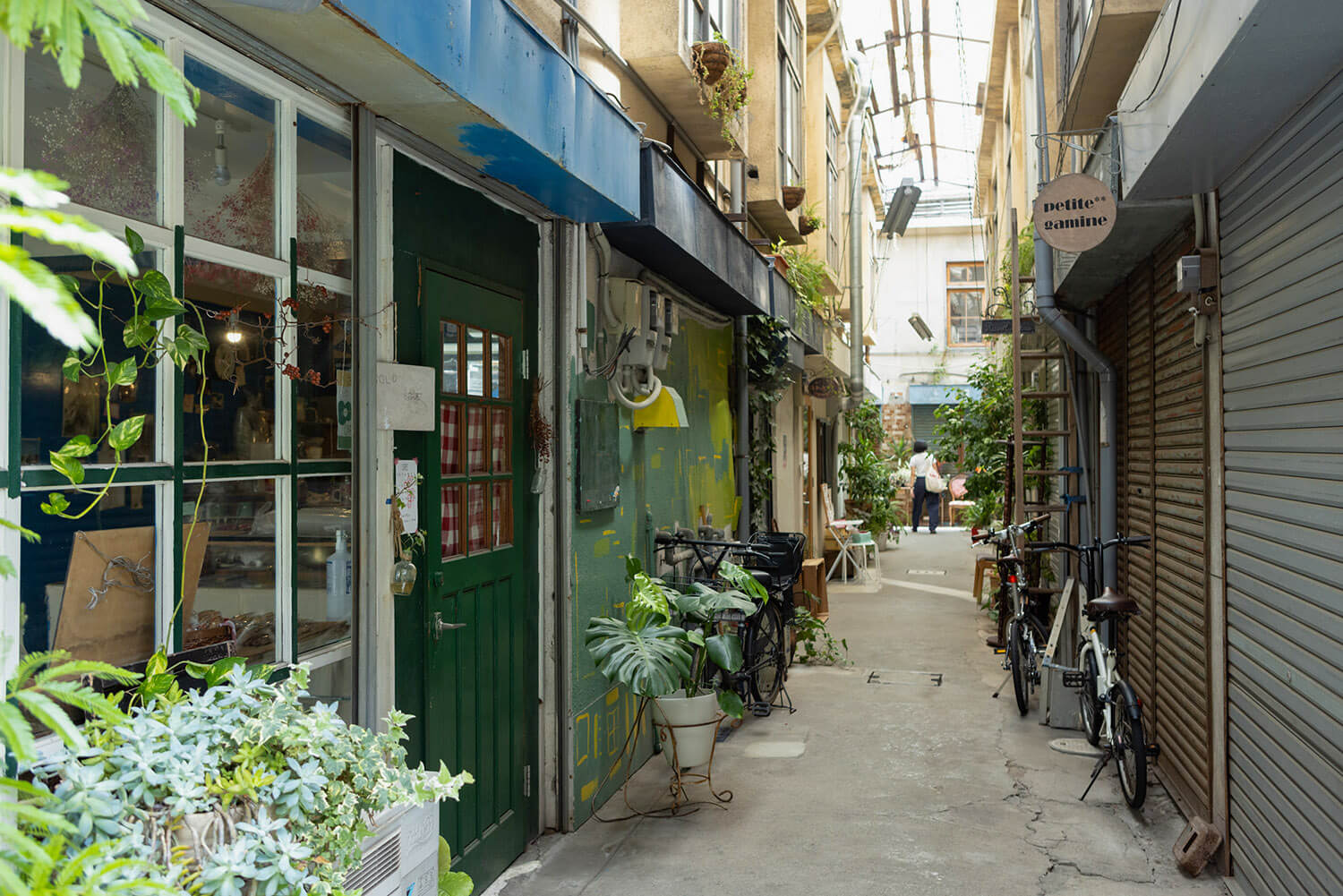
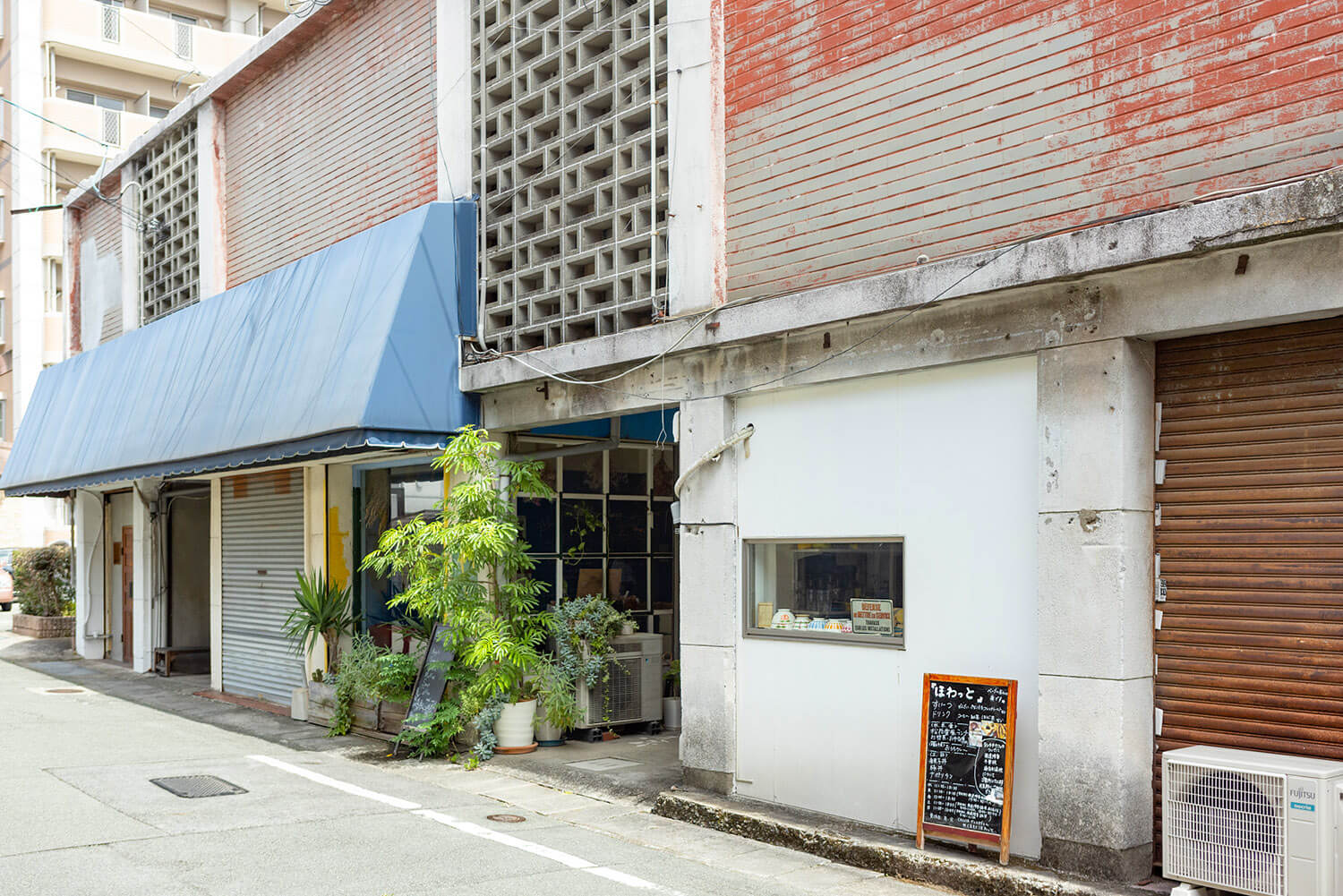
Tenements, tin roofs, and tin signboards crowd the narrow passageways. The area, with its time-stopped atmosphere, once prospered as a textile wholesale district.
Originally, it was a communal building built after the disappearance of the street vendor market after the war. After reaching its peak as a wholesale district, the textile dealers vacated the area, and vacant houses were conspicuous. In recent years, however, cafes, general merchandise stores, galleries, and other businesses have moved into the building, gradually reviving its liveliness. Furthermore, with the spread of social networking services, more and more people are visiting the area because of its photogenic retro space and unique presence.
A nostalgic yet new, photogenic space
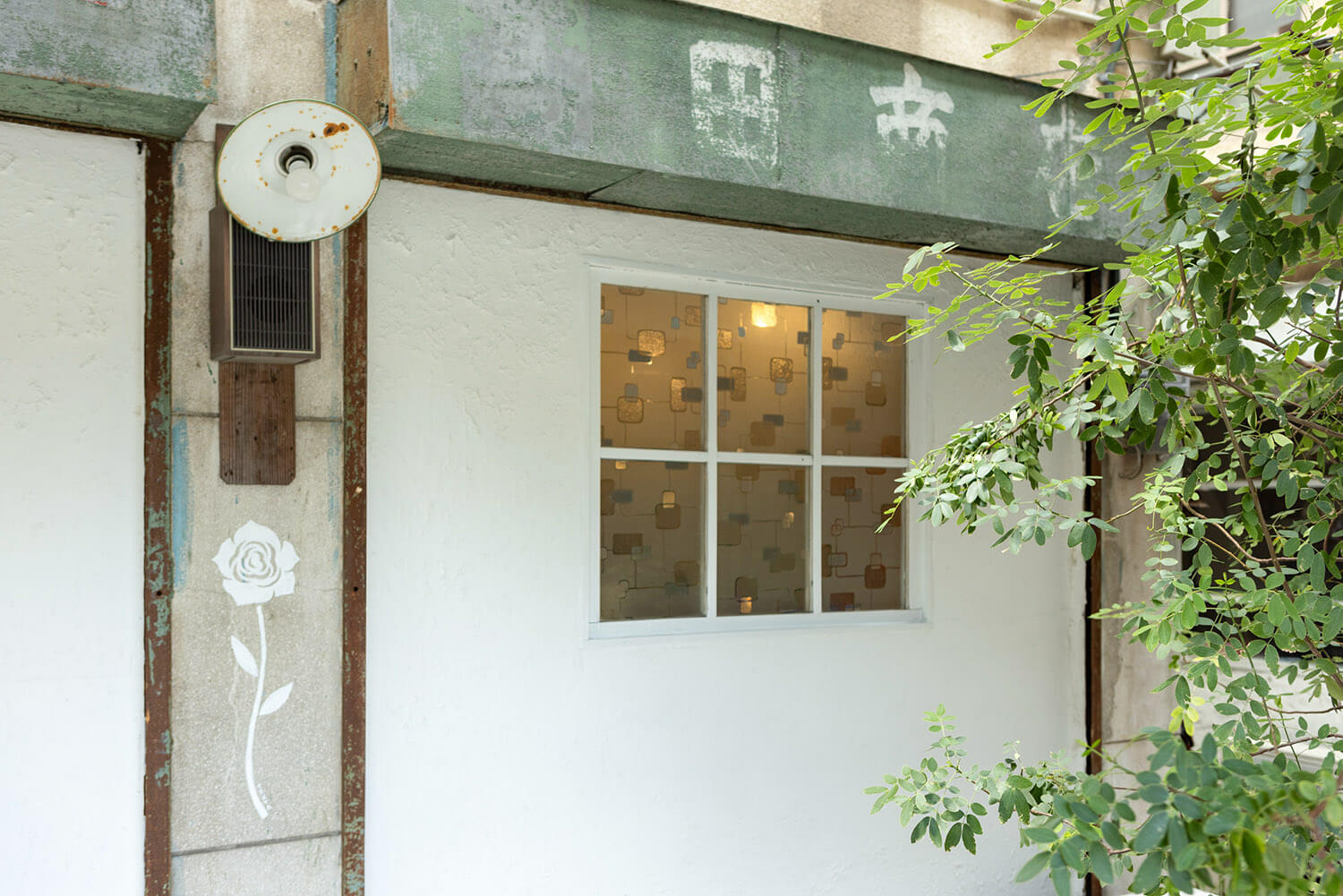
Currently, about 20 unique stores and offices are in operation after repeated building renovations and repairs. A leisurely stroll through the narrow passageways is sure to be enjoyable.
Little by little, light has been shed on what was once a shuttered area, fostering a unique atmosphere and culture. Every corner of this retro Showa-era world is picturesque. Kawaramachi Textile Wholesale Street is located in a corner of "Furumachi," and is definitely worth a visit during a stroll around the castle town.
Local Guide
Supporters
This retro shopping street has been alive since 1955. Nowadays, it has become a photo spot for those in the know. The mysterious and wonderful atmosphere attracts many people.
- Kawaramachi Textile Wholesale Street
-
- Kawaramachi, Chuo-ku, Kumamoto City, Kumamoto Prefecture MAP
- About 2 minutes walk from "Kawaramachi" streetcar station.
- None
- Advance application through Instagram is required when photographing more than two people
5Touge-no-chaya Park
Reconstructed teahouse said to be the setting of Soseki Natsume's "Kusamakura
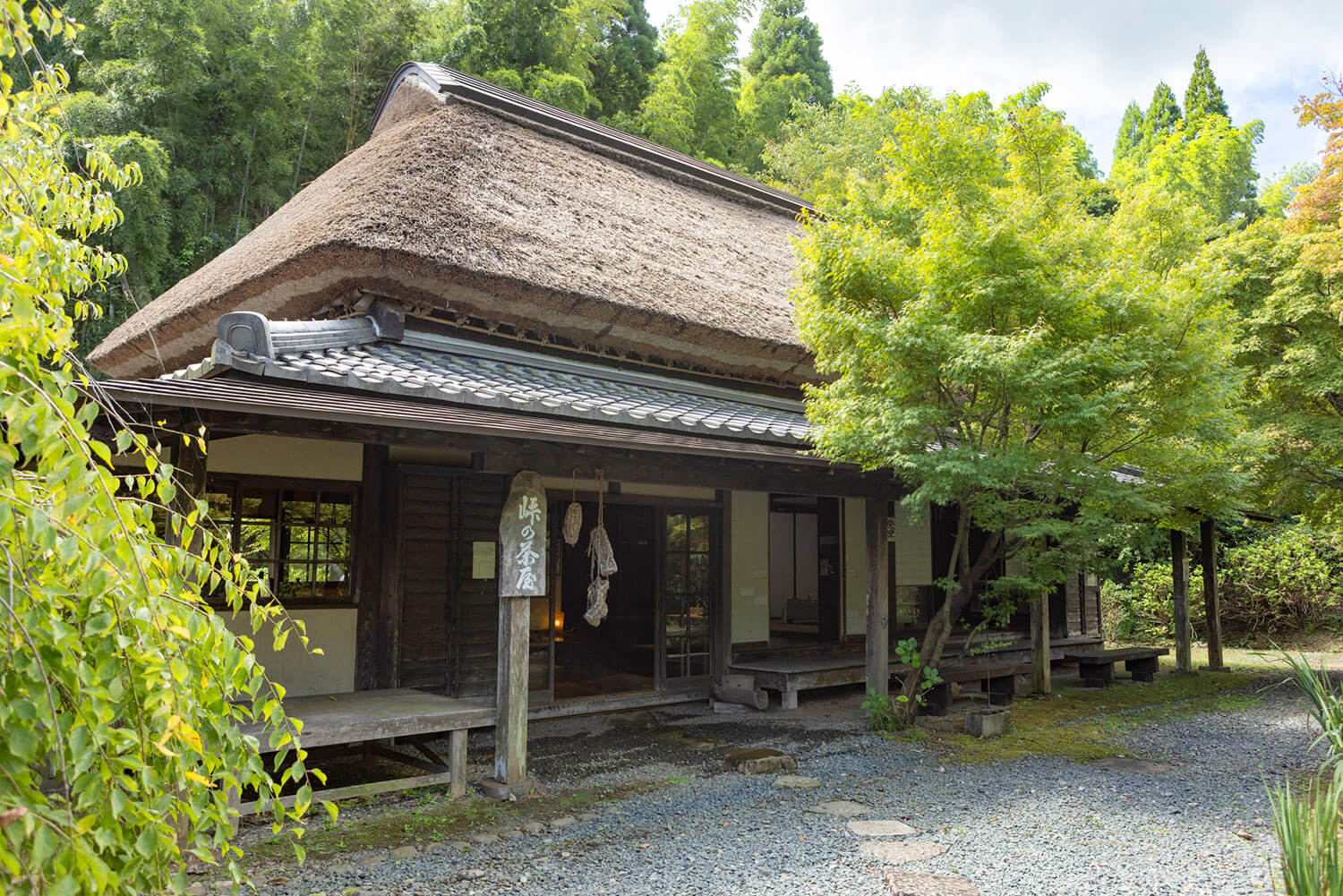
Mount Kinpusan (Mt. Kinpusan) is the symbolic mountain of Kumamoto City. Soseki Natsume, a great writer, once passed by Torigoe Pass on Mt. Kinpu, and it is said that a teahouse located here is the setting of a line from his book "Kusamakura": "I called out 'Hey,' but got no answer.
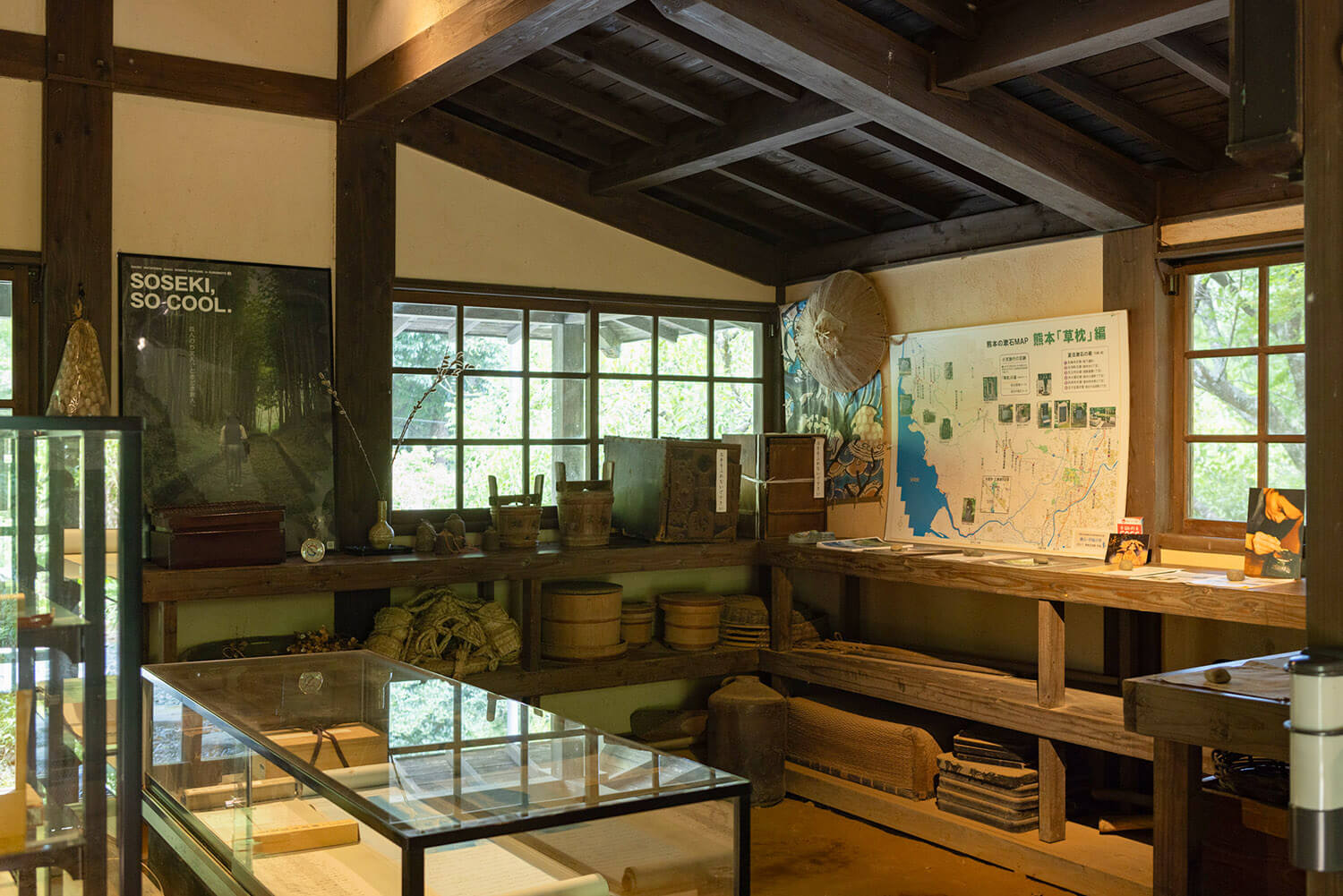
Today, the area is maintained as "Toge no Chaya Park," and the teahouse from the book has been reconstructed. The interior of the thatched-roof teahouse is open to the public free of charge as a museum, where materials related to Soseki are on display. There is also an earthen floor and a goemon bath, giving visitors a glimpse of life in the old days.
You can also taste Kumamoto's specialty, dagojiru (dago soup).
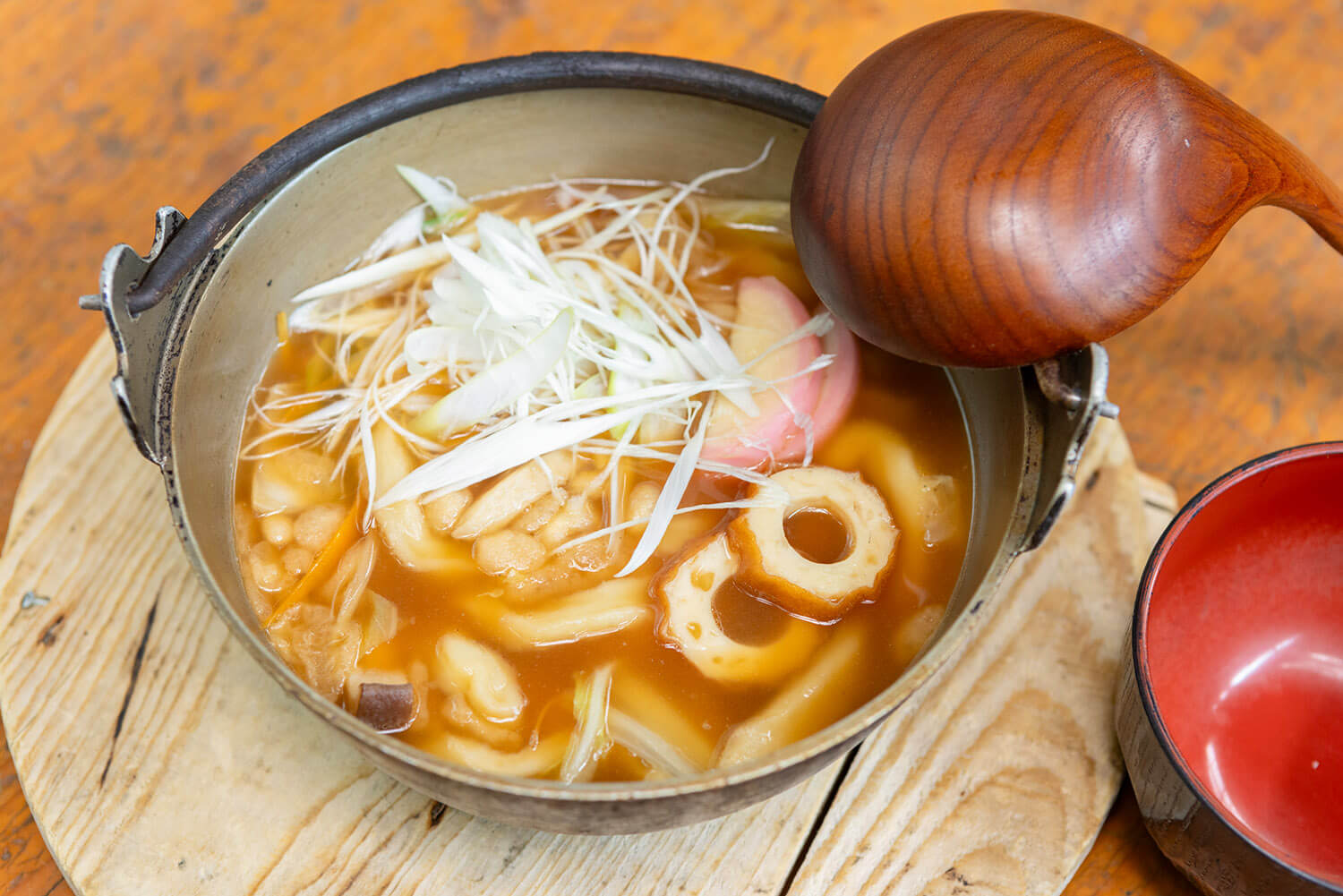
After immersing yourself in the world of Soseki Natsume at the museum, satisfy your appetite with Kumamoto specialties. Just down the stairs from the museum is Touge-no-chaya Dagojiru-ya, a restaurant where you can taste Kumamoto's local dish, dagojiru. The specialty is dagojiru, a dish made by combining chicken stock and kelp in a rich and refreshing soy sauce-based broth with handmade firm noodle-like dumplings (dago). The soup is simmered in an iron pot after ordering, soaking up the delicious flavor of the hot dago soup. Local farm products and souvenirs are also sold in the restaurant.
Local Guide
Supporters
The teahouse in Togetsu Teahouse Park was reconstructed, but a minute's walk west from here is the "Torigoe Teahouse Ruins". Today, only the well that was used at that time remains, and visitors can get a glimpse of what it must have been like back then.
- Toge no Chaya Park
-
- 5-4 Dake, Kawachi-cho, Nishi-ku, Kumamoto City, Kumamoto Prefecture MAP
- Approximately 20 minutes from JR Kumamoto Station by car.
- Take a bus from Sakura-machi Bus Terminal, get off at "Toge-no-chaya Koen-mae" and walk shortly.
- Teahouse Museum 9:00-17:00
Toge-no-chaya Dagojiru Restaurant 11:00-17:00 - Tuesdays (or the following day if Tuesday is a national holiday), Year-end and New Year holidays
- Free admission
- Museum 096-277-2157
Store 096-277-2154 - Free of charge
6Reigan-do Cave
The cave where Musashi Miyamoto wrote "The Book of Five Rings," the culmination of his military arts.
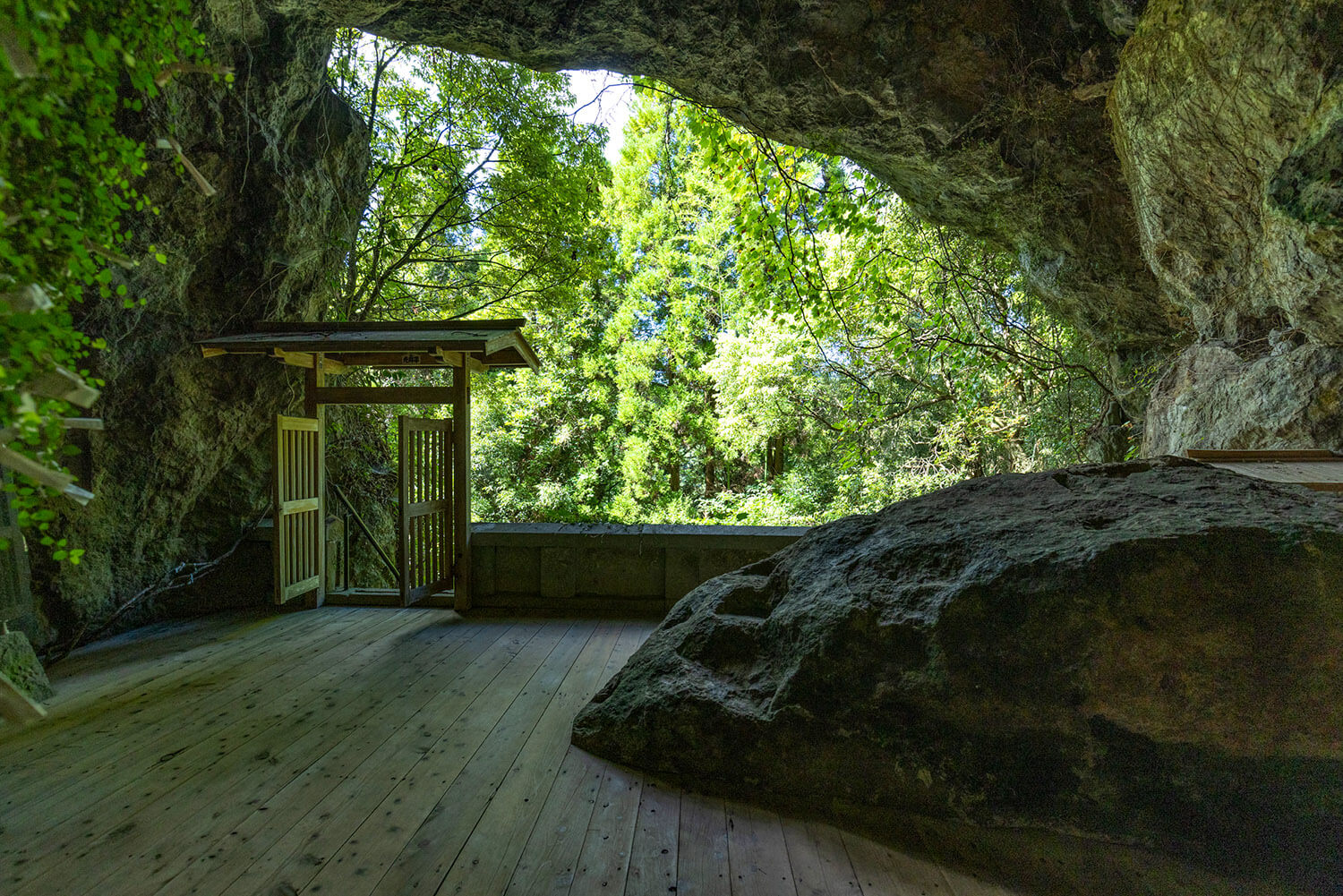
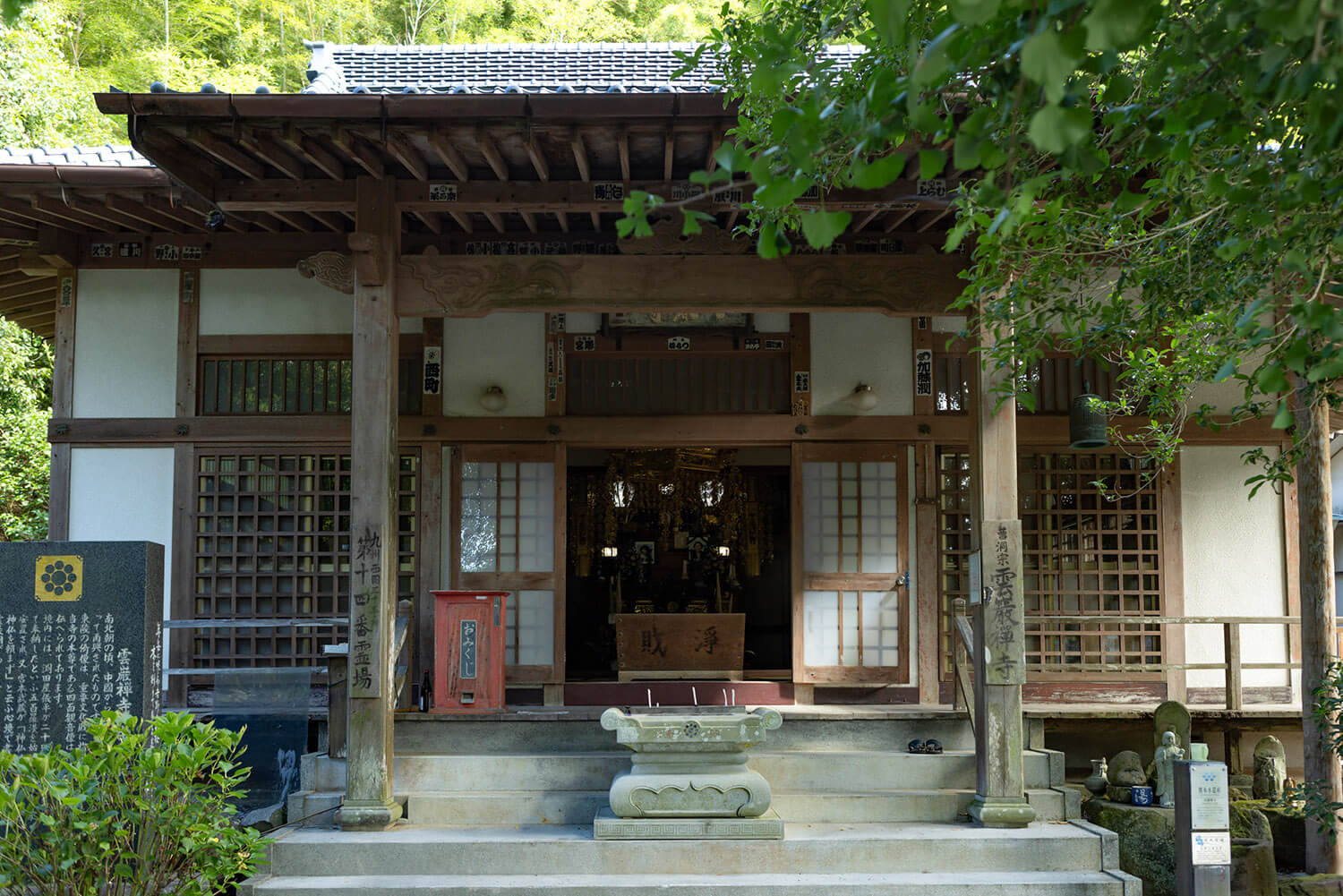
The cave is located in the precincts of Ungan-zenji Temple, which is nestled at the foot of Mt. Musashi Miyamoto, a great swordsman, was received as a guest of Tadatoshi Hosokawa, the first lord of the Kumamoto domain, and spent the last five years of his life in Kumamoto. It is known that he spent a year and a half before his death at Ungen Zenji Temple, where he wrote the "Book of Five Rings," a book on the Art of War, in the cave.
Covered with dense trees, Reigando Cave is very mysterious, and the power of the cave created by nature is overwhelming. Inside the cave, a statue of the Kannon (Goddess of Mercy), also known as Iwato Kannon, is enshrined. Visitors can enter the cave and ponder on Musashi during his ascetic training.
The "Five Hundred Arhats," a line of stone arhat statues lined up on a rocky hill, is also a spectacular sight.
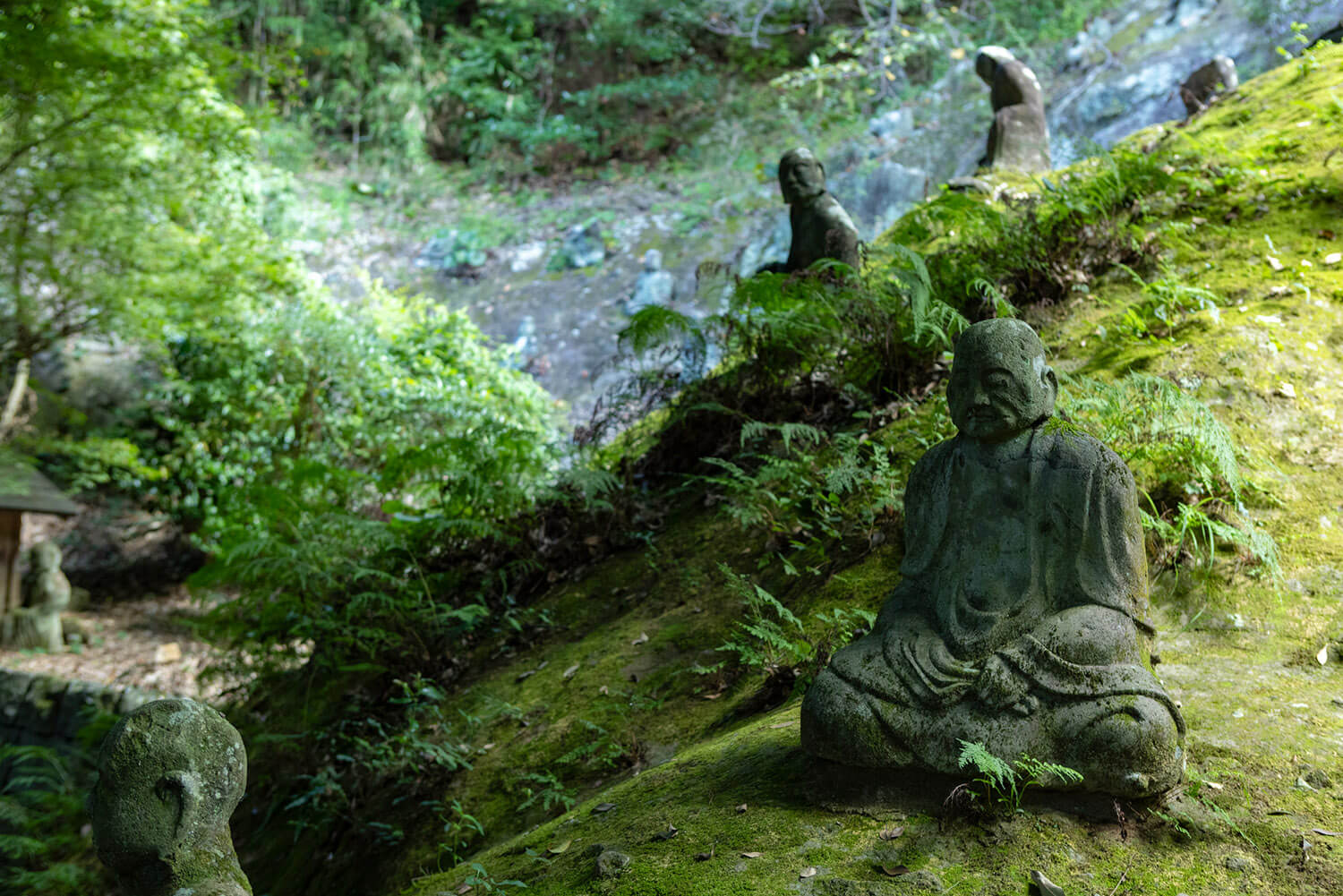
On a rocky hill on the way to Reigan-do Cave, there is a "Five Hundred Arhats" dedicated by Kumamoto merchant Gihei Fuchidaya about 200 years ago over a period of 24 years. The sight of the stone statues, each with a different sitting position and expression, lined up in a row on the rocky hillside is spectacular, creating a solemn and ethereal atmosphere.
In the precincts of Ungan Zenji Temple, there are exhibits such as the wooden sword Musashi used in the "Battle of Ganryu Island" where he dueled Sasaki Kojiro, a hanging scroll painted by Musashi, and a copy of the Book of Five Rings. There are many things to see, even if you are not a Musashi fan.
Local Guide
Supporters
The grounds are slippery due to many ups and downs, so it is recommended to wear comfortable walking shoes.
- Reigando Cave
-
- 589 Hirayama, Matsuo-cho, Nishi-ku, Kumamoto City, Kumamoto Prefecture MAP
- Approximately 30 minutes by car from JR Kumamoto Station.
- Take a bus from Sakura-machi bus terminal, get off at "Iwato Kannon Iriguchi" and walk about 20 minutes.
- 8:00-17:00
- No holidays
- Adults 300 yen, high school students 200 yen, junior high school students and younger 100 yen
- 096-329-8854 (Ungan Zenji Temple)
- Free of charge
7Sauna and Natural Hot Spring Yurakkusu
A sacred place in the west of the sauna world that saunas from all over the country yearn to visit.
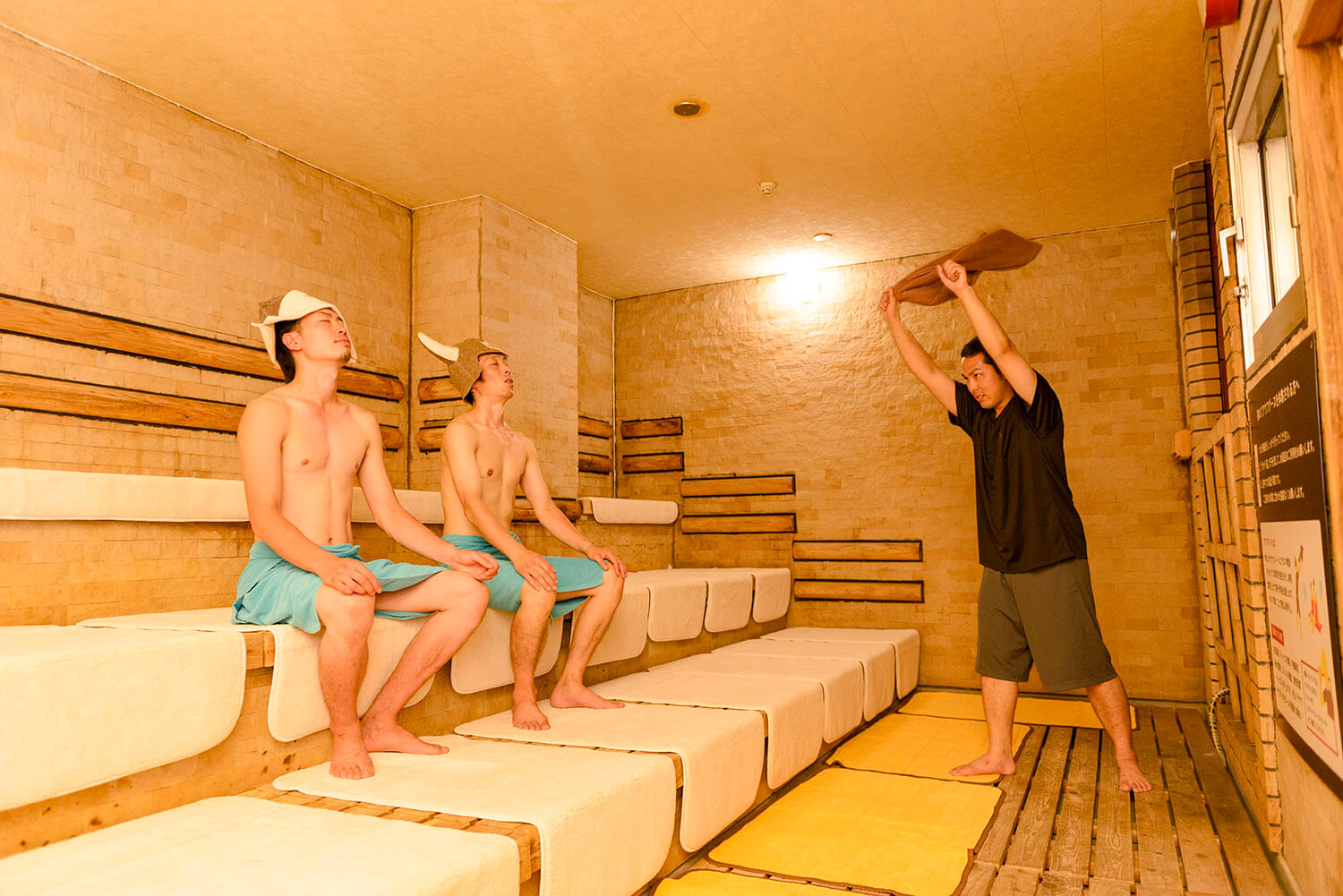
This is Kyushu's leading Sauna Property, well known among sauna enthusiasts. The reason why it is called the "holy land of the west" is because of its extensive facilities, including a wide variety of saunas and a deep head-deep water bath, where you can enjoy the ultimate "todoi" (relaxation) experience.
There are three saunas: the "Classic Sauna" set at around 90°C, the "Meditation Sauna" where you can enjoy self-launge in a calm space, and the "Oo Aso Eruption Meditation Sauna," a steam-type sauna set at low temperature and high humidity. You can choose the one that best suits your taste and mood, and enjoy the charm of the sauna at your leisure.
Cool down with natural water that has been cooled to a crisp after a hot sauna session.
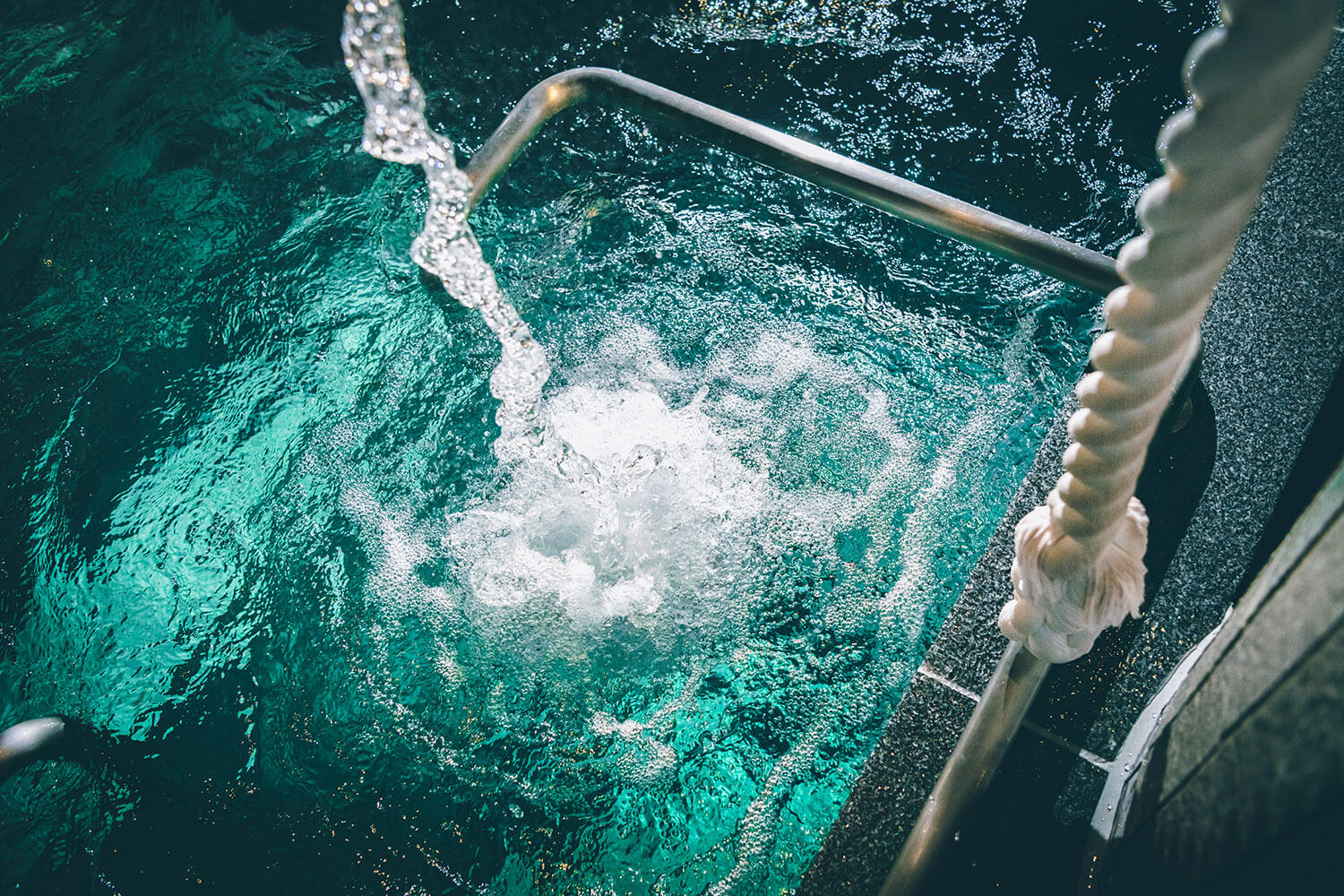
After enjoying the sauna, you can go to the water bath, which uses plenty of subterranean water from Aso. The real attraction is not only the quality of the water, but also the depth of the water, which will definitely surprise first-timers, with the deepest part of the men's water bath at 171 cm and the women's water bath at 153 cm. Most Properties do not allow head-deep immersion in the water baths, but this is not a problem at all here. After your body has been steamed in the sauna, you will be gently enveloped by the spring water, which is soft to the touch. Once you experience it, you will want to visit again and again.
Kumamoto City, which uses natural groundwater for all of its water supply, is not only particular about the quality of its saunas, but also about the quality of its water baths. Soak up Kumamoto's charms with all your body and heal yourself from the fatigue of your trip.
Local Guide
Supporters
Some guests of OMO5 Kumamoto by Hoshino Resorts even stop by here before checking in. There is also a Dining Area, where you can enjoy a menu that has been thoughtfully prepared to suit your after-bath needs.
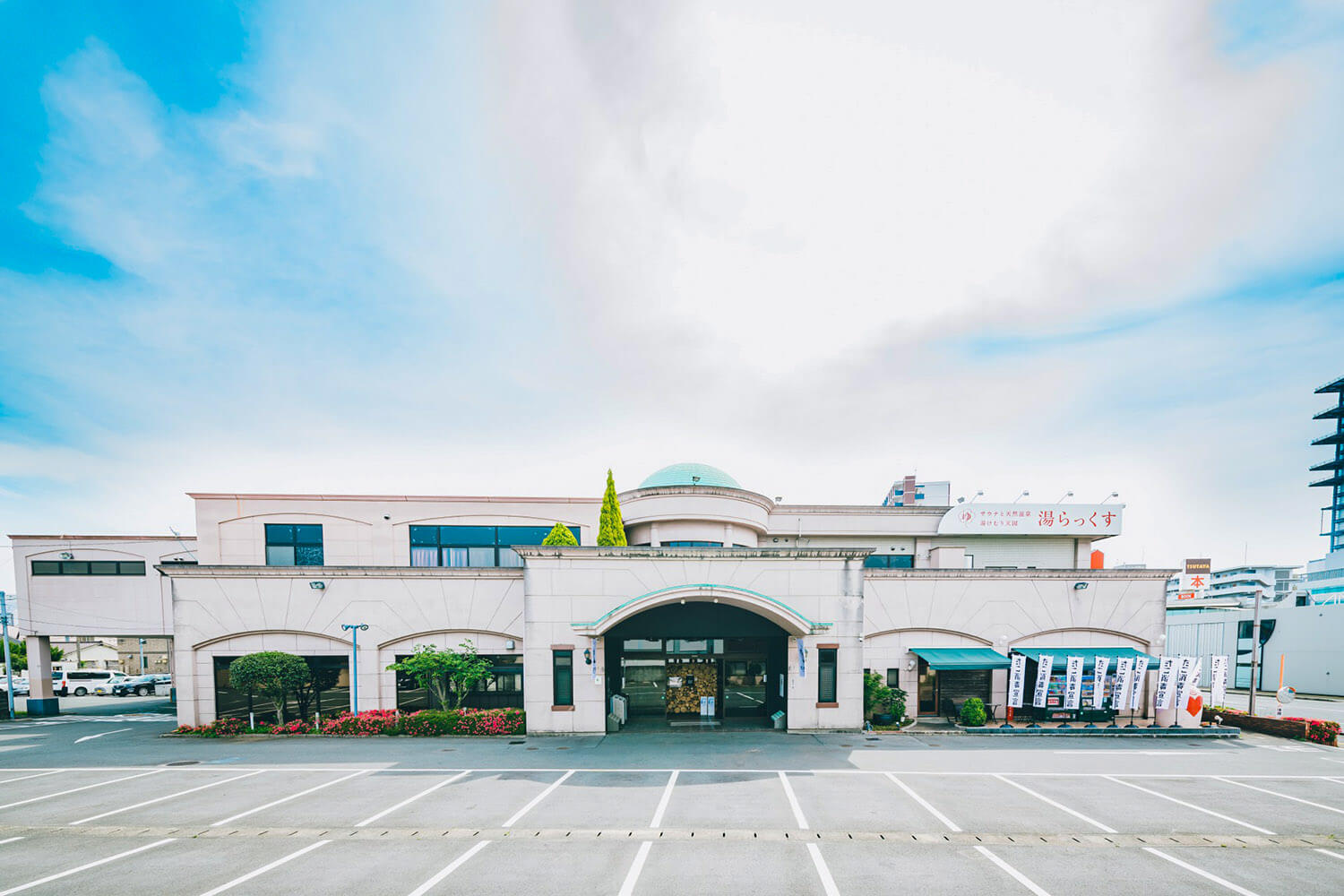
- Sauna and natural hot spring Yurakkusu
-
- 722 Honjo-cho, Chuo-ku, Kumamoto City, Kumamoto Prefecture MAP
- 7 min. walk from JR Heisei Station
- 24 hours (No bathing from 8:00 to 10:00 due to cleaning)
- Open all year (with maintenance closures twice a year)
- Bathing Adults 900 yen and up, children 300 yen
Free course (bathing, towel, indoor clothes, use of 2nd floor paid space and Restaurant) Adult 1,650 yen-, Child 300 yen - 096-362-1126
- Free of charge
8Koizumi Yakumo Kumamoto Former Residence
The lifestyle of writer Koizumi Yakumo, who loved Japan, can be seen here.
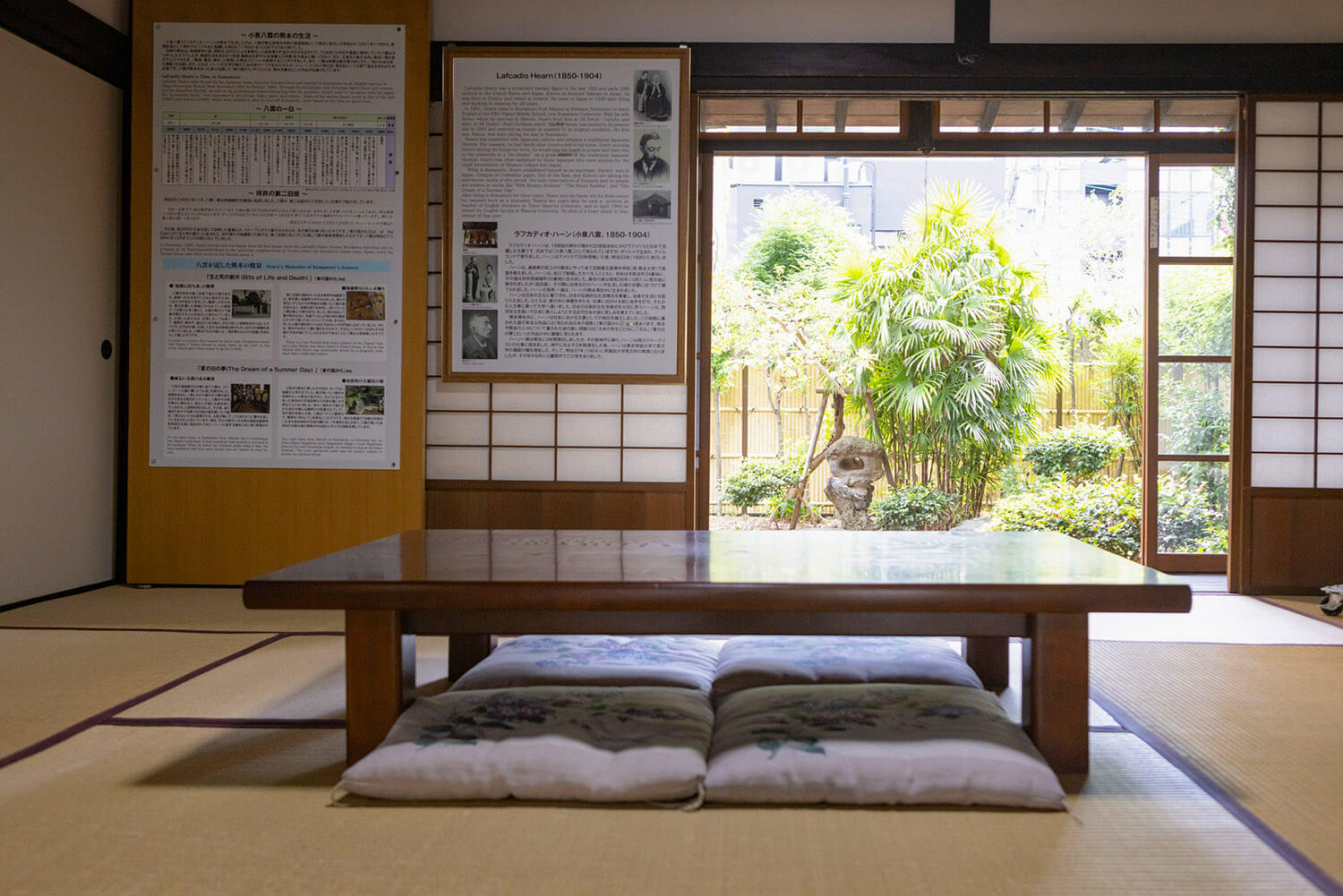
Lafcadio Hearn, author of the ghost stories "Hoichi without Ears" and "The Snow Woman," spent his first year as an English teacher at the Fifth Higher Middle School, the predecessor of Kumamoto University, in 1891, and the house has been preserved as a memorial hall.
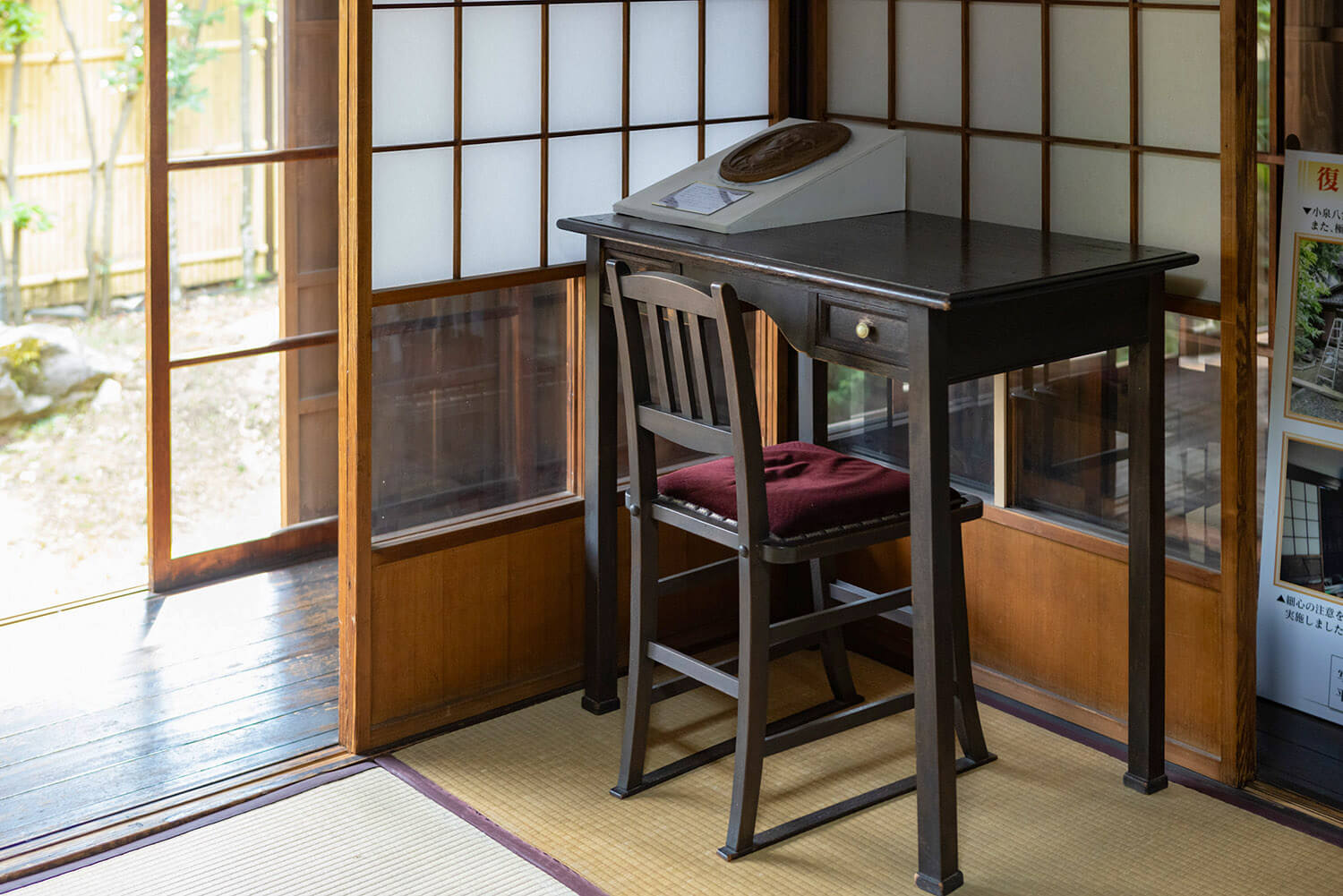
The current building was dismantled and restored when the building was relocated in 1993, but the inside is exactly as it was in those days. The desk and chair that Yakumo used to use, as well as a Shinto altar where he used to pray every morning by striking his hand with a kashiwade, vividly show how Yakumo, who deeply loved Japanese culture and spirit, lived in Kumamoto.
Many of his works were created from his life in Kumamoto
During his three years in Kumamoto, Yakumo wrote many works, including "Unknown Faces of Japan" and "From the East," which were inspired by his experiences in Kumamoto. He loved Japanese culture, had a family in Japan, and spent his life in Japan, and is said to have been more Japanese than Japanese.
At the museum, visitors can learn more about his life in Kumamoto and Japan, as well as his life and upbringing before he moved to Japan. Located in the heart of the downtown area, it is a great place to stop by during a shopping trip.
Local Guide
Supporters
This is the closest sightseeing spot from "OMO5 Kumamoto by Hoshino Resorts. Sitting on the chair where Yakumo sat, you can enjoy a relaxing time. If you ask a Staff/staff member, you will hear stories not only about Yakumo but also about Kumamoto.
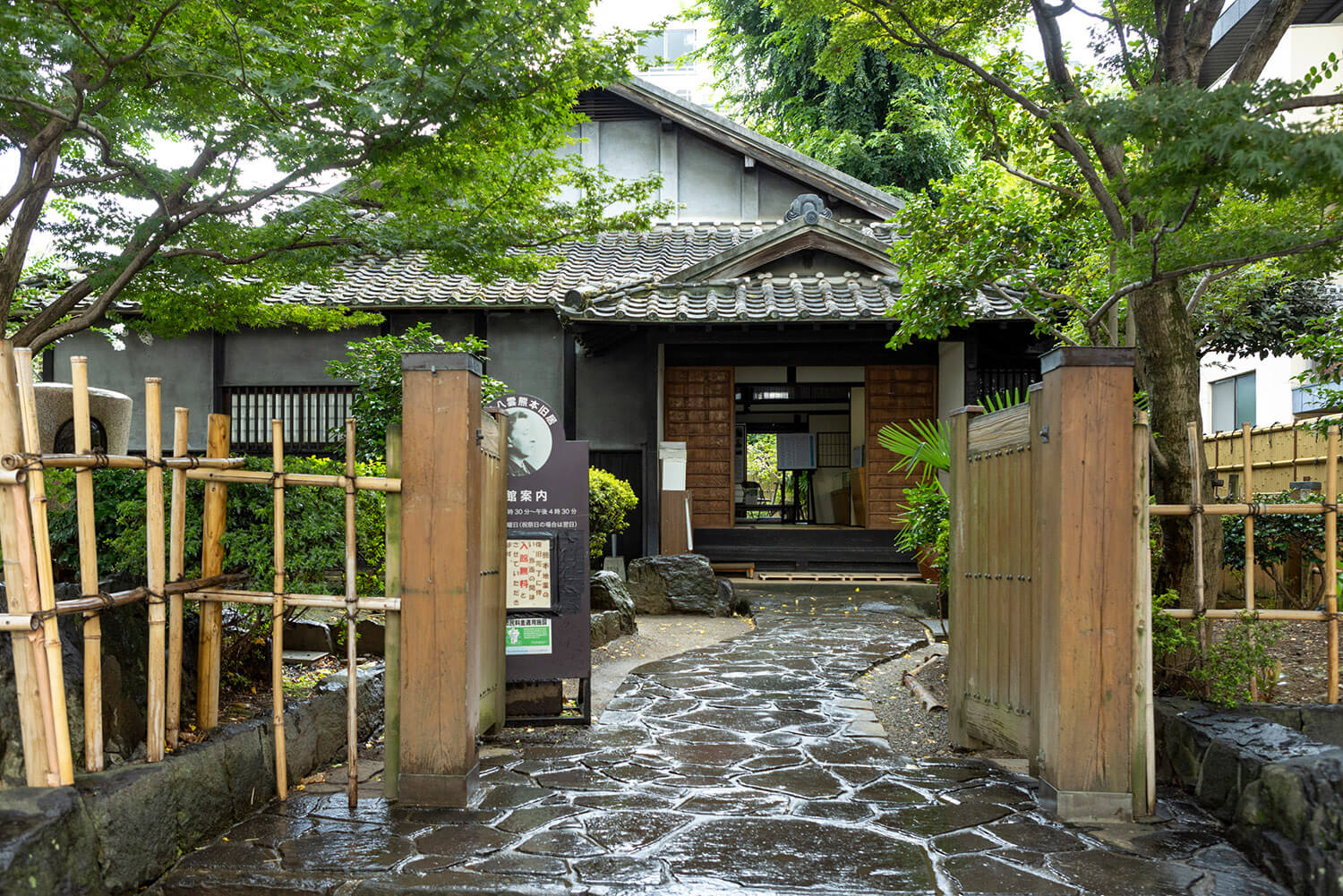
- Koizumi Yakumo Kumamoto Former Residence
-
- 2-6 Ansei-cho, Chuo-ku, Kumamoto City, Kumamoto Prefecture MAP
- 3 minutes walk from "Tsurimachi-suji" streetcar station.
- 9:30-16:30
- Mondays (or the following weekday if Monday is a national holiday), Year-end and New Year holidays
- Free admission
- 096-354-7842
- None
MAP

Local Guide who was in charge of this article
- Momoka Yamada Kumamoto native's attraction discovery team!
OMO5 Kumamoto by Hoshino Resorts
Located in the center of Kumamoto, within walking distance to Kumamoto Castle, Kumamoto City Hall, and downtown. It is an ideal location for sightseeing and business.