





Beppu is a hot spring kingdom. A tour of Beppu's diverse hot springs and "Gourmet from Hell" for a trip to paradise.

Beppu, Oita Prefecture, is a city of hot springs with more than 2,800 sources and plumes of smoke rising from everywhere. With its diverse spring qualities and an overwhelming amount of hot springs, Beppu is known among hot spring connoisseurs as a place of longing for hot springs. The eight hot springs scattered throughout the city are called "Beppu Hatto," or eight hot springs, and each has its own unique qualities and atmosphere. A culture of ingenious thermal baths has also developed, allowing visitors to experience the long history of the hot springs and discover new attractions. In between trips, be sure to try the casual gourmet food prepared with the power of "hell," where high-temperature steam and boiling water gush out. We will introduce you to the profound charms of Beppu, a hot spring paradise where you can fully enjoy the sight, skin, smell, and taste of hot springs.
Beppu has the largest number of hot springs and the largest total volume of hot springs, and we will show you why Beppu is so great!
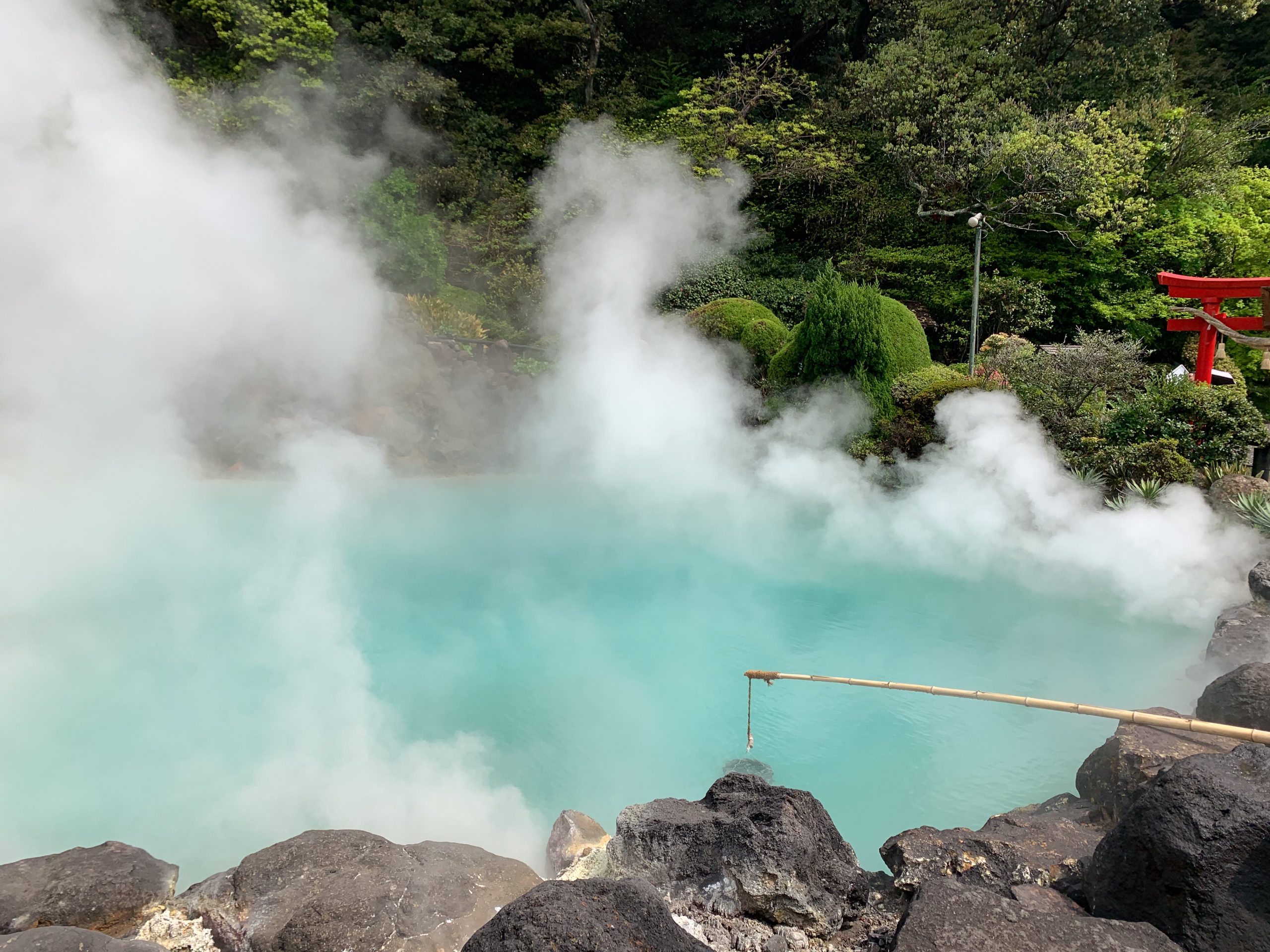
There are more than 2,800 sources in Beppu, with a gushing volume of over 102,000 liters per minute*. (*) Both of these figures are the highest in Japan. Incidentally, the number of hot springs in Yufuin, Oita Prefecture, which ranks second in Japan, is approximately 1,000, with a gushing volume of 52,000 L. This shows that Beppu is far ahead of other hot springs in the country. What is even more impressive is that Beppu has seven of the ten "notifiable qualities" of hot springs, including simple hot springs, chloride springs, and sulfur springs, all of which can be enjoyed in Beppu Onsenkyo. No other hot spring resort in Japan has such a wide variety of hot springs in terms of both quality and quantity, which explains why Beppu Onsen is praised as "the best hot spring resort in Japan.
(Based on the "2021 Hot Spring Usage Report (Summary Table)" (Oita Prefecture website hot spring data).
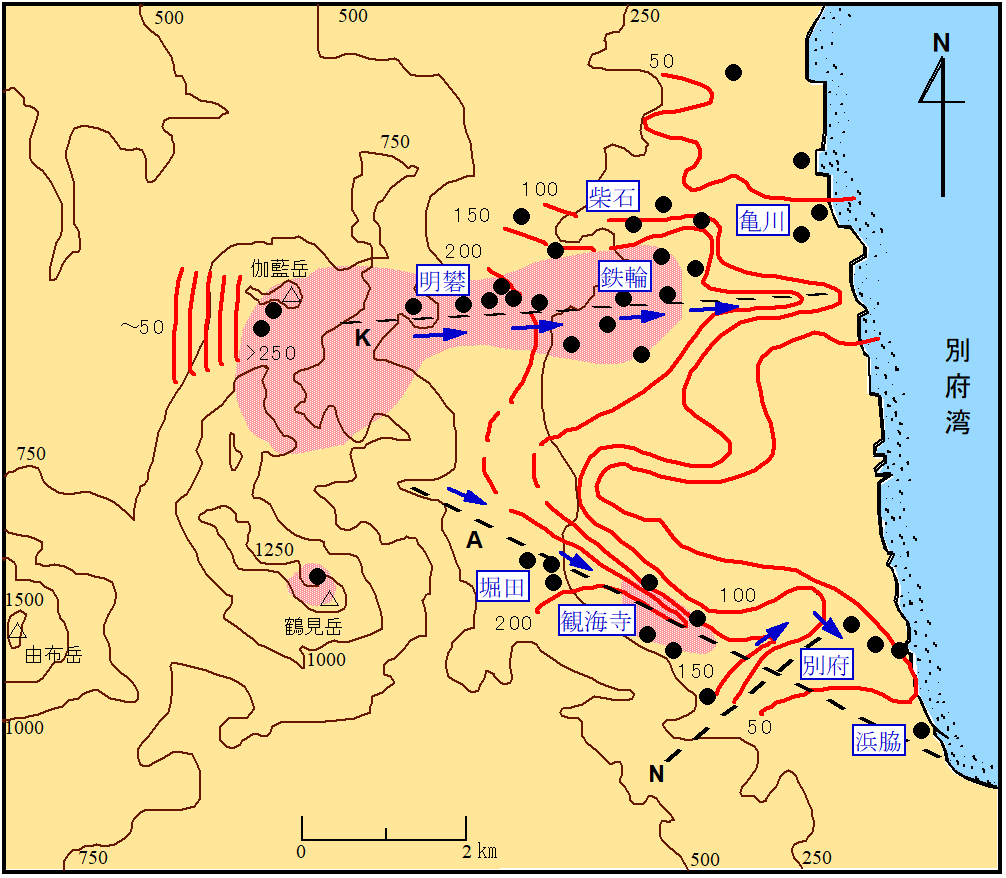
Why are there seven different types of hot springs in Beppu? To find out the secret, let's first look at the geological features.
Beppu is located in the "Beppu-Mannenyama Fault Zone," where many active faults are distributed, in a fan-shaped area stretching from Tsurumidake and Garan-dake in the western part of the city to Beppu Bay in the east. Tsurumidake in ancient times, and is formed by rocks from pyroclastic flows and mudslides caused by volcanic activities. What is noteworthy is the existence of two faults that run north and south of the fan-shaped area, starting from the Tsurumidake area. These faults serve as underground channels for hydrothermal fluids, and many old "jigoku" (fumaroles and boiling springs) and recently drilled springs can be seen around the two faults. The "eight hot springs of Beppu" are also located along the faults: Kamegawa, Shibaseki, Kannawa, and Myoban along the Kannawa fault in the north, and Hamawaki, Beppu, Kankaiji, and Horita along the Asamigawa fault in the south.
The source of the hydrothermal water flowing along the fault is said to be chloride spring-type hydrothermal water beneath the Tsurumi volcano group. It is thought that rainwater that percolates from the surface of the ground combines with the hydrothermal water, which boils due to underground heat, condenses into steam, and chemically reacts with various rocks deposited in the fan-shaped area, resulting in various types of spring water.
In addition, there are various types of hot springs, which are distributed in order from the mountains to the sea: "fumaroles," where hot steam gushes out, "boiling springs," where hot water gushes out with steam as it boils, and "general hot springs," which are collected at temperatures lower than the boiling point. These diverse forms of hot springs have given Beppu a rich hot spring culture that goes beyond just "soaking in hot water.
Touring the "Eight Hot Springs of Beppu" with their various atmospheres and spring qualities
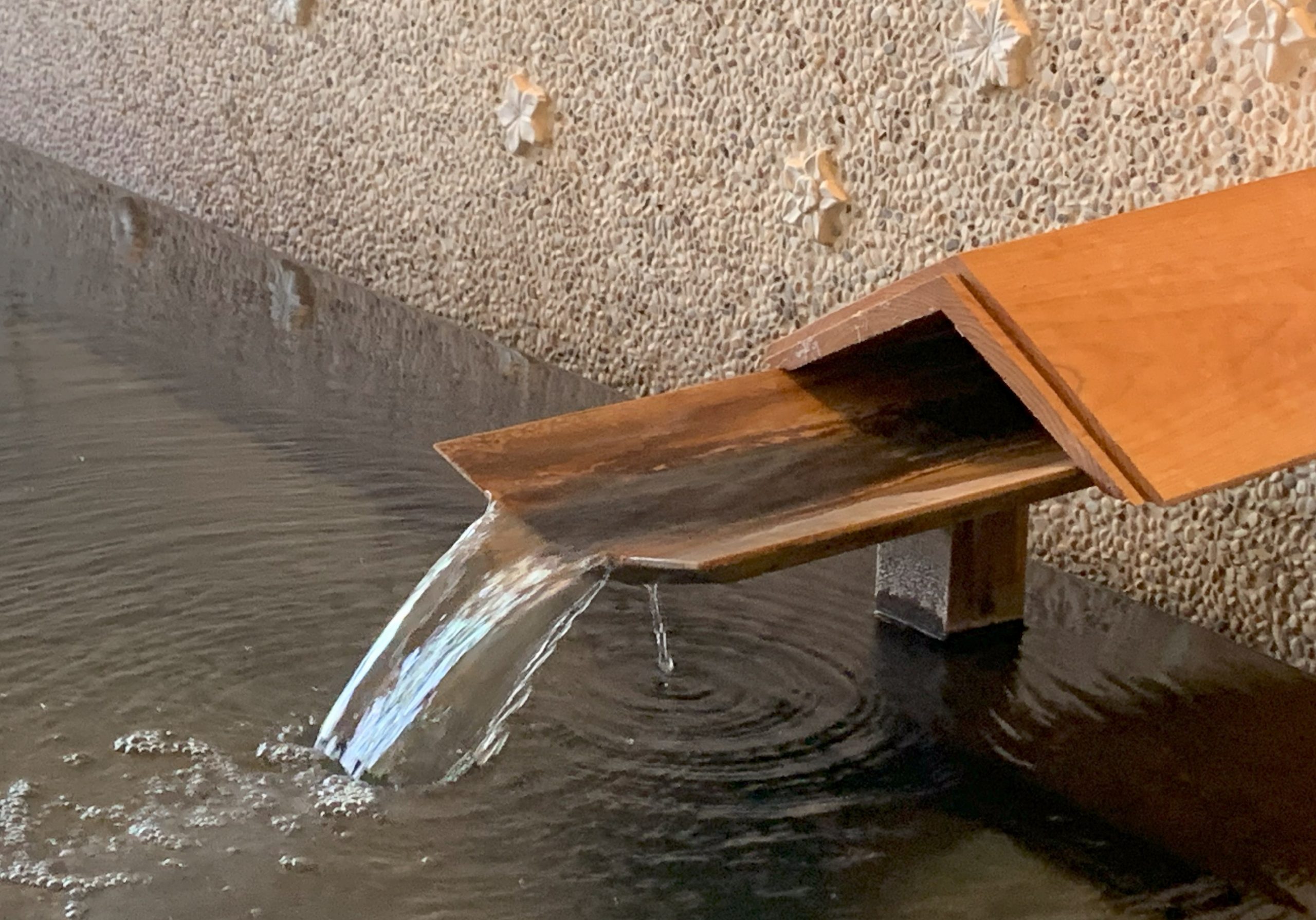
Beppu's hot springs were first discovered in the 8th century in the "Iyokuni Fudoki," which describes Beppu's hot springs. For a long time, each village and town had its own hot spring resort, but after the Meiji period (1868-1912), with the development of transportation and the merging of towns, the eight representative hot spring resorts were collectively called "Beppu Hachiyu," or "eight hot springs" by 1924. Here we introduce the features and attractions of these eight hot springs, each with its own unique character.
◆Hamawaki Onsen <泉質例:単純温泉・炭酸水素塩泉>
Along with Kannawa, this hot spring resort is said to be the birthplace of Beppu hot springs. Located along the coast to the south of Beppu Hot Spring Resort, it is said that the name "Hamawaki" came from the sight of hot springs gushing out from the beach. In the Edo period (1603-1867), it was a bustling port town, and there are also remnants of a flower district from the Meiji and Taisho periods. Today, the area from the beach to the lower reaches of the Asami River is dotted with rustic communal bathhouses, where visitors can enjoy socializing with the locals. The city-run multipurpose hot spring recreation center "Yutopia Hamawaki" has rest rooms where visitors can relax and enjoy their stay.
◆Beppu hot springs < Examples of Spring Qualities: Simple hot spring・ Chloride Spring・ Hydrogen carbonate spring>
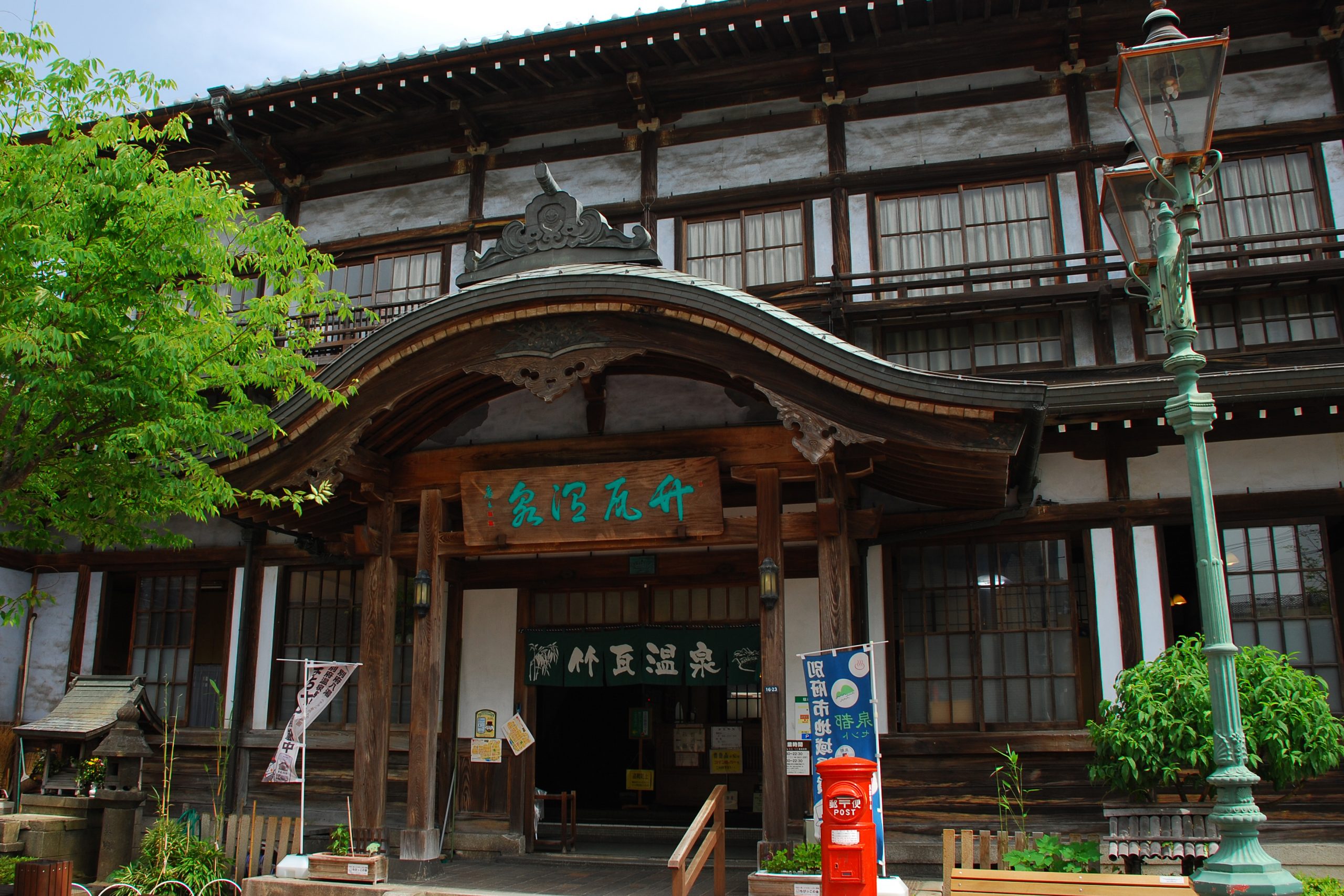
Direction is conveniently located around JR Beppu Station, the gateway to Beppu's hot spring resort area. The Takegawara Hot Springs, the symbol of Beppu, is a must-see attraction. The rounded karahafuzukuri roofs are full of nostalgic atmosphere and make a great photo spot. Inside are the famous sand bath and bathhouses with different spring qualities for men and women, providing a memorable hot-spring experience. There is also a wide variety of other Properties, ranging from public bathhouses that cost less than a coin to drop-in bathhouses at luxury ryokans.
◆Kankaiji Onsen <泉質例:単純温泉・塩化物泉>
The area has been open as a hot spring resort since the Kamakura period. Located at an elevation of approximately 200 m above the Asami River, the area offers a great view of Beppu City, Beppu Bay, and even Shikoku Island on a clear day. There are public bathhouses where visitors can enjoy the soft, clear, colorless hot spring water, and outdoor hot springs with a rare cobalt blue color. It is also close to a cable car and waterfalls, making it a great place to visit in combination with sightseeing.
◆Hotta Onsen <泉質例:単純温泉・炭酸水素塩泉・硫黄泉>
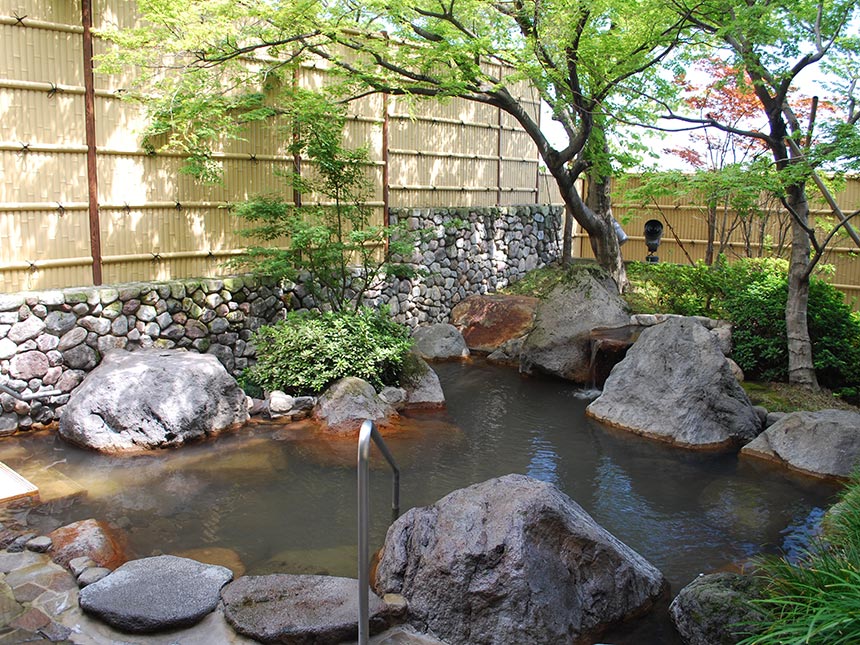
It is just a short drive from the Beppu IC of the Higashi-Kyushu Expressway. It is located a short distance uphill from Kankaiji hot spring in the direction of Tsurumidake. The area is blessed with abundant hot spring water, which fountains up between tranquil rice fields and mountainous scenery. This hot spring has flourished as a therapeutic bath since the Edo period (1603-1868), and has a long history of warming and healing travelers coming and going in the direction of Yufuin and Hita. At the municipal hot spring properties, which are crowded with locals and tourists on weekends, visitors can enjoy open-air rock baths with hot spring water with fluffy flowers floating in the water.
◆Kamegawa Onsen <泉質例:単純温泉・塩化物泉>
The area around JR Kamegawa Station on the northern seafront is somewhat remote from central Beppu. In the Edo period (1603-1867), this area was an important transportation hub to Kokura, and the hot springs and sand baths that sprang up along the coast were popular with people coming and going. Kameyosen" is famous for its hot springs, which were buried by a disaster in the Middle Ages and were restored and reconstructed in the Meiji period. There are also retro Beppu-style public bathhouses with bathtubs half underground and no partitions between them and the changing rooms, which have become secretly popular among hot spring fans.
◆Kannawa Onsen <泉質例:単純温泉・塩化物泉・硫酸塩泉・硫黄泉>
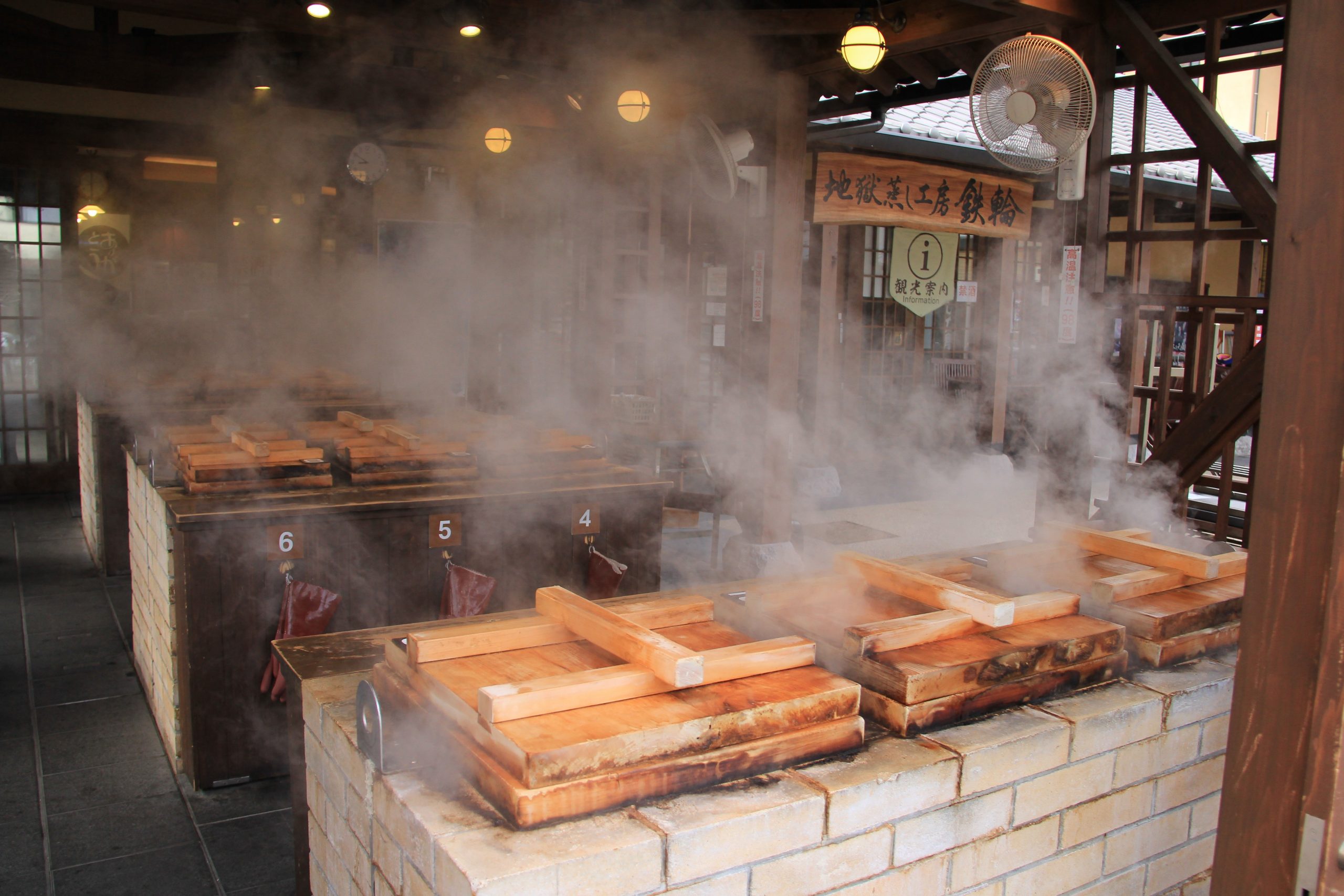
Among the "eight hot springs of Beppu," this area is particularly rich in hot spring atmosphere and has a rich thermal culture. Many tourists enjoy strolling through the area, attracted by the sight of steam rising from here and there along the alleys. It is said that in the Kamakura period (1185-1333), the monk Ippen Shonin calmed the hell (fumaroles and boiling springs) known as "Kuberi hot spring wells" and created hot springs such as "Mushi-yu" and "Shibu-no-yu" that continue to be loved to this day. There is a lineup of restaurants where visitors can Experience the taste of "jigoku-mushi" (steaming in hell), a cooking method that makes use of the fumaroles and geothermal heat.
◆Shibaseki Onsen <泉質例:単純温泉・塩化物泉・含鉄泉・酸性泉>
The name of the hot spring is said to have come from the discovery of a fossilized bush bush in the Edo period (1603-1867), and it has a long history: Emperor Daigo recuperated here in 895, and Emperor Go-Ryozen in 1044. The city-run hot spring stands along a mountain stream and is divided into "hot spring" and "normal spring" baths in a style typical of Beppu. Visitors can enjoy a tour of hot springs with a strong individuality, such as "Chosenji Yakushi-yu," where you can enjoy acidic spring water drawn from Tatsumaki Hell, and footbaths attached to "Blood Pond Hell," which contains iron oxide and magnesium oxide and appears reddish in color.
◆Myoban Onsen <泉質例:単純温泉・含鉄泉・硫黄泉・酸性泉>
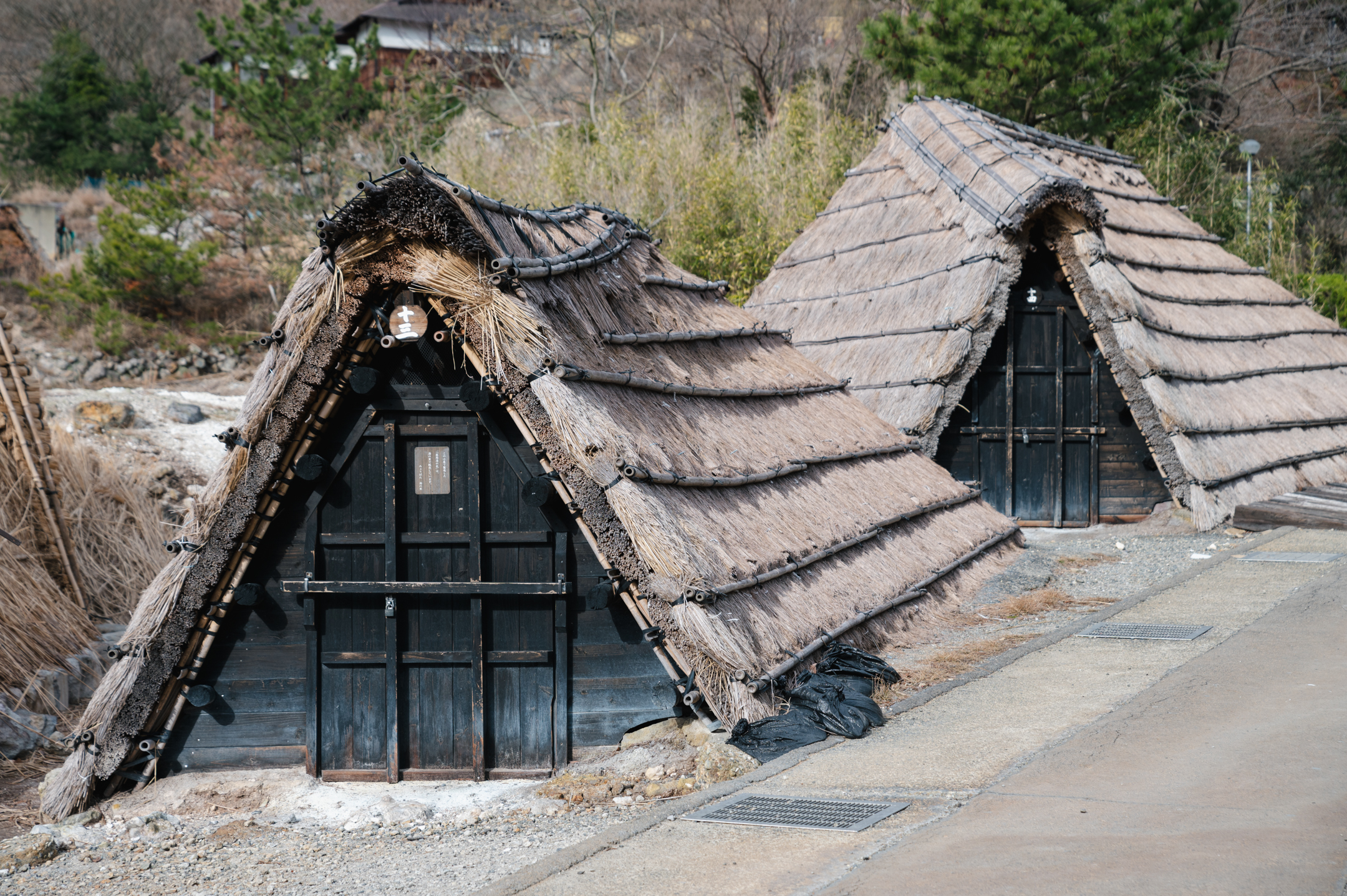
The highest of the "Eight Hot Springs of Beppu," it is located halfway up Mount Garan (also known as Mount Io-zan). In the Edo period (1603-1867), this area was famous for its alumite and yunohana (hot spring flowers). Even today, the area retains an elegant landscape of straw-wood "yunohana huts," and there is a Property where visitors can observe the production of yunohana, which is designated as an important intangible folk cultural property. The area is a hot spring resort where visitors can encounter a variety of impressive looking and smelling hot springs, such as cloudy sulfur springs, milky blue acidic springs, and mud baths that emit a unique color.
Beppu is more than just "hot water!
Enjoy the energy of the earth in every way possible!
In addition to the abundance of sources and qualities of hot springs, another major attraction of Beppu, a hot spring paradise, is the unusual ways in which visitors can enjoy the power of the hot springs. The Meiji-born poet Amejo Noguchi lamented the steam-heated "Mushi-yu" (steam bath), saying, "The scent of sekisho (Japanese sweet flag) lingers on my skin when I return from a steamy bath in Bungo-Kannawa. Here is an introduction to a thermal experience that has been popular in Beppu for a long time, utilizing high-temperature fumaroles and geothermal heat.
◆"Ishi-sho" steamed rice in "Kannawa Mushi-yu
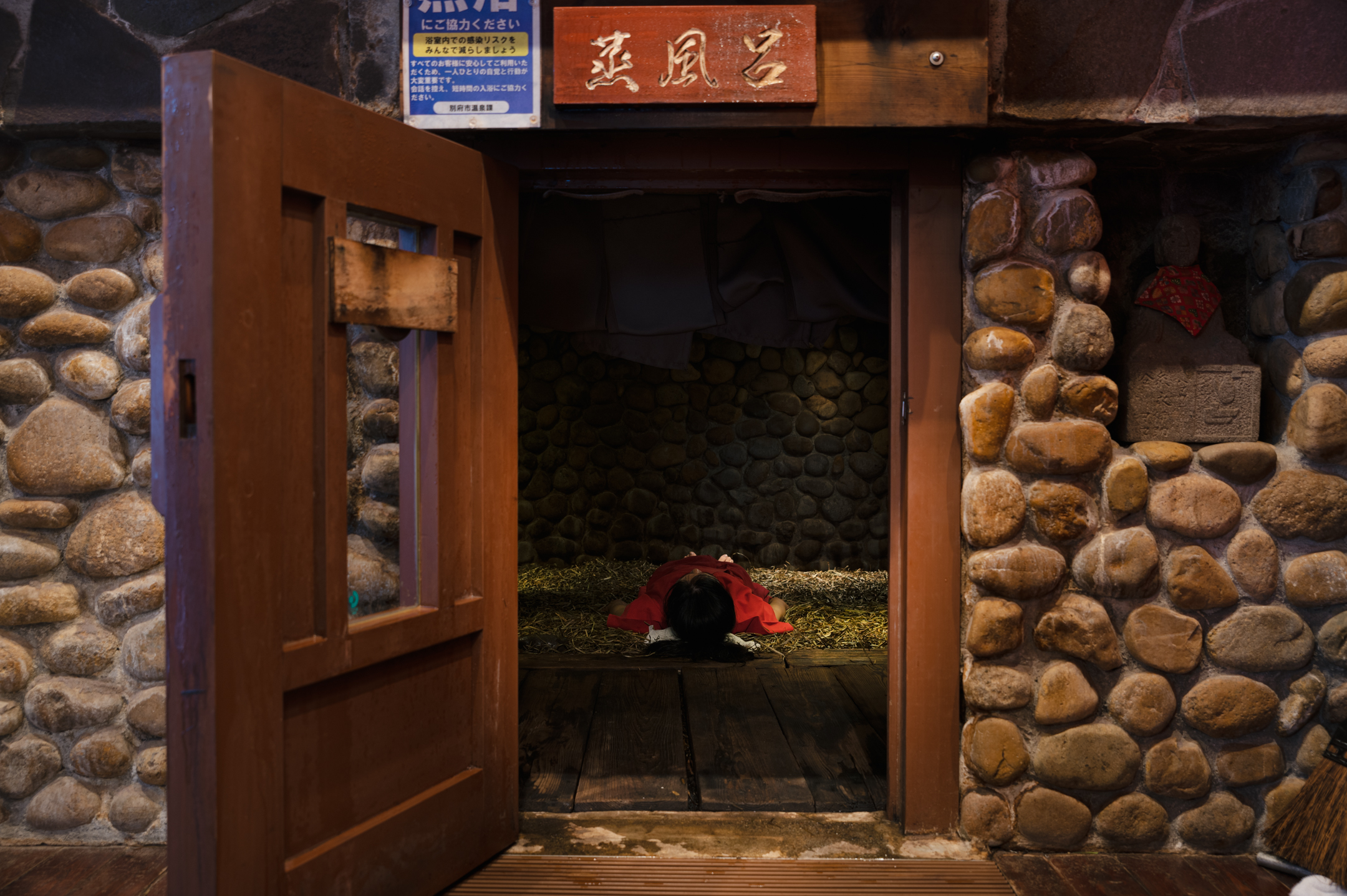
Mushi-yu is said to have been opened by Ippen Shonin in the Kamakura Period. In this unique style, visitors enter a stone room about 8 tatami in size and lie on medicinal herbs laid out on the floor. The medicinal herbs are the Iris species called "Ishi-sho," which grows in clusters only along a clear stream. The cool aroma and steam that fills the space heals the body and mind, allowing visitors to experience a traditional Japanese herbal bath. Bring or rent relaxing clothes to enter the bathhouse, leave after 8 to 10 minutes, take a rest, and enjoy a refreshing bath in the bathtub for a feeling of paradise.
A casual "foot steamer" is also available on the premises.
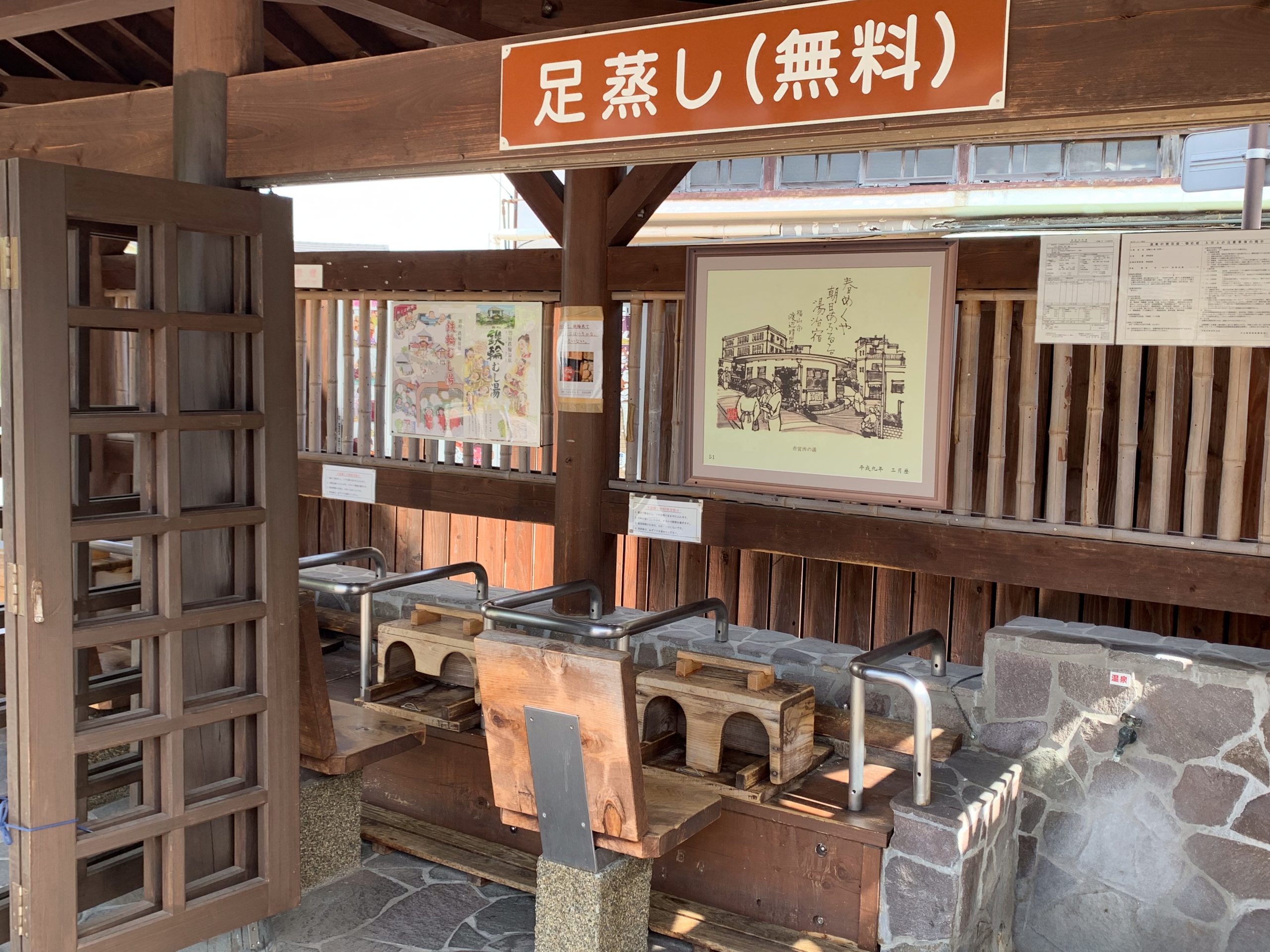
Near the entrance to Kannawa Mushi-yu, there is also a "foot steam" that warms your feet with steam, which is free of charge. Open the lid in front of the chair and put your knees into the steam, and in no time you will feel the heat so hot that your whole body will be warm and sweaty. This is a rare experience unique to Beppu and is always crowded with tourists from Japan and abroad. Why not try it during a stroll, just like a footbath?
- Kannawa Mushi-yu
-
 Kannawa-kamigumi 1-gumi, Beppu City MAP
 7:30-19:30 (last admission at 19:00)
 The 4th Thursday of the month (or the following day if the day falls on a national holiday)
 Mushiyu 700 yen (junior high school students and older may bathe), rental yukata 220 yen, free foot steaming
 0977-67-3880
 Free Parking is available at the municipal hot spring "Hot Spring".
 Foot steaming" may not be available depending on steam conditions
◆"Sunayu" in "Takegawara Onsen
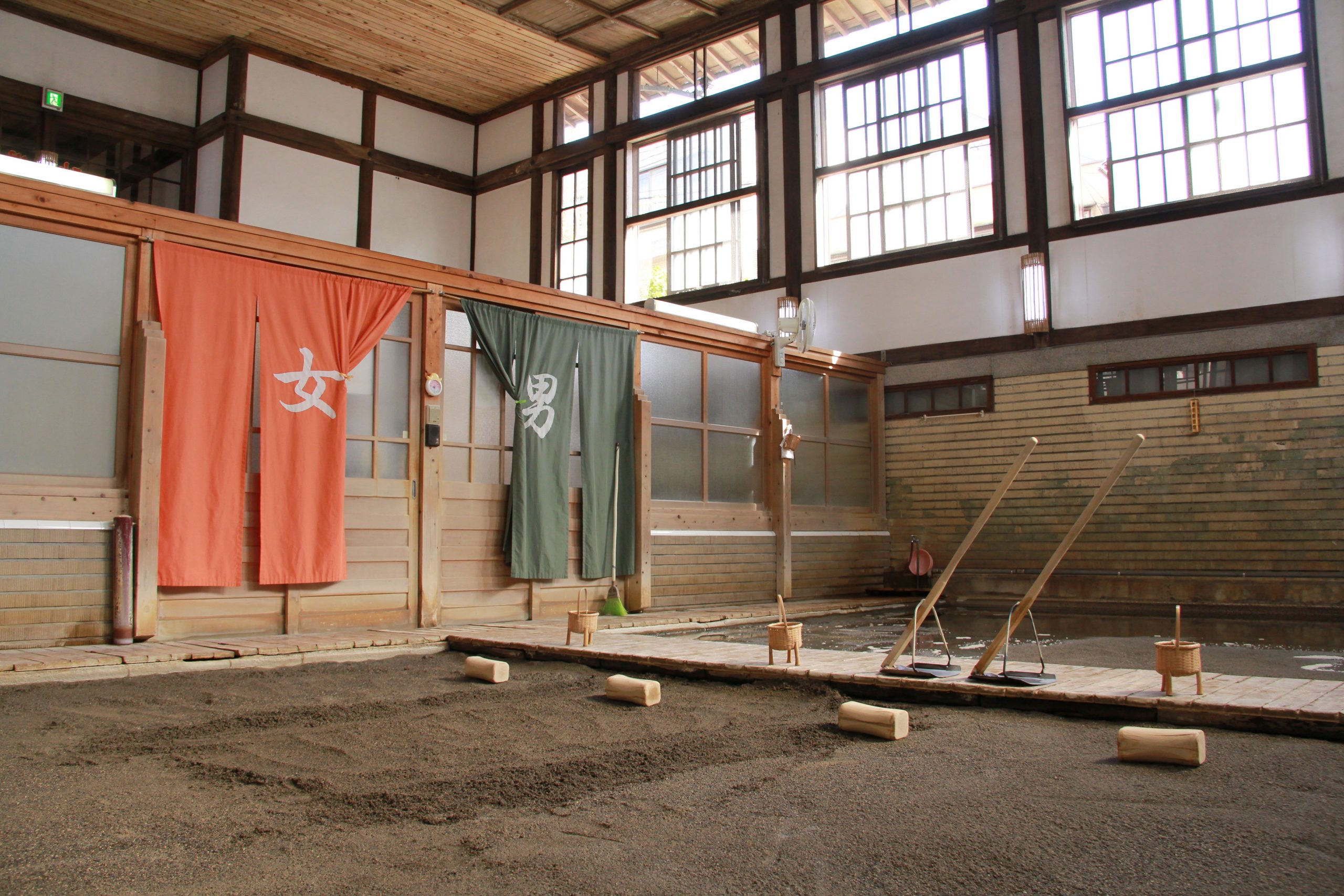
About an 8-minute walk from Beppu Station, this building is a symbol of Beppu's hot springs. In the famous "Sunayu" (sand bath), you change into a borrowed yukata at the entrance, lie down on the sand, and have the sand poured over you. The sand, heated by the hot spring, has a moderate temperature and is soft and weighty, inviting an indescribable feeling of comfort. After the 10-minute sand bath experience, the sand is washed away in the shower, and the experience ends with a dip in the hot spring. The indoor location makes it an easy stop even on rainy days or during the winter season. In addition to the sand baths, there are separate hot springs for men and women in the museum.
- Takegawara Hot Spring
-
- 16-23 Motomachi, Beppu City MAP
- Sunayu 8:00-22:30 (last admission 21:30), regular bath 6:30-22:30
- The 3rd Wednesday of the month (or the following day if the Wednesday is a national holiday)
- Sunayu 1,500 yen (including ordinary bath), ordinary bath only 300 yen
- 0977-23-1585
- None
- Sunayu is available for ages 6 and up.
Reception numbers will be distributed during busy times, so it is recommended to visit well in advance.
Box steamers at Yumetamatebako

This Daytrip Destinations Property stands in the Kannawa area. As part of the various hot spring baths, a "Hako-Steam" is located next to the Outdoor hot spring. Hako-Steam" is a Japanese-style sauna that has been used in Kannawa and Myoban hot springs for centuries. Each person sits on a chair inside a cypress box, and when the lid is closed, only the person from the neck up is outside of the box. The steam from the feet warms you up, and since your head is outside, you don't feel suffocated, and you don't have to worry about damaging your hair from the heat. The "one-person sauna" in the open air is an addictive and comfortable experience.
- Yumetamatebako
-
- Kitanaka 1-gumi, Beppu City MAP
- 7:00 - 2:00 the next day
- No holidays
- Adults 580 yen, Elementary school students 290 yen (extra charge on Saturdays, Sundays, national holidays and peak days)
- 0570-200-445
- Free of charge
◆"Hand bath" at the plaza in front of Beppu Station
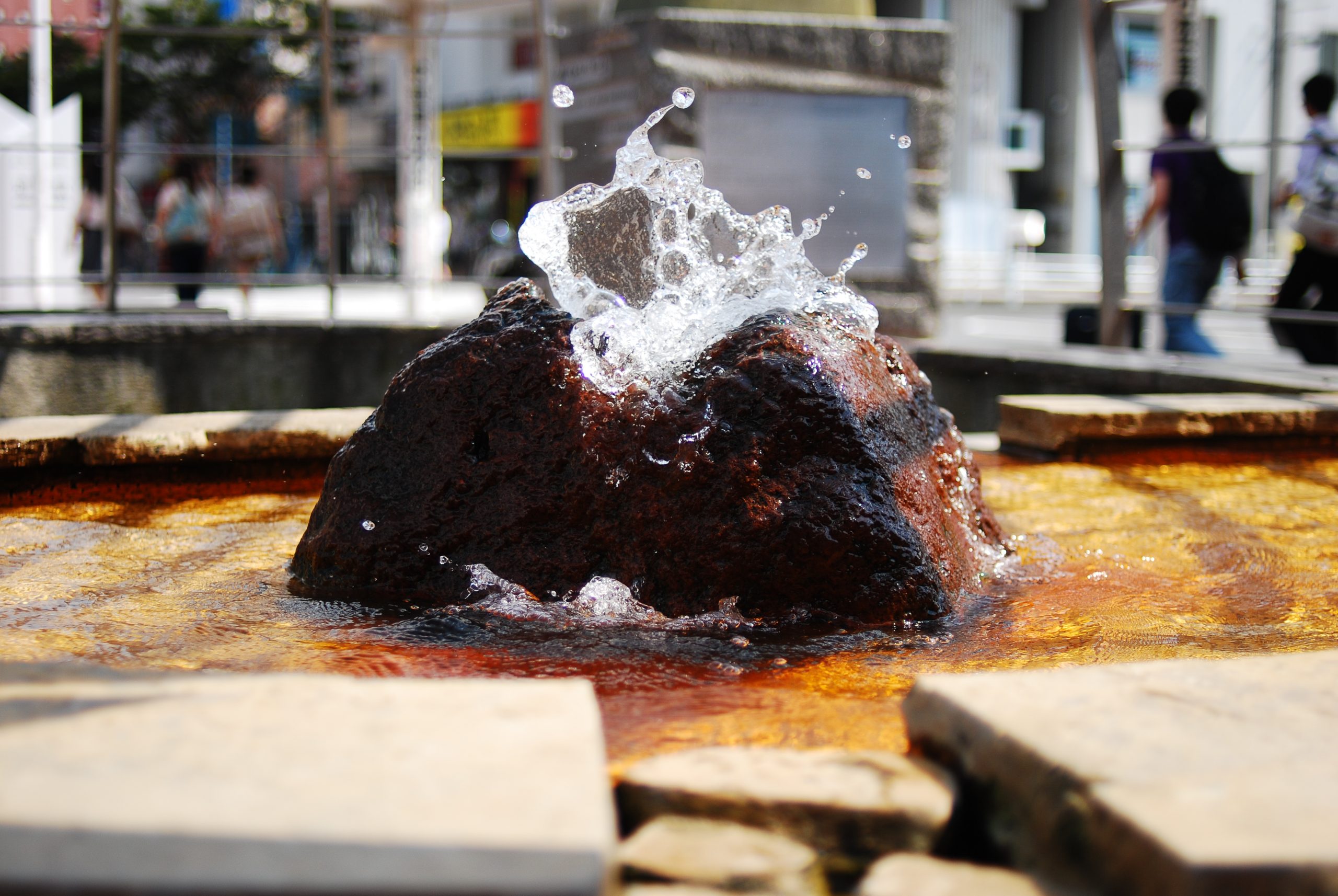
Inside the monument in the plaza in front of JR Beppu Station. The hot spring water overflows from a base made of Beppu stone, which is native to Beppu. The spring is a sodium chloride/sulfate spring. Soaking your hands in the hot spring for a while will warm your whole body and refresh you. The colorfully colored monuments are made of bamboo, and are made to resemble the abundant hot springs that spring forth from various locations in the city.
- Beppu Station Square Hand Spa
-
- 12-13 Ekimae-cho, Beppu City, Oita Prefecture MAP
They are perfect for a snack after taking a bath or sightseeing.
We will have "delicious" steamed by the fumaroles.
After enjoying the bathing and steaming baths, you will want to take your time and enjoy a stroll around the town. Here and there in town, you will find specialty snacks made from "jigoku-mushi," or steaming in hell, using the fumaroles and heat typical of Beppu. Here are some popular gourmet treats to enjoy while cooling down.
Jigokushi (steamed pudding) at the Okamoto-ya store in Myoban Hot Spring
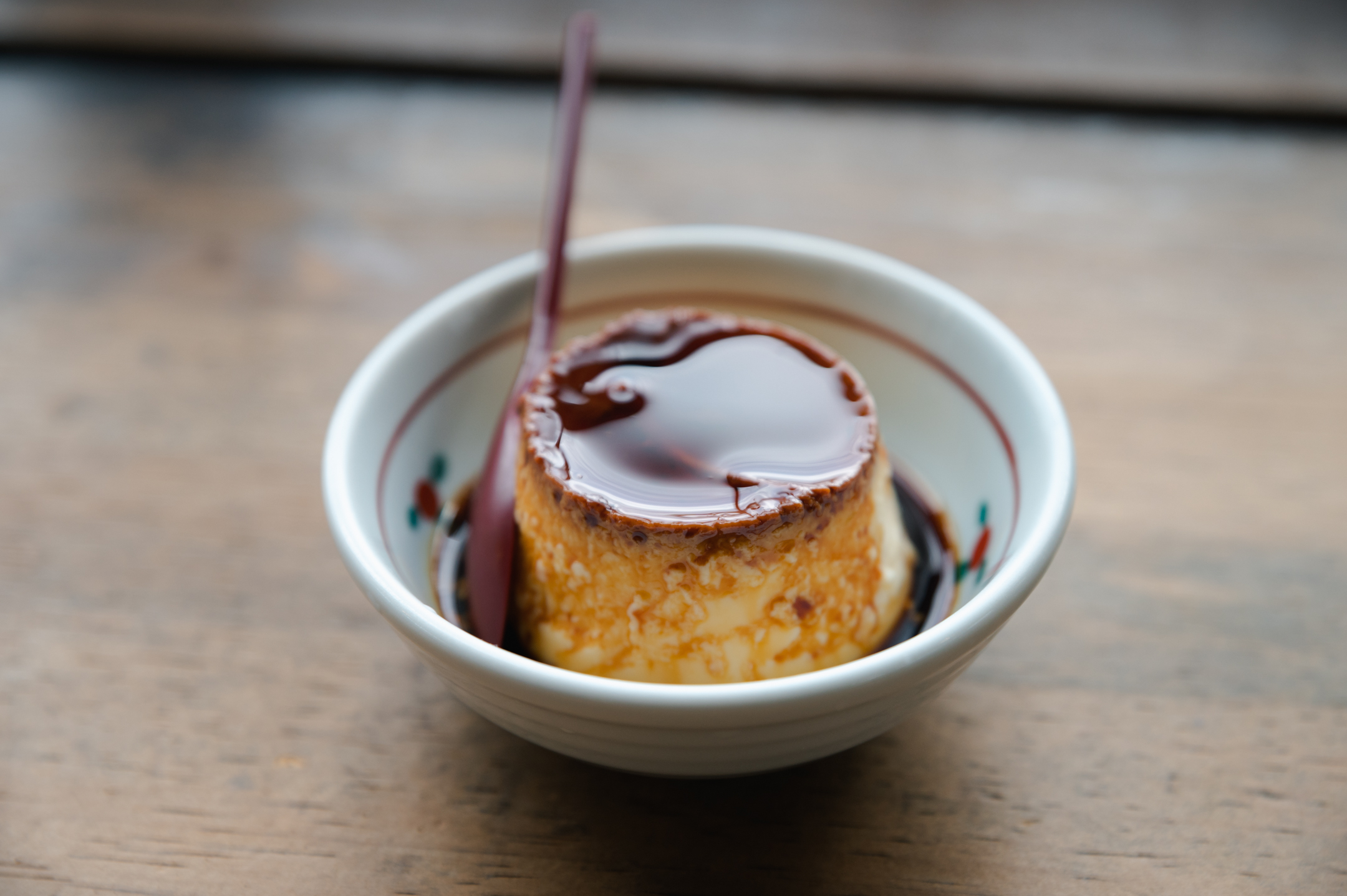
This exquisite pudding is handmade one by one by artisans using a process that has remained unchanged since 1988 (1988) and is finished by "jigoku steaming". The rich and smooth pudding with bittersweet caramel is served on the spot on a plate. The store is run by Okamoto-ya, which has operated a Hot spring ryokan in Myoban since the Meiji era (1868-1912). In addition to its signature pudding, Okamoto-ya also offers sandwiches with a filling of steamed eggs from hell. In addition to their signature pudding, they also offer a variety of sandwiches filled with steamed eggs from hell as filling.
- Okamoto-ya Shop
-
- 3, Myoban, Beppu City MAP
- 8:30-18:30 (L.O. 17:30)
- No holidays
- 0977-66-6115
- Free of charge
Gokuraku-manju (Paradise Manju) at Umi-Jigoku (Sea Hell)

Among Beppu's many "jigoku" (hells), this spot is very popular for the cobalt blue color of its springs. It is an acidic hot spring containing high levels of iron sulfate, and the gushing temperature is approximately 98°C. Manju, steamed in a jigoku kettle that utilizes the hot fumaroles, is made with a thin layer of sweet red bean paste wrapped in a thin skin. The bite-size buns are about the size of a thumb and have a delightful colossal appearance. They are a delightful snack that can be quickly devoured. Another popular snack is eggs boiled directly in the sea hell.
- Umi-Jigoku (Sea Hell)
-
- 559-1 Kannawa, Beppu City MAP
- 8:00-17:00
- No holidays
- 450 yen, elementary/junior high school students 200 yen
- 0977-66-0121
- Free of charge
Steamed eggs steamed in hell at Hyotan Onsen

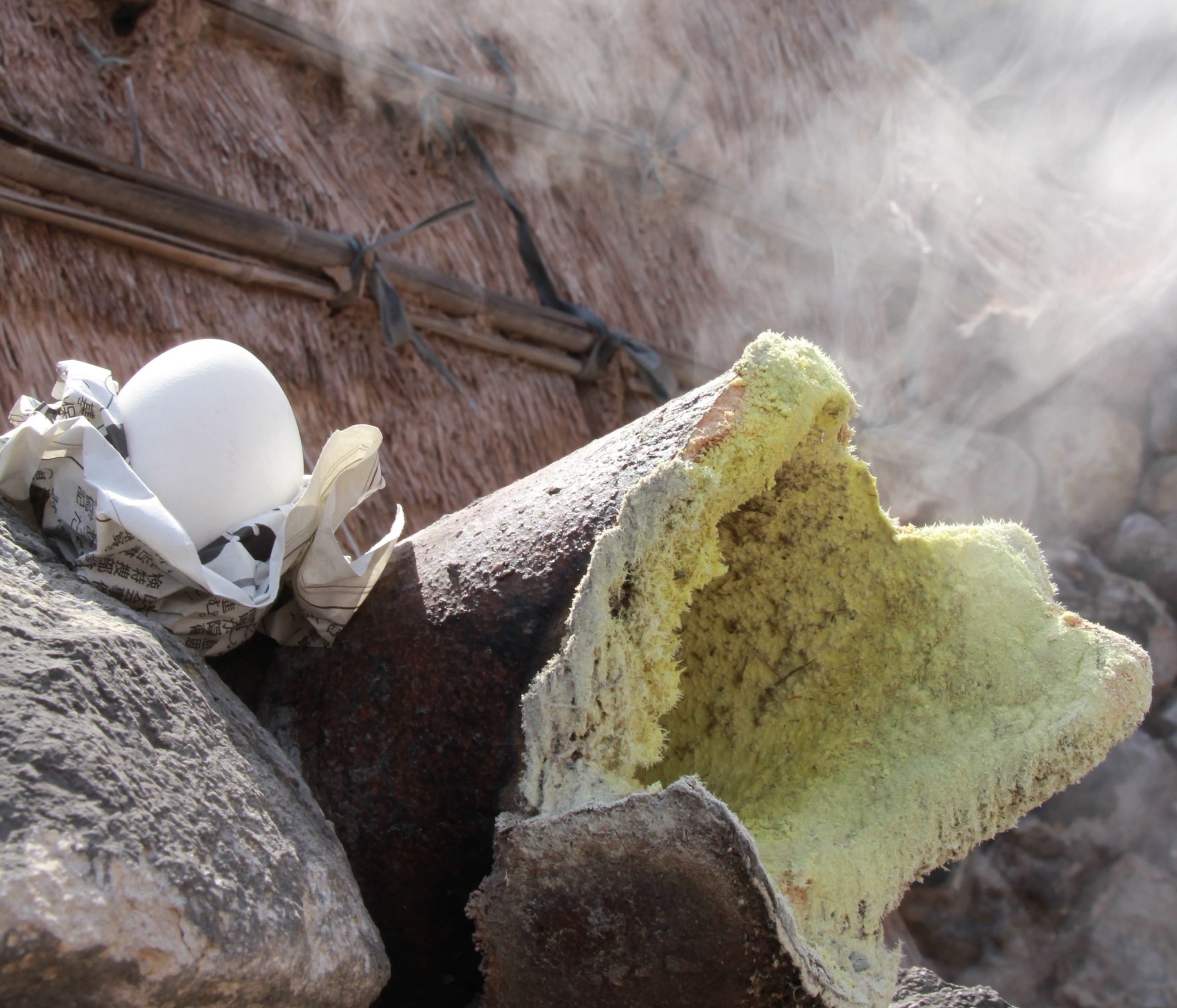
Located in the Kannawa area, this one-day hot spring offers a wide variety of hot spring facilities. The "Jigoku Steamed Eggs" you are looking for are located in the courtyard rest area, and are always hot because the eggs, steamed in the steam from the nearly 100 degree Celsius source, are placed in a large colander and heated by the hot spring water flowing from the gourd-shaped hot spring outlet. The system of purchasing eggs by putting money in a basket on the side is also retro in style. If you stop by only to purchase eggs, tell the receptionist and you will be taken to the courtyard. In the courtyard, you can experience drinking hot spring water and inhaling hot spring steam.
- Hyotan Hot Spring
-
- 159-2 Kannawa, Beppu City MAP
- 9:00 - 1:00 the next day
- Open daily *Closed several times a year for maintenance of Property
- 0977-66-0527
- Free of charge
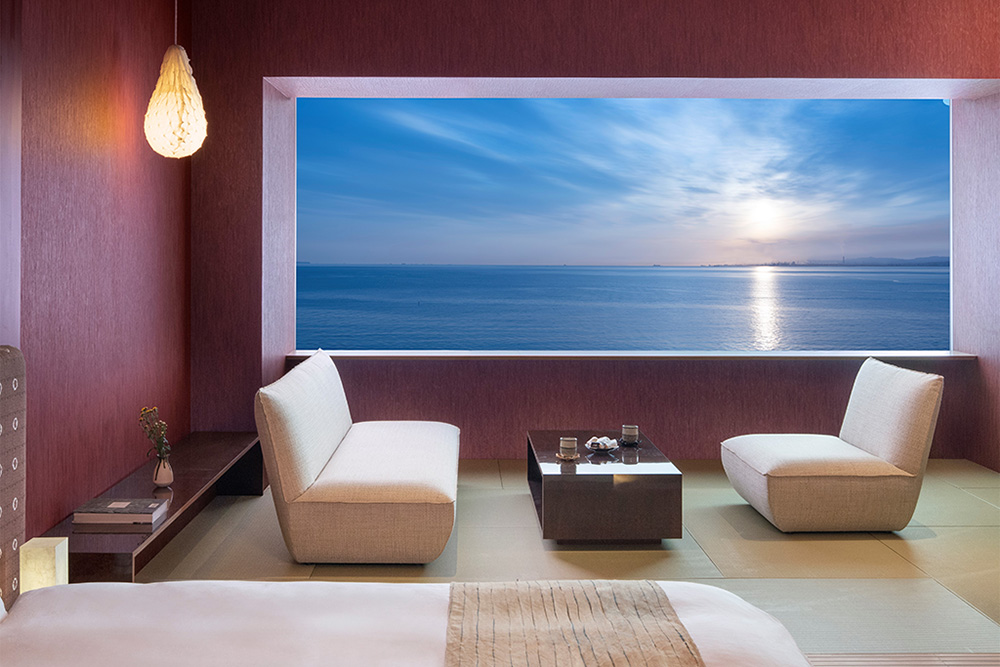
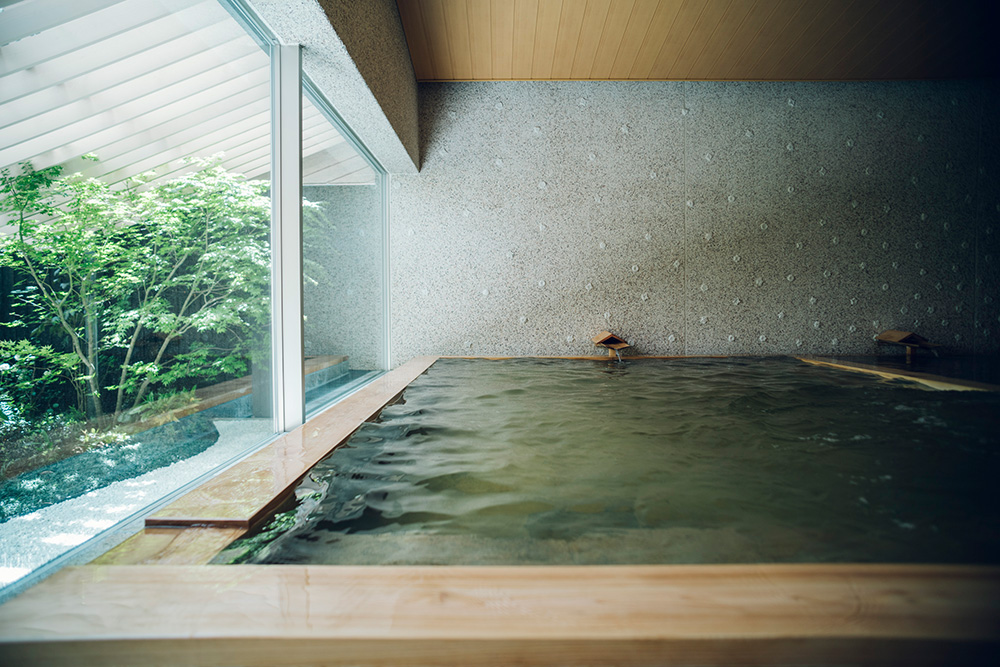
A stay at Hoshino Resorts KAI Beppu, where you will encounter the richness of hot springs and local culture
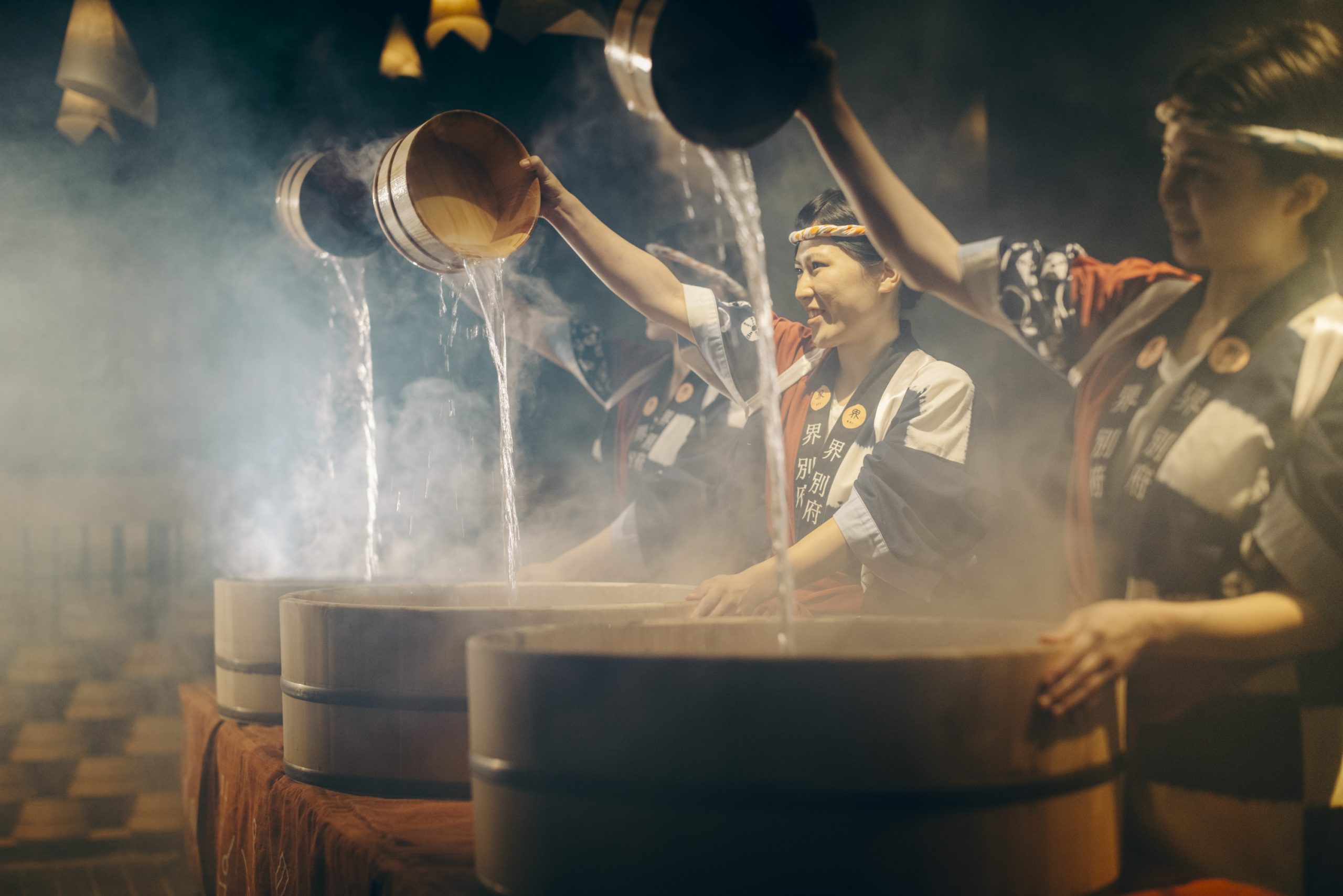
Located near the center of Beppu's hot spring ryokan, this hot spring ryokan stands in a perfect spot to enjoy both the bustle of the city and the rich scenery of the mountains and sea. Inside the ryokan, you will find a lively performance inspired by the hot spring town. Guest rooms and footbaths offer dramatic day and night views, Beppu's unique design and cuisine for dinner and breakfast, and the hot spring invites you to enjoy the exceptional comfort of the hot spring. Here you can experience all the charms of a hot spring resort worthy of being called "the best in Japan.

Michikusa experts who wrote this article
-
Takako Kawaguchi
Editor and writer. After working as an editor for a major publishing company's women's magazine for 10 years, she became a freelance writer. Writes articles for magazines and websites, focusing on travel, interior design, and miscellaneous goods. She enjoys watching sports with her husband and going on hot spring trips.
 Michikusa's
guru
Hoshino Resorts KAI Beppu
Beppu Hot Spring, Oita Prefecture
Conveniently located as a base for sightseeing in Beppu. All Guest rooms have an ocean view and the view of the ocean is breathtaking.
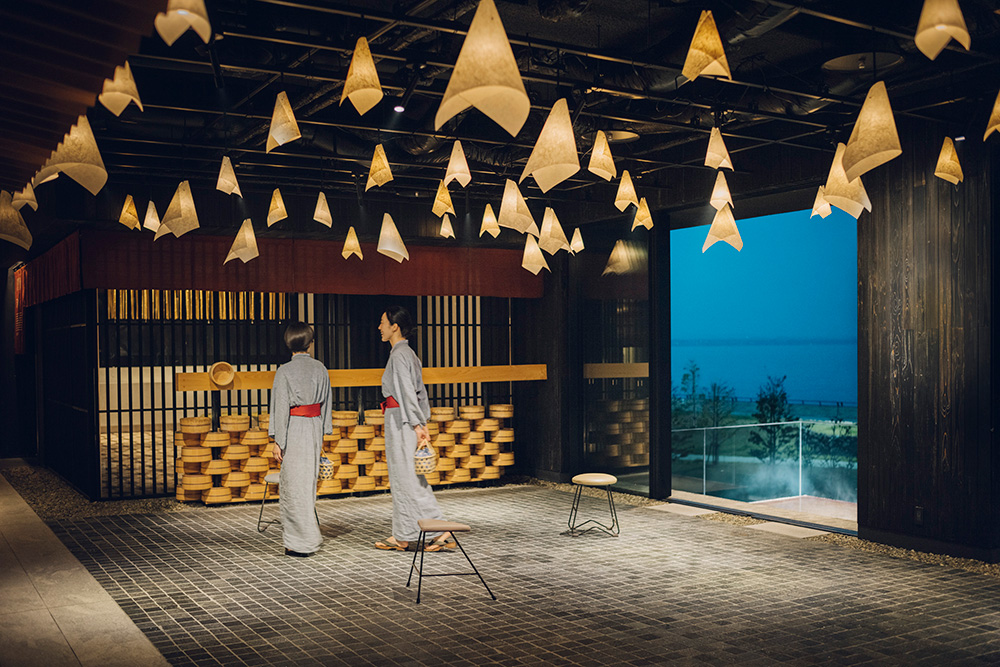

Access by bus 10 min. walk from JR Beppu Station
- Example of Accommodation Rates
- 1 person per night From 17,000 yen