





Kanazawa Sightseeing Tourist Attractions. 8 Royal Tourist Attractions You Must Visit at Least Once

Kanazawa, the castle town of Kaga Hyakumangoku (one hundred million stone), has a variety of sightseeing spots where you can experience the atmosphere of the ancient capital and its art. It is also attractive that you can easily visit each spot by using a sightseeing bus.
Here is a guide to the three teahouses that retain the atmosphere of the Edo and Meiji periods, the daimyo's garden loved by successive feudal lords, and the Museum of Contemporary Art, all of which are must-see spots when you visit Kanazawa.
<Recommended sightseeing spots in Kanazawa
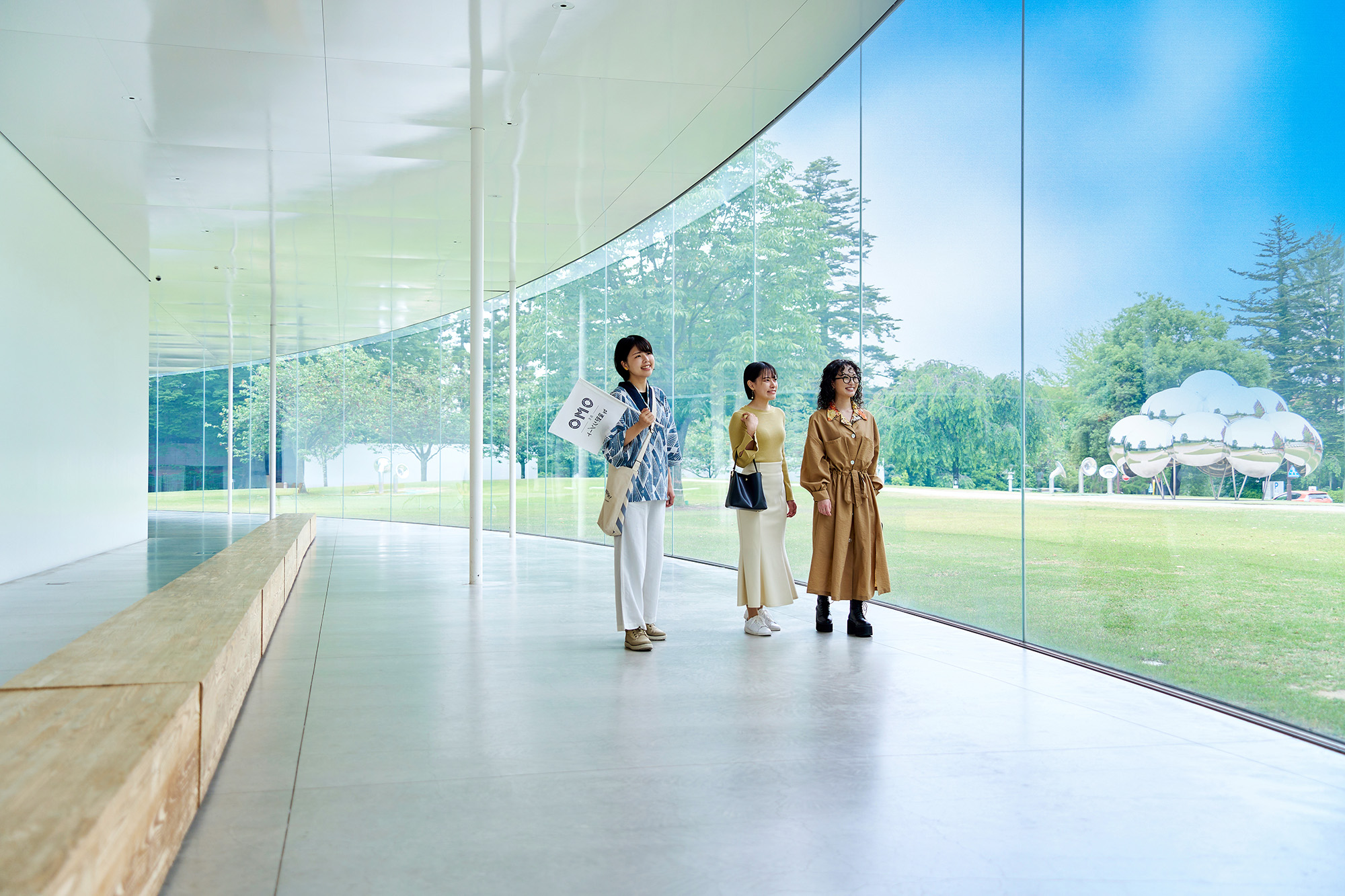
121st Century Museum of Contemporary Art, Kanazawa
Art in a park-like museum

A park-like museum located in the center of Kanazawa City. The glass-walled circular building can be freely accessed from four entrances and exits. One of the most popular areas in the paid exhibition zone is the "Swimming Pool," which looks as if it were a pool filled with water. The more you look at it, the more mysterious the space becomes, with the surface of the water serving as a boundary between the above- and below-ground views of each other. Visitors can also enjoy many other contemporary artworks that stimulate the senses.
A treasure trove of contemporary art that will keep you busy for an entire day

The lawn surrounding the building is a free exchange zone. Here, too, you can encounter a variety of artworks. The "Wrapping" pavilion, with its many protrusions sticking out in multiple directions, is a pavilion that children can enter and play inside. Looking up from the plaza, visitors can see "The Man Who Measures Clouds," a bronze work inspired by the ornithologist who was deprived of his research freedom in the movie "Lifetime Offender. The museum has two museum stores, where items associated with the museum and Kanazawa make great souvenirs. There is also a café-restaurant featuring local ingredients, making it a great place to spend the day.

Local Guide
Supporters
Contemporary art is scattered both outside and inside the museum's interaction zone, and many of the exhibits are excellent.

- 21st Century Museum of Contemporary Art, Kanazawa
-
 1-2-1, Hirosaka, Kanazawa, Ishikawa MAP
 From JR Kanazawa Station, take the Hokutetsu Bus (Kanazawa Castle Town Circulation Bus), 20 min. on the right/left route, a short walk from the Hirosaka/21st Century Museum of Contemporary Art bus stop.
 Exhibition Zone: 10:00-18:00, Friday and Saturday: 20:00
Exchange Zone: 9:00-22:00 Mondays (closed on the following weekday if Monday is a national holiday); all museums are closed from May 2027 to March 2028 for major repairs.
 Exhibition Zone fee required (varies depending on the exhibition), Exchange Zone free of charge
 076-220-2800
 Charged (30 min. free of charge)
2Kanazawa Castle Park
Touring the Ruins of Kaga's Hyakumangoku Castle
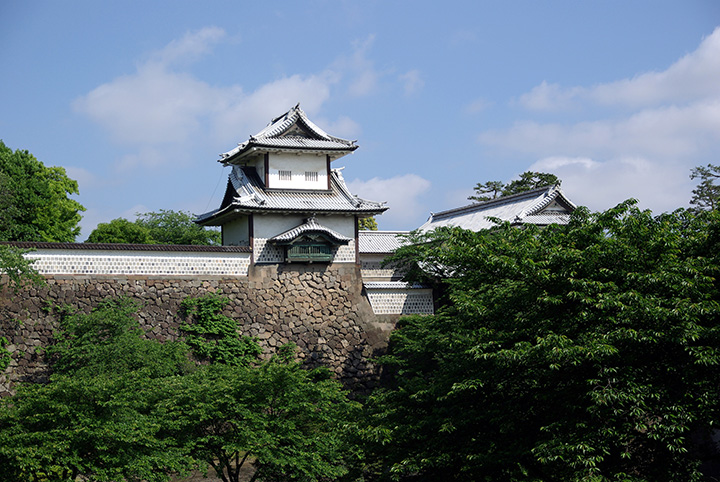
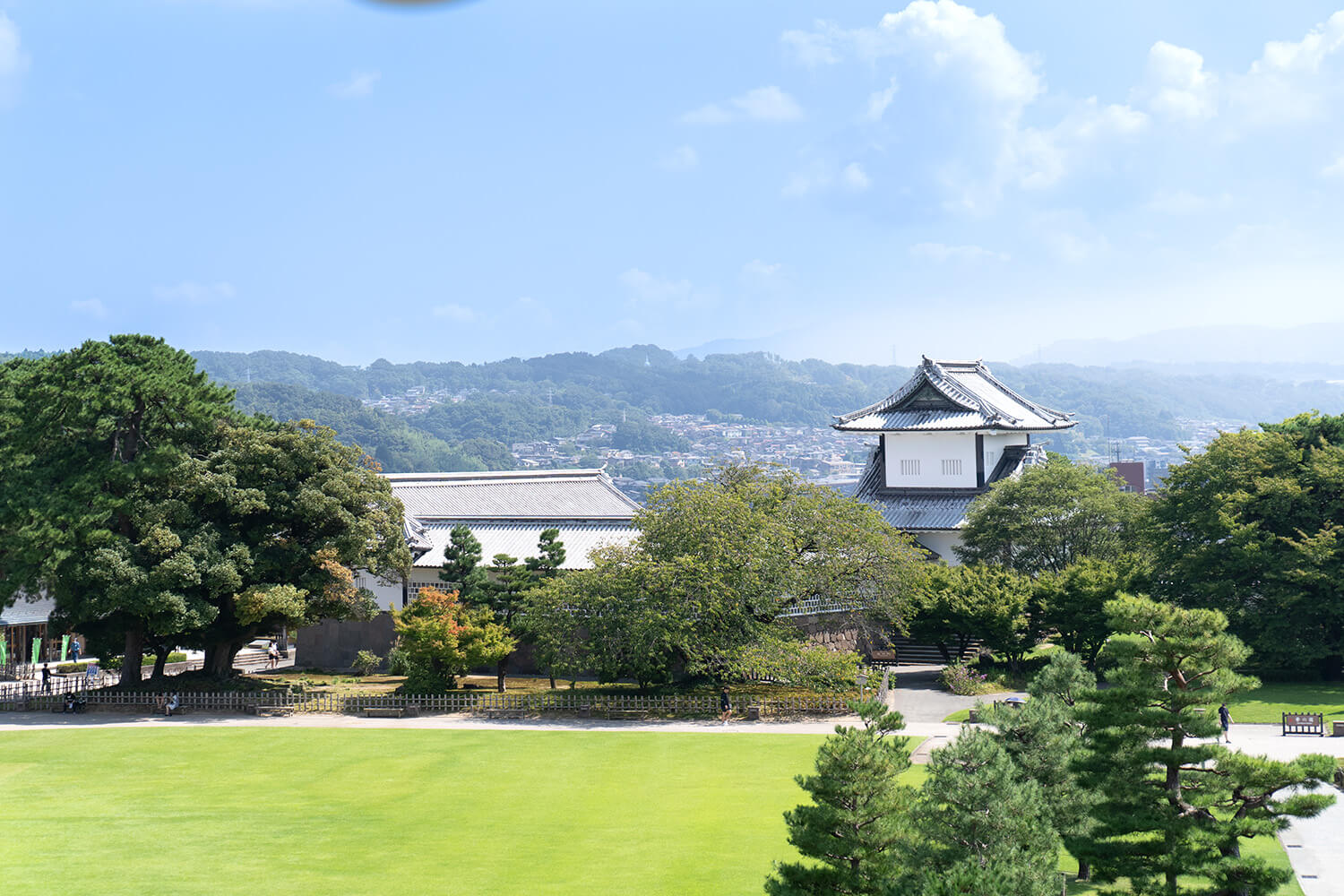
Kanazawa Castle Park is an urban park developed from the residence of the Maeda family of the Kaga domain. 1583, Toshiie Maeda, the first lord of the Kaga domain, entered the castle from Noto and began full-scale castle building. After the castle tower was destroyed by fire caused by a lightning strike, it was not rebuilt thereafter out of consideration for the Edo shogunate. The Ishigawamon Gate, now designated as an Important Cultural Property, was rebuilt in 1788. After passing through the splendid masonry of the Ishigawa Gate, you will find the Hishi Yagura (water chestnut turret) and Gojiken Nagaya (row house), which were recently restored based on old maps and documents. The beautiful contrast of lead tiles and namako walls is a must-see.
A recreation of the feudal lord's garden loved by successive feudal lords
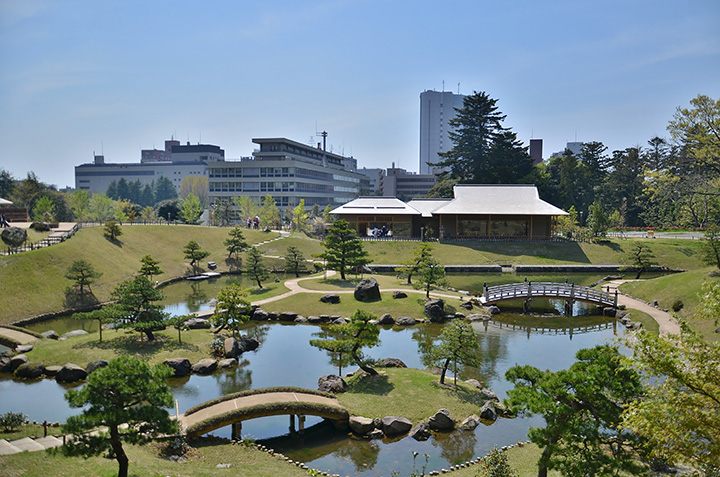
Kanazawa Castle once had a beautiful garden called "Gyokuseninmaru Garden," which was enjoyed by successive lords of the domain. Although it was abandoned during the Meiji period (1868-1912), it has recently been restored to its former glory. The ponds, islands, and bridges are faithfully reproduced in the garden of the feudal lords, which is a pond and fountain garden based on the Tatsumi water supply that was drawn into the castle approximately 380 years ago and is still in use today. Visitors can stroll along the garden paths and take a break at the "Gyokusen-an" rest area, and enjoy the same elegant garden as in the Edo period. Every Saturday and on designated days, the garden is illuminated with fantastic lights.
Due to the damage caused by the Noto Peninsula earthquake, some areas are off-limits. Please check the website for details.
Local Guide
Supporters
The park grounds themselves are large and the green grass is very pleasant. It is also fun to listen to the stories of the volunteer guides.
- Kanazawa Castle Park
-
- 1-1 Marunouchi, Kanazawa City, Ishikawa Prefecture MAP
 7 minutes drive from JR Kanazawa Station
- Take a bus from JR Kanazawa Station, get off at Kenrokuen-shita/Kanazawa Castle, and walk about 3 minutes.
- March 1-October 15: 7:00-18:00, October 16-February 31: 8:00-17:00
- No holidays
- About Hishi Yagura, Gojyumen Nagaya, Hashizume-mon Continuation Yagura, and Hashizume-mon (admission fee)
Adults (18 years old and over): 320 yen, Children (6 to under 18 years old): 100 yen - 076-234-3800 (Kanazawa Castle and Kenrokuen Garden Management Office, Ishikawa Prefecture)
- None
3Kenrokuen Garden
One of the three most beautiful gardens in Japan
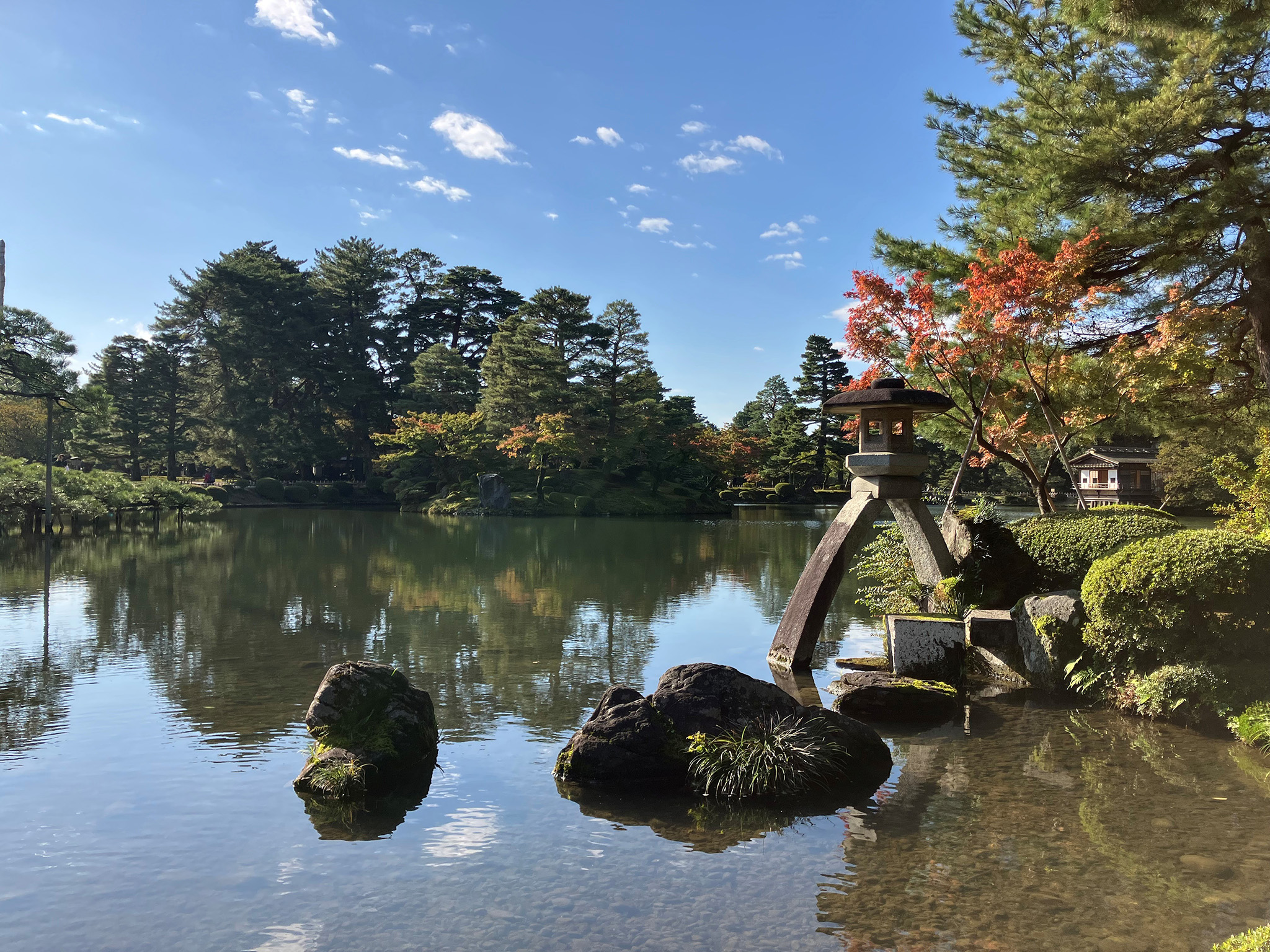
Along with Kairakuen Garden in Mito and Korakuen Garden in Okayama, this is one of the three most famous gardens in Japan, and is one of the country's most famous feudal lord's gardens. It is said that the garden was originally created by Tsunanori Maeda, the fifth lord of the Kaga Domain, who turned the area around his villa into a garden, and it took a long time for successive lords of the Domain to complete the garden as we know it today. The symbol of Kenrokuen Garden is the two-legged lantern "Kotoshin Lantern" in the Kasumigaike Pond. Kasumigaike Pond, with its floating turtle-shaped island called Horaijima, changes its aspect depending on where you look, and the ducks and herons playing in the pond are also soothing to the eye. It takes at least 40 minutes to tour the large park, so it is recommended that you allow plenty of time for your visit.
Cherry blossoms, autumn leaves, hanging snow...enjoy the seasonal scenery
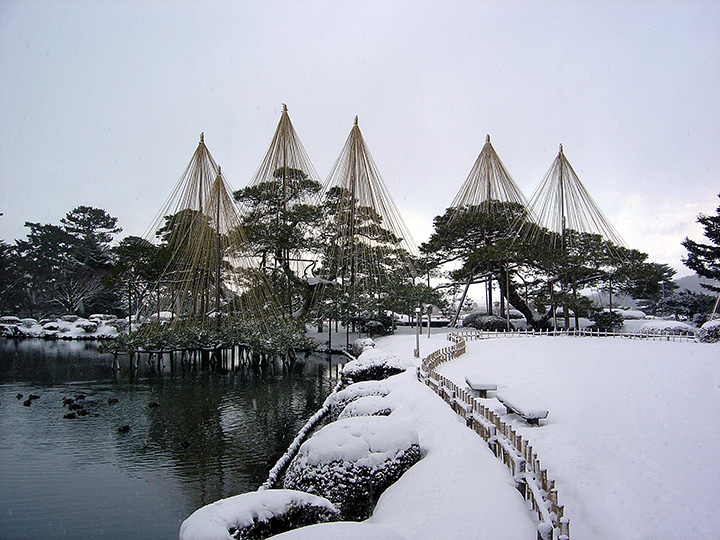
In spring, Kenrokuen Garden is a popular spot for cherry blossom viewing, with approximately 200 plum trees in bloom in the plum grove and more than 400 cherry trees along the road entering from the Katsurazaka Exit. Some of the cherry trees are a rare variety called Kenrokuen chrysanthemum cherry. In early summer, kakitsubata (azalea) and azalea trees bloom colorfully, and in autumn, the park is tinted with colorful autumn leaves. The hanging of the Karasaki pine tree, which boasts the largest branches in the park, is especially noteworthy.
Local Guide
Supporters
Everywhere you turn is picturesque! You can enjoy the beauty of Kaga in each of the four seasons.
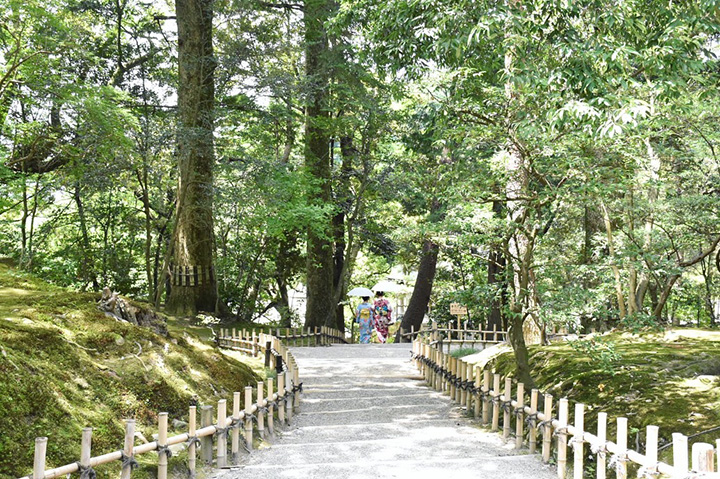
- Kenrokuen Garden
-
- 1 Kenrokucho, Kanazawa City, Ishikawa MAP
- From JR Kanazawa Station, take the Hokutetsu Bus "Kanazawa Castle Tour Bus" (clockwise route). 15 min. ride, approx. 2 min. walk from "Kenrokuen-kita/Kanazawa Castle" stop.
- 7:00-18:00 (last admission 17:30), 8:00-17:00 (last admission 16:30) from October 16 to the end of February.
- No holidays
- 320 yen, children (6-17 years old) 100 yen
- 076-234-3800 (Kanazawa Castle & Kenrokuen Garden Management Office)
4Ruins of Samurai Residences Nomura House
Gaze at the mansions and gardens that convey the samurai culture
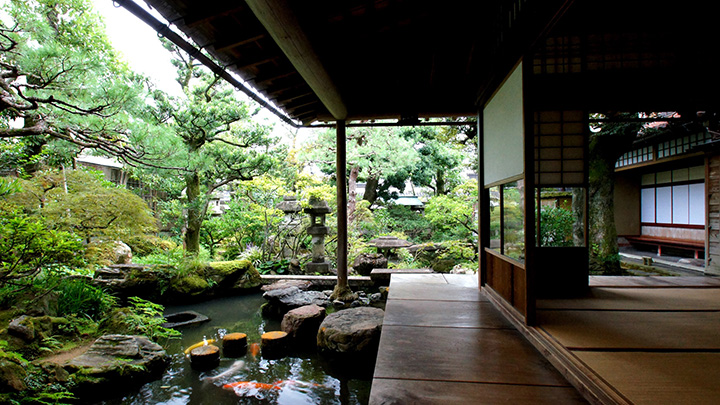
Nagamachi, where the remains of the samurai residences of the middle class warriors of the Kaga domain are located, is full of charm with its long earthen walls and stone-paved pathways. The Nomura Residence is the only one that is open to the public. The Nomura family was a venerable family that continued until the abolition of the domain in 1871 (Meiji 4). The present house is a partial reconstruction of a mansion of a wealthy merchant of the Kitamae Ship, which was partially moved to the site, including the earthen walls and old trees. The highlight of the house is the "Koudan-no-ma" (upper level room), which welcomes visitors with its all-Japanese cypress ceiling. The sliding shoji doors with diamonds and fusuma sliding doors with landscapes painted on them are of superb design.
A space that takes you back in time to the Edo period
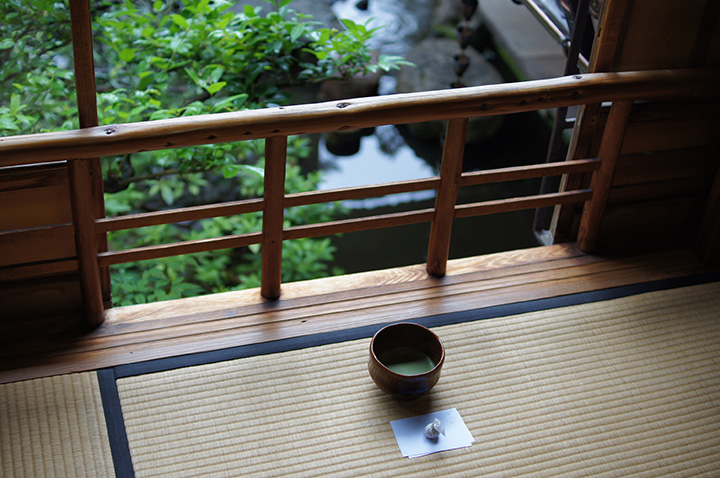
Sitting on the wet-edge and looking out over the garden is also an elegant experience. Nishikigoi carp swim peacefully in the pond, and the garden is surrounded by 400 year old yamamomo and shii trees, lanterns, a large bridge made of cherry granite, and a waterfall that comes very close to the wet-area edge.
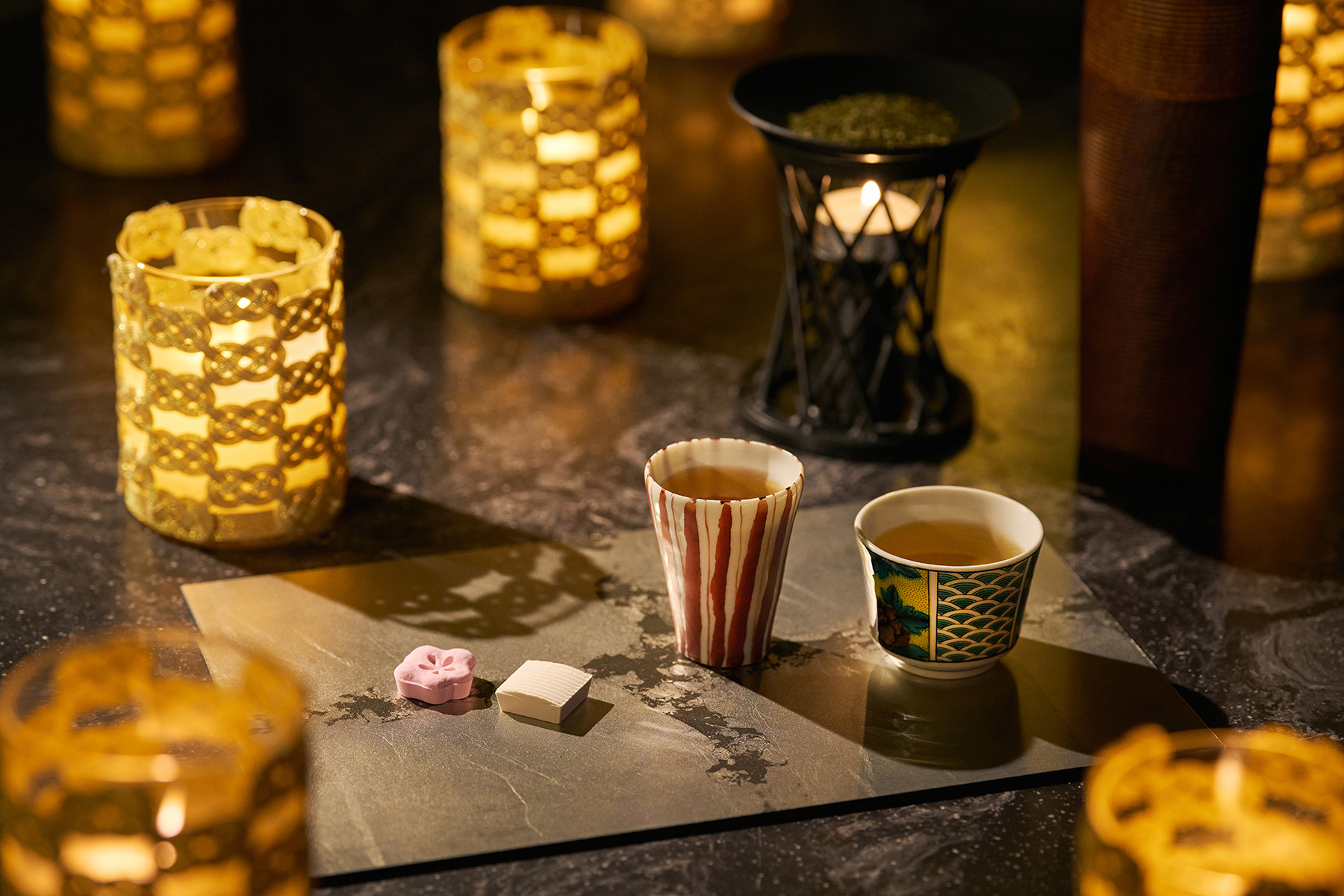
The tea ceremony room "Fubakuan" on the second floor, up the stone steps, is also a must-see. Visitors can enjoy matcha green tea and dry confections while gazing at the garden and listening to the soothing sound of the water.
Local Guide
Supporters
The fusuma paintings, transoms, and ceilings are all beautifully designed. Onikawa Bunko" exhibits various materials such as swords inherited from the Nomura family and letters from the Maeda family.
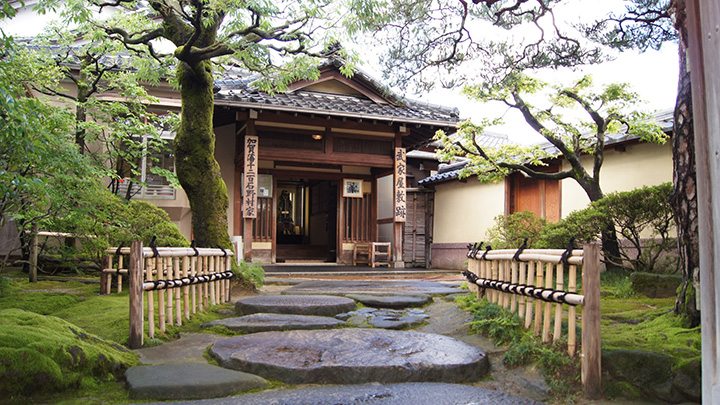
- Nomura House, a former samurai residence
-
- 1-3-32, Kanazawa Choumachi, Ishikawa MAP
- From JR Kanazawa Station, take the Hokutetsu Bus "Left Turn Route" around Kanazawa Castle Town. 10 min. ride, 5 min. walk from Korinbo Bus Stop.
- 8:30-17:30 (last admission at 17:00), October-March: 8:30-16:30 (last admission at 16:00)
- December 26 & 27, January 1 & 2
- 550 yen, high school students 400 yen, elementary/junior high school students 250 yen
- 076-221-3553
- Free of charge
5Omimachi Market
Visit the vibrant "Kitchen of Kanazawa
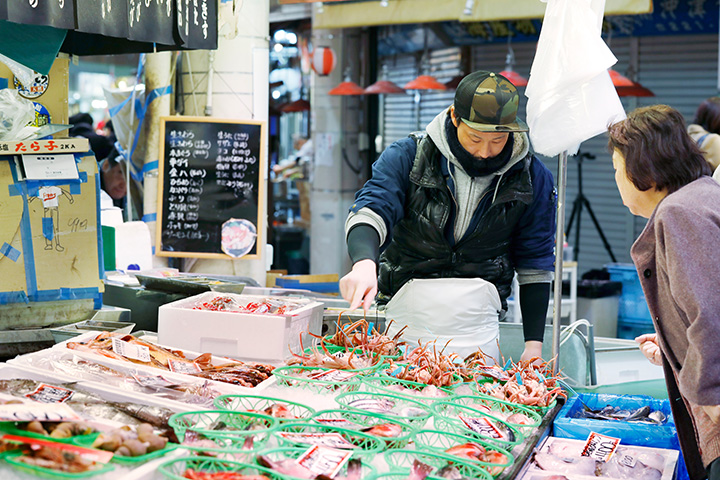
Omimachi Market" has a history of about 300 years. It is the kitchen of Kanazawa citizens, where local customers and chefs from restaurants go to shop. In addition to fresh seafood such as crab, bluefin tuna, and oysters, which are unique to the Hokuriku region, as souvenirs, there is also a wide variety of restaurants offering seafood rice bowls and conveyor-belt sushi. Many stores close in the evening, so it is best to enjoy breakfast or lunch.
Delicious food available in stores
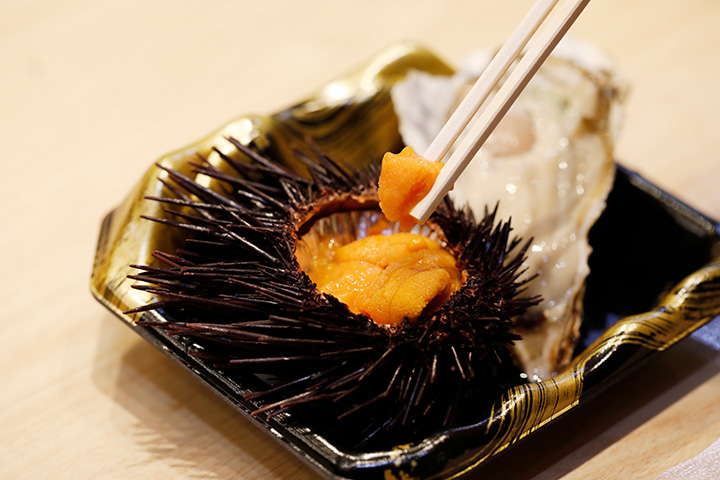
In addition to buying souvenirs, there are also many restaurants where you can taste the products lined up on the shelves of the stores. The fresh sea urchins and oysters selected by connoisseurs are fresh and delicious. Some restaurants offer seafood skewers grilled to a fragrant aroma in front of the restaurant, and the aroma will whet your appetite. The "loach skewers," a specialty so famous in Kanazawa that the word "kabayaki" is synonymous with loach, is a dish to be enjoyed as a snack. For dessert, seasonal cut fruits and soft-serve ice cream topped with gold leaf, just wandering around Kanazawa is an exciting experience.
Local Guide
Supporters
It is within walking distance from sightseeing spots. Enjoying local gourmet food made with local ingredients while chatting with the chefs is one of the best parts of the experience.
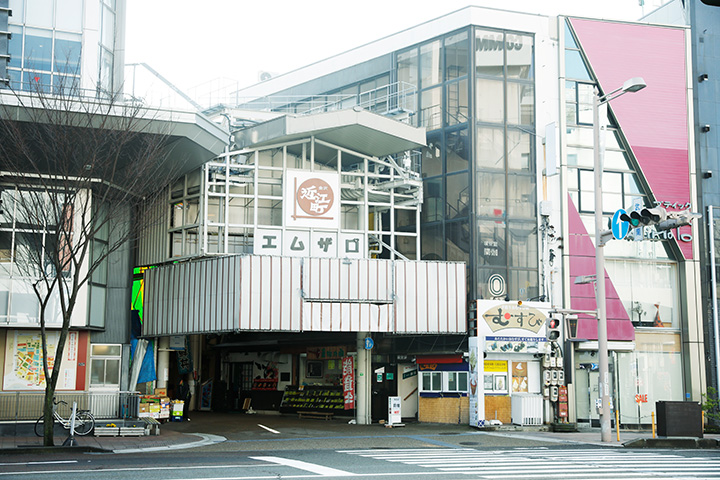
- Omemachi Market
-
- 50 Kami-omi-cho, Kanazawa City, JR Ishikawa MAP
- Approx. 15 min. walk from JR Kanazawa Station
- 5 min. ride on the Kanazawa Castle Town Tour Bus from Kanazawa Stn. on the "Left Turn Route", get off at "Musashigatsuji/Omi-machi Ichiba" and walk shortly.
- 9:00-17:00 (varies by store)
- January 1-4 (varies by store)
- 076-231-1462
- Charged
6Higashi Chaya-gai
Kanazawa's representative historic teahouse street

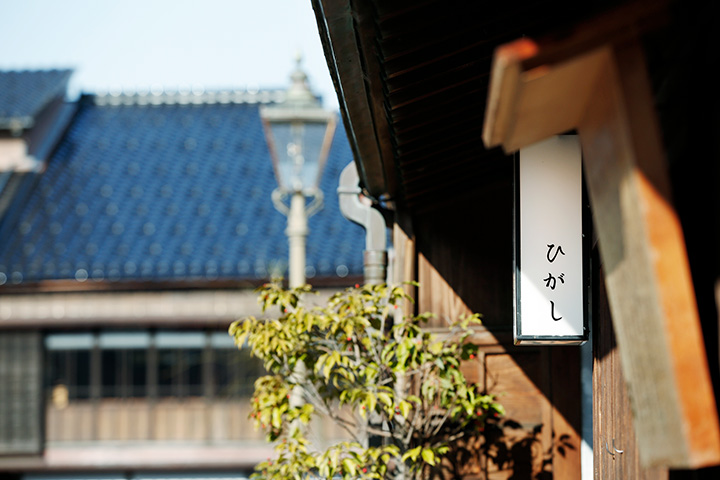
Of the three teahouse districts in Kanazawa, Higashi Chaya-gai, which stretches on the east side of the Asano River, was one of the teahouse districts built around 1820, one on the east and one on the west. The buildings with elegant red-gara latticework still remain as they were in those days, as they were spared from the damage of the World War II. The stone-paved main street is dotted with teahouse buildings where people play "ozashiki" (Japanese tea ceremony). Along the side alleys, there are hair salons where geiko (apprentice geisha) go to get their hair done, and places where they practice dancing and shamisen playing.
Walking along the alleys is a fun way to make discoveries
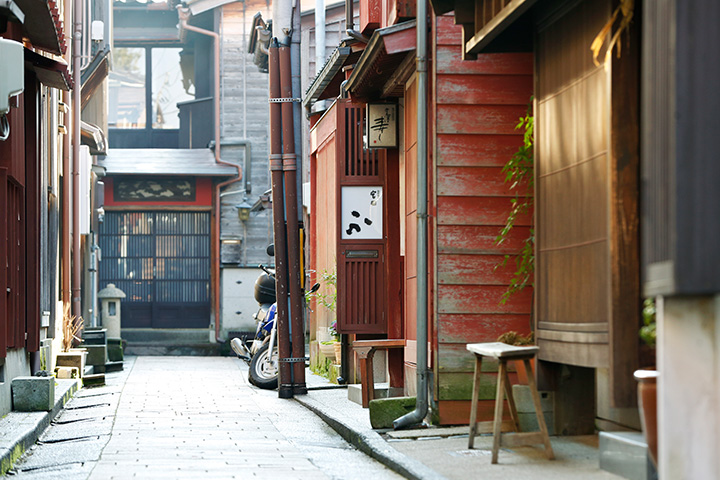
In the "Higashi Chaya-gai," cafes, restaurants, art galleries, and stores selling Japanese goods have opened in traditional machiya townhouses. There are also many stylish stores in the maze-like alleyways. A peek under the retro signboards will reveal a wonderful space. Also, if you stop by the Higashi Chaya Rest Area near the bus stop, a restored machiya from the late Edo period, "Maido-san," a resident volunteer sightseeing guide, will guide you around the area.
Local Guide
Supporters
There are many stores and cafes selling Japanese sweets, traditional crafts, and sundries, and you can enjoy shopping and dining in the elegant townscape. Kimono rentals are also a wonderful way to enjoy walking around town.
- Higashi Chaya-gai
-
- Higashiyama, Kanazawa City, Ishikawa MAP
- From JR Kanazawa Station, take the Hokutetsu Bus (clockwise route) around the castle town of Kanazawa, and get off at Hashiba-cho (approx. 3 min. walk).
- 076-232-5555(Kanazawa Tourist Association)
- Charged
7Kazue-machi Chaya-gai
The teahouse district along the river where you can enjoy walking along the alleys
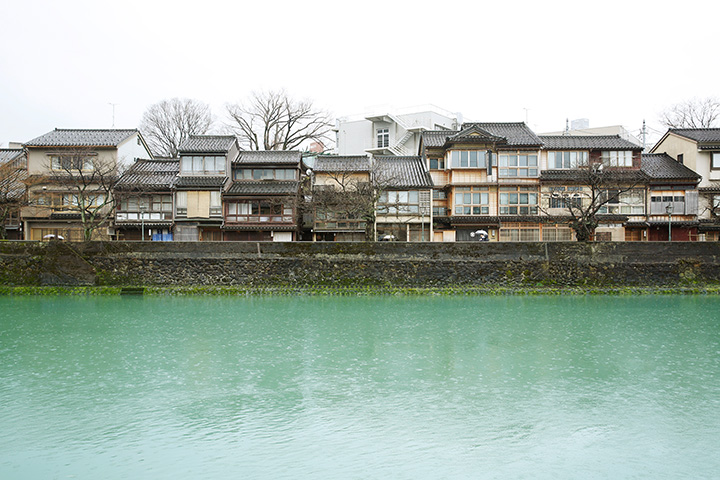
The Asano River is also known as the "Onna River," and the area has a typical Kanazawa atmosphere. In 1999, the old name of the town was restored for the first time in Japan, and the area was officially renamed Shukei-cho. The town is associated with the writer Kyoka Izumi, and a view of the town from the Asanogawa Bridge and the Naka Bridge still captures the atmospheric atmosphere of the world of his novels. In the summer, the riverbeds are set up on the banks of the river, and visitors are treated to Kaga cuisine and other delicacies.
Walking down the stone steps connecting the teahouse district and the residential area
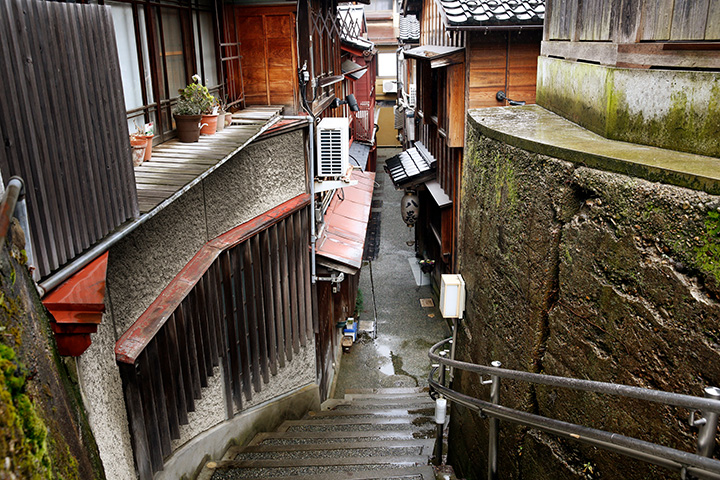
Entering a narrow alleyway, you will find a quiet and emotional scene. There are two slopes in the neighborhood. "Dark Slope," a slope with stone steps connecting the Shukkeicho Chaya-gai and a shrine on top of the slope, is said to have been a place where masters used to go to meet geiko in secret, as there is no sunlight even during the daytime. On the other hand, "Akari-zaka" was named in recent years in memory of Kyoka Izumi, who wrote beautiful works that would light up the dark night. After strolling through the alleys, it is recommended to take a break at a café, restaurant, or bar in a renovated machiya building.
Local Guide
Supporters
At dusk, the sounds of shamisen (three-stringed Japanese banjo) and taiko drums can be heard, creating an atmosphere full of emotion. The buildings and streetscapes with their unique atmosphere and the seclusion of the back alleys are wonderful.
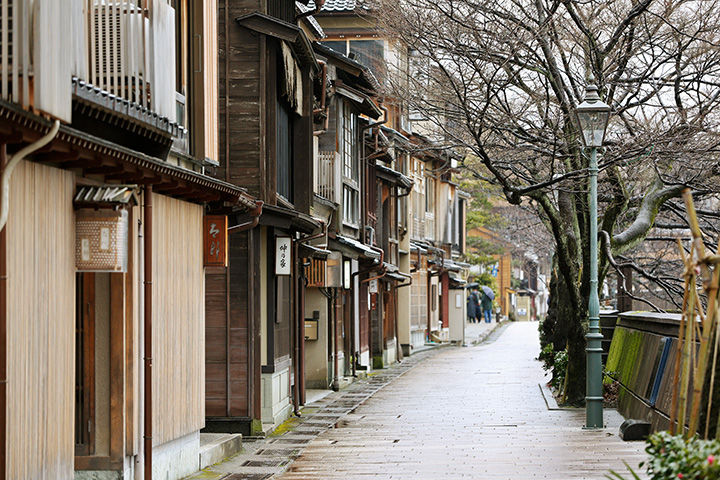
- Shukei-cho Chaya-gai
-
- Shukei-cho, Kanazawa City, Ishikawa Prefecture MAP
- From JR Kanazawa Station, take the Hokutetsu Bus (clockwise route) around the castle town of Kanazawa, and get off at Hashiba-cho (approx. 3 min. walk).
- 076-232-5555(Kanazawa Tourist Association)
- Charged
8Nishi Chaya-gai
Quiet teahouse district with many active geiko

Nishi Chaya-gai, located in the Teramachi area across the Saikawa River called Otokawa, was built around 1820, just like Higashi Chaya-gai. The streets with beautiful teahouse architecture with protruding latticework are full of atmosphere. Although compact in size, Nishi Chayamachi has the largest number of geiko in active service. The tradition of Kanazawa geiko is still carried on at teahouses that do not accept visitors at first sight. For a taste of the atmosphere of a tatami room game, visit the Kanazawa City Nishi-chaya Museum. The vermilion walls of the teahouse's tatami room have been recreated and can be visited free of charge.
Japanese and Western sweets stores dot the area. There is also a ninja temple nearby
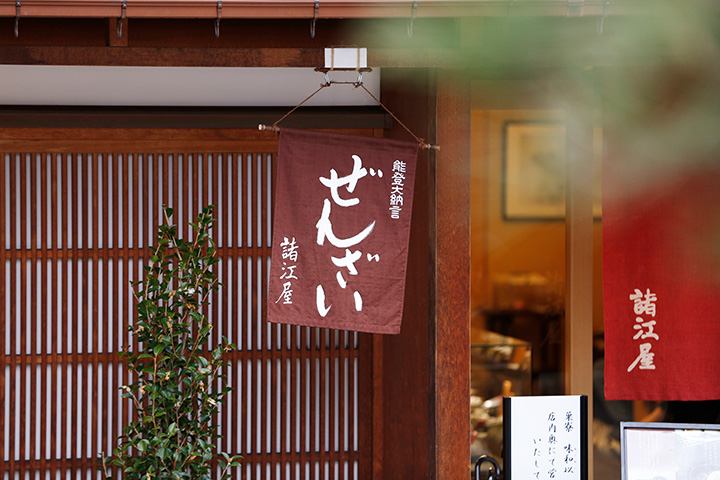
The Nishi-chaya-gai is also home to a small street lined with Japanese and Western sweets stores, including a long-established store selling rakugan (ochagami geese) and a famous amanatto (sweet bean curd) store. After buying souvenirs, be sure to visit the attached tea house and café. We recommend tasting soft ice cream, parfaits, and zenzai (sweet bean soup) in a space full of Japanese flavor.
Myoritsuji Temple, known as a ninja temple, is also located nearby (reservations are required). The temple is full of interesting tricks such as pitfalls, hidden stairs, and a well that is said to have served as an escape route to Kanazawa Castle.
Local Guide
Supporters
It is relatively uncrowded among the three teahouse streets, so it is highly recommended for a relaxing stroll while taking pictures. There are many stores selling sweets, which are perfect for souvenirs!
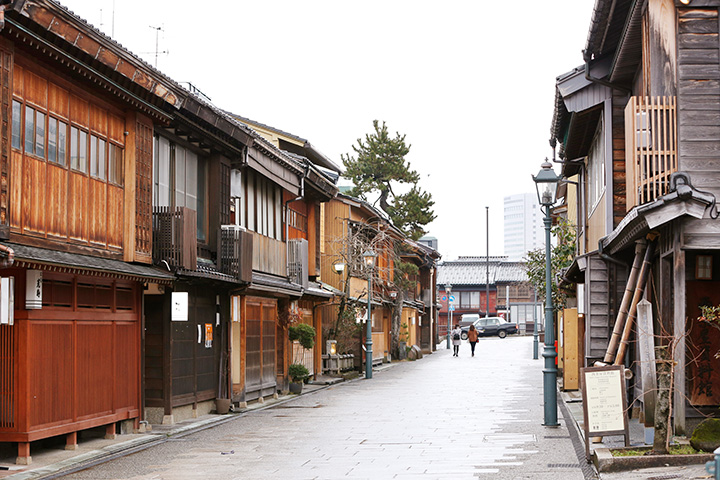
- Nishi Chaya-gai
-
- Nomachi, Kanazawa City, Ishikawa Prefecture MAP
- From JR Kanazawa Station, take the Hokutetsu Bus (Kanazawa Castle Town Loop Bus), approx. 15 min. on the left-hand side route, alight at Hirokoji and walk approx. 5 min.
- 076-232-5555(Kanazawa Tourist Association)
- None
MAP
- <Recommended sightseeing spots in Kanazawa
- Hoshino Resorts facilities nearby

Local Guide who was in charge of this article
- Fumino Matsuzaki Kaga's Charm Hunter
OMO5 Kanazawa Katamachi
Kanazawa City, Ishikawa Prefecture
Katamachi is Kanazawa's best gourmet town. The hotel is also conveniently located for Direction to Kanazawa's representative tourist attractions.
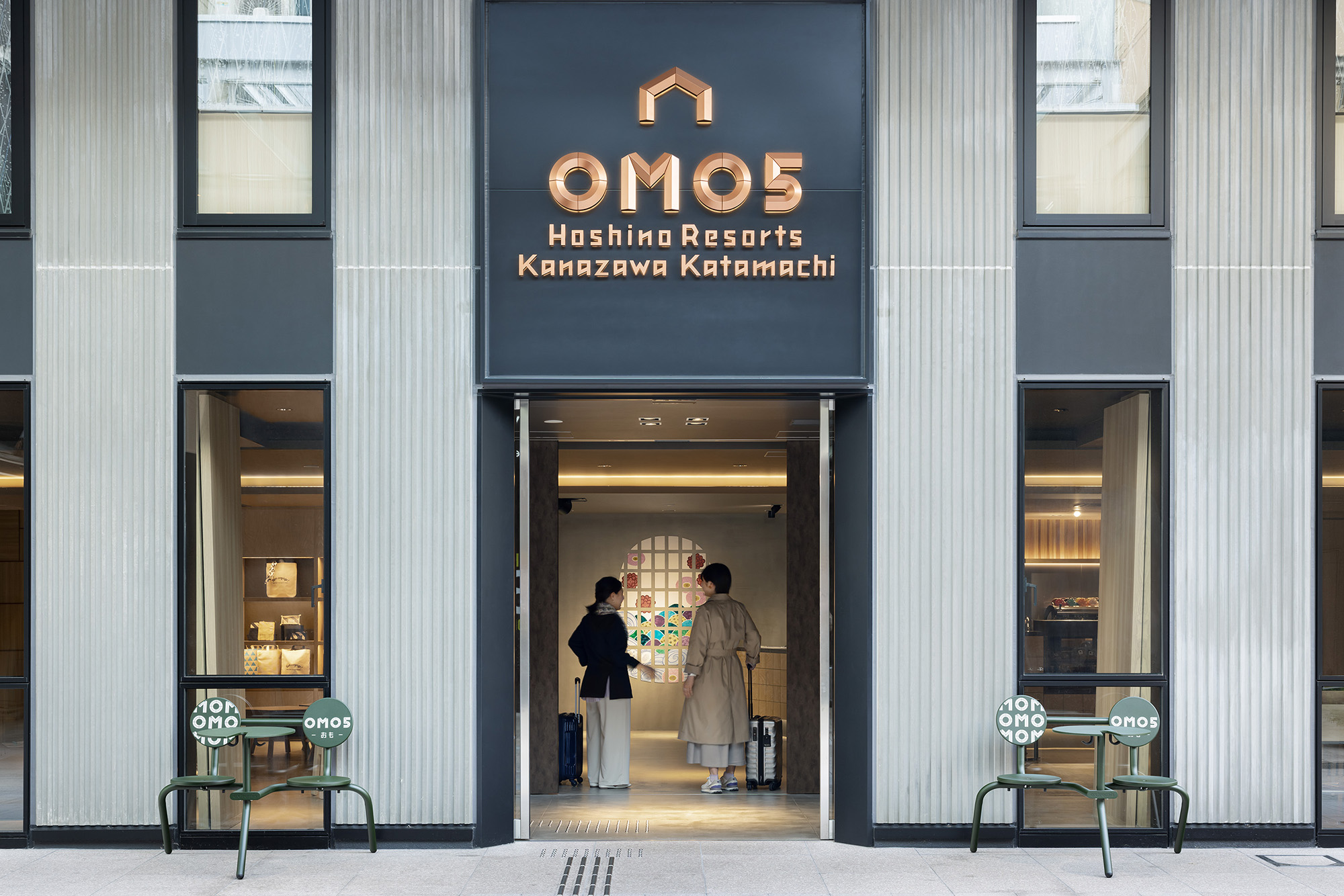
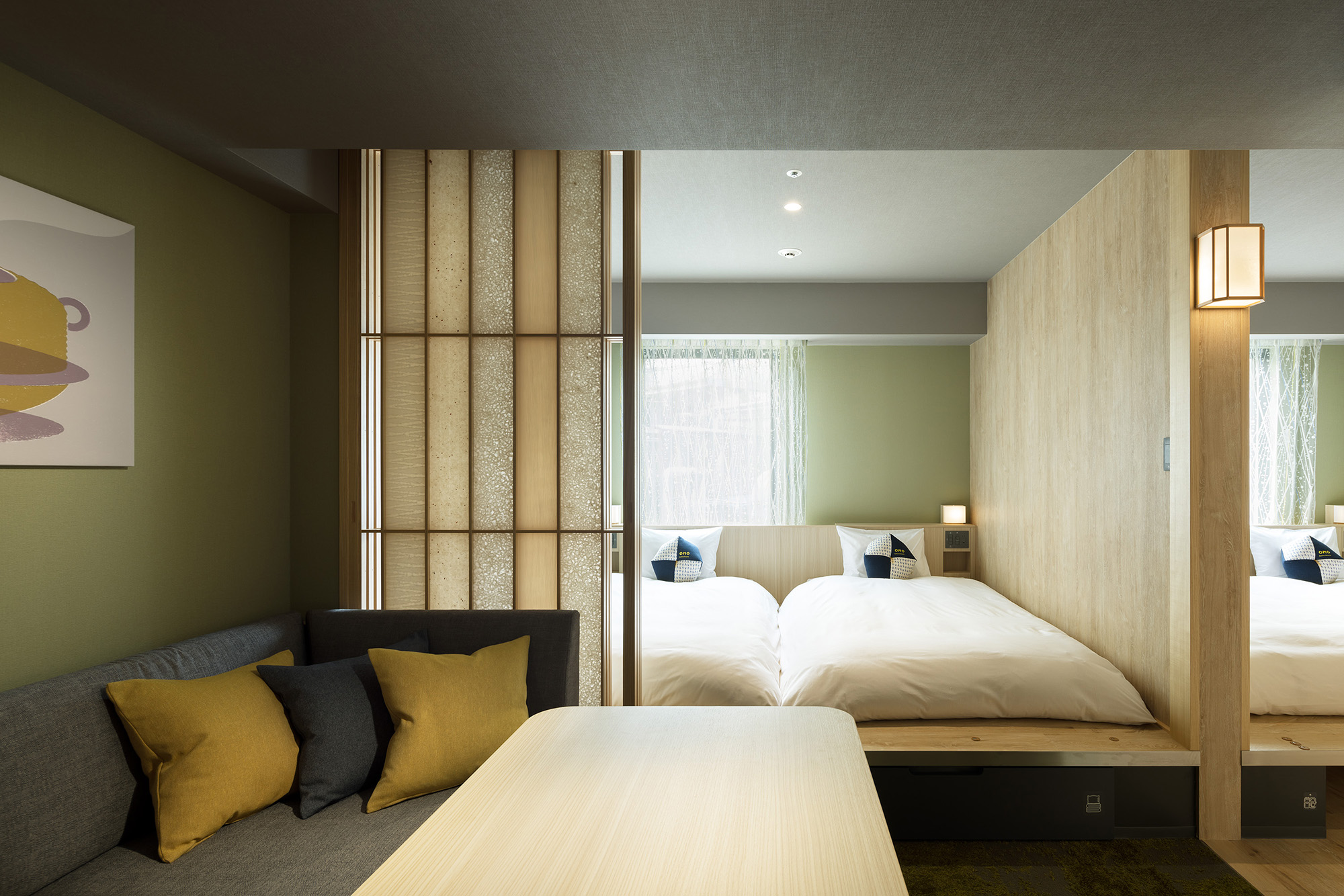
Access by bus Approx. 4 minutes walk from Korinbo bus stop
- Example of Accommodation Rates
- 1 person per night From ³ ,200
Hoshino Resorts KAI Kaga
Yamashiro Hot Spring, Ishikawa Prefecture
A traditional hot spring hotel in Kaga where new sensibilities come alive. The traditional building with impressive red latticework is a registered tangible cultural property.
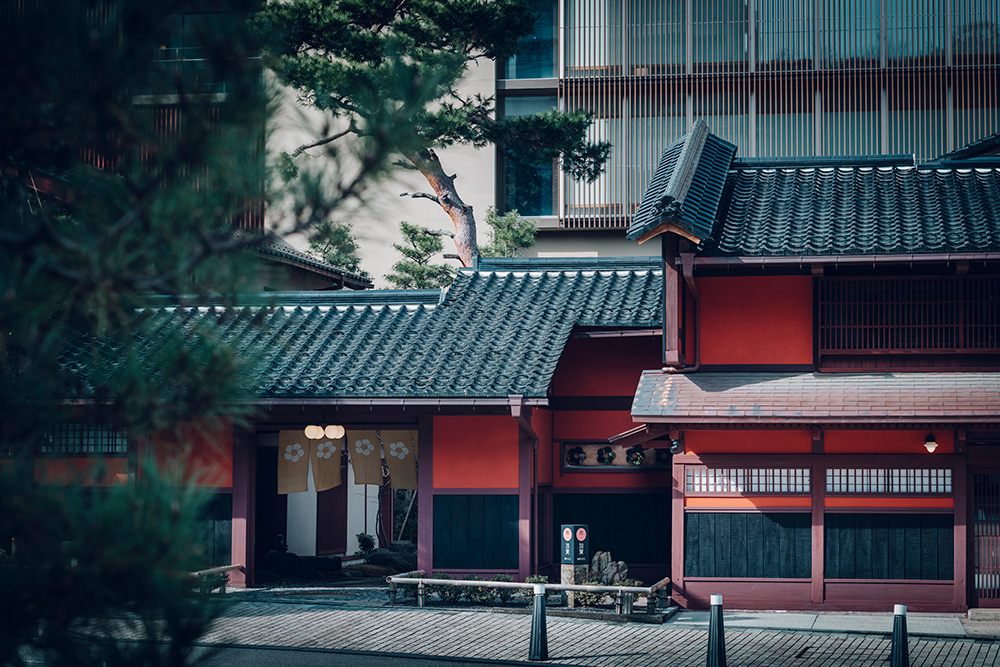
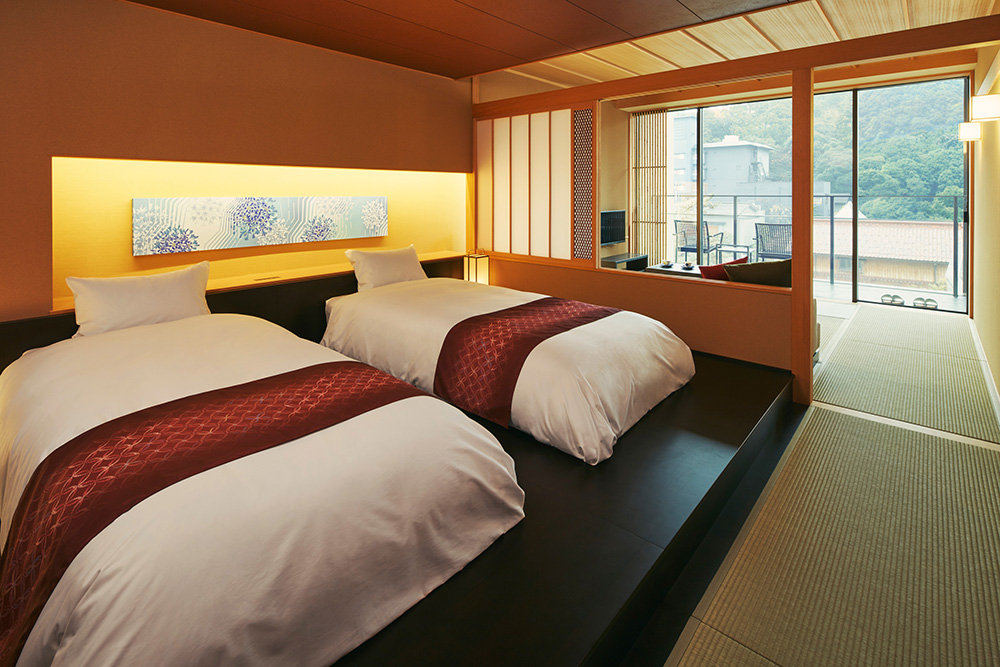
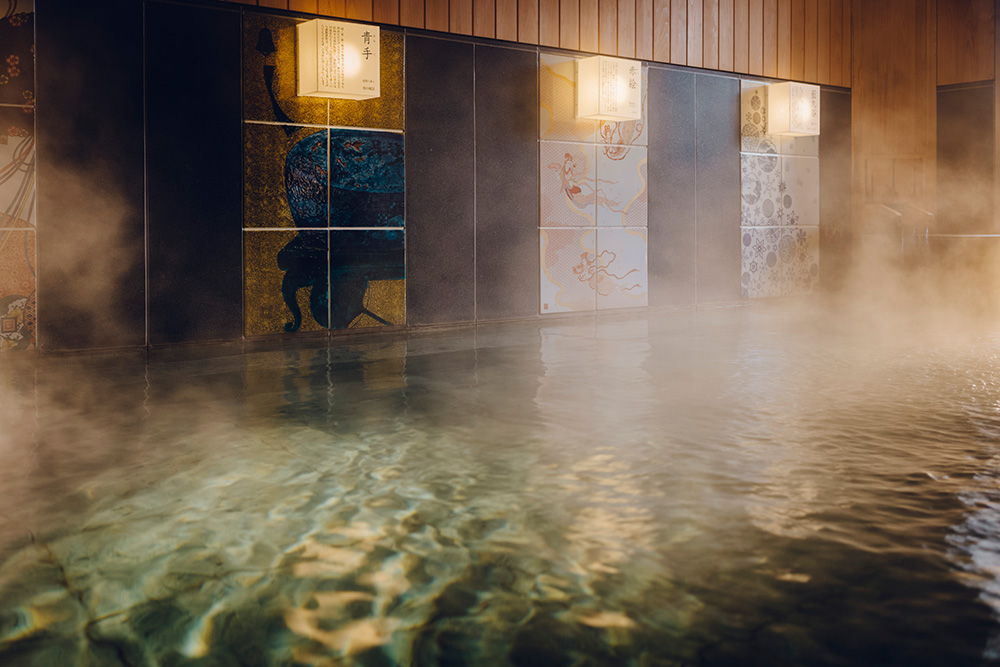
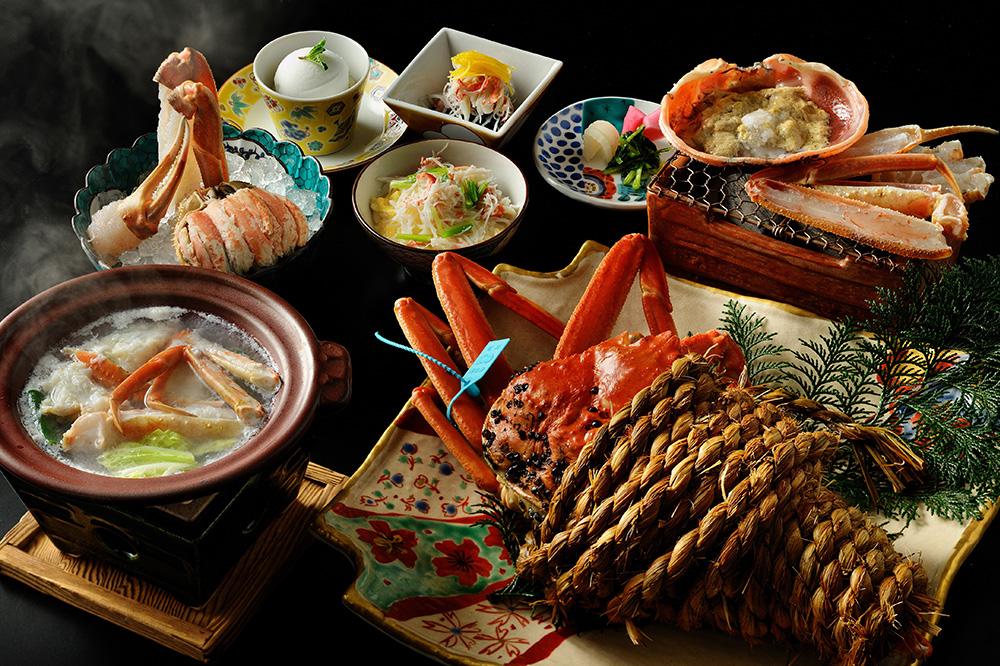
Access by bus Approx. 10 minutes by cab from IR Ishikawa Railway Kaga Onsen Station
- Example of Accommodation Rates
- 1 person per night From ¥19,000