





5 sightseeing spots in Azumino to immerse yourself in beautiful scenery and art
Azumino is recognized as one of the "100 Best Water Counties" by the Ministry of the Environment and one of the "100 Best Water Townships" by the Ministry of Land, Infrastructure, Transport and Tourism. The area offers a healing landscape of pure water from the melting snow of the Northern Alps and abundant nature. The location has many tourist attractions, including a botanical garden and a wasabi (Japanese horseradish) farm. Among them are art museums featuring famous local artists, where visitors can enjoy their works in an art space that blends in with Azumino's natural surroundings.
1Daio Wasabi Farm

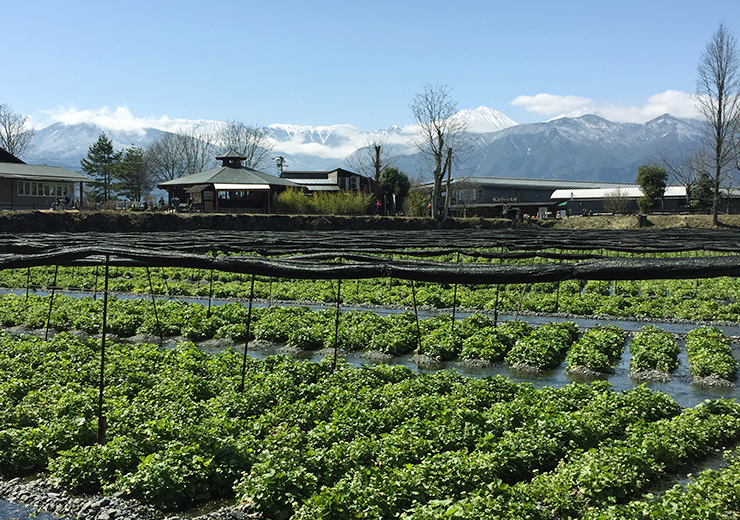
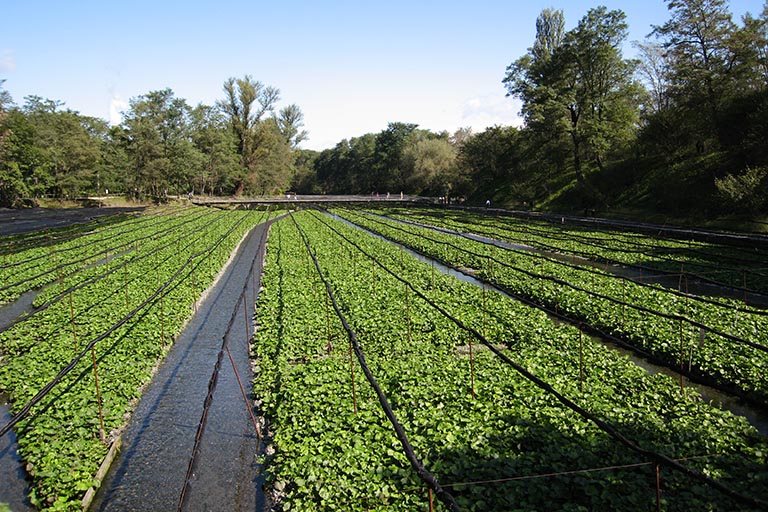
This tourist farm has the world's largest field of water horseradish (wasabi), with a cultivated area of approximately 45,000 tsubo (approximately 1,000 square meters), and has been producing wasabi for over 100 years since its establishment in 1917. Walking to the Tate River, which has a daily flow of 700,000 tons of spring water, you will arrive at a thatched-roof water wheel house that has been used as a movie location. The original scenery of Azumino, with the waterwheel slowly turning in the gentle flow of the river, is very peaceful and tranquil.
Another recommended spot is the photogenic Alps Observatory, where you can enjoy the vast wasabi fields with the Northern Alps in the background. In spring, plum blossoms, cherry blossoms, and wasabi flowers compete with each other, and in autumn, the maple leaves turn red.
Wasabi-zuke (pickled horseradish) Experience, gourmet foods, and souvenirs are also available.

In the store zone across from the general reception information desk near the entrance, soft-serve ice cream and wasabi croquettes made with real wasabi are popular. A wide variety of souvenirs featuring the flavor of wasabi are also available. At the Restaurant, visitors can enjoy original dishes such as the famous wasabi rice bowl and wasabi curry.
Visitors can also learn about the history of the Daio Wasabi Farm at the Centennial Museum, where they can try their hand at making wasabi pickles using traditional methods. You can make two boxes of freshly picked wasabi pickles, one for yourself and one for a souvenir.

Local Guide
Supporters
The "Hon Wasabi Donburi" is an appetizing dish, with its simplicity enhancing the flavor of wasabi. It is exceptional when eaten while gazing at the vast wasabi fields!
- Daio Wasabi Farm
-
 3640 Hotaka, Azumino City, Nagano Prefecture MAP
 From JR Hotaka Station, take the Daio Wasabi Farm Line (seasonal bus service) and get off at Daio Wasabi Farm.
 March-November: 8:00-17:00
December - February: 9:00 - 16:00 Open all year round
 Admission free
 0263-82-2118
 Free of charge
2La Casta Natural Healing Garden

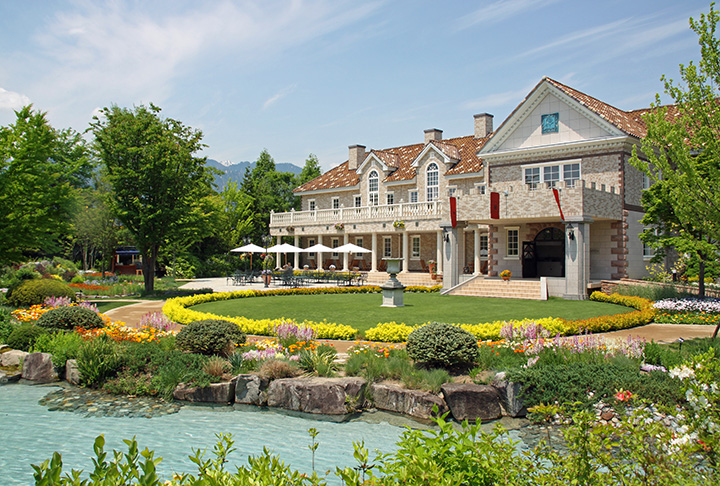
La Casta is a popular cosmetic brand that uses organic ingredients in its hair care line. The factory overlooking the Northern Alps has a spacious 11,000 m2 garden, where visitors can enjoy a stroll while admiring the trees and flowers of the four seasons. Visitors can admire approximately 1,000 varieties of plants in a space where nine gardens have been developed based on the brand concept of "the vitality and healing power of plants. Only 100 Guest/customers are allowed to visit each day, and reservations are required so that visitors can enjoy the healing world and appreciate the flowers to their heart's content. Visitors can enjoy the luxury of feeling as if they are spending time in a private garden.
Relaxing tea time in the seasonal garden
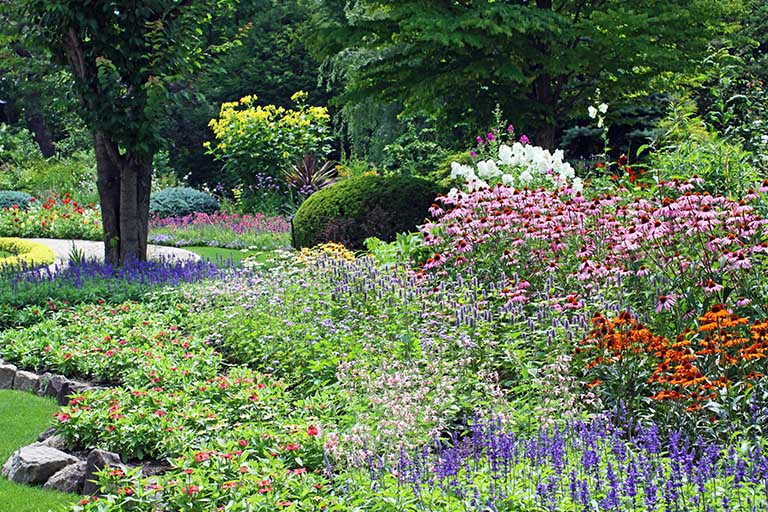
Once you pass through the large gate of the Natural Healing Garden, you will find yourself in a different world. You will be welcomed by colorful plants and flowers, lush trees, and a garden with a unique theme. There is an "Aroma Garden" with fruits, trees, and herbs used to make essential oils, a cool "Water Garden," a pathway of white birches, and a "Hidden Garden" like a secret garden.
The most popular photo spot is the "Seasonal Garden," a large flower bed near the factory, where colorful flowers in full bloom are always a sight to behold. The beautiful flowers and plants are always a sight to behold. There is a café nearby, where you can relax and enjoy herb tea and fruit juices on the terrace while admiring the garden.
On the second floor of the factory near the "Seasonal Garden" is the "Scent Handcraft Experience Workshop," where, for around 1,000 yen, you can make your own original scented aroma mist or aroma sachet by mixing natural plant scents. Visitors can take home as souvenirs, bringing back memories of their trip every time they use them.
Local Guide
Supporters
You can relax your body and mind in the lovely garden with many flowers and the sound of running water.
- La Casta Natural Healing Garden
-
- 9729-2 Tokiwa, Omachi-shi, Nagano MAP
 Approx. 12 min. by car from JR Shinano-Omachi Stn.
Approx. 5 min. walk from JR Azumikutsukake Station- April-September: 10:00-17:00 (last admission 16:00)
October-November: 10:00-16:00 (last admission at 15:00) - Wednesdays (open if Wednesday is a national holiday, closed the following day) *Closed during winter (mid-November to mid-April)
- Admission: Adults 1,100 yen, elementary/junior high school students 550 yen, preschool children free
Experience: 1,540 yen (35 min.) - 0261-23-3911
- Free of charge
 Elementary school students and older
 Reservations are required to enter the garden by calling the website or making a reservation in advance.
For details on Experience, please check the website.
3Hotaka Shrine

Hotaka Shrine is dedicated to Hotakami-no-mikoto, the god of the sea, who is descended from the Azumi people of Kitakyushu. As the "general guardian of the Japanese Alps," in addition to the main shrine located in Azumino City, there is also an Okumiya Shrine on the banks of Myojin Pond in Kamikochi and a Mine-miya Shrine on the summit of Okuhotaka Mountain in the Northern Alps.
The main shrine, which protects the sacred mountain, is also dotted with power spots. The main shrine, which protects the sacred mountain, is dotted with power spots, including the "Koyo-sugi," a 500-year-old sacred tree said to bring good health, and the "Dosojin," a deity of health and longevity who brings marital bliss and longevity to couples who touch the hands of an old woman and an old man who are cuddling up to her.
Furthermore, Myojin Pond in the inner shrine is popular among tourists as the most powerful power spot for love, money, and good fortune.
The "Mifune Festival," which has its origins in the god of the sea

The number of visitors for Hatsumode is usually one of the highest in the prefecture. The sight of cars lining up to receive prayers for traffic safety is a well-known sight in the area. The annual Mifune Festival (Mifune Shinto ritual), held on September 27, attracts just as many people as the Hatsumode. After the boat-shaped floats decorated with Hotaka dolls are pulled through the town, they collide violently with each other within the shrine grounds, and the excitement of the festival is at its peak. The power of the festival is overwhelming.
Visitors can also experience local traditional culture at the "Mifune Kaikan" located north of the main shrine building, where the boats, Hotaka dolls, and treasures related to the shikinen-sengu are on display.
Local Guide
Supporters
The "Shintake Lantern Festival" held in early winter is also highly recommended. Ten thousand bamboo lanterns are lit in and around the grounds of Hotaka Shrine.
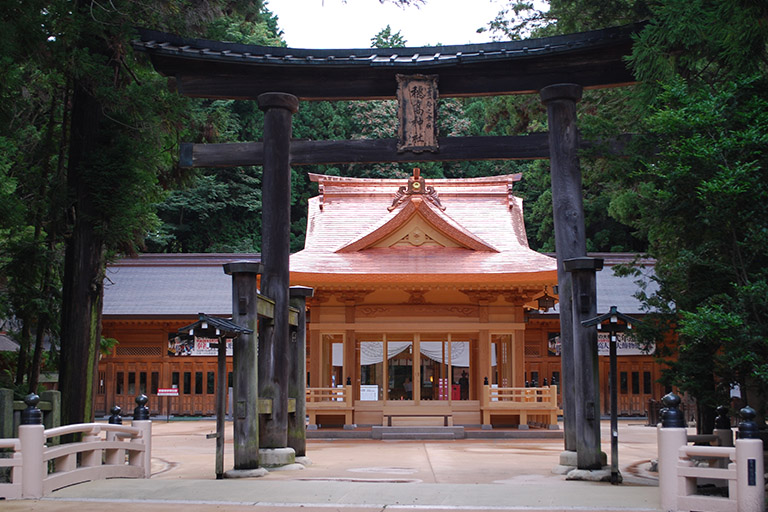
- Hotaka Shrine
-
- 6079 Hotaka, Azumino City, Nagano Prefecture MAP
- 3 min. walk from JR Hotaka Station
- No holidays
- Mifune Kaikan Adults 300 yen, junior high and high school students 250 yen, elementary school students 200 yen
- 0263-82-2003
- Free of charge
4Rokuzan Museum of Art

Rokuzan Museum exhibits the works of Morie Ogiwara (Rokuzan), a genius sculptor from Azumino, who is called "Rodin of the Orient. As one of the representative museums in Azumino, the museum continues to present modern Japanese sculptures.
The Rokuzankan, a red-brick building in the style of a church with ivy tangled around it, which is familiar to local people as a symbol of Azumino, is the center of the museum grounds, along with the Exhibition Building, the Toekan Building, and the rest room, Guzberry House. In the outdoor area lined with trees, visitors can sit on large benches and enjoy the scenery of the four seasons, or quench their thirst with water from the well that draws water from the ground.
Local Guide
Supporters
In addition to the wonderful works on display, the grounds are lush and green, a pleasant place to rest on a bench outside.
Powerful sculptures that move the heart
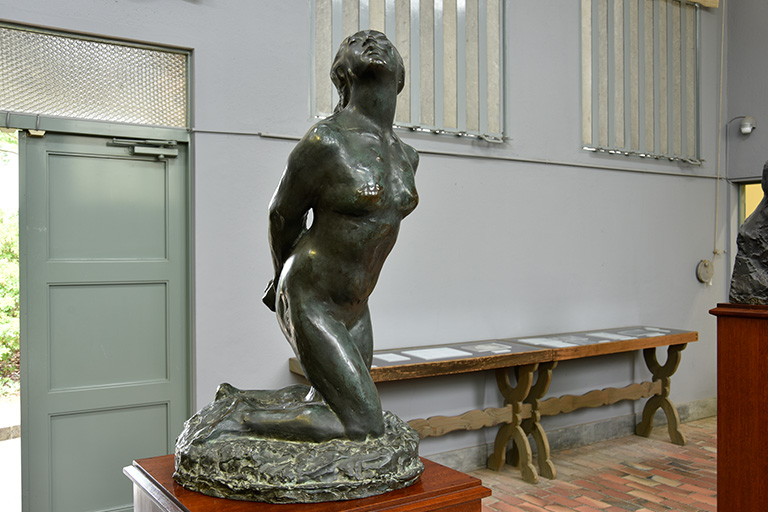
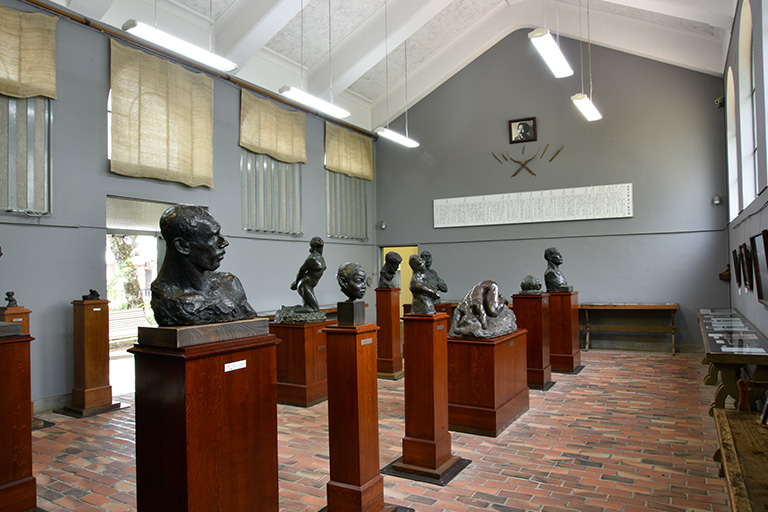
Rokuzan Museum" exhibits 14 of the 15 works Rokuzan left in his lifetime (one is displayed outside), and visitors can appreciate the works that can be called the soul of Rokuzan, who passed away at the young age of 30. Rokuzan's dynamic sculptures such as "Woman" and "Torakichi Hojo," which are designated as national important cultural properties, and "Despair," one of the trilogy of love, show Rokuzan's expressive power.
The "Toekan" exhibits Rokuzan's paintings such as drawings and oil paintings, and the "Exhibition Hall 1" exhibits works by people who were close friends with Rokuzan, such as Kotaro Takamura.
- Rokuzan Museum of Art
-
- 5095-1 Hotaka, Azumino City, Nagano Prefecture MAP
- About 7 min. walk from JR Hotaka Stn.
- November-February 9:00-16:10
March - October: 9:00 - 17:10
Admission until 30 minutes before closing - May - October: Open daily
November-April: Mondays and the day following a national holiday
December 21 - December 31 - Adults 900 yen, High school students 300 yen, Elementary/junior high school students 150 yen
- 0263-82-2094
- Free of charge
5Azumino Setsuro Takahashi Memorial Museum of Art
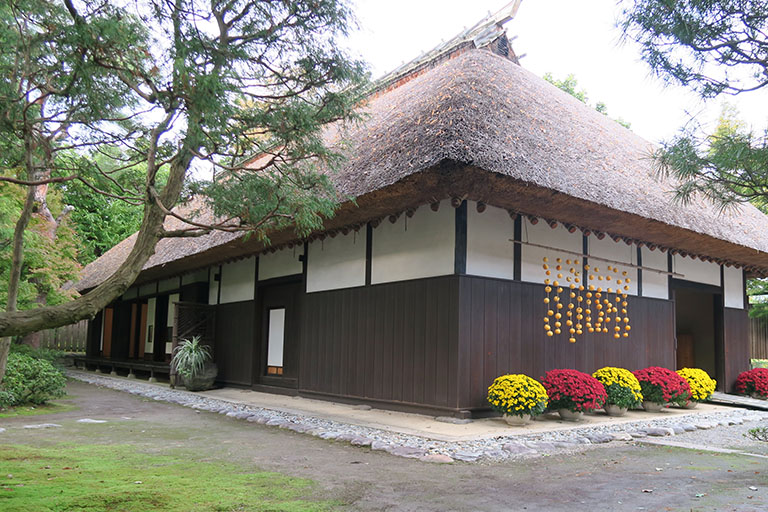
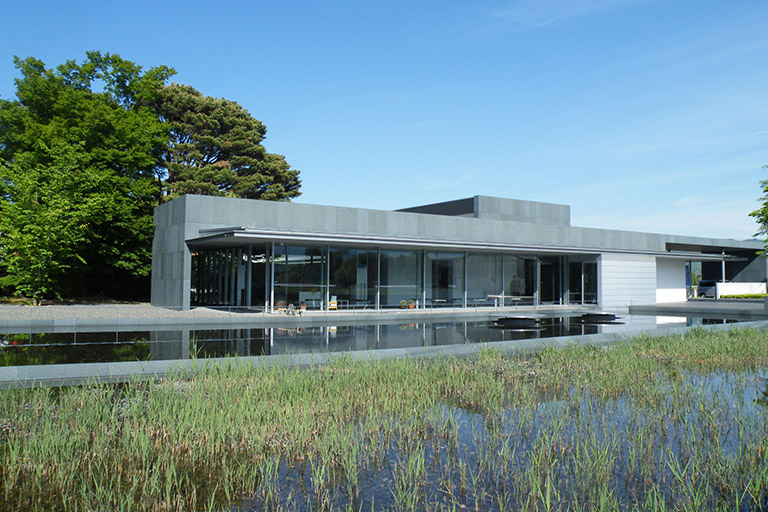
The museum introduces the achievements of Setsuro Takahashi, a lacquer craft artist born in Azumino City. He was awarded the Order of Cultural Merit in 1997 for elevating lacquerware from a craft to a pure art form.
On the grounds of the museum, located in the Kita-Hotaka district of the former Hotaka Town where he was born and raised, his birthplace with a thatched roof, which is registered as a Tangible Cultural Property of Japan, has been reconstructed and restored. The earthen floor and living room, which convey the lifestyle of Azumino in those days, and the paintings he drew in his childhood are on display, and can be viewed free of charge.
The moss-covered garden, which includes a 100-year-old Tagyomatsu pine tree and an Iroha maple tree, is also very atmospheric and should not be missed.
Local Guide
Supporters
The garden seen through the glass from inside the former Takahashi family residence is also beautiful. It is also used for exhibitions and workshops.
Lacquer works like friendly modern art

The works, which are made using a technique called "yari-kin," or "spear-gold" lacquer and gold, have a fantastic beauty, with a depth of color depending on the surface luster and the way the light hits them. The large lacquer folding screens and dry-lacquered three-dimensional works on display feature familiar motifs of nature and animals, giving visitors the feeling of viewing contemporary art. Lacquer art has continued to develop in the Orient since ancient times and has been used to make daily necessities, tea ceremony utensils, decorative boxes, and other items. Setsuro Takahashi, who has led the evolution of lacquer craft into a modern art form, has created a number of works, which will give visitors a new appreciation of the historical appeal of lacquer craft.
Also popular is the "Easy Chinkin Experience" (1,100 yen including admission fee), in which visitors can make a palm-sized lacquer plate using lacquer that does not cause a rash and gold powder for painting materials.
- Azumino Setsuro Takahashi Memorial Art Museum
-
- 408-1 Kitahotaka, Hotaka, Azumino, Nagano MAP
- 10 min. drive from JR Hotaka Station
- 9:00-17:00
- Mondays (if Monday is a national holiday, the museum will be open on Monday and closed the following day)
The day following a national holiday (if the day following a national holiday falls on a Saturday or Sunday, the museum will be open)
December 28 - January 4
The museum may be temporarily closed due to exhibition changes, etc. - Adults 410 yen, High school and college students 310 yen, Free for junior high school students and younger
Additional fees apply when special exhibitions are held. - 0263-81-3030
- Free of charge

Local Guide who was in charge of this article
- Noe Inagaki Matsumoto Hai Kara Girl's Club
Hoshino Resorts KAI Matsumoto
Asama Hot Spring, Nagano Prefecture
A modern Hot spring ryokan located in Asama hot spring. You can enjoy the cuisine and wines of Shinshu and the music associated with Matsumoto.
Access by bus 15 minutes by cab from JR Matsumoto Station