





5 sightseeing spots in Yamaguchi Prefecture for those in the know that will make your trip even more colorful

If you have gone to the trouble of visiting Yamaguchi Prefecture, you will want to research as many points of interest as possible to see and enjoy. There are plenty of attractive sightseeing spots scattered throughout the prefecture other than the "standard" ones, including spots that are gaining in popularity and spots known only to those in the know. Whether it is a mystical view or a temple for cat lovers, these places are sure to enrich the memories of your trip. Here are five more recommended spots in Yamaguchi Prefecture that are too good to be called "hole-in-the-wall.
1Kasayama
The top of the small volcano "Kasayama" is a great panoramic view spot

Kasayama (Mt. Kasasa), located north of Hagi city, is a small volcano 112 meters above sea level. You can drive up to the top of the mountain and see up close the crater, which is about 30 meters in diameter and 30 meters deep, leaving traces of an eruption that occurred about 10,000 years ago. The view from the observatory is magnificent, with a panoramic view of the nearby islands and the city of Hagi, as well as, if conditions are good, the horizon of the Sea of Japan and the remote island of Mishima, which lies about 45 km off the coast of Hagi.
There is also a café downstairs, where you can enjoy a cup of tea while savoring the spectacular view. At the northern foot of Mt. Kasasa is a camellia forest with approximately 25,000 camellia trees growing wild. The best time to see the flowers is usually from mid-February to late March.
Enjoy nature and gourmet food! Lots of things to see and do in the area!

There are many places to see and eat around Kasayama. Myojin Pond was formed when Mt. Kasasa was connected to the mainland, and Itsukushima Shrine is located on the shore. The pond is connected to the sea by a gap in the rocks, and fish released into the sea to pray for a bountiful catch, such as snappers and rock cod, breed in the pond, and the surface of the water rises and falls with the ebb and flow.
The "windhole" located behind the shrine is recommended in summer to enjoy the "natural cooler" air that flows out at a temperature of 12 to 13 degrees Celsius. The surrounding area is dotted with stores where you can taste squid, sea urchins, turban shells, and other seafood, as well as processed citrus products such as Hagi's specialty summer oranges. The gourmet foods that Hagi boasts are not to be missed.

Local Guide
Supporters
At the end of the road leading to the camellia forest, the "Tsubaki no Yakata" restaurant is a well-known restaurant run by the mothers of the local fishing cooperative. The set menus, which include sashimi, sea bream, and nodogurouro (nodoguro are cooked in a broth made of sea bream and nodoguroro), are both hearty and cosy.

- Kasasan (Mt.)
-
 Tsubaki-higashigashigahama, Hagi, Yamaguchi MAP
 Approximately 15 minutes by car from JR Higashi Hagi Station
 Take a bus from Hagi Bus Center, get off at Koshigahama and walk about 5 minutes to Myojin Pond.
 0838-25-1750(Hagi City Tourist Association)
 Parking at Koshigahama, the top of Mt. Kasayama, and the camellia forest are free of charge; Myojin Pond is chargeable.
 Cab or rental car is recommended to get to the top of Kasayama and the camellia forest.
2Fukutoku Inari Shrine
Be impressed by the fantastic sunset! A shrine with over 1,000 years of history and a variety of benefits

With the keywords "spectacular view," "shrine," and "Yamaguchi Prefecture," I would like to recommend "Fukutoku Inari Shrine" along with the classic "Motonosumi Shrine. Located on a hill overlooking the Hibikinada Sea, about 15 minutes by car north of Kawatana hot spring in Toyoura-cho, Shimonoseki City, the shrine has a history of more than 1,000 years and has been worshipped since ancient times for its various benefits.
There are many highlights of the shrine, including the view from the precincts, the magnificent shrine pavilions, the Otorii (Grand Gate), and the Senbon-torii (Thousand torii gates) that lead through the mountains. The spectacular view of the horizon to the west was written in an ancient poem, and its beauty reaches its climax at sunset.
A spectacular view on the cliff after passing through the red tunnel of Senbon-torii (1,000 torii gates)

As you proceed deeper into the temple, you will feel a sense of excitement as if you are being drawn into another world. At the end of the tunnel of torii gates, which open up into the forest at two points along the way, and at the end of the tunnel, which opens up in an instant with the bright sunlight, a small Inari shrine is enshrined, making it like a small adventure to visit the gods.
The end of the tunnel, which opens up on the mountainside, is on a cliff overlooking Hibikinada Sea, the JR San'in Main Line, and the national highway below. Be careful where you step, as pit vipers may appear during the summer season.
Local Guide
Supporters
It is recommended to watch the sunset as if it overlaps with the Otorii Gate. The reflection of the sun's rays on the sea seems like a path of light stretching toward the Otorii. If you can see the divine view after praying, you will surely have good luck!

- Fukutoku Inari Shrine
-
- 2960-1 Uga, Toyoura-cho, Shimonoseki City, Yamaguchi Prefecture MAP
- Approximately 45 minutes by car from JR Shimonoseki Station.
- Take a bus from Kawatana hot spring and get off at "Fukutoku Inari-mae" bus stop.
- 083-776-0125
- Free of charge
- Red seals are available from 10:00 to 15:00 (may not be available on the day before or the day of a festival, etc.)
3Higashi Gobata Terraced Fields
Spectacular view of the Japan Sea beyond the terraced rice paddies. The best time to visit is during the rice planting season.

In the Mukatsuku Peninsula in the western part of Nagato City, rice is cultivated in numerous terraced rice paddies. On the Sea of Japan side, beautiful scenes of terraced rice paddies and the sea can be seen everywhere, and the Higashi Ushirobata terraced rice paddies in particular are known as a spectacular spot. It is the only one in Yamaguchi Prefecture selected as one of the "100 best terraced rice paddies in Japan.
The best time to view the rice paddies is from early May, when the water is flooded for rice planting, to mid-June, when the rice is still small and the surface of the water can be seen. The entire area is a spectacular sight as the surface of the rice paddies is tinted with the blue sky and the setting sun, as well as the ocean.
The spectacular view of the terraced rice paddies and fishing lights from squid fishing boats is a spectacular sight that is only available during limited periods.

The true beauty of the Higashi Gobata terraced rice fields comes after nightfall in early summer. The terraced rice paddies, tinted azure by the setting sun, change their color to deep blue as night falls. The blue surface of the terraced rice paddies and the many fishing fires create a fantastic sight before your eyes.
This spectacular view can be seen only from early May to mid-June, when the surface of the rice paddies is visible, and it is very rare to find a spot in Japan where you can enjoy the concert of terraced rice paddies and fishing fires. Since only a few boats go out on Saturdays, weekdays and Sundays are recommended to visit.
Local Guide
Supporters
The popular spot Motonosumi Shrine is only a 10-minute drive away. If you have a chance to visit in early summer, this is a must-see spot along with a visit to the shrine. If you have time before dusk, a visit to the nearby "Senjojiki" is also recommended.

- Higashi Gobata Terraced Fields
-
- 410-1 Gobata, Aburatani, Nagato City, Yamaguchi Prefecture MAP
- Approximately 60 minutes by car from the Mine IC on the Chugoku Expressway
- 0837-26-0708(Nagato City Tourist Information Center (YUKUTE)
- Free of charge
4Unrinji Temple
A temple full of cats that will relax you if you visit.

Unrin-ji Temple is located in a village in the Mutsumi area in the mountains of eastern Hagi. The temple is the descendant of Tenjuin Temple (now closed), which appears in the "Nekomachi Legend" of Hagi Castle Town. The temple has been called "Neko-dera" (cat temple) because of the increasing number of cat-related ornaments collected by the temple's cat-loving priest and dedicated by visitors.
The cat figurines lined up in front of the main hall are a sight to behold! The temple has become so popular that it is now considered a "sacred place" for cat lovers, and many people from Japan and around the world have visited the temple.
Buddha, omikuji (fortune), gifts, and red seals! Anyway, the whole temple is covered with cats!

As you begin to climb the stairs to the main hall, cats appear one after another in your field of vision in various forms, such as signs, figurines, and placards for commemorative photos. In addition to the "Neko-mikuji" fortune, all of the amulets and other prizes are Unrin-ji originals designed by the temple's chief priest and his wife, and are available only here. Don't miss the cute red seals decorated with cats.
The "cat ema" (votive tablet) lined up above the entrance is popular for its uniqueness; visitors are asked to dedicate it by drawing a cat's face along with their wishes. Visitors strolling the temple grounds may encounter the temple's four cats.
Local Guide
Supporters
The wooden cats lined up on the shrine grounds are astounding in their elaborateness, some so realistic they appear to be alive, and others are picture book characters. All of them are chainsaw art, and the creator, Takao Hayashi, is a very famous person who is so skilled that he won a world competition.

- Unrinji Temple
-
- 2489 Yoshibegami, Hagi, Yamaguchi MAP
- 50 min. by car from Yamaguchi IC on Chugoku Expressway
 9:00-17:00
 Open irregularly (closed on short notice for Buddhist memorial services, etc.)
- 08388-6-0307
- Free of charge
- To prevent the spread of the new coronavirus, viewing of the main hall and wearing cat masks are suspended.
5Taneiji Temple
The temple where Nagato Yumoto hot spring opened
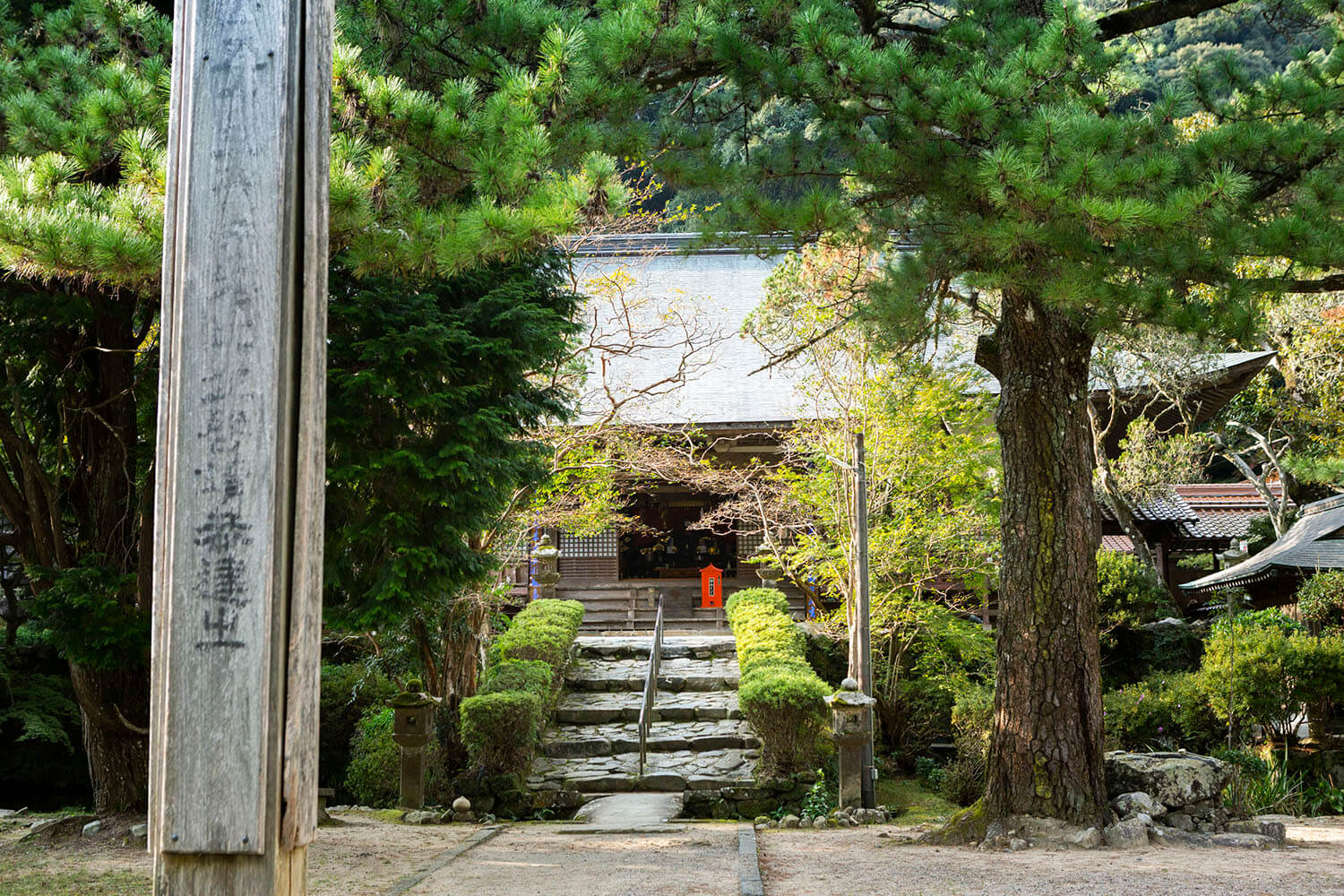
The temple was founded in 1410 by Hirotada Washinozu, a governor of Nagato. Once known as "Koya in the west," this famous Soto Zen temple enjoyed a prosperous period of time.
Daneiji Temple is also known as the site where Nagato Yumoto Hot Spring was founded. 600 years ago, the temple's Zen master Teian received a revelation from an old man who claimed to be the great god Sumiyoshi that a hot spring had sprung up in the area. The Onyu was discovered at that time and is known as "Shinju no Yu," and a stone where Sumiyoshi-daimyojin used to sit in zazen meditation can still be seen on the temple grounds.
The temple is especially beautiful during the autumn foliage season, when the grounds are covered with colorful maple trees and ginkgo trees.
Take a walk around the temple grounds and enjoy the sights that tell the story of the temple's history.
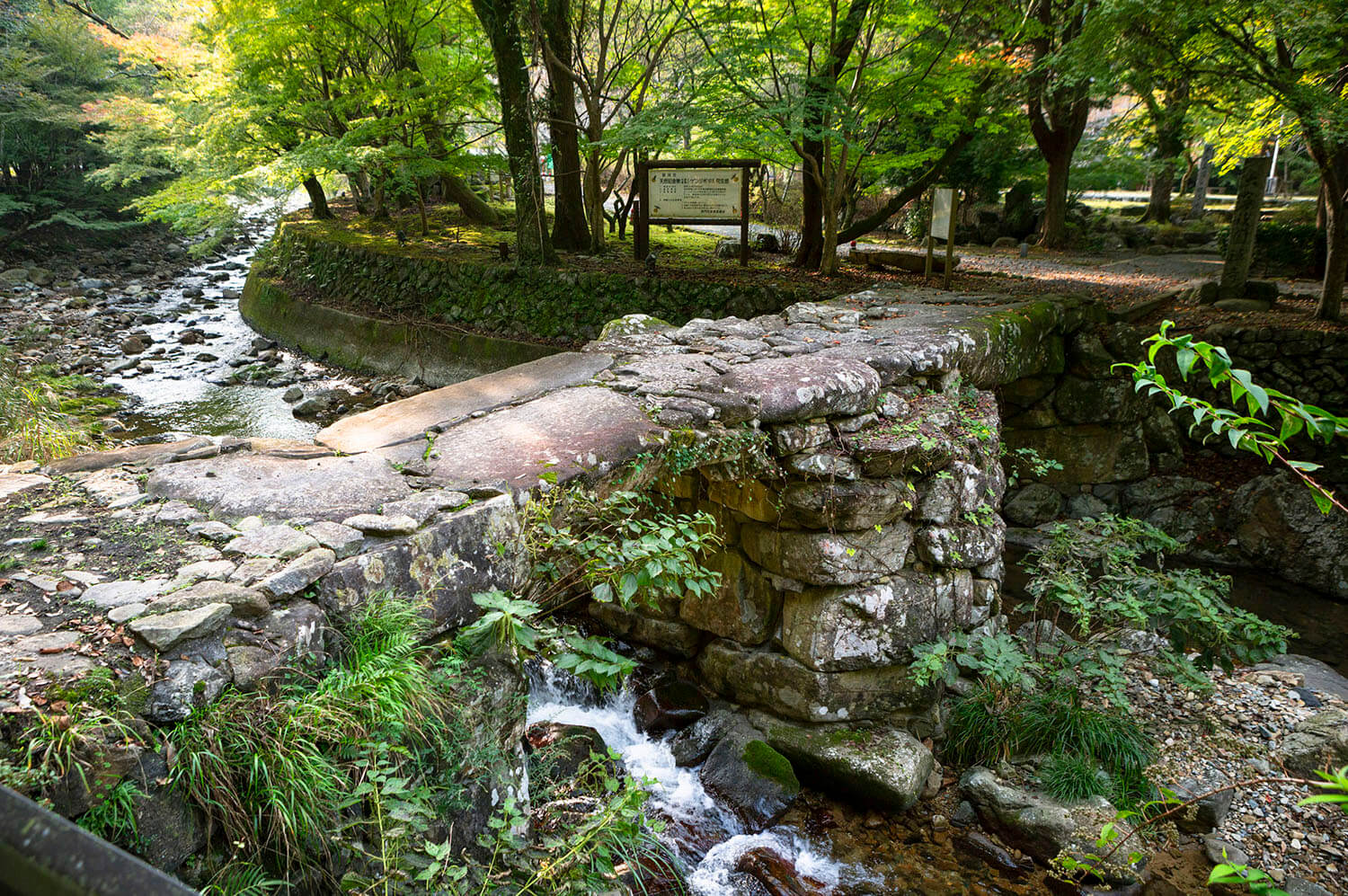
In addition to the main hall, there are many other attractions within the spacious precincts of the temple. Banseki Bridge over the Daneiji River is one of the "Three Odd Bridges of Hochou," along with Kintai Bridge in Iwakuni City and Niji Bridge in Yamaguchi City. Dating back to the early Edo period, it is a beautifully sculpted combination of natural stones of various sizes.
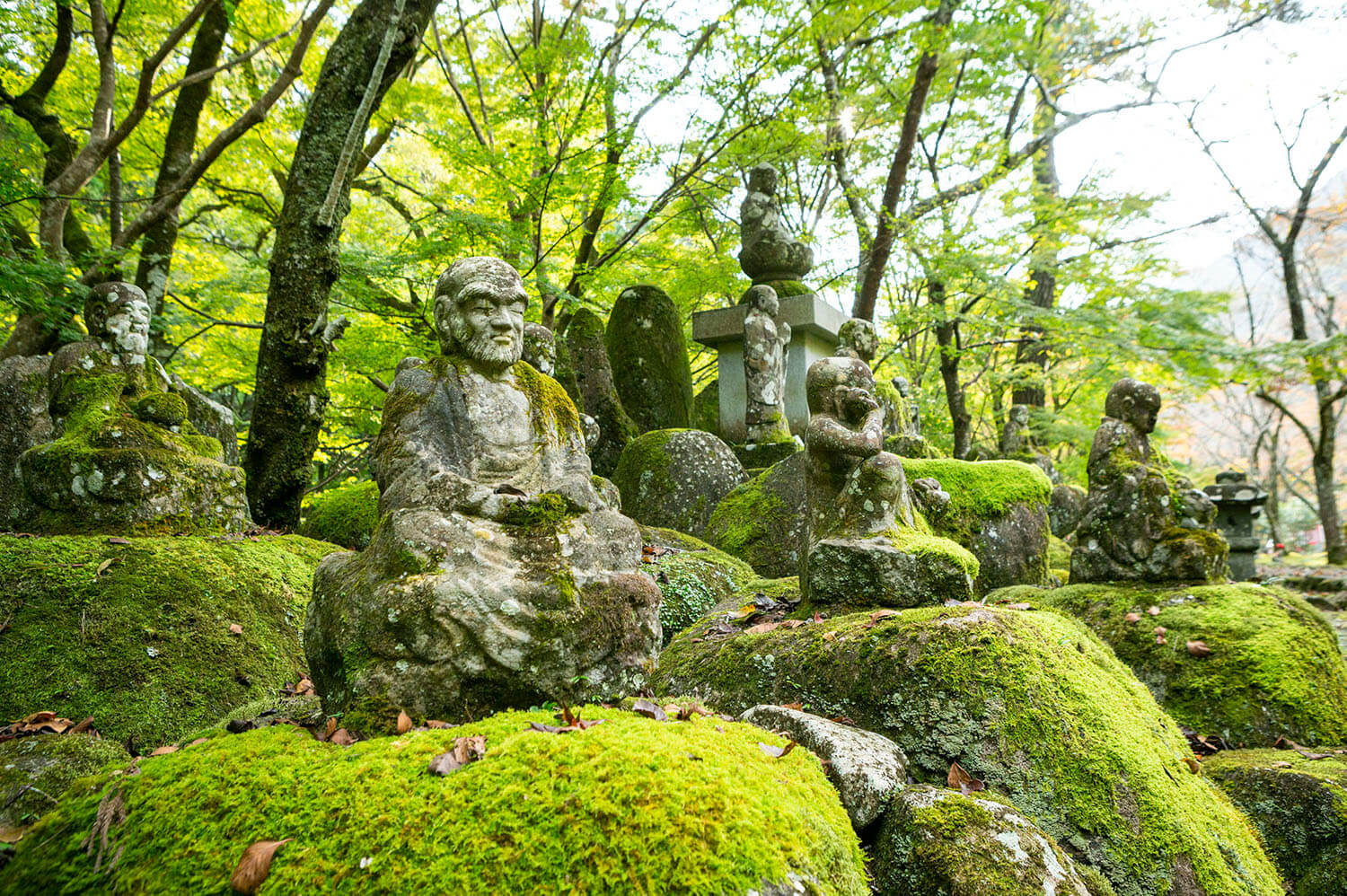
Lining the hill behind the main hall are the graves of Yoshitaka Yoshitaka, the 31st head of the Ouchi clan that established a major culture in Yamaguchi Prefecture, his eldest son, and his vassals. There is also a pond where Yoshitaka, who was pursued for rebellion, realized his death when he could not see his own reflection in the water, and a rock where he is said to have hung his helmet. There are also many other attractions such as the 16 arhat statues, a historical museum, and the Toyokawa Inari Shrine in Nagato.
Local Guide
Supporters
The annual illumination of the park during the cherry blossom and autumn foliage viewing periods is not to be missed. Check the website for the schedule and other details.
- Taneiji Temple
-
- 1074-1, Fukagawa-Yumoto Monzen, Nagato City, Yamaguchi Prefecture MAP
- Approx. 15 min. walk from JR Nagato Yumoto Sta.
- 0837-25-3469
- Free of charge
MAP
- Hoshino Resorts facilities nearby

Local Guide who was in charge of this article
- Jun Mizota The best place to go when it comes to the sea!
Hoshino Resorts KAI Nagato
Located in Nagato Yumoto Onsen, a representative hot spring in Yamaguchi Prefecture, this hot spring hotel features a structure designed in the style of an Edo period "Ochaya-yashiki" (teahouse mansion).