





6 Recommended Sightseeing Spots to Visit in Fukui Prefecture

Fukui Prefecture, which faces the Sea of Japan and is located at the foot of Mount Hakusan, is dotted with scenic spots woven from rich nature, as well as famous places that carry on a long history and tradition. From Tojinbo, with its impressive, sheer cliffs, to the Dinosaur Museum, which can be enjoyed by both children and adults, we will introduce classic sightseeing spots that can be reached in about an hour from Kaga City, Ishikawa Prefecture.
1Eiheiji Temple
A Zen village where 700 years of history and tradition live on

Located in Eiheiji Town, which spreads out to the east of Fukui city, this is the head temple of the Soto school of Zen Buddhism, founded by Zen Master Dogen in 1244 (the second year of Kangen). Even today, about 150 trainee monks gather from all over the country to engage in rigorous training. Within the approximately 100,000-tsubo temple grounds, surrounded by deep green mountains, there are over 70 halls and pavilions. The main buildings where the monks train are called the Shichido Garan (seven-hall temple complex), and their layout, connected by corridors, is said to mimic the posture of Zazen meditation. It has been awarded two stars in the Michelin Green Guide Japon published in France, attracting attention from both Japan and abroad.
Many highlights, including ceiling paintings depicting the beauty of nature

Walking along the approach surrounded by ancient cedar trees that are about 700 years old, the dignified air seems to straighten your posture. Visits begin at the Kichijo-kaku, where you can also experience Zazen and sutra copying. At the Sanshokaku, with its ceiling embedded with 230 paintings, you will be overwhelmed by its solemn beauty. It is said that if you find the two carp, two Chinese lions, and one squirrel among them, your wishes will come true.
In addition, there are many highlights, such as the 4-meter-long "large pestle" in the Daikuin, the kitchen for the trainee monks. Take about an hour to walk around with a quiet heart.

- Eiheiji Temple (Head Temple)
-
 5-15 Shihi, Eiheiji-cho, Yoshida-gun, Fukui Prefecture MAP
 Approx. 12 minutes by car from Eiheijiguchi Station on the Echizen Railway
 Take a bus from Echizen Railway Eiheijiguchi Station and get off at "Eiheiji Monzen" or "Eiheiji," then walk for about 5 minutes.
 8:30–17:00 (last admission at 16:30)
 Open every day
 Admission fee: 500 yen for adults, 200 yen for elementary and junior high school students
 0776-63-3102
 Paid
 The "Eiheiji Odekake-go" direct bus operates from Kagaonsen Station and areas around the public bathhouses (soyu) in Katayamazu, Yamashiro, and Yamanaka Onsen.
2Maruoka Castle
The only surviving castle keep in the Hokuriku region

Maruoka Castle, a nationally designated Important Cultural Property, is said to have been built by Shibata Katsuie for his nephew Katsutoyo as a defense against the Ikko-ikki uprisings, under the orders of Oda Nobunaga. True to its nickname, "Kasumi-ga-jo" (Mist Castle), in spring, the castle keep appears to float amidst the cherry blossoms in full bloom, creating a fantastical sight. It features massive stone walls built with natural stones in the "nozura-zumi" (rough-piled) style and a two-story, three-level keep with a watchtower design that lacks through-pillars, making it one of the oldest architectural styles among the 12 remaining original castle keeps in Japan. You can tour the interior of the castle by climbing the large stone steps built into the stone walls.
Climb the steep stairs and look out over the castle town from the watchtower

Although it appears to be two stories from the outside due to its double roof, the interior is a three-story structure. Defenses against enemies can be seen everywhere, such as "ishi-otoshi" (stone drops) for dropping stones and "sama" (embrasures) for firing guns or arrows. A detailed diorama reconstructing the castle is also on display on the first floor. The stairs are steeply inclined to make it difficult for enemies to attack, so you must rely on a rope to climb to the upper floors. The watchtower on the top floor stands about 35 meters above the foot of the hill, and from its windows on all four sides, you can see the peaceful townscape of Maruoka and the rural scenery of the Sakai Plain.

- Maruoka Castle
-
- 1-59 Kasumicho, Maruoka-cho, Sakai City, Fukui Prefecture MAP
- About 10 minutes by car from JR Maruoka Station
- Take a bus from JR Fukui Station and get off at "Maruoka-jo," then it is right there.
- 8:30–17:00 (last admission at 16:30)
- Open every day
- Admission fee: Adults 450 yen, elementary and junior high school students 150 yen
- 0776-66-0303
- Free
3Fukui Prefectural Dinosaur Museum
One of the largest museums in Japan where you can experience the world of dinosaurs

Located in Katsuyama City, which boasts the highest volume of dinosaur fossil excavations in Japan, this spot is considered one of the world's three great dinosaur museums, alongside the Royal Tyrrell Museum of Palaeontology in Canada and the Zigong Dinosaur Museum in China. The main attraction is the "Dinosaur World" zone, where you can encounter numerous dinosaurs. The Tyrannosaurus robot is particularly eye-catching, and its moving, roaring figure is truly spectacular. Surrounding it are full-body dinosaur skeletons, the largest of which is the Mamenchisaurus, measuring 23.2 meters in length. The "Dinosaurs of Sichuan, China" diorama, which depicts a carnivorous dinosaur attacking a herbivorous one, is also realistic and full of impact.
A dinosaur world that will captivate both adults and children

Of the 44 full-body dinosaur skeletons, 10 are precious specimens assembled using real bones. As you proceed up the slope leading to the second floor, you can view the dinosaur skeletons up close from various angles. There are many exciting highlights, including a zone where you can learn about dinosaurs discovered in Fukui Prefecture and Asia, the "Dino Lab" where you can actually touch fossils and meteorites, a fossil cleaning room where excavated fossils are removed from stone, and exhibits explaining the evolution from dinosaurs to birds. There is also the "Field Station" (open from around Golden Week to early November) where you can experience fossil excavation, allowing you to enjoy yourself all day long.

- Fukui Prefectural Dinosaur Museum
-
- Inside "Katsuyama Dinosaur Forest," 51-11 Terao, Muraoka-cho, Katsuyama City, Fukui Prefecture MAP
- Approx. 10 minutes by car from Echizen Railway Katsuyama Station
- Take the bus from Echizen Railway Katsuyama Station and get off at "Dinosaur Museum" (Kyoryu Hakubutsukan), right there
- 9:00–17:00 (last admission at 16:30) *During summer vacation, etc., 8:30–18:00 (last admission at 17:30, please check the website)
- 2nd and 4th Wednesday (open if it falls on a public holiday, closed the following day), December 29–January 2 *Open every day during summer vacation
- General 730 yen, high school/university students 420 yen, elementary/junior high school students 260 yen
Field Station (duration approx. 2 hours) General 1,220 yen, high school/university students 1,020 yen, elementary/junior high school students 610 yen - 0779-88-0001
- Free
4Ichijodani Asakura Clan Ruins
Walk through the ruins of a Sengoku period castle town, known as the Little Kyoto of Hokuriku

Located about 10 km southeast of Fukui Station, "Ichijodani" is the site of the castle town of the Asakura clan, a Sengoku daimyo who ruled Echizen Province (present-day Fukui Prefecture) for 103 years over five generations. The ruins of the castle town, which once flourished and was known as the "Little Kyoto of Hokuriku," have been excavated in an almost complete form over more than 50 years since 1967. Samurai residences, temples, and artisan houses have been magnificently restored. Along with Kyoto's "Kinkaku-ji" and Hiroshima's "Itsukushima Shrine," it is a precious spot that has received a triple national designation (Important Cultural Property, Special Historic Site, and Special Place of Scenic Beauty), one of only six such places in the entire country.
Stroll through the Karamon Gate and the mansion ruins garden, which evoke the prosperity of the time

If you walk through the "Restored Townscape" and peek into the townhouses and merchant houses, you can catch a glimpse of the lifestyle and culture of that time. Once you have let your thoughts wander to the Sengoku period, take a break at the rest area. You can enjoy matcha served in "Echizen-yaki" tea bowls along with sweets branded with the Asakura family crest.
Across the road is the Karamon Gate, the symbol of the ruins. It is said to be the main gate of Shoin-in Temple, which was built to mourn the fifth-generation Asakura lord, Yoshikage, and was relocated and donated by the Toyotomi family. Beyond the Karamon Gate are the ruins of the Yoshikage residence, and on the hill, there are four gardens, including the Yudono-ato Garden, the oldest in Ichijodani. The rugged landscape using massive mountain stones is spectacular.

- Ichijodani Asakura Clan Ruins
-
- 28-37 Kidonouchi-cho, Fukui City, Fukui Prefecture MAP
- Approx. 25-minute walk from JR Ichijodani Station
- Take a bus from JR Fukui Station and get off at "Fukugen Machinami," immediately upon arrival
- 9:00–17:00 (Last admission at 16:30)
- December 28 – January 4
- Restored Townscape admission: 220 yen for adults; free for those 70 and older and junior high school students and younger
- 0776-41-2330 (Asakura Clan Ruins Preservation Association)
- Free
5Tojinbo Cliffs
Artistic cliffs created by nature

The rugged, sheer cliffs stretch for about 1 km, creating a breathtaking natural masterpiece that will leave you speechless. These cliffs were formed when magma intruded during volcanic activity approximately 13 million years ago, and the resulting volcanic rock was exposed by wave erosion as it cooled and hardened. The abundance of pentagonal and hexagonal columnar joints formed as the magma cooled is geologically rare, and it is said to be one of only three such places in the world, alongside the west coast of Norway and Mount Kumgang on the Korean Peninsula. The cliffs reach heights of over 25 meters, and the sight of the rough waves of the Sea of Japan crashing against them is truly impressive.
There is also a sightseeing boat where you can view the impressive Tojinbo cliffs from the sea

From the stone-paved plaza, you can enjoy a 180-degree view of Tojinbo and the Sea of Japan. A well-maintained walking path allows you to take in the entire landscape, including unique rock formations like the "Candle Rock," where the setting sun appears like a candle flame, as well as the "Oshima" island floating offshore and the red bridge leading to it. You can also descend to the Senjojiki, a vast area of flat rock.
Additionally, taking a sightseeing boat to view Tojinbo from the sea is highly recommended. You can enjoy a 30-minute cruise that offers a close-up look at the "Oike" cliff towering from the sea surface, as well as the "Lion Rock" and "Honeycomb Rock."

- Tojinbo Cliffs
-
- Adaka, Mikuni-cho, Sakai City, Fukui Prefecture MAP
- Approx. 6-minute drive from Echizen Railway Mikuniminato Station
- Take a bus from Echizen Railway Mikuniminato Station and get off at "Tojinbo," approx. 6-minute walk
- Open for viewing at any time; Sightseeing boats 9:00–16:00, 9:00–15:30 from November to March
- Sightseeing boat: December 29 – January 31 *Service may be suspended due to weather conditions
- Sightseeing boat: Adults 1,400 yen, elementary school students 700 yen
- 0776-82-5515 (Sakai City Mikuni Tourism Association)
- Paid
6Yoshizaki Gobo Gankei-ji Temple
A major base where Rennyo Shonin spread the teachings of Jodo Shinshu

In 1457 (the 3rd year of the Bunmei era), Rennyo Shonin, the restorer of Jodo Shinshu Buddhism, established his base for missionary work in the Hokuriku region at Echizen Yoshizaki, located on the border of Fukui and Ishikawa Prefectures. It is said that he laid the foundation for the largest religious organization in Japan in just a few years, and the area was bustling with many worshippers at the time. It is also the birthplace of the Kaga Ikko-ikki, which created a "country held by peasants" that lasted for nearly 100 years—a rare occurrence in world history.
The site of the Yoshizaki Dojo is located in a plaza on Mount Yoshizaki, which is surrounded by lagoons on three sides, and features a large statue of Rennyo Shonin by the master Japanese sculptor Koun Takamura.
The setting for the Buddhist and mother-in-law/daughter-in-law story, the Legend of the Bride Scare

Be sure to also visit Gankei-ji Temple, which stands at the foot of Mt. Yoshizaki. This is the setting for the "Yome-odoshi" (Bride-Scaring) legend, a story of conflict between a mother-in-law and daughter-in-law that is also known through Ningyo Joruri and Kabuki. The "Yome-odoshi Nikutsuki no Men" (flesh-attached mask used to scare the bride) that appears in the story is kept here, and you can actually see the mask with its terrifying expression, which is said to have become stuck to the wearer's face. The mask has been passed down for about 800 years, and you can still see traces of where it was once covered in gold leaf. It is also a fascinating experience to ask the head priest about the legends and the history of Yoshizaki.

- Yoshizaki Gobo Gankei-ji Temple
-
- 1-302 Yoshizaki, Awara City, Fukui Prefecture MAP
- Approx. 12 minutes by car from JR Daishoji Station
- Take the loop bus from JR Kagaonsen Station, get off at "Rennyo Shonin Memorial Hall / Echizen Kaga Prefectural Border Hall," and walk for about 3 minutes
- 7:00–19:00
- Open every day
- Admission fee: 500 yen, elementary school students 300 yen
- 0776-75-1956
- Free (in front of Yoshizaki Tourist Center)

Local supporter in charge of this article
- Koya SuzukiActive Kaga Men
KAI Kaga
Yamashiro Onsen, Ishikawa Prefecture
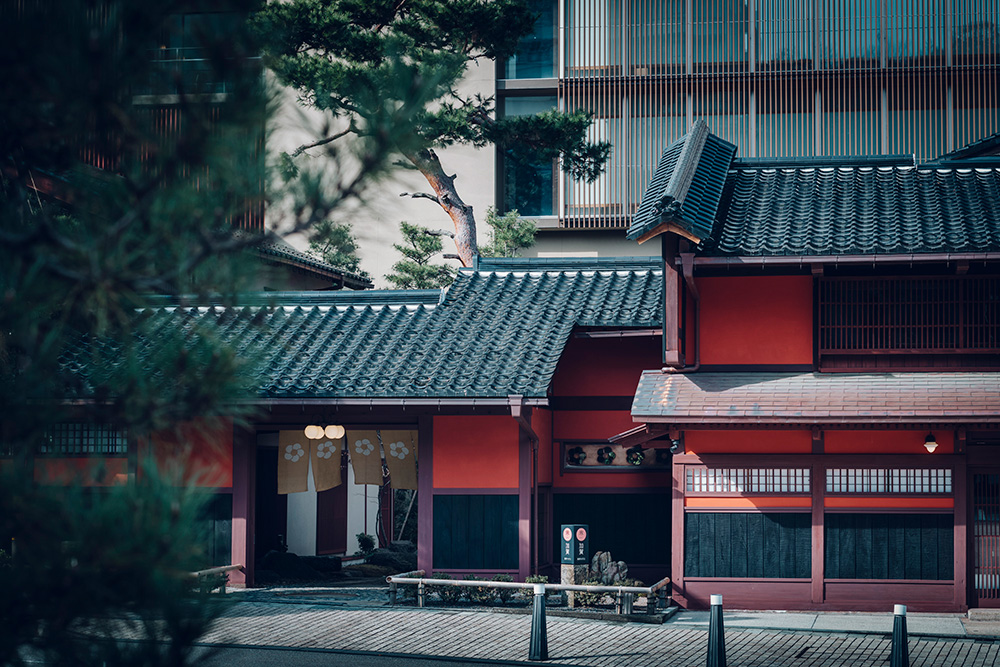
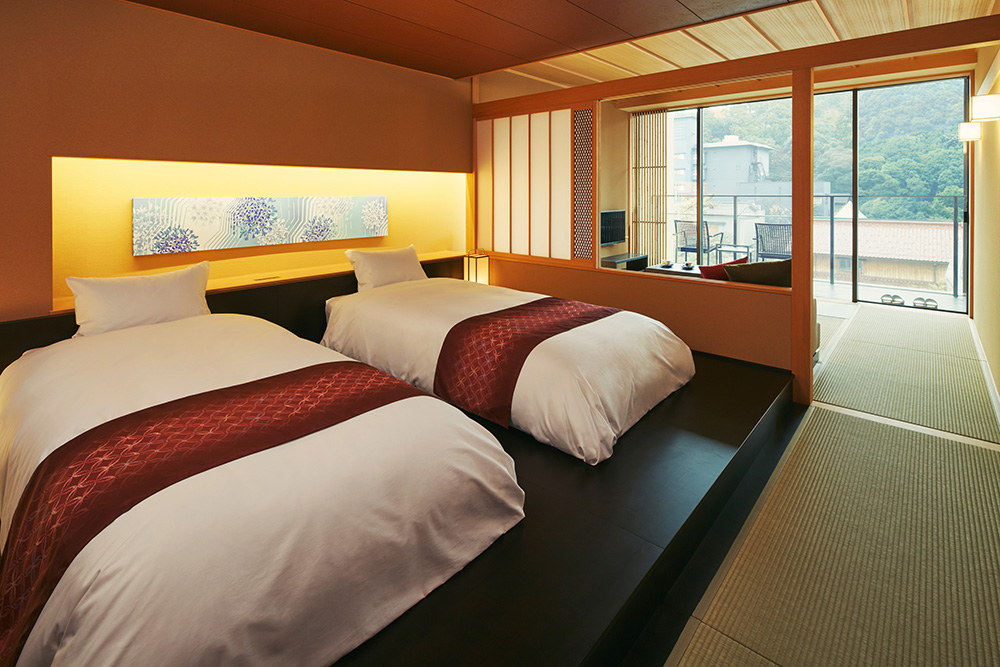
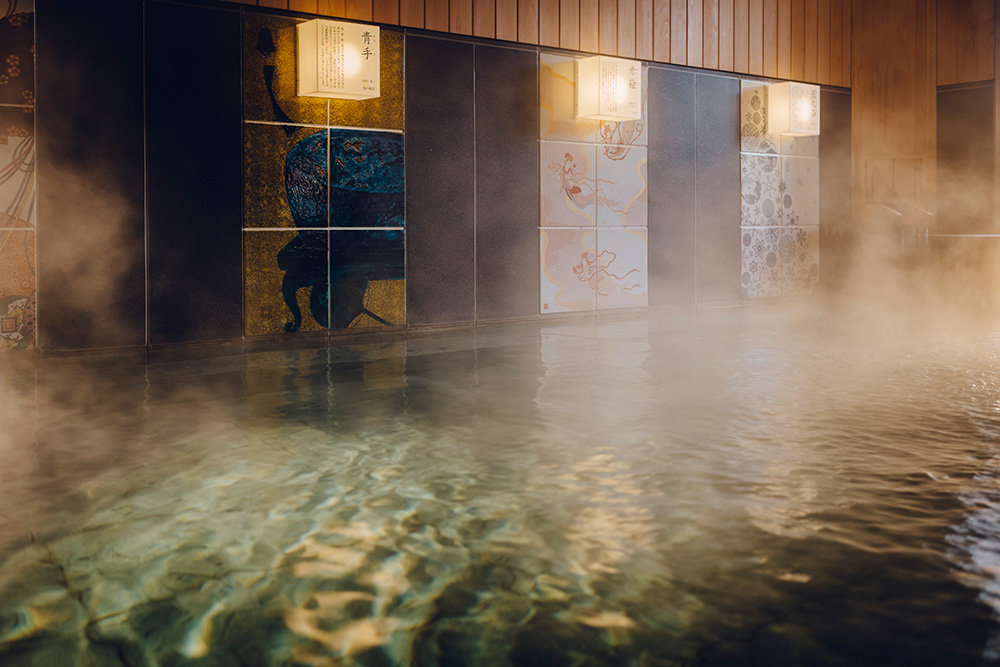
A traditional Kaga hot spring inn where new sensibilities breathe. The traditional architecture building with its impressive red-patterned lattice is a registered tangible cultural property of Japan.
Access About 10 minutes by taxi from Kagaonsen Station on the IR Ishikawa Railway
- Accommodation rate example
- Per person per night From ¥19,000