





Kusama Yayoi and archaeology. The museum of art I go around at a town of art "Matsumoto" and the tour of museums

Matsumoto city which fused in the town where contemporary art such as the Matsumoto Municipal Museum of Art which can touch Yayoi Kusama's starting point is abundant in history. A peculiar worldview the old and the new cross charms the person who visited and is proud of immovable popularity as "town of art". The city has complete set of art museum and museum of the colorful genre from archaeology in addition to contemporary art to modern art culture, so the town walk which stimulates the sensitivity can be enjoyed fully.
< recommendation art museum in Matsumoto and museum>
1Matsumoto Municipal Museum of Art
The museum of art where you can meet Kusama Yayoi art
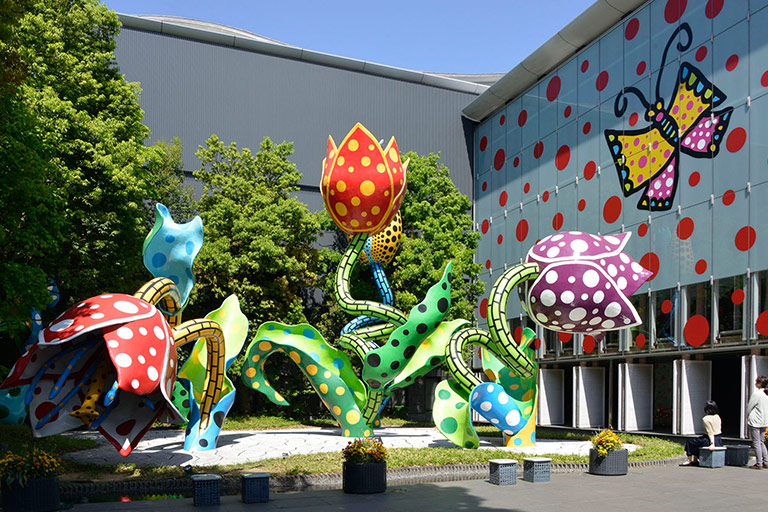
The "Matsumoto Municipal Museum of Art" for about 12 minutes on foot is famous for the design of the wall and a field sculpture work for Mr. worldwide artist Yayoi Kusama from Matsumoto city which sets an existence sense free at the entrance "flower of illusion" from Matsumoto station.
The work display which made the author who has a relation in Matsumoto the center is performed, and it doesn't stop at work enjoyment and also juxtaposes a citizen gallery, and is exchanged overall museum of art with an area.
The display which also has abundant Bali ESHON of a work

There are general citizen and atelier space for children on the 1st floor in inside of the building, and the 2nd floor of citizen gallery and temporary exhibition room are established. The 3rd floor of author's work with the relation is a center in Matsumoto city, and the work by which a calligrapher from Matsumoto city and Uejo Nobuyama are a sculptor, the artist of Western painting who kept drawing Shuuei Hosokawa and a mountain in Shinshu and Kazuo Tamura exhibits establishing. Calligraphy, a western movie, carving and contemporary art can touch art from all viewpoints, so even 3rd floor of impression is enough.
A postcard and a goods of an in storage work are being sold at a museum shop of establishing as an annex, so I can bring the work on which I made an impression back as a gift.

This place
Supporter
I go to various plan exhibition, workshop, lecture and concert through the year in addition to the permanent collection.
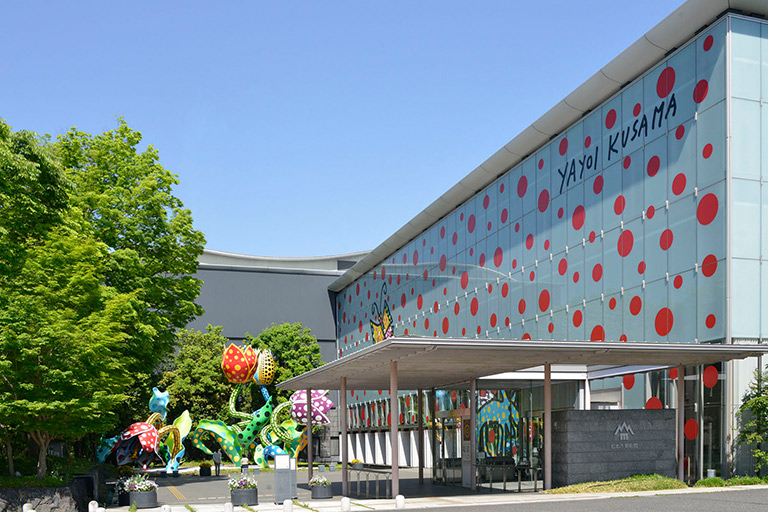
- Matsumoto Municipal Museum of Art
-
 Nagano Matsumoto city central 4-2-22 MAP
 From Matsumoto station, about 12 minutes on foot
 I get off a ALPICO Kotsu bus "around Kitaichi extension east" ride "Matsumoto Municipal Museum of Art" more than Matsumoto station.
I get off a town ride of sneakers "eastern tour" "Matsumoto Municipal Museum of Art" more than Matsumoto station. 9:00-17:00 (for entrance, to 16:30)
 Monday and New Year's
 Collection exhibition The adult of 410 yen, the university high school student of 200 yen and below the junior high school student are free.
 0263-39-7400
 Free
Free
2Matsumoto city clock museum
The old clock made in England is must-see in the 18th century.

The collection which was a researcher of an old clock at the museum which opened in 2002, and contributed the valuable Japanese and Western clock Mr. late Chikazou Honda who was also a clock engineer bet and collected for life to Matsumoto city is the center. A full-time engineer maintains daily in order to receive the last wish of Mr. Honda who explained "Could you see a moving clock?" and exhibit a clock of the moving state. When it'll be the time of Masashi (every hour), the sound of the time signal by which inside of the building is heard from here and there is also a fun one.
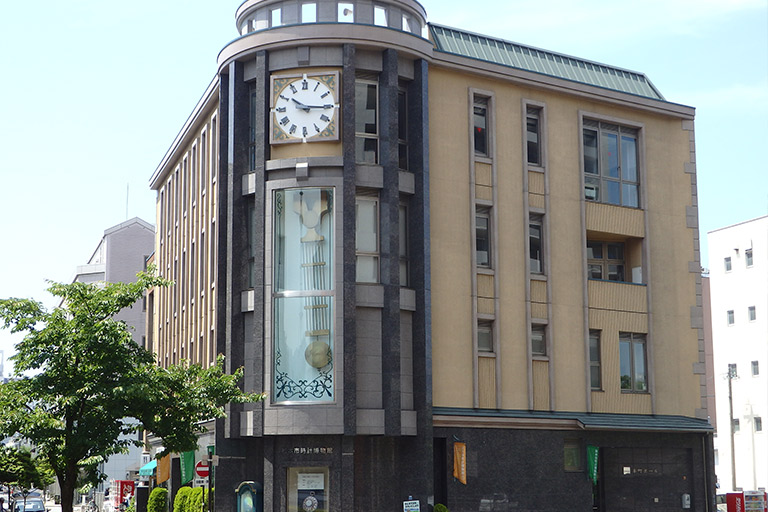
The "grandfather clock" by which the one by which they're highlights even in the showpiece is more than 2 m of height. The decoration is also wonderful, solid and dignified by the clock used in the 18th century United Kingdom. Less than 2 m calls a grandmother clock and is exhibited at the different location of the museum. The pendulum type clock called the Japanese maximum level is installed in an outer wall in a museum as a symbol, and it'll be found immediately from a street.
A total clock in the valuable Edo Period.

Production and a used unusual total clock are also exhibited in early years of Meiji era from the Edo Period on the 2nd floor. A turret clock of the middle of Edo period is also the one. Various old clocks are ticking away beyond the time the Western clock with the beautiful design, a large table clock and a pocket watch from a valuable total clock.
An old record player also exhibits former days from the edge a clock engineer was maintaining. A viewing meeting of SP record is being performed in the weekend holiday. Plain exhibition method and event possess about 600 old clocks contributed from prefecture outside focusing on Honda collection, and they're also a lot of museums.
This place
Supporter
There are also something new and a dear clock from something old, and you can enjoy yourself. A clock of an antique is also moving, and I admire management and treatment.
- Matsumoto city clock museum
-
- Nagano Matsumoto city central 1-21-15 MAP
- From JRMatsumoto station, about 10 minutes on foot
- 9:00-17:00 (16:30 last entry)
- Monday (in case of holiday, the next day) and December 29-January 3
- An adult of 300 yen (more than high school student) and a dwarf of 150 yen (below junior high school student)
- 0263-36-0969
- I don't have that.
3Matsumoto municipal archaeology museum
Earthenware of Jomon Era is appreciated imminently.

Material to the vicinity is exhibited in the Heian Period focusing on found Jomon Era in the Matsumoto plain area in a calm mountain village area as Nakayama area in Matsumoto city suburb. There is Nakayama Burial Mounds group, and a small-scale round tumulus equals, and this area is also the treasure house where burial goods are also unearthed much. An illustration map around the museum is also prepared, so to go around the pit dwelling where Burial Mounds sees how things are and is restored would also be fun.
There is design of showy arrest for earthenware of Jomon Era about 5000 years before now, and it's also interesting to see a change in the earthenware becoming Mr. arabesque to the Jomon Era latter period. Much of valuable artifacts is open display, so you can observe carefully imminently.
Ancient Experience, can, the menu is various.

There are also a earthenware puzzle into which dispersive earthenware is assembled as it used to be, a earthenware fragment which may be fingered and an obsidian in the exhibition room. There is also a mini ancient Experience section which patterns clay with Jomon, rubs nuts and kills, and it's popular with children, too. Experience which transfers an ancient bow and arrow and bow and arrow making, a lecture and Jomon ware making, a lecture and comma-shaped bead making, various events such as a lecture and a fire start lecture are held. An application is needed, so I'll confirm the event information beforehand.
This place
Supporter
The feature of this museum is involved with ancient earthenware , and a comma-shaped bead and earthenware are made with themselves, and Experience, can. The device a child can enjoy, too is nice.

- Matsumoto municipal archaeology museum
-
- Mt. Nagano Matsumoto city, 3738-1 MAP
- It's a car more than the JR south Matsumoto station, about 10 minutes
- 9:00-17:00 (16:30 last entry)
- 3-November Monday and 12-February Only Saturday . Sunday and a holiday are business and year-end and new year holidays.
- An adult of 200 yen (more than high school student) and dwarf Free (below junior high school student).
- 0263-86-4710
- Free
4Matsumoto folk craft museum
Of the folkcraft product with attractive simple beauty, variously.

The folk art athlete who represents Matsumoto city and the museum a reason and Taro Maruyama founded in 1962 (1962). The outward appearance of the building a storehouse of the wall painting style of the Japanese tradition "Namako Kabe" is characteristic. Exhibition always exhibits about 800 points from the inside of the domestic and abroad folkcraft product as much as more than about 6800 points Mr. Maruyama collected through a lifetime at inside of the building. The basket knitted by a bamboo and rattan, a wicker trunk (wicker trunk), a jar and a jar are exhibited including Traditional Pottery in Matsumoto city "Matsumoto chest". It's different from an artwork and an antique and there is simple beauty for the folkcraft product people used daily, and a heart is just seeing and calms down.
I also pay attention to the difference between the time and the design different depending on locality.

Produced furniture is domestic and abroad including Matsumoto city in inside of the building, and is exhibited. Though the appearance is simple, I also have the graceful atmosphere. Though a chair is the furniture to sit down even while the design and the shape are also various every time, its difference shows conspicuously, and there is an impression.
A colorful approach such as Koimari Mr. Maruyama gathered them preferably and display of pottery in a strait is a topic by the temporary exhibition held 4 times a year. There is also a museum shop where original products are handled in Property, and it's also recommended to gift election.

- Matsumoto folk craft museum
-
- Nagano prefecture Matsumoto city 1313-1, Satoyamabe MAP
- I get off a local bus "Utsukushigahara hot spring line" ride for about 15 minutes "Matsumoto folk craft museum" from JRMatsumoto station, about 3 minutes on foot
- 9:00-17:00 (16:30 last entry)
- Monday (It's absent from opening on the next day in case of a holiday.) and New Year's
- Adult (more than high school student) no charge below 310 yen and the junior high school student
- 0263-33-1569
5Sato of Matsumoto city history
The valuable building cluster which can get a feel for modern history in Shinshu

It's the "outdoors museum as much as" the length where 5 built valuable buildings are reconstructed in Matsumoto city suburb and exhibition is being preserved mainly from the Edo Period latter period to a Showa early stage. The "old Showa inauguration of new industrial enterprise spinning place" etc. used for a movie and photography of a drama, etc. is maintained beautifully including the "old Matsumoto area courthouse government office building" designated as national important cultural property in 2017, and it's preserved. When I'm in Property, you can get a feel for the modern pace of Matsumoto and culture as well as the strange aerial sense as if I have time-travelled to the past, can also be enjoyed.
The atmosphere of the trial room in at that time, realistically, sense

The photography is also possible in Property. "Old Matsumoto area courthouse government office" then, you can put on a replica of used canonicals and take a picture at a courthouse under the Meiji Constitution at a court. Besides a guide by a volunteer guide (no charge) is recommended. It's possible to be to know history in the building where exhibition is preserved politely one by one and feel history in Shinshu realistically more.
A made attachment can be bought at a traditional technique of original goods of "full winning the case" "I decide unfairly." and printed towels and Matsumoto at a museum shop.

- Sato of Matsumoto city history
-
- Nagano prefecture Matsumoto municipal college letter 2196-1, Shimadachi MAP
- From Matsumoto electric railroad Oniwa Station, about 15 minutes on foot
- 9:00-17:00 (16:00 last entry)
- Monday (It's absent from business on the next day in case of a holiday.) and New Year's
- Adult (more than high school student) no charge below 410 yen and the junior high school student
- 0263-47-4515
 A guide makes a reservation before an important matter. It's possible to correspond from 1 person.

Local Guide which took charge of this article
- Inagaki nomegumiMatsumoto, squid, girl
Hoshino Resorts KAI Matsumoto
Nagano and Asama hot spring
Modern Hot spring ryokan which pauses in Asama hot spring. It can be satisfied with the music by which the dish and the wine which enjoy Shinshu are the Matsumoto relation various and and.
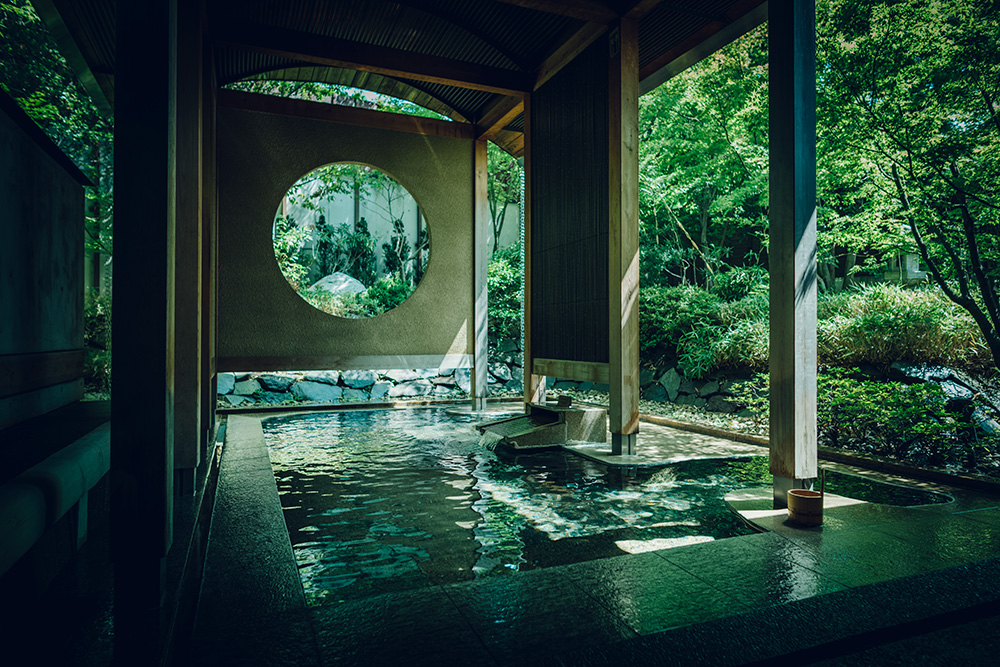
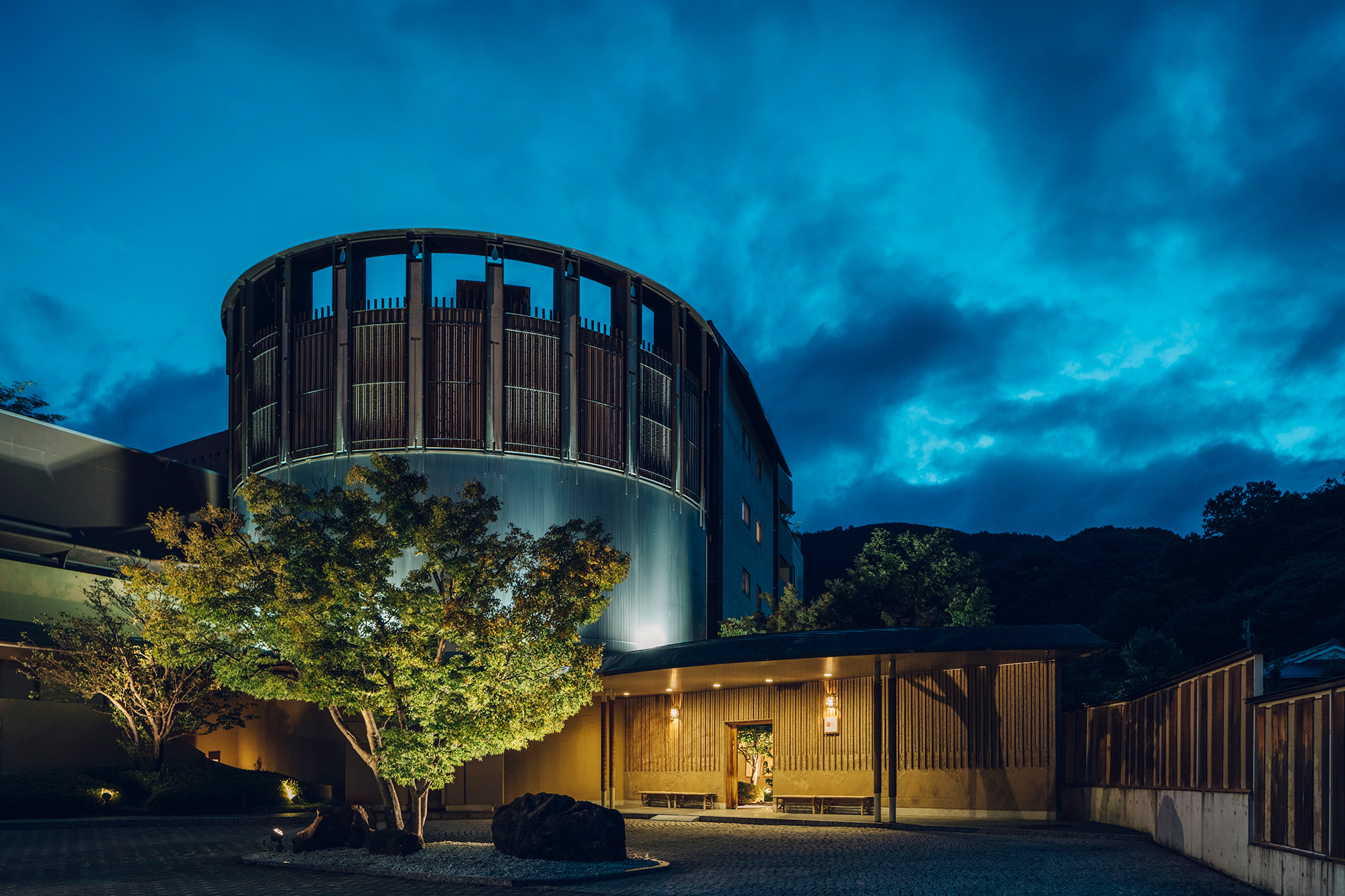
It's a taxi from Direction JRMatsumoto station, 15 minutes