





Who was "Miura Anjin," the English navigator who became a samurai? A trip to Ito to trace his footsteps
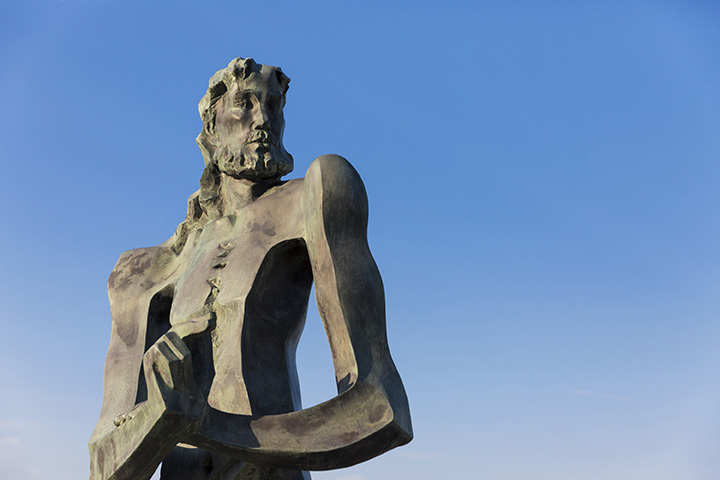
Are you familiar with the name Miura Anjin?
He was an English navigator who, during the Age of Discovery, set out from the Netherlands for the Orient and drifted ashore in Japan. His English name was William Adams. After being highly valued as a diplomatic advisor to Tokugawa Ieyasu, he is said to have built Japan's first Western-style sailing ship, which helped demonstrate the majesty of the Tokugawa shogunate.
It may not be widely known that this historic project of "building Japan's first Western-style sailing ship" actually took place in Ito, Izu.
Why not set out on a journey worthy of an adult, one with a narrative that allows you to reflect on his life, filled with romance and a pioneering spirit, while tracing Anjin's footsteps?
An English navigator who lived a tumultuous life. Who was Miura Anjin?
Crossed the vast ocean from the Netherlands and drifted to Japan on the Liefde
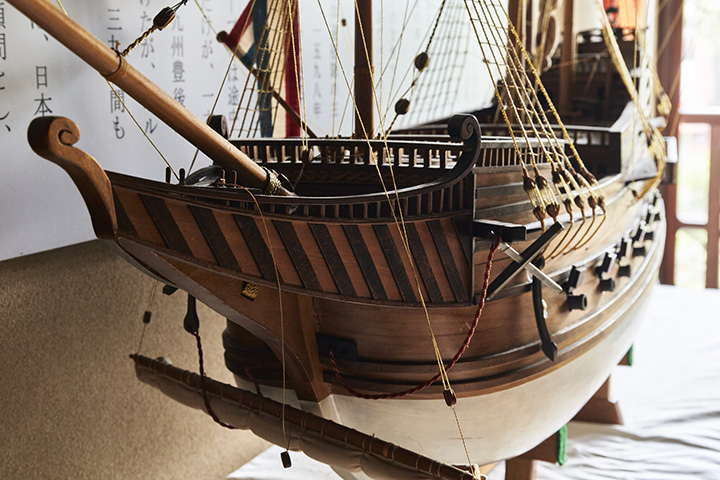
William Adams was born in Gillingham, in the east of England, in 1564 (the 7th year of Eiroku) and began working as an apprentice at a shipyard at the age of 12. Over the next 12 years, he studied shipbuilding, astronomy, and navigation, and also gained experience as a naval captain and in Arctic exploration. At the age of 34, he boarded a five-ship Dutch expedition to the Orient as chief navigator and set sail for the East.
The voyage was a series of hardships. With supplies difficult to obtain, a harsh winter spent near the Strait of Magellan, and attacks by indigenous people, the fleet was eventually reduced to just the Liefde, the ship Adams was on. Even so, to fulfill its duty as a trading vessel, the Liefde continued to set its course for Japan and finally sighted land. One year and ten months after departing from the Netherlands, and having lost its ability to sail, it drifted ashore in what is now Sashiu, Usuki City, Oita Prefecture.
The time was April 1600 (the 5th year of Keicho), just half a year before the Battle of Sekigahara, which would decide the fate of the nation.
Began construction of Western-style sailing ships in Ito under the orders of Ieyasu
Tokugawa Ieyasu summoned the shipwrecked Adams to Osaka Castle for an audience. Recognizing Adams' knowledge and fair character, Ieyasu provided him with a residence in Nihonbashi, Edo, after his victory at the Battle of Sekigahara. Ieyasu himself learned mathematics and geography from him, had his senior retainers instructed in gunnery, navigation, and astronomy, and also employed him as a key diplomatic advisor to the shogunate.
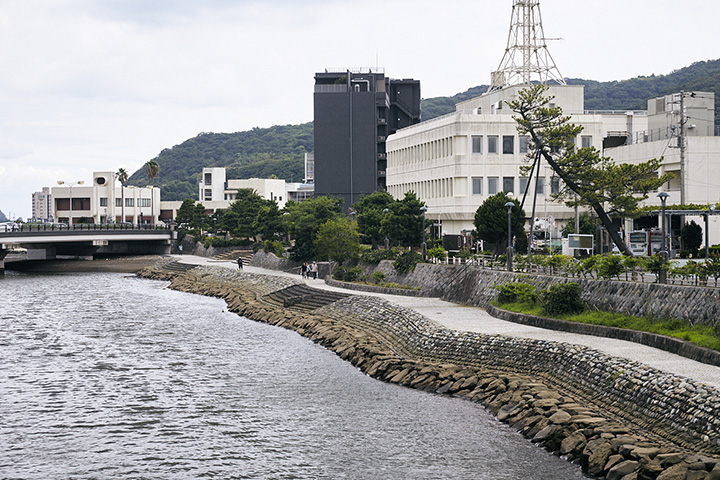
Sensing the necessity of maritime transport for the island nation of Japan, Ieyasu ordered Adams to build Japan's first Western-style sailing ship in 1604 (Keicho 9). Adams determined that Ito in Izu was the ideal location, citing reasons such as the presence of a river mouth leading to the sea, the proximity of the Amagi mountain range for timber, and the availability of skilled shipwrights, and began construction of the ship at the mouth of the Matsukawa River.
Shipbuilding using the "sand dock method" utilizing sandbars
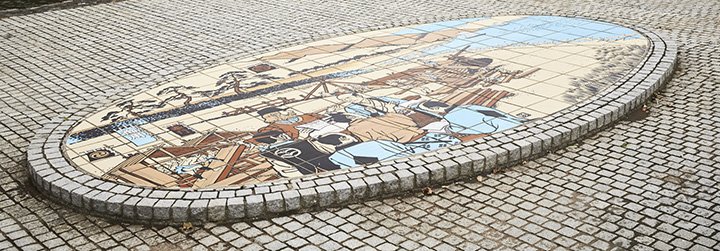
At the time, there was a thick sandbar at the mouth of the Matsukawa River in Ito, which Adams used to build the ship using a "sand dock method." This involved laying logs in a hole dug into the sandy beach, building the ship there, and then channeling dammed water into a waterway leading to the ship to launch it into the sea. It is said that Ieyasu test-rode the 80-ton sailing ship built at this time and was greatly pleased. The following year, a larger 120-ton ship capable of sailing the open ocean was also built in this location.
Became a "samurai" and contributed to overseas trade
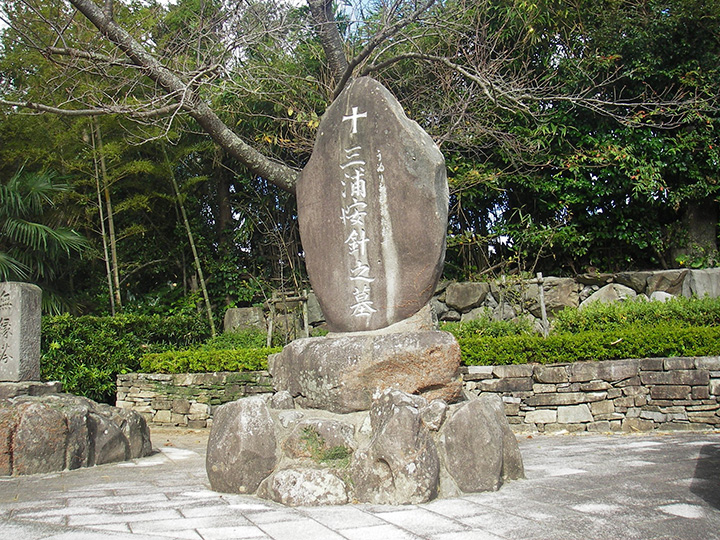
In 1605 (Keicho 10), in recognition of his achievements, Ieyasu granted Adams a fief of 250 koku in Hemi, Miura District (part of present-day Yokosuka City), along with two swords and a wakizashi, and bestowed upon him the name Miura Anjin. "Miura" was derived from his fief, and "Anjin" means pilot. Thus, William Adams became a "samurai," and he later married Oyuki, the daughter of an Edo merchant, with whom he had two children.
In addition to shipbuilding, he worked to promote the shogunate's foreign trade, including the establishment of Dutch and English trading houses in Hirado. He also traveled to the Ryukyu Islands, Siam (present-day Thailand), and China to engage in trade himself. In 1616 (Genna 2), Anjin returned from trading in Siam only to be saddened by the news of Ieyasu's death. He spent his later years in misfortune due to changing times, and passed away in Hirado, Nagasaki Prefecture, in 1620 (Genna 6).
The four cities connected by Anjin: Usuki City, Ito City, Yokosuka City, and Hirado City.
Arrived in Usuki City, Oita Prefecture, after a voyage of 1 year and 10 months
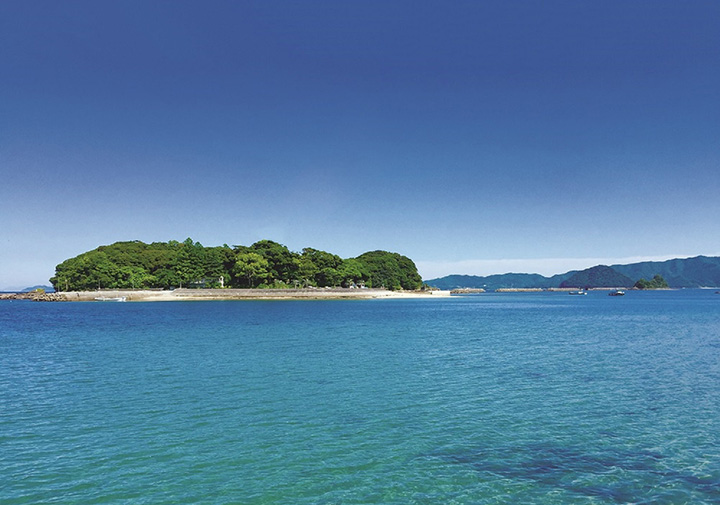
On April 19, 1600 (Keicho 5), the Liefde arrived at Kuroshima, located in Usuki Bay, Oita Prefecture, with only 24 survivors out of the original 110 crew members. It is a small island with a circumference of about 3 km, located about 300 meters from Sashiu Beach, and can be reached in about 5 minutes by ferry. A memorial park commemorating William Adams' landing has been established on the island.
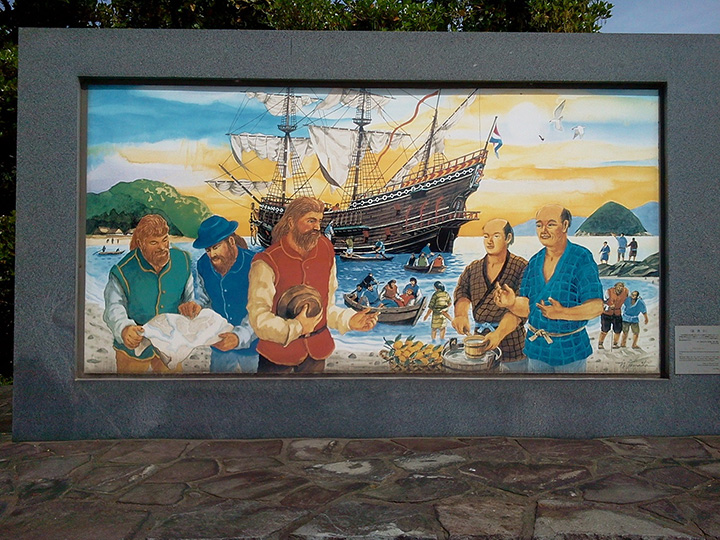
The monument "Encounter" (created by Nobuyuki Tamada), displayed within the landing memorial park, depicts the scene of the meeting between Adams and his crew and the people of Sashiu.
- Kuroshima, Usuki City, Oita Prefecture
-
 Kuroshima, Sashiu, Usuki City, Oita Prefecture MAP
Ito City, Shizuoka Prefecture, the place where Western-style sailing ships were built under the orders of Ieyasu
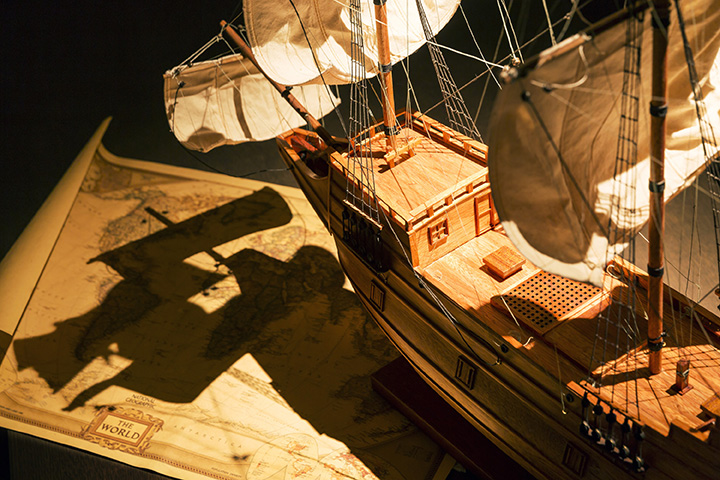
William Adams began building sailing ships in Ito after receiving orders from Ieyasu to construct Western-style sailing vessels. While flat-bottomed Japanese-style boats were originally built in this region, the ships Adams designed had rounded hulls. Although the blueprints and shipbuilding know-how were lost due to the subsequent period of national isolation and two major tsunamis, the shipbuilding efforts of that time are described in detail in the "Keicho Kenbunshu".
Furthermore, while Ito provided the ideal conditions for building Western-style sailing ships, it is speculated that Adams also took note of the abundant hot springs that gush forth here. He likely soaked in the highly effective hot springs to soothe his fatigue alongside the magistrate of the navy, Mukai Shogen Tadakatsu, and the shipwrights.
In Ito City, you can currently experience the footsteps of Adams at spots and facilities such as "Anjin Memorial Park," "Kawaguchi Park," and "Tokaikan"(please refer to the details of each spot and facility below).
Yokosuka City, Kanagawa Prefecture, where he held the territory of Hemmi granted by Ieyasu
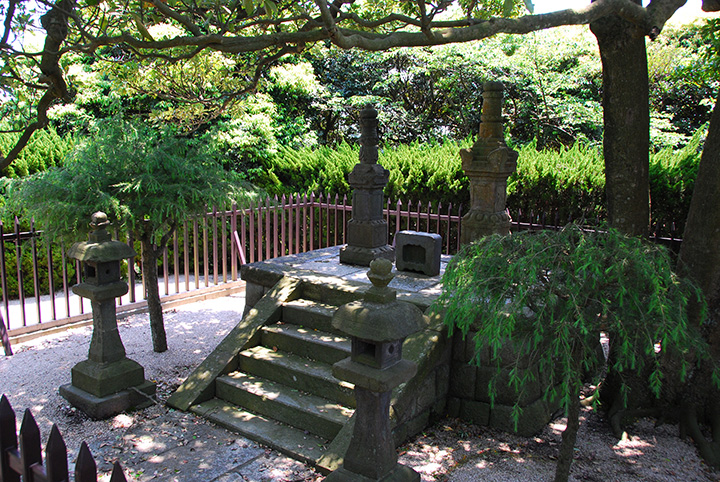
William Adams passed away in 1620 (Genna 6) in Hirado, Nagasaki Prefecture, and was buried in a foreign cemetery, but his son Joseph followed his father's will and erected a gravestone on this land, which was his father's fief. The area is now maintained as "Tsukayama Park" and is popular as a famous spot for cherry blossoms.
Next to Adams' gravestone stands his wife's gravestone; the site is designated as a National Historic Site and has been selected as one of the 100 Scenery of Yokosuka.
Additionally, Yokosuka City is a sister city to Medway (formerly Gillingham), England, the birthplace of Adams.
- Tsukayama Park, Yokosuka City, Kanagawa Prefecture
-
- Nishi-Hemmi-cho, Yamanaka-cho, Nagaura-cho, Yokosuka City, Kanagawa Prefecture MAP
Hirado City, Nagasaki Prefecture, where he worked to establish British and Dutch trading houses
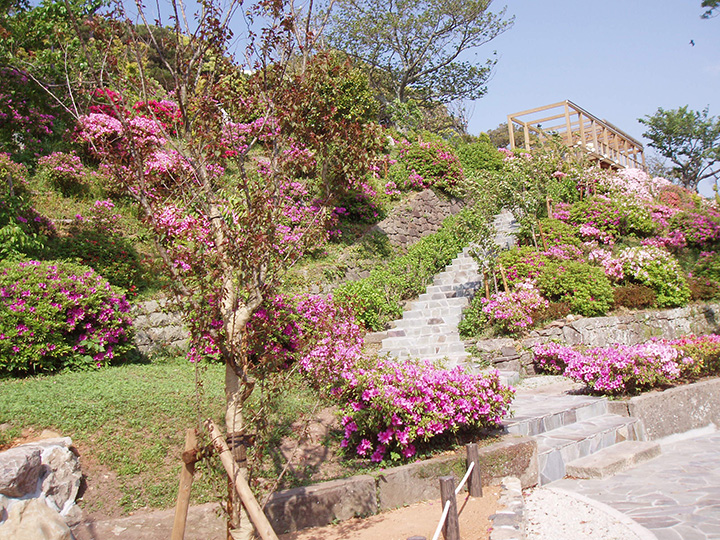
Anjin, who lobbied the Edo Shogunate for trade with the Netherlands and England and established a trading post in Hirado. After his final voyage to China, he fell ill upon returning to Hirado and ended his 56-year life there.
In 1954 (Showa 29), the Miura Anjin Grave was erected in Sakigata Park, located on a hill overlooking Hirado Port. In fact, before setting sail for the Orient, Anjin had married in England and left behind a wife and children in his home country. Therefore, in 1964 (Showa 39), on the 400th anniversary of Adams' birth, a small stone was brought from his English wife's grave as a symbol of her spirit and interred with him, creating a couple's grave.
- Sakigata Park, Hirado City, Nagasaki Prefecture
-
- 2529 Okubo-cho, Hirado City, Nagasaki Prefecture MAP
Three spots in Ito to visit in honor of Anjin
"Anjin Memorial Park" with the vast ocean in the background
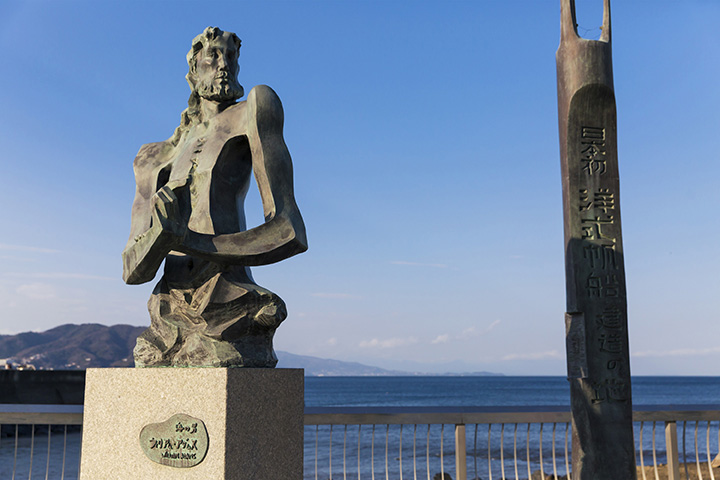
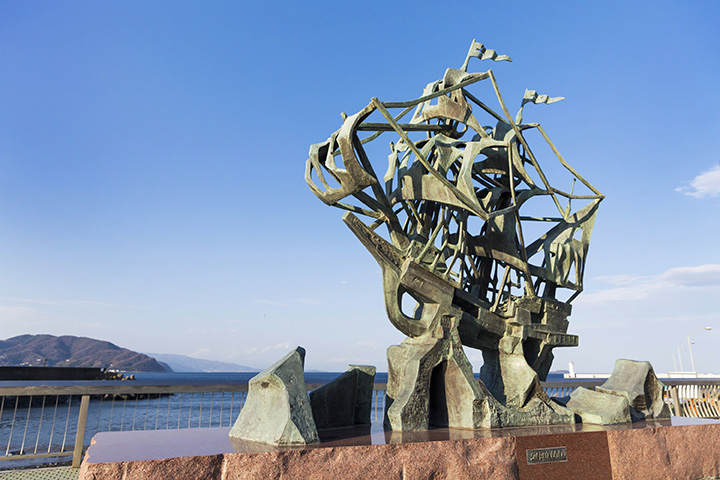
This memorial park was built on the site where Anjin constructed Japan's first Western-style sailing ship, located near Nagisa Bridge at the mouth of the Matsukawa River. To honor his achievements, there is a bust of Anjin, a monument to the 'San Buena Ventura' (meaning 'ship that brings happiness'), the second large sailing ship he built in Ito, and a commemorative pillar marking the 400th anniversary of Western-style shipbuilding. The bust was created by local sculptor Kenji Shigeoka.
On clear days, Hatsushima Island floats clearly in the vivid blue sea, and you can see people enjoying taking photos against the marine backdrop.
- Anjin Memorial Park
-
- 6 Nagisa-cho, Ito City, Shizuoka Prefecture MAP
 Approx. 15-minute walk from Ito Station on the Ito Line
 0557-36-0111 (Ito City Tourism Division)
 Paid (Nagisa Park Parking Lot, a short walk away)
Kawaguchi Park, a place to visit while strolling along the Matsukawa River
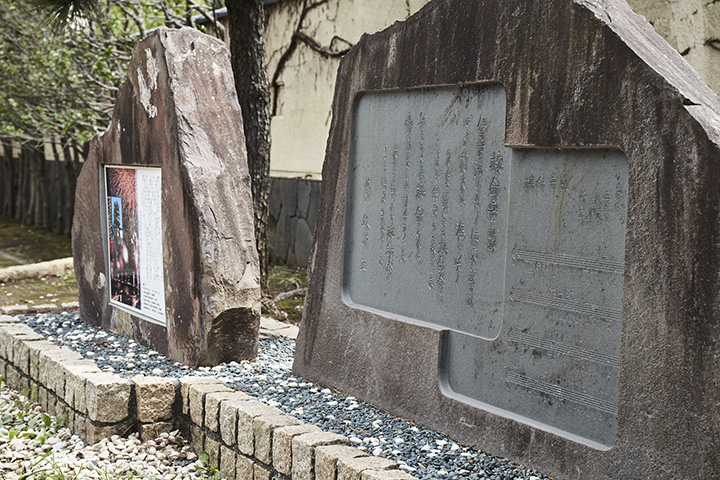
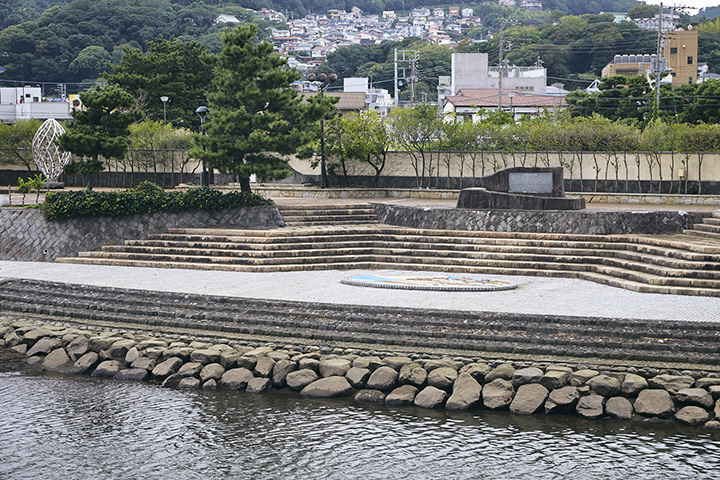
If you walk along the Matsukawa River from the coast, you will find the Matsukawa Promenade on the left bank. If you walk a little further along the promenade and look down at the riverside, you will see Kawaguchi Park. There, you can find the Anjin Monument, which records the achievements of Miura Anjin, the 'Anjin Ondo' song monument, and a few steps down, tile murals depicting the shipbuilding process.
- Kawaguchi Park
-
- 86-14 Nagisa-cho, Ito City, Shizuoka Prefecture MAP
- Approx. 13-minute walk from Ito Station on the Ito Line
- 0557-36-0111 (Ito City Tourism Division)
- Paid (Nagisa Park Parking Lot, 2-minute walk)
Learn about Anjin's achievements at the former long-established hot spring inn, Tokaikan
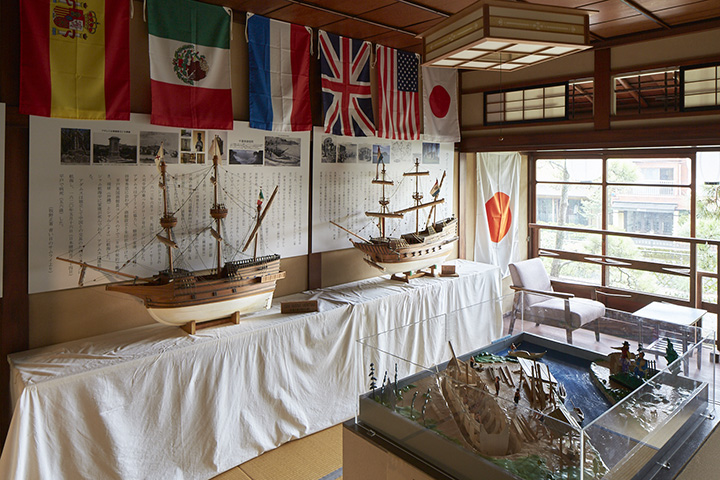
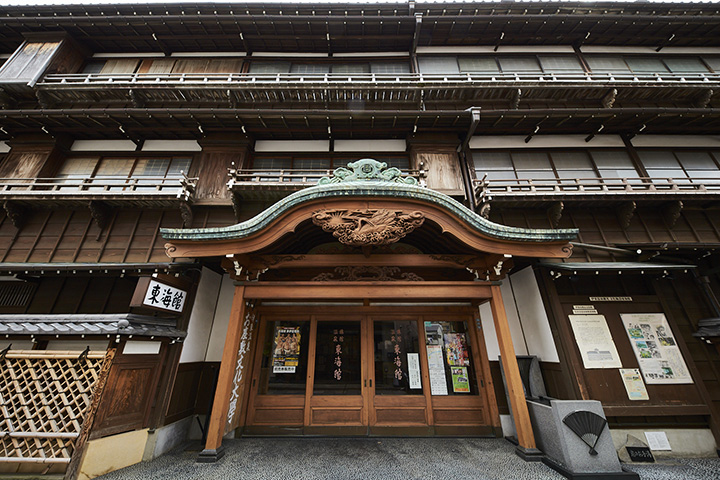
'Tokaikan' is a three-story wooden building that conveys the atmosphere of a hot spring inn from the late Taisho to early Showa periods. It is now designated as an Ito City Tangible Cultural Property, and the interior is open to the public.
The second floor of the wing known as the new building, completed in 1938 (Showa 13), uses former guest rooms as a space to convey the achievements of great figures associated with Ito City. There is also an exhibition room dedicated to Anjin, where you can enjoy seeing models of the Liefde and the San Buena Ventura up close.
- Tokaikan
-
- 12-10 Higashimatsubara, Ito City, Shizuoka Prefecture MAP
- Approx. 10-minute walk from Ito Station on the Ito Line
 Building tours 9:00–21:00 (Last admission 20:00)
 3rd Tuesday (open if a public holiday, closed the following day), January 1st
 Adults 200 yen, junior high school students and younger 100 yen
- 0557-36-2004
- None
Enter the world of 'KAI Anjin' that invites you to the Age of Discovery
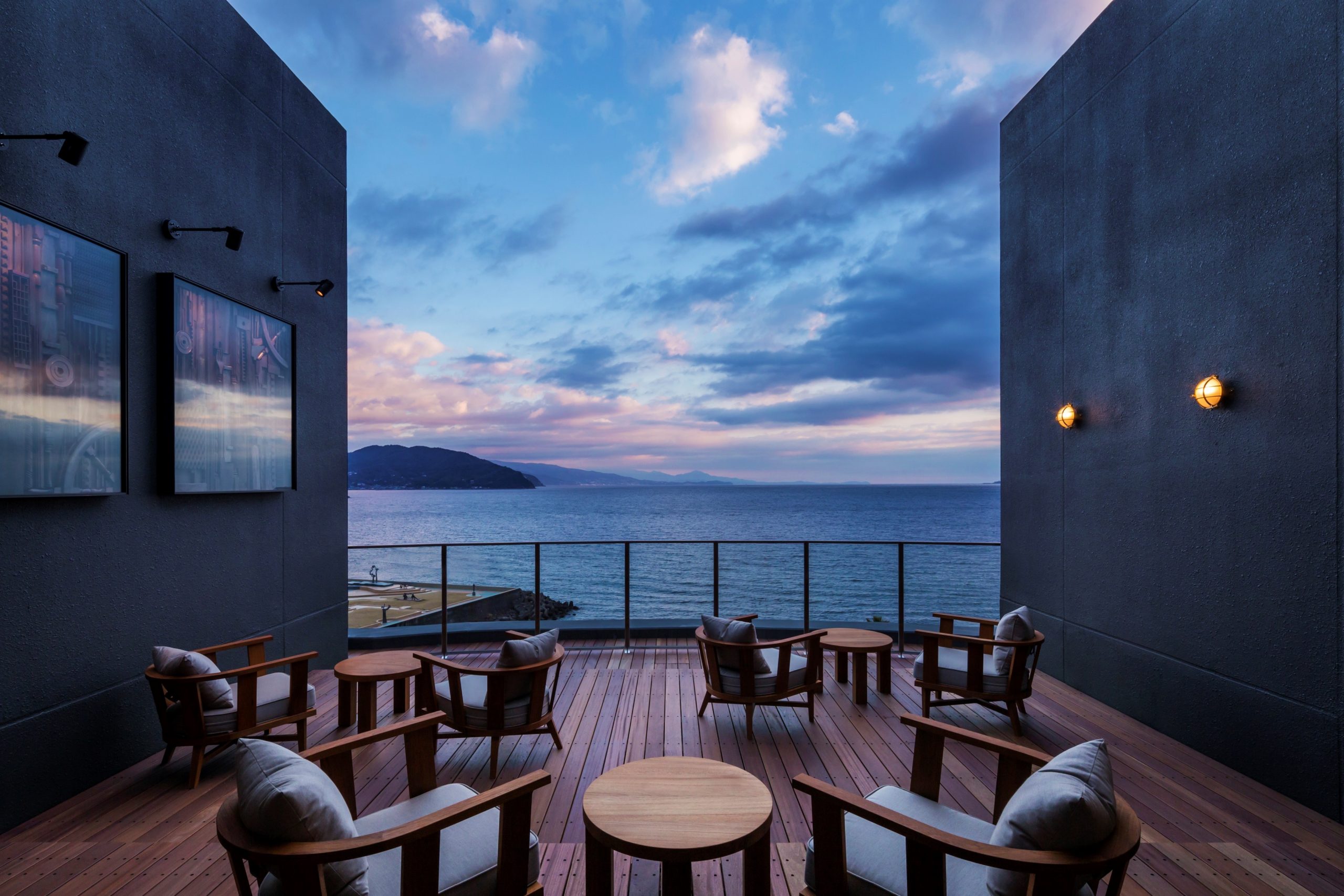
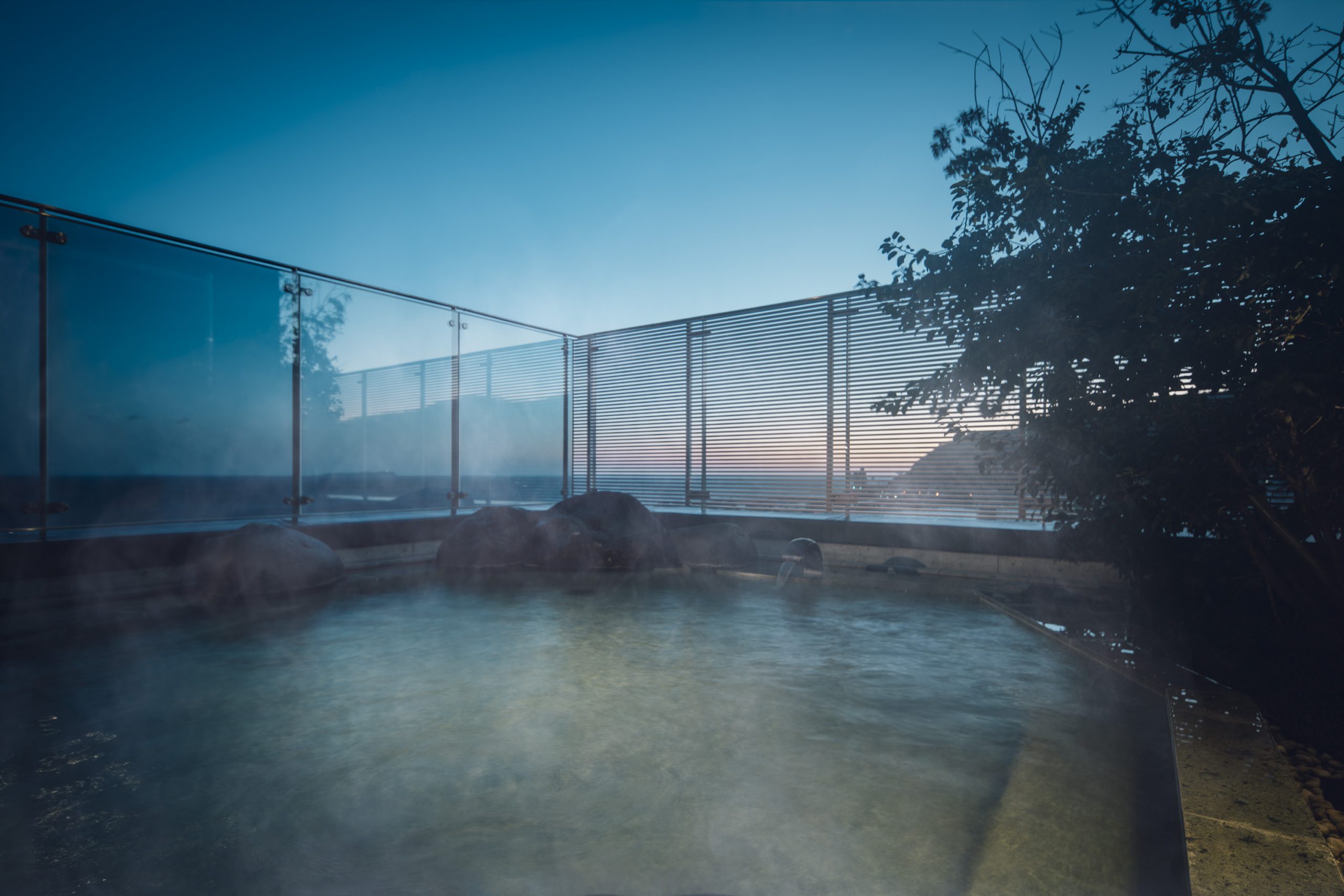
Ito, the stage for Japan's first Western-style sailing ship construction. Standing at the mouth of the Matsukawa River, where a sand dock once existed, a modern-looking inn catches the eye. This is "KAI Anjin." It is a hot spring inn with a narrative, inviting you to reflect on "Miura Anjin," a hero of the seas who greatly influenced Ieyasu's worldview. Immerse yourself in the hot spring that surely soothed the carpenters who took on the challenge of building Western-style sailing ships, and after your bath, head to the "San Buena Deck," where you can enjoy a drink while soaking in the atmosphere of a ship's deck. The view of the vast ocean, unchanged since those days, and the sea breeze will color a page of your journey.

- KAI Anjin
-
- 5-12 Nagisa-cho, Ito City, Shizuoka Prefecture MAP
- Approx. 5-minute drive from JR Ito Station
- KAI Reservation Center 050-3134-8092 (Reception hours: 9:30–18:00)
- Available
 Click here for reservations
KAI Anjin Reservation Site

The Michikusa Expert in charge of this article
-
Takako Kawaguchi
Editor & Writer. Became a freelancer after 10 years of editorial experience at a major publisher's women's magazine. Spends days writing articles for magazines and websites, focusing on themes such as travel, interior design, and miscellaneous goods. Her greatest joys are watching sports with her husband and going on hot spring trips.
 Michikusa
Expert
KAI Anjin
Ito Onsen, Shizuoka Prefecture
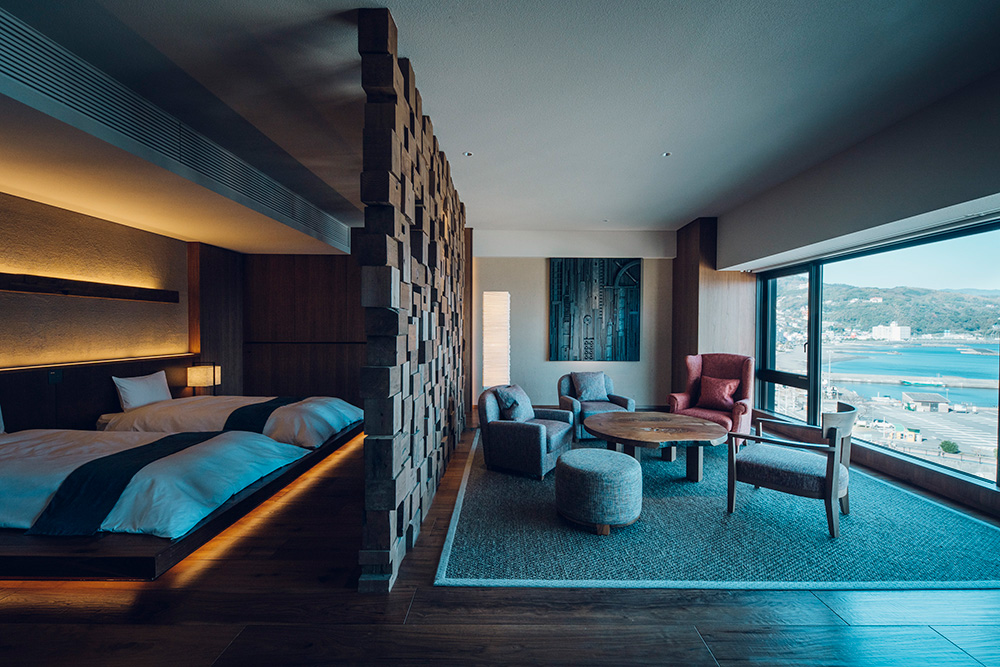
A modern hot spring inn featuring ocean-view guest rooms and art inspired by the sea and voyages

Access About a 15-minute walk or 5-minute taxi ride from JR Ito Station
- Accommodation rate example
- Per person per night From ¥17,000