





Check out Hirosaki's seasonal temperatures and clothing!


Hirosaki City is surrounded by Mount Iwaki to the northwest and the Shirakami and Owani mountain ranges to the south. On the plateaus and hills stretching across these mountain ranges, apple orchards—which account for 40 percent of Aomori Prefecture’s total apple production—spread out amidst the rich natural landscape.
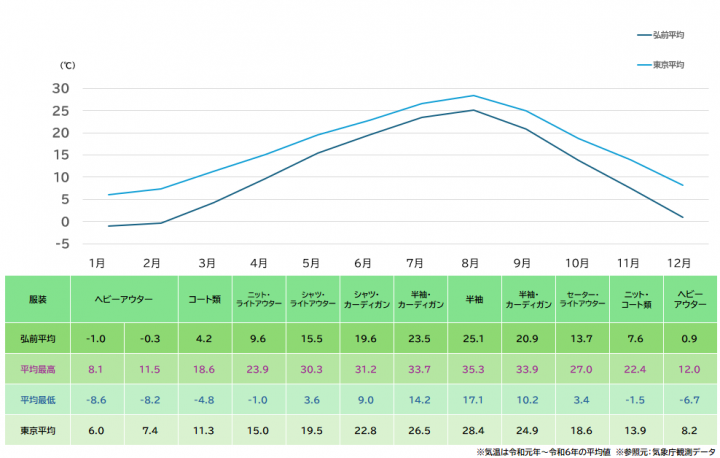
The annual average temperature is 11.6°C. The climate is cool throughout the year, 5.3°C lower than Tokyo’s annual average of 16.9°C.
The Tsugaru region, where Hirosaki City is located, is less affected by the rainy season; early summer tends to feature high temperatures and a string of dry days.In contrast, during winter, cold, humid air from the seasonal winds collides with the Ou Mountains, causing snowfall and resulting in the heavy snowfall characteristic of the Sea of Japan side. Even within Aomori Prefecture, the climate differs significantly from that of cities on the Pacific side, such as Towada and Hachinohe.
<Hirozen's Four Seasons Temperatures and Recommended Clothing
Spring (March to May) Temperatures and Clothing

In March, the landscape is still blanketed in snow. With an average temperature of 4.2°C and cold days continuing, it is essential to dress warmly. Highs can reach 18°C, and as the snow melts, trees and flowers begin to bud.
The average temperature in April is 9.6°C. From late April through early May, when the cherry blossoms are at their peak, the temperature range widens significantly, with highs around 25°C and lows around 3°C. We recommend bringing a coat with you when visiting famous cherry blossom spots such as Hirosaki Castle and Mount Iwaki.
Once mid-May passes and the apple blossoms reach full bloom, the average high temperature exceeds 30°C, marking the start of the warm season. During this time, light clothing such as a T-shirt is sufficient during the day, but it’s best to carry a windbreaker or knit cardigan just in case.
Summer (June-August) Temperatures and Clothing

June, when the effects of the rainy season are minimal and precipitation is among the lowest of the year, is perfect for outings. With an average temperature of 19.6°C, the weather is pleasant, making it the ideal season for strolling through the nostalgic streets of Hirosaki.
With average temperatures of 23.5°C in July and 25.1°C in August—about 3°C lower than in Tokyo—summers here are cool.
The “Hirosaki Neputa Festival,” designated as an Important Intangible Folk Cultural Property of Japan, is held in early August.Once the festival—surrounded by a whirlwind of excitement—comes to an end, midsummer is also drawing to a close. You can wear short sleeves or sleeveless tops only during the day. At night, temperatures drop below 20°C, bringing a refreshing coolness. Be sure to keep a cardigan or long-sleeved shirt on hand.
Autumn (September to November) Temperatures and Clothing

The average temperature in September is 20.9°C. The heat subsides, and by mid-month, mornings and evenings become a bit chilly. The autumn foliage on Mount Iwaki—known as “Tsugaru Fuji”—begins to change color at the summit, and by the end of the month, the entire mountain is dyed in the vibrant hues of autumn.The best time to see the fall foliage at Hirosaki Castle—where 1,000 maple trees and 2,600 cherry trees change color—is from mid-October to early November. You can also enjoy apple picking from October through late November.
During this season, daytime temperatures hover around 20°C, while nighttime temperatures are around 10°C, so it’s a good idea to bring a coat to wear over your shirt or sweater.
By mid-November, there are many days when the average temperature drops below 10°C, and the temperature drops significantly. The first snow falls, and signs of winter begin to appear.
Since the average temperature in November is similar to that of February in Tokyo, be sure to dress warmly.
Winter (December to February) Temperatures and Clothing

The average temperature in Hirosaki from December through February is –0.1°C. There are days when the low drops to –8°C, bringing a bitterly cold chill. It snows frequently, and snow accumulation gradually increases starting in December, exceeding 80 cm in January and February.In addition to a down coat and lined long pants, be sure to bring accessories such as a scarf, gloves, and hand warmers to stay thoroughly warm. Also, to prepare for the snow, snow boots are recommended for footwear.
Winter in Hirosaki is also full of attractions. The illuminations that light up Western-style buildings throughout the city, as well as the “Hirosaki Castle Snow Lantern Festival,” featuring approximately 200 snow sculptures and snow lanterns, have become a hallmark of winter in Hirosaki.In addition, many traditional Lunar New Year folk rituals unique to the Tsugaru region are held, such as the “Naked Pilgrimage to Oni Shrine to Offer Shimenawa.”

Local Guide who was in charge of this article
Hoshino Resorts KAI Tsugaru
Owani Onsen, Aomori Prefecture
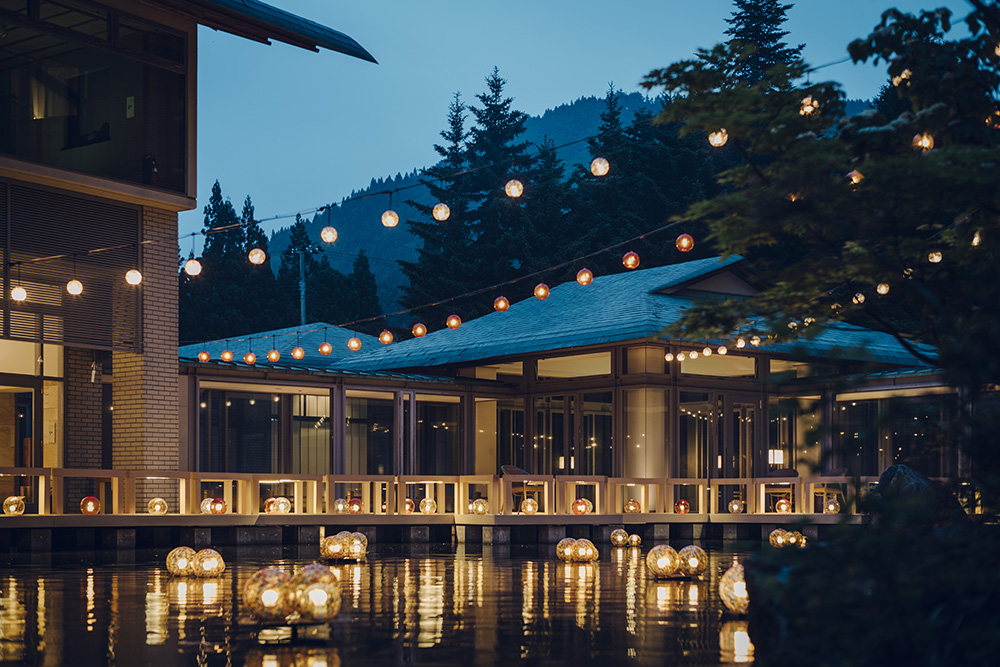
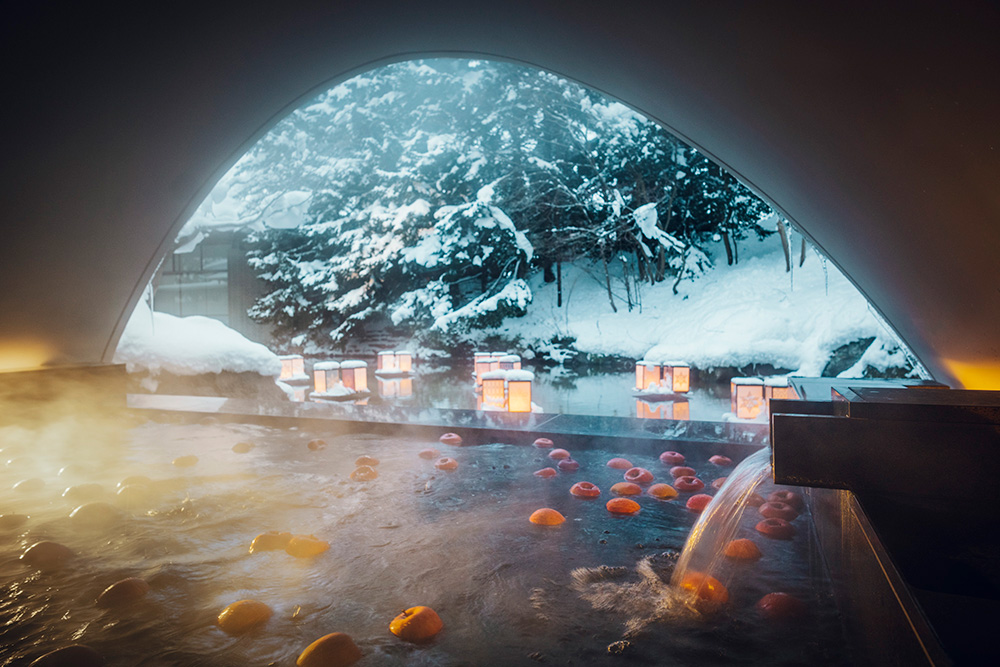
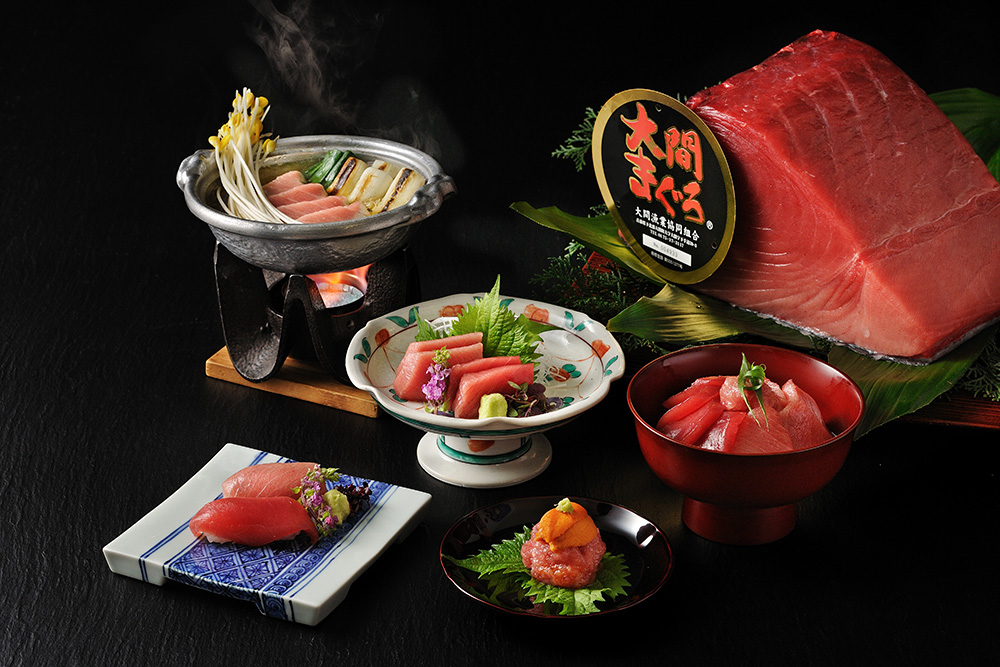
Hot spring ryokan to enjoy the culture of Tsugaru and its four seasons. You can also enjoy the water garden of Tsugaru's four seasons, which changes its expression with each season.

Access by bus 5 min. by shuttle bus from JR Owani Onsen Station
- Example of Accommodation Rates
- 1 person per night From ¥19,000