





Recommended Tourist Spots Where You Can Experience the History of Aizu-Wakamatsu

Aizu-Wakamatsu City is dotted with attractions that let you experience the local history and culture, ranging from sites associated with the Aizu Domain—such as “Tsurugajo Castle” and samurai residences—to “Nanokamachi Street,” lined with buildings from the Meiji and Taisho periods. Here are seven recommended spots for sightseeing.
<Recommended Sightseeing Spots in Aizu-Wakamatsu>
1Tsuruga Castle
Enjoy a historical stroll through a castle with beautiful “red roof tiles” from the Bakumatsu period

Tsuruga Castle, known for being the site of the Boshin War during the Bakumatsu period, is characterized by its reddish-purple roof tiles, known as “red tiles.” The interior of the castle keep features an extensive exhibition on the history of the Aizu Domain, and the observation deck at the very top offers a panoramic view of the city.If you ask for a volunteer guide at the tourist information center in the park, you can take a free, approximately 30-minute tour highlighting historical sites such as the ancient stone walls, the main keep, and the “Hashiri-nagaya” row of houses leading to the Kurogane Gate.Additionally, “Gojōin” (castle stamps) are available for visitors who enjoy touring castles across the country.
Visit a tea room associated with Shōan, the son of Sen no Rikyū

Located within Tsurugajo Park is “Rinkaku,” a tea room associated with the Sen family. In Tenshō 19 (1591), Sen no Rikyū incurred the wrath of Toyotomi Hideyoshi and was sentenced to death.Regretting that Rikyū’s school of tea ceremony might be lost as a result, the then-lord of Aizu Castle, Ujisato Gamō, sheltered Rikyū’s son, Shōan, in Aizu and, together with Tokugawa Ieyasu, petitioned Hideyoshi to revive the Sen family.It is said that this “Rinkaku” was built at that time.
Later, Shōan was pardoned and returned to Kyoto, where he revived the Sen family tradition, which has been passed down to the present-day tea ceremony.
After the Boshin War, it was relocated to the castle town and preserved there, but in the Heisei era, it was moved back to and restored at its original location within Tsuruga Castle.
At the Rinkaku tea room, you can enjoy matcha and sweets while taking in the charm of the changing seasons.
- Tsuruga Castle
-
 1-1 Ote-machi, Aizuwakamatsu City, Fukushima Prefecture MAP
 From JR Aizu-Wakamatsu Station, take the Aizu Bus “Haikara-san” downtown loop bus for about 20 minutes; get off at “Tsurugajo Entrance” and walk for about 2 minutes
 8:30 AM–5:00 PM (Last admission at 4:30 PM)
 No holidays
 Castle Keep Admission: Adults 410 yen (520 yen for a combined ticket including the Rinkaku Tea Room), Children 150 yen, Tea Ceremony 600 yen per session (includes sweets)
 0242-27-4005 (Tsurugajo Management Office)
 Admission charged
2Aizu Samurai Residences
Tour the residence of a senior retainer of the Aizu Domain and learn about samurai life

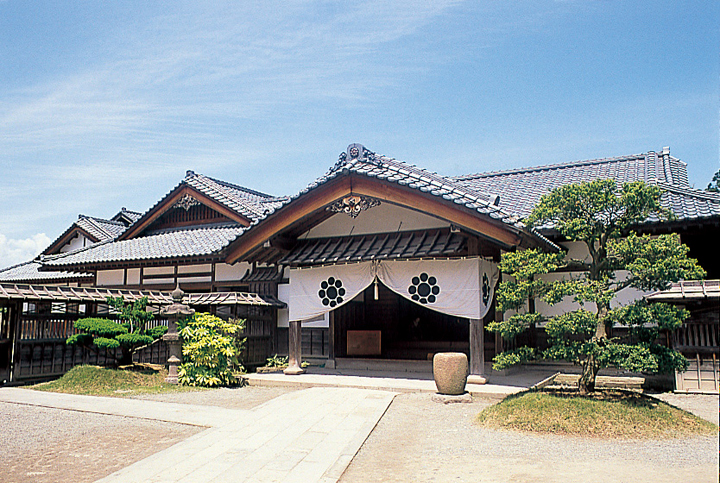
This open-air museum features a cluster of historic buildings, including the “Kero Yashiki” (Restored Residence of the Senior Councilor), a reconstruction of the residence of Saigo Tanomo—a senior councilor of the Aizu Domain during the Bakumatsu period—and the “Old Nakahata Jinya” (former magistrate’s office).Boasting a vast 2,400 tsubo grounds, the Senior Advisor’s Residence features 38 rooms. Visitors can enter and explore spaces such as the “Onari-no-ma” (a room used only when the feudal lord or high-ranking samurai visited), as well as guest rooms, tea rooms, dressing rooms, and maids’ quarters.The long corridors, surprisingly spacious kitchen, and luxurious furnishings give visitors a sense of the dignified lifestyle enjoyed by the senior retainers of that era.
The museum also features extensive exhibits on rice polishing and traditional crafts

Next to the senior retainer’s residence stands a rice-milling facility that was relocated here; it was in use from the late Edo period through the mid-Showa era. Capable of milling approximately 1,000 kg of brown rice per day, it was once one of the largest facilities of its kind in the Tohoku region.You’ll be amazed by the rhythmic motion of the wooden rods, which rise in sequence using only water power to drive the 16 stone mills.
In addition, the “Aizu History Museum” on the grounds hosts special exhibitions where visitors can enjoy learning about Aizu’s history and the skills of its artisans. Furthermore, the site features areas for making Akabeko figurines and glass cups, woodcarving, and kyudo (archery) experiences, as well as a Dining Area and a shop stocked with local crafts and food products.
- Aizu Samurai Residences
-
- 1 Inai, Ishiyama, Higashiyama-cho, Aizuwakamatsu City, Fukushima Prefecture MAP
 Approx. 7 minutes by car from JR Aizu-Wakamatsu Station
- Take the sightseeing bus from JR Aizu-Wakamatsu Station; get off at “Aizu Bukeyashiki-mae” and it’s just a short walk from there
- April–November: 8:30 AM–5:00 PM; December–March: 9:00 AM–4:30 PM
- Open daily *Closed on select days during winter
- Experience Fee: Red Cow Painting 1,250 yen; Standing Little Monk Painting 1,250 yen; Glass Engraving 1,100 yen
Admission: Adults 1,000 yen; Middle and High School Students 600 yen; Elementary School Students 500 yen - 0242-28-2525
- Free of charge
3Mt. Iimori
A sacred mountain that conveys the tragedy of the Bakumatsu era to this day

The “Byakkotai” was a unit of 16- to 17-year-old boys formed in the Aizu Domain during the Bakumatsu period. Mt. Iimori, located in the northeastern part of Aizu-Wakamatsu City, is famous as the site where members of the Byakkotai committed ritual suicide during the Boshin War.In a plaza halfway up the mountain stand the gravestones of the 19 members of the Byakkotai, and even today, many people from all over Japan visit to offer flowers and incense. These were young boys who took their own lives at the tender age of 16 or 17. Their tragedy continues to move the hearts of many people to this day.
Find solace among the many small shrines and the gentle murmur of the stream

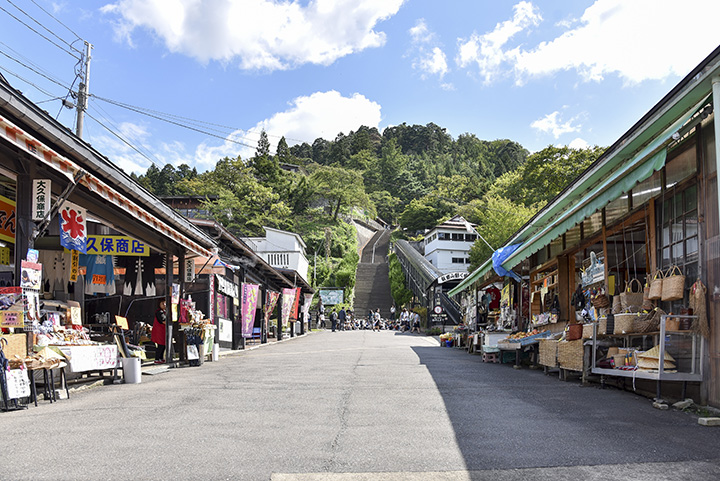
There are 183 steps leading up from the foot of the mountain—lined with souvenir shops—to the clearing where the Byakkotai’s gravestones stand, but thanks to an electric ramp known as the “slope conveyor,” the climb is easy.
For the descent, we recommend a route that passes by “Aizu Sazaedo,” “Ugajin-do,” and “Itsukushima Shrine.” The lush greenery of the mountains is beautiful, and the soothing murmur of the stream flowing nearby is truly relaxing.Behind Itsukushima Shrine lies the “Tonoguchi Seki Cave,” and historical records indicate that the Byakkotai passed through this cave.
- Mt. Iimori
-
- Hachiman Benten-dai, Ichimino-cho, Aizuwakamatsu City, Fukushima Prefecture MAP
- About an 8-minute drive from JR Aizu-Wakamatsu Station
- Take the sightseeing bus from JR Aizuwakamatsu Station; get off at “Iimori-yama-shita” and it’s just a short walk from there
- Free admission (until sunset)
Ski Lift: March 21–November 20, 8:00 AM–5:00 PM; November 21–March 20, 9:00 AM–4:00 PM *Operations may be suspended due to heavy snowfall - No holidays
- Free admission
Ski conveyor: Adults 250 yen, Elementary school students 150 yen - 0242-23-8000 (Aizu-Wakamatsu Tourist Bureau)
- Free municipal parking available for tourists
4Aizu Sazaedo
A Kannon Hall with a unique structure, designated as an Important Cultural Property of Japan

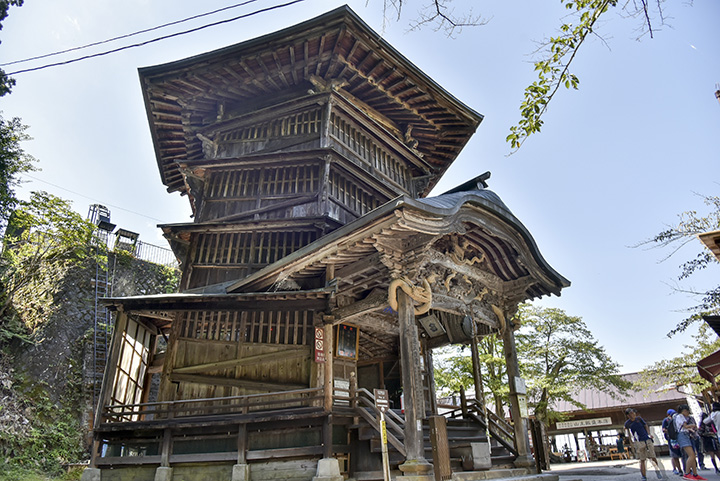
A hexagonal, three-story Kannon Hall located midway up Mt. Iimori.Built in 1796 (Kansei 8) during the mid-Edo period, it has been designated as an Important Cultural Property of Japan. Upon entering the hall, a spiral ramp extends clockwise, allowing visitors to ascend to the third level while viewing the plaques depicting the “Twenty-Four Filial Piety Stories of the Imperial Court” (a moral textbook of the Aizu Domain) displayed on the walls.Upon reaching the top, a downward ramp extends in a counterclockwise direction, ensuring that ascending and descending visitors do not cross paths. A structure with two ramps stacked one above the other in this manner is said to be rare even on a global scale.
A distinctive space where you can sense the sentiments of people from long ago
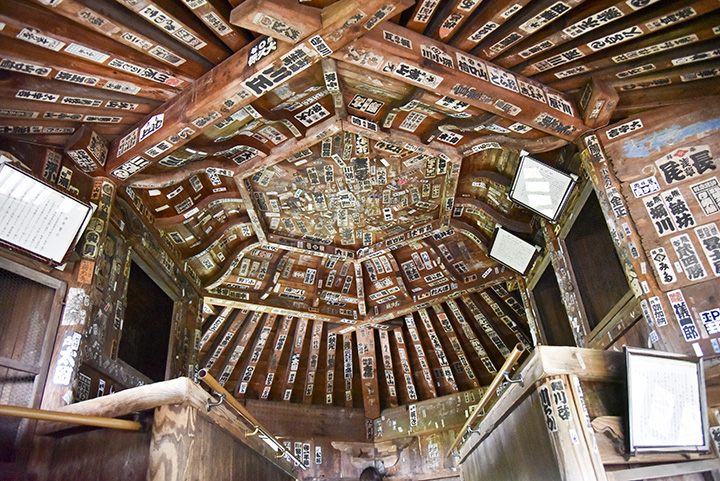
During the Edo period, statues of the Thirty-Three Kannon of the Western Regions were enshrined inside the building, and it gained popularity as a pilgrimage hall where visitors could view all the Kannon statues simply by ascending and descending the 16-meter-tall hall.Everywhere on the pillars and walls inside the hall, “senja-fuda” (small wooden plaques) inscribed with the names of worshippers are affixed, allowing visitors to sense not only the building’s history but also the depth of faith held by the people of that era.
Although the Kannon statues have not been displayed since the Meiji period, the building’s unique structure and the beauty of its intricate details continue to attract many visitors to this day.
- Aizu Sazaedo
-
- Hachiman Iimoriyama, Ichimi-cho, Aizuwakamatsu City, Fukushima Prefecture MAP
- About an 8-minute drive from JR Aizu-Wakamatsu Station
- Take the sightseeing bus from JR Aizu-Wakamatsu Station, get off at “Iimoriyama-shita,” and walk about 5 minutes
- April–November: 8:15 a.m.–sunset; December–March: 9:00 a.m.–4:00 p.m.
- No holidays
- Adults: 400 yen; High school students: 300 yen; Elementary and junior high school students: 200 yen
- 0242-22-3163 (Yamashu Iimori Main Store)
- Admission charged
5Aizu Domain School, Nisshinkan
An educational institution that fostered both academic and martial arts excellence, which produced the Byakkotai

A restored version of the Aizu Domain’s domain school, located on Mount Takatsuka on the outskirts of Aizu-Wakamatsu City.To become samurai skilled in both the arts and martial arts, boys from the Aizu Domain attended the domain school, Nisshinkan, upon turning 10, where they studied reading, writing, etiquette, and martial arts. It was one of the largest domain schools in the country, boasting a campus area of 8,000 tsubo and a student body of 1,000.Furthermore, paths for further academic study were available to top-performing students, such as admission to universities or study tours to Edo or other domains. The classroom exhibits recreate scenes of many students—including the boys who would later join the Byakkotai—diligently studying subjects such as calligraphy, Confucianism, arithmetic, and astronomy.
A wide range of experience activities, including kyudo (archery) and zazen (meditation)
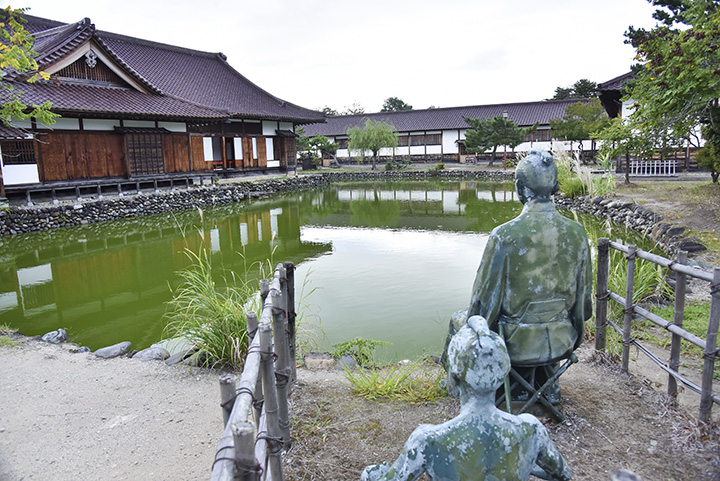
Another distinctive feature is the abundance of properties for martial arts training. The vast grounds included practice areas for kyudo (archery), swordsmanship, rifles, and cannons, as well as a wooden horse for horseback riding practice. Furthermore, the “Mizuren Suiba-ike” (Water Training and Horse Pond), where students practiced swimming while leading horses and wearing armor, is said to have been Japan’s first swimming pool at an educational institution.
On the property, visitors can paint white tiger swords (wooden swords), “akabeko” (red cows), and “koboshi” (self-righting dolls), as well as experience kyudo (archery), zazen (meditation), and the tea ceremony. (Reservations are required for zazen and the tea ceremony for groups of 10 or more.)
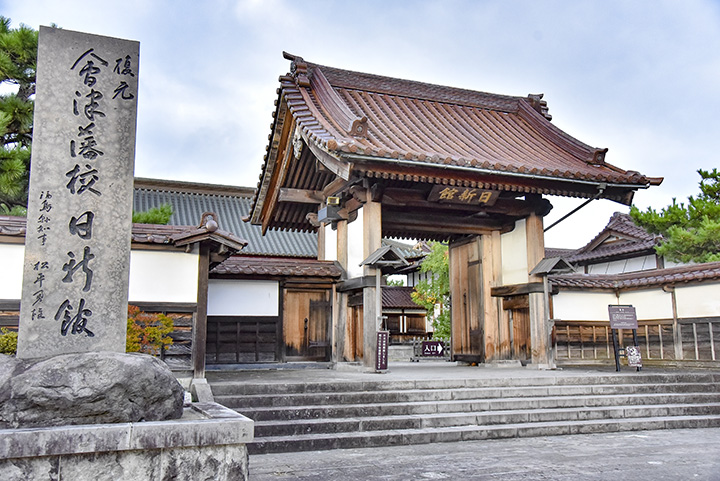
- Aizu Domain School: Nisshinkan
-
- 10 Takatsukayama, Minami-Takano, Kawahigashi-cho, Aizu-Wakamatsu City, Fukushima Prefecture MAP
- Approx. 5-minute drive from JR Hirota Station
- Take the bus from JR Aizu-Wakamatsu Station; get off at “Aizu Han-ko Nisshinkan” and it’s just a short walk from there
- 9:00 AM–5:00 PM (Last admission at 4:00 PM)
- No holidays
- Admission: Adults 1,800 yen; Middle and High School Students 900 yen; Elementary School Students 800 yen
Experience Fees: Akabeko painting 1,800 yen; Byakko sword painting 1,500 yen; Okiagari Koboshi painting 700 yen; others - 0242-75-2525
- Free of charge
6Oyakuen
Admire the garden cherished by successive lords of the Aizu Domain
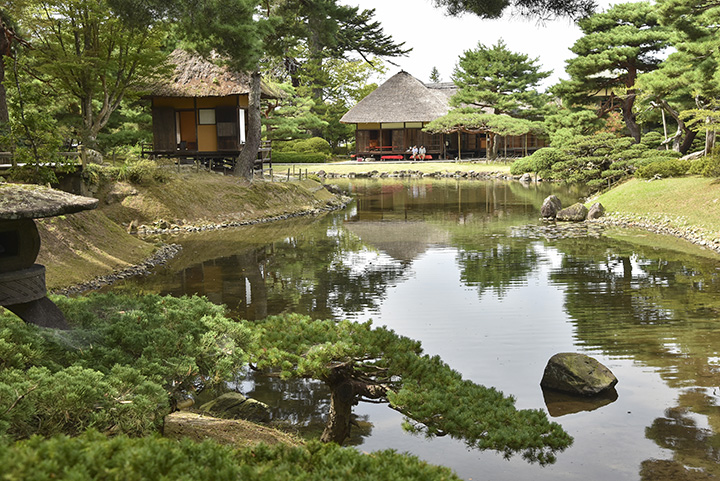
During the Muromachi period, a sacred spring gushed forth here, prompting the lord of the Aizu domain to build a villa on the site, which was used as a retreat.The current buildings were constructed during the Edo period, and the strolling garden has been designated a National Scenic Spot. In the main building, “Ochaya Goten”—notable for its thatched roof—you can enjoy matcha and traditional Japanese sweets while gazing out at the beautiful garden.Additionally, small waterfalls and the “Rakujutei” hermitage are arranged around the pond, allowing visitors to enjoy a variety of scenery as they walk the full circuit. At the far end of the garden, all 15 species of maple trees native to Fukushima Prefecture are gathered, making for a spectacular display of autumn foliage.
The medicinal herb garden, filled with a variety of plants, is another highlight
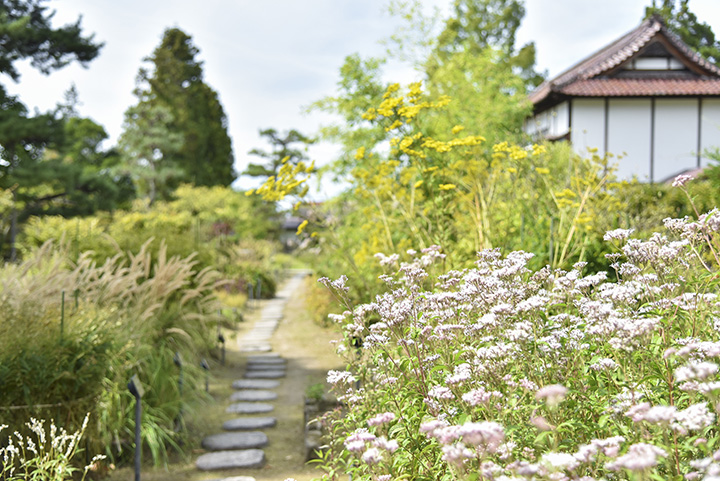
The name “Oyakuen” (Medicinal Garden) originates from the fact that Hoshina Masatsune, the second lord of the Aizu Matsudaira clan, established a medicinal herb garden on the premises to protect his subjects from epidemics.The third feudal lord, Matsudaira Masakata, planted Korean ginseng here and widely encouraged its cultivation among the common people. This marked the beginning of “Aizu Otane Ginseng,” a specialty of the Aizu region.Even today, there is a “Medicinal Plant Specimen Garden” next to the garden, where approximately 400 varieties of medicinal herbs and trees are planted.In addition to “Aizu Otane Ginseng,” visitors can see many flowering plants, including a rose named after Her Imperial Highness Princess Setsuko of Chichibu (Princess Chichibu), as well as peonies, tree peonies, lilies, and lotus flowers.
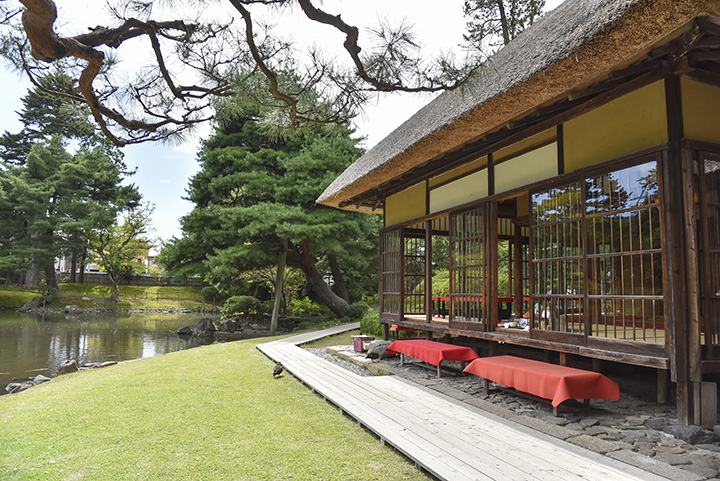
- Oyaku-en
-
- 8-1 Hanaharu-cho, Aizuwakamatsu City, Fukushima Prefecture MAP
- Approx. 10 minutes by car from JR Aizu-Wakamatsu Station
- Take the sightseeing bus from JR Aizu-Wakamatsu Station; get off at “Oyakuen” or “Chamber of Commerce and Industry” and it’s just a short walk from there
- 8:30 AM–5:00 PM (Last admission at 4:30 PM)
- No holidays
- Admission: Adults 330 yen, High School Students 270 yen, Elementary and Junior High School Students 160 yen
Special Combo Ticket (Admission + Matcha Tea): Adults 800 yen, High School Students 750 yen, Elementary and Junior High School Students 600 yen - 0242-27-2472
- Free of charge
7Nanokamachi Street
Enjoy shopping for souvenirs and dining along the retro-style streets
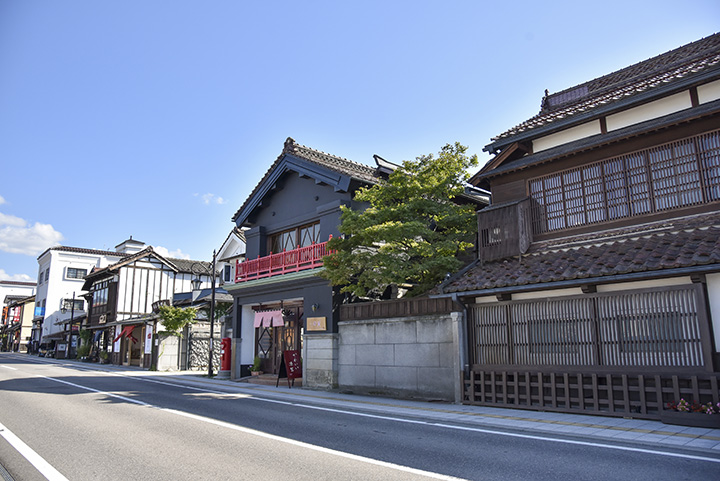
A nostalgic street stretching from Nanokamachi Station to Noguchi Hideyo Seishun-dori. It’s gaining popularity for its atmosphere of Taisho-era romance, featuring many shops and Restaurants housed in old Western-style buildings and traditional Japanese architecture. The area has flourished since ancient times as a key transportation hub where the three major roads to Nikko, Echigo, and Yonezawa intersect; the name “Nanokamachi” originates from the fact that a market was held here on the 7th of every month.
You can enjoy the unique atmosphere here thanks to many long-established shops housed in historic buildings, such as “Shibukawa Monya,” where you can sample traditional Aizu dishes like the hearty soup “Kozuyu” and herring marinated in sansho pepper; the miso warehouse “Mitsutaya”; and the sake brewery “Tsurunoe Shuzo.”
You’ll find plenty of Aizu-style souvenirs and crafts
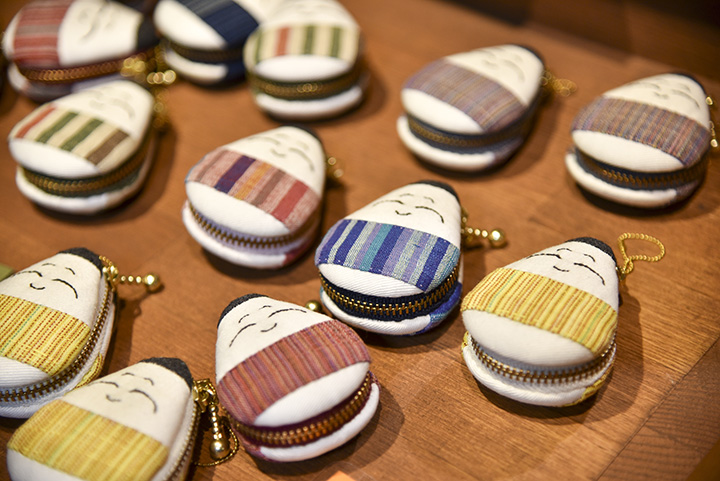
Another distinctive feature is the abundance of shops selling traditional Aizu crafts. At Aizu lacquerware shops—including the elegant Western-style “Shirakiya Lacquerware Shop”—you’ll find a wide variety of designs, ranging from traditionally decorated tableware to colorful dessert cups.There are also several select shops offering small fabric items made from rustic Aizu cotton, as well as painted candles, pottery, and miscellaneous goods featuring motifs such as “okiarikoboshi” (self-righting dolls) and “akabeko” (red cows)—making it a delight to hunt for items unique to Aizu-Wakamatsu.You can also enjoy a variety of dining options, ranging from Japanese restaurants serving local cuisine to Italian restaurants, cafes, and sweet shops.
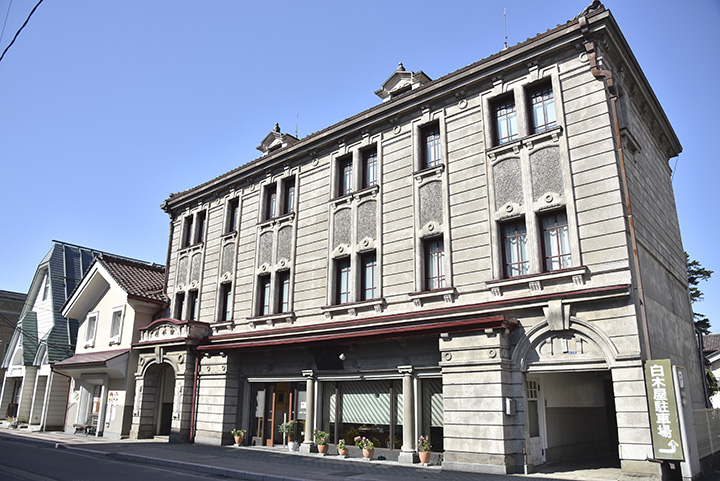
- Nanokamachi Street
-
- Nanokamachi, Aizuwakamatsu City, Fukushima Prefecture MAP
- Just a short walk from JR Nanokamachi Station
- Take the sightseeing bus from JR Aizu-Wakamatsu Station; get off at “Nanokamachi Chuo,” “Nanokamachi Shirakiya-mae,” or “Nanokamachi Ekimae,” then it’s just a short walk
- Varies by location
- Varies by location
- 0242-23-9611 (Nanokamachi Tourist Information Center)
- Admission charged
MAP
- <Recommended Sightseeing Spots in Aizu-Wakamatsu>
- Nearby Hoshino Resorts Property

Local Guide who was in charge of this article

- Saori Kuji An Active Woman with a Deep Love for Aizu
Bandaisan Onsen Hotel by Hoshino Resorts
Yama District, Fukushima Prefecture
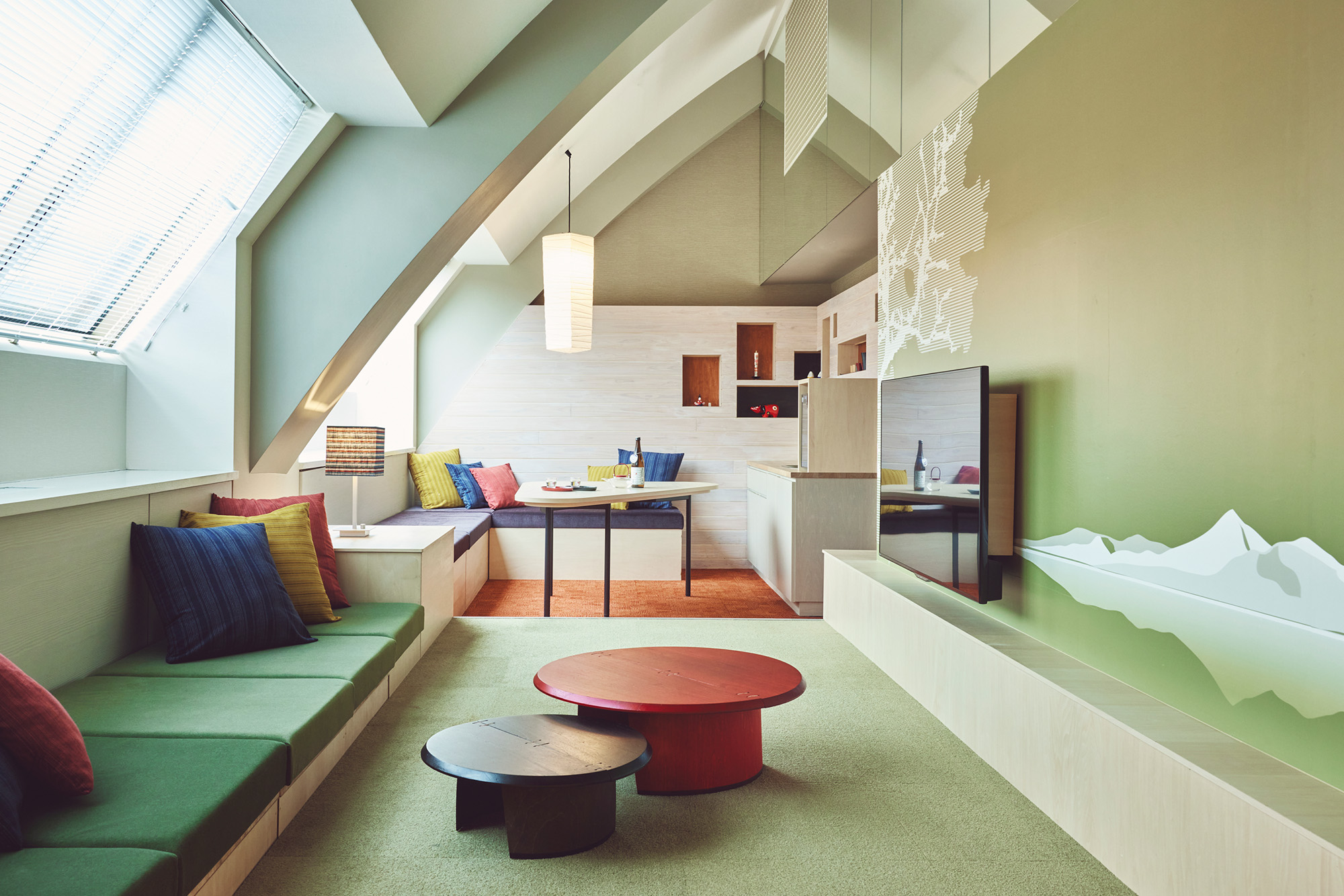
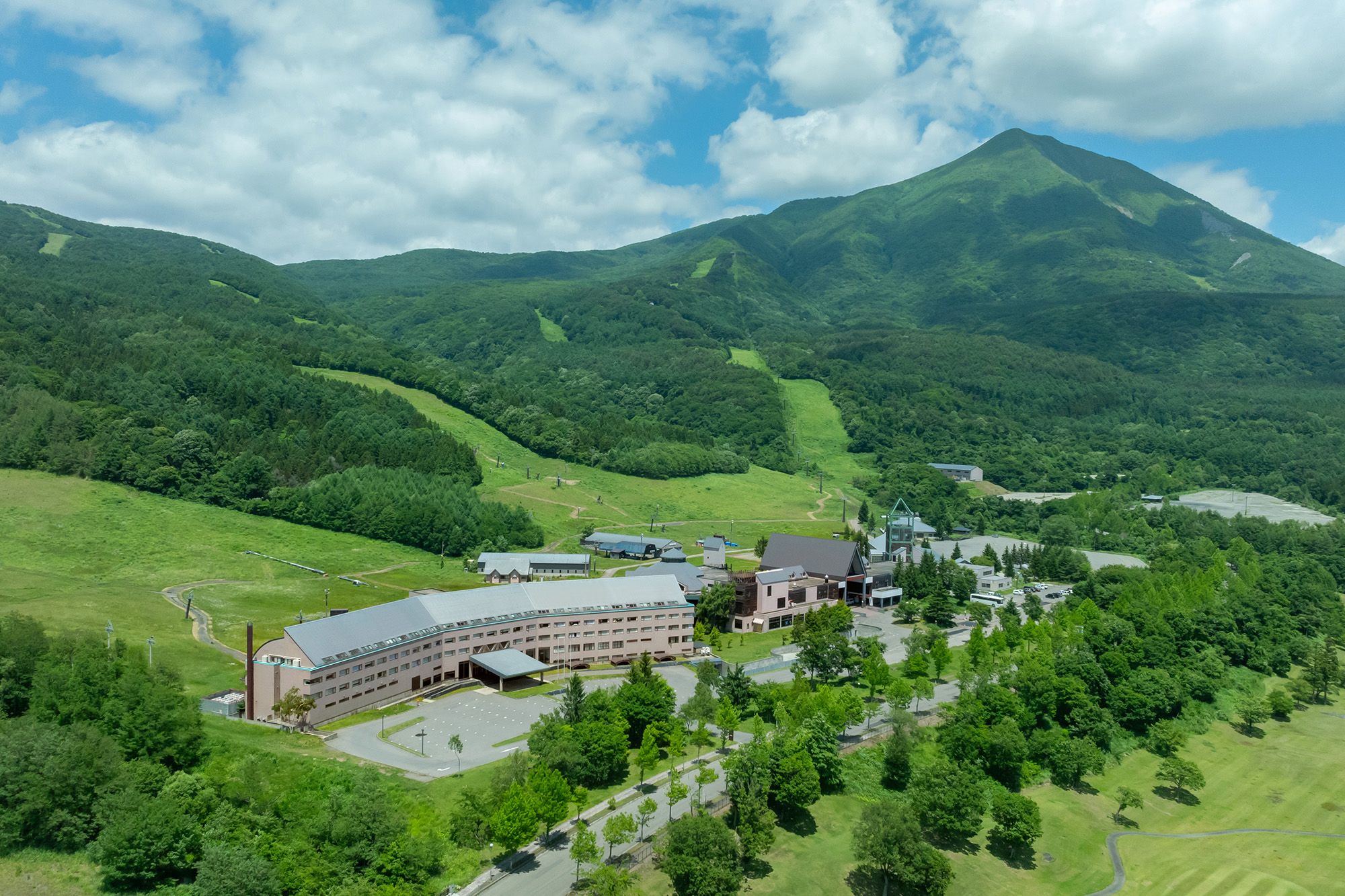
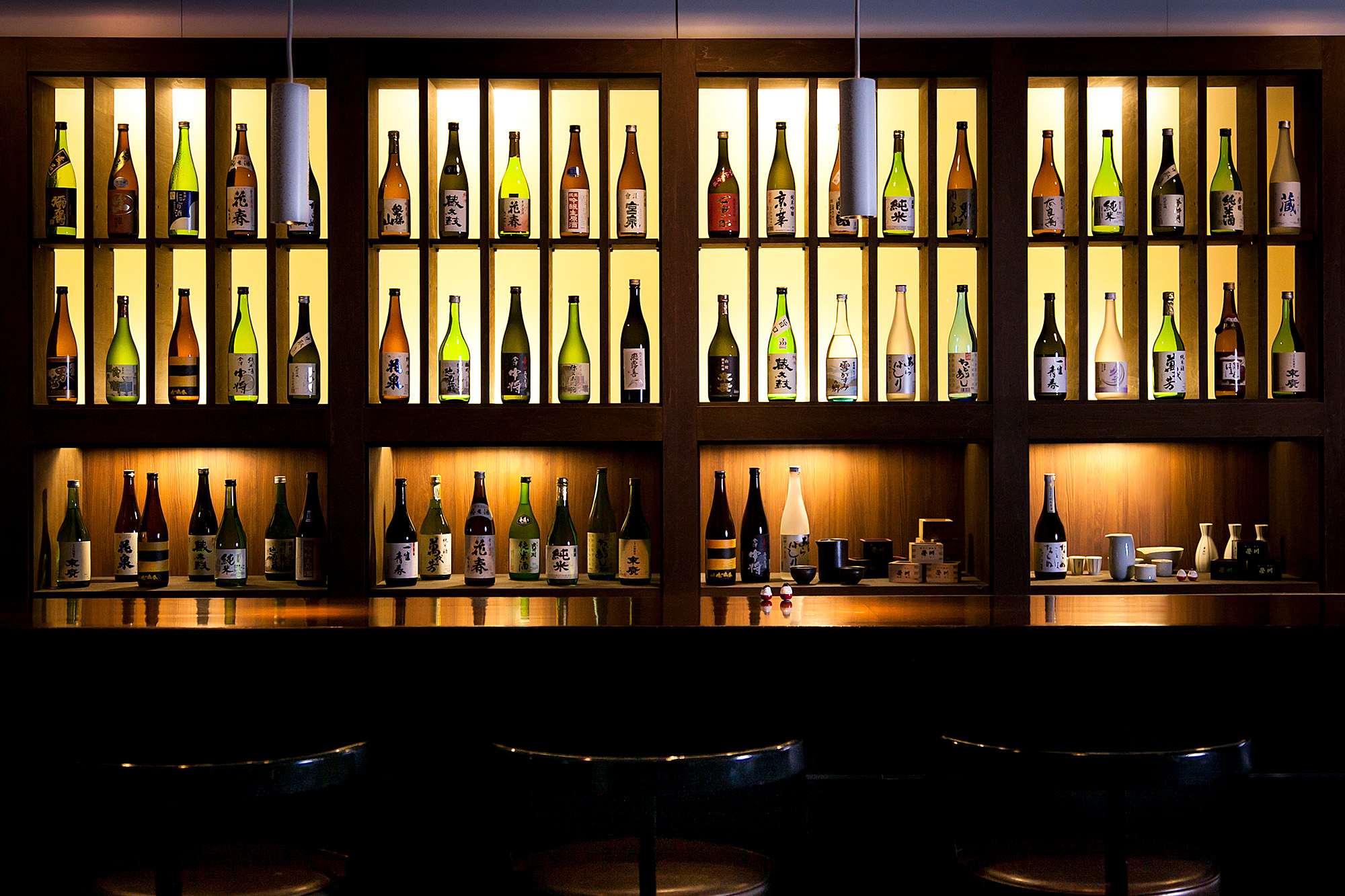
A hotel located at the foot of Mount Bandai in Aizu, overlooking Lake Inawashiro. Here, you can fully enjoy the rich natural surroundings and Aizu culture.

Direction Approximately a 15-minute taxi ride from JR Bandai-machi Station
- Example of Accommodation Rates
- 1 person per night From 12,000 yen