





Find comfort for your home time while traveling at the Asahikawa Furniture "Asahikawa Design Center"

With more time spent at home these days, many people have had the opportunity to rethink their living spaces. Furniture is one such aspect. Furniture that excels in both comfort and design is popular. Asahikawa City in Hokkaido is known as a "furniture town," where you can encounter high-quality wooden furniture in shops and hotels throughout the city. We will introduce the ultimate spot for this: the "Asahikawa Design Center."
The Michikusa Expert in charge of this article
-
Travel Journalist
Akiko Nokata
Has been traveling across Japan and sharing information for 30 years with the themes of "towns, people, hot springs, and inns." Featured as a travel expert on TV Tokyo's "Solomon Ryu." Holds numerous certifications, including Hot Spring Sommelier Ambassador, Sento (Public Bath) Certification Level 1, Sauna and Spa Manager, and Japanese Tea Instructor. Author of books such as "Hot Spring Town Renovation," "Nice to Meet You, Mt. Tanigawa," and "A Journey Through Japanese Craftsmanship: How to Enjoy the 'KAI' Hot Spring Inns."
 Michikusa
Expert
Encountering Asahikawa Furniture at stations, hotels, and around town
Are you familiar with Asahikawa Furniture? It has a history of over 100 years and is world-famous for its high-quality wood, primarily from Hokkaido, and its excellent design.

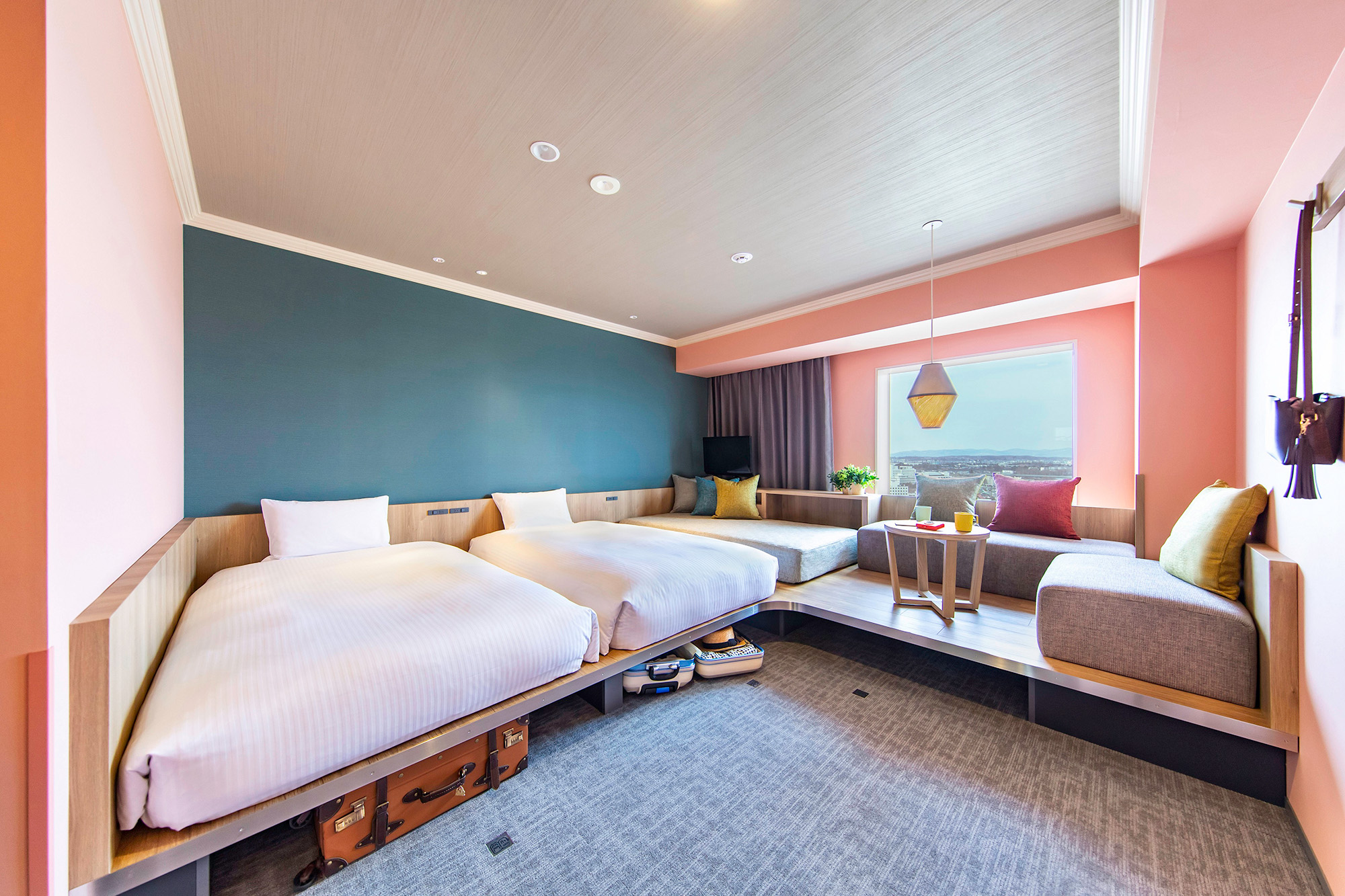
I learned about Asahikawa Furniture at "OMO7 Asahikawa by Hoshino Resorts." The lobby features chairs and tables made by Asahikawa Furniture, and you can even compare how they feel to sit in.

Seeing the chairs in the hotel reminded me of JR Asahikawa Station. Inside the station, there are many chairs of various colors and shapes lined up, which anyone can use freely. The area around the escalators and stairs leading to the platforms features a unique design that makes extensive use of wood.
I learned later that this is an initiative by the Asahikawa Furniture Industry Cooperative called the "Asahikawa Furniture Lounge." The stylish interior, which uses Hokkaido-grown ash wood, was designed by architect Hiroshi Naito. Upon learning that there is an "Asahikawa Design Center" where one can experience the "Furniture City of Asahikawa," I set off on a side trip the day after my hotel stay.

The Asahikawa Design Center is located about a 15-minute drive from Asahikawa City's Asahiyama Zoo. The Asahikawa Furniture Center, which opened in 1980, underwent a major renovation in 2017 and was reopened under the name "Asahikawa Design Center." This is a shop where about 30 furniture and craft manufacturers from the Asahikawa region of Hokkaido (Asahikawa City, Higashikawa Town, and Higashikagura Town) have permanent booths. The attached restaurant and select shop for miscellaneous goods are also very stylish.


A high-quality space like a furniture museum

Furniture is lined up across a space of 1,000 tsubo (approx. 3,300 square meters), making it feel just like a museum. Centered around an entrance with a ceiling that opens up to the second floor, the tour begins with a special exhibition on the first floor and continues to permanent booths for each furniture brand (including Conde House, Takumi Kohgei, Taisetsu Mokko, cosine, Interior Hokushokobo, Higashi 10-go Kobo, Gauzy Calm Works, and about 30 others).

Last summer's special exhibition was titled "Summer Hygge: A peaceful summer spent at home."
Yoshimasa Sugimoto, Executive Director of the Asahikawa Furniture Industry Cooperative, which operates the center, says:"Hygge is a Danish word that means 'a warm and comfortable time or space.' During the COVID-19 pandemic, rather than viewing staying at home as a negative 'endurance,' we proposed a lifestyle where 'the home is a place for a rich heart,' using Asahikawa furniture and other items to explore the theme of 'hygge.'"

The special exhibition starting on April 7, 2021, is titled "Design Stories from IFDA: Living Stories Created with Designers," and introduces the efforts of Asahikawa Furniture over the past 30 years. In particular, it highlights the "International Furniture Design Competition Asahikawa (IFDA)."The archive footage of this world-scale wooden furniture design competition, which began in 1990, and the past winning works are well worth seeing.

Why the next generation is growing in this furniture production area

I learned about the background of how Asahikawa became a "furniture city" at the Asahikawa Design Center.
Asahikawa City, the second-largest city in Hokkaido, began as Asahikawa Village, established in 1890. Surrounded by the magnificent Daisetsuzan mountain range, including Mount Asahi, the area is blessed with water and abundant timber resources. With sawmills in operation, Hokkaido-grown oak was known as "Japanese Oak," boasting the highest quality in the world, and was even exported overseas from Otaru Port after being sold at timber markets. It was a hub for high-quality wood.

Its location in the center of Hokkaido also contributed to the furniture industry. During the war, the 7th Division of the Imperial Japanese Army was stationed there, and as the town and its railways were developed, the population grew, leading to an increase in demand for buildings and housing, which in turn gave birth to one furniture manufacturing business after another. The fact that rice cultivation, the main industry, was unstable due to cold-weather damage also led to expectations for furniture as a year-round industry.
During the post-war period of high economic growth, sales increased for so-called "case goods" such as wedding furniture. However, changes in lifestyles, the collapse of the bubble economy, and the tragedy of furniture collapsing during major earthquakes caused people's concepts of furniture to change. Built-in storage furniture by housing manufacturers became widespread. Then came the rise of inexpensive, disposable-style furniture. Recently, subscription rental services, where furniture is rented for a fixed fee, have become a hot topic.

Amidst the need for change, Asahikawa Furniture has been teaming up with domestic and international designers to develop unique, design-oriented products—starting with chairs, known as "leg furniture"—that are easy to use, beautiful, and long-lasting.
Mr. Sugimoto says, "I believe that the support for training young craftsmen from an early stage is what strengthened the Asahikawa Furniture brand."
It is said that in 1963, an overseas training program supported by the city was implemented, allowing young people at the time, such as the late Minoru Nagahara of CONDE HOUSE, which now represents Asahikawa furniture, to learn craftsmanship abroad and lead the evolution of Asahikawa furniture.

Since then, the present has been built upon a history of public-private cooperation, including the establishment of universities and vocational schools for studying furniture and design, the holding of the International Furniture Design Fair Asahikawa (IFDA) (since 1990), and the enactment of the "Asahikawa Furniture Makers Charter" (2007). A commitment to domestic wood, along with long-standing activities such as forest conservation and tree planting for that purpose, has also been continued. (Reference: Yasuo Kawashima (ed.), "100-nen ni Hitori no Isu Shokunin" [A Chair Craftsman Once in a Century], published by Shinhyoron)

Let's head to the "Furniture Town of Asahikawa"
Every June, "Asahikawa Design Week" is held, centered around the Asahikawa Design Center. In addition to new product announcements and business meetings by various companies, factory tours and workshops that are also enjoyable for travelers are planned.
I am reminded of the words of Mr. Sugimoto, who makes a living from furniture.
"What is furniture to me? Furniture is one of the tools close at hand. It is a partner in life that is always by my side and brings peace of mind. It is a reliable presence that can be passed down to the next generation if you take care of it and treat it with care."

The longer you spend time with something, the more lovable it becomes. Furniture makes your time at home comfortable. If you encounter it in its place of origin, experience it in local hotels and shops, and choose it to be a lifelong friend, I think there is nothing more wonderful about traveling. Please do visit the "Furniture Town, Asahikawa"!
- Asahikawa Design Center
-
 1-35, Nagayama 2-jo 10-chome, Asahikawa City, Hokkaido MAP
 Approx. 15 minutes by car from JR Asahikawa Station
 Take a bus from Feel Asahikawa in front of JR Asahikawa Station, get off at Nagayama 2-jo 10-chome, and walk for a short time
 9:00 AM - 5:00 PM
 Open every day (Closed during year-end/New Year holidays and Obon)
 0166-48-4135
 Free

OMO7 Asahikawa
Asahikawa City, Hokkaido
Conveniently located for access to Furano and Biei. It is packed with attractions, including Asahiyama Zoo and local gourmet food.

Access About a 15-minute walk from JR Asahikawa Station
- Accommodation rate example
- Per person per night From ¥5,200