





5 Recommended Classic Sightseeing Spots in Ibaraki to Visit While Staying in Tsuchiura

Ibaraki Prefecture is full of natural charm, including Lake Kasumigaura and Mount Tsukuba. Tsuchiura City, located in the southern part of the prefecture, has excellent access, taking as little as 45 minutes by train or about 60 minutes by car from the Tokyo metropolitan area. There are also unique attractions scattered throughout Ushiku City, which is two stops (about 12 minutes) away from Tsuchiura Station by train, and the research city of Tsukuba. Here are five classic sightseeing spots where you can encounter the diverse charms unique to Ibaraki Prefecture.
1Ushiku Chateau
Japan's first winery where you can feel the spirit of the Meiji era
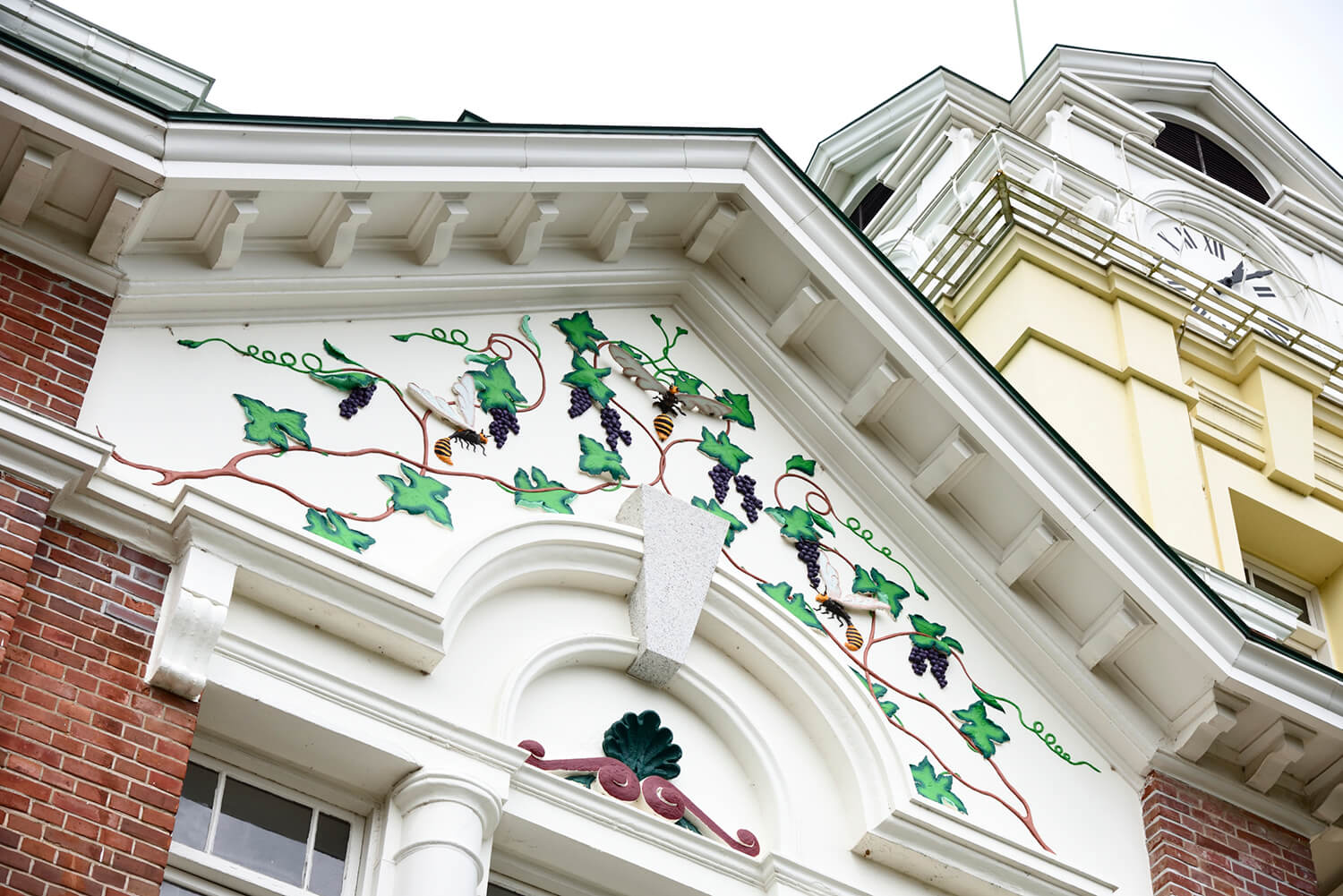
This is the first full-scale wine winery in Japan, founded by businessman Denbei Kamiya. The three magnificent red-brick Western-style buildings, constructed during the Meiji era, have been designated as Important Cultural Properties of Japan. At the time, the entire process from cultivating and harvesting 6,000 grape seedlings to winemaking and bottling was carried out on this site, and a trolley for transporting wine ran between the winery and Ushiku Station. Today, the historically valuable buildings are open to the public, and the site operates as a tour facility, restaurant, and shop selling original "wine cakes."
Reflecting on the footsteps of the "Wine King of Japan"
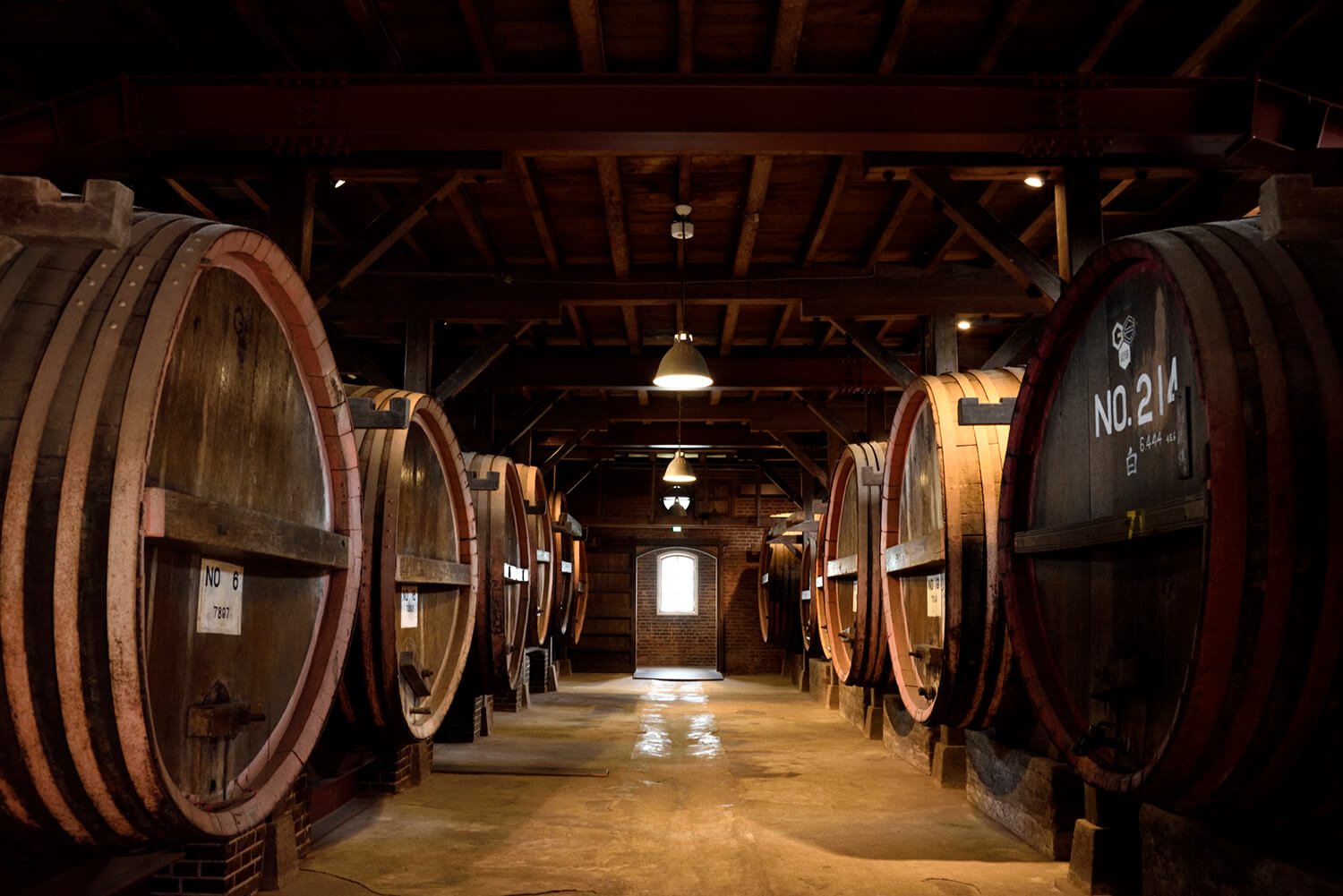
The "Kamiya Denbei Memorial Hall," which was used as a fermentation room among the three buildings, is an exhibition facility that can be visited for free. The sight of huge wooden barrels lined up on both sides of the first-floor corridor is breathtaking. These were used about 100 years ago, and the wooden barrel near the entrance bears the inscription "Made in May, Meiji 36 (1903)." The second floor features valuable materials such as brewing equipment from that time, making it well worth a visit. It conveys the journey and passion of Denbei Kamiya to the present day. In the dark, cool underground cellar, old bottles with wine still inside are stacked, enveloping the space in a unique scent and atmosphere.

Local
Supporter
Grapes are growing healthily in the fields of Ushiku Chateau. Wine brewing and craft beer production have begun once again in this area. I look forward to tasting the wine brewed in Ushiku.
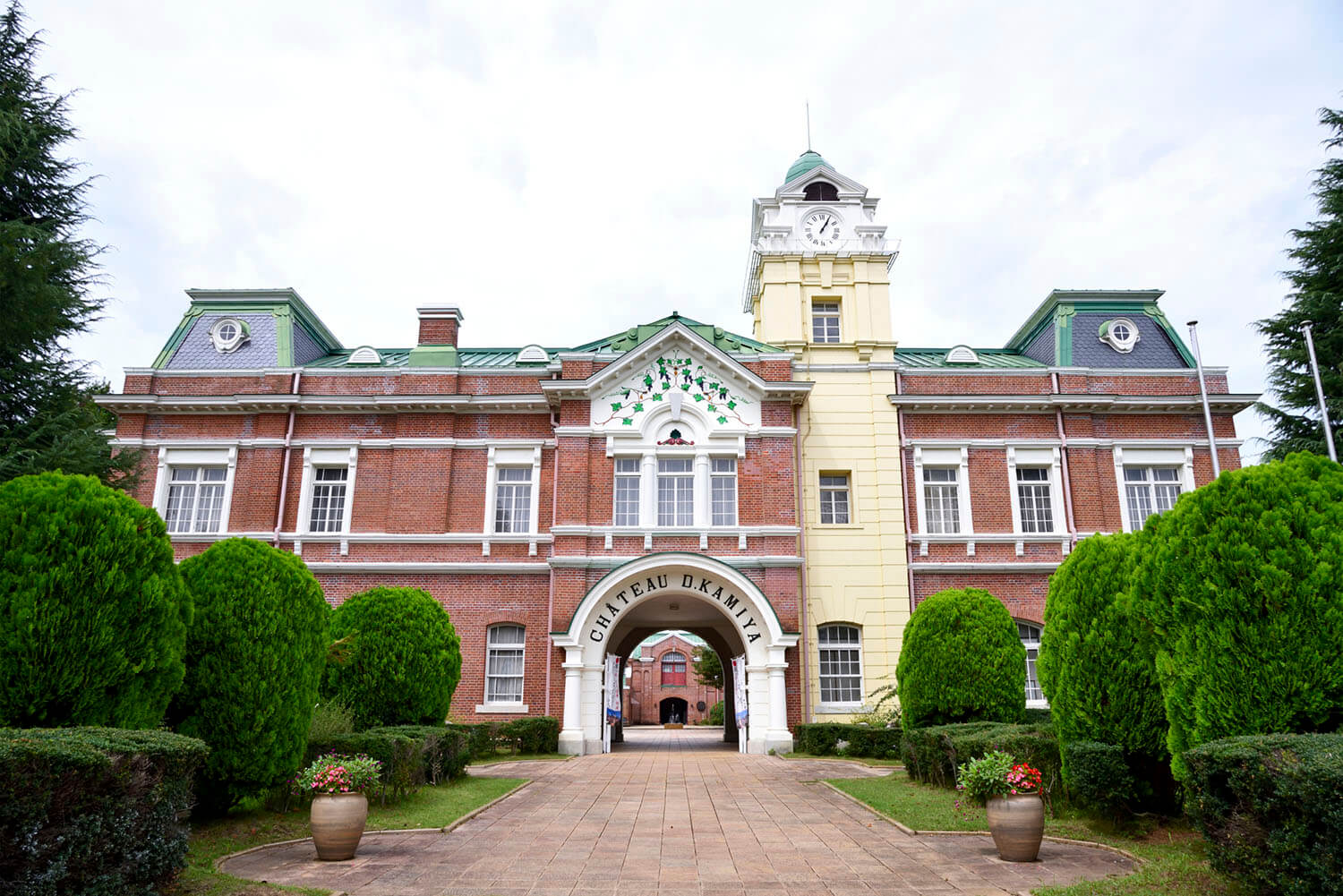
- Ushiku Chateau
-
 3-20-1 Chuo, Ushiku City, Ibaraki Prefecture MAP
 Approx. 25 minutes by car from JR Tsuchiura Station, or 8 minutes on foot from JR Ushiku Station East Exit (Chateau Exit)
 Tour facilities: 10:00–16:00, Restaurant: 11:30–15:00 (L.O. 14:00) and 17:30–21:30 (L.O. 20:00), Shop: 10:00–18:00
 Year-end and New Year holidays (Restaurant and shop are closed on Mondays)
 Free admission
 029-873-3151, Restaurant 029-896-3612, Shop 029-896-3615
 Paid (Use Times Ushiku Chuo opposite the facility. 100 yen per 60 minutes, maximum 300 yen per day on weekdays only)
2Ushiku Daibutsu
The world's largest bronze Buddha statue watching over the Kanto Plain

This giant Buddha statue stands in Ibaraki Prefecture, which was the base for the Kanto region missionary work of Shinran, the founder of Jodo Shinshu. Completed in 1992 on the grounds of the Higashi Honganji temple, it boasts such immense size that the Great Buddha of Nara could fit in its palm. At its feet lies a traditional Pure Land-style garden based on the Kamakura-period gardening text "Sansui Hiden-sho," as well as a flower garden spanning approximately 20,000 square meters, where you can enjoy picking flowers like baby's breath and pot marigolds in the spring, and cosmos in the autumn. You can feed the koi in the pond of the "Hongan Shogon no Niwa" garden, where the energetic fish, eager for food, almost seem ready to climb onto the shallows, a sight that has become a popular topic.
Touring the Pure Land inside the giant Buddha statue
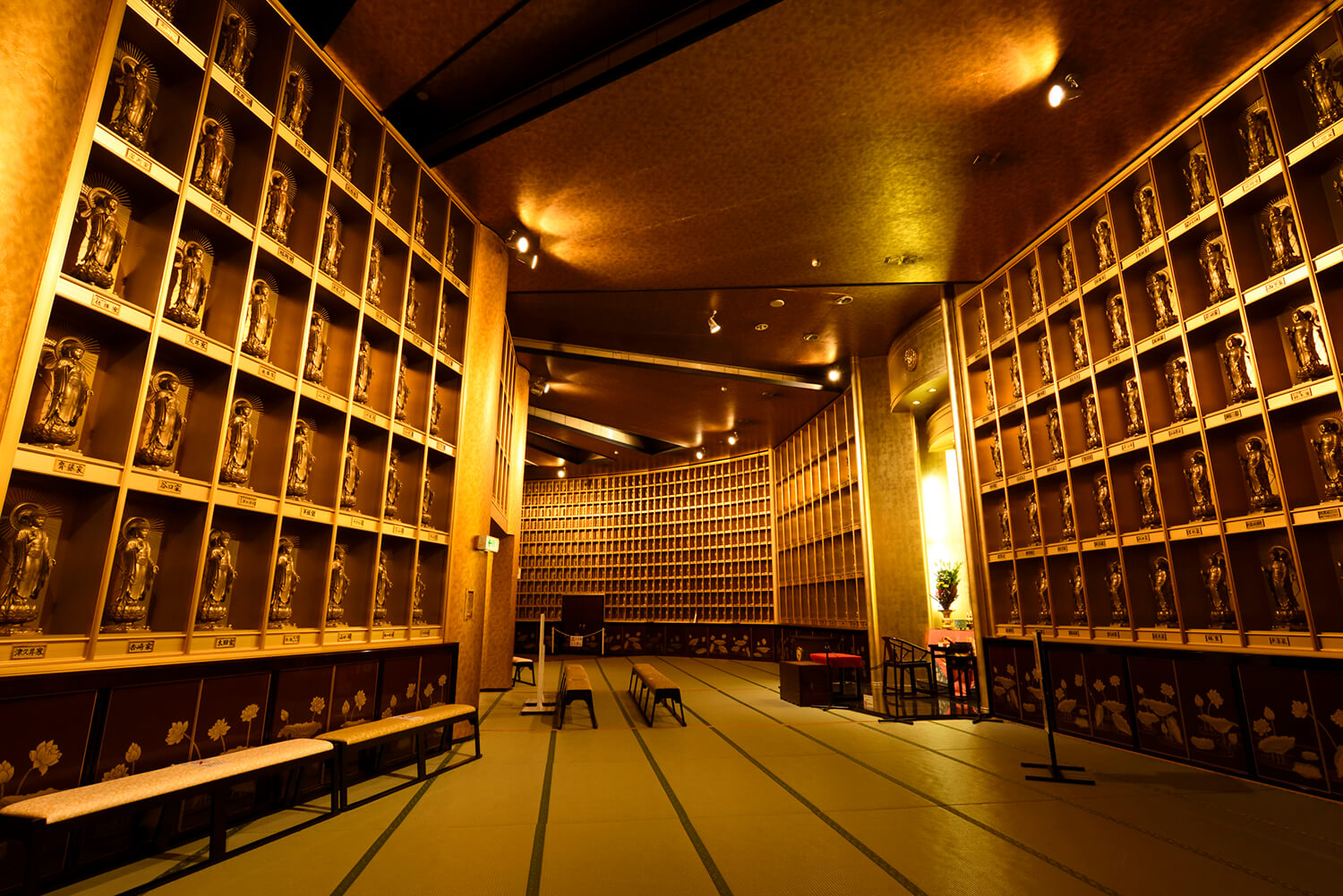
The interior of the giant Buddha statue is divided into five levels, where you can view a mystical Pure Land world. From the top floor, 85 meters above the ground, you can enjoy a superb view from the observation windows near the chest, and on clear days, you can even see Mount Fuji and the Tokyo Skytree in the distance. The second floor, "World of Gratitude and Requital," features about 70 sutra-copying stations where you can experience sutra copying inside the statue, as well as an introduction to the 10 years it took to build the Buddha and a life-sized replica of the Buddha's right big toe. The third floor, lined with golden "interior Buddhas," is a solemn space where sutras are chanted morning and evening. You can also step out onto the pedestal from the second floor and apply gold leaf to the Buddha's lotus throne.
Local
Supporter
The "face-in-hole photo board" installed along the approach to the Great Buddha is a rare photo spot where you can take a picture with the Great Buddha if you find the right angle. Please try taking a photo there.
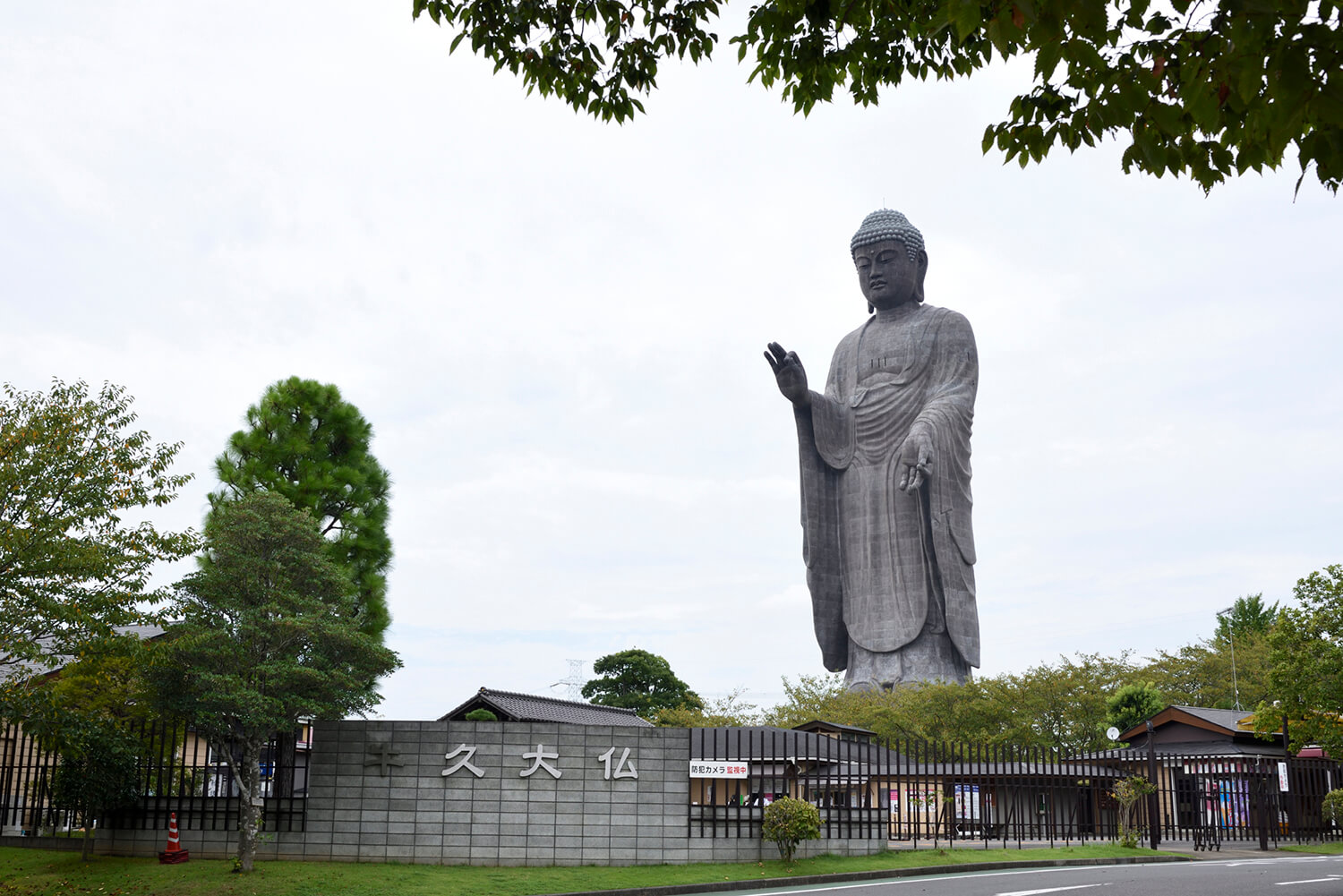
- Ushiku Daibutsu
-
- 2083 Kuno-cho, Ushiku City, Ibaraki PrefectureMAP
- Approx. 26 minutes by car from JR Tsuchiura Station
 Approx. 21 minutes from JR Ushiku Station on the Kanto Railway Bus bound for "Ushiku Daibutsu / Ami Premium Outlets," get off at "Ushiku Daibutsu" and it is right there.
- 9:30–17:00 (until 17:30 on Saturdays, Sundays, and holidays; until 16:30 from October to February) *Reception ends 45 minutes before closing for Daibutsu interior viewing, and 30 minutes before for the garden only.
- Open every day
- Daibutsu interior viewing: Adults 900 yen, Children 500 yen (Garden only: Adults 600 yen, Children 400 yen)
- 029-889-2931
- Free
3Lake Kasumigaura
A relaxing lake where a pleasant breeze blows across
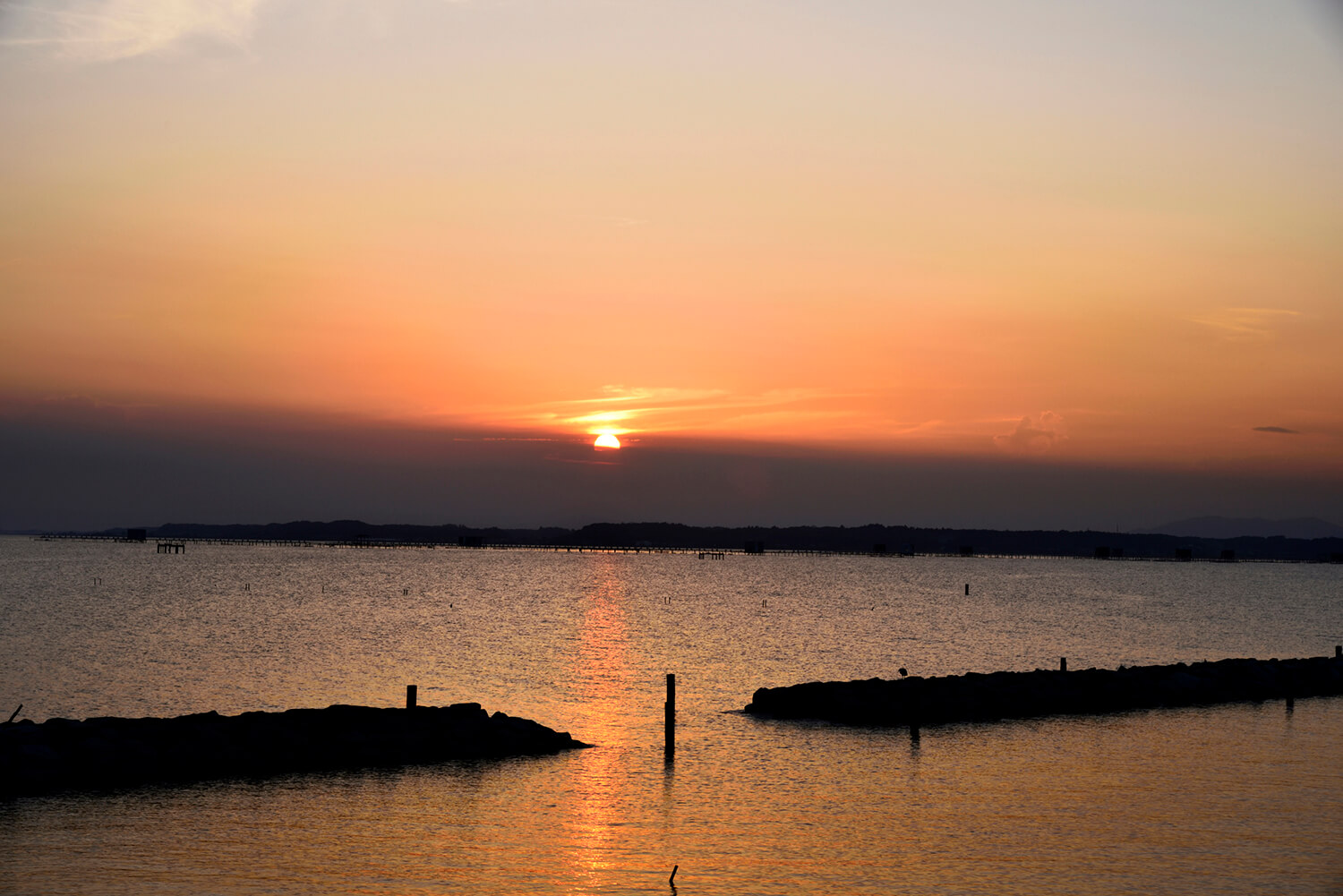
This is the second-largest freshwater lake in Japan, after Lake Biwa. In addition to enjoying water activities and fishing, migratory birds such as swans fly in during the winter, delighting birdwatchers. A seasonal tradition from summer to autumn is the "tourist hobikisen" (sail-trawl boat), which sails across the lake with its large sails inflated. This recreates the traditional fishing method of the region, and you can observe its majestic appearance from an accompanying boat. The sunset reflecting on the calm water is breathtakingly beautiful, and the view from Tennosaki Park, where you can also see Mount Tsukuba, is a sunset spot recommended by locals.
Take on the challenge of cycling around Lake Kasumigaura along the lakeside

Along the lakeshore, there is a well-maintained cycling road where you can ride safely and refreshingly, and you can see cyclists enjoying the breeze as they ride. The course is dotted with attractions and support facilities, including restaurants serving local produce, parks, and farmers' markets. You can rent bicycles (reservation required) at places like "Rin-Rin Square Tsuchiura" inside Tsuchiura Station, so you can enjoy cycling through spectacular scenery even if you come empty-handed. There are also plenty of ways to enjoy the lake, such as the "Kasumigaura Wide-Area Cycle Cruise" (limited operation), which allows you to bring your bicycle on board, as well as houseboats and pleasure boats.
Local
Supporter
While Lake Kasumigaura is famous for smelt and icefish, carp and catfish are also farmed there. They are used as ingredients in items like hamburgers at lakeside restaurants and local product shops, becoming a local gourmet specialty.
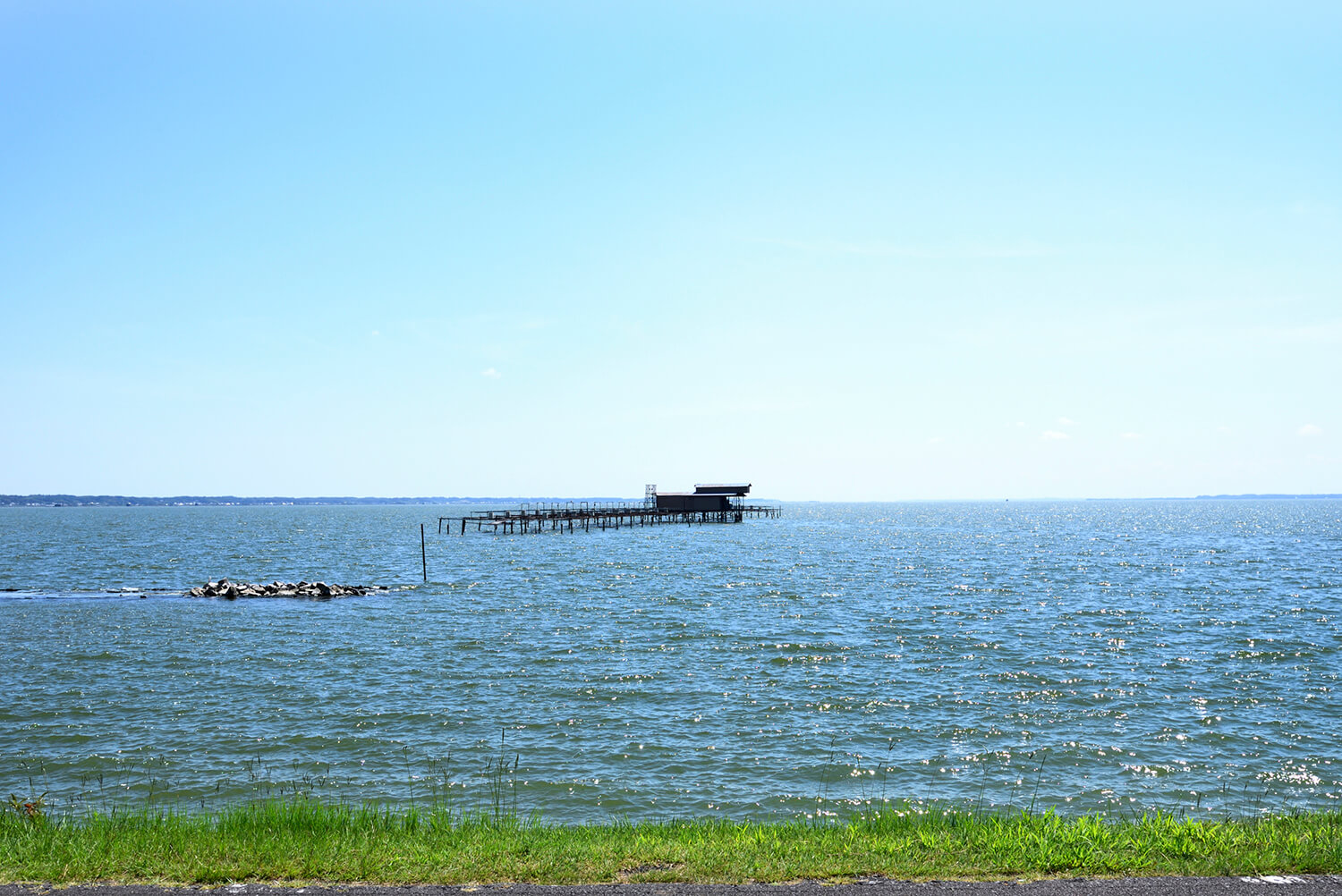
- Lake Kasumigaura
-
- Aso, Namegata City, Ibaraki Prefecture (Tennosaki Park)MAP
- Approx. 50 minutes by car from JR Tsuchiura Station (Tennosaki Park)
- Free to visit
4JAXA Tsukuba Space Center
Learn about the forefront of space development in the Science City

At JAXA, which is responsible for Japan's cutting-edge space research and development, you can experience space technology up close, and guided tours are also available. The real "H-II Rocket" that greets you at the Rocket Plaza right by the main gate is a very popular photo spot. In the "Space Dome," which is open to the public, the sight of successive generations of rockets (1/20 scale) lined up is sure to get even adults excited. Don't miss the space-themed goods, such as JAXA-certified "space food," available at the museum shop.
Imagine the future of the Earth while feeling like an astronaut
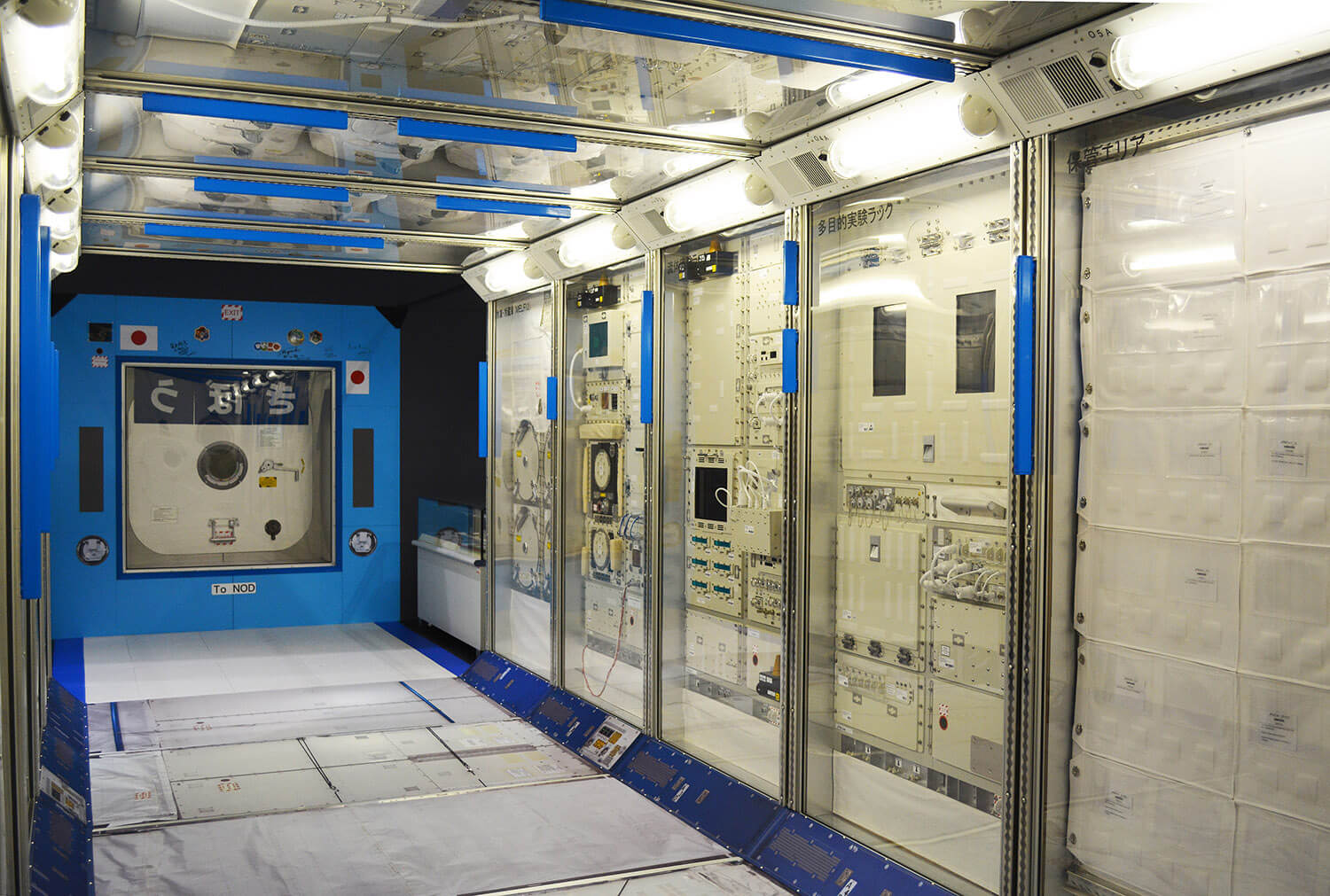
We recommend the approximately 70-minute guided tour (fee required, reservation required). You will depart by bus and take a guided tour of the operation control room for the Japanese Experiment Module "Kibo" and the training area used for the selection and training of astronauts. By experiencing the real-life site of space development, the world of the future will surely feel much closer to you.
Local
Supporter
The exhibition of official NASA-produced posters in the Public Relations and Information Building is a hidden highlight. You can see rare images of astronauts dressed as Jedi from "Star Wars."
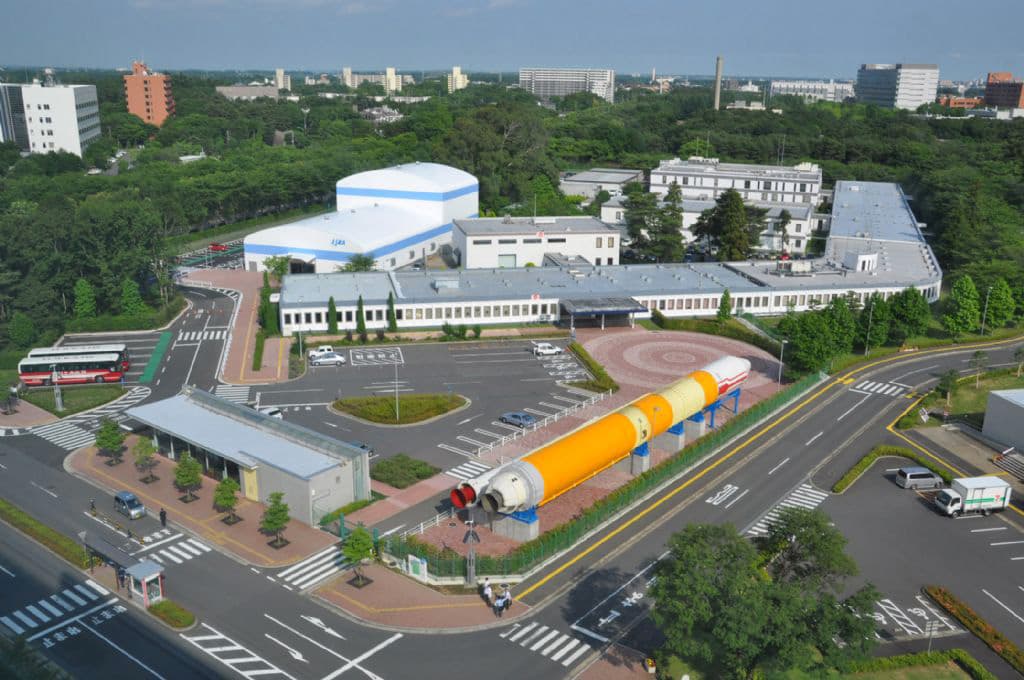
- JAXA Tsukuba Space Center
-
- 2-1-1 Sengen, Tsukuba City, Ibaraki Prefecture MAP
- Approx. 18 minutes by car from JR Tsuchiura Station
- Space Dome: 10:00–17:00
Museum Shop in Planet Cube: 10:00–17:00 - Irregular holidays, year-end and New Year holidays (12/29–1/3), facility maintenance days, etc.
- Free admission (Guided tours are 500 yen. Free for high school students and younger or those under 18)
- Free
 Multipurpose restroom, nursing room, and diaper changing table available inside Space Dome
5Mount Tsukuba
Look out over the Kanto Plain from the summit of a beautifully towering mountain

Consisting of two peaks, Mt. Nantai and Mt. Nyotai, this is a symbolic mountain of Ibaraki Prefecture. At 877 meters above sea level, it is the lowest of the 100 Famous Japanese Mountains, and you can reach the summit with a hiking feel by using the cable car or ropeway. For the cable car, board at "Miyawaki Station" on the Tsukubasan Shrine side and travel to "Tsukubasan-cho Station" just before the summit of Mt. Nantai. "Miyukigahara," which spreads out outside the station, is lined with souvenir shops and restaurants, and from the free observation deck on the roof of the "Koma Observatory," you can enjoy a 360-degree panoramic view of the Kanto Plain.
Visit a mountain of faith that has been cherished since ancient times
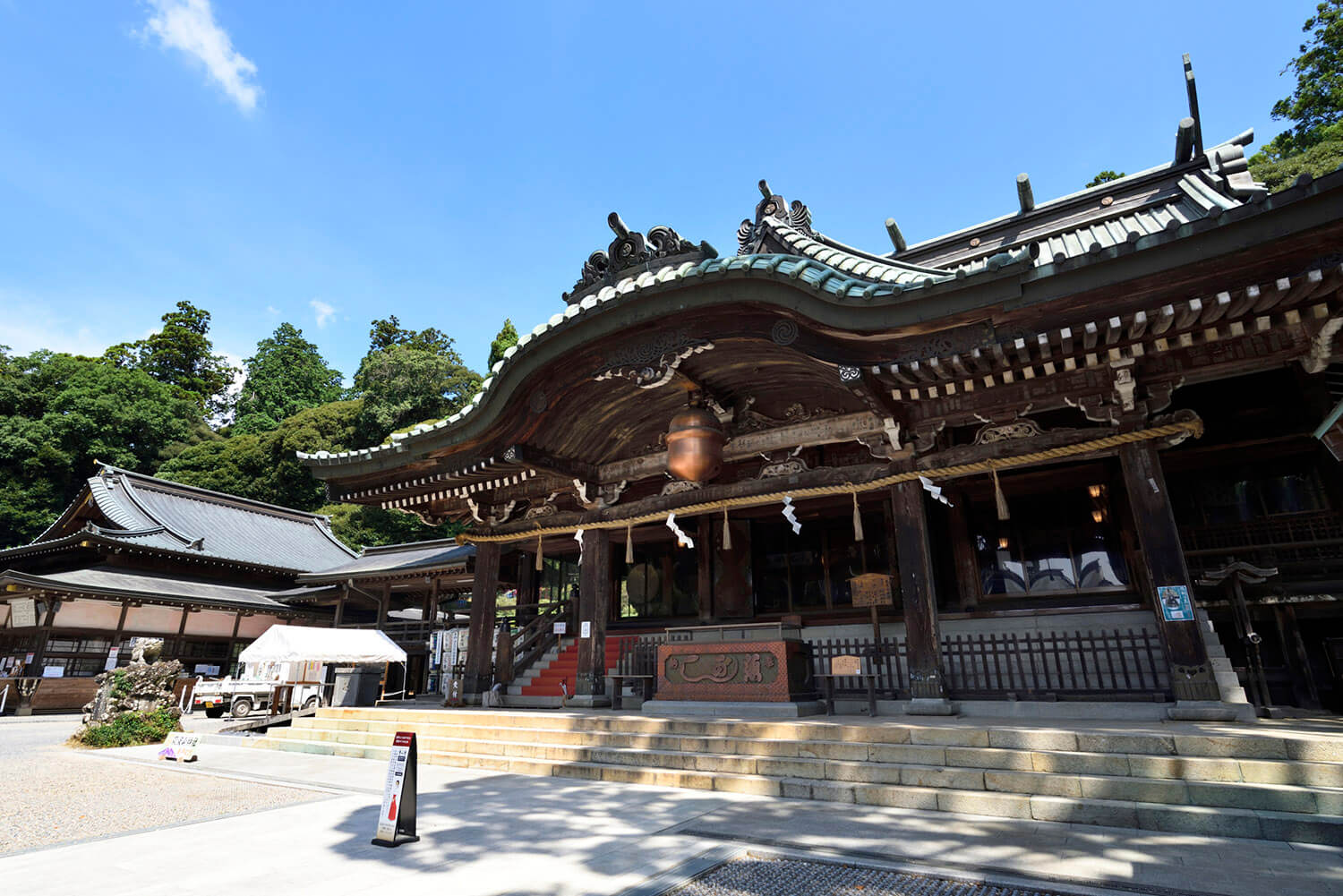
Mount Tsukuba is a famous peak that has long been compared to Mount Fuji, often referred to as "Mount Fuji of the West, Mount Tsukuba of the East." The entire mountain is considered a sacred object, enshrining the married deities Izanagi and Izanami. It is said to bring blessings for marital harmony, matchmaking, and family safety, and heart-shaped patterns called "inome" can be found on the large bells and pillars of the "Tsukuba-san Shrine" worship hall located halfway up the mountain. The majestic presence of the 800-year-old, 36.5-meter-tall sacred "O-sugi" cedar tree is also breathtaking. Within the shrine grounds, a "sazare-ishi" (pebble) stone, mentioned in the "Kimigayo" national anthem and the preface to the "Kokin Wakashu" poetry anthology, is enshrined.
Local
Supporter
If you are aiming for the summit of Nyotai-san, the highest point of Mount Tsukuba, you can reach it in a 15-minute walk from the Tsukubasan-cho Station of the cable car, or in about 6 minutes by taking the ropeway from Tsutsujigaoka at the foot of the mountain.
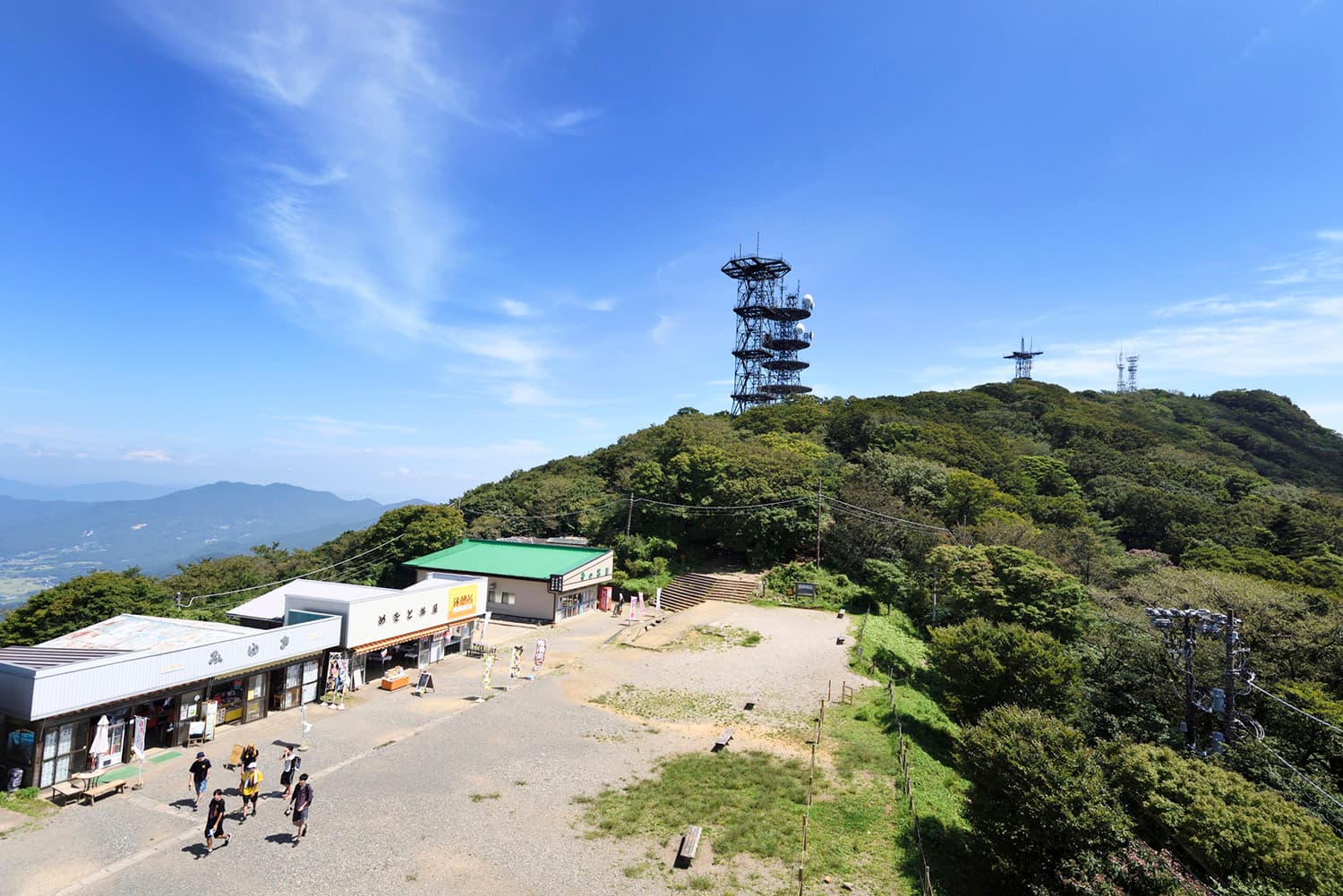
- Mount Tsukuba
-
- 1 Tsukuba, Tsukuba City, Ibaraki Prefecture MAP
- Approx. 43 minutes by car from JR Tsuchiura Station (near Tsukubasan Cable Car Miyawaki Station)
- Tsukubasan Cable Car 9:00–17:00
*Extra services may run during peak periods - Tsukubasan Cable Car Irregular holidays (may close for maintenance in winter)
- Mt. Tsukuba Cable Car: Adults / One-way 930 yen, Round-trip 1,860 yen
Children / One-way 470 yen, Round-trip 940 yen (Free for children under 6) - 029-866-0611 (Tsukuba Kanko Railway Co., Ltd.)
- Paid
- Tsukubasan Shrine https://www.tsukubasanjinja.jp/
Tsukubasan Cable Car https://www.mt-tsukuba.com/
MAP
- Nearby Hoshino Resorts facilities

Local supporter in charge of this article
- Momono SaitoCurious and adventurous girl
BEB5 Tsuchiura
Ibaraki Prefecture, Tsuchiura
Conveniently located directly connected to JR Tsuchiura Station. A cycling hotel where you can stay with your bicycle.
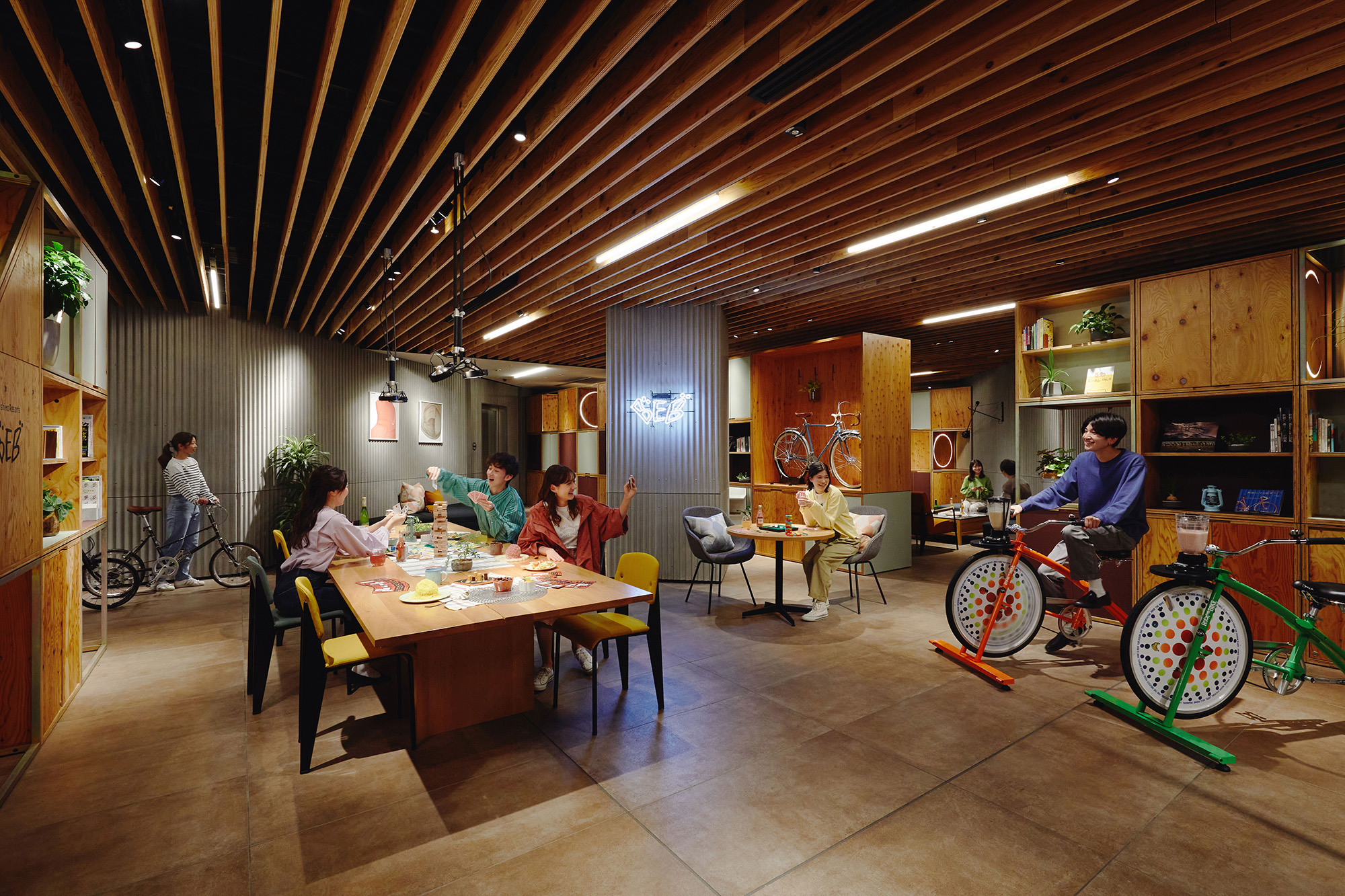

Access Directly connected to JR Tsuchiura Station
- Accommodation rate example
- Per person per night From ¥4,757