





Anjin Miura, an English navigator who became a samurai. A Journey in Ito in the Footsteps of the Anjin Miura
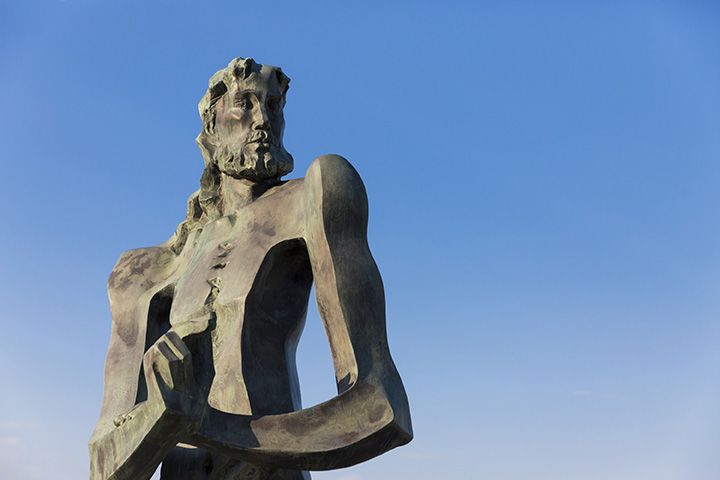
Do you know the name Anjin Miura?
He was an English navigator, whose English name was William Adams, who drifted from the Netherlands to Japan during the Age of Discovery. After being employed as a diplomatic advisor to Tokugawa Ieyasu, he built Japan's first Western-style sailing ship, which is said to have been instrumental in demonstrating the prestige of the Tokugawa regime.
It may not be well known that this historic project of building Japan's first Western-style sailing ship was actually undertaken in Ito, Izu.
Why not embark on a journey suitable for adults with such a story to tell, following in the footsteps of Anjin and recalling his life filled with romance and pioneering spirit?
An English navigator who led a tumultuous life. What kind of person was Anjin Miura?
Drifting across the ocean from Holland to Japan on the Liefde
William Adams was born in 1564 in Gillingham, eastern England, and worked as an apprentice in a shipyard from the age of 12. He spent the next 12 years studying shipbuilding, astronomy, and navigation, as well as naval captaincy and Arctic exploration. 34 years old, he joined the five-ship Dutch Expedition to the Orient as chief mate and set sail for the Orient.
The voyage was a succession of difficulties. Supplies of food were difficult to come by, and the fleet was soon reduced to just one ship, the Liefde, with Adams and his crew on board, due to the harsh wintering conditions in the Strait of Magellan near Antarctica and attacks by indigenous peoples. Nevertheless, in order to fulfill its duty as a trading ship, the Liefde continued its course toward Japan and finally sighted the shadow of Japanese land. A year and ten months after setting sail from Holland, the ship, no longer capable of sailing, drifted ashore at Sashiu, Usuki City in present-day Oita Prefecture.
It was April 1600, only half a year before the Battle of Sekigahara, a battle that divided the world.
Ieyasu ordered the construction of Western-style sailing boats in Ito.
After Adams drifted ashore, Tokugawa Ieyasu invited him to Osaka Castle to see him. Ieyasu, who recognized Adams' knowledge and fair character, prepared a mansion for him in Nihonbashi, Edo, after the victory of the Battle of Sekigahara. Ieyasu himself studied mathematics and geography, and instructed his chief advisors in gunnery, navigation, and astronomy, and he also became a valuable diplomatic advisor to the shogunate.
Ieyasu, who saw the need for maritime transportation in the island nation of Japan, ordered Adams to build Japan's first Western-style sailing ship in 1604. Adams decided that Ito in Izu was the best location because of its location at the mouth of an estuary flowing into the sea, its proximity to the Amagi Mountains where lumber could be cut, and the availability of competent shipbuilders.
Started shipbuilding using the "sand dock method," which utilizes a sandbar.
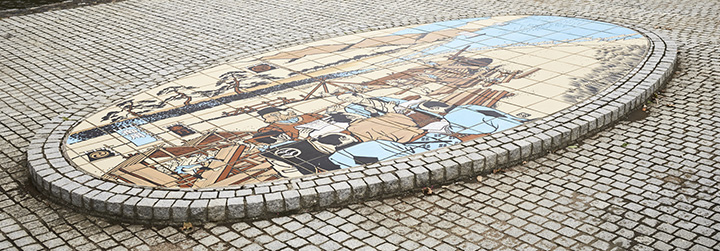
At the time, there was a thick sandbar at the mouth of the Matsukawa River in Ito, which Adams used to build his ships using the "sand dock method. In this method, logs were laid in a hole dug in the beach, and after the ship was built, water was drawn into a dammed channel to the ship and the ship was launched into the sea. It is said that Ieyasu tried out the 80-ton sailing boat built at this time and was very pleased with it. The following year, a large 120-ton ocean-going vessel was also built here.
Became a "samurai" and contributed to overseas trade
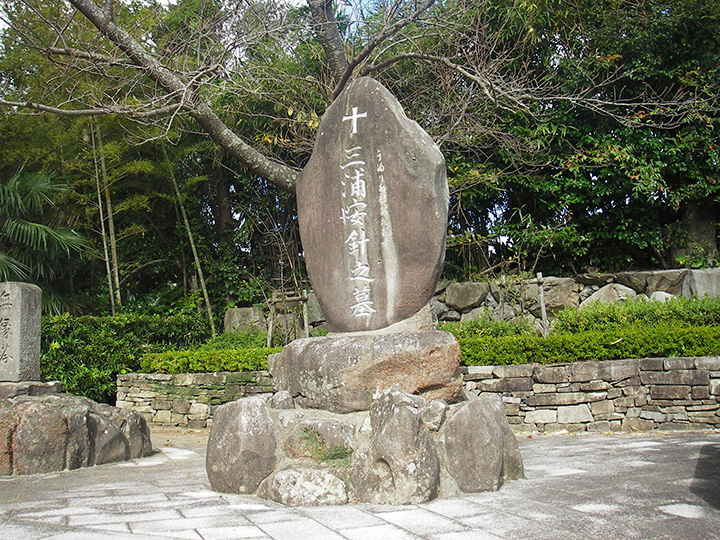
In 1605, Ieyasu granted Adams 250 koku of land in Itomi, Miura County (part of present-day Yokosuka City), two swords, and a sidekick, and gave him the name Anjin Miura in recognition of his achievements. The name "Miura" comes from the territory, and "Anjin" means a pilot. William Adams became a "samurai" and later married Oyuki, the daughter of an Edo merchant, with whom he had two children.
In addition to shipbuilding, William Adams also worked to promote the Shogunate's overseas trade, including the establishment of the Dutch and British trading posts at Hirado. After returning to Japan in 1616 after trading in Siam, Anjin was disheartened by the news of Ieyasu's death. He spent the rest of his life in a state of disrepair due to the changing times, and died in Hirado, Nagasaki, in 1620.
Anjin connected four cities. Usukishi, Ito, Yokosuka, and Hirado.
After a 1 year and 10 month voyage, the ship arrived at Usuki City, Oita Prefecture.
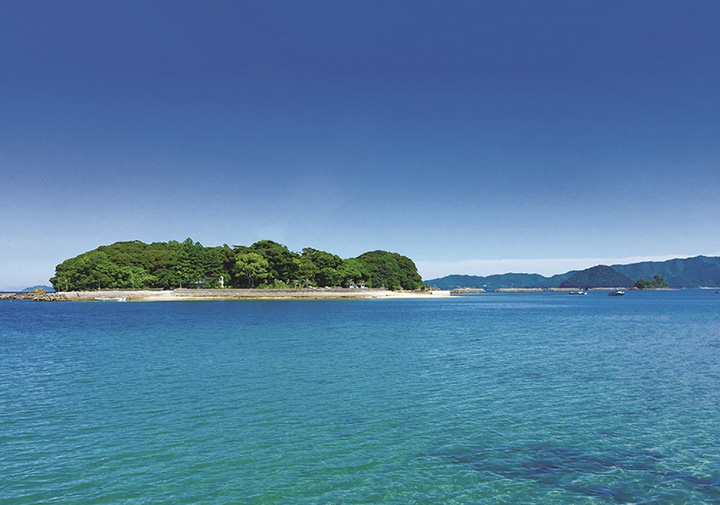
On April 19, 1600, the Liefde arrived at Kuroshima Island in Usuki Bay, Oita Prefecture, with only 24 survivors out of a crew of 110. It is a small island with a circumference of about 3 km, about 300 m from Sashio Beach, and a 5-minute ferry ride away. On the island, there is a memorial park for the landing of Anjin Miura.
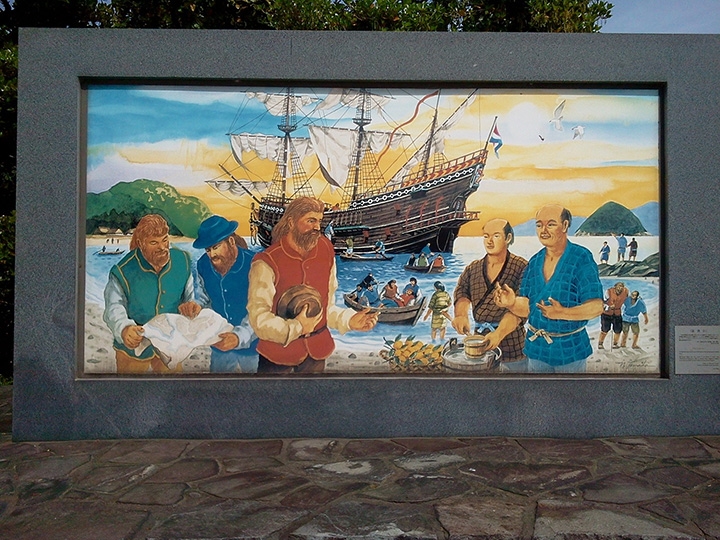
The monument "Encounter" (by Tamada Nobuyuki) in the landing memorial park depicts the encounter between the Anjin and the people of Sashio.
- Kuroshima, Usuki City, Oita Prefecture
-
 Ooaza Sashio Kuroshima, Usuki City, Oita Prefecture MAP
Ito City, Shizuoka Prefecture, where Ieyasu ordered the construction of Western-style sailing ships
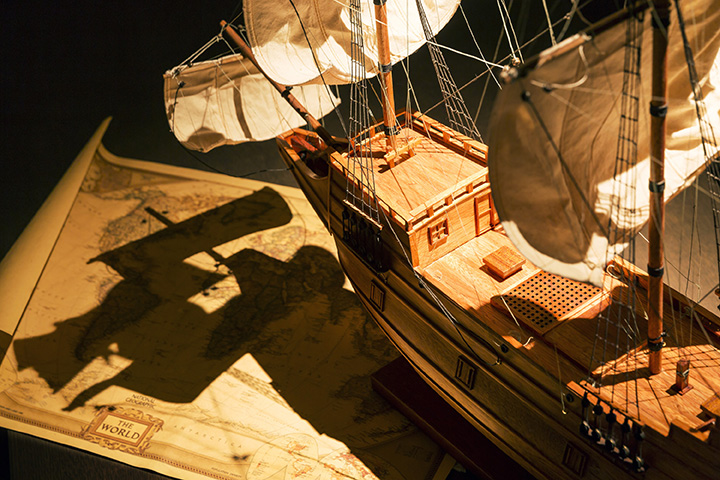
Anjin Miura was ordered by Ieyasu to build Western-style sailing ships, and began building them in Ito. While Japanese-style ships with flat bottoms were originally built in the region, Anjin designed Western-style sailing ships with round bottoms. The blueprints and shipbuilding know-how were lost in the subsequent isolation of the country and two major tsunamis, but the shipbuilding of that time is described in detail in the "Keicho Observations".
Ito was a place with favorable conditions for the construction of Western-style sailing ships, and it is assumed that Adams also paid attention to the abundant hot springs that spring up in the area. It is likely that he and the ship's carpenters and the ship's master, Shogun Tadakatsu Mukai, who was in charge of the ship's crew, must have relieved their fatigue by soaking in the hot springs, which were highly effective.
In Ito City, you can now experience the footsteps of Anjin at spots and facilities such as "Anjin Memorial Park," "Kawaguchi Park," and "Tokai-kan" (see below for details of each spot and facility).
Yokosuka City, Kanagawa Prefecture, where the territory of Itomi was given by Ieyasu
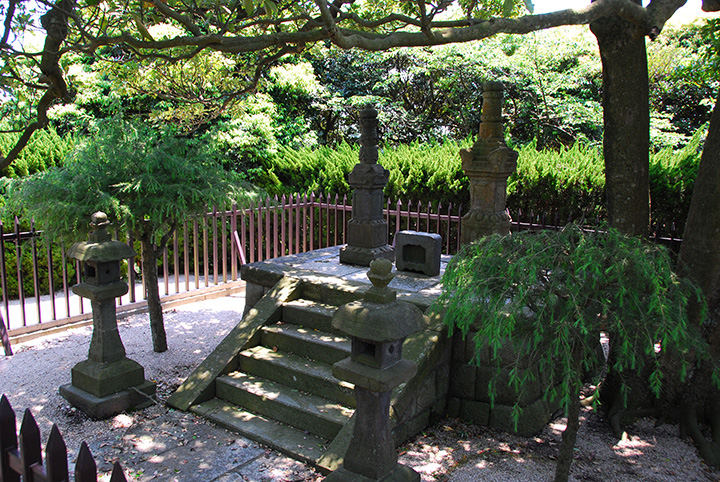
In 1620, Anjin Miura died in Hirado, Nagasaki, and was buried in the Foreign Cemetery, but his son Joseph followed his father's will and erected a grave marker here in his territory. The area is now maintained as "Tsukayama Park" and is a popular cherry blossom viewing spot.
Anjin's gravestone is flanked by those of his wife, and the area is designated as a National Historic Site and one of Yokosuka's 100 Best Scenic Spots.
Yokosuka City is also a sister city with Anjin's birthplace, Medway (formerly Gillingham), England.
- Tsukayama Park, Yokosuka City, Kanagawa Prefecture
-
- Nishi-Izumi-cho, Yamanaka-cho, Nagaura-cho, Yokosuka-shi, Kanagawa MAP
Hirado City, Nagasaki Prefecture, where Ieyasu Ieyasu helped to establish the British and Dutch trading posts
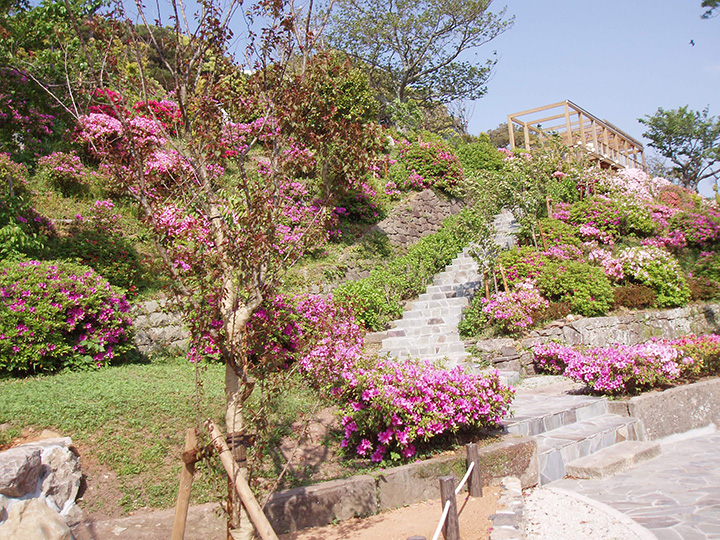
Anjin lobbied the Edo shogunate for trade with the Netherlands and England, and established a trading post in Hirado. After a voyage to China, he returned to Hirado and ended his 56-year life on a sickbed.
In 1954, the grave of Anjin Miura was erected in Sakihata Park on a hill overlooking Hirado Harbor. In fact, before setting sail for the Orient, Anjin had married in England and left behind a wife and child in his native country. In 1964, the 400th anniversary of Adams' birth, a pebble was taken from his wife's graveyard in England as a symbol of her spirit and buried together to form a couple's mound.
- Sakihata Park, Hirado-shi, Nagasaki
-
- 2529 Okubo-cho, Hirado-shi, Nagasaki MAP
Three spots in Ito to visit Anjin
Anjin Memorial Park, with the ocean in the background
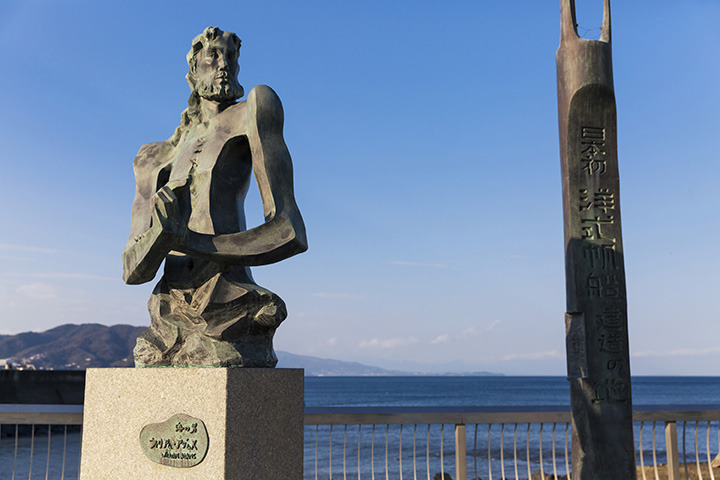
This memorial park was built on the site where Anjin built Japan's first Western-style sailing ship and is located near Nagisabashi Bridge at the mouth of the Matsukawa River. In honor of his achievements, there is a bust of Anjin, a monument to the San Buena Ventura (meaning "happy ship"), the second large sailing ship built in Ito, and a commemorative marker marking the 400th anniversary of the construction of Western-style sailing ships. The bust is by local sculptor Kenji Shigeoka.
On a fine day, Hatsushima Island is clearly visible in the bright blue sea, and people enjoy taking pictures with the marine view in the background.
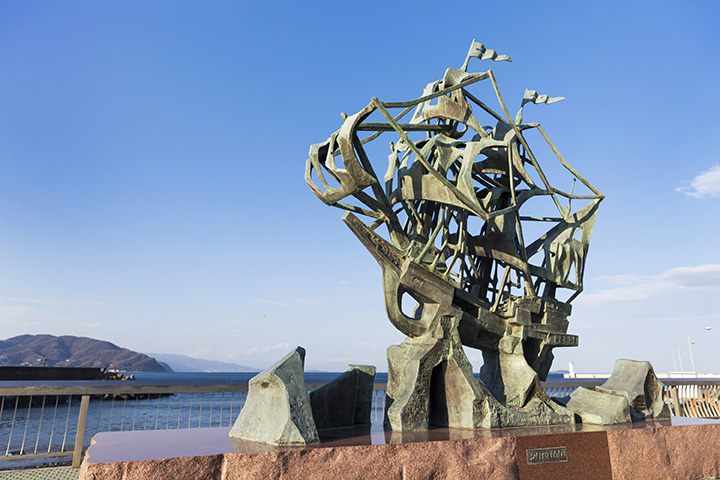
- Anjin Memorial Park
-
- 6 Nagisami-cho, Ito City, Shizuoka Prefecture MAP
 15 minutes walk from Ito Station on the Ito Line
 0557-36-0111 (Ito City Tourism Division)
 Pay parking (Nagisa Park Parking, short walk)
Kawaguchi Park, a place to visit while strolling along Matsukawa River
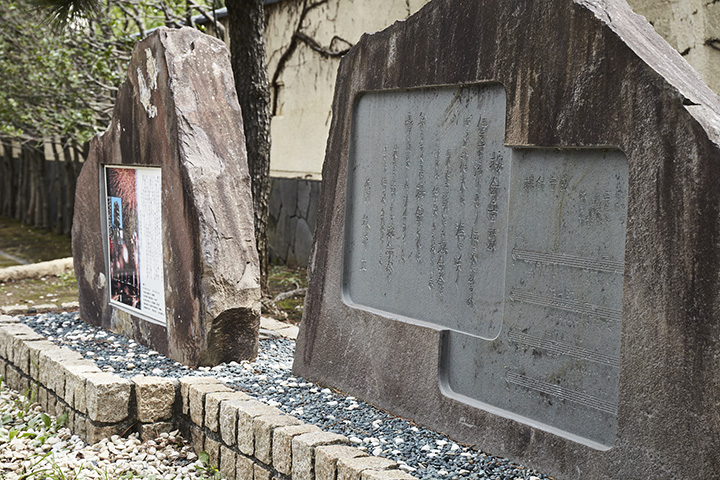
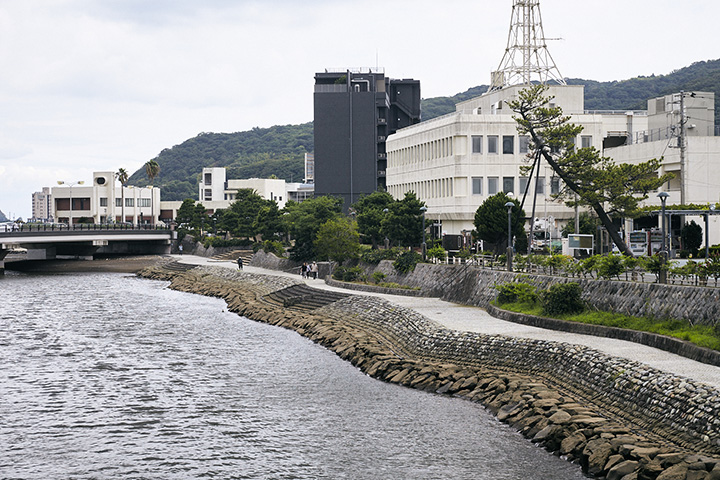
Walking along the Matsukawa River from the beach, you will find the Matsukawa boardwalk on the left bank. Continue along the promenade for a short distance and you will find Kawaguchi Park spread out along the riverside looking down on you. There is a monument to Anjin (Anjin), which describes the achievements of Anjin Miura, a monument to the song "Anjin Ondo," and tile paintings depicting shipbuilding can be seen a few steps down.
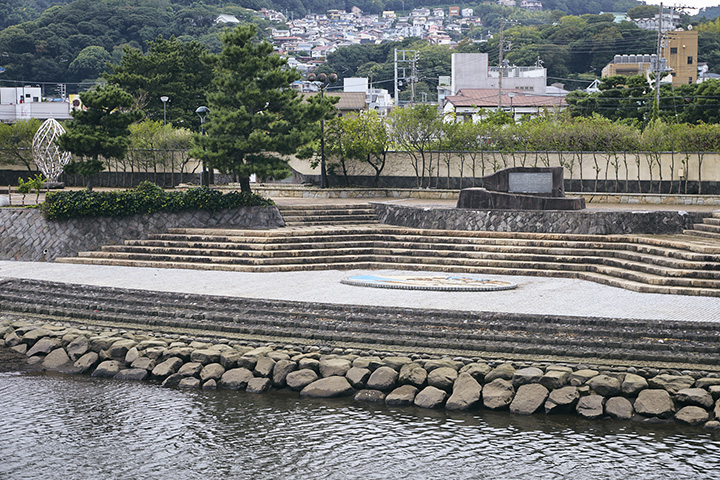
- Kawaguchi Park
-
- 86-14 Nagisa-cho, Ito-shi, Shizuoka MAP
- Approximately a 13-minute walk from Ito Station on the Ito Line
- 0557-36-0111 (Ito City Tourism Division)
- Pay parking (Nagisa Park Parking, 2 minute walk)
Formerly a long-established Hot spring ryokan "Tokai-kan" to experience Anjin's achievements
The Tokai-kan is a three-story wooden building that still retains the atmosphere of a hot spring ryokan from the late Taisho Period to the early Showa Period. It is now designated as a Tangible Cultural Property of Ito City and is open for tours.
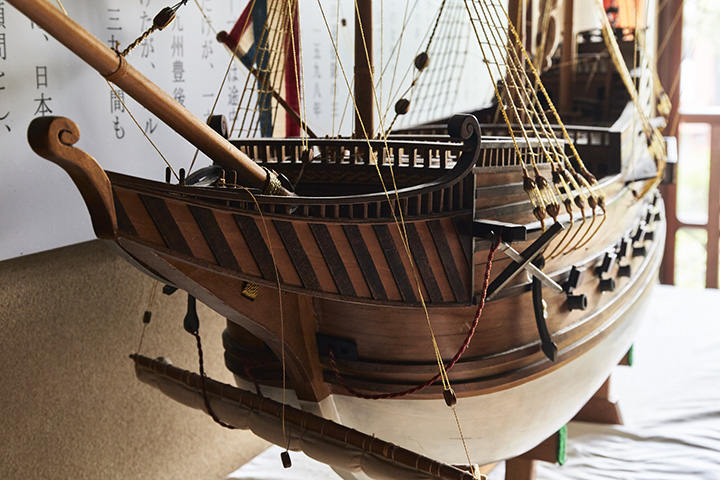
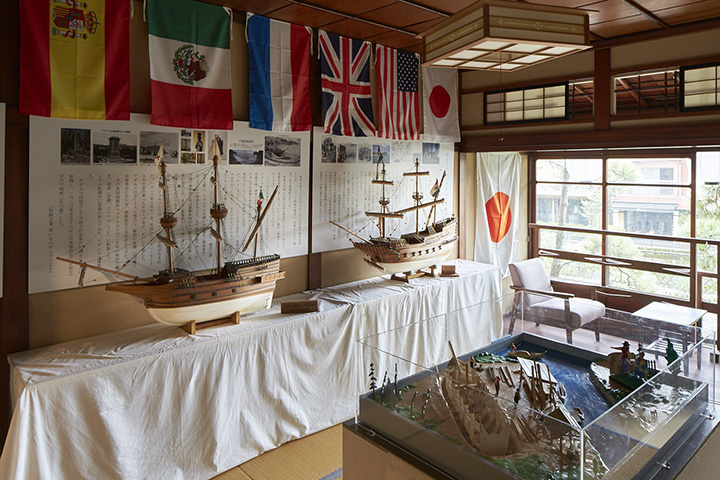
On the second floor of the building called Shinkan, which was completed in 1938 (Showa 13), a former guest room has been used as a private room to showcase the achievements of great people associated with Ito City. There is also an exhibition room about Anjin, where visitors can enjoy a close-up look at models of the Liefde and the San Buena Ventura.
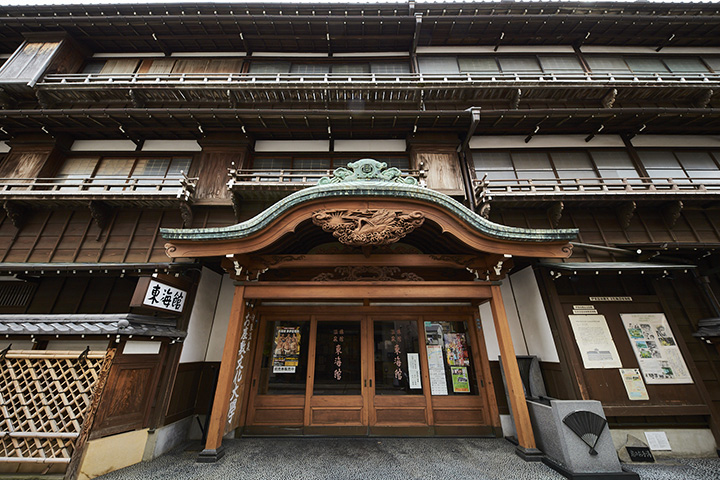
- Tokai-kan
-
- 12-10 Higashimatsubara, Ito City, Shizuoka Prefecture MAP
- 10 minute walk from Ito Station on the Ito Line
 Museum tours 9:00 - 21:00 (last admission at 20:00)
 3rd Tuesday of the month (open if the Tuesday is a national holiday, closed the following day), January 1
 Adults 200 yen, Junior high school students and younger 100 yen
- 0557-36-2004
- None
Enter the world of Hoshino Resorts KAI Anjin, which takes you back to the Age of Discovery.
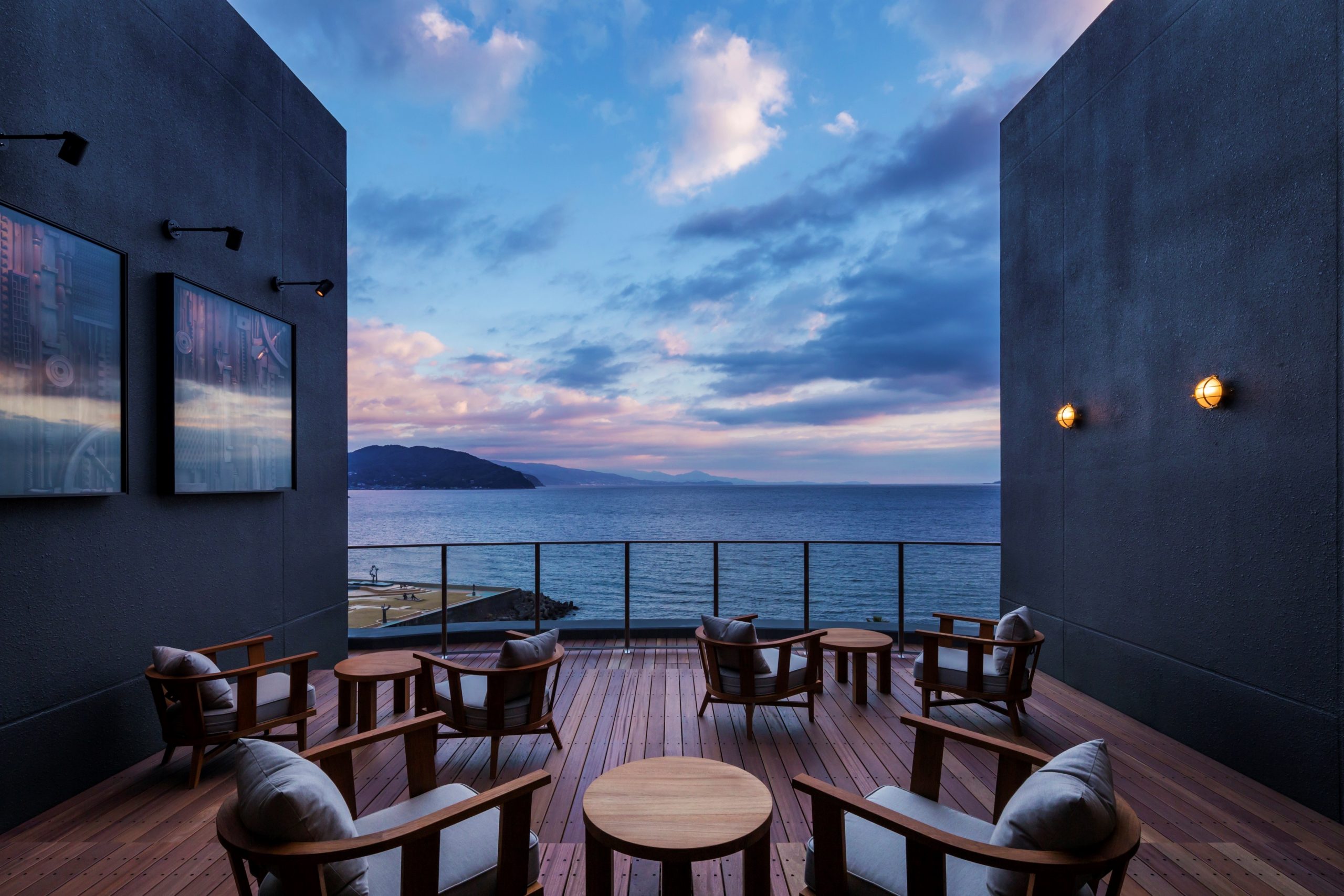
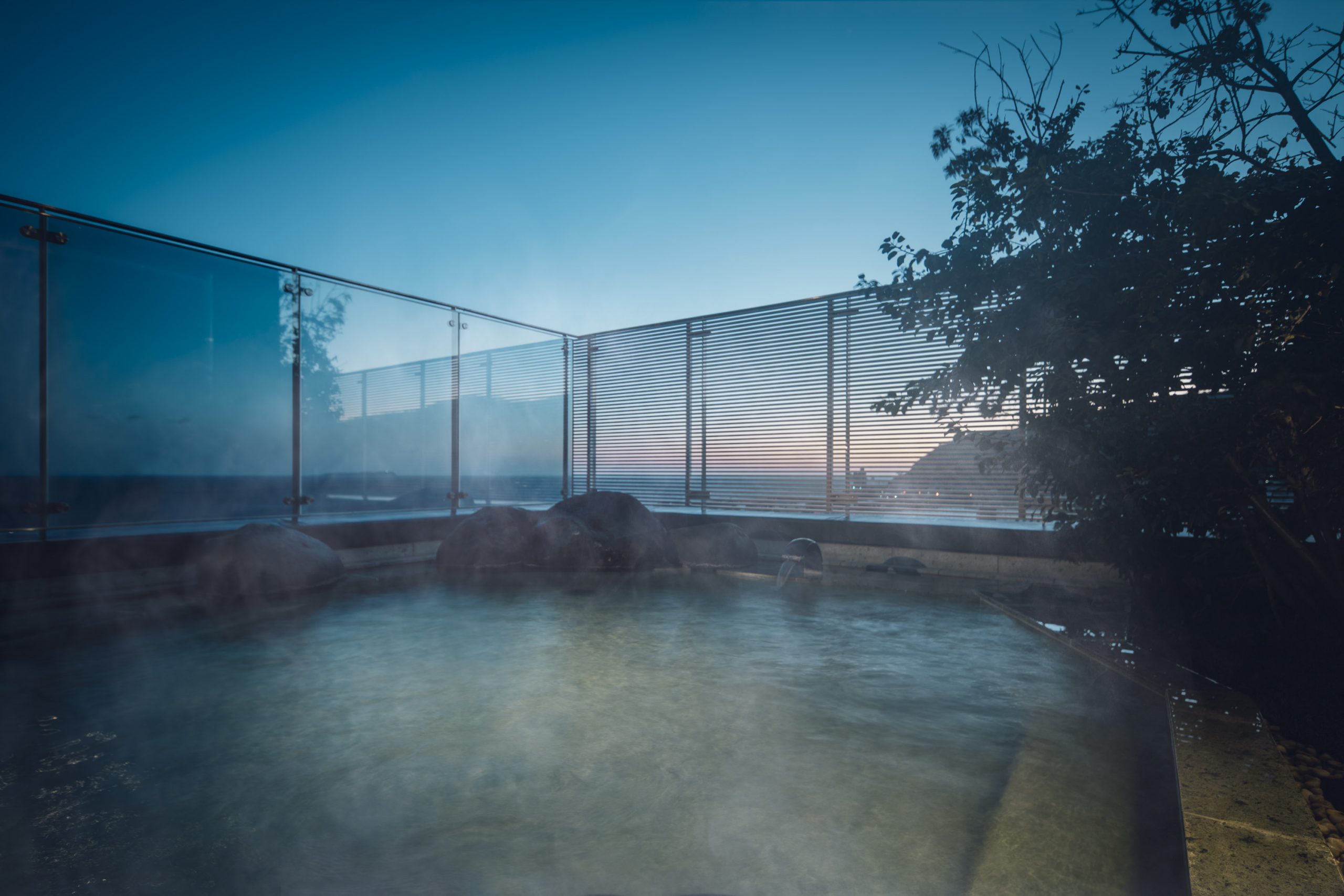
Ito was the site of Japan's first Western-style sailing shipbuilding. At the mouth of the Matsukawa River, where a sand dock once stood, a modern-looking inn catches the eye. That is Hoshino Resorts KAI Anjin. It is a hot spring inn with a story to tell, recalling "Anjin Miura," a hero of the sea who greatly influenced Ieyasu's view of the world. After soaking yourself in the hot springs that would have soothed the carpenters who took on the challenge of building Western-style sailing ships, you can enjoy the deck-style atmosphere of the "Sanbuena Deck" with a drink in hand. The view of the ocean and the sea breeze, unchanged from those days, will add color to your trip.

- Hoshino Resorts KAI Anjin
-
- 5-12 Nagisa-cho, Ito-shi, Shizuoka MAP
- 5 minutes drive from JR Ito Station
- Kai Reservation Center 050-3134-8092 (open 9:30-18:00)
- Available
 Click here to make a reservation
Hoshino Resorts KAI Anjin Reservation Site

Michikusa experts who wrote this article
-
Takako Kawaguchi
Editor and writer. After working as an editor for a major publishing company's women's magazine for 10 years, she became a freelance writer. Writes articles for magazines and websites, focusing on travel, interior design, and miscellaneous goods. She enjoys watching sports with her husband and going on hot spring trips.
 Michikusa's
guru
Hoshino Resorts KAI Anjin
Ito Hot Spring, Shizuoka Prefecture
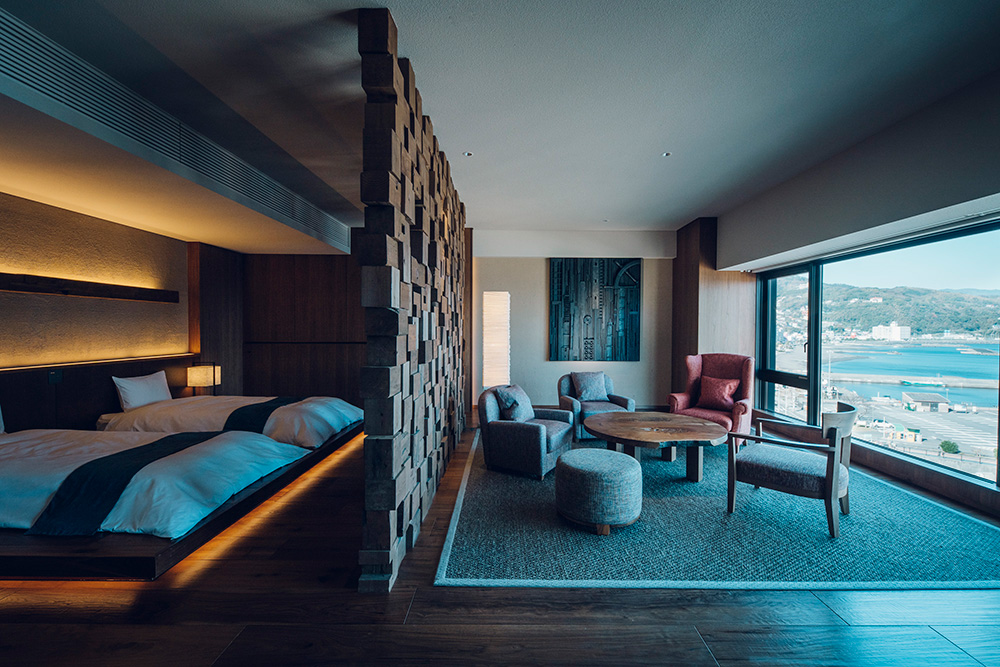
A modern hot spring inn with Guest rooms with ocean views and artwork related to the sea and boat trips

Access by bus 15 minutes on foot or 5 minutes by cab from JR Ito Station
- Example of Accommodation Rates
- 1 person per night From 17,000 yen