





Recommended Autumn Foliage Spots in Aizu Area (Aizu Wakamatsu, Kitakata, Bandai, Inawashiro)
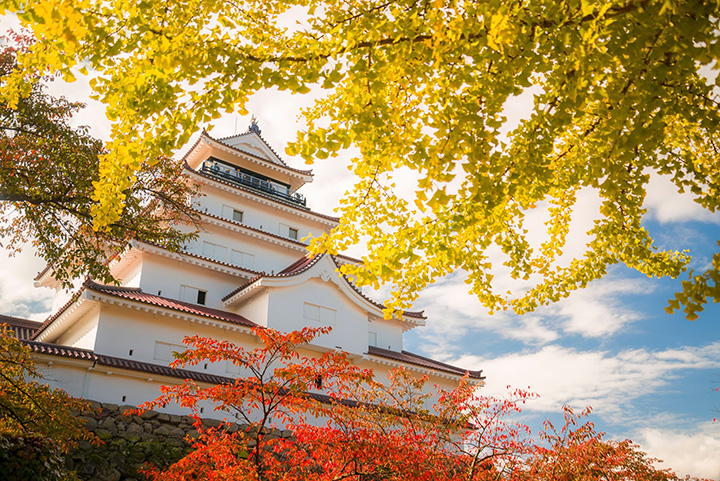
The Aizu region of Fukushima Prefecture is home to many spots that will tickle your traveler's fancy, such as Aizu Wakamatsu, which was the stage of history at the end of the Edo period, Lake Inawashiro with its crystal clear waters, and the majestic Bandai-san, which has been the object of mountain worship since ancient times. The autumn leaves, which begin to change color around Mt. Bandai and Lake Inawashiro around the end of September, take about a month to move down to Aizu Wakamatsu City, where Tsurugajo Castle is located. Here are some of the best spots in the Aizu region to enjoy the autumn colors.
Aizuwakamatsu Area
Kitakata Area
Bandai Area
- 3 Bandaisan Gold Line
- 4 Bandaisan Enichiji Temple Museum (Historic Site of Enichiji Temple)
- 5 Nakatsugawa Valley
Inawashiro Area
<Highland Resort Hotel overlooking Mt.
Aizuwakamatsu Area
1Tsurugajo Castle
Beautiful contrast between the white walls of the castle tower and the glossy autumn leaves
This is one of the most famous autumn foliage spots in Aizuwakamatsu City. Despite its glamorous red-tiled appearance, the castle is an impregnable fortress that withstood a month-long onslaught by the government forces during the Boshin War (1868-1868). The white walls against the blue sky are impressive, but in autumn, the colored maple, cherry, and ginkgo trees give the castle a graceful appearance.
Behind the "Rinkaku" teahouse in the castle's main building is the largest maple tree in the castle, where you can sip a cup of tea while enjoying the autumn leaves. You can also enjoy the autumn leaves in such an atmospheric way. The castle has a long and distinguished history, so why not enjoy the autumn scenery?
The first changing of the colors usually occurs in mid-October.
Usually from late October to mid-November.
Types of foliage: Japanese maples, cherry trees, ginkgo trees, etc.
- Tsurugajo Castle
-
 1-1 Otemachi, Aizuwakamatsu City, Fukushima Prefecture MAP
 20 min. ride on Aizu Bus Machinaka Shuttle Bus "Haikara-san" from JR Aizuwakamatsu Stn. and get off at "Tsurugajo Iriguchi". 2 min. walk from the bus stop.
 8:30-17:00 (last admission at 16:30)
 No holidays
 Keep entrance fee: Adults 410 yen, children 150 yen
 0242-27-4005 (Tsurugajo Administration Office)
 Charged
Kitakata Area
2Shingu Kumano Shrine
An 800 year-old giant ginkgo tree turns the majestic old shrine into a golden color
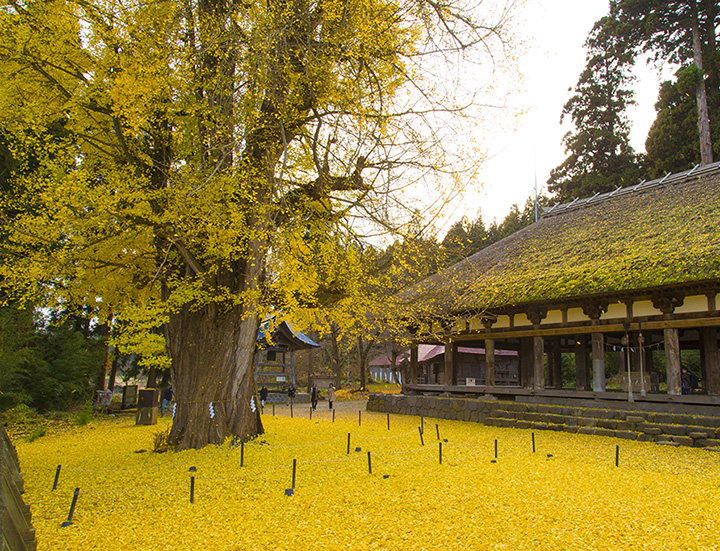
In mid-October, the 800-year-old sacred tree, a large ginkgo tree, on the grounds of the shrine turns golden and has an overwhelming presence. Near the tree is the "nagatoko," a worship hall with 44 columns in the shinden-zukuri style, and the harmony between the majestic building and the large ginkgo tree is breathtaking. The ginkgo leaves begin to fall in mid-November, which is also a special time of year. The ginkgo leaves begin to fall in mid-November, when they begin to dance around the temple, creating a yellow carpet that is like a work of art.
Beginning of color change] Usually in mid-October.
Best time to see the leaves: Usually from late October to mid-November.
Ginkgo (Ginkgo biloba)
- Shingu Kumano Shrine
-
- 2258 Shingu Kumano, Keitoku-cho, Kitakata City, Fukushima Prefecture MAP
 10 min. drive from JR Kitakata Station
- 8:30-17:00 (Sat., Sun., national holidays from December to March, 9:00-16:00 only)
- Adults 300 yen, high school students 200 yen, junior high school students and younger free
- 0241-23-0775
- Free of charge
Bandai Area
3Bandaisan Gold Line
A 17.6 km-long driving course to enjoy the autumn leaves
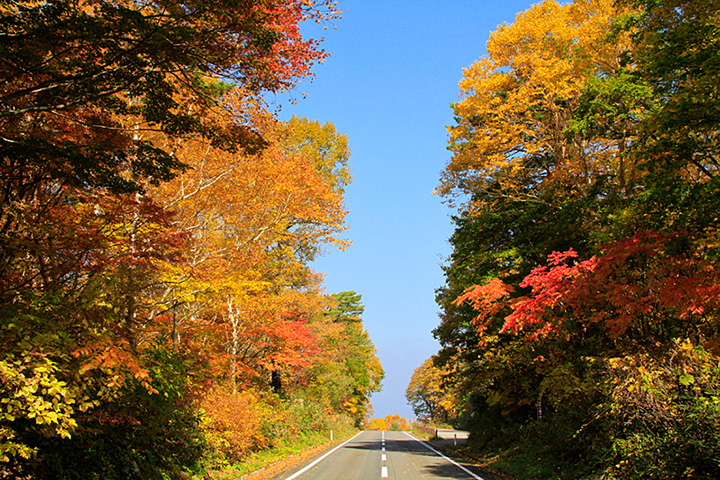
If you are going by car, the "Bandaisan Gold Line," a driving course that runs north to south along the west face of Bandaisan and connects Lake Hibarako to Bandai Town, is recommended. The 17.6-km road, which allows you to fully enjoy the magnificent nature of Aizu, has many scenic spots, including Maboroshi no Taki Waterfall and Mochiko-dai overlooking Lake Hibara, and Happodai, a busy trailhead for climbing Mt. At Kogane-daira, you can enjoy the contrast between the rugged rocky crater walls of Bandai-san and the autumn leaves.
In early October, the gradation of autumn leaves can be seen from the top to the bottom of Bandai, and the beautiful autumn scenery will refresh your heart.
The beginning of the changing of the colors: Usually in late September.
Best time to see the leaves: Usually from mid-October to early November.
Kinds of foliage】Beech, oak, maple, etc.
- Bandaisan Gold Line
-
- Bandai-cho, Yama-gun, Fukushima-ken, Oaza Sarashina Aza Maarai-ba - Kitashiobara-mura Hinohara Yuhei Mountain MAP
- Approx. 35 min. by car from JR Kitakata Station, approx. 20 min. by car from Bandai Kawahigashi IC of Ban-Etsu Expressway
- Mid-April to mid-November *If the road is frozen, it may be closed.
- Free of charge
- 0241-32-2349(Urabandai Tourist Association)
- Free of charge
4Bandaisan Enichiji Temple Museum (Historic Site of Enichiji Temple)
The bright red maple trees that decorate the garden are well worth seeing.
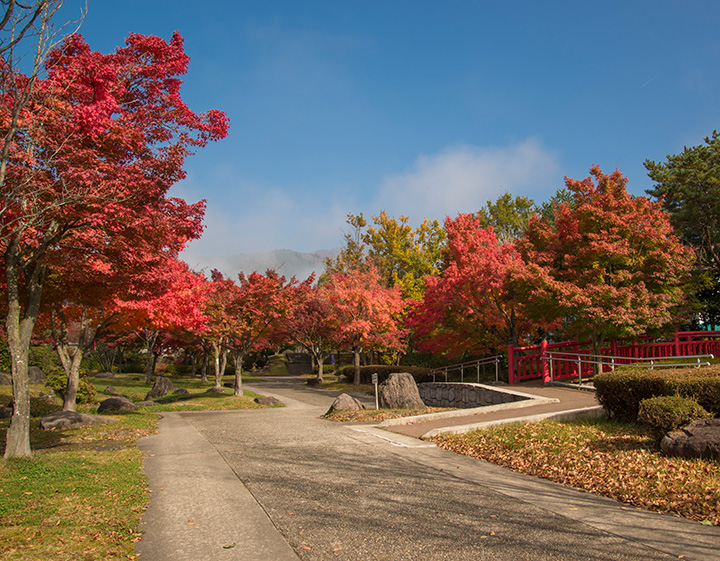
This museum preserves and exhibits cultural assets related to Keinichiji Temple, the birthplace of Buddhism in Aizu, which has a history of 1,200 years. At its peak, the temple was a large Buddhist city with a forest of Dotogaran, where many monks and priests lived. Even today, the 17,000 m2 site is dotted with historic gates, temples, and halls, as well as a restored vermilion-lacquered "Golden Hall" and other structures. Among the simple scenery typical of the sato-dera, the autumn leaves around the museum are particularly impressive. The beautiful scenery of bright red maple trees planted along the sides of the pond and the stream is very impressive.
There is also an old private house café near the museum where you can enjoy a cup of coffee after a stroll.
It is a 20-minute walk from Bandai-cho Station, and there is also a roadside station nearby, so it is a good place to visit for sightseeing.
Beginning of color change] Usually in mid-October
Usually from late October to mid-November.
Kind of foliage】Iroha maples, metasequoias, etc.
- Bandaisan Enichiji Temple Museum (Historic Site of Enichiji Temple)
-
- 381 Bandaiji-Nishi, Bandai-cho, Yama-gun, Fukushima MAP
- 20 min. walk from JR Bandai-cho Station
- April 10-November 30, 9:00-17:00 (last admission at 16:30)
- Open every day during the period
- Common admission ticket (including Kondo and Chumon gate): Adults and university students: 500 yen, high school students and younger: free
- 0242-73-3000
- Free of charge
5Nakatsugawa Valley
This is art created by nature. The autumn leaves are like a carpet of brocade.
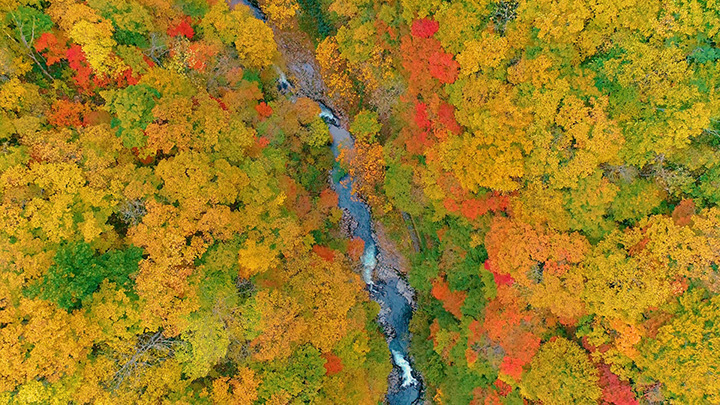
This is one of the most beautiful valleys in the Tohoku region, and is a must-see autumn foliage spot in Urabandai. It is a 10-km-long gorge at the headwaters of the Nakatsu River, which flows into Lake Akimoto, one of the three lakes of Urabandai along with Lake Hibara and Lake Onogawa, and is an unexplored region with rapid streams, precipitous cliffs as high as 100 m, and dense virgin forest.
Usually around mid-October, beech trees, maple trees, and larch trees change color, and a carpet of brocade spreads across the valley, giving the area a grand sense of scale. If you want to take your time and enjoy the powerful autumn colors, we recommend the Akimoto-Nakatsugawa Gorge Trail, which leads down to the gorge from the side of the Nakatsugawa Rest House, where the parking lot is located. It takes about 15 minutes one way, and you can enjoy the autumn leaves from various perspectives, both on the bridge and on the riverbank. The green coniferous trees and the red and yellow broad-leafed trees make for a spectacular view that can be enjoyed during a leisurely stroll.
Start of changing of colors] Usually in early October.
Best time to see the leaves: Usually from mid-October to early November.
Kinds of foliage】Beech, maple, larch, etc.
- Nakatsugawa Valley
-
- Hibara, Kitashiobara-mura, Yama-gun, Fukushima MAP
- 28 minutes drive from JR Inawashiro Station, 26 minutes drive from Inawashiro IC on Banetsu Expressway
- 0241-32-2349(Urabandai Tourist Association)
- Free of charge
Inawashiro Area
6HANITSU Shrine
The precincts of the temple are dyed in a carpet of red.
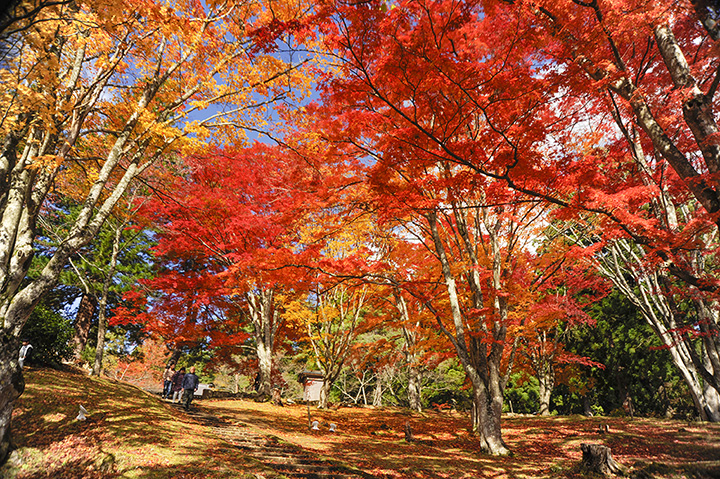
A carpet of bright red maple trees can be seen at the shrine associated with Masayuki Hoshina, the first feudal lord of Aizu, who laid the foundation of the Aizu region. The shrine is only a 10-minute drive from the Inawashiro Bandai-kogen Interchange, making it an easy place to stop by on a road trip, and many visitors come to enjoy the autumn leaves.
From late October to early November, when the leaves are at their peak, the maple and ginkgo trees at the entrance to the shrine are dyed in red, and the contrast between the symbolic white Otorii gate and the bright red maple trees is especially beautiful to behold. When the maple trees begin to fall, the shrine grounds are covered with red fallen leaves, creating a spectacular sight.
Beginning of the changing of colors: Usually in mid-October.
Usually from late October to early November.
Kinds of foliage: Japanese maples, maples, ginkgo, etc.
- Hahnitsu Shrine
-
- 1 Aza-Minabeyama, Inawashiro-cho, Yama-gun, Fukushima MAP
- 10 minutes drive from JR Inawashiro Station
- 10:00-16:00 (April-November: 9:00-17:00 on weekends and holidays)
Regularly open 24 hours a day, 365 days a year. - No holidays
- Free of charge
- 0242-62-2048(Inawashiro Tourist Association)
- Free of charge
7Tatsuzawa Fudo Waterfall
This is truly a waterfall in the autumn. A famous waterfall surrounded by beech trees and maple trees
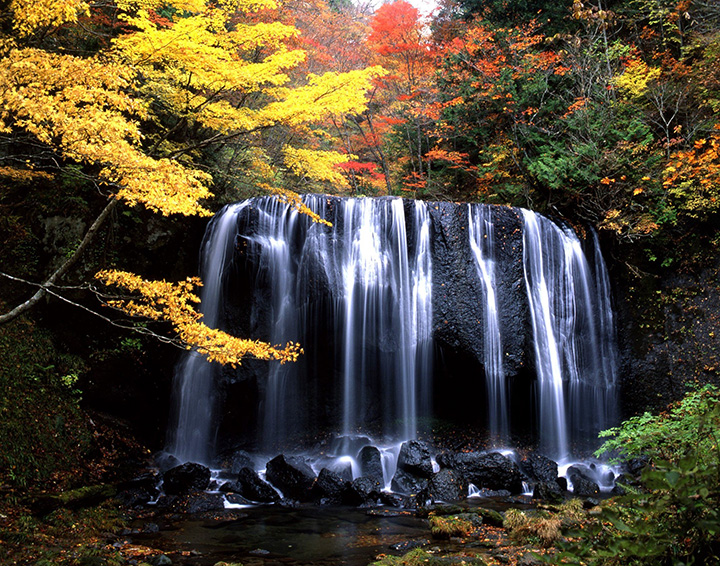
Along with spectacular waterfalls, visitors can enjoy the colorful autumn leaves at the famous Fudo River, which originates from the 1,667-meter-high Funamyojin Mountain located in the Adatara Mountain range. A 15-minute drive from Nakanosawa Hot Spring, deep into the mountains behind the hot spring resort, will bring you to the waterfall, which once flourished as a Buddhist asceticism center.
In the midst of a virgin forest of beech and maple trees, the majestic Otoko-taki Fall (10 m drop and 16 m wide), with water cascading down the black rock surface like a sudare, and the calmly flowing Onna-taki Fall next to it are truly a beautiful work of art. Fudo Myoo is enshrined at the base of the waterfall, so be sure to pay a visit. You will be healed in mind and body by the view full of negative ions that you will want to gaze at forever.
Beginning of color change] Usually early October
Best time to see the leaves] Usually from mid-October to late October
Kinds of foliage: Japanese beech, maple, Japanese horse chestnut, etc.
- Tatsuzawa Fudo Waterfall
-
- Tatsuzawa District, Inawashiro Town, Fukushima Prefecture MAP
- Approximately 28 minutes by car from JR Inawashiro Station
- 0242-62-2048(Inawashiro Tourist Association)
- Free of charge
<Highland Resort Hotel overlooking Mt.
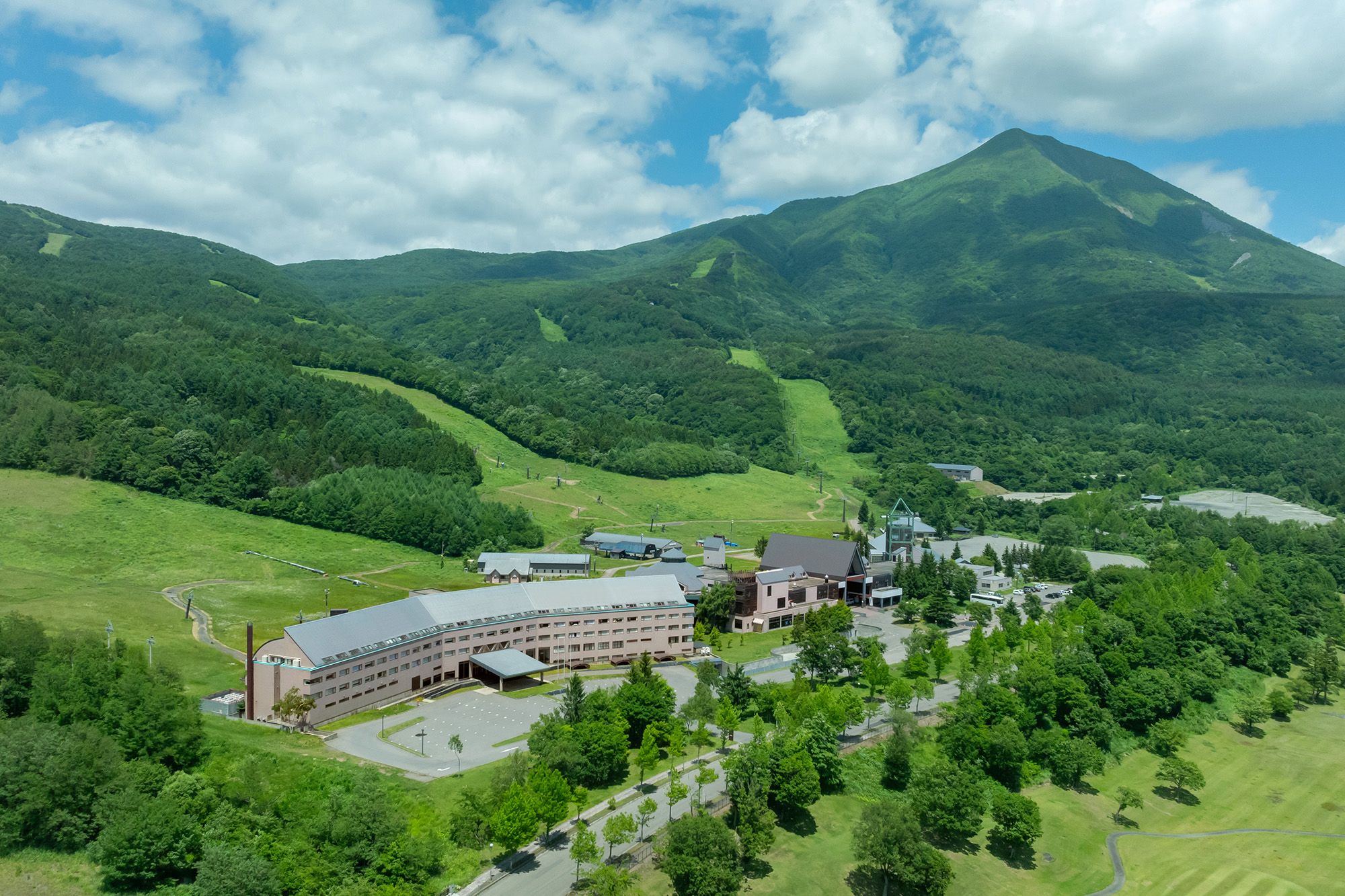
After enjoying sightseeing, how about relaxing at a resort hotel located at the foot of Mt. You can feel the history and culture of Aizu during your stay at the hotel.
8Bandaisan Onsen Hotel by Hoshino Resorts
An inn where you can fully enjoy Aizu culture and stay active all year round

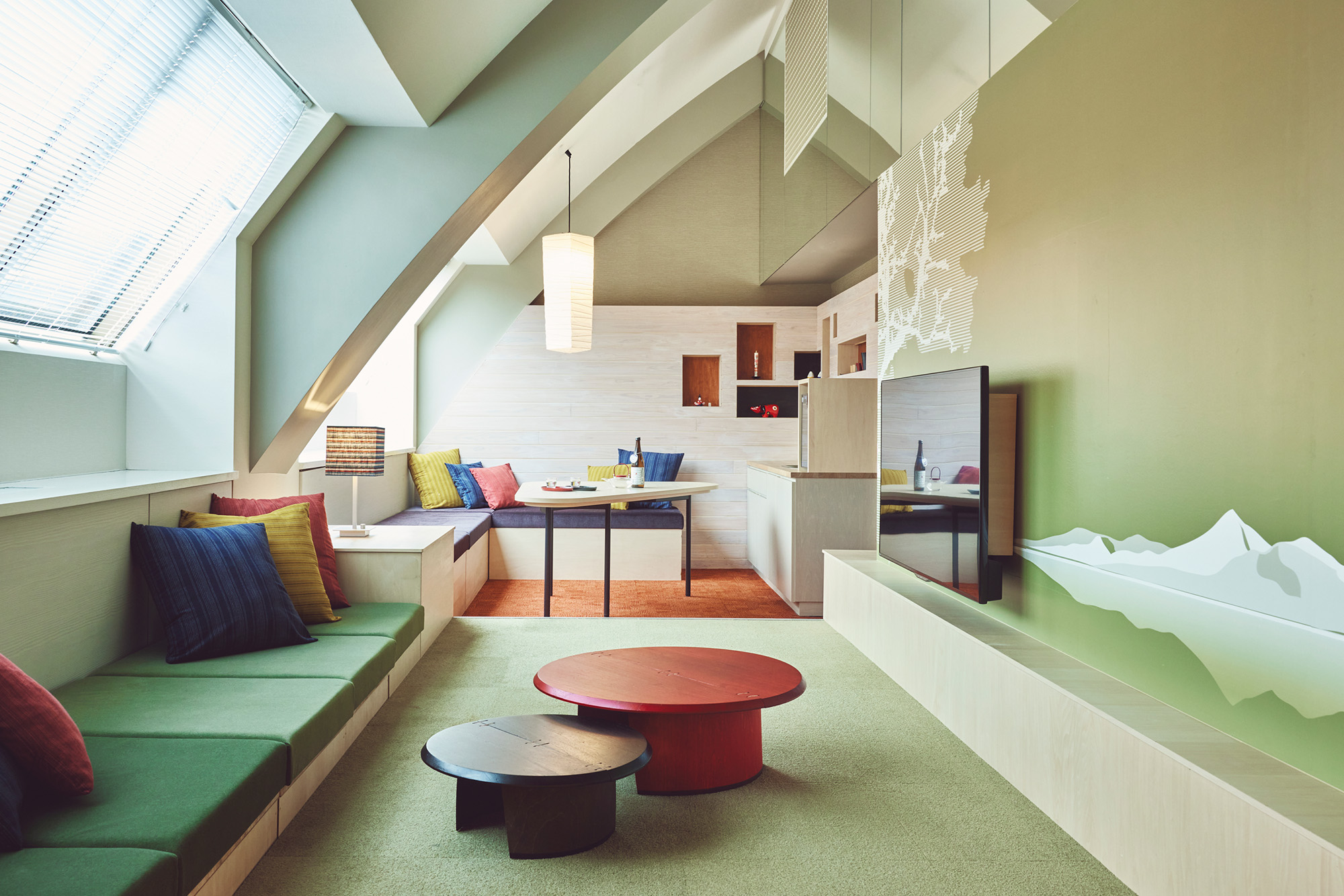
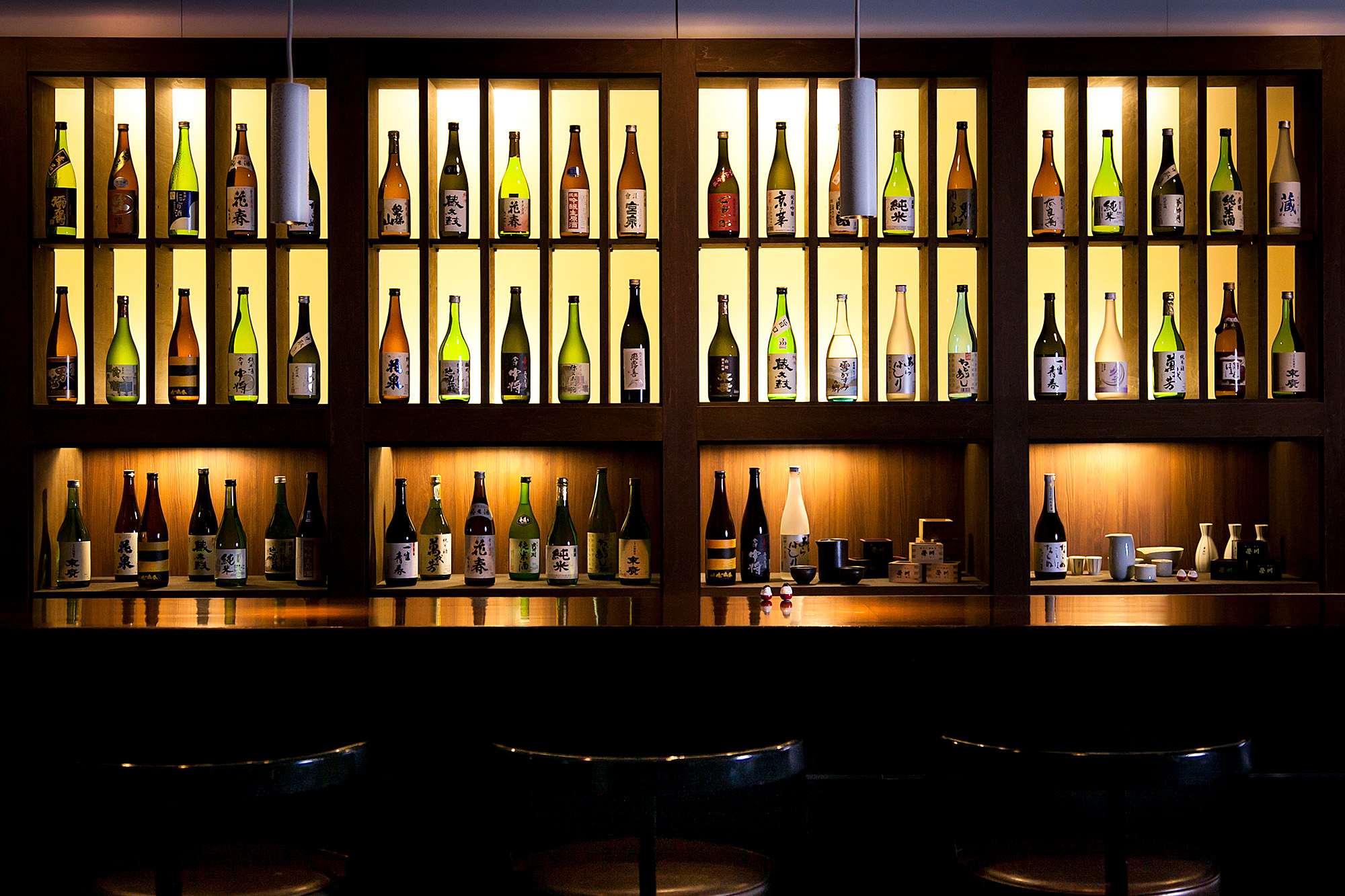
Bandaisan Onsen Hotel by Hoshino Resorts is located in a place where "Bandaisan," one of the 100 most famous mountains in Japan, towers in front of you and Lake Inawashiro shines like a mirror below. With a heated swimming pool, spa, and hot springs, guests can enjoy a stay that brings them into contact with the unknown culture of Aizu. You can stay active from the season of fresh green to the season of blazing autumn leaves and deep snow. Enjoy a highland resort stay amidst magnificent nature and the changing seasons.

- Bandaisan Onsen Hotel by Hoshino Resorts
-
- 6838-68 Kiyomizu-Hirazu, Sarashina, Bandai-cho, Yama-gun, Fukushima MAP
- 15 min. by free shuttle bus from JR Bandai-cho Station
- 050-3134-8094(Reservation center/9:30-18:00)
 Bandaisan Onsen Hotel by Hoshino Resorts Reservation Site
MAP
- Aizuwakamatsu Area
- Kitakata Area
- Bandai Area
- Inawashiro Area
- <Highland Resort Hotel overlooking Mt.
-
- Hoshino Resorts facilities nearby

Local Guide who was in charge of this article

- Saori Kuji Active girls full of love for Aizu
Bandaisan Onsen Hotel by Hoshino Resorts
Yama-gun, Fukushima Prefecture
The hotel overlooks Lake Inawashiro below at the foot of Mount Bandai in Aizu. You can enjoy the rich nature and the culture of Aizu to the fullest.

Access by bus Approx. 15 minutes by cab from JR Bandai-cho Station
- Example of Accommodation Rates
- 1 person per night From 12,000 yen