





2025 Edition] 9 Autumn Foliage Spots around Ibaraki Prefecture in Autumn
![2025 Edition] 9 Autumn Foliage Spots around Ibaraki Prefecture in Autumn](https://hoshinoresorts.com/guide/wp-content/uploads/2021/09/tk_main.jpg)
History, art, and the latest science and technology coexist vividly in Ibaraki Prefecture. With the mountains and the sea close by, Ibaraki is a place where you can feel the history of the place and refresh yourself with physical exercise. From parks you can casually visit on your way to town, to scenic spots you may want to take a short trip to see, here are some of Ibaraki's most spectacular autumn spots.
Tsukuba Area
1Mt. Tsukuba
Experience the magnificent scenery sung about in Manyoshu

The magnificent mountain, which rises above the Kanto Plain, has been popular among people since it was written about in the Manyoshu (The Anthology of Myriad Leaves), and the autumn colors of the trees begin to change from the top in late October and are at their best in November.
Mt. Tsukuba Shrine, located halfway up the mountain, enshrines Mt. Tsukuba itself as its sacred body, and is a shrine with a long history of faith that has been handed down from ancient times to the present. Direction can be reached in about 8 minutes by cable car from the nearby Miyawaki Station, where you can view the beautiful autumn leaves from the window of the car. There is also a ropeway and several climbing courses, so you can easily enjoy the journey to the summit according to your purpose and physical strength.
Autumn foliage viewing season: Usually from early to late November.
Tree species】Tree species: ivy, oak, poison ivy, Japanese maples, etc.

Local Guide
Supporters
Mt. Tsukuba has two peaks, the Nantaiyama and Nyotaiyama. From the foot of the mountain, there is a cable car to the Nantaiyama peak and a ropeway to the Nyotaiyama peak. There is also a hot spring where visitors can take a day trip after climbing the mountain.
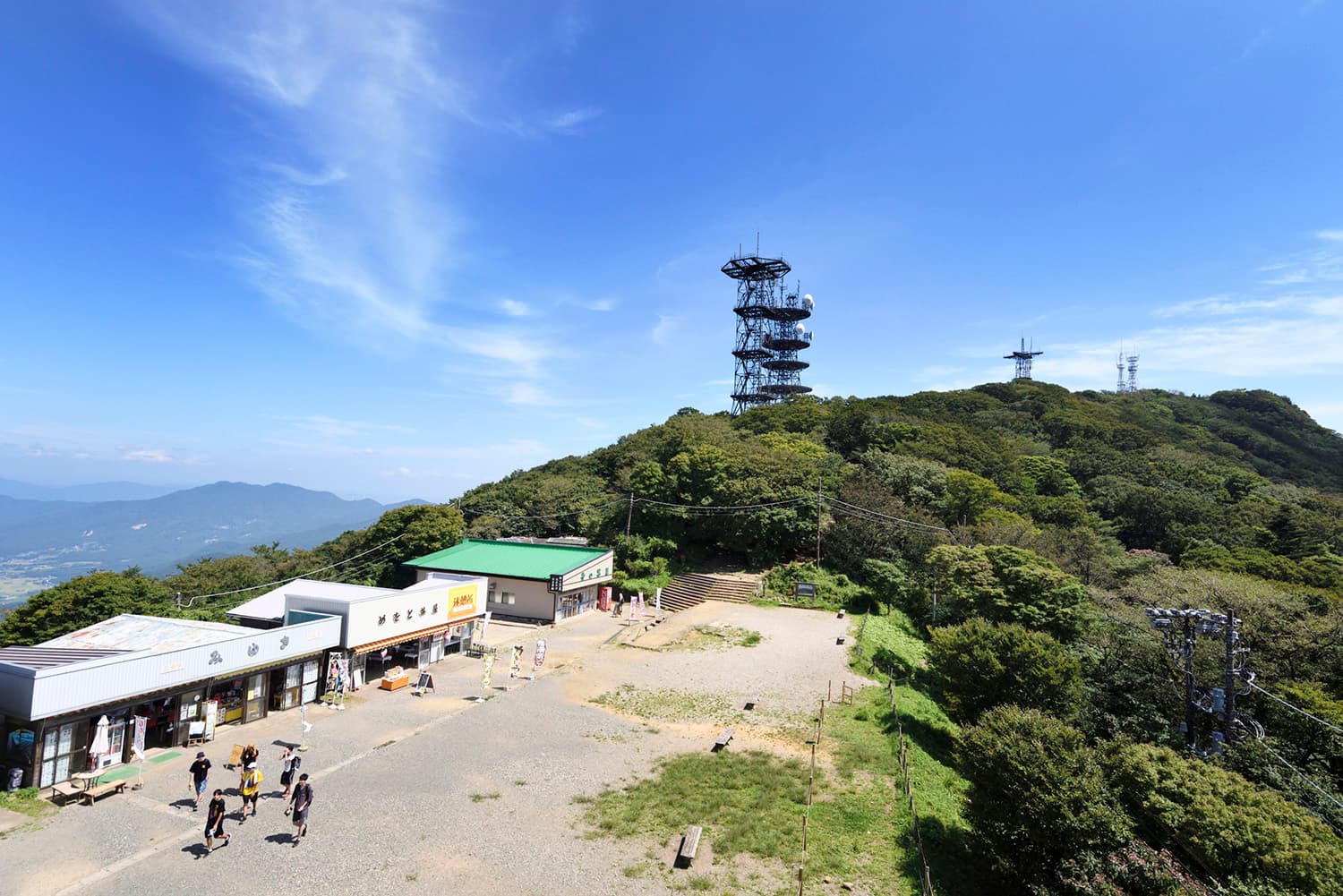
- Mt. Tsukuba
-
 1 Tsukuba, Tsukuba City, Ibaraki Prefecture MAP
 Approximately 43 minutes by car from JR Tsuchiura Station (near Miyawaki Station on the Mt. Tsukuba Cable Car)
 Mt. Tsukuba Cable Car 9:00-17:00
Temporary service is available when there are many passengers. Mt. Tsukuba Cable Car: Open year-round (may be closed for maintenance during winter)
 Mt. Tsukuba Cable Car Adults: 590 yen one-way, 1,070 yen round-trip
Children: 300 yen one-way, 540 yen round-trip (free for children under 6 years old) 029-866-0611 (Tsukuba Kanko Railway Co.)
 Charged
 For cable car and ropeway operation times and fares, please check the Tsukuba Kanko Railway Co.
2Science Expo Commemorative Park
Ginkgo trees lined with ginkgo trees popular in the school town

The park was built on the former site of "Science Expo '85 Tsukuba," which was held in 1985. The park is open and spacious enough to spend a relaxing time. The ginkgo trees surrounding the plaza usually turn yellow in mid-November, and people can be seen strolling and running from early in the morning to enjoy the golden color of the tree-lined avenue.
The symbol of the park is the "Gate of Science. Depending on the direction of view, the faces of four scientists, Edison, Archimedes, Newton, and Galileo, appear in the center of the gate. Check out the reflection of the trees on the shining silver gate as well.
Best time to see the autumn leaves: Usually mid to late November.
Kind of trees】Ginkgo, etc.
Local Guide
Supporters
The park has a large lawn, pond, iris garden, and all-weather tennis courts. We recommend that you bring your own lunch and play equipment and spend a relaxing time there.

- Science Expo Commemorative Park
-
- 6 Miyukigaoka, Tsukuba City, Ibaraki Prefecture MAP
- Approximately 20 minutes on foot from Tsukuba Express Banpaku Kinen Koen Station
 Take a bus from Tsukuba Express Banpaku Kinen Koen Stn. and get off at "Kagaku Banpaku Kinen Koen" stop.
- 029-856-1005 (Tsukuba City Park Facilities Division)
- Free of charge
3Dobo Park
Feel the autumn colors in this urban oasis

This comprehensive park covers an area of 20 hectares. The area around Dobonuma Swamp in the center of the park is especially lush with greenery, and the trees show various expressions in each season. In autumn, visitors are welcomed by the golden ginkgo trees that line the path from the park entrance to the Dobong Swamp, where they can picnic in the plaza while enjoying the beautiful contrast with the reddish autumn leaves at various places in the park.
The spacious park also has an adventure plaza with field athletic and combination playground equipment, an indoor heated swimming pool, and other Sports Properties, making it possible to spend a whole day there regardless of the season.
Best time to view autumn foliage: Usually mid to late November.
Tree species: Ginkgo, maple, etc.
Local Guide
Supporters
Three walking/jogging trails paved with soft rubber-chip urethane are maintained around Dobong Swamp. Each of them has different lengths and routes, so you can choose the one that best suits your strolling time.

- Dobo Park
-
- 2-20 Ninomiya, Tsukuba City, Ibaraki Prefecture MAP
- Approx. 9 min. by car from Tsukuba Station on the Tsukuba Express.
- Take a bus from Tsukuba Station on the Tsukuba Express and get off at Dobo Koen (Dobo Park).
- The fee-paying Property in the park is closed on the 1st Wednesday of every month (or the following week if the Wednesday is a national holiday), December 31, and January 1.
- 029-852-1432
- Charged
- Please check the website for information on the hours of operation of the Park's Property and fees.
Mito Area
4Ibaraki Prefectural Museum of History
Walking along the carpet of ginkgo trees, recalling the history of the area

The History Museum combines the functions of a museum and an archives to tell the history of Ibaraki Prefecture. The museum also houses many documents and artifacts related to the Hitotsubashi Tokugawa family, and some of these valuable materials are open to the public.
In autumn, the 60 ginkgo trees leading to the main building turn into a beautiful yellow carpet of leaves. The "History Museum Ginkgo Festival" is usually held in November, with various events and lighting up of the trees. The ginkgo trees illuminated by lights are fantastic and attract many visitors who enjoy taking pictures.
Best time to view autumn foliage: Usually from early to mid-November.
Tree species】Ginkgo etc.
▼ History Museum Ginkgo Festival
Period: November 1 (Sat) - 24 (Mon), 2025
Local Guide
Supporters
Kairakuen Garden, one of Japan's three most famous gardens, is located in the immediate vicinity. Kairakuen Omote-mon Gate, the main gate of the garden since its opening, is only a few minutes' walk from the Prefectural Museum of History, so why not extend your visit there as well?
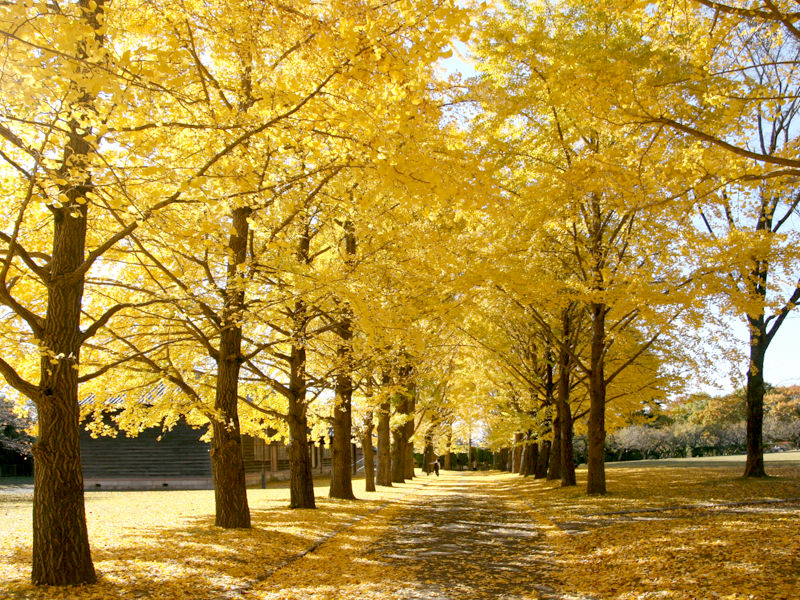
- Ibaraki Prefectural Museum of History
-
- 2-1-15 Midorimachi, Mito City, Ibaraki Prefecture MAP
- Approximately 7 minutes from JR Mito Station by car
- Take a bus from JR Mito Station, and get off at "Rekishikan Kairakuen Iriguchi" stop. 2 min. walk from the bus stop.
- Garden hours: Feb. 20-Sept. 30, 6:00-19:00; Oct. 1-Feb. 19, 7:00-18:00
Honkan: 9:30 - 17:00 (admission until 16:30) - Mondays (if Monday is a national holiday, the museum is closed the following day)
- Free for the garden, charged for the exhibition in the Honkan (see website for details)
- 029-225-4425
- Free of charge
5Kairakuen Garden
A garden adorned with tradition and a valley of vivid maple trees

The garden was created by the feudal lord Nariaki Tokugawa in 1842. From Kobun-tei, which stands on a hill, visitors can view not only the garden but also the maple trees, maples, and ginkgo trees along Senba Lake as they change colors. The bright red autumn leaves of the "Maple Valley," located at the extension of the garden from the main garden where Kobun-tei is located, are also magnificent. The valley is usually lit up from mid to late November.
To get to Momiji-dani (Maple Valley), go through the park from the Tukyokusen exit, cross the pedestrian bridge, and enter from "Tokugawa Museum Street". Direction to Momijidani can be directly accessed by taking the bus from Mito Station and getting off at "Sakurayama".
Maple viewing season: Usually from early November to late November.
Types of trees】Momiji, maple, etc.
Local Guide
Supporters
The view looking down from Kairakuen is, of course, worth seeing, but the autumn leaves of Kairakuen seen from the adjacent Senba Lake are also worth seeing. If you have time, take a walk along Senba Lake and see Kobun-tei at sunset.

- Kairakuen Garden
-
- 1-3-3 Tokiwa-machi, Mito City, Ibaraki Prefecture MAP
- Approx. 10 min. by car from JR Mito Stn.
- Approximately a 7-minute walk from the History Museum/Kairakuen Entrance bus stop after taking the bus from JR Mito Station.
- Mid-February to Sept. 30, 6:00-19:00; Oct. 1 to mid-February, 7:00-18:00
- No holidays
- Adults 320 yen, elementary and junior high school students 160 yen
- 029-244-5454
- Free of charge, subject to a fee
- For more information about the hours of operation, the nearest bus stop, and the entrance to Kobun-tei, please check the website.
Joso Area
6Mizukaido Fudo Museum Sakano Family Residence
Viewing the autumn leaves in a landscape that takes you back in time
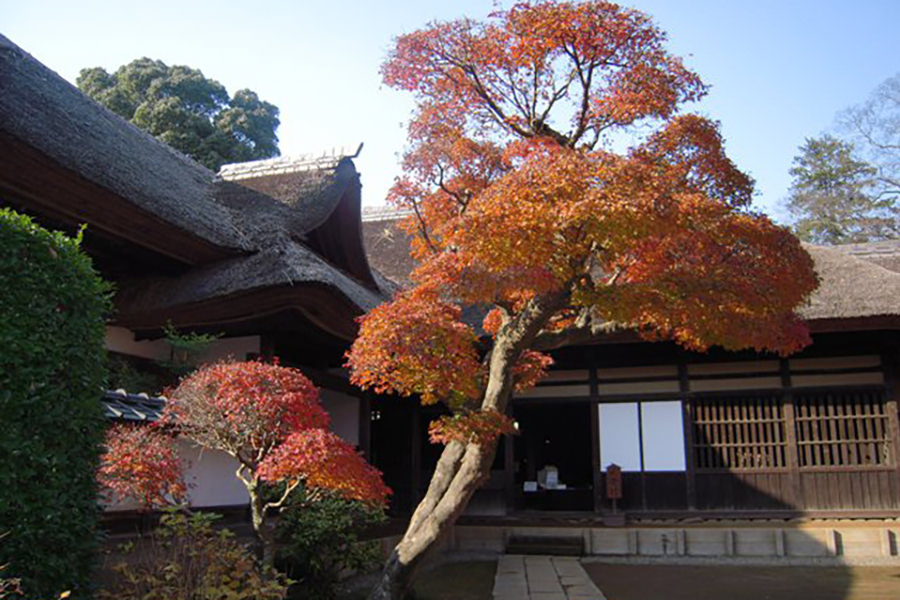
The 1 hectare site includes the main house, which was restored to its original appearance in the mid-19th century, a shoin (a Japanese-style drawing room) reconstructed in the Taisho era (1912-1926), and a beautiful garden and bamboo grove that recreate the atmosphere of that era, making visitors feel as if they have stepped back in time.
From the second floor of "Gassharo," a shoin built on the west side of the main building, you can look down on the garden, which turns red during the autumn foliage season. The view through the Taisho period-era glass doors is quite different. The main building, front gate, and attached wall are registered as a National Important Cultural Property.
Autumn foliage viewing season: Usually from early November to late November.
Types of trees】Momiji, dodan azalea, ginkgo, etc.
Local Guide
Supporters
The Sakano Family Residence is also known as a filming location for TV dramas, commercials, and movies. In addition to the main house and shoin, the bamboo grove on the grounds is a famous filming spot often used in period dramas.

- Mizukaido Museum of History and Culture Sakano Family Residence
-
- 2037 Oseigo-cho, Joso-shi, Ibaraki MAP
- 10 min. drive from Kanto Railway Mizukaido Stn.
- April-October: 9:00-18:00 (open until 17:00), November-March: 9:00-17:00 (open until 16:00)
- Mondays (if Monday is a national holiday, the museum is open on Monday and closed the following day), year-end and New Year holidays
- General admission: 300 yen, Elementary, junior high, and high school students: 100 yen
- 0297-24-2131
- Free of charge
Kasama Area
7Kitayama Park
A water mirror reflecting the colorful mountain scenery

The park is covered with broadleaf forests, and in November the entire park is dyed red and orange. Shiratori Lake in the park is a scenic spot selected as one of the 100 best sightseeing spots in Ibaraki Prefecture, and visitors can enjoy the contrast between the autumn leaves reflected on the surface of the water and the blue sky.
The nearby promenade, which takes about 25 minutes to walk around, is perfect for a casual stroll. In addition to viewing the city's autumn foliage from the observatory, one of the best ways to enjoy the autumn leaves in Kasama City is to ride the 161-meter-long "roller slide," a specialty of Kitayama Park, through the brightly colored grove of trees.
Best time to view autumn foliage: Usually from early November to late November.
Kind of trees】Momiji, maple, etc.
Local Guide
Supporters
Direction by car is recommended if you are not sure about your stamina or if you are short on time, as there is a continuous slope from the foot of the mountain to the center of the park. From the car window, you can enjoy the scenery decorated with maple trees and maples leading up to the Parking.
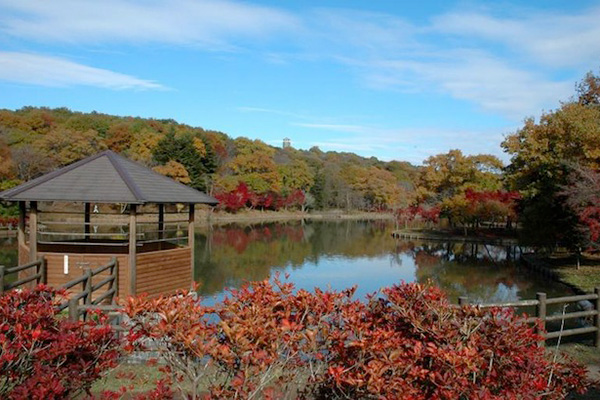
- Kitayama Park
-
- 1416-1 Tairamachi, Kasama-shi, Ibaraki MAP
- 10 minutes drive from JR Tomobe Station
- From JR Tomobe Station, take the "Kasama Kanko Shuyu Bus" and get off at "Kitayama Koen Iriguchi" (20 min. walk).
- Apr-Sep 9:00-18:00, Nov-Feb 9:00-16:00, Mar-Oct 9:00-17:00
- 0296-78-3911(Kitayama Park Management Office)
- Free of charge
8Sashirosanroku Park
A park at the foot of Kasama Castle overlooking the castle town

The park is located at the foot of Mt. The park was once the residence of the Kasama clan, and the "Toki Bell Tower," a city-designated cultural property, is a reminder of those days. When you enter the park, you will see ginkgo and maple trees with thick trunks and magnificent branches standing majestically, as befits a historical place.
From the park, a hiking trail leads to the top of Mt. Visitors can enjoy the autumn foliage while thinking about the history of the area.
Autumn foliage viewing season: Usually from early November to late November.
Tree species】Momiji, Ginkgo, etc.
Local Guide
Supporters
Kasama Inari Shrine, one of the three major Inari shrines in Japan, is a 15-minute walk away. There are many restaurants on the street in front of the shrine, so please enjoy visiting the shrine and walking around town.

- Sashirosanroku Park
-
- 1015-2 Kasama, Kasama-shi, Ibaraki MAP
- 5 min. drive from JR Kasama Station
- From JR Tomobe Station, take "Kasama Kanko Shuyu Bus" and get off at "Nichido Art Museum" stop. 1 min. walk.
- 0296-72-9222(Kasama Tourist Association)
- Free of charge
Missing Area
9Seirenji Temple
The overwhelming presence of a large ginkgo tree over 1,000 years old

The history of this ancient temple dates back to the 8th century and is said to have been founded in 782 (Enryaku era). From the parking lot, pass through the Niomon Gate, a nationally designated Important Cultural Property, and proceed to the back of the temple, where two ginkgo trees over 1,000 years old peacefully stand side by side to greet you.
The two ginkgo trees, known as the "Great Ginkgo of Seiren-ji Temple," were planted by Saisen Shonin, the founder of Seiren-ji Temple, and in autumn, the leaves on their magnificent trunks, each over 6 and 8 meters tall, turn the entire area a beautiful yellow. The quiet power of the large ginkgo trees seen from below is overwhelming.
Best time to view the autumn foliage: Late November to early December.
Tree species】Ginkgo etc.
Local Guide
Supporters
Nagata City is one of the cities adjacent to Kasumigaura, the second largest lake in Japan. The 1,015-meter-long Kasumigaura Bridge, which spans Kasumigaura, is a popular driving course.

- Seirenji Temple
-
- 504 Sairenji, Kataoka City, Ibaraki Prefecture MAP
- Approximately 60 min. from JR Tsuchiura Station by car.
- 080-8731-1772(Missing City Tourist Association)
- Free of charge
MAP
- Tsukuba Area
- Mito Area
- Joso Area
- Kasama Area
- Missing Area
- Hoshino Resorts facilities nearby

Local Guide who was in charge of this article
- Momono Saito Curious challenge girls
BEB Tsuchiura by Hoshino Resorts
Tsuchiura, Ibaraki
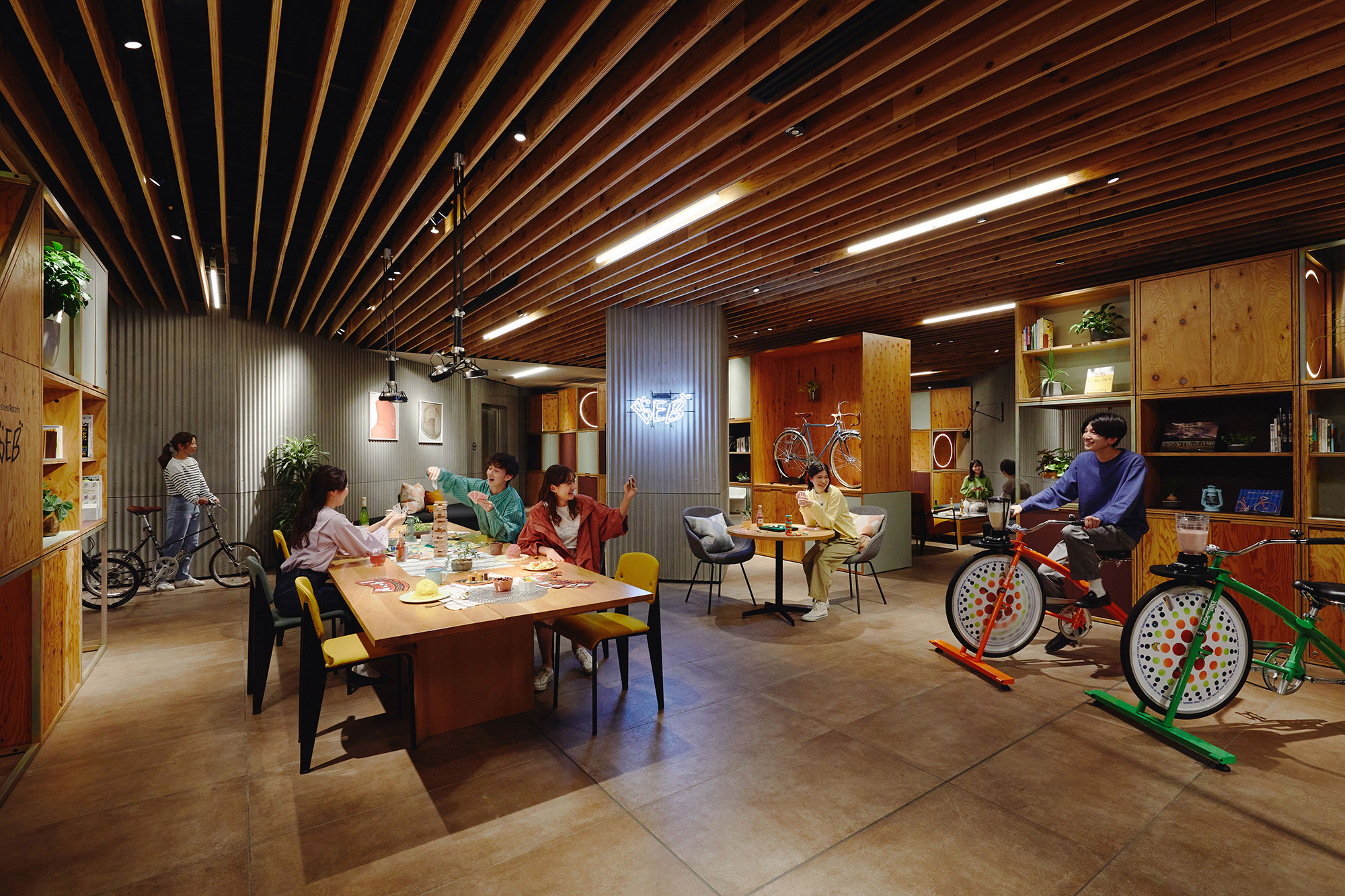
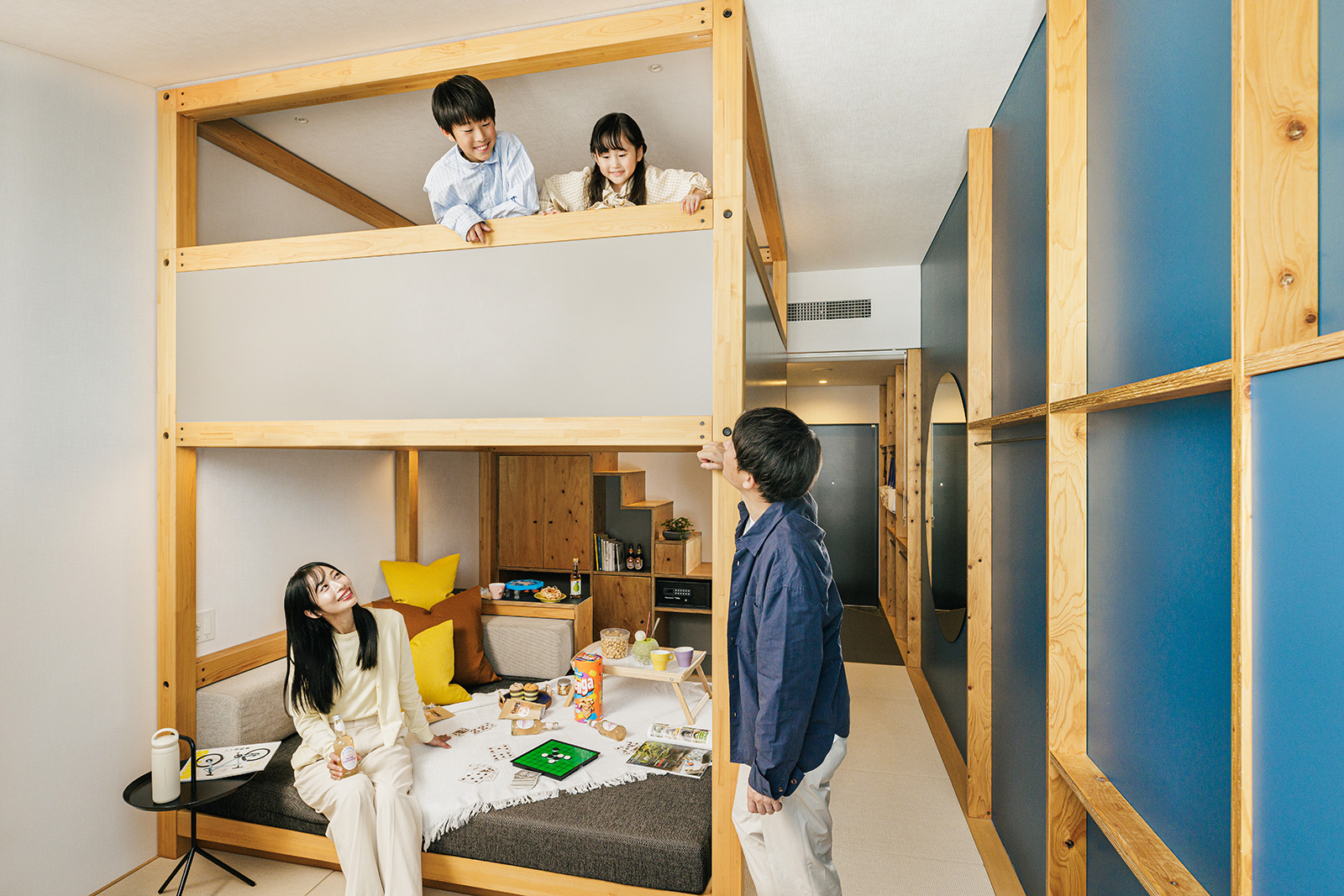
Conveniently located directly connected to JR Tsuchiura Station. Cycling hotel where you can stay with your bicycle.


Access by bus Directly connected to JR Tsuchiura station
- Example of Accommodation Rates
- 1 person per night From 4,757 yen