





8 recommended sightseeing spots in Hakone. We also introduce some hole-in-the-wall spots where you can avoid the crowds.
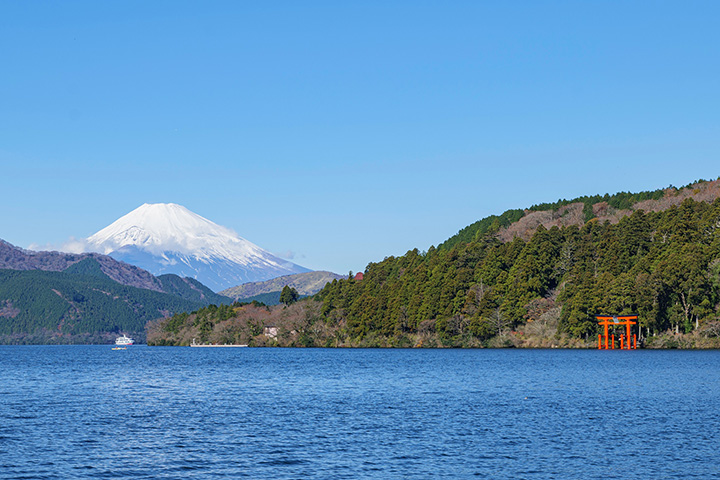
Hakone is a hot spring resort famous throughout Japan. Hakone is dotted with historic shrines and places of historic interest, not to mention nature where you can feel the changing of the seasons. After a refreshing soak in one of the nation's most famous hot springs, why not take a stroll through Hakone's famous landmarks? Here are some of the best places to visit for those who love the beauty of nature and history.
<Recommended Sightseeing Spots in Hakone
- 1 Hakone Old Highway
- 2 Lake Ashi
- 3 Odakyu Yama no Hotel Garden
- 4 Hakone Sekisho (barrier station)
- 5 Hakone Shrine
- 6 Dogashima Canyon Trail
- 7 Hakone Wet Flower Garden
- 8 Hakone Yumoto Shopping Street
<Onsen inns with rich individuality to enhance your trip to Hakone>.
<Recommended Sightseeing Spots in Hakone
1Hakone Old Highway
Listen to the footsteps of people who came and went on the Tokaido Highway in the Edo period.
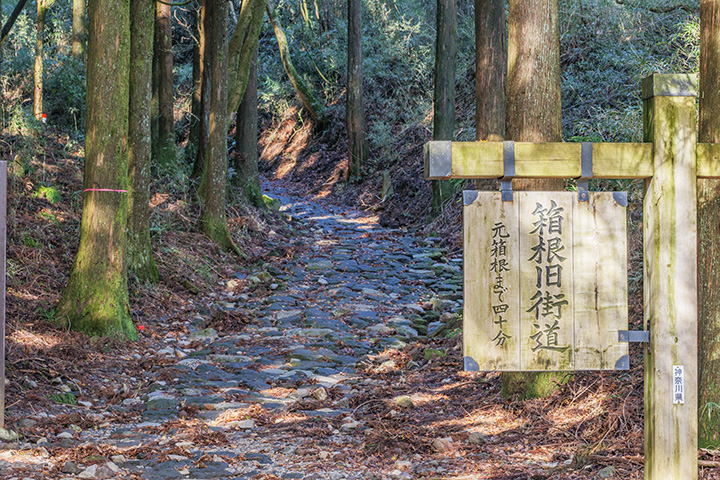
During the Edo period (1603-1867), the Tokaido Highway was one of the main roads connecting Edo and Kyoto. The most difficult part of the Tokaido Highway was what is now known as the "Old Highway of Hakone. In 1680 (Empo 8), the Edo Shogunate paved the muddy pass in Hakone, which used to be a shin-deep muddy road, with stones to make it easier to walk. This made it easier to walk, and many people began to walk along the Hakone Hachi-no-Sato trail.
The cobblestone pavements of Hakone's Old Highway are recommended for beginner hikers.
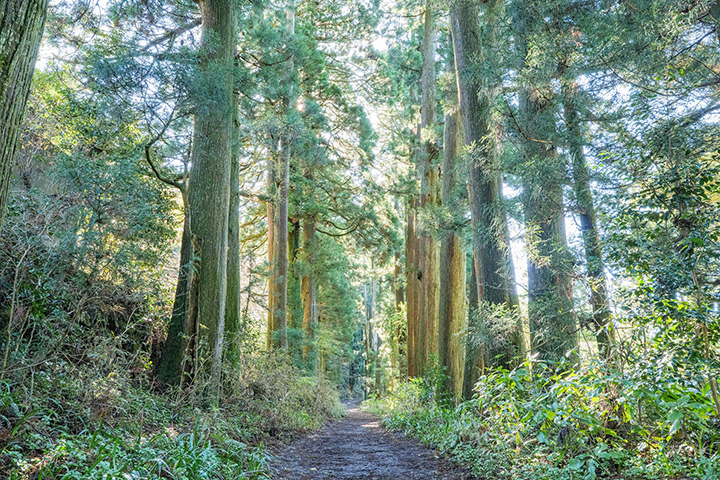
Today, the old highway in Hakone is a popular hiking course that even beginners can enjoy. The most popular route is from the Hakone Tozan Bus stop near Hatajuku to Lake Ashinoko, which takes about 40 to 50 minutes. Take a leisurely stroll along the cobblestone path, remembering the footsteps of people who passed through the area in the past. The old highway in Hakone changes with the changing seasons and the weather. You can enjoy it no matter how many times you visit.

- Hakone old highway, stone pavement
-
 Near Hatajuku, Hakone-cho, Ashigarashita-gun, Kanagawa Prefecture - Near Sasahara-shinden, Mishima City, Shizuoka Prefecture MAP
 Approximately 15 minutes by car from Hakone Tozan Railway Hakone-Yumoto Station
 Take a bus from Hakone Tozan Railway Hakone-Yumoto Station, get off at Hatajuku, and walk about 1 minute.
 0460-85-5700(Hakone Town Tourist Information Center)
2Lake Ashi
Hakone's most famous scenic spot. The vermilion torii gate floats on the lake.

Lake Ashi, located in the caldera of Hakone Volcano, is one of the most scenic spots in Hakone. It is said to have been created by an eruption that occurred about 3,100 years ago near Owakudani, when the earth and sand that flowed out of the lake stopped the river. The lakeside is dotted with tourist spots such as Hakone Sekisho (Hakone barrier) and Hakone Shrine, and sightseeing boats are available for visitors to enjoy the scenery on the lake. The lake is also home to many fish such as rainbow trout and wakasagi, making it a good place for fishing enthusiasts. When the season and weather conditions are favorable, visitors can view "upside-down Fuji" from the cedar trees lining the "Old Hakone Highway.
A spectacular spot overlooking Lake Ashi
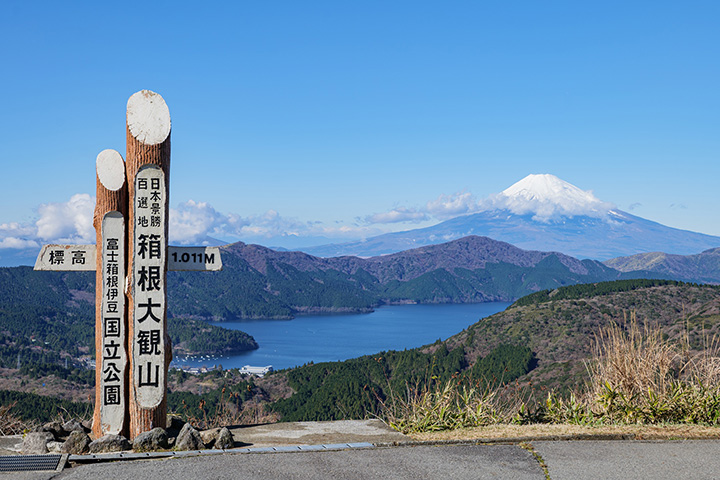
Komagatake Summit Station, which can be reached by the "Hakone Komagatake Ropeway" that departs from "Onshi-Hakone Park" and "Hakone-en", both of which can be reached on foot from Moto-Hakone Port. Both offer spectacular views, but the "Daikan-yama Observation Deck" is recommended for those sightseeing by car. Located about 15 minutes up Prefectural Route 75 (commonly known as the Tsubaki Line) from Moto Hakone Port, it overlooks Lake Ashi from the front of the parking lot and offers a view of the lake, which is long and narrow in shape from north to south.

3Odakyu Yamanohotel Garden
Colorful azaleas and rhododendrons in full bloom are breathtaking.

This prestigious hotel is located in a wonderful location overlooking Lake Ashi, and if you look into the distance, you can see the majestic Mt. Fuji. The vast garden, inherited from the villa of Baron Koyata Iwasaki, a businessman of the Taisho and early Showa periods and the fourth generation of the Mitsubishi Zaibatsu, is filled with azaleas in early May, filling the garden like a colorful carpet. The garden is planted with large and small plants called "Tamatsukuri," which are trimmed roundly while taking advantage of the undulations of the terrain, creating a beautiful fusion of the flowers and the view of the surrounding landscape. The rhododendrons, which come into full bloom a little later than the azaleas, are also magnificent.
Don't miss the huge old trees over 100 years old and rare varieties.

There are many rare varieties of rhododendrons, including an old variety of azalea from the Edo period and the Western rhododendron, which is said to have been imported to Japan for the first time. Some of the trees are more than 100 years old, and some are large plants that are taller than people, making it a nationally rare and valuable garden. It is understandable that the baron used to invite many guests and entertain them when the flowers were in full bloom.
The park is dotted with attractions such as "Fuji Viewing Hill," "Autumn Foliage Path," a chapel, and a lawn area. There are paved walking paths that are accessible to wheelchairs and strollers, so visitors can enjoy viewing the cherry blossoms in comfort.

- Odakyu Yama no Hotel Garden
-
- 80 Moto Hakone, Hakone-cho, Ashigarashita-gun, Kanagawa MAP
- Approximately 25 minutes by car from Hakone Tozan Railway Hakone-Yumoto Station
- Free shuttle bus service from Moto Hakone Port (for hotel and hotel Property users only)
 Garden 9:00-17:00 (last admission)
 Open daily *February 17 - February 19: Temporary hotel closure
 900 yen (elementary school students and older) *Free except during azalea blooming period
- 0460-83-6321
 Free of charge
4Hakone Sekisho
Travel back in time to the world of the Edo period!

The steepness of the mountain pass is not the only reason why Hakone was called "steep under the sun. During the reign of the Tokugawa Shogunate, the Tokaido Highway was subject to particularly strict checkpoints, making it impossible for visitors to come and go easily. Hakone Sekisho, an important site in the history of transportation during the Edo period, has been restored. Stepping into the site, visitors can enjoy the atmosphere of the Edo period and the photogenic exhibits. The view from the watchtower (=Tomibansho) overlooking Lake Ashi and Mt. Fuji is spectacular, and is a recommended photo spot.
Hakone Sekisho is the only fully reconstructed barrier station in Japan.

According to some data, there were 53 barrier stations in Japan during the Edo period (1603-1868), but they were all abolished in 1869 (the 2nd year of Meiji era) and all the buildings were demolished. The Hakone barrier is the only one that has been recreated, including the shape, color, location, and surrounding environment of the buildings. The reconstruction also uses the skills and tools of Edo period craftsmen, so you can see almost the same thing as the real thing. In addition, life-size dolls are placed in the museum, and visitors can see a scene of the severe checkpoint inspection at that time along with other materials. Photography is allowed in all areas of the museum except for the Hakone Customs House Museum.

- Hakone Sekisho (barrier station)
-
- 1 Hakone, Hakone-cho, Ashigarashita-gun, Kanagawa MAP
- Approximately 25 minutes from Hakone Tozan Railway Hakone-Yumoto Station via Hakone New Road by car.
- Approximately 40 minutes by bus from Hakone Tozan Railway Hakone-Yumoto Station, 2 minutes walk from Hakone Sekisho Ato bus stop.
- 9:00-17:00, Dec-Feb 9:00-16:30 *Last admission 30 minutes before closing
- No holidays
- Adults 500 yen, elementary school students 250 yen
- Hakone
- None
5Hakone Shrine
A shrine that has been watching over Hakone for 1260 years.

Hakone Shrine is visited by many visitors to Hakone. The shrine was founded in 757, the first year of the Tenpyo-Hoji Era (the Nara Period) by Manmaki Shonin, a Buddhist priest who received an oracle from the Great God of Hakone and made a request to the God of Hakone. The shrine is surrounded by rich nature, including a 600-year-old cedar tree and Lake Ashinoko, creating a solemn atmosphere.
The "Heiwa no Torii" (Gate of Peace), located at the end of the stairs leading to the main shrine, is particularly popular among visitors to the shrine. It is a photo spot often introduced in tourist guides, where you can take a wonderful picture with the bright red torii gate floating on Lake Ashi.
One of the most popular power spots in the Kanto region. Visit shrines and temples in search of a good marriage.

Hakone Shrine and its subsidiary shrine, Kutouryuu Shrine, are also famous as power spots for marriage. It is said that if you visit both shrines, you will receive a greater oracle. From Hakone Shrine to the main shrine of Kutouryuu Shrine is about a 40-50 minute walk northwest along the "Shrine Street. If you are short on time, you can visit both shrines by going to the "Kutouryuu Shrine Shingu" located right next to the main shrine of Hakone Shrine.
On the 13th of each month, a ritual called Tsukinamisai is held at the main shrine of Kutouryuu Shrine, which attracts a great number of worshippers from all over Japan.

- Hakone Shrine
-
- 80-1 Moto-Hakone, Hakone-cho, Ashigarashita-gun, Kanagawa MAP
- Approximately 30 minutes by car from Hakone Tozan Railway Hakone-Yumoto Station
- From Hakone Tozan Railway Hakone-Yumoto Station, take a bus and get off at "Hakone Shrine Iriguchi" and walk about 10 minutes.
- 0460-83-7123
- Free of charge
 On the 13th day of every month, Hakone Ashinoko Sightseeing Boat operates the "Kutouryuu Shrine Worship Boat" to take you to the main shrine of Kutouryuu Shrine by boat from Moto Hakone Port.
6Dogashima Canyon Trail
The best time to visit the valley is during the season of fresh green and autumn leaves.

The Hayakawa River flows into Sagami Bay from Hakone. Along the way, the 1.5-km stretch from Dogashima hot spring in Miyanoshita to Kiga hot spring is maintained as the Dogashima Gorge Trail. The beauty of the canyon, carved by the Hayakawa River over a long period of time, is sure to soothe the soul just by looking at it. Walking along the promenade, away from the hustle and bustle of the city, you will be surrounded by the sound of water flowing through the gorge and the chirping of birds, and you will forget that Hakone is only an hour away from the center of the city.
The weir where water cascades down and the suspension bridge over the canyon are highlights.

During the beautiful season of fresh green leaves and autumn foliage, hikers with cameras come here to take a stroll. Along the way, there are recreations of hermitages said to have been built by high priests in the past, and other elegant scenery that will keep visitors' eyes busy as they stroll. The highlight of the trail is the suspension bridge near Kiga Hot Spring and the weir in front of it. The suspension bridge, with the weir in the background and an abundance of water flowing down, blends in well with the valley scenery and is a popular photo spot. It is often featured in pamphlets introducing Hakone's four seasons.

- Dogashima Canyon Trail
-
- Near Miyanoshita, Hakone-cho, Ashigarashita-gun, Kanagawa Prefecture - Near Kiga, Hakone-cho, Ashigarashita-gun, Kanagawa Prefecture MAP
- 10 min. walk from Miyanoshita Station of Hakone Tozan Railway.
- Take a bus from Hakone Tozan Railway Hakone-Yumoto Station, get off at "Miyanoshita" and walk 10 minutes.
7Hakone Wet Flower Garden
Enjoy the natural beauty of Hakone and view the seasonal plants in a relaxed atmosphere.

The Hakone Wetland Flower Garden covers an area of approximately 30,000 m2 and is home to approximately 1,700 species of plants. In addition to 200 kinds of wetland plants scattered throughout Japan, grasslands and forests, 1,100 kinds of alpine plants, and rare mountain grasses from other countries bloom from season to season. The park is equipped with walking paths, and visitors can walk around the park in about 40 minutes while experiencing the changing vegetation. In addition, an exhibition room in the administration building introduces the history of Sengokuhara Marsh through panels, providing visitors with the pleasure of understanding even the smallest details.
Mizubashou (Asian skunk-cabbage) and katakuris (dogtooth violet) are popular in spring

The park is usually open from spring to late fall, but the most popular time to visit is in early April, when the Mizubasho (Asian skunk-cabbage) flowers are in full bloom. The park is usually open in spring and late fall, but most visitors come in early April, when the Mizubashou flowers are in full bloom, and the variety of flowers, including Ryukinka, increases with each passing day, heralding the arrival of spring in the park. Katakuris, which grow in clusters in the deciduous foliage forest area of the park, are lovely flowers with reddish-purple petals. It is said that it takes an average of eight years for the flowers to bloom. If you are lucky enough to see all the katakuris blooming at once, you are quite lucky.

- Hakone Wet Flower Garden
-
- 817 Sengokuhara, Hakone-cho, Ashigarashita-gun, Kanagawa MAP
- 15 minutes drive from Gora Station on the Hakone Tozan Railway
- Take a bus from Gora Station on the Hakone Tozan Railway and get off at "Shuseibanaen-mae" bus stop. 1 minute walk from the bus stop.
- 9:00-17:00 (last admission at 16:30)
- Open all year (usually closed during the winter season from December 1 to March 19)
- Adults 700 yen, elementary school students 400 yen
- Hakone
- Free of charge
8Hakone Yumoto Shopping Street
Souvenirs at the gateway to Hakone
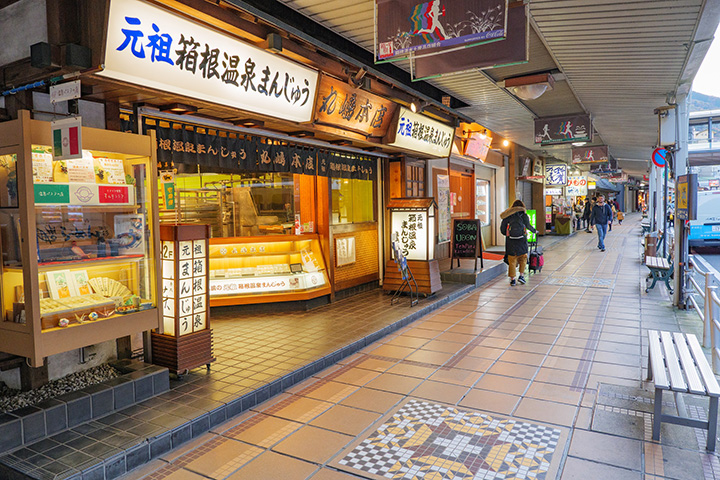
Hakone-Yumoto Station is the main station of the Hakone Tozan Railway and the terminus of the Odakyu Romance Car. Along Route 1, which runs west of the station, is the largest shopping street in the Hakone area. There are many souvenir shops selling traditional Hakone crafts such as marquetry, as well as stores selling dried fish from Sagami Bay. In addition, there are several restaurants where you can taste local gourmet foods and sweets, as well as hot spring properties that can be used on Daytrip Destinations and stores that rent yukata (light cotton kimono), so many people tend to stay longer than they would like.
Hakone hot spring buns" from Marushima Honden, a long-established hot spring bun store

One of the recommended products in this shopping arcade, which offers a variety of typical Hakone souvenirs, is the Marushima Hot Spring Manjuu (steamed buns) from Marushima Honden, which has been in business for over 120 years. It features a sweet red bean paste that has been carefully back-filled. The dough made with brown sugar from Okinawa is so soft that you can eat as much as you like. You can buy freshly steamed buns in the store, but the best souvenir is a boxed bun that includes a bun wrapped in white sugar dough. There are several hot spring bun stores in the shopping arcade, so it is fun to walk around comparing their characteristics and find your favorite.

- Hakone Yumoto Shopping Street
-
- Yumoto, Hakone-cho, Ashigarashita-gun, Kanagawa MAP
- Get off at Hakone Tozan Railway Hakone-Yumoto Station.
- 0460-85-7751(Hakone Yumoto Tourist Association)
- Charged
<Onsen inns with rich individuality to enhance your trip to Hakone>.
After enjoying sightseeing, how about a relaxing moment at a hot spring inn? Hoshino Resorts' hot spring brand "KAI" operates two unique inns in the Hakone area: "KAI Hot spring ryokan" KAI Hakone, an elegant hot spring ryokan located along a mountain stream, and "KAI Sengokuhara," an atelier hot spring ryokan where you can enjoy art experiences.
9KAI Hakone
Hakone Gokochochi hot-spring hotel immersed in the history of the Tokaido Highway
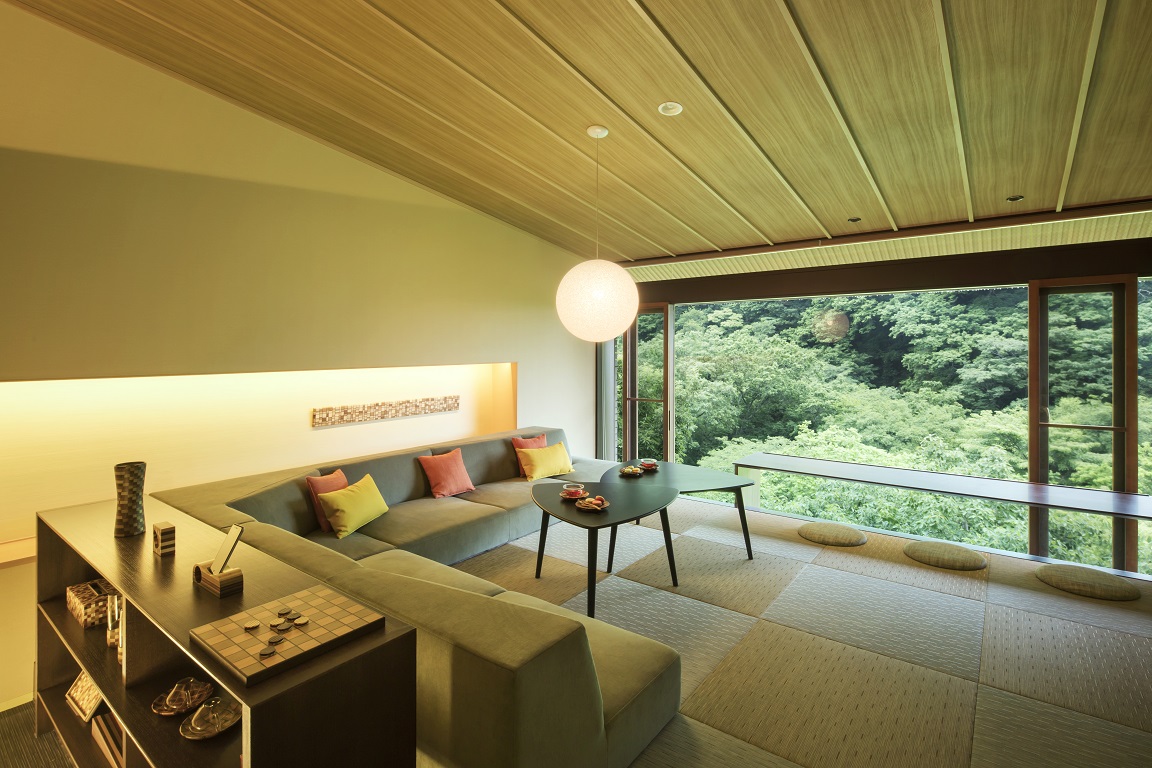
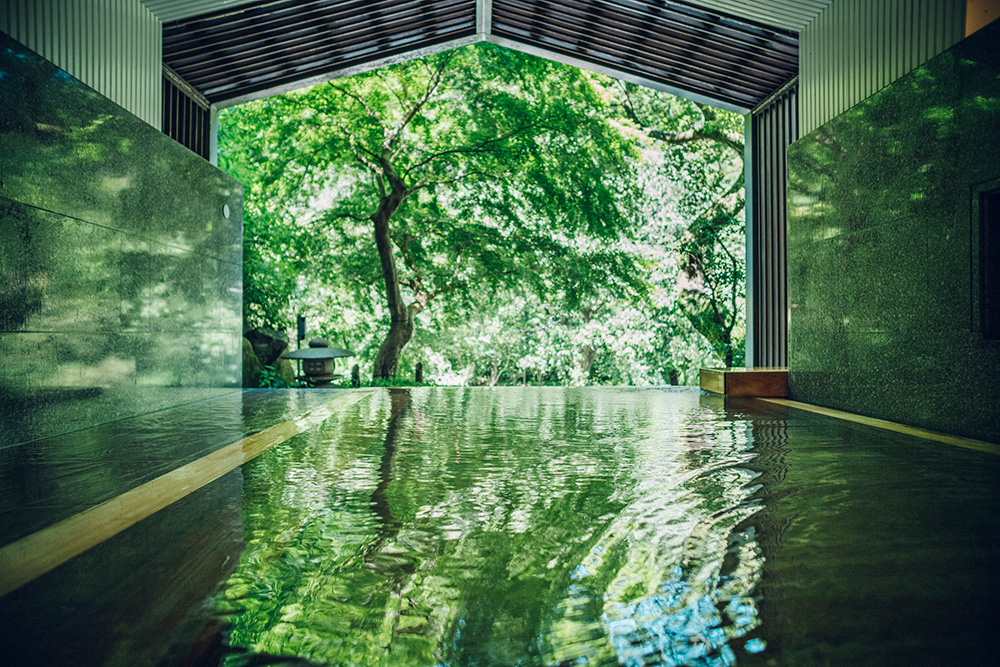
About 7 minutes by car from Hakone-Yumoto Station. This elegant hot spring ryokan is located along Hakone's old highway, facing the Sukumo River. From the bathtub filled with sodium chloride spring water, which is said to be good for a cold body, you can enjoy the seasonal beauty of Mt.
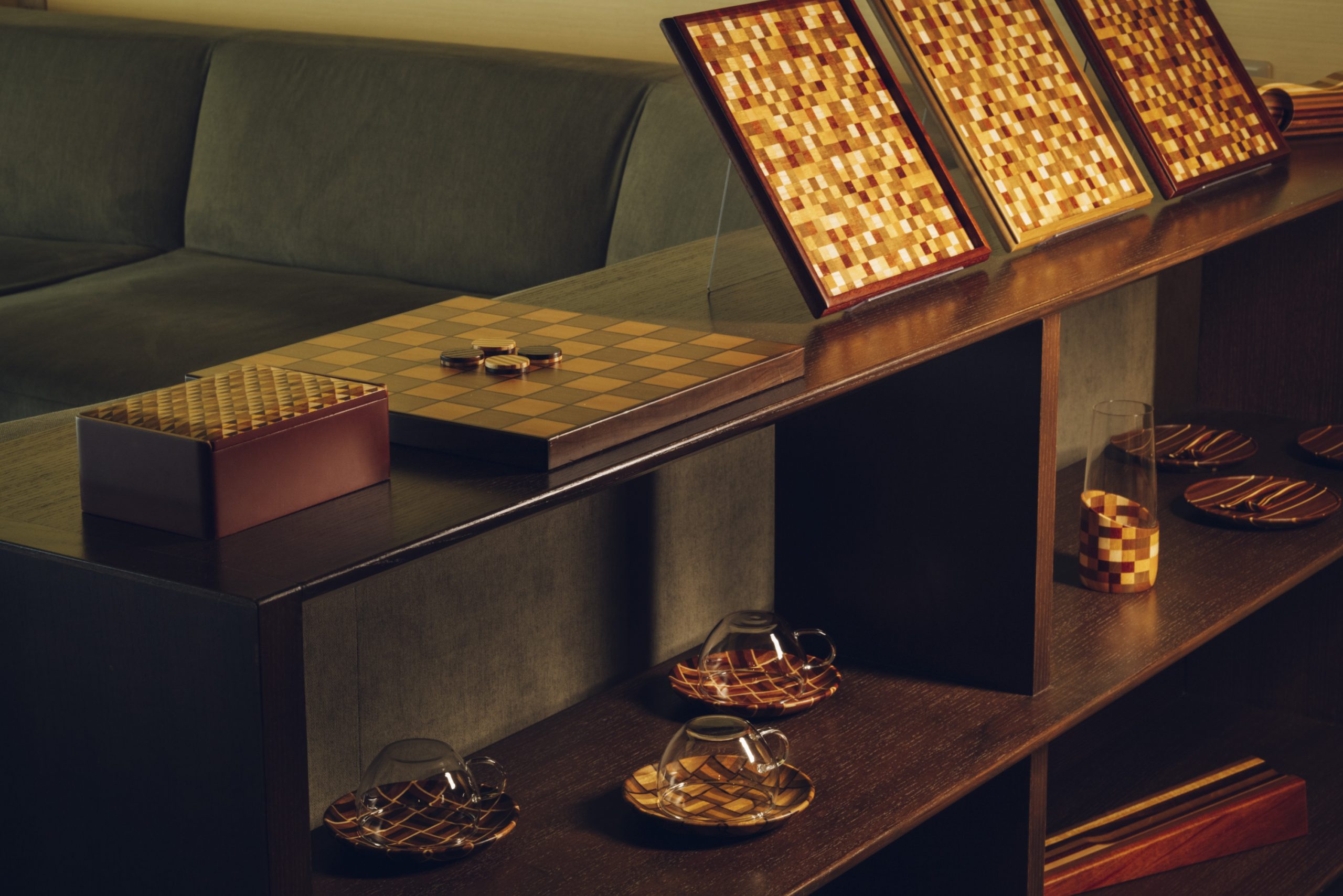
Guest rooms also overlook Mt. Yusaka and the Sukumo River, providing a quiet environment while listening to the murmuring of the river. The interior of the hotel is decorated with traditional Hakone marquetry, including tableware, hanging scrolls, and furniture, allowing guests to experience the culture that lives on in Hakone.
- Hoshino Resorts KAI Hakone
-
- 230 Yumotochaya, Hakone-cho, Ashigarashita-gun, Kanagawa MAP
- Approximately 7 minutes from Hakone-Yumoto Station by car
- 050-3134-8092(Kai Reservation Center)
- Available
- Click here for reservation Hoshino Resorts KAI Hakone Reservation Site
10KAI Hoshino Resorts KAI Sengokuhara
Stay in a Guest room with Outdoor hot spring and be surrounded by art and nature

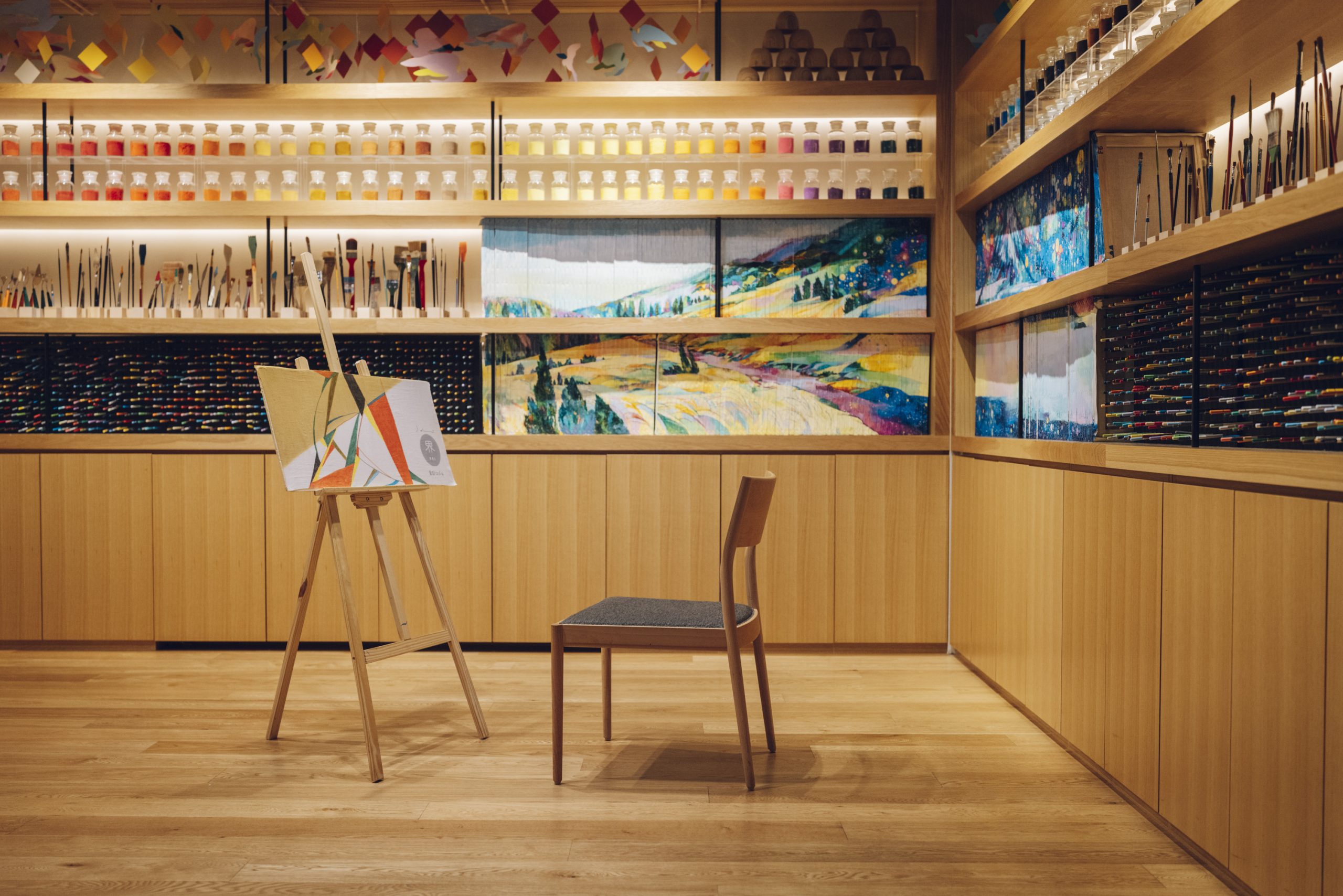
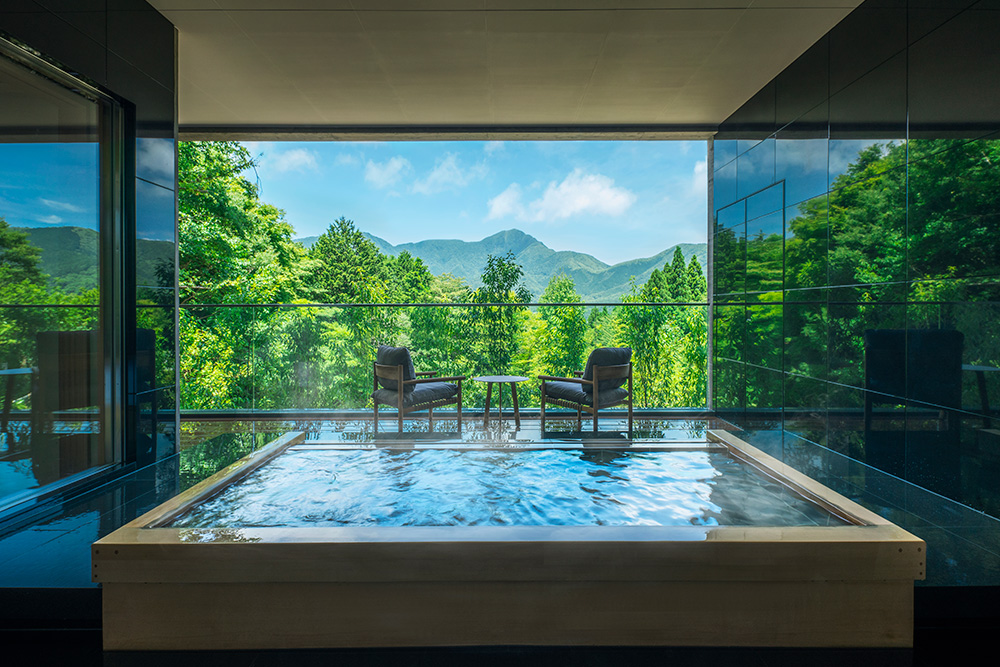
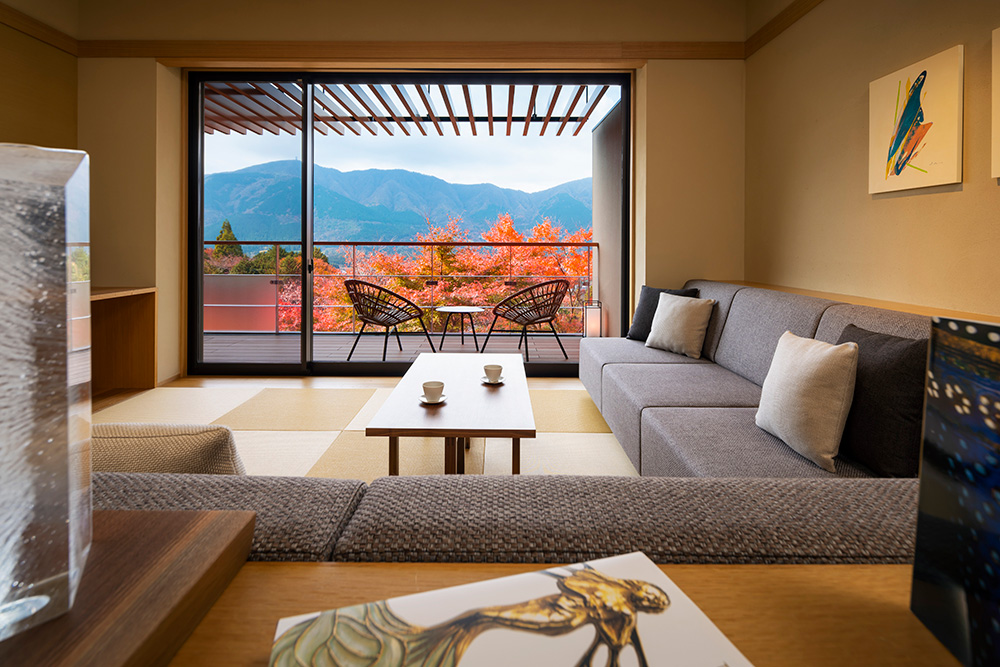
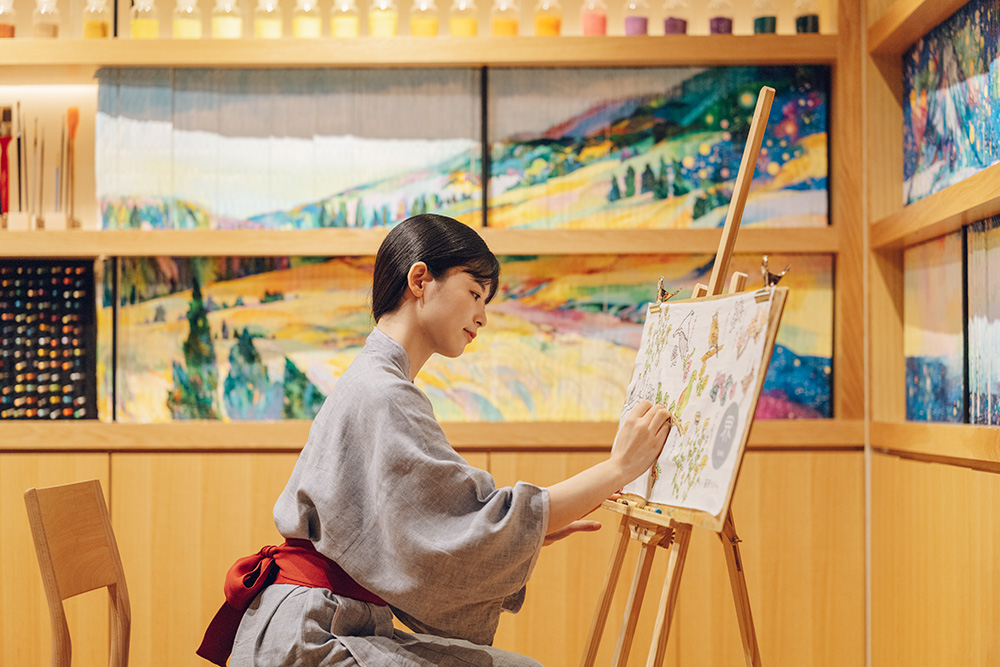
The hotel is about 30 minutes by car from Hakone-Yumoto Station. Sengokuhara, surrounded by majestic mountains and away from the hustle and bustle of the city, has been loved by many artists as a suitable place to devote oneself to creating artworks. Hoshino Resorts KAI Sengokuhara "KAI" is an atelier hot spring ryokan located in this area. Guest rooms are decorated with works of art created by artists who actually stayed at the hotel, allowing guests to relax and feel their brush strokes up close. The hot spring is a sulfate and chloride hot spring drawn from Owakudani, and a short soak will smooth your skin and warm your body. Please spend a moment surrounded by art and nature.
- Hoshino Resorts KAI Sengokuhara
-
- 817-359 Sengokuhara, Hakone-cho, Ashigarashita-gun, Kanagawa MAP
- Approximately 30 minutes from Hakone-Yumoto Station by car
- 050-3134-8092(Kai Reservation Center)
- Available
- Click here for reservation Hoshino Resorts KAI Sengokuhara Reservation site
MAP
- <Recommended Sightseeing Spots in Hakone
- <Onsen inns with rich individuality to enhance your trip to Hakone>.
-
- Hoshino Resorts facilities nearby

Local Guide who was in charge of this article

- Kawai, Tetsuyu A chef you can count on
Hoshino Resorts KAI Hakone
Hakone-Yumoto hot spring, Kanagawa
Hot spring ryokan where you can experience "Hakone Gokochi" and enjoy the charms of Hakone to the fullest!
_2-2.jpg)
-2.jpg)
Access by bus Approximately 7 minutes by cab from Hakone Tozan Railway Hakone-Yumoto Station
- Example of Accommodation Rates
- 1 person per night From 38,000 yen
Hoshino Resorts KAI Sengokuhara
Kanagawa-ken Sengokuhara hot spring
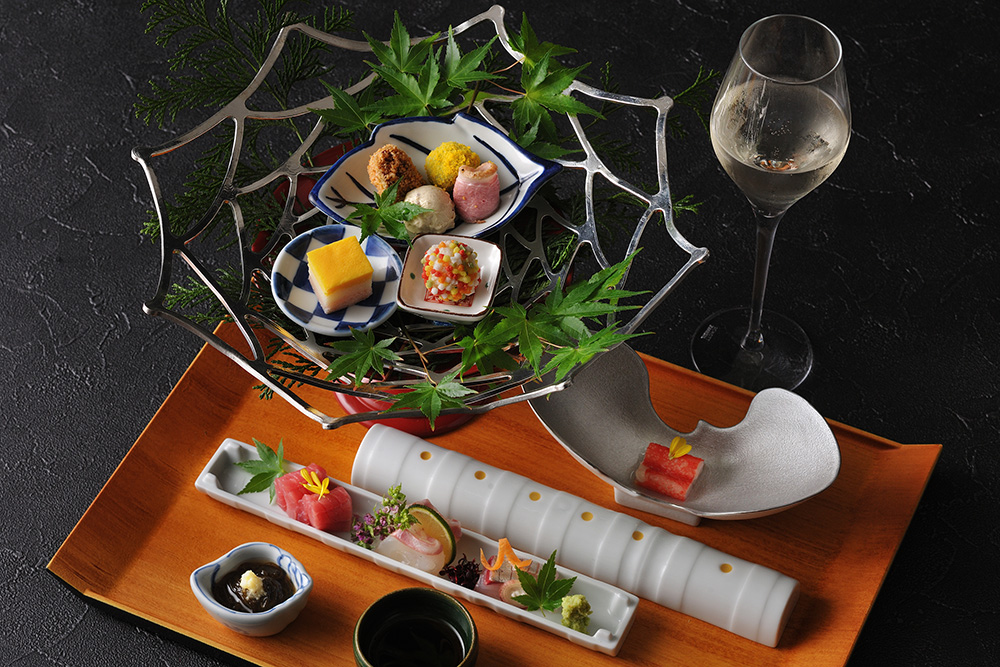
Guest rooms overlooking the magnificent nature are all equipped with Outdoor hot springs. Encountering works of art stirs your inner desire to express yourself.
Access by bus 15 minutes by cab from Gora Station on the Hakone Tozan Railway
- Example of Accommodation Rates
- 1 person per night From ¥57,500