





[2026 year edition] the salted cherry leave which colors spring of Nasu and 5 elections of flower viewing landmark of a tulip
![[2026 year edition] the salted cherry leave which colors spring of Nasu and 5 elections of flower viewing landmark of a tulip](https://hoshinoresorts.com/guide/wp-content/uploads/2020/03/ns00.jpg)
The Nasu area where you're learned about and are enjoying as a holiday resort in Kitakantou by being "Nasu Imperial Villa". There is also much naturalness held in a grand Nasu mountain range in abundant Nasu a floral landmark. I'll introduce according to the information on a service and a light up from famous place for beautiful cherry blossom to Azalea and a recommendation spot of a tulip.
1Crow KE forest (A crow leaks.) park
The pale pink world about 1300 cherry trees interweave

The natural park where it's from the west Nasu field station in a slightly elevated hill of altitude 297m at about 10 minutes by car. About 1300 cherry tree trees are in the park focusing on a Someiyoshino cherry tree, and when best time is met, a park is wrapped in pale pink. The form many flower viewing visitors open a leisure seat including a family during the season, and that I relax. A lot of street stalls also line up around the park entrance. A pond and other esplanades with a Japanese garden are also maintained, so flower viewing, while, how about taking a walk slowly?
If I go by car, the route where I go to the park from a "a crow KE forest park, entrance" intersection on number 4 of national highway is recommended. A route is excellent Sakuranamiki, and a cherry tree can also be enjoyed from a car window.
[Bloom time] the beginning of ordinary year April-middle ten days
[Best time] the beginning of ordinary year April-middle ten days
[The kind of cherry trees] Someiyoshino cherry tree and others
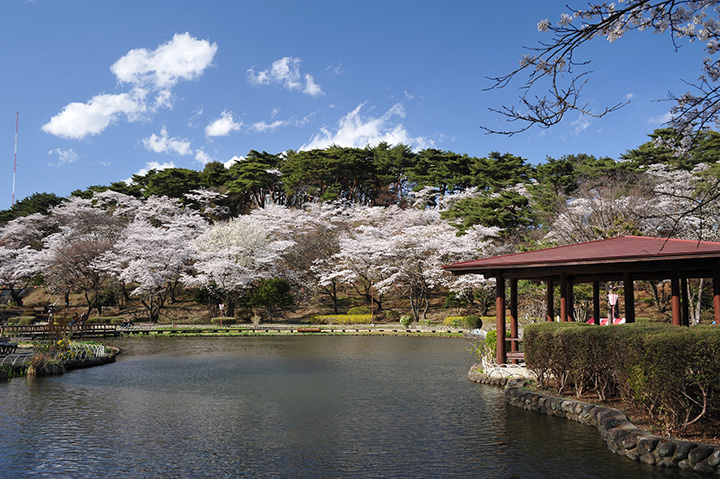
- Crow KE forest (A crow leaks.) park
-
 Tochigi-ken Nasu Shiobara city 636, Sankucho MAP
 It's a car from the JR west Nasu field station, about 10 minutes
 From the JR west Nasu field station, embussment and "in front of Kano inn" getting off for about 5 minutes on foot
 0287-62-7160 (Nasu Shiobara city Urban Development Division)
 Free
Free
2Kuroiso park
A heart jumps for contest in a Nasu mountain range in a snow-covered top and Sakura.
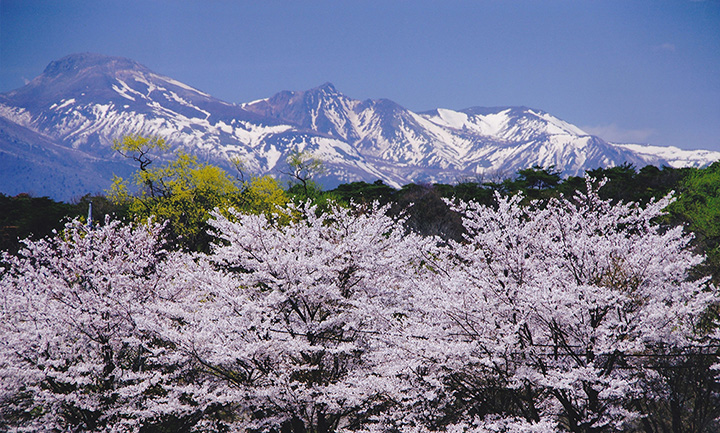
The effective park in the location of about 15 minutes on foot from Kuroiso Station. When spring comes, a Someiyoshino cherry tree is a famous place of flower viewing where about 230 cherry trees are in full bloom. The superb view spot it's possible to look at a cherry tree with the grand Nasu mountain range in the background from the "contact bridge" neighborhood of the north side in the park in particular, and a photograph fancier visits in a body. The light up of cherry blossoms by night which holds "Kuroiso cherry tree festival" from the middle of ordinary year April and lights up the fire in other hand lamps in which a street stall equals each place in the park is performed.
Kuroiso park is also learned about as a famous place of Dog-tooth violet, "Sato of" Dog-tooth violet in the park, then Dog-tooth violet beyond 15,000 stocks is clumped. Best time is simultaneous with a cherry tree mostly, period. A vivid red purple flower is the landscape the state in which a slope is buried would like also to see by all means.
Further, Shimizu Ike of "Nakagawa riverside park" who neighbors Kuroiso park can see one of Japanese three big cherry trees and a child cherry tree of "fall cherry tree" in Fukushima-ken Miharu-machi, so how about extending the journey?
[Bloom time] the beginning of ordinary year April-last ten days
[Best time] at the middle of ordinary year April.
[The kind of cherry trees] Someiyoshino cherry tree, big striped cherry tree and double flowering cherry tree and others
▼ Kuroiso cherry tree festival
Date: April 3, 2026-Sunday on the 12th
Enjoyment of cherry blossoms by night: Dusk-22:00
Inquiry: 0287-62-0373 (Nasu Shiobara city chamber of commerce and industry) Correspondence of weekday 8:30-17:15 except for a※ holiday
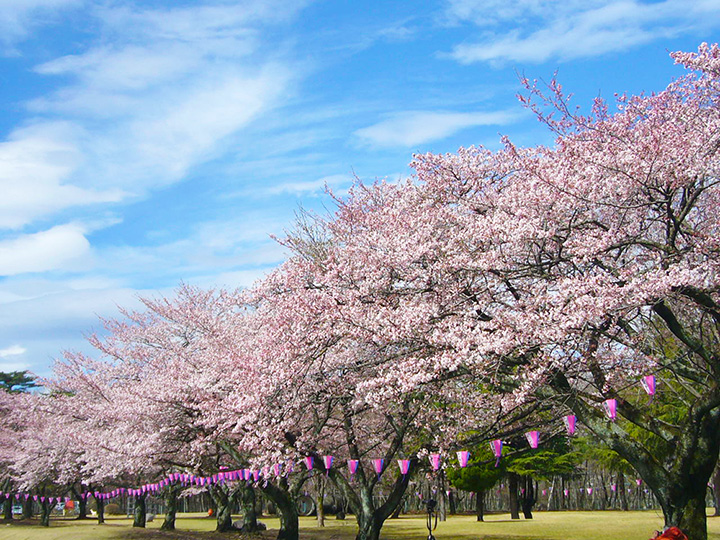
- Kuroiso park
-
- Tochigi prefecture Nasu Shiobara city Sakuramachi 1-3 MAP
- From JR Kuroiso Station, about 15 minutes on foot
- From JR Kuroiso Station, embussment and "vividly, in front of Fureai center" getting off, immediately.
- 0287-62-7160
- Free
3EDOHIGAN of a pupil of a private elementary school (TERAGO)
Big tree of an estimated age of the tree for approximately 350 years which takes pride in its overwhelming existence sense
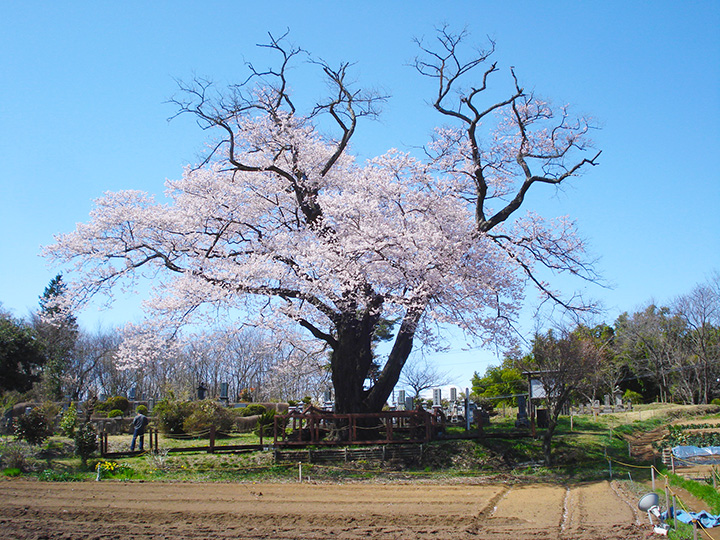
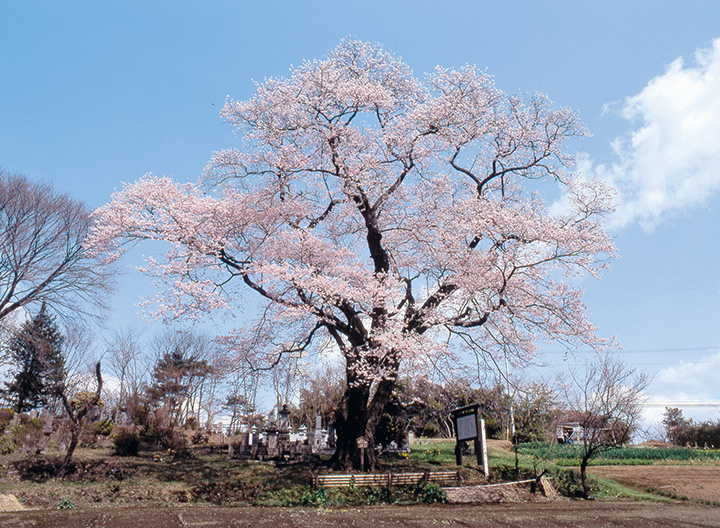
One cherry tree in the public cemetery around "pupil of a private elementary school milestone" at approximately 10 minutes to the east by car from Kuroiso Station. About 300 years are being called "Cherryblossom of a pupil of a private elementary school" by localness and are enjoying from the old days, and the age of the tree is presumption and they're said to be more than 350 years. The environment which takes pride in the size of the maximum level in the Tochigi , and is a trunk, about 6.5 m and the tree height are approximately 16 m. It itself is wide in a various part of Japan and the kind is the Ed early-flowering cherry tree which grows naturally, but something big is also chosen as "100 elections of distinguished tree of TOCHIGI" rare to here. The form that the light up by the one of a local volunteer also is done and is surfaced in darkness makes flowering period Manaka feel more presence.
Further, a place can't sometimes be specified by a car navigation equipment and map Application, so when visiting, attention is needed. The guideboard written with "EDOHIGAN Warehouse Entrance" along 178 number prefectural highways through the neighborhood has gone out, so I'll put that as a mark.
[Bloom time] at the end ofordinary year March-at the beginning of April.
[Best time] at the beginning of ordinary year April.
[The kind of cherry trees] Ed early-flowering cherry tree
- EDOHIGAN of a pupil of a private elementary school (TERAGO)
-
- Tochigi-ken Nasu Shiobara city pupil of a private elementary school 1060 MAP
- It's a car from JR Kuroiso Station, about 12 minutes
- From JR Kuroiso Station, embussment and "in front of pupil of a private elementary school elementary school" getting off for about 4 minutes on foot
- 0287-46-5326 (Nasu Shiobara city sightseeing promotion center)
- I don't have that.
4Hachiman azalea park
The sacred place of Azalea of the prefecture maximum level where about 200,000 of Azalea does a community

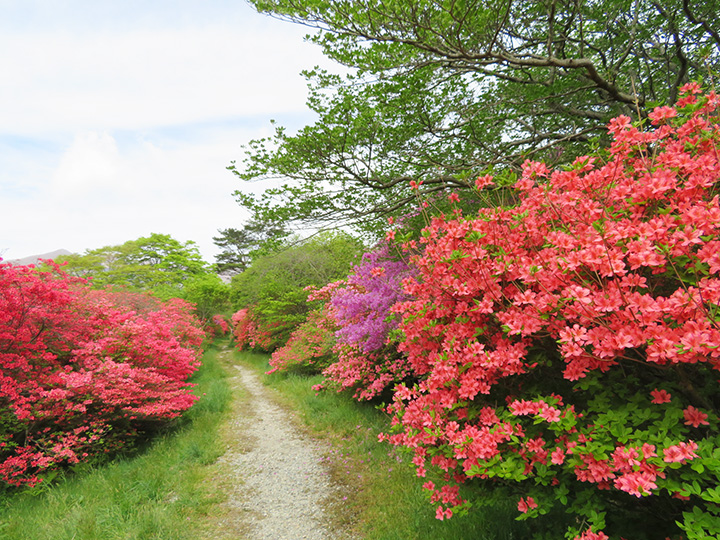
Community place by the Azalea at the side in Nasu mountain range Chausudake (only SU) and about 1100 m of altitude. About 200,000 of various kinds of Azalea will bloom in a high plain stretch in the bloom season around the middle of ordinary year May. That most in a park is dyed deep red the golden age at the end of May. It's also chosen as "100 elections of fragrance landscape" and "100 elections of picturesque scenery of TOCHIGI" of the Ministry of the Environment.
A main walk area in the vast park where I come to about 23 ha is 2. "Yahata azalea community" located in the highlands where 1 looks down upon Nasu high plain. There is observatory which can be looked around 360 times, and a great panorama of Azalea which blooms with the Nasu mountain range in the background can be enjoyed it. The "Hachiman southern azalea community" by which another is spread in the low location. The difference of ups and downs in the promenades is recommended to with children and elderly without most. I'd hope that you start from a way as red snapper from Hachiman azalea community concerning two areas.
[Bloom time] at the middle ofordinary year May-at the beginning of June.
[Best time] the middle of ordinary year May-last ten days
[The kind of Azalea] gamble Azalea, spoon Azalea, TOUGOKUMITSUBATSUTSUJI and YASHIOTSUTSUJI and others
- Hachiman azalea park
-
- Tochigi-ken Nasu Yumoto of a town MAP
- It's a car from JR Kurodahara Station, about 24 minutes (Hachiman azalea community). It's a car from JR Takaku Station, about 25 minutes (Hachiman southern azalea community)
- Embussment and "Hachiman hot spring" get off JR Kuroiso Station, immediately, (Hachiman azalea community). Embussment and "azalea suspension bridge entrance" get off JR Kuroiso Station, immediately, (Hachiman southern azalea community)
 Free
Free- 0287-76-2619 (Nasu town tourist association)
- Free
5The Nasu flower world
The world like the painting about 200,000 stocks of tulip produces
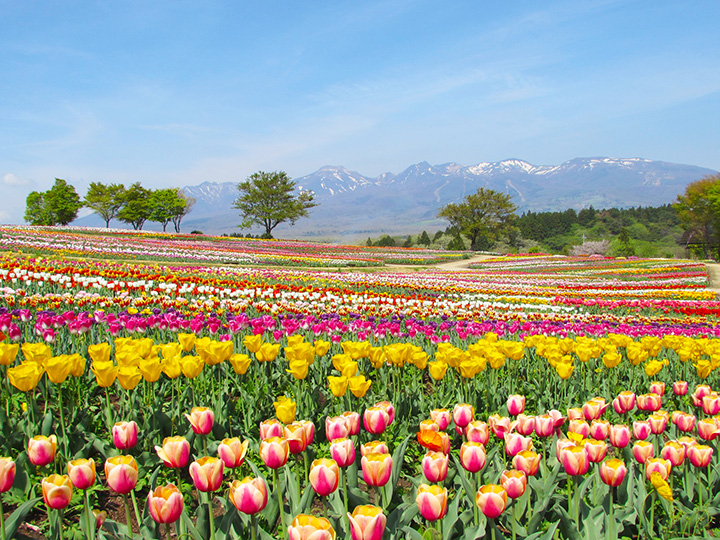
The floral sightseeing farm spread in the side in Nasu high plain and the location of about 600 m of altitude. A seasonal flower is in full bloom a nemophila and a lupine in vast land as much as about 2 ha for whole open time frame from spring to autumn.
About 200,000 stocks of tulip into which the feature of the spring receives best time at the middle of May. ANJERIKE where light pink effect color is popular and a red purple petal can enjoy the contest by which a fascinating blue diamond is about 200 kinds of tulip in a double and white flower. The landscape with which a tulip rich in a variety interweaves red, pink, yellow, white and purple seems to be a spread of painting.
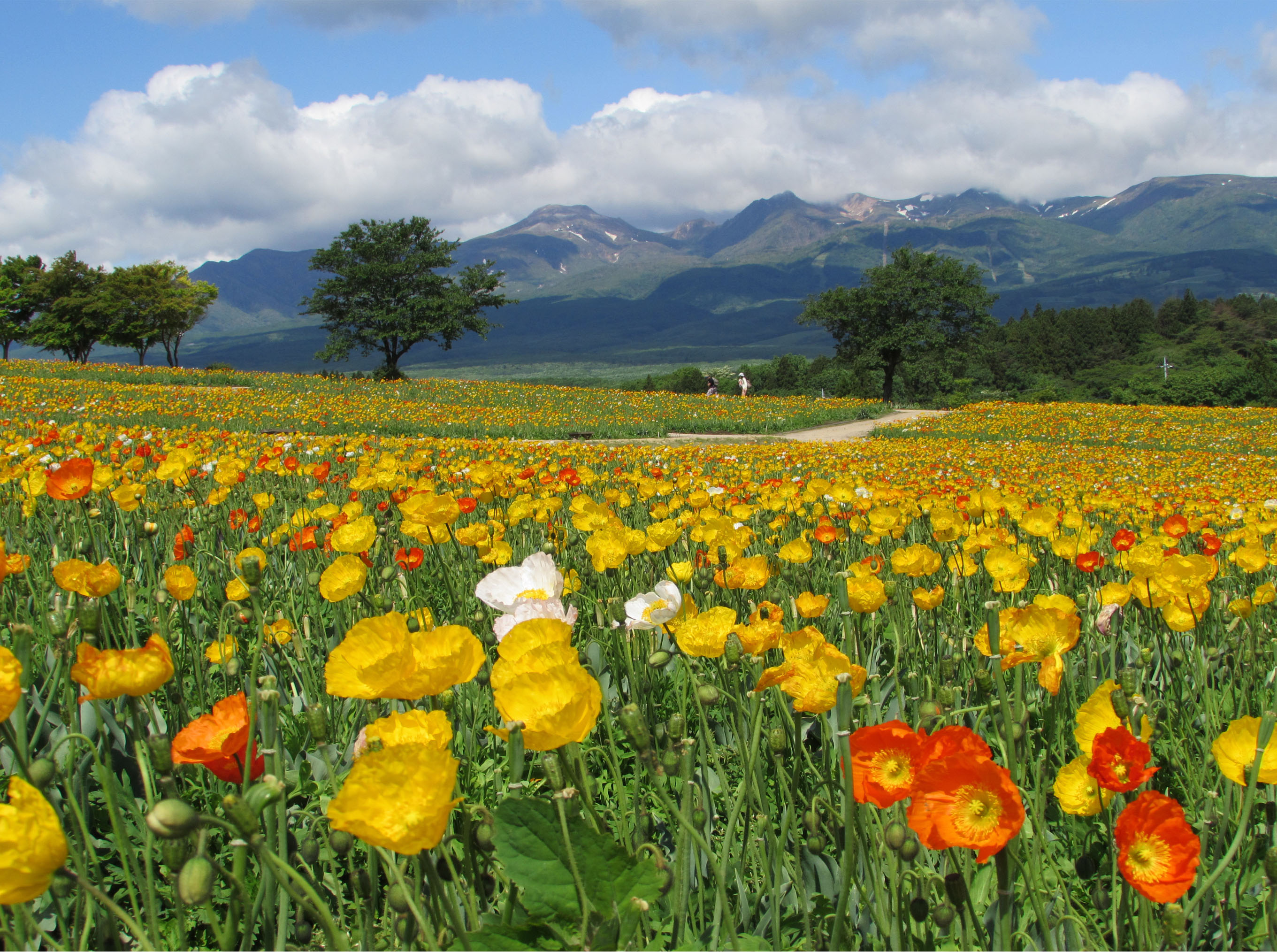
The Iceland poppy which makes a flower bloom after Pansy who makes a flower bloom from the middle of April, Tufted pansy and a tulip meets best time in order, so whatever Toashi is carried, you can enjoy yourself.
[Bloom time] at the end ofordinary year April-at the beginning of May.
[Best time] at the beginning of ordinary year May.
[The kind of tulips] ANJERIKE, blue diamond, fancy Phyllis and Jacqueline and others
- The Nasu flower world
-
- Tochigi Nasu area Nasu town large section of a village Toyoharahei letter Nasu Michishita 5341-1 MAP
 The end of April-end of October (by the fall of frost situation)
9:00-17:00 Opening time frame is open everyday.
- 500 for an adult-1000 yen, junior and senior high school students of 300 yen and elementary students of 200 yen
- 0287-77-0400
 I have that in case of closure by the weather.

Local Guide which took charge of this article

- Woods Summer Saiko.Ugli career woman
Hoshino Resorts RISONARE Nasu
Tochigi-ken and Nasu area
From Tokyo, about 90 minutes. High plain resort in Nasu which pauses in the forest


It's a shuttle bus from the Direction JRNasu Shiobara station, about 35 minutes
- A room charge example
- 1 night, 1 person \13,637-