





In giving items of divine favor filling, a nonesuch snack. Limitation items of Kyoto and the Gion Festival
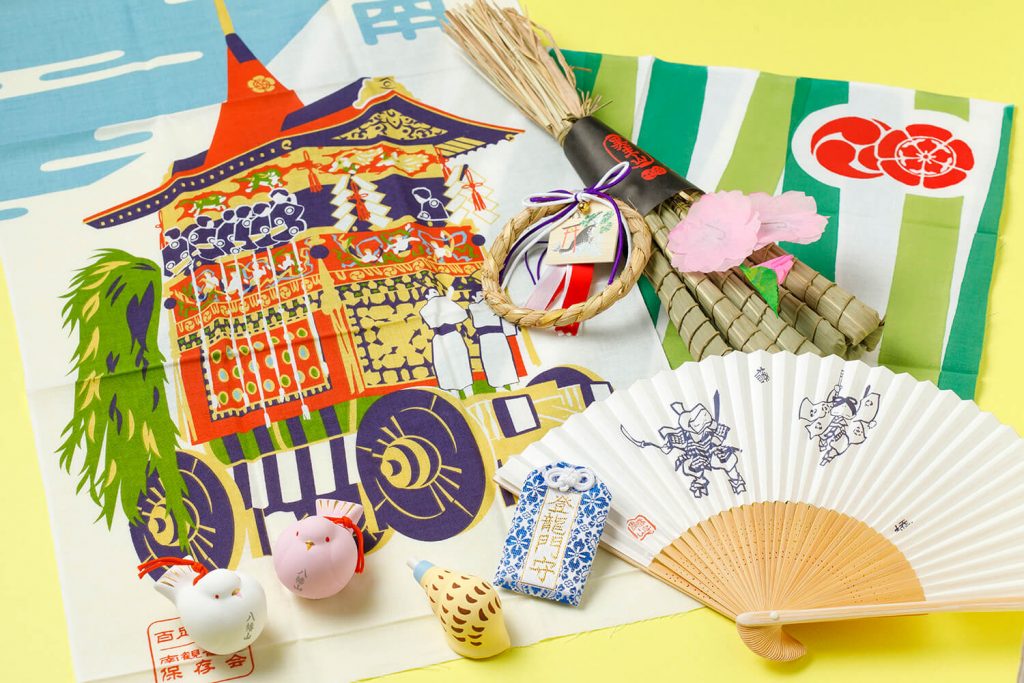
When I say charming sights in summer of Kyoto, "the Gion Festival". There are much splendid yamaboko tour called "moving museum" and tour of Mt. evenings pleasantly, but I also overlook the limited article I get and cry only time of the festival. I'll introduce giving items of a popular yamaboko, the nonesuch snack a long-established store handles and miscellaneous goods every year here. The lucky charm by which the relation is in a festival everything. It's bought, forget of please go out after it's checked before travel so that I don't have that.
You bring benefits and I'd like to choose! Giving items of the yamaboko with the abundant individuality

The Gion Festival I wish a dispersal of a plague before more than 1000 now, and which has started. It's a charm of the amulet which ties bamboo grass together and makes "Rice Cake Wrapped in Bamboo Leaves" to tell the tradition soon. It's given by 34 sets of yamaboko and Yasaka-jinja, to the extent everything is distracted with the design for which I elaborated ideas. Each yamaboko has history and divine favor for the divine object I'll deify, so it's also recommended to choose by the contents. For example "Tamotsu Shozan" of the previous festival (The one is shouldered, oh.), a matchmaking, "kakukyoyama (KAKKYO and, oh.)", a luck with money rise, with it's a festival thunder avoidance, an easy delivery and "Mt. carp" succeed in life for "Mt. Suzuka". I'll hang bought Rice Cake Wrapped in Bamboo Leaves on a front door of the house and a gate and send the Angel of Death away.
Giving time frame: Yasaka-jinja (July 1-the 31st) and a yamaboko of the previous festival (Mt. evening for on July 14-16 days), with it's a festival as soon as a yamaboko (Mt. evening for on July 21-23 days)※ disappears both, it ends
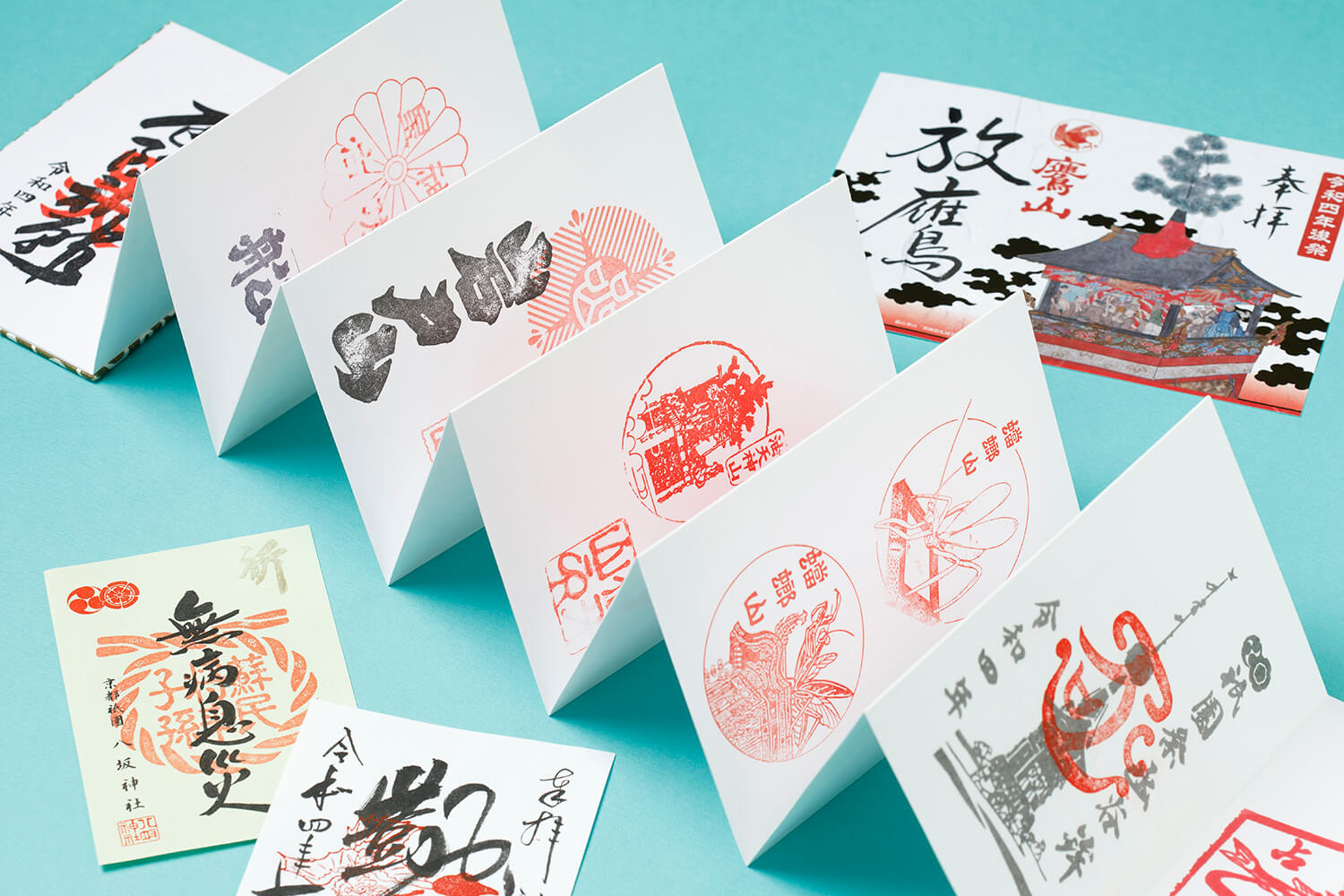
"Red seal stamp" is installed in all 34 yamaboko in Mt. evening bruised an eve of the yamaboko tour. How about collecting stamps of place at which I visited in commemoration of the travel? kokorozashinouryou, 100 yen-about 500 yen. The Gion Festival, saigyou, it's possible to receive a red seal of elegant handwriting by Yasaka-jinja and a certain yamaboko. A red seal book of the Gion Festival exclusive use is also sold at a bookstore and a grocery store.
Giving time frame: It's same in above-mentioned Rice Cake Wrapped in Bamboo Leaves.
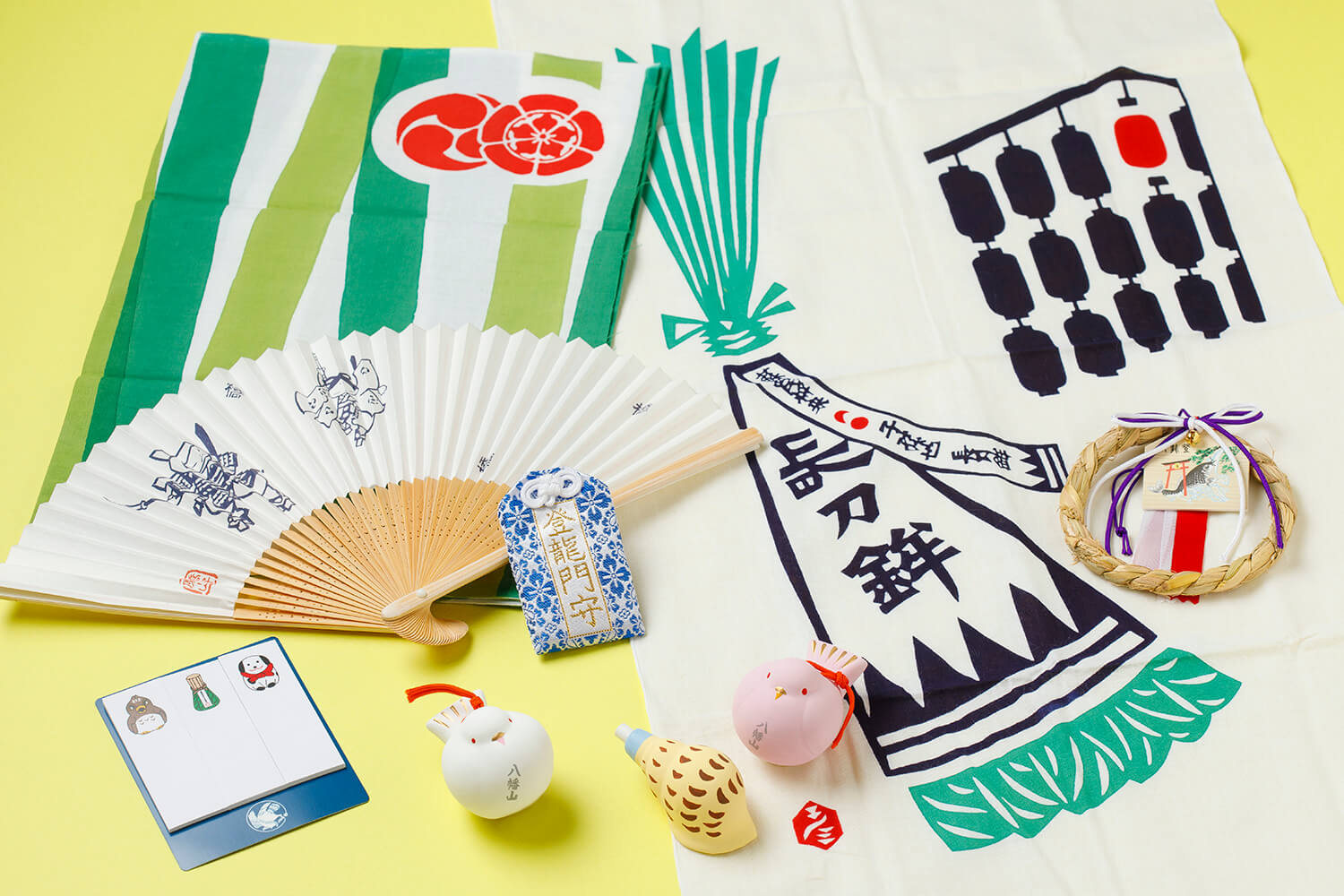
It isn't only a headband of giving items of a yamaboko. A fan, a margin arrive, stationery, sake and Bali ESHON are very rich in a charm. From the design it's towels that there are a lot of fans in particular, and which is traditional, the design like the pop art. There is also a yamaboko out of which a new design is taken every year, and there is pleasure they're gathered. The doll with the pretty palm size is also popular. The facial red and white pigeon done plumply is a pigeon bell of "Hachimanyama", and divine favor of child's crying prevention is here. A trumpet shell is a lot of "Mt. En no Gyoja (In NOGYOU I don't get, oh.)"
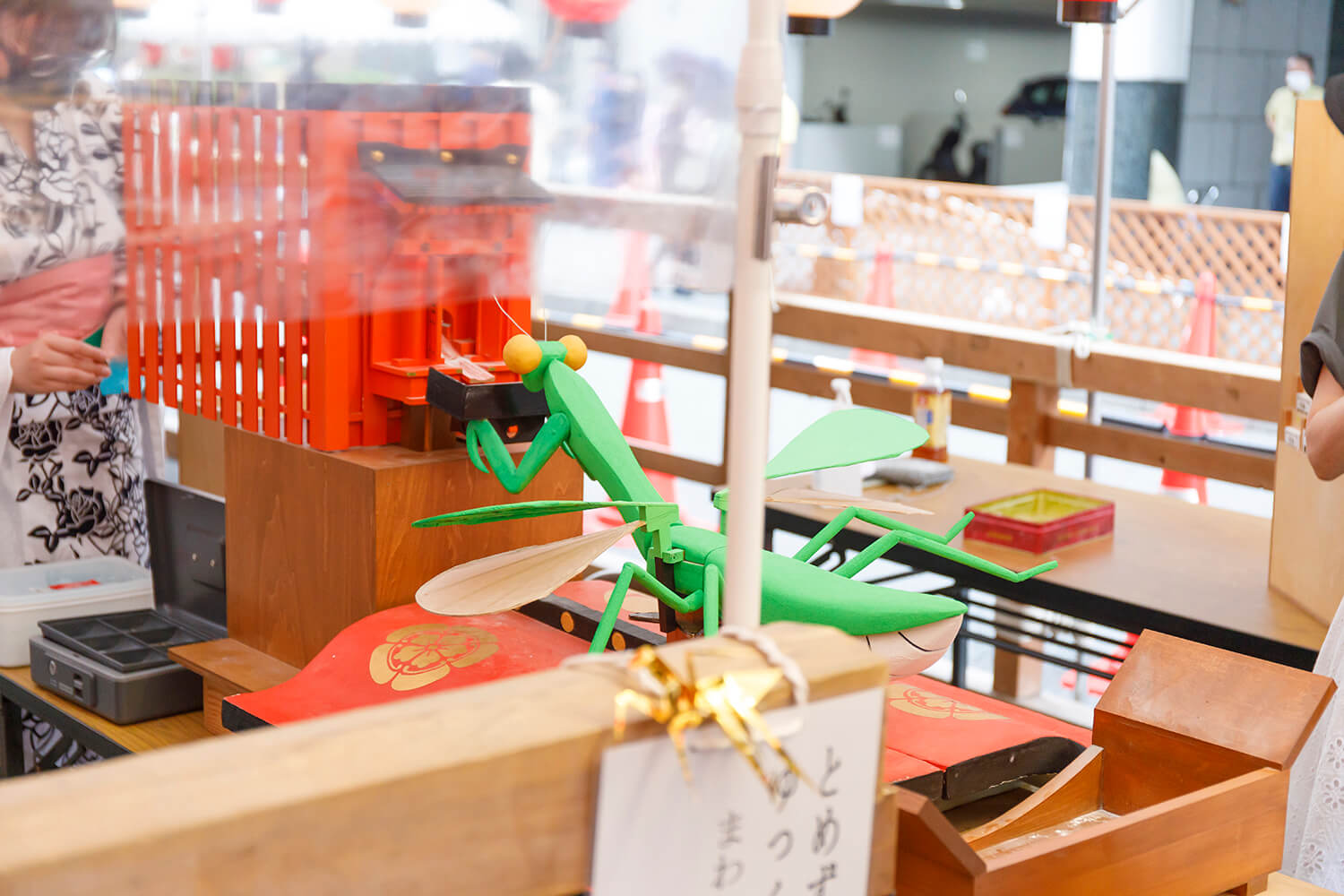
That I want you to visit by all means when saying a lot, "Mt. mantis (And, I'll sell it, oh.)" The huge mantis which moves by a mechanism on the roof (mantis) takes it, the lot modeled on this appears in Mt. evening of the previous festival. When I turn the handle by myself, a mantis does and delivers a lot one revolution round, what its form is, humorous perfection. You can line up long every year, so the empty daytime is desire relatively.
From a famous kind of cake from long-established store, hamo, by a stripe. Limitation gourmet of the Gion Festival
The "trickle" of the Kikusui halberd

The season when Confections for a festival is happy even if much Kyoto in July which lines up is taken as superficial curiousness. It can be satisfied with a famous kind of cake from long-established store by a yamaboko in particular. Presentation snack to the Kikusui halberd by which "turtle Hironaga" in Toru Takakura octopus Yakushi deals with here. The brand-name spring water which was in a town formerly "well of Kikusui" is origin like a halberd in kamei. When I cool and eat, it's the fresh taste and is also healed by the elegant body and sweetness of the brown sugar. Clear amber also seems to be cool and be the dew which drips from a flower of a chrysanthemum surely. Even the tea ceremony held by a Kikusui halberd is offered.
Sales time frame: July 13-the 16th
Sales place: Kikusui halberd
※ Year-round is sold under turtle Hironaga (RU Wakuyacho on Kyoto city Nakagyo-ku Toru Takakura octopus Yakushi, 359).
"KITCHO sweetfish" of sen coming down a mountain
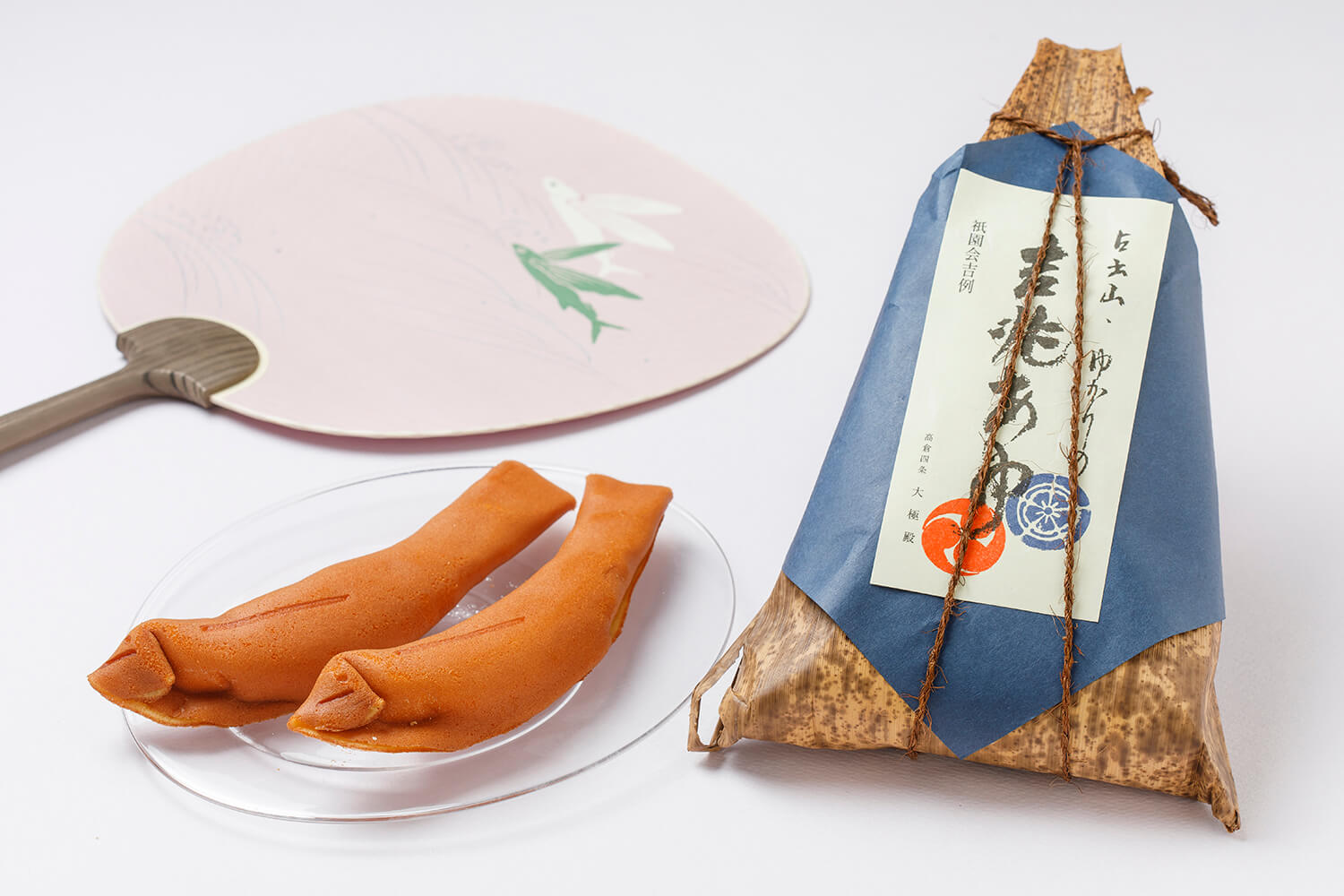
sen coming down a mountain (In URA and, oh.), another name "Mt. sweetfish fishing". The legend by which Empress Zingu fished sweetfish and predicted a victory the past in dynasty of gods is origin. Lucky Confections as "KITCHO sweetfish" is being sold by July 13-16 day limitation for this. The one by which this wrapped Gyuhi Soft Mochi in a sponge cake crepe for a basic snack in the summer when you enjoy by a name of "young sweetfish". The tail up which sweetfish went tightly and the round pupil are also lovely. Making carefully of "the Daigokuden main shop" also a little way from a yamaboko town.
Sales time frame: The evening July 13-and 14-16 day※ quantity limitation
Sales place: sen leaving a temple
Takayama's, "eaten chimaki"
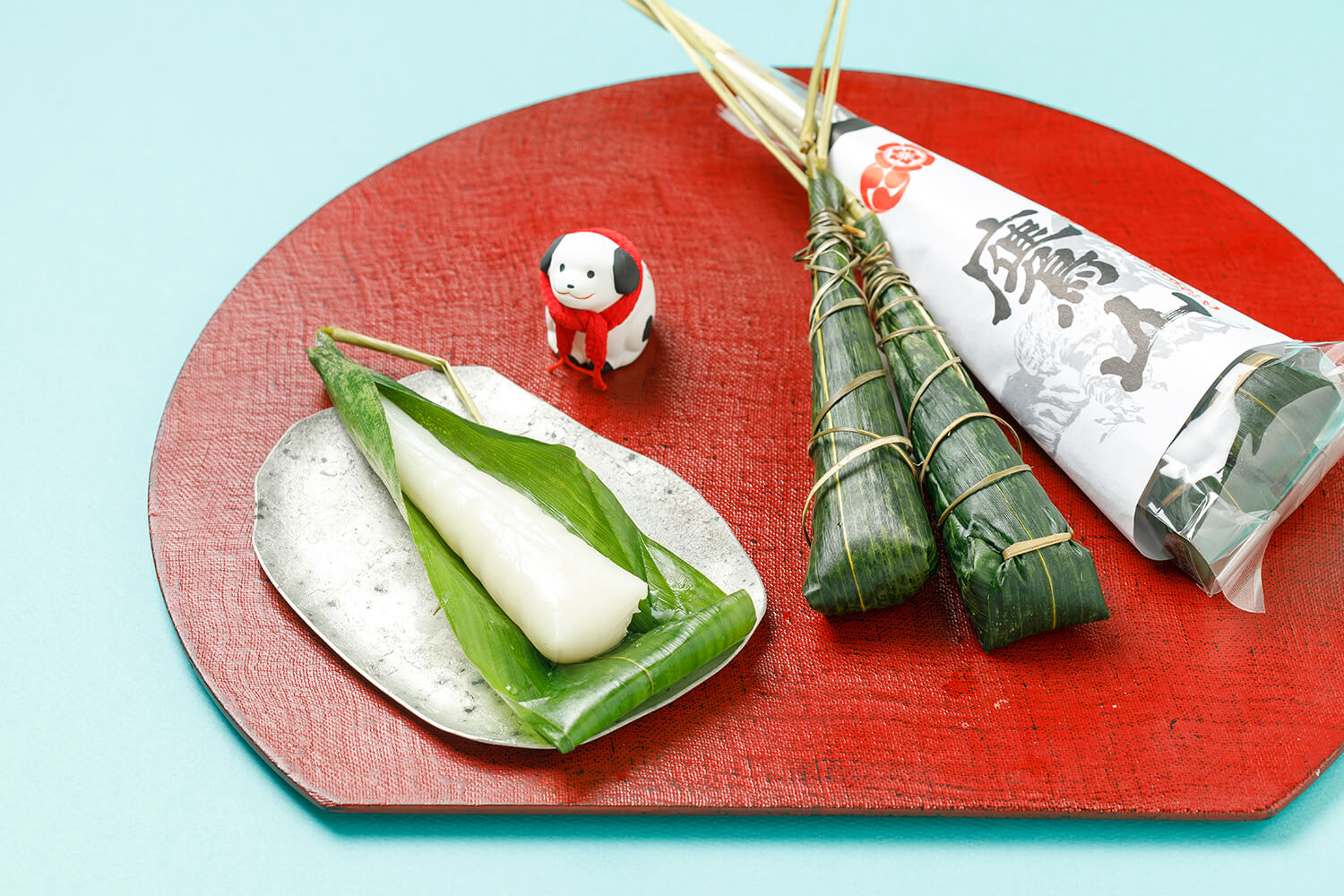
When calling it "Rice Cake Wrapped in Bamboo Leaves" by the Gion Festival, it's a charm of an amulet, but there is also a yamaboko to which "eaten chimaki" is being sold. Takayama to whom the one returned in a yamaboko tour for 196 years after per 2022 years. Same Toru Sanjo as Takayama starts the business (in 1708) in 1708, and has that, "Genroku Ise tachibana and", but it's being made using the clear groundwater which springs at a store. The fragrance is refreshing for the rice cake wrapped in a leaf of bamboo grass. The food texture made rice cake rice cake and the faint sweetness are delicious. Cool, and please have.
Sales time frame: July 21-the 23rd
Sales place: Takayama
Sanjo Wakasa shop "Gion CHIGO rice cake"
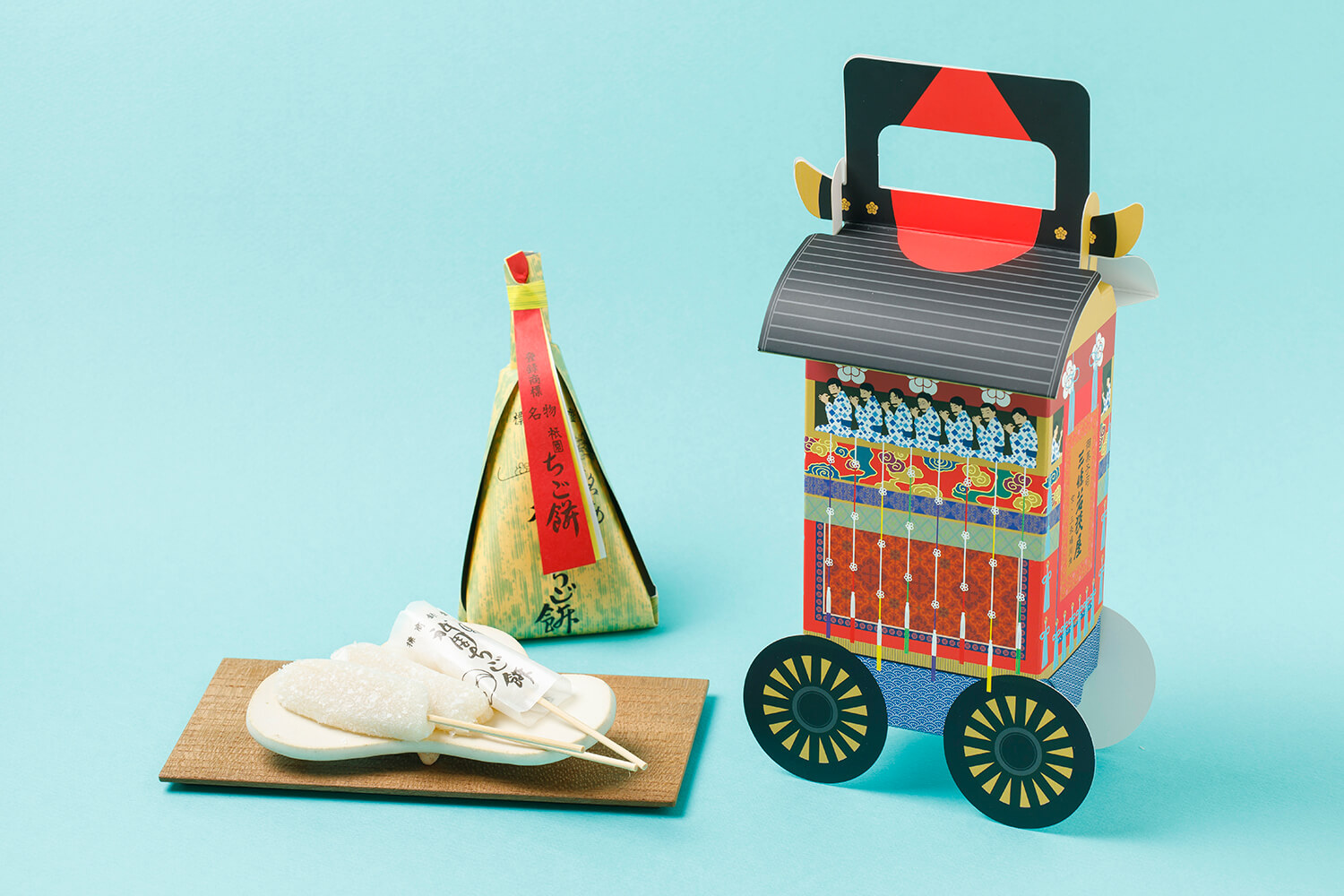
Next a gem which equals a Confections shop in the town is introduced. In the package by which Sanjo Wakasa shop where a famous one was born in the Taisho Era in particular is Rice Cake Wrapped in Bamboo Leaves-shaped by "Gion CHIGO rice cake". It's said that they make the rice cake which is treated by the "chigo (child of festivity)" who becomes an envoy of a god with a festival a hint, and the white miso cooked superficially is wrapped in Gyuhi Soft Mochi, and I'm covering with ice rice cake. The case arrive which models usual boxed other halberds is also popular. If I finish eating, you can display it and enjoy yourself just as it is.
Sales time frame: Year-round
Sales place: Sanjo Wakasa shop, Daimaru Kyoto store and Kyoto Takashi Maya
http://www.wakasaya.jp/
Of Kameya Yoshihisa, "Mt. evening, dumpling"
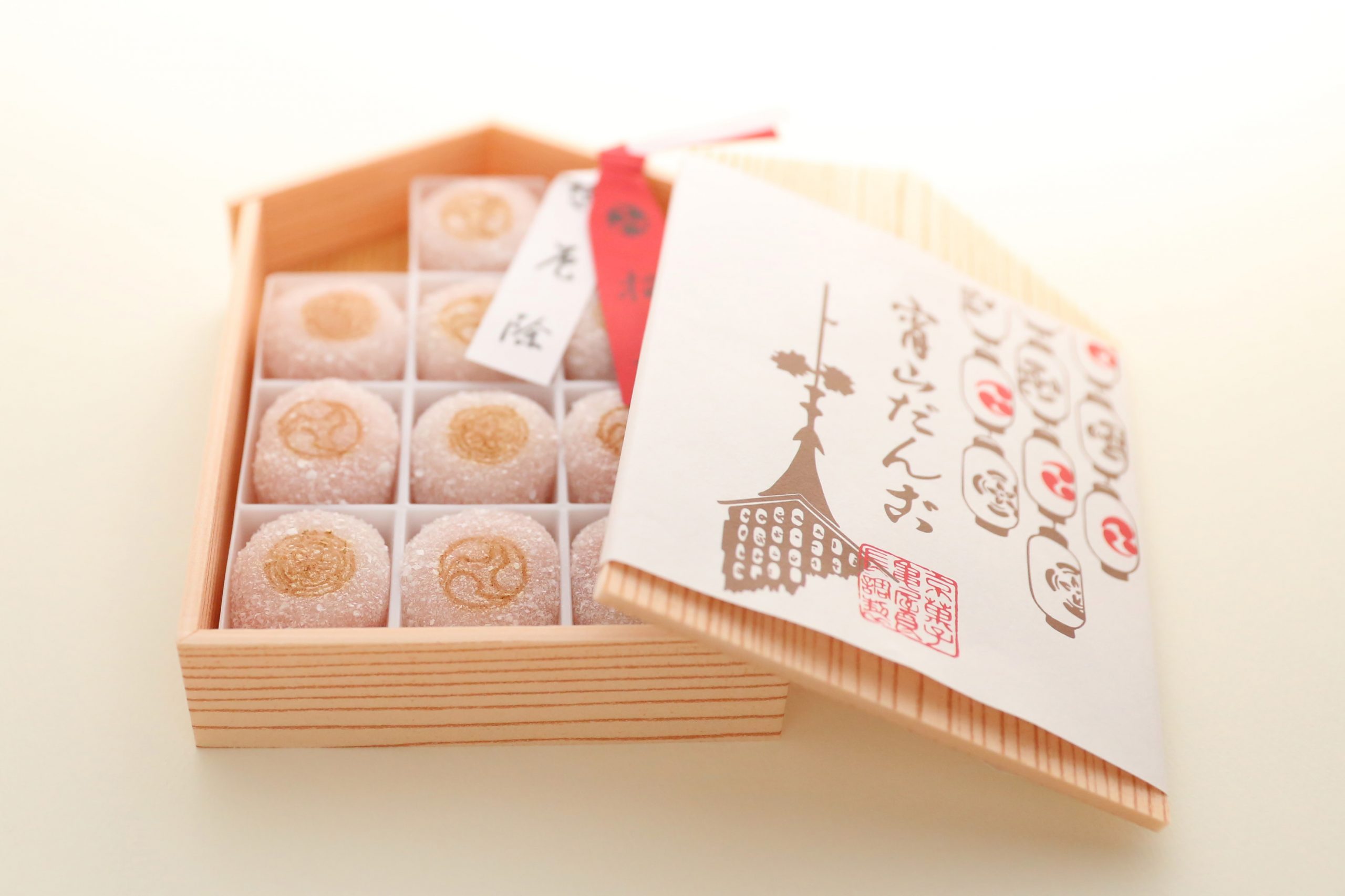
Goods for the Gion Festival will also introduce themselves to neighborhood of the yamaboko town and Toru Shijo's long-established store store "Kameya Yoshihisa". Here is a mountain and the Confections which chose as the "Komagata paper lantern" displayed in front of the halberd (by a chessman, TA paper lantern). A brand of a coat of arm in Yasaka-jinja wraps bean paste with white miso in soft Gyuhi Soft Mochi, and is stamped quietly. The pink bean paste which can be transparent slightly seems to be the light of the paper lantern on in dusk. Besides several famous kind of cake as which design of a festival was treated also appear, so please see except for a store by all means.
Sales time frame: As soon as it disappears, it (is even ended) even around July 10-July 17.
Sales place: Kameya Yoshihisa (main store and JR Kyoto ISETAN store) and Kyoto Takashi Maya
https://kameya-yoshinaga.com/
"Seasonal Japanese Tea Ceremony Sweets" of nikiniki
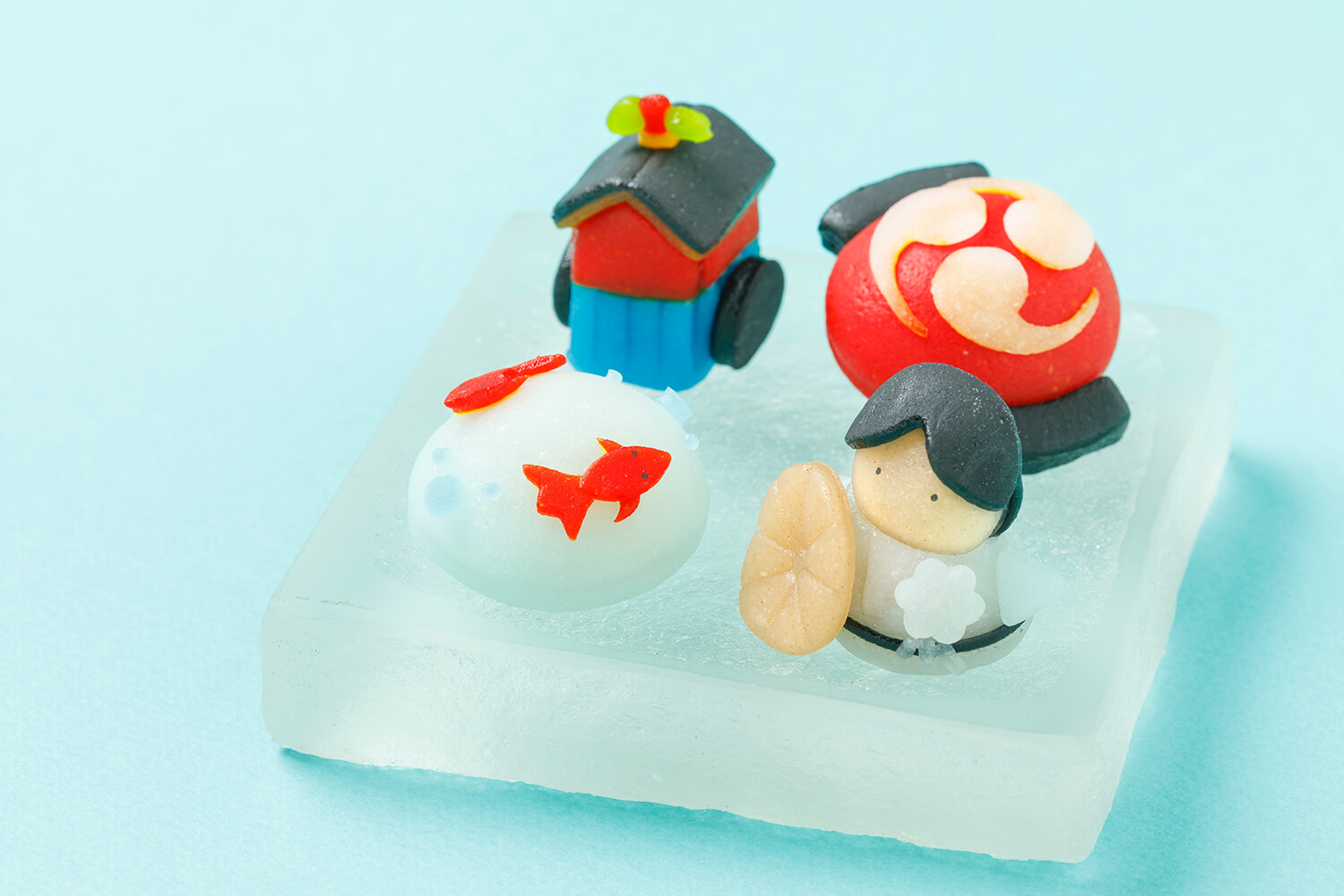
The Gion Festival version also appears on "Yatsuhashi cracknels" of a Kyoto famous kind of cake. Japanese Tea Ceremony Sweets in July when "nikiniki" a Shogo-in head office of Yatsuhashi cracknels produces (Niki Niki) makes here for raw Yatsuhashi cracknels. Photograph is an example in 2022 and though is the pretty gobbet size, the lead role of the halberd, the festival paper lantern and the yamaboko is expressed tenderheartedly. The design is different every year, so don't miss it. The flavor of familiar NIKKI lasts wetly for effective fabric, rice cake. The inside is with strained beans jam and white bean paste.
Sales time: July (Reservation is recommended for quantity limitation.)
Sales place :nikiniki and nikiniki a la gare (in Kyoto station Hachijo mouth 1F Kyoto hospitality path)
https://nikiniki-kyoto.com/
A capital is knitted The "Gion Festival limitation flavor" of KUROSSHE.
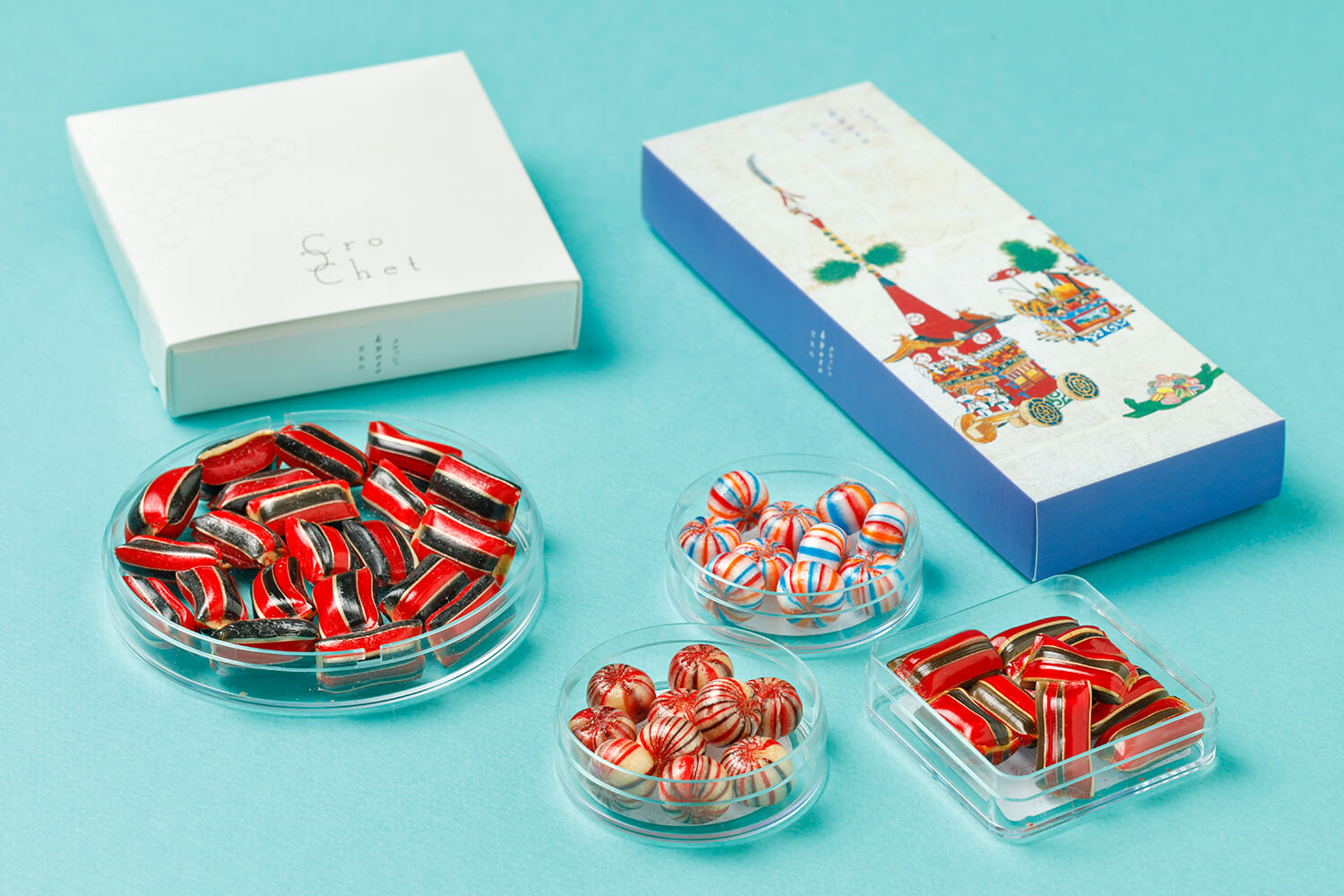
The color delicate and beautiful like a glassware is the brand of the charm in "KUROSSHE" a long-established store in capital AME handles. Red and a black contrast are 3 kinds, fascinating "Gion yamaboko" (the black gooseberry flavor), "Gion Mikoshi Shrine" of a round ball-shaped (the Cassis Orange flavor) and "Gion festival ensemble" (the banana flavor) for a limitation flavor, and the scene of the festival just looks and seems to be floating. There are one in a set of 3 in mini "chick HIINA series", and it's possible to choose a halberd case of limitation in July.
Sales time: As soon as it disappears, it (ends) around the end of around June-July.
Sales place: KUROSSHE company store (Kyoto main store, Kyoto tower sandwich store, JR Kyoto ISETAN store and Ranzan AKOGAREYA store)
https://select.crcht.com/
Of IZU juu, "hamosugata, with the selling point of"
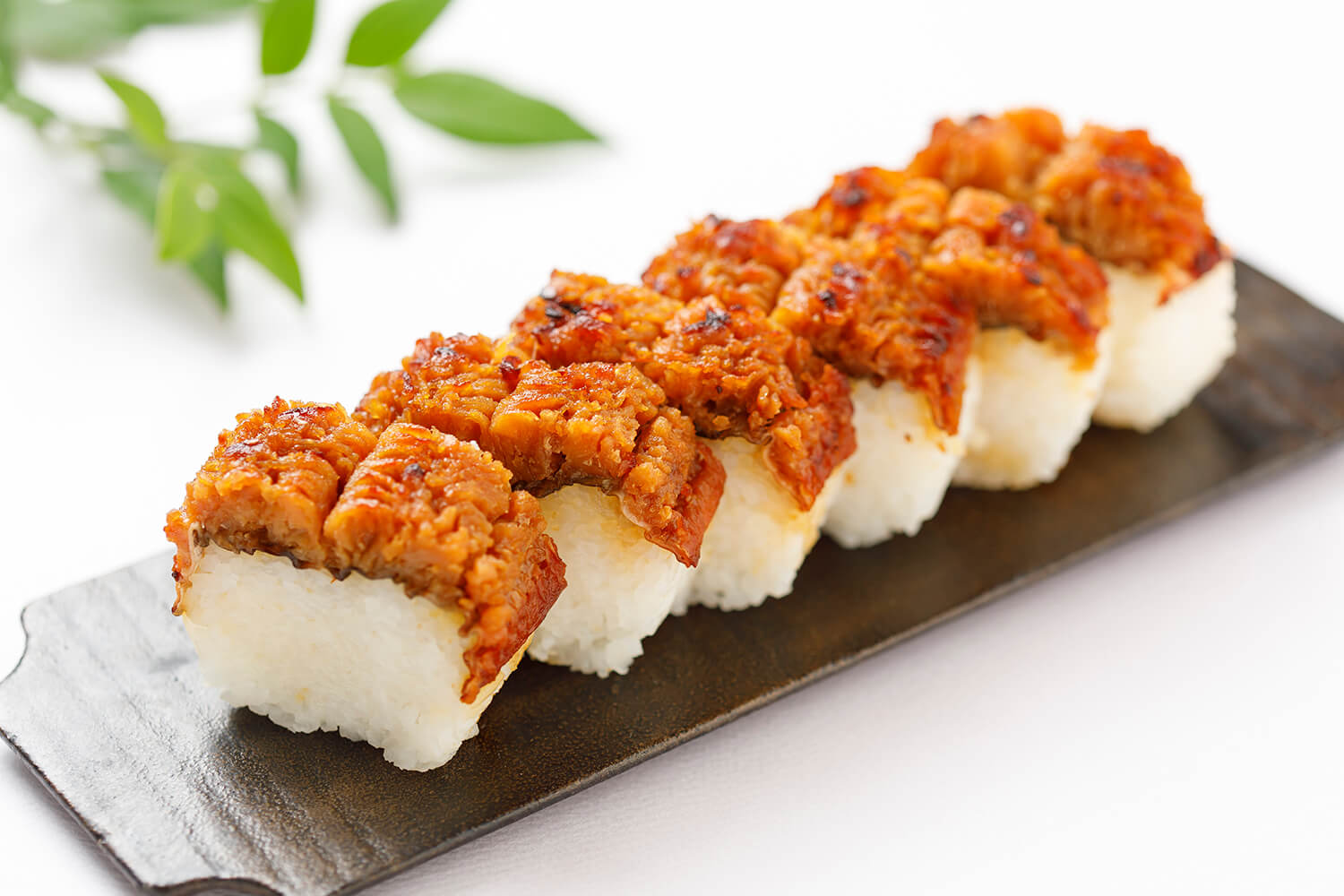
The Gion Festival, an another name "pike eel festival" as if, a treat in summer of Kyoto, "pike eel (pike eel)". That a called pike eel meets season the same time as a festival drinks rain in the rainy season, and when it becomes good, is the reason. The 'sashimi' and the bowl thing are also delicious, when I say a festival, as expected, sushi. Then the capital sushi store where I start the business and have a store under the stone steps in Yasaka-jinja (in 1912) in 1868 "IZU juu" uses way pike eel from Awaji Numashima who puts on fat. This is baked up fragrantly plumply with the secret kanshin sauce added since foundation.
Sales time: Summer-early autumn
Sales place: IZU juu
https://gion-izuju.com/
There are still a total attachment and a topical item in stationery.
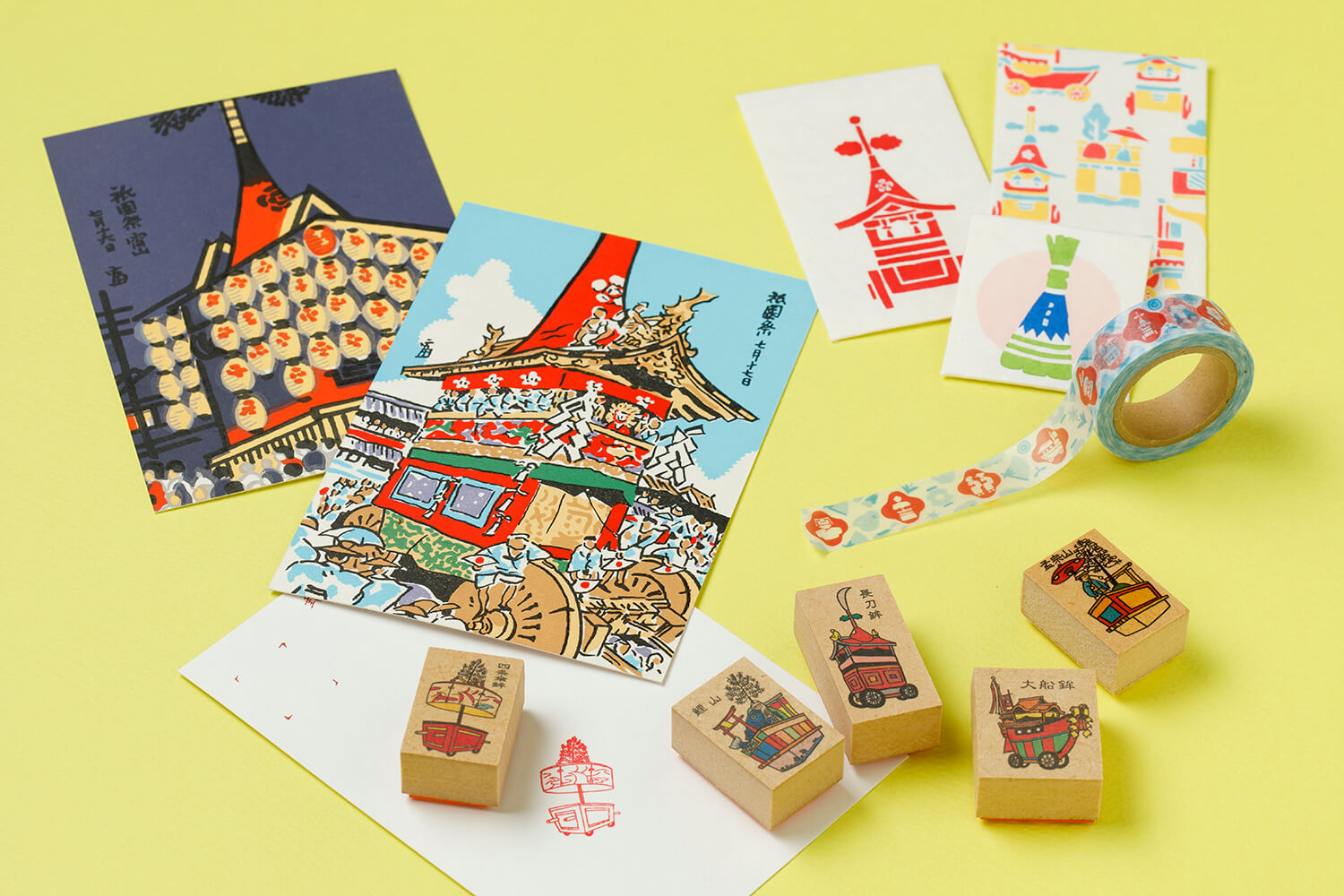
Even stationery and an attachment of day usual usage can meet the nice design. The picture postcard which drew the yamaboko tour an uplifting feeling is and Mt. evening is made in the Teramachi expert's Japanese tool store of foundation for more than 350 years "Kyukyodo". It's recommended to offering best wishes for the hot season. The yamaboko stamp which has complete set of all 34 sets can be bought at a long-established store seal store in Shinmachidori Shijo "Kyoto inn van" (It's possible to buy it from 1 point.) A masking tape and POCHI bag, ", it's tradition, it isn't pretty," with the theme of something of a "a virgin's, Gion Festival" project to develop. The design company in the local halberd town can smell at a hand, and a pop red seal book is also a topic.
Kyukyodo https://kyukyodo.co.jp/
Kyoto inn van http://www.inban.co.jp/
The virgin's Gion Festival https://otomenokyoto.stores.jp/
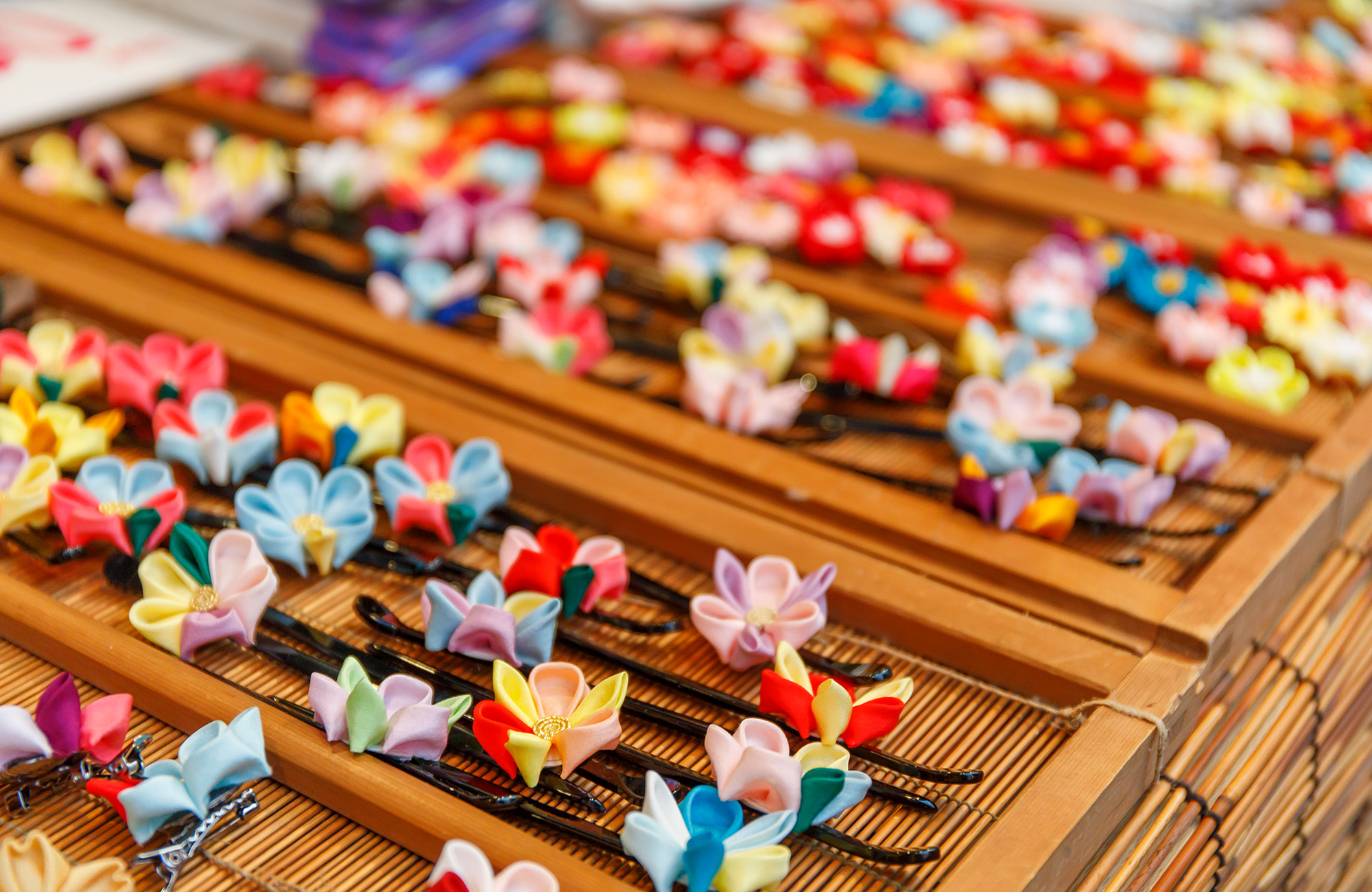
The Muromachi expert and Shinmachidori which are the center of the halberd town are a wholesale district in Gofuku with long history. Development of a yamaboko, several, the century over it's learned about as supported existence. From such relationship, Mt. evening, time frame is here and there and a wagon sale of a kimono, a yukata and a band is performed. The store you help dress at the place when a yukata is bought. There are also fitting 'kanzashi' and total attachment in the yukata form, so please enjoy a ramble by all means.

The master of MICHIKU SA who took charge of this article
-
Noriko Yamaguchi.
Edit and lighter. An article of travel, history, traditional culture and arts and crafts is written with a magazine and a web using Kyoto as a foothold. To deal with edit of a book. I like a festival, sake and a container very much. Interpretation information man (English) and international ri Sakashi. Kyoto official approval second kyuu.
Of MICHIKU SA.
Master
OMO5 Kyoto Gion by Hoshino Resorts
The Kyoto center and Kyoto city
Yasaka-jinja which is here along the downtown area which represents Kyoto "Toru Shijo" and is famous for Gion Matsuri is immediateness. Everyone is convenient for sightseeing in visited Yasaka and clear water area sometime.

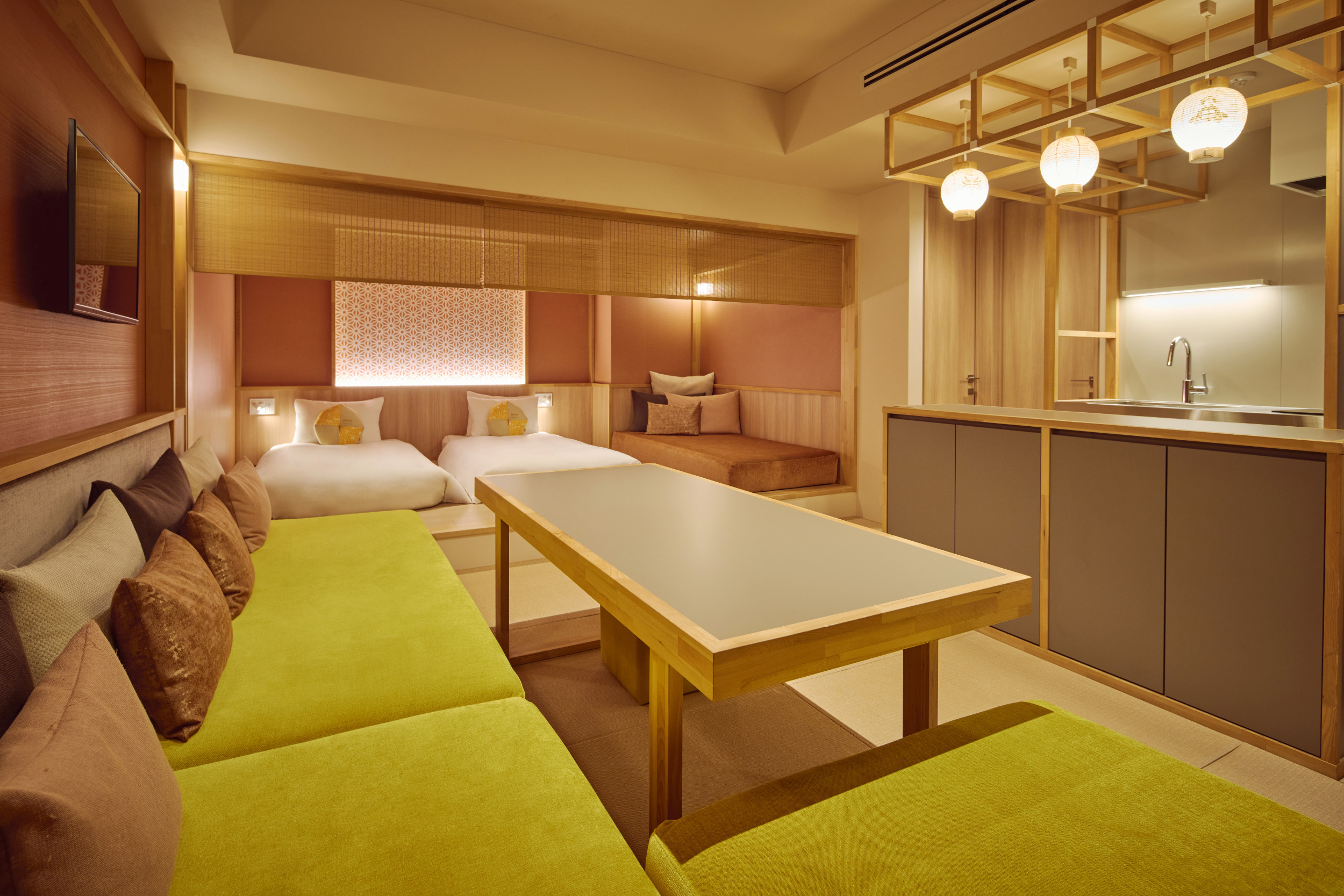
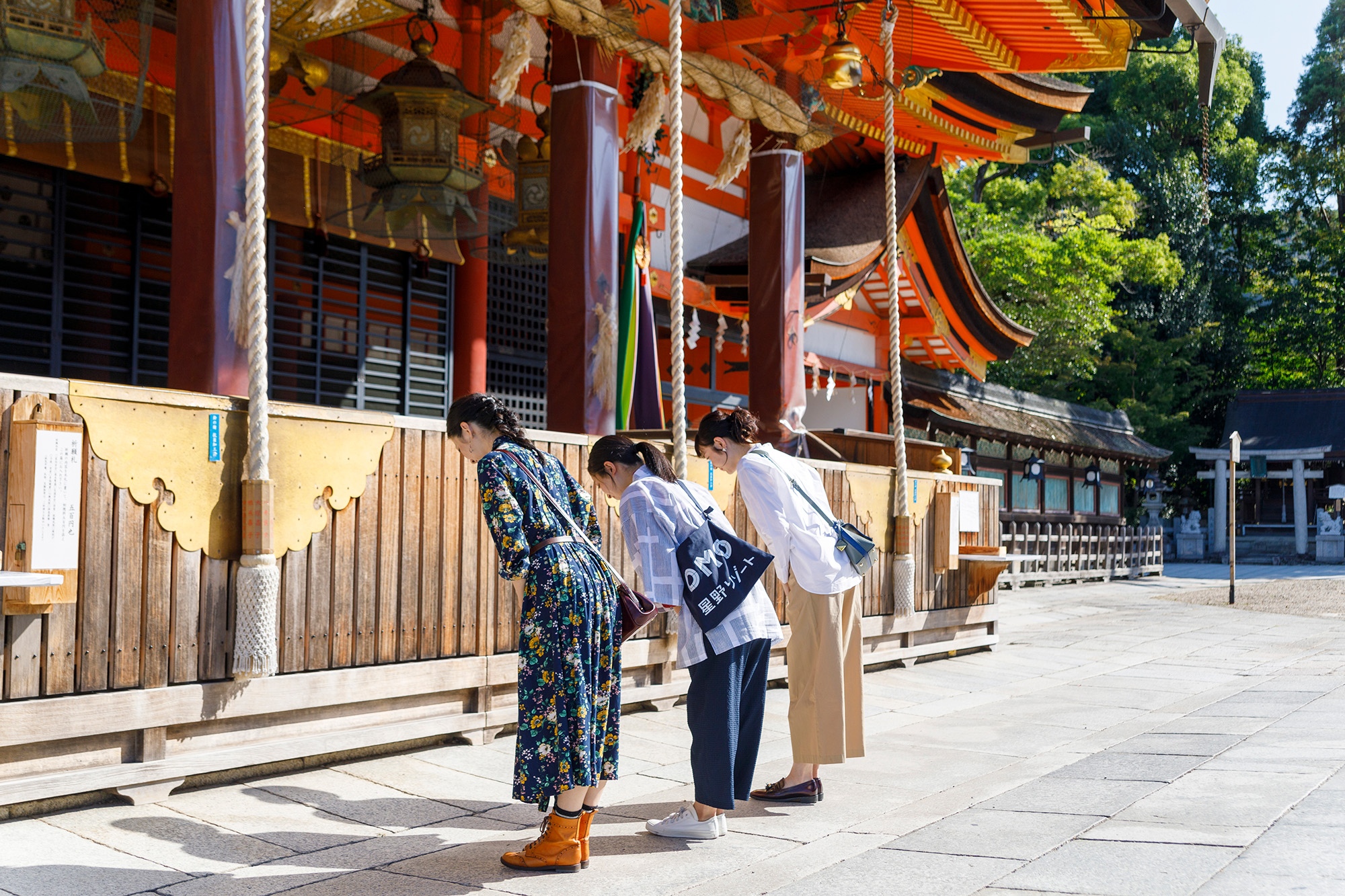

Direction Keihan Main Line Number 7 of Gion-shijo Station, from an exit, about 5 minutes on foot
- A room charge example
- 1 night, 1 person \9,500-
OMO5 Kyoto Sanjo by Hoshino Resorts
The Kyoto center and Kyoto city
Even the streets where Pontocho and Sanjo big bridge seem to be Kyoto are within the walking range. The past and present are the area which intersects from the latest store to the speciality store in a long-established store.


The Direction Kyoto municipal subway Number 3 of Kyoto Shiyakusho-mae Station, from an exit, about 2 minutes on foot
- A room charge example
- 1 night, 1 person \4,000-