





Osaka, Kansai Expo] Feel like strolling through a vibrant Asian city! Get a taste of the real thing at the restaurants in the overseas pavilions! Asia Edition
![Osaka, Kansai Expo] Feel like strolling through a vibrant Asian city! Get a taste of the real thing at the restaurants in the overseas pavilions! Asia Edition](https://hoshinoresorts.com/guide/wp-content/uploads/2025/08/DSC01762-1-1024x682.jpg)
This is BUBBLE-B, a writer who loves Expo '70. Finally, we are less than halfway through the exhibition period. Although the days continue to be extremely hot, the Osaka-Kansai Expo is becoming increasingly exciting due to the fact that it is summer vacation time.
I will soon have visited the Expo 20 times. I was able to visit 90% of the pavilions. (The remaining 10% is a very high mountain...) Every time I visit the Expo, I am amazed and impressed. The parades and shows where you can experience live culture, and the restaurants where you can enjoy the local flavors. The charm of the Expo cannot be overstated.
MICHIKUSA Guide ~ An Original Japan Travel Guide by Hoshino Resorts' Local Staff, a "Gourmet Guide to the Expo" that has eaten at restaurants in overseas pavilions, would like to introduce you to cuisine from around the world. I have written the " Europe" and " Middle East" editions so far. This is the third installment, "Asia. Although Asian countries are relatively close to Japan, their cuisines are also unique in many ways. I will introduce familiar dishes as well as some unusual ones. And finally, as an extra feature, I would like to introduce the Japanese noodle dish that was the talk of the town even before the Expo opened!
Michikusa experts who wrote this article
-
Restaurant Chain Traveler
BUBBLE-B
I am a traveler writer who tours local restaurant chains throughout Japan. From conveyor belt sushi chain restaurants in Hokkaido to hamburger chain restaurants in Okinawa, in recent years I have also started visiting local chain restaurants overseas.
https://www.bubble-b.com/profile/ Michikusa's
guru
Singapore Pavilion] Chicken rice tastes like the diversity of Singapore!

Walking around the large roof ring near the West Gate, you will see two red spheres that stand out. One is the Yoshimoto waraii myraii pavilion and the other is this Singapore pavilion.Singapore is a small country, with a land area about the same as the 23 wards of Tokyo. The red sphere was designed because the country's land area is hidden by the red dot drawn on the map.
The name of this red sphere is "Dream Sphere" (dream sphere). Inside the pavilion, you can enjoy a magical experience that will turn your dreams into reality.

The inside of the pavilion is decorated with fantastic artwork and is truly the future. In the "Dream Repository" (a place where dreams gather), visitors draw their own dreams on a panel of terminals with their fingers.
Then, when you go to the Dream Sphere on the upper floor, fantastic images spread out on a 360-degree dome screen, and you can enjoy the production of various people's dreams floating one after another on the screen and then disappearing. Of course, your own dream will also appear!
In the Singapore Pavilion, there is a Restaurant "Shiok! Café" is located in the Singapore Pavilion, where you can also eat in. Shiok" is a Singlish word used to mean "the best feeling" or "delicious! is a Singlish word used in Singapore to mean "great feeling" or "delicious!

In Singapore, coffee shops are called "kopitiam" and can be found all over the city. In Singapore, stray cats are called "community cats" and are cherished by the local community. Such a stray cat appearing in a kopitiam is lovingly depicted by artist Ip Yew Chong.

Such is Siok! Chicken Rice is what I ordered at the café. Also called Hainan Chicken Rice, it is a standard Singaporean menu item. The container is cute and looks like a cat's paw paw. A portion of the proceeds from the sale of this container will be donated to a dog and cat shelter.
Boiled chicken and long-grain rice cooked in its own juices. It is served with dark soy sauce, chili sauce, and pak choi.

The dark soy sauce is a thick sauce with a slightly bitter, rich flavor, similar to tamari soy sauce. The other chili sauce is a spicy sauce with a refreshing sourness. Taste each of the two sauces, mix them up a bit, or dip the rice in them for a variety of tastes.

I tried this one because I was told that this is a limited-edition sweet available only at the Expo! It is fried crispy on the outside and filled with custard cream with salted egg inside. It was a bit of a strange sweet and salty manju with both sweet and salty flavors.

There is also an ice cream bar stand outside the pavilion. Marley is the official mascot character of the Singapore Tourism Board, based on the Merlion. There are six flavors to choose from: calamansi, lychee, mango, dragon fruit milk, milk coffee, and azuki.
I tried the calamansi flavor this time. It has a refreshing citrus flavor like lemon or orange, which will refresh you even on a hot day!
Michikusa Gurus
Singapore is a multi-ethnic country, and Singaporean cuisine is a fusion of numerous culinary cultures, including Malay, Chinese, and Indonesian. Chicken rice, too, is a simple dish with a flavor that is a crossroads of various countries' culinary cultures!
Thailand Pavilion: Gourmet food from the Land of Smiles is full of spice and tenderness.

The Thai Pavilion is full of energy every day. Shows are performed several times a day on the stage in front of the pavilion, and the content of the shows is a good groove that everyone can sing along to. Many people may have learned the Thai greeting "Sawadika" here.

Upon entering the Thai Pavilion, you will first be taught how to pronounce the Thai greeting "Sawadee". Then you will move to the main floor to watch a powerful video about Thai history and culture, and then the stage show will begin. Staff/staff members of the Thai Pavilion sing and dance on a cheerful stage, and there is a call-and-response corner where you say "Sawadee," the greeting you were taught at the beginning of the show.

After the stage show, we moved on to the next area, where Thai medical technology is on display. Various medicines, prosthetic legs and other walking devices, a 3D printer model of a repaired skull, and other items are on full display, in keeping with the concept of "Healing the Future with Thai Wisdom.
Thailand is one of my favorite countries, as I traveled to Bangkok in February this year and enjoyed delicious Thai food. Now, let's go to the Restaurant!

The Thai Pavilion store is for take-out only. The menu is simple in composition, with only a few typical Thai dishes.
The "Chicken Khao Sai" I ordered this time is a dish of Thai curry with noodles. When I tried it, I found that the curry had a typical Thai coconut flavor. It is mild at first, but spicy later. It is very easy to eat and has a gentle flavor. The interesting thing is the noodles, which are made up of two layers of thin dry noodles and thick fresh noodles.

And the chicken was very satisfying, with a whole bone in it! The product is small in cup noodle size, so it is not very hearty, but I had the impression that it was the very dish I had in Thailand, and it was very tasty.
Michikusa Gurus
There are many Thai restaurants in Japan, but I think it is interesting to dare to eat at the Expo. The Thai Pavilion is also very enthusiastic about the performance, so you can eat while soaking up the afterglow!
Indian Pavilion (Bharat)] Enjoy a hearty Indian curry!

The Indian Pavilion, which opened late after the opening of the exhibition, was also a topic of conversation. Bharat" means India in Sanskrit and is also used as the name of the country of India.
In front of the India Pavilion, which looks like a lotus flower, there are two objects. The wheel on the left is a dharma wheel called the Ashoka Chakra on the wall of a 13th century World Heritage temple called Surya.Although it is not visible in the photo, the clasped hands on the right side are said to represent the Indian greeting "Namaste". All of them have a perfect Indian atmosphere.

The exhibits range from ancient civilizations and spiritual culture to current industry and technology, and even space exploration.
But from the moment you enter the museum, there is something of a spicy curry aroma in the air. It is too Indian. But this must not be my imagination!
I followed the scent. And I found it.

A store specializing in take-out was set up on the grounds of the India Pavilion. The aroma of curry was here! Chicken Biryani, Butter Chicken and Rice, Samosa, Chicken Tikka, Panipuri...
From such a tempting lineup, I chose this "Palak Paneer and Rice". Palak paneer is a curry of spinach (palak) and cottage cheese (paneer). I love spinach curry, so it was an instant decision for me. The combination of the long-grain rice with its parapara texture and the palak paneer, which is both spicy and mildly rich, is a perfect combination and a true taste of the local cuisine. It's a culinary experience that will make you forget that you are at the Expo site.
Also, as you can imagine from the appearance, the contents are very generous. You can definitely fill up on this bento alone!

Along with the curry, I asked for a cup of masala tea. Masala means spice in Hindi and is an Indian tea made by blending black tea with spices. The unique taste of this tea made me feel like I was in a trip to India!
Michikusa Gurus
I have the impression that India is an enchanting country full of wonders, and the India Pavilion gave me just such an image of India. Food is also reasonably priced, so you can enjoy it easily!
Malaysian Pavilion] Experience the simple, unpretentious, and exotic Malaysian cuisine!

First of all, the Malaysia Pavilion overwhelmed me with its appearance. The facade is made of a large amount of bamboo, which is said to be inspired by the Malaysian textile "songket". The organic, primitive, and elegant architecture has an outstanding impact.

Upon entering the Malaysian Pavilion, one is enveloped by the aroma of spices, and is immediately struck by the exotic atmosphere. Food stalls and food samples are on display, recreating the atmosphere of Southeast Asia in great detail.
From traditional Malaysian houses to skyscrapers in Kuala Lumpur, rural landscapes with drones, and smart cities of the future, this exhibit shows Malaysia as it is today.

The Nasi Rama ordered at the Restaurant on the first floor. The deciding factor in my order was the description on the menu, "This is the authentic taste of Malaysia. Nasi lama is rice cooked in coconut milk. The rice was made of long-grain rice. The sauce in the upper right corner is thick, sweet and spicy, and tastes like miso. On the right side of the rice is fried chicken and small fish, which was crispy and hard.
I heard that the Malaysian way to eat nasi lama is to "mix" it anyway. I tried to eat it by mixing it accordingly. The sauce was mixed with the rice and side dishes, which had previously been separated, to create a lunch box with a sweet and spicy taste. The flavor of the sauce, which seemed to escape through my nose, was truly exotic!
Michikusa Gurus
Of all the pavilions at the Expo, the Malaysia Pavilion is the one that most evokes the atmosphere of Southeast Asia. In addition to the exhibits, the performance of making roti chanai (thinly-stretched bread) dough in the Restaurant on the first floor is a must-see!
Korea Pavilion] Junk food of Seoul is here. [Korea Pavilion] Here is Seoul's junk food, let's try chicken burgers!

A giant vision that overwhelms everyone is the Korean Pavilion. The images projected here are so elaborate that some people may have stopped to watch them all the way through.

The Korea Pavilion is an omnibus format that allows visitors to enjoy three conceptual exhibits in sequence. The first exhibit is a disco-like space where AI improvises music based on pre-recorded participants' voices, and many lights are interlocked with the music.
The second exhibition space is themed "From Devastated City to Restored Life. When visitors breathe into the pipes of the objects reminiscent of ruins, hydrogen fuel cells are activated, generating electrical energy and producing pure water. This water is not simply disposed of, but visualized in large droplets and bubbles as a symbol of budding life. Visitors can experience the "restoration of life" by directly touching or breaking these droplets.
The third exhibit is a K-pop-themed screen that presents a futuristic film featuring music and dance as Korean high school girls in the year 2040 try to complete a song left behind by their grandfather.
The Restaurant is located on the left side of the Korean Pavilion, opposite the entrance.

Korean food is famous for its barbeque, kimchi, and sundubu, but in fact, chicken-based dishes are quite popular.
The Restaurant in the Korea Pavilion is produced by Camaro Chicken, a restaurant specializing in fried chicken in Korea. Expecting the authentic taste of a specialty restaurant, I ordered this!

The set includes a chico burger, fries, and a cup of Chilson cider with ice. Can you feel the volume of the Chico Burger at this point?

The Chico Burger is a large fried chicken, egg, tomato, onion, lettuce, and cheese sandwich. Let's bite into it!
The chicken is crispy on the outside and tender and juicy on the inside. The sauce is tangy and spicy, with a distinctly Korean flavor. There are many ingredients, so you can finish eating it without getting bored at all. The Chico Burger at the Korea Pavilion Restaurant is a must for junk food lovers!
Michikusa Gurus
The Korean Pavilion Restaurant serves the food just as it is in its home country, without any adjustments or lessening of the volume for the Japanese market. The prices are reasonable, so be sure to stop by!
TechWorld] Let's try Taiwan's soul food, "Lulau Rice"!

Although not an overseas pavilion, the TechWorld pavilion, produced by Yushan Digital Tech, showcases Taiwanese content.

TechWorld uses the latest technology to showcase Taiwan's history and traditions, from the island's nature to its present and future.
The most overwhelming feature is the main theater. Here, images of the island's magnificent nature are projected onto a screen made in the motif of a giant tree, and countless tablets on the ground move organically in tandem with the images, freely changing direction. The exhibition is overwhelmingly unique to Taiwan, a world leader in semiconductors and other technologies.

Shinno-Seikatsu is a Taiwanese specialty store attached to TechWorld. It sells goods as well as food and drinks, making it an irresistible space for Taiwanese lovers.

One of Taiwan's soul foods is lu lo han (roasted rice). Pork belly and shiitake mushrooms are stewed in a soy sauce-based broth with a hint of five-spice powder and served on a bed of rice. In Shennong Seikatsu's original lu lo han, the ingredients and rice are separated by a divider and can be placed on the rice just before eating.
Some rou rohan in their home country have a peculiar smell, but Shennong Seikatsu's rou rohan is just easy to eat and can be enjoyed by everyone. The boiled egg and takuan (pickled radish) also add a nice accent.
Michikusa Gurus
TechWorld's Shennong Life offers not only lu lo han, but also tapioca milk tea, mango milk shaved ice, Taiwanese oolong tea, and many other typical Taiwanese flavors. The stylish packaging is also a must-see!
Extra Edition [Ekisoba Maneki] The one and only Ekisoba! A taste unique to the Expo!

Lastly, as an extravaganza, I would like to introduce something from Japan. There are many Japanese Restaurants at the Expo, and one of the biggest draws is Ekisoba Maneki, which is packed every day.
Eki Soba Maneki was established in 1888. It was founded in 1888, selling Japan's first "makunouchi bento" (boxed lunch box) in Himeji Station. Today, it continues to operate as an ekisoba and ekiben store mainly in Hyogo Prefecture.

The Ekisoba Maneki exhibited at the Expo is probably this limited edition product, "Ultimate Ekisoba! The fact that everyone was blown away by its price is still fresh in our memories.
To begin with, Maneki's "Ekisoba" is not Japanese buckwheat noodles, but Chinese buckwheat noodles made with kansu (Chinese brine). In other words, it is ramen noodles. This is based on Eki-soba, with soup stock made from scallops and clams, and lavishly topped with Kobe beef shoulder roast. It is truly a traffic jam of deliciousness.
When you crack open a hot spring egg, the mildness of the yolk envelopes the Kobe beef. This is truly sukiyaki! It was an attack of deliciousness unlike anything I had ever tasted before, and it was truly "ultimate.
How was the Osaka/Kansai Expo Restaurant Asia section? Although these countries are relatively close to Japan, their cultures are quite different from Japanese food. Two of my impressions are the use of long-grain rice and the skillful use of spices in seasoning.
There are only two months left at the Expo. Let's enjoy the Expo to the end!
OMO7 Osaka by Hoshino Resorts, a hotel where you can fully enjoy the Expo

OMO7 Osaka by Hoshino Resorts has prepared special contents to help you enjoy the Expo even more. You will surely be able to enjoy the Expo to the fullest before and after you go, of course.
▶OMO7 Osaka by Hoshino Resorts|5 points to enjoy the Expo to the fullest

OMO7 Osaka by Hoshino Resorts
Osaka, Osaka
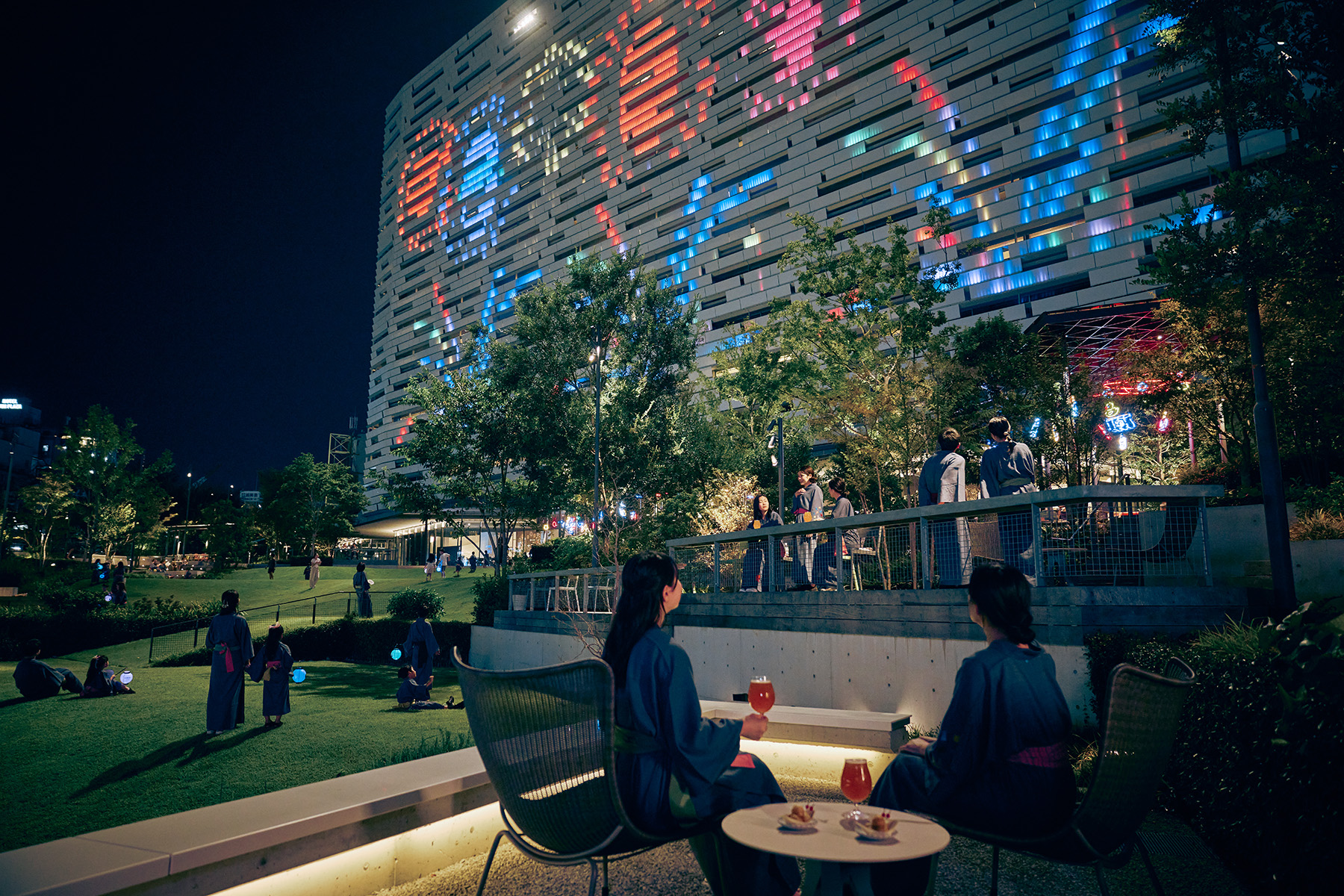
Conveniently located near major sightseeing spots. From guided tours to experience Naniwa culture to unique events, we offer a full range of experiences that will blow your mind.


.jpg)
Access by bus Short walk from JR/Nankai Railway Shin-Imamiya Station
- Example of Accommodation Rates
- 1 person per night From 12,000 yen
Hoshino Resorts RISONARE Osaka
Osaka, Osaka
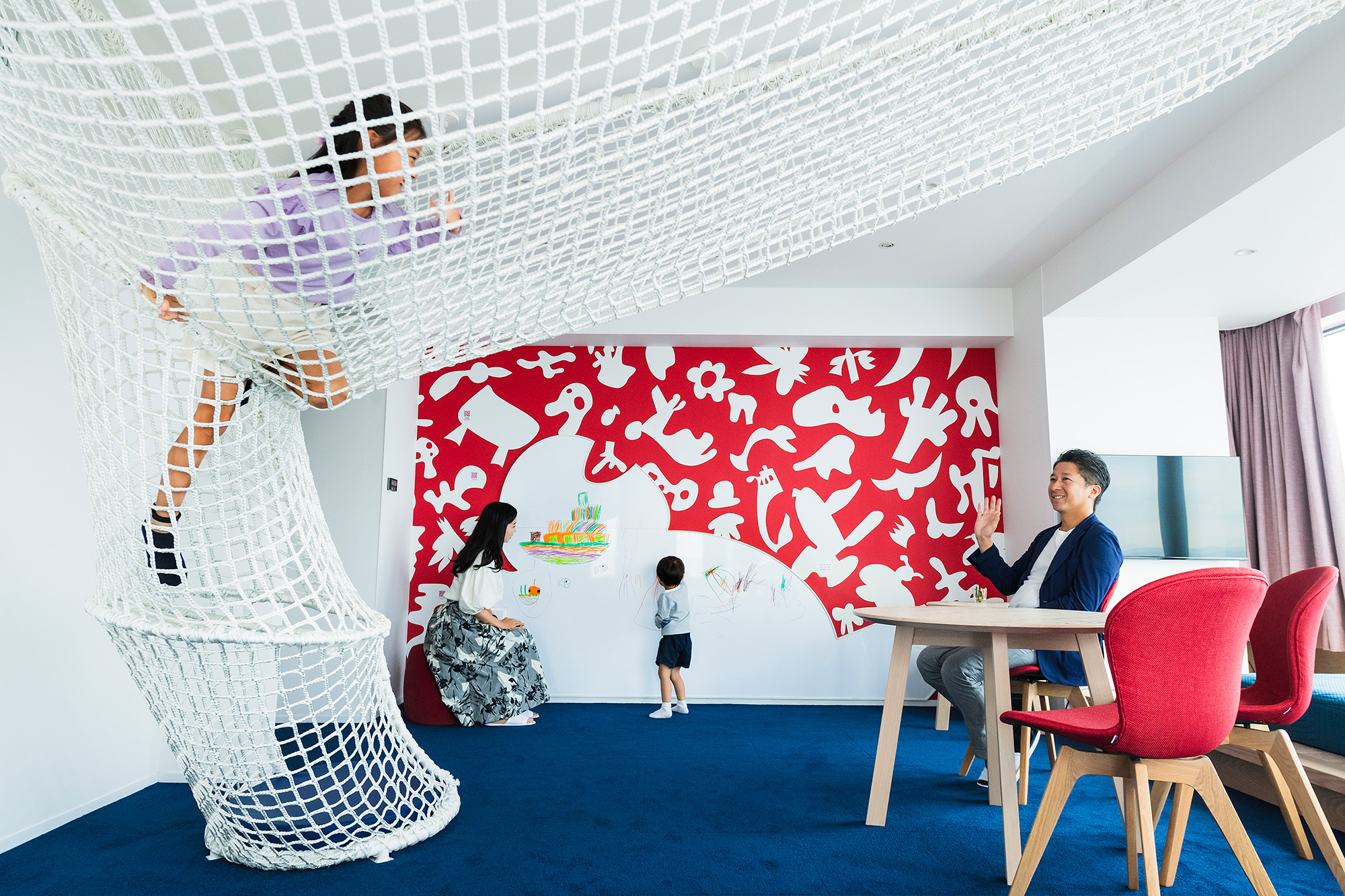
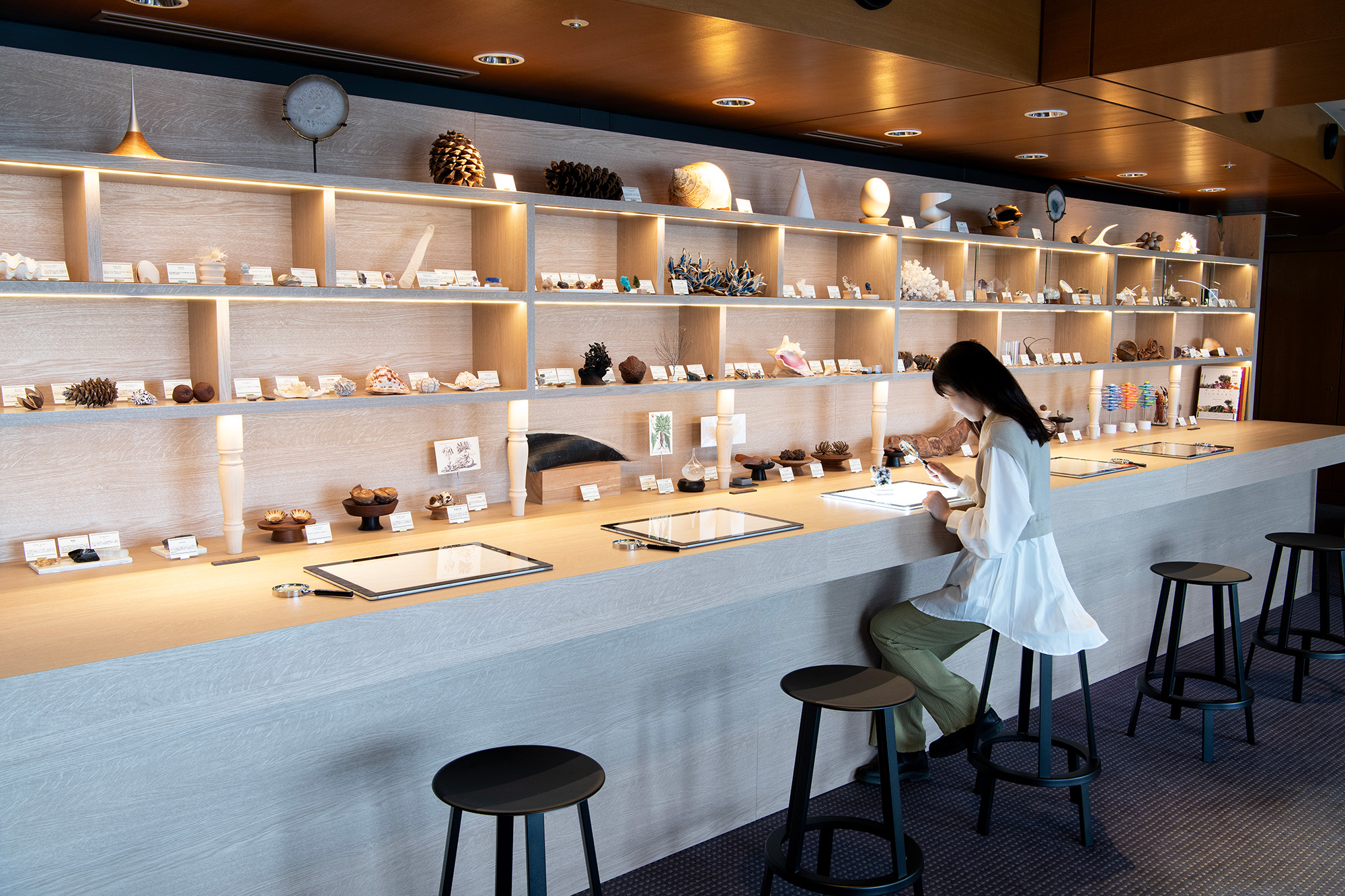
A family resort hotel in Nanko overlooking Osaka Bay. The atelier that fosters creativity makes for a stay that the whole family can enjoy.


Access by bus Approx. 25 min. by shuttle bus from JR Osaka Sta.
- Example of Accommodation Rates
- 1 person per night From 9,000 yen
OMO Kansai Airport by Hoshino Resorts
Izumisano City, Osaka
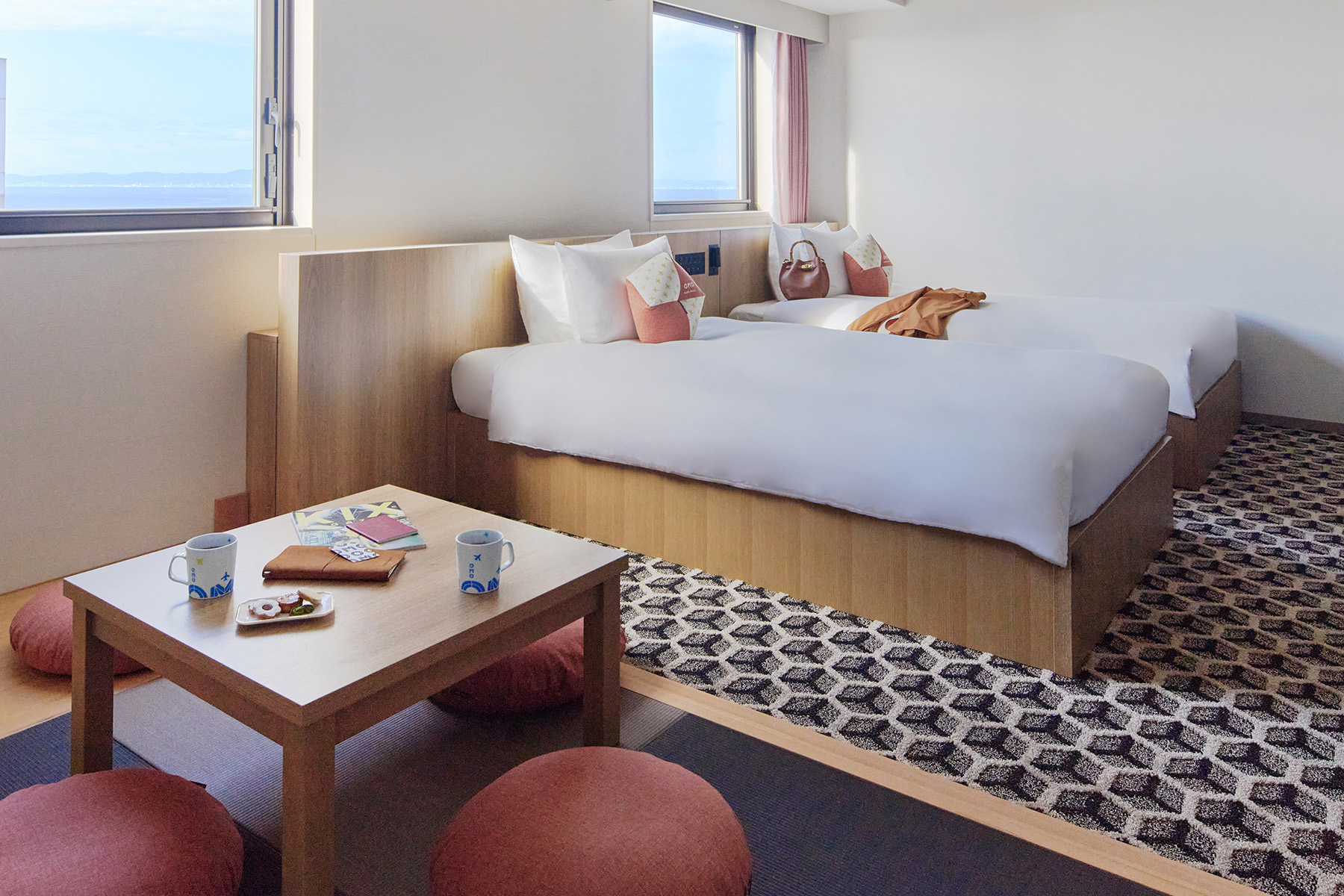
The first airport hotel under the OMO brand, standing at Rinku Town Station, one stop from Kansai International Airport. You can enjoy spending time between trips.

.jpg)
Access by bus Approx. 1 min. walk from Exit 5 of JR/Nankai Railway Rinku Town Station
- Example of Accommodation Rates
- 1 person per night From 4,500 yen