





[Expo 2025 Osaka, Kansai] Feel like you're strolling through a lively Asian city!? Experience authentic flavors at international pavilion restaurants! Asia Edition

I'm BUBBLE-B, a writer who loves the Expo.The event is finally more than halfway through. Despite the continuing intense heat, the Expo 2025 Osaka, Kansai is getting even more exciting during the summer holidays.
My number of visits is about to reach 20. I've managed to visit 90% of the pavilions. (The remaining 10% is quite a steep mountain to climb...)The Expo gives me surprises and thrills every time. From parades and shows where you can experience live culture, to restaurants where you can enjoy local flavors, the charm of the Expo is endless.
In this Michikusa Guide, I would like to introduce cuisines from around the world as an "Expo Gourmet Guide" that has eaten its way through the restaurants of international pavilions.I have previously written the "Europe Edition" and the "Middle East Edition".This time, it's the third installment: the "Asia Edition".Although these Asian countries are relatively close to Japan, their cuisines offer a variety of unique charms. We will introduce everything from familiar dishes to some more unusual ones. And finally, as a bonus, I will introduce a Japanese noodle dish that is my personal favorite and was a hot topic even before the Expo opened!
The Michikusa Expert in charge of this article
-
Restaurant Chain Traveler
BUBBLE-B
I am a travel writer who tours local restaurant chains all over Japan. From conveyor belt sushi chains in Hokkaido to hamburger chains in Okinawa, I have recently started visiting local chains overseas as well.
https://www.bubble-b.com/profile/ Michikusa
Expert
[Singapore Pavilion] Chicken rice is a taste that lets you feel the diversity of Singapore!

If you walk along the Grand Roof Ring near the West Gate, you will see two particularly eye-catching red spheres. One is the Yoshimoto Waraii Myraii Pavilion, and the other is this Singapore Pavilion.Singapore is a small country with a land area about the same as the 23 wards of Tokyo. It is said that this red sphere was designed this way because the country is so small that it would be hidden by a red dot on a map.
The name of this red sphere is the "Dream Sphere." Inside the pavilion, you can enjoy a magical experience where dreams turn into reality.

The interior of the pavilion is decorated with fantastical art, making it feel truly futuristic.Inside, there is a "Dream Repository" (a place where dreams gather) where you can draw your own dreams on a terminal panel with your finger.
Then, when you go up to the Dream Sphere on the upper floor, a fantastic video spreads across a 360-degree dome screen, and you can enjoy a performance where the dreams of various people appear and disappear one after another. Of course, the dream you drew will also appear!
The Singapore Pavilion features a restaurant called "Shiok! Café" where you can also eat in."Shiok" is Singlish (Singaporean-style English) used to mean "feeling great" or "delicious!"

In Singapore, coffee shops are called "kopitiams," and they are said to be found all over the city.In Singapore, stray cats are called "community cats" and are cherished by the local area. Artist Yip Yew Chong has adorably depicted these stray cats appearing at a kopitiam.

At this Shiok! Cafe, I ordered the "chicken rice." Also known as Hainanese chicken rice, it is a classic Singaporean dish.The container, designed to look like a cat's paw, is so cute. A portion of the proceeds from this container is donated to animal rescue organizations.
It consists of boiled chicken served with long-grain rice cooked in the chicken broth.It is served with dark soy sauce, chili sauce, and a garnish of cilantro.

The dark soy sauce is a rich, slightly bitter sauce with a flavor similar to tamari soy sauce. The other, a chili sauce, offers a spicy kick with a refreshing tang.You can enjoy a variety of flavors by tasting the two sauces separately, mixing them slightly, or adding them to the rice.

I also tried this, as it is a sweets item exclusive to the Expo!The outside is fried to a crisp, while the inside is filled with a custard cream made from salted egg yolk. It was a unique sweet-and-savory bun that offered both flavors.

Outside the pavilion, there is also an ice bar stand. Merli is the official mascot character of the Singapore Tourism Board, based on the Merlion, and you can choose from six flavors: calamansi, lychee, mango, dragon fruit milk, milk coffee, and azuki bean.
This time, I tried the calamansi flavor. It has a refreshing citrus taste, like lemon or orange, which would be perfect for cooling down on a hot day!
Michikusa Expert
Singapore is a multi-ethnic nation, and Singaporean cuisine is a fusion of many food cultures, including Malay, Chinese, and Indonesian. Even in the chicken rice, I could taste the intersection of various national food cultures within its simplicity!
[Thailand Pavilion] Gourmet food from the Land of Smiles is full of the aroma of spices and kindness

The Thailand Pavilion is always full of energy. Shows are performed multiple times a day on the stage in front of the pavilion, and they feature upbeat songs that everyone can sing along to. I'm sure many people have learned the Thai greeting "Sawasdee ka" here.

Upon entering the Thailand Pavilion, you are first taught how to pronounce the Thai greeting "Sawasdee."Then, after moving to the main floor and watching an impressive video about Thai history and culture, the stage show begins.As the Thailand Pavilion staff sing and dance, there is also a call-and-response segment where you get to say the greeting "Sawasdee" you learned earlier, making for a cheerful and lively stage show.

In the next area after the stage show, Thailand's medical technology is on display. With various medicines, walking aids like prosthetic legs, and models of skulls repaired using 3D printers, the medical exhibition is quite extensive, staying true to the concept of "Healing the future with Thai wisdom."
I traveled to Bangkok this February and enjoyed some delicious Thai food, so Thailand is one of my favorite countries. Now, let's head to the restaurant!

The shop at the Thailand Pavilion is for takeout only.The menu is simple, featuring only a few representative Thai dishes.
The "Chicken Khao Soi" I ordered this time is a dish consisting of noodles in Thai curry.When I tried it, it was a Thai-style coconut curry. It starts off mellow, but gets spicy later on. It is very easy to eat and has a gentle flavor.What's interesting is the noodles; it contains two layers of thin dried noodles and thick fresh noodles.

And it includes a whole piece of bone-in chicken, which was very satisfying!Since it's a small product the size of a Cup Noodle, it's not very filling, but it tasted just like the food I ate in Thailand and was very delicious.
Michikusa Expert
There are many Thai restaurants in Japan, but I think it's interesting to try it at the Expo. The Thai Pavilion has a lot of energy in its performances, so you can enjoy your meal while soaking in the atmosphere!
[India Pavilion (Bharat)] Enjoy hearty Indian curry!

The India Pavilion, which also made headlines for opening late after the start of the event, is a must-see. "Bharat" means India in Sanskrit and is also used as the country's name.
There are two objects in front of the India Pavilion, which has an exterior shaped like a lotus flower.The wheel on the left is the Ashoka Chakra, a dharma wheel found on the walls of the Sun Temple, a World Heritage site built in the 13th century.Although you can't see it in the photo, the joined hands on the right are said to represent the Indian greeting "Namaste." Both perfectly capture the atmosphere of India.

You can enjoy exhibits that transcend time, from introductions to ancient civilizations and spiritual culture to current industry, technology, and space development.
But the moment you step inside the pavilion, you can smell the scent of spicy curry. It's just too Indian. But I'm sure it's not just my imagination!
I followed the scent. And I found it.

A takeout-only shop was set up on the grounds of the India Pavilion. This was where the scent of curry was coming from!Chicken biryani, butter chicken with rice, samosas, chicken tikka, pani puri...
From such an enticing lineup, I chose this: "Palak Paneer and Rice."Palak paneer is a curry made with spinach (palak) and cottage cheese (paneer). As someone who loves spinach curry, it was an instant decision.The combination of the fluffy, long-grain rice and the palak paneer, which balances both spiciness and a mild richness, was exquisite—truly an authentic taste. You can have a dining experience that makes you forget you are at the Expo venue.
Also, as you can probably imagine from the look of it, the portion size is quite generous. This bento box alone will definitely leave you full!

I ordered masala tea along with the curry.Masala means spices in Hindi, and it is an Indian tea made by blending tea leaves with spices. With its unique flavor, it transported me to the world of India!
Michikusa Expert
I have the impression that India is a fascinating country full of mysteries, and the India Pavilion let me feel that image of India just as it is. The food is also reasonably priced, so you can enjoy it casually!
[Malaysia Pavilion] Experience simple, unpretentious, and exotic Malaysian cuisine!

First, the Malaysia Pavilion overwhelms you with its exterior. Its facade, made of a massive amount of bamboo, is said to be inspired by the Malaysian textile "songket." The organic, primitive, yet elegant architecture makes a stunning impact.

Upon entering the Malaysia Pavilion, you are enveloped in a gentle scent of spices, instantly immersing you in an exotic atmosphere. With street stalls and food samples on display, the ambiance of Southeast Asia is meticulously recreated.
From traditional Malaysian houses to skyscrapers in Kuala Lumpur, drone footage of rural landscapes, and future smart cities, it showcases the Malaysia of today.

I ordered the "Nasi Lemak" at the restaurant on the first floor. The deciding factor for my order was the menu, which stated, "This is Malaysia—the authentic taste."Nasi Lemak is apparently rice cooked with coconut milk. Long-grain rice was used for the dish.The sauce on the top right has a rich, sweet and spicy flavor, reminiscent of miso.To the right of the rice are fried chicken and small fish, which had a crunchy, firm texture.
The way to eat Nasi Lemak in Malaysia is, above all, to "mix it." I followed that advice and mixed it all together before eating.As I did, the side dishes and rice, which had previously been separate, blended with the sauce to create a meal infused with a sweet and spicy flavor. The way the aroma of the sauce wafted through my nose was truly exotic!
Michikusa Expert
I think the Malaysia Pavilion gives you the most Southeast Asian atmosphere among the Expo pavilions. In addition to the exhibits, the performance of making roti canai (thinly stretched bread) dough at the first-floor restaurant is a must-see!
[Korea Pavilion] Seoul's junk food is here. Let's bite into a chicken burger!

When it comes to a massive screen that overwhelms everyone, it has to be the Korea Pavilion. The visuals projected here are also elaborate, and I imagine many people stopped to watch them until the very end.

The Korea Pavilion is an omnibus-style experience where you can enjoy three conceptual exhibits in sequence. The first exhibit is a disco-like space where AI improvises music based on pre-recorded voices of participants, with numerous lights synchronized to the beat.
The second exhibition is a space themed "From a devastated city to the recovery of life." When you blow into the pipes of objects reminiscent of ruins, a hydrogen fuel cell is activated, generating electrical energy and producing pure water. This water is not simply discarded; it is visualized as large water droplets and bubbles as a symbol of life sprouting. Visitors can experience the "recovery of life" by directly touching or popping these water droplets.
The third exhibit, by contrast, features a screen themed around K-POP. It presents a futuristic video depicting Korean high school girls living in 2040 as they complete a song left behind by their grandfather, centered on music and dance.
On the left side of the Korea Pavilion, opposite the entrance, there is a restaurant.

When it comes to Korean cuisine, barbecue, kimchi, and sundubu are famous, but chicken dishes are actually quite popular.
The restaurant at the Korea Pavilion is produced by Camaro Chicken, which operates fried chicken specialty stores in Korea. Expecting an authentic taste that only a specialty store can provide, I ordered this!

The set includes a Chico Burger, fries, Chilsung Cider, and a cup with ice. Can you tell how voluminous the Chico Burger is from this?

The Chico Burger is a sandwich with a large piece of fried chicken, a fried egg, tomato, onion, lettuce, and cheese. Now, let's take a big bite!
The chicken is crispy on the outside and soft and juicy on the inside, using thigh meat. The sauce is spicy, with a distinctly Korean flavor. Since there are so many ingredients, you can eat it to the very end without ever getting bored.I highly recommend the Chico Burger at the Korea Pavilion restaurant for junk food lovers!
Michikusa Expert
The Korea Pavilion restaurant serves food exactly as it is in the home country, without arranging it for Japan or reducing the portion size. The prices are also reasonable, so please be sure to stop by!
[TechWorld] Let's have Taiwan's soul food, "Lu Rou Fan"!

Although it is not an international pavilion, the "TechWorld" pavilion, produced by Etron, exhibits content from Taiwan.

TechWorld uses the latest technology to express everything from Taiwan's nature, history, and traditions to its present and future.
Above all, the main theater is overwhelming. Here, images depicting the majestic nature of the island of Taiwan are projected onto a screen designed with a giant tree motif, while countless tablets on the ground also move freely in coordination, creating an organic display.You will be impressed by the exhibition content, which is typical of Taiwan, a world leader in technologies such as semiconductors.

Shennong Life, located next to TechWorld, is a Taiwanese select shop. It sells goods as well as food and drinks, making it an irresistible space for Taiwan lovers.

When it comes to Taiwanese soul food, it has to be Lu Rou Fan (braised pork rice). It is a dish made by simmering pork belly and shiitake mushrooms in a soy sauce-based broth seasoned with five-spice powder, then serving it over rice.Shennong Life's original Lu Rou Fan keeps the ingredients and rice separated by a divider, allowing you to pour the topping over the rice just before eating.
While some authentic Lu Rou Fan can have a pungent aroma, Shennong Life's version is incredibly easy to eat and has a flavor that anyone can enjoy. The seasoned egg and pickled daikon radish also provide a nice accent.
Michikusa Expert
Shennong Life at TechWorld offers not only Lu Rou Fan but also a full lineup of representative Taiwanese flavors, such as tapioca milk tea, mango milk shaved ice, and Taiwanese oolong tea. Keep an eye out for the stylish packaging too!
Extra Edition [Ekisoba Maneki] One-of-a-kind Ekisoba! A taste unique to the Expo

Finally, as an extra, I would like to introduce something from Japan. Many Japanese restaurants have opened at the Expo, and among them, 'Ekisoba Maneki,' which has become a major topic of conversation, is fully booked every day.
Ekisoba Maneki was founded in 1888. It began when they sold the first 'Makunouchi Bento' in Japan inside Himeji Station.Even today, they operate as an Ekisoba and Ekiben (station bento) shop, primarily in Hyogo Prefecture.

When it comes to Ekisoba Maneki exhibiting at the Expo, this limited-edition product, the 'Ultimate Ekisoba,' is a must!It is still fresh in my memory how everyone was blown away by that price.
In the first place, Maneki's "Ekisoba" is not Japanese buckwheat noodles, but Chinese noodles made with kansui. In other words, they are ramen noodles.This is based on Ekisoba, with a broth made from scallops and clams, and luxuriously topped with Kobe beef chuck roll. It can truly be called a traffic jam of deliciousness.
When you break the soft-boiled egg, the mellowness of the yolk coats the Kobe beef. This is truly sukiyaki!It was an assault of deliciousness like nothing I had ever tasted before; it was truly "ultimate."
How did you like the Asia edition of the Osaka-Kansai Expo restaurants? Although these countries are relatively close to Japan, they certainly have cultures that are completely different from Japanese food. My impressions are the use of long-grain rice and the skillful use of spices in seasoning.
There are only two months left for the Expo. Let's enjoy it to the very end!
"OMO7 Osaka," a hotel where you can fully enjoy the Expo

OMO7 Osaka has prepared special content to help you enjoy the Expo even more. You are sure to fully enjoy the Expo, not just during your visit, but also before and after.
▶OMO7 Osaka | Introducing 5 points to fully enjoy the Expo

OMO7 Osaka
Osaka City, Osaka Prefecture
Conveniently located near major tourist attractions. Packed with heart-stirring experiences, from guided tours where you can experience Naniwa culture to unique events.


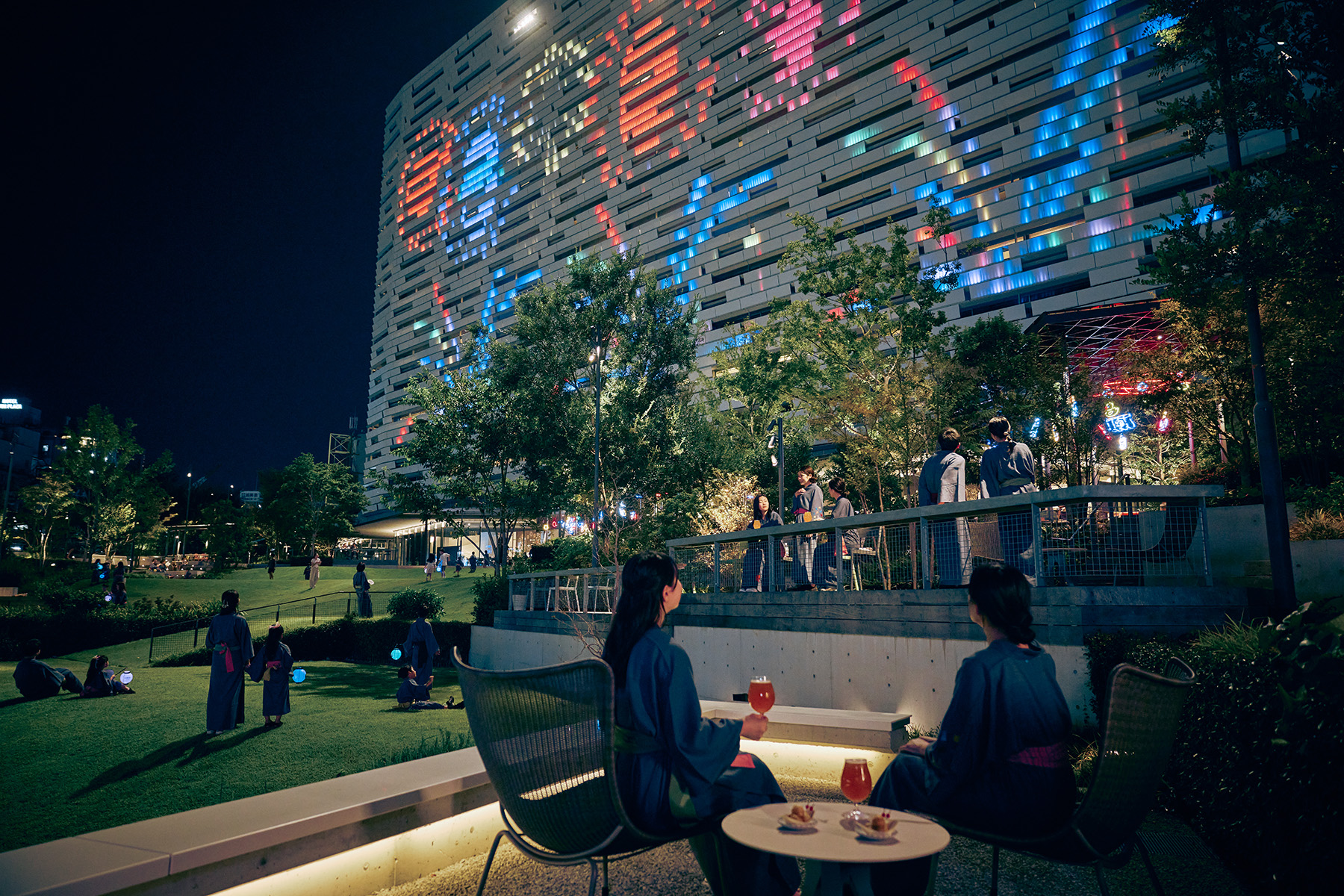

Access A short walk from JR/Nankai Electric Railway Shin-Imamiya Station
- Accommodation rate example
- Per person per night From ¥12,000
RISONARE Osaka
Osaka City, Osaka Prefecture
A family resort hotel in Nanko with a panoramic view of Osaka Bay. Enjoy a stay that the whole family can enjoy in an atelier designed to nurture creativity.

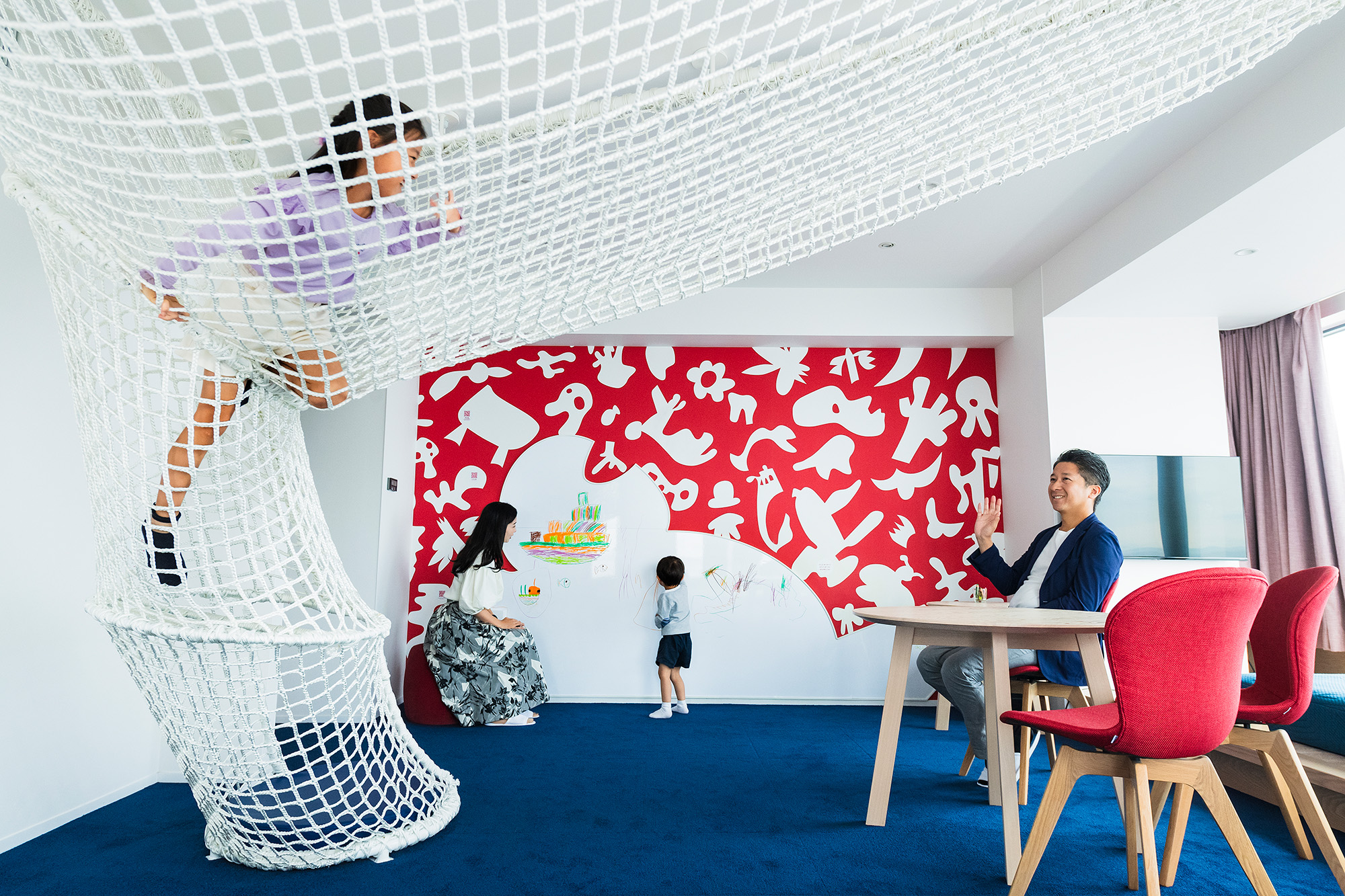

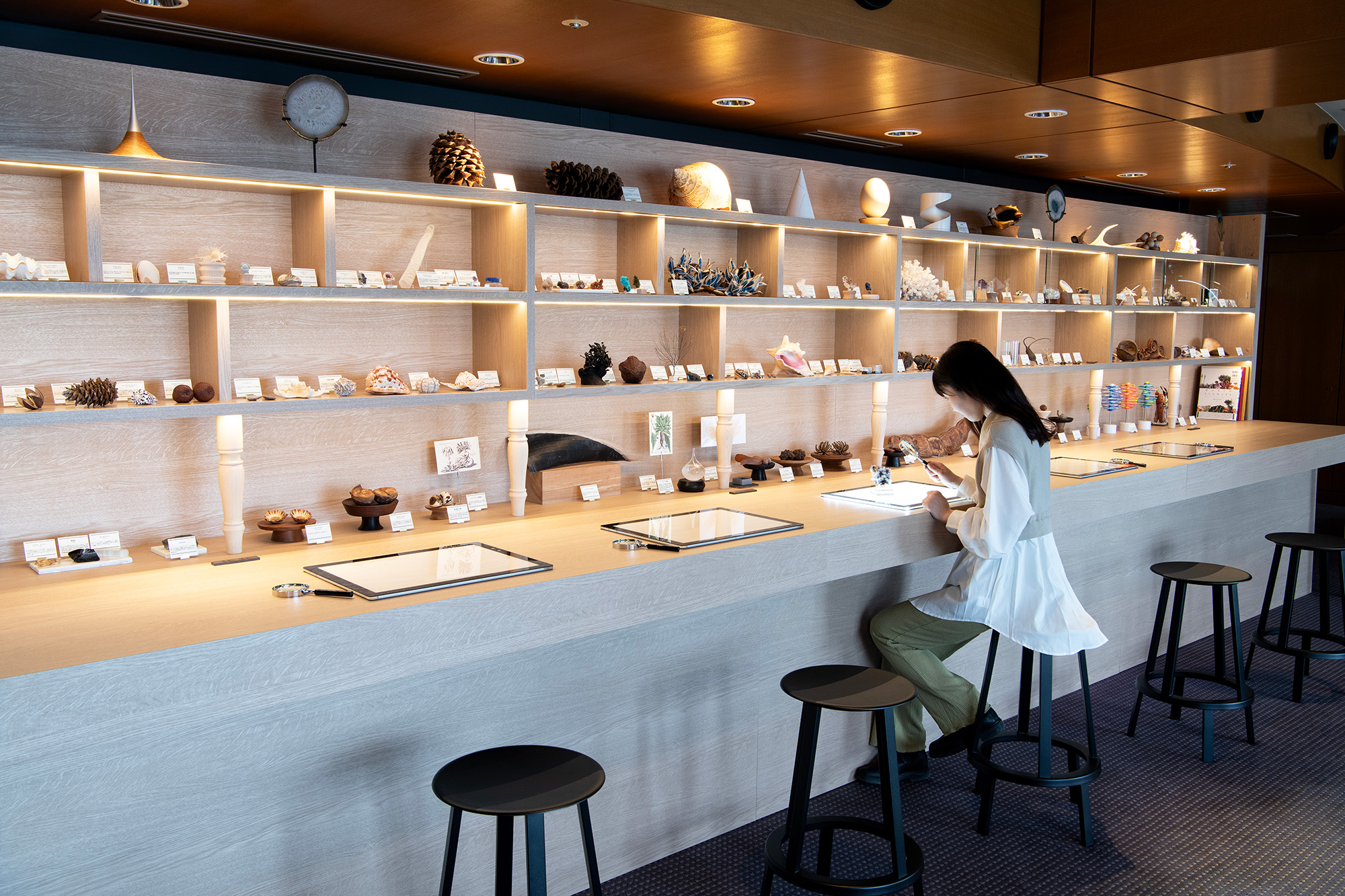
Access Approximately 25 minutes by shuttle bus from JR Osaka Station
- Accommodation rate example
- Per person per night From ¥9,000
OMO Kansai Airport
Izumisano City, Osaka Prefecture
The first airport hotel under the OMO brand, located at Rinku Town Station, just one stop from Kansai International Airport. Spend your time between travels in comfort and fun.

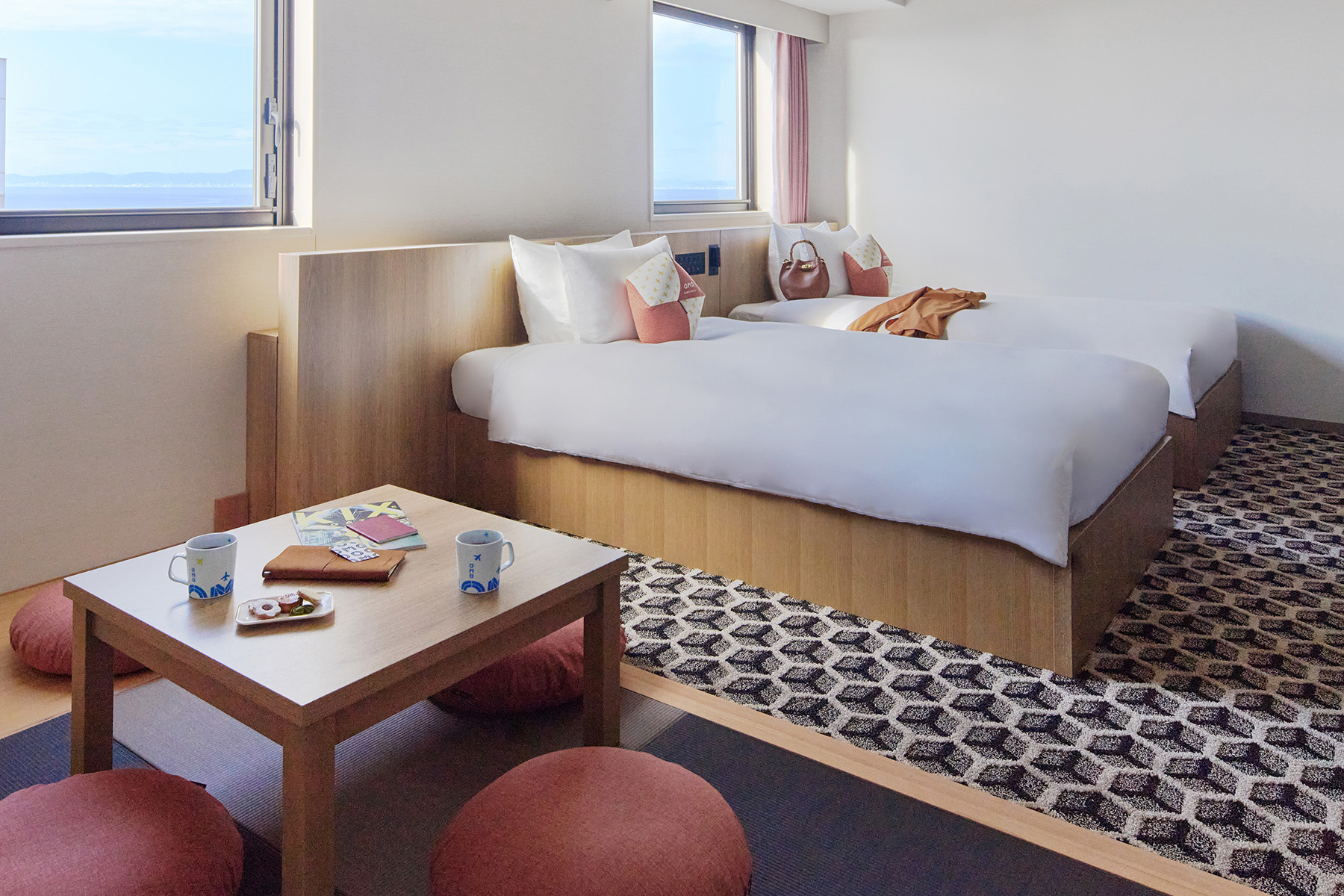

Access Approx. 1-minute walk from JR/Nankai Electric Railway Rinku Town Station Exit 5
- Accommodation rate example
- Per person per night From ¥4,500