





[Moji Port Retro Sightseeing] 7 Recommended Spots! BEB Will Show You How to Explore Them
![[Moji Port Retro Sightseeing] 7 Recommended Spots! BEB Will Show You How to Explore Them](https://hoshinoresorts.com/guide/wp-content/uploads/2026/08/IMG_5421-1-1024x683.jpg)
From the Meiji era through the early Showa era, Moji Port flourished as a national special export port and a shipping hub for coal from the Chikuho region. Government buildings and Western-style mansions constructed in Western architectural styles still stand today, allowing you to explore the historic streetscape on foot.From the background behind the retro-modern scenery to must-see landmarks and hidden gems that will make you want to stop and explore—the staff members BEB, who know this town inside and out, will guide you through it all in detail.
<What Is Moji Port Retro?>
Moji Port Retro District
A chic port town nurtured by one of Japan’s three major trading ports
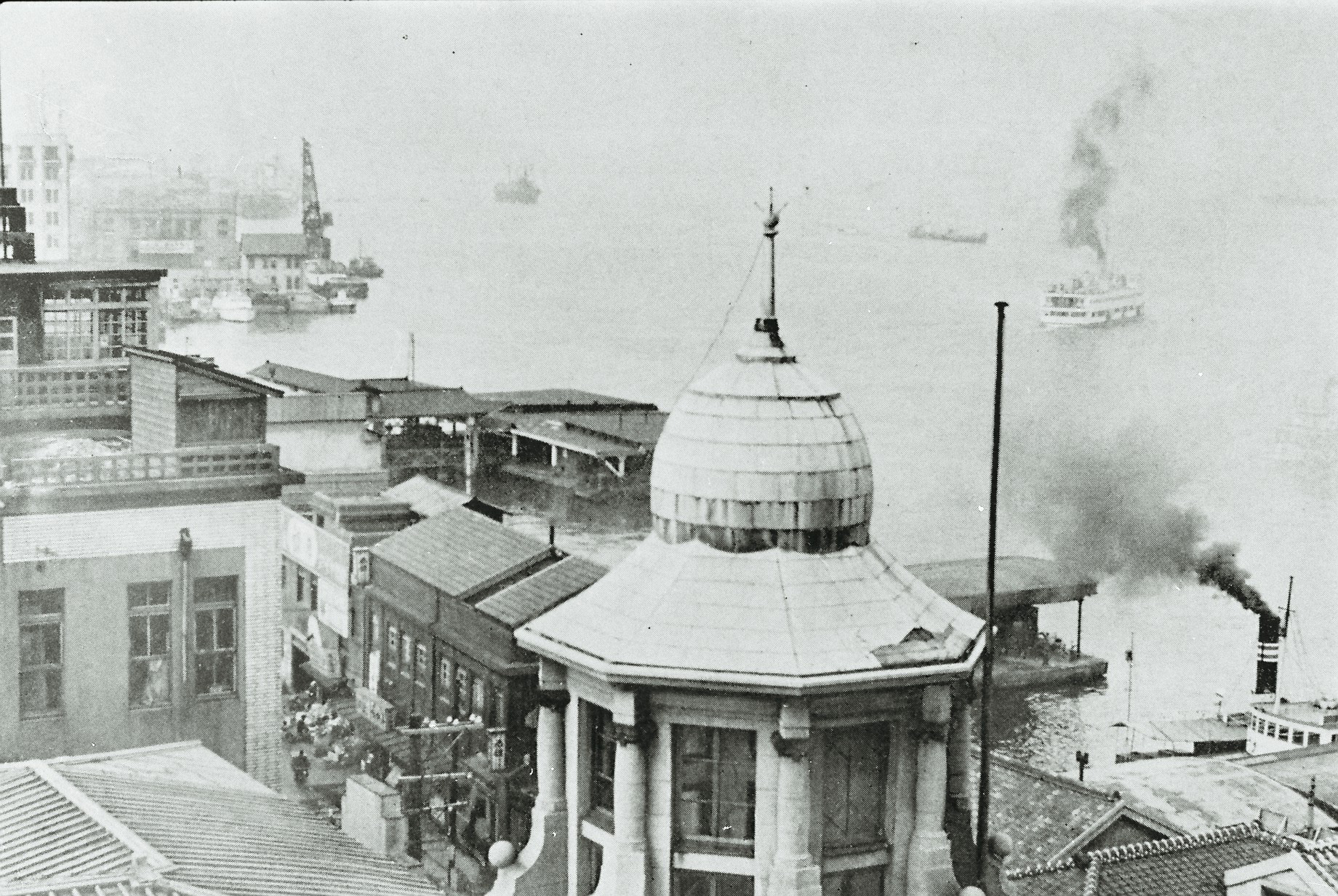
From the Meiji era through the early Showa era, Moji Port flourished as a national special export port. Many Western-style buildings from that era still stand today, and the area where historic structures—such as JR Moji Port Station and the former Osaka Shipping Company building—are concentrated is affectionately known as the “Moji Port Retro District.”
Tourist attractions are scattered within a radius of about 1 km centered on Moji Port Station, making it easy to explore on foot. Be sure to stop by the cafes and souvenir shops located inside these historic properties as you stroll through the streets that are unique to a port town.
We also recommend taking in the seaside scenery while riding the “Shiokaze” sightseeing train or a sightseeing boat.
A charming blend of mountains, the sea, and retro architecture
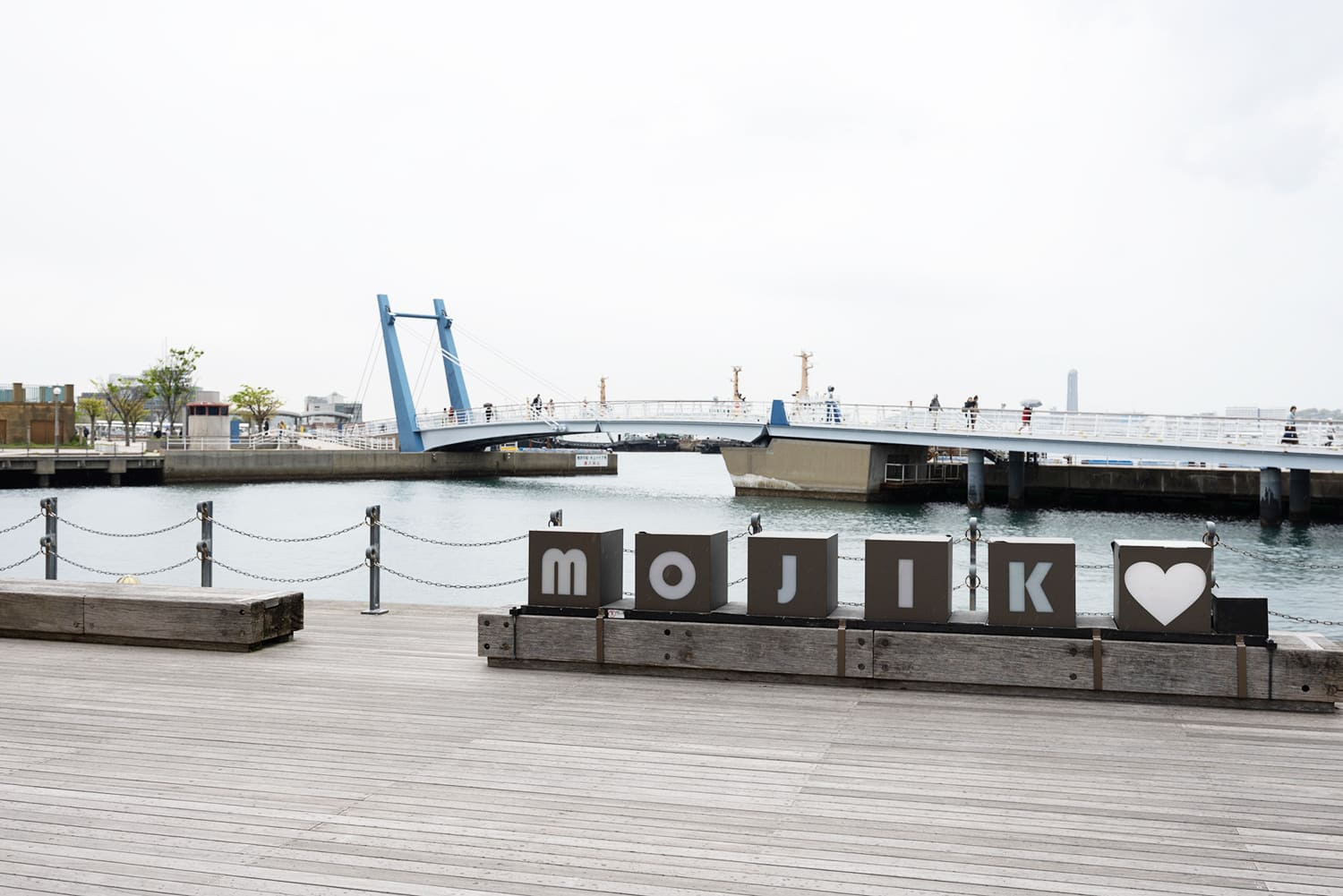
The greatest appeal of Mojiko is that you can enjoy both the rich natural surroundings—surrounded by mountains and the sea—and the retro streetscape all at once. The scenic views are also popular as photo spots. There’s even a “MOJIKO” sculpture within the Mojiko Retro District, so why not take a photo there as a memento of your trip?
To fully enjoy Mojiko, we also recommend renting a hakama at “Mojiko Roman,” a hakama rental shop located on the first floor of the Kanmon Strait Museum. Strolling around in a hakama will let you experience a moment full of charm, as if you’ve slipped back in time to the romantic era of the Taisho period.

Local Guide
Supporters
Moji Port is also known as the birthplace of the “banana auction,” and demonstrations of this tradition are held regularly on weekends in public squares and at event venues. Anyone can participate, so be sure to stop by.
- Moji Port Retro District
-
 Moji Ward, Kitakyushu City, Fukuoka Prefecture
 Varies by property
 Free to explore *Opening hours vary by property
 No holidays
 Varies by property
 093-321-4151 (Moji Port Retro General Information)
 Paid parking available
<Recommended Spots and How to Explore Them>
Since so many attractions are concentrated within walking distance, many first-time visitors may find themselves wondering where to start. That’s why BEB —who are well-acquainted with the streets of Moji Port—have carefully selected the spots you’ll want to visit. Start at JR Moji Port Station and follow the route below.
1JR Mojiko Station
A landmark of Moji Port that has stood since the Taisho era
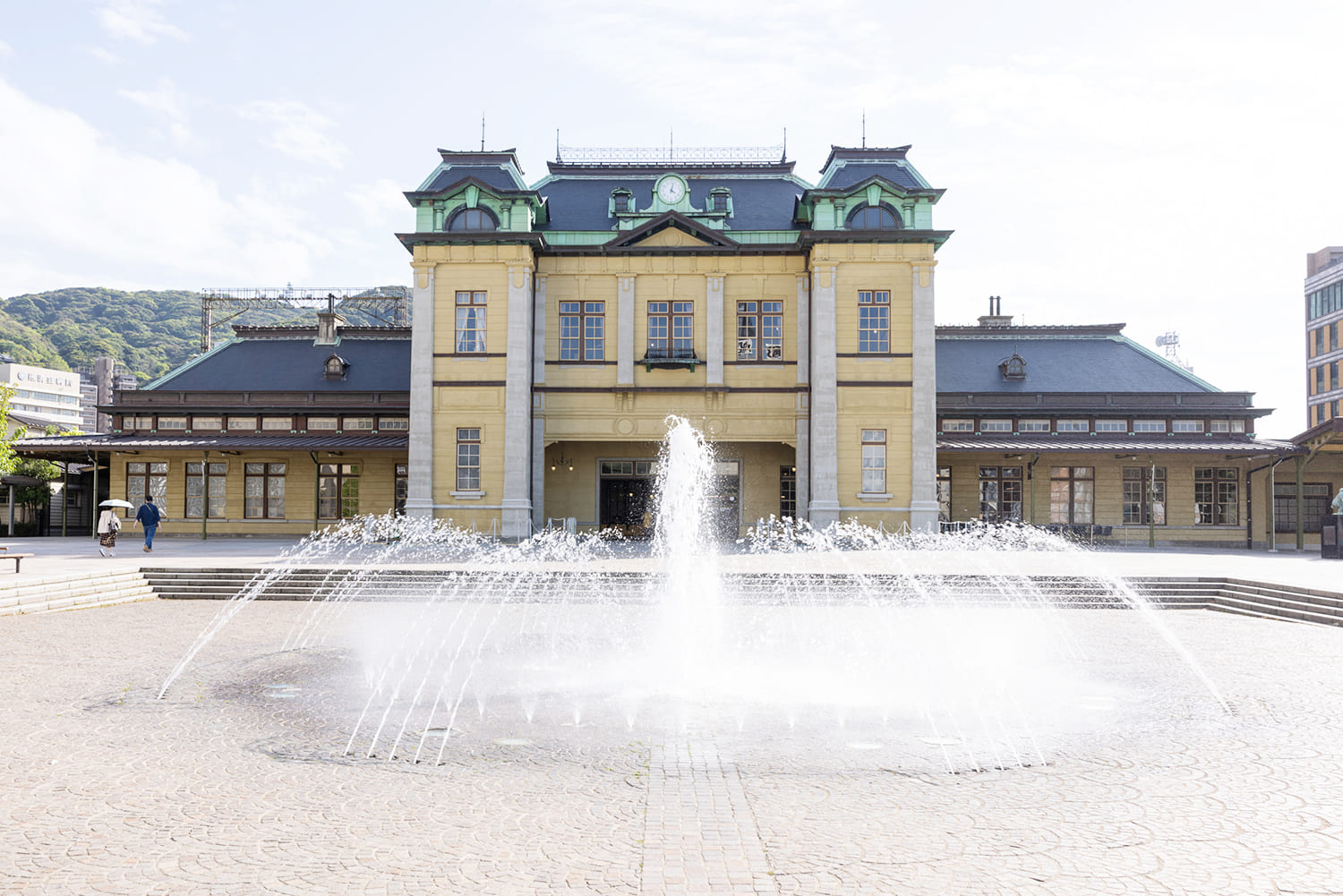
A Renaissance-style wooden station building constructed in 1914 (Taishō 3). It is one of Kyushu’s most historic station buildings and was designated as an Important Cultural Property in 1988 (Shōwa 63)—the first railway station in Japan to receive this distinction. It remains a beloved landmark of Moji Port, just as it has always been.
The platforms where local trains arrive and depart are adorned with hanging lanterns and station name signs that retain a retro charm, allowing visitors to experience the atmosphere of the station’s early days. The nostalgic scenery makes it a popular spot for taking photos.
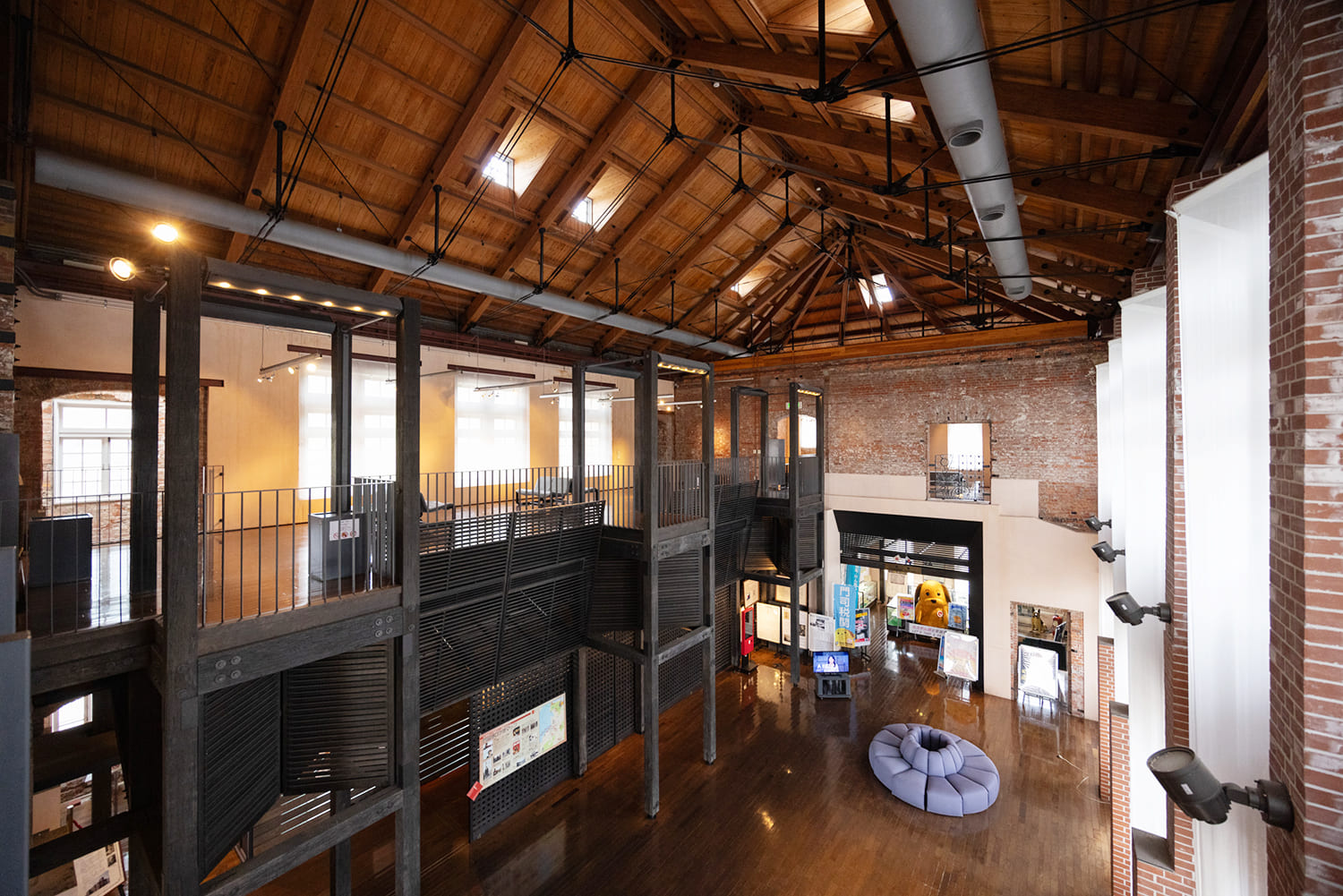
A museum-like station interior restored to its original state
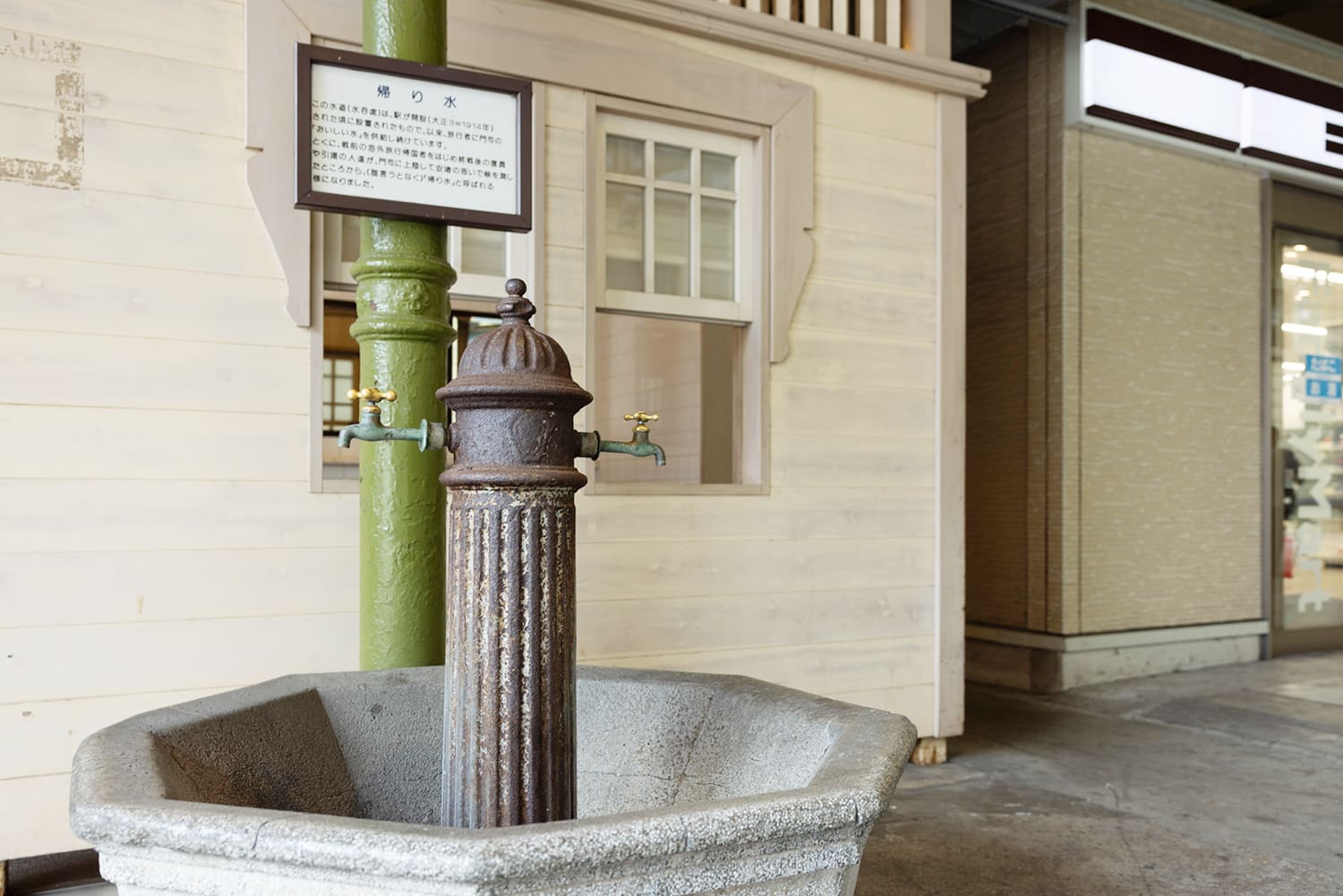
Outside the ticket gates, there are also points of interest that strongly evoke the station’s early days, such as a bronze hand-washing basin, brass-wrapped columns, and the remains of the passageway to the Kanmon Ferry.On the second floor of the station building is the former VIP lounge, which was used as a resting place for members of the imperial family and state guests; it is open to the public free of charge from 9:30 a.m. to 8:00 p.m.
The station building also houses a Starbucks Coffee and the French restaurant “Marigold Moji Port Guest House.” One of the station’s charms is the opportunity to enjoy coffee or a meal while immersed in its classical atmosphere.
Local Guide
Supporters
The station attendants’ uniforms feature a retro design exclusive to Moji-ko Station. Furthermore, all announcements are made in person, and the station’s atmosphere from that era is recreated down to the finest details.
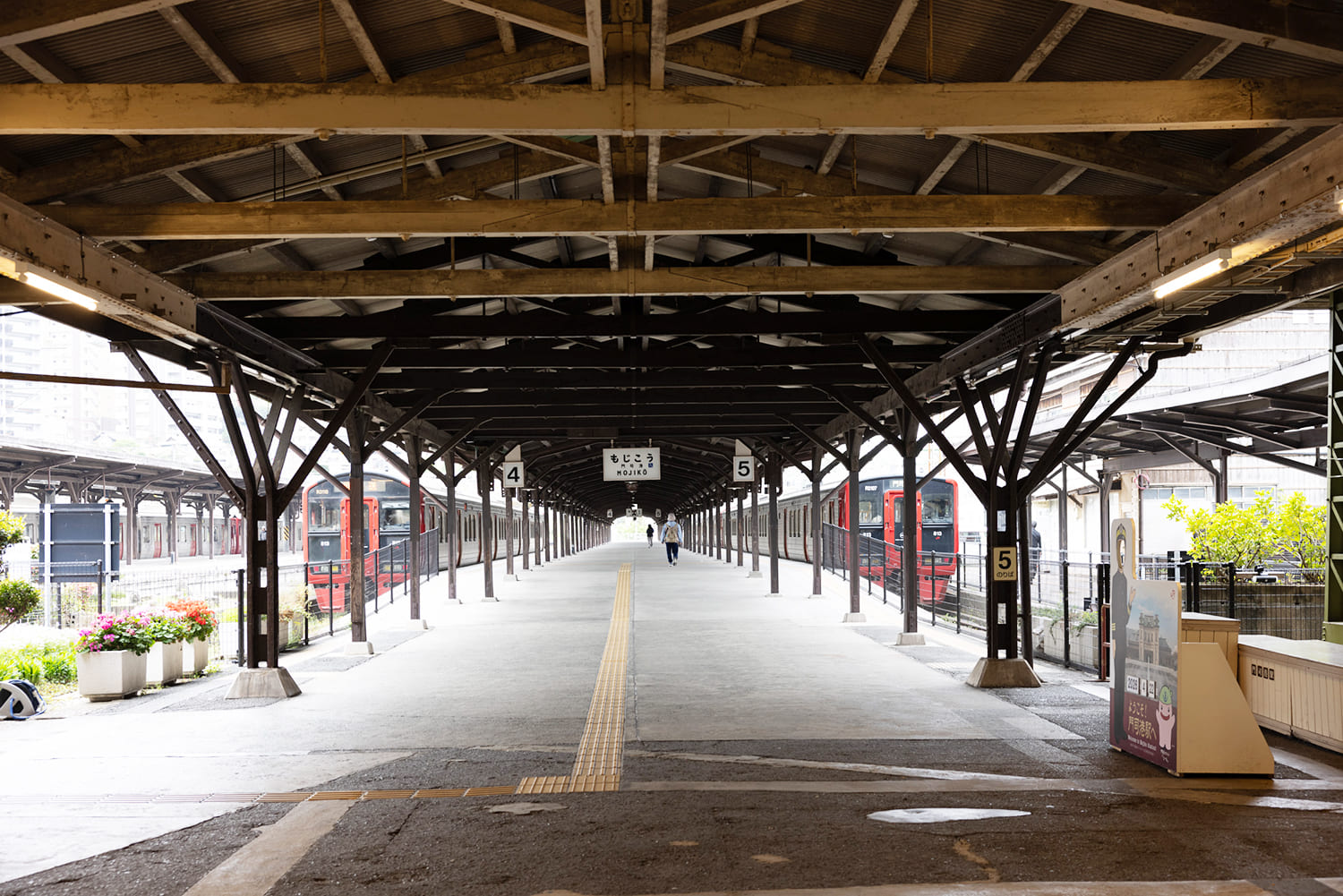
- JR Mojiko Station
-
- 1-5-31 Nishikaigan, Moji Ward, Kitakyushu City, Fukuoka Prefecture MAP
- Right next to JR Mojiko Station
- 093-321-8843
2Former Moji Customs House
A red-brick government building that supported Moji Port’s trade
The Former Moji Customs House was a property responsible for inspecting imported and exported cargo and collecting duties. The current building has been restored to the design it had when it was rebuilt in 1912 (Meiji 45).The building was designed in the Renaissance style under the guidance of Yorinaka Tsumaki, one of the three great masters of Meiji-era architecture. Inside, the original design elements from that era remain intact, including brass decorative fittings and doors.
In the Moji Customs Public Relations Exhibition Room on the first floor, you can see exhibits unique to customs, such as methods used to smuggle narcotics and counterfeit goods like fake brand-name products.
Fruit parfaits from a specialty fruit shop, perfect for enjoying while gazing out at the sea
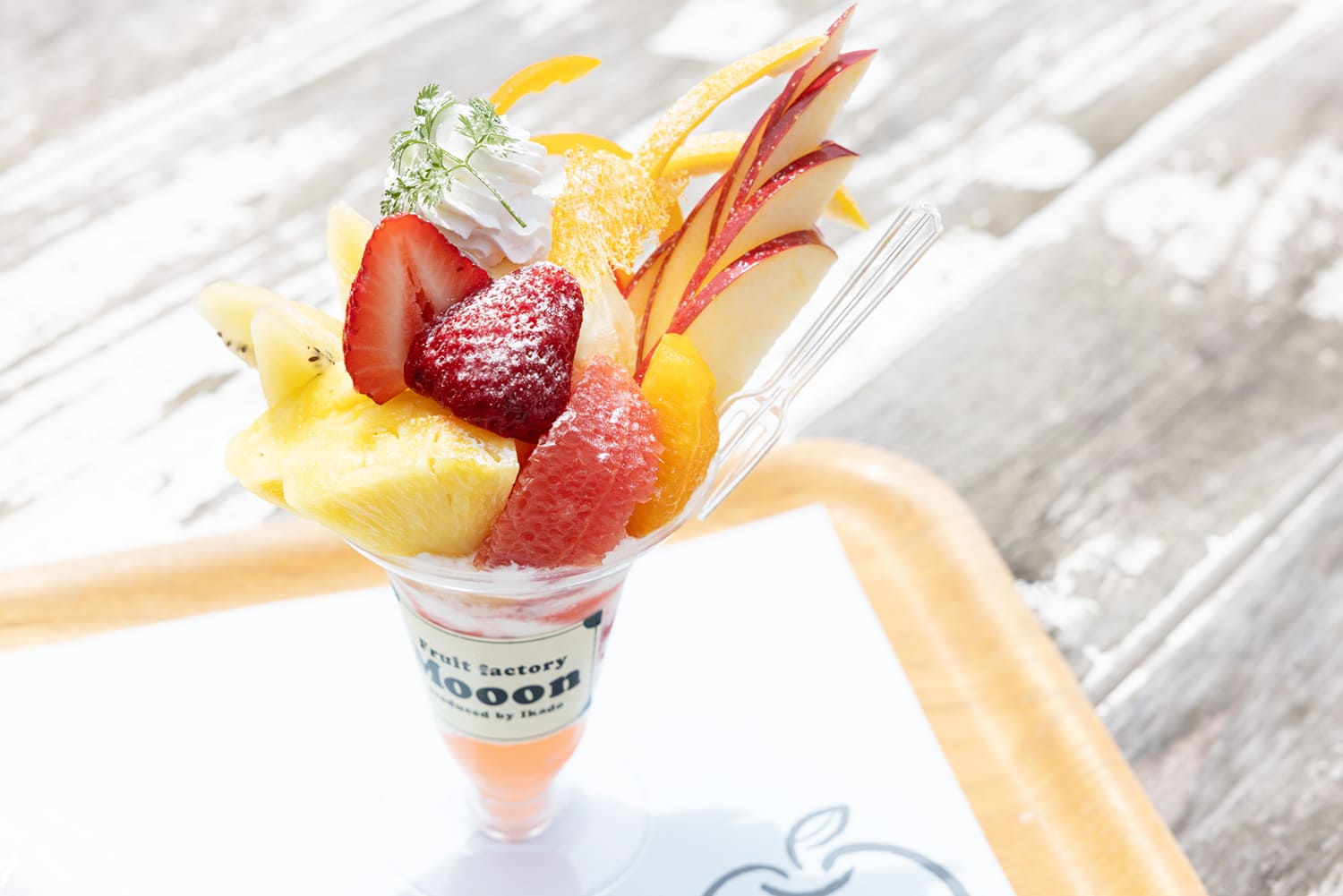
After touring the building, why not take a break at “Fruit Factory Monde Retro,” a café operated by a specialty fruit shop located on the first floor? There, you can enjoy parfaits and juices made with plenty of seasonal fruit.The most popular item is the parfaits, lavishly piled with so much fruit they seem ready to spill over the sides of the glass. You can savor seasonal fruits to your heart’s content. In addition to being able to take out fruit sandwiches and parfaits, you can also purchase fruit jams and fresh fruit—perfect as souvenirs.
Local Guide
Supporters
You can enjoy the menu items at “Fruit Factory Moonde Retro” inside the shop, but since you’re here, you should definitely sit on the outdoor terrace. The parfaits taste especially delicious when enjoyed while gazing out at the ocean.
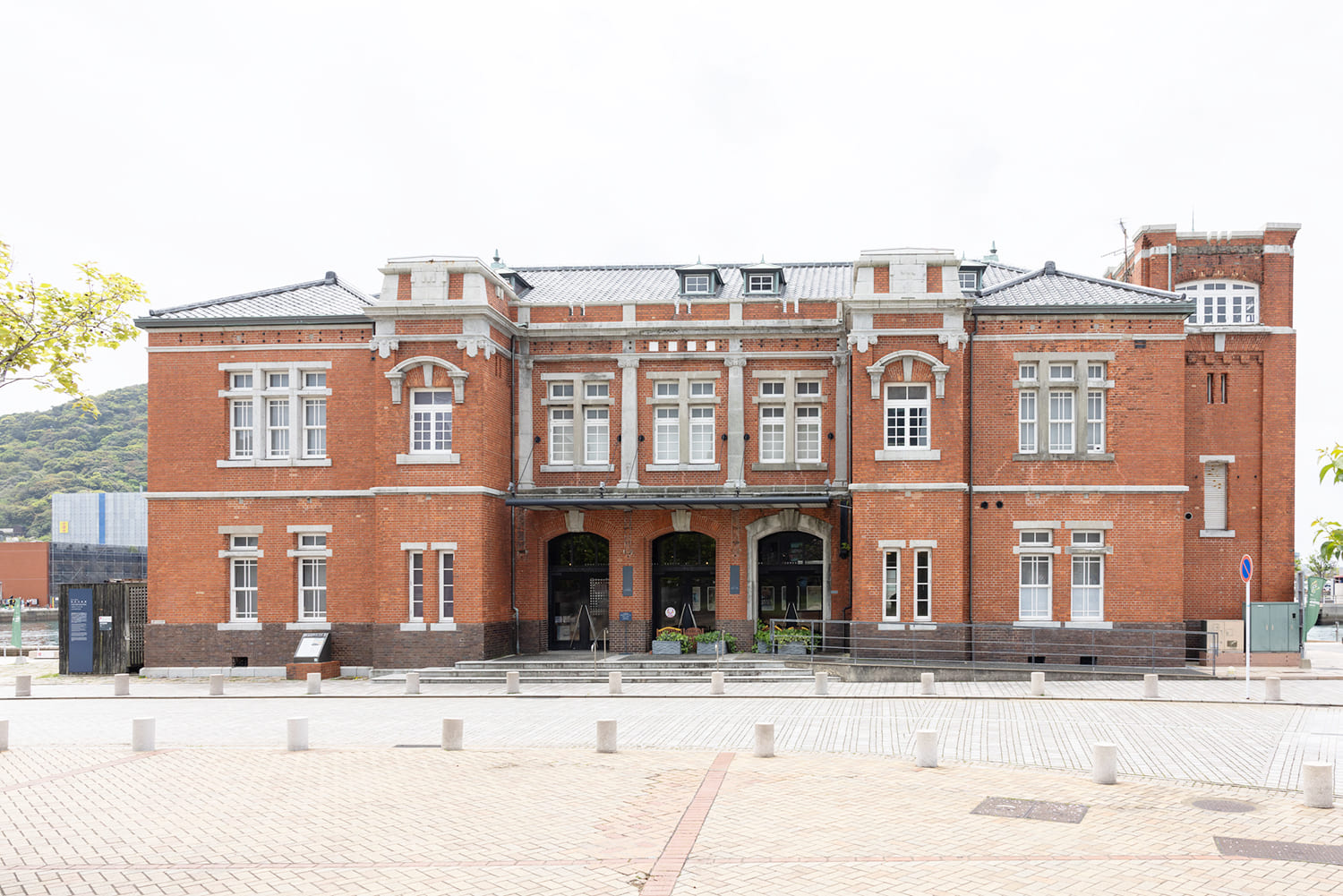
- Former Moji Customs House
-
- 1-24 Higashiminato-machi, Moji Ward, Kitakyushu City, Fukuoka Prefecture MAP
- 8-minute walk from JR Mojiko Station
- 9:00-17:00
- No holidays
- Free of charge
- 093-321-4151 (Moji Port Retro General Information)
- None
3Former Osaka Shipping Company
A symbol of Moji Port, featuring a striking glass-walled octagonal tower
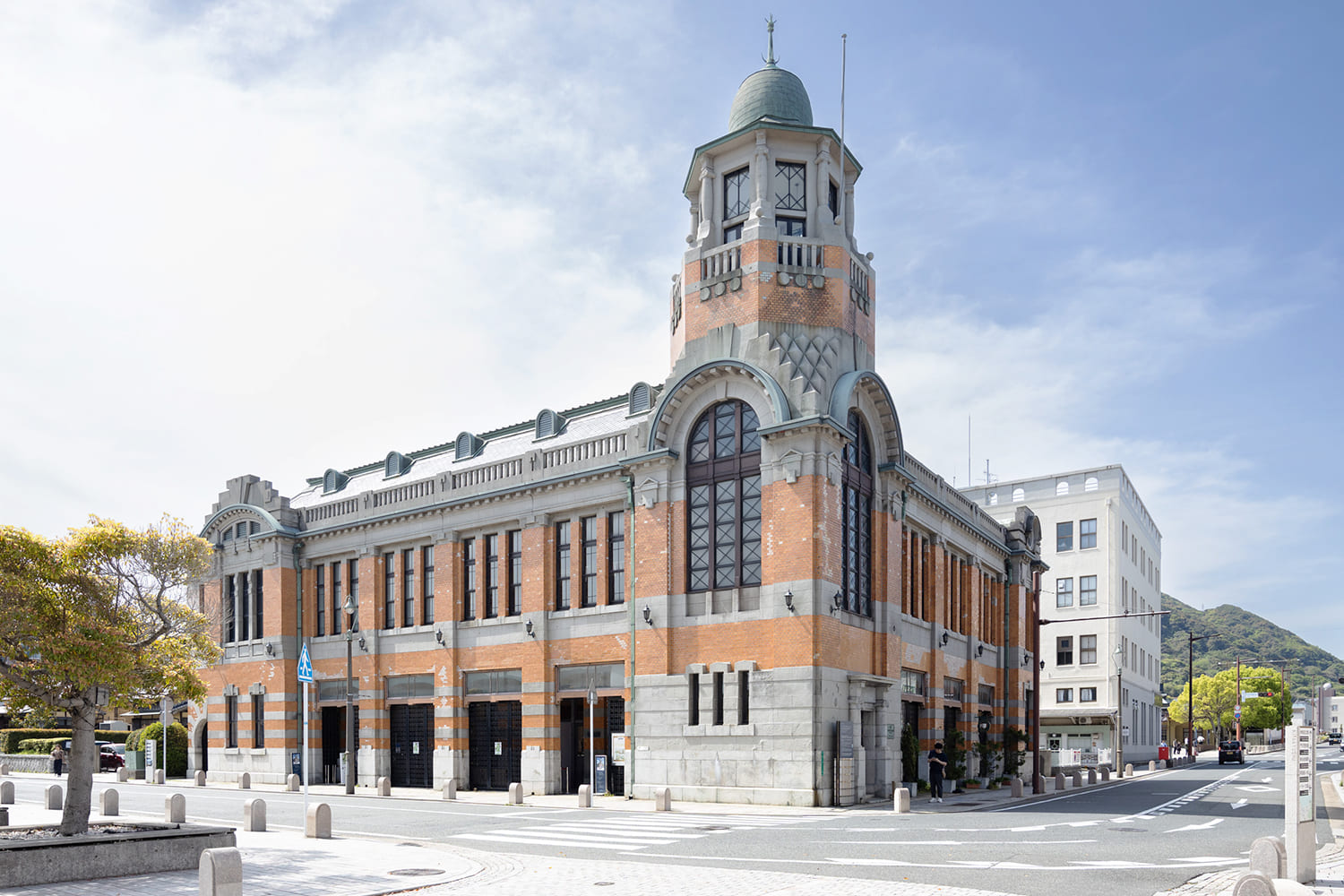
It was built in 1917 (Taisho 6) as the Moji branch of the major shipping company “Osaka Shosen.” At that time, the building was right next to the sea, and ships reportedly docked at the pier. It served as a terminal for shipping routes connecting Korea, Taiwan, and mainland China, and people from all over the world passed through here.
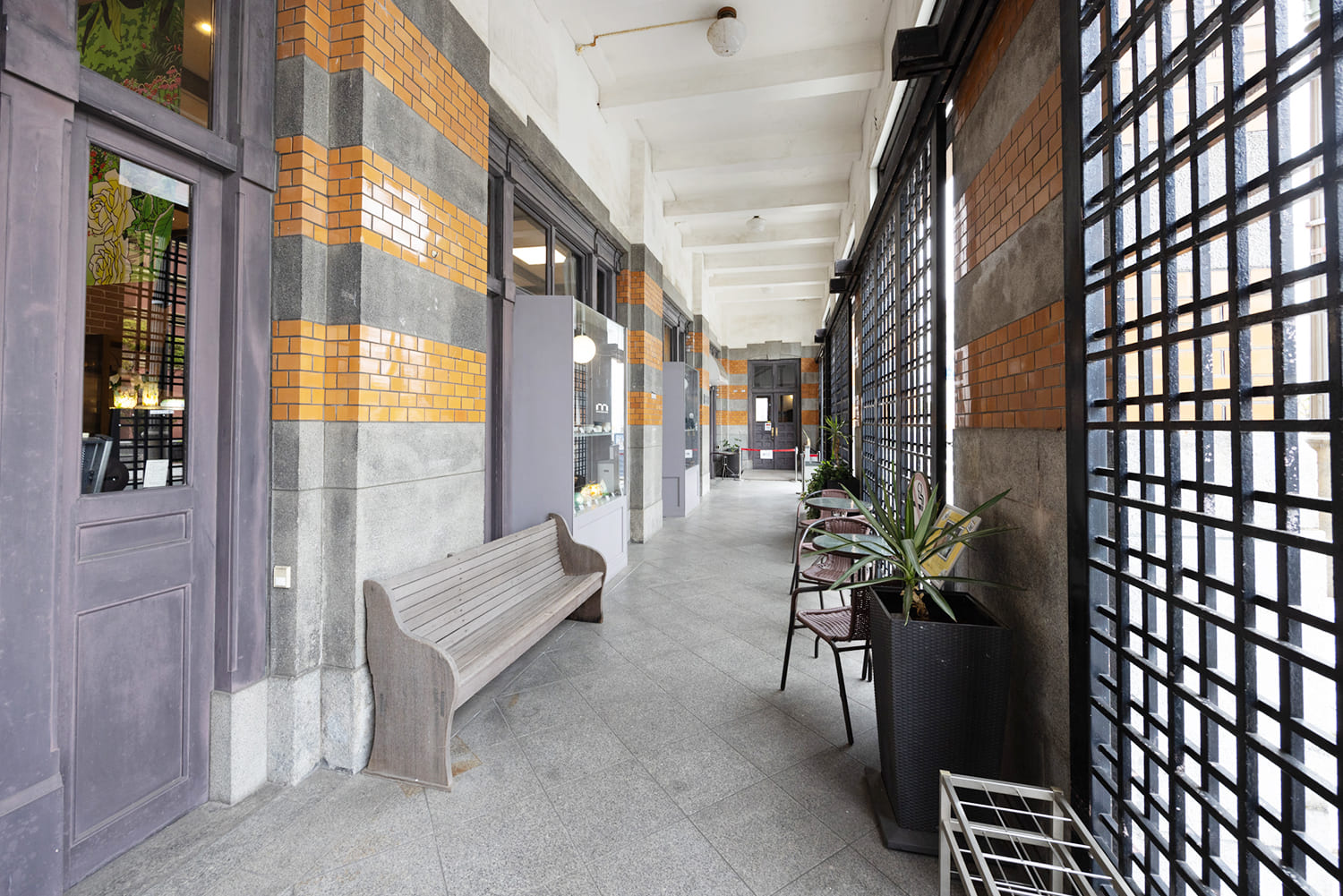
The building, adorned with orange tiles and white granite decorations, was designed by architect Ikuji Kawai, known as a pioneer of the Osaka architectural scene. Its elegant design, which incorporates Western architectural techniques throughout, presents a modern appearance that symbolizes the port town of that era.
A gallery where you can encounter works by Seizo Watase
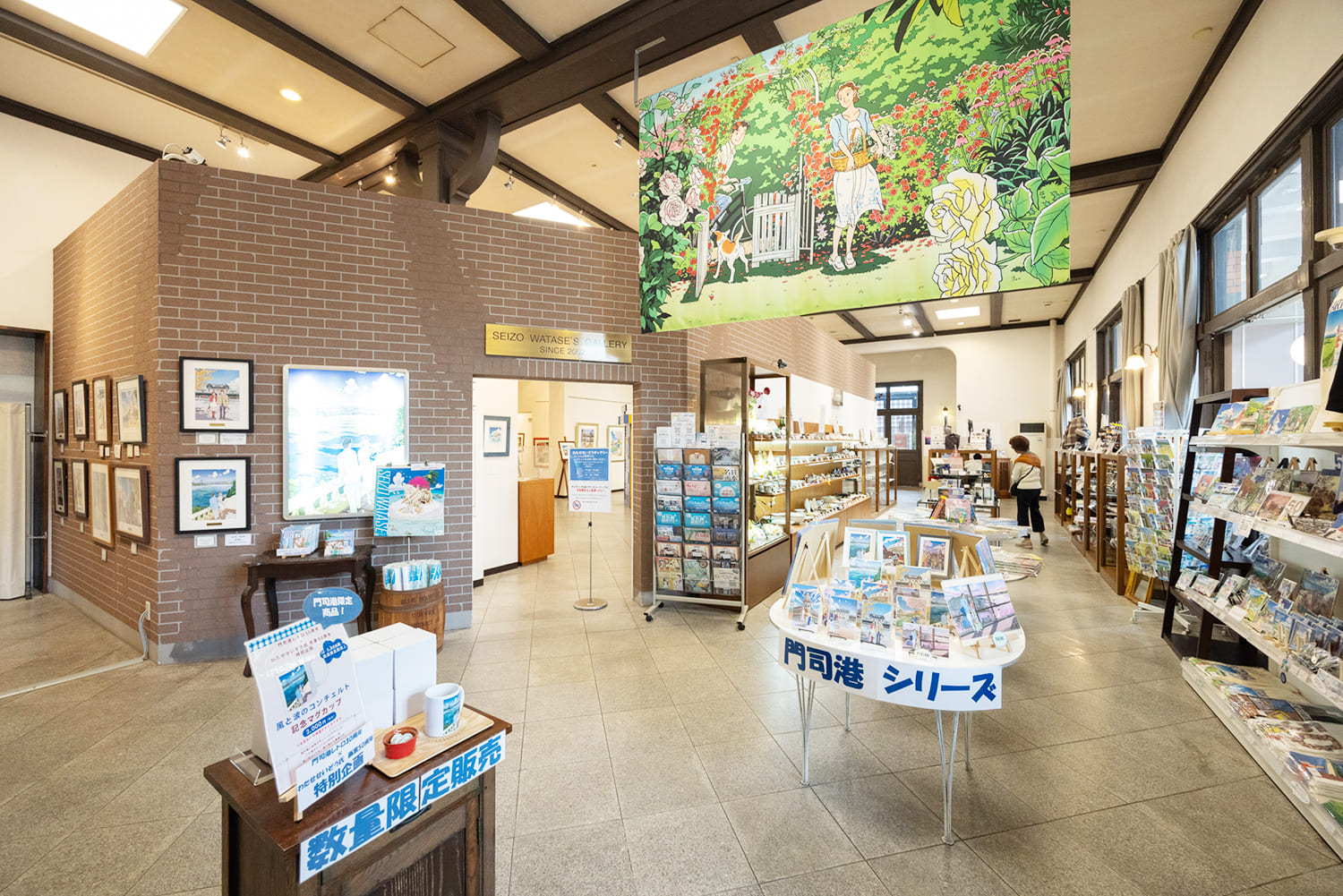
On the first floor of the building is a gallery dedicated to Seizo Watase, an illustrator originally from Kitakyushu City. Exhibitions feature different themes for each season—spring/summer and fall/winter—and showcase works such as his masterpiece *Heart Cocktail* and pieces depicting the scenery of Moji Port. The gallery also displays prints and newly created works that can only be seen here.
The adjacent souvenir shop sells merchandise related to the exhibited works—such as postcards and clear file folders—as well as miscellaneous goods and tableware crafted by local artists and businesses.
Local Guide
Supporters
“Cafe MATIERE,” located on the first floor, is a cozy café where you can take a relaxing break during your stroll. The top recommendation is their signature dish: honey toast with grilled banana. Be sure to enjoy it with a cup of coffee brewed from freshly ground beans.
- Former Osaka Shipping Company
-
- 7-18 Minatomachi, Moji Ward, Kitakyushu City, Fukuoka Prefecture MAP
- 2-minute walk from JR Moji-ko Station
- 9:00-17:00
- Open daily (The Watase Seizo Gallery is closed two days a year)
- Free *Note: Admission to the Watase Seizo Gallery only is 150 yen for adults and 70 yen for elementary and junior high school students
- 093-321-4151 (Moji Port Retro General Information)
- None
4Former Moji Mitsui Club
A National Important Cultural Property where even Einstein once stayed
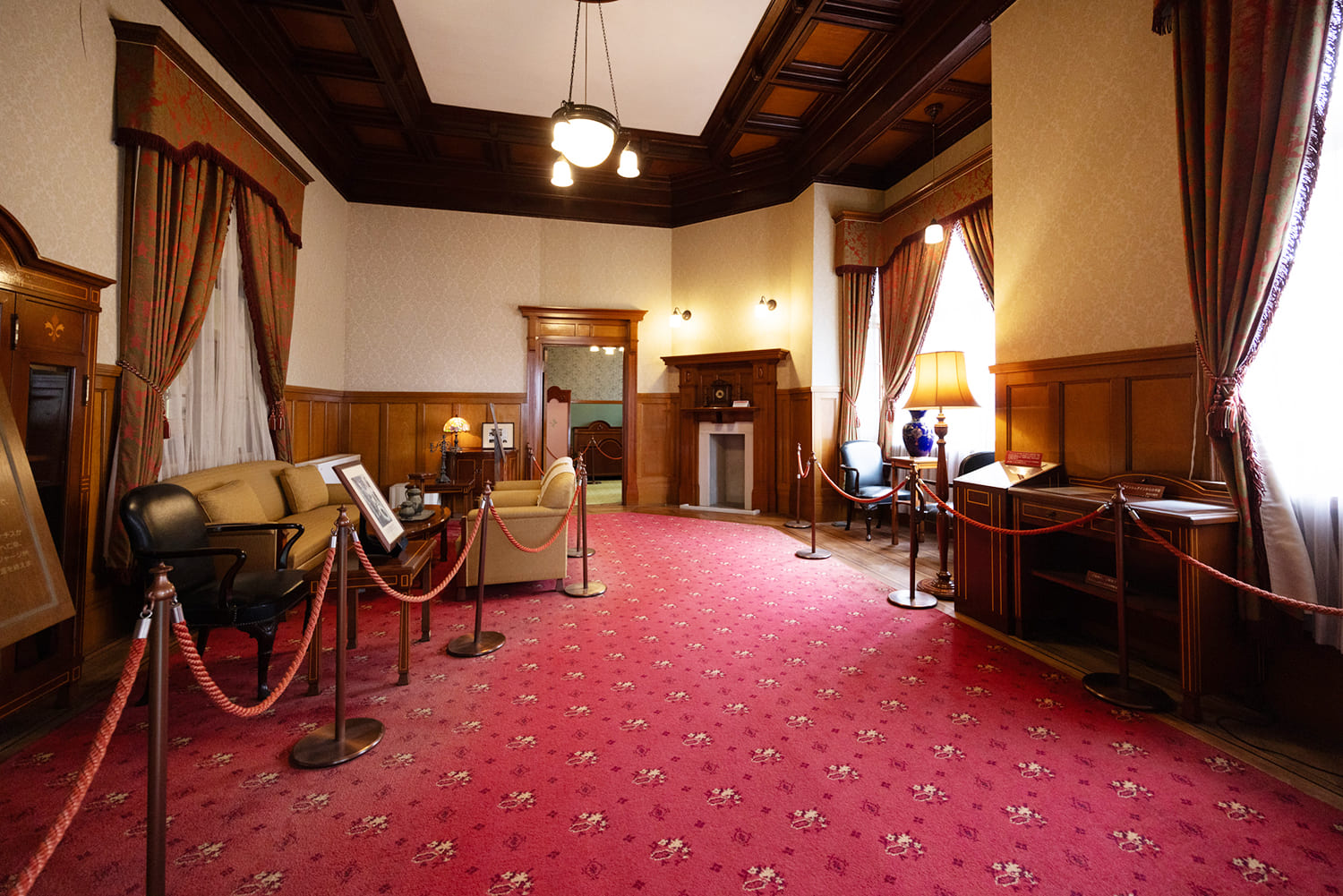
This historic building features the traditional European “half-timber” architectural style, which deliberately exposes dark brown columns and beams. It was used as a social venue to entertain guests from around the world and is also known for hosting the physicist Albert Einstein during his stay in 1922 (Taisho 11).The room used during his stay has been recreated and is open to the public as the “Einstein Memorial Room.” The interior, featuring Art Deco-style decorations, stained glass, and mosaic designs, is also a highlight.
An exhibition introducing the life and works of Fumiko Hayashi, a writer from Moji
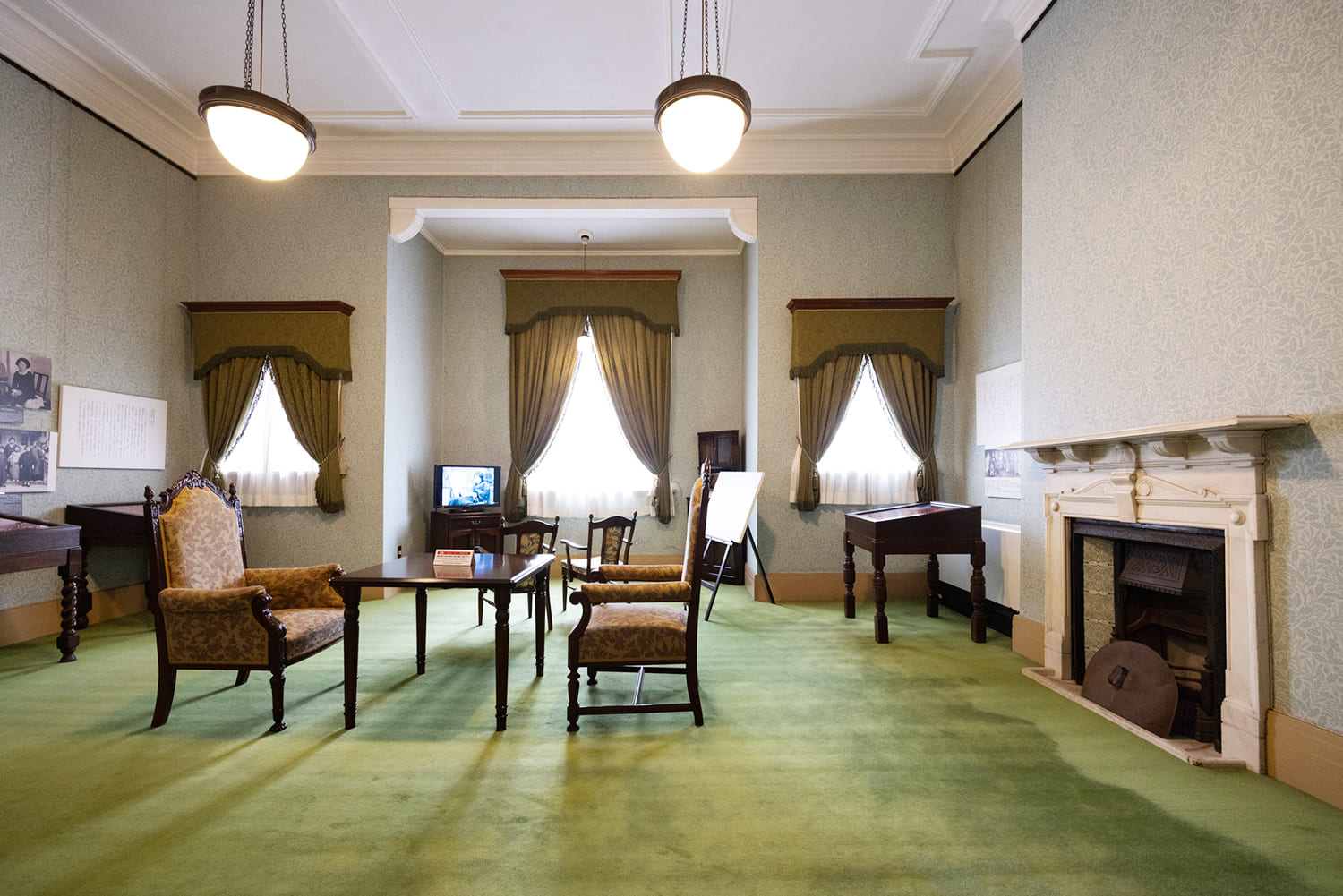
On the same floor as the “Einstein Memorial Room” is a memorial room dedicated to Fumiko Hayashi, a female author from Moji known for her masterpieces such as *The Wandering Years* and *Floating Clouds*.Approximately 150 items, including her handwritten manuscripts, diaries, and paintings, are on display, offering visitors a glimpse into her life and creative journey. Chairs are provided in the memorial room, allowing visitors to take their time appreciating the exhibits.
From the windows on the second floor, you can enjoy views of the retro streetscape of Moji Port. It’s a hidden gem offering panoramic views of historic buildings—such as the former Osaka Shipping Company building—and the Kanmon Strait.
Local Guide
Supporters
Shoes are strictly prohibited in the second-floor area, so please place your shoes in the plastic bags provided at the reception desk. It’s best to wear shoes that are easy to slip on and off for a smoother experience.
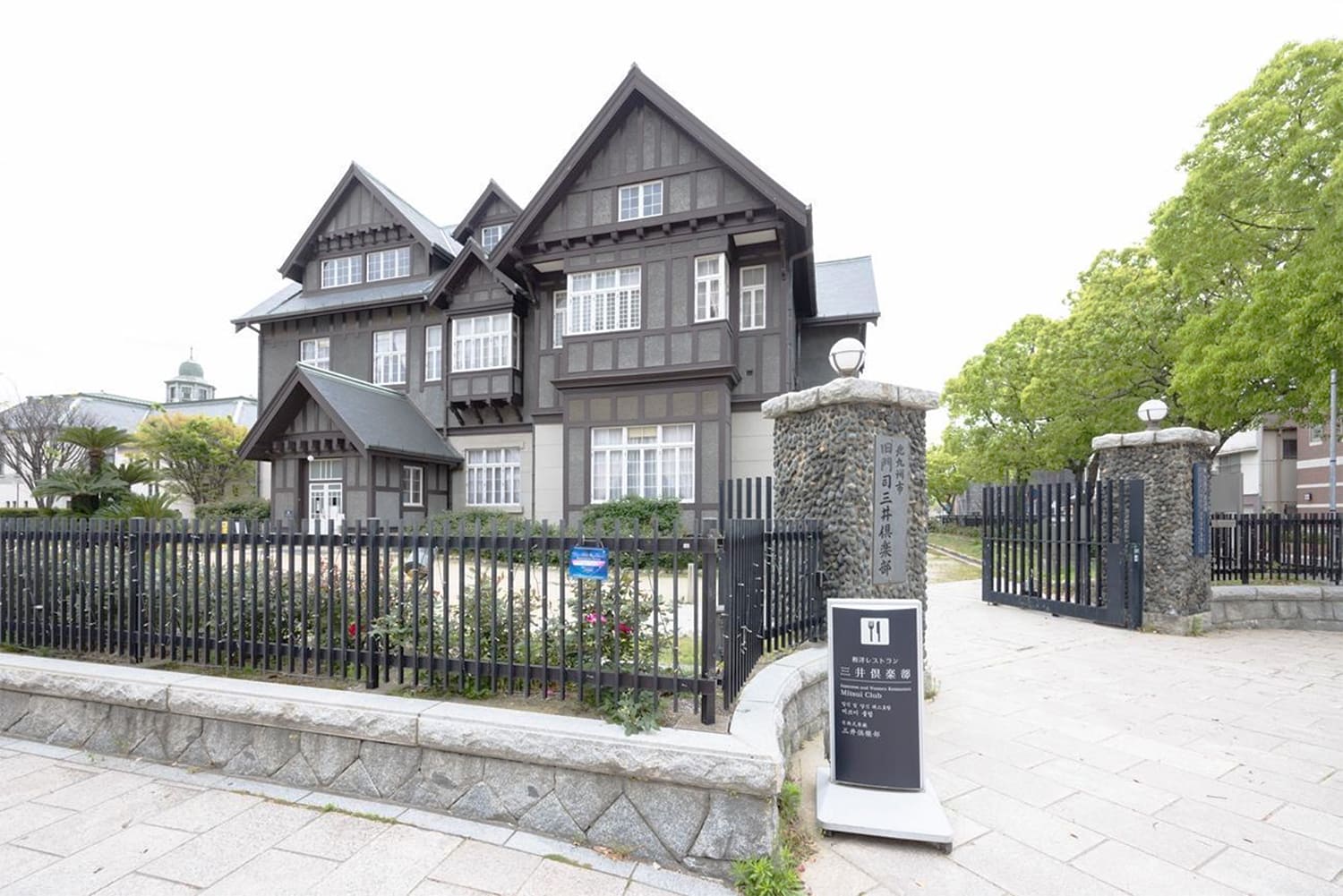
- Former Moji Mitsui Club
-
- 7-1 Minatomachi, Moji Ward, Kitakyushu City, Fukuoka Prefecture MAP
- 1-minute walk from JR Moji-ko Station
- 9:00-17:00
- No holidays
- Admission is charged only for the 2nd floor (Einstein Memorial Room and Fumiko Hayashi Memorial Room): 150 yen for adults, 70 yen for elementary and junior high school students
- 093-321-4151 (Moji Port Retro General Information)
- None
5Sankiro
One of Kyushu’s largest three-story wooden former ryotei, showcasing exquisite craftsmanship
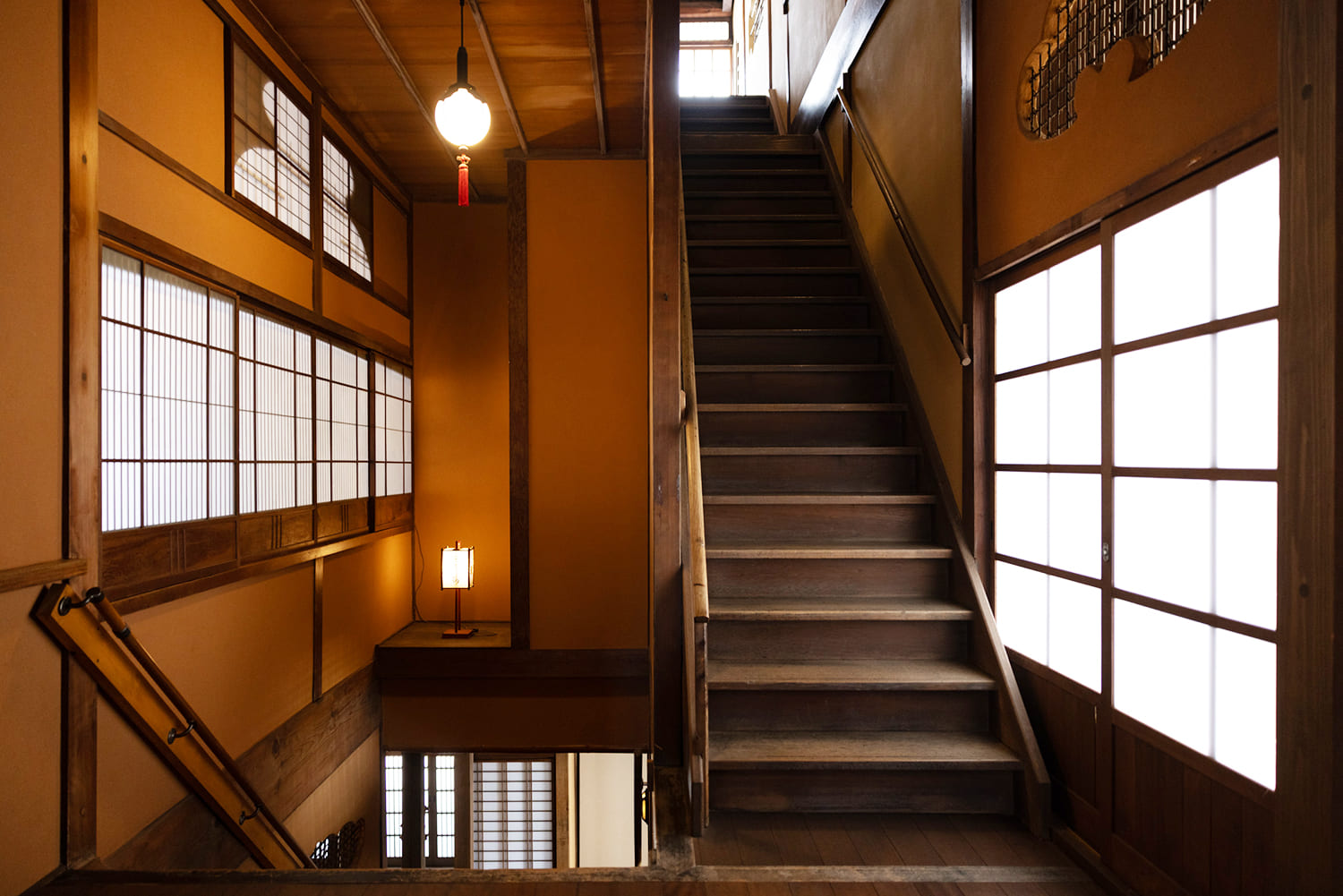
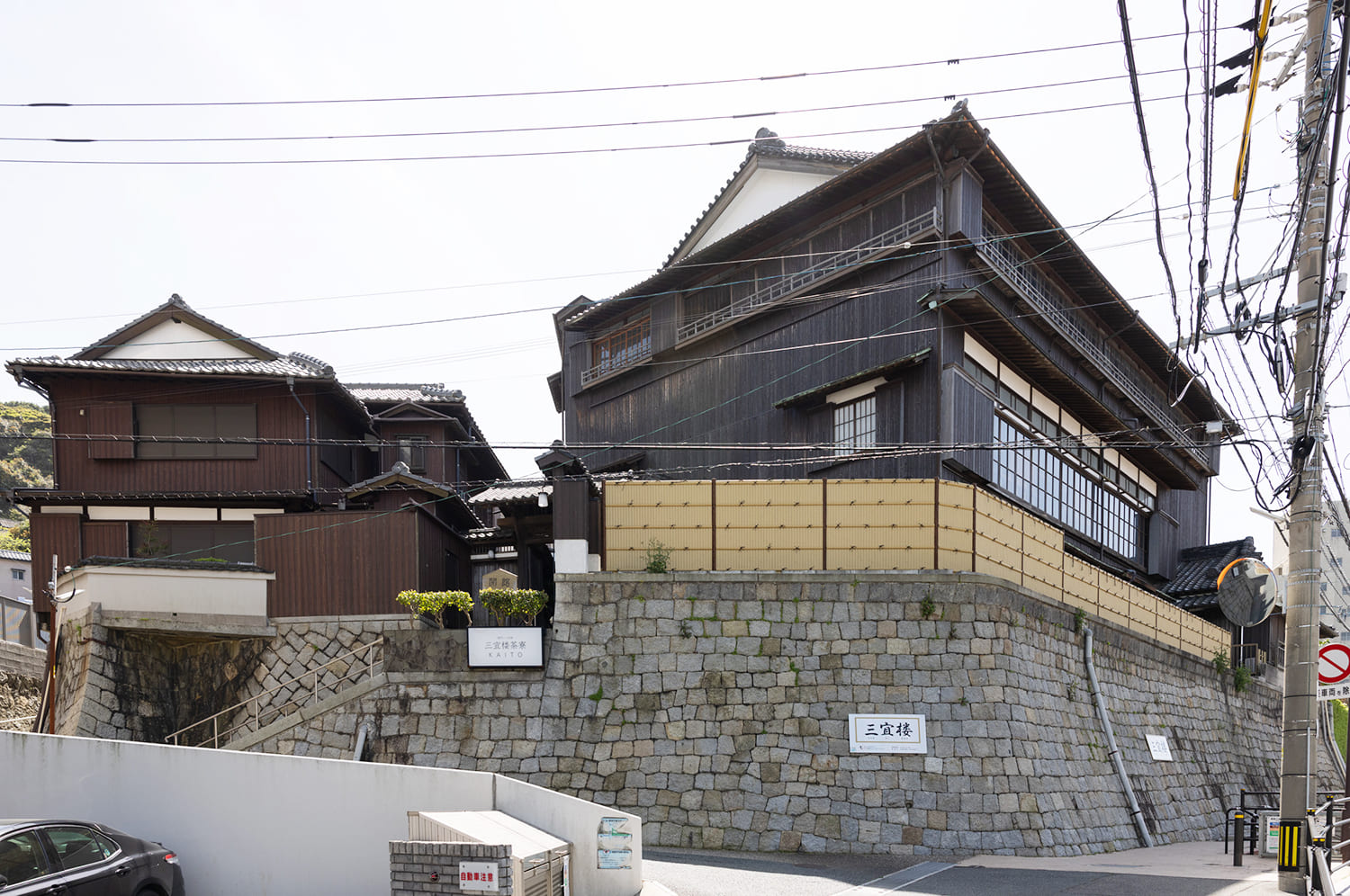
Sangirō, which relocated and opened as a traditional Japanese restaurant in 1931 (Shōwa 6), is known as one of the largest surviving three-story wooden structures of its kind in Kyushu. A highlight of the building are the “Shimoji-mado” windows found throughout the interior. Although there were originally about 40 different types, only 22 can be seen inside the building today. Each features a unique design, and their appearance changes depending on the light that filters through them. On the “Stairway to the Sky” leading to the second floor, “shimaji-mado” featuring motifs of pine trees, clouds, mountains, clouds, and the moon are arranged from the bottom up, said to symbolize the ascent to heaven.Additionally, the “Haiku Room” on the third floor features the building’s largest circular “shimiji-mado,” and its smooth, curved design attests to the high level of craftsmanship of the artisans of that era.
Enjoy a fugu-themed lunch in a space that retains the charm of a traditional ryotei
![The “Fugu Gozen [Sushi]” menu features fugu sashimi, fugu nigiri sushi, and deep-fried fugu](https://hoshinoresorts.com/guide/wp-content/uploads/2026/08/IMG_4829.jpg)
Sangirō, which carved out a glamorous history as a high-end traditional Japanese restaurant, closed its doors once in the Shōwa 30s, but after overcoming the threat of sale and demolition, it reopened in 2014.In 2022, the fugu restaurant “Sankiro Saryo KAITO” was added to the premises. In its charming private rooms, which blend Japanese and Western styles, guests can enjoy a fugu-focused lunch set or a full-course torafugu meal.The dishes are served in tableware and with plating that evoke the original Sankirō, allowing guests to sense the spirit of that era. The highlight of the second floor is the large hall known as the “Hyakujōma” (Hundred-Tatami Room). This spacious venue, where banquets and dances were once held, is reserved for groups of 15 or more.
Local Guide
Supporters
There was a time when Sanki-ro was used as a residence after the traditional Japanese restaurant closed. As a remnant of that era, simple nameplates and NHK broadcasting reception stickers are still affixed to the entrances of each room, allowing you to sense the history of Sanki-ro—a symbol of Moji Port’s prosperity—as it has evolved over the years.
- Sangioro
-
- 3-6-8 Kiyotaki, Moji Ward, Kitakyushu City, Fukuoka Prefecture MAP
- 7-minute walk from JR Mojiko Station
- 10:00 a.m.–5:00 p.m.
- Mondays (closed the following day if Monday is a national holiday), Year-end and New Year holidays
- Free of charge
- 093-321-2653 (Tours), 093-321-2651 (Dining Reservations)
- None
 Sangiro Tea House KAITO: 11:30 AM–3:00 PM, 5:00 PM–9:00 PM
*Reservations required
6Moji Port Retro Observation Deck
A panoramic view of the Kanmon Strait and the cityscape of Moji Port from 103 meters above ground
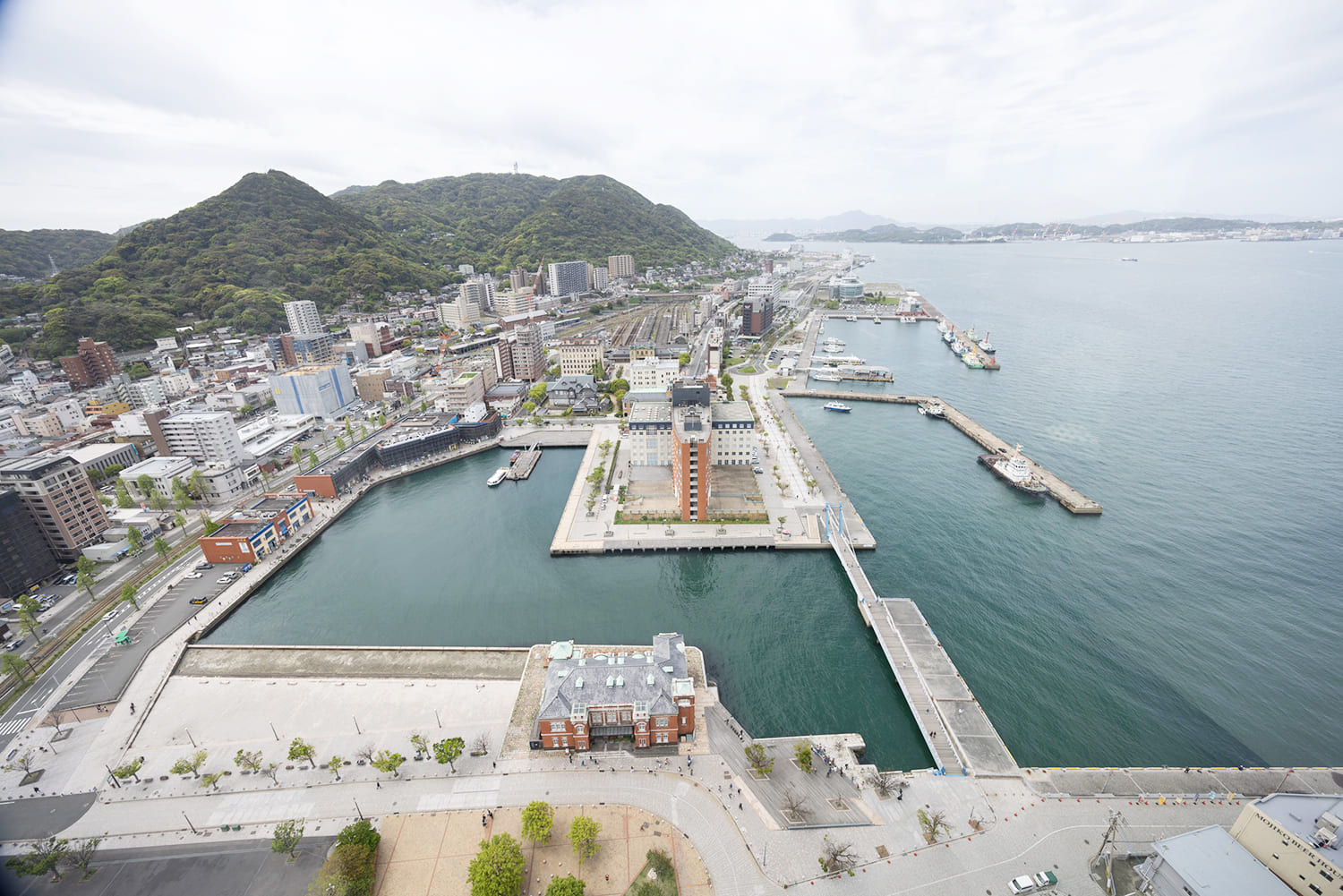
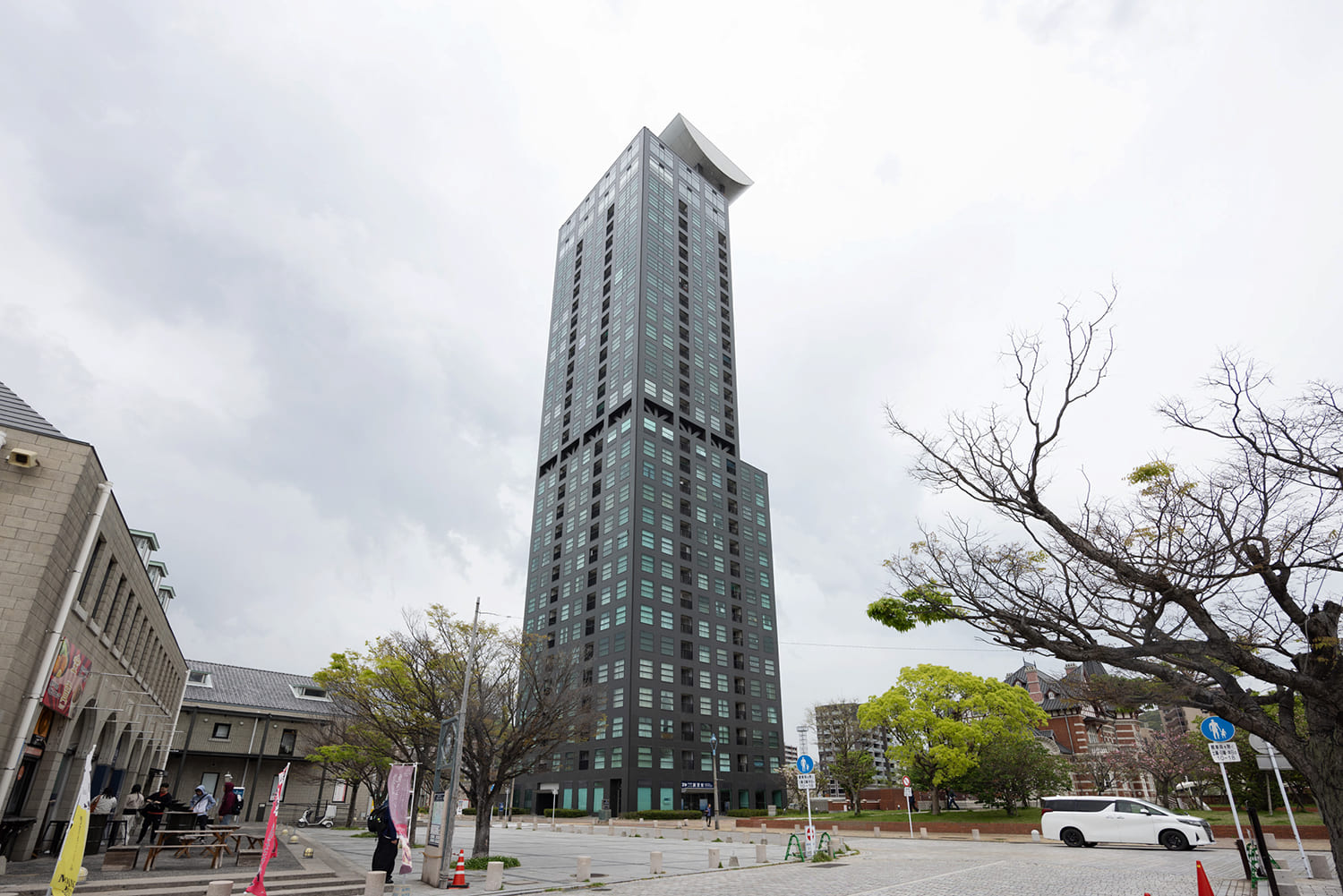
The Moji Port Retro Observation Deck is located on the 31st floor of “Retro Hi-Mart,” a high-rise apartment building designed by world-renowned architect Kisho Kurokawa, who also designed the National Art Center, Tokyo.From the observation deck, 103 meters above ground, you can take in views of the Mojiko Retro District, the Kanmon Strait, Shimonoseki, and even Ganryū Island.
While the daytime views are impressive, the night view—designated as a “Japan Night View Heritage” site—is not to be missed. The best time to visit is from 8:00 p.m. to 10:00 p.m.As the lights inside the building are dimmed, the illuminated streets of Moji Port, the Kanmon Bridge, and the lights of Shimonoseki across the strait take on an even more magical appearance.
Take a break with a drink in hand while enjoying the spectacular view
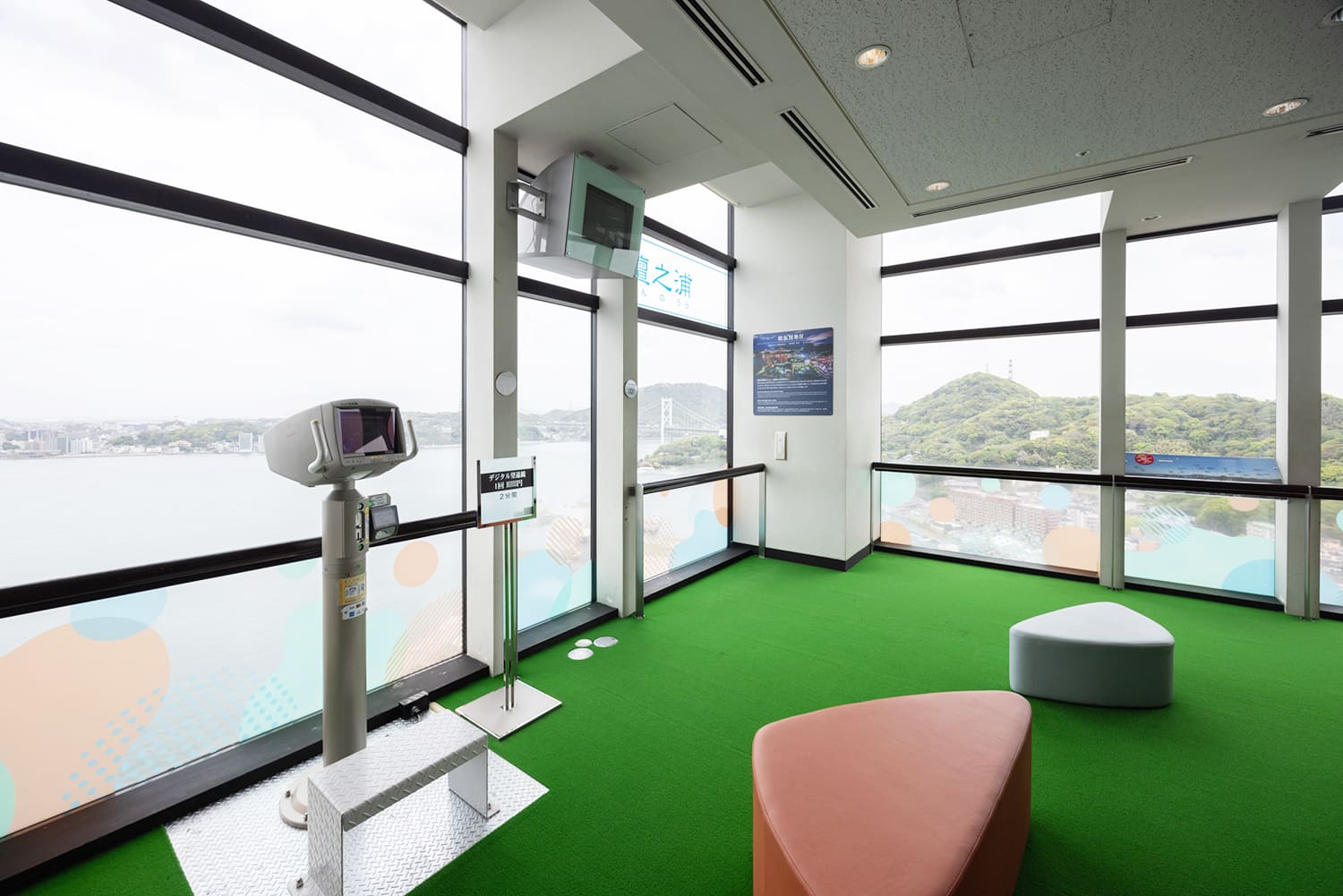
The observation deck features numerous touches designed to help you fully enjoy the scenery, such as maps with explanations indicating the locations of historic buildings and the Kanmon Strait, as well as digital telescopes.
Along with the panoramic view, be sure to try the “Sea Breeze Lemonade” served at the adjacent café-bar, “Grand Jour Retro.” This drink captivates with the refined sweetness of homemade honey syrup and the refreshing tartness of lemon.Other beverages include draft beer and “Sea Breeze Gin Soda.” Tables and chairs are provided, so you can relax and savor your drink.
Local Guide
Supporters
The observation deck is also a popular date spot. On the 30th floor, there are “Premium Seats”—special seating limited to one couple per reservation—where you can enjoy a romantic moment with the breathtaking view all to yourselves.
- Moji Port Retro Observation Deck
-
- 1-32 Higashiminato-machi, Moji-ku, Kitakyushu City, Fukuoka Prefecture MAP
- Approx. 13-minute walk from JR Mojiko Station
- 10:00 a.m.–10:00 p.m. (Last admission at 9:30 p.m.)
- Closed four times a year (dates vary)
- Adults: 600 yen; Elementary and junior high school students: 300 yen
- 093-321-4151 (Moji Port Retro General Information)
- None
7Blue Wing Moji
A pedestrian-only blue suspension bridge with the Kanmon Strait stretching out before you
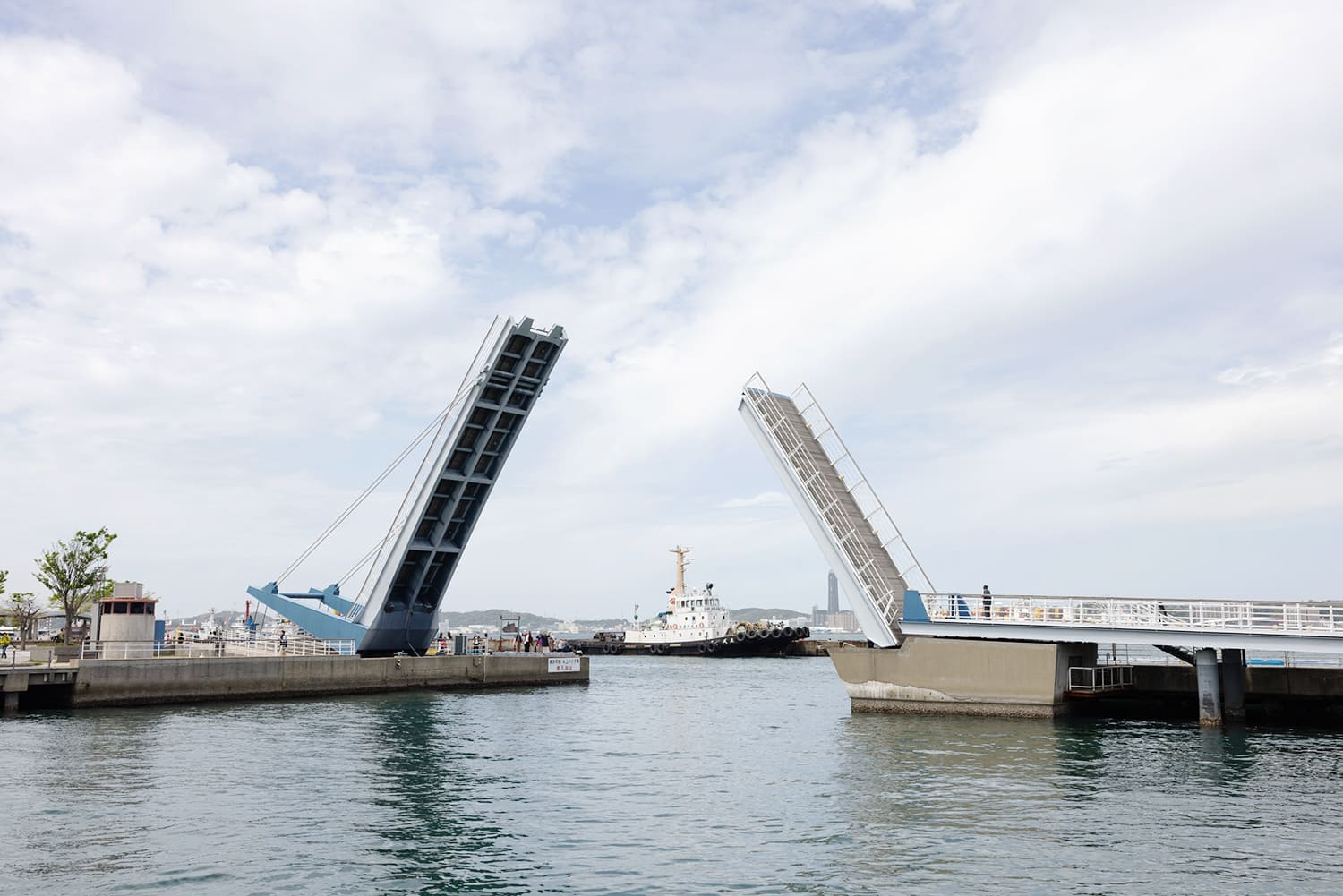
Blue Wing Moji is a 108-meter-long bascule bridge spanning the entrance to Moji First Harbor, making it one of the largest pedestrian-only bridges in Japan. The 24-meter main bridge on the Premier Hotel Moji Port side and the 14-meter auxiliary bridge on the former Moji Customs House side open and close over the course of about 20 minutes.Except in case of inclement weather, the bridge opens and closes every hour between 10:00 a.m. and 4:00 p.m., for a total of six times a day. When the bascule bridge opens fully to a 60-degree angle above the water’s surface, gasps of awe rise from tourists who have been waiting for that moment, and the sound of camera shutters echoes throughout the area.
A popular date spot designated as a “Lovers’ Sanctuary”
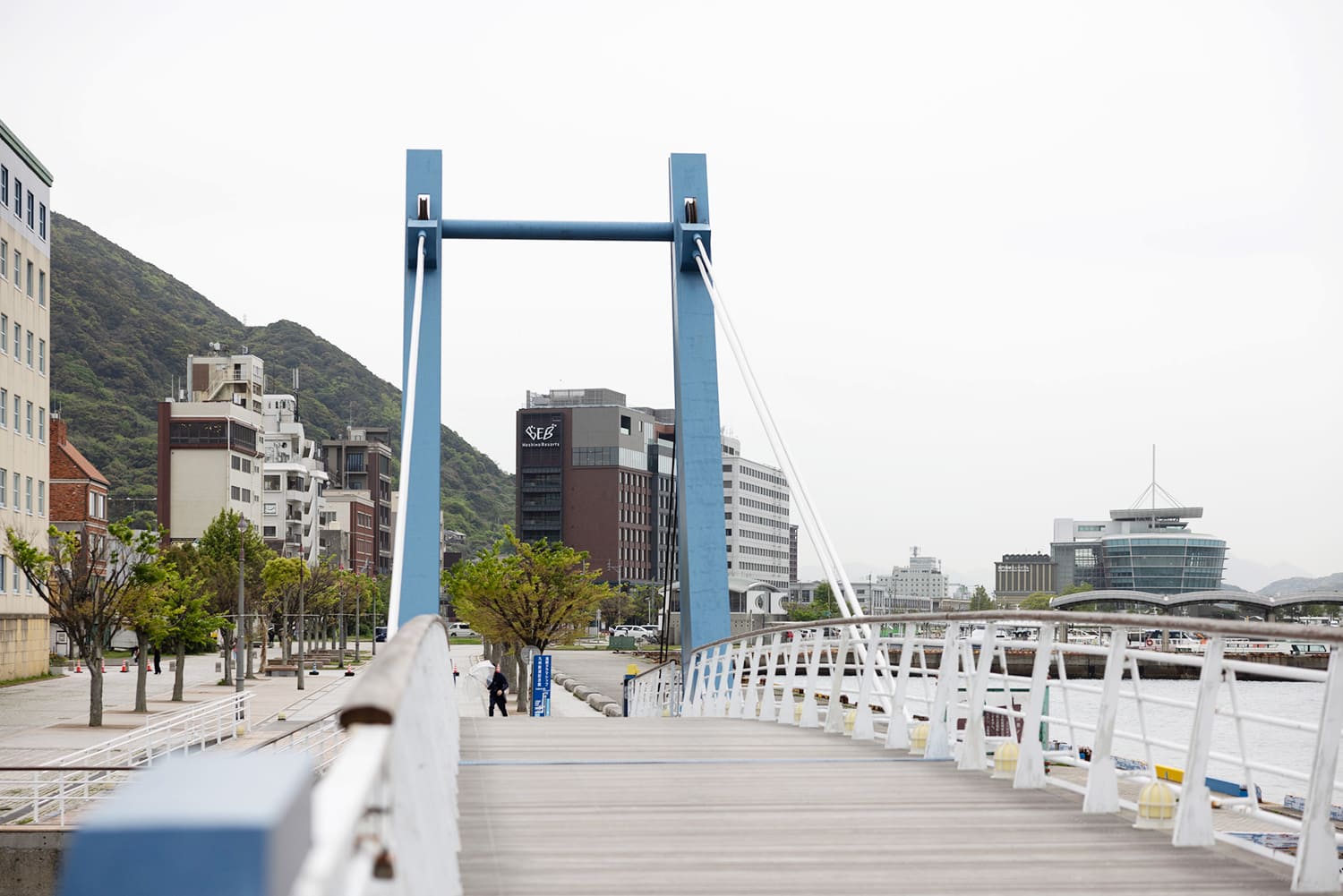
While watching the bascule bridge open and close, be sure to listen to the announcements broadcast from the bridge. In addition to information about the bridge itself, they provide tourist information about the Kanmon area, including Mojiko. Music plays along with the announcements, making you feel as though you’re watching a show.
Blue Wing Moji is also a popular date spot. There’s a superstition that the first couple to cross the bridge after it closes will be together for life, and it has been designated as a “Lovers’ Sanctuary.”
Local Guide
Supporters
Using the Blue Wing Moji provides easy direction to the Old Moji Customs House and the Moji Port Retro Observation Deck BEB Moji BEB. It’s an essential stop for any stroll through Moji Port.
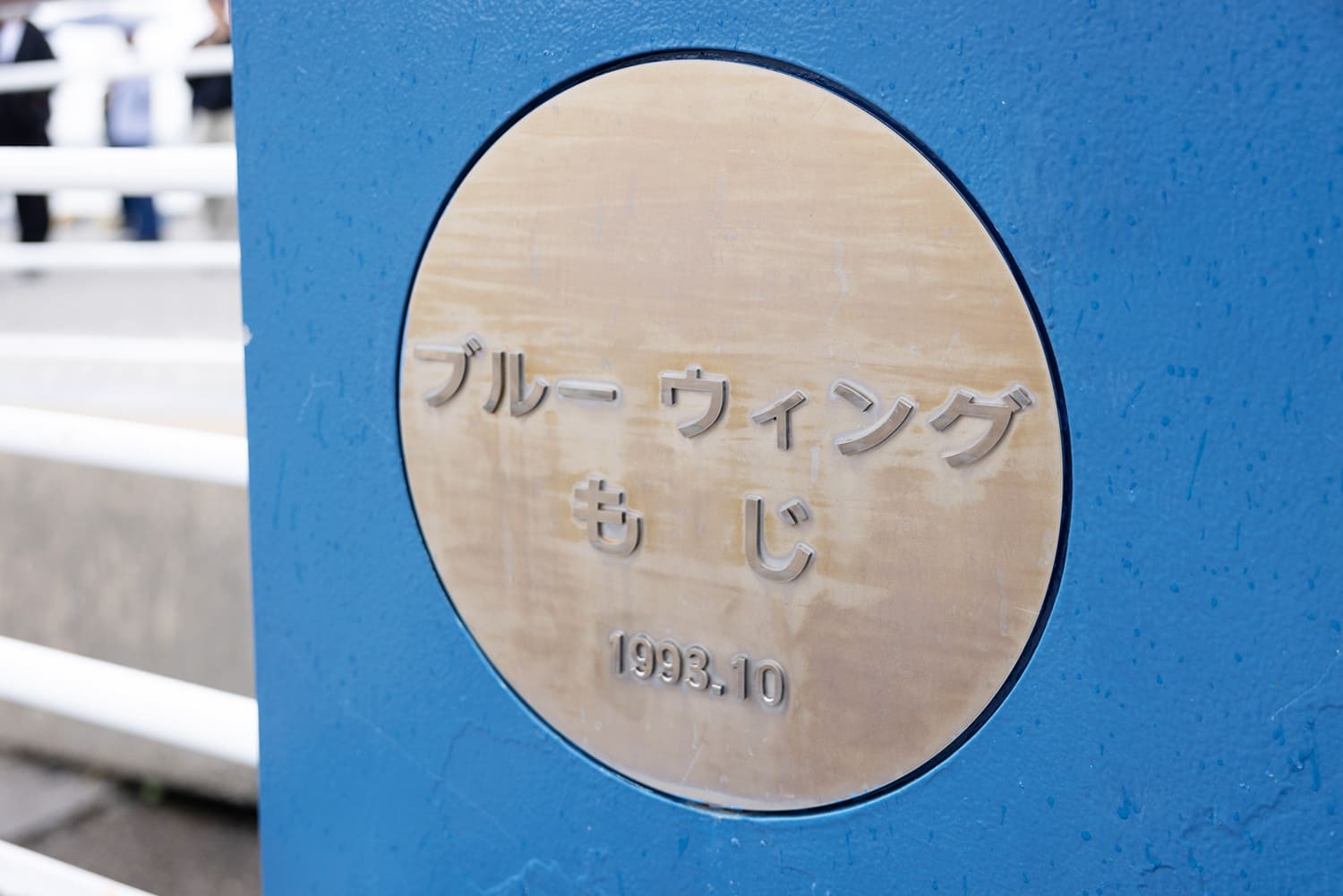
- Blue Wing Moji
-
- 4-1 Minato-machi, Moji Ward, Kitakyushu City, Fukuoka Prefecture MAP
- A 6-minute walk from JR Moji-ko Station
- 093-321-4151 (Moji Port Retro General Information)
- None
MAP
- <Recommended Spots and How to Explore Them>
- Hoshino Resorts facilities nearby

Local Guide who was in charge of this article
- Kanoko Fujinaga A native of Moji and a huge fan of road trips
BEB Mojiko
Fukuoka Prefecture, Kitakyushu
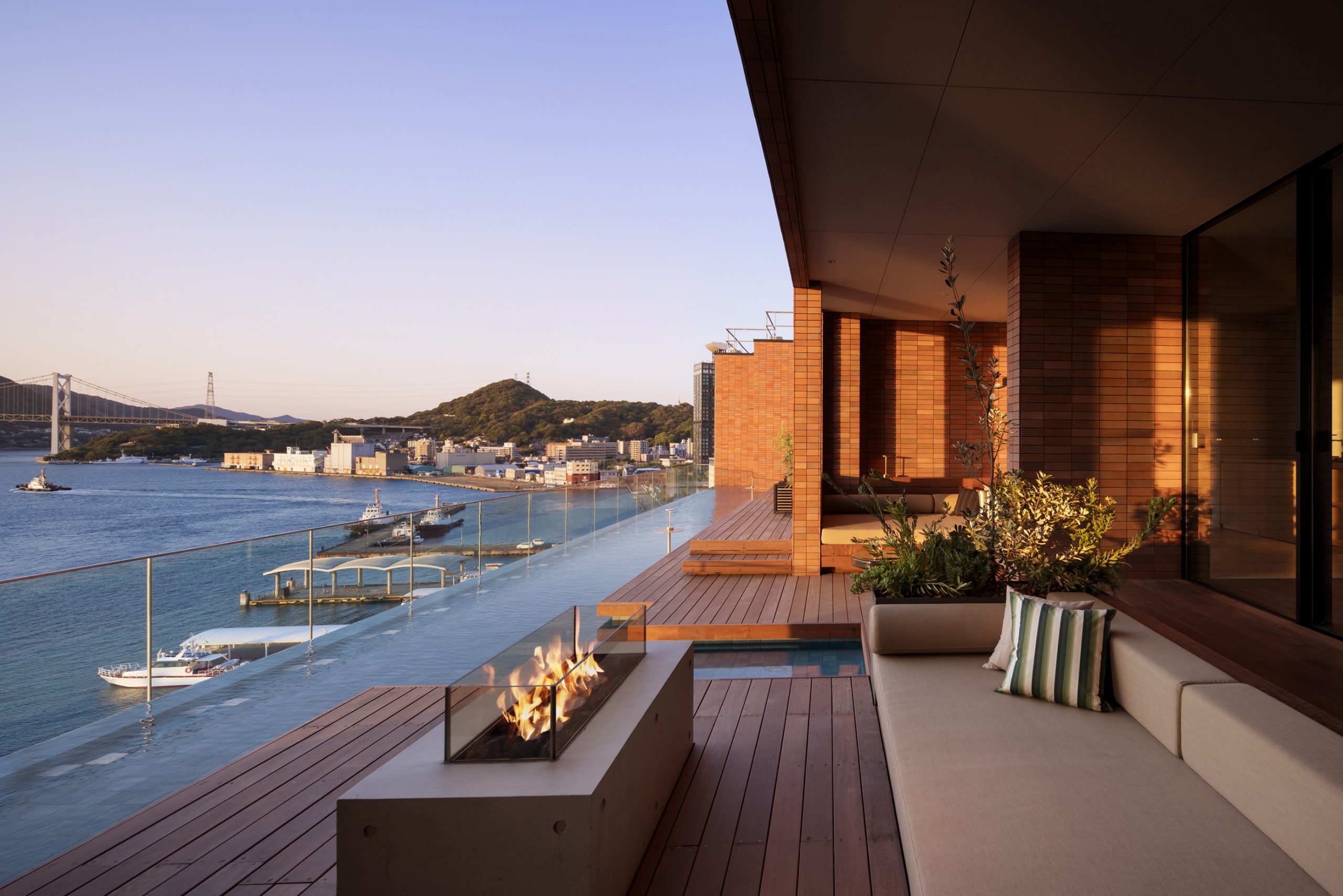
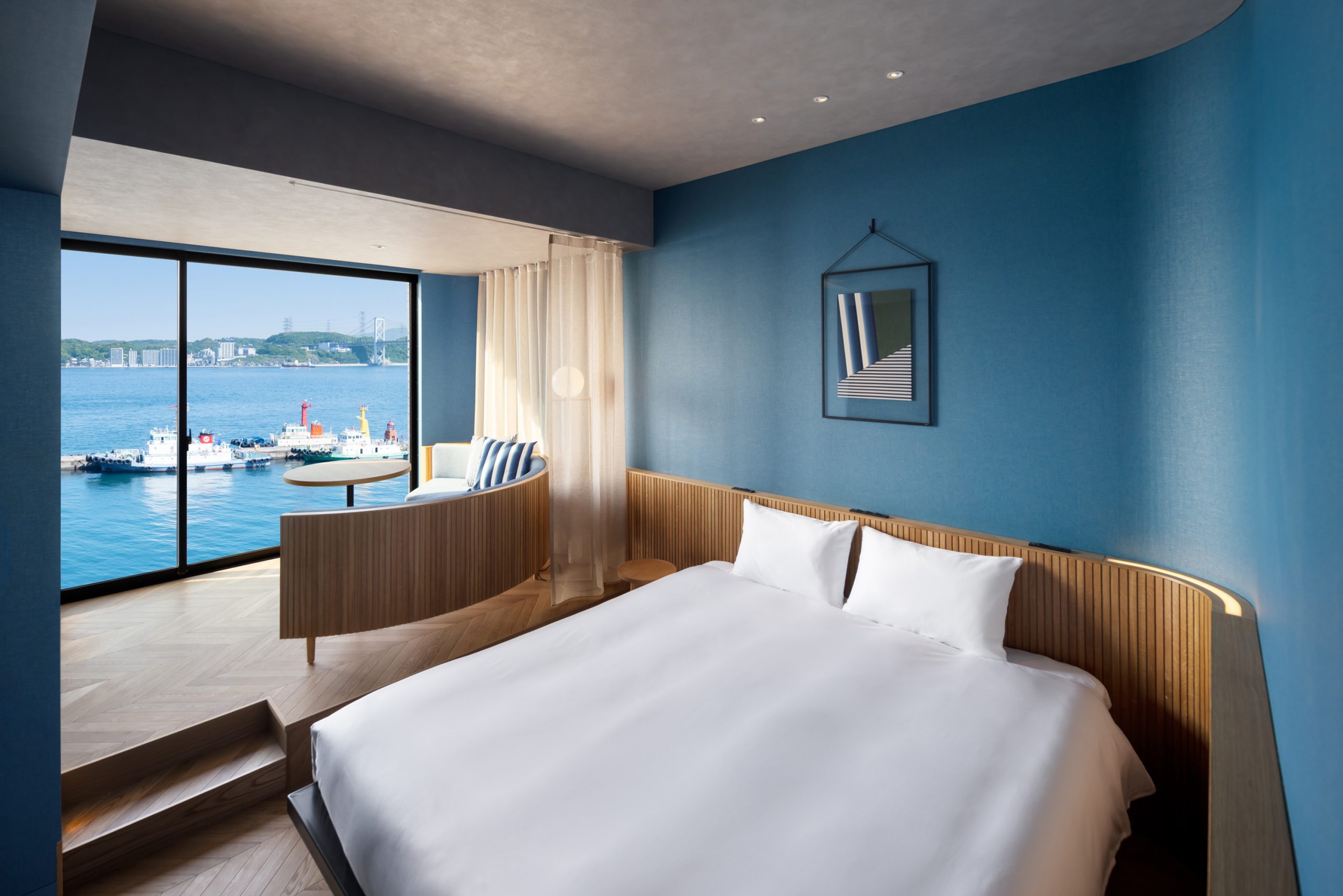
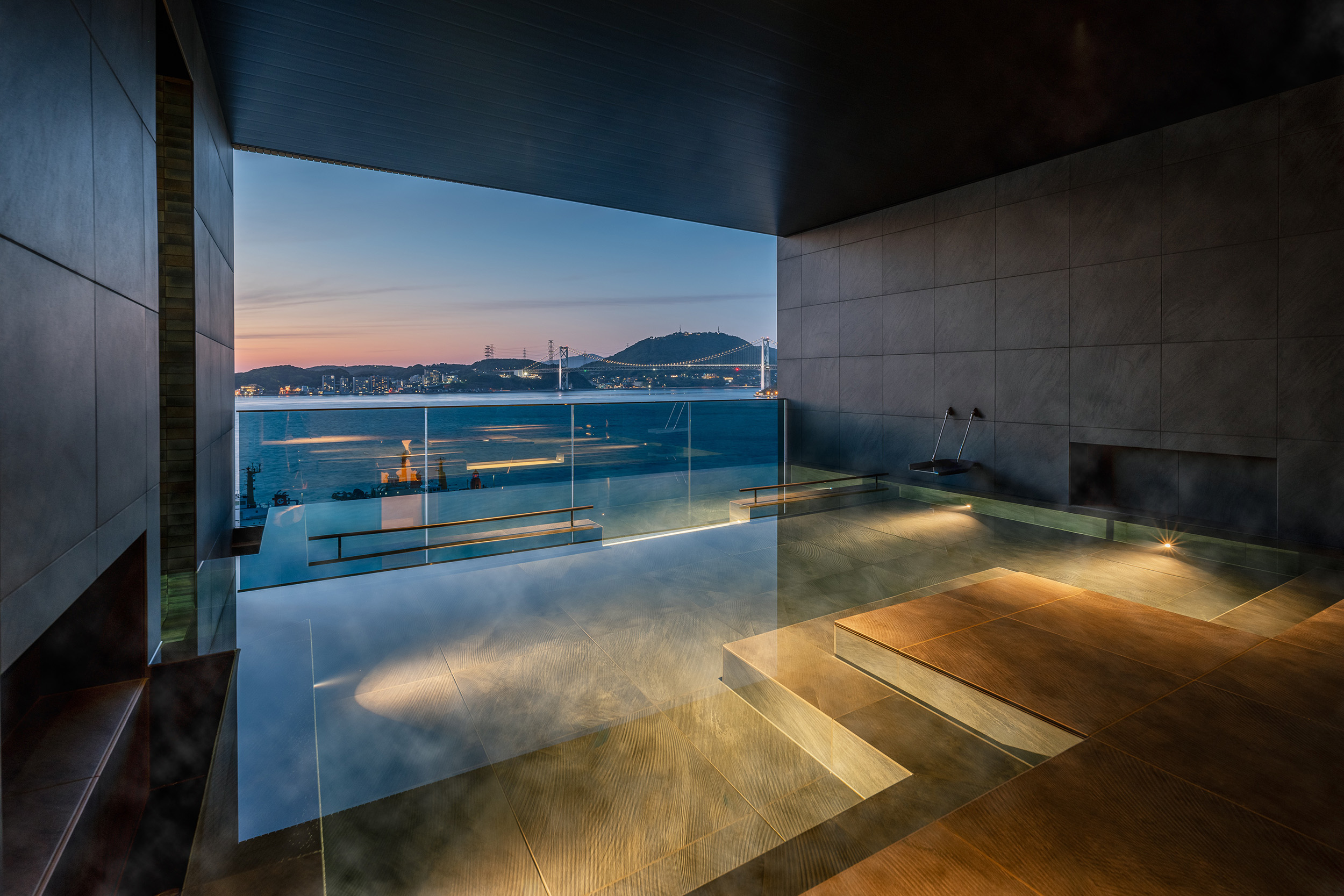
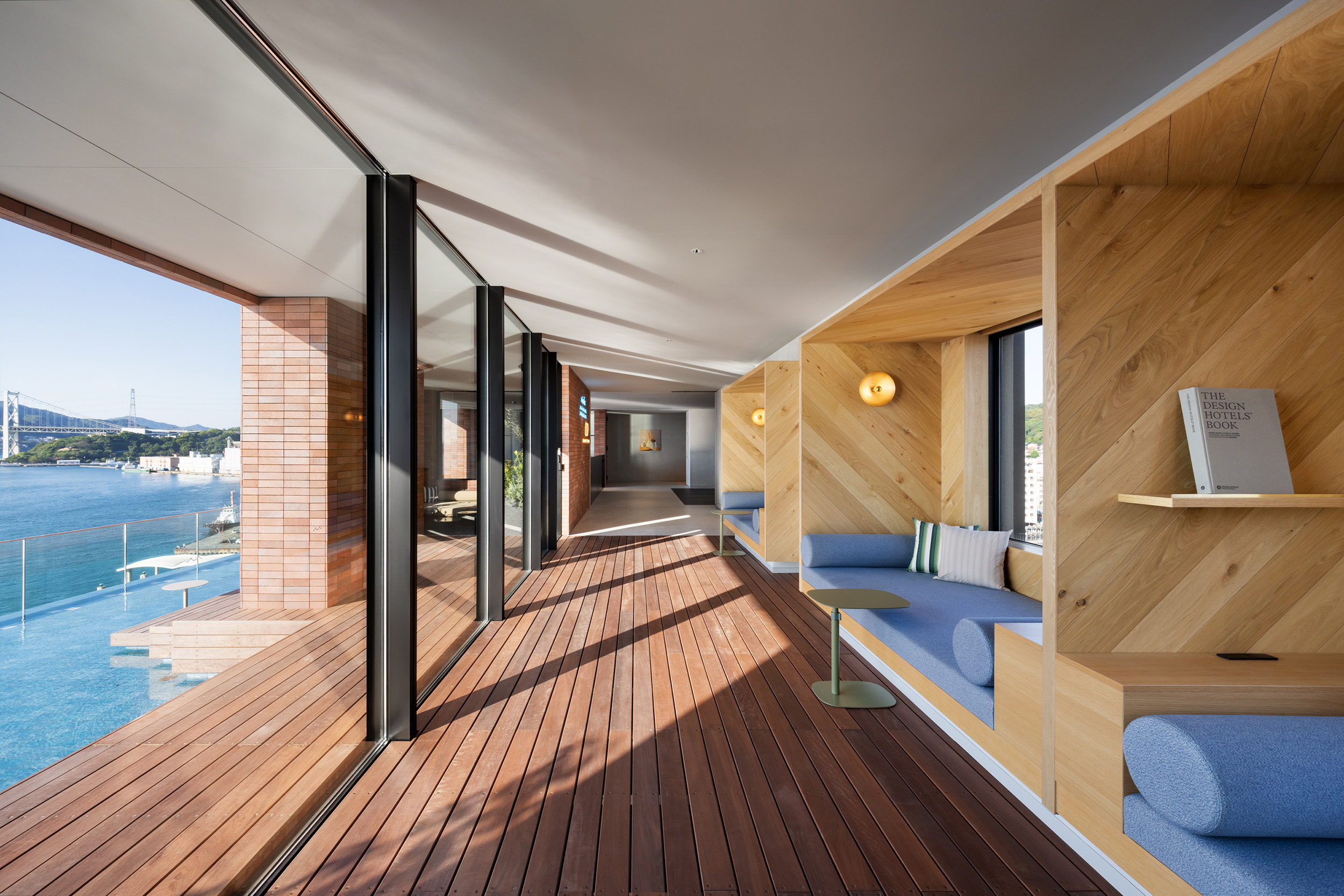
It’s in a prime location as a base for sightseeing in Mojiko Retro. You can enjoy panoramic views of the Kanmon Strait from the guest rooms and the Public hot spring.
Access by bus 4-minute walk from JR Moji-ko Station
- Example of Accommodation Rates
- 1 person per night Starting at 6,600 yen