





[2026 Edition] Recommended Autumn Foliage Spots in the Kirishima Area

The Kirishima area, which spreads across the northern part of Kagoshima Prefecture, is famous as the place where Sakamoto Ryoma and his wife Oryo visited on their honeymoon. Surrounded by majestic mountains, it features untouched nature, including mountains that are still volcanically active, crater lakes formed by that activity, and highlands. In this article, we will introduce five must-visit autumn foliage spots in the nature-rich Kirishima area.
1Kirishima Jingu Shrine
The harmony between the vermilion shrine buildings and the deep red autumn leaves is a seasonal tradition of Kirishima's autumn.

Known as the place Sakamoto Ryoma visited on his honeymoon, this is the largest shrine in southern Kyushu. It is dedicated to Ninigi-no-Mikoto, the protagonist of the Tenson Korin (descent of the heavenly grandson) myth, and the interior of the main hall is decorated with gorgeous and magnificent ornaments. In 2022, the main hall, the offering hall, and the worship hall were designated as National Treasures.
In autumn, a magical autumn foliage landscape stretches from the approach to the shrine grounds. In particular, the harmony between the vermilion shrine buildings and the deep red autumn leaves is something rarely seen elsewhere. You also won't want to miss the autumn leaves along the national highway in front of the large torii gate or the maples along the approach that extends beyond the second torii gate.
About 15 minutes away by car is the "Kirishima Onsen Market," a tourist facility with souvenir shops selling local specialties, restaurants, and a footbath, making it a recommended stop before or after your visit. The tunnel of maple trees on National Route 223 leading to the market is sure to captivate you.
[Start of coloring] Usually around early November
[Best time to view] Usually mid-November to late November
[Types of autumn leaves] Maple, Japanese maple, lacquer tree, etc.

- Kirishima Jingu Shrine
-
 2608-5 Kirishimataguchi, Kirishima City, Kagoshima Prefecture MAP
 Approx. 12 minutes by car from JR Nippo Main Line "Kirishima-Jingu" Station
 Take the bus from JR Nippo Main Line "Kirishima-Jingu" Station, get off at "Kirishima-Jingu" and it is right there
 Shrine grounds are open for worship at any time (*Reception for prayers and amulets is from 8:00 to 17:00)
 Open every day
 Free
 0995-57-0001
 Available (free)
2Onami-ike Pond
Enjoy the contrast between the mystical lake and the autumn leaves while hiking.

A lake located at the summit of Mt. Kirishima in the northeastern part of Kirishima City. Said to have been formed about 40,000 to 50,000 years ago by volcanic activity, it is known as a mystical crater lake associated with the "Onami Legend." While there are many crater lakes on Mt. Kirishima, O-nami-ike is the highest among them.
It takes about 40 minutes one way from the O-nami-ike trailhead on Kagoshima Prefectural Road 1 (Kobayashi Ebino Kogen Makizono Line) to the lake. It is popular as a relatively easy mountain to climb within the Kirishima mountain range. A walking trail is also maintained around the lake, which takes about 2 hours to complete. From late October to mid-November each year, maples and Japanese red pines change color, allowing visitors to admire a stunning display of beauty. On sunny days, enjoy the beautiful contrast between the cobalt blue lake and the autumn leaves while strolling.
[Start of color change] Typically late October
[Best time to view] Typically early November to mid-November
[Types of autumn foliage] Maple, Japanese red pine, Enkianthus perulatus, etc.
- Onamiike Pond
-
- Takachiho, Makizono-cho, Kirishima City, Kagoshima Prefecture MAP
- Approx. 30 minutes by car from JR Nippo Main Line "Kirishima-Jingu" Station (O-nami-ike Trailhead)
- 0995-45-5111 (Kirishima City Tourism PR Division)
- None
 Please check the "Kirishima City Official Website" for information on mountain trails, such as entry restrictions.
3National Route 223
A scenic road you'll want to drive along during the autumn foliage season.

National Route 223, which stretches from Kobayashi City in Miyazaki Prefecture to Kirishima City in Kagoshima Prefecture, is a road selected as one of the "100 Best Roads in Japan" for its unique character. It intersects with the approach to the temple town of Kirishima Jingu Shrine and with Prefectural Road 480, which leads to "Takachiho-gawara," the trailhead for climbing Mt. Takachiho-no-mine and Mt. Nakadake in the Kirishima mountain range, playing an important role as a gateway for Kirishima tourism.
In autumn, the trees along the road turn red and yellow, allowing you to enjoy a drive through a vivid gradation of colors. The "autumn leaf tunnel" near Kirishima Jingu Shrine is particularly spectacular.
[Start of color change] Typically late October
[Best time to view] Typically late November
[Types of autumn foliage] Japanese maple, maple, Japanese pampas grass, etc.
- National Route 223
-
- Kirishima City, Kagoshima Prefecture MAP
- 0995-45-5111 (Kirishima City Tourism PR Division)
4Ebino Plateau
Enjoy the beauty of the autumn leaves reflected on the lake's surface.

A highland spreading out at the foot of Mt. Karakuni, the highest peak of the Kirishima mountain range that stretches from Miyazaki Prefecture to Kagoshima Prefecture. Located at an altitude of 1,200m, the area is covered in pampas grass, which can survive in harsh environments due to the volcanic activity of Mt. Iou, which continues to erupt today. It is said that the name "Ebino Kogen" (Ebino Highland) comes from the fact that the tips of the pampas grass were dyed a shrimp color (ebiiro) by volcanic gases.
Based at the "Ebino Eco Museum Center," which introduces the nature, history, and hiking information of the Kirishima mountains, there is a trekking route called the "Pond Tour Course" that takes about 2 hours to visit three crater lakes (Byakushi-ike, Rokkannon-miike, and Fudo-ike). The beauty of the autumn leaves reflected on the lake surface in autumn is a privilege that only those who visit can experience. For those who are not confident in their physical strength, the "Ebino Observatory," which can be reached in about 5 minutes from the museum center, is recommended. You can overlook the mountains around Ebino Kogen, centered on Mt. Karakuni.
[Beginning to color] Mid-October in a typical year
[Best time to view] Early November in a typical year
[Types of autumn foliage] Enkianthus perulatus, maples, Japanese oak, lacquer trees, etc.
- Ebino Plateau (Ebino Eco-Museum Center)
-
- 1495-5 Suenaga, Ebino City, Miyazaki Prefecture MAP
- Approx. 35 minutes by car from JR Nippo Main Line "Kirishima-Jingu" Station
- 9:00–17:00
- Closed during winter *Please inquire
- 0984-33-3002
- Available
5Fukuyama's Married Ginkgo Trees (Miyaura-gu Shrine)
Their golden-shining appearance is breathtakingly beautiful. A pair of ginkgo trees said to be over 1,000 years old.

Two ginkgo trees stand side by side in the precincts of Miyaura-gu Shrine, located in Fukuyama-cho, Kirishima City, known as the home of black vinegar. Miyaura-gu is a historic shrine whose name is listed in the Engishiki Jinmyocho, a list of government-sanctioned shrines across Japan compiled in 927. It is said that the ginkgo trees were planted to commemorate the site as a temporary palace for Emperor Jimmu, the first emperor of Japan, before his eastern expedition. Both trees are said to be over 1,000 years old and are designated as prefectural natural monuments. The tree on the right is said to bear the burn marks from a great fire in 1791 (Kansei 3), while the tree on the left shows bullet holes from the Satsuma Rebellion in 1877 (Meiji 10).
In autumn, visitors never cease to come and see the golden-shining ginkgo trees. When the leaves fall in early winter, a yellow carpet spreads across the area, making for a photogenic scene. From under the ginkgo trees, you can also look out over Sakurajima across Kinko Bay.
[Start of coloring] Usually around early November
[Best time to view] Usually late November
[Types of autumn leaves] Ginkgo
- Fukuyama's Married Ginkgo Trees (Miyaura-gu Shrine)
-
- 2437 Fukuyama, Fukuyama-cho, Kirishima City, Kagoshima Prefecture MAP
- Approx. 37 minutes by car from JR Nippo Main Line "Kirishima-Jingu" Station
- 0995-45-5111 (Kirishima City Fukuyama General Branch, Regional Promotion Division)
- Available
MAP
- Nearby Hoshino Resorts facilities

Local supporter in charge of this article

- Mai TerauchiA Satsuma girl who loves and is loved by shochu
KAI Kirishima
Kirishima Onsen, Kagoshima Prefecture
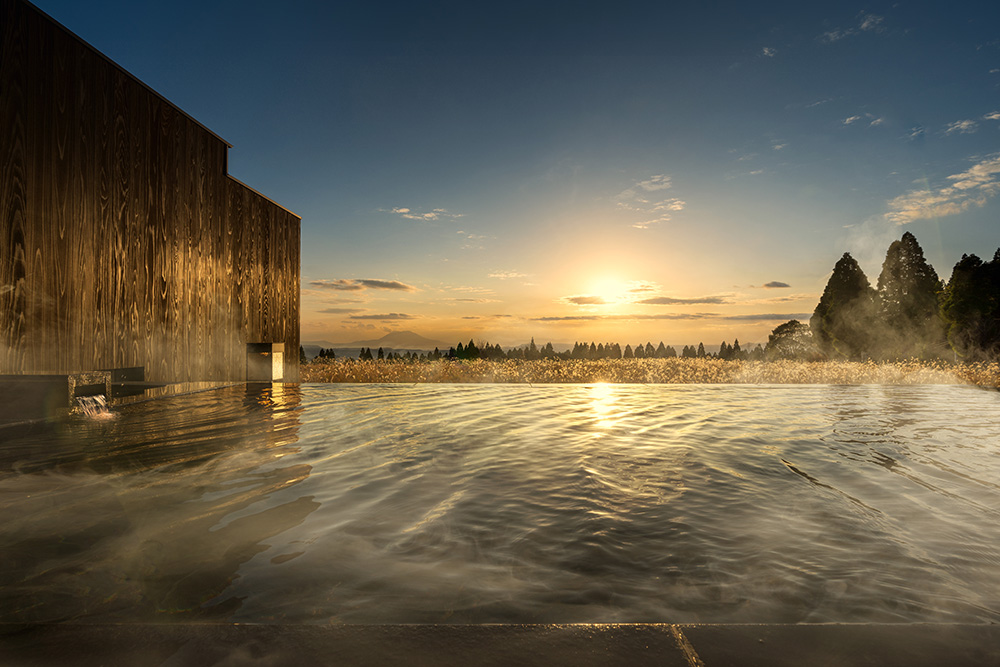
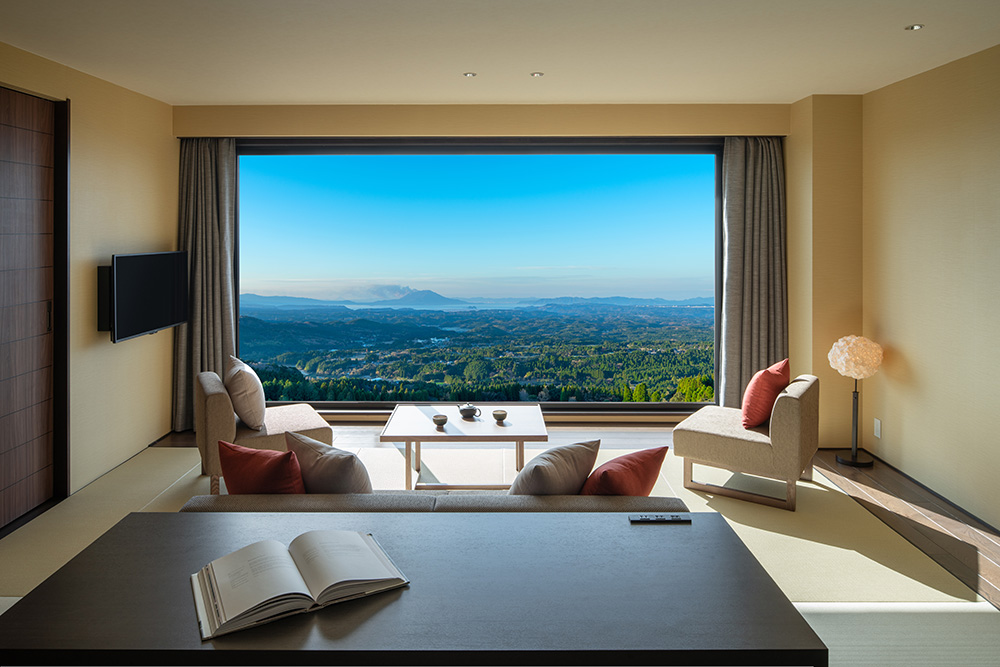
A hot spring inn where you can view Sakurajima from all guest rooms and enjoy the magnificent scenery of vast grasslands from the open-air bath in the large public bathhouse.

Access About 15 minutes by taxi from JR Kirishima-Jingu Station
- Accommodation rate example
- Per person per night From ¥19,000