





[2026 Edition] Highlights & How to Enjoy the "Nagasaki Lantern Festival"

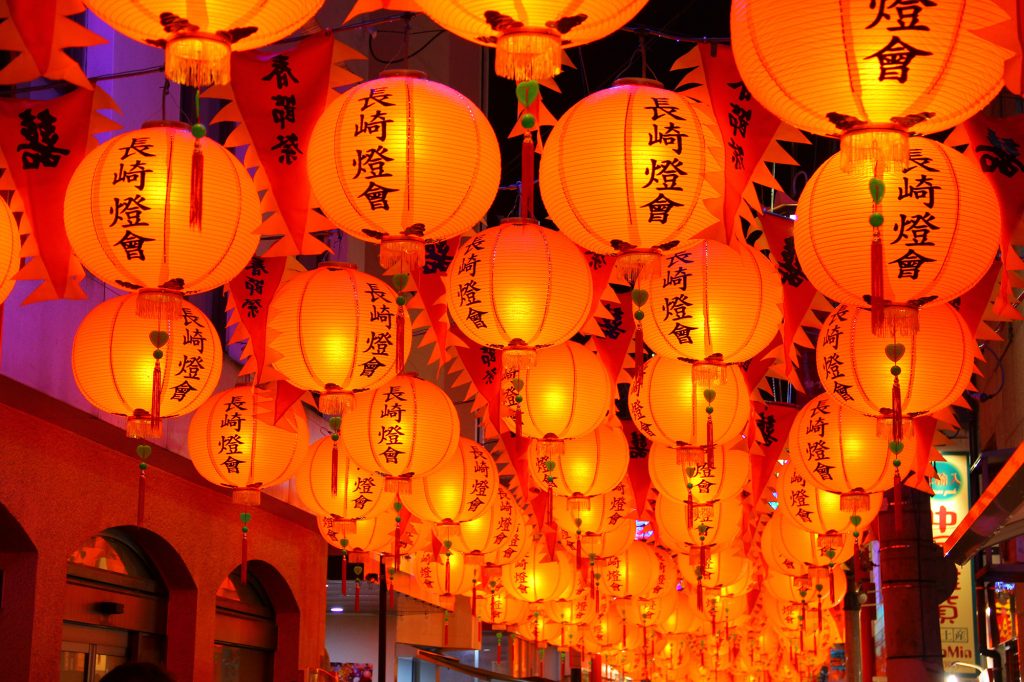
The "Nagasaki Lantern Festival" is held annually for 17 days, starting on the first Friday of February. During this period, the center of Nagasaki City is enveloped in the exotic glow of Chinese lanterns, creating an indescribable beauty.
Furthermore, magnificent shows such as traditional Chinese stage performances and the Emperor's Parade are presented, and there is a wide variety of food stalls. To help you fully enjoy this charming festival, we will introduce useful information ranging from the characteristics of each venue and how to enjoy them, to the event schedule.
1. What kind of event is the "Nagasaki Lantern Festival"?

The 'Nagasaki Lantern Festival' is a winter tradition in Nagasaki that attracts many visitors from all over the country. It began in 1994 as an expanded version of the Spring Festival, which was originally held in Nagasaki Shinchi Chinatown to celebrate the Chinese New Year.
The event is generally held for 17 days starting from the first Friday of February each year*. Named after the custom of lighting lanterns to welcome celestial spirits on the final day of the Lunar New Year—the 15th day of the first lunar month, known as the Lantern Festival—approximately 15,000 lanterns are displayed throughout the city during the event.
In addition, various large and small lantern objects themed after the year's zodiac sign, animals, and anime characters are displayed, giving the city a fantastical atmosphere. You can also enjoy stages rich in Chinese culture and gourmet food, making it full of exotic charm.
※In 2026, since the day after the final day is a public holiday, the festival will be extended by one day to 18 days.
2. There are 5 venues; what are their highlights and tips for sightseeing?
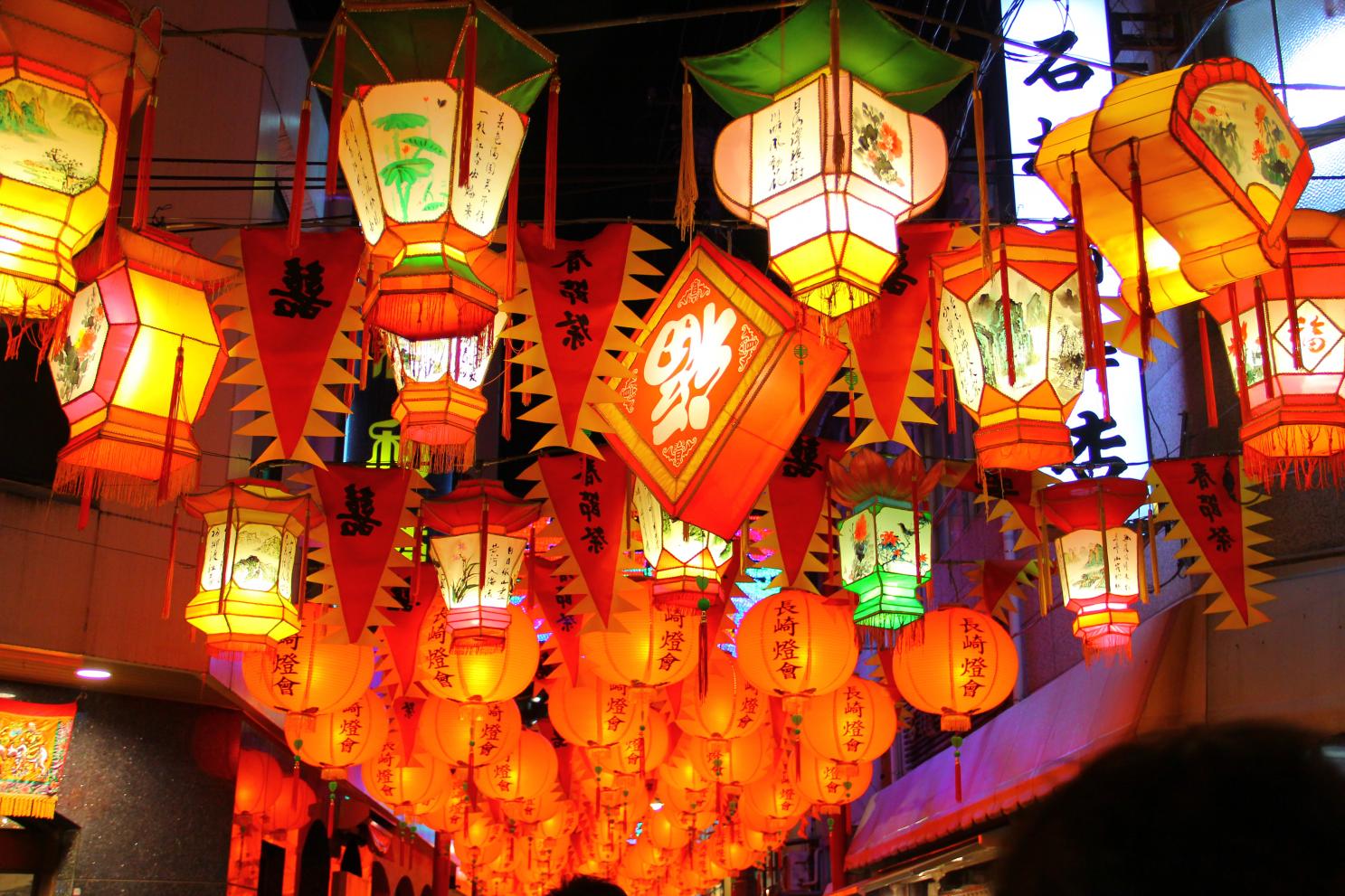
Nagasaki City sets up five official venues. Among them, the main venues, "Shinchi Chinatown Venue" and "Chuo Park Venue," are particularly popular, offering the charm of elaborate lantern displays and a variety of stage performances. Other venues include the retro-styled "Tojin Yashiki Venue," the "Hamanmachi Venue" which utilizes a shopping street, and the "Nakashimagawa Park Venue" stretching along the banks of the Nakashima River, each with its own unique atmosphere. Checking the different lantern colors at each venue—red, pink, and yellow—is also a highlight of the experience.
The distance between the main venue and each of the other venues is at most about 1 km. Since there are also lantern spots scattered throughout the city outside of the official venues, walking while sightseeing is recommended, but using a 1-day bus or tram pass is also a great way to get around efficiently.
▼ Discount Bus & Tram Tickets
・Nagasaki Bus 1-Day/24-Hour PASS Plus
・Nagasaki Electric Tramway Mobile Ticket (1-Day Ticket/24-Hour Ticket)
・Nagasaki Electric Tramway 1-Day Tram Ticket
〈Highlights of each venue〉
*Official venues may change depending on the year, so please be sure to check the official website.
● Shinchi Chinatown Venue
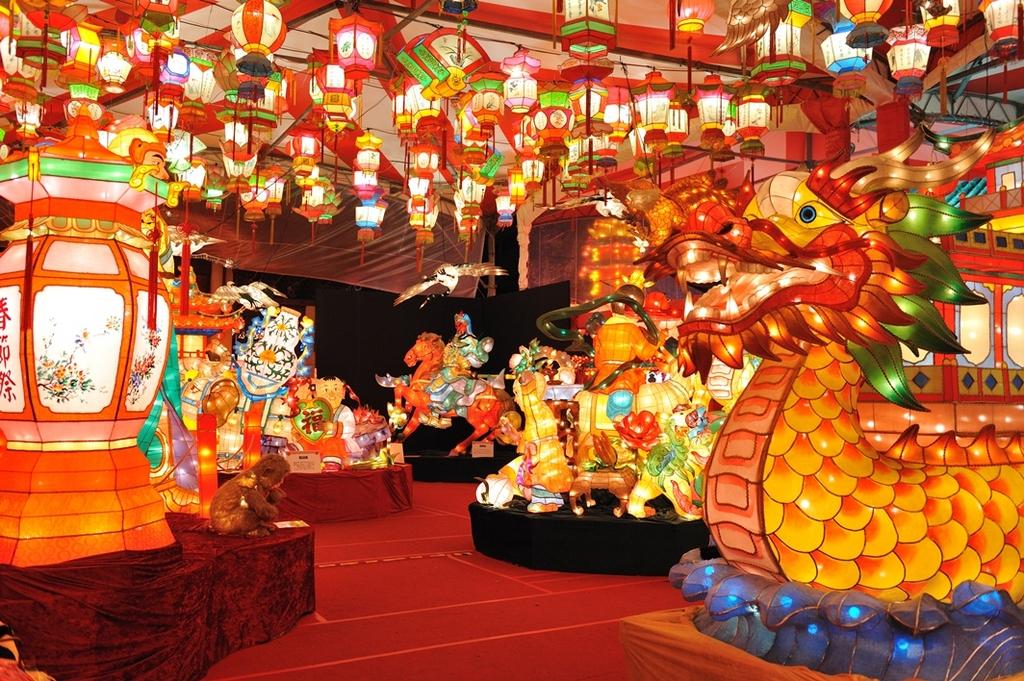
The main venue of the Lantern Festival. In addition to the lighting ceremony, this venue brings together all the charms of the festival, including a wide variety of lantern displays, stage performances, Chinese cuisine, and lantern-themed merchandise.
The venue is divided into the Minato Park area and the Nagasaki Shinchi Chinatown area, which spreads out across from it. The Minato Park area features an outdoor event space that can accommodate up to approximately 2,000 people, as well as an exhibition space for lantern displays. Many food stalls also line the area.
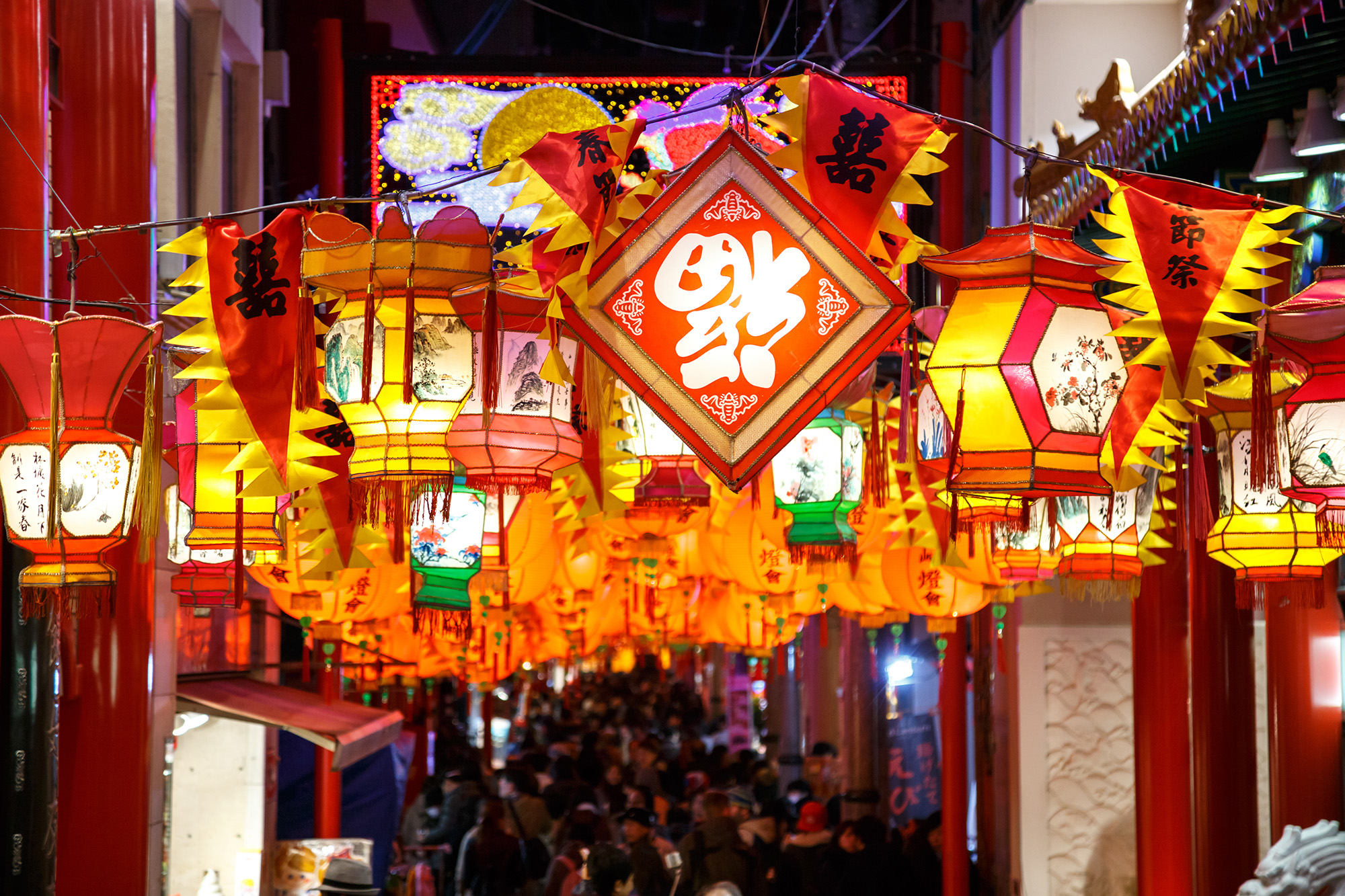
In the Nagasaki Shinchi Chinatown area, vibrant vermilion lanterns dye the sky above, creating a breathtaking sight. It is also a well-known treasure trove of Chinese cuisine, where you can find not only street food but also Chinese sweets perfect for souvenirs.
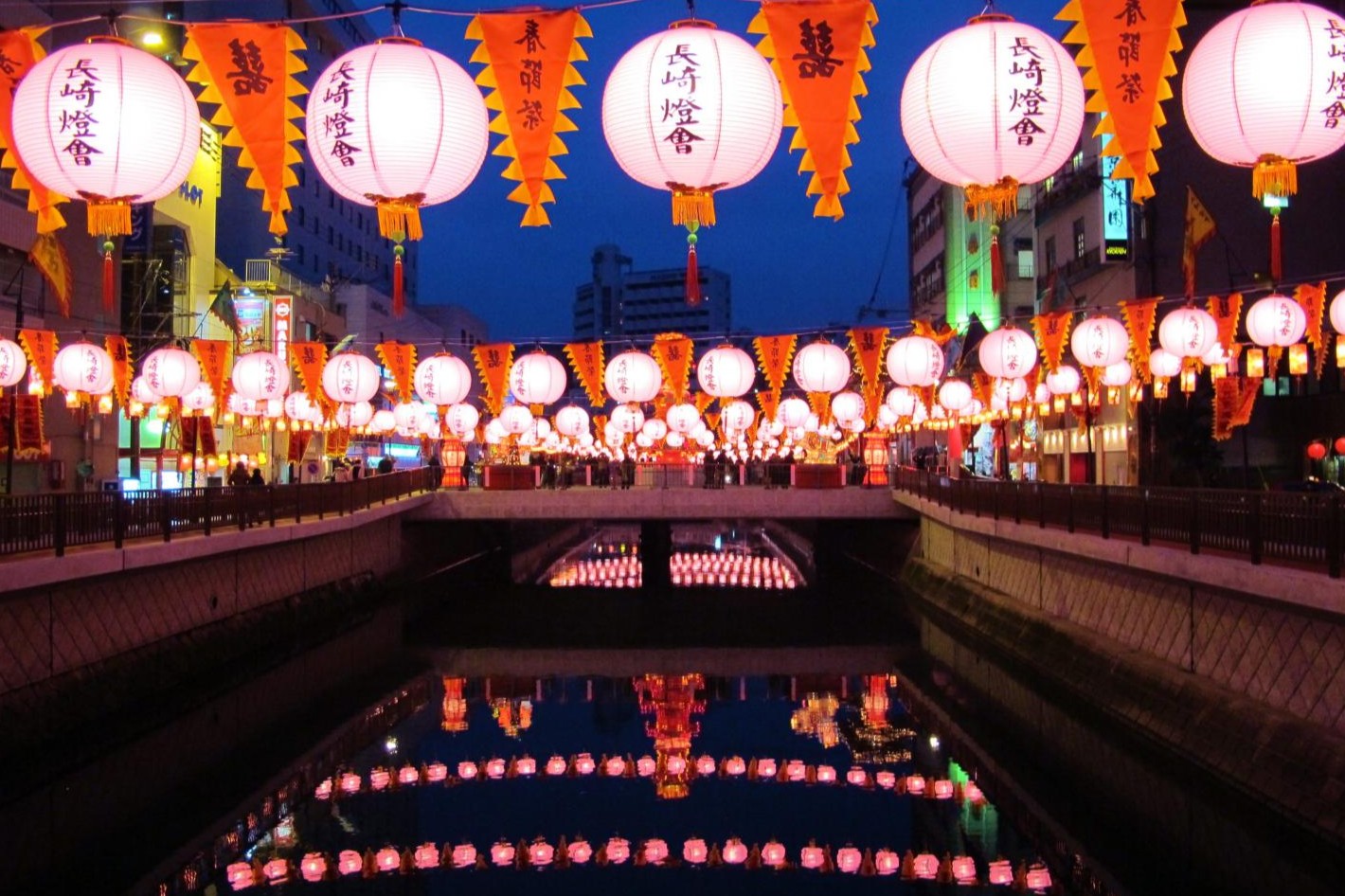
Additionally, the area along the Doza River, which flows in front of the Chinatown's North Gate (Genbu), is a popular viewing spot where you can see pink lanterns. Countless lanterns suspended over the water reflect on the surface, creating a romantic atmosphere.
● Chuo Park Venue
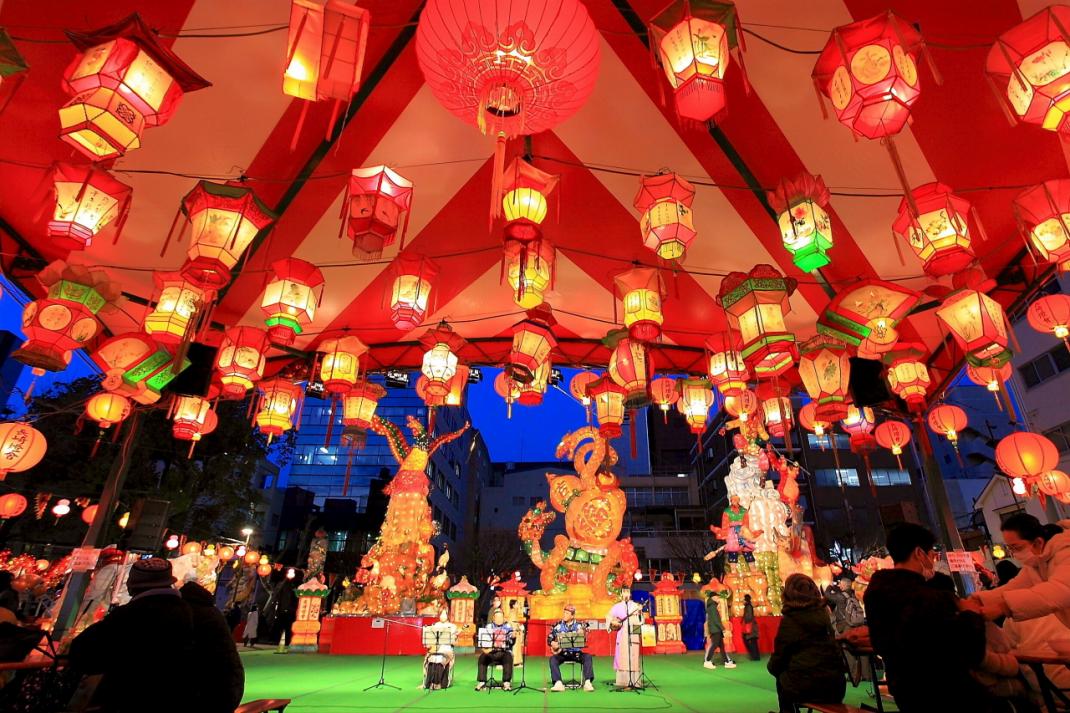
Like Minato Park, it hosts stage events at all times and you can also see the lighting ceremony, but it is said to be less crowded than the Shinchi Chinatown venue, allowing for a relatively relaxed viewing experience. It is also the only venue with tables and chairs set up on both sides of the runway, where you can enjoy freshly made food from stalls while watching the show in comfort.
A feature of this venue is the large number of animal-shaped lantern objects, and it is also famous for the "scary panda" lantern object, which became popular on social media for its "ugly-cute" appearance.
● Hamanmachi Venue
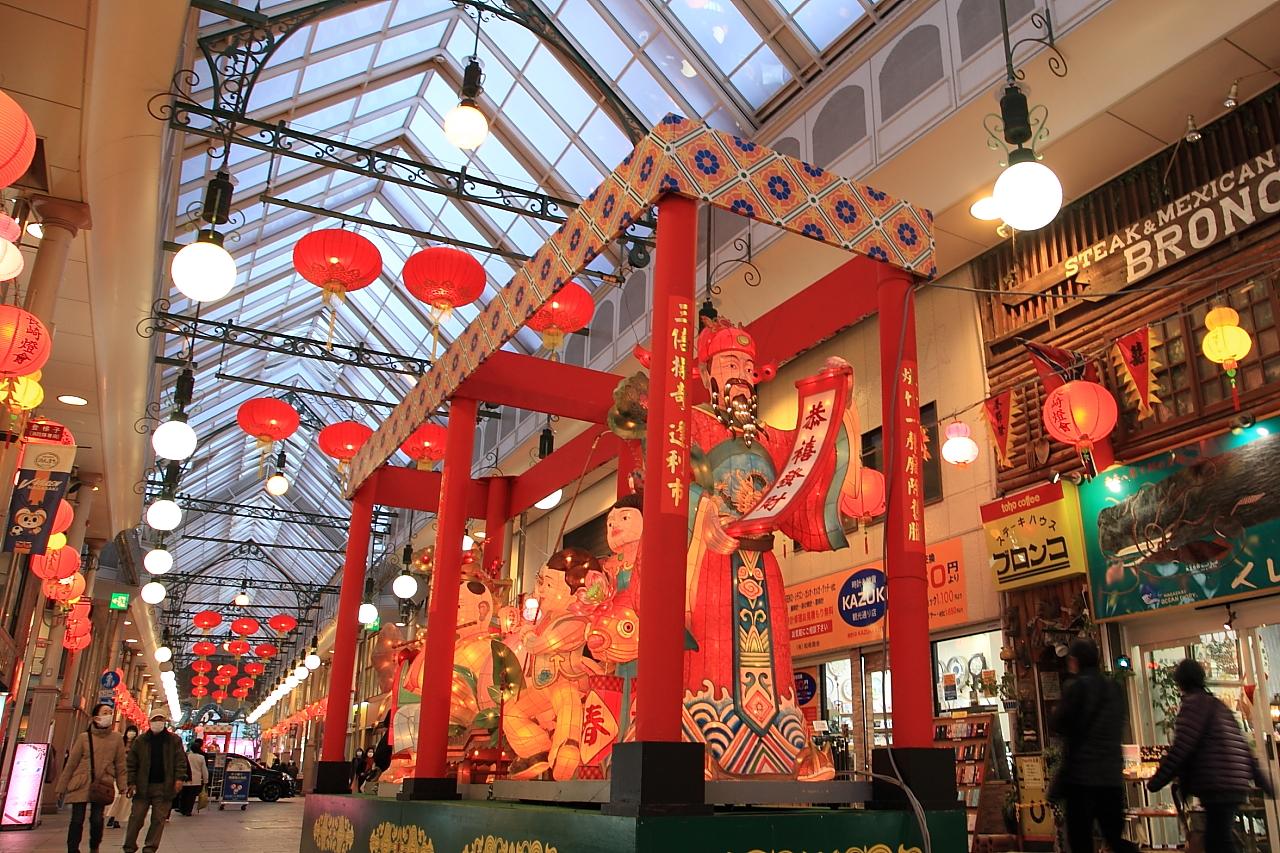
The Hamanmachi venue consists of two shopping arcades. One is the "Hamanmachi Arcade," a shopping street that stretches east to west and boasts the largest scale in Nagasaki City. The other is the "Bernard Kanko-dori," which intersects with it at a right angle and is approximately 300 meters long. In addition to the endless lanterns hanging from the ceiling, the objects and events are also well-received.
The Hamanmachi Arcade features many auspicious objects, making it a bustling photo spot.
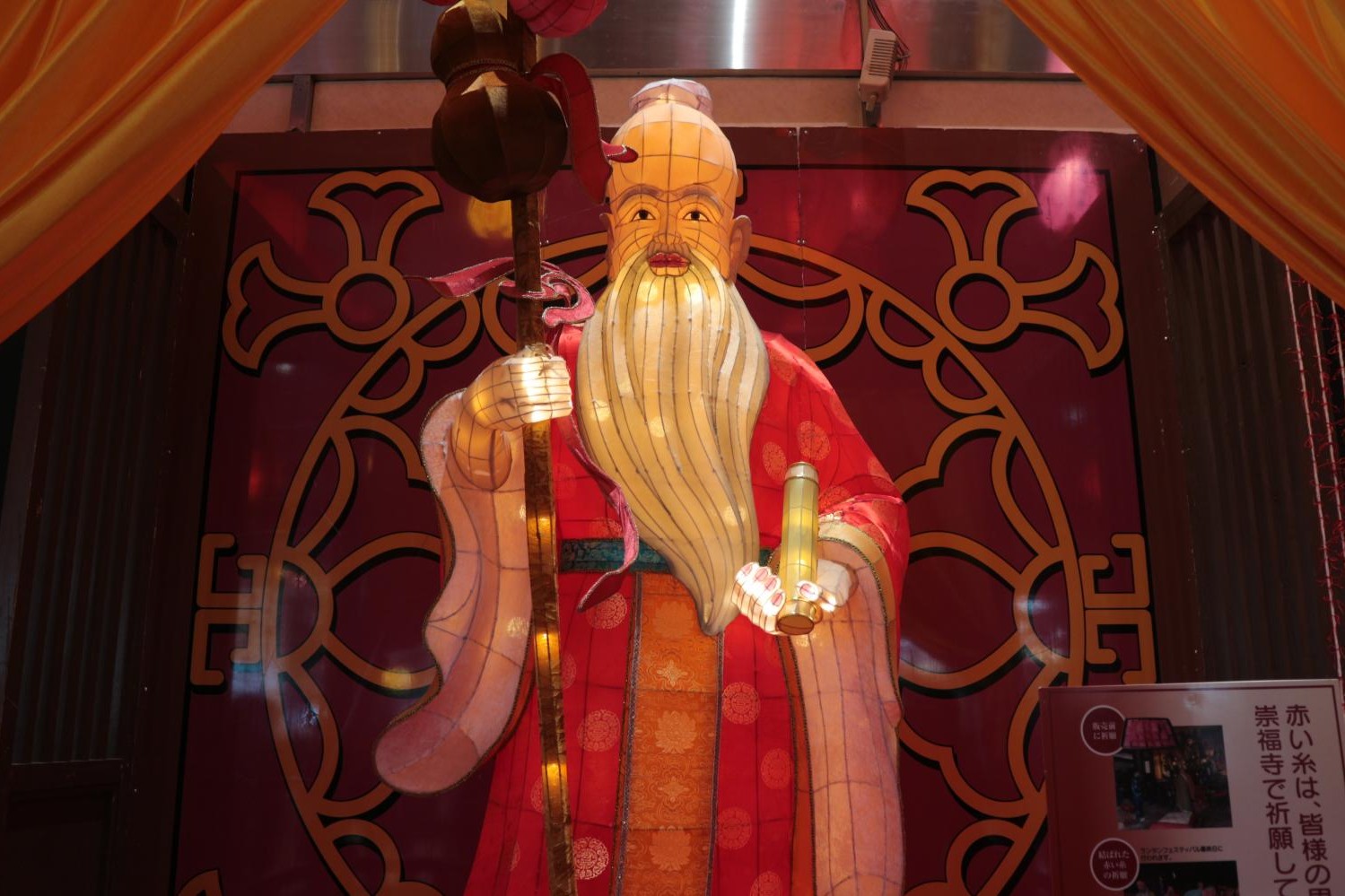
Meanwhile, the Bernard Kanko-dori features a lantern object of the god of matchmaking, "Gekka Rojin." You can tie a red string from a special festival amulet to it and pray for the fulfillment of your love. Adjacent to this is a special prayer site called "Nagasaki Koi Lantern." Here, you can write your wishes on a "Kien-hai" (prayer plaque) attached to a mini lantern and dedicate it. The red strings and prayer plaques are said to be ritually burned at a later date.
▼Prayer for Love Fulfillment
Date and Time: Available throughout the festival period. Sales hours for amulets, etc.: "Gekka Rojin" 24 hours, "Nagasaki Koi Lantern" 13:00–19:00 (10:00– on Saturdays, Sundays, and holidays)
Location: In front of "Komeda's Coffee Nagasaki Hamanmachi Store" on Bernard Kanko-dori (near 3-20 Hamanmachi, Nagasaki City, Nagasaki Prefecture)
Fees: "Gekka Rojin" red string amulet 100 yen (includes red string), "Nagasaki Koi Lantern" love lantern (prayer plaque) 1,000 yen
https://www.at-nagasaki.jp/lantern-festival
● Tojin Yashiki Venue

Tojin Yashiki was a residential area for Chinese people established in Nagasaki during the period of national isolation to prevent smuggling. Only four halls remain today, making it a precious spot that conveys the atmosphere of the past. The combination of nostalgic streets and warm lanterns creates a unique ambiance.
● Nakashimagawa Park Venue
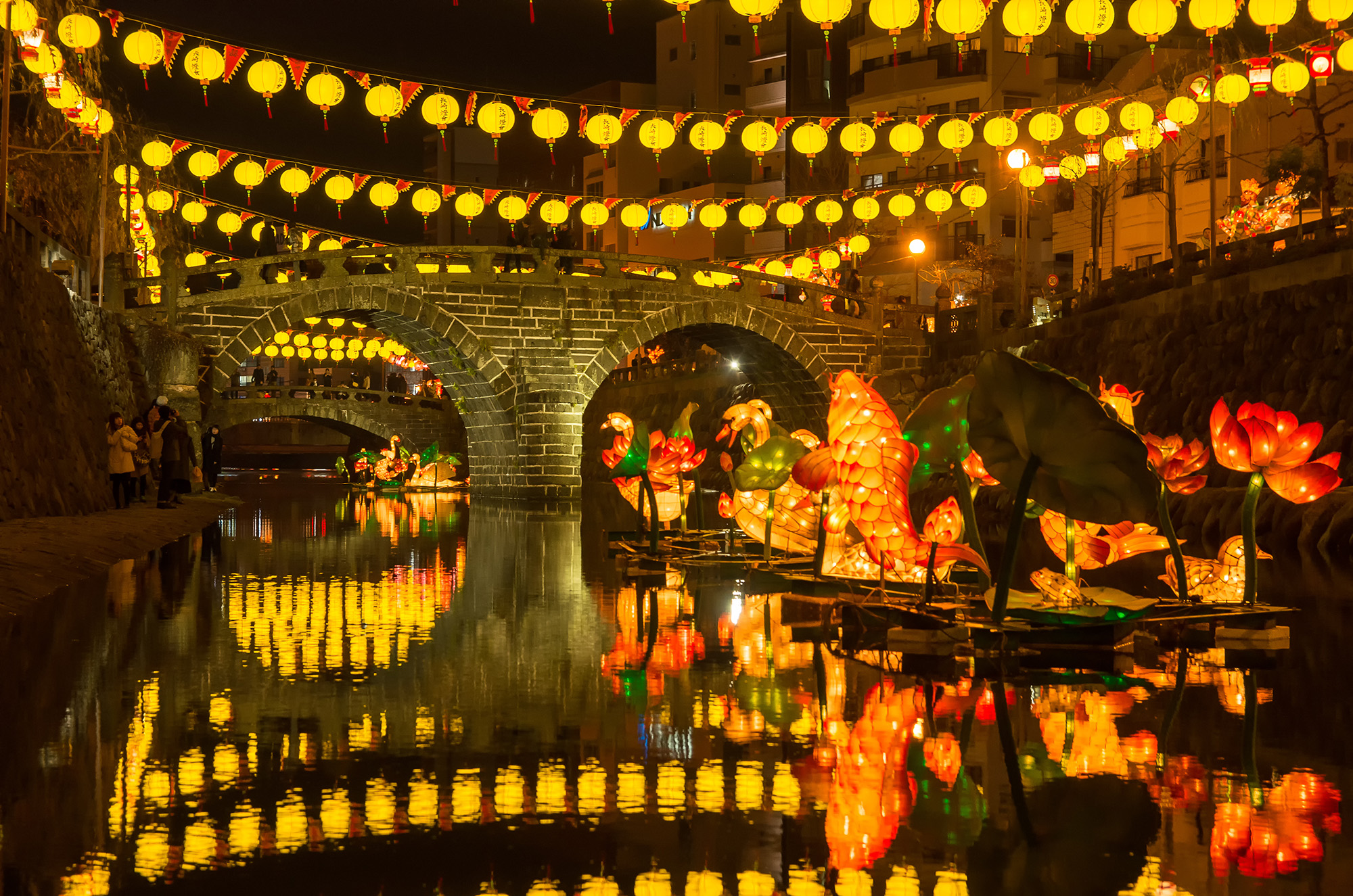
A place of relaxation for citizens stretching along the banks of the Nakashima River. The vibrant yellow lanterns decorating the riverbank catch the eye. The area around the famous tourist spot, Meganebashi (Spectacles Bridge), is particularly photogenic. Lantern objects featuring flowers and animals float near the arched bridge, and the countless lanterns decorating the sky above reflect on the water's surface, adding even more splendor. When the water level is low, you can go down to the water's edge and enjoy a stroll while enveloped in the glow of the lanterns.
3. Plenty of dramatic events filled with Chinese culture

Along with the lanterns, another highlight of the festival is the stage events held at three venues: Shinchi Chinatown, Chuo Park, and Tojin Yashiki. Every day, spectacular traditional Chinese performing arts are showcased, including erhu performances, Shaolin Kung Fu, the "Ja Odori" (Dragon Dance) where over a dozen people manipulate a giant dragon puppet, and the "Face-Changing Show" where performers switch masks in an instant.
The event hours are generally from around 17:00 on weekdays, and from around noon on Saturdays, Sundays, and holidays, lasting until around 20:00 in the evening. No reservations or admission fees are required for any of the venues, and you are free to come and go as you please. The Chuo Park venue, in particular, is popular for allowing visitors to enjoy street food while watching the performances from the eat-in area.
There are also parades on weekends, so it is a good idea to check the schedule for the performances you want to see on the official website in advance.
▼"2026 Nagasaki Lantern Festival" Event Schedule & Parade Route
● Emperor Parade
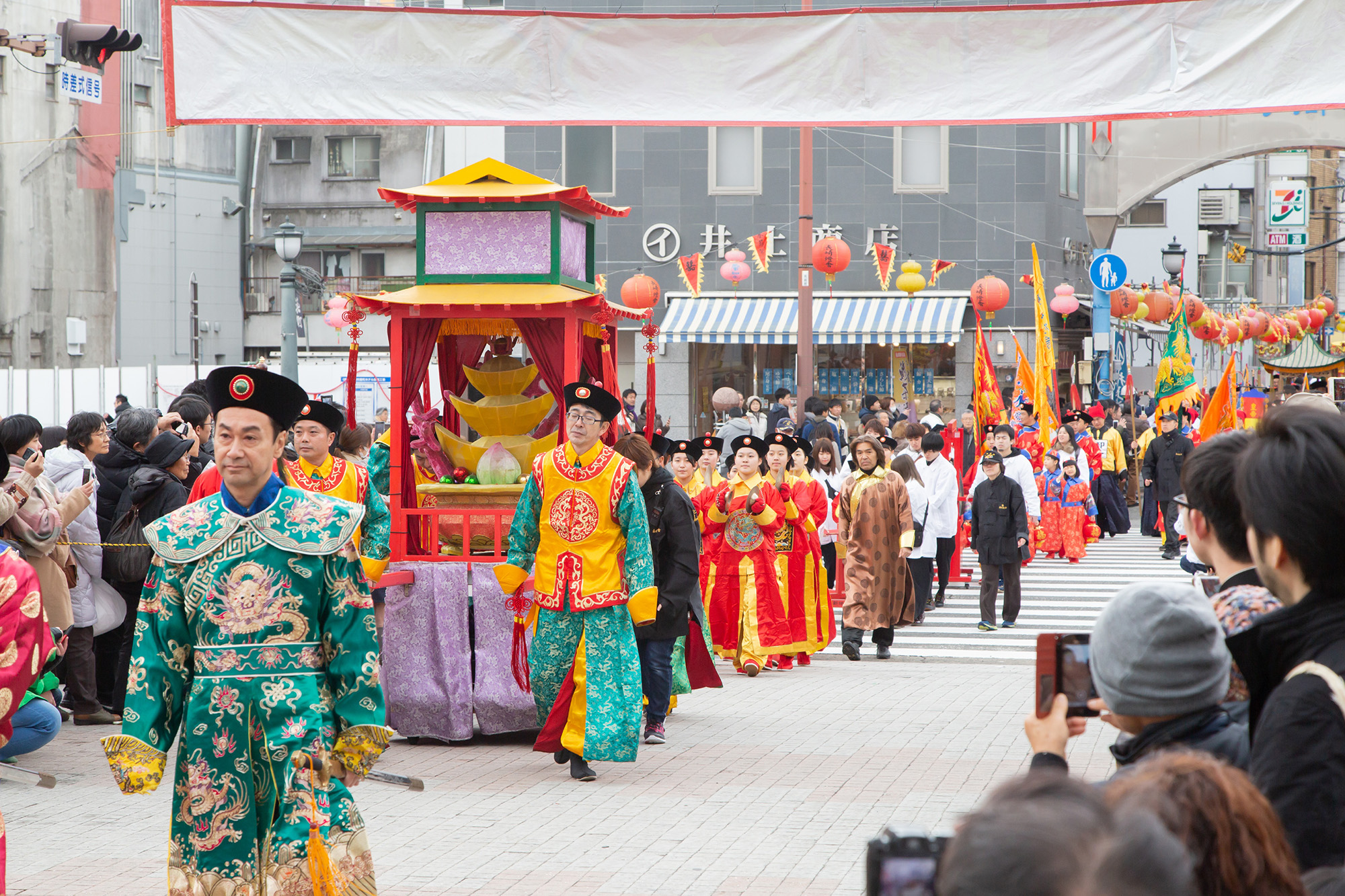
This parade is inspired by the New Year celebrations of the Qing Dynasty, where the Emperor and Empress would go out into the town to celebrate the New Year with the people. Centered around the palanquins of the Emperor and Empress, a total of about 100 people march from the Chuo Park venue to the Shinchi Chinatown venue.
▼Schedule
February 14, 2026 (Sat)
14:00 Chuo Park Venue → 14:30 Hamanmachi Venue → 14:50 Kajiya-machi Street Venue → 15:30 Hamanmachi Venue → 16:00 Shinchi Chinatown Venue (Minato Park)
Saturday, February 21, 2026
14:00 Chuo Park Venue → 14:30 Hamanmachi Venue → 14:50 Kajiya-machi Street Venue → 15:30 Hamanmachi Venue → 16:00 Shinchi Chinatown Venue (Minato Park)
●Mazu Procession
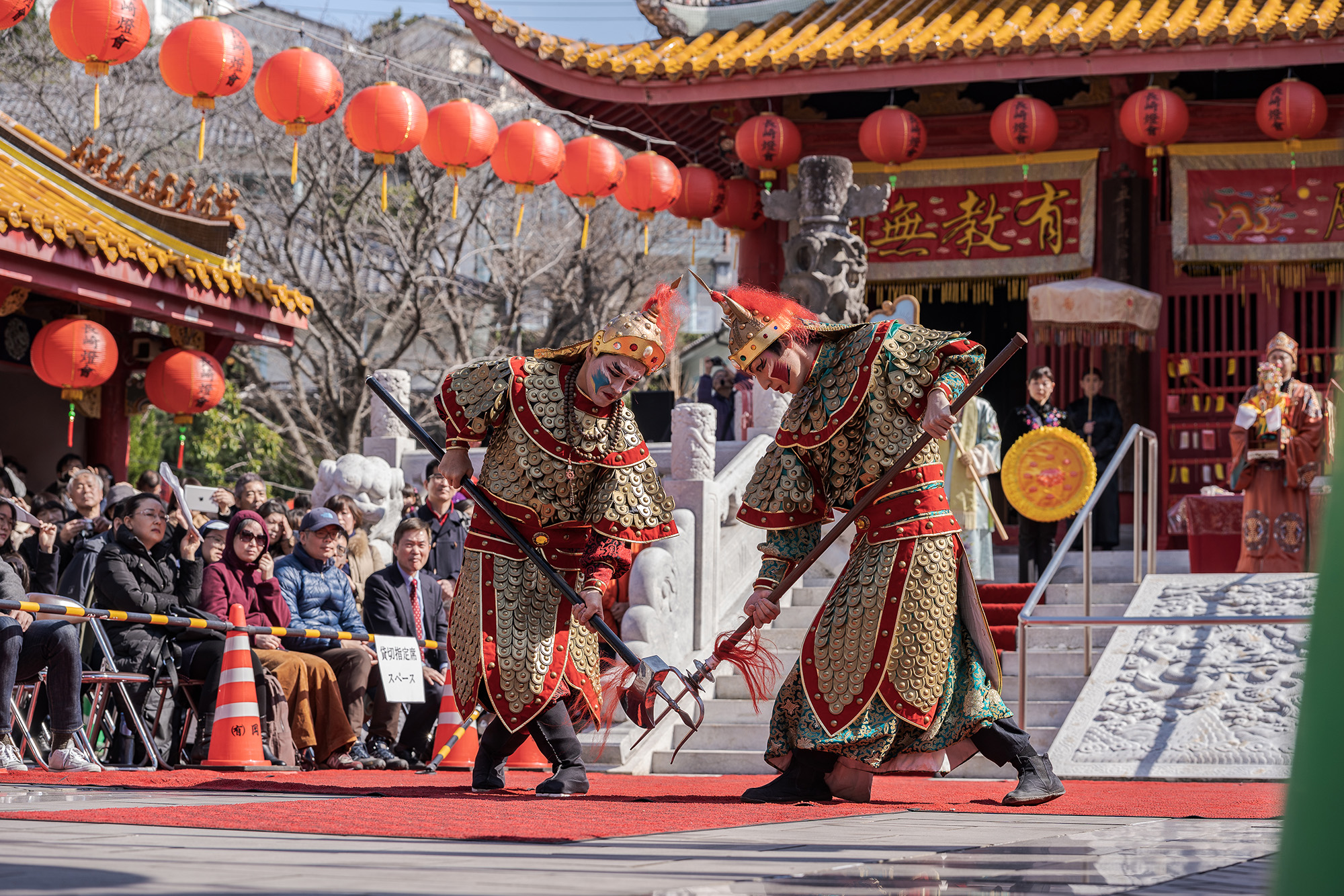
During the Edo period, sailors from Chinese ships would pray for safe voyages after entering Nagasaki Port. The Mazu Procession is an event that carries on this tradition. It recreates the scenes of "Bosage" (taking the goddess Mazu, the guardian of voyages, to be enshrined in a Mazu hall or Tenhodo hall at a Chinese temple) and "Bosanosse" (placing Mazu back onto the ship for the return voyage) over two days.
▼Schedule
Bosatsu-age
February 8, 2026 (Sun) 13:40 Tojin Yashiki Venue → 14:20 Shinchi Chinatown Venue (Minato Park) → 14:55 Hamanmachi Venue → 15:45 Chuo Park Venue (Arrival Ceremony)
Bosanosse
Sunday, February 15, 2026 13:15 Chuo Park Venue → 14:20 Hamanmachi Venue → 14:40 Shinchi Chinatown Venue (Minato Park) → 15:15 Tojin Yashiki Venue
●Candle Prayer Four-Temple Pilgrimage
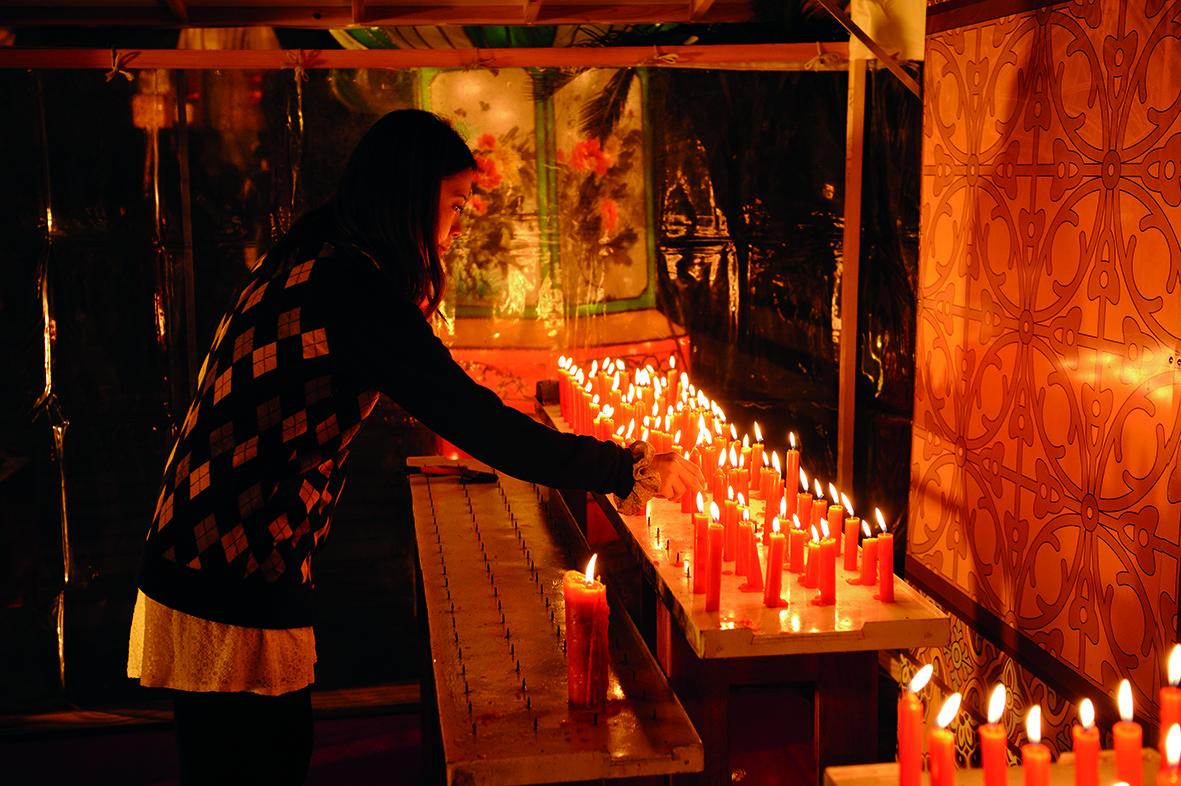
At the site of the Tojin Yashiki, once a settlement for Chinese merchants, a lantern stamp rally is held where participants go around lighting candles at the halls that served as spiritual sanctuaries for the Chinese residents. The four target halls are the Toshindo, Kannon-do, Tenko-do, and the Fukken Kaikan Tenko-do, and it is said that completing the rally will make your wishes come true.
Furthermore, the Toshindo is dedicated to a deity said to bring financial luck, the Kannon-do to business prosperity, and the Tenko-do and Fukken Kaikan Tenko-do to safe maritime travel.
▼Participation Overview
Date and Time: 11:00–21:00 during the event period (10:00– on Saturdays, Sundays, and holidays)
Participation Fee: 1,000 yen (includes a commemorative gift)
Reception: In front of the "Toshindo" (11:00–21:00)
●Dragon Dance
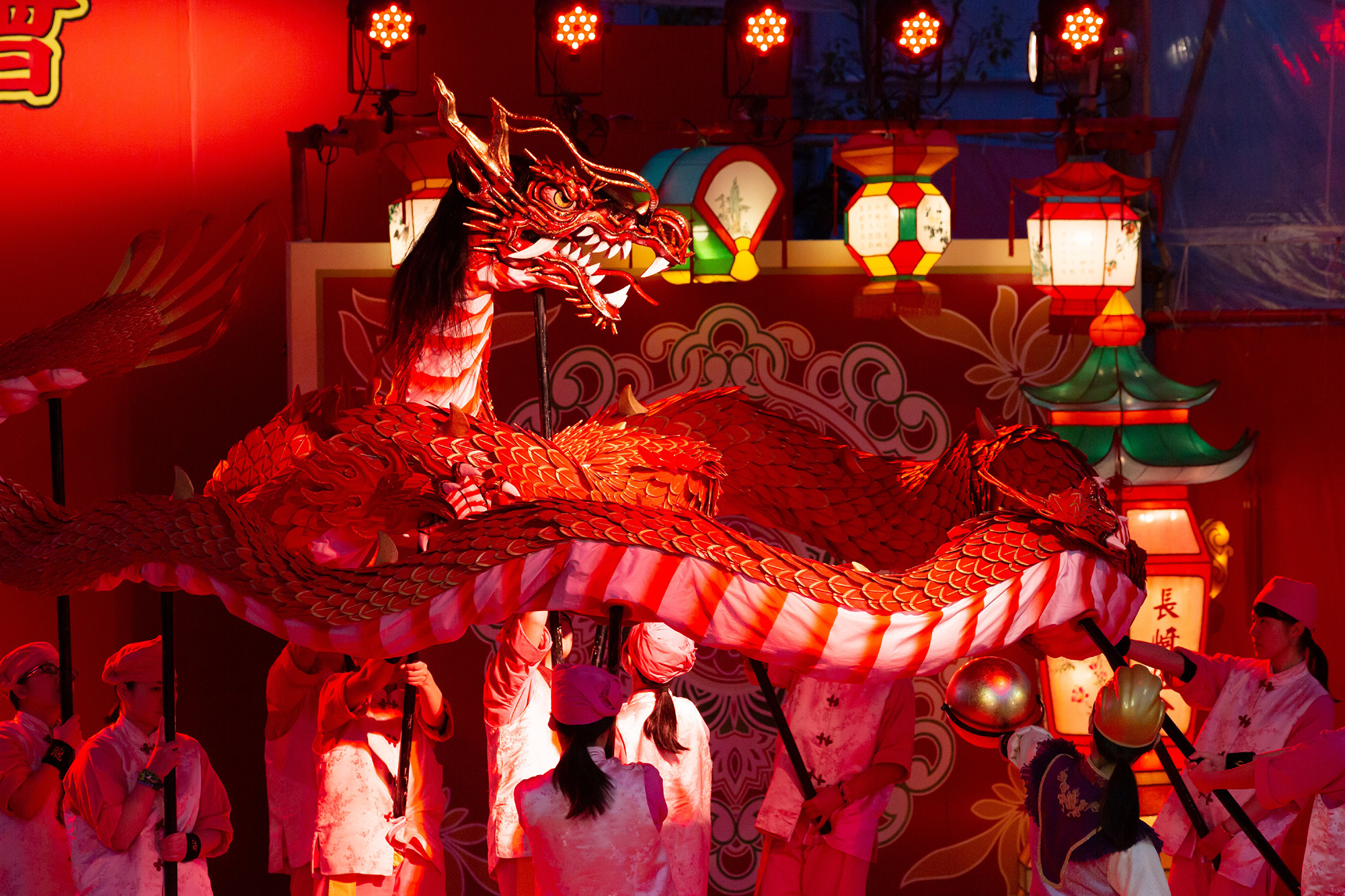
A classic show performed daily during the event at the Shinchi Chinatown venue (Minato Park) and the Chuo Park venue. Said to originate from Chinese rain-making rituals, performers dressed in traditional Chinese costumes manipulate the body of a giant dragon to pray for a bountiful harvest.
In the middle of the show, when the dragon tries to leave, it is customary for the audience to cheer and call for an encore in the Nagasaki dialect, shouting "Motte koi, motte koi!" (Bring it back, bring it back!). Join in with enthusiasm when the MC gives the signal.
Also, at the end of the show, the MC may call for volunteers from the audience to join in. While participation is limited to adults due to physical requirements, tourists from outside the prefecture are welcome to join, so why not give it a try as a memory of your trip?
▼Venues and Dates
Performed daily during the event at the Shinchi Chinatown Venue (Minato Park) and Chuo Park Venue.
*Performances last 20 minutes; start times vary by location and date. For details, please seeClick here
▼Drop-in Participation
Date and Time: During the Dragon Dance performance times on Mondays to Thursdays during the event period (excluding holidays) *May not be held due to circumstances
Participation Fee: Free
Number of Participants: Approximately 15 people per stage, first-come, first-served by raising hands
Participation Requirements: Tourists from outside Nagasaki Prefecture (high school students and older recommended)
●Chinese Face-Changing Show
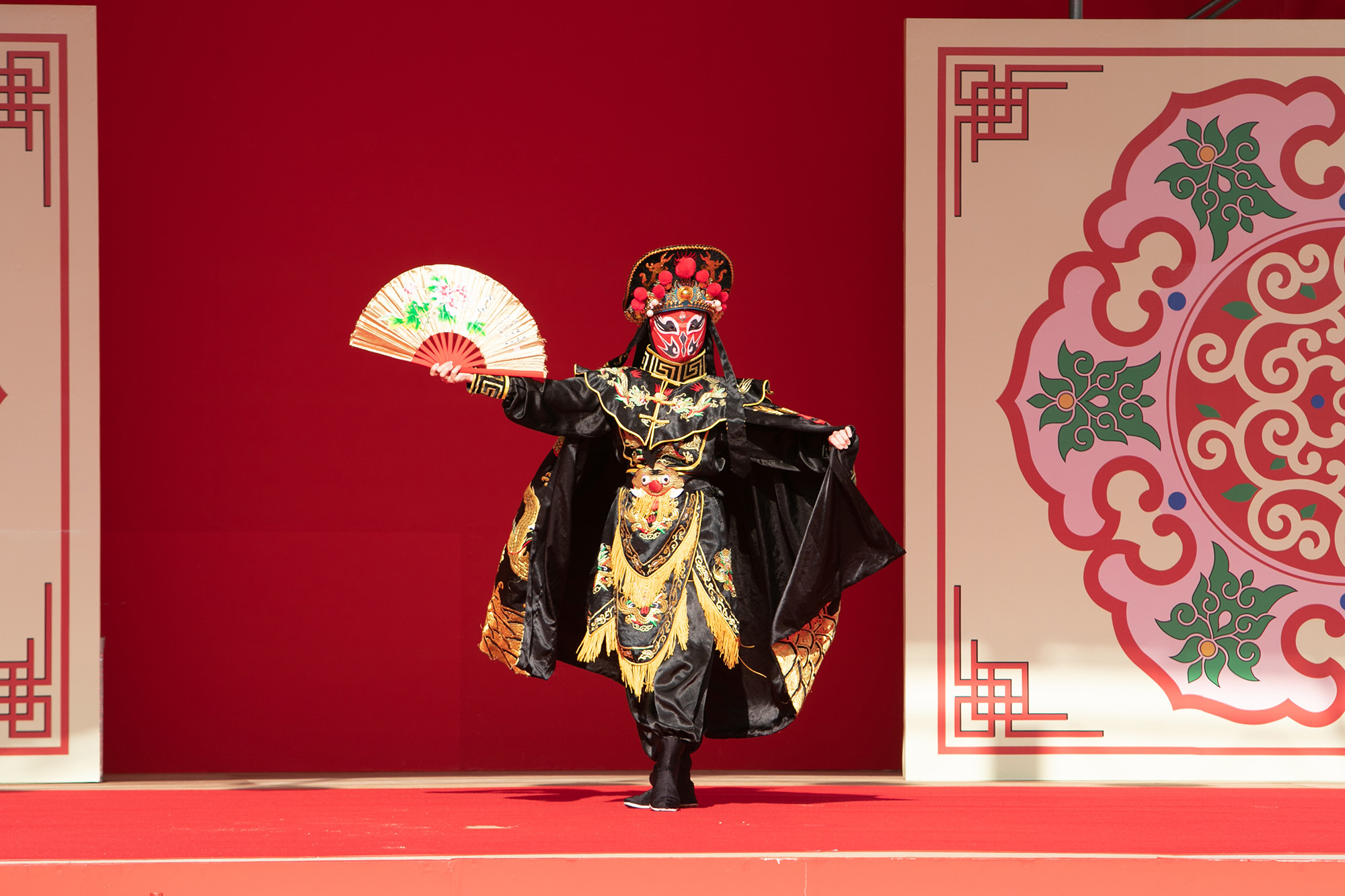
A popular traditional Chinese performance where masks worn on the face are swapped one after another with lightning speed. This technique originates from the classical Sichuan opera "Bian Lian" (Face Changing) and is said to be treated as a state secret in China. The masks represent men, women, and animal deities; pay attention to the differences in expression that match each mask.
▼Venues and Dates
・Shinchi Chinatown Venue (Minato Park)
February 7 (Sat), 15 (Sun), 21 (Sat), and 23 (Mon/Holiday), 2026
・Chuo Park Venue
Saturdays, Sundays, and holidays during the event period (excluding February 11 (Wed/Holiday)).
*Performances last 15 minutes; start times vary by date. For details, please seeClick here.
*Subject to change, interruption, or cancellation due to weather or other circumstances.
●Nagasaki Night View Lanterns
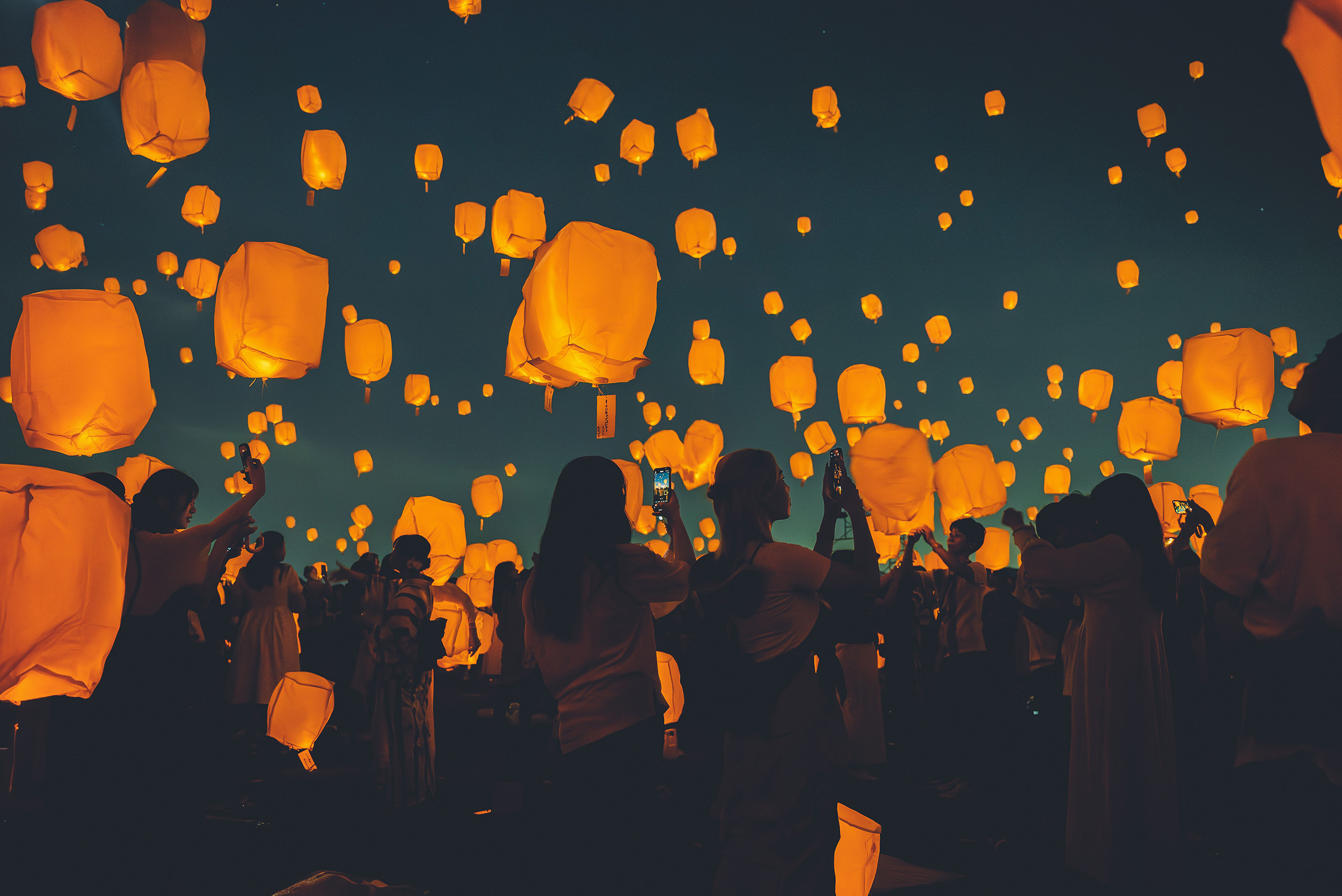
A one-day-only premium event. Following the release countdown ceremony starting at 5:30 PM, participants will release lanterns carrying their wishes into the night sky all at once from 6:30 PM. You can experience a magical world where 300 lanterns illuminate the dark night.
▼Event Overview
Location: Former Site of Nagasaki Prefectural Office (2-2 Edo-machi, Nagasaki City, Nagasaki Prefecture)
Date and Time: February 7, 2026 (Sat) from 17:30 (Gathering/Reception at 17:00)
Participation Fee: 3,000 yen per unit
Capacity: First 300 people
How to Participate: Reservations required via the Nagasaki tourism service app "STLOCAL"
Note: May be suspended or cancelled in case of severe weather
4. How to enjoy the light-up time
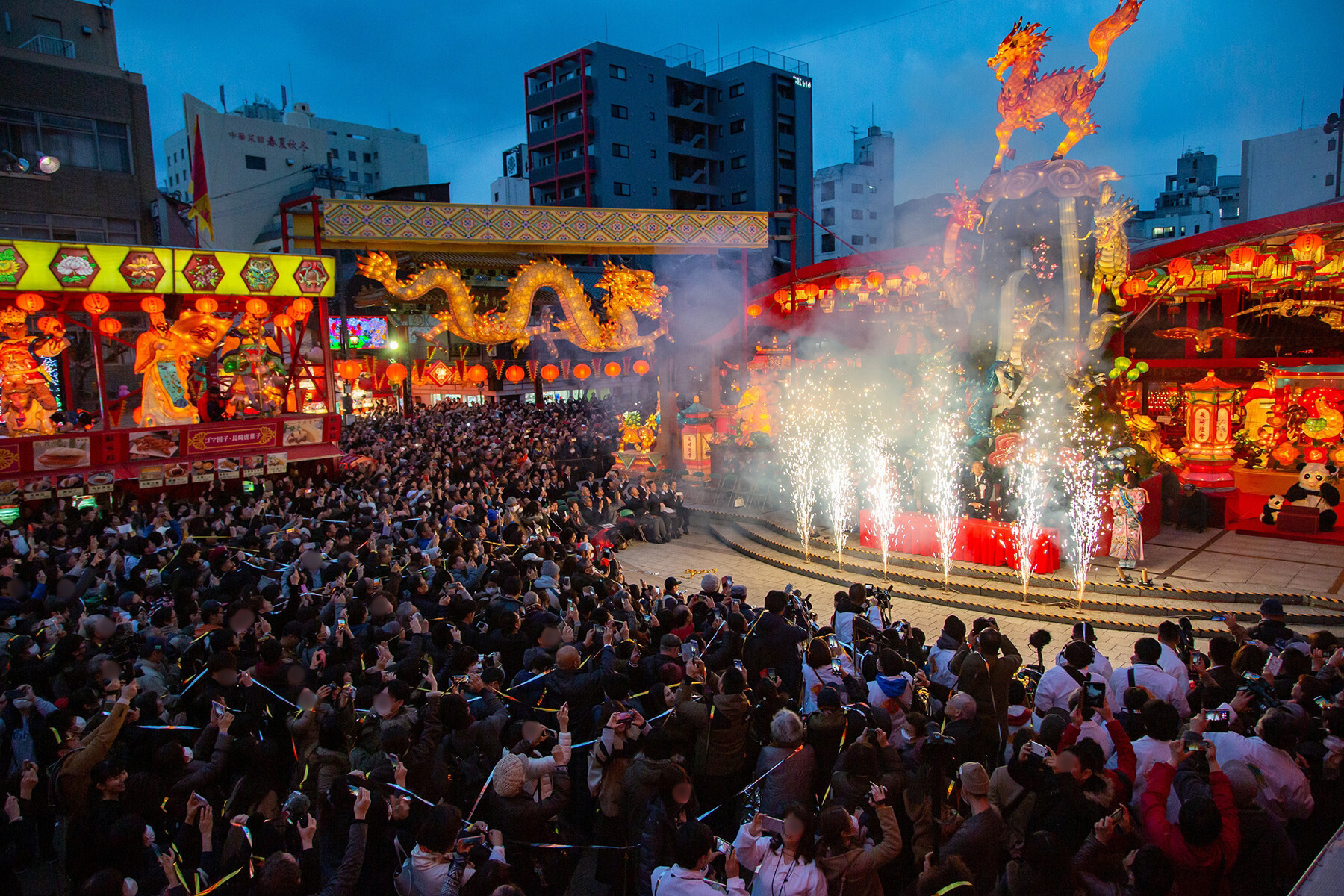
On the first day of the festival (around 5:30 PM on the first Friday of February), lighting ceremonies will be held at two venues: Shinchi Chinatown (Minato Park) and Chuo Park, with a countdown leading up to the 6:00 PM lighting time. As the lanterns and countless objects begin to emit brilliant colors, the Nagasaki Lantern Festival officially begins. The sound of firecrackers echoes, and loud cheers rise from the venue.
Also, for 30 minutes after sunset,it is the twilight hour when the cobalt blue sky and the lantern objects weave a beautiful contrast.Since it is the best time for photography, be sure to capture a memorable shot.
When sightseeing, a tip to boost the festival mood is to walk around with a handheld lantern in one hand. Handheld lanterns are available by reservation only in limited quantities, and you can choose from red for health and safety, pink for love, and yellow for financial luck.
▼Lighting Ceremony
February 6, 2026 (Fri)
Shinchi Chinatown Venue (Minato Park) 17:40–18:00, Chuo Park Venue 17:30–18:00, Simultaneous Lighting 18:00
▼Lighting Time
Friday, February 6, 2026, 18:00–22:00
Saturday, February 7 – Monday, February 23 (National Holiday), 17:00*–22:00 (until 21:00 on the final day)
*From 12:00 at the Shinchi Chinatown and Hamanmachi venues
*Lighting may be changed, interrupted, or canceled due to weather or other circumstances.
▼Handheld Lantern
・Price: 1,400 yen
・How to Purchase: Reservations required via the Nagasaki tourism service app "STLOCAL"
5. Check out the famous "Jigemon" street food of Nagasaki

The Minato Park and Chuo Park venues in the Shinchi Chinatown area are lined with food stalls where you can enjoy Chinese menu items like pan-fried xiaolongbao and lu rou fan, as well as "jigemon," which refers to local Nagasaki food.
"Jaga-chan," made by steaming whole potatoes from Nagasaki Prefecture, coating them in a secret batter, and deep-frying them, is a classic jigemon snack. There are also jigemon gourmet items born from "Shippoku" cuisine, a banquet style originating in Nagasaki, such as the "Kakuni Manju" (braised pork belly bun) from "Iwasaki Honpo," which is a twist on Dongpo pork. Additionally, the fried snack "Mahua" from "Soshurin" in Chinatown is a local specialty. Known affectionately in Nagasaki as "Yoriyori," chocolate-covered versions are also sold for a limited time during the Lantern Festival.
Be sure to enjoy the unique gourmet food of Nagasaki along with the Lantern Festival.
*Some items may not be sold in certain years.
・Shinchi Chinatown Venue (Minato Park) 16:00–21:00 (11:00– on Saturdays, Sundays, and holidays)
・Chuo Park Venue: 17:00–21:00 (11:00– on Saturdays, Sundays, and holidays)
- Nagasaki Lantern Festival
-
 There are 5 venues hosted by Nagasaki City (Shinchi Chinatown Venue, Chuo Park Venue, Hamanmachi Venue, Nakashimagawa Park Venue, and Tojin Yashiki Venue). Other locations throughout central Nagasaki City.
 February 6 (Fri) – 23 (Mon/Holiday), 2026 *Held for 17 days starting from the first Friday of February every year. However, in 2026, it will be 18 days because the day after the final day is a public holiday.
 095-822-8888 (Nagasaki City Call Center "Ajisai Call")
 During the festival, traffic restrictions will be in place near the Shinchi Bridge Plaza; on Fridays, Saturdays, Sundays, and holidays, parts of Fukken-dori Street will be restricted; and during the Saturday and Sunday parades, restrictions will be in place near Nagasaki Shinchi Chinatown, parts of Motofurukawa-dori Street, and near Chuo Park.
*Events are subject to change, suspension, or cancellation due to weather or other circumstances.
Visit "Kai Unzen," a hot spring inn enveloped in the Nagasaki culture woven by Japanese, Chinese, and Dutch influences
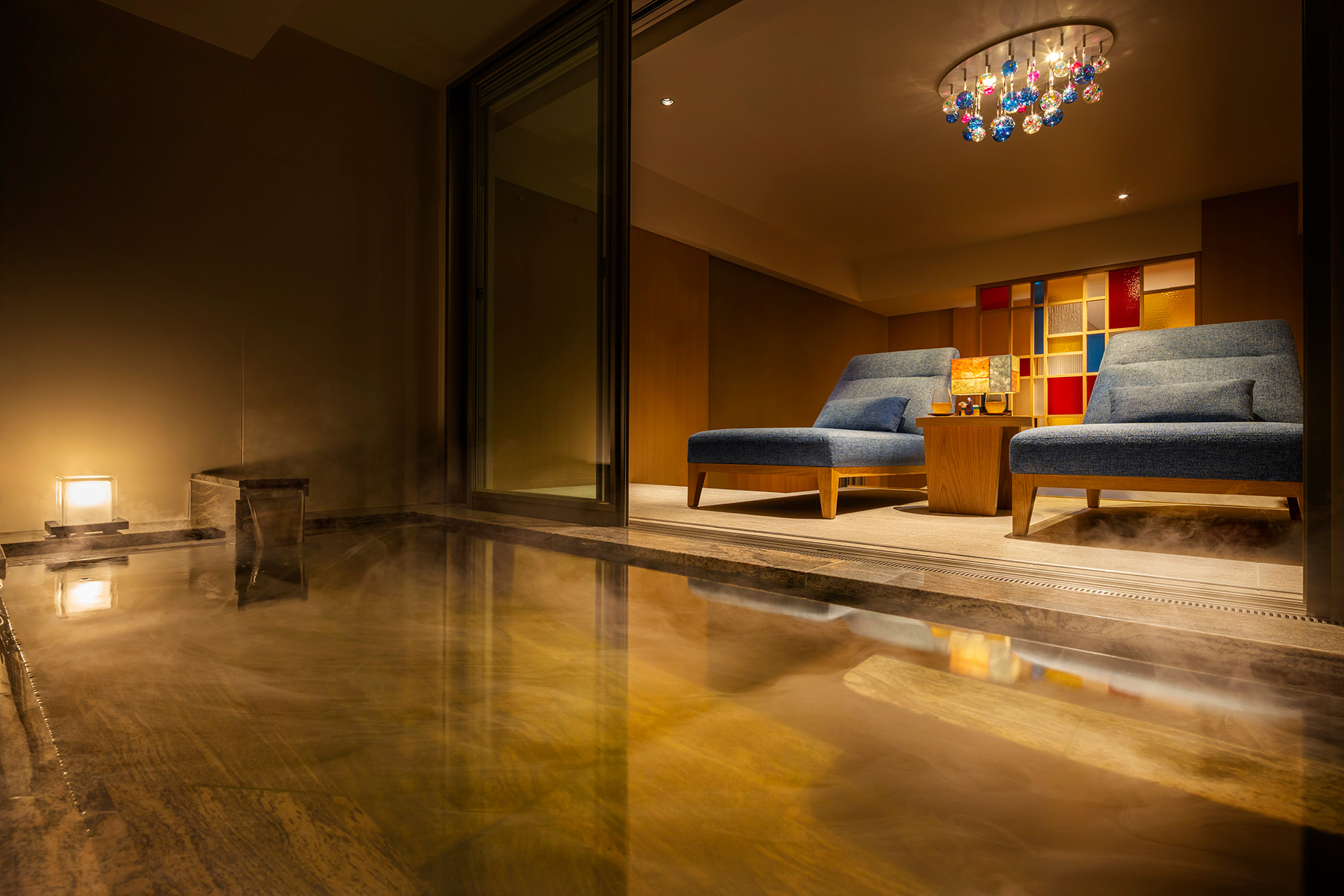
After enjoying an exotic night at the Nagasaki Lantern Festival, carry that lingering feeling with you on a one-hour drive to KAI Unzen, nestled in the heart of Unzen Onsen.
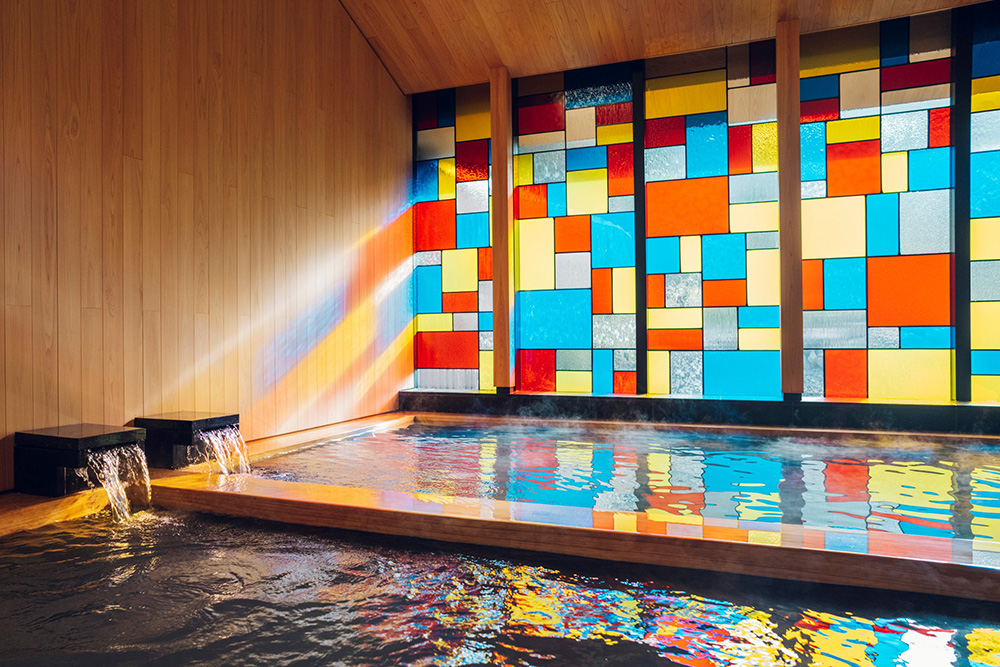
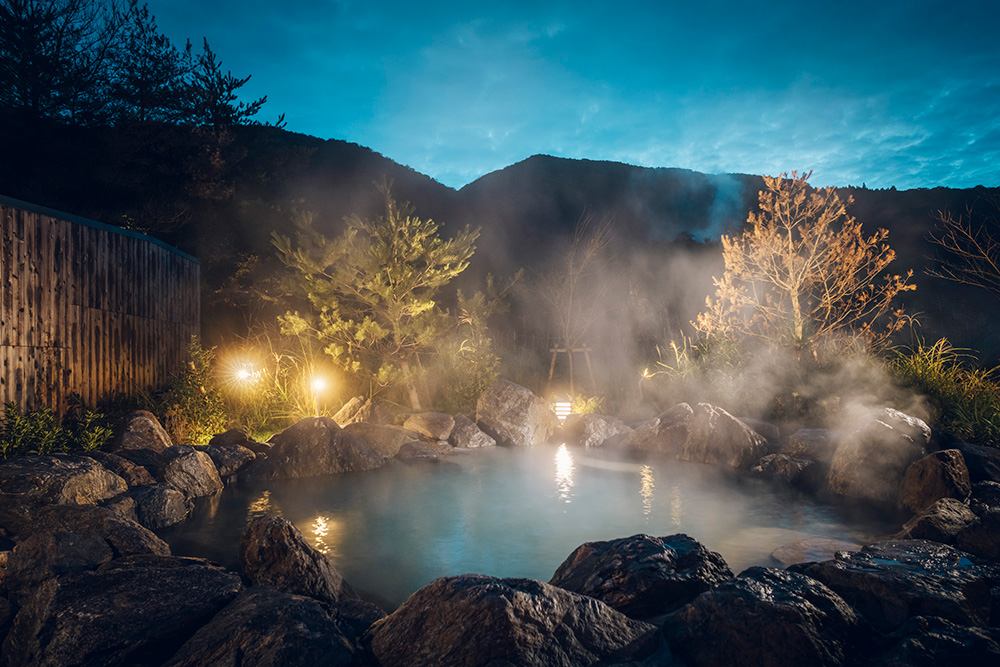
Surrender yourself to a space filled with the exotic atmosphere woven by Japanese, Chinese, and Dutch influences, and spend a blissful moment savoring the experience with all five senses as you immerse yourself in the hot springs sourced from the Unzen Jigoku and the culture of Nagasaki.

Local supporter in charge of this article
KAI Unzen
Unzen Onsen, Nagasaki Prefecture
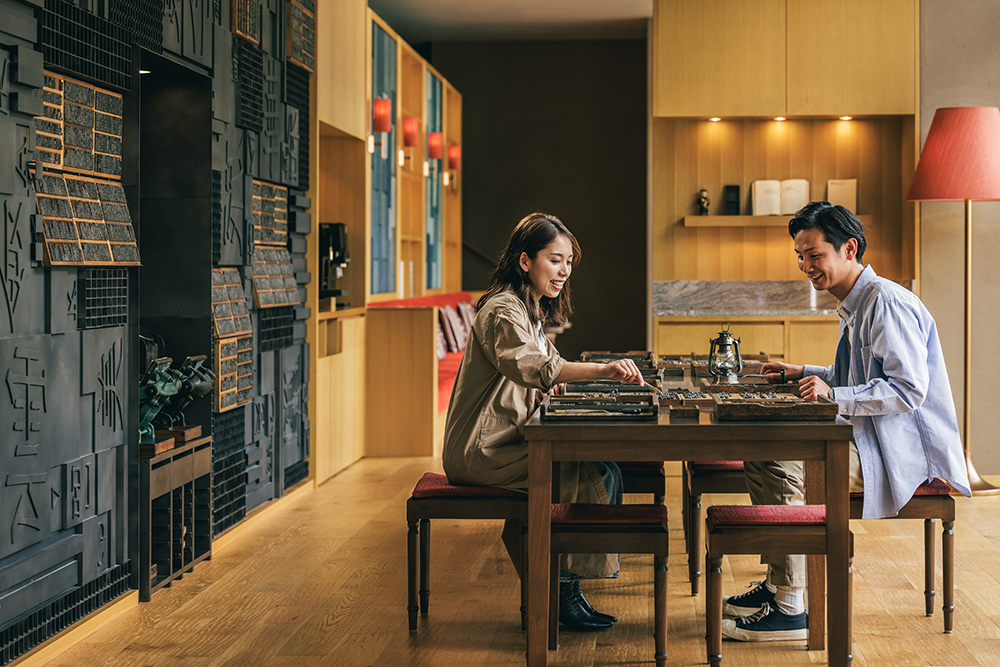
The interior, designed with culture originating from Nagasaki, exudes an exotic atmosphere. As the inn is connected to the hot spring hells, you can spend time here feeling both healed and revitalized.

Access Approx. 75 minutes by shuttle bus from JR Nagasaki Station, or approx. 50 minutes by shuttle bus from JR Isahaya Station.
- Accommodation rate example
- Per person per night From ¥17,000