





Recommended walking course in Atami: Touring the historic "Atami Seven Hot Springs"
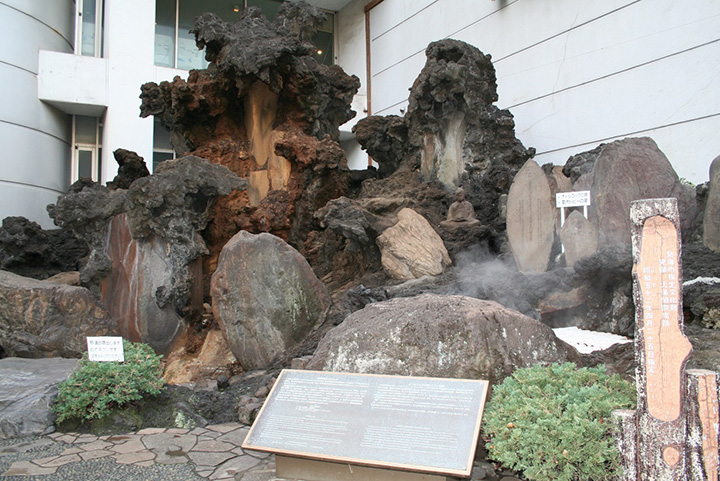
Atami, which has developed as a place for hot spring cures, is dotted with landmarks throughout the town that convey the history of its hot springs. Among them, the hot spring source spots are highly recommended. Although you cannot bathe in them, they are located within a 20-minute walk from Atami Station, making them easy to visit while strolling. Here, we introduce the 'Atami Nanayu' (Atami's Seven Hot Springs), a recommended walking course in Atami, in an order that is easy to follow.
1Oyu Geyser
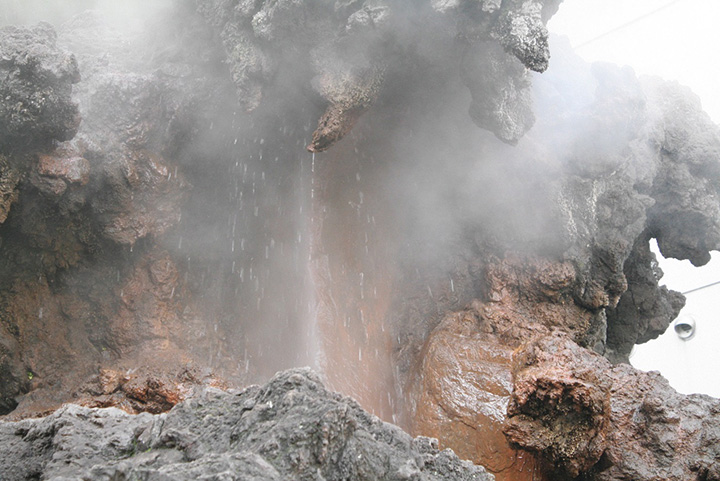
The 'Oyu Geyser' (*), which represents the Atami Nanayu, is located about a 20-minute walk from Atami Station, in a side street next to the Atami New Fujiya Hotel Annex.
It is said that in the past, it used to erupt with hot water and steam with such intense shaking that people would mistake it for an earthquake. In recent years, however, the eruptions have gradually weakened, and it is now maintained and preserved as a cultural property designated by Atami City, with a mechanism that artificially sprays hot water. You can still feel a glimpse of the past from the way the hot water erupts violently about once every four minutes.
*Geyser: A hot spring that periodically erupts with hot water and gas at regular intervals.

Local
Supporter
There is also a monument to the "birthplace of long-distance telephone service," as well as a monument to Sir Rutherford Alcock, the first British Minister to Japan, and the tombstone of his beloved dog, Toby.
Yunomae Shrine, guardian of Atami Onsen
Very close to the 'Oyu Geyser' is 'Yuzen Shrine.' The shrine has a history of being built to enshrine a deity after a divine revelation stated that 'there is a hot spring that has the effect of curing illnesses,' and it protects the hot springs of Atami. It is recommended to start your tour of the seven hot springs after paying your respects at Yuzen Shrine.
- Oyu Geyser
-
 3 Kamishuku-cho, Atami City, Shizuoka Prefecture MAP
 Approx. 20-minute walk from Atami Station
 Approx. 20-minute ride on the Yu-Yu Bus from Atami Station, get off at "Oyu Kanketsusen" and walk for approx. 3 minutes
 0577-86-6231 (Atami City Lifelong Learning Division, Cultural Facilities Office)
2Sajiro no Yu / Me no Yu
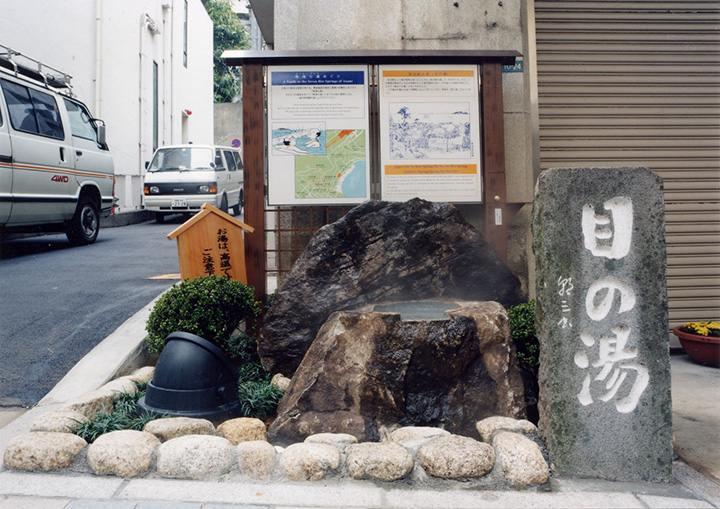
Located within the 'Ginza Shopping Street,' which is lined with amusement arcades, shops, and cafes that retain a Showa-era atmosphere, is 'Sajiro no Yu.'
It was named after a person named Sajiro, as it was once located within his residence, but it was also called 'Shinkado no Yu' because it was owned by a ryokan called 'Shinkado Ryokan' during the Meiji era.
Additionally, it was also known as 'Me no Yu' (Eye Hot Spring) because it was said to have medicinal benefits for eye diseases. It is a hot spring source whose name has changed over the eras.
Local
Supporter
Given that the name "Me-no-yu" (Eye Hot Spring) remains, perhaps this spring also saved many people.
- Sajiro-no-yu (Me-no-yu)
-
- Ginza-cho (Ginza-dori), Atami City, Shizuoka Prefecture MAP
- Approx. 20-minute walk from Atami Station
- 0557-86-6218 (Atami City Urban Development Division, Park and Green Space Office)
3Kawarayu
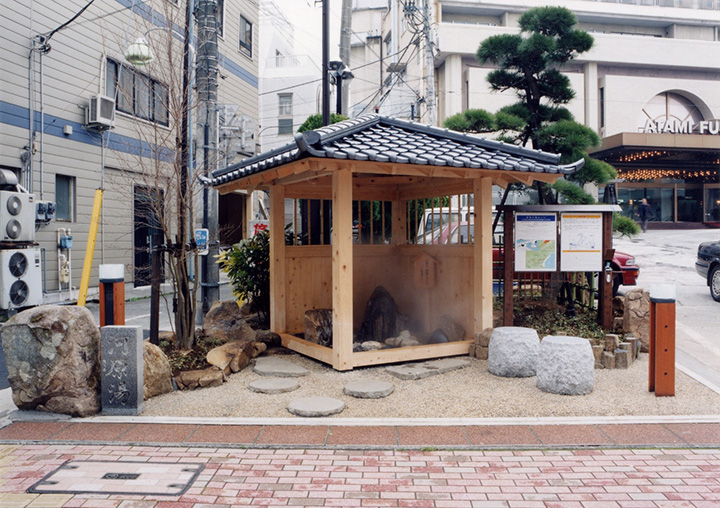
Located very close to Sun Beach, the beach that represents Atami and attracts many swimmers in the summer, is Kawaharayu. In the past, this area was a riverbank called Higashihama, and it was loved as the only bathing place where villagers could bathe freely. It is said that it was called "Kawarayu" (tile bath) because the roof of the bathroom was tiled.
Kawaharayu is located closest to the sea among the seven hot springs. Perhaps because of this, it contains a very high salt content, and it is said that the water would turn cloudy white when you bathed in it.
Local
Supporter
It has now been restored and, just as in the past, is covered by a tiled roof.
4Seizaemon no Yu
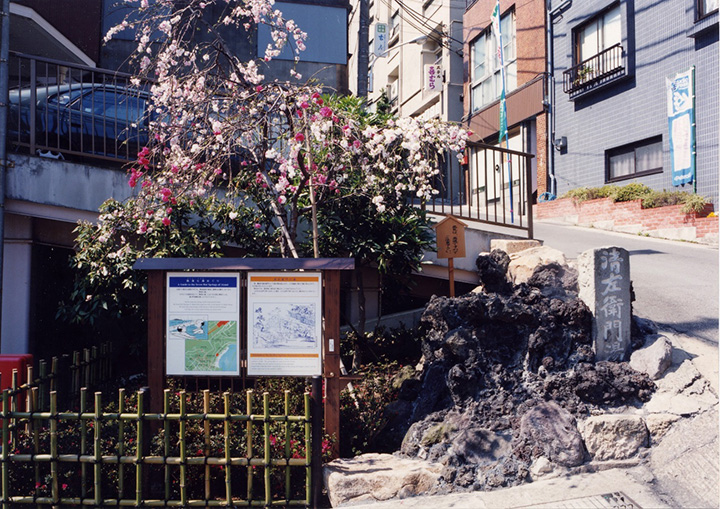
Seizaemon-no-yu springs up in front of Furuya Ryokan, a long-established inn founded in 1806. Furuya Ryokan still uses water from this source today.
It is said that it came to be called "Seizaemon-no-yu" because a farmer named Seizaemon fell into the hot spring basin and died while riding a horse long ago.
There is a mysterious legend about this source that says, "The way the water gushes out changes depending on how loudly you call out Seizaemon's name."
Local
Supporter
It is said that until the Meiji era, this spring gushed forth day and night without ever ceasing.
- Seizaemon-no-yu
-
- 1 Higashikaigan-cho, Atami City, Shizuoka Prefecture MAP
- Approx. 20-minute walk from Atami Station
- Take the Yu-Yu Bus from Atami Station, get off at "Sun Beach," and walk for about 3 minutes.
- 0557-86-6218 (Atami City Urban Development Division, Park and Green Space Office)
5Furo no Yu / Mizu no Yu
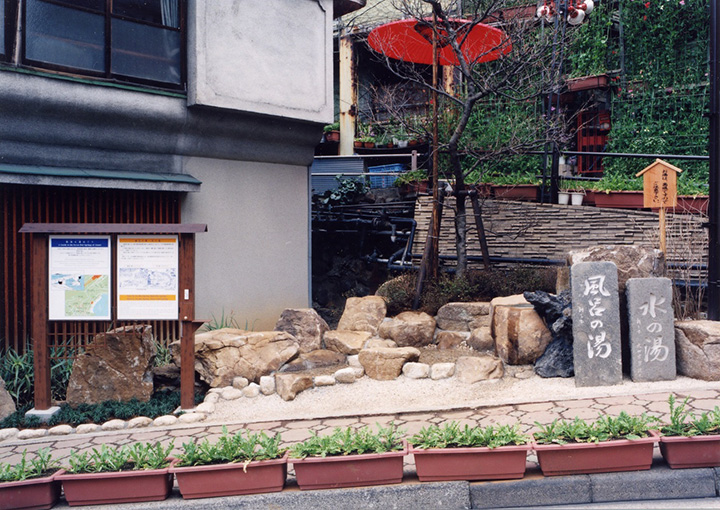
Furo-no-yu is located in front of Fukushima-ya Ryokan, known as a hot spring inn that retains the atmosphere of a Showa-era spa. In the past, because steam was blowing out vigorously, people used it to warm sake or steam and sell manju (steamed buns). It is said that the water had the effect of healing wounds.
Another hot spring gushes out very close to Furo-no-yu. It is said to have been named "Mizu-no-yu" (water bath), meaning "something that warms plain, tasteless water," because its temperature is lower than other sources and it contains no salt.
The fact that sources with completely different water qualities gush out right next to each other is a spot where you can feel the richness of Atami's hot springs.
Local
Supporter
"Furo-no-yu" and "Mizu-no-yu"—what unique names. Even today, the two springs stand side by side.
- Furo-no-yu / Mizu-no-yu
-
- 1 Sakimi-cho, Atami City, Shizuoka Prefecture MAP
- Approx. 20-minute walk from Atami Station
- 0557-86-6218 (Atami City Urban Development Division, Park and Green Space Office)
6Kosawa no Yu
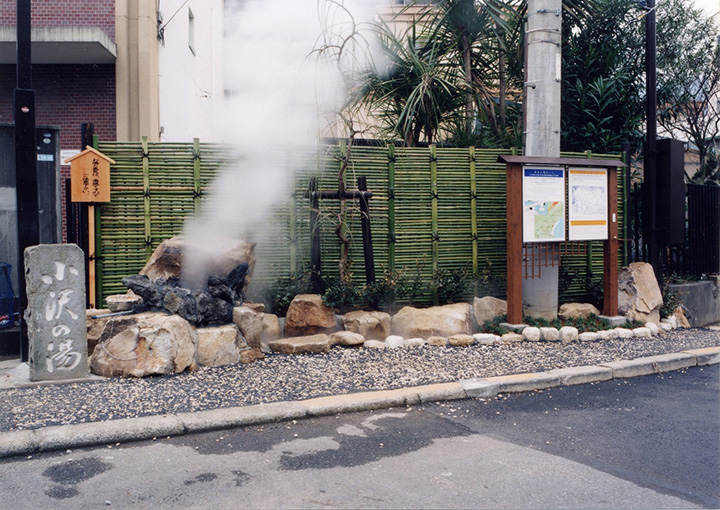
This source was originally called "Heizaemon-no-yu," referring to the garden baths of Yazaemon Sawaguchi, Bunjiro Fujii, and Sanzaemon Yonekura. However, because the area was a small swamp, the villagers living nearby called it "Ozawa-no-yu." Therefore, it is now collectively called "Ozawa-no-yu / Heizaemon-no-yu."
Here, you can make hot spring eggs using the high-temperature steam that still vents today. A basket is provided at the steam vent, so simply place raw eggs inside, cover with the wooden lid, and steam for about 8 minutes to finish. Raw eggs are sold at nearby convenience stores and liquor shops, so please buy some and give it a try (depending on the weather, the steam conditions may sometimes make it impossible to cook them).
Local
Supporter
Like "Seizaemon-no-yu," it is said that if people called out to it in a loud voice, it would gush forth vigorously, and if they called in a quiet voice, it would gush forth only a little.
- Ozawa-no-yu
-
- 14 Ginza-cho, Atami City, Shizuoka Prefecture MAP
- Approx. 15-minute walk from Atami Station
- 0557-86-6218 (Atami City Urban Development Division, Park and Green Space Office)
7Nonaka no Yu
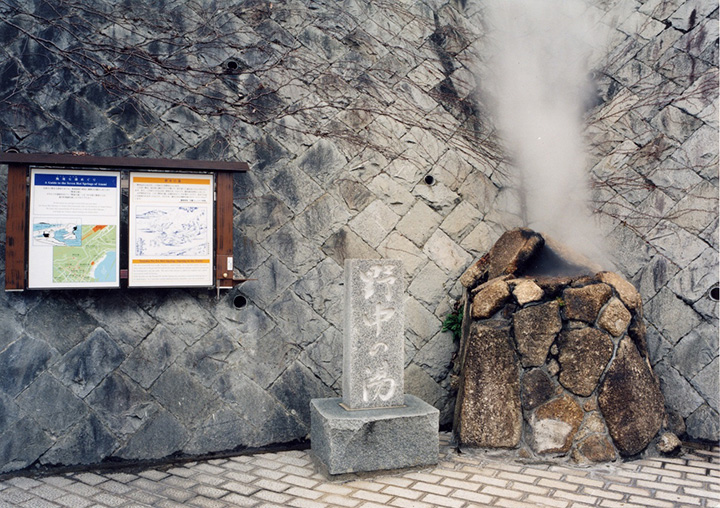
"Nonaka no Yu" is a hot spring source located along the prefectural road leading from Atami Station to the next station, Kinomiya Station. It is about a 15-minute walk from Atami Station. It is said that in the past, hot springs used to bubble up from the mud throughout this area, and that they would gush out if you poked the ground with a walking stick. Also, the soil here is red clay, which was used as a material for plastering walls. Because the source of "Nonaka no Yu" was very shallow, it is said that it was not used much for bathing, and therefore had no hot water basin to collect the water.
It is a great final stop on your walking course, and since it is only about an 8-minute walk from here to the famous power spot "Kinomiya Shrine," we also recommend visiting it at the end of your tour of the seven hot springs.
Local
Supporter
Steam rises in thick clouds from the stone-masonry hot spring basin, and it looks very hot and is quite a sight to behold.
- Nonaka-no-yu
-
- 5-11 Sakimi-cho, Atami City, Shizuoka Prefecture MAP
- Approx. 15-minute walk from Atami Station
- 0557-86-6218 (Atami City Urban Development Division, Park and Green Space Office)
MAP
- Nearby Hoshino Resorts facilities

Local supporter in charge of this article
- Tomofumi KondoMastery of both literary and military arts
Risonare Atami
Atami City, Shizuoka Prefecture
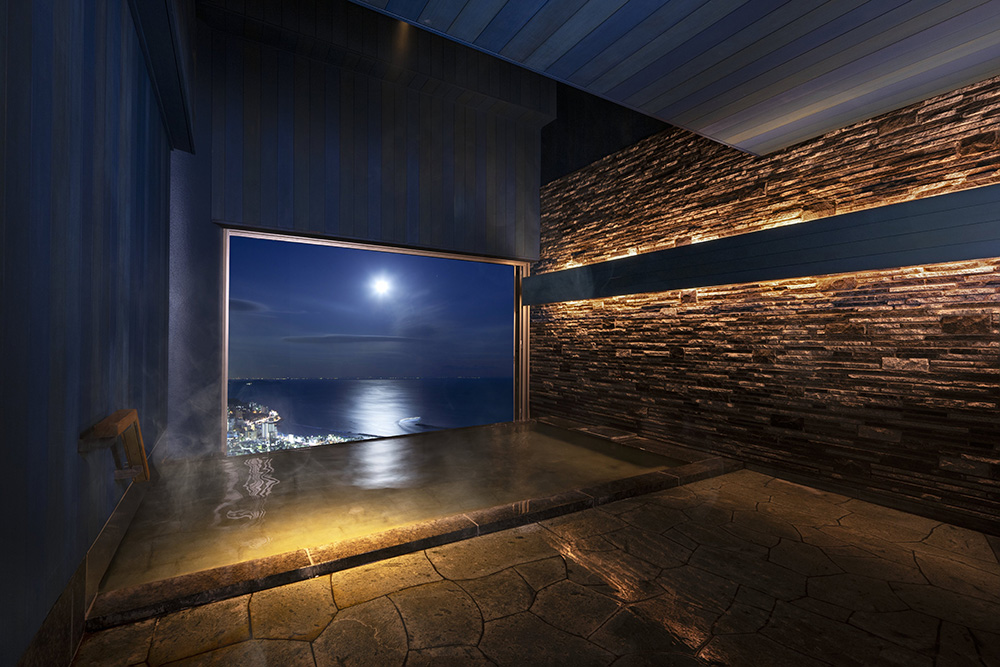
A scenic resort where you can have the view of Atami and the fireworks spreading out below all to yourself


Access About 20 minutes by shuttle bus from JR Atami Station
- Accommodation rate example
- Per person per night From 15,455 JPY