





9 Sightseeing Spots in Izumo and Matsue, where you can explore myths and history

The Kojiki, one of Japan's most famous historical books, contains many myths set in Shimane Prefecture. The places and gods mentioned in the book are still enshrined throughout the prefecture, attracting people as power spots and tourist attractions. In the Matsue area, Matsue Castle, a national treasure, and the castle town atmosphere of the city still remain, creating a sense of historical romance. Here are some sightseeing spots in Izumo and Matsue areas that you can enjoy while thinking about myths and history.
Izumo City, a recommended spot in Izumo City.
1Izumo Taisha Shrine
Symbol of Izumo, the Land of the Gods! An ancient shrine renowned as a god of marriage

This is an ancient shrine whose origin is recorded in Japan's oldest history book, Kojiki (Record of Ancient Matters), and is truly a sacred place connected to mythology. The main deity is Okuninushi no Okami, known as the god of marriage and good fortune, and worshippers come from all over Japan to pray for a good marriage.
Izumo Taisha Shrine's main building, designated as a national treasure, is the oldest shrine building style in Japan called "Taisha-zukuri. The roof, which was newly thatched during the five-year "Heisei-no-daisengu" (the Heisei period, from 2008 to 2009), is of majestic beauty.
Izumo's Kammon Street is lined with stores selling Izumo specialties and souvenirs.
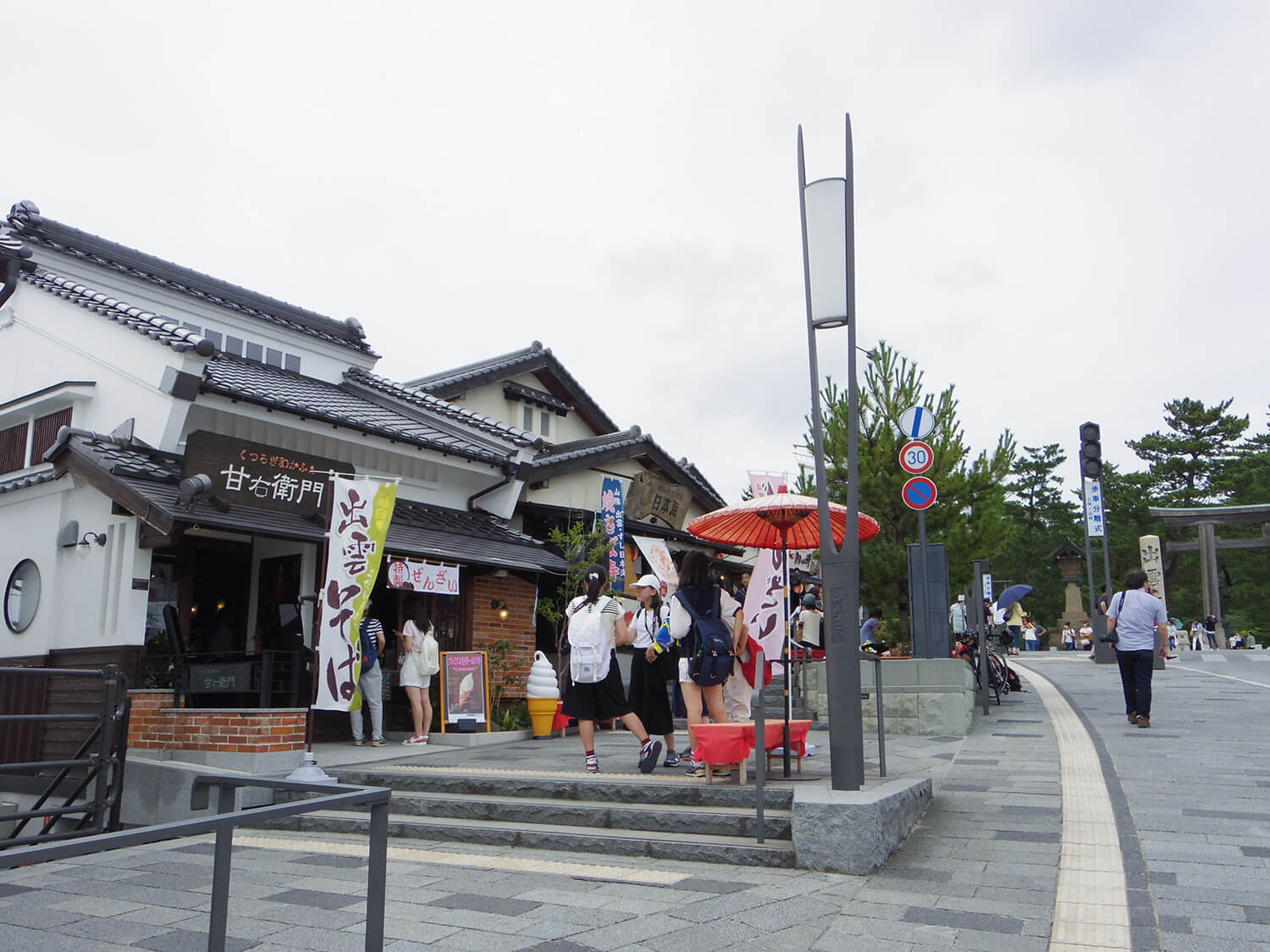
Dining Areas, souvenir stores, and cafes line the 700-meter long "Shinmon-dori," or main approach to Izumo Taisha Shrine, from the main gate to the Otorii (first shrine gate). There are also many restaurants serving "zenzai," a type of sweet bean soup said to have originated in the Izumo region, and Izumo soba, a specialty of Shimane, so that visitors can compare the different types of soba. Please be sure to try them.
As the home of Izumo Taisha Shrine, Izumo also offers a variety of souvenirs such as good luck and match-making goods, power stones, and other items that are unique to Izumo and may boost your luck. Just strolling along the street, with its harmony of pine trees planted in the Taisho era (1912-1926) and cobblestone pavement, is a pleasure.

Local Guide
When you visit Izumo Taisha Shrine, be sure to pay a visit to Kaguraden on the west side of the shrine. The oshimenawa here is one of the largest in Japan, measuring 13.6 meters in length and 5.2 tons in weight, and is one of the symbols of Izumo Taisha Shrine. It is one of the symbols of Izumo-taisha Shrine and is recommended as a photo spot.
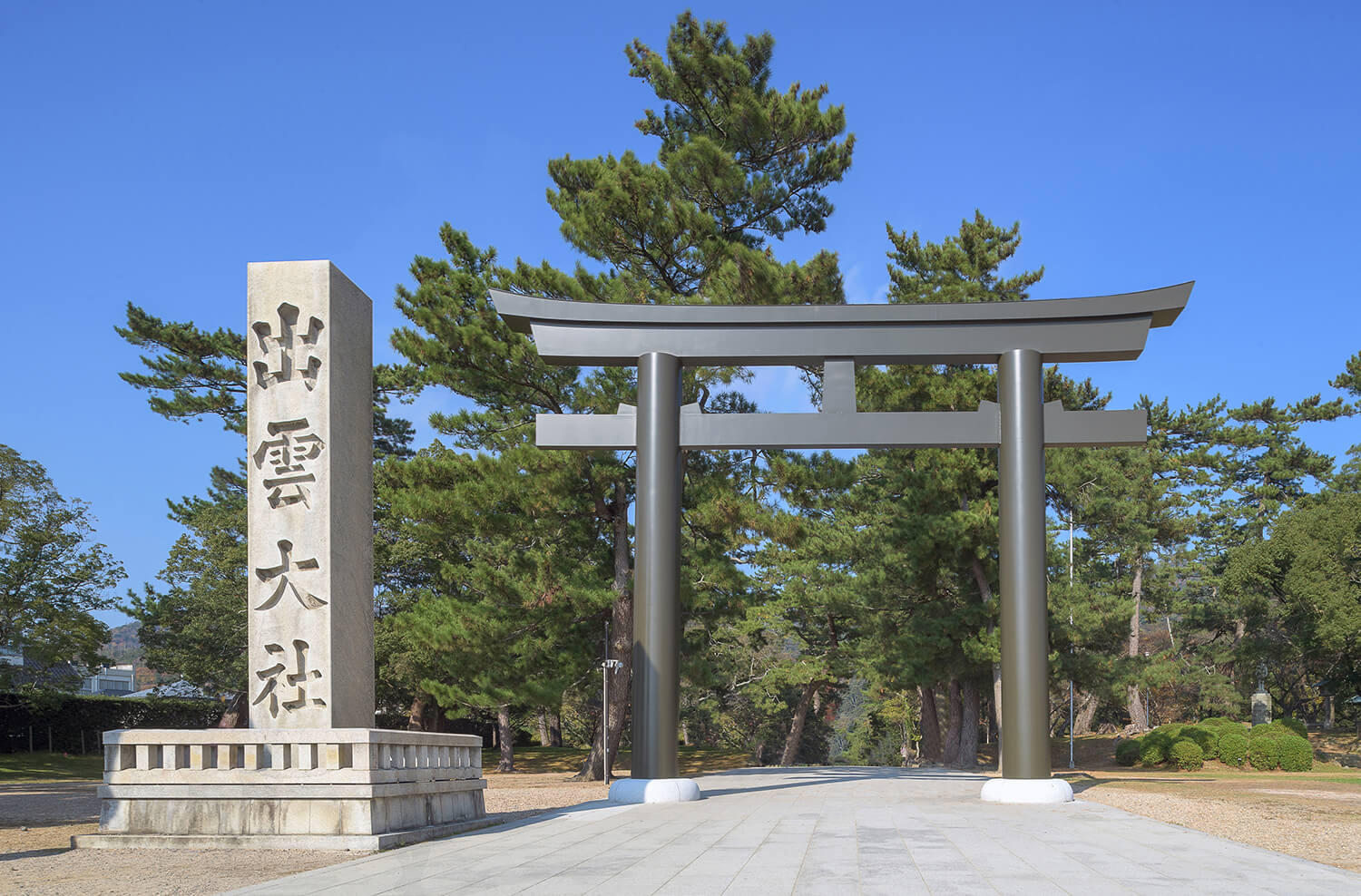
- Izumo Grand Shrine
-
 195 Kinezukigashi, Taisha-cho, Izumo City, Shimane Prefecture MAP
 5 min. walk from Izumo Taisha-mae Sta. on the Ichibata Line
 From JR Izumo City Station, take the Ichibata Bus (bound for Izumo Taisha or Himizakizaki) and get off at the "Shomon-mae" stop. There is a direct connection bus from Izumo Airport to Izumo Taisha Shrine (2 buses a day).
 Prayer 6:00-19:00, Amulet Office 6:00-19:00, Treasure House 8:30-16:30
 Open daily
 Free of charge
 0853-53-3100(8:30-16:30)
 Free
Free From 16:30, for security reasons, it is not possible to go north from the Jyukusha.
2Hinomisaki
The Geopark Coast, symbolized by the blue sea and shining white lighthouse

A 15-minute drive along the coast from Izumo Taisha Shrine, this port town is located at the western tip of the Shimane Peninsula. The Hinomizaki Lighthouse, which rises at the tip of the cape, is the tallest stone lighthouse in Japan (43.65 m) and is still in service more than 100 years after its construction. It is designated as one of the "100 Historical Lighthouses of the World" and an important cultural property of Japan.
The coastline of Himizaki, which is also part of the Daisen-Oki National Park, is a series of sheer cliffs, dotted with islands of various sizes and oddly shaped rocks. A promenade has been established so that visitors can enjoy the dynamic topography and the view of the sea. Izumo is also famous as a sunset spot, having been registered as a Japanese Heritage Site as "Sacred Land of Izumo where the Sun Sets.
The vermilion-colored shrine of Himizaki-jinja, with its attractive seafood cuisine
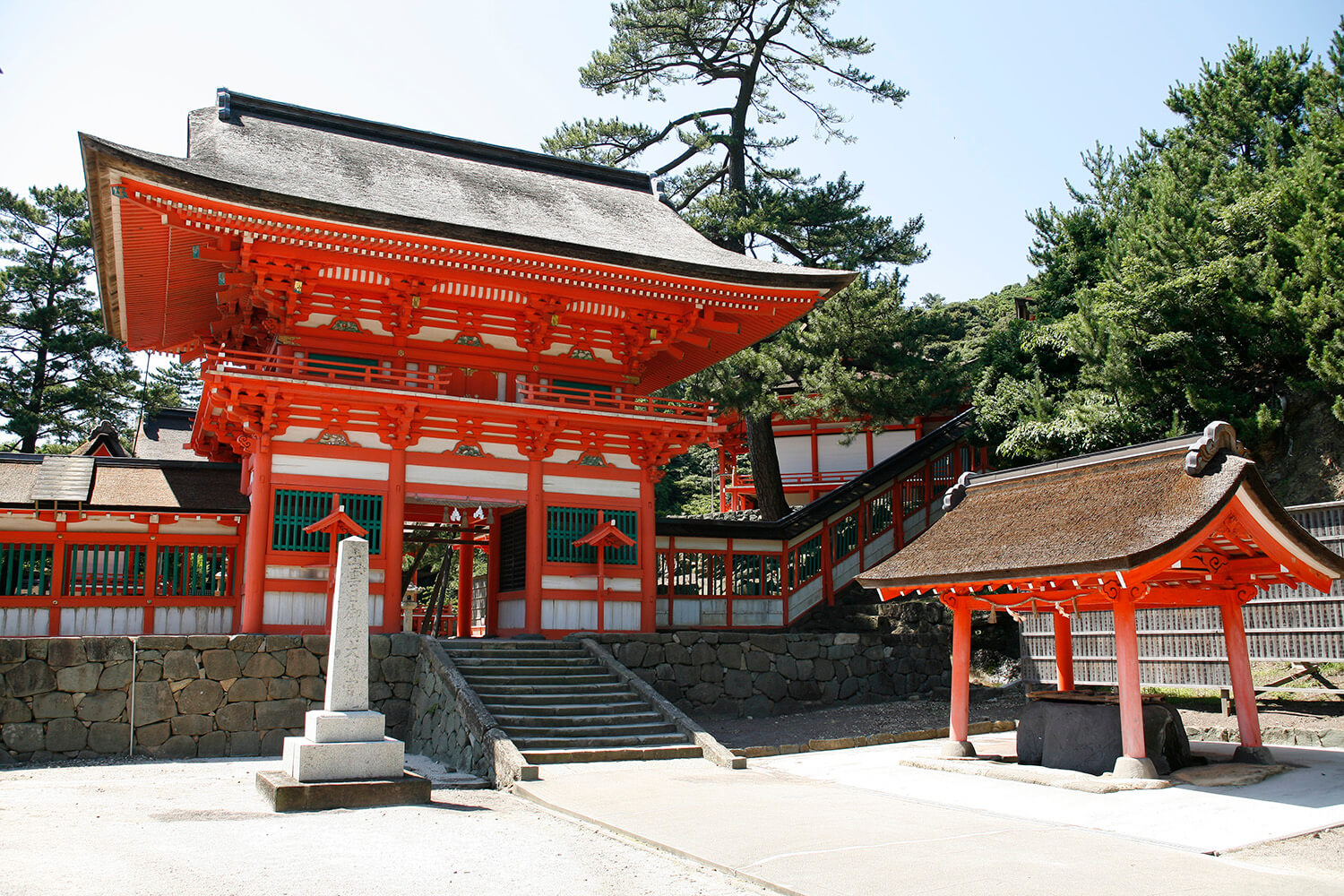
Be sure to visit the "Himizaki Shrine," located at the entrance to Himizaki and characterized by its vermilion-lacquered pavilions. The shrine is an old shrine mentioned in the "Izumo Province Fudoki" compiled in the Nara period (710-794). Hishizumi-no-Miya, which enshrines Amaterasu, is an important shrine named to "protect the night of Japan" while Ise Jingu Shrine in Mie Prefecture "protects the day of Japan".
Along the road leading from the Himisaki Shrine to the Himisaki Lighthouse, there are many souvenir stores and Dining Areas, which are typical of Himisaki's thriving fishing industry. You can enjoy gourmet foods such as dried fish hanging from the storefronts, seafood rice bowls made with fresh fish from the morning, and grilled seafood.
Local Guide
Fumishima, a small island on the coast near the Himizaki-jinja Shrine, was originally the site where the Sunken Shrine was enshrined, and is a sacred area that is off limits to the general public. It is designated as a national natural monument as a breeding ground for petrels.
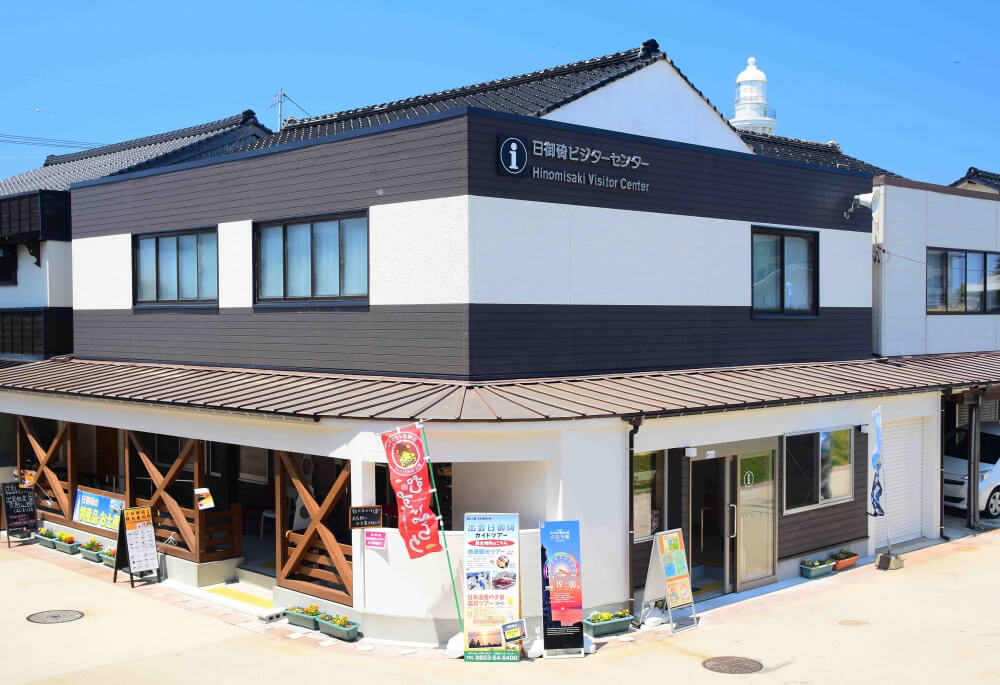
- Himigozaki
-
- 1089-37, Himisaki, Taisha-cho, Izumo City, Shimane Prefecture (Himisaki Visitor Center) MAP
- Approximately 18 minutes by car from Izumo Taisha-mae Station on the Ichibata Line
- From JR Izumo City Station, take the Ichibata Bus (bound for Izumo Taisha or Himozaki) and get off at Himozaki Lighthouse.
- 9:00-17:00 (Himozzaki Visitor Center)
- Open all year round (Himisaki Visitor Center)
- 0853-54-5400(Himisakizi Visitor Center)
- Free
- Open 9:00 - 16:30 (Sat., Sun., national holidays - 17:00, Oct. to Feb. - 16:30), closed Dec. 30 and 31, donation for visit 300 yen for adults (junior high school students and older), free for elementary school students and younger, disabled persons (up to 1 carer)
3Inasa-no-hama
Sacred beach welcoming 8 million gods from all over Japan

This is the place where the "Kami-mukae Shinji" (welcoming ceremony) is held to welcome the first of the 8 million deities in the month of Kozai. On October 10 of the lunar calendar, a sacred fire is lit on the beach at sunset, and the priests of Izumo Taisha solemnly welcome the gods. The gods dwell in a primitive primitive primitive shrine called Himorogi are then taken to Izumo Taisha Shrine. This is the beginning of Izumo's "kamizaitsuki" month. The following year, six bronze bells were decorated.
In the back of Inasa-no-hama is Byobu-Iwa, which is said to be the setting of the "myth of the handing over of the country" that led to the construction of Izumo-taisha Shrine. It is said that Izumo Taisha Shrine was built in Izumo where the messenger god of Amaterasu and Okuninushi no Mikami negotiated the handover of the land to Izumo.
Sunset views of the beautiful coastline and Benten Island

Inasa-no-hama beach has been selected as one of the 100 best beaches in Japan. Nagahama Beach, which continues southward, was depicted as a rope connecting the islands in the "Kokubiki Mythology. The white sands and blue sea always make one feel refreshed.
The beach at sunset is also exceptional. The sight of the golden waves reflecting the setting sun and the sky and sea all covered in a deep azure is so beautiful that it purifies the mind. The silhouette of Bentenjima by the backlight is also fantastic. Izumo has been registered as a Japanese Heritage site as "Sacred Place of Sunset in Izumo. Sunset viewing is highly recommended here.
Local Guide
The "Kangei no Michi" that leads from Inasa-no-hama to Izumo Taisha is a little far from the sightseeing spots, but it offers a glimpse into the lives of the people of Taisha, who have lived solemnly with the gods since ancient times. It is a cozy street lined with soba (buckwheat noodle) restaurants and temples and shrines that are popular with the locals.
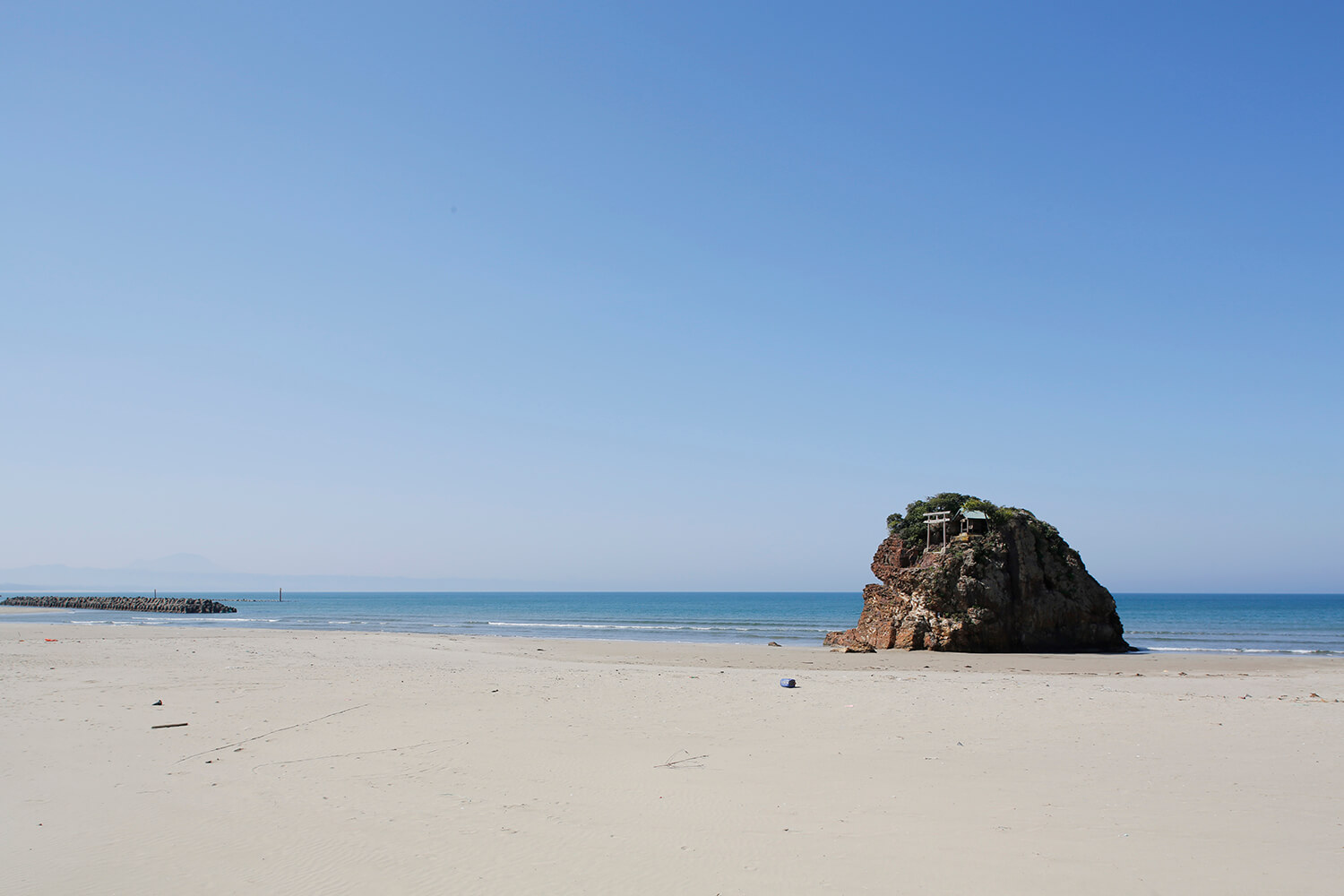
- Inasa Beach
-
- 2844-73 Kinezukita Inasa, Taisha-cho, Izumo City, Shimane Prefecture MAP
- 15 minutes walk from Izumo Taisha-mae Station on the Ichibata Line.
- Take the Ichibata Bus (Himizaki-line) from JR Izumo Station, and get off at "Inasa-no-hama Iriguchi" stop.
- Free
4Kojindani Ruins
The romance of ancient Izumo is here! Ruins where bronze vessels from the Yayoi period were excavated

In 1984, 358 bronze swords from the Yayoi period were unearthed at this site as a result of a survey conducted in conjunction with road construction. This was a major discovery that shook the history and archaeology of Japan at the time, surpassing the 300 bronze swords that had been excavated throughout the country until then.
The following year, six bronze bells and 16 bronze spears were excavated, all of which are designated national treasures. The bronze artifacts were actually excavated at the "Shimane Prefectural Museum of Art" near Izumo Taisha Shrine. Shimane Prefectural Izumo Museum of History" near Izumo-taisha Shrine. The ruins are a reminder of the existence of the ancient Izumo Kingdom as described in the Kojiki (Records of Ancient Matters).
A museum, an ancient lotus pond, and a pit dwelling are also highlights.
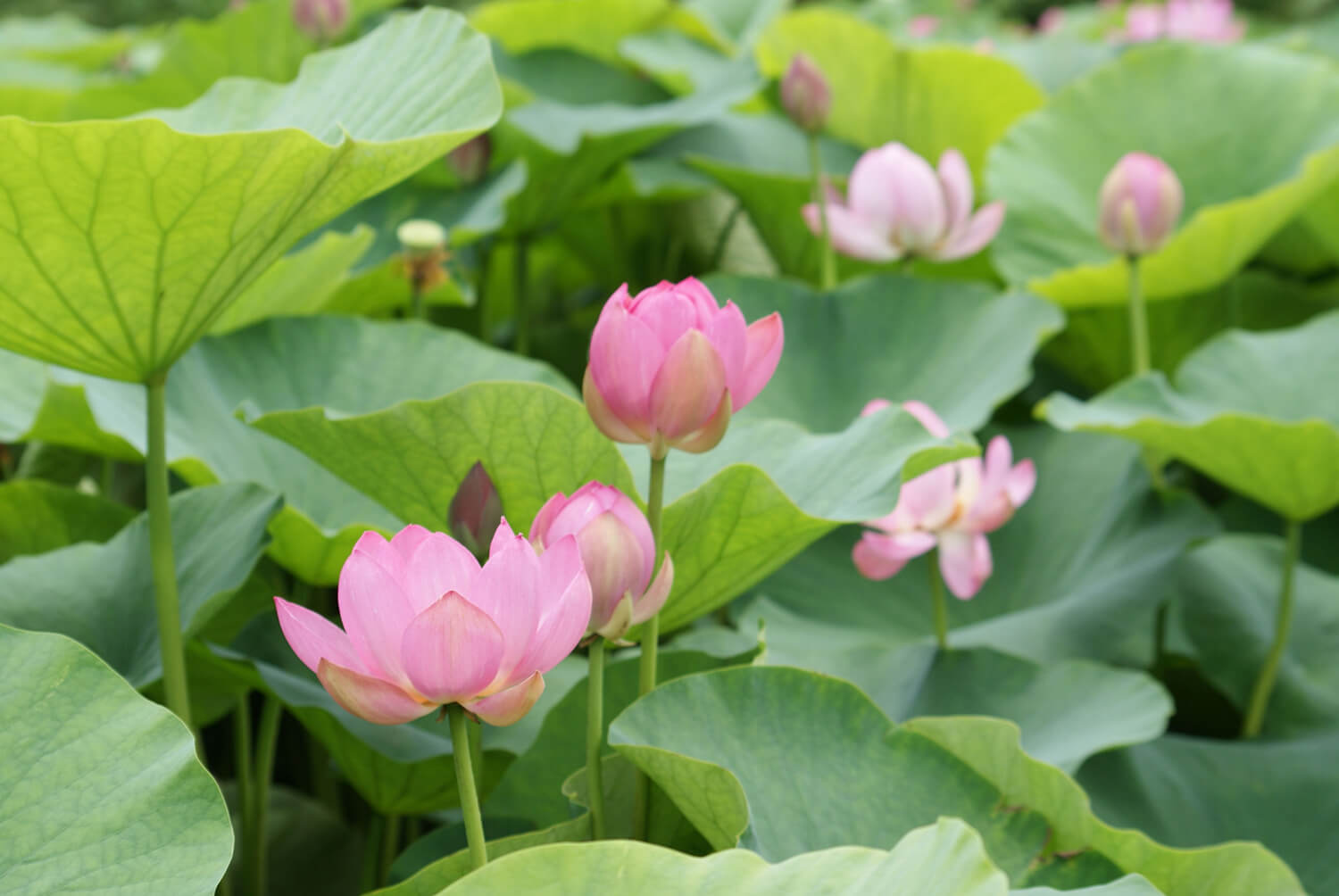
The vast site of approximately 27.5 hectares, including the ruins, is maintained as the "Aragamitani Historic Site Park. Within the site are the "Aragamiya Museum," an ancient lotus pond (best viewed from late June to early July), Camellia Forest (best time to visit is spring), and The site is also home to the "Aragamidani Museum," an ancient lotus pond (best viewed from late June to early July), a camellia forest (best viewed in spring), and a pit dwelling that reconstructs the lifestyle of ancient people.
With spacious lawns and barbecue sites, it is also a popular spot for visitors to play in nature. There is also a small museum store inside the Aragamitani Museum, where you can find books and goods related to ancient Izumo, as well as medicinal herb teas and other souvenirs that can only be purchased here.
Local Guide
At "Roadside Station Yunokawa," a 5-minute drive from Aragamidani Historic Site Park, you will find a wide variety of local products and vegetables from the town of Hikawa, as well as a restaurant. Yunokawa Hot Spring, which is said to be one of the three most beautiful hot springs in Japan, is located nearby, and a one-day hot spring is also recommended.
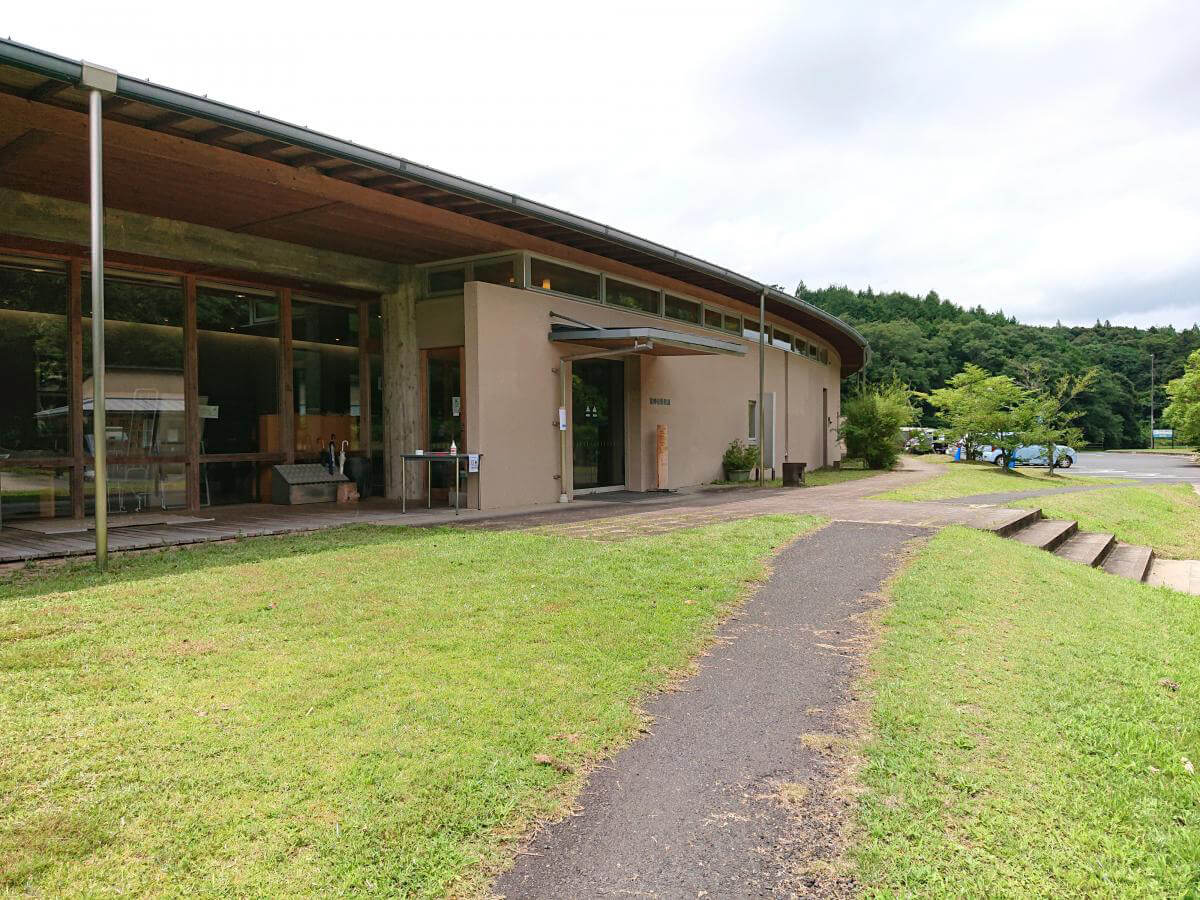
- Aragamitani Historic Site Park
-
- 873-8 Kaminiwa, Hikawa-cho, Izumo City, Shimane MAP
- 5 minutes drive from JR Shobara Station.
- 9:00-18:00
- Open daily
- Free (admission to the museum galleries is charged)
- 0853-72-9044
- Free
- Aragamidani Museum is open from 9:00 to 17:00, closed during the year-end and New Year holidays (exhibition rooms are open every Tuesday), and closed for other exhibition changes.
<Matsue City Recommended Spots> Izumo Taisha Shrine
5Matsue Castle
It has been 400 years since the castle was built! Matsue Castle, a symbol of Matsue City and a national treasure

The castle was built by Yoshiharu Horio, a famous warlord in the early Edo period (1603-1868), and the castle tower, completed in 1611, still stands beautifully and powerfully after 400 years and is loved by people as a symbol of Matsue City. It is one of only 12 remaining castles in Japan, and was designated a National Treasure in 2015.
The rich nature surrounding the castle, the moat river, and the stone walls piled up during the construction of the castle are also highlights. The castle keep is a five-story structure with one basement level, and the interior can be toured. On the basement level, visitors can see the prayer cards that were used in the construction of the castle and were the deciding factor in its designation as a National Treasure.
The functional beauty of the castle was designed with actual warfare in mind. The view from the castle tower is spectacular.

Matsue Castle, which is structured in preparation for actual battles, is a highlight for its ingenuity and functional beauty in defeating enemy soldiers. The castle is equipped with many devices for protection, including "sama," holes made for attacking invading enemies with guns and bows and arrows. The interior of the castle tower has many blind spots, making it an advantageous structure for defenders.
The top floor is a watchtower-style structure with no walls and a 360-degree view. It was used as a watchtower to monitor the enemy or as a command post in those days, but now it is popular as an observatory from which you can see the whole town of Matsue and Lake Shinji. Why don't you enjoy the view as if you were the lord of the Matsue Clan?
Local Guide
The street called Shiomi Nawate, which runs along the moat of Matsue Castle, was lined with samurai residences in the Edo period (1603-1868). Even today, soba noodle restaurants and souvenir stores line the street, preserving the scenery. Take a leisurely stroll while immersing yourself in the castle town atmosphere.
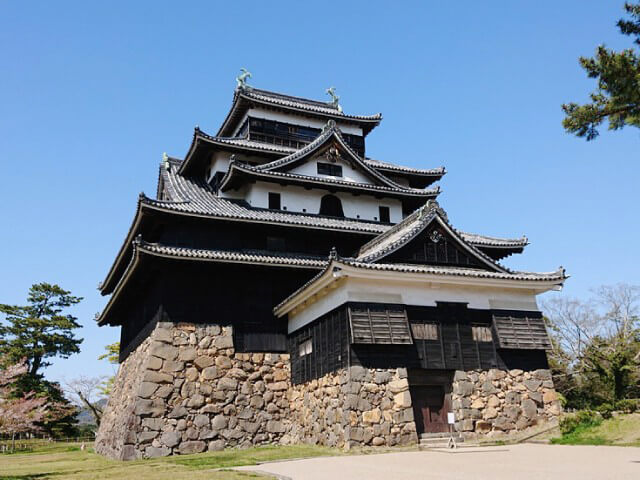
- Matsue Castle
-
- 1-5 Tonomachi, Matsue City, Shimane Prefecture MAP
- 16 minutes on foot from Matsue Shinjiko Onsen Station on the Ichibata Line
- Take the Lake Line Bus from JR "Matsue Station" and get off at "National Treasure Matsue Castle (Otemae)" stop.
- Honmaru 8:00-18:30 (October to March: ~17:30),
Tenshukaku: 8:30-18:00 (Oct-Mar: ~17:00) *Reception closes 30 minutes before closing. - Open daily
- Adults 800 yen, elementary and junior high school students 400 yen
- 0852-21-4030 (Matsue Castle Park Management Office)
- Not available (use municipal Matsue Castle Ote-mae Parking Lot, etc.)
- Admission to the Honmaru is free.
6Horikawa Pleasure Boat
Sightseeing boat tours of the castle town

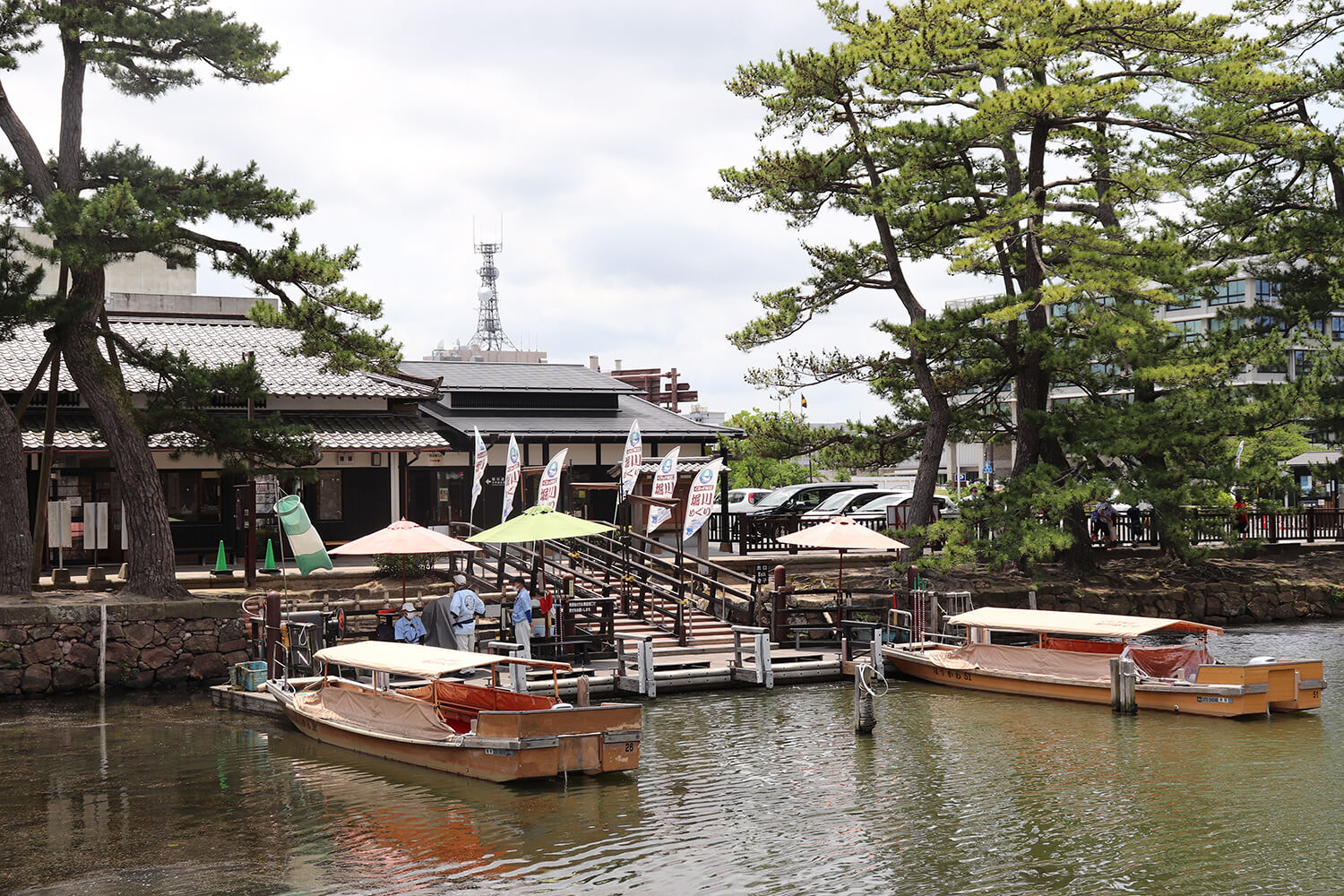
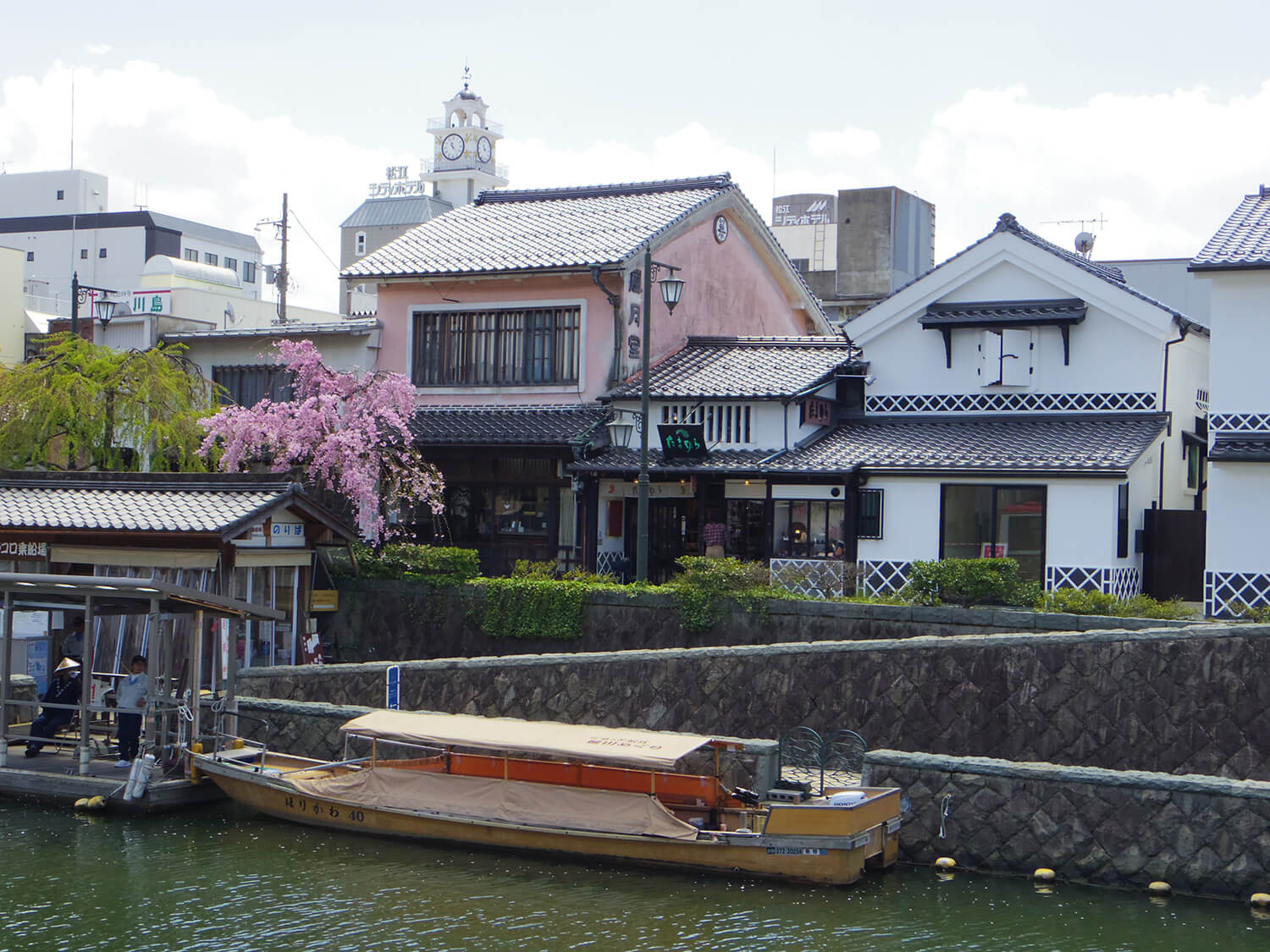
The Horikawa River, which was dug when Matsue Castle was built, encircles the castle and extends into the downtown area of Matsue. Its graceful scenery is a highlight of the beauty of Matsue as a castle town. You can tour such a river with a boatman on the "Horikawa Meguri".
The boat is covered with a roof, and you take off your shoes and sit on the boat. The cruise takes about 50 minutes, but you can get on and off at any of the three boat stops, so it is recommended that you disembark halfway through the cruise and enjoy exploring the town.
There are many wonderful views that can be seen only from a sightseeing boat!

Matsue seen from the boat is full of fresh discoveries. The stonewalls of Matsue Castle are particularly impressive up close, giving visitors a chance to observe the 400-year-old stone masonry craftsmen at work. At times, you may even find yourself standing alongside waterfowl and turtles swimming near the boat. Some of the 17 bridges on the course are designed to allow visitors to lower the roof of the boat for a thrilling experience.
In addition, during the winter (early November to early April), the kotatsu boats are operated and have become a winter tradition in Matsue. It is a wonderful way to view the townscape with light snow flurries and snow-covered Matsue Castle while warming your feet with a kotatsu.
Local Guide
The Matsue Horikawa Fureai Hiroba Boarding Terminal is adjacent to the Matsue Horikawa Ji Beer Museum, one of the three boarding stations. There is a counter where you can sample authentic local beer, which has won a gold medal at the International Beer Awards, as well as a special products museum, so why not stop by?
- Horikawa Pleasure Boat
-
- 507-1 Kuroda-cho, Matsue City, Shimane Prefecture (Horikawa Pleasure Boat Office) MAP
- 10 minutes drive from JR Matsue Station
- Please use the "Gurutto Matsue Lake Line Bus"; each of the three stops has a bus stop nearest to it.
- March-September: 9:00-17:00, October-February: 9:00-16:00
- Open daily (service may be cancelled or the course changed in case of inclement weather)
- Adults 2,000 yen, junior and senior high school students 1,600 yen, elementary school students 1,000 yen, children under elementary school age 600 yen (one child under elementary school age is free per adult) *Capacity: 10-12 persons per boat (9 persons for motorized sightseeing boats)
- 0852-27-0417 (Horikawa Pleasure Boat Management Office)
- Admission Fee
7Shimane Art Museum
Encounter Hokusai's masterpieces at the museum by Lake Shinji
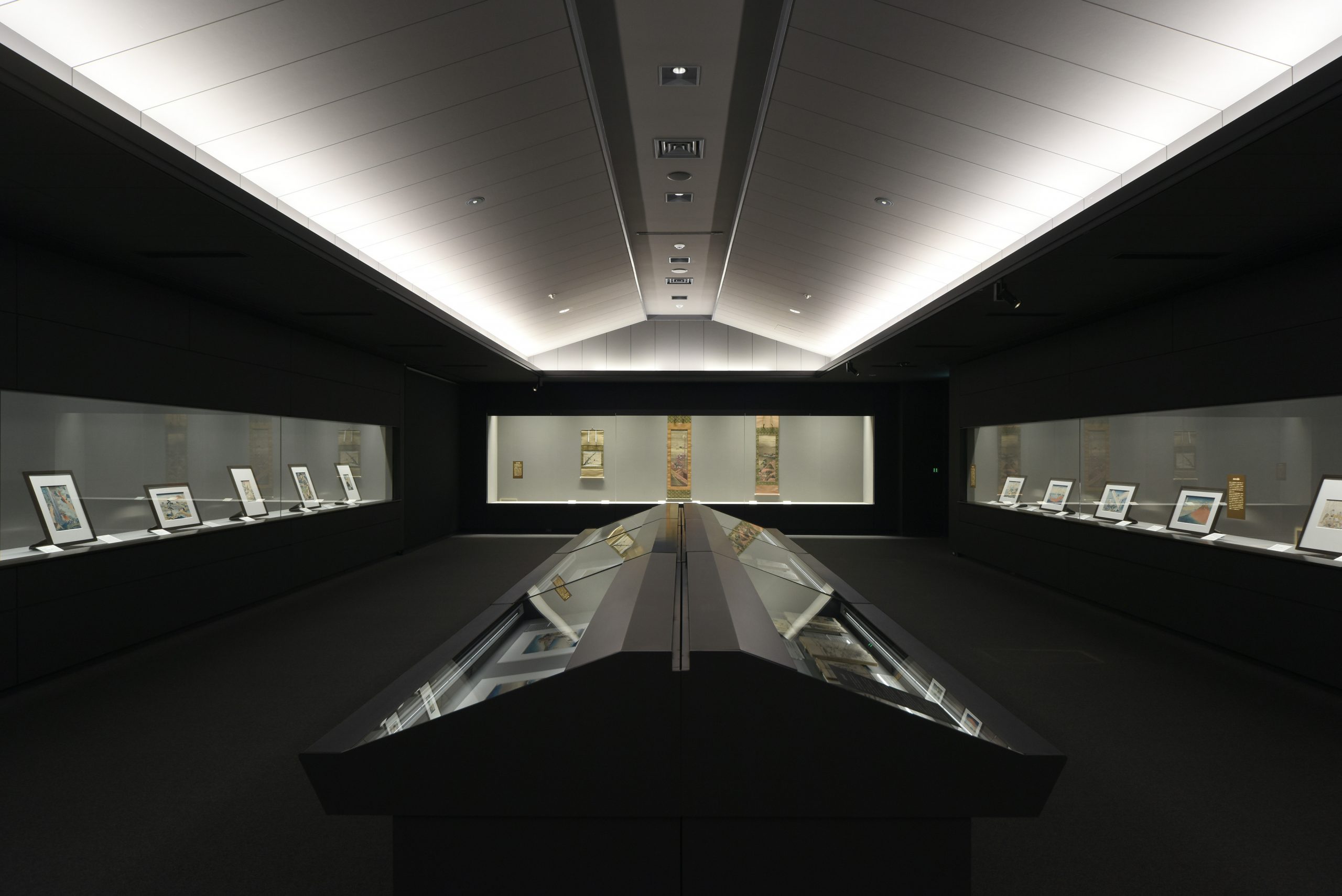
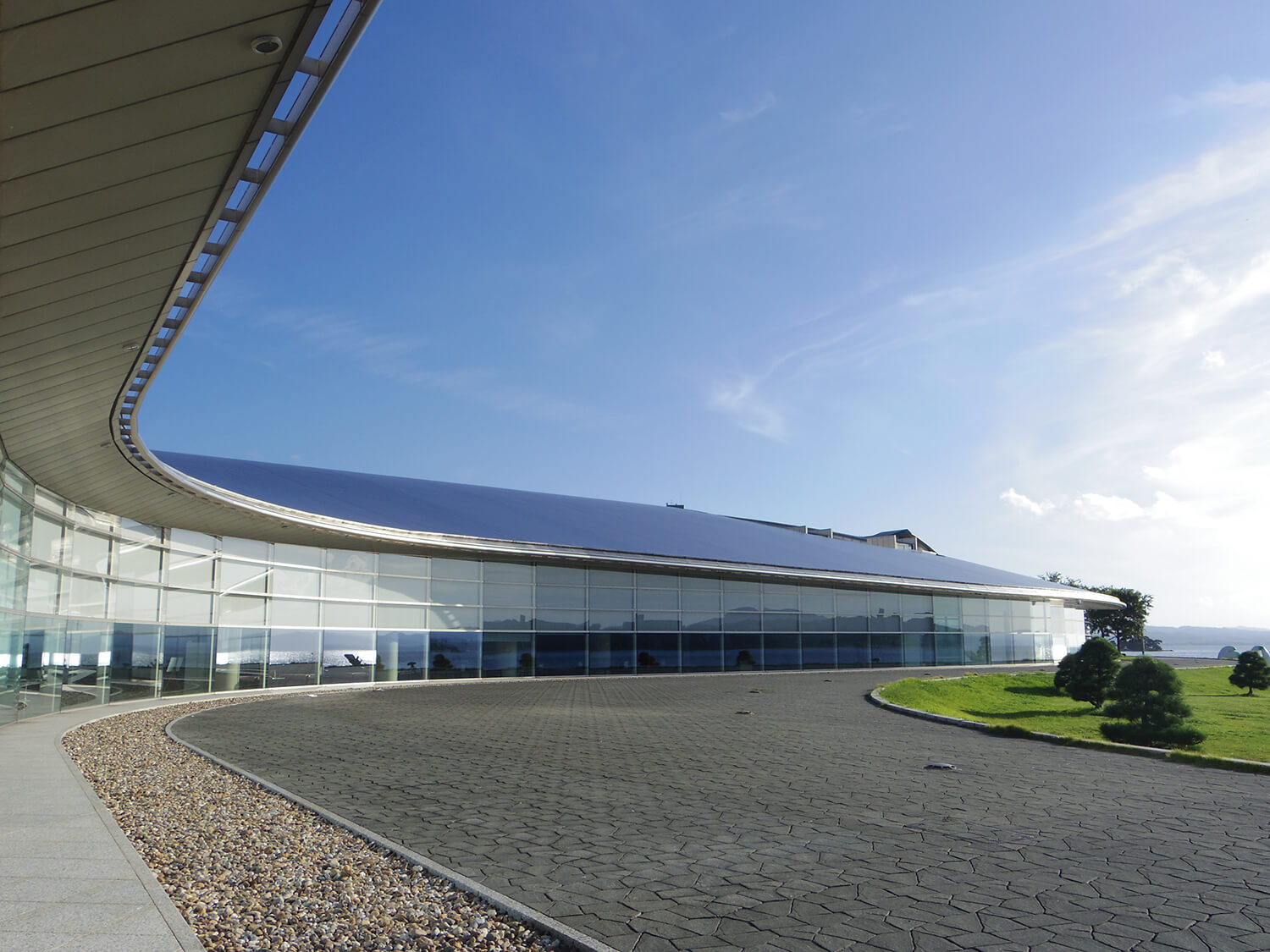
The theme of this museum is harmony with water, and it is located on the shores of Lake Shinji. The museum houses a wide range of domestic and international works depicting water, including paintings, ukiyoe woodblock prints, crafts, photography, and sculpture.
In particular, the museum’s collection of works by Katsushika Hokusai comprises more than 1,600 items, making it one of the largest in the world.The collection includes masterpieces representing Hokusai’s entire career— such as*Thirty-Six Views of Mount Fuji*, * Hokusai Manga*, and original paintings—as well as numerous valuable works and materials, including pieces of which only a single copy is known to exist worldwide.The “Hokusai Gallery” permanently displays around 40 of Hokusai’s works, making this a museum where you can encounter his art at any time.
A spectacular view selected as one of the "100 best sunsets in Japan
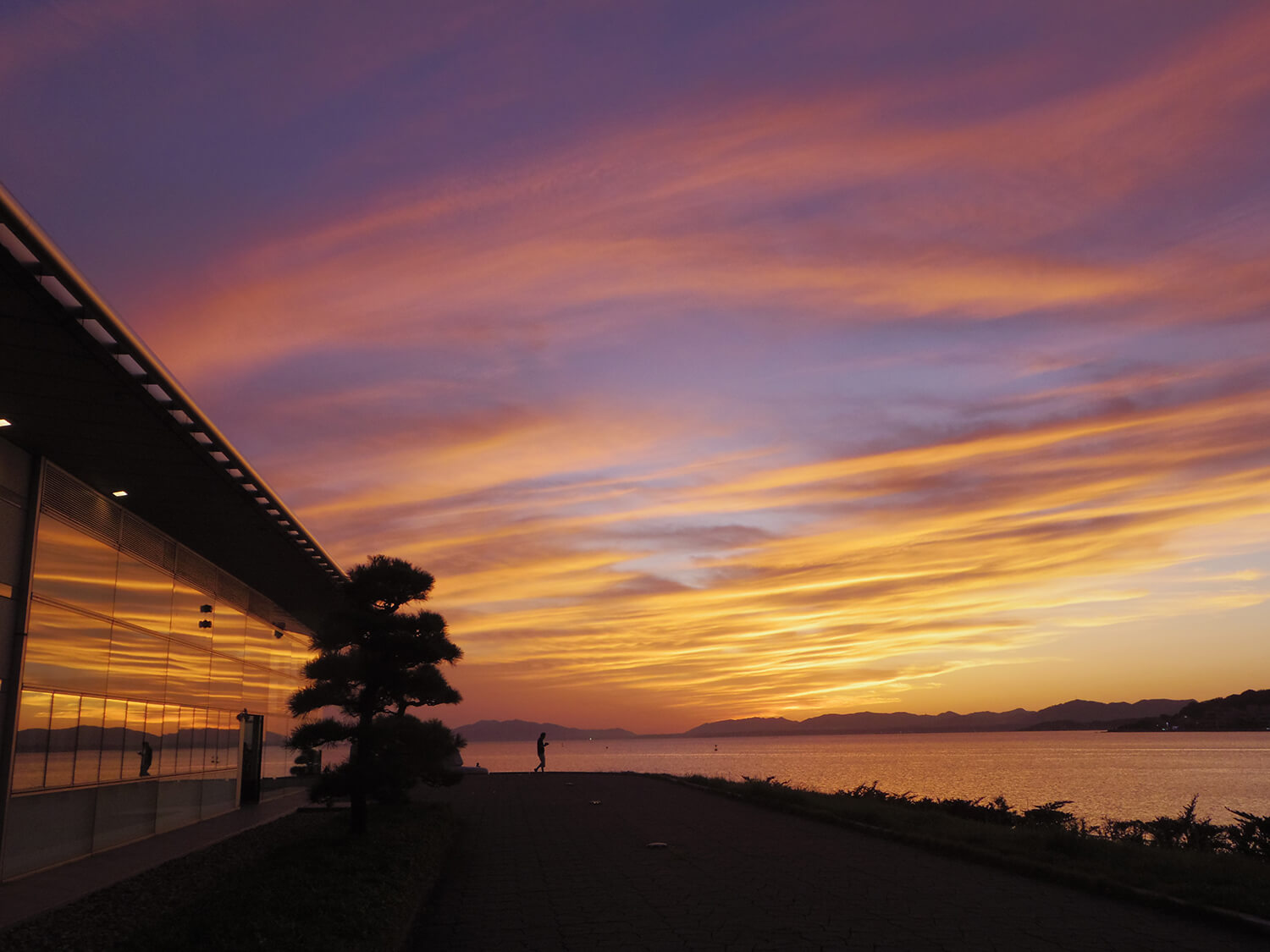
The sunset over Lake Shinji from the Shimane Prefectural Art Museum has been selected as one of the "100 Sunsets of Japan. Lake Shinji at sunset. Glass The reflection of the lake in the window glass is so beautiful that it is almost as if the entire building itself has become a work of art.
The museum shop offers original Hokusai-themed merchandise, as well as clear file folders and postcards featuring sunset scenes—all great choices for souvenirs. You can check sunset times on the museum’s website, so be sure to plan your visit to coincide with sunset.
Local Guide
Every day from 10:00 a.m. to 12:00 p.m. is “Family Time,” when families with children are given priority. During this time, it’s okay for children to be a little louder. The museum also features a kids’ library stocked with picture books, where parents and children can enjoy art and reading together without feeling self-conscious.
- Shimane Art Museum
-
- 1-5 Sodeshi-cho, Matsue City, Shimane Prefecture MAP
- 15 minutes walk from JR Matsue Station
- From JR "Matsue Station", take the city bus "South Circulation Line Inward" and get off at "Kenritsu Bijutsukan Mae" bus stop.
- October-February: 10:00-18:30 (admission to the exhibition rooms until 18:00), March-September: 10:00-30 minutes after sunset (admission to the exhibition rooms until sunset time) *Please refer to the website for the annual sunset time
- Tuesdays, year-end and New Year holidays (December 28 - January 1)
- Free admission
Collection exhibition: Adults 400 yen, college students 260 yen, elementary, junior high and high school students free
Admission to special exhibitions varies depending on the exhibition. - 0852-55-4700
- Free for up to 3 hours (100 yen per hour after 3 hours)
8Kyoten shopping street
Matsue's little Kyoto. A historic shopping street that is fun to stroll through.
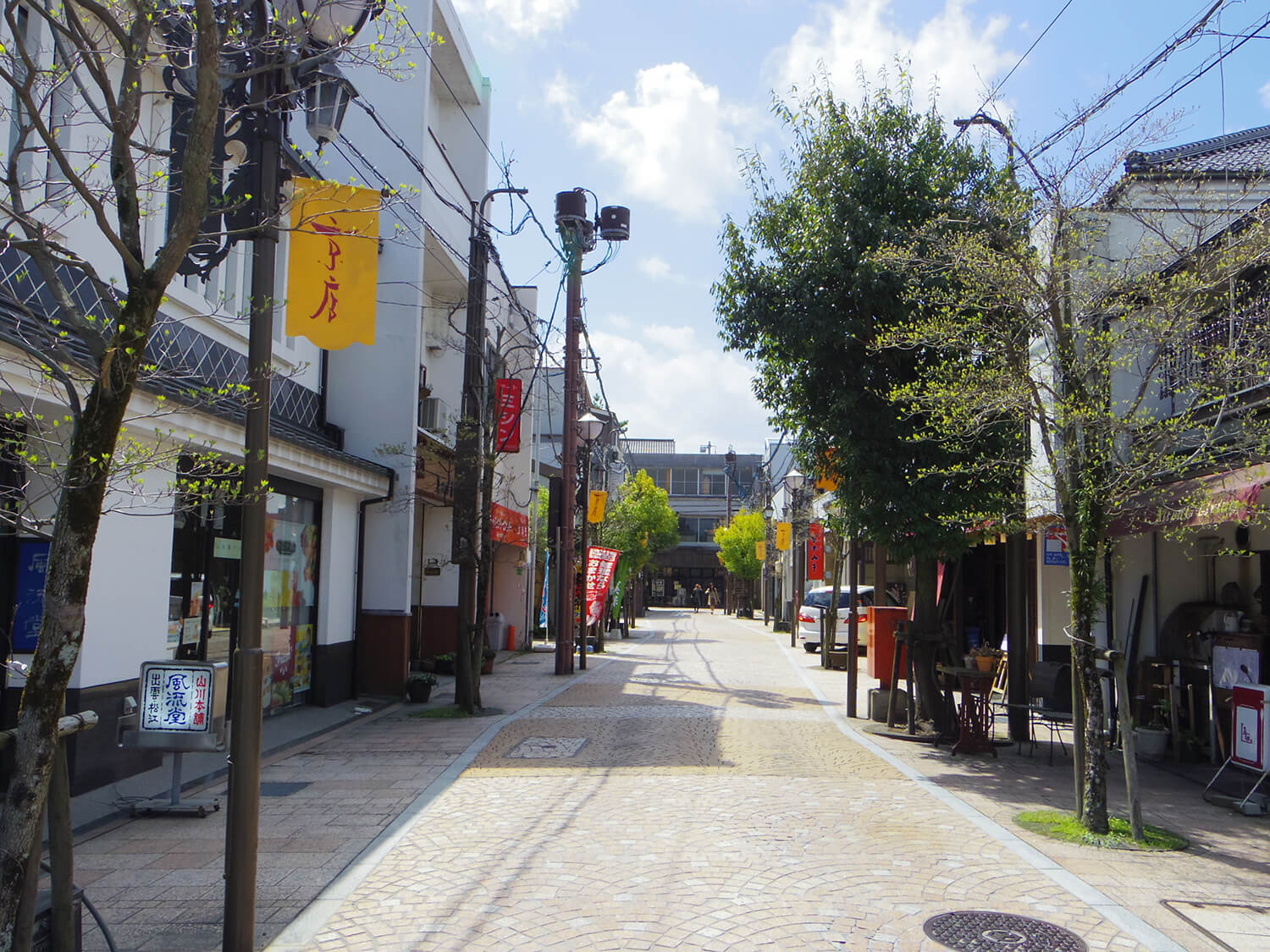
It is about a 5-minute walk from Matsue Castle. The Kyomise shopping street, which stretches beyond a stone bridge over the Horikawa River where sightseeing boats pass by, is a historic shopping street that has been in existence since the Edo period (1603-1868).
Along the quaint cobblestone streets are lined with souvenir stores, long-established Japanese confectionery stores, folk art stores, restaurants, and other fashionable stores that are typical of Matsue. From long-established shops that have been in business for over 100 years to cafes catering to the younger crowd, there is something for all generations to enjoy.
A matchmaking spot where you can meet in a kyoto store
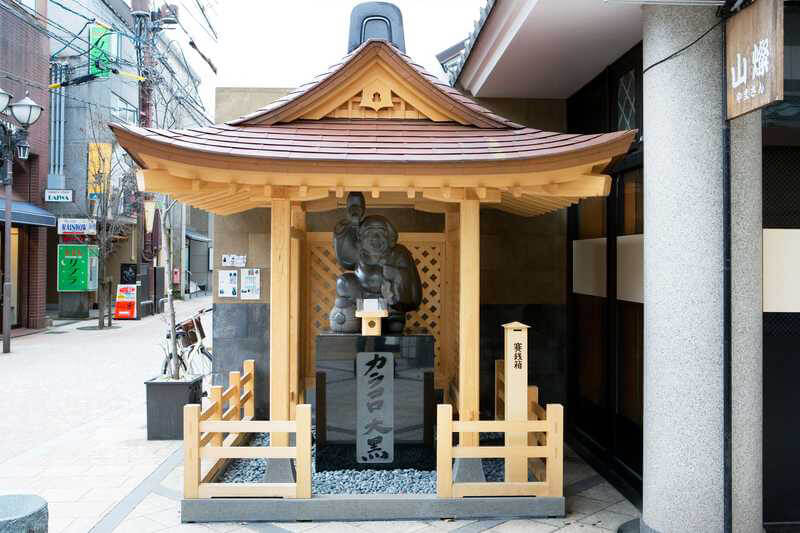
The Kyoten shopping street, which is based on the concept of "a town to fall in love with," is dotted with small spots for matchmaking. Heart-shaped power stones are embedded in the ground of the shopping street, and there is even a "heart-shaped stone pavement" with a heart shape embossed on it. One of the pleasures of walking the streets is to search for them as if playing a game.
The "Karakoro Daikoku" in the middle of the shopping street is a statue of Daikoku, the main deity of Izumo Taisha Shrine and known as the god of marriage. Visitors can enjoy fortune-telling with Koi-mikuji and Kaiun-mikuji, or write their wishes on a heart-shaped ema (votive tablet) and hang it up. A commemorative photo with Daikoku with his big smile is also recommended.
Local Guide
There is also a boarding area for the Horikawa Pleasure Boat in the Kyoten Shopping Arcade. It is fun to take a boat ride and feel like a princess in the Edo period. Nearby is "Furyudo," which still carries on the Japanese sweets favored by Lord Matsudaira Fumai, who spread the culture of the tea ceremony in Matsue.
- Kyoten Shopping Street
-
- 50 Suetsugihonmachi, Matsue City, Shimane Prefecture MAP
- 14 min. walk from "Matsue Shinjiko Onsen Station" of Ichibata Line
- From JR "Matsue Station", take "Gurutto Matsue Lake Line" and get off at "Kyobashi" stop.
- Depends on each store
- Depends on each store
- 0852-26-5610
- Pay parking (Kyoten Parking Lot 1 and 2)
9Subido Sightseeing Boat
A boat trip to a mythical cave and spectacular scenery

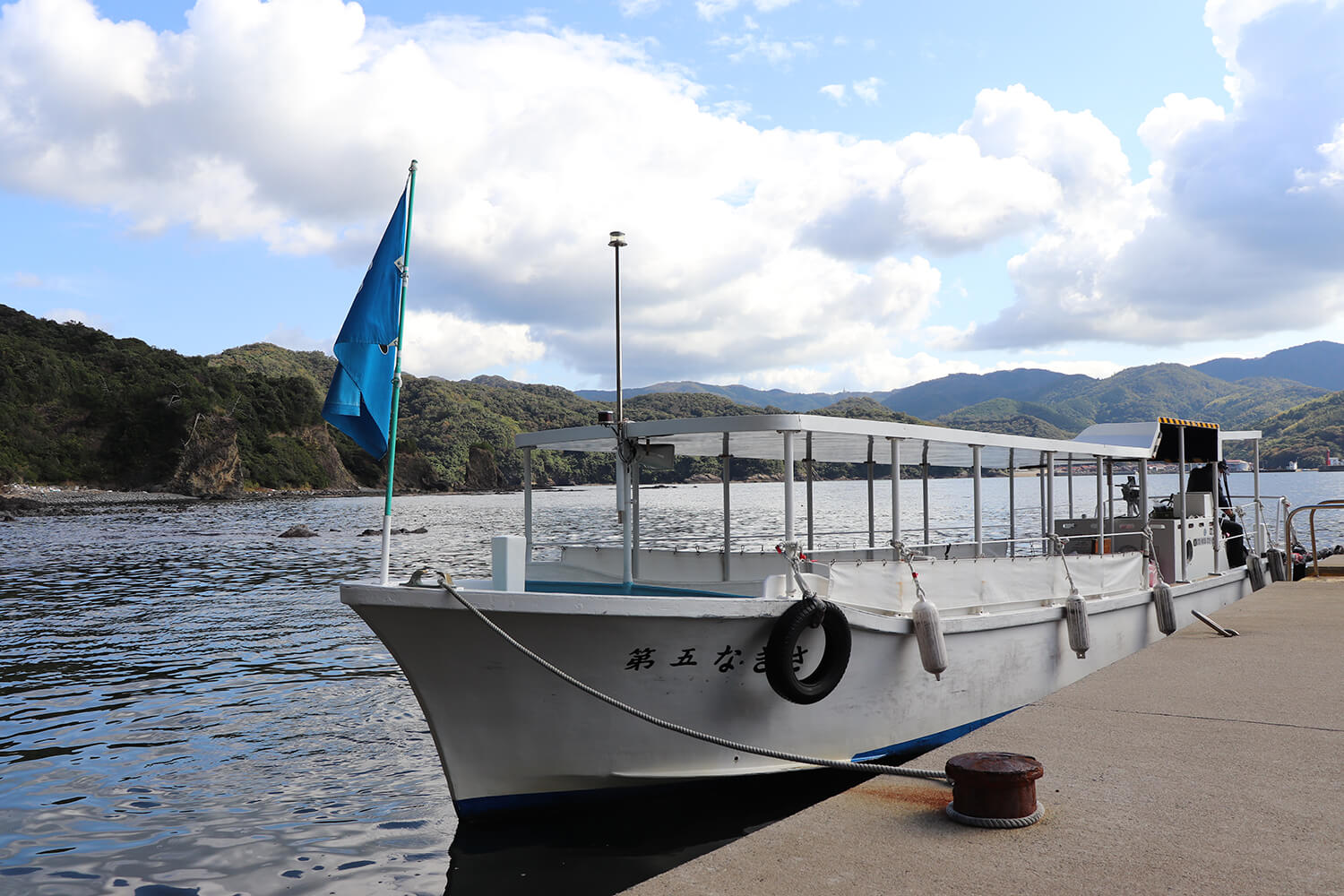
Sightseeing boats depart from the Shimane Peninsula, which is designated as "Daisen-Oki National Park. The highlight of the tour are two underwater caves called "Kutake. Kutake is the birthplace of Sarutahiko-no-mikoto (later Sata-no-Okami), which is described in Izumo no Kuni Fudoki (Izumo Province Fudoki) as the place where the mother goddess shot a golden arrow through the cave during childbirth, and the boat ride through the cave is a mystical experience.
The other "Old Hidden Door" is a riverbed where the souls of children who died at an early age are said to gather, and visitors can get off the boat to pay their respects. The boat ride takes about 50 minutes. You can enjoy a realistic sightseeing tour.
Up close to the beauty of natural formations created by volcanic activity

The sightseeing boat is not the only attraction. The dynamic scenery of the national park is also a must-see. You can observe up close the reefs formed by volcanic activity in ancient times and strange rocks created by wave erosion from the sea.
On the second floor of the Marine Plaza Shimane, where the cruise boat dock is located, is the Matsue Visitor Center, where you can learn about the Geopark and see exhibits of rocks and fossils.
Local Guide
On the first floor of Marine Plaza Shimane is Dining Area Nagisa, run by local women, which serves delicious "turban shell rice" using locally caught turban shells and morning fish sashimi. The nearby beaches are the clearest in the prefecture and highly recommended.
- Kurido Sightseeing Boat
-
- 6120-14 Kaga, Shimane-cho, Matsue City, Shimane Prefecture MAP
- Sunset Café is held at 10:20, 11:20, 12:20, 13:20, 14:20, 15:20, and 15:20.
Subject to change due to sea, weather, and navigation conditions. - December-February (open all year round from March to November) *Ships are cancelled in case of bad weather or high seas.
- Adults (junior high school students and older) 2,000 yen, children (elementary school students) 1,000 yen, persons with disabilities and caregivers: adults 1,500 yen, children 700 yen
- 0852-85-9111
- Free
- Please call or check the website to confirm the operation status on the day of your visit.
MAP
- Izumo City, a recommended spot in Izumo City.
- <Matsue City Recommended Spots> Izumo Taisha Shrine
- Nearby Hoshino Resorts Properties

Local Guide in Charge of This Article
- Masatomo Nagaoka Daikokubashira in Tamatsukuri
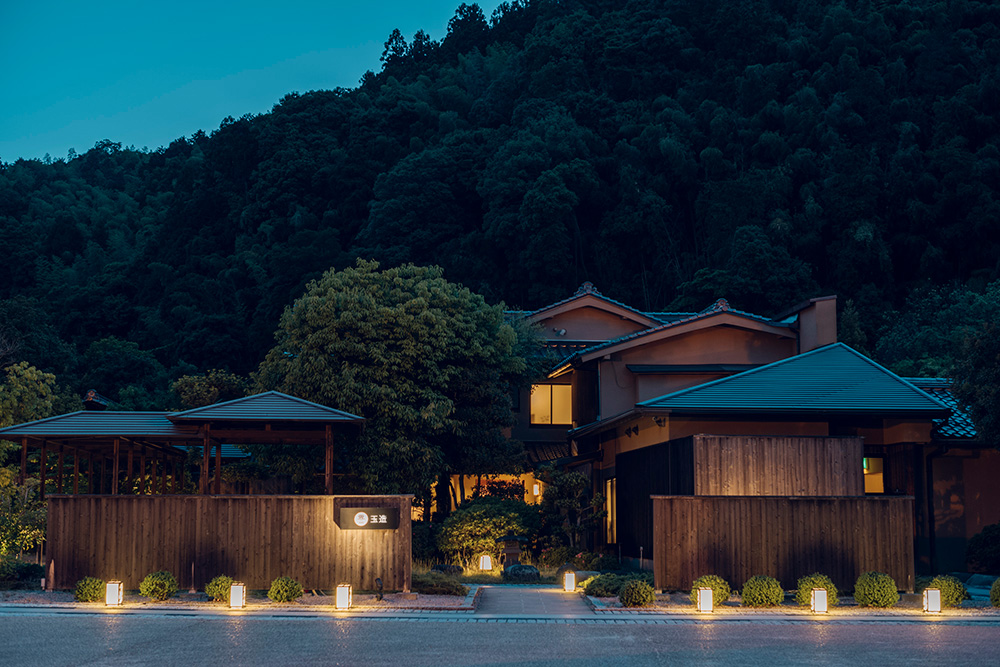
Hoshino Resorts KAI Tamatsukuri
Tamatsukuri hot spring, Shimane Prefecture
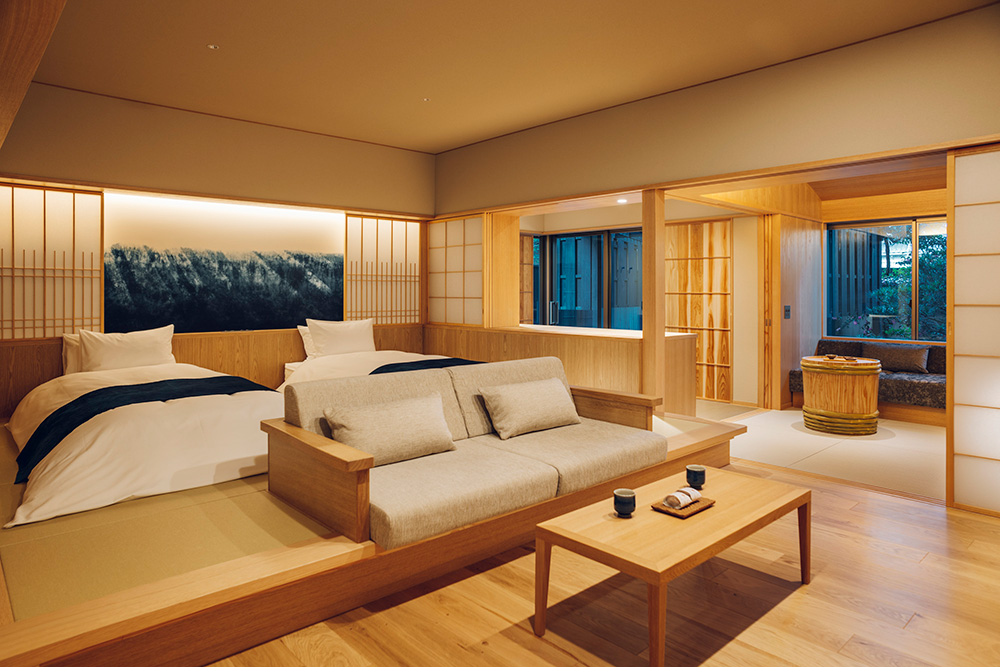
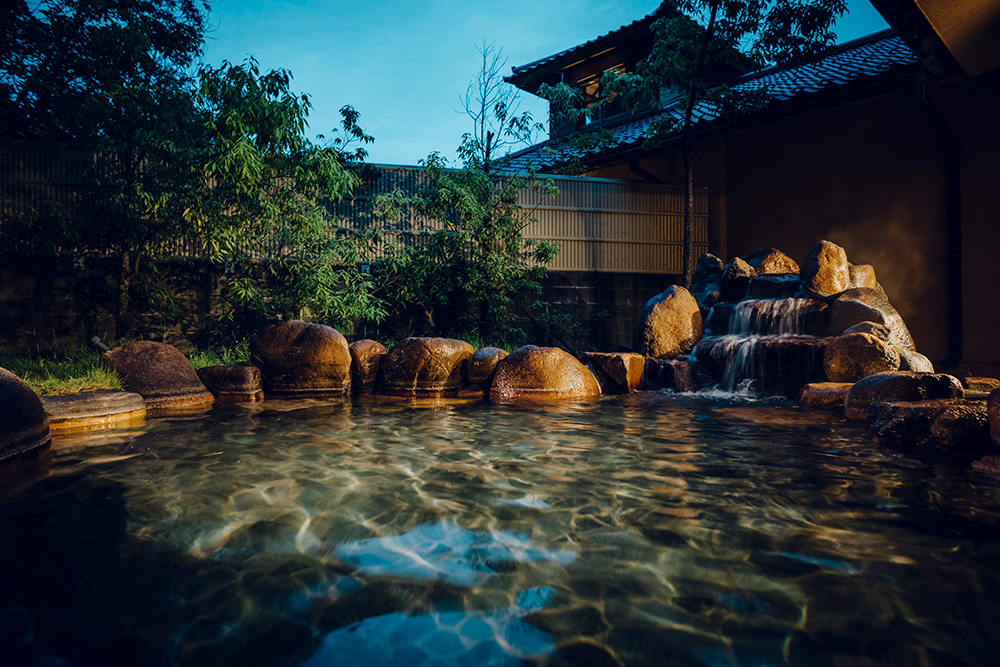
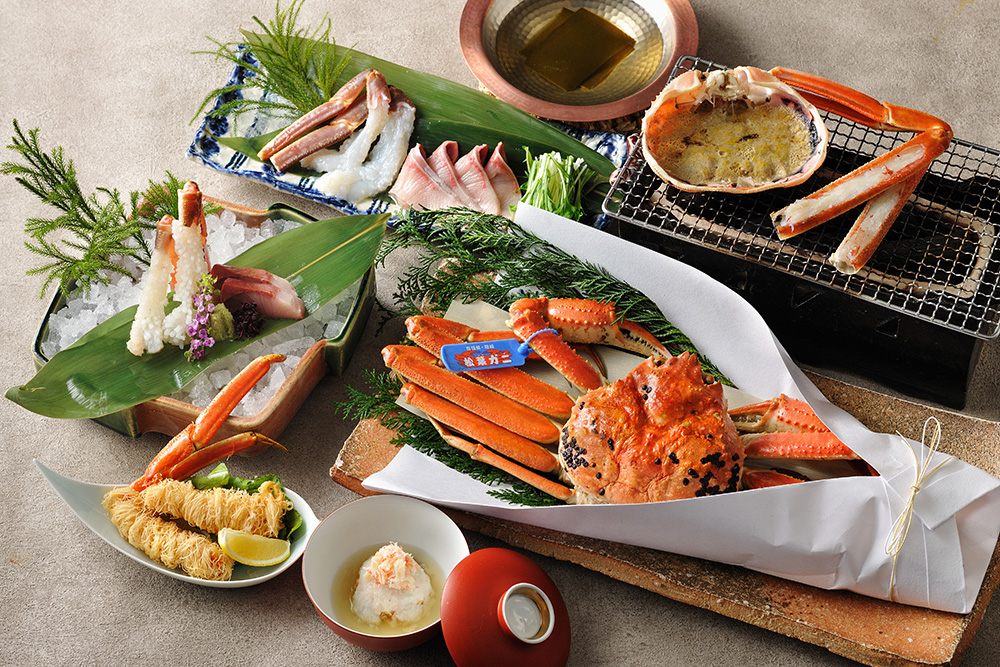
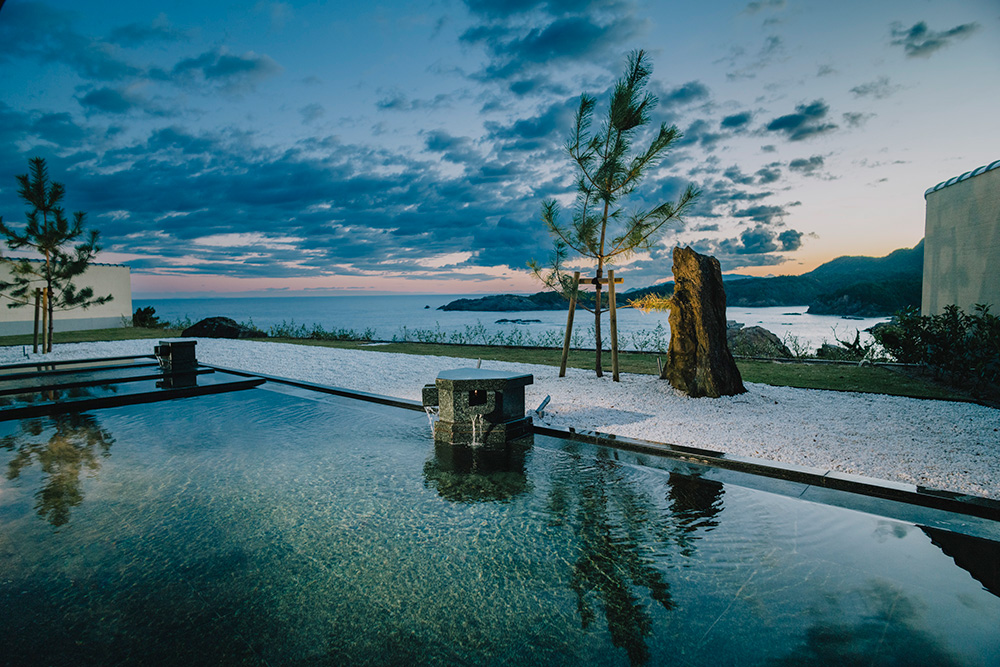
An inn with Outdoor hot spring baths in all Guest rooms where you can enjoy the hot spring water for beautiful skin. You can also enjoy Kagura (Shinto music and dance) and Japanese sake, which is said to have originated in Shimane.
Direction 5 minutes by cab from JR Tamatsukuri hot spring station
- Sample Room Rates
- Per person, per night From 38,000 yen
Hoshino Resorts KAI Izumo
Izumo Hinomisaki hot spring, Shimane
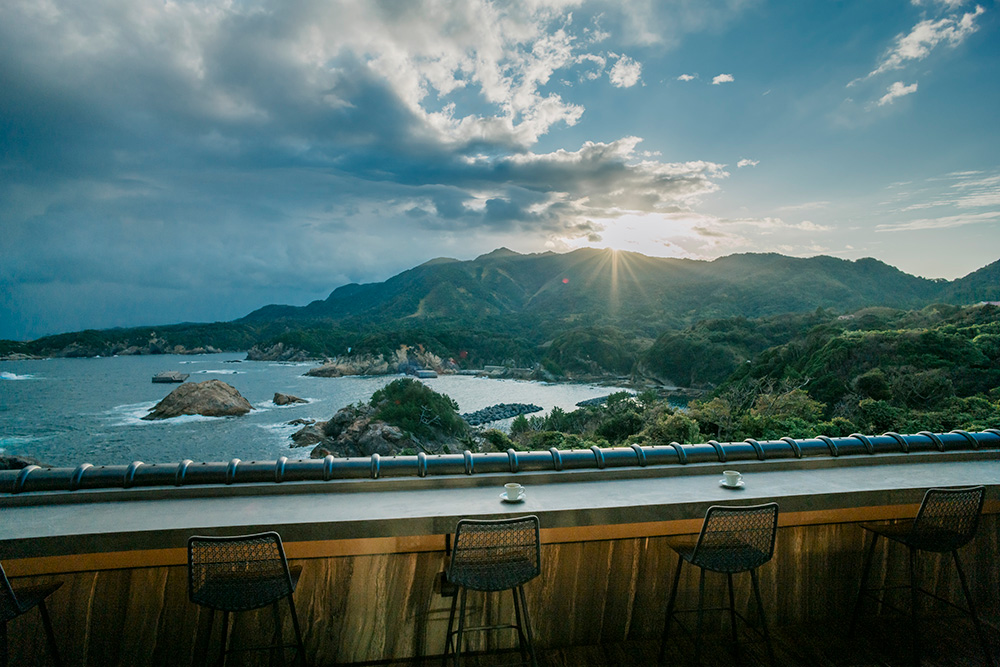
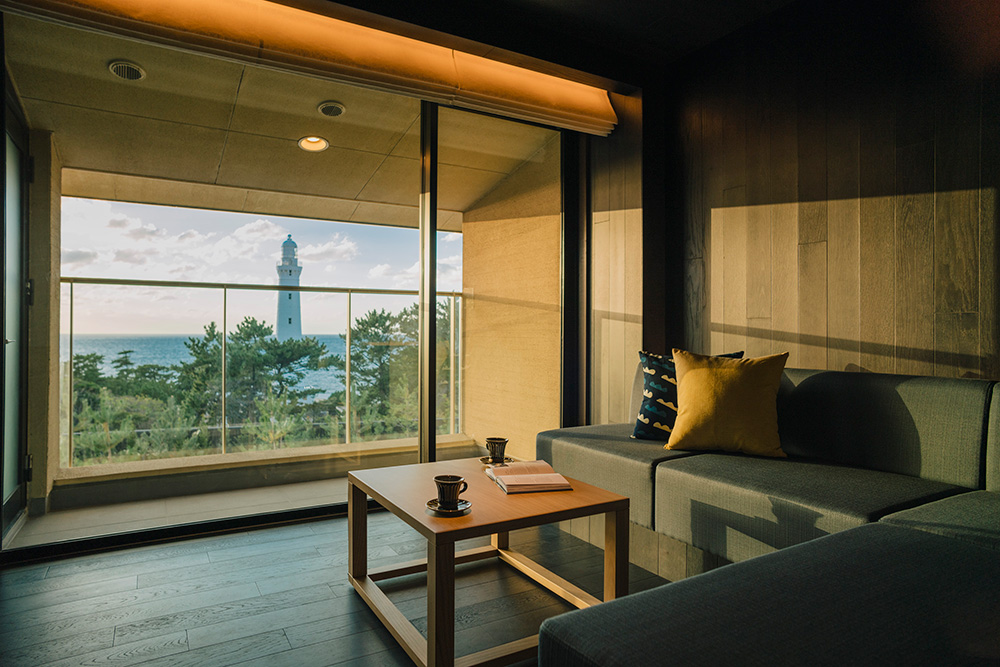
A hot spring inn located in Hinomisaki, where Izumo mythology is rooted. It is also conveniently located for paying a visit to Izumo Taisha Shrine.
Direction From JR Izumo City Station, take the Ichibata Bus. 1 minute walk from the Hinomizaki Lighthouse stop.
- Sample Room Rates
- Per person, per night From ¥19,000