





Enjoy drinks and a meal while gazing at the spectacular views of the Sea of Japan aboard Yamaguchi's sightseeing train, "Maru Maru no Hanashi".
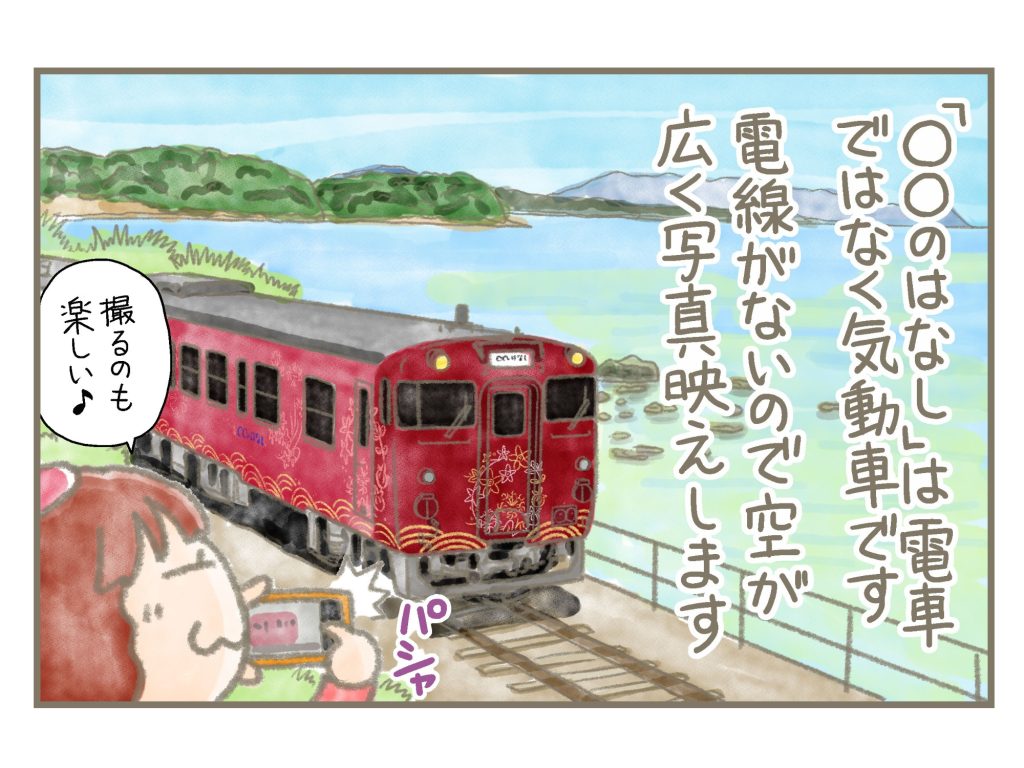
Hello, I'm Yasukorn, a manga artist and writer.
"Maru Maru no Hanashi" is a JR West sightseeing train that connects Hagi (Ha), Nagato (Na), and Shimonoseki (Shi) in Yamaguchi Prefecture. Since it runs along the Sea of Japan coast, you can enjoy spectacular ocean views.
The name is said to embody the wish that passengers will fill in the "Maru Maru" (blanks) with their own experiences, the scenery they encountered, and memories from the land, and then share those stories (hanashi) of their journey with someone else. Since this is my first time riding it, I'm excited to see what kind of words will fill those blanks!
The Michikusa Expert in charge of this article
-
Travel and Draw (Write)! Manga Artist & Writer
Yasukon
I love solo train travel while enjoying ekiben (station bento), station soba, hot springs, and alcohol. I have eaten over 2,500 ekiben. My books include "Solo Train Travel: Ekiben Tour Edition" (Genkosha) and others. I am currently serializing the manga "Neko ni Ekiben" in "Ryoko Yomiuri."
 Michikusa
Expert
● What kind of train is the sightseeing train "Marumaru no Hanashi"?
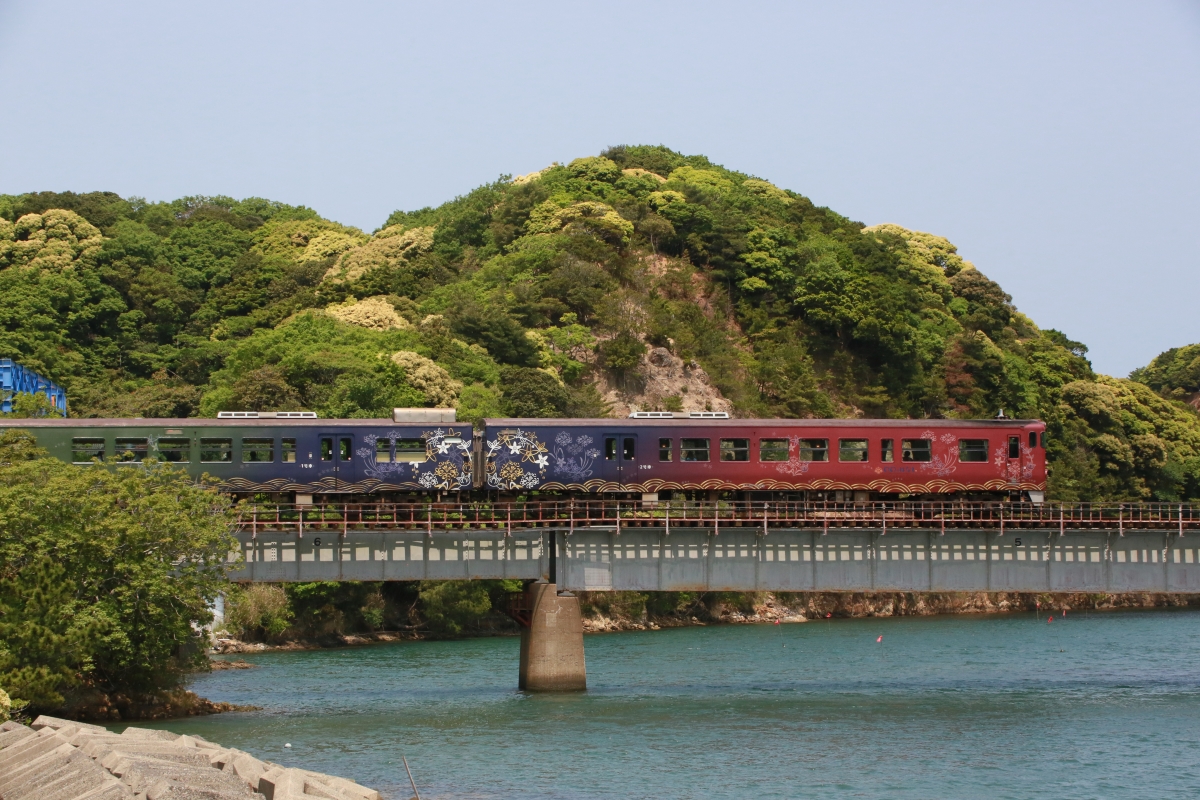
The sightseeing train "Maru Maru no Hanashi" operates between Shin-Shimonoseki Station, Shimonoseki Station, Nagato-shi Station, and Higashi-Hagi Station.It is a two-car sightseeing train that makes one round trip per day, mainly on weekends and holidays. The outbound journey takesabout 3 hours, and the return journey takes about 3 hours and 40 minutes as it stops at Senzaki. Special services may also run on other days.
All seats are reserved, so you need a seat reservation ticket in addition to your train ticket. Surprisingly, the seat reservation ticket can be purchased for 530 yen. It is a very accessible sightseeing train.
Seat reservation tickets go on sale at 10:00 AM one month before the boarding date at Midori no Madoguchi (ticket offices), Midori no Kenbaiki (ticket machines), and e5489, so I recommend booking as soon as they go on sale if possible.
If you want to enjoy the scenery, ocean-side seats are highly recommended. When booking, it is a good idea to check the seating chart on the official website and note down your preferred seat number.
Also, all counter seats face the ocean. Since the windows are large, you can still see the scenery well even from the mountain side.
This time, I will be taking the outbound trip from Shin-Shimonoseki Station to Higashi-Hagi Station. I booked a counter seat in Car 1.
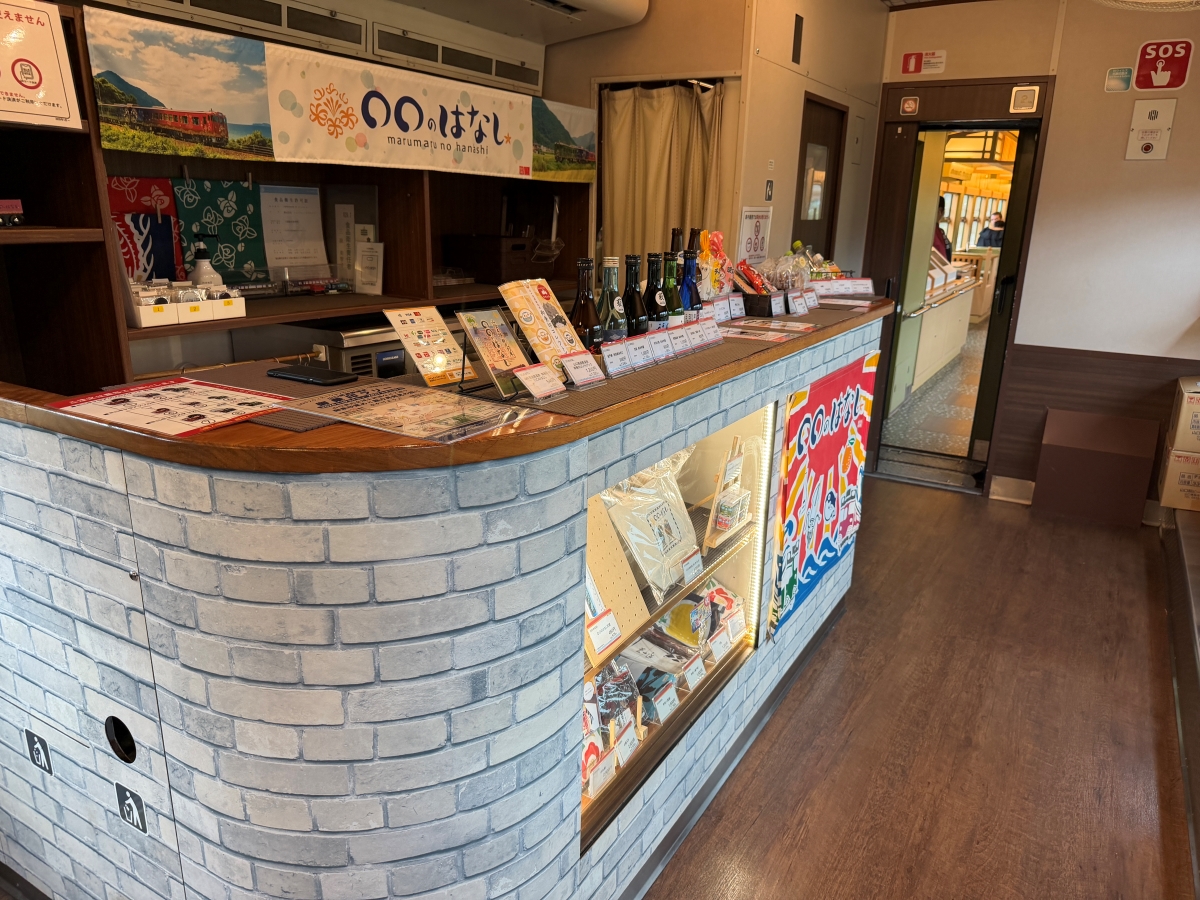
Once you have secured your seat, the next step is to reserve your bento. There is a kiosk on board where you can buy drinks and light snacks, but bento boxes are not sold. If you want a proper meal, be sure to reserve the "Yume no Hanashi Bento" in advance via the official website.
Michikusa Expert
The pre-ordered "Yume no Hanashi Bento" is only sold on the outbound trip between Shin-Shimonoseki/Shimonoseki and Higashi-Hagi. For the return trip, the "Hagi Sweets Set" is available for pre-order.
● Finally boarding the "Marumaru no Hanashi"
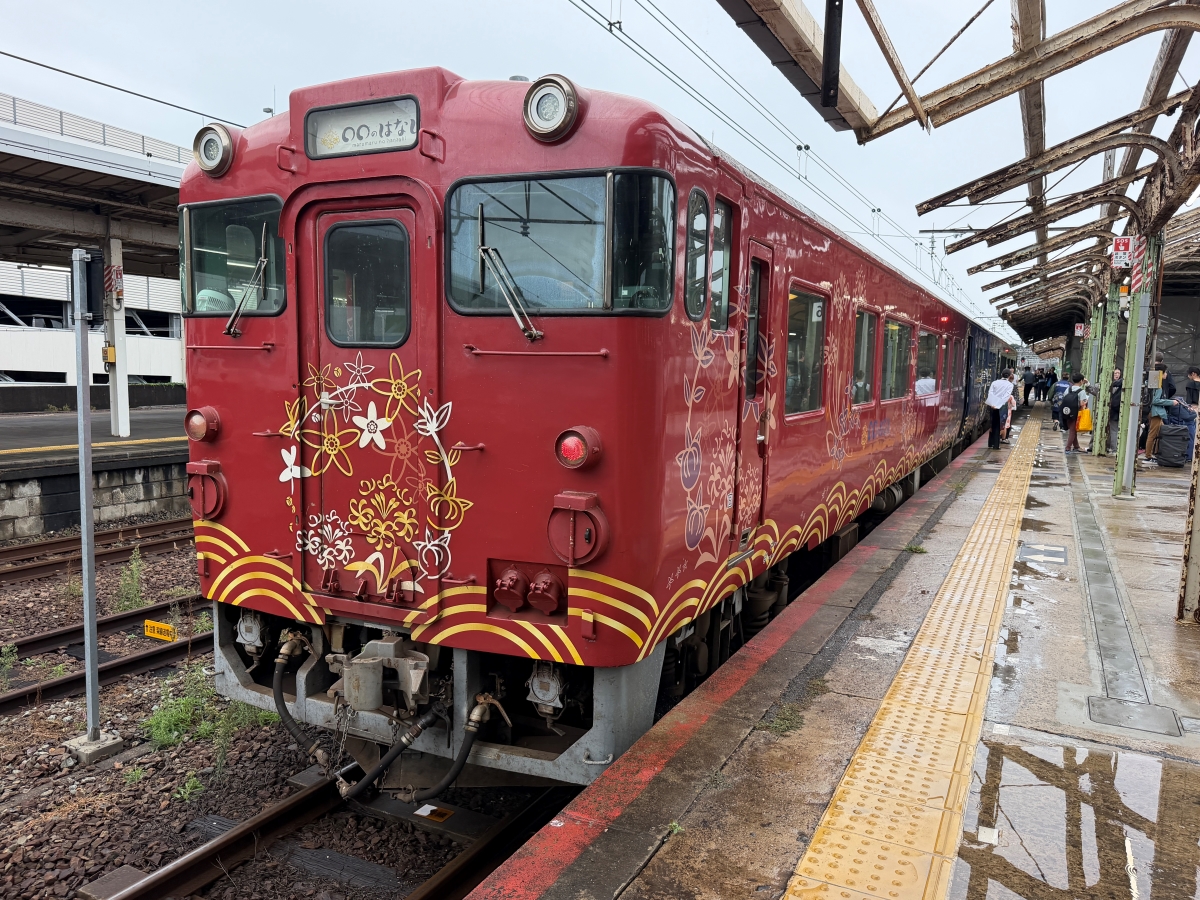
Now, for the day of the trip. The "Maru-Maru no Hanashi" departs from Shin-Shimonoseki Station at 9:54 AM and arrives at the platform a few minutes before departure. It is quite a distance from the Shinkansen ticket gate at Shin-Shimonoseki Station to the conventional line platform where the "Maru-Maru no Hanashi" departs, so make sure to head there with plenty of time to spare.
The exterior of the train that pulled into the platform features a beautiful red, blue, and green gradation representing "the sea connecting the West and the East."
I wanted to take photos right away, butsince there isn't much time after the train pulls into the station, I recommend taking photos of the train while it is stopped at Agawa Station along the way.
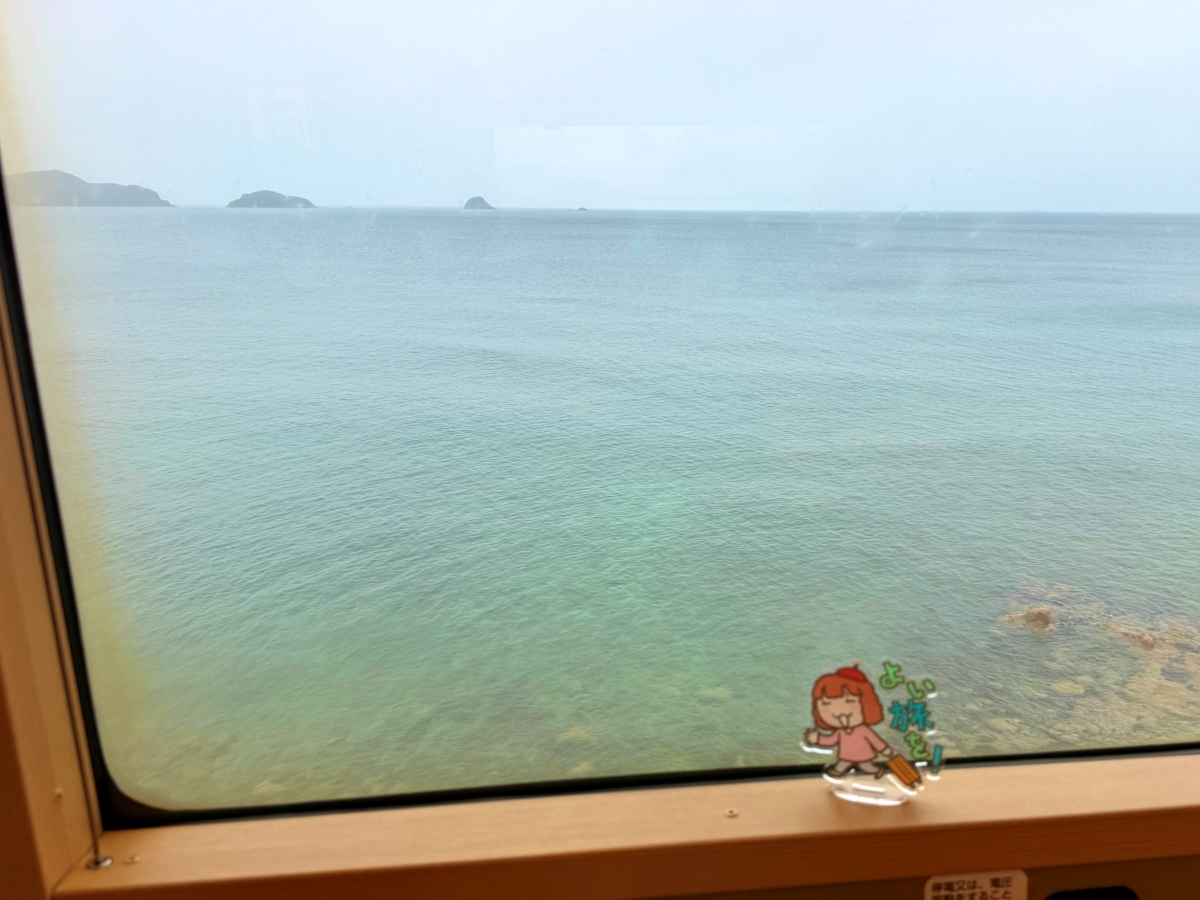
After departing Shin-Shimonoseki Station, the train changes direction at the next stop, Shimonoseki Station. Once you enter the San-in Line after that, you will start to see the ocean.
Unfortunately, it was raining on this day. Although it was gloomy, the windows are large and the open view in front of me felt very pleasant.
On board, a concierge explains the highlights of the scenery, so you can enjoy the trip even if you don't have any prior knowledge of the area along the line.
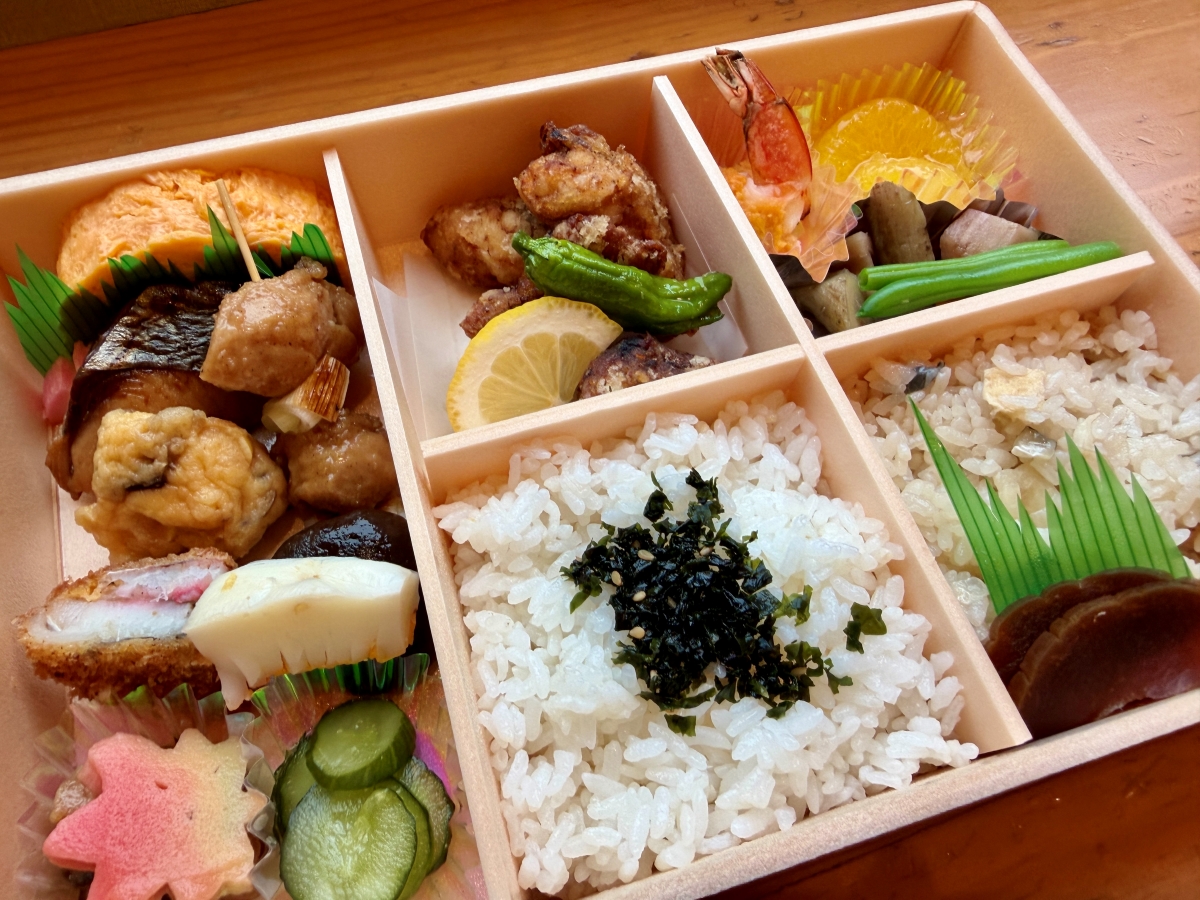
Then, the "Yume no Hanashi Bento" I had reserved was brought to me. The bento comes with tea.
The "Yume no Hanashi Bento" isa special bento created by "Kogushiya," a long-established ryotei restaurant founded in the 4th year of the Meiji era.Featuring seafood as the main attraction, it includes Shimonoseki's famous deep-fried fuku (pufferfish), fuku rice, deep-fried whale, grilled Spanish mackerel with yuzu, deep-fried conger eel, hiryouzu (ganmodoki), grilled squid with sea urchin, grilled shrimp with sea urchin butter, and summer orange agar jelly, among others.It is lined with side dishes incorporating local ingredients from Shimonoseki to Hagi. This is truly luxurious!
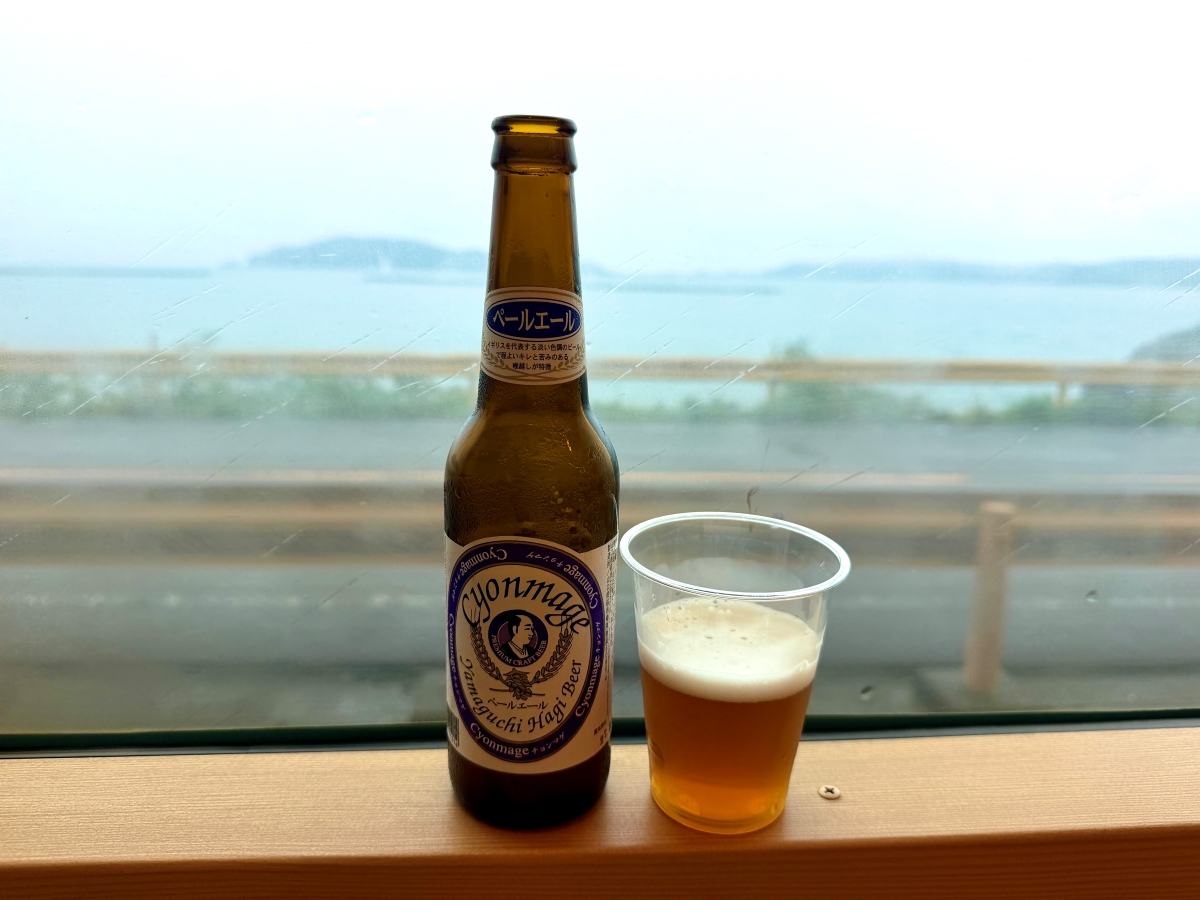
To go with my meal,I bought a beer at the kiosk. No matter the season, looking at the sea makes me want to drink beer.
I bought a local craft beer, "Chonmage Beer" Pale Ale, made in Hagi City, Yamaguchi Prefecture. I knew about "Chonmage Beer" because of its interesting name, but this was my first time drinking it. The beer has a fruity flavor while being crisp and refreshing, making it a perfect match for the food.
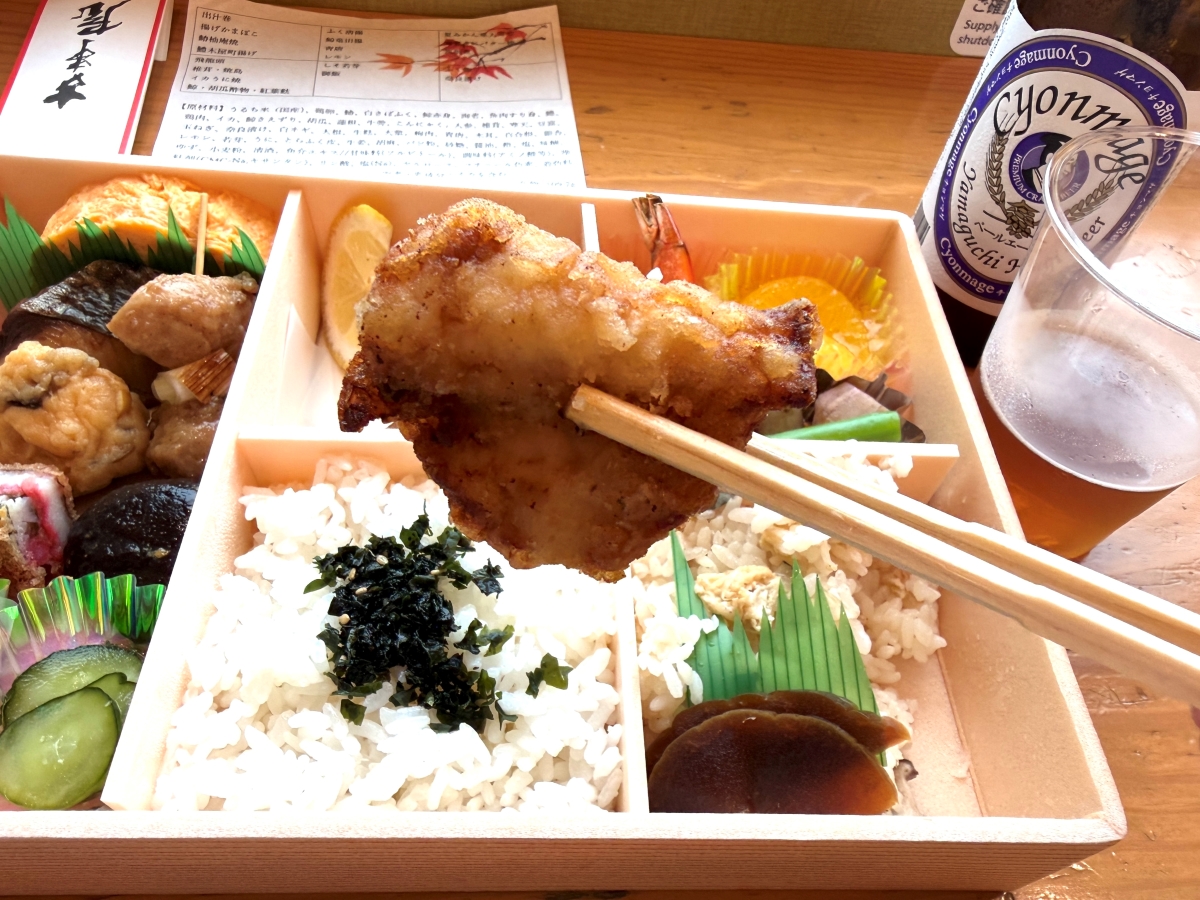
As expected of a ryotei, each dish in the "Yume no Hanashi Bento" is elaborate. The deep-fried fuku has a concentrated umami flavor that I really liked. The deep-fried whale had a nostalgic taste. The grilled shrimp with sea urchin butter was topped with plenty of sea urchin, and the buttery flavor was irresistible! It felt like a waste to eat it all at once, so I savored it slowly.
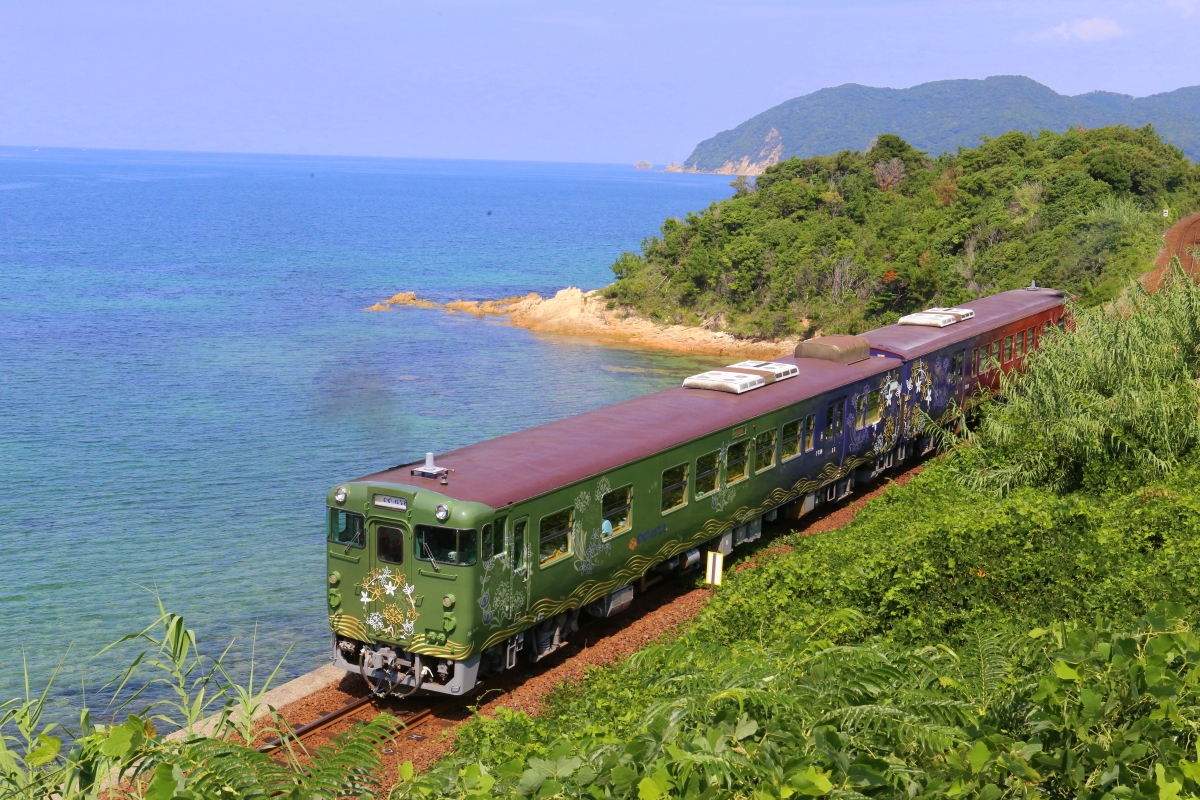
The train makes a stop along the Hibiki-nada Sea. You can get a panoramic view of the spectacular coastline at the westernmost point of Honshu.
Looking out the window, there is a steep cliff right below, and then the sea! There are several scenic spots like this, and the train stops at each one.
And the sea is very clear. It must be absolutely beautiful when it is sunny.
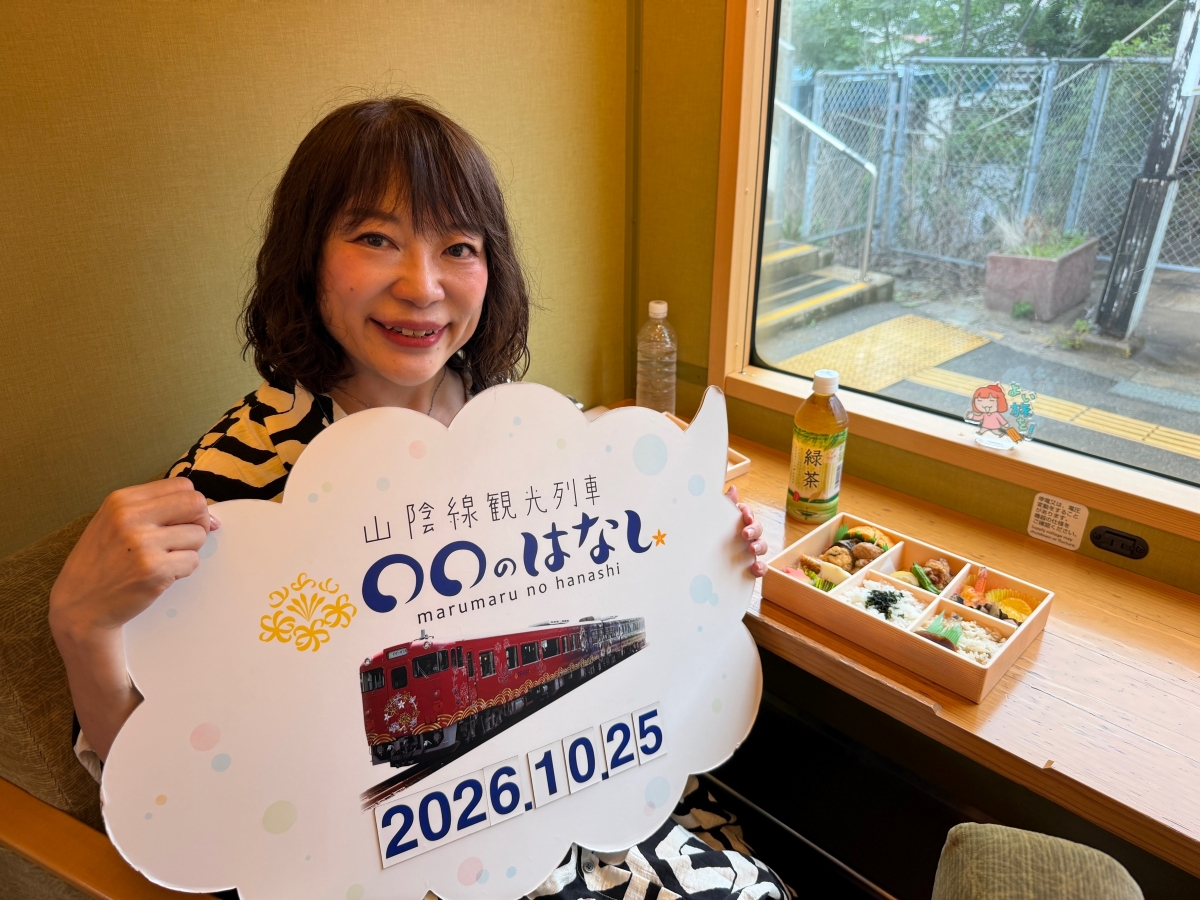
A quiz competition was also held inside the train. For example, questions like "What are the five major specialties of Shimonoseki?" were asked.
Thinking back to what was in the bento box earlier, I could figure out "fugu, sea urchin, whale, and squid," but I couldn't think of the last one...
When I asked, the answer was "anglerfish." It wasn't in the bento, but the bento was indeed made with local ingredients.
After that, a concierge took a commemorative photo for us.
Michikusa Expert
Please note that cash cannot be used at the onboard shop.
● Stopping by a cafe at Agawa Station
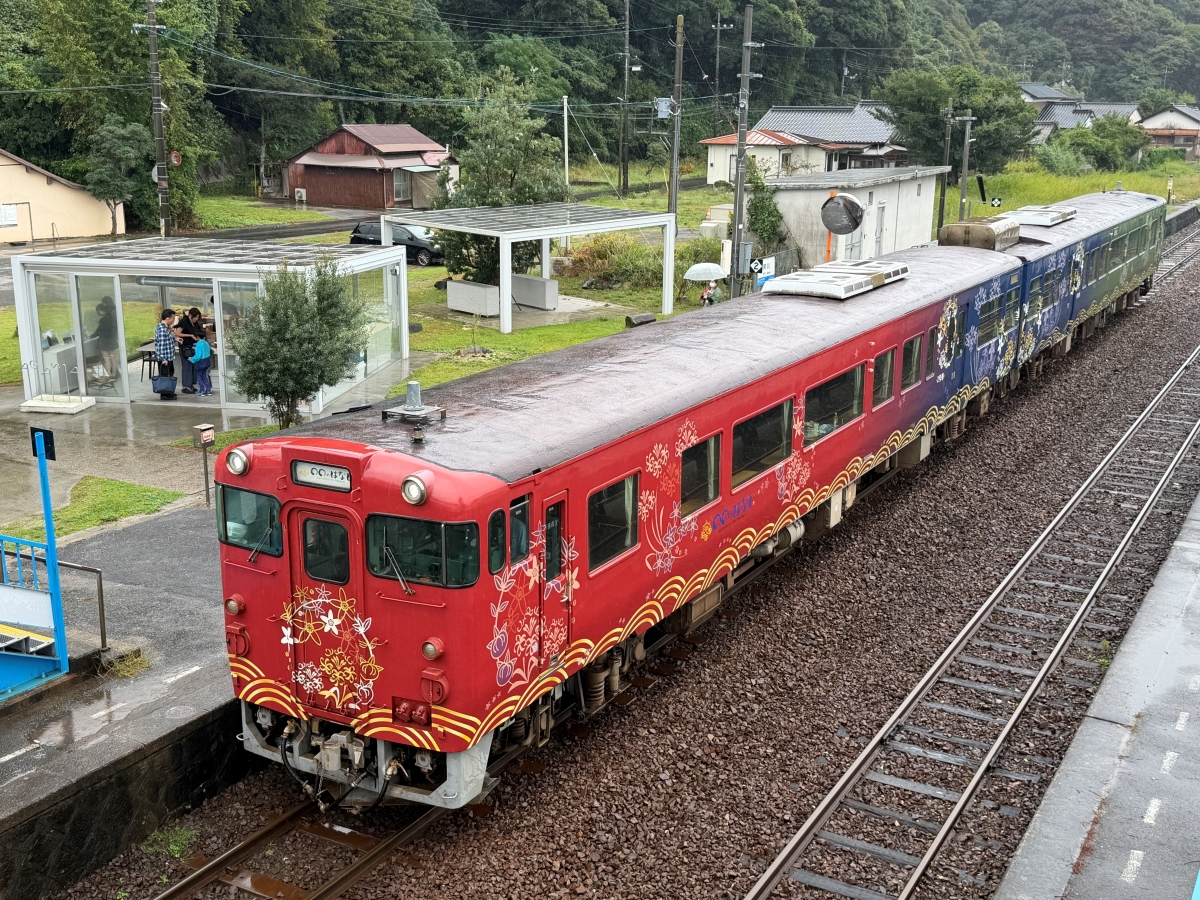
At 11:26, we arrived at Agawa Station. The train stops here for about 15 minutes. This is a chance to take pictures of the train.
I was surprised to find that Agawa Station has a stylish, glass-walled station building. And to my surprise, there is a cafe inside.
It seems thatthe cafe "Agawa" only opens inside the station building during the times when the "Marumaru no Hanashi" train is scheduled to stop there. What a wonderful piece of hospitality.
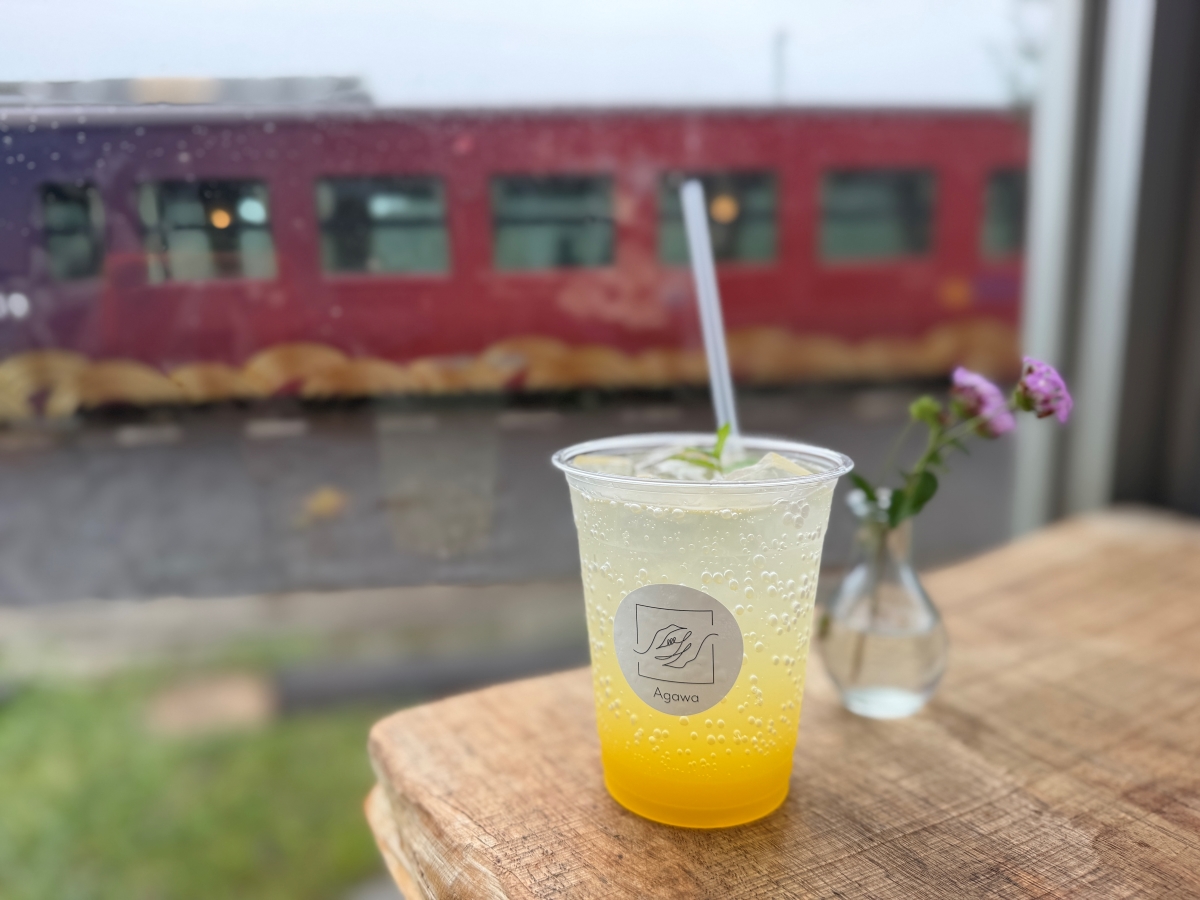
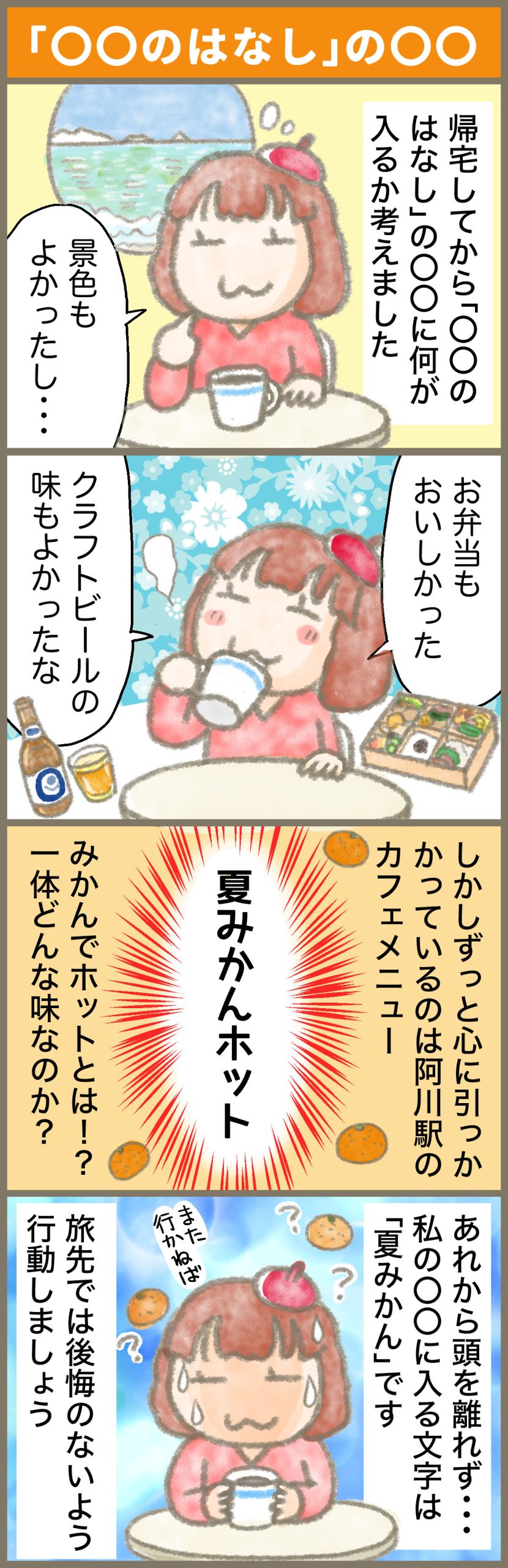
I was very curious about the "Summer Orange Hot" drink on the menu, but since it was a hot day, I chose the summer orange soda. Of course, you can bring what you buy onto the train and enjoy it at your leisure.
By the way, the summer orange is the prefectural flower of Yamaguchi Prefecture. The body of the "Maru Maru no Hanashi" train also features illustrations of "summer orange blossoms" and the "hama-yu" (spider lily), which is the city flower of Shimonoseki City.
Michikusa Expert
Agawa Station has a footbridge, so if you take photos from there, you can get a beautiful shot of the train and the station building.
● The train cars are modified KiHa 47 series
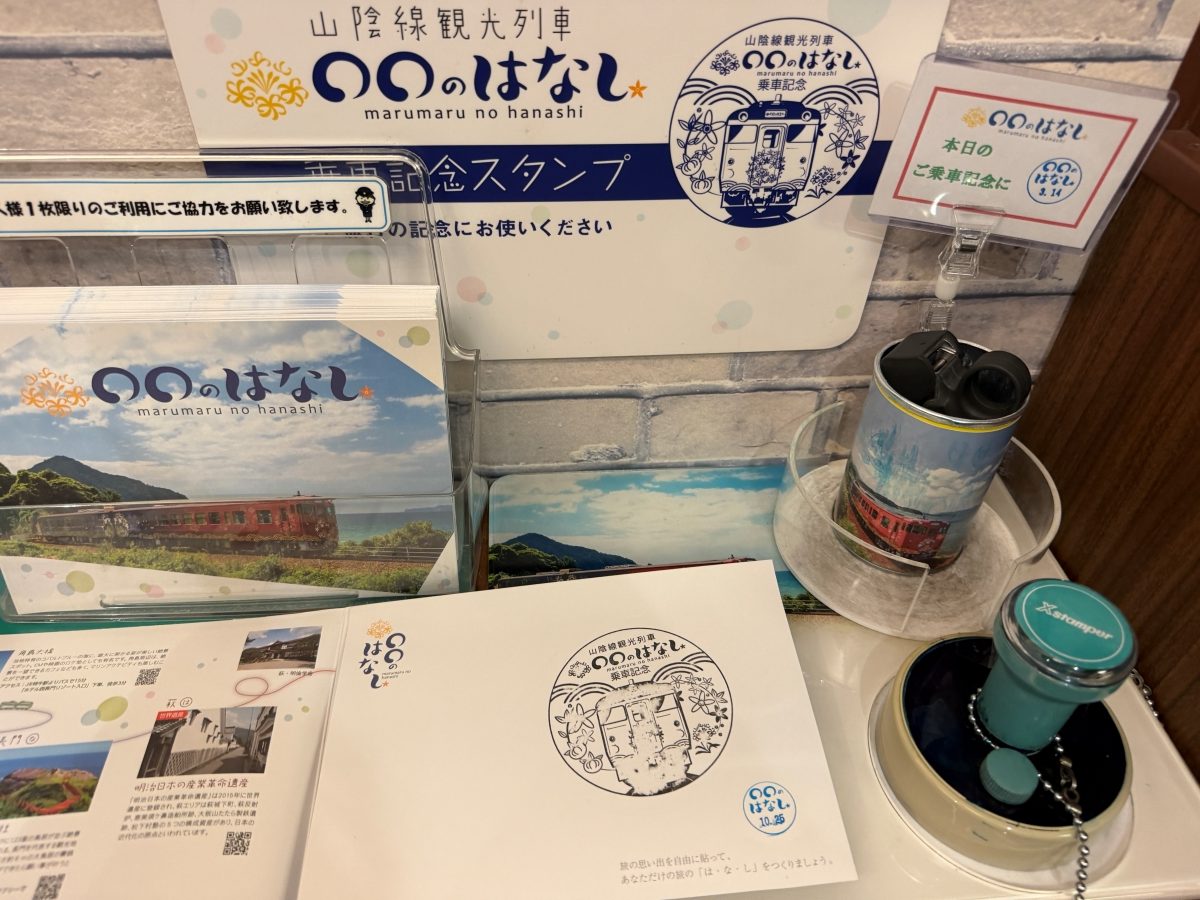
You don't have to stay in your seat the whole time on a sightseeing train. Since you're here, why not walk around and explore the train?
There is a shop in Car 2, and in front of it, there is a commemorative stamp for your ride. There is also a date stamp, so if you use that as well, you can include today's date.
Be sure to take it home as a souvenir.
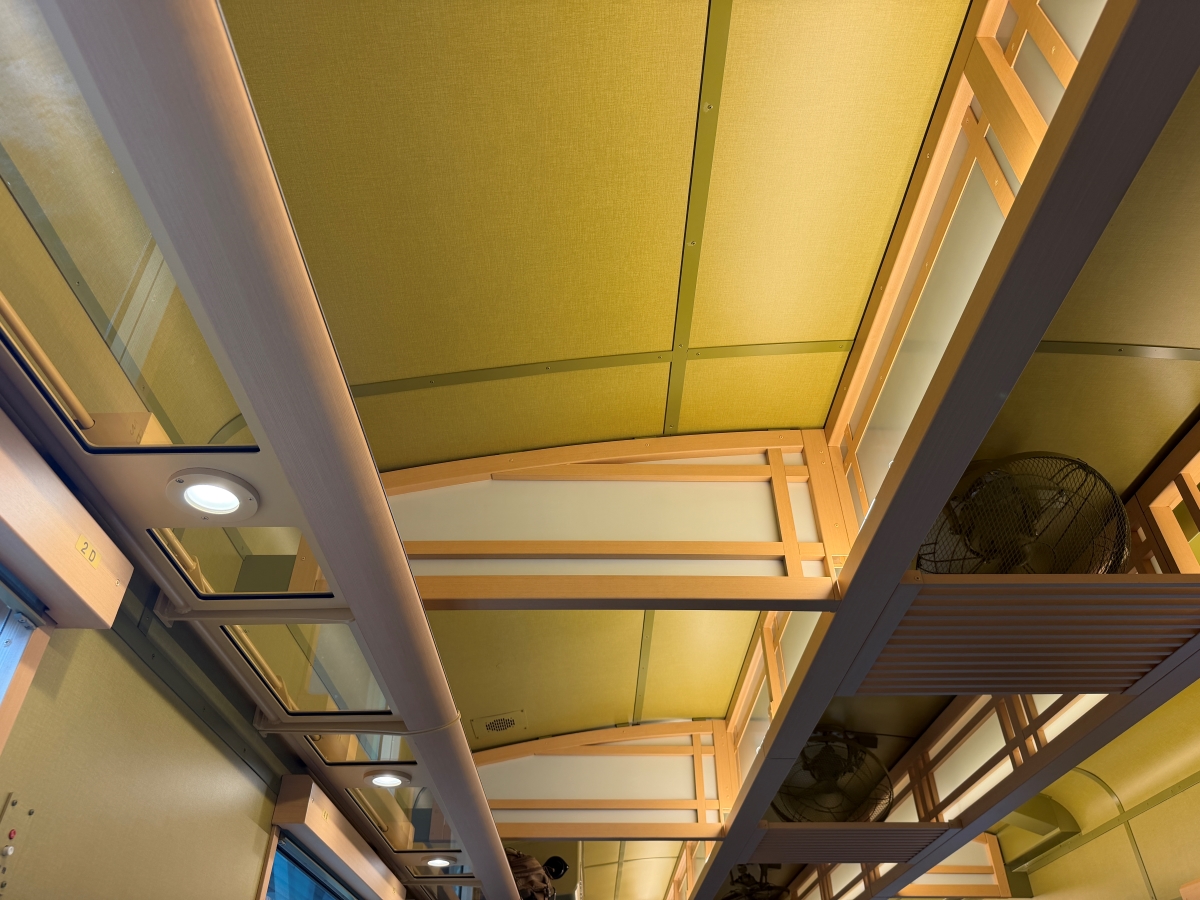
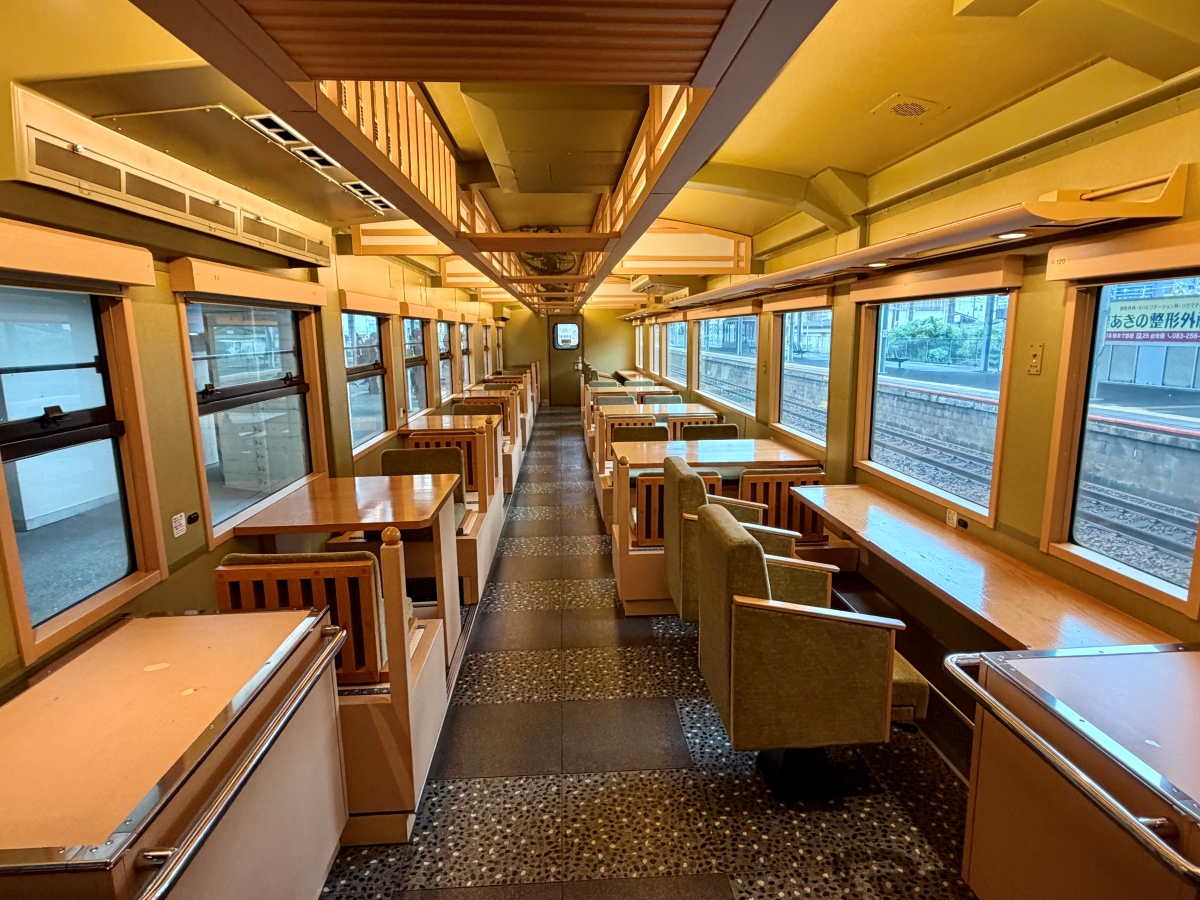
The ceiling of the Japanese-style Car 1 has an atmosphere just like a traditional Japanese room. In terms of color, perhaps it evokes the image of tatami mats and lattice doors.
The overhead racks are transparent, so you can see your luggage, which is reassuring. This way, you won't leave anything behind.
Also, under the tables in Car 1, except for the counter seats, there are tatami mats where you can take off your shoes and rest your feet.
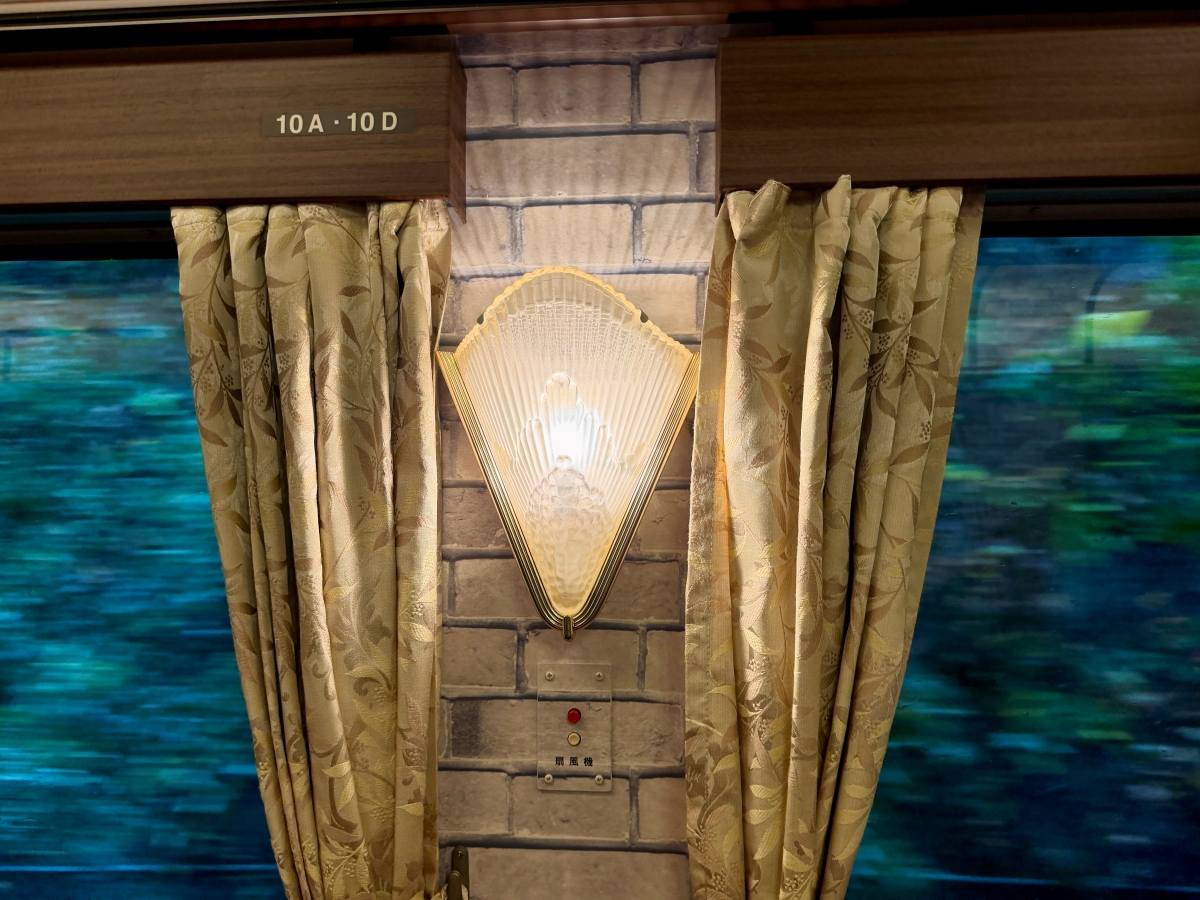
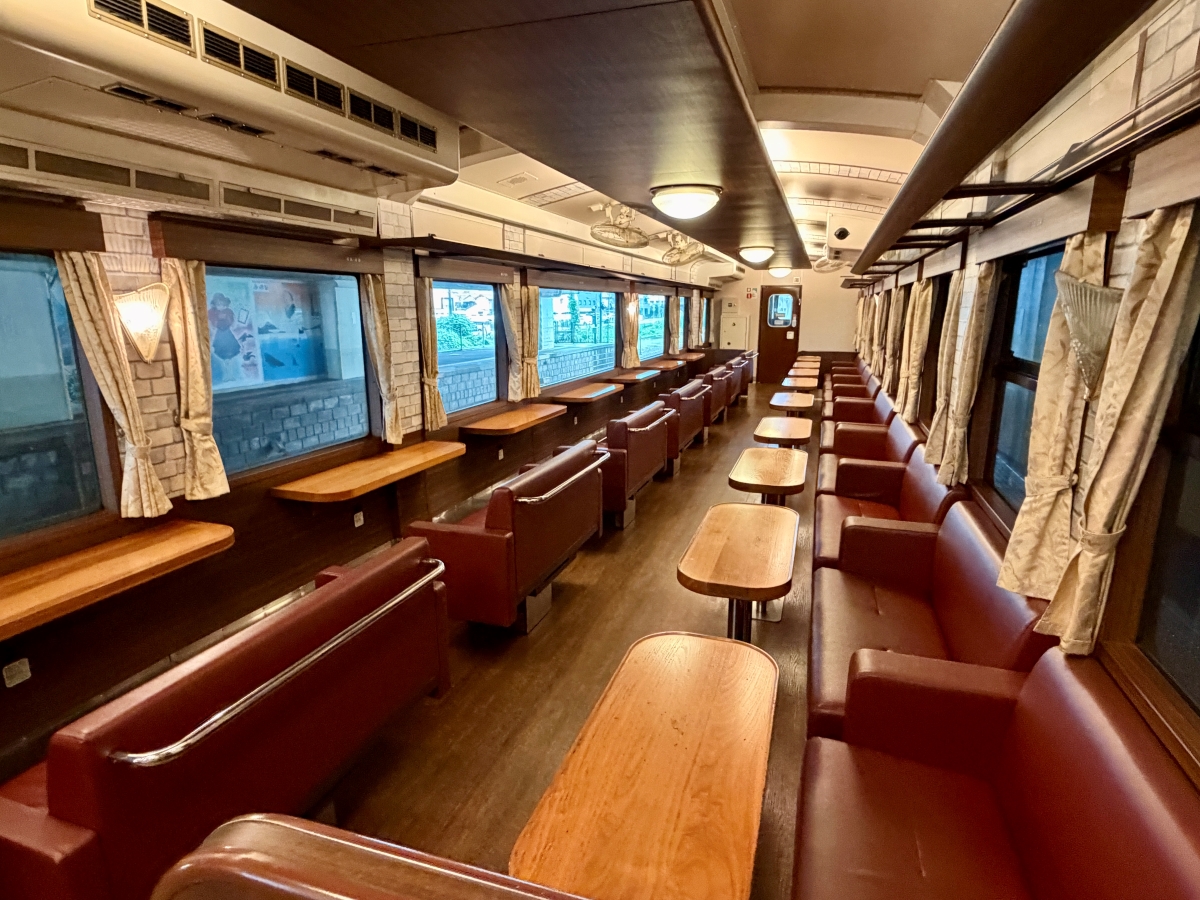
The lights in the Western-style Car 2 created beautiful streaks of light on the walls when the train entered a tunnel and it got dark.
Below the light, there is a switch for the electric fan. As in Car 1 earlier, there are also electric fans on the ceiling here. You can turn them on and off with this switch.
The cars for this sightseeing train were originally converted from old KiHa 47 train cars, and some of the equipment from that time still remains. The retro feel is wonderful.
Michikusa Expert
The KiHa 47 is a diesel railcar, not an electric train. Enjoy the unique experience, including the rumbling sound of the diesel engine and the rhythmic clattering motion.
● Heading for sightseeing in Hagi from Higashi-Hagi Station
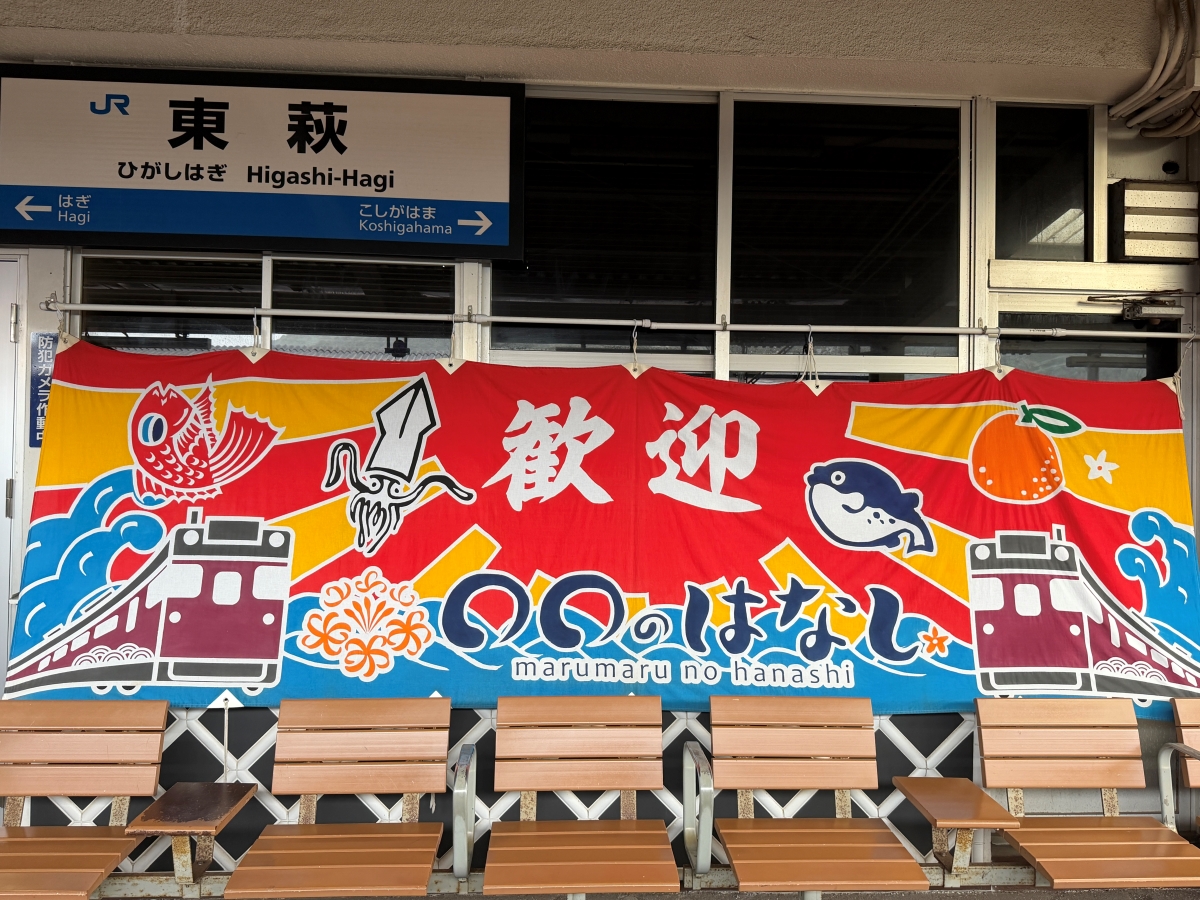
The train stopped at Nagato Station for about 6 minutes. Many passengers got off here. A few more people also disembarked at the next stop, Hagi Station.
I stayed on until the final stop, Higashi-Hagi Station. On the platform here, passengers are welcomed by vibrant "tairyo-bata" (big catch flags).
Since I'm here, I'd like to do a little sightseeing in Hagi.
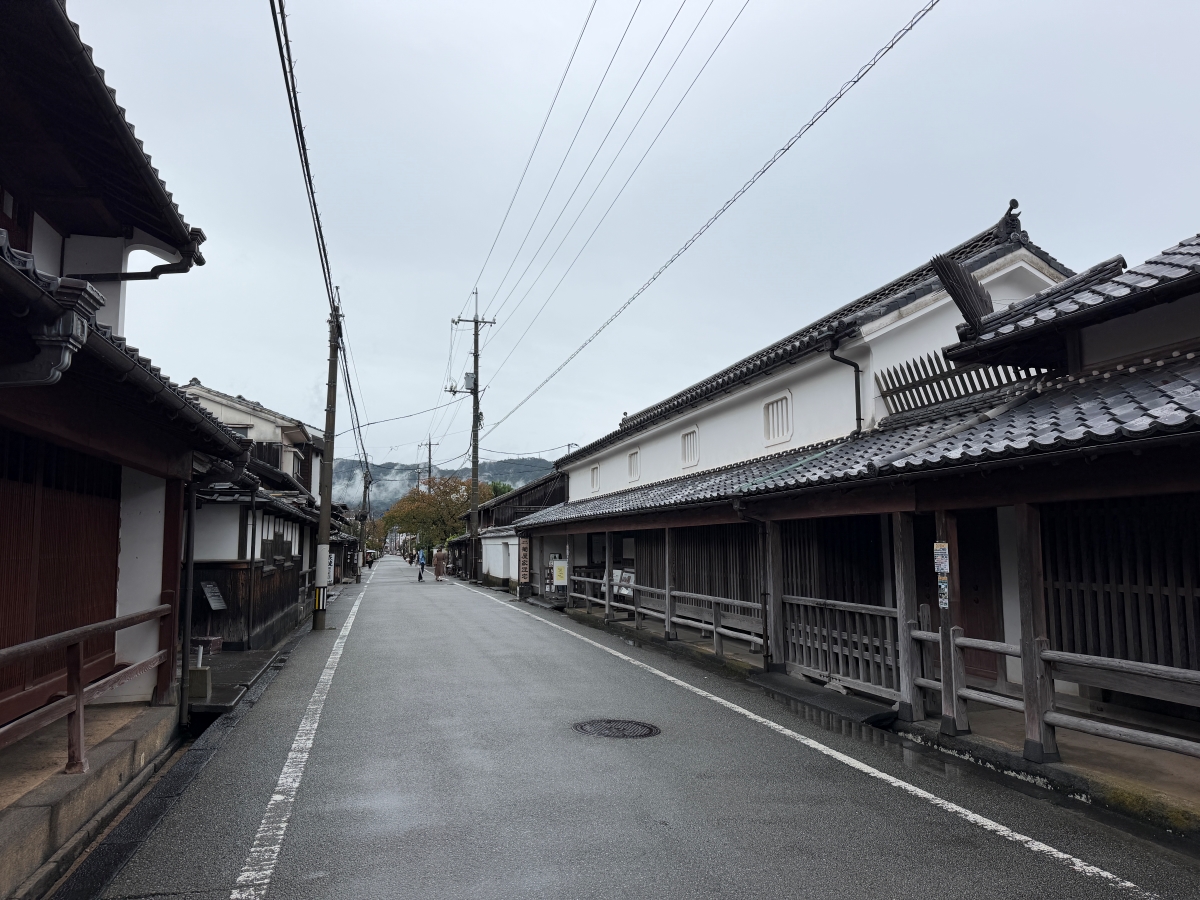
There are rental bicycles available, but I gave up on that because of the rain. I decided to take a bus part of the way and walk from there.
I am heading to the Hagi castle town, which is registered as a component of the World Cultural Heritage site "Sites of Japan’s Meiji Industrial Revolution."
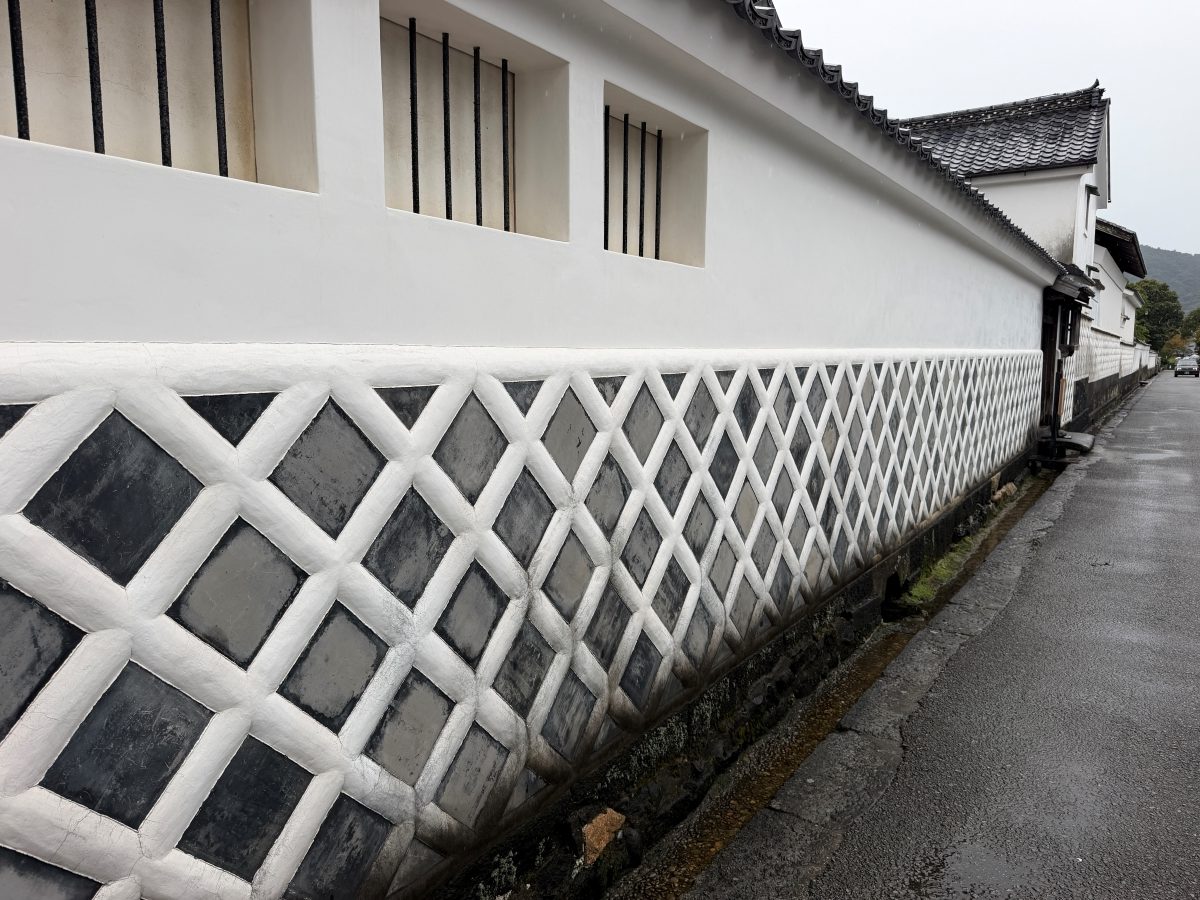
First, I went to the Kikuya House Residence. I only walked around the main street and the area surrounding the Kikuya House, but it was great to see things like the famous "namako-kabe" (sea cucumber walls).
The main house and other buildings are designated as Important Cultural Properties, and this alley is called "Kikuya Yokocho" and is said to be selected as one of the 100 Best Roads in Japan. Because of the rain, the damp walls looked even more beautiful.
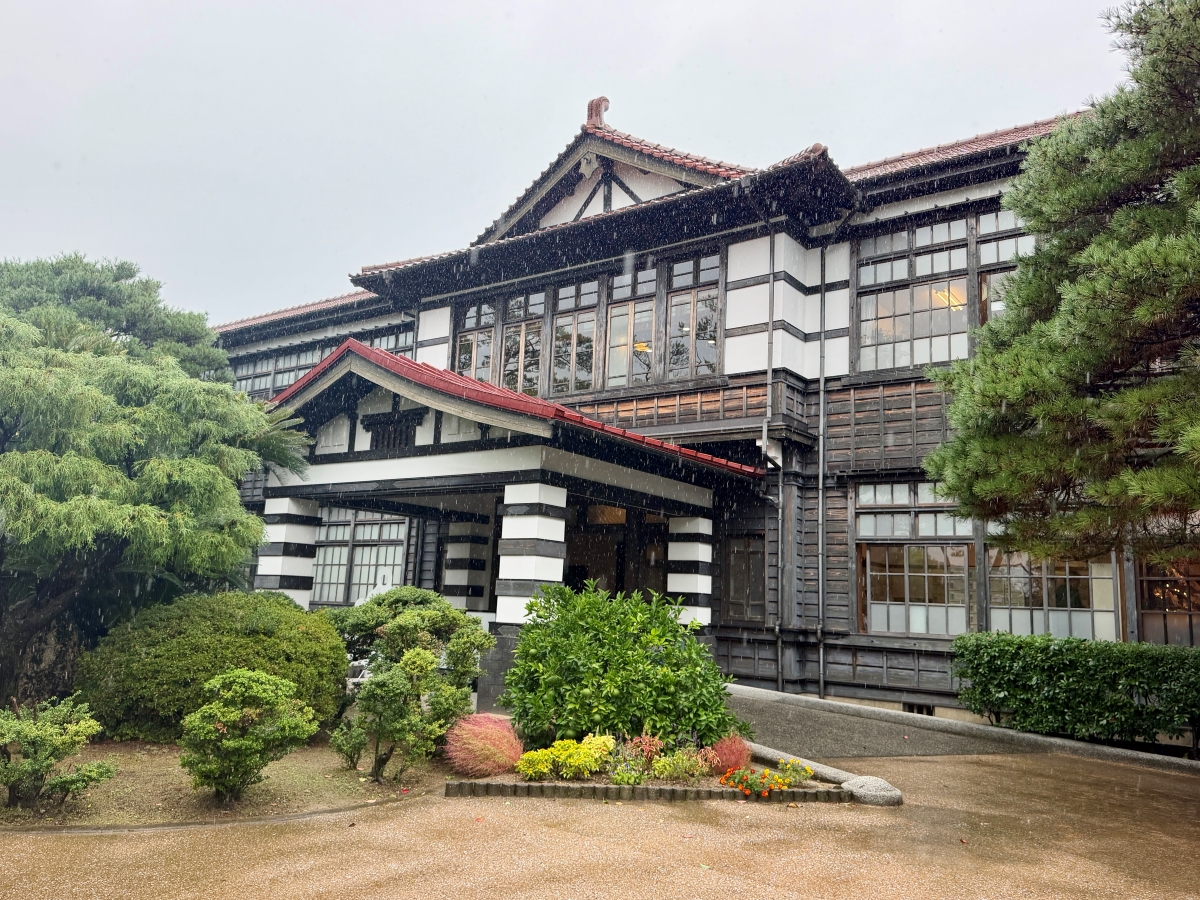
I continued walking toward Hagi Meirin Gakusha.
This is built on the site of the "Hagi Hanko Meirinkan," which was the domain school of the Choshu Domain during the Edo period.It was used as the former Meirin Elementary School for a while, but now it isIt is a tourist facility where you can learn about Japanese history and culture.
The group of wooden school buildings, including the main building constructed in 1935, is designated as a Registered Tangible Cultural Property of Japan. It is a very large wooden schoolhouse, and I did not have enough time to see everything.
I would like to visit Hagi again.
When returning to Higashi-Hagi Station, some people boarded the return trip of the "Marumaru no Hanashi" train to head back. Having various experiences, finding your own "something," and sharing those memories with family and friends... perhaps that is what a journey is all about.

RISONARE Shimonoseki
Shimonoseki City, Yamaguchi Prefecture
A hotel with a prime location overlooking the Kanmon Straits, allowing guests to fully enjoy the strait during their stay.
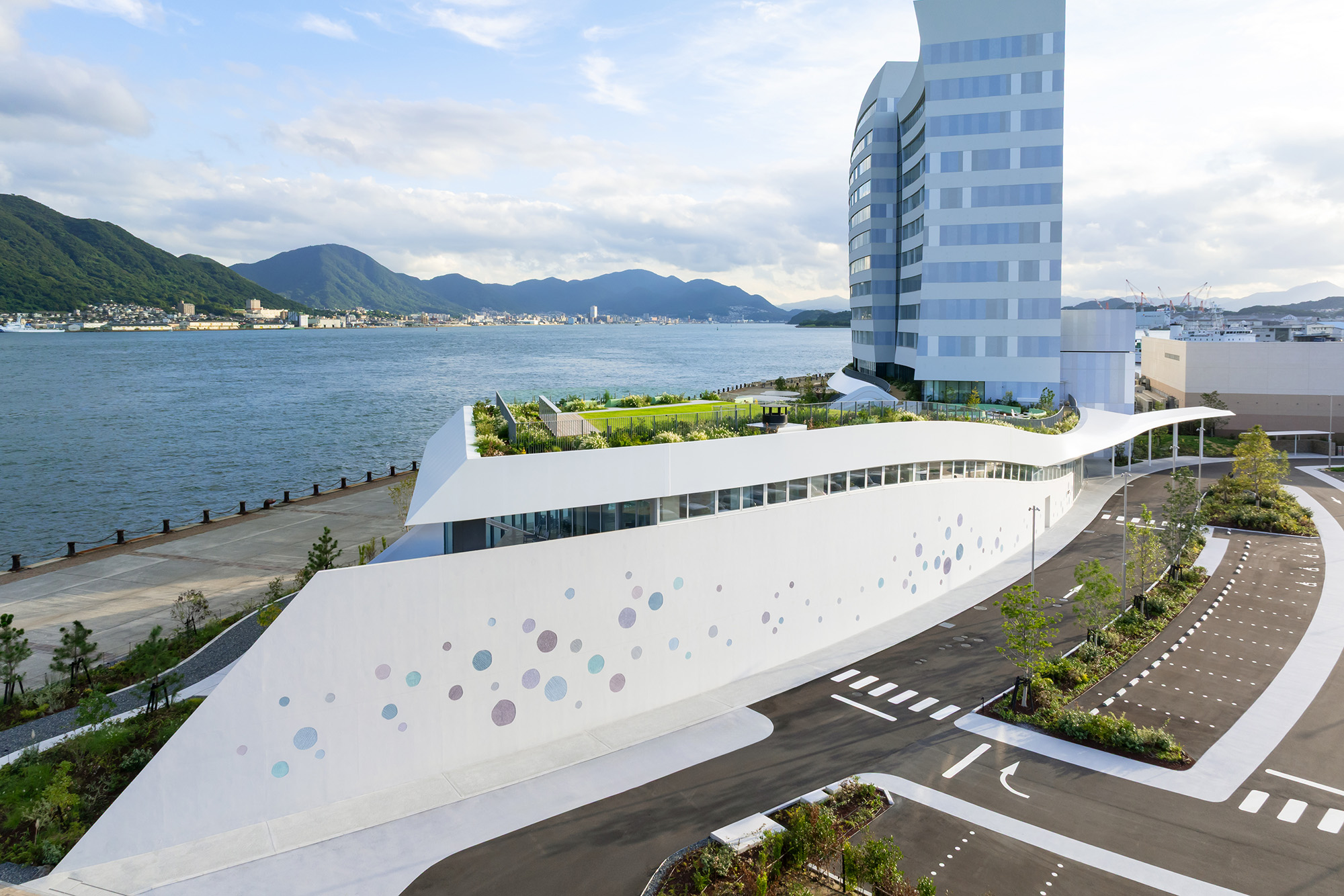
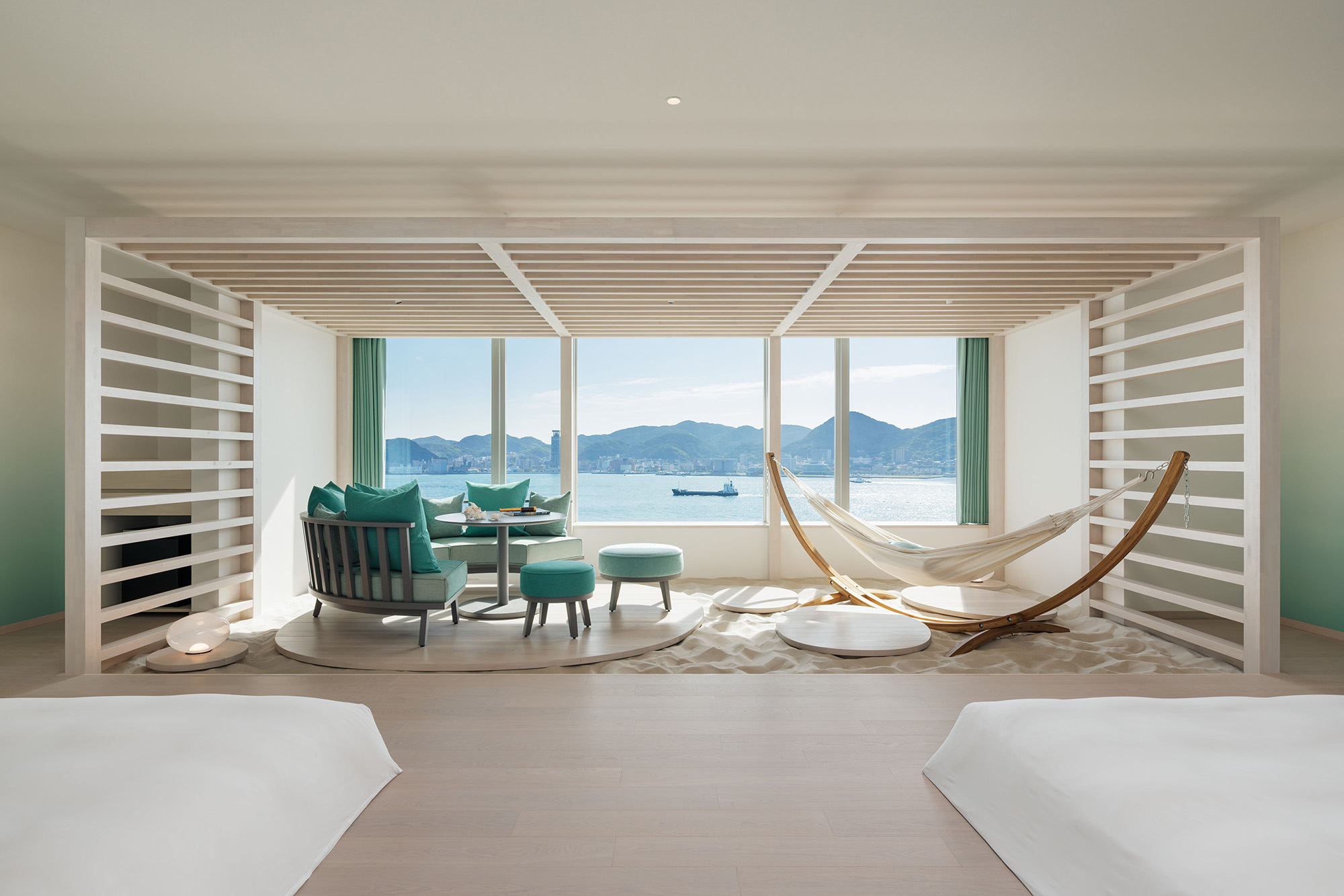
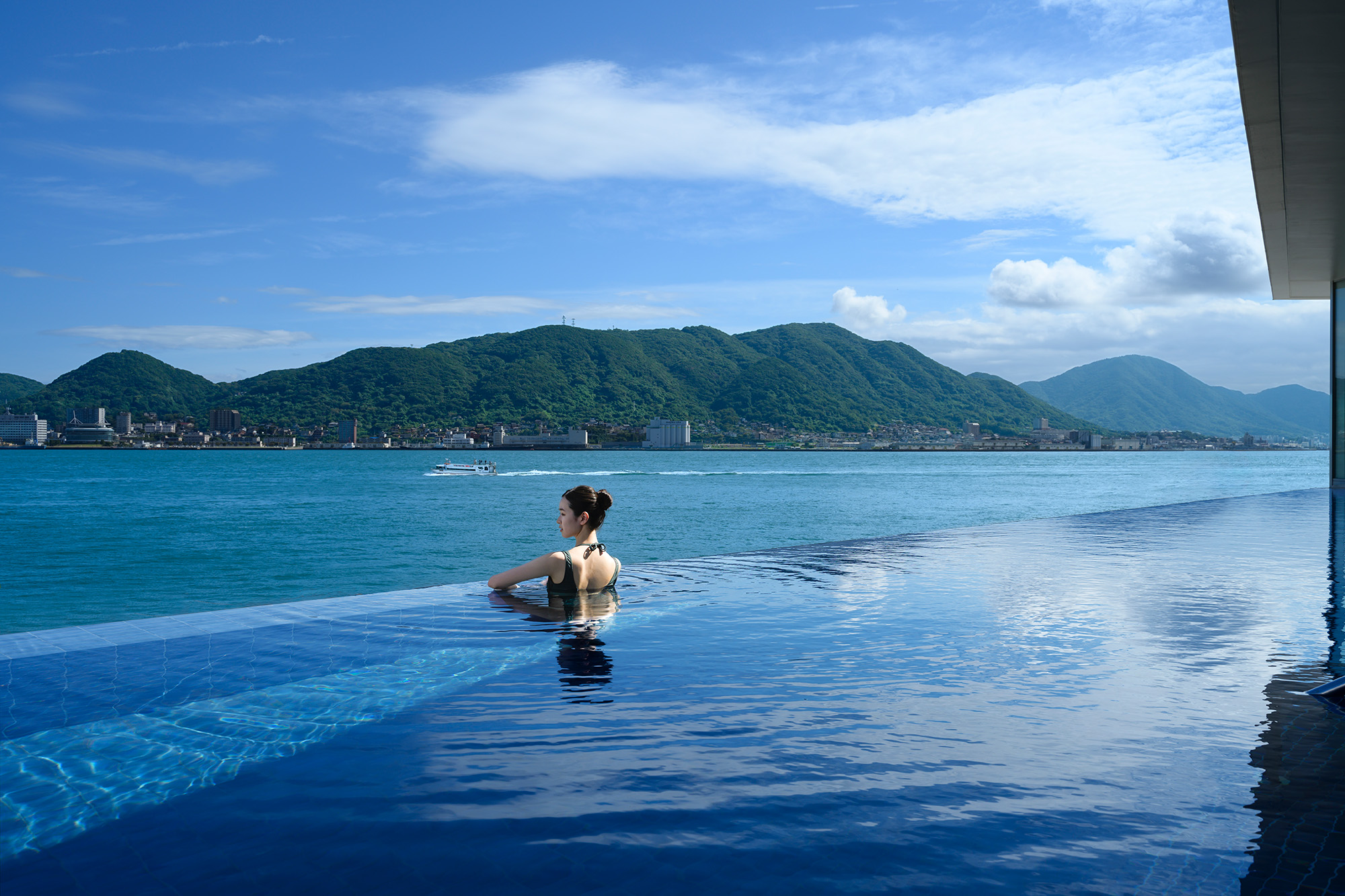
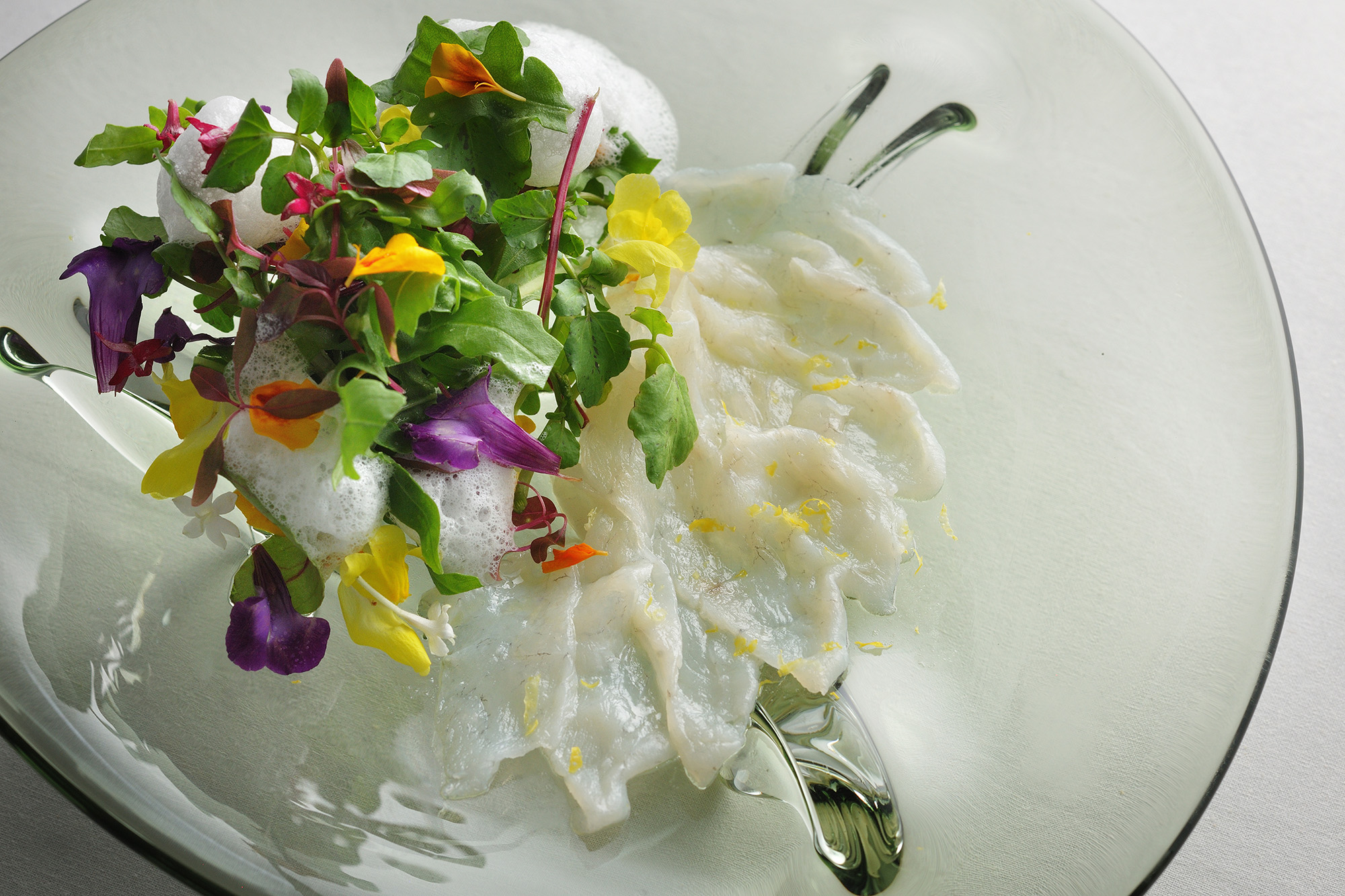
Access Approx. 10 minutes by local bus from JR Shimonoseki Station
- Accommodation rate example
- Per person per night From ¥12,000
KAI Nagato
Nagato Yumoto Onsen, Yamaguchi Prefecture
Located in Nagato Yumoto Onsen, a representative hot spring resort in Yamaguchi Prefecture, this inn features a design inspired by the "Ochaya-yashiki" (tea house villas) of the Edo period.
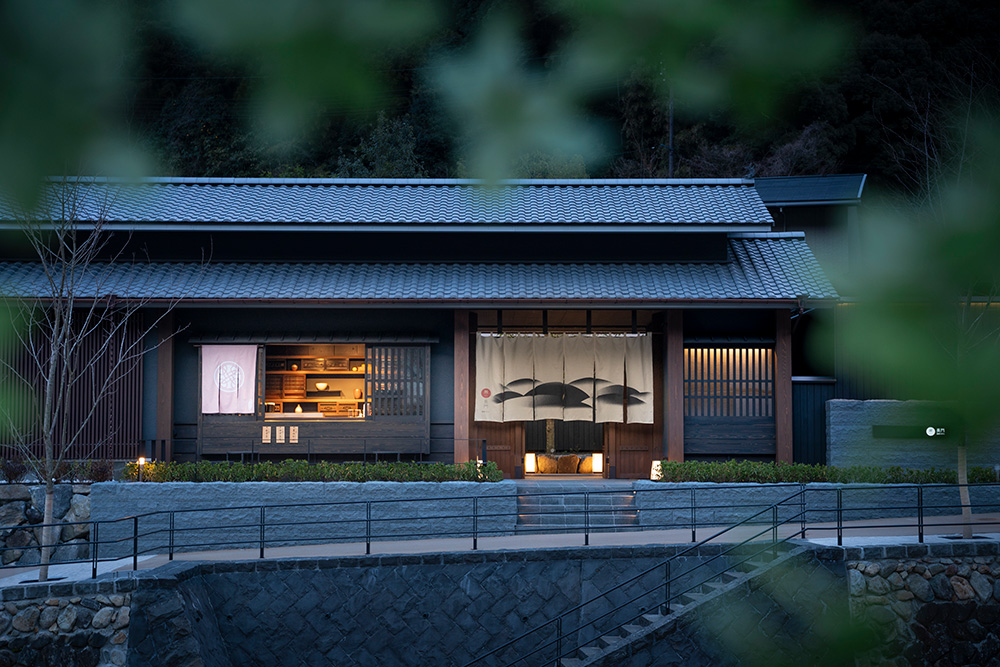
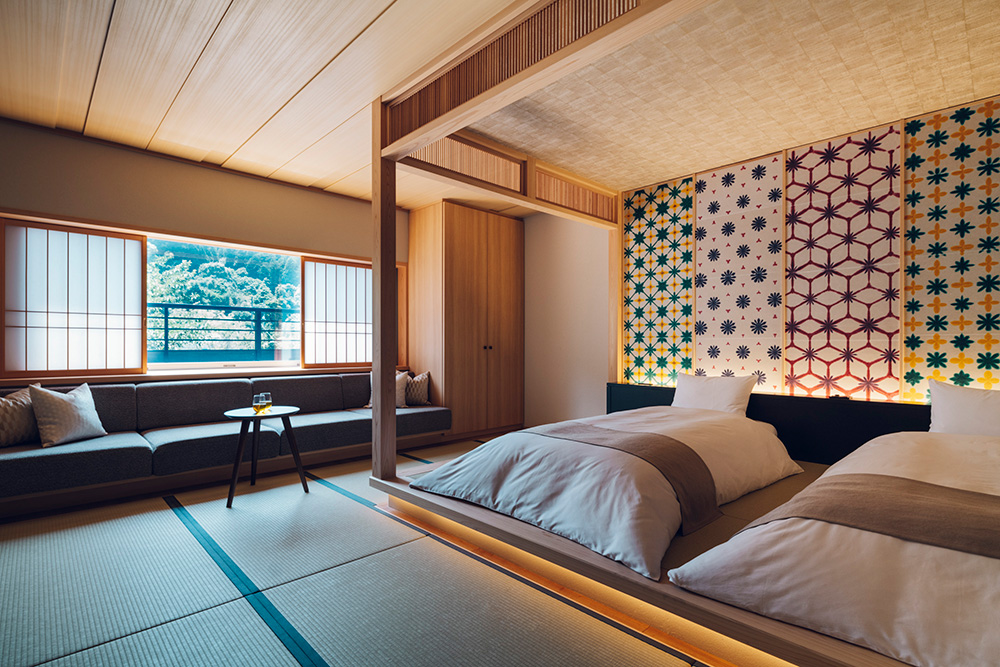

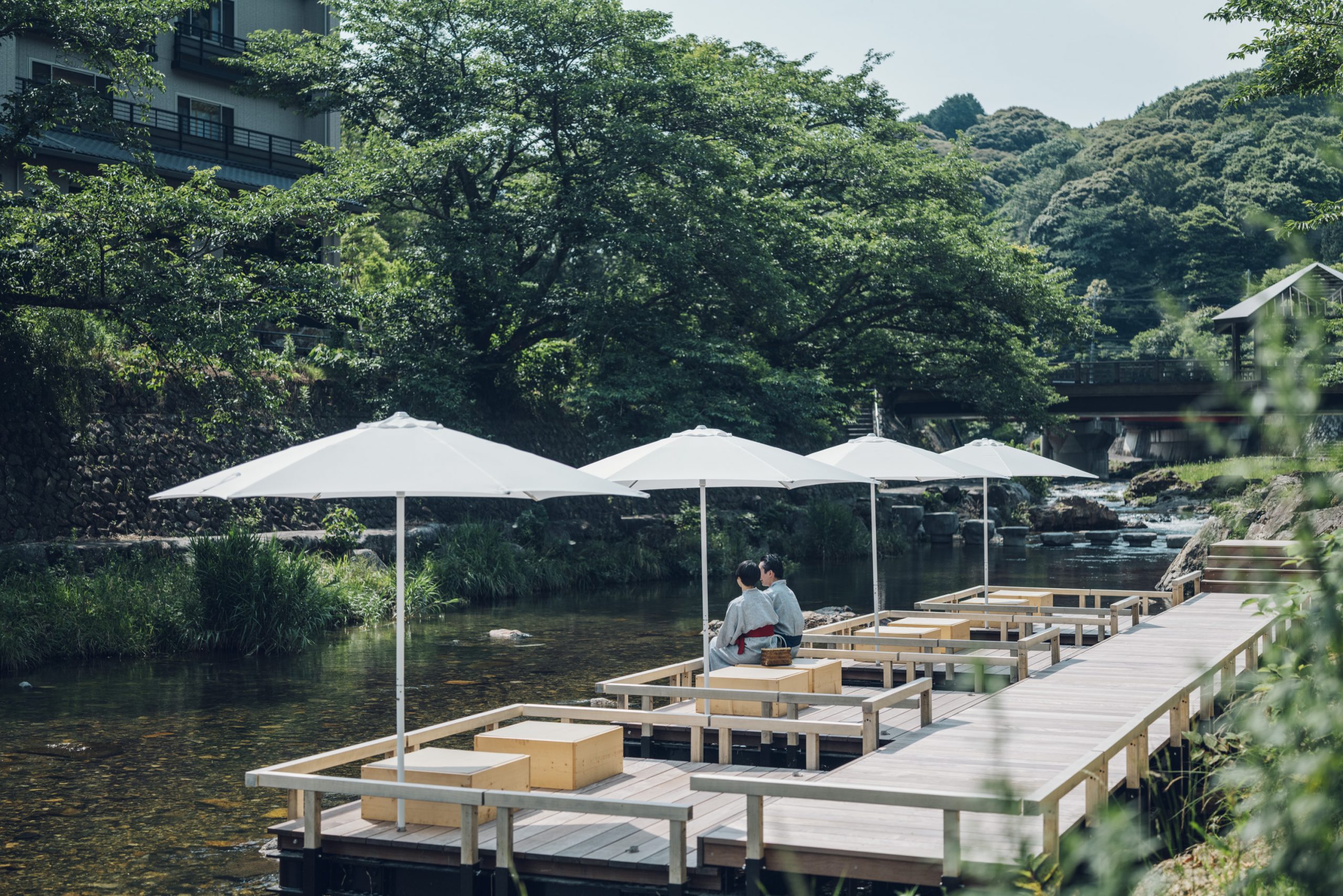
Access Approx. 15-minute walk from JR Nagato-Yumoto Onsen Station
- Accommodation rate example
- Per person per night From ¥32,000