





[2025 year edition] 9 elections of spot of colored leaves of Aomori-ken which colors splendidly

![[2025 year edition] 9 elections of spot of colored leaves of Aomori-ken which colors splendidly](https://hoshinoresorts.com/guide/wp-content/uploads/2019/08/ok00.jpg)
A season of colored leaves comes early nationwide in Aomori-ken located in the northernmost tip in Honshuu. Everyone will introduce the spot of colored leaves which is recommended at the marsh where gas and hot spring including a valley stream and sulfur in addition to "Hirosaki park" and a famous spot of colored leaves of Towada lake spout Oirase with experiencing (Be here.) and Aomori-ken where the individuality such as the contest of colored leaves and the autumnal tints he desires from the top of the arch bridge of height 120m can enjoy the abundant landscape sometime.
< superb view spot of colored leaves in Aomori>
1Oirase (Be here.), valley stream
It's satisfied with the colored leaves with the vivid color which brings out valley stream beauty.
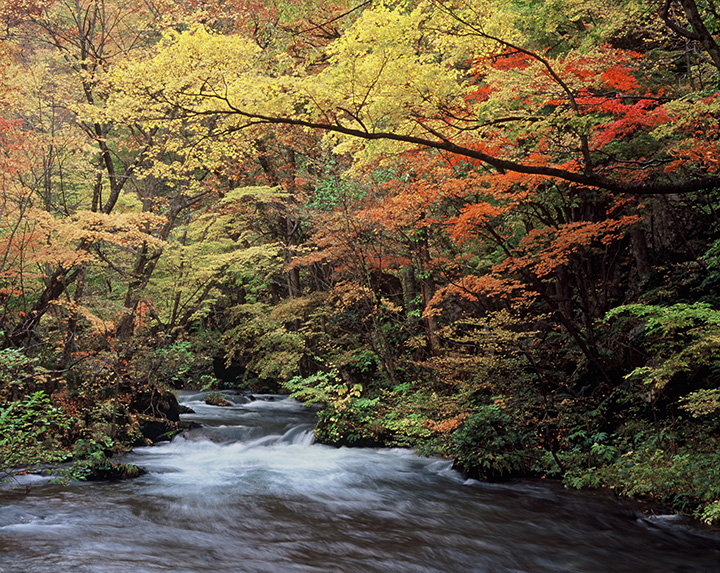
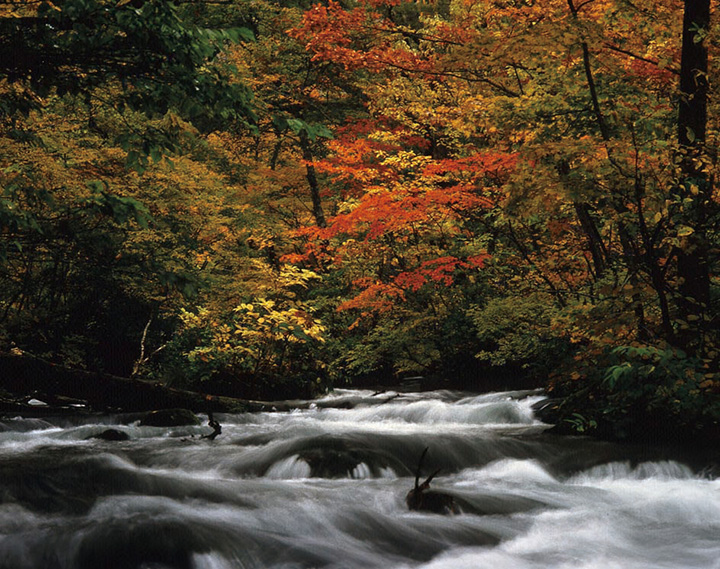
The valley stream which flows from Nenokuchi in an eastern coast in a Towada lake ridge (mouth of NE) and crosses Niigata Yakeyama in the northeast (Self-abandon and, oh.) in about 14 km to the area. To the extent the landscape of the ten and several waterfalls where you assume that earth and sand produced, the strangely shaped rock and the valley stream moss fascinates by the tree which grows luxuriantly and the volcanic eruption is very fantastic, and I'm at a loss for a word.
It begins to turn red from time at the beginning of ordinary year October, the best season is at the end of October. I color in red and yellow so that a beech, a maple and a mountain maple may cover a valley stream including the wig which gives the sweet smell off.
"Flow of Asura", the biggest fall "Choshi Otaki" and the mossy rock a highlight is also Oirase valley stream at the inside and which are rapids most, it thunders, the "Kujukushima" etc. on which I lie. When I walk all about 14 km, it takes about 5 hours, so it's recommended to take a walk according to the physical strength.
[Start of coloring] at the beginning of ordinary year October.
[Best time] at the end of ordinary year October.
[The kind of colored leaves] wig, beech, maple and mountain maple and others
- Oirase (Be here.), valley stream
-
 Towada-shi, Aomori Okuse MAP
 JR bus "be here, number" ride for about 90 minutes "Niigata Yakeyama" gets off JR Hachinohe Station, immediately.
 0176-24-3006 (Towada, be here, sightseeing organization)
2Towada lake
The ideal spot of colored leaves for which blue of Towada lake is conspicuous
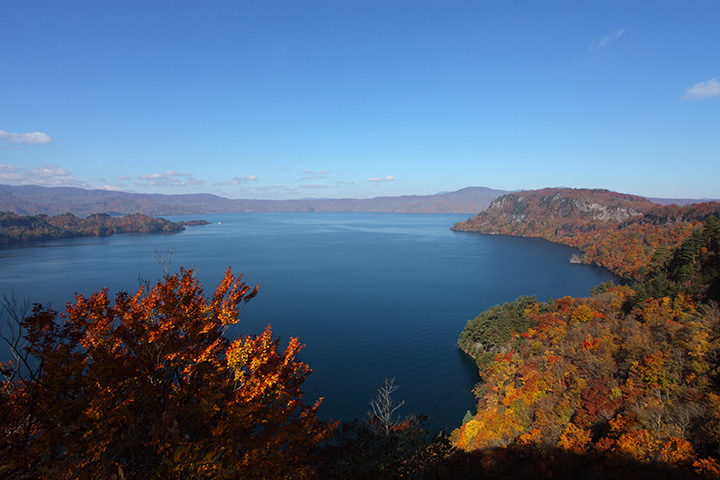
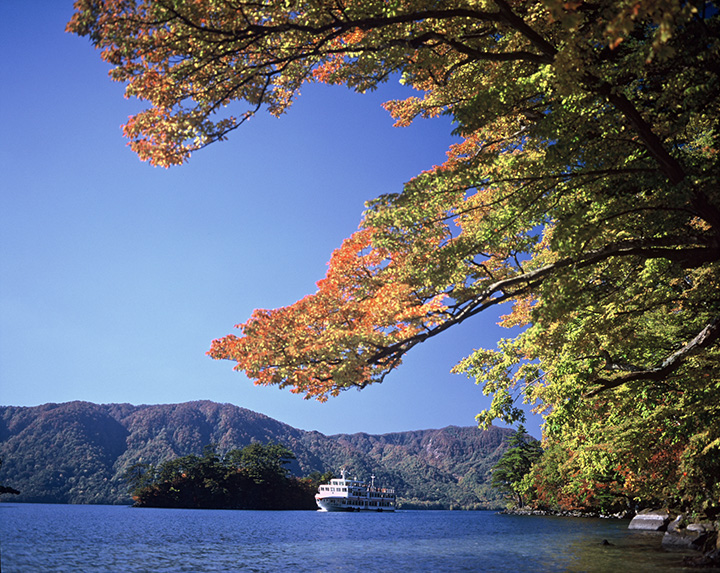
The biggest double crater lakes in the world established by a volcanic activity about 2000 years ago. I sit astride Aomori and Akita and it's also designated in a national special scenic area. A beech, a wig and a maple begin to color from the middle of October, and beautiful contest with the deep blue surface of the lake and the red yellow green trees can be enjoyed. Hakka-toge (HA or, pass) observatory where the best scenic area is located in altitude 631m at the southern coast in a lake in the observatory where the number is here. Kurayama in a beautiful Nakayama peninsula in an inlet which projects into a lake and a storehouse peninsula ahead of it can look around from here, and moreover it can be viewed to the Hakkoda chain of mountains which towers far.
Additionally the mountains dyed in brocade and the sightseeing boat trip which looks at a steep cliff from a lake are also popular. For Parking and the sightseeing boat to begin to be crowded from around 11 o'clock, it's going out rather early. It can also be satisfied with kokanee of Towada lake local specialty after excursion for viewing scarlet maple leaves.
[Start of coloring] around the middle of ordinary year October
[Best time] at the middle ofordinary year October-at the end of October.
[The kind of colored leaves] beech, wig and maple and others

3Ivy (ivy) marsh
I'm impressed with the colored leaves dyed deep red by alpenglow.
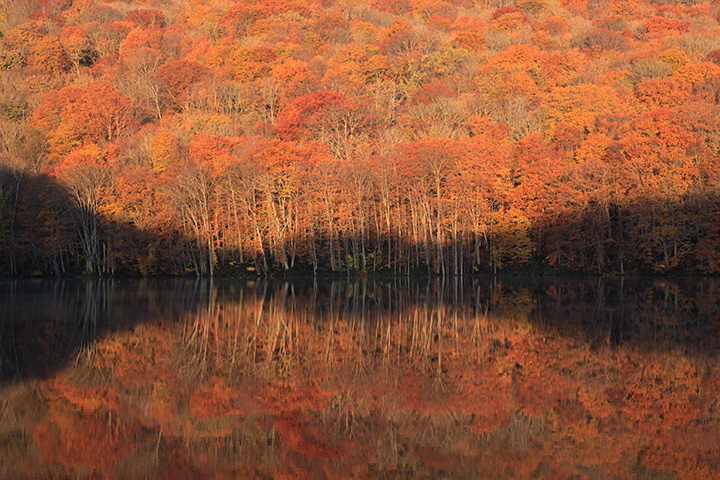
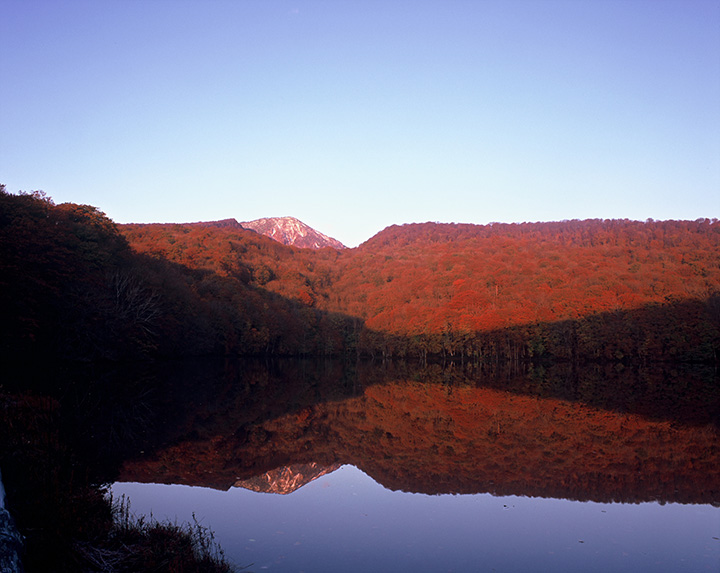
Stoop in Hakkoda and ivy hot spring. They're a lakes and marshes group and seven marshes of ivy made from one in Hakkoda chain of mountains and a volcanic explosion in Akakuradake that it's in the back. Such as whole is overgrown with a wildwood of a beech, and various wild birds are also designated as the wild bird wild life preservation area which lives, untouched nature is left. It's an ivy marsh that it's biggest in the marsh of 7, an ivy marsh, Kiyonuma, a month marsh, a gourd (gourd) marsh, Suganuma, Naganuma and Akanuma and also very popular. Beautifully, many tourists visit the surface of the lake where a wildwood of a beech is reflected a season of colored leaves just like Kagami. Beauty which is to the extent the early morning a beech and the surface of the lake are dyed deep red when holds its breath in alpenglow, in particular.
About 2.8 km of "path of" the tour of marshes is provided 6 marshes except for Akanuma who has that at the place left a little with, so a hike, while, it's also recommended to enjoy the tour of marshes.
※ Entrance to an ivy marsh view deck of 5:00-7:30 needs preliminary reservation, a congested measure and a environment conservation cooperation fee early morning in a colored leaves period. As soon as a rim of visitor disappears, it'll be an end. Please check it by https://save-tsutanuma.com/ for more information. A period covered in 2025 is (Thu)-November 3 (Monday . national holiday) on October 23.
[Start of coloring] around the end of ordinary year September
[Best time] at the middle ofordinary year October-at the end of October.
[The kind of colored leaves] beech
- Ivy (ivy) marsh
-
- Towada-shi, Aomori Okuse MAP
 It's a car from JR Hachinohe Station, about 70 minutes
- JR bus "it isn't seen, purulent number" ride for about 120 minutes "ivy hot spring" gets off JR Shin-Aomori Station, about 14 minutes on foot
- 0176-24-3006 (Towada Oirase sightseeing organization)
 I don't have that (ivy hot springParking is used. The Guest/customer priority Property is using).
4Hakkoda chain of mountains (Hakkoda ropeway)
One on the red and the yellow carpet, walk in the air
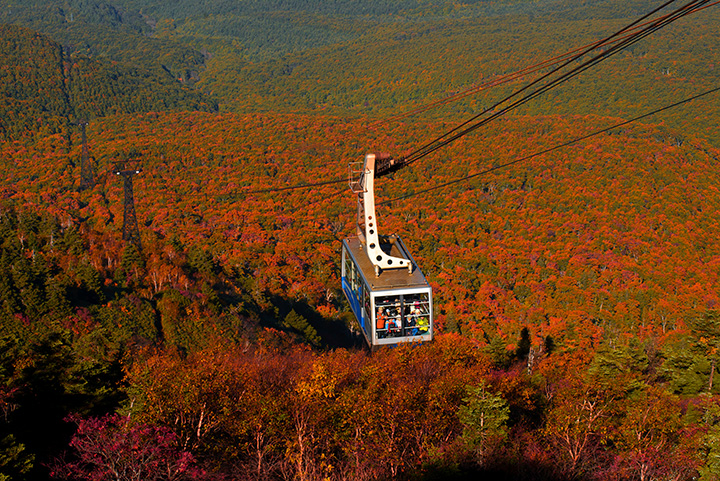
It's a general term in a volcano group as much as 18 such as Hakkoda Odake in the highest peak located in the south side in Aomori-shi and is popular tourist attraction where nature in each season can be enjoyed as Japan one hundred famous mountain. It's better to aim at peak while loving nature and the autumnal tints by trekking, walk in the air by "Hakkoda ropeway" where recommendation can enjoy the world of the autumnal tints of the view 360 times. The wonderful scenery all over which red and a yellow carpet were spread at all spreads under one way for about 10 minutes and the eyes to peak Koen Station in Tamoyachidake (only landing net and CHI).
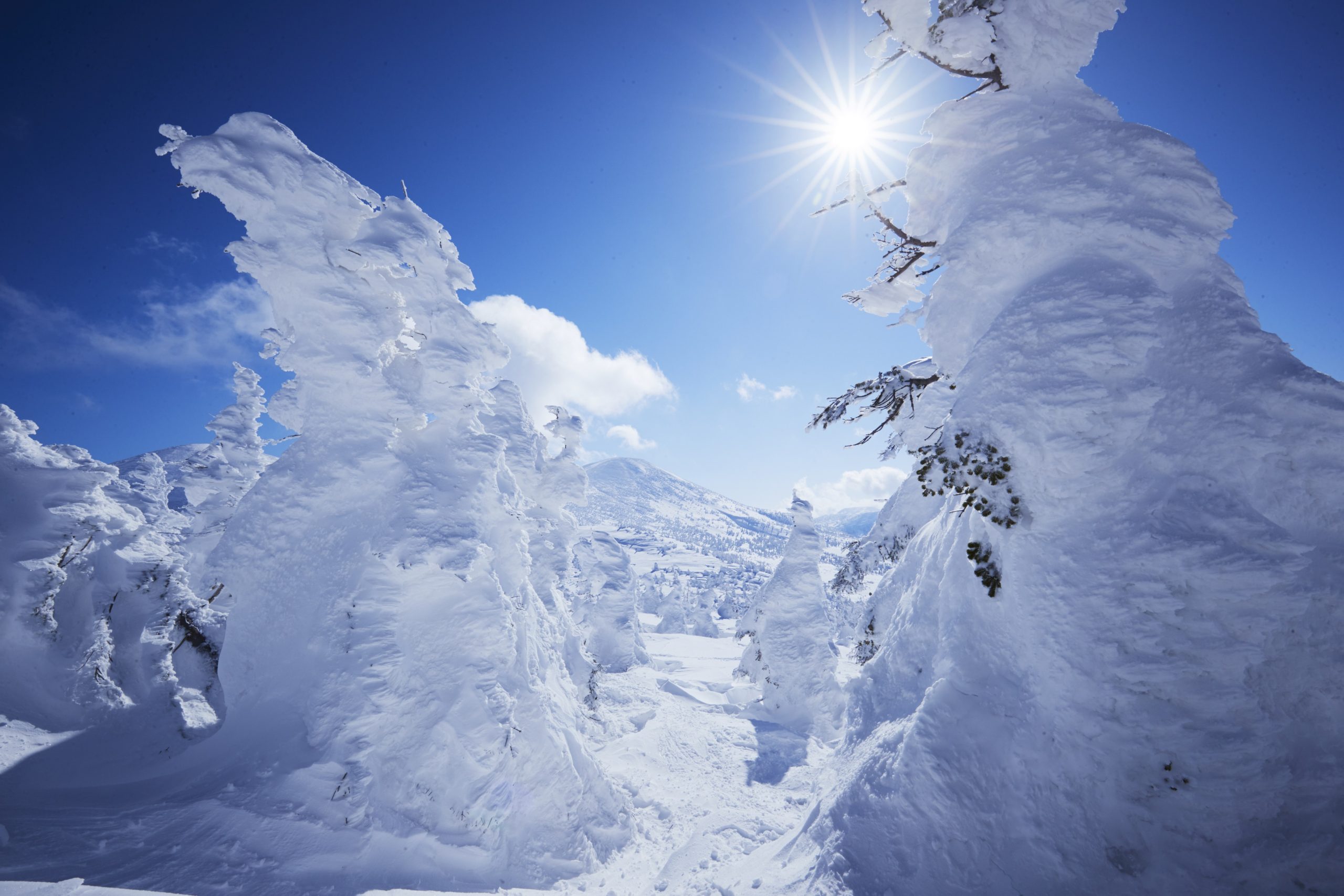
I even get a bird's-eye view of Aomori-shi district, Mutsu-wan, a Tsugaru peninsula and far place Hokkaido in addition to a mountain range in Hakkoda from peak Koen Station. san also begins to thrust at snow around the end of November, so when I'm lucky, fantastic contest of colored leaves and snow can also be enjoyed.
[Start of coloring] around the Sanroku Station Around around the beginning of ordinary year October and the Sancho Station Around the end of ordinary year September
[Best time] the beginning of ordinary year October-last ten days
[The kind of colored leaves] beech, maple, mountain ash and Japanese oak
- Hakkoda chain of mountains (Hakkoda ropeway)
-
- Kansuizawa 1-12, Arakawa, Aomori-shi, Aomori MAP
 At the beginning of 3 Monday-November 9:00-16:20.
The middle of November-February 9:00-15:40
※ 15-, it's every 20 minutes and moves. There is an inspection kyuu at the beginning of November, and there are※ strong wind and time of stormy weather in case of suspension.
 [Round trip] students over junior high school of 2200 yen and elementary students of 700 yen
- 017-738-0343
5Hellish marsh
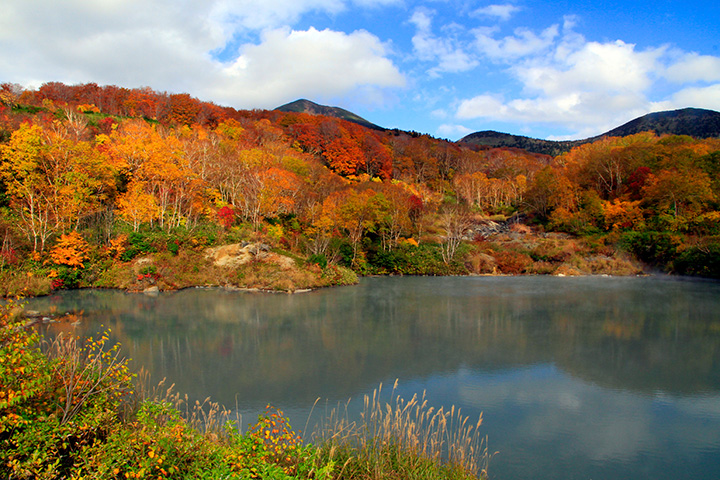
Fantastic contest of steamy marsh and colored leaves
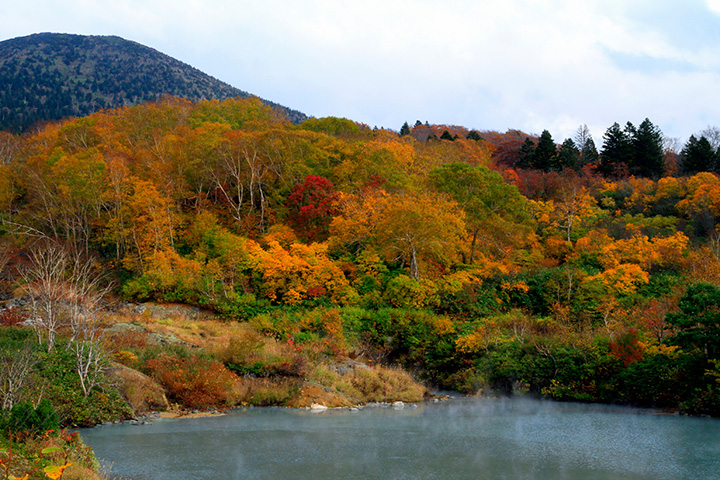
The highest peak in Hakkoda chain of mountains and the marsh in the west base in Odake. hot spring water which sprang from neighborhood collected on a explosion crater trace in Hakkoda, and the gas and hot spring which included sulfur much spout in the circumference. The boiling water by which a marsh is also 70-90 ℃ from itself is gushing. Wonderfully, a beech, a Japanese oak, a maple and a birch color vividly in red and yellow in the season which are colored leaves in particular for a view from a hellish marsh. The wooden tree and the marsh which was dyed steamy and red by colored leaves are very fantastic. Many tourists visit in the unusual landscape which can't be seen easily.
There are also a popular secluded hot spring spot of the outdoors hot springProperty which sits down "I hatch, hot water (Bean Paste Bun is deep.)" and Hakkoda called "hot spring with marvelous healing powers on the cloud" and Sukayu (make, porridge) hot spring in the bench steam of hot spring penetrated around here right now, so how about visiting after an excursion for viewing scarlet maple leaves?
[Start of coloring] around the beginning of ordinary year October
[Best time] at the middle ofordinary year October-at the end of October.
[The kind of colored leaves] beech, Japanese oak, maple and birch and others
- Hellish marsh
-
- In Aomori-shi, Aomori Hakkoda-san MAP
- It's a car from JR Shin-Aomori Station, about 50 minutes
- From JR Shin-Aomori Station, JR bus "it isn't seen, purulent number" ride for about 73 minutes, "Sukayu, hot spring" getting off and about 5 minutes on foot
- 017-738-6400 (Sukayu hot spring)
- I don't have that.
6Castle KE storehouse big bridge
The colored leaves which are a panoramic view 360 times are force perfection.

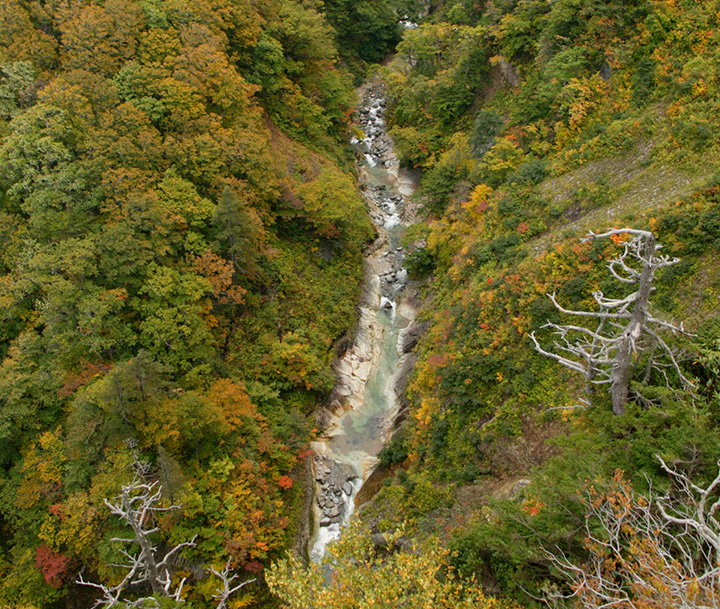
"Towada-Hachimantai National Park" is the superb view spot which can look down upon the scenic area where inside is eminent and a castle KE storehouse valley stream at the bridge where Tsugaru rural areas of Aomori and southern rural areas are tied. 360 m of full length and the arch span length take pride in their best of Japan length as 225m and Agero system arch bridge, the height from the bottom of the valley is 120m. When it's crowded except for a valley stream from the top of the bridge, you can get a bird's-eye view of the autumnal tints like the carpet and the violent form of the valley stream that a rock surface could be shaved and done. The landscape which becomes the sense which seems drawn in is force perfection.
When the environment is looked around, you can wish for Iwaki-san in Hakkoda chain of mountains and the west side in the east side and also enjoy 360 times of panoramic autumnal tints as well as the autumnal tints under the eyes. When I go from Sukayu (make, porridge) hot spring district, there is a sidewalk in a parking space just before the bridge, and composition of a bridge from here and colored leaves is the standard photography.
[Start of coloring] at the beginning of ordinary year October.
[Best time] at the middle of ordinary year October.
[The kind of colored leaves] beech, Japanese oak, maple and birch and others
- Castle KE storehouse big bridge
-
- Mt. Arakawa, Aomori-shi, Aomori Minamiarakawa MAP
- It's a car from JR Shin-Aomori Station, about 55 minutes
- 017-728-0200
- Free
7Water lily marsh
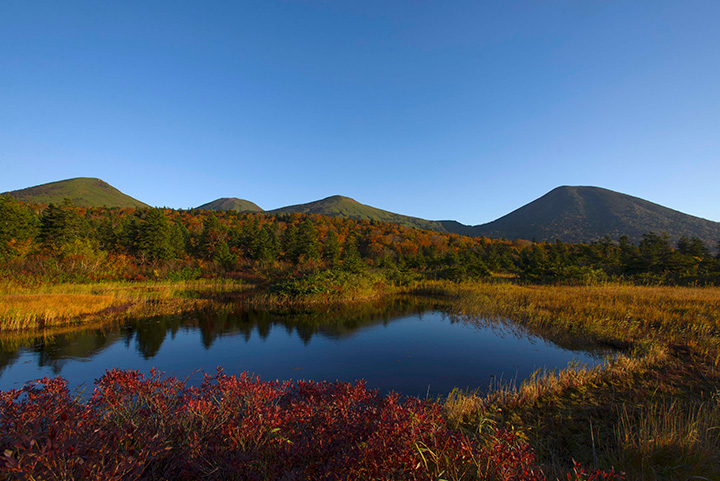
Colored leaves which suit a blue marsh and are crowded are elegant.
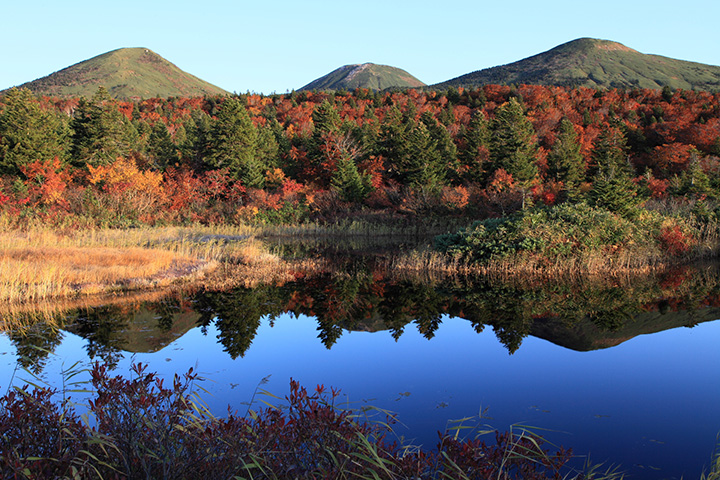
A marsh and a moor of the altitude 1,000m which is here along the road where it's tied between Aomori-shi and Lake Towada "Hakkoda gold line". That a secluded hot spring spot in Hakkoda and Sukayu (make, porridge) are warm, it's located between Yachi (YACHI) hot spring which takes pride in history in kaiyu 400.
Because a white flower of EZOHITSUJIKUSA of water-lily family colored the surface of the lake prettily when summer came, the name of the water lily marsh was put. There is just space where ten and several cars can stop on the roadside, and when I'm careless, they seem to overlook, the superb view where I'd like to see a view from a view deck by all means. You can wish for Odake and Iodake in Hakkoda chain of mountains over a blue surface of the water.
The surrounding trees will also begin to color in red and yellow in the season of colored leaves, and Hakkoda chain of mountains where I dominate the surface back where colored leaves seem and are crowded and the superb view wetlands interweave can be enjoyed.
[Start of coloring] around the end of ordinary year September
[Best time] at the beginning of ordinary year October.
[The kind of colored leaves] beech
- Water lily marsh
-
- Towada-shi, Aomori way amount letter Yaji MAP
- JR bus "it isn't seen, purulent number" ride for about 90 minutes "water lily marsh" gets off JR Aomori Station, about 1 minute on foot
- 0176-24-3006 (Towada Oirase sightseeing organization)
- Free
8Mt. Nakano colored leaves
Beauty in which contest of deep red colored leaves and a red bridge holds its breath
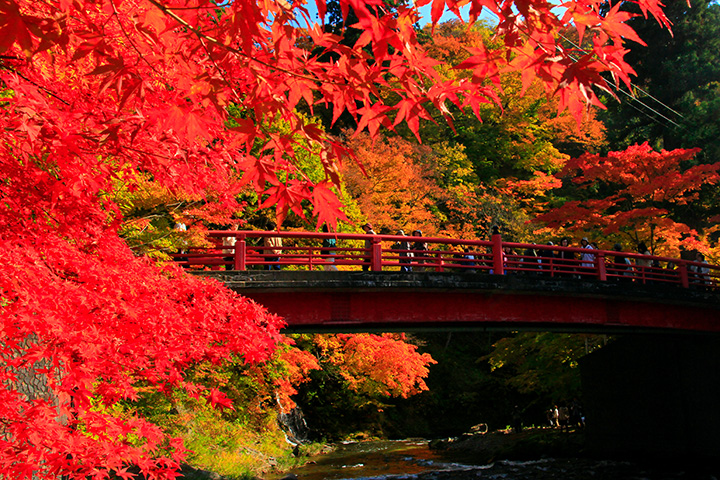
"Small Ranzan" in Tohoku where it's in Kuroishi-shi and in the claimed prefecture are best a place famous for beautiful colored autumnal leaves. Since publicity ordered a maple plant of about 100 kind from Kyoto, and Hirosaki nine generation seigneur from Kuroishi territory and Tsugaru neioya (TSUGARUYASUCHI or) were planted in 1802 (1802), you were enjoying as a spot of colored leaves.
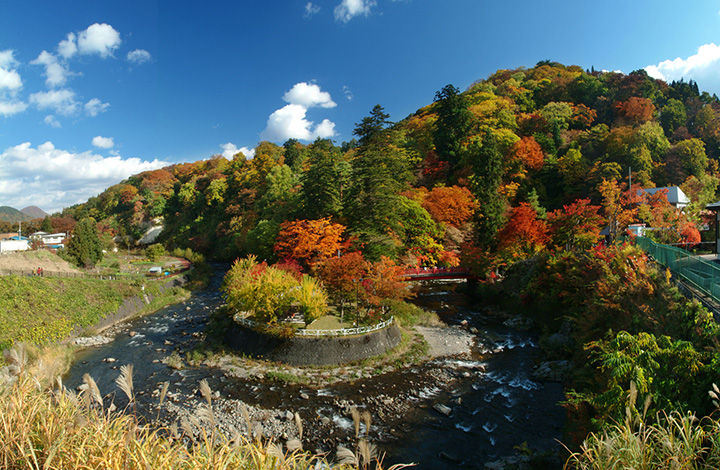
It's a superb view spot just before the entrance "Nakano shrine" is in the mountain, and which is a shrine. There are a clear stream of vivid colored leaves and Nakanogawa who curves to an U shape and a red bridge, and you can get a bird's-eye view of the whole picture in Nakanoyama. There are also a lot of immovable waterfalls and interesting places of enjoying the autumn leaves stand (It's KAN PUU.) etc. in a precinct, and walk can be enjoyed in his own way. The autumnal tints of night lit up by time frame limitation are also fantastic.
[Start of coloring] around the beginning of ordinary year October
[Best time] at the middle ofordinary year October-at the beginning of November.
[The kind of colored leaves] maple and maple and others
[Light up] October 18 (Sat)-November 9 (Sun) 16:30-21:00
[Street stall business due date] October 18 (Sat)-November 5 (Wed)
- Mt. Nakano colored leaves
-
- Kuroishi-shi, Aomori large section of a town Minaminakano immovable Tate 27 MAP
- From Konan Tetsudo Kuroishi Station, Kounan bus Okawa basic wire ride for about 30 minutes and "in front of Nakano shrine" getting off for about 1 minute on foot
- 0172-52-2111 (Kuroishi-shi Commerce and Industry Department Tourism Section)
- Free
9Hirosaki park (Hirosaki Castle)
The ancient capital dyed in autumn scenery and symbol park in Hirosaki
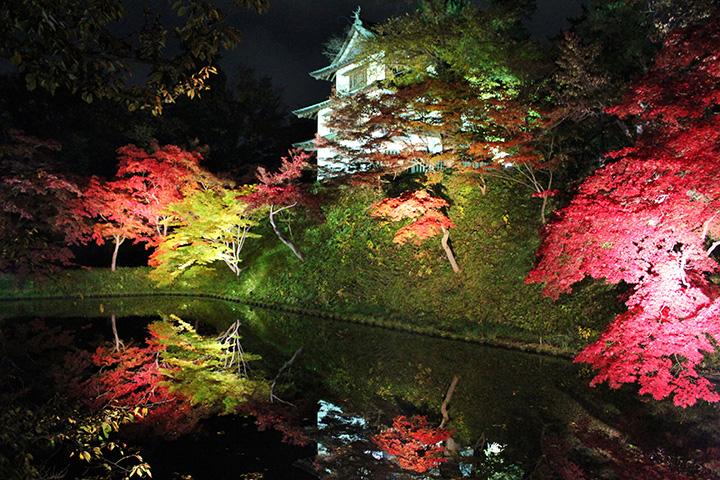
The "Hirosaki park" which was a castle resided in Mr. Tsugaru in the domain duties age is designated as national historic site, and is a symbol in an ancient capital and Hirosaki. It's learned about nationwide as famous place for beautiful cherry blossom, but actually, a season of colored leaves is also a popular tourist season. The autumnal tints of about 2600 cherry trees and about 1000 maples are beautiful and conspicuous in Midori of about 2000 pines, and the zest with deep feelings different from a cherry tree in spring again can be tasted.
[Start of coloring] around the beginning of ordinary year October
[Best time] at the end ofordinary year October-at the beginning of November.
[The kind of colored leaves] cherry tree, maple and gingko and others
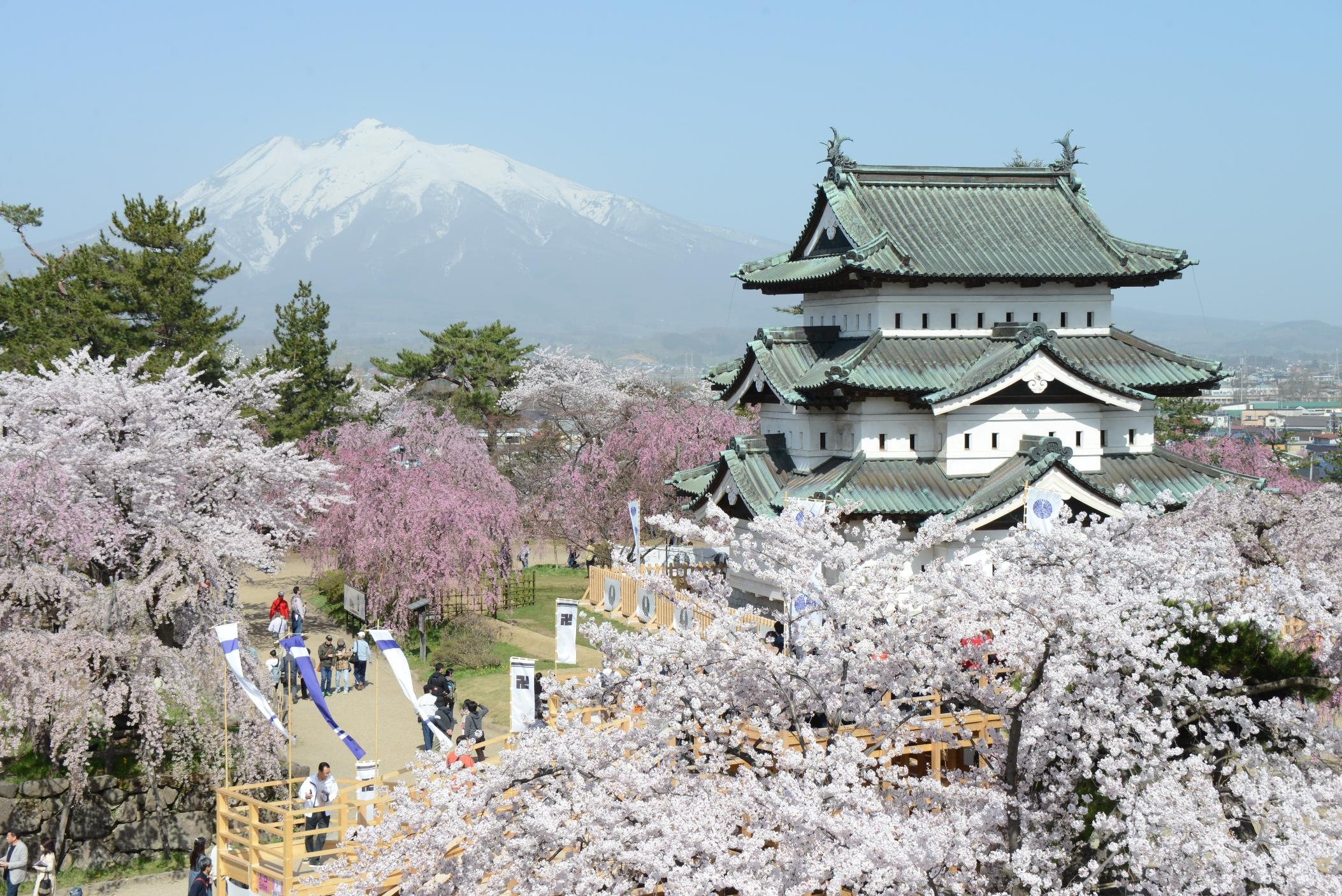
- Hirosaki park (Hirosaki Castle)
-
- 1, Shimoshiroganecho, Hirosaki-shi, Aomori MAP
- Entrance freedom and kaku of an inner citadel and the north, April 1-November 23 9:00-17:00
- Hirosaki Castle Tenshu, November 24-March 31
- 100 yen for a junior high school student of 320 yen and small* (are free winter on November 24-March 31) than a high school student in the pay area for entrance no charge and kaku of an inner citadel and the north.
- 0172-37-5501 (Hirosaki municipal sightseeing house)
MAP
- < superb view spot of colored leaves in Aomori>
- Hoshino ResortsProperty around here

Local Guide which took charge of this article
- Emiko Kasai.Gentle nature Aomori girl
Aomoriya by Hoshino Resorts
Misawa of Aomori-ken
Festival, hot spring and Hot spring ryokan where folk art can sense Aomori culture fully.


Direction Aoimori Railway It's a shuttle bus from about 3 minutes/Misawa airport by shuttle bus from Misawa Station, about 20 minutes
- A room charge example
- 1 night, 1 person \14,000-
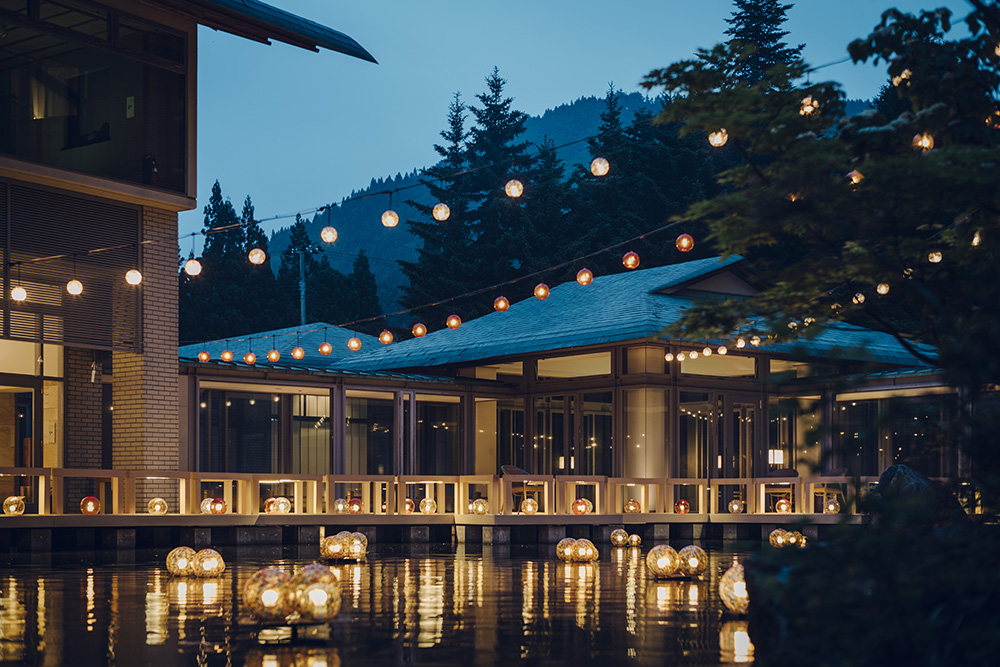
Oirase Keiryu Hotel by Hoshino Resorts
Aomori-ken and Towada
The only resort hotel built in a ridge of Oirase valley stream. Nature in a national park can be enjoyed fully through one year.

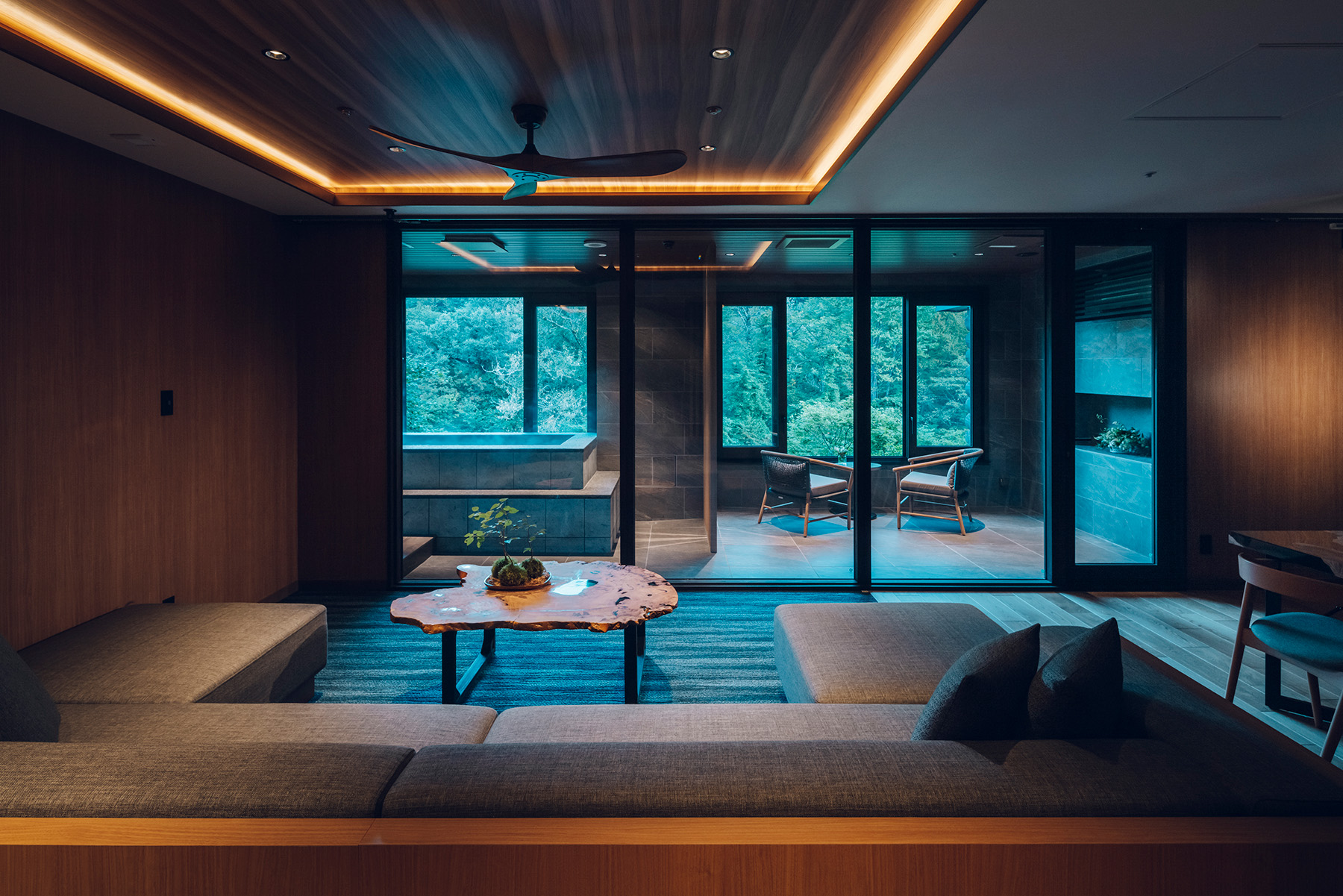
.jpg)
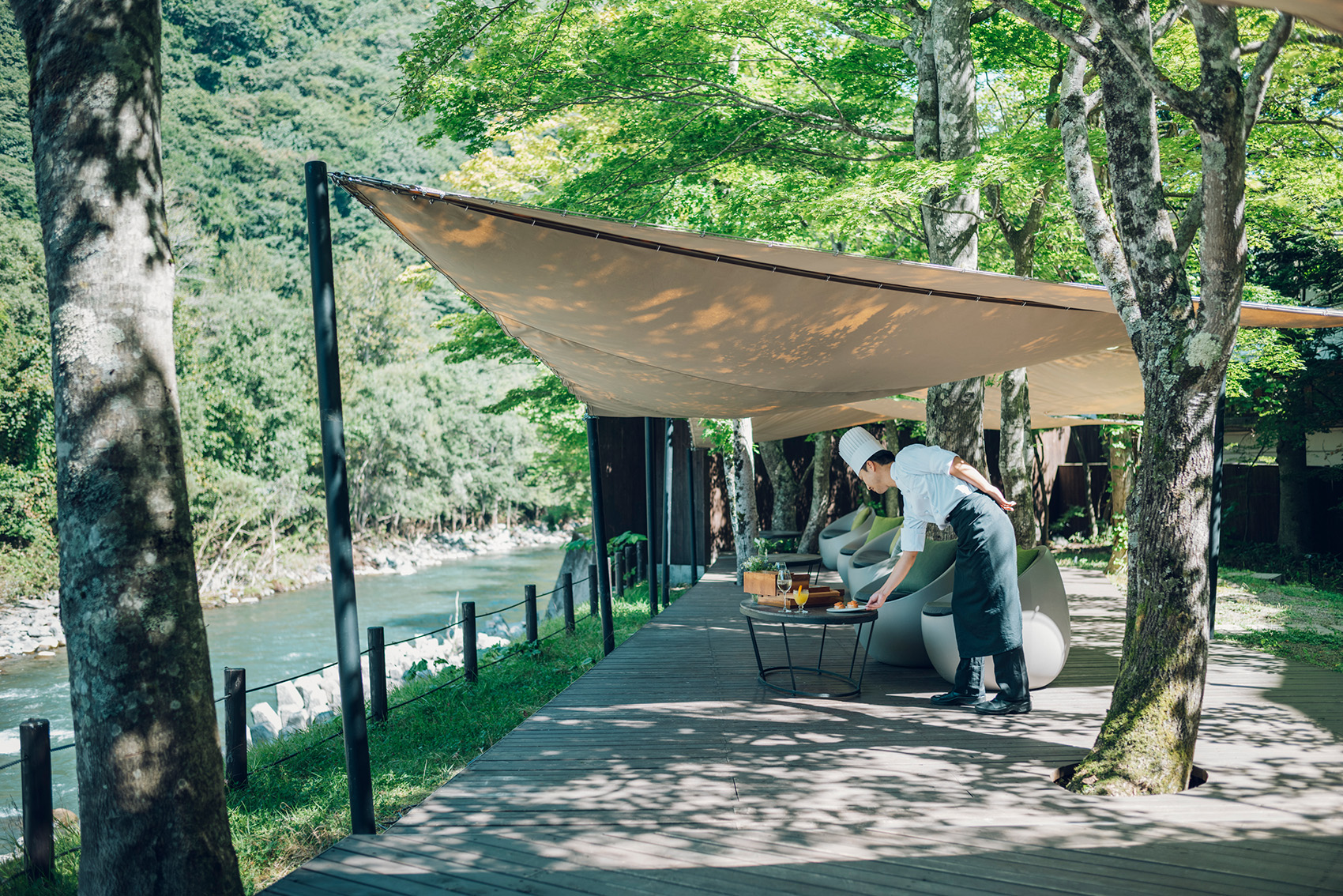
It's a shuttle bus from Direction JR Hachinohe Station, 70 minutes
- A room charge example
- 1 night, 1 person \20,080-
Hoshino Resorts KAI Tsugaru
Aomori and Owani hot spring
Hot spring ryokan which enjoys Bunka of Tsugaru and four seasons fully. Mizuniwa in Tsugaru four seasons who changes an expression every season can enjoy himself, too.

It's a shuttle bus from the Direction JR Owani hot spring station, about 5 minutes
- A room charge example
- 1 night, 1 person \19,000-