





[2026 Edition] 9 Must-See Spots for Aomori Prefecture’s Spectacular Fall Foliage

![[2026 Edition] 9 Must-See Spots for Aomori Prefecture’s Spectacular Fall Foliage](https://hoshinoresorts.com/guide/wp-content/uploads/2019/08/ok00.jpg)
Located in the northernmost part of Honshu, Aomori Prefecture has the nation's earliest fall foliage season. In addition to famous autumn foliage spots such as the Oirase Stream, Hirosaki Park, and Lake Towada, which everyone has seen and heard about, we will introduce some of the best autumn foliage spots in Aomori Prefecture, where you can enjoy unique scenery such as a swamp with sulfurous gas and hot springs, and a 120-meter-high arch bridge from which you can view the autumn leaves. Here are some of the best places in Aomori Prefecture to enjoy the autumn foliage.
<Aomori's most scenic autumn foliage spots
1Oirase Stream
Enjoy the colorful autumn leaves that enhance the beauty of the mountain stream
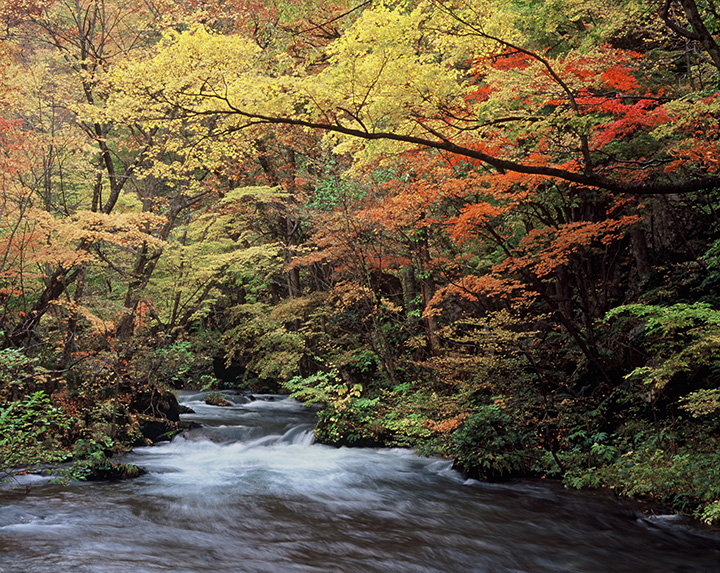
A mountain stream that flows from Nenokuchi on the eastern shore of Lake Towada and stretches approximately 14 km to the Yakeyama area in the northeast.The scenery along the stream—with its dense forest, more than a dozen waterfalls and bizarre rock formations said to have been carved out of the pyroclastic flow plateau by the rushing water, and moss clinging to every surface—is so enchanting it leaves you speechless.
The leaves typically begin to change around mid-October, but the best season is late October. Trees such as katsura—which give off a sweet scent—as well as beech and maple turn shades of red and yellow, seemingly blanketing the stream.
Highlights include “Ashura no Nagare,” a section of the Oirase Stream known for its particularly rapid current; “Choshi Otaki,” the only waterfall on the main stream; and “Kujukushima,” where moss-covered boulders lie scattered about. Walking the entire 14-kilometer trail takes about 5 hours, so we recommend adjusting your hike to suit your physical condition.
[Leaves Begin to Change Color] Typically mid-October
[Peak Viewing Season] Typically late October
[Types of Autumn Foliage] Katsura, beech, maple, and others

- Oirase Mountain Stream
-
 Okuse, Towada City, Aomori Prefecture MAP
 From JR Hachinohe Station, take the JR Bus Tohoku “Oirase” (reservation required) for about 90 minutes; get off at “Oirase Keiryu-kan” and the destination is right there
 0176-74-1233(Oirase Keiryu-kan)
2Lake Towada
A perfect spot for viewing the autumn leaves against the blue of Lake Towada
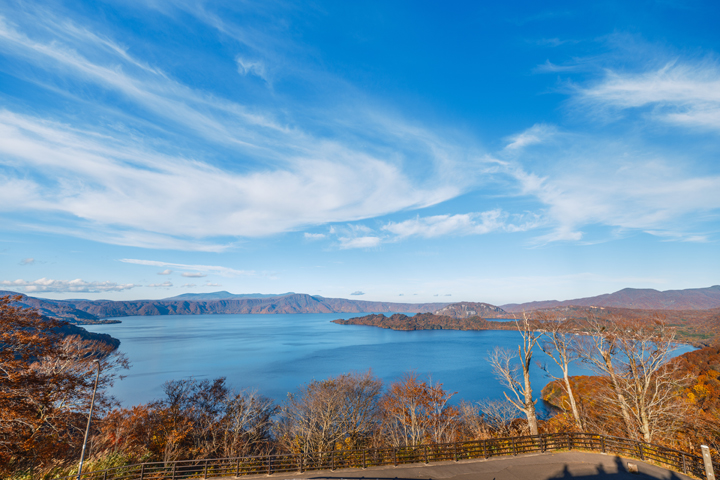
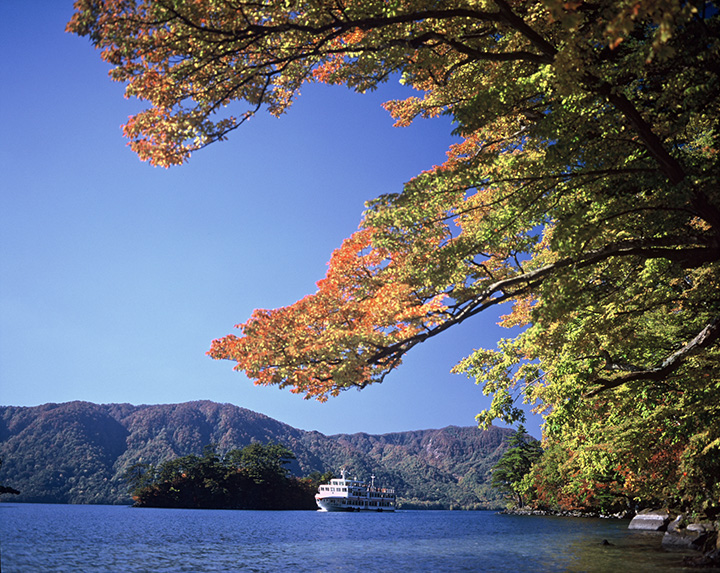
A rare double-caldera lake in the world, formed by volcanic activity that began approximately 200,000 years ago. Spanning Aomori and Akita Prefectures, it has been designated as a National Special Place of Scenic Beauty and a Natural Monument.From mid-October, beech, katsura, and maple trees begin to change color, offering a beautiful interplay between the deep blue lake surface and the red, yellow, and green trees. Among the many observation decks, the Hakkatooge Observation Deck—located on the lake’s southern shore at an elevation of 631 meters—offers a view in a class of its own.From here, you can take in the beautiful Nakayama Peninsula, which juts out into the lake, as well as Mount Mikura on the Mikura Peninsula beyond it, and even the Hakkoda Mountain Range towering in the distance.
Sightseeing boat tours, which offer views of the mountains dyed in vibrant colors and the sheer cliffs from the lake, are also popular.Both the parking lot and the sightseeing boats start to get crowded around 11:00 a.m., so be sure to arrive early. After enjoying the fall foliage, you can also savor the famous “Lake Towada Himesu” fish.
Beginning of changing of colors】Mid-October of every year
Best time to view the leaves: Usually from mid-October to late October.
Kinds of autumn leaves】Beech, Japanese Judas tree, maple, etc.
- Lake Towada
-
- Okuze, Towada City, Aomori Prefecture MAP
- From JR Hachinohe Station, take the JR Bus Tohoku “Oirase” (reservation required) for about 140 minutes; get off at “Lake Towada (Yasuya)”—it’s right there
- 0176-75-1531 (Lake Towada Tourism Exchange Center “Platto”)
 For more information about sightseeing boats, check the website.
3Tsuta Swamp
Moved by the autumn foliage glowing crimson in the morning sun
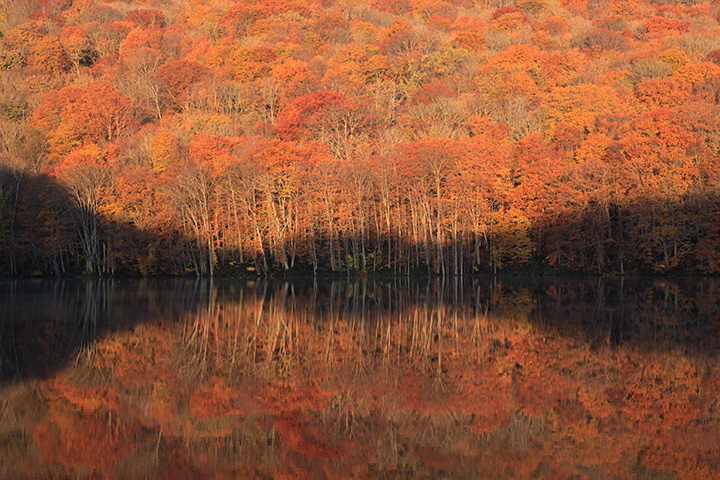
Tsuta Hot Spring serves as the gateway to the Hakkoda Mountains. Behind it lies the Tsuta Seven Lakes—a cluster of lakes formed by a landslide from Mt. Akakura, one of the peaks in the Hakkoda Range. The area is lush with natural beech forests and has been designated as a wildlife sanctuary home to various wild birds, preserving its rich natural environment.Of the seven ponds—Tsuta-numa, Kagami-numa, Tsuki-numa, Hyotan-numa, Suga-numa, Naga-numa, and Aka-numa—Tsuta-numa is the largest and most popular. The lake’s surface, reflecting the natural beech forest, is as beautiful as a mirror, attracting many tourists during the fall foliage season.The early morning, when the rising sun turns both the beech trees and the lake surface a deep red, is particularly breathtaking.
With the exception of Akanuma, which is located a short distance away, the other six ponds are connected by the approximately 2.9-kilometer “Pond-Touring Path,” so we recommend enjoying a hike while touring the ponds.
*During the fall foliage season, entry to the Tsutanuma Observation Deck from 5:00 a.m. to 7:30 a.m. requires advance reservations, payment of a congestion management and environmental conservation fee, and cooperation with traffic management measures. Admission will close once the daily visitor quota is reached. For details, visit https://save-tsutanuma.com/Please check here.The applicable period for 2026 is October 23 (Fri) through November 3 (Tue, National Holiday).
[Leaves Begin to Change Color] Typically around mid-October
[Peak Viewing] Typically late October
[Types of Autumn Foliage] Beech, horse chestnut, and others
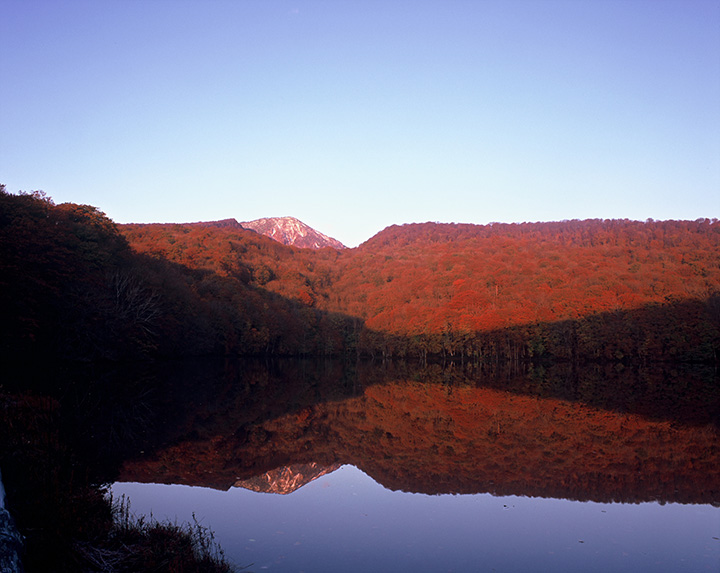
- Tsuta Swamp
-
- Okuse, Towada City, Aomori Prefecture MAP
- From JR Aomori Station, take the JR Bus Tohoku “Mizuumi” for about 120 minutes; get off at “Tsuta Hot Spring” and walk for about 10 minutes
- 0176-24-3006(Towada Oirase Tourism Organization)
 No parking (use the Tsuta hot spring parking lot. Guests/customers using Property have priority)
- During the fall foliage season, admission restrictions may be in place, and a small environmental conservation fee may be collected to help manage traffic congestion
4Hakkoda mountain range (Hakkoda ropeway)
Walking on a carpet of red and yellow leaves in the air
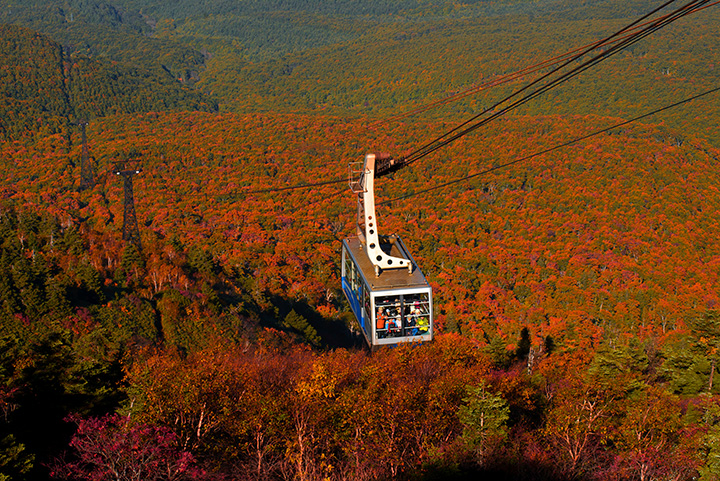
Located south of Aomori City, Hakkoda is the collective name for a group of 18 volcanoes, including the main peak, Hakkoda-dake, which is one of Japan's 100 most famous mountains and a popular tourist spot where visitors can enjoy nature in all seasons. While trekking to the summit is a great way to enjoy nature and the autumn leaves, we recommend taking the Hakkoda Ropeway, which offers a 360-degree view of the world of autumn leaves, and a walk in the air. The 10-minute one-way trip to the summit park station at Tamoyachidake is a spectacular view that looks like a carpet of reds and yellows below.
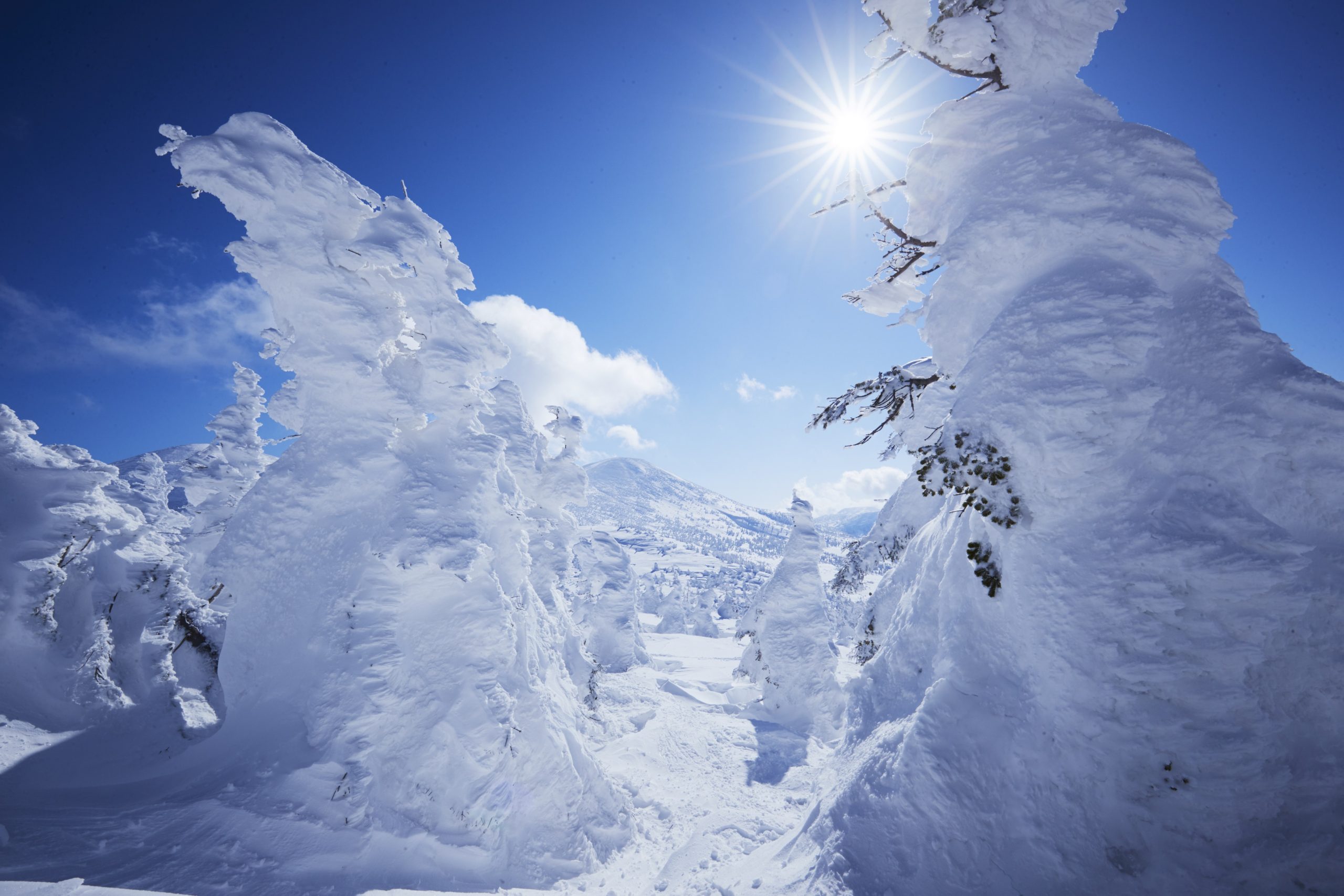
From the summit station, you can see not only the Hakkoda Mountains, but also Aomori City, Mutsu Bay, the Tsugaru Peninsula, and as far away as Hokkaido, and if you are lucky, the snow will begin to fall in late November, so you can enjoy the fantastic combination of autumn leaves and snow.
The beginning of the fall colors: Usually around early October near the Sanroku Station, usually around late September near the summit station.
Usually from early October to late October.
Kinds of autumn leaves】Beech, maple, Nanakamado (Japanese white ash), Oak
- Hakkoda mountain range (Hakkoda ropeway)
-
- 1-12 Arakawa Samizusawa, Aomori-shi, Aomori MAP
 March - early November 9:00-16:20
Mid-November to February 9:00-15:40
Runs every 15 to 20 minutes. Operation may be suspended in case of strong winds or stormy weather.
 [Round-trip] 2,500 yen for middle school students and older; 700 yen for elementary school students
- 017-738-0343
- Service will be suspended from November 8 to 17, R8, for inspection and maintenance of the ropeway properties.
Service will be suspended on November 18, R8, due to power outage work at the substation by Tohoku Electric Power.
Service will be suspended from May 25 to 31, R9, for inspection and maintenance of the ropeway properties.
5Hell Swamp
Fantastic competition between the steamy swamp and the autumn leaves
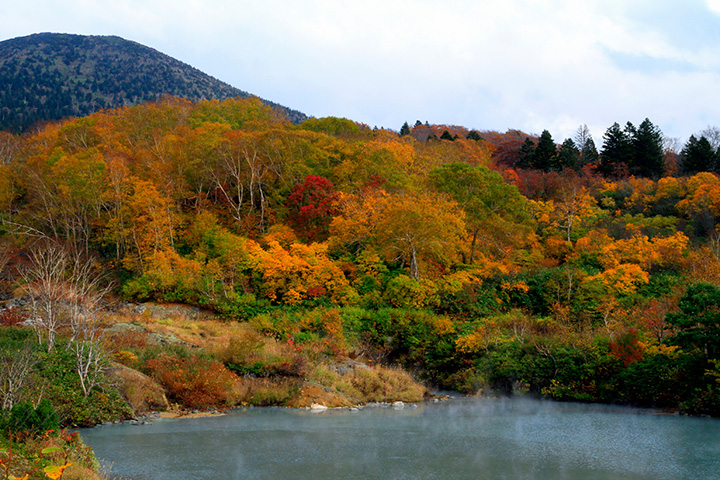
The swamp is located at the western foot of the main peak of the Hakkoda mountain range, Mt. The swamp was formed when hot spring water gushing from nearby volcanoes accumulated in the ruins of Hakkoda's exploding crater. The swamp itself is also gushing hot water of 70-90°C. The view from Jigoku-numa is spectacular, especially from the top. The view from Jigoku-numa is spectacular, especially during the autumn foliage season when the beech trees, oaks, maples, and downy birch turn brilliant red and yellow. The steamy, steamy swamp, tinged red by the autumn leaves, is a fantastic sight. Many tourists come to see this unusual scenery, which is not easily seen.
Nearby is an outdoor hot spring Property called "Fukashiyu (Manjufukashi)," where visitors sit on benches filled with hot spring steam, and "Sukayu Onsen," a popular secluded hot spring in Hakkouda known as a "spiritual spring above the clouds," so why not visit there after viewing the autumn leaves?
Start of color change] Usually in early October.
Usually from mid-October to late October.
Kinds of autumn leaves】Beech, oak, maple, downy birch, etc.
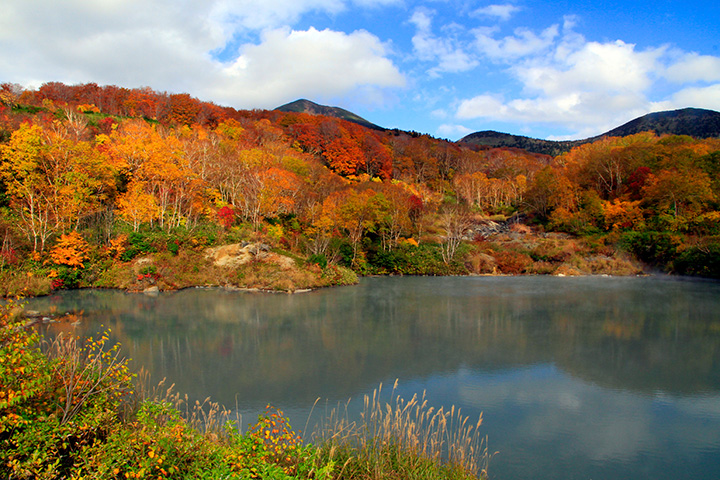
- Jigoku-numa Swamp
-
- In the Hakkouda Mountains, Aomori City, Aomori Prefecture MAP
 Approx. 50 min. by car from JR Shin-Aomori Stn.
- From JR Shin-Aomori Station, take the JR Bus “Mizuumi” for about 73 minutes, get off at “Sankayu Hot Spring,” and walk for about 10 minutes.
- 017-738-6400(Asagayu Hot Spring)
- None
6Jogakura Bridge
The 360-degree panoramic view of the autumn leaves is impressive!

This bridge connects the Tsugaru and Nanbu regions of Aomori Prefecture and offers a spectacular view overlooking the Shirogakura Stream, one of the most scenic spots within Towada-Hachimantai National Park.With a total length of 360 meters and a main span of 225 meters, it is the longest upper-deck arch bridge in Japan, rising approximately 120 meters above the valley floor.Looking down at the stream from the bridge, you can take in a panoramic view of the carpet-like autumn foliage and the rugged beauty of the stream carved into the rock face. The scenery is so captivating that you might feel as if you’re about to be drawn right in—it’s truly awe-inspiring.
Furthermore, looking out at the surroundings, you can see the Hakkoda Mountain Range to the east and Mount Iwaki to the west, allowing you to enjoy not only the fall foliage directly below but also a 360-degree panoramic view of the autumn colors.If you’re coming from the Sukayu Hot Spring direction, there’s a walking path leading to a parking area just before the bridge; the view of the bridge and the autumn foliage from this spot is a classic photo spot.
The first changing of the colors is usually in early October.
Best time to see the leaves: Usually in mid-October.
Kinds of autumn foliage: beech, oak, maple, downy birch, etc.
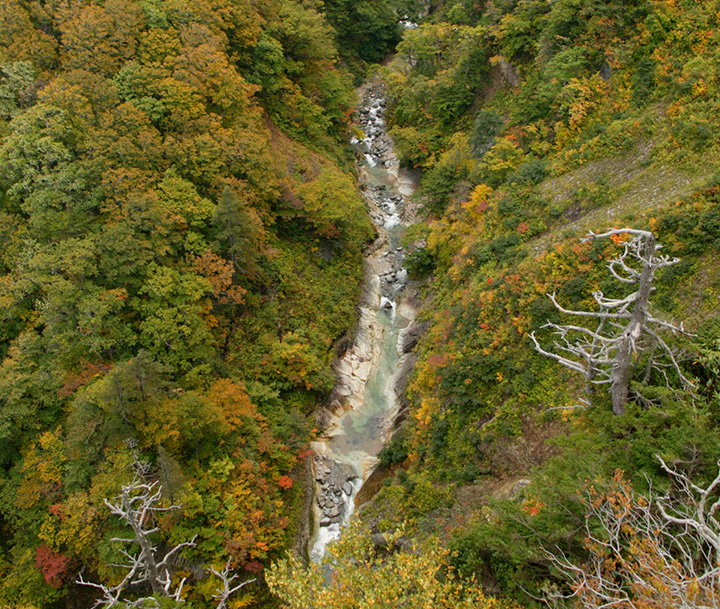
- Jogakura Bridge
-
- Arakawa Minami Arakawa Mountain, Aomori-shi, Aomori MAP
- Approx. 55 min. by car from JR Shin-Aomori Stn.
- 017-728-0200
- Free
7Water lily swamp
Beautiful autumn leaves reflected in the blue swamp
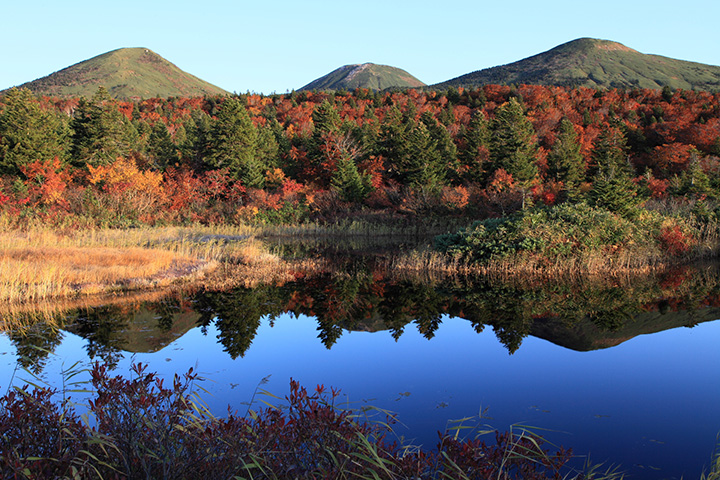
This area of marshes and wetlands, located at an elevation of nearly 1,000 meters, lies along the “Hakkoda-Towada Gold Line,” the road connecting Aomori City and Lake Towada. It is situated between Sukayu Onsen—a secluded hot spring in the Hakkoda Mountains—and Yachi Onsen, which boasts a history of 400 years since its discovery.
In summer, the white flowers of Ezo-hitsujikusa—a member of the water lily family—delicately adorn the lake’s surface, which is why it was named “Water Lily Pond.” There’s only enough space along the road for about ten cars to park, so it’s easy to miss if you’re not paying attention, but the view from the observation deck is a breathtaking sight you won’t want to miss.Across the blue water, you can see Mount Ōdake and Mount Iōdake in the Hakkōda Mountain Range.
During the fall foliage season, the surrounding trees begin to turn red and yellow, allowing you to enjoy a breathtaking panorama created by the wetland, the reflection of the autumn colors on the water’s surface, and the Hakkōda Mountain Range towering in the background.
The autumn colors usually begin to change around the end of September.
Usually, the best time to see the leaves is in early October.
Kind of foliage】Beech
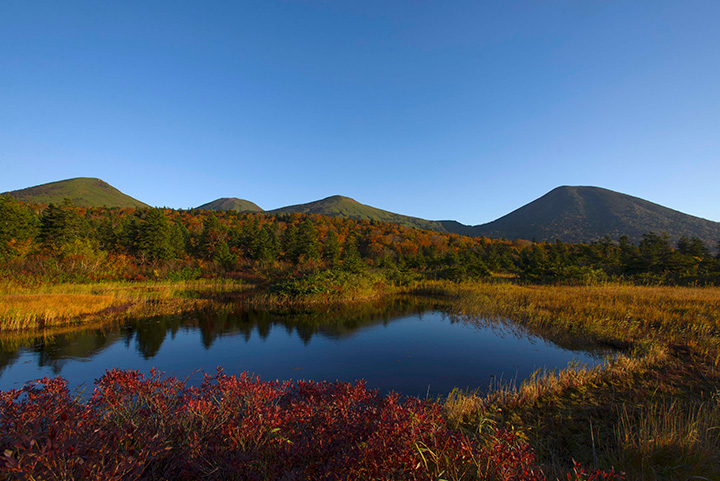
- Water Lily Swamp
-
- Horyo, Towada City, Aomori Prefecture MAP
- From JR Aomori Station, take the JR Bus Tohoku “Mizuumi” for approximately 90 minutes; get off at “Suirenuma” and walk about 1 minute
- 0176-75-2425 (Lake Towada National Park Association)
- Free
8Nakano Maple Mountain
Breathtaking beauty of bright red autumn leaves and red bridges
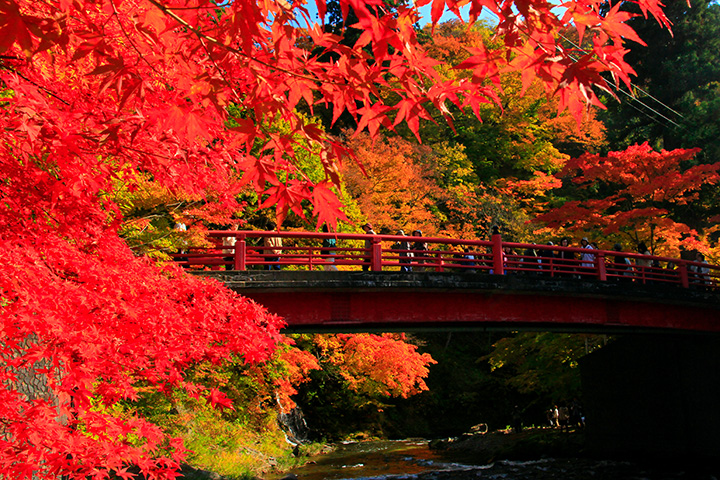
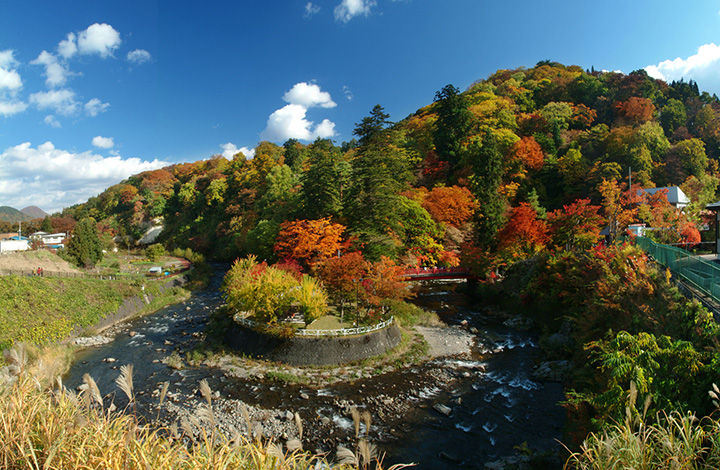
The bridge is located in Kuroishi City, and is known as the "Little Arashiyama" of Tohoku, one of the best places in the prefecture to view the autumn colors. 1802, Prince Yasuchika Tsugaru, the ninth lord of the Hirosaki domain, brought over 100 varieties of maple seedlings from Kyoto and planted trees here, and the area has been a popular spot for viewing the autumn colors ever since.
Nakano Shrine is located in the mountain, and the area in front of the entrance to the shrine is a spectacular spot. The bright autumn leaves, the clear stream of Nakano River curving in a U-shape, and the red bridge provide a panoramic view of Mt. Within the shrine grounds, there are also many attractions such as Fudo Falls and Kanpu-dai, where visitors can enjoy strolling around as they wish. The illumination of the leaves at night is also fantastic.
[Leaves Begin to Change Color] Usually around early October
[Peak Season] Usually mid-October to early November
[Types of Autumn Foliage] Japanese maple, sugar maple, and others
【Illumination】October 24 (Sat) – November 8 (Sun), 4:30 PM – 9:00 PM
【Scheduled Street Stall Operating Dates】October 24 (Sat) – November 8 (Sun)
- Nakano Maple Mountain
-
- 27 Fudodate, Ooaza Minaminakano, Kuroishi City, Aomori Prefecture MAP
- From Kuroishi Station, take the Okawara Line of the Konan Bus for about 30 minutes, get off at the Nakano Jinja-mae stop, and walk about 1 minute.
- 0172-52-2111 (Kuroishi City Department of Commerce, Industry, and Tourism, Tourism Division)
- Free
9Hirosaki Park (Hirosaki Castle)
Symbolic park of Hirosaki, the ancient capital of Japan, dyed in autumn colors
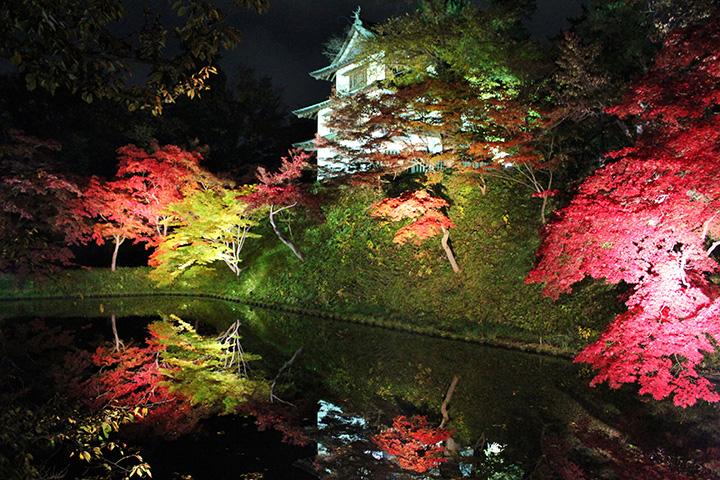
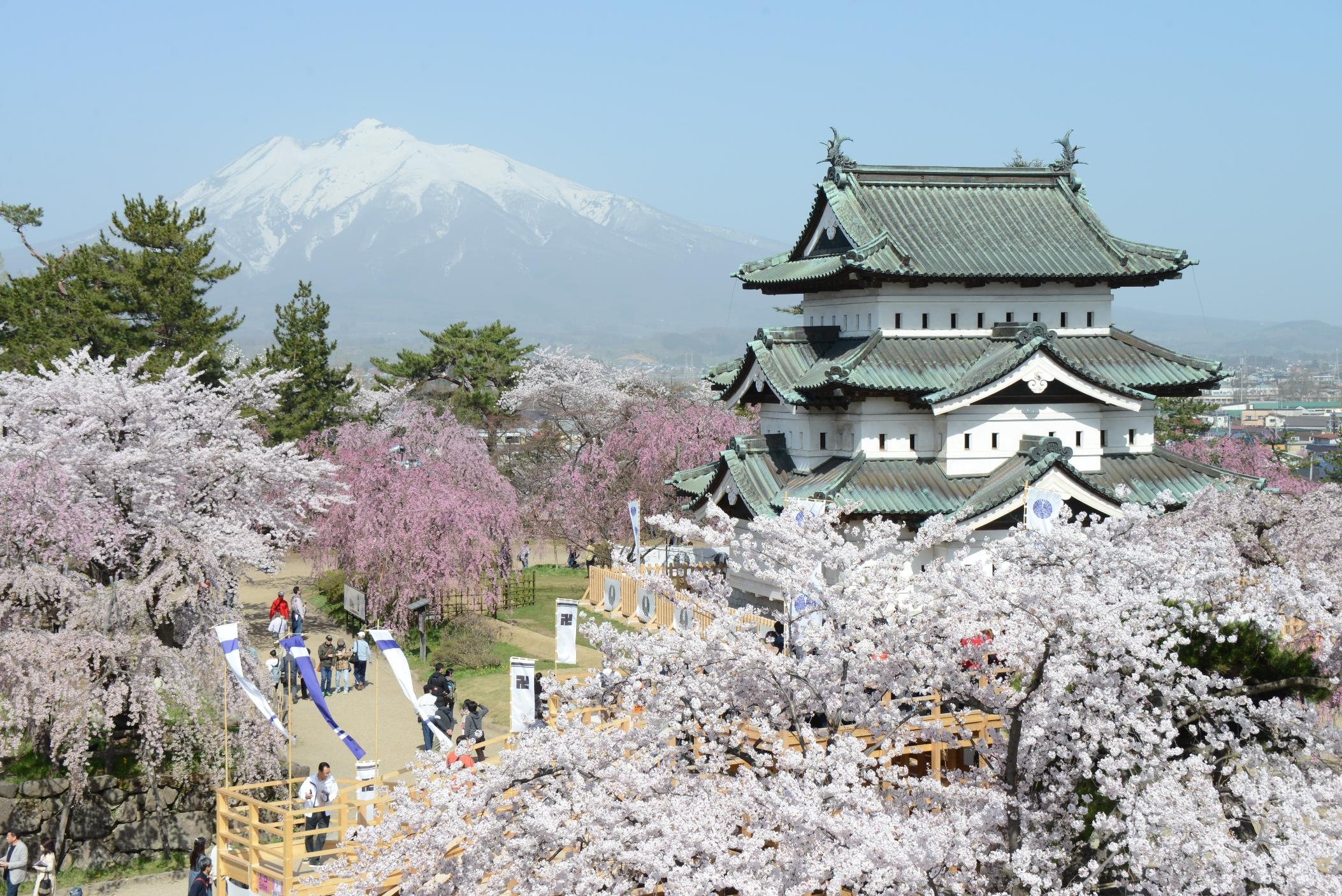
Hirosaki Park, which was the residence of the Tsugaru clan during the feudal era, is designated as a national historic site and is a symbol of the ancient city of Hirosaki. Although the park is nationally known for its cherry blossoms, in fact, the season of autumn leaves is also a popular tourist season. The green of the approximately 2,000 pine trees is beautifully offset by the autumn colors of the approximately 2,600 cherry trees and 1,000 maple trees, providing a different emotional atmosphere from that of the cherry blossoms in spring.
[Leaves Begin to Change] Typically around mid-October
[Peak Viewing Season] Typically late October to early November
[Types of Autumn Foliage] Cherry, maple, ginkgo, and others
- Hirosaki Park (Hirosaki Castle)
-
- 1 Shimoshiragin-cho, Hirosaki-shi, Aomori MAP
- A 30-minute walk from JR Hirosaki Station
- 15-minute bus ride from JR Hirosaki Station; get off at “City Hall” and walk 5 minutes
- Admission free; Honmaru and Kitanokaku open Apr. 1-Nov. 23, 9:00-17:00
- Admission to the park is free; the Honmaru and Kitanokaku are fee-based areas: high school students and older: 320 yen, elementary and junior high school students: 100 yen (free during the winter season from November 24 to March 31).
- 0172-33-8733 (Hirosaki City Green Association, a general incorporated foundation)
- Public access to the interior of Hirosaki Castle’s main keep will be suspended for the time being due to preservation, repair, and seismic retrofitting work. (Scheduled to resume in April Reiwa 15.)
MAP
- <Aomori's most scenic autumn foliage spots
- Nearby Hoshino Resorts Properties

Local Guide in Charge of This Article
- Eimiko Kasai Healing Aomori Girl
Aomoriya by Hoshino Resorts
Misawa, Aomori Prefecture
Hot spring ryokan where you can fully experience Aomori culture such as festivals, hot springs, and local performing arts.


Direction 3 minutes from Aoimori Railway Misawa Station by shuttle bus / 20 minutes from Misawa Airport by shuttle bus
- Sample Room Rates
- Per person, per night From 14,000 yen
Oirase Keiryu Hotel by Hoshino Resorts
Towada, Aomori Prefecture
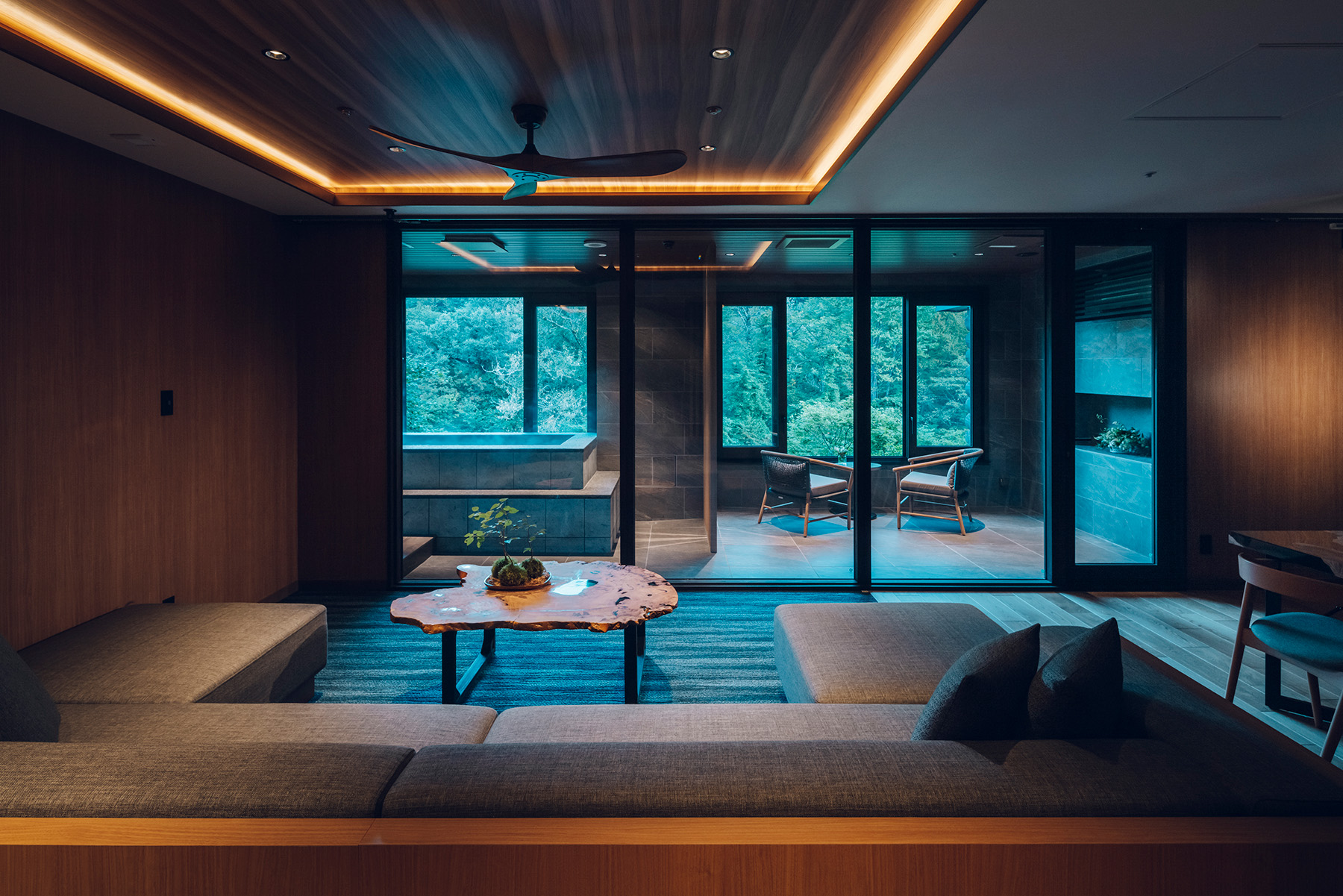
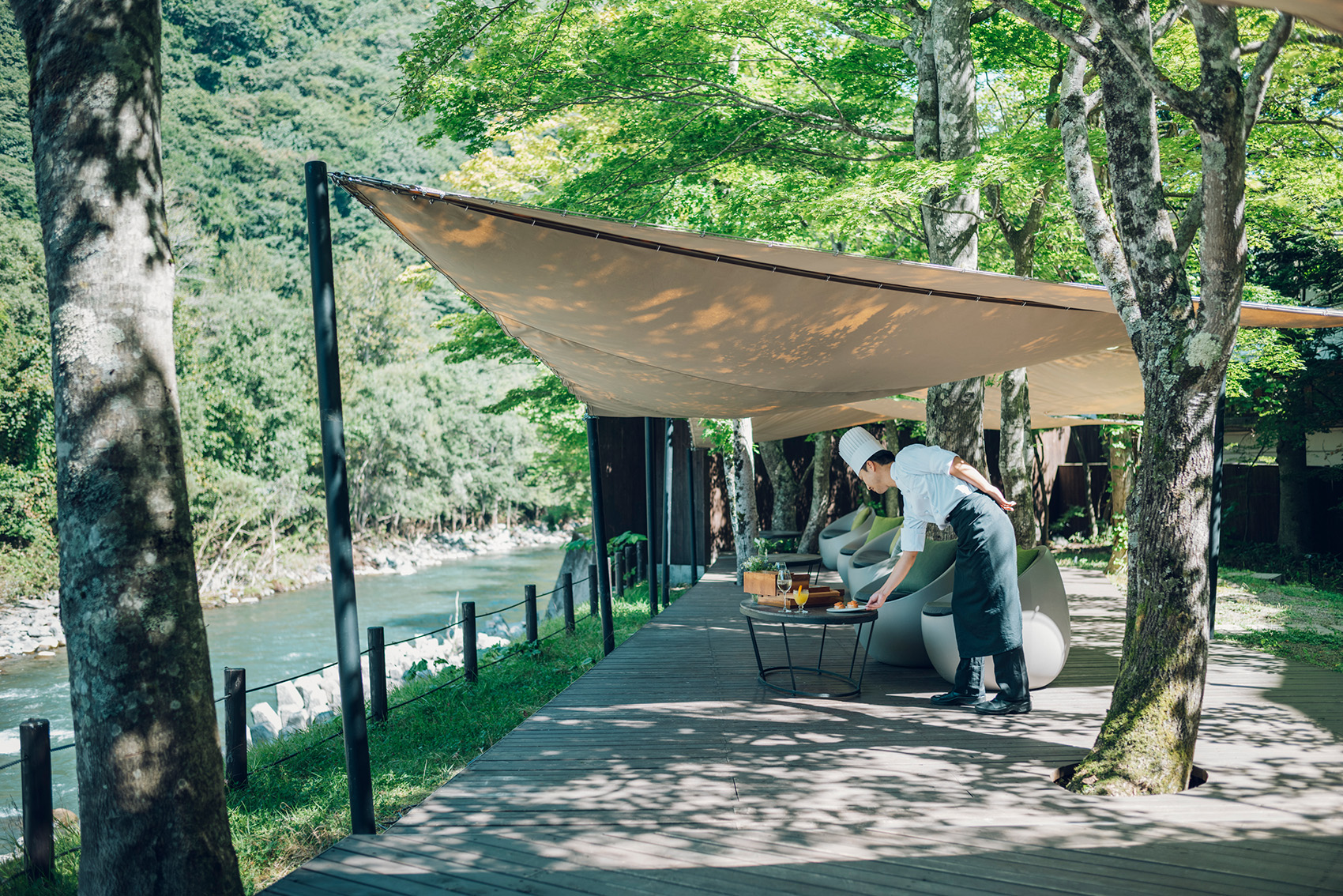
The only resort hotel built on the banks of the Oirase mountain stream. You can enjoy the nature of the national park throughout the year.

.jpg)
Direction 70 min. by shuttle bus from JR Hachinohe Station
- Sample Room Rates
- Per person, per night From 20,080 yen
Hoshino Resorts KAI Tsugaru
Owani Onsen, Aomori Prefecture
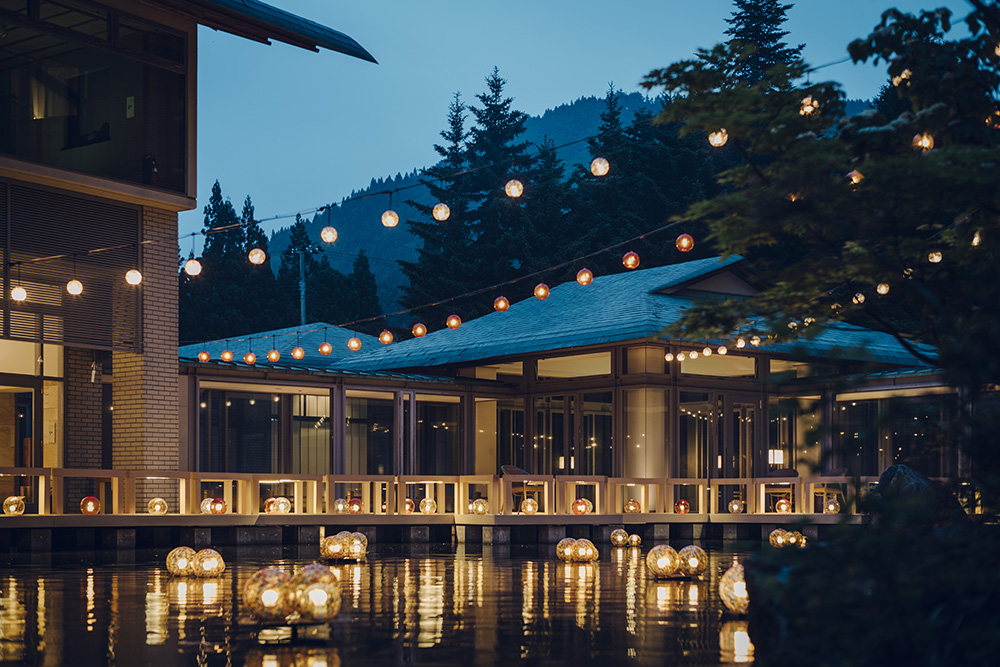
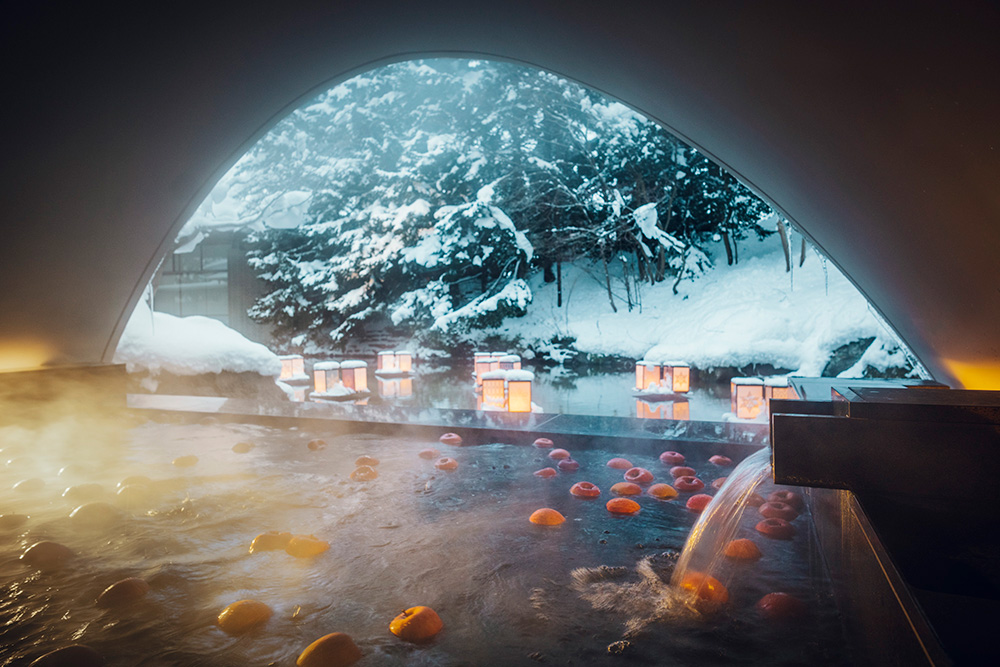
Hot spring ryokan to enjoy the culture of Tsugaru and its four seasons. You can also enjoy the water garden of Tsugaru's four seasons, which changes its expression with each season.

Direction 5 min. by shuttle bus from JR Owani Onsen Station
- Sample Room Rates
- Per person, per night From ¥19,000