





Explore Hakodate by Streetcar! Enjoy Historic Architecture, Food, and Hot Springs in Hakodate
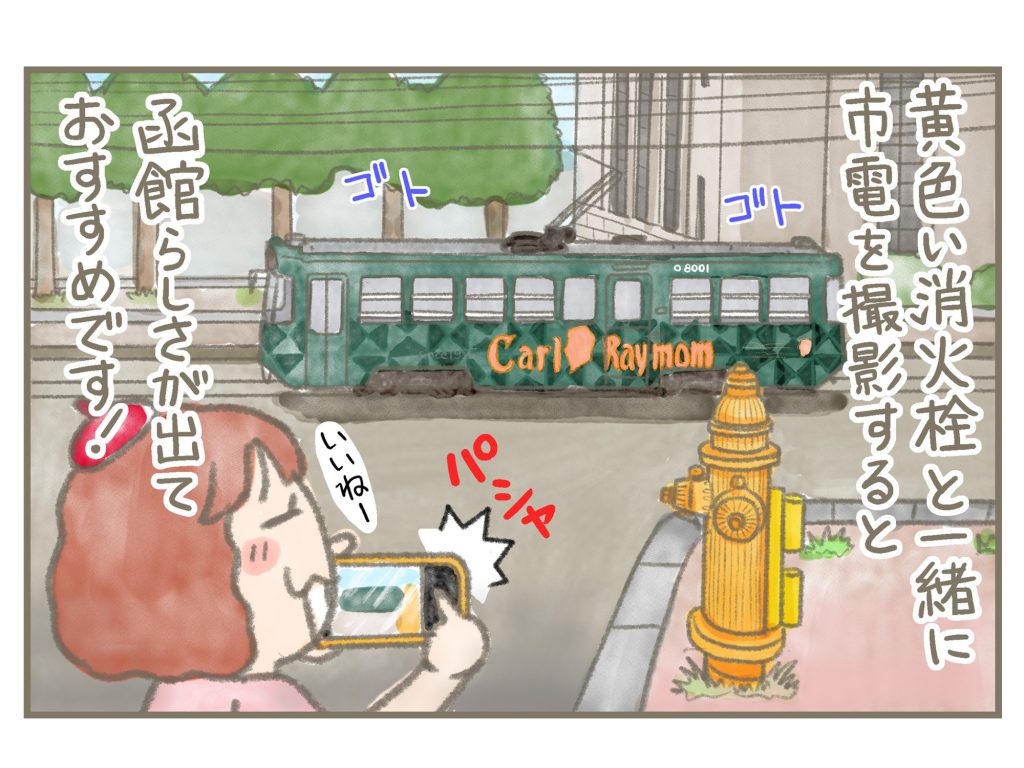
Hello, I am "Yasukon", a cartoonist & writer.
Hakodate is a picturesque city known for its stylish buildings that incorporate Western culture. Streetcars run right through the heart of the city. Hakodate’s streetcar system began with a horse-drawn tramway that opened in 1897. It was electrified in 1913, and it has been 113 years since service began on the line carrying visitors to the Yunokawa Onsen hot springs in the suburbs.
Today, why not buy a and explore the city on these historic streetcars.
The “Wandering Expert” who wrote this article
-
Travels and draws (writes)! Manga Artist & Writer
Yasukon
Likes to travel by train alone, enjoying ekiben, ekisoba, hot springs, and sake. He has eaten more than 2,500 ekiben. He is the author of "Hitori ningo fun tetsudo tabi ekiben meguri-hen" (Railroad Journey by Hitori: Ekiben Tour Arc) published by Genkosha. His manga "Neko ni Ekiben" (Cat and Station Bento) is serialized in "Ryoko Yomiuri" (Travel Yomiuri).

Expert
● Take a Ride on the Hakodate Streetcar!
I bought the one-day tram pass the day before at the Hakodate City Tourist Information Center. By the way, the tourist information center opens at 9:00 a.m., so if you want to ride the tram early in the morning, you can buy one by asking the driver when you get off.
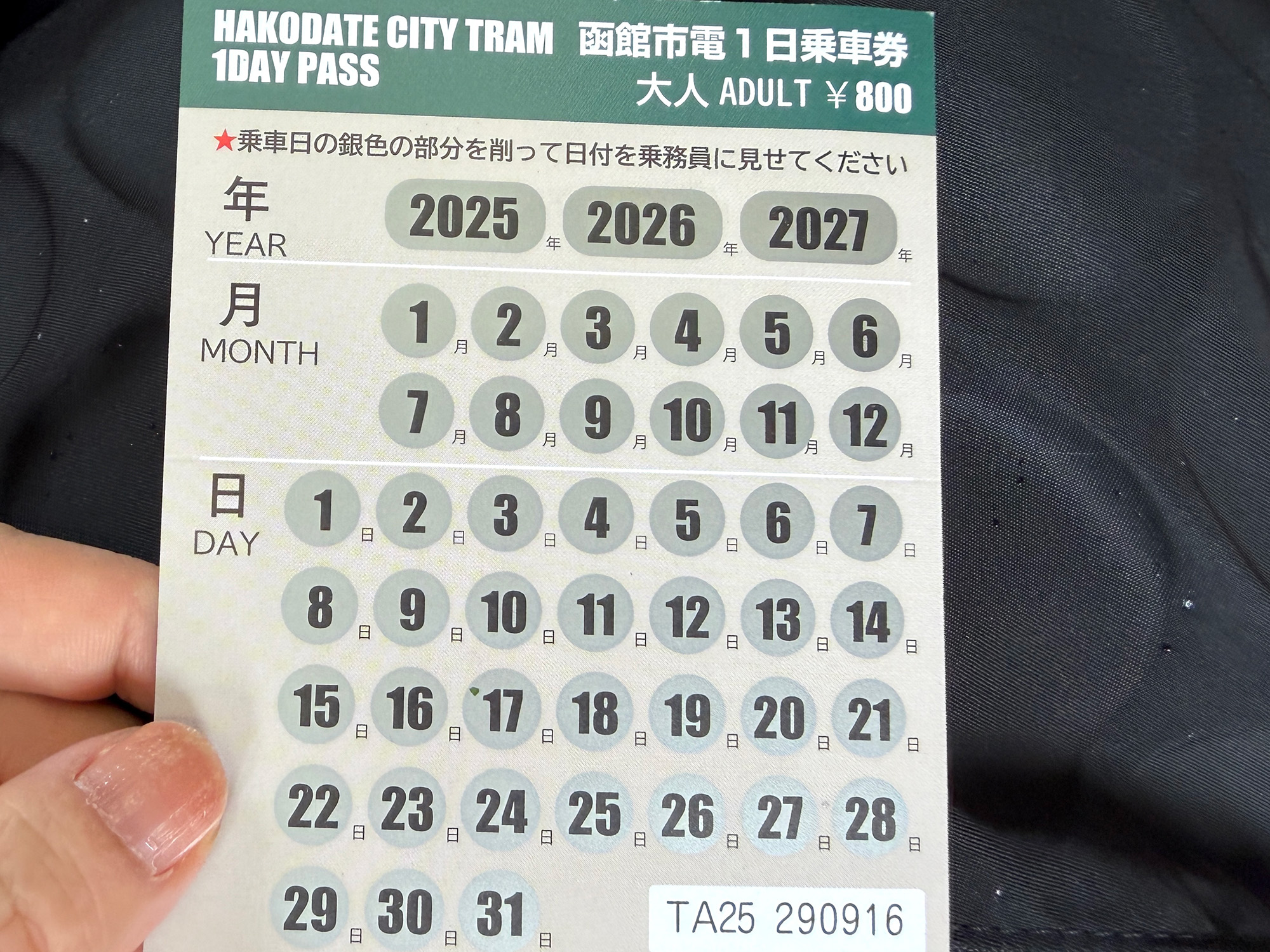
This pass is the type where you decide the day you’ll use it, so it’s perfectly fine to buy it in advance. When boarding, you don’t need to take a numbered ticket—just get on as is. When getting off, , simply show the one-day pass to the driver and get off.
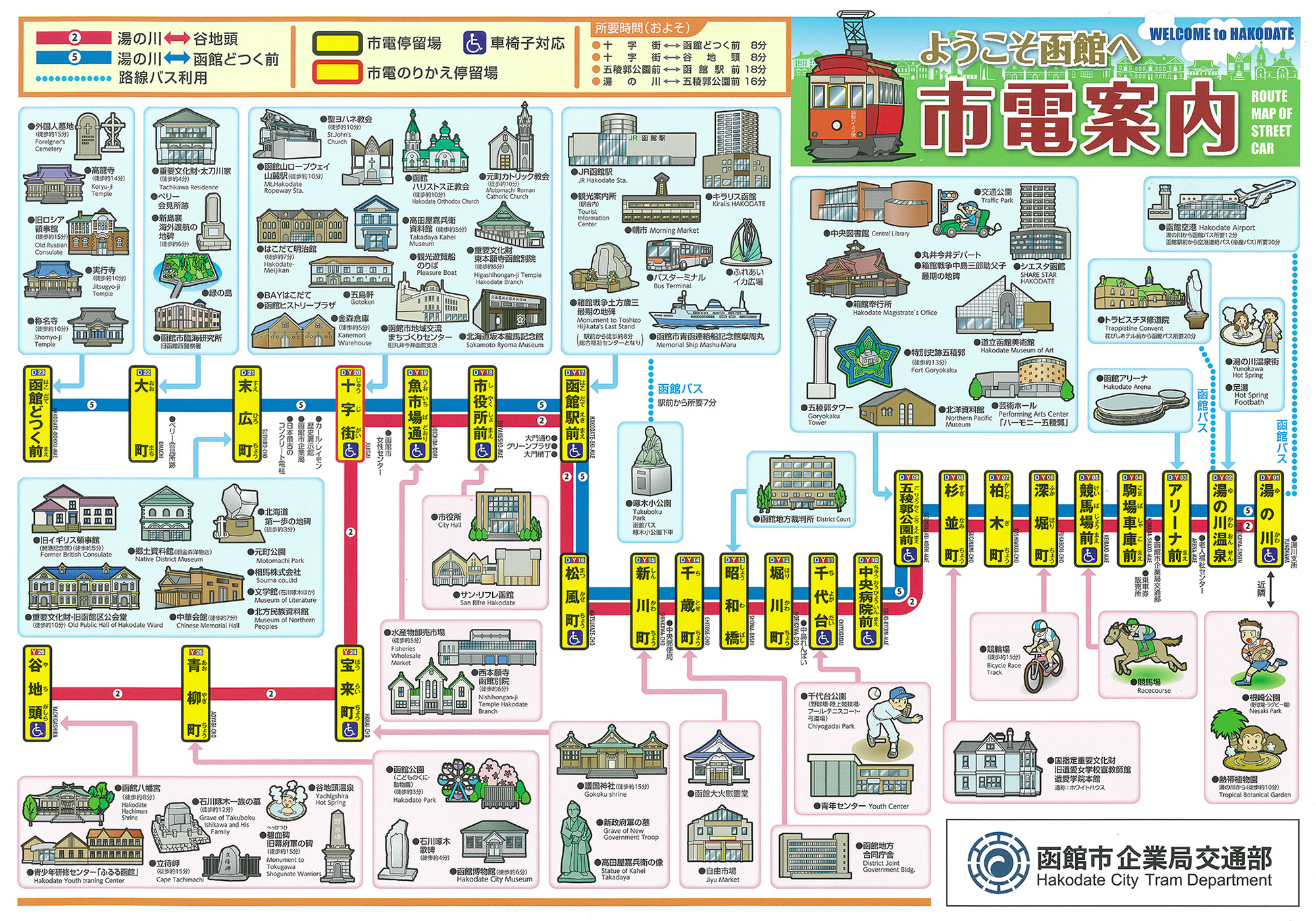
Centered around Hakodate Station, the lines extend in three directions: Hakodate Dotsuku-mae, Yunokawa, and Yachigashira. Today, I decided to ride to the end of each line.
I boarded the streetcar that pulled in and headed first toward Hakodate Dotsuku-mae. The streetcar rattles quite loudly and shakes quite a bit. On newer lines, the shaking isn’t really noticeable, but this is part of the charm unique to the historic Hakodate Streetcar.
The Master of Detours
The route map available at the tourist information center is very handy, so be sure to pick one up
● Picture-perfect Scenery and Architecture in Hakodate
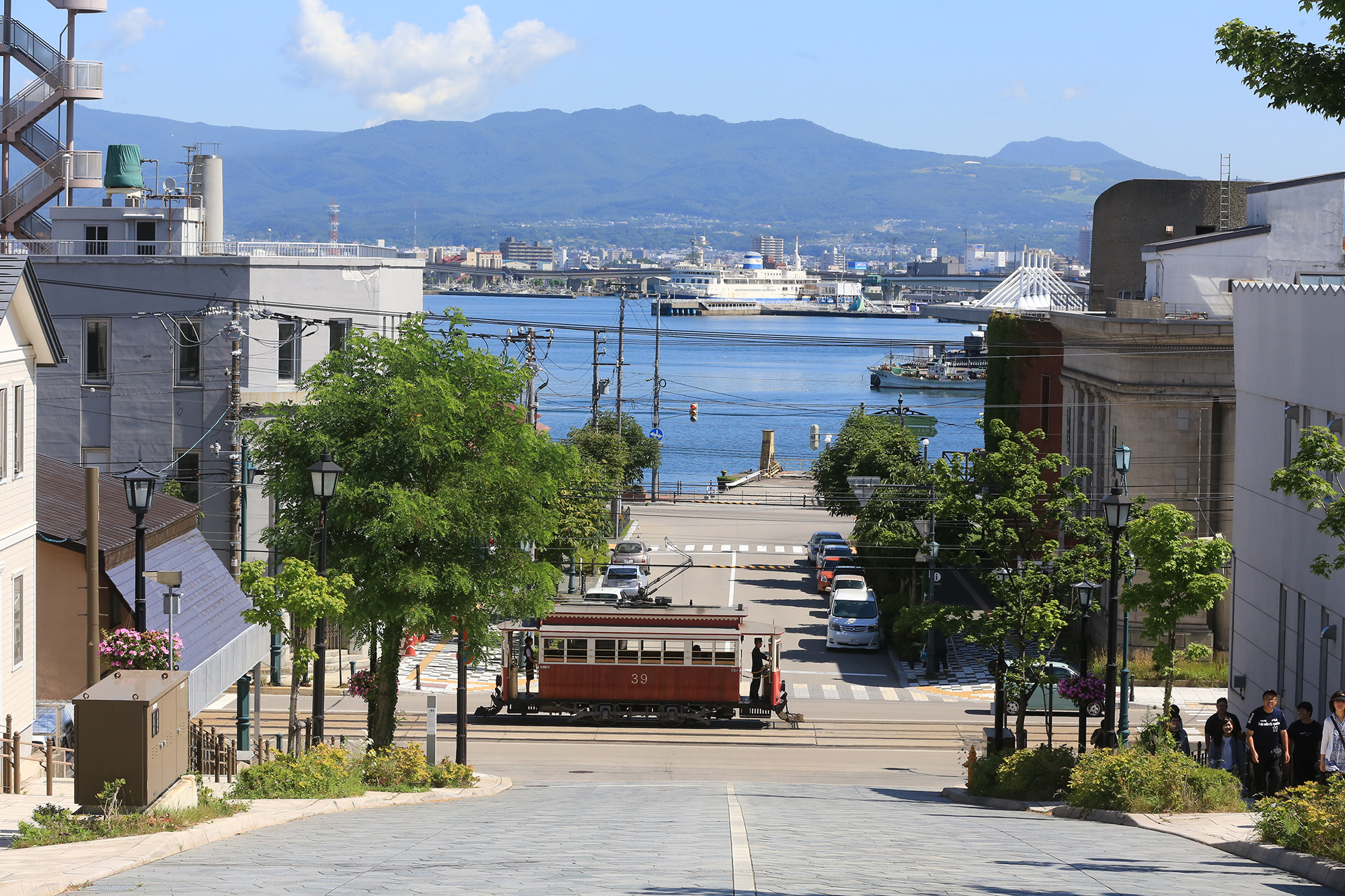
I got off at Suehiro-chō and walked up Hachiman-zaka. When I turned around partway up, I could see the ocean at the bottom of the hill, with a streetcar passing just in front of it.
I lingered there for a while, wanting to capture that view, but getting the timing right was quite tricky. It was raining that day, but on a clear day, the sea is blue, and you can see the opposite shore and the mountains clearly.
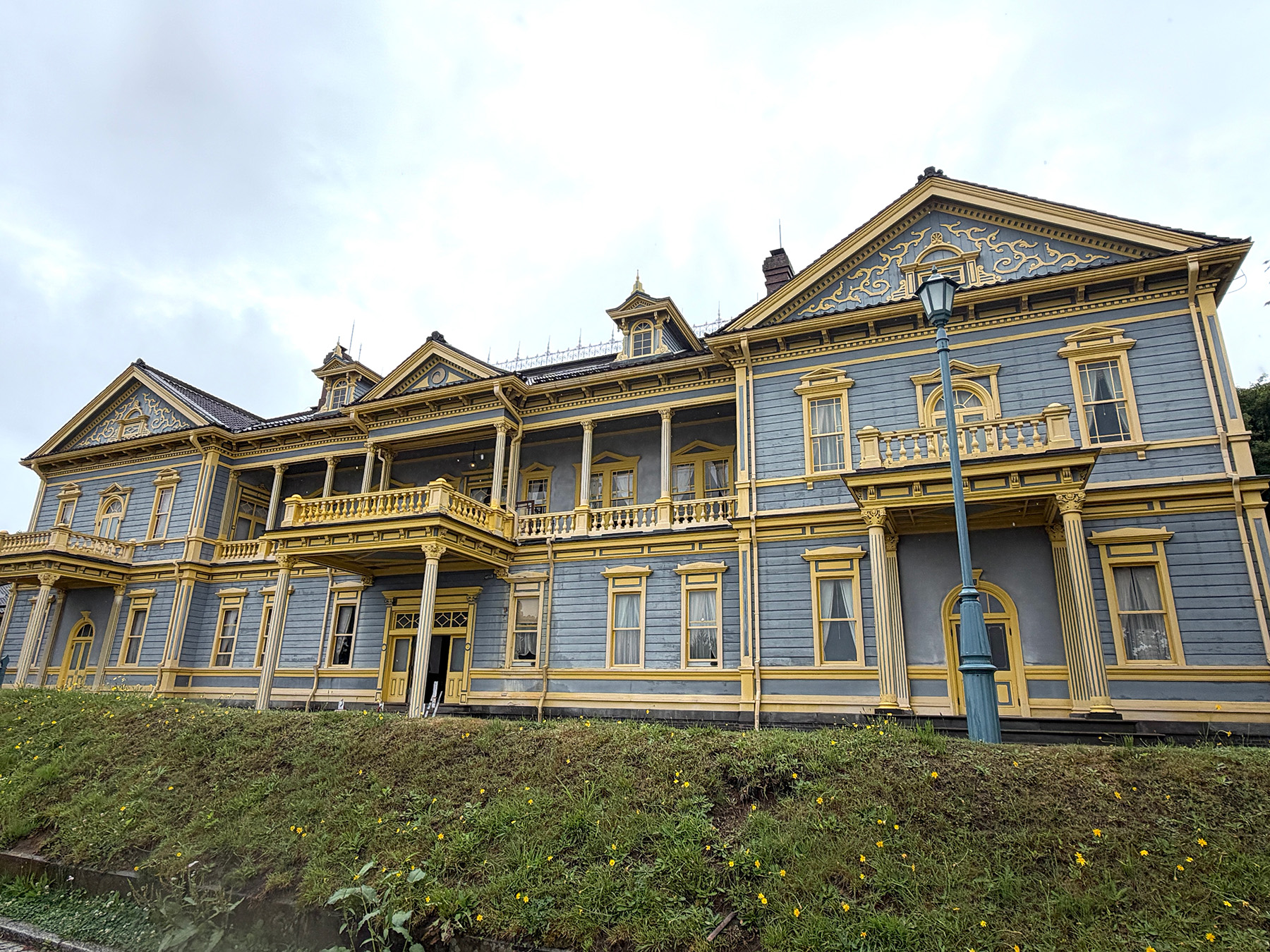
I continued up the slope to the Former Hakodate Ward Public Hall, a Designated Important Cultural Property. It’s a representative example of Meiji-era Western-style architecture in Hokkaido, featuring a symmetrical design. Inside, there’s a grand hall and lavishly decorated Western-style rooms, and from the balcony, you can take in a panoramic view of Hakodate.
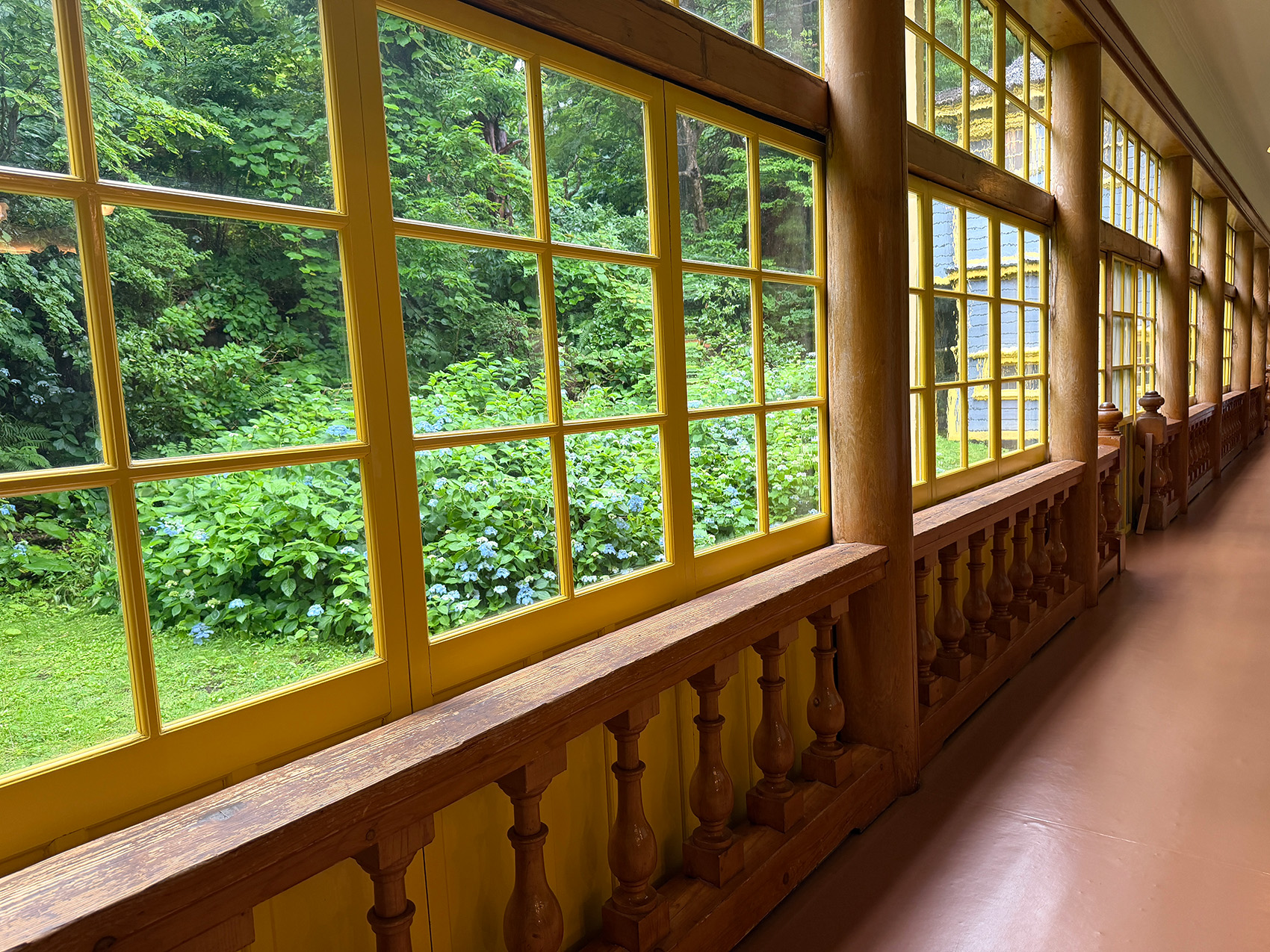
From the windows of the corridor located at the back of the building, the view through the old Meiji-era glass appears to shimmer and is quite beautiful. However, there’s a handrail and something resembling a fence beneath the windows. What on earth is this…?
Apparently, when the building was first constructed, a veranda was accidentally built here. Realizing that a veranda wouldn’t work in a snowy region, the builders hurriedly added a roof and converted it into a hallway. It’s interesting that remnants of the railing remain to this day.
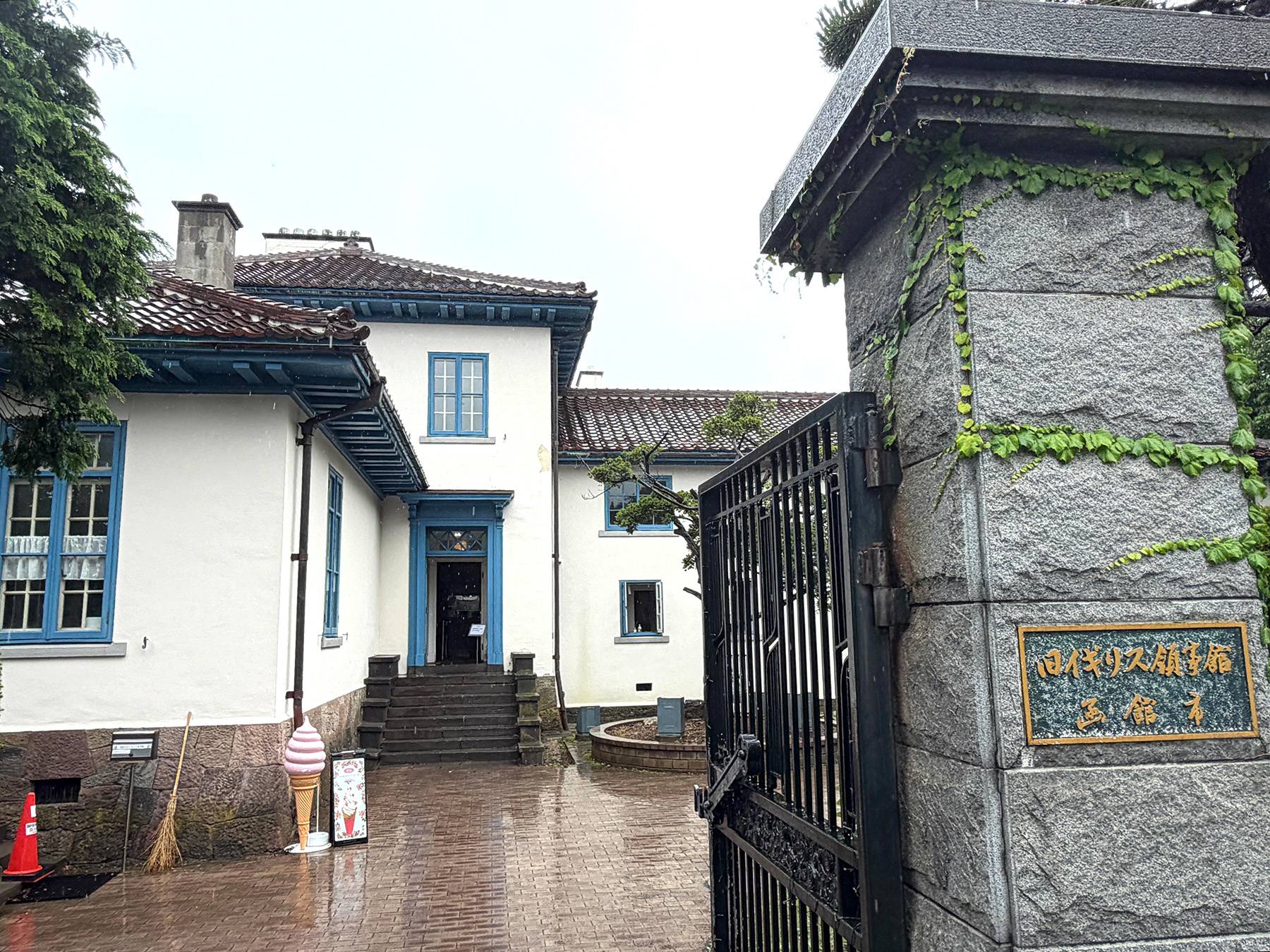
Since I’d bought a combined ticket for both buildings at the Former Hakodate Ward Public Hall, I headed straight to the nearby Former British Consulate. While it’s also a Western-style building, you can sense a Japanese atmosphere here and there—it’s a structure that truly reflects the character of a port town where different cultures intersect.
The Master of Detours
The photo cutout panel at the former British Consulate is designed so you can take a photo by yourself—it’s really fun!
● Take a Stroll Through Downtown Hakodate
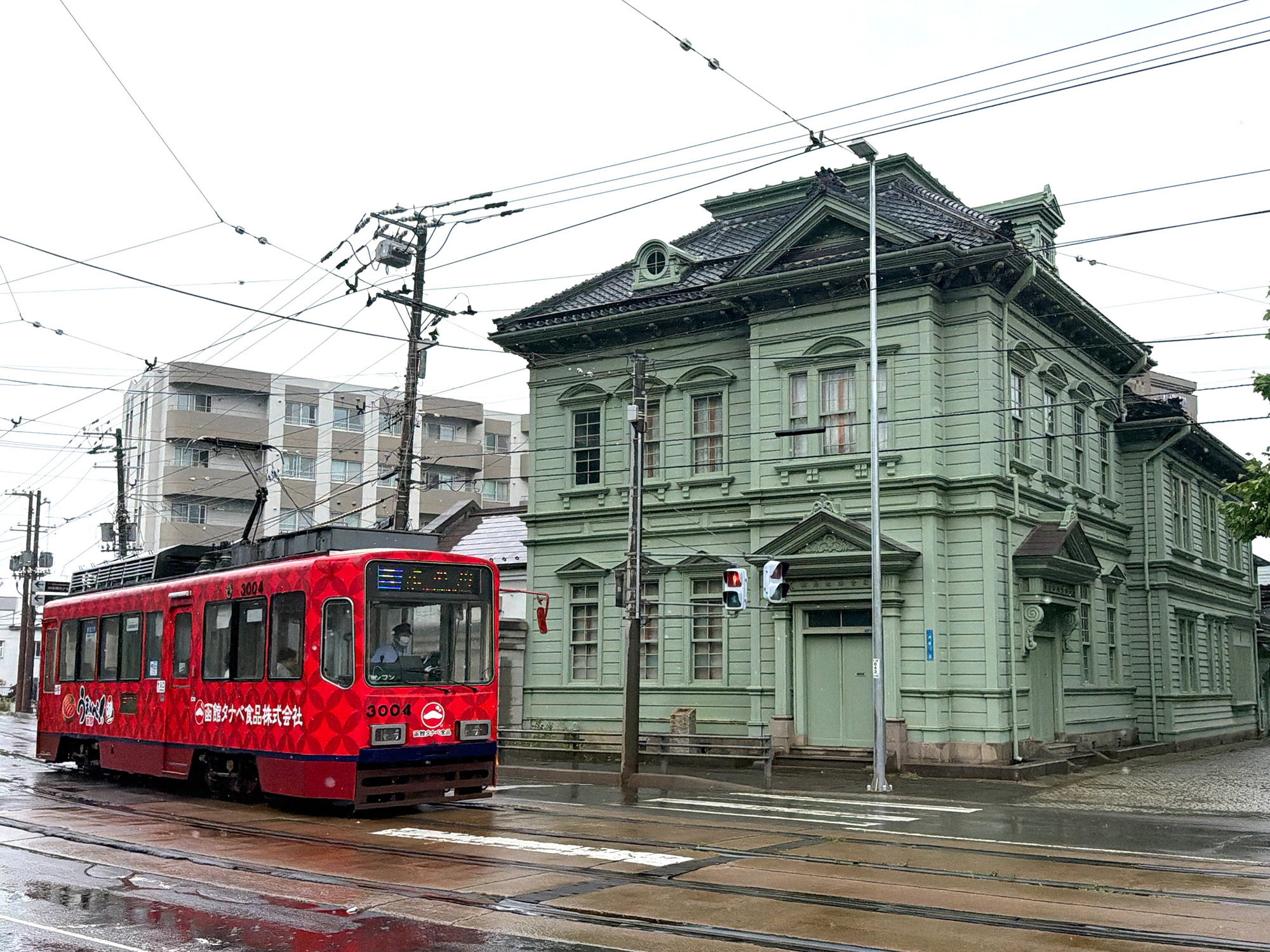
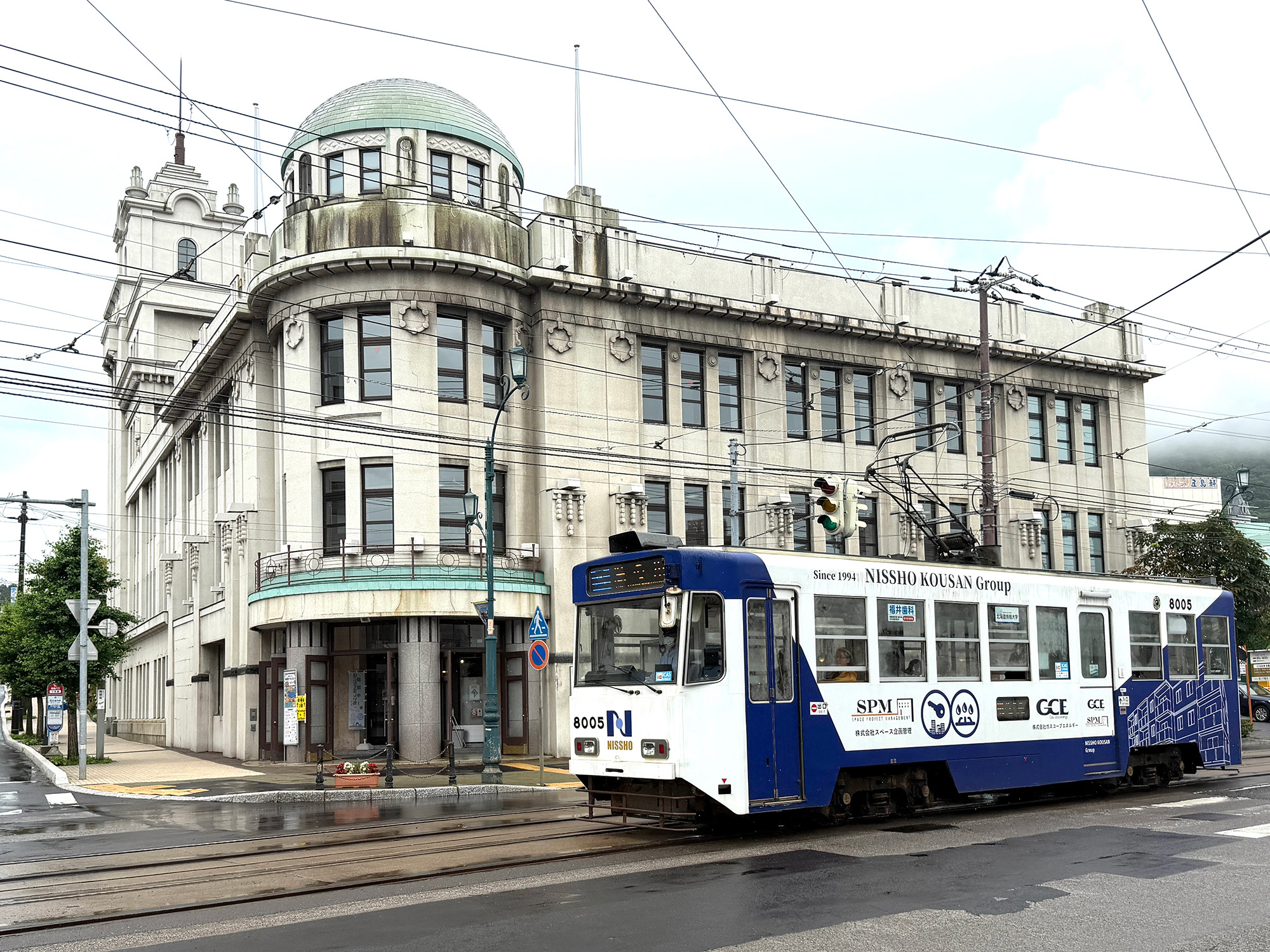
I walked down the hill and took a photo of the streetcar in front of the Local History Museum (formerly the Kanamori Western Goods Store). Western-style buildings and streetcars really do make for a picturesque scene.
I hopped back on the streetcar at the Suehiro-cho stop and got off at the final stop, Hakodate Dotsuku-mae.I found the name “Dotsuku” a bit puzzling, but “Dotsuku-mae” is actually read as “Dokku-mae.” Apparently, it means “in front of Hakodate Dotsuku,” a company name that’s the direct hiragana transcription of the English word “dock,” referring to a shipyard. Until now, I’d always just read it as “Dotsuku”...
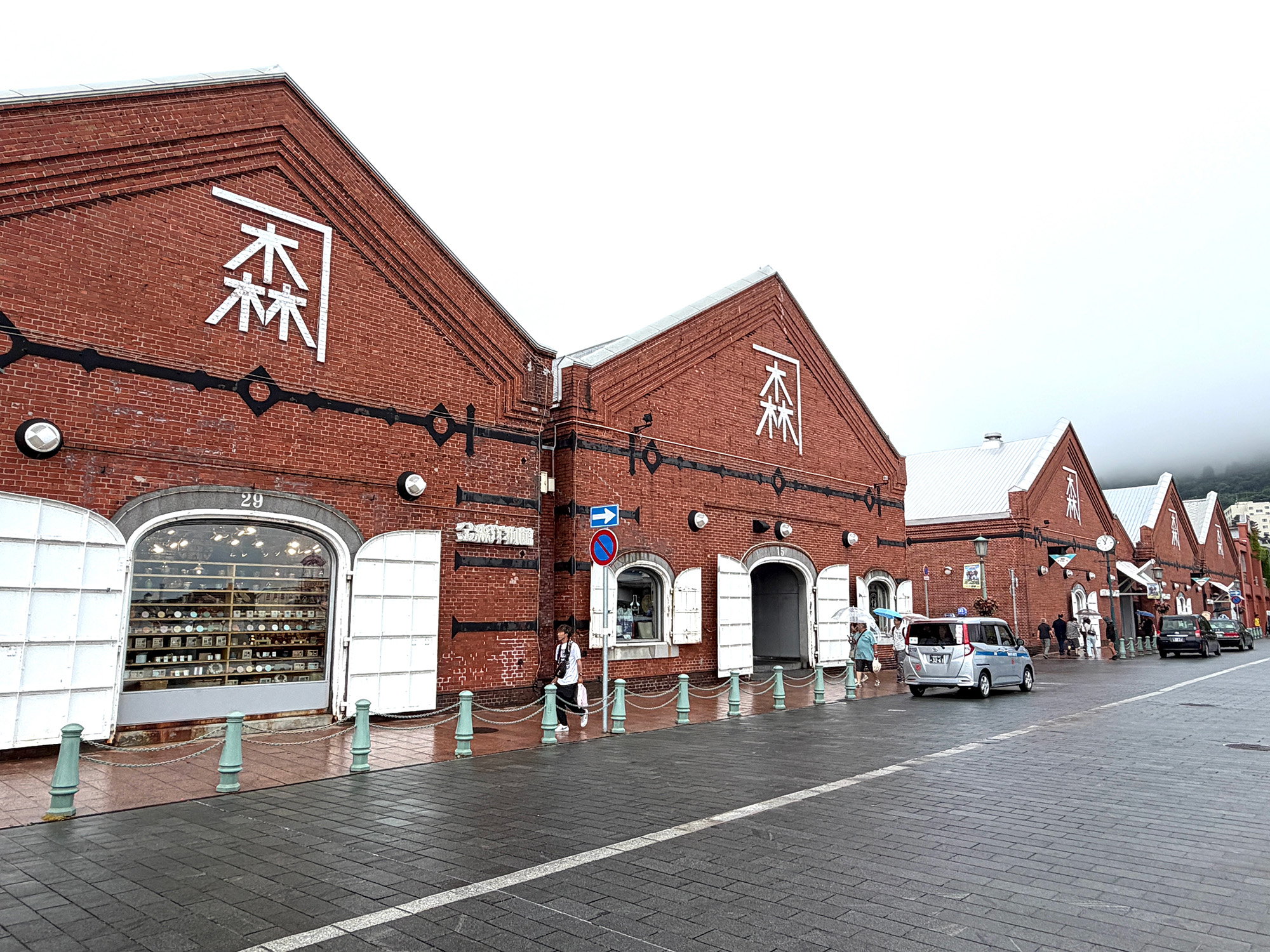
I took the tram back from the terminal and got off at Jujigai. Walking toward the ocean, I came upon the red-brick warehouse complex. It houses a variety of shops and Restaurants, and just walking around there is a pleasure.
At one of them, the Hakodate Wine shop, I was able to sample some wines. They were all easy to drink and seemed like they’d pair well with a meal. In addition to wines you can easily buy on the Nagamare Kaikyo train or at convenience stores, they also carried a selection of premium wines.
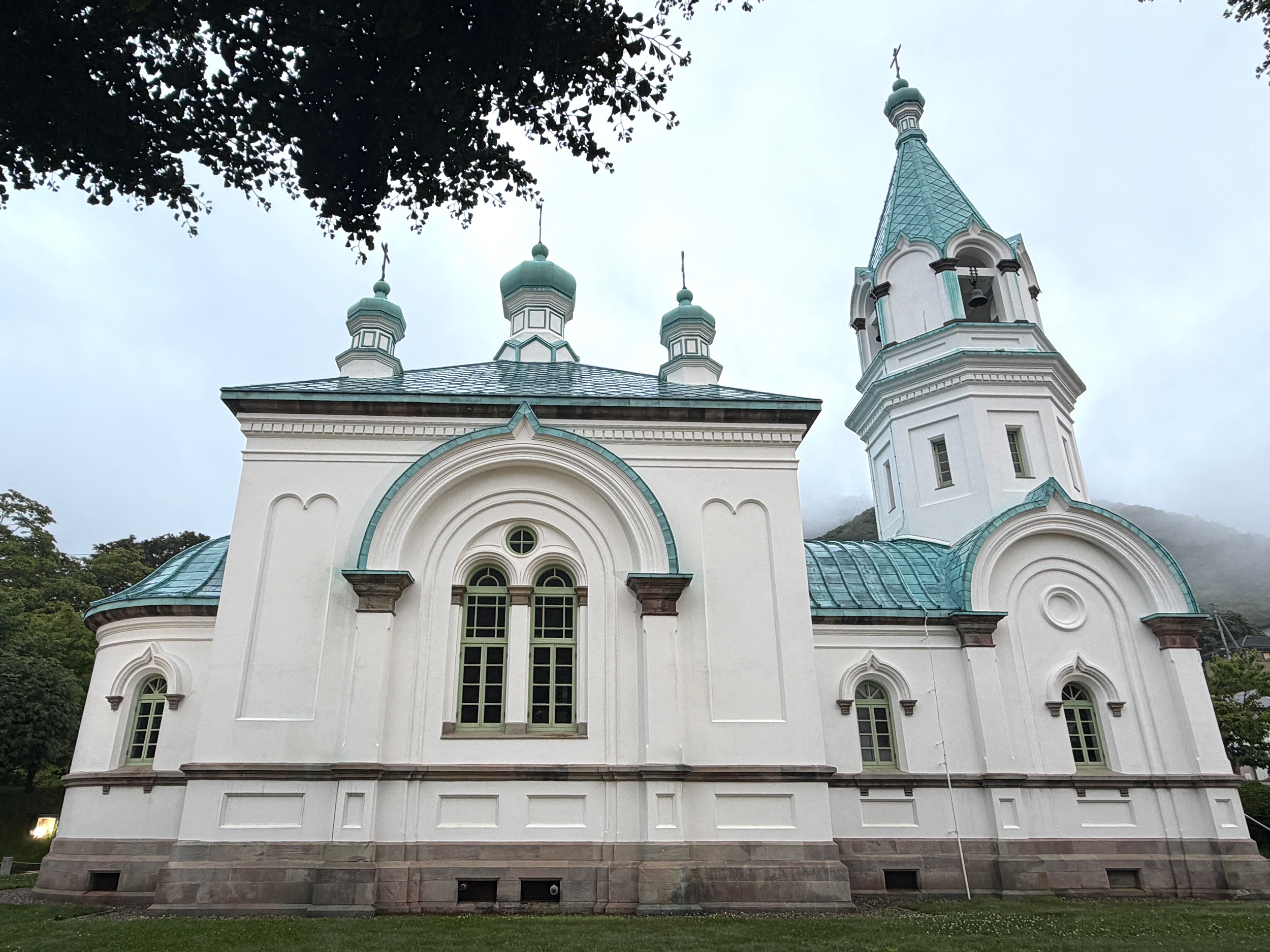
Next, I walked toward the mountainside. After climbing another hill, I visited the Hakodate Orthodox Church. This area is home to many churches, including St. John’s Church,
The Master of Detours
Near the Jujigai tram stop, there’s also a unique attraction known as “Japan’s Oldest Concrete Utility Pole”!
● Goryokaku Tower and Shio Ramen
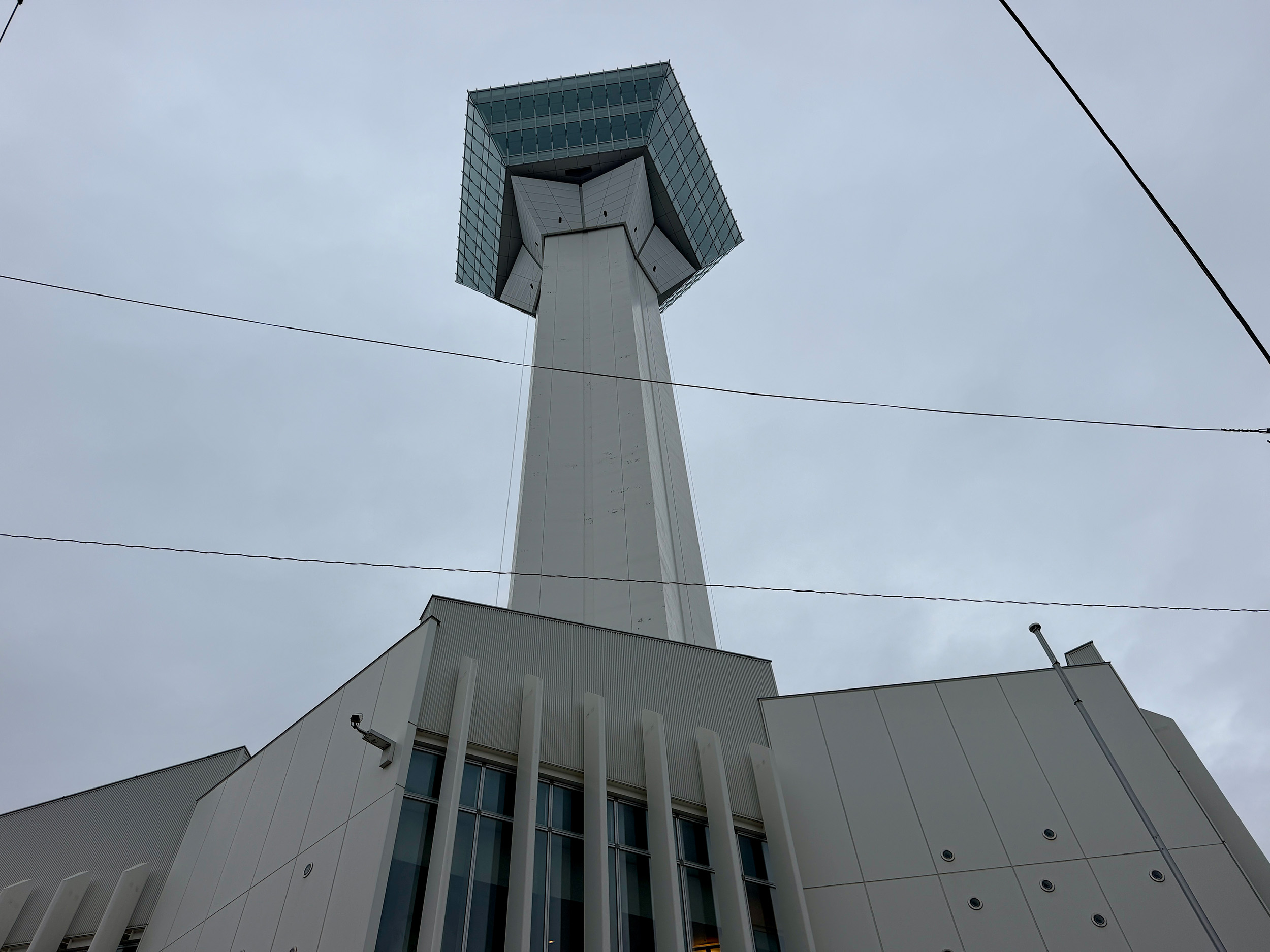
Next, I took the streetcar past Hakodate Station and headed toward Yunokawa. The stop in front of Goryokaku Park is the closest to the famous Goryokaku Tower. It’s about a 10-minute walk to the tower from there.
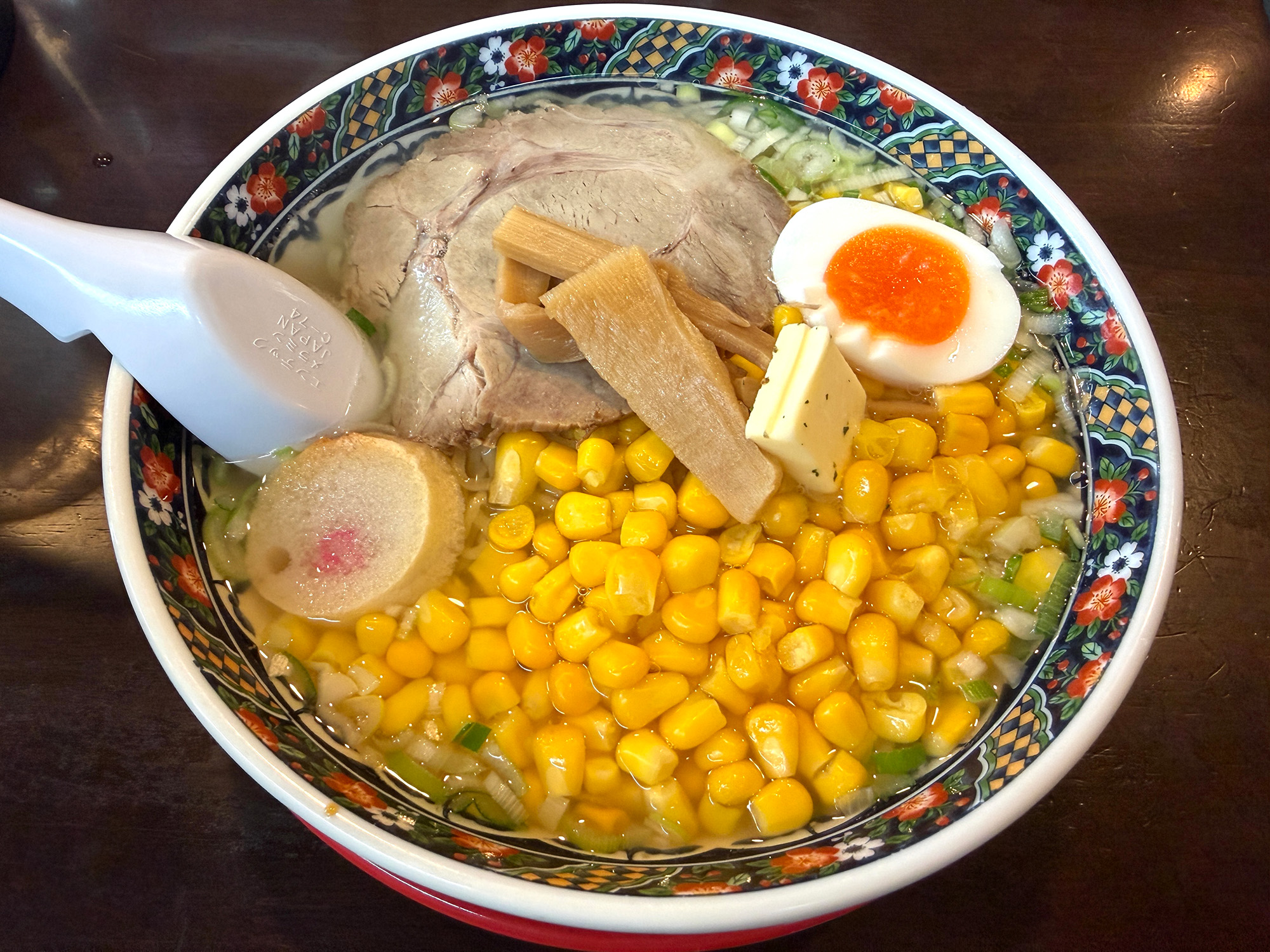
Before the tour, let’s grab lunch at “Hakodate Menchoubou Ajisai,” right next door. It’s truly a case of “dumplings over flowers.” I absolutely love their shio ramen, and I have it every time I visit.
I ordered the “Corn Butter Shio Ramen.” Although the broth looks clear, the curly noodles were perfectly coated in a rich, savory broth—it was delicious.
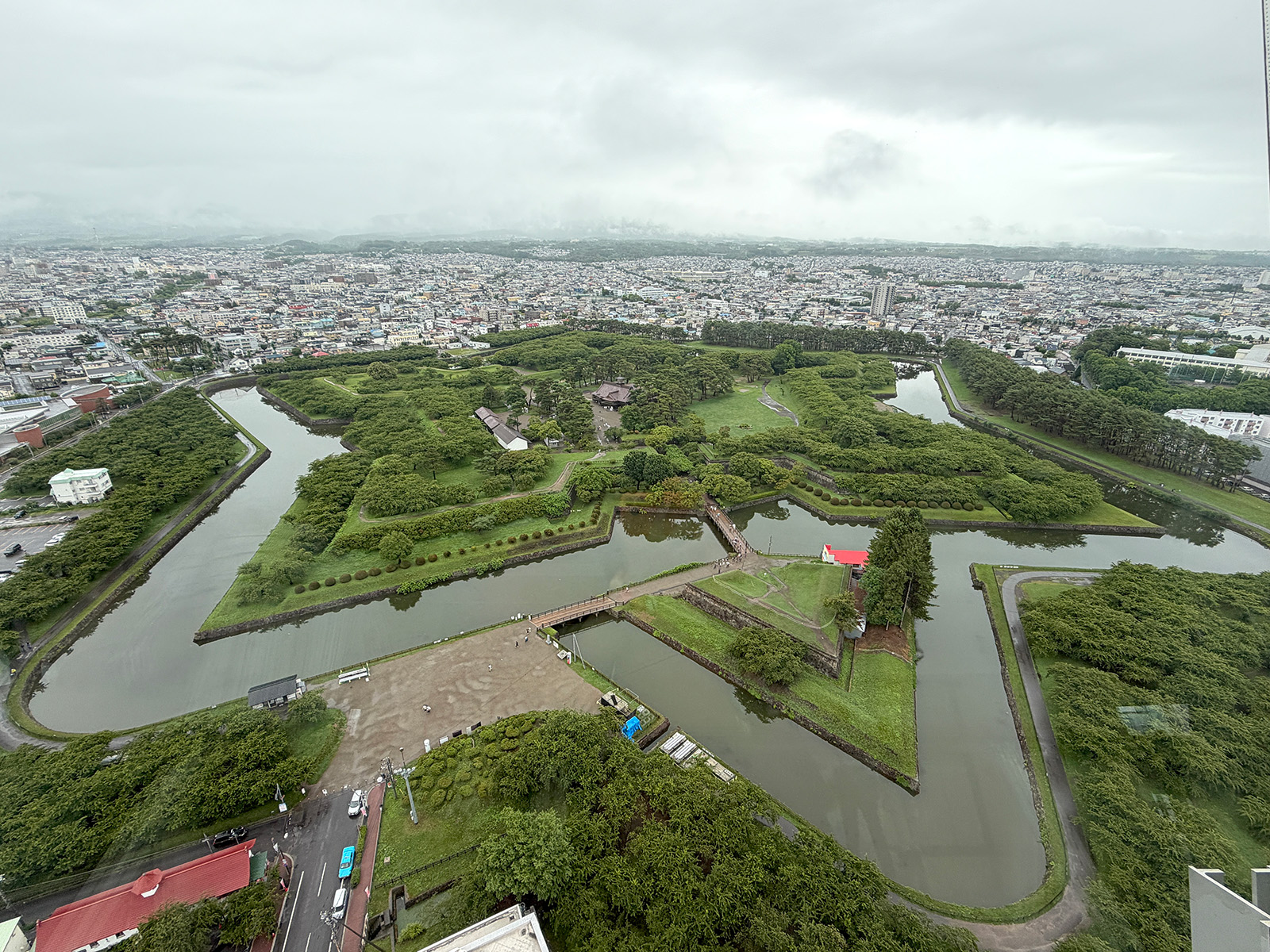
With our stomachs full, we headed up to Goryokaku Tower. We took the elevator straight to the top floor. The view of the star-shaped Goryokaku—a Special Historic Site—from a height of 90 meters above ground is spectacular. It’s a view you simply can’t see unless you go up there.
The tower itself is also pentagonal, with a total height of 107 meters. The observation deck features exhibits on the history of Goryōkaku since Commodore Perry’s arrival, as well as its connection to Toshizō Hijikata—it’s well worth seeing.
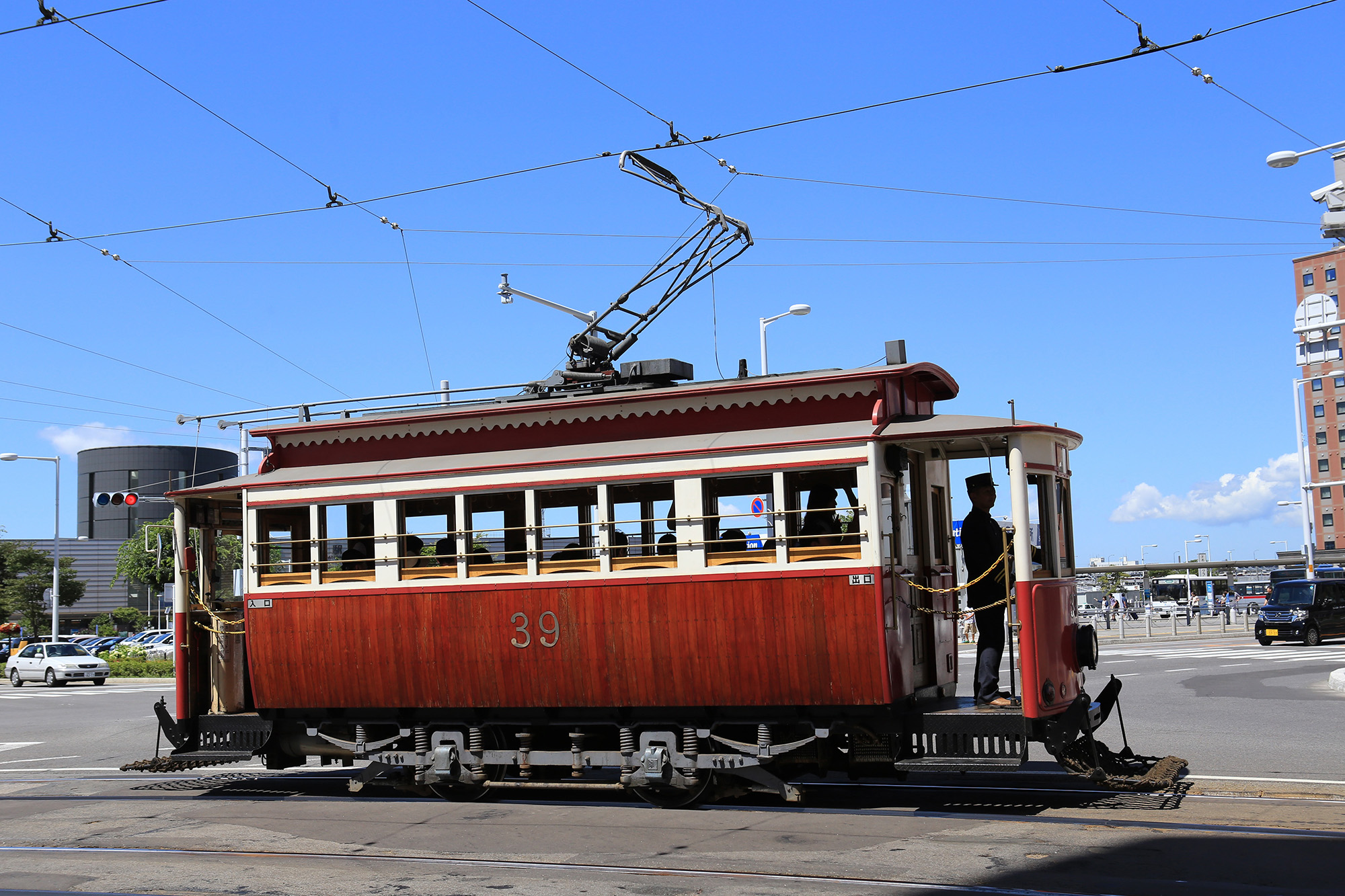
Actually, on this day, I had reserved a ride on the “Hakodate Haikara-go.” The “Hakodate Haikara-go” is a special vehicle restored from an old streetcar. It runs every year from early April to late October. Since it was my first time riding it, I was really looking forward to it, but the service was canceled due to rain… *sob*.
The “Hakodate Haikara-go” has no door in the driver’s cab and is completely open to the elements, so it seems service is suspended even with just a little rain. I hope to ride it another time.
The Master of Detours
The “Hakodate Haikara-go” requires advance reservations for all rides. If you want to ride it, don’t forget to book online.
● Soak Your Feet in the Foot Bath at Yunokawa Hot Spring
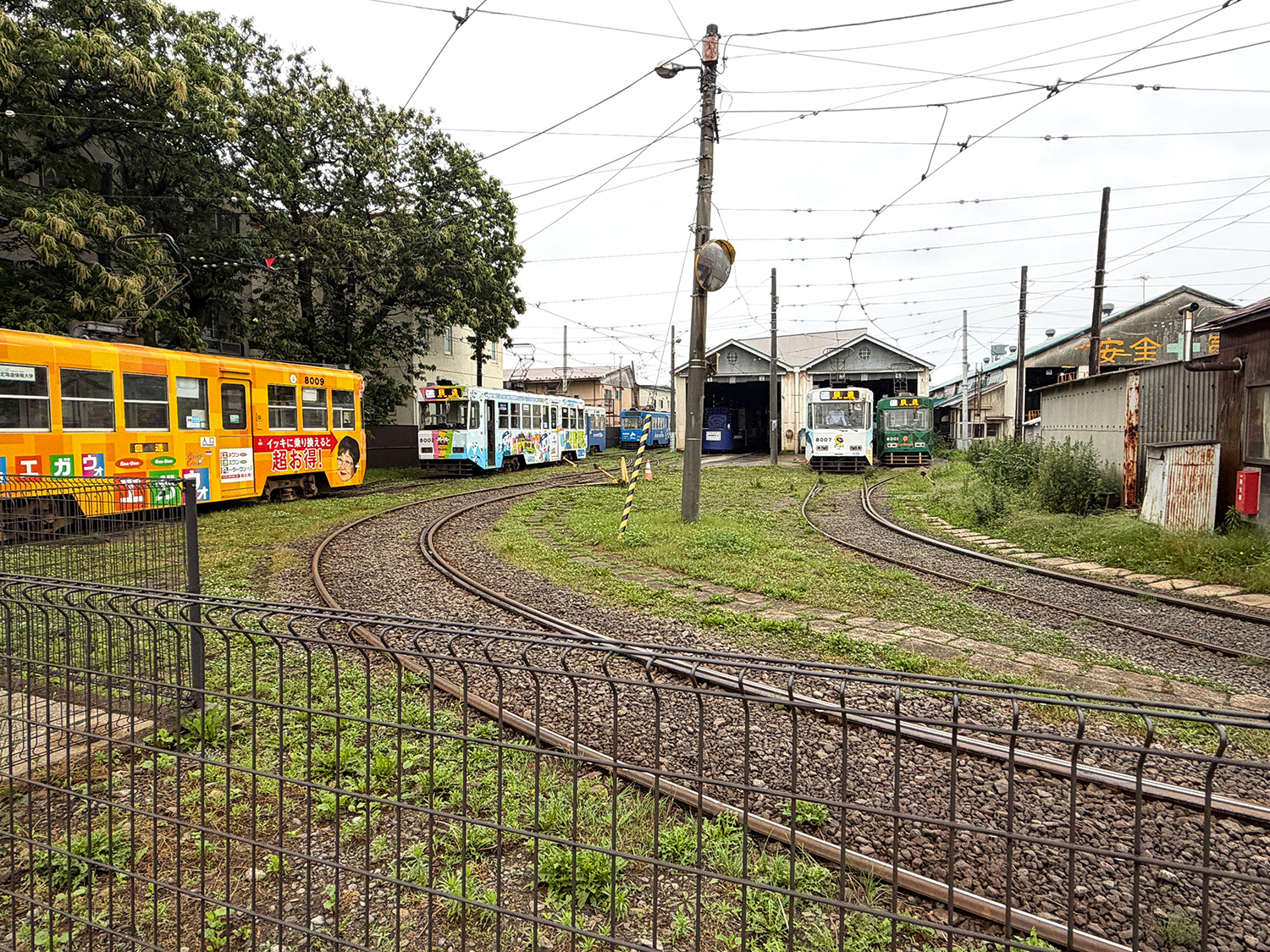
I took the streetcar toward Yunokawa and got off at Komaba Depot. Right in front of me was the Hakodate Streetcar Depot, with streetcars parked there.
Every now and then, a tram parked there would cross right in front of me to enter the depot, or another would depart from there. Each time, the driver would change. If you’re a railfan, you could watch this go on forever.
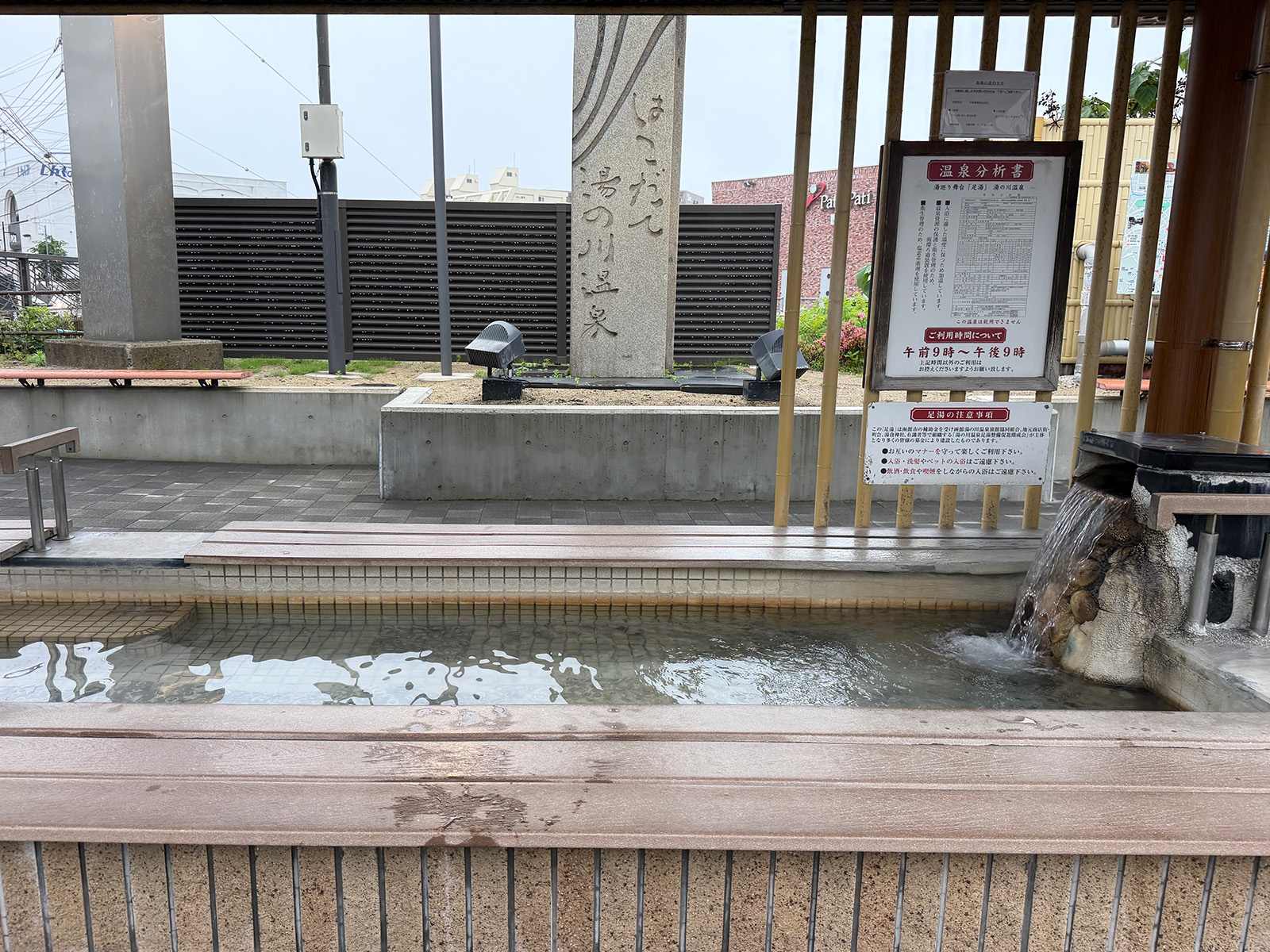
Then on to the terminal, Yunokawa. Since there’s nothing much at the terminal, I turned right around and got off at the stop before it, Yunokawa Hot Spring.
This is a famous hot spring resort. I’ve come here a few times myself to soak in the public baths.
Since I don’t have time for a leisurely soak this time, I decide to dip my feet in the footbath right next to the tram stop. The water at Yunokawa Hot Spring is a sodium-chloride hot spring. It’s clear and light on the skin, but because it contains salt, it has excellent moisturizing properties.
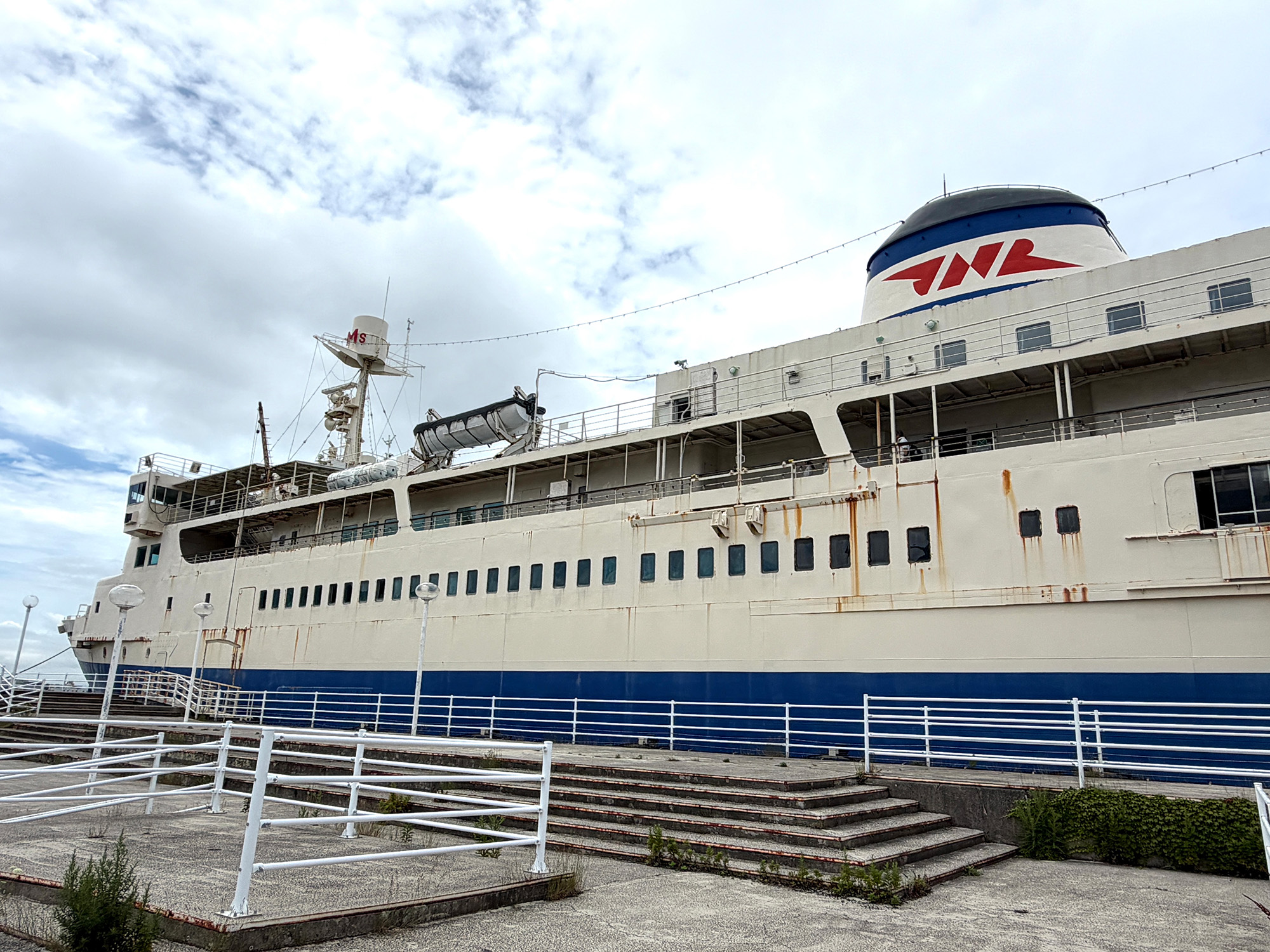
I return to Hakodate Station and walk five minutes to visit the “Hakodate City Seikan Ferry Memorial Museum: Mashu Maru.”
The “Mashu Maru,” part of the Seikan Ferry service, once served as a railroad ferry between Hakodate and Aomori. A railroad ferry is a vessel used for transportation in areas where tracks cannot be laid across the sea; it carries passenger and freight cars by ship and operates in coordination with trains. Tracks were laid inside the ship, and the passenger and freight cars were loaded onto it as-is.
Although this was a rather revolutionary method of transportation, it was discontinued when the Seikan Tunnel was completed. The exhibits provide a detailed look at its history and how it worked.
The Master of Detours
In Yunokawa Hot Spring, I often go to a public bath called Omori-yu, located right behind the Yunokawa tram stop. It features a direct flow of spring water, and the water is extremely hot.
●The Final Treats: Food and Hot Springs
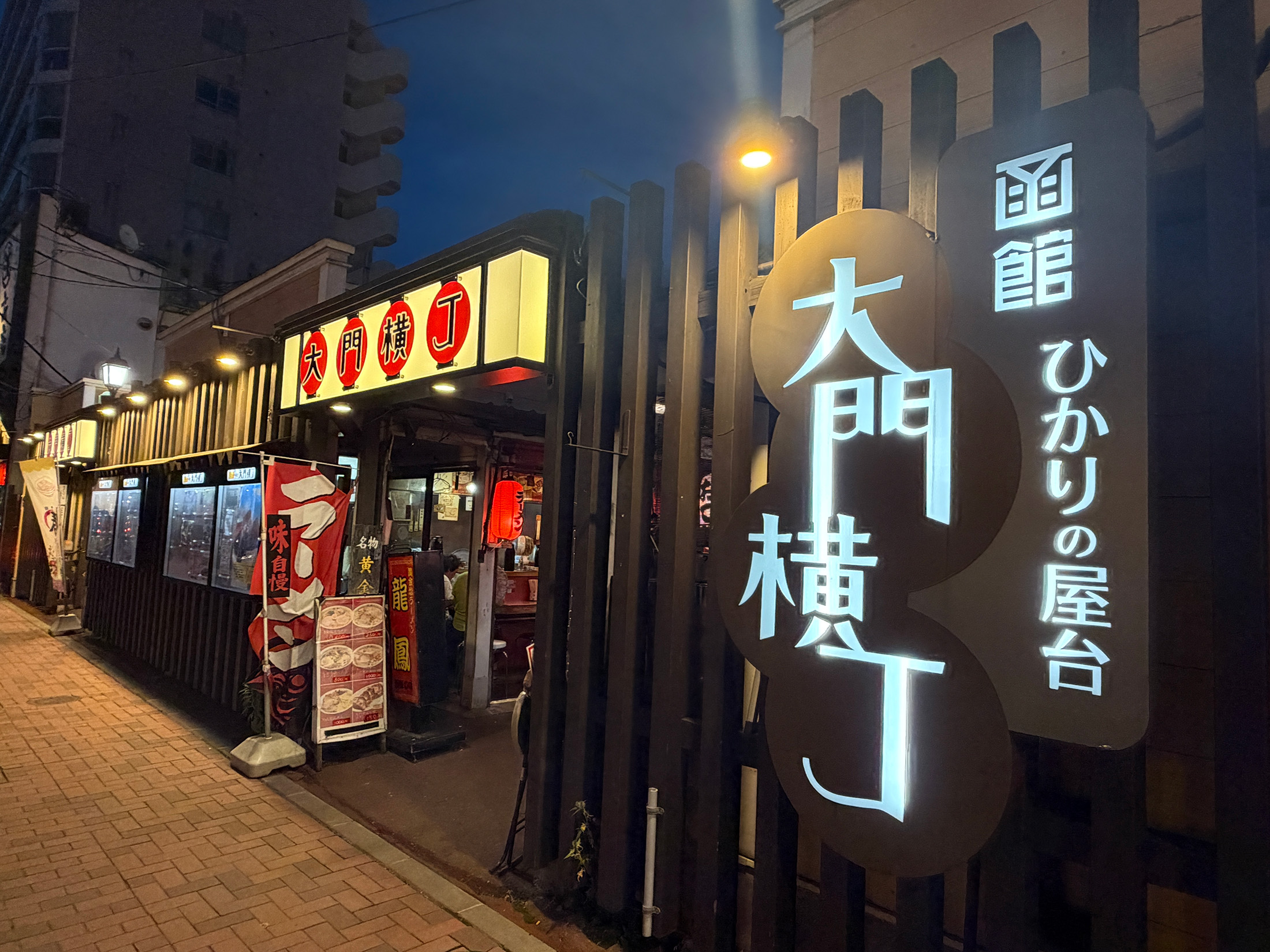
In the evening, I headed to “Hakodate Hikari no Yatai Daimon Yokocho,” a five-minute walk from the Hakodate Station Front tram stop. It’s a bustling area lined with over 20 different bars and pubs.
Although the limited seating makes it look like a hard place to get into, since it’s frequented by many tourists, it’s absolutely fine to go alone.
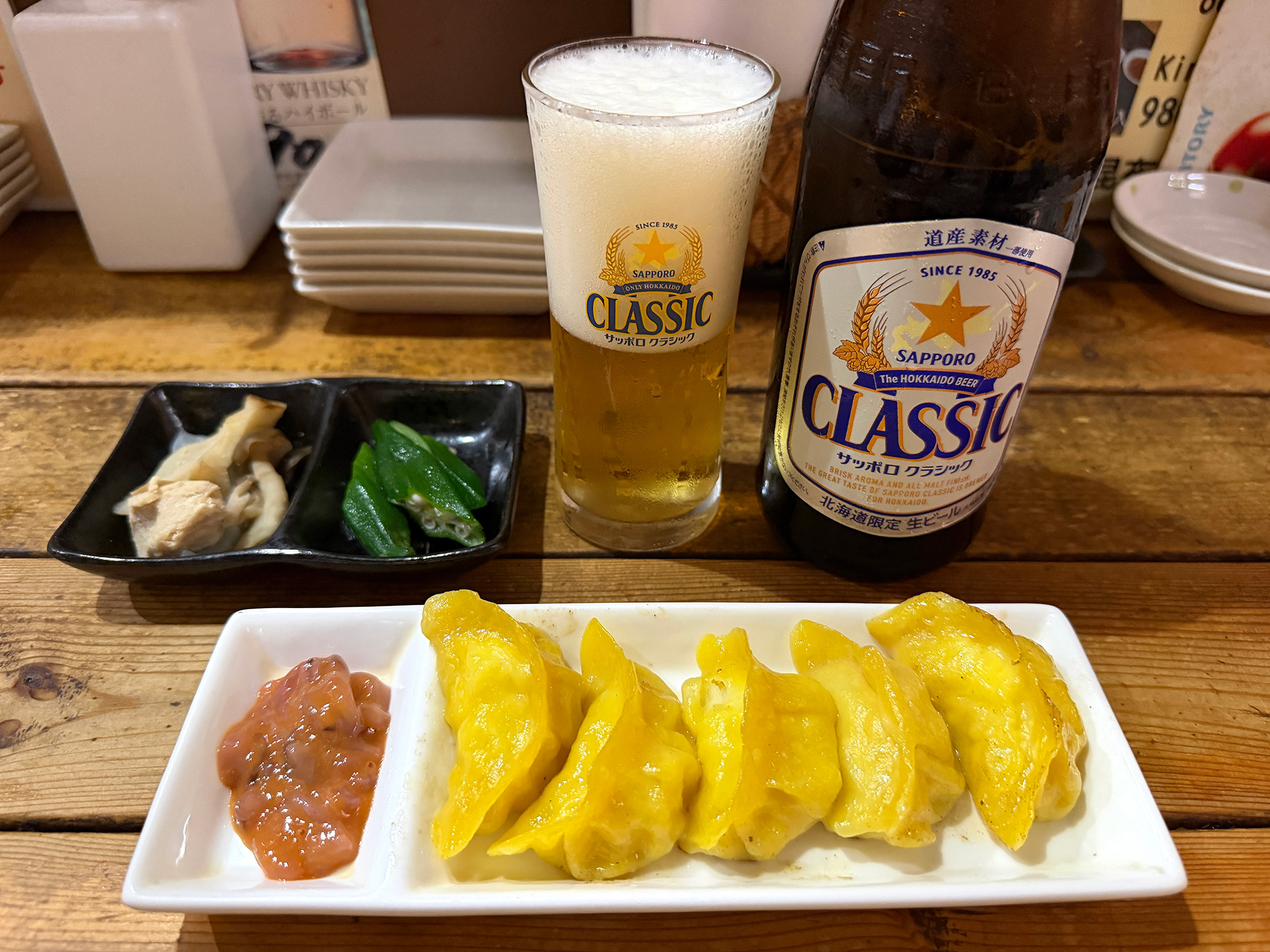
The restaurant I went to, “Hakodate Ika-ya,” is famous for its “original squid ink gyoza”—completely black dumplings. I was drawn to the corn, so I ordered the “Danshaku Gyoza” (potato, butter, and corn gyoza) and a bottle of Sapporo Classic beer—a must-have whenever I visit Hokkaido.
For a moment, I found it a bit strange that they served salted squid instead of dipping sauce with the gyoza, but salted squid really is a delicious pairing with buttered potatoes, isn’t it?
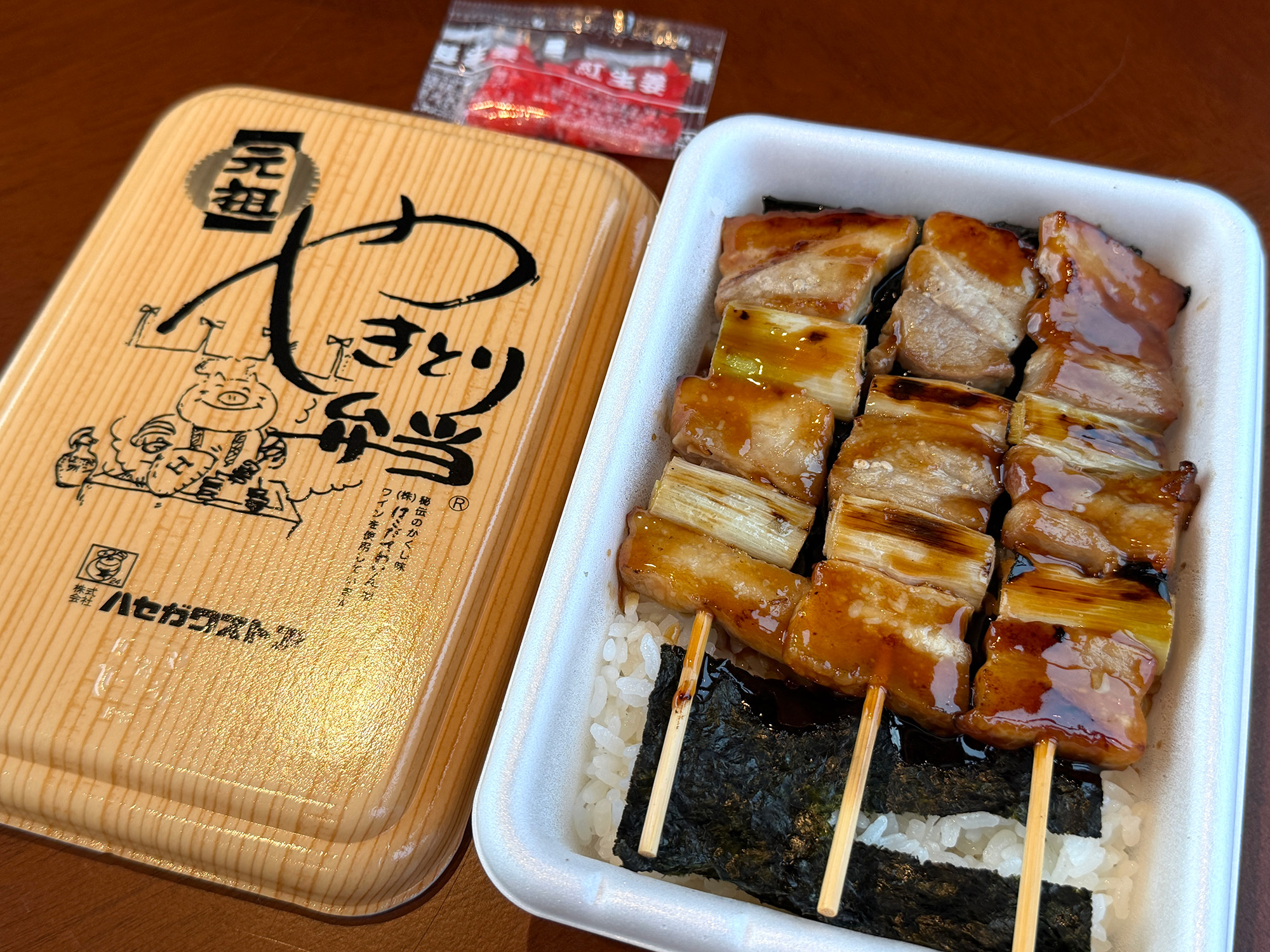
To eat back at the inn, I bought my usual “Yakitori Bento” at Hasegawa Store. Hasegawa Store (commonly known as “Hasesto”) is a convenience store chain in Hakodate and the surrounding area. Hakodate is also home to “Lucky Pierrot,” a local hamburger chain I love just as much, so I was torn, but I went with Hasesto this time. Hakodate really keeps your stomach busy.
The famous “Yakitori Bento” features yakitori grilled right in the store and served on top of rice. It’s a favorite among travelers, and I think it’s fair to call this an “ekiben” (station bento) as well.
What’s more, even though it’s called a “yakitori bento,” the “yakitori” is actually made of pork. In the southern Hokkaido region, “yakitori” refers to pork.
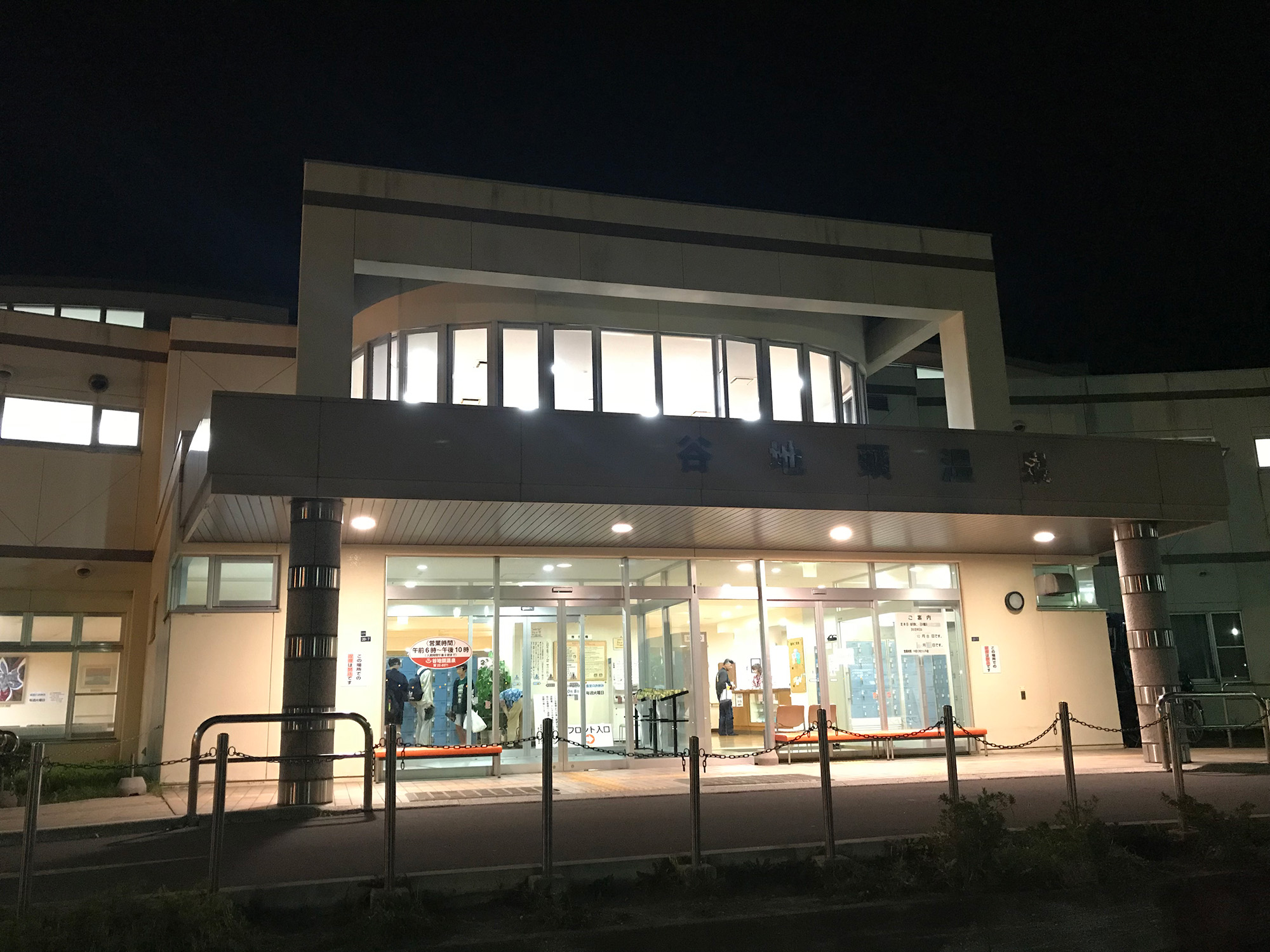
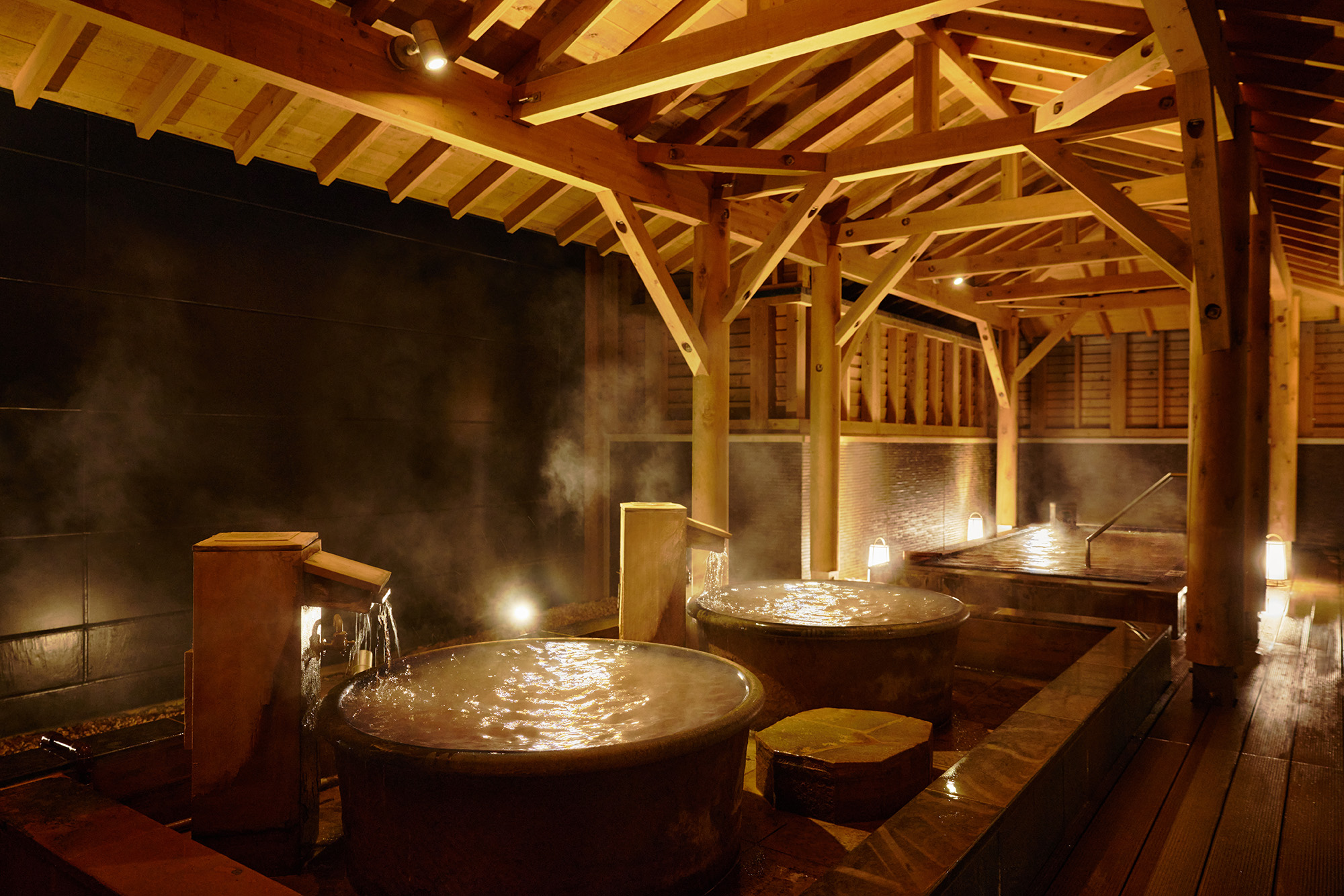
Finally, I took the streetcar to Yachigashira. Yachigashira Onsen, about a 5-minute walk from there, is one of my favorite hot springs. Since they don’t provide shampoo, conditioner, or soap, you’ll need to buy them at the gift shop or bring your own.
The hot spring features a direct-flow system from the source and has a tea-brown color due to its iron content. The spring is classified as a sodium-calcium chloride spring.
The indoor baths are divided into a high-temperature pool at 43.5°C, a medium-temperature pool at 41°C, and a bubble bath at 40°C. The high-temperature pool is too hot for me to get into, so I always spend a long time soaking in the pentagonal Outdoor hot spring modeled after Goryōkaku.
I spent the whole day walking around Hakodate today. Packed with great food, hot springs, history, and culture, Hakodate is a city that’s fun to visit no matter how many times you come. I recommend exploring the city by making good use of the streetcars and then relaxing your tired body in a hot spring at the end of the day.


OMO5 Hakodate
Hakodate, Hokkaido
A 5-minute walk from Hakodate Station. Direction to popular tourist spots such as night views, seafood, and exotic townscape.
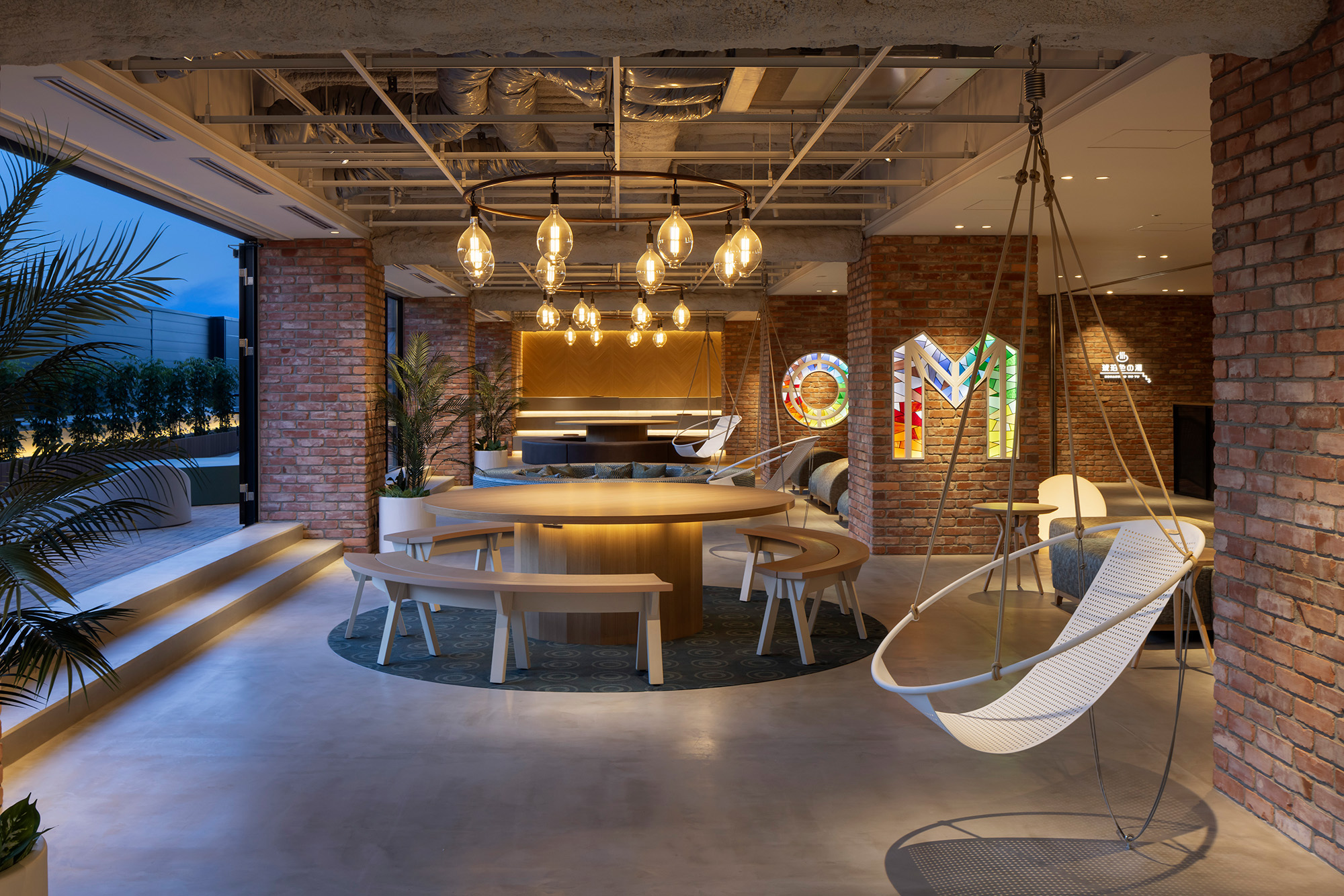
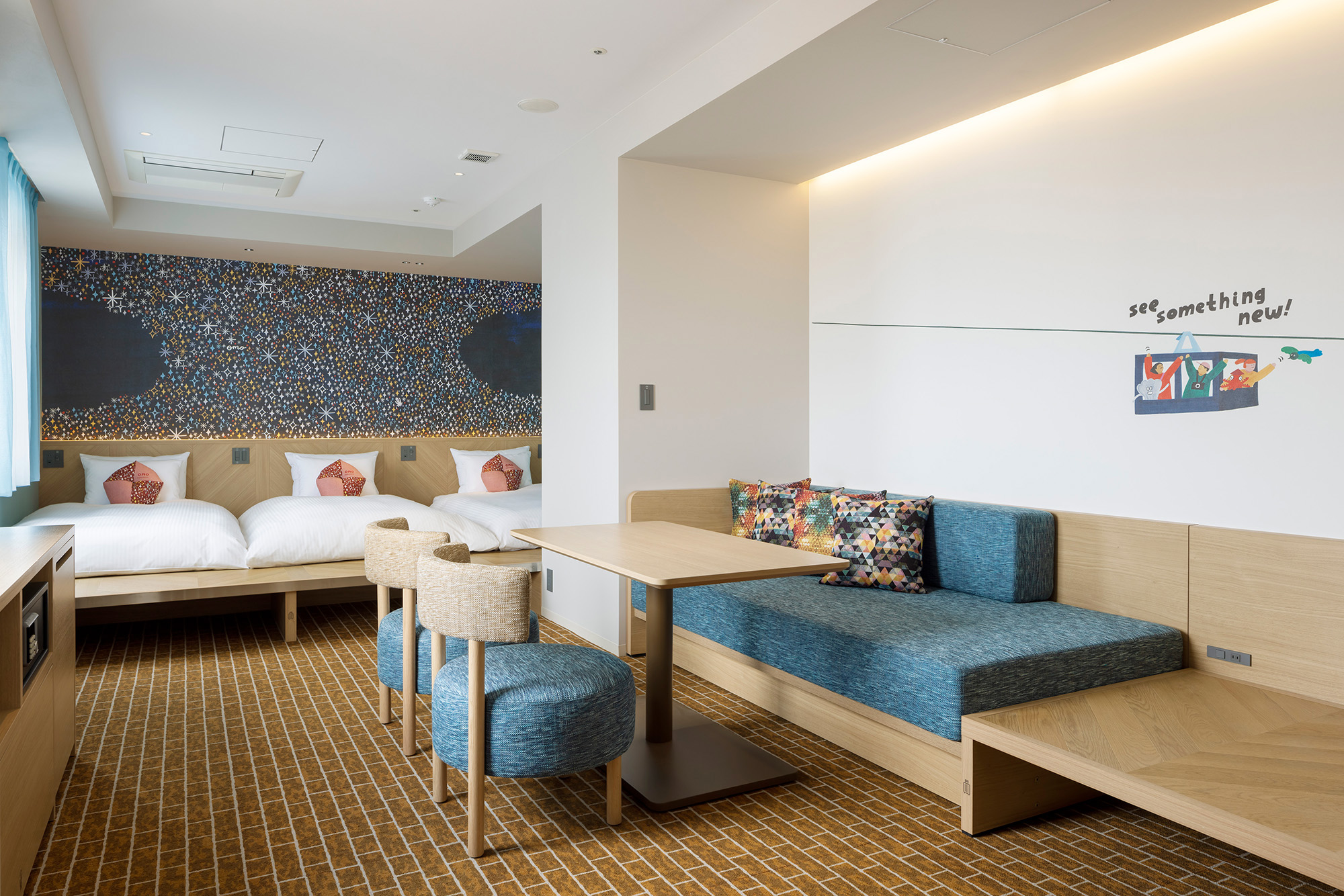

Direction 5 min. walk from JR Hakodate Station
- Sample Room Rates
- Per person, per night From 6,500 yen