





A Trip to Hakodate and Southern Hokkaido via the Hokkaido Shinkansen “Grand Class” and the Dōnan Isaribi Railway “Nagamare Kaikyo”
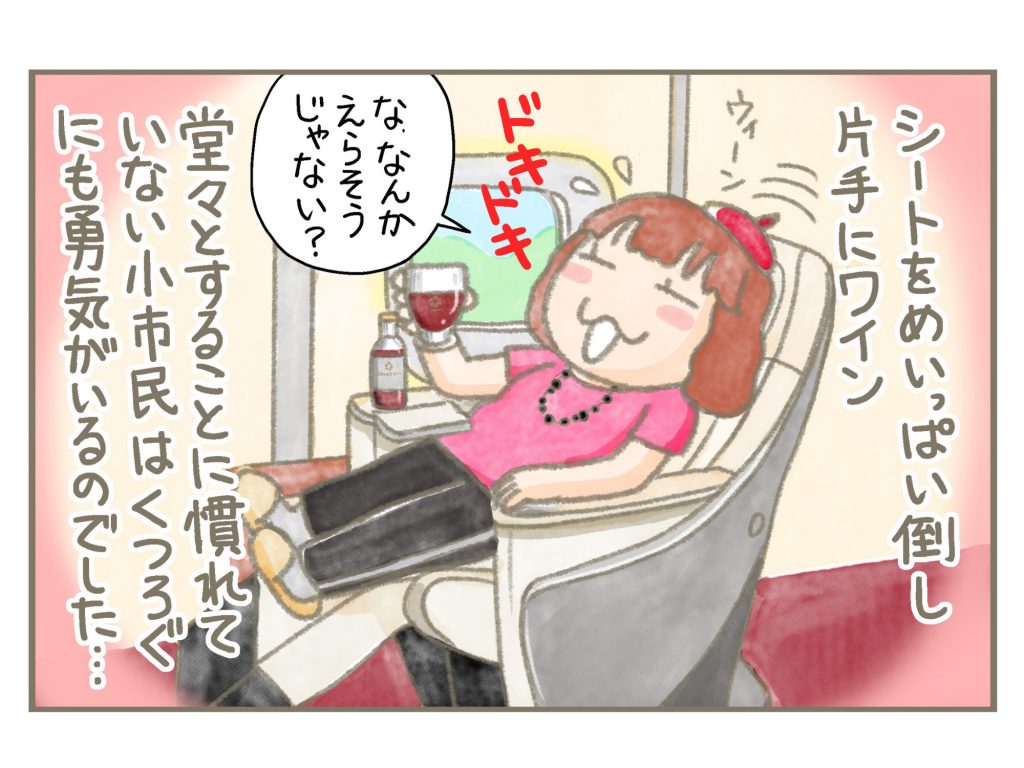
Hello, I am "Yasukon", a cartoonist & writer.
I’m currently at Tokyo Station. I’m about to board the Shinkansen’s GranClass. Since I love trying new things, I’ve already ridden the GranClass on the Tohoku Shinkansen and the Hokuriku Shinkansen as soon as they opened.
GranClass is a car class that offers special services. If possible, I’d like to ride it for as long as I can… So, this time, I’m taking the Tokyo to Shin-Hakodate-Hokuto section—the longest route where I can enjoy GranClass—and and set out on a rail journey to the Hakodate and Southern Hokkaido areas.
Michikusa experts who wrote this article
-
Travels and draws (writes)! Manga Artist & Writer
Yasukon
Likes to travel by train alone, enjoying ekiben, ekisoba, hot springs, and sake. He has eaten more than 2,500 ekiben. He is the author of "Hitori ningo fun tetsudo tabi ekiben meguri-hen" (Railroad Journey by Hitori: Ekiben Tour Arc) published by Genkosha. His manga "Neko ni Ekiben" (Cat and Station Bento) is serialized in "Ryoko Yomiuri" (Travel Yomiuri).
 Michikusa's
guru
● What Is the Shinkansen’s GranClass?
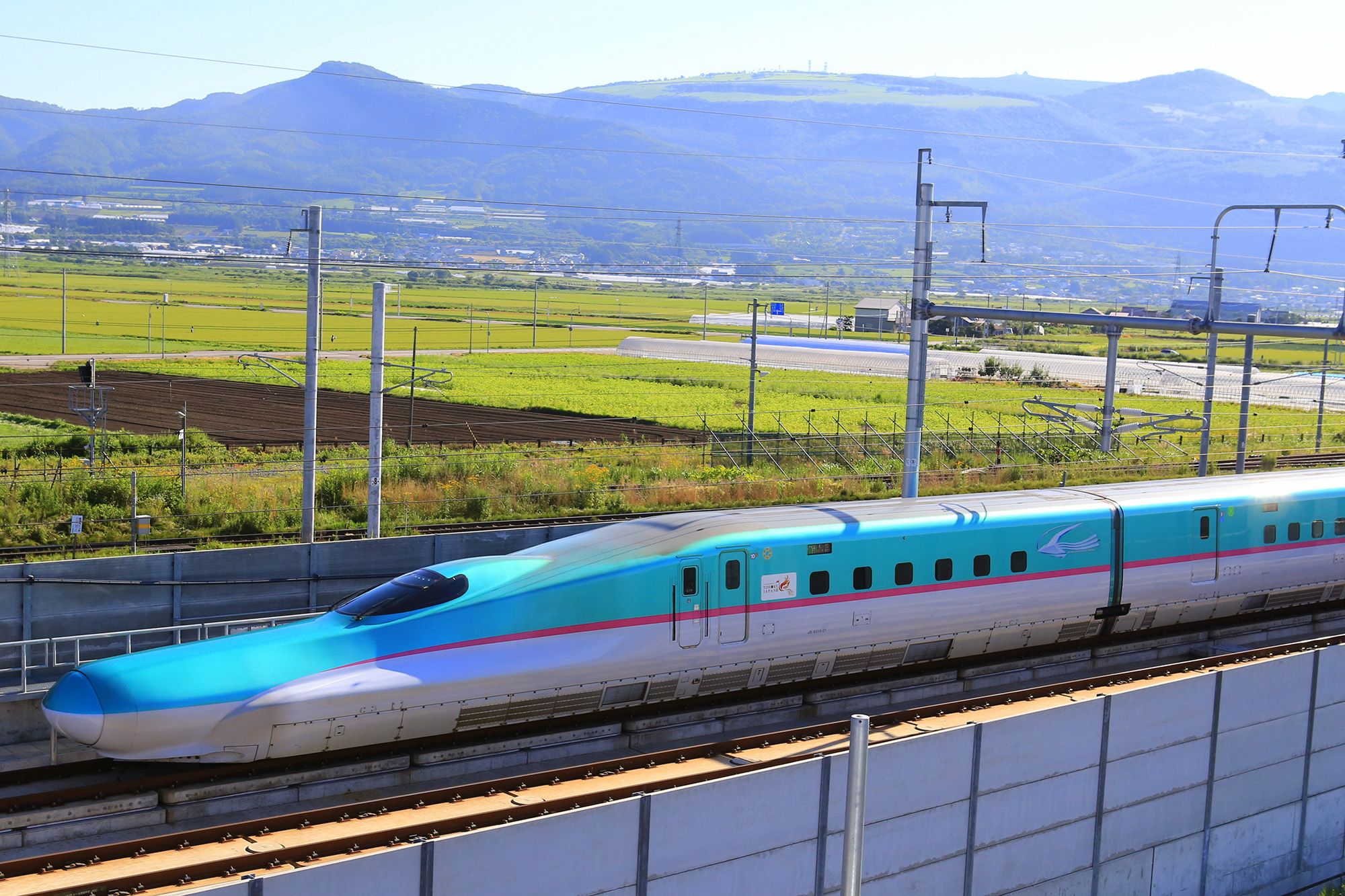
GranClass (GranClass) is a special class of seating available on select Shinkansen trains, including the Tohoku and Hokkaido Shinkansen (E5 and H5 series), the Hokuriku Shinkansen (E7 and W7 series), and the Joetsu Shinkansen (E7 series). To use GranClass, you’ll need to pay the GranClass surcharge in addition to the fare and limited express surcharge. Please note that some Shinkansen trains with GranClass do not offer onboard service.
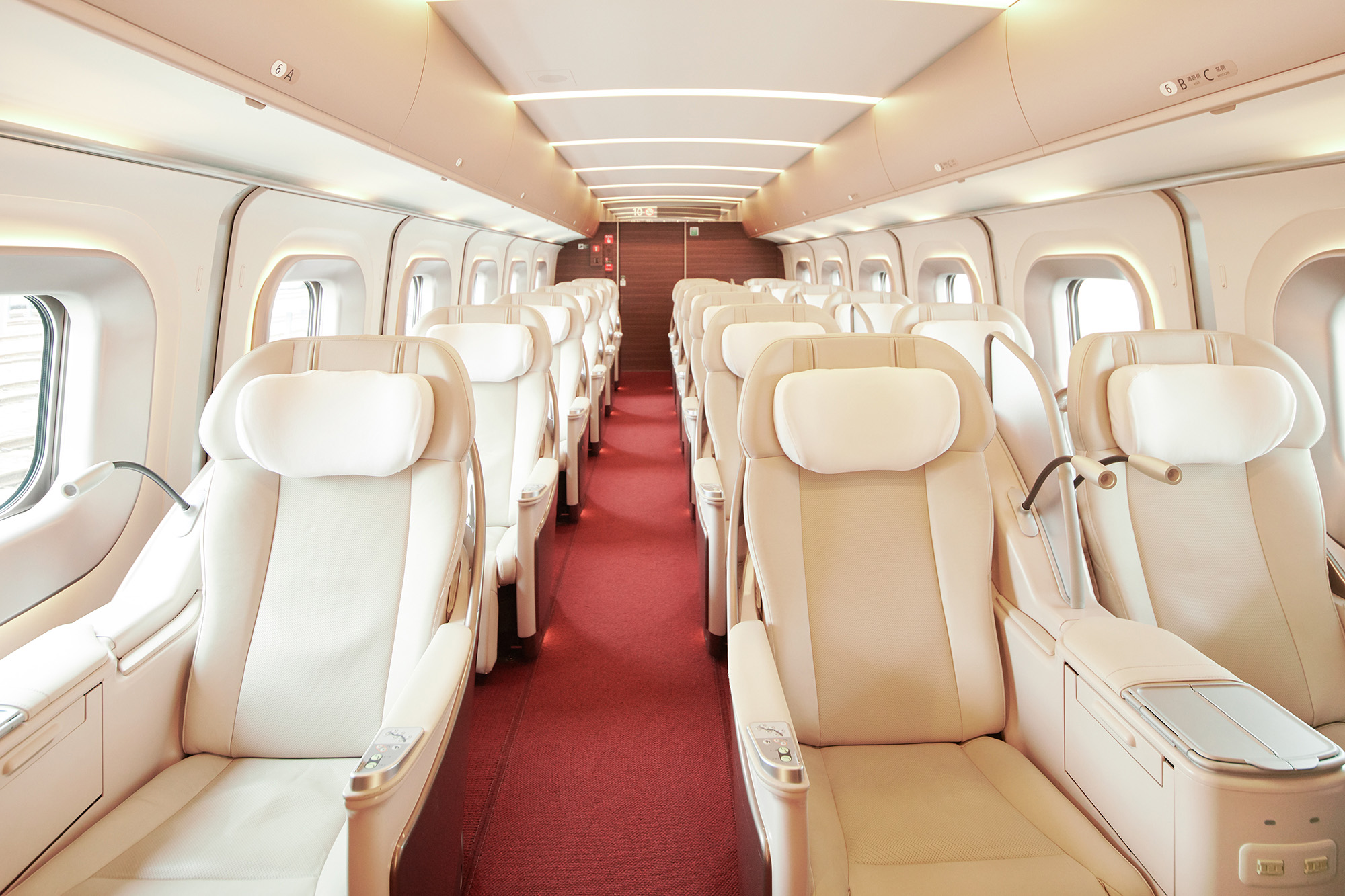
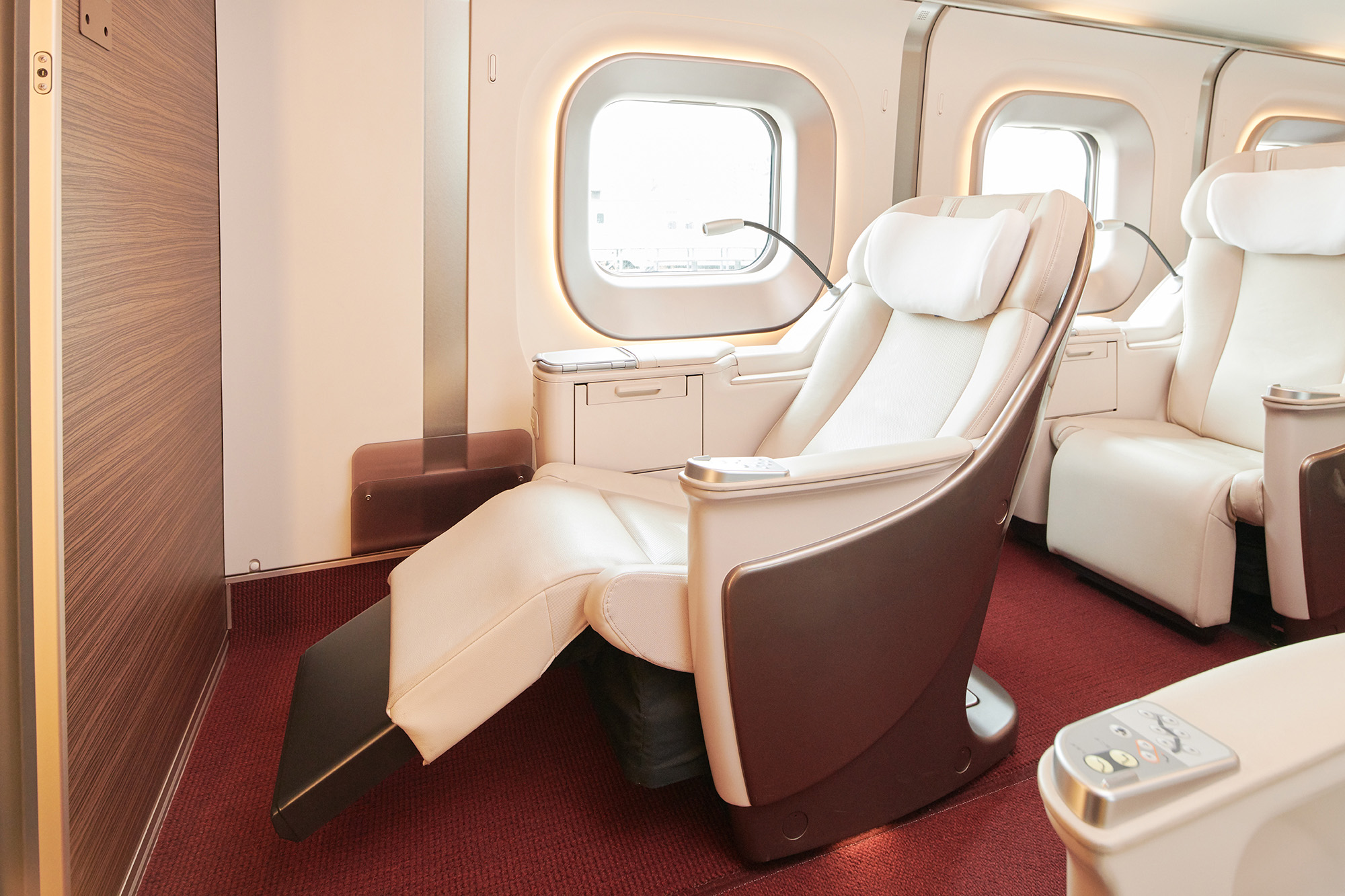
The car features a 1-plus-2 seat arrangement, with only 18 seats total, making it very spacious. I brought my suitcase with me, and even with my luggage at my feet, I had plenty of room to stretch out. I immediately took off my shoes and slipped into the provided plush slippers.
The seats can be reclined up to 45 degrees using the remote control next to you. Since they use a back-shell design, reclining doesn’t affect the passengers behind you at all. The leg rest and footrest also raise, so you can relax with your body almost lying flat.
Michikusa Gurus
On the GranClass on downbound trains departing from Tokyo, it’s located in the front car of the Shinkansen.
● Enjoying Light Snacks and Drinks in GranClass
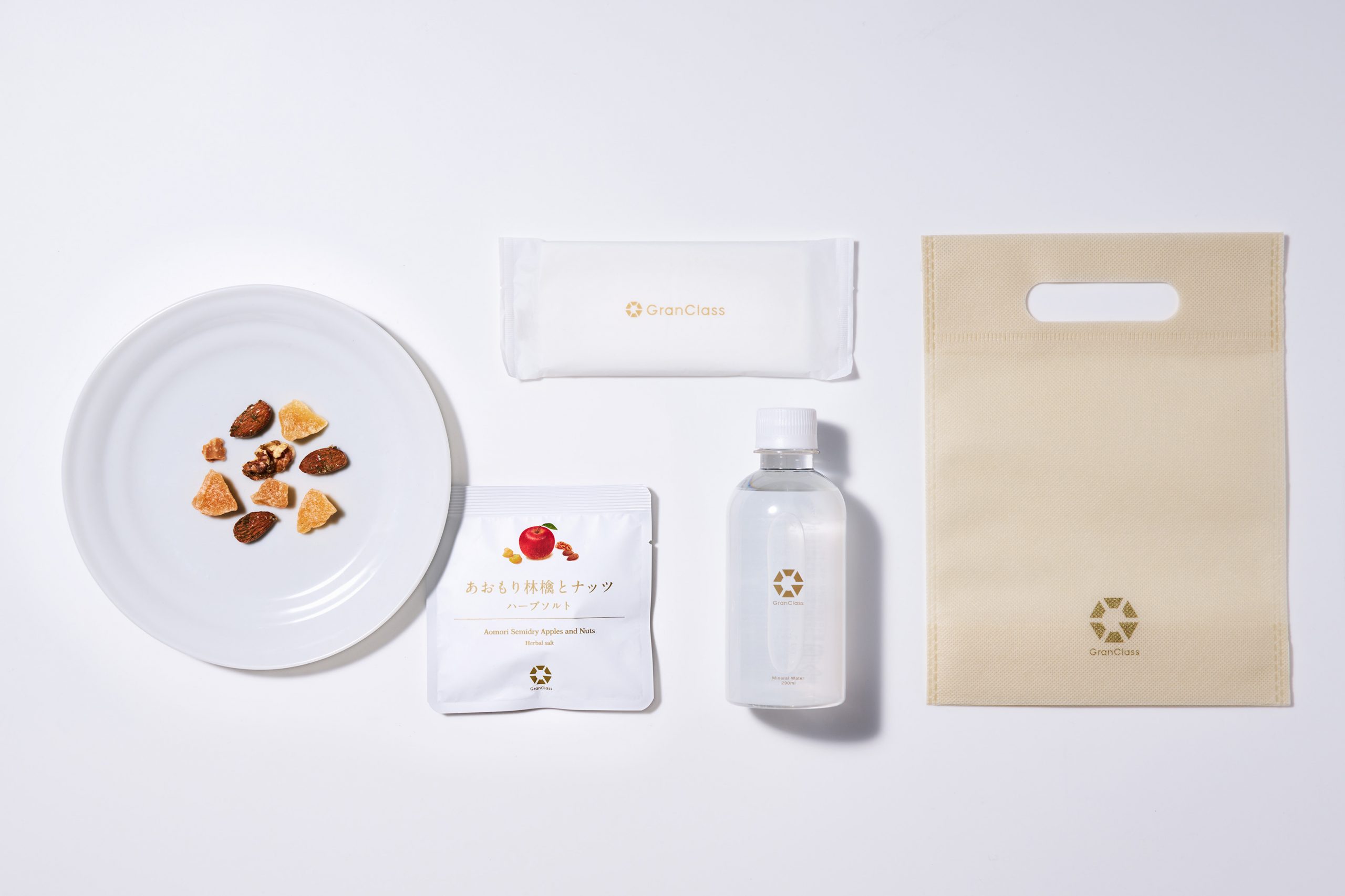
The Shinkansen departed around 9:30 a.m. Shortly after, the dedicated attendants began distributing welcome sets (water, snacks, wet towels, etc.).For the light meal, you can choose one of two options: Western-style or Japanese-style. I had a hard time deciding because both included corn—which I love—but I ultimately chose the Japanese-style meal. This menu is supervised by Japanese chef Hiromitsu Nozaki.
By the way, this summer menu is available from July through September. The menu changes with each season—spring, summer, fall, and winter.
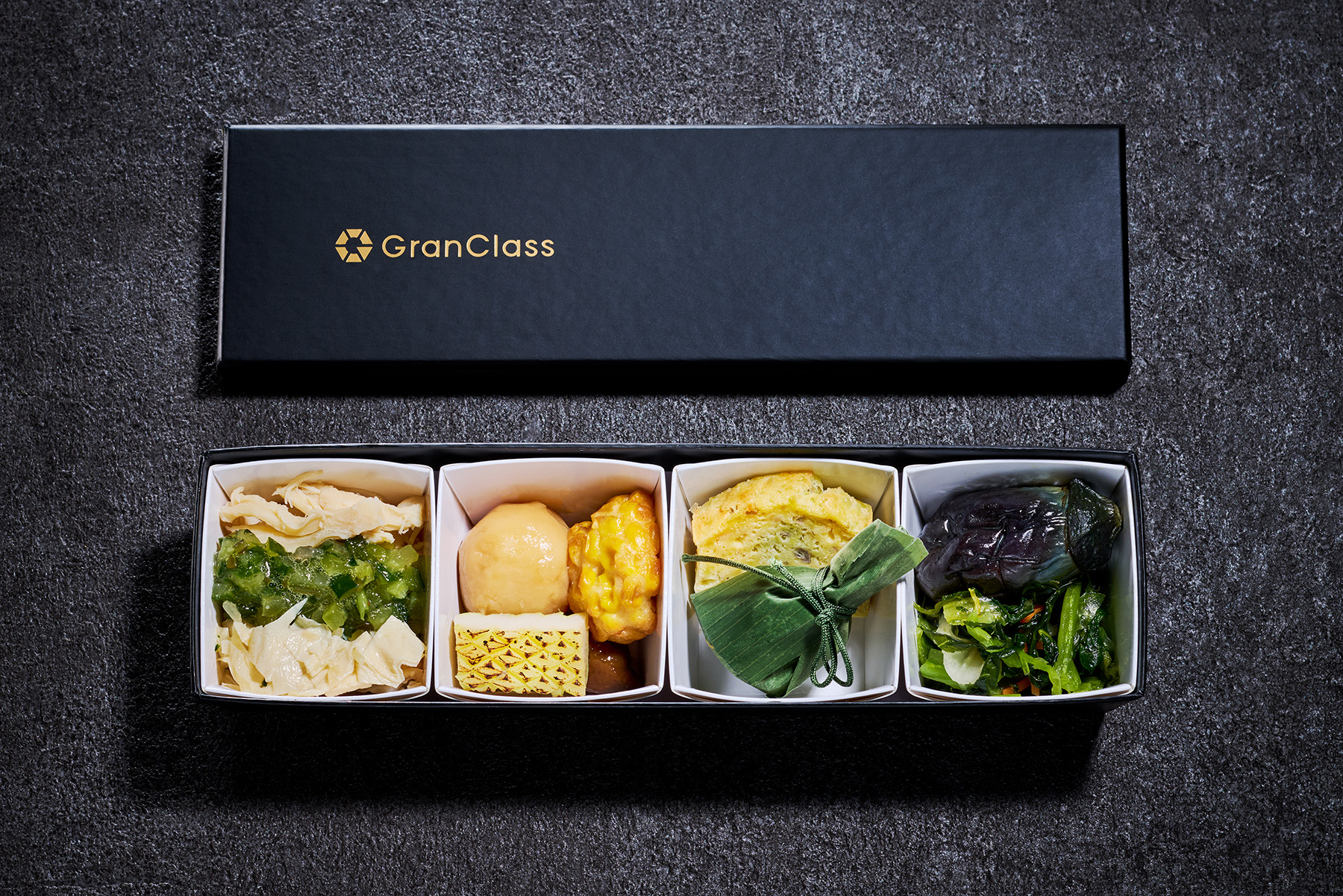
Local dishes from the Shonai region of Yamagata, as well as dishes made with local ingredients, are served in elegant black boxes. The simmered eggplant, including the fried pieces, was incredibly tender and delicious. The seasoning on the steamed chicken pairs perfectly with alcohol. The portions were on the smaller side, so I finished my meal in no time.
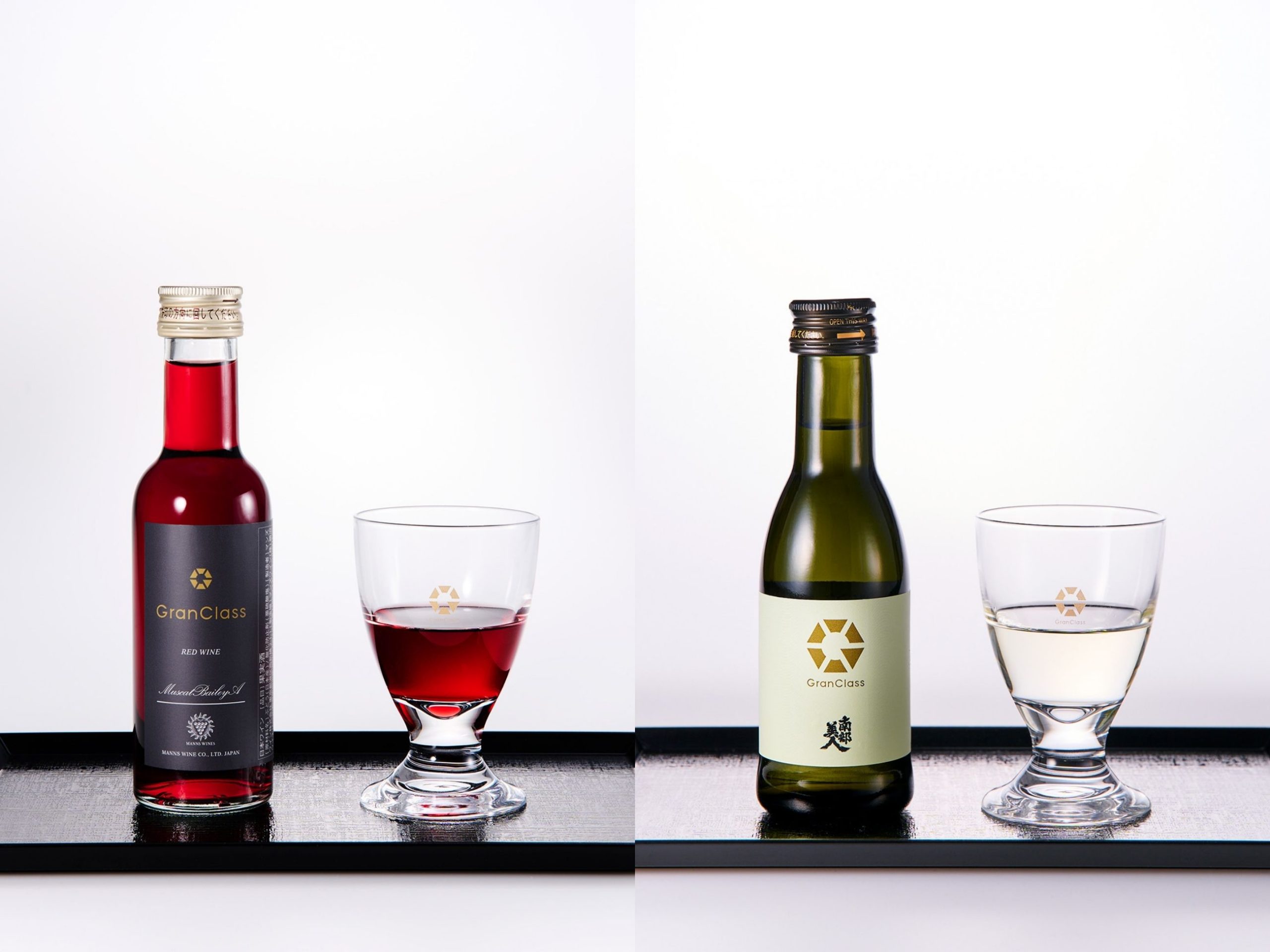
Oh, right—to pair with the meal, I ordered white wine to start. The red and white wines, as well as the sake, come in small bottles, each featuring a label exclusive to the Grand Class. Naturally, you want to choose something that feels special. Other drink options include beer and cognac.
I also reached for the appetizers that were served at the beginning. The bag of appetizers contained sweet-and-sour Aomori apples and nuts, so choosing red wine next was definitely the right call.
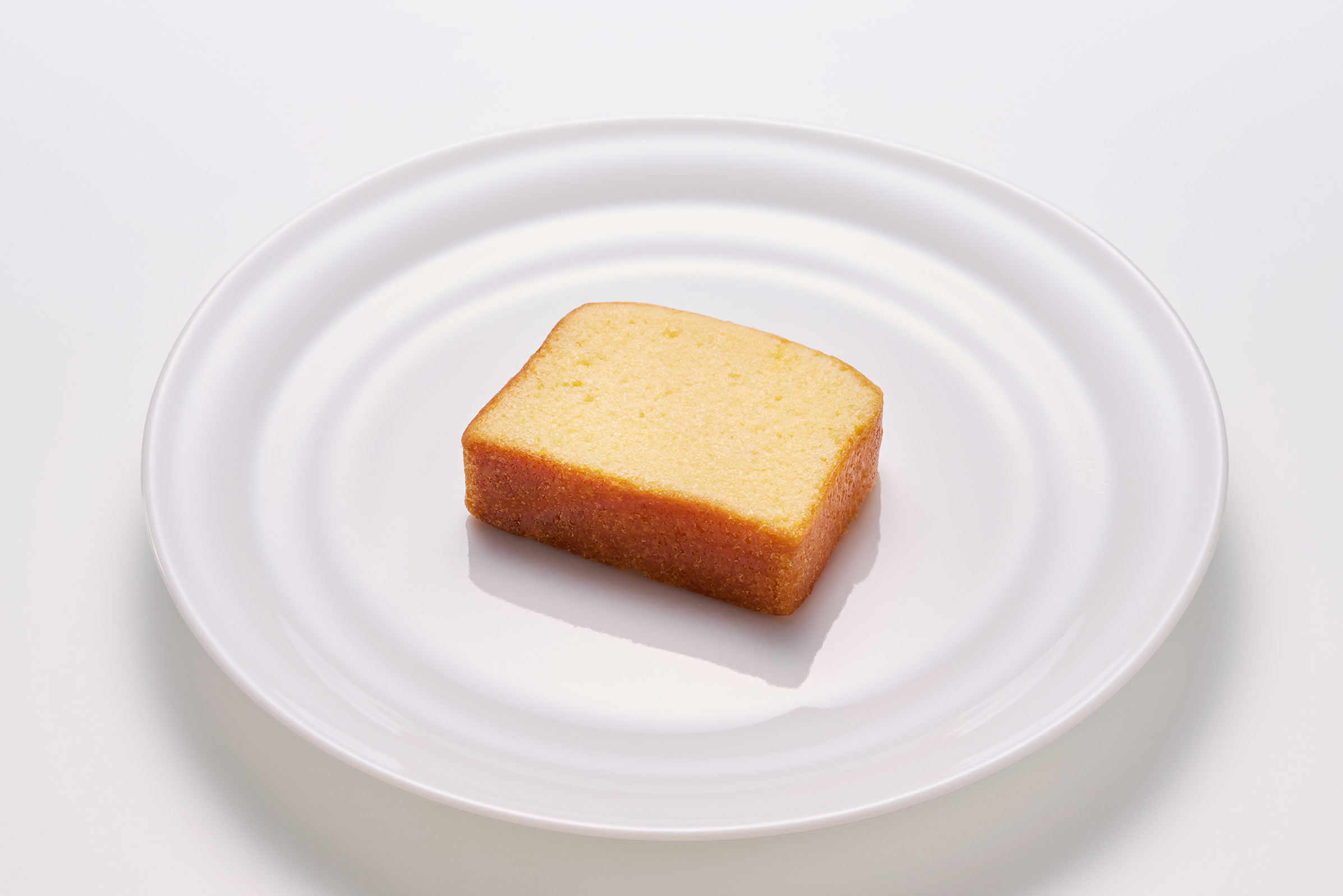
If you ask, you can also get some tea-time sweets. This was a Grand Class original pound cake with peach jam from Fukushima Prefecture. I also love drinking red wine while enjoying something sweet. Finally, I had some coffee.
Michikusa Gurus
If you ask, you’ll receive a paper shoehorn featuring the GranClass logo.
● The Hokkaido Shinkansen Running 240 Meters Below Sea Level
With my stomach full, I was dozing off while enjoying the comfort of my seat, but I was awakened by the announcement: “We will be entering the Seikan Tunnel shortly.”One of the highlights of the Hokkaido Shinkansen is the Tsugaru Tunnel, which runs beneath the Tsugaru Strait.
In the past, when traveling to Hokkaido, sleeper express trains like the “Hokutosei” used to pass through the Seikan Tunnel, but now the Hokkaido Shinkansen is essentially the only way to get there.
The electronic display at the front of the train also showed a message stating, “The Seikan Tunnel is 53.85 km long.” This is the longest tunnel in Japan. Furthermore, it lies about 240 meters below sea level, which is said to be the deepest in the world. Doesn’t it get you excited to imagine that we’re actually traveling through the seabed like this?
This is an experience you can’t get on a plane, so be sure not to miss this precious opportunity when you ride the Hokkaido Shinkansen.

By the way, while I often write that “trains are more than just a means of transportation,” when it comes to the Shinkansen, to be honest, I often ride it simply for the sake of getting from one place to another. However, with Gran Class, the combination of hospitality and dining in a high-class carriage instantly creates a sense of traveling on a luxury sightseeing train—it’s truly fascinating.
Michikusa Gurus
Whether you view a Shinkansen ride as simply “getting from point A to point B” or as a “journey” is entirely up to you!
● Riding the “Nagamare Kaikyo,” a Tourist Train with a Handcrafted Feel
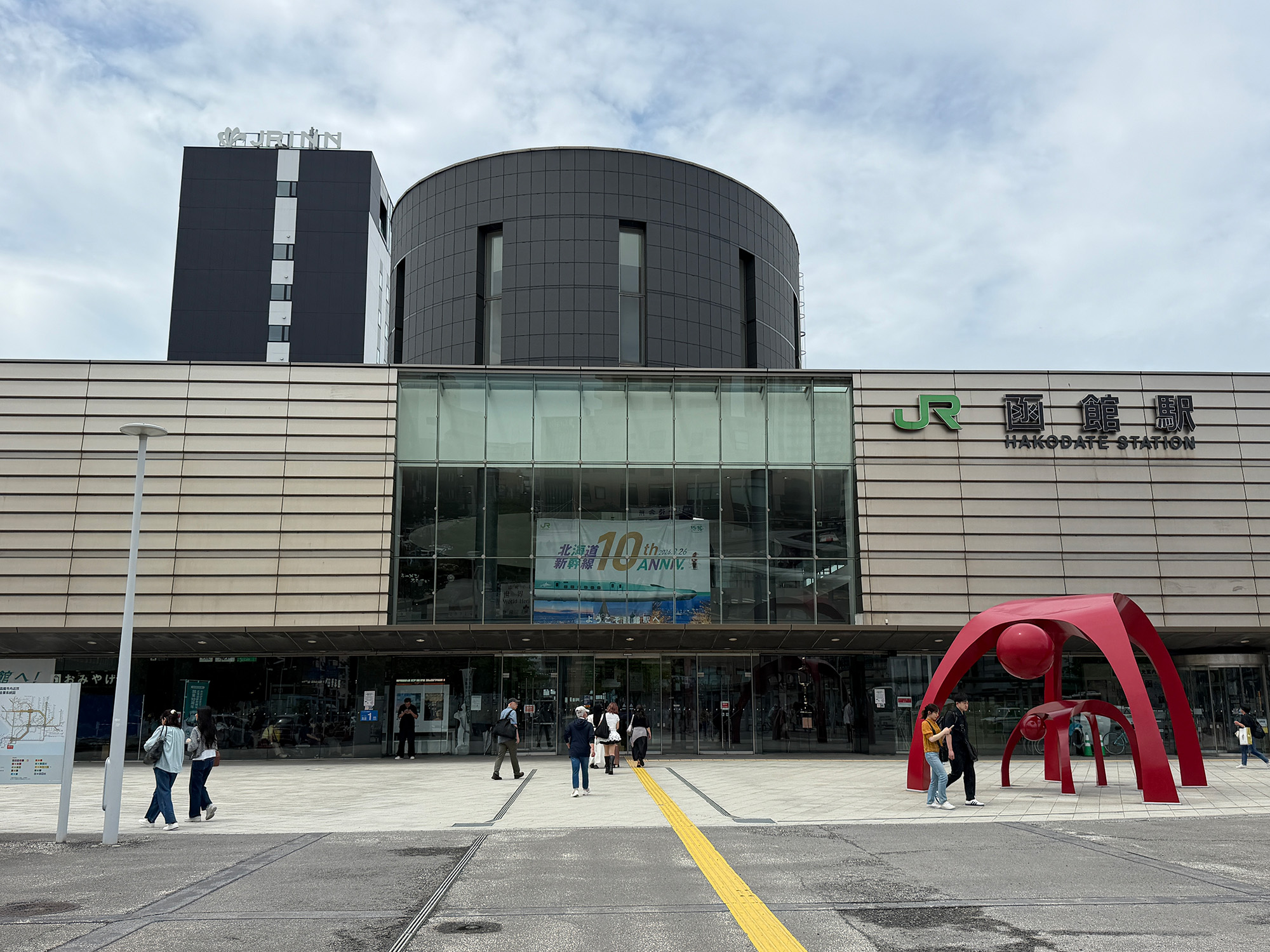
After about four hours from Tokyo, I arrived at Shin-Hakodate-Hokuto Station just past 1:30 p.m. I transferred to the Hakodate Liner and headed to Hakodate Station. Since I’ve been to Hakodate many times before, it gives me a sense of comfort.
The “Nagamare Kaikyo” I’m about to board is a sightseeing train operated by the Donan Isaribi Railway. Until just a moment ago, I was riding the state-of-the-art Shinkansen, but now I’m boarding a train that’s a stark contrast: a refurbished KiHa 40 series, originally built by the former Japanese National Railways.The KiHa 40 series is not an “electric train” powered by electricity, but a “diesel railcar” powered by a diesel engine.
While JR Hokkaido no longer operates regular Kiha 40-series services, the Dōnan Isaribi Railway runs as many as eight of these cars on its regular schedule. Of these, two cars—manufactured in 1980—are wrapped in the “Nagamare Kaikyo” livery. For rail enthusiasts, the chance to ride these rare, vintage cars is a real treat.

The route departs from Hakodate Station and heads to the terminus, Kikonai Station. From there, it turns around and returns to Hakodate Station. The total travel time is about 4 hours and 10 minutes—roughly the same as the Hokkaido Shinkansen I rode earlier. The distance traveled, however, is quite different.
It was a very hot day, but once I boarded, I realized there was no air conditioning. Although there were electric fans inside the car, I wondered if I—someone who gets hot easily—would be able to stand it…
However, since the KiHa 40 series is an older model, the windows can be opened. A refreshing breeze blew in through the windows. It’s moments like these that make me feel like I’m truly on a journey.
Michikusa Gurus
The experience of riding the train with the wind in your face is something unique to older cars.
● Savoring Local Delicacies from Street Vendors at Stops
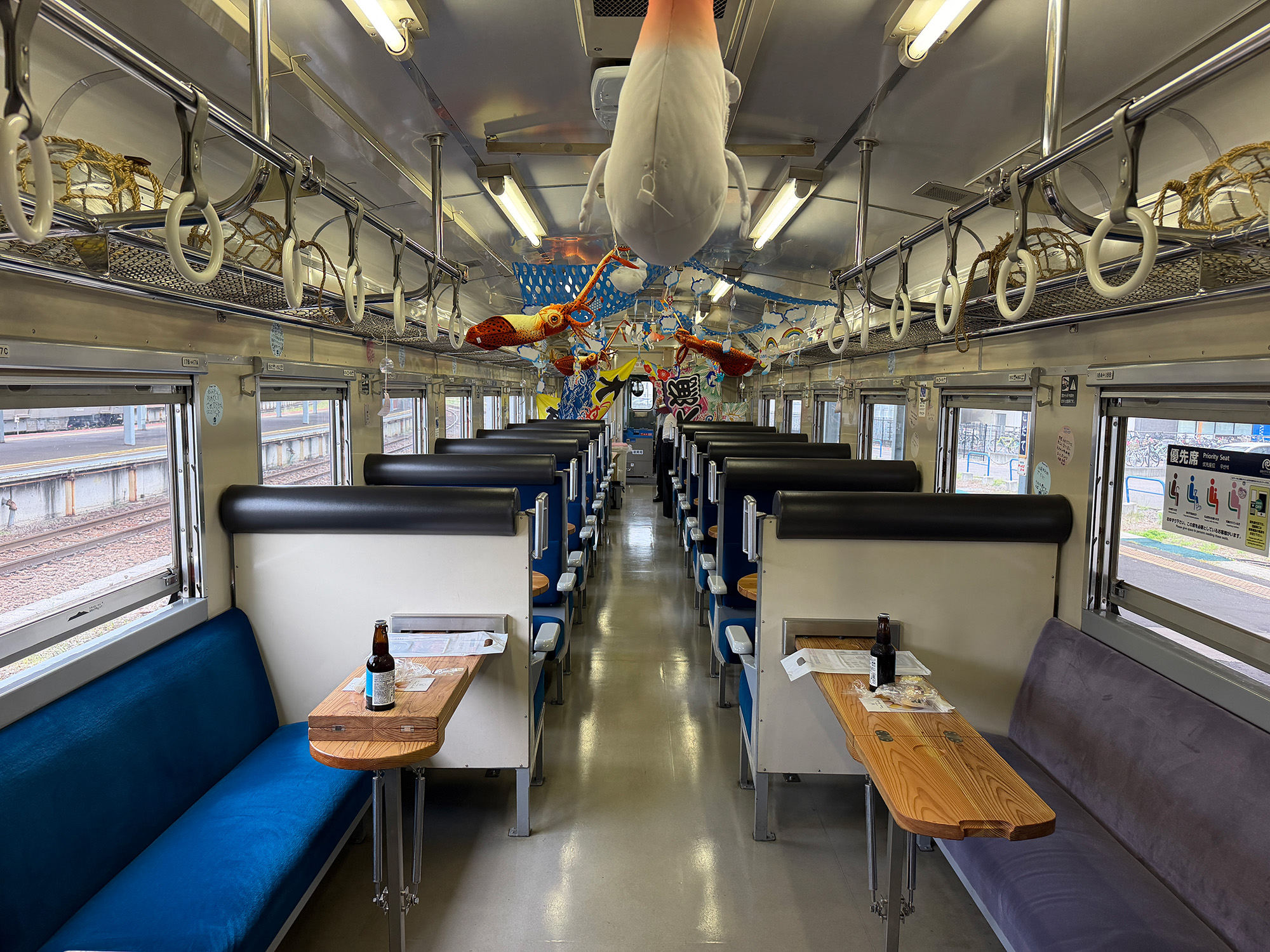
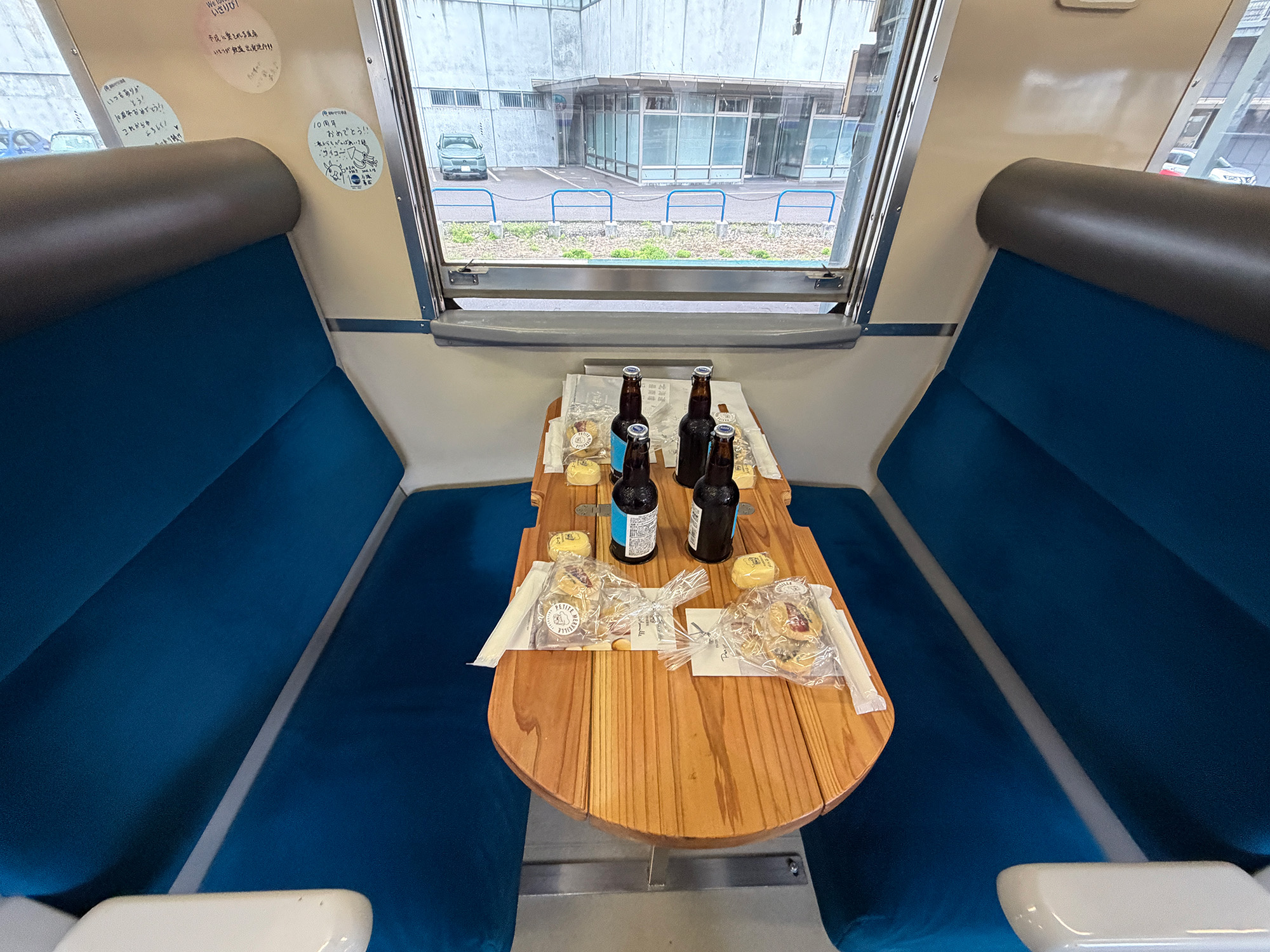
The interior is decorated with fishing nets, stuffed fish, and glass buoys. It has a cozy, homey feel with a handmade touch.
Drinks and snacks were already set out on the table. For drinks, you could choose between Hakodate Beer or Hokkaido’s signature drink, Ohara’s Co-Up Guaraná . I went with the beer, of course. By the way, the first drink is included in the tour price.
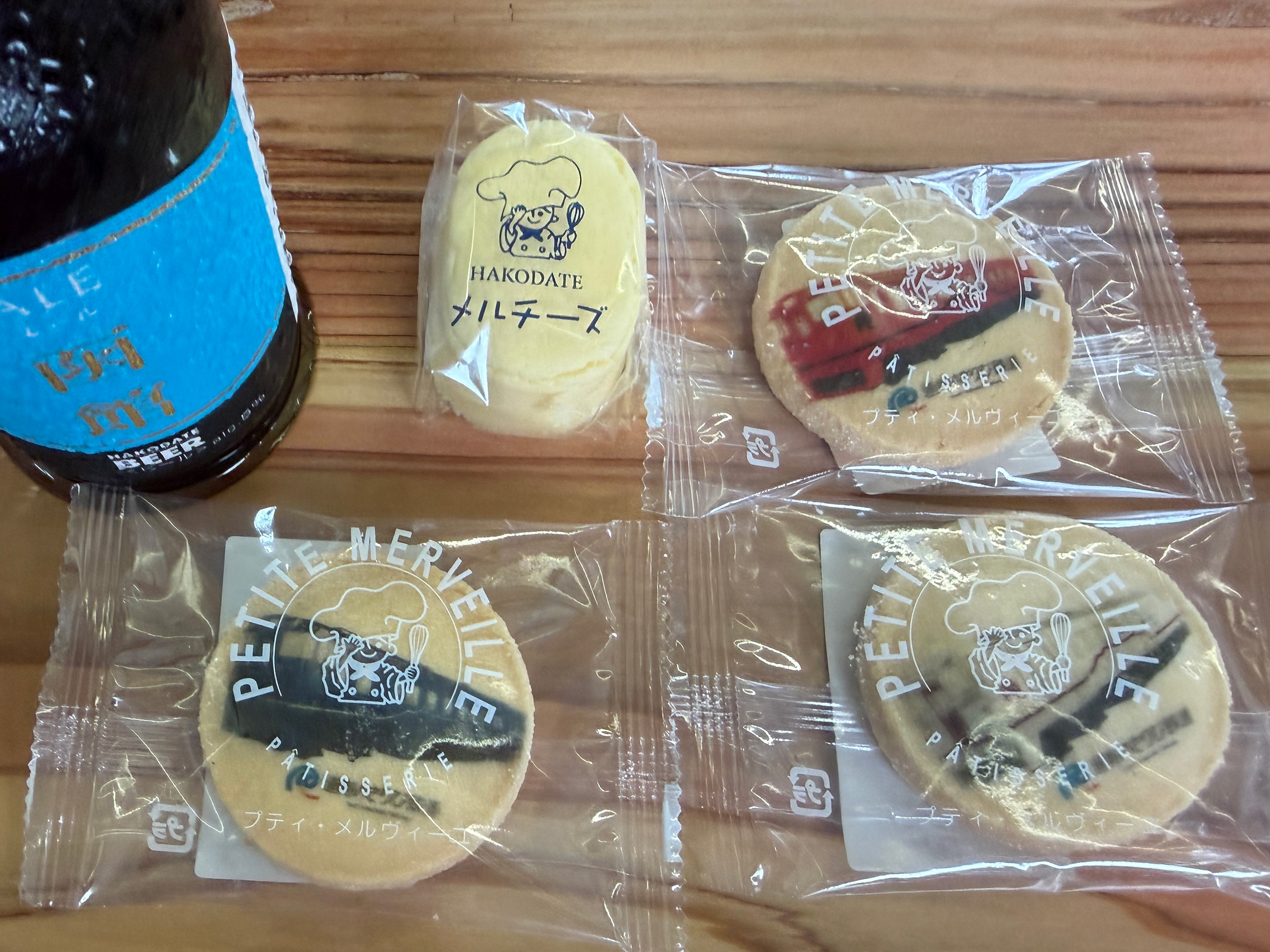
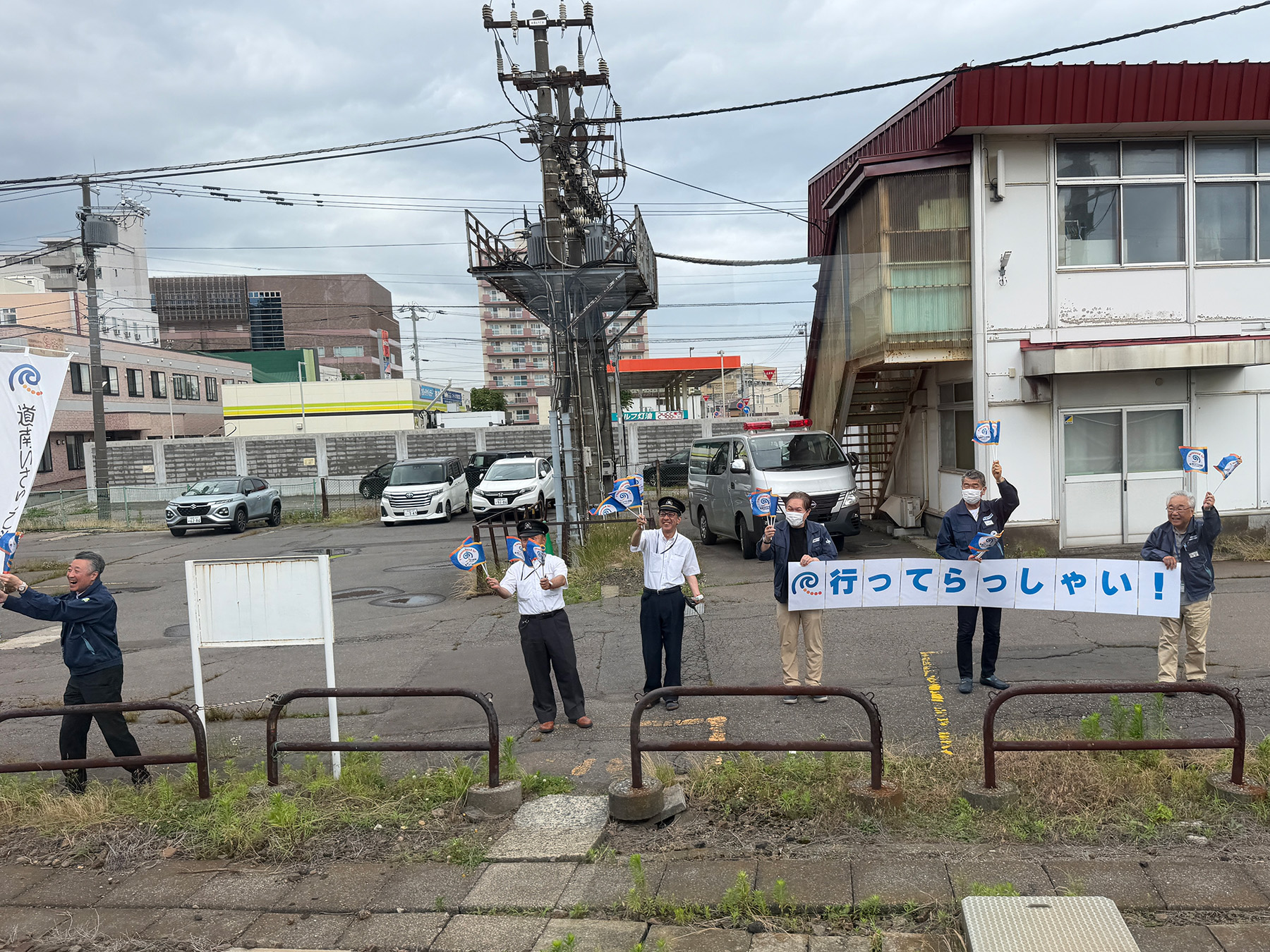
The train departed Hakodate Station at 3:50 p.m. Shortly after, staff from the Donan Isaribi Railway headquarters, located along the route, waved to see us off.
I was eager to drink my beer right away, but since I like to eat something while I drink, I held off until we arrived at Kamiiso Station around 4:30 p.m.
At Kamiiso Station, local specialties are sold from street stalls on the platform. Inside the train, vendors also sell goods from street stalls 500-yen coupons .
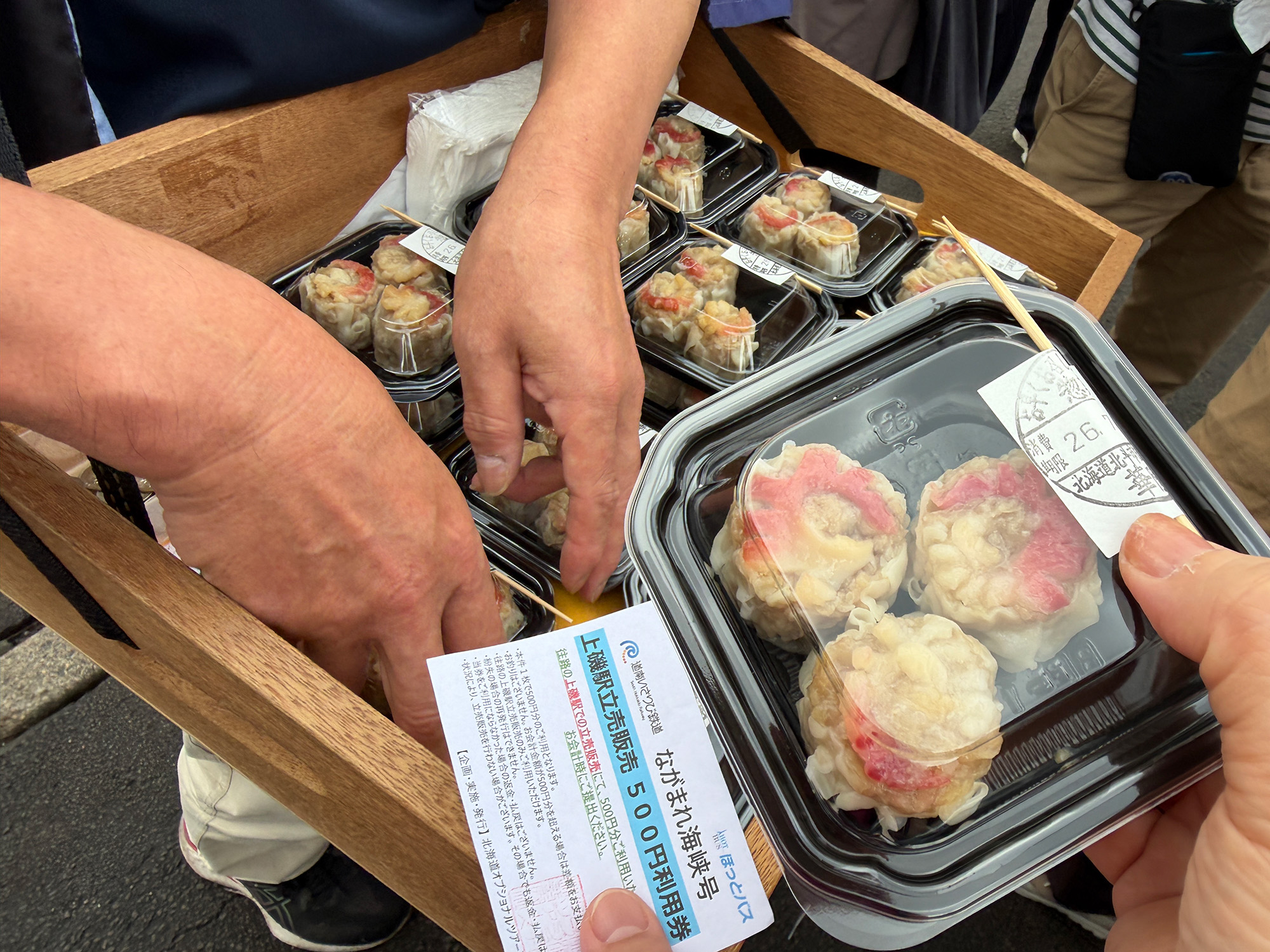
Actually, I had ridden the “Nagamare Kaikyo” once before, seven years ago in the fall. Back then, I bought some “Hokki shumai” from the street vendors, and it was so delicious that I decided to get some again using my 500-yen voucher!
The combination of these shumai and beer is absolutely the best.Hokki clams are harvested mainly along the Pacific coast of Hokkaido. The umami flavor that lingers in your mouth forever is irresistible. I really love pairing local specialties—like drinks and snacks—that are native to the region.
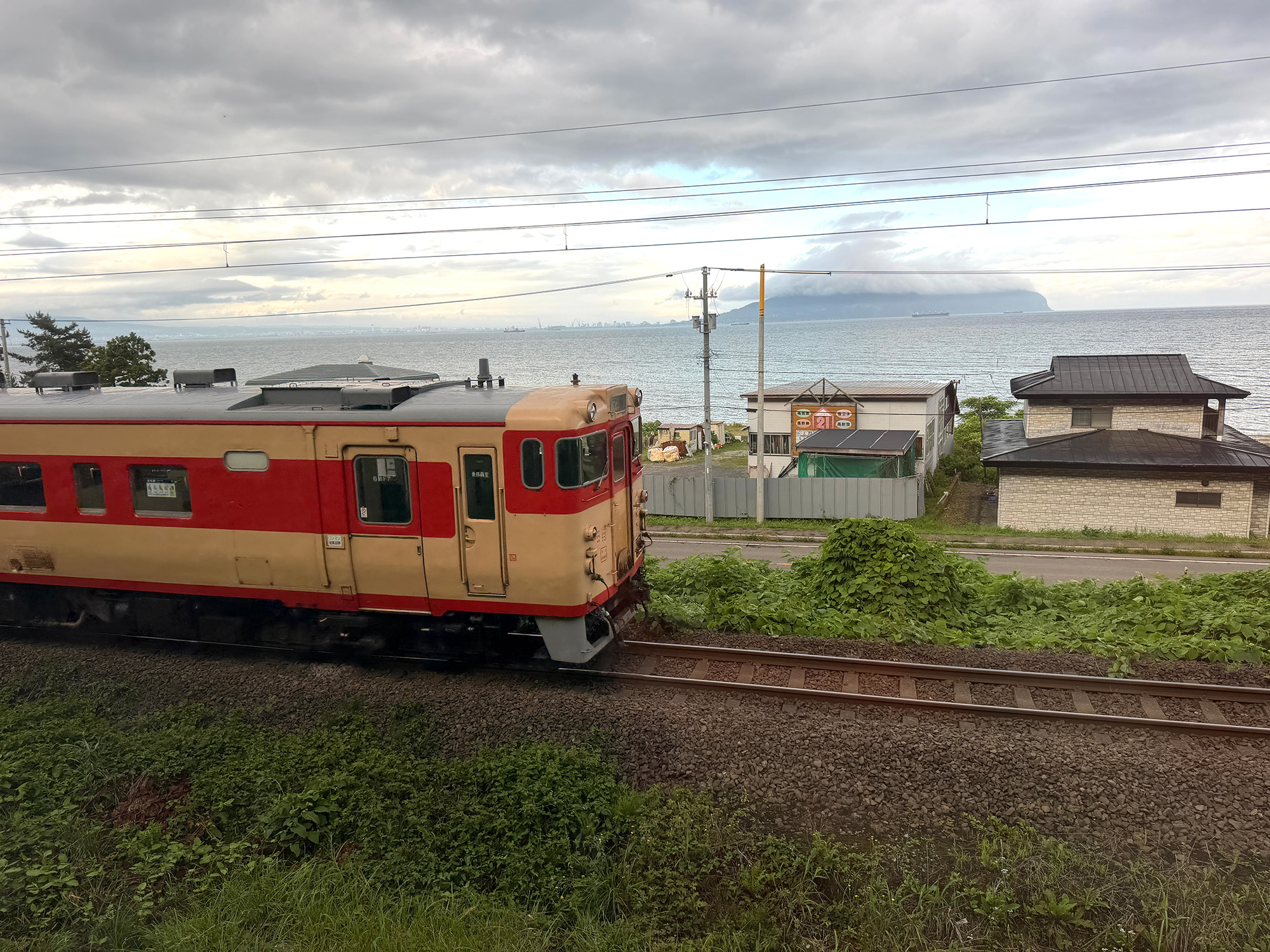
As we emerged from the tunnel, the ocean and Mount Hakodate came into view immediately to the left. At a place called Yabukari Signal Station, the train stopped for a short while. Since we have plenty of time, let’s take some photos of the ocean and Mount Hakodate. A few trains passed by as well.
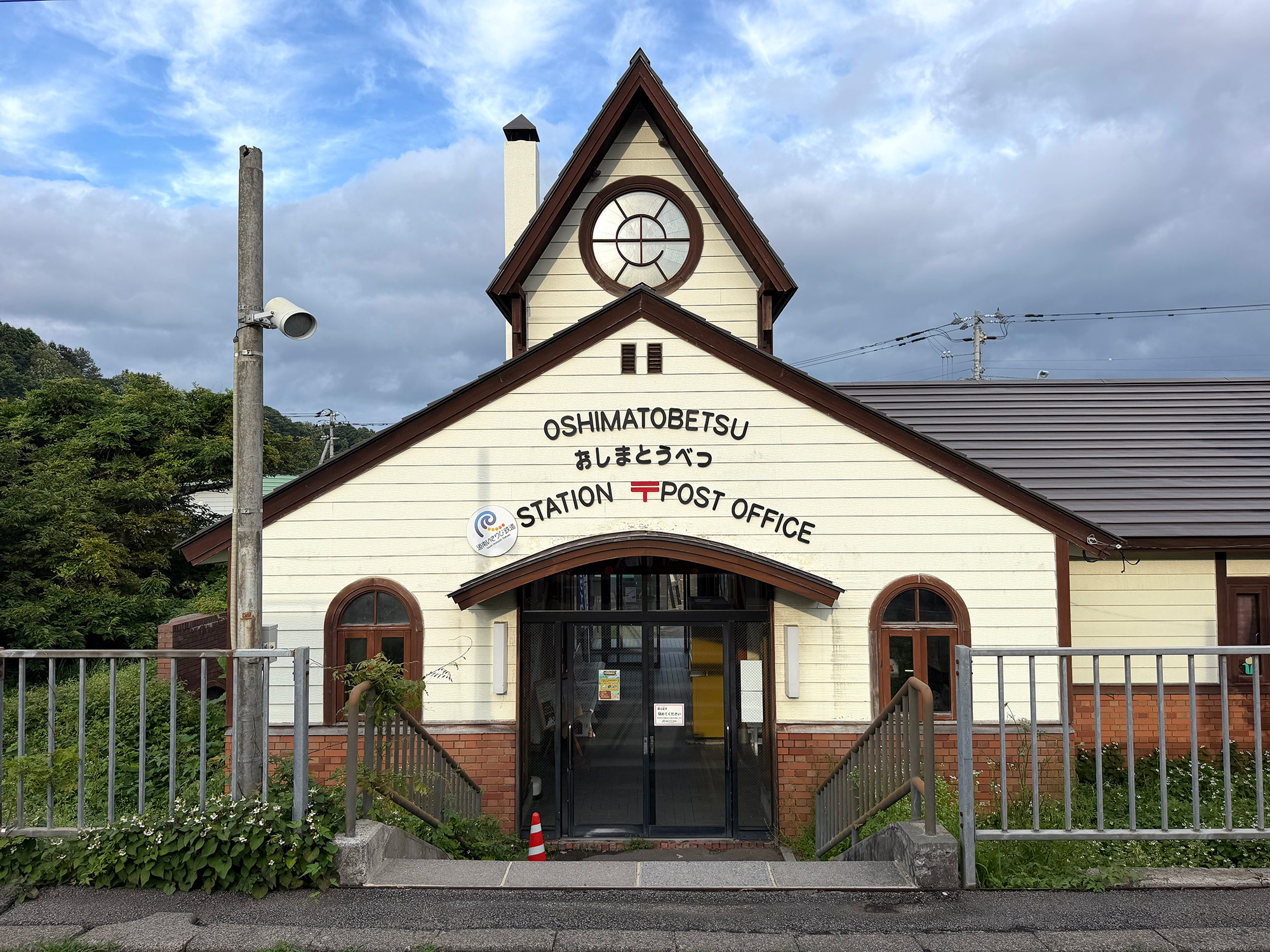
Next, the train stopped for about 10 minutes at Oshima-Tobetsu Station, the gateway to the Trappist Monastery. The station building itself has a silhouette reminiscent of a church.The station interior was decorated with stained glass and other elements, creating a lovely atmosphere.
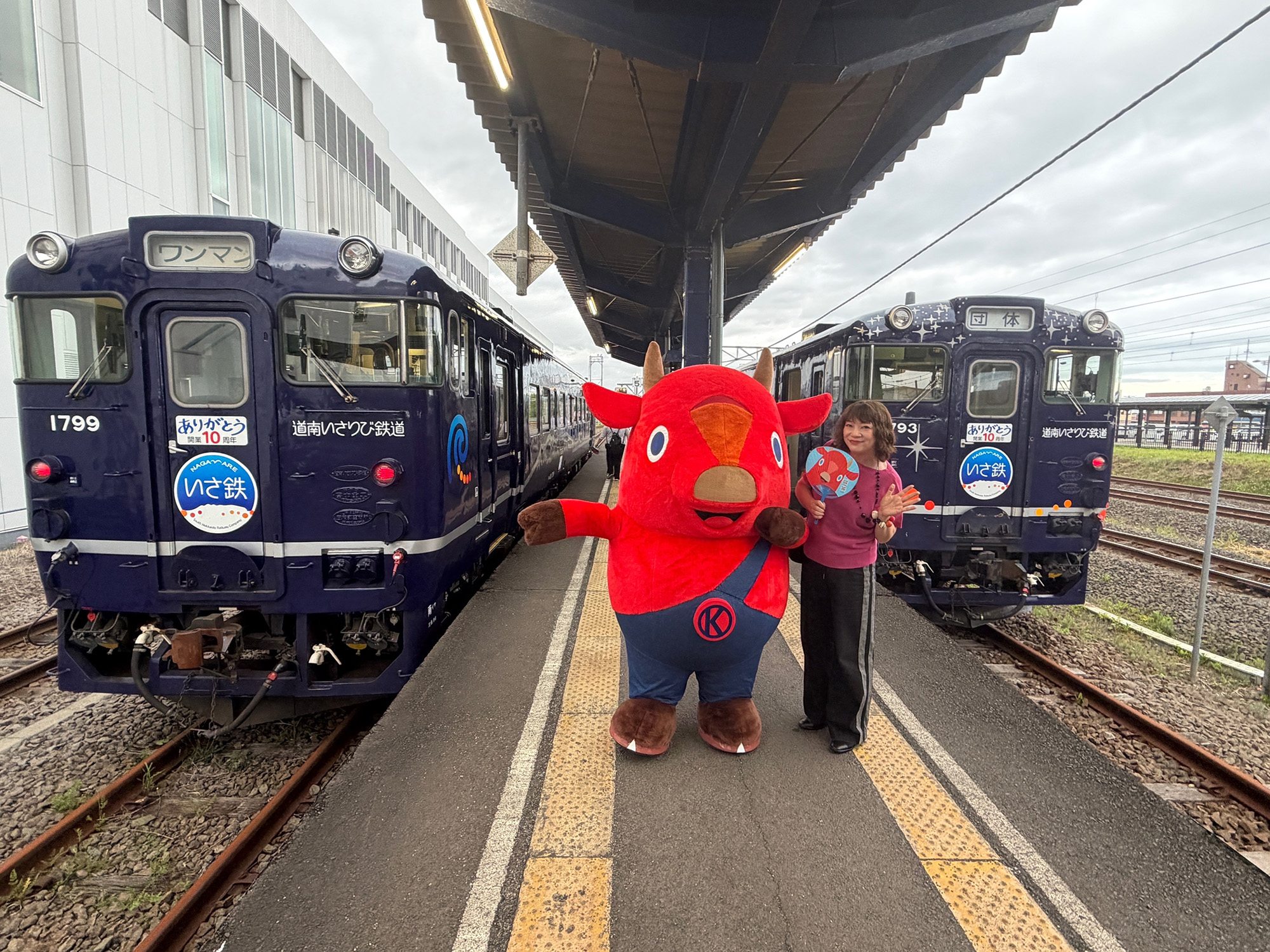
From there, the train ran along the coast for a while. On board, a staff member from the Dōnan Isaribi Railway gave us a guided tour of the highlights along the way.
When we arrived at the terminal station, Kikonai Station, around 6:00 p.m., there were people there to welcome us. And to my surprise, two cars from the “Nagamare Kaikyo” (one of which was operating as a regular train) were lined up on the platform! This is a rare sight.
Kikonai Station is home to the “Michi-no-Eki Misogi no Sato Kikonai” rest area, and since the train stops there for about 40 minutes, you can use that time to buy drinks and other items at the shops. I tried the “salt soft-serve ice cream,” which is said to be a local specialty.
Michikusa Gurus
Meals are served starting at Kikonai Station. You’re free to bring your own food, so feel free to buy something to eat on board.
●A Truly Satisfying Meal! An Unexpected Barbecue Right on the Station Platform
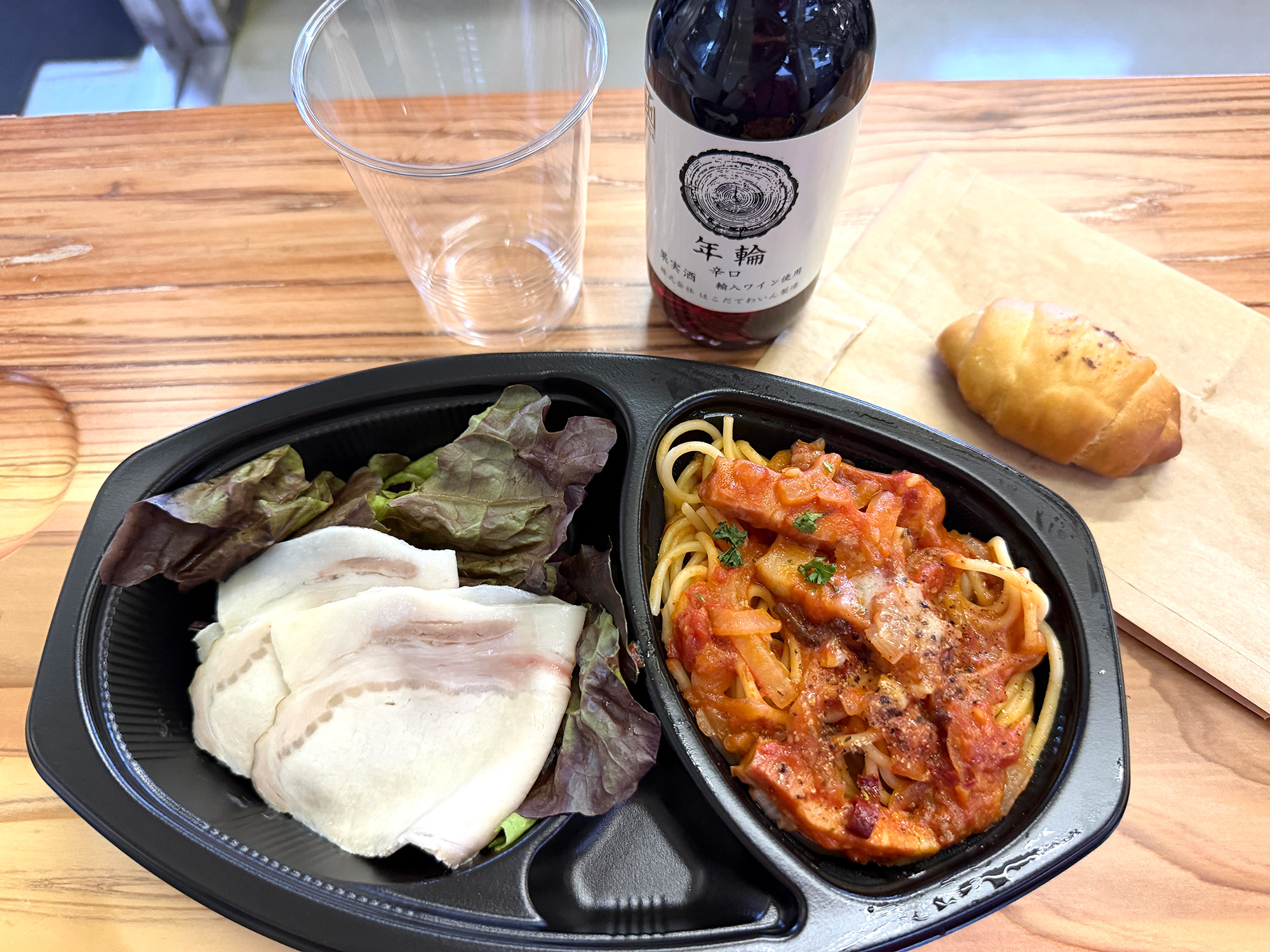
We departed Kikonai Station shortly after 6:30 p.m., as dusk was setting in. When I returned to the train, a pasta set had been set out on the table. The menu featured three options: “Chef’s Recommendation! Amatriciana,” “Roast Pork from Morimachi Hikoma Pork & Salad,” and “Koppen Michido Pakupaku Salt Bread.”
I also bought some red wine from the onboard service. Both the pasta and the bread paired perfectly with the wine. It felt like the main course had arrived all at once, but this is where the train really starts to show what it’s made of.
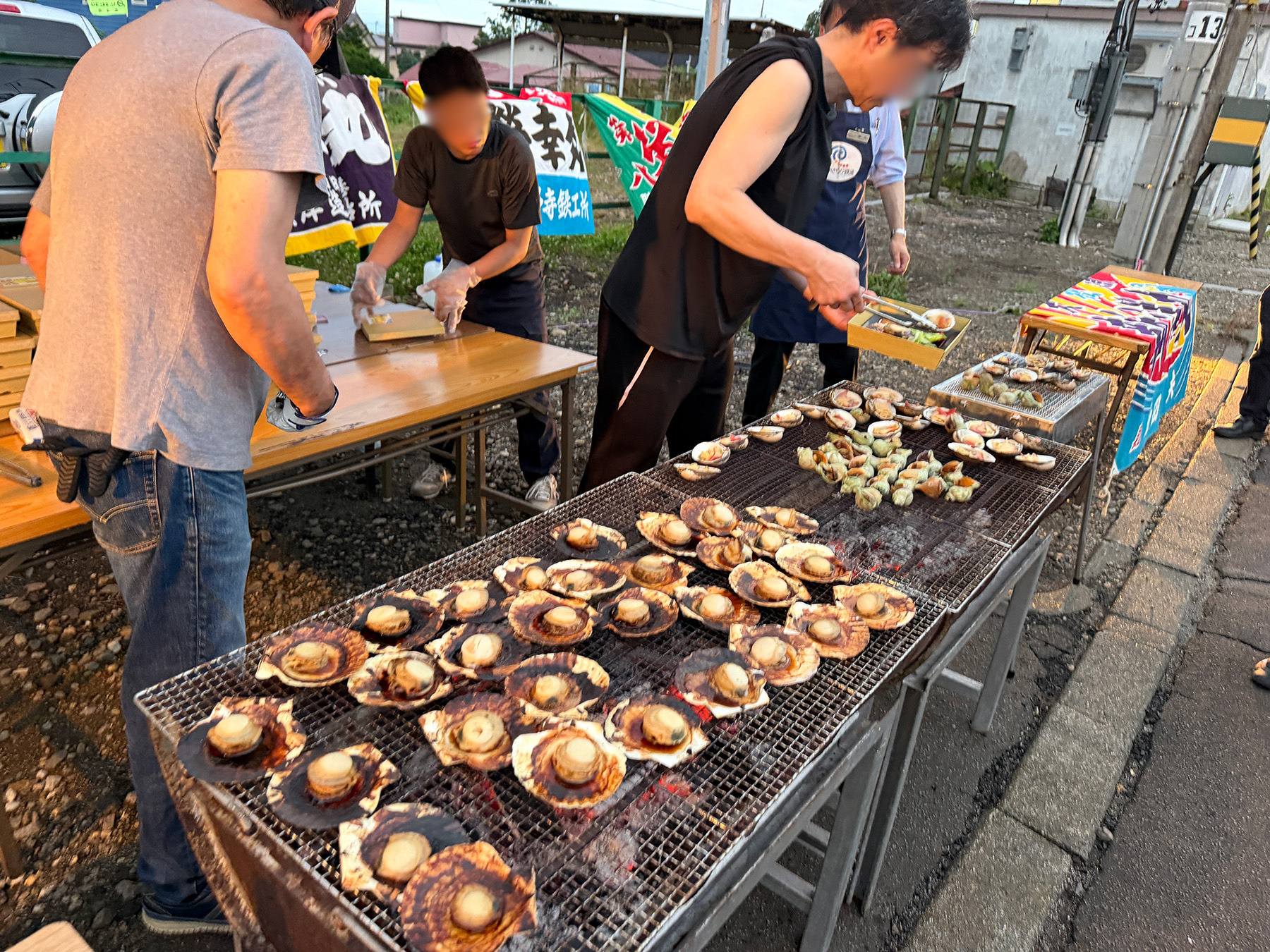
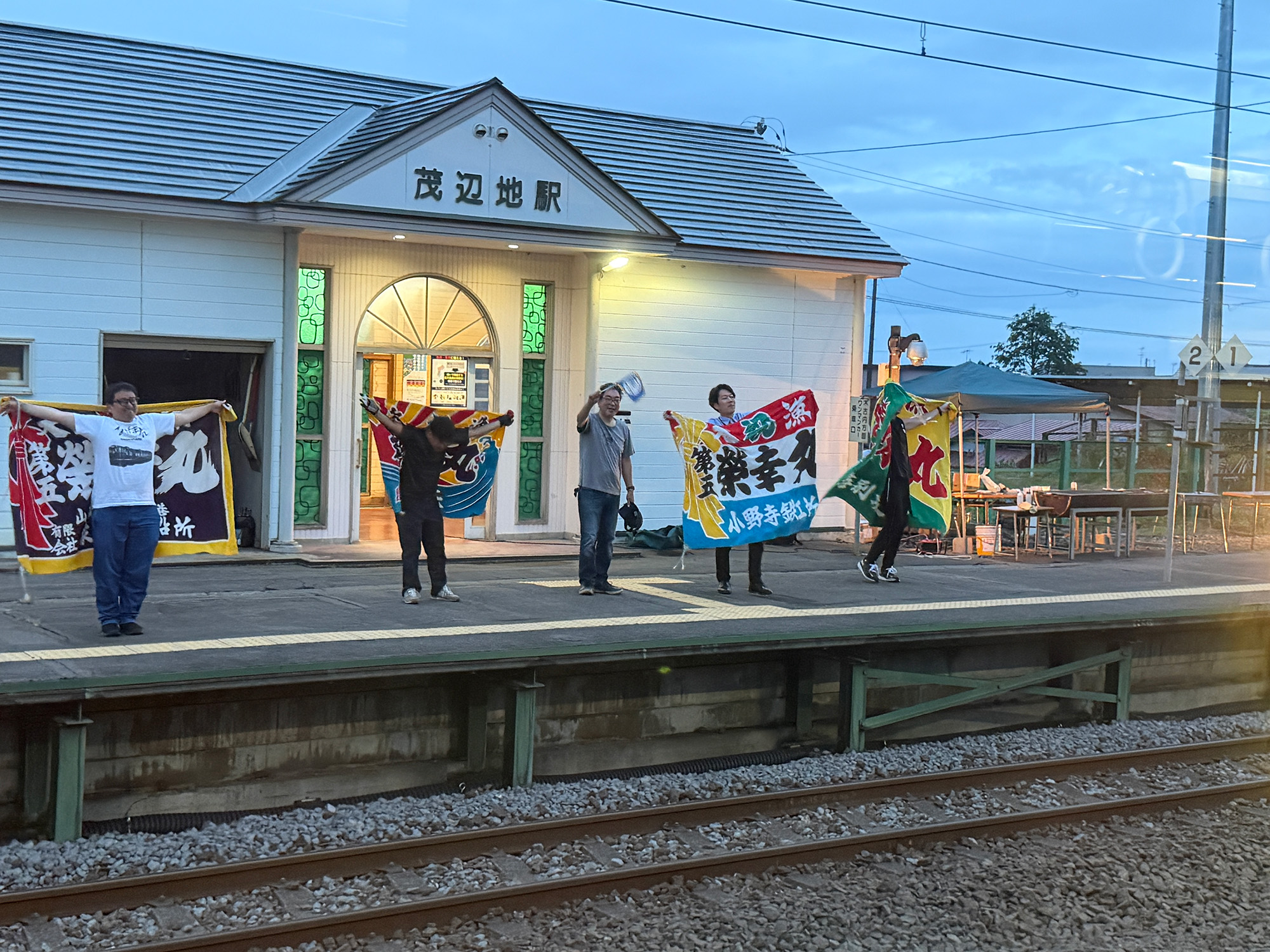
At 7:00 PM, we arrived at Mobeji Station. To my surprise, there was actually a barbecue going on right on the platform at Mobeji Station.
The delicious aroma of grilled seafood wafted through the air. Here, we were served the “Isaribi-yaki Bento.” Hokki clams, blue clams, and scallops, grilled on a mesh grill, were placed in a box along with salad and zangi (fried chicken).
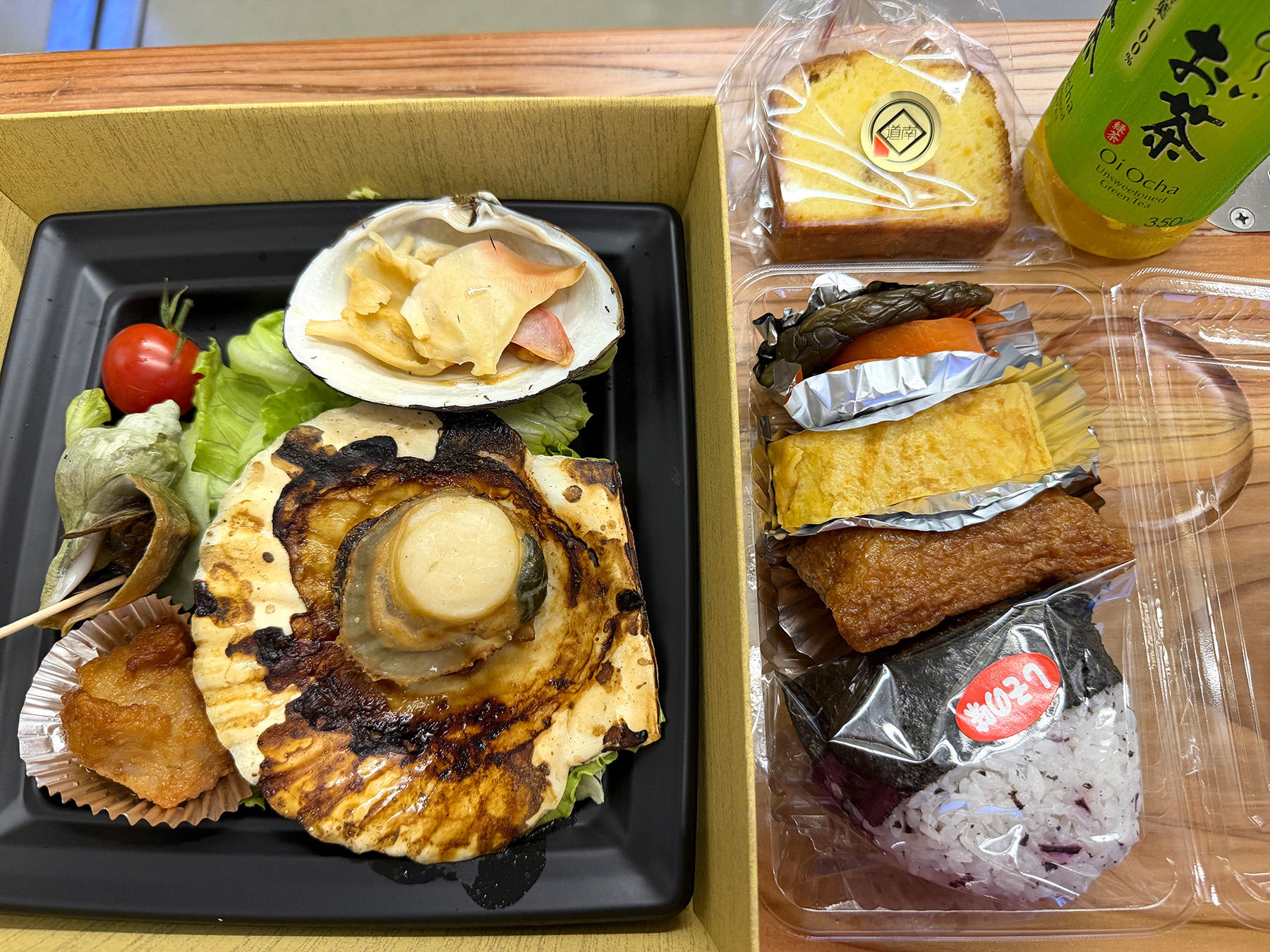
When I took it back to the train, we were served “shiso-flavored” rice balls, inari sushi, rolled omelet, and pickles. On top of that, pound cake was handed out. For the final stretch, the train car turned into a veritable eating contest. The food just kept coming—as if to say, “Here’s more!”—and that’s the hallmark of this train. Still, the portions are incredible, aren’t they!
Michikusa Gurus
Just like last time, I couldn’t finish my rice balls and ended up taking them home.
● Returning to Hakodate at night with a full stomach
We departed Mobeji Station around 7:20 p.m. and arrived at Hakodate Station at 8:00 p.m. I was absolutely stuffed. When your stomach is full, you feel a sense of mental satisfaction too. Since the end of the trip was like this, I was completely satisfied with the journey as a whole. Ah, what a great time.
In the morning, I rode the latest Shinkansen model, and in the afternoon, I rode the JNR-era KiHa 40 series diesel train. It was a day where I got to enjoy two completely different experiences—not just the trains themselves, but also how I spent my time on board. However, one thing they both have in common is their commitment to providing the best possible hospitality to passengers.
Comparing these two rides like this was incredibly interesting, so I highly recommend it to everyone.


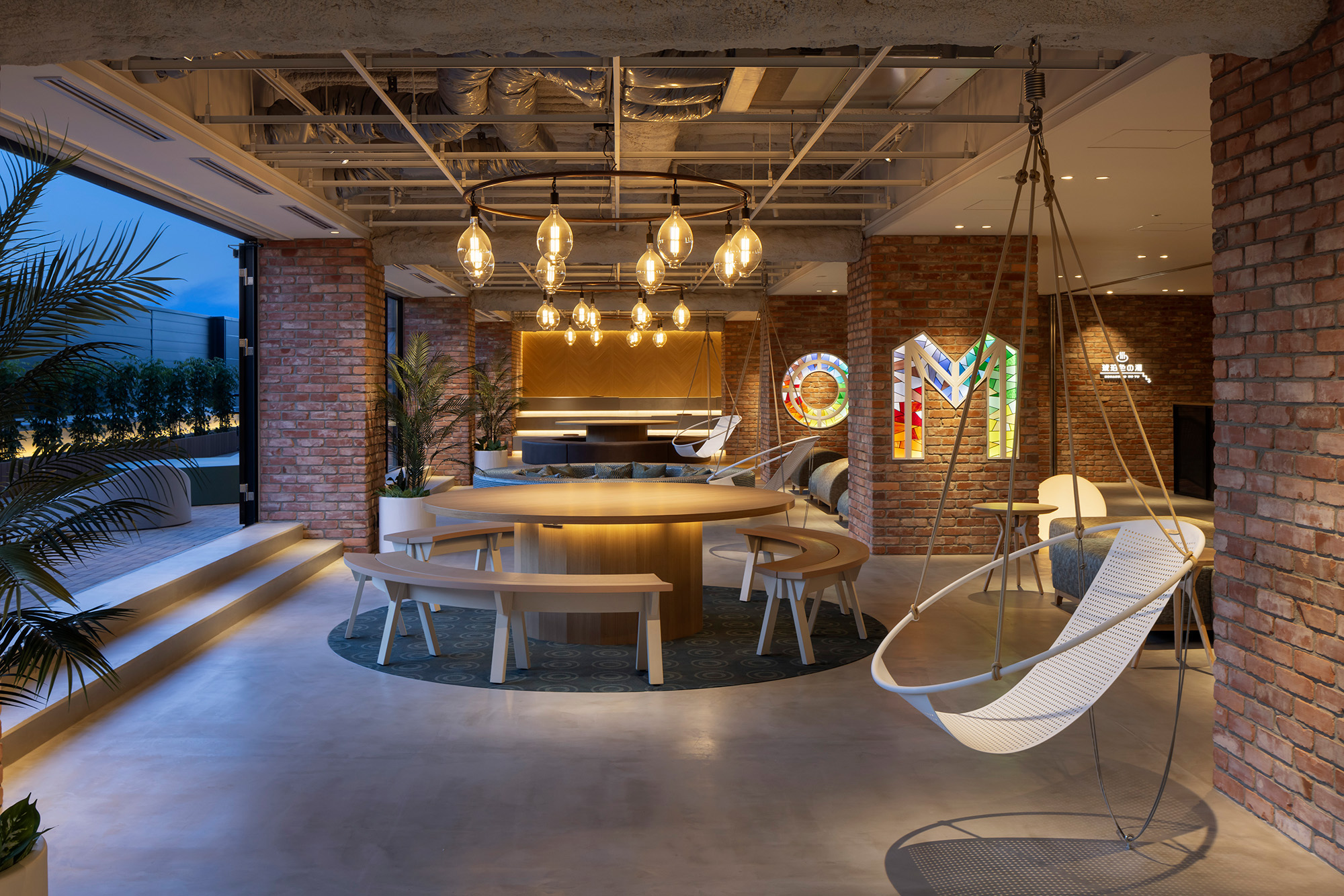
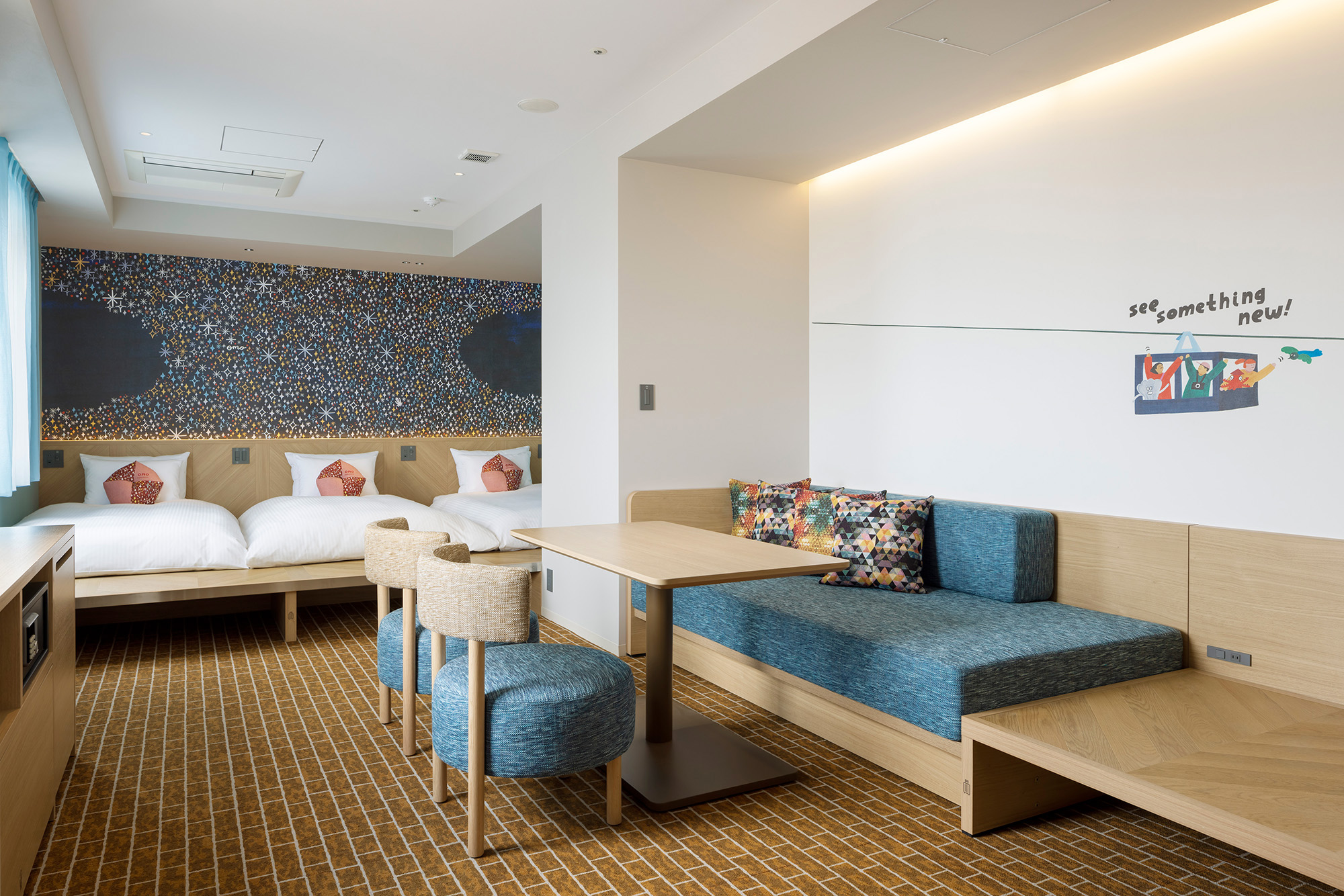
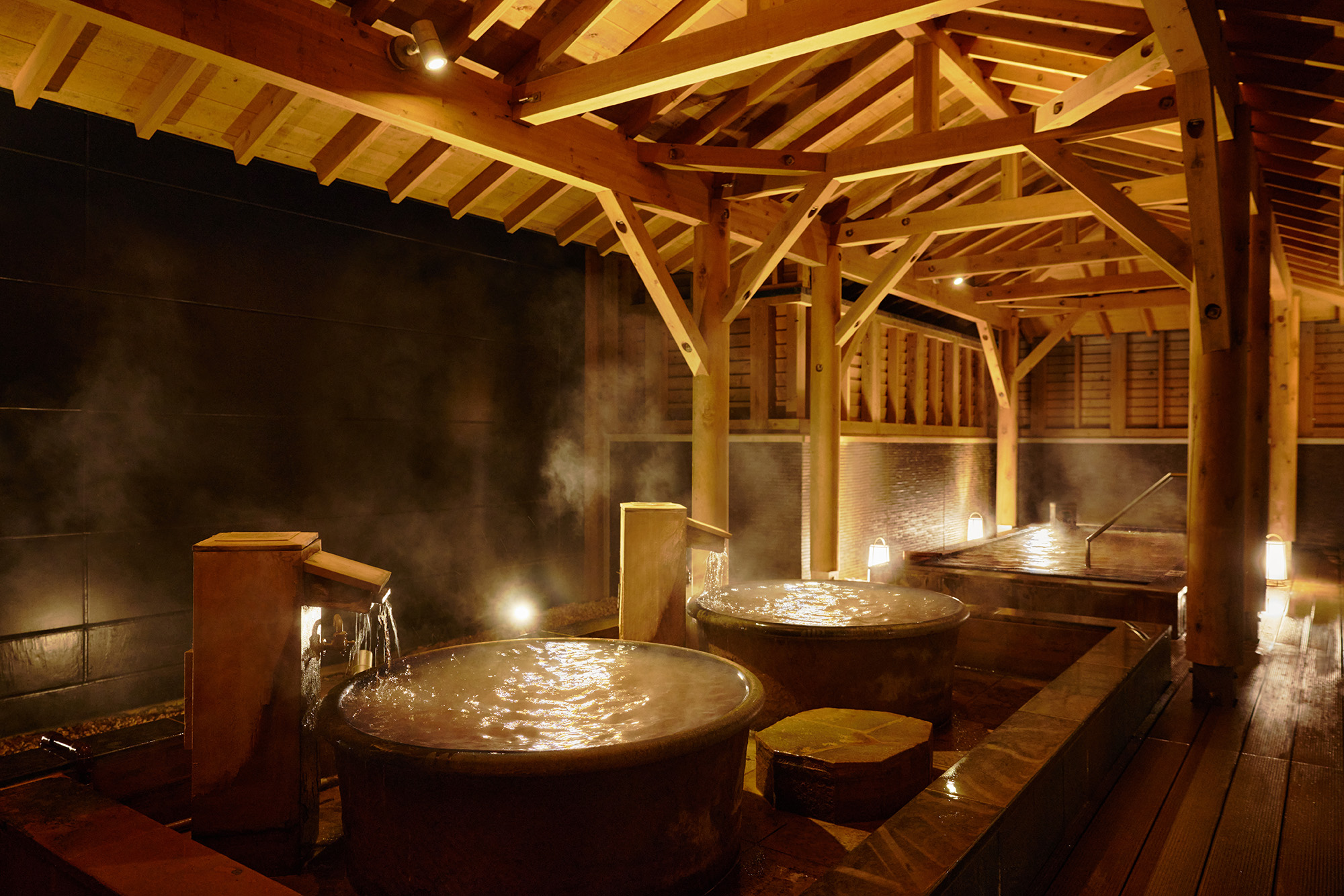
OMO5 Hakodate
Hakodate, Hokkaido
A 5-minute walk from Hakodate Station. Direction to popular tourist spots such as night views, seafood, and exotic townscape.

Access by bus 5 min. walk from JR Hakodate Station
- Example of Accommodation Rates
- 1 person per night From 6,500 yen