





Why the pork buns from the classic Osaka souvenir shop "551 HORAI" are so beloved


When it comes to souvenirs from Osaka, the first name that comes to mind is the "super" famous "551 HORAI" pork bun. It is often eaten in daily life when one is feeling a bit peckish, and it is no exaggeration to call it the soul food of the Kansai people. We will delve into and introduce the appeal of these "551 HORAI" pork buns. We will bring you plenty of information, from the story of their birth and the reasons why they are so delicious, to where you can buy them and hidden popular items that can only be purchased at the main store.
What are "551 HORAI" pork buns?

In the Kansai region, the "551 HORAI" pork bun is familiar from the TV commercial that goes, "When there's 551 Horai... and when there isn't...!!" It is a soul food essential to the people of Kansai that has been loved for about 80 years since its birth in 1946 (Showa 21). With about 60 takeout shops mainly in Osaka City, as well as in Hyogo, Kyoto, Nara, Shiga, and Wakayama (some stores also have attached restaurants), the average daily sales volume is about 170,000 units. In recent years, it has become a popular product with fans nationwide as a "can't-go-wrong Osaka souvenir."

Its characteristics are the exquisite balance between the juicy filling, packed with the delicious flavor of pork and onions, and the dough, which has a chewy texture and a hint of sweetness. The subtle sweetness of the dough perfectly softens and harmonizes with the rich, savory flavor of the pork. No preservatives are used; they are made on the day and served only after being steamed. Both the ingredients and the manufacturing process are simple, and that fresh taste has captivated many people. Another appeal is that each one is large and very satisfying.
The untold history of the pork bun, born the year after the war ended

Its predecessor was "Horai Shokudo," founded by the late founder Mr. Luo Bangqiang and two of his associates. Amidst the ruins left by the Osaka air raids, they started the business in October 1945 (Showa 20), just two months after the end of the war, in the center of Osaka City, right next to the current main store.

Immediately after the war, when food was scarce, Horai Shokudo's signature curry rice became a huge hit. Once that success settleddown, the founder conceived the pork bun in 1946 (Showa 21), the year after the founding, as the next hit menu item.
Inspired by the pork buns eaten in Taiwan and the popular ones in Kobe's Nankinmachi,they thought, "If we make them largerso that one issatisfying enough to eat,it might suitthe tastes of the people of Osaka." Since "meat" in the Kansai region refers to "beef," they named it "butaman" (pork bun) instead of "nikuman" (meat bun) to make it easier to understand.
The pork bun born this way became a huge hit and is now a flavor that represents the Kansai region. It seems the seasoning, ingredient proportions, and preparation method, tailored to Japanese tastes, haveremained unchanged since the foundingof the company.

Pork buns were originally an eat-in menu item only available at the restaurant, but as demand grew with their popularity, over-the-counter sales began in 1952 (Showa 27).With the desire to have customers eat them freshly made,we created a "demonstration sales corner" where we show the manufacturing process, as seen in the photo above. The sight of the buns being hand-wrapped and steamed one after another caught the eyes of people passing by the nearby Ebisubashi Bridge, further stimulating their appetite. At the same time, the "takeout" style—where people enjoy pork buns at home rather than in a dining room—which is common now but was groundbreaking at the time, gradually permeated and became established.

The store name became "551 HORAI" around 1974. The founder, who wanted a more approachable name that customers would remember, got the idea from the foreign cigarette brand "555" and proposed using numbers that are universally understood. With the store's phone number being 64-551, and the meaning of "aiming to be number one (551) in both taste and service," the name "551 HORAI" was born.
The red and white brand colors and package design were chosen to make the brand stand out. The paper bag with "551 HORAI" written in bright red letters on a white background is immediately recognizable even in a crowd. It has become deeply cherished by the people of Kansai.
The dedication to deliciousness packed into every pork bun

The biggest secret to the deliciousness of 551 HORAI's pork buns is that they contain no preservatives and are sold "freshly steamed" on the day they are made. Out of all 61 stores,58we still continue the demonstration sales that began in 1952, and at each store, you can see the process of wrapping the filling in the dough, and at some stores, you can even see them being steamed.(excluding chilled product specialty stores and side dish stores).
In particular, at the first floor of the main store in the Ebisubashisuji Shopping Street in Namba, which was renovated in 2021, you can see the large, glass-walled kitchen that stretches across the side up close, allowing you to enjoy an even more lively manufacturing scene.

To the storeDough and ingredients are delivered from the central kitchen 4 to 5 times a day.During transport,the dough undergoes its first fermentation, so store locations are limited to the Kansai region, within a 150-minute drive from the central kitchen. Depending on the day's temperatureand humidity,the fermentation process varies, so we manually shape the dough while checking its condition by touch, andperform the second fermentation in-store.This moderate double fermentation leads to the dough's sweetness and chewy texture.

The main ingredients areporkand domestic onions, primarily from Awaji Island. To enhance the texture, both are cut into large dice. The seasoning is simple—using salt, soy sauce, and spices—to bring out the natural flavors of the ingredients.

A generous amount of filling is placed in the center of the fermented dough, and each one is wrapped by hand. This hand-wrapping is also a major point. Because the dough is well-fermented and elastic, it is difficult to wrap by machine in the first place, but it is said that hand-wrapping is the best way to maximize the fluffy texture and flavor of the pork bun.
The number of pleats is set at 12 to 13, which makes them look beautiful when steamed, and a person is considered proficient if they can wrap 4 per minute. It is said that those who reach the level of a master can wrap them at a pace of 8 per minute.

Steamed for about 20 minutes until fluffyandthey are complete. Amidst the billowing steam, staff members pack the freshly steamed pork buns into boxes one after another as orders come in.

There is also a commitment to the mustard served with the pork buns. Because vinegar, salt, and other ingredients are added, it has a rich flavor in addition to its spiciness, making it a perfect match for the sweet dough. It is an original product made daily at the central kitchen and, like the pork buns, is transported by truck multiple times a day. It contains no preservatives and has the same expiration date as the pork buns.
By the way, among fans, it is said that various ways of eating them are enjoyed, such as adding soy sauce, Worcestershire sauce, vinegar, vinegared soy sauce, or ponzu to the mustard. Why not keep this in mind for your next visit?
For freshly steamed flavor, the restaurant on the second floor of the main store is also recommended

The first floor of the main store is for takeout only, but in the restaurants on the second and third floors, you can enjoy freshly made, piping hot pork buns at your table.Pork buns areavailable individually for 310 yen, or as part of the "551 Dim Sum Set." If you are going to go, we recommend the set menu, which includes dashi-rich tantan noodles often eaten at Taiwanese street stalls, dim sum, and almond tofu. Pork buns served in a bamboo steamer are even more delicious.
You can also enjoy authentic Chinese dishes such as xiao long bao, sweet and sour pork, mapo tofu, and fried rice. Restaurant- There are 18 eat-inlocations in the Kansai region, so please be sure to check them out.
Check out our popular products that follow the pork bun, including main store exclusives!

Boasting popularity second only to the pork bun isthe long-selling product "shumai" (steamed dumpling),which was created in 1952 (Showa 27). It is packed with plenty of pork and onions, making it very filling. With a fluffy texture, the rich umami of the ingredients spreads throughout your mouth, which is simply irresistible.

Also, the "char siu bun" is a popular item known to those in the know that can only be purchased at the main store and the Umeda Hanshin store. It is filled with a generous amount of ingredients, including coarsely chopped char siu (pork roasted slowly after being marinated in a special sauce), shiitake mushrooms, bamboo shoots, and onions. The light, sweet sauce highlights the umami of the char siu. It often sells out by the afternoon, so we recommend purchasing it in the morning.

The "anman" (sweet red bean bun) is also popular. It features red bean paste cooked carefully so as not to crush the beans, with plenty of rich, deep black sesame paste and black sesame seeds added. It is sold only at the main store. It is best to visit in the morning when you are more likely to be able to buy one.

The "ice candy" (popsicle), created in 1954 (Showa 29) with the wish that people would "be able to endure the humid Osaka summer," is also a classic product. The manufacturing method has been passed down unchanged since that time. It has a nostalgic taste, and in addition to the most popular fruit flavor, there is alsomilk flavor, adzuki bean, pineapple, chocolate, and matcha, for a total of 6 varieties. The packaging featuring Icchan the polar bear, which has been used since 1957 (Showa 32), is also popular for its cute, retro look.
Where can you buy pork buns?

There are 61 pork bun shops in total, mainly in the Osaka city area and throughout the Kansai region. You can purchase them at shops in convenient locations such as major train stations, airports, and department stores.
At JR Shin-Osaka Station, where the Shinkansen stops, there is one shop inside the Shinkansen ticket gates, one inside the conventional line ticket gates, andthree shops outside the ticket gates, for a total of 5 shops.
Except for the JR Shin-OsakaStation Central Gate shop (outside the ticket gates),,chilled (refrigerated) products are also sold. The expiration date for regular hot (freshly steamed) products is at room temperatureWithin the same day・While it must be refrigerated for 3 days, the expiration date for chilled products is5 days including the date of manufacture,so please choose while considering travel time and other factors. There are also convenient sets that include a cooler bag. Chilled products are available at 8 stores, which can be confirmed on the official website.
Unique products and packaging also appear for a limited time

Since its launch in 1984 (Showa 59), heart-shaped pork buns have appeared during the Valentine's season (currently limited to mail order). At the time of its release, it was a big hit with the catchphrase "Confess your love with a steaming hot feeling." Expressing love and gratitude with pork buns is a unique idea that is very Osaka-like.


Also, in spring and autumn, in conjunction with the fire preventioncampaigncalled for by the Osaka City Fire Department, paper bags and boxes featuring fire trucks appear. In addition, paper bags in collaboration with the Osaka Prefectural Police, the Japan Coast Guard, the Self-Defense Forces, etc., appear once or twice a year as a contribution to the community. They are announced on the official website and social media, so if you are interested, please check them out.
Based on the belief that "being full of delicious food is truly happiness," 551 HORAI protects "freshness = deliciousness" by processing only what will be sold that day at a central kitchen, then shaping and steaming it at the storefront. Please enjoy this pride of Osaka, loved for many years, piping hot and freshly steamed.

- 551 HORAI Main Store
-
 3-6-3 Namba, Chuo-ku, Osaka-shi, OsakaMAP
 3-minute walk from Osaka Metro Namba Station
 Takeout 10:00–21:30 (Bento from 11:00)
Restaurant 11:00–L.O. 21:30 1st and 3rd Tuesday *Please check the official website for irregular holidays such as public holidays.
 06-6641-0551
 None

Local supporter in charge of this article
OMO7 Osaka
Osaka City, Osaka Prefecture
Conveniently located near major tourist attractions. Packed with heart-stirring experiences, from guided tours where you can experience Naniwa culture to unique events.


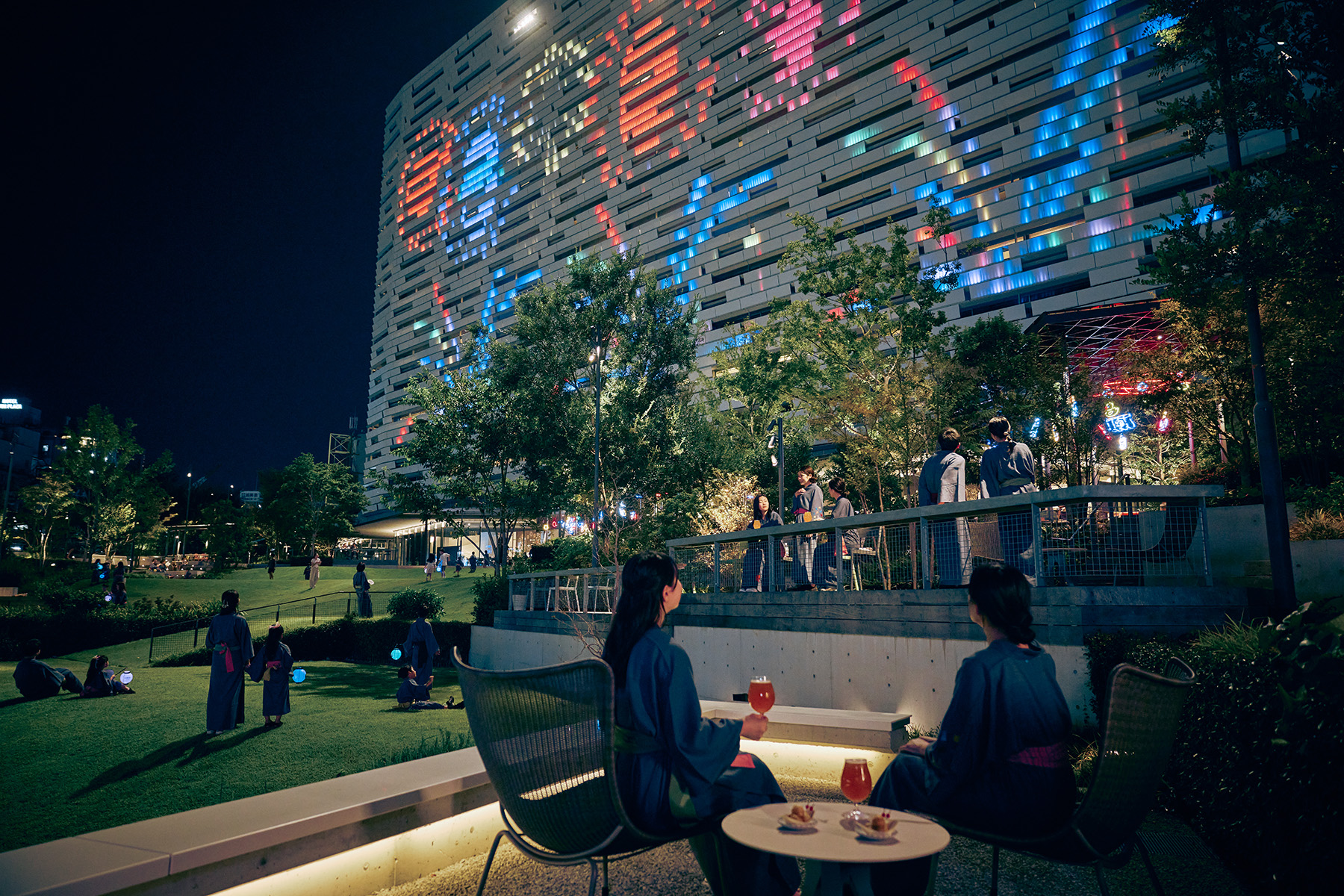

Access A short walk from JR/Nankai Electric Railway Shin-Imamiya Station
- Accommodation rate example
- Per person per night From ¥12,000
RISONARE Osaka
Osaka City, Osaka Prefecture
A family resort hotel in Nanko with a panoramic view of Osaka Bay. Enjoy a stay that the whole family can enjoy in an atelier designed to nurture creativity.

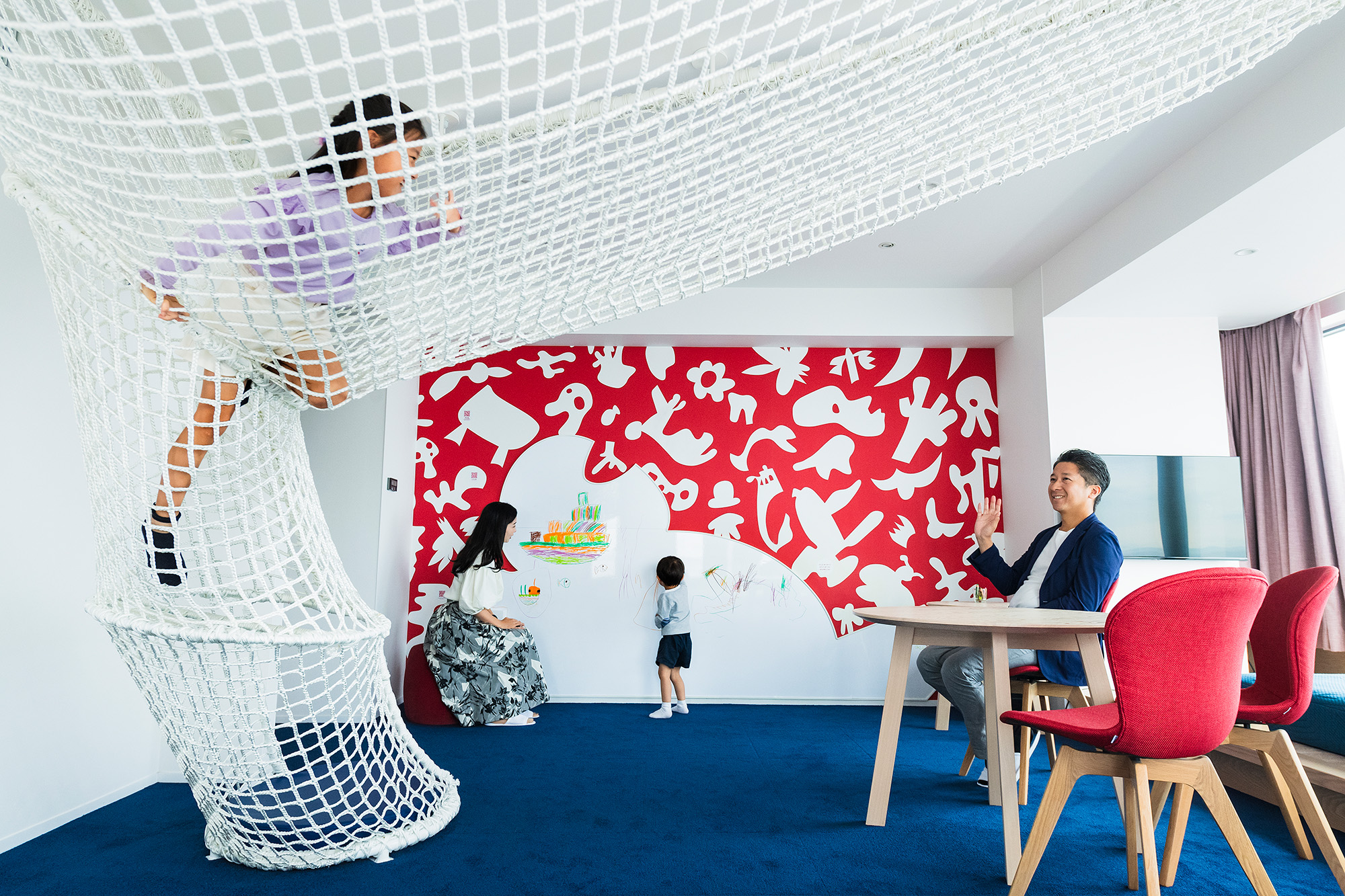

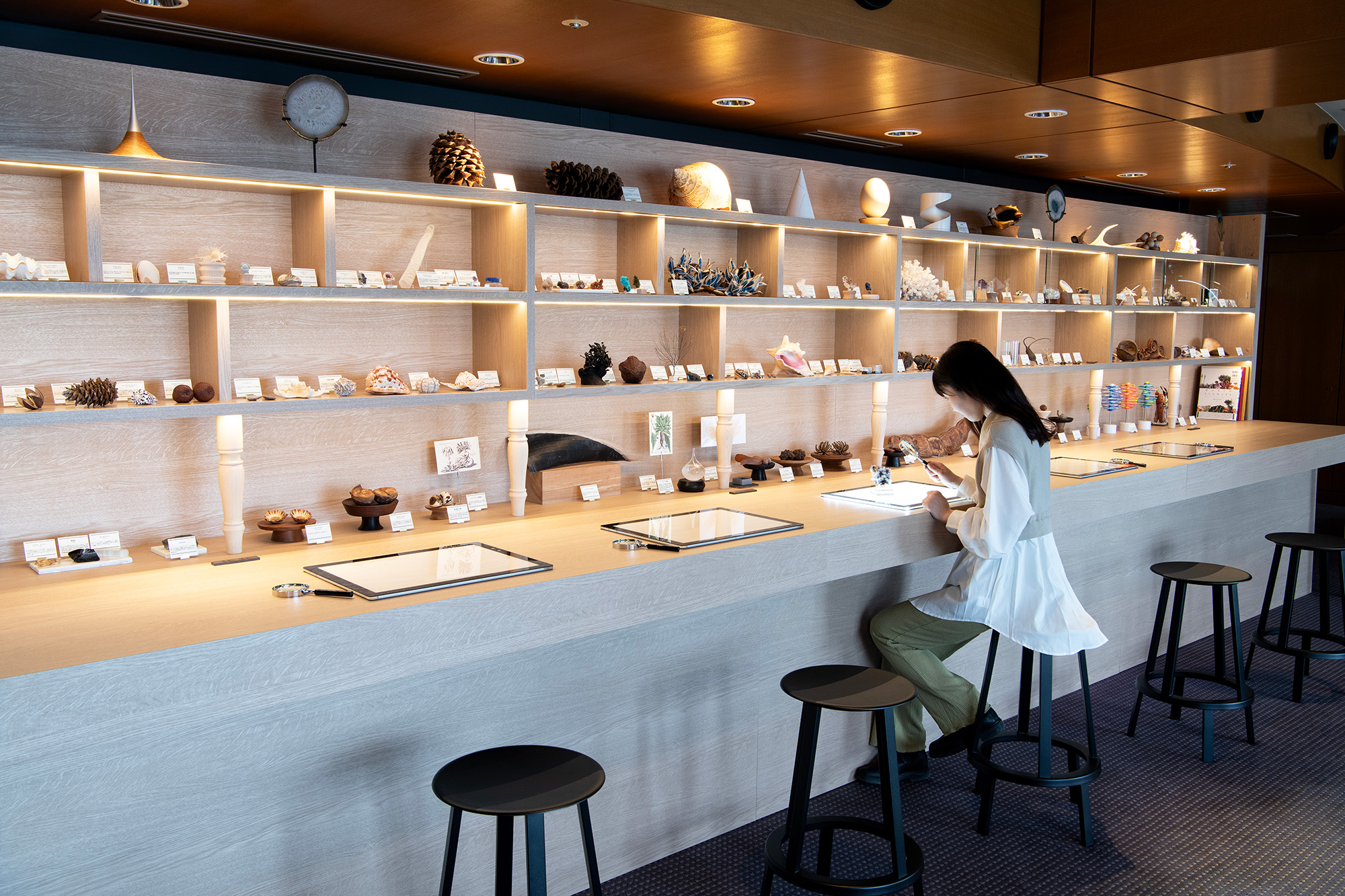
Access Approximately 25 minutes by shuttle bus from JR Osaka Station
- Accommodation rate example
- Per person per night From ¥9,000
OMO Kansai Airport
Izumisano City, Osaka Prefecture
The first airport hotel under the OMO brand, located at Rinku Town Station, just one stop from Kansai International Airport. Spend your time between travels in comfort and fun.

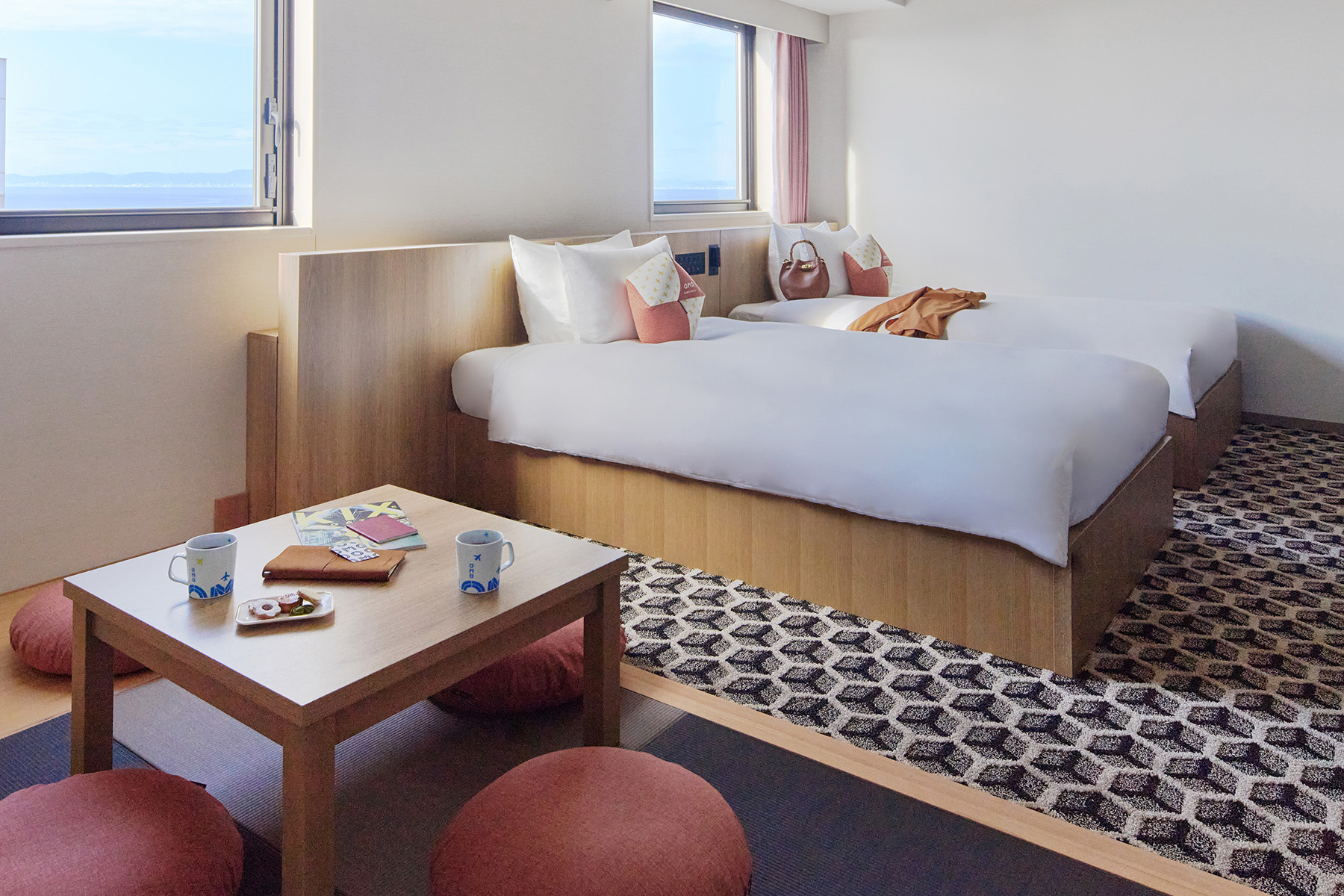

Access Approx. 1-minute walk from JR/Nankai Electric Railway Rinku Town Station Exit 5
- Accommodation rate example
- Per person per night From ¥4,500