





Check out the seasons, temperatures, and clothing for Iriomote Island


Iriomote Island is located in the Yaeyama Islands, the southwesternmost point of Japan, over 400 km away from the main island of Okinawa. It is the second-largest island in Okinawa Prefecture after the main island. About 90% of the island is covered in tropical and subtropical primeval forests, making it a treasure trove of nature, and the entire island is designated as a national park. It is home to mangrove forests that account for three-quarters of all mangroves in Japan, as well as 15 natural monuments including the Iriomote cat, and eco-tours that take advantage of this precious natural environment are popular.
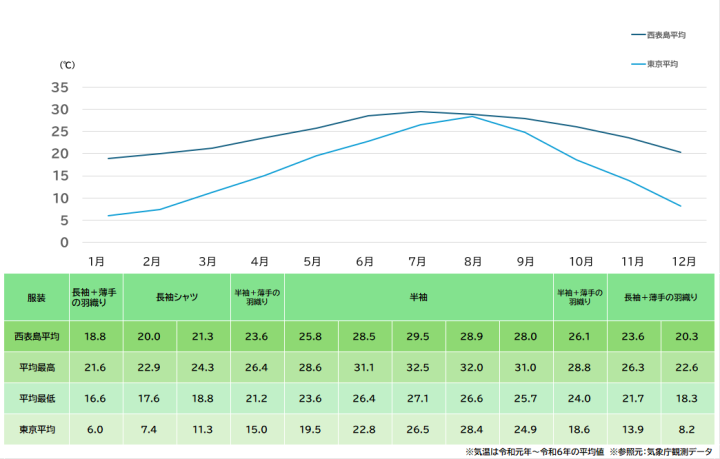
Iriomote Island has a high-temperature, high-humidity subtropical oceanic climate with an average annual temperature of about 24°C. Winters are warm, and summers have the muggy heat characteristic of subtropical regions. In addition, the annual rainfall is high at over 2,000 mm, so rain gear is essential, especially during the rainy season and typhoon season. The sun is strong all year round, so we recommend bringing sunscreen regardless of the season.
Spring on Iriomote Island (March–May): Temperatures and Clothing

Spring in Okinawa is known as "Urizun" in the local dialect. As the name suggests, which is said to originate from "uruizome" (the beginning of moisture), this is a time when young leaves grow and the greenery across the entire island deepens day by day. The average temperature in March is 21.3°C. With a difference between day and night of less than 5°C, it is a comfortable time to spend. Around the "Vernal Equinox," when beaches open on various islands in Okinawa Prefecture, the average maximum temperature exceeds 24°C, making it warm enough to wear short sleeves during the day. While the average temperature in April is a comfortable 23°C, summer begins in earnest once May arrives, with "summer days" (25°C or higher) continuing. Be sure to stay hydrated and take measures against sunburn.
From March to early May is the best season for the Yaeyama hime-botaru, Japan's smallest firefly. The forest on spring nights can feel chilly on some days. Go out wearing a jacket and long pants, and be sure to bring insect repellent spray.
Summer on Iriomote Island (June–August): Temperatures and Clothing

The rainy season in Iriomote Island begins around early May. Until the rainy season ends in early June, it is essential to carry rain gear, as sudden, torrential subtropical squalls can occur.
In June, the average maximum temperature exceeds 31°C, and hot and humid days continue until August. This is a time when you can enjoy a variety of activities in the sea and forest, and the phantom "Barringtonia racemosa" (sagari-bana) flowers are also in full bloom. From June to mid-July, these ephemeral flowers bloom for only one night in wetlands such as riverbanks, and by early morning, the fallen petals color the surface of the river.
Additionally, since July and August have the highest probability of typhoons approaching, it is necessary to check typhoon information frequently. Also, because summer UV rays are extremely strong, be sure to prepare sun protection items such as sunscreen and hats, and stay thoroughly hydrated when spending time outdoors.
Autumn on Iriomote Island (September–November): Temperature and Clothing

September and October, with average temperatures of 26°C or higher, are still the height of summer. The sun is strong, and it is still possible to swim in the sea. While the humidity continues in September due to the influence of typhoons, the mornings and evenings begin to feel cooler by late October. The average high temperature in September is about 31°C, and it is still nearly 29°C in October, so short sleeves are sufficient during the day. To prepare for the temperature difference between morning and evening, it is more comfortable to have a light outer layer such as a cardigan or hoodie ready.
November has an average temperature of about 23°C. It is the perfect time for physical activities like trekking in the forest. Also, be sure to go stargazing on Iriomote Island, which was the first place in Japan to be certified as a Dark Sky Park. You can spend a romantic moment mesmerized by the starry sky shining above.
Winter on Iriomote Island (December–February): Temperature and Clothing

Winter on Iriomote Island has an average low temperature of 15°C or higher, and with little rainfall, you can enjoy sightseeing without being affected by the weather. In December, there are many days when the high temperature exceeds 20°C, and you can spend the day in thin long-sleeved or short-sleeved shirts. In January and February, the average high temperature is 21°C and the average low is 17°C, a temperature difference of about 5°C. It is safe to prepare long-sleeved shirts or thin layers that are easy to take on and off to suit the minimum temperature.
Winter is a time when there are relatively fewer tourists, so we recommend surrendering yourself to the slow pace of time unique to the island. Whether you are paddling a canoe down through the mangrove forests or taking a leisurely stroll across the sea to neighboring Yubu Island by oxcart, spending time relaxing in the great outdoors will heal your heart and recharge your energy.

Local supporter in charge of this article
Iriomote Hotel
Iriomote Island, Okinawa Prefecture
A resort hotel nestled on Iriomote Island, a World Natural Heritage site. You can spend a luxurious time surrounded by great nature.


Access 10 minutes by shuttle bus from Iriomote Island Uehara Port
- Accommodation rate example
- Per person per night From ¥6,000