





Miyagi, Sendai] Do you know Sendai's local food "Marbo-yakisoba"?
![Miyagi, Sendai] Do you know Sendai's local food](https://hoshinoresorts.com/guide/wp-content/uploads/2026/01/DSC07902.JPG-1024x683.jpg)
Hello, my name is BUBBLE-B, a writer. I have been making it my life's work to travel to the head office or the first restaurant of every restaurant chain in Japan.
Besides that, I love mapo tofu, so much so that I not only eat and walk around, but also rent out a Chinese restaurant for an off-line meeting with other mapo tofu lovers.
What I am now focusing on is Sendai's local delicacy, "Marbo-yakisoba. As the name suggests, it is a combination of yakisoba and mapo tofu. There are many Chinese restaurants in Sendai where you can enjoy Marbo-yakisoba, and each restaurant has its own unique flavor.
Today, we will introduce you to the world of Marbo-yakisoba!
Michikusa experts who wrote this article
-
Restaurant Chain Traveler
BUBBLE-B
I am a traveler writer who tours local restaurant chains throughout Japan. From conveyor belt sushi chain restaurants in Hokkaido to hamburger chain restaurants in Okinawa, in recent years I have also started visiting local chain restaurants overseas.
https://www.bubble-b.com/profile/ Michikusa's
guru
What is "Marbo-Yakisoba"?
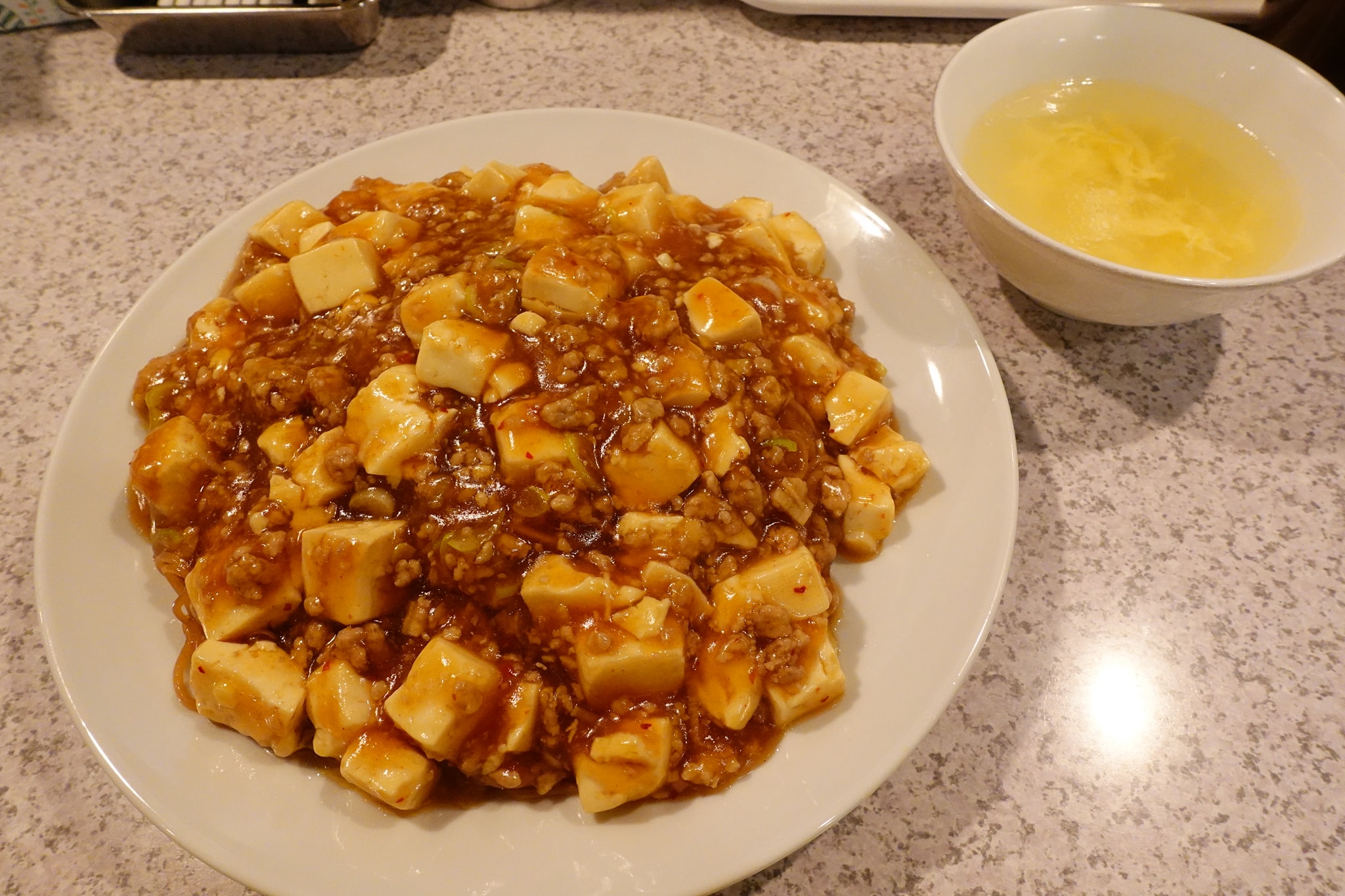
Marbo-yakisoba is said to have its roots in a dish served to Staff/staff members in the 1970s at a Chinese restaurant in Sendai called "Chugakukan Manmi. The dish is characterized by savory baked Chinese noodles topped with a thick layer of bean-curd soup to cover the noodles.
Nevertheless, marbo-yakisoba was neither a Sendai specialty nor soul food, and was a maniacal menu item that was rarely ordered. The turning point came in 2013, when it was featured on the TV program "The Secret Kenmin Show," which led to a flood of inquiries from Chinese restaurants throughout Sendai.
The union made up of Chinese restaurants in Sendai held a meeting and in May 2013, the "Sendai Marbo-Yakisoba Promotion Committee" was formed. The committee decided to promote Sendai Marbo-yakisoba as a "new specialty" of Sendai.
Three conditions for Sendai Marbo-yakisoba were established.
1. Use bean curd and do not limit the ingredients to tofu.
2. The noodles must be baked or deep-fried.
3. be certified by the Miyagi Prefecture Chinese Food and Beverage Industry Association.
There are currently about 50 restaurants in Sendai that meet these three requirements and serve Marbo-yakisoba. In this issue, we will introduce three stores that are easy to Direction from Sendai Station.
1. elegant and spicy. Adult Marbo-yakisoba "Kuchifuku Kichijo Shilong
The first restaurant is "Kuchifuku Kichijo Kikiryong" (Kuchifuku Auspiciousness Kilong).
It is located on the first floor of Parco, a one-minute walk from the west exit of Sendai Station. The stylish space and authentic Chinese cuisine are appealing, and the restaurant is run by two brothers: the head chef, who honed his skills at a hotel Restaurant in Tokyo, and his younger brother, who works as a bartender. The restaurant also has a bar counter.
An oversized poster of "Szechuan Bean Curd" hangs on the display in the storefront, which already heightens one's anticipation.
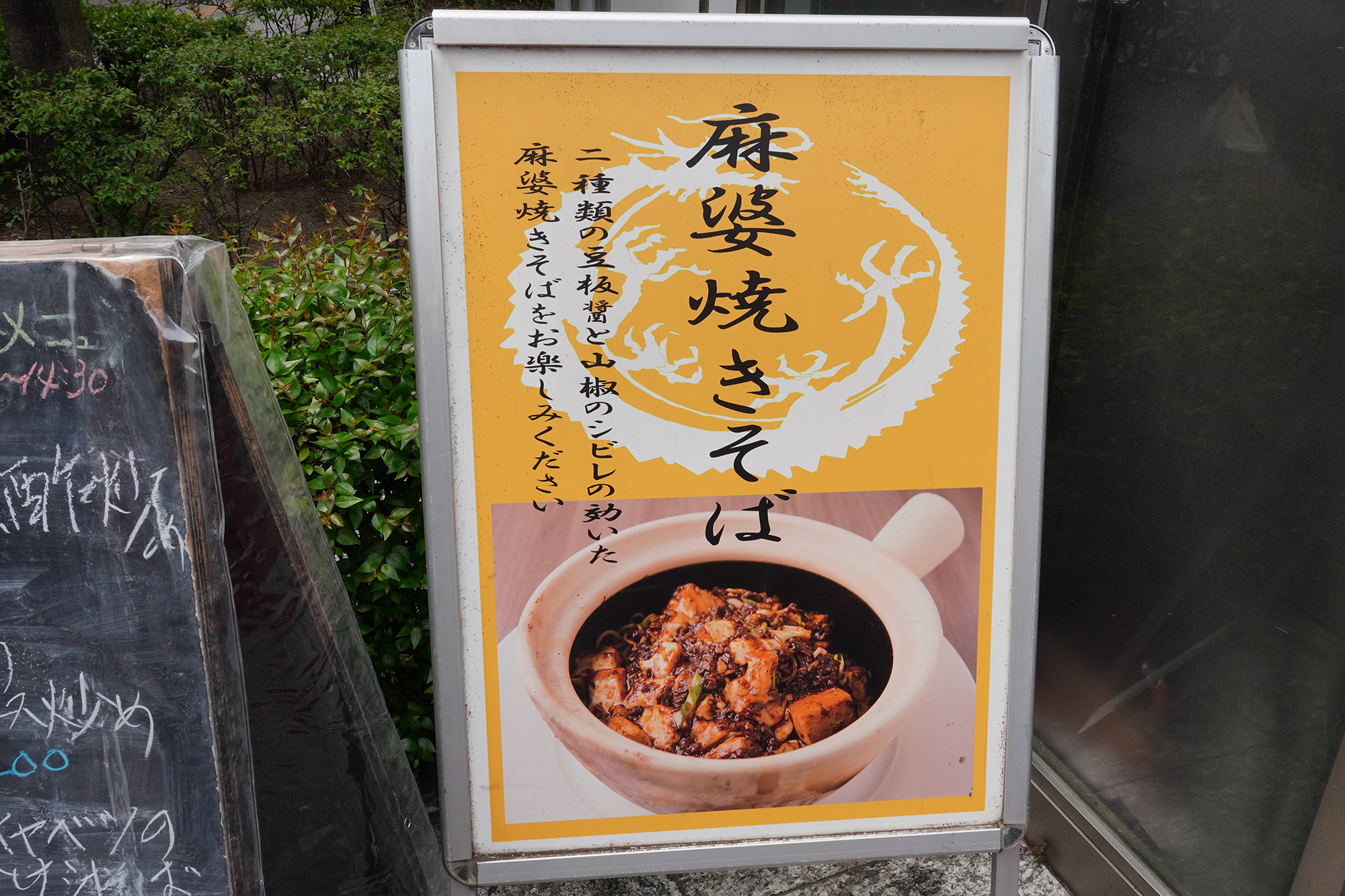
Next to the poster is a sign for the "Szechuan Bean Paste Fried Noodles.
The sign reads, "Two kinds of soy bean sauce and sansho pepper sibilance in this hot bean-paste fried noodle. The mixing of the two kinds of soy bean sauce is quite an attention to detail.
Let's enter the restaurant.
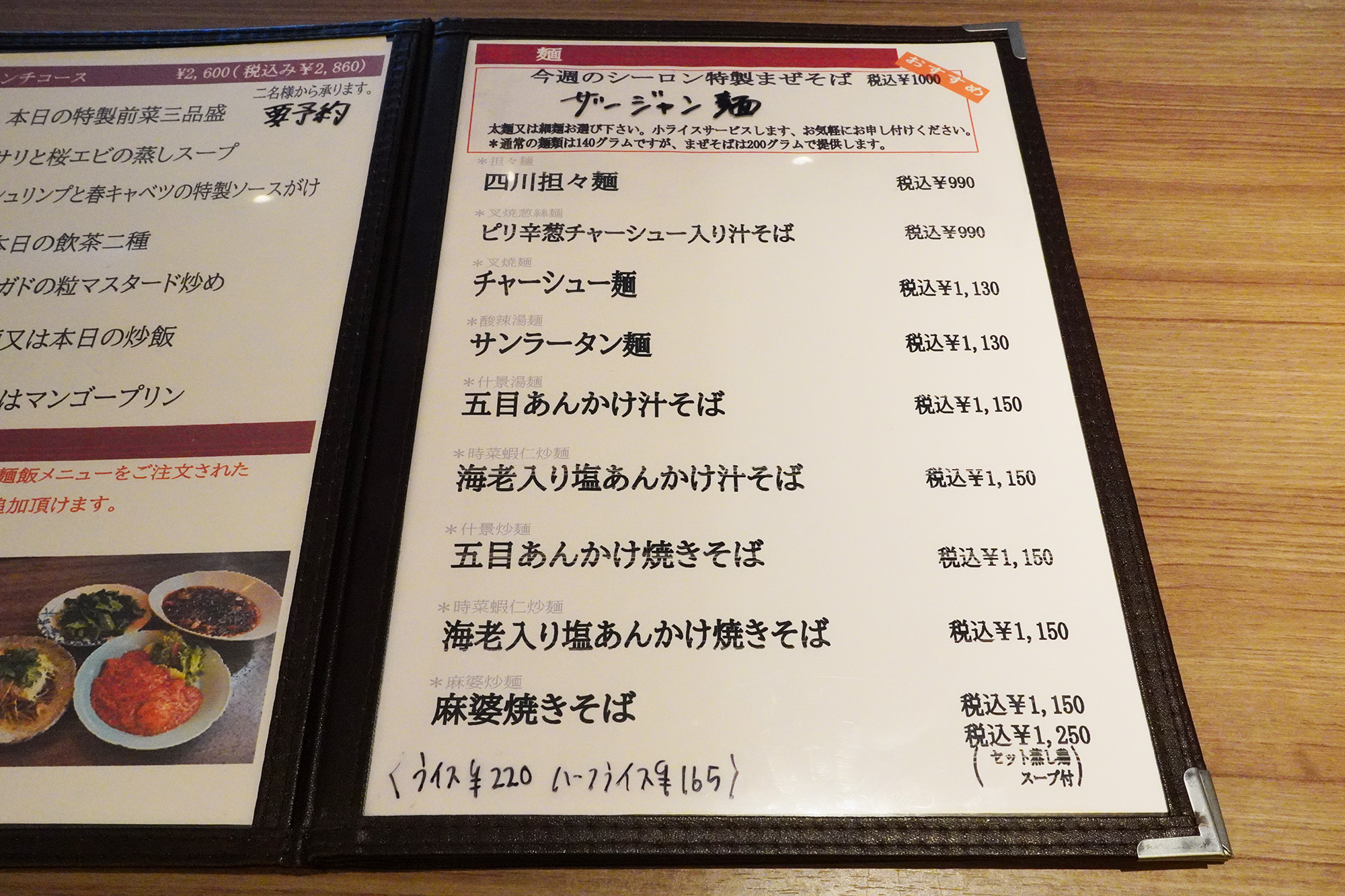
Oh, there is the "Mapo Fried Noodle"!
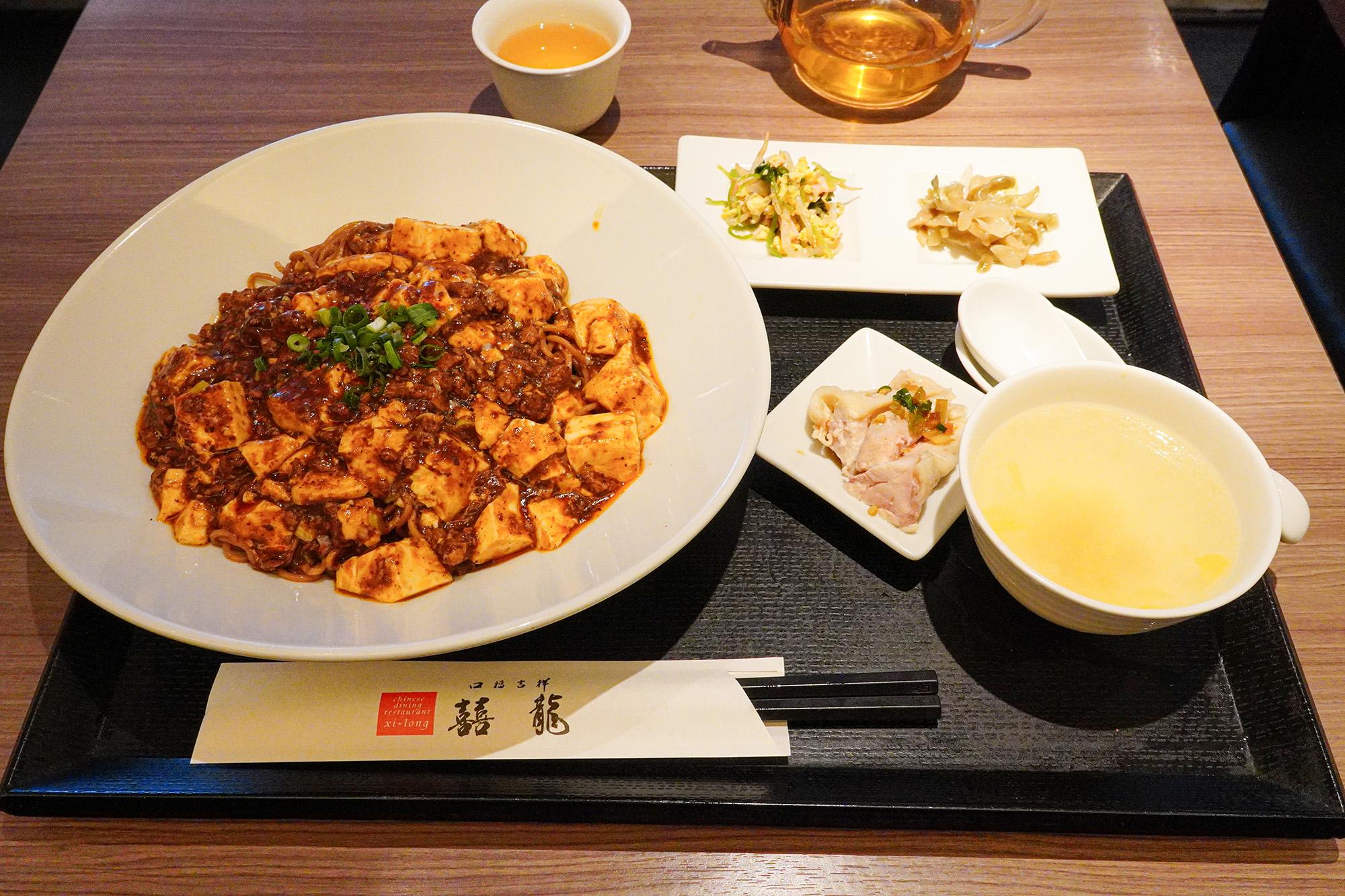
Let's order it with steamed chicken and soup as a set.
The fried noodle with hot red pepper paste was brought to the table, and it was fragrant with the aroma of pepper.
I decided to start with the steamed chicken with cold vegetables and soup that came with the set.
The steamed chicken was tender, and the delicious taste of chicken fluttered in my mouth. I felt it was just the right accompaniment before going on to the main dish of fried noodles with hot bean paste.
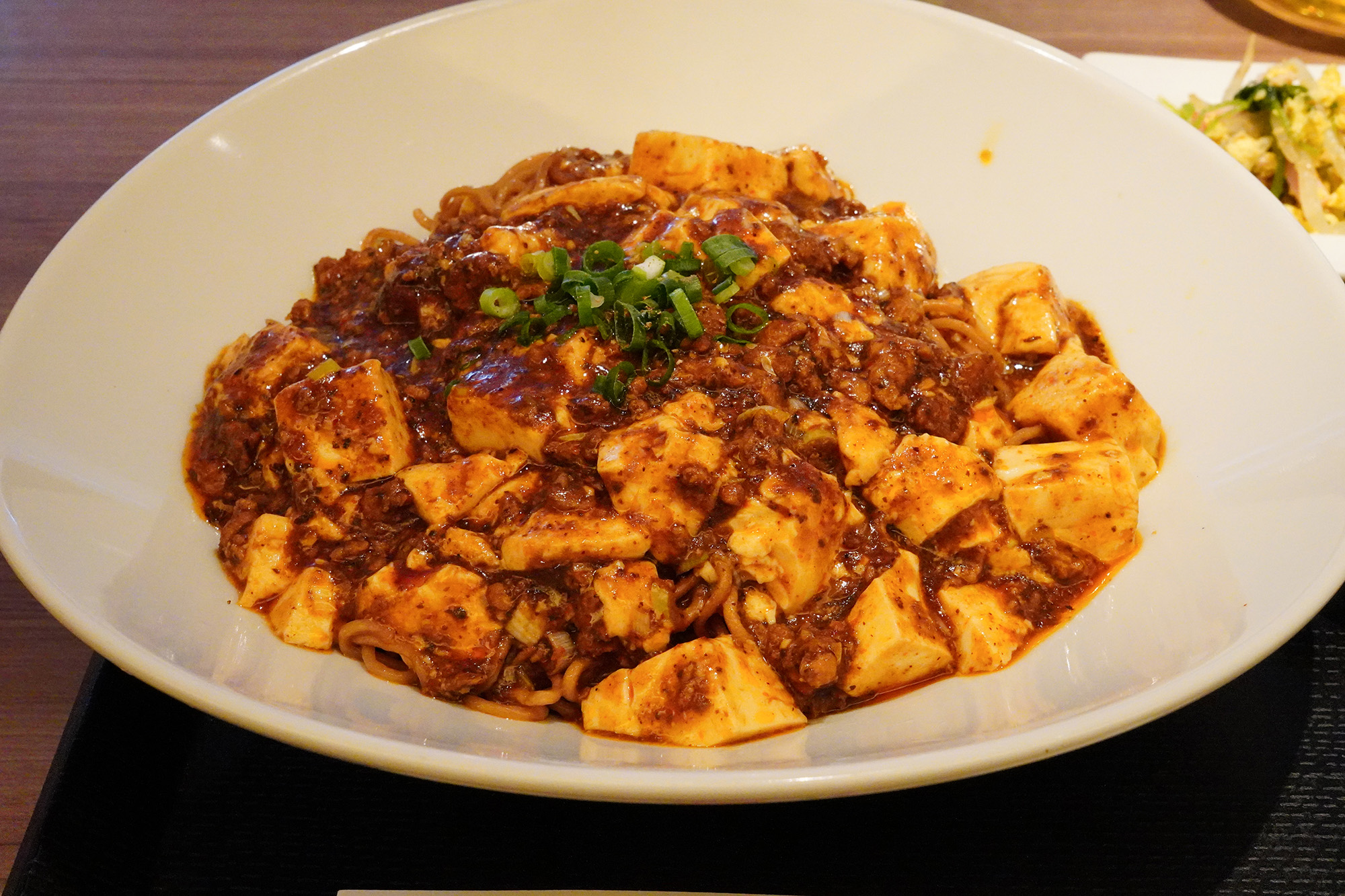
This is the Marbo-yakisoba of Jiryu, but it is hard to tell at first glance that there is a yakisoba hidden underneath.
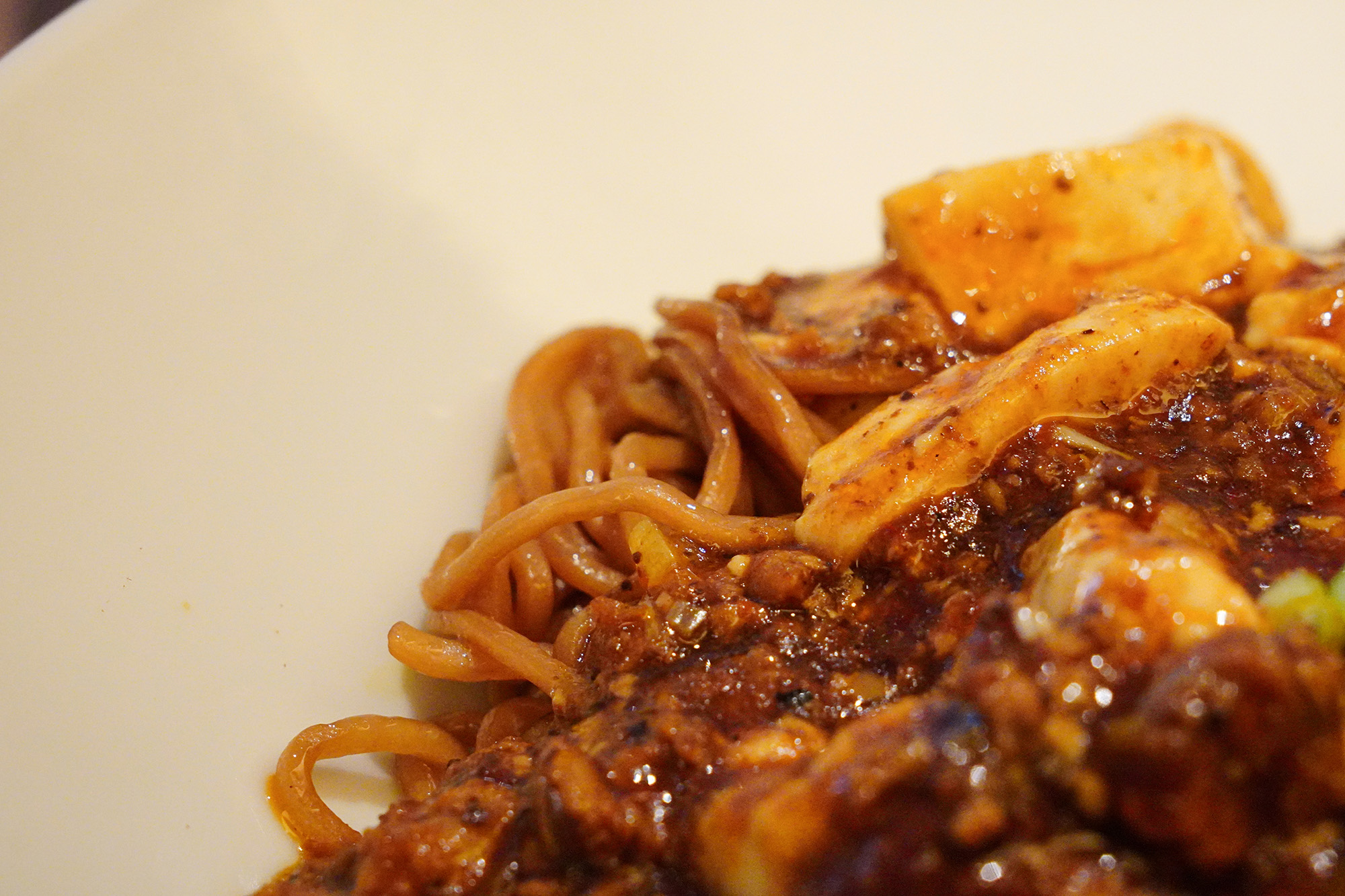
I thought it was bean-curd soup with hot spicy sauce, but upon closer inspection, I found that there was a firm "yakisoba" at the bottom of the plate.
The yakisoba showing a little bit at the edge of the plate is a true chirality. Yes, what you are about to eat is not just bean curd tofu.
But how on earth do you eat this devilish combination of bean curd and yakisoba, which you do not usually eat?
First, take a bite of the bean curd with a bamboo stick. Next, take a bite of the yakisoba with chopsticks. It seems quite busy, but I try to directly enjoy the individuality of the mapo tofu and yakisoba.
Then, after you have eaten to some extent, mix them together. Eating both the bean curd and the yakisoba at the same time, this may be the best part of the Marbo-Yakisoba.
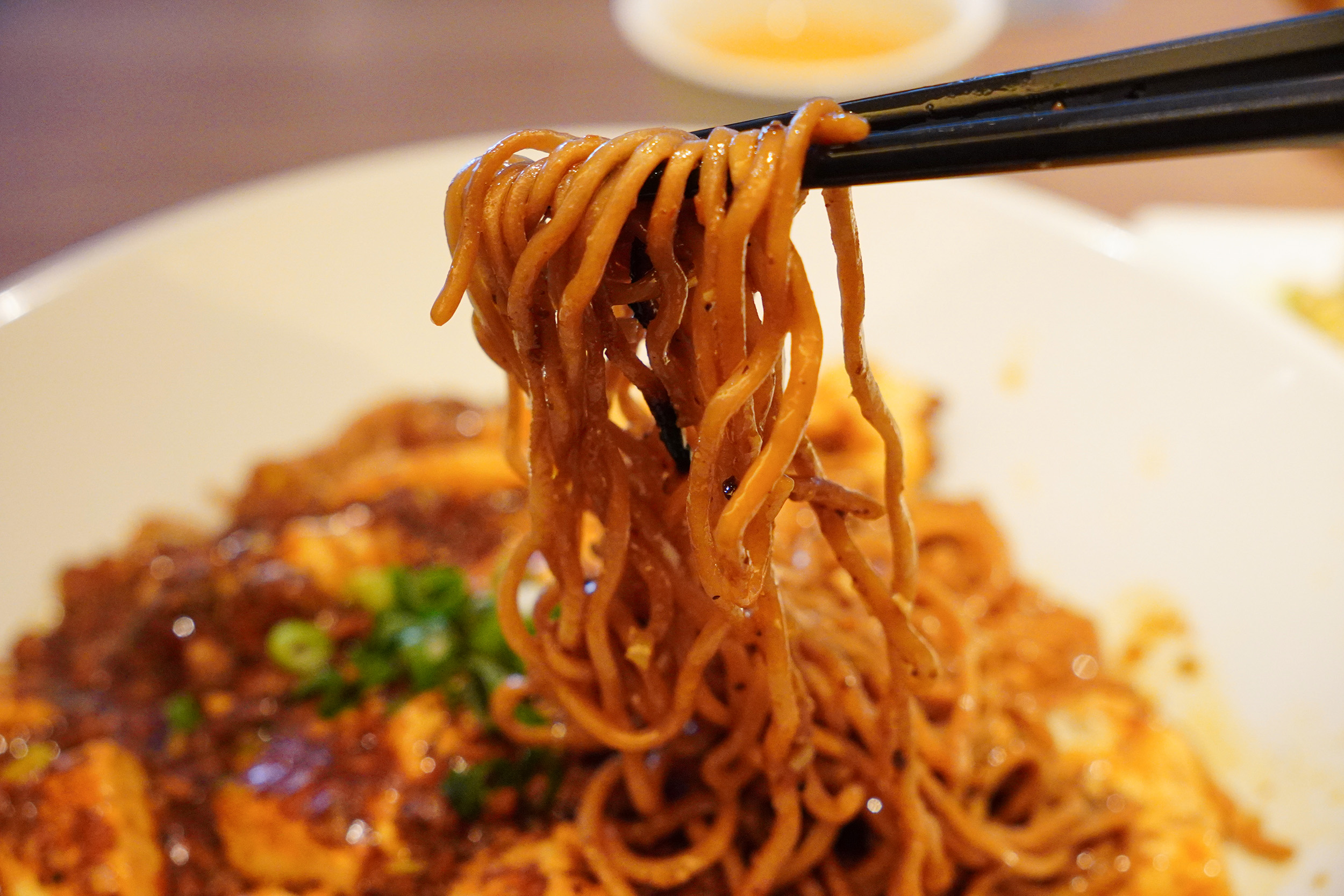
The bean curd is a genuine Szechuan style, with a strong huajiao-style kick, but it is seasoned in a mature way so that you can enjoy the flavor and aroma without going for the spiciness blindly.
The tofu is soft, but the presence of the minced meat is very satisfying. The more you bite into the minced meat, the more you can taste the flavor, and the wilder it gets, the better.
The noodles that go with this dish are thin and have a firmness and firmness as if they have been cooked hard. The noodles are not oily and have a dry texture, but they have a strong presence that does not lose out to the strong richness of the mapo tofu.
Michikusa Gurus
The combination of authentic Sichuan-style bean curd and chewy noodles is truly an adult's Marbo-Yaki Soba. The taste will betray you in a good way, and we hope you will try it.
- Kuchifuku Kisyo Shilong
-
 1-2-3 Chuo, Aoba-ku, Sendai City, Miyagi Prefecture MAP
 11:30-14:30, 17:30-22:00 (17:30-21:30 on weekends and holidays)
A battle between spiciness and deliciousness! The spicy, authentic "Ming Pang Ting" at Zhong Jia Ya Restaurant. 3.
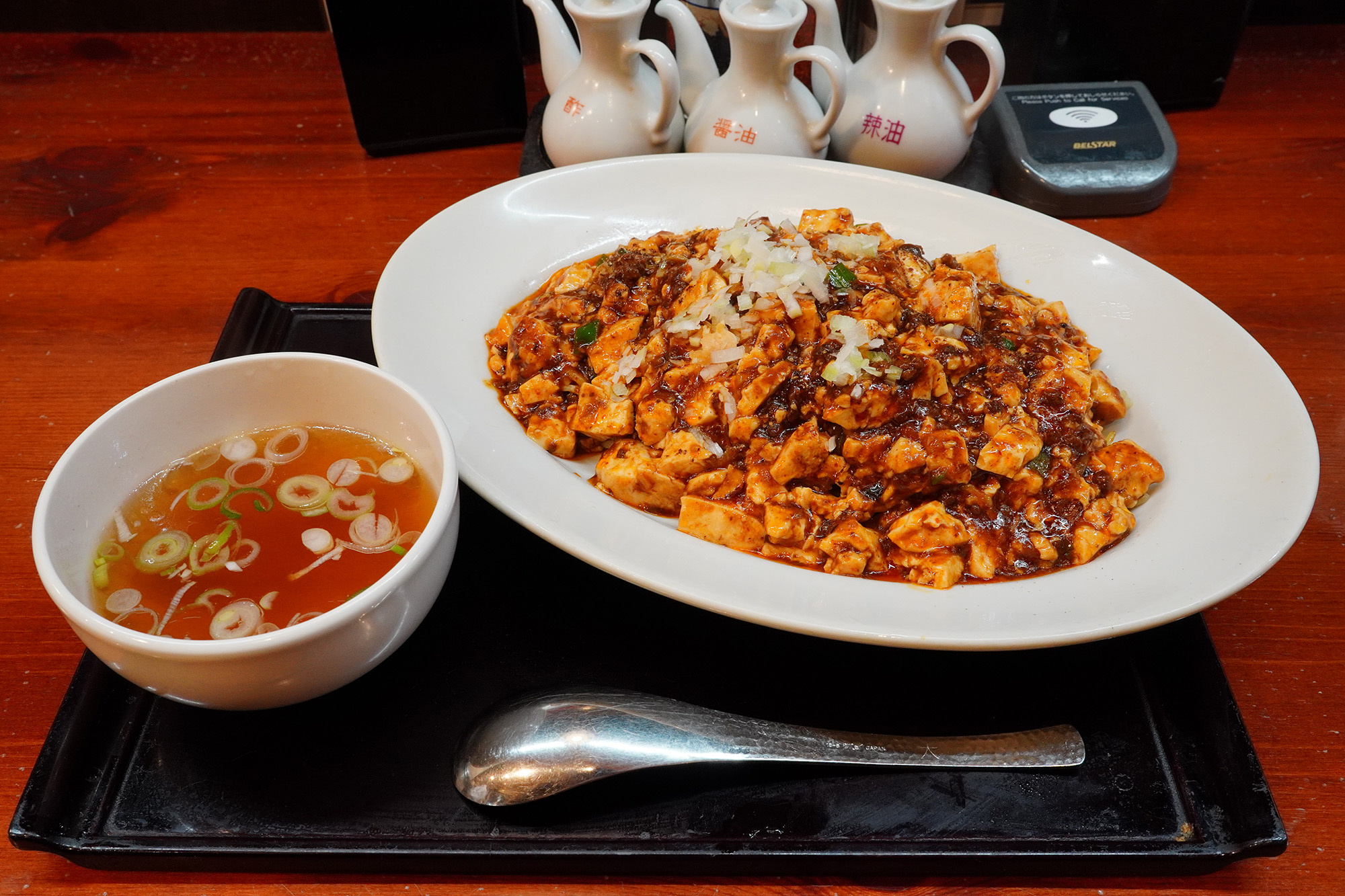
The second restaurant is a Chinese restaurant located in the Sendai Station eki-naka, called Chukaya Shokudo Mian Panting ( Mian Mian Tian Bean Sprouts). It is open from 11:00 to 22:30 throughout the day. It is nice that they are open until late at night.
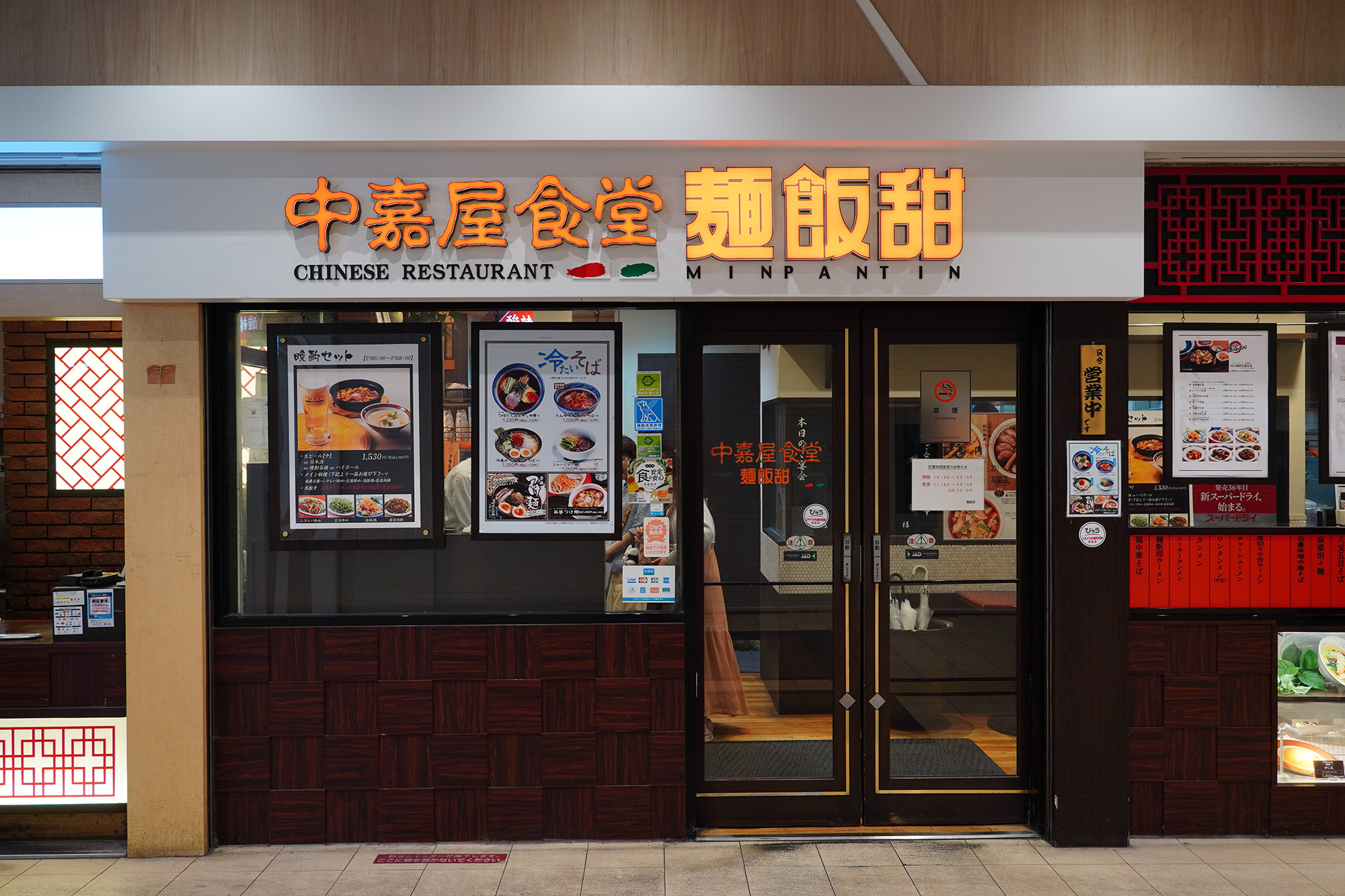
On the first floor of Sendai Station, where many people come and go, the aroma of delicious Chinese food wafts through the air. You will be tempted to stop by.
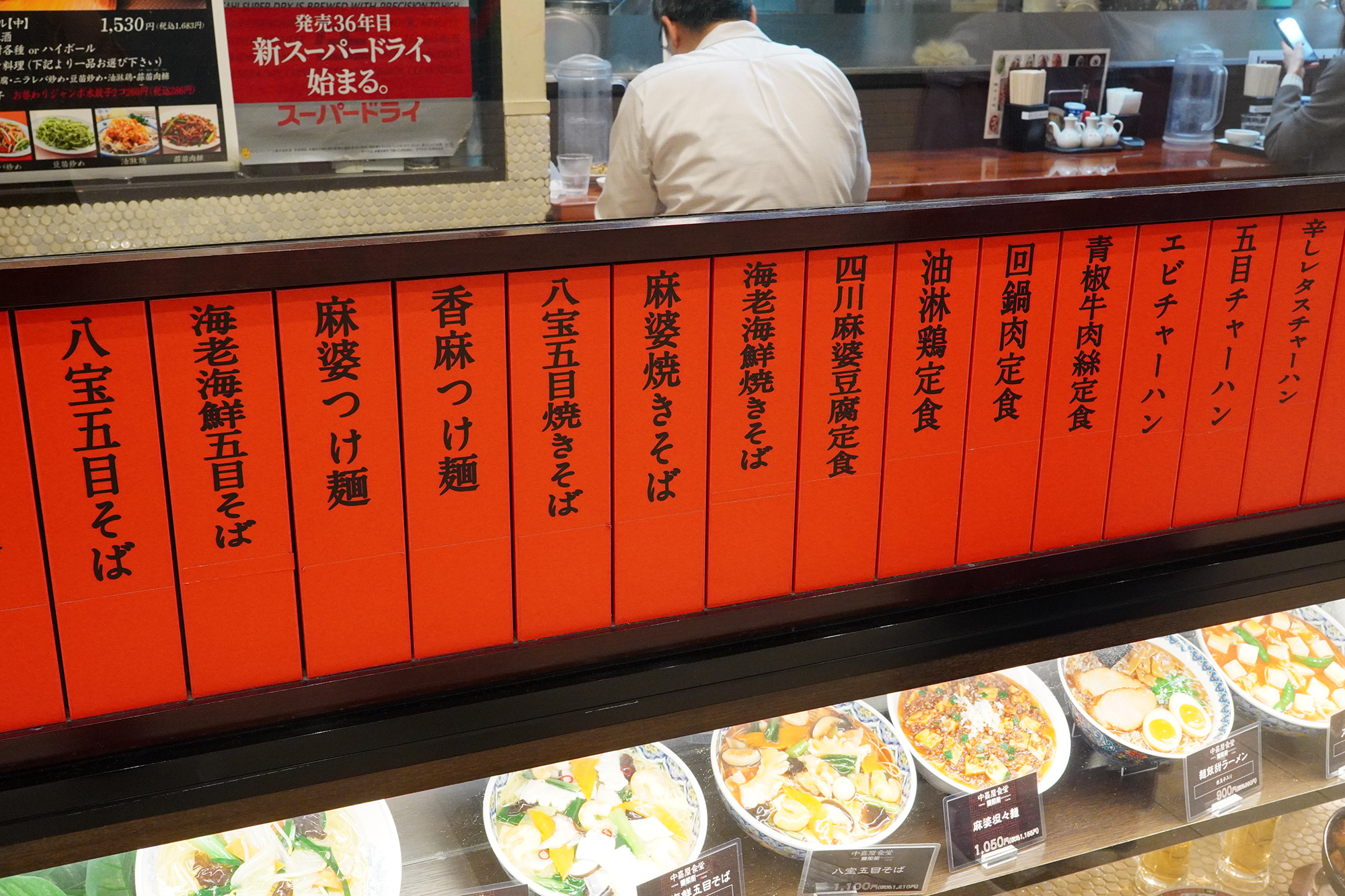
Many menu items are lined up on the wall. There is also "Mapo Yakisoba" (fried noodles with bean paste)!
So, let's enter the restaurant and order the "Mapo Yakisoba"!
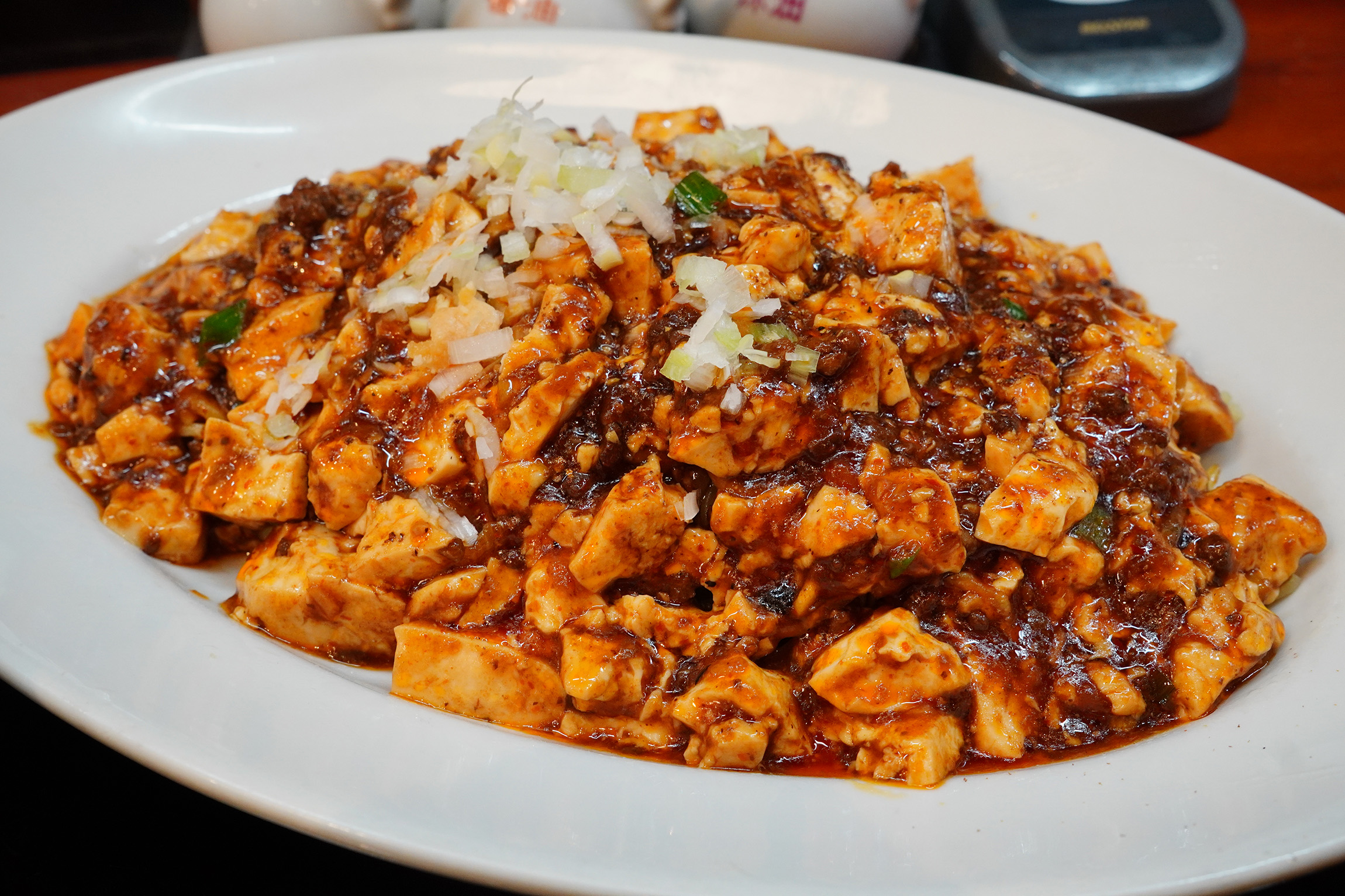
After a while, the fried noodle with bean paste was served. What a delight, it comes with soup!
A large plate of fried noodles with hot spicy bean paste is served. It is hard to tell, but it is tall, and I have a feeling that this alone will definitely fill you up.
The deep red raayu shines dully like a Szechuan style, and the pyramid of minced meat and tofu is truly a work of art.
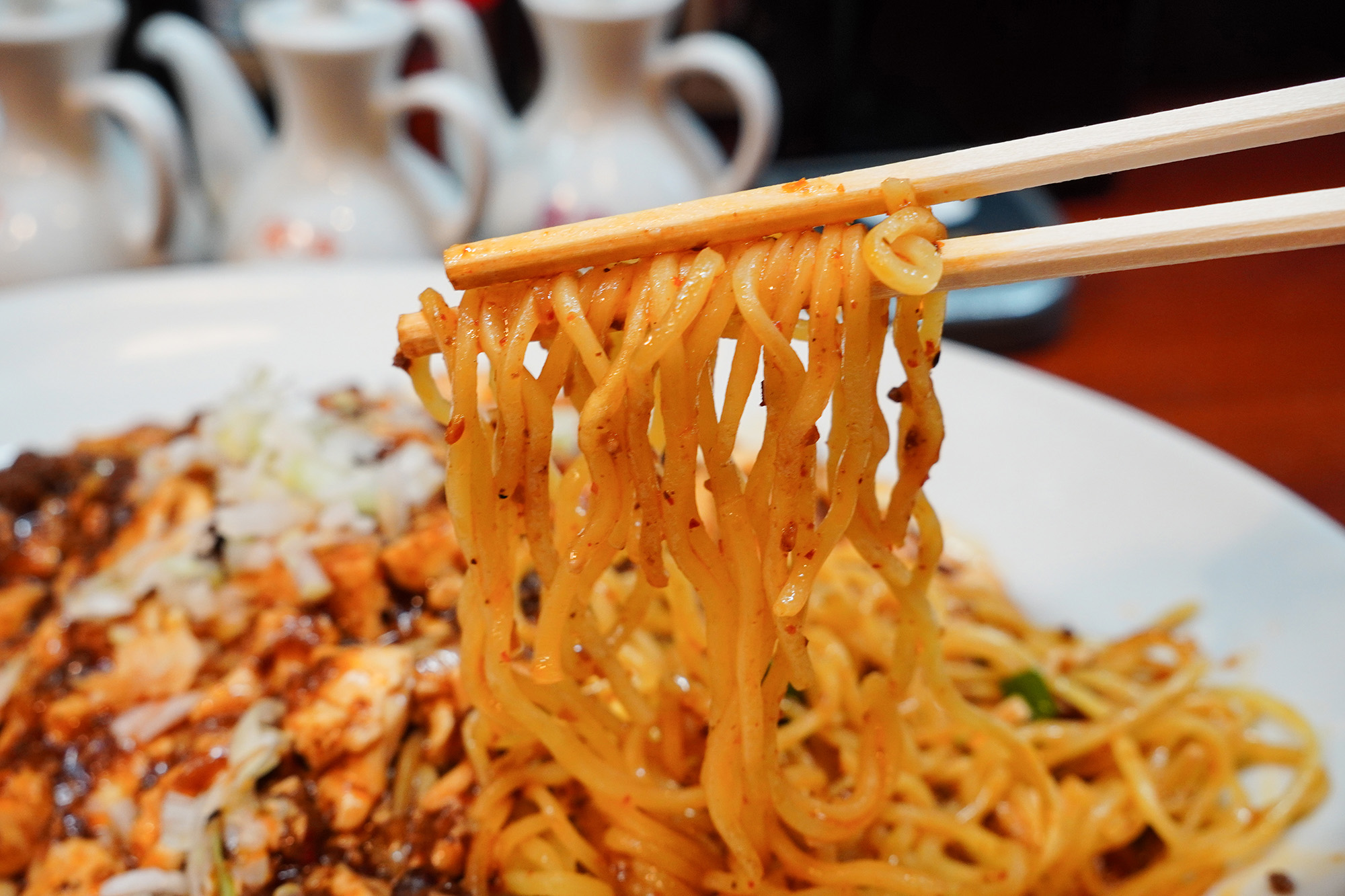
The bean curd is as hot and spicy as the menu describes it to be. The spiciness from the chili peppers seems to outweigh the sizzle of the huajia pepper.
The tofu is made of cotton, and the texture of the minced meat is excellent. The texture is similar to that of authentic Szechuan bean curd.
The noodles have a slightly chewy texture, but there are some "burnt" bits on the surface. This definitely adds to the noodle's fried noodle feel. These noodles intertwine well with the bean-paste and raayu (Chinese chili oil) of the bean-paste tofu, and the hot-and-sour taste can be enjoyed even if you eat only the noodles.
It is also nice to mix the noodles with the hot bean curd. The spicy flavor of the bean curd and the flour of the noodles intertwined to create a taste somewhat reminiscent of soupless dairy noodle soup.
Michikusa Gurus
We are more than happy that you can enjoy this kind of authentic Marbo-yakisoba on the first floor of Sendai Station. It is a very hearty dish anyway, so please make sure to go there with an empty stomach!
- Zhong Jia Ya Shokudo Mian Pan Ting Sendai Station Branch
-
- Sendai Station 1F, 1-1-1 Chuo, Aoba-ku, Sendai City, Miyagi Prefecture MAP
- 11:00-22:30 (L.O.22:00)
3. nostalgic taste of street Chinese cuisine! Taiyouro
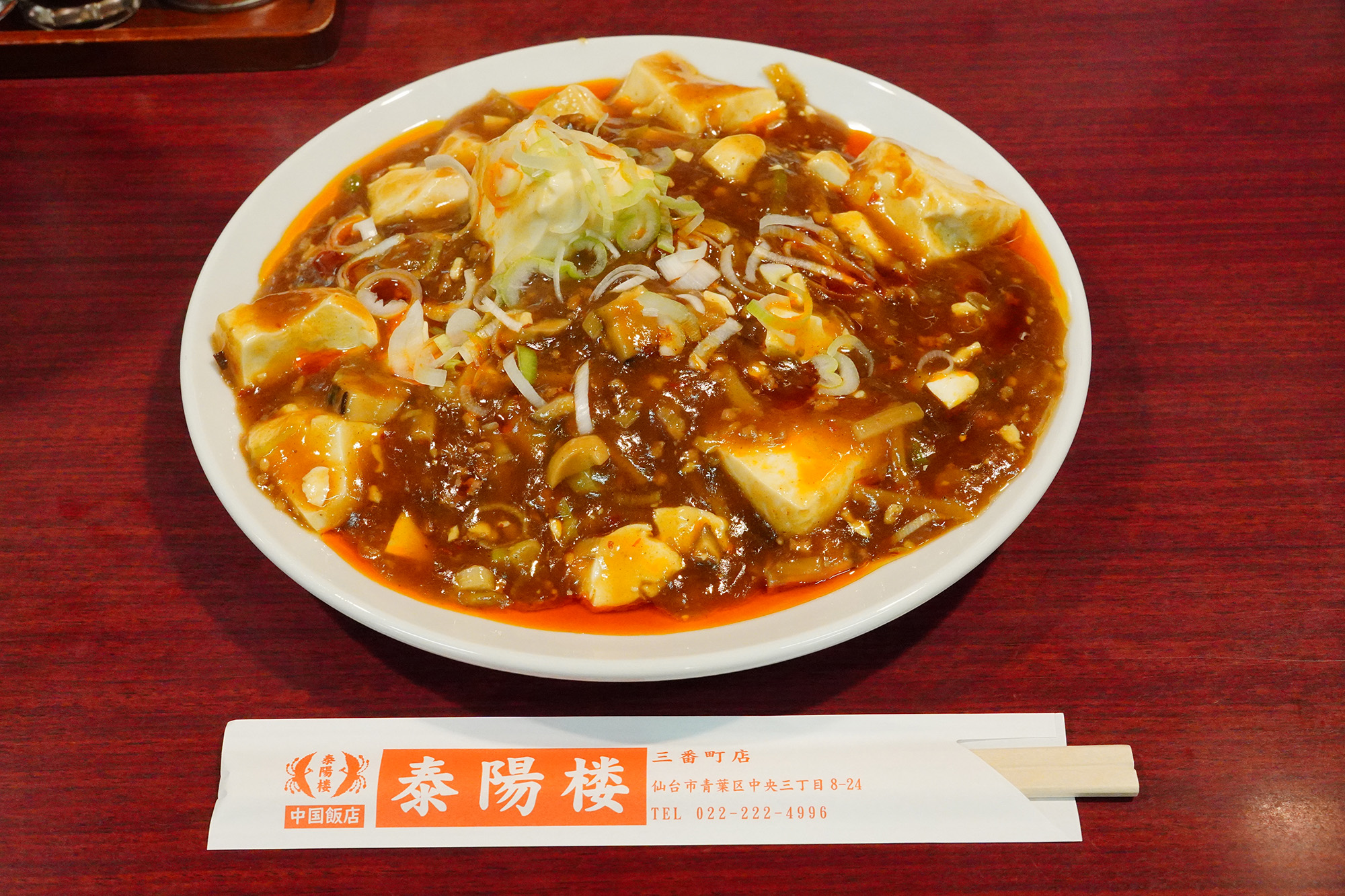
The third restaurant we will visit is Taiyouro, a long-established restaurant founded in 1949 with a familiar flavor.
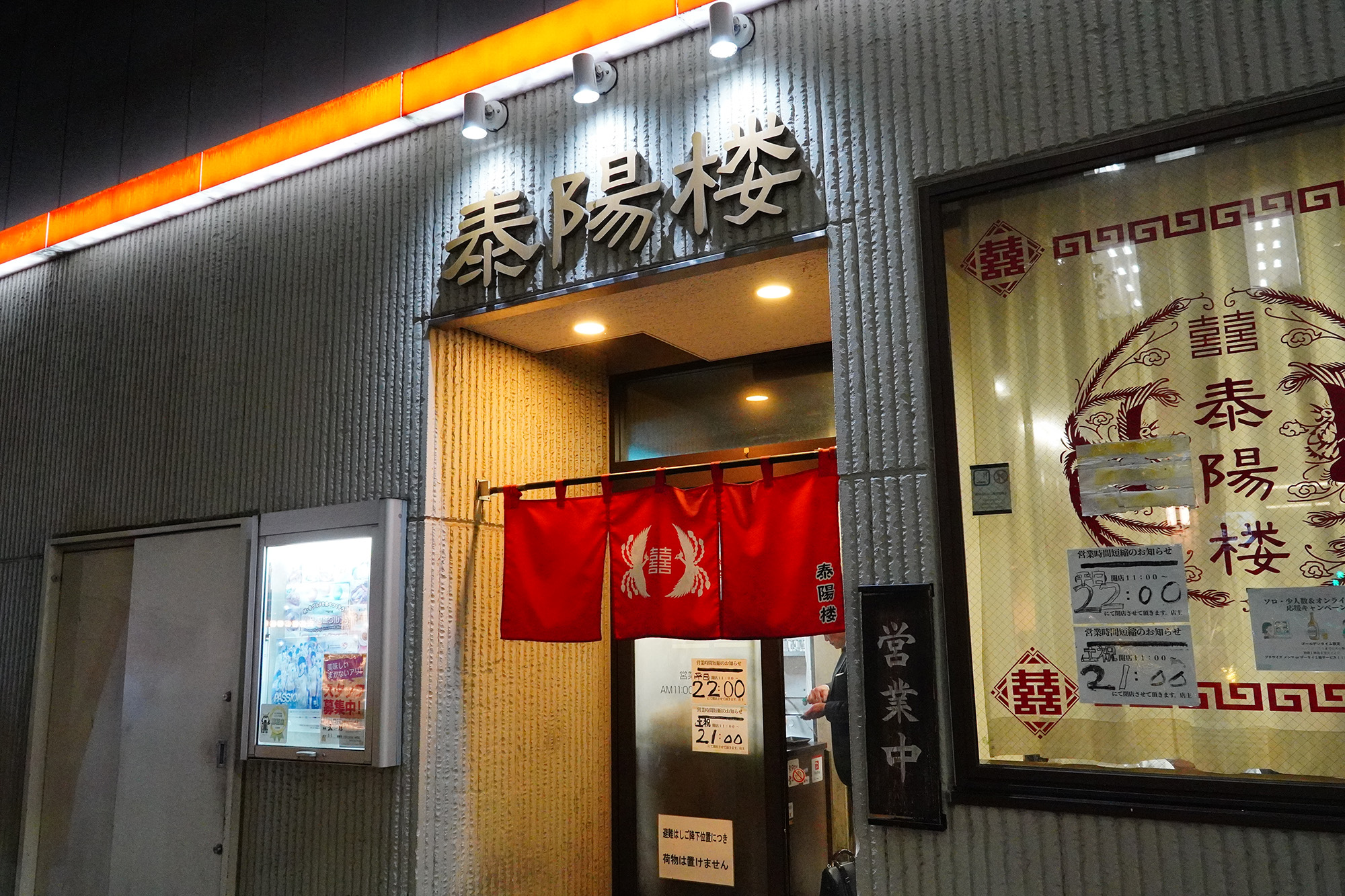
Let's enter the restaurant.
The restaurant was crowded with customers. As is typical in a Chinese townhouse, there were people enjoying a beer in one hand and picking up dumplings in the other.
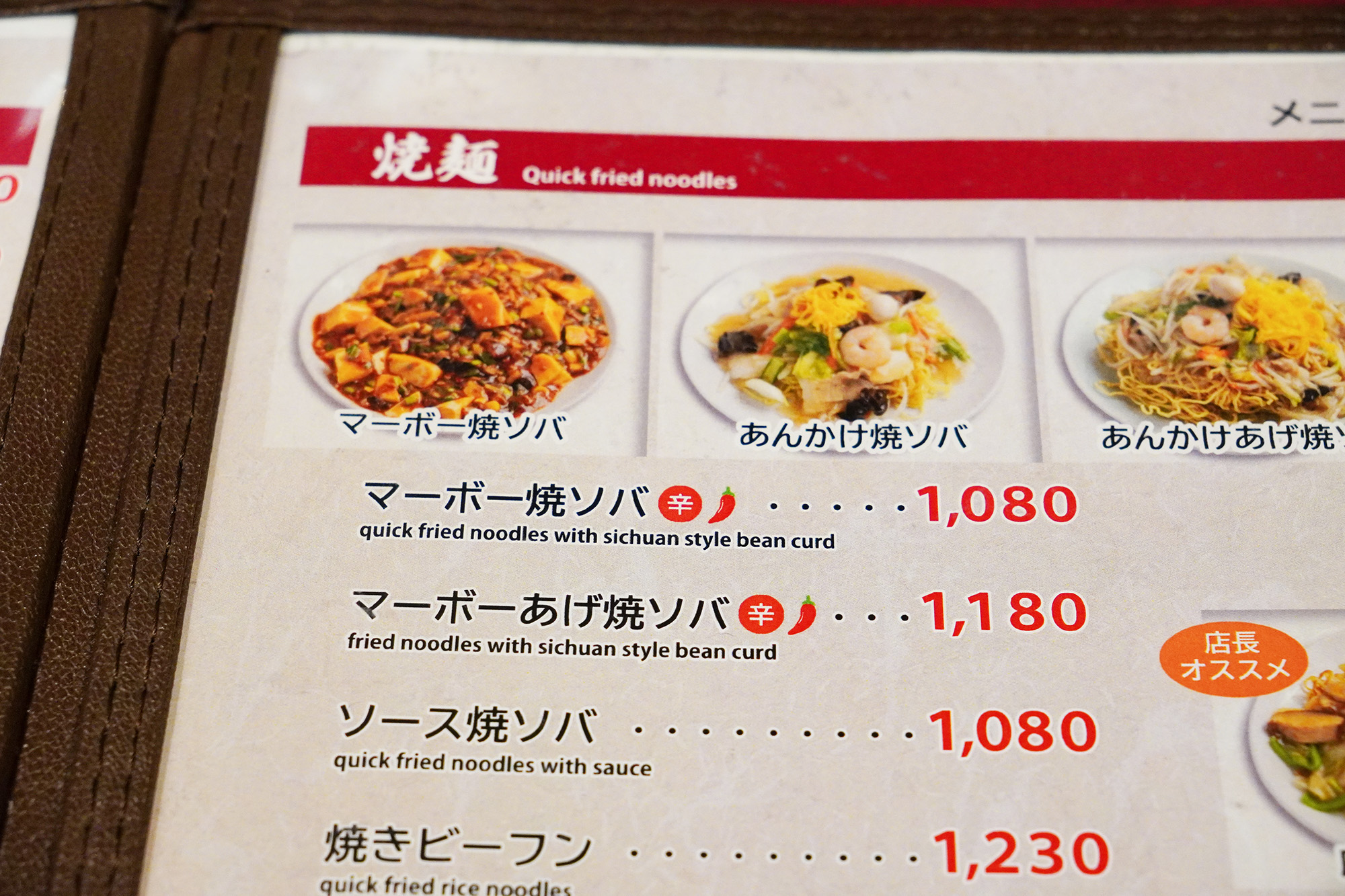
The menu book has a full lineup of familiar Chinese dishes. Among them, there was not only "Marbo-Yaki Soba" but also "Marbo-Age-Yaki Soba".
I was curious about this menu item, as I had not seen it at the other two restaurants, but this time I ordered the "Marbo-yaki Soba".
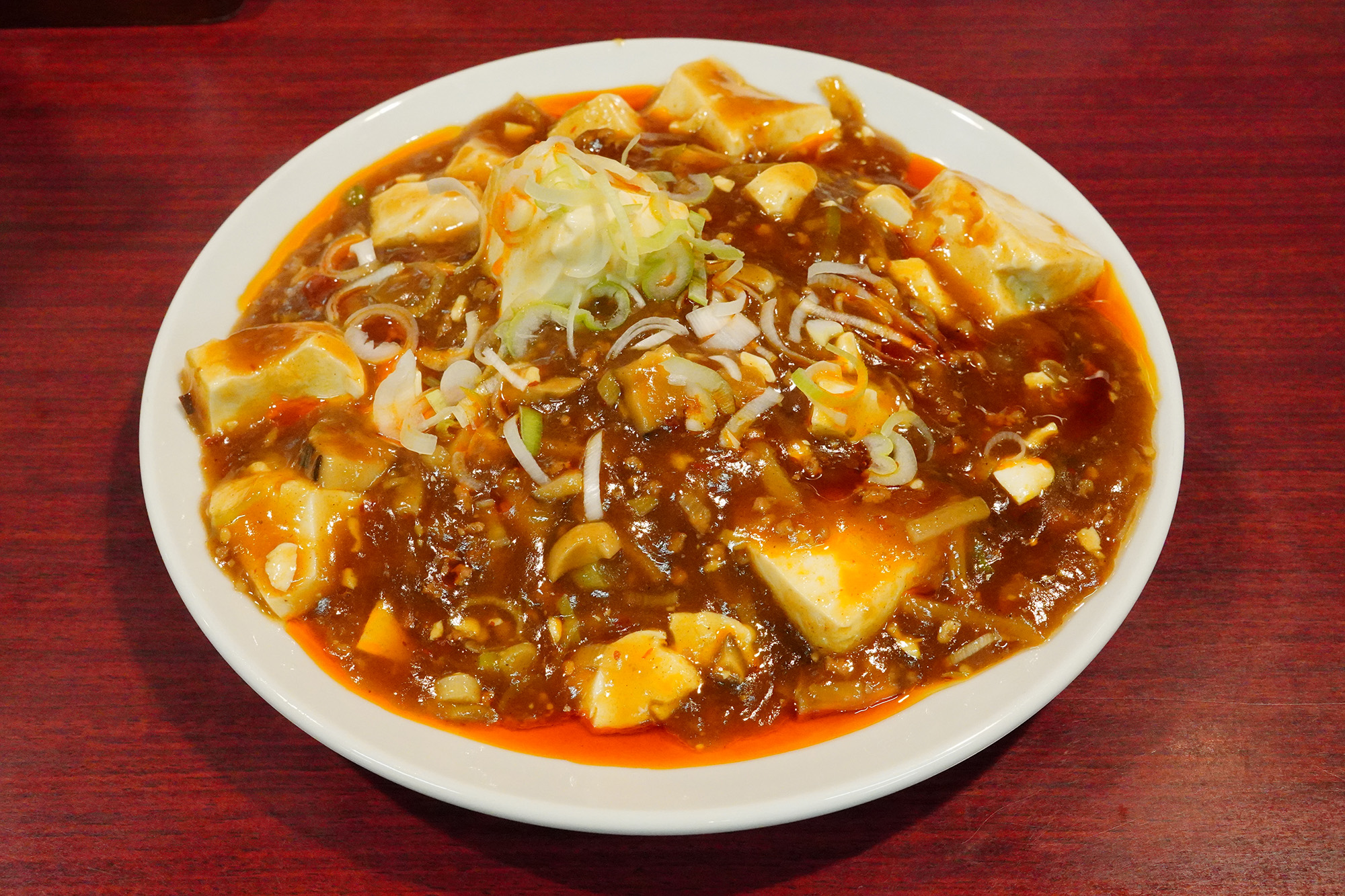
After a short while, the marbo-yaki sobba was brought to me.
Tai Yang Lou's Yaki Soba has a mild and sweet taste, just as it looks. It also has a unique richness within the mildness.
This richness is achieved by the use of Sendai miso. Sendai miso is a dry red miso that has been produced since the time of Lord Date Masamune, the founder of the Sendai clan, and is made from rice malt and soybeans. It is known for its deep richness with just a little used.
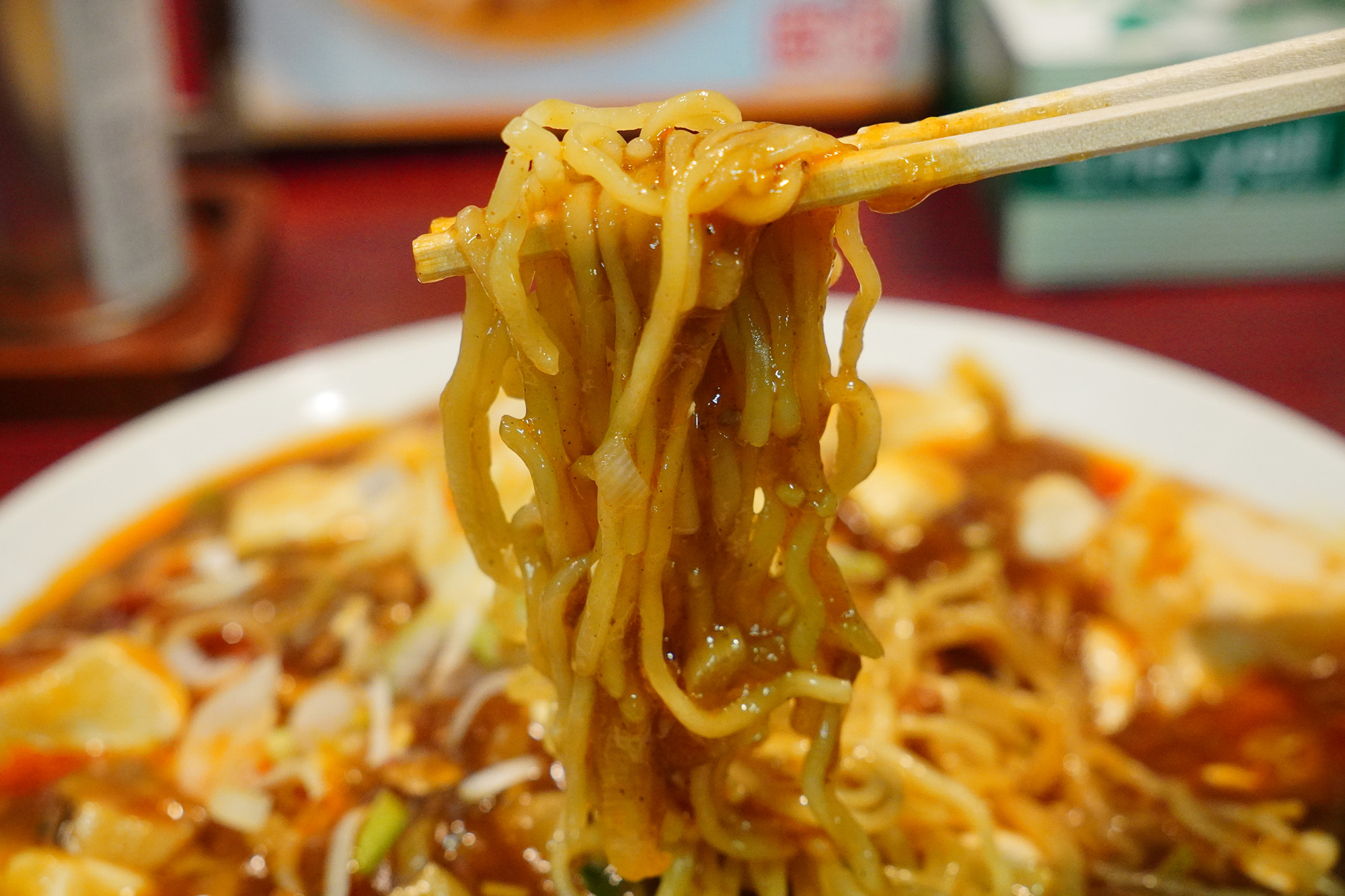
The large tofu is made of silken tofu and is very soft. The noodles intertwined with it are also soft in texture.
The inclusion of shiitake mushrooms as an ingredient is also impressive, in contrast to the Sichuan-style bean curd at the two restaurants above. Tai Yang Lou is popular for its Cantonese dishes with starchy sauce, such as Cantonese noodles and Chinese rice, and the inclusion of shiitake mushrooms in the bean-paste tofu was also very Cantonese.
Of all the fried noodles with bean-poached bean curd and yakisoba we tried, this was the most gentle in flavor, and we felt that the balance of the bean-poached bean curd and yakisoba intertwined with each other was exquisite.
Michikusa Gurus
There was a taste of Chinese food that Japanese people have been familiar with. I felt that the combination of the two dishes, bean-curd soup and yakisoba, was so well done that it even had the presence of a menu item that has been a staple of the restaurant for a long time!
- Taiyouro Higashi Sanbancho
-
- 3-8-24 Chuo, Aoba-ku, Sendai City, Miyagi Prefecture MAP
- 11:00-22:00 (Sat. - 21:00)
 Sunday
Let's go to Sendai and try some "Marbo-yakisoba"!
The following is a summary of the characteristics of the three restaurants.
Kuchifuku Kichijo Kikiryu: Recommended for those who want to enjoy authentic Sichuan cuisine in a quality atmosphere.
Zhong Jia Ya Restaurant Noodle Rice Tian: The spiciness of the chili peppers is the best. The spiciness of the chili is superb, and the volume is also perfect. Recommended for those who want to fill up on spicy fried noodles.
Tai Yang Lou: The taste is familiar, just like in a traditional Chinese townhouse. Recommended for those who value flavor over spiciness.
Originally, this junky dish started as a makana (food served at a Chinese restaurant), but each restaurant has evolved its own unique style, and you will find its depth of flavor when you try it.
In addition to the restaurants introduced here, there are many other Chinese restaurants in Sendai, and most of them serve marbo-yakisoba. Many of them have signs posted on the eaves of their stores saying "Marbo-yakisoba" (fried noodles with marbled sweet bean paste), and I felt that they are trying to promote marbo-yakisoba as a new local delicacy in Sendai.
Sendai is famous for its beef tongue, Zunda rice cakes, chilled Chinese noodles, and Sasa-kamaboko, and may soon add "Marbo-yakisoba" to this list of gourmet delicacies!
We hope you will try eating marbo-yakisoba in the city of Sendai.
About 30 minutes from Sendai, we will go to "Hoshino Resorts KAI Akiu" located in the rich nature of Akiu hot spring.
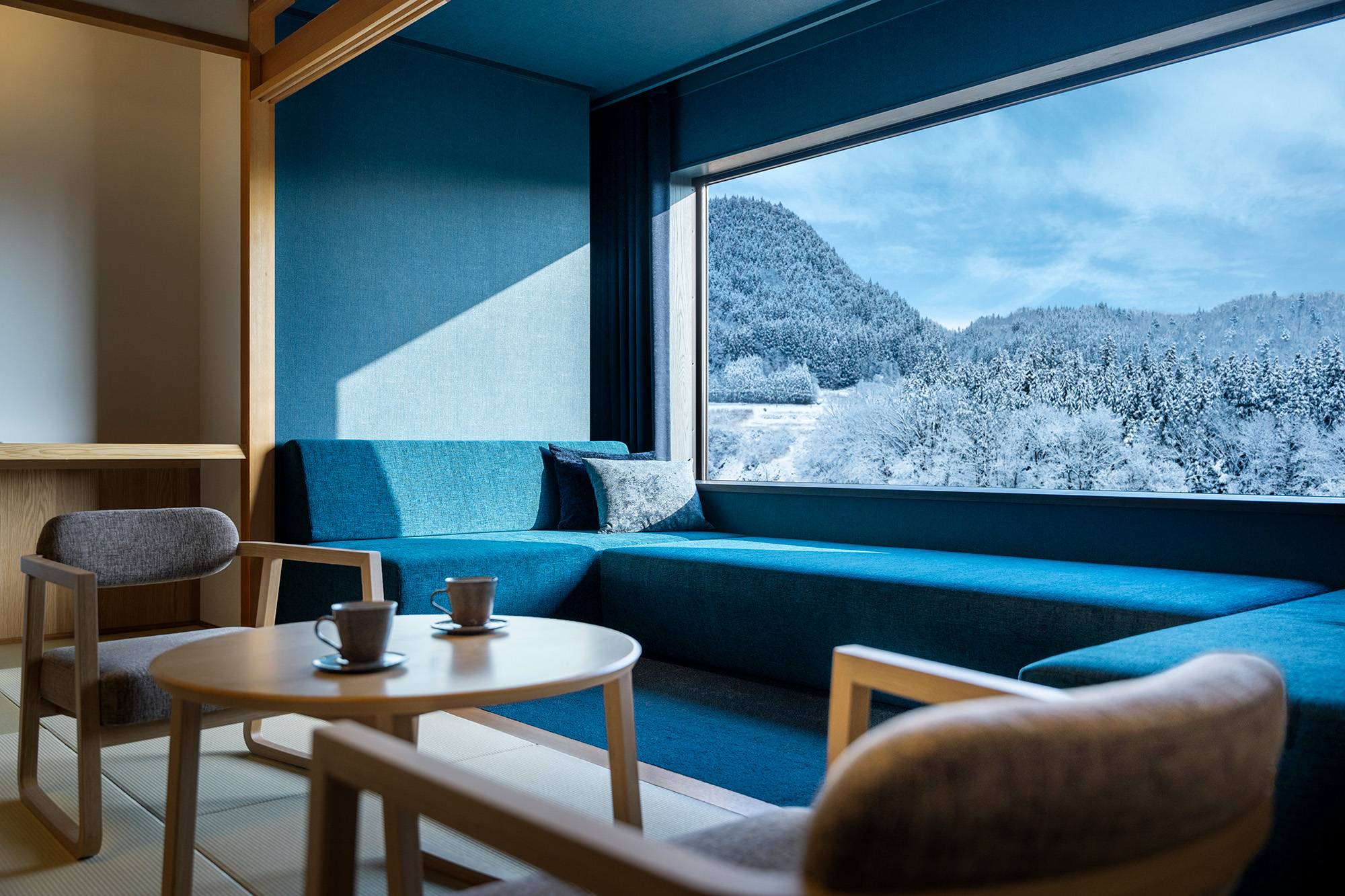
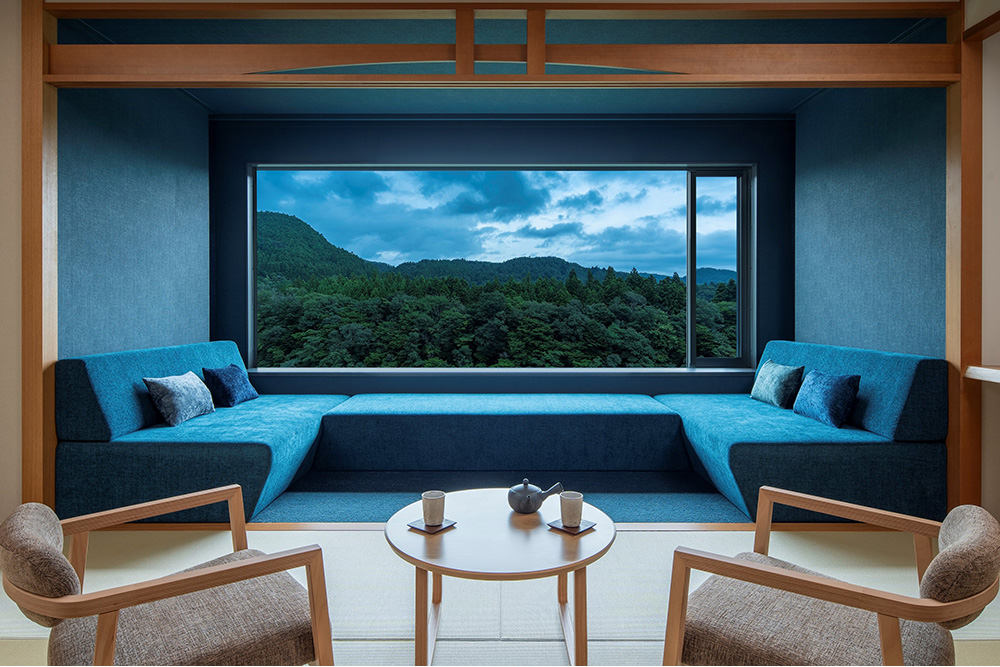
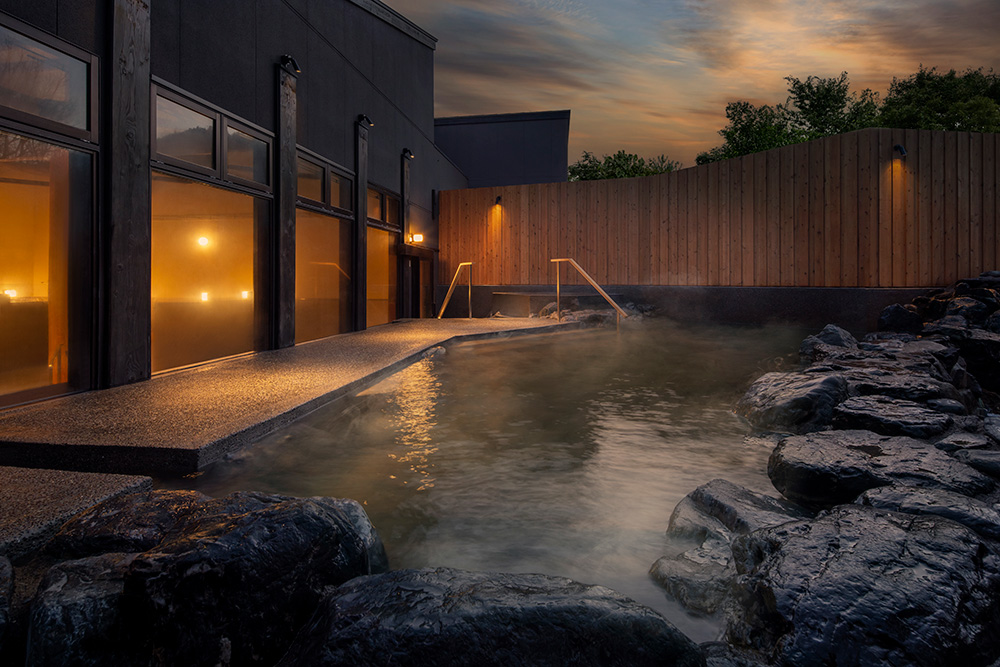
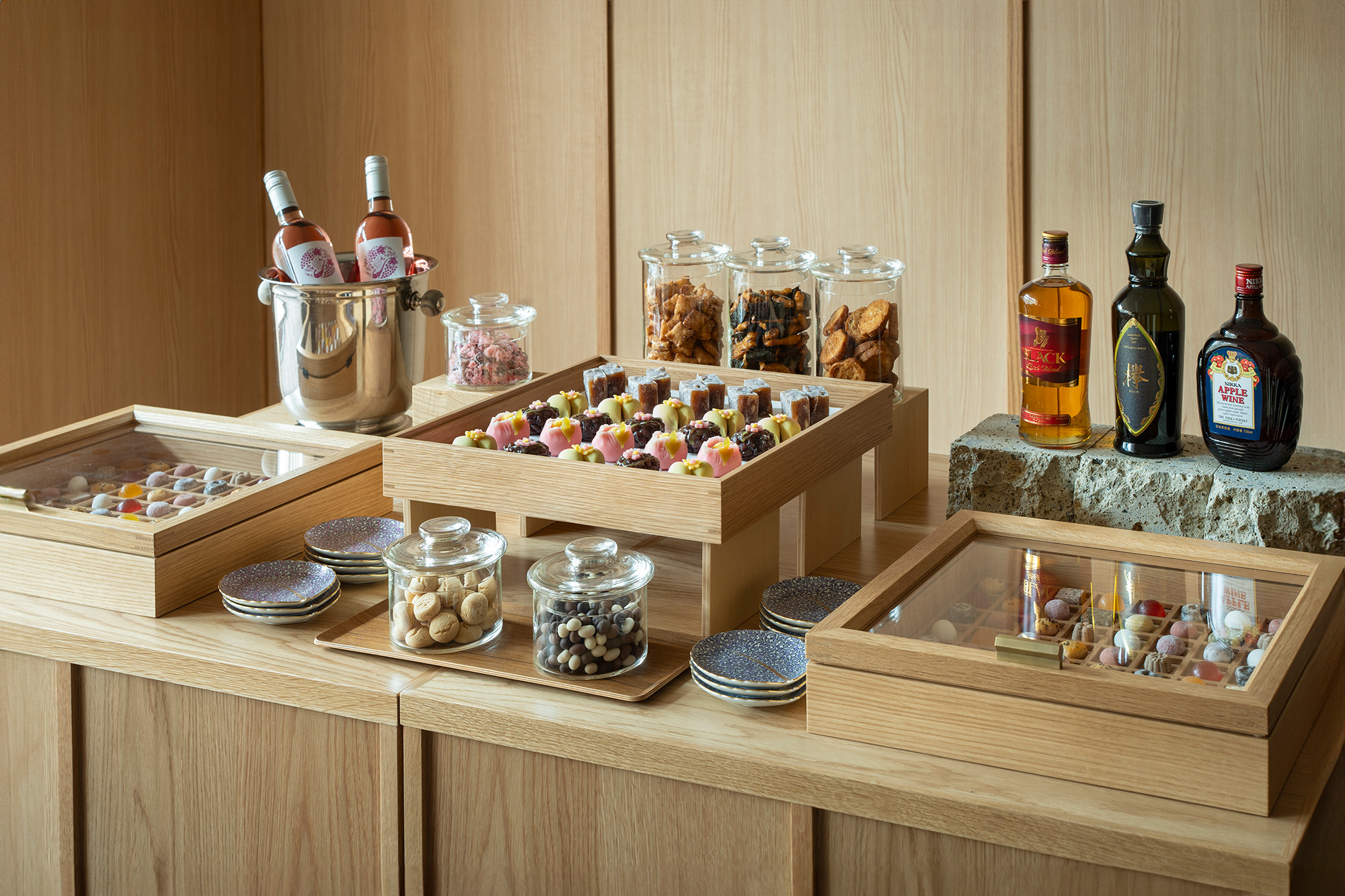
Hot spring ryokan "Hoshino Resorts KAI Akiu" KAI Akiu" is located in Akiu Hot Spring, a famous hot spring in Oshu with a 1400 year history. Guest rooms feature azure-colored broad borders inspired by Leiraikyo, a beautiful valley in Akiu hot spring.
Direction is only about 30 minutes from Sendai, so how about a trip to Sendai to enjoy the local cuisine and relax in the hot spring?

Hoshino Resorts KAI Akiu
Akiu hot spring, Miyagi
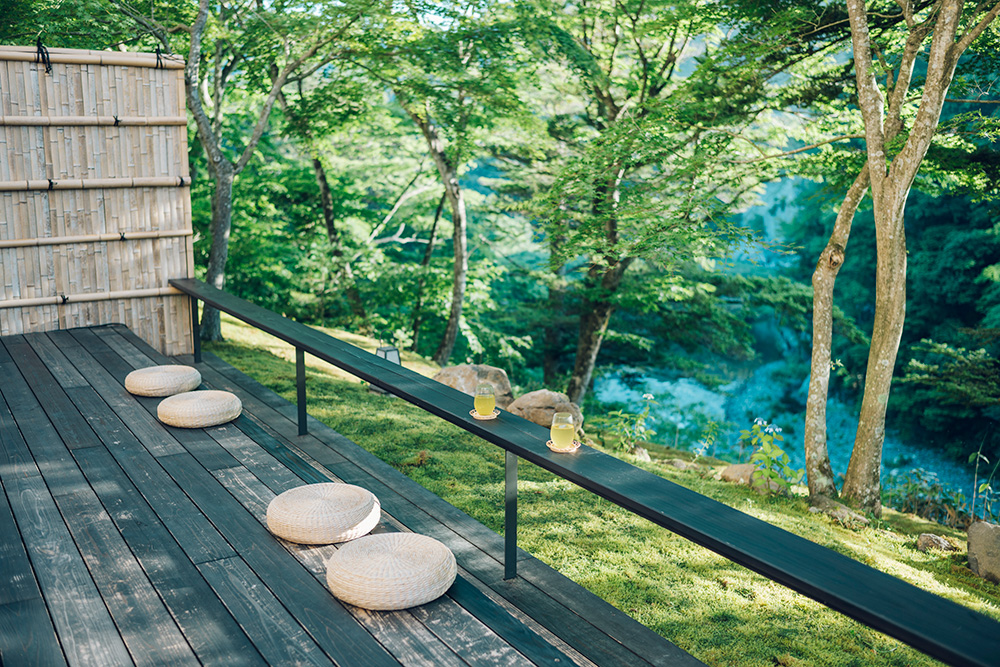
The inn is located in Akiu hot spring, a secluded area of Sendai. All rooms have a view of the beauty of the mountain stream that stands out with the seasons.
Access by bus Take a local bus from JR Sendai Station and get off at "Kai Akiu-mae" bus stop. 1 minute walk from "Hoshino Resorts KAI Akiu-mae" bus stop.
- Example of Accommodation Rates
- 1 person per night From 16,819 yen