





The "10000000000000000 pickles" the climate of Kyoto brought up. 5 elections of noted store which keeps being loved locally

The "pickles" which are the standard capital gift. Good water and the vegetables with the good climate the basin were being brought up and a seasonal dining table was being colored from the old days in Kyoto. "Shibazuke pickles and senmaizuke* are immersed in wearing right now" this time, the noted store of pickles where I deal with history of Kyoto and one piece in which a season is reflected vividly is introduced including Kyoto3 big pickles.
1kokorozashi, when, Hisashi.
With history in 800. The "Shibazuke pickles" Ohara's village people protected and succeeded
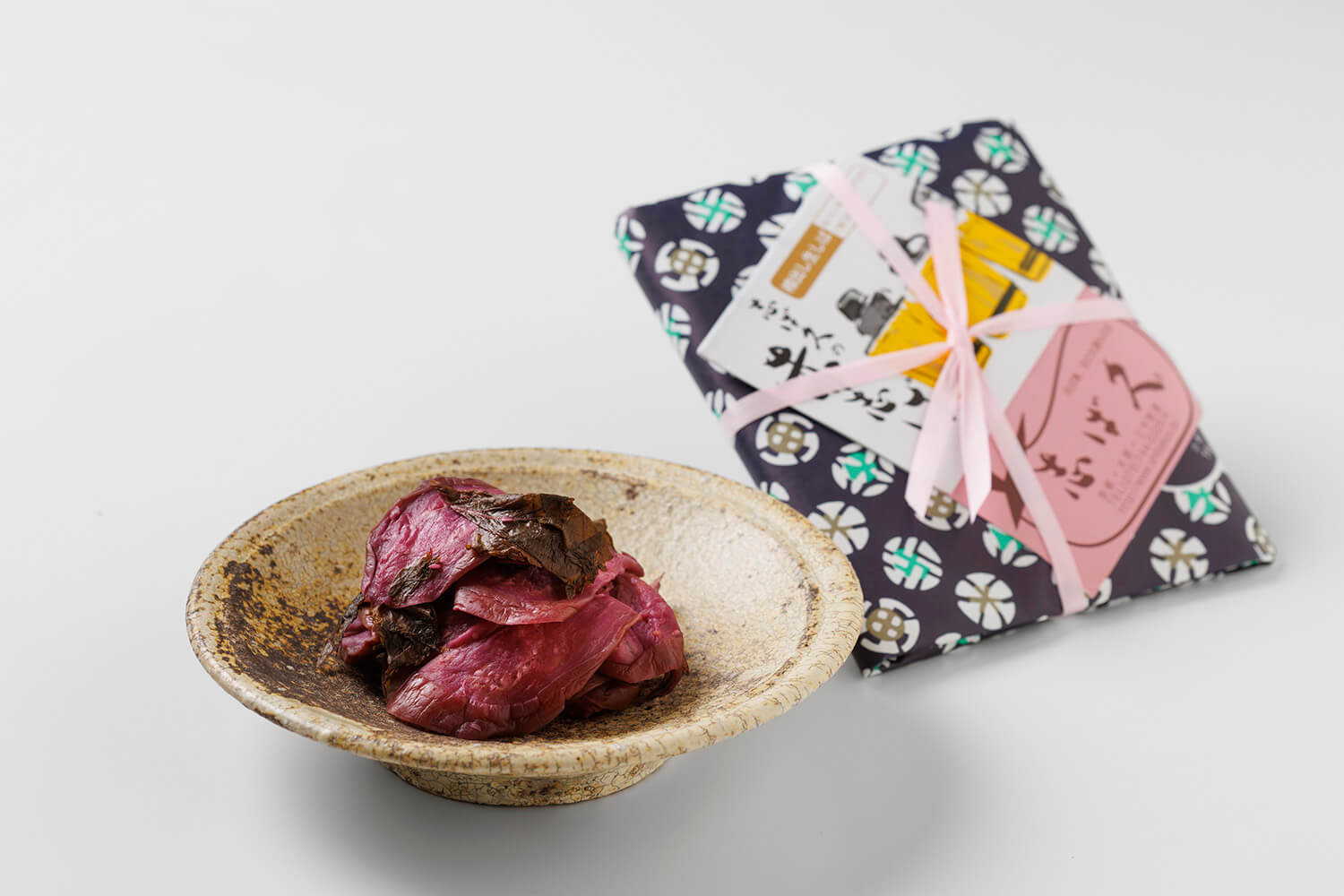
"Shibazuke pickles" with the history oldest for 3 big pickles from Kyoto. The feature of the early summer and the one by which I used red perilla, corned summer vegetables and took preserved foods are starting at a mountain village in Ohara spread in the northwest base of the Heian latter period and Hiei-Zan. There is also a legend to which elegant red purple has been presented by a heroine of tragedy and Kenreimonin of a one-story house beautifully and. The "raw Shibazuke pickles" by which a popular but most traditional process also makes lactic acid fermentation make the eggplant red Green Perilla with salt cucumber arrive and lightly-pickled vegetables at present. To make this sign goods has a store in an approach to Shrine of Sanzen-in, "kokorozashi, when, Hisashi". "Shibazuke pickles making is built with red Green Perilla." and, it's commitment to protect the seed from which generation after generation is transmitted to localness, succeed and prepare by the aromatic Green Perilla I did private cultivation of. The food texture of the eggplant made SHA KIRI, the refreshing sour taste and an aroma of red Green Perilla feel the mouth is wide fully. It's also recommended to cut and add dried bonito and soy sauce.
[Brand name] is akakokorozashi when.
[Use-by date] 30 days
[Dealer] kokorozashi, when, the station in Hisashi, D&DEPARTMENTKyoto and Sato Ohara and KOHYO Kitaoji store (in AEON Mall Kitaoji) etc.

- kokorozashi, when, Hisashi.
-
 Kyoto center Kyoto city 58, Oharashorinincho, Sakyo-ku MAP
 Kyoto bus "Ohara" getting off for about 7 minutes on foot
 9:00-16:00
 Wednesday (at the end of October-beginning of December, open everyday)
 075-744-4893
 I have that.
2SUGUKI tokoro Kyoto becoming rice field
The material which is putting origination right now and the fermented pickles Kamigamo produced
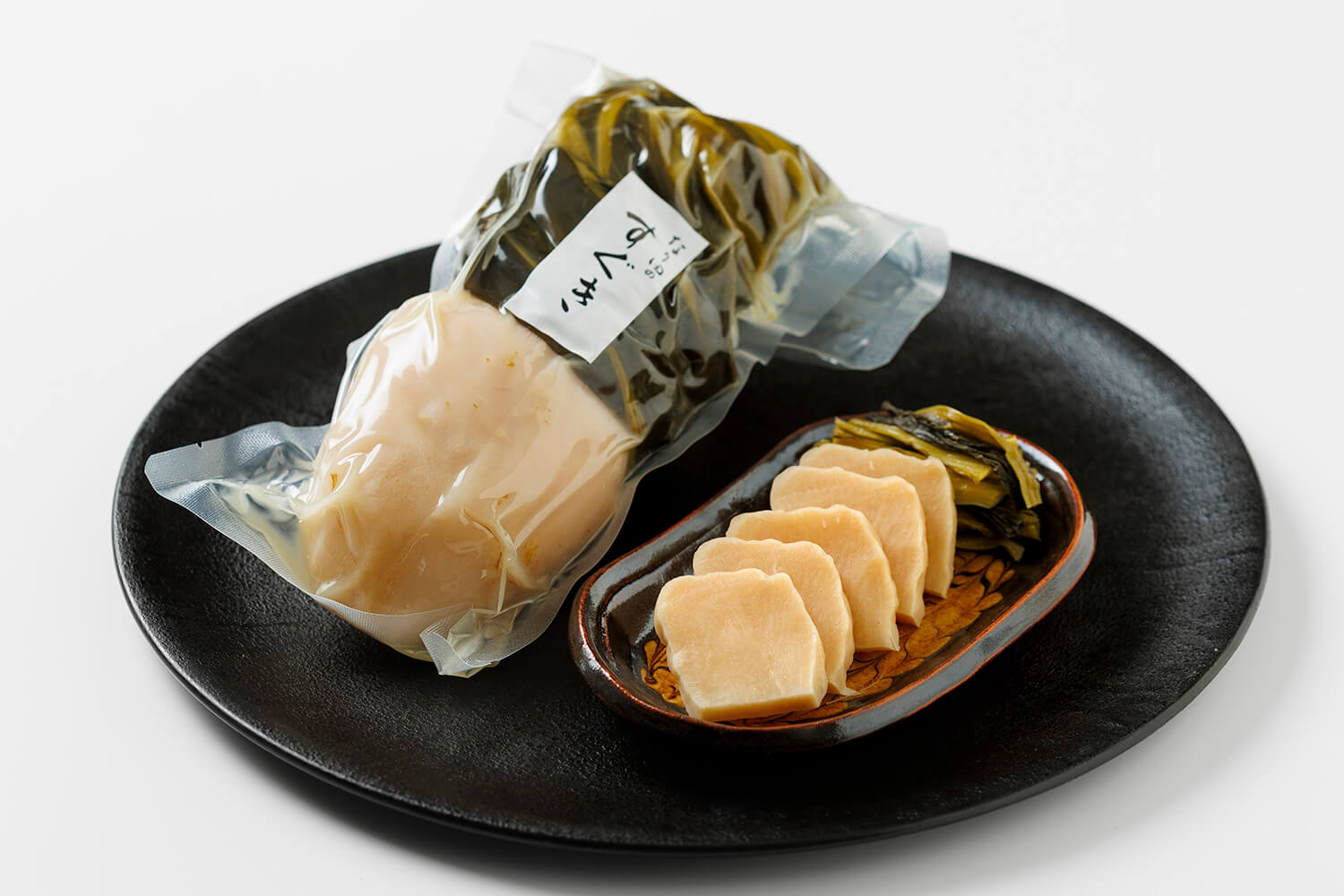
One kind of traditional turnip handed down from generation to generation only in Kyoto and Kamigamo area is put on right now and rape is used, the one by which "immediately, putting immerse" is also Kyoto3 big pickles. It dates back in Edo early stage and it's said that the origin was made only in Shake of Kamigamo shrine at first. "Becoming rice field" of 1804 year (1804) foundation is the long-established store in Shakecho where the history is left deeply. "The process which pickles and makes them do lactic acid fermentation doesn't change with only salt from foundation at that time." and, head of a family of eleven generation eye. Harvesting and pickling start from November every year, and Nii immerse who can enjoy a fresh fruit sense at the beginning of December appears. Something which has a lot of local people who call the one which was fermented and was matured sufficiently "Season ripeness (JIKO groan.)" and look forward to this beyond no summer. The taste which increased in the deep sour taste and flavor is special, for a drinker, very, it's loved.
[Brand name] immediately, putting
[Use-by date] 8 days
[Dealer] main store, Kyoto Takashimaya store and Daimaru Kyoto store B1F A grocery department.

- SUGUKI tokoro Kyoto becoming rice field
-
- Kyoto center Kyoto city 35, Kamigamoyamamotocho, Kita-ku MAP
- Kyoto city bus "in front of Kamigamo shrine" getting off for about 2 minutes on foot
- 10:00-18:00
- January 1
- 075-721-1567
- I have that (4).
3Senmaizuke Daito of a head family (I mind.)
Winter attraction. The taste of the senmaizuke maintained by transmission through the eldest male branch
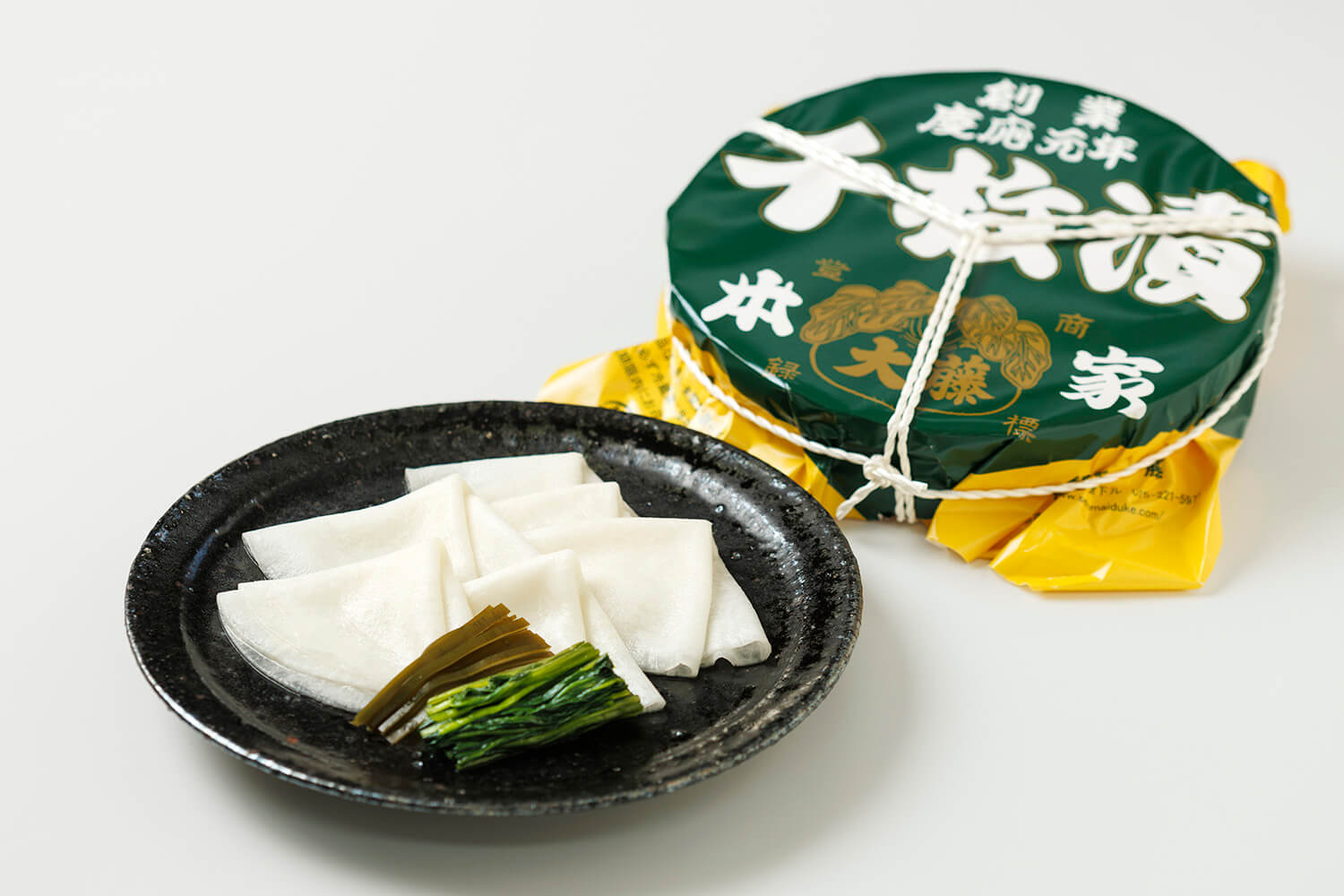
The "senmaizuke" which was called because it was also one thousand when the Shogo-in turnip sliced thin was pickled in person barrel so that it was transparent. This originator is "Daito" of 1865 year (1865) foundation. The founder who was serving as the dish by which the elegant taste is Kyoto gosho readily person who pickles only with elegant appearance, salt, sugar and vinegar contrives. This got the reputation and it spread over Ichii and was capital local specialty soon. Godai eye from which this taste is inherited by transmission through the eldest male branch, "Because it's simple seasoning, gusto of turnip is the life. The connoisseur is made polite.", I speak. Of a book immerse and every morning, a barrel, stock is the delicate process only a head of a family can handle. It's a principle always to deliver the best gem by doing defense by oneself every day. Turnip, the arrangement which chose between loamy soil in a court and mibuna in a pine in Kissho is auguring well and is also enjoying as pickles of New Year's reception.
[Brand name] senmaizuke
[Use-by date] 3 packed in bags-5 days and 5 in a container-7 days (There is a fluctuation by time.)
[Dealer] senmaizuke Daito of a head family and JR Kyoto Isetan B1F (the taste of the long-established store noted store) and JRKyoto station (Gift kiosk Kyoto) in front of (the taste of 10000000000000000 long-established stores Japanese dancing girl) and the Shinkansen Hachijo mouth ticket gate in the Shinkansen concourse and Daimaru Kyoto store B1F A grocery department.

- Senmaizuke Daito of a head family (I mind.)
-
- RU 510, Masuyacho under Kyoto central Kyoto city Nakagyo-ku bran shop town expert Nishikikoji MAP
- Hankyu Kyoto line "Kyoto Kawaramachi Station" vanity for about 5 minutes on foot
- 9:00-17:00
- 4-Thursday September: and July 31
10 Monday-senmaizuke time frame: open everyday
(Except for January 1 and the 2nd) - 075-221-5975
- I don't have that.
4It's immersed in isinglass, a long-established store Hono, from (I attach Kirara, it's SEHO NO to do.)
Flavor zetsuka. The "taste of" the hospitality which has healed an ascetic monk and a traveler
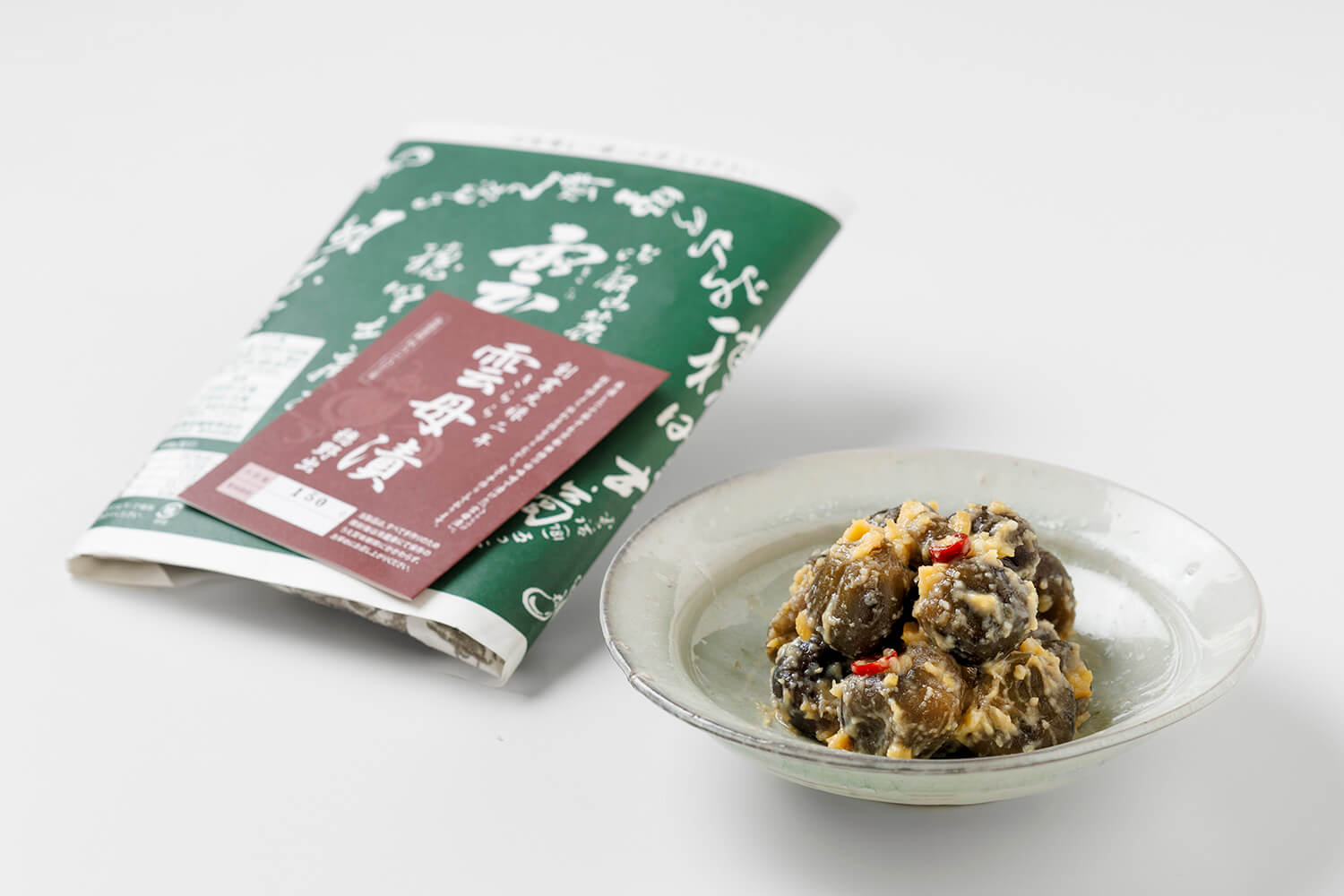
The one which is transmitted to only Tanabe family of Ichijo-ji even though there are much capital pickles, "is immersed in isinglass" (It's immersed in Kirara.) Flavorful one by which small eggplant was pickled with white miso of capital local specialty. The street an artistic gate tells and 1689 when foundation is a Tokyo style period (1689). Origin is serviceable for a court noble and it's said that they were managing a territory, but because there was a residence near "Kirarazaka" in a main route to the Hiei-Zan from a capital, it's said that Tanabe family was combined with bansho (checkpoint). The one which was stood for the person who establishes a teahouse and comes and goes a steep mountain path there is the reason immersed in isinglass. The sweet fermented soybean paste and the good chemistry the eggplant with the one drop size a contract farmer brings up is soft, and which are HO. It'll be that it was the best hospitality for an ascetic monk heading to Enryaku-ji in the top of mountain and an Imperial envoy from Imperial Court. The white miso into which the flavor of the material sank, it itself is also delicious. It's a relish without leaving over by all means.
[Brand name] it's immersed in isinglass.
[Use-by date] 45 days
[Dealer] it's immersed in isinglass, a long-established store Hono, from, Kyoto Takashimaya B1F taste hundred pieces
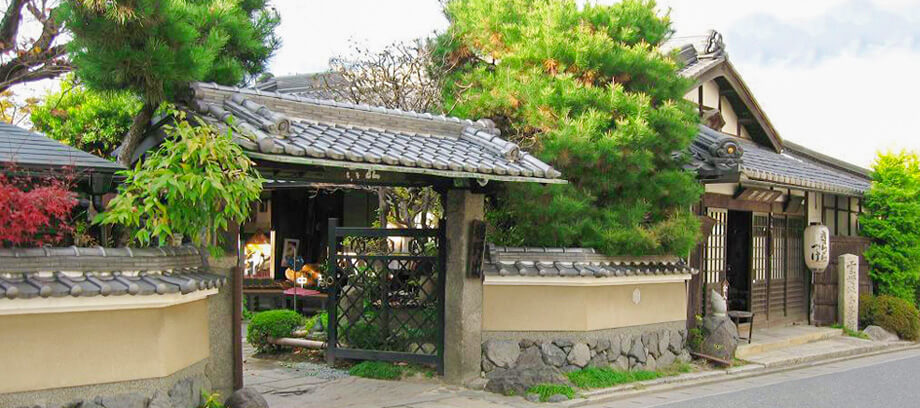
- It's immersed in isinglass, a long-established store Hono, from (I attach Kirara, it's SEHO NO to do.)
-
- Kyoto center Kyoto city 43, Ichijojitanidacho, Sakyo-ku MAP
- Kyoto city bus "Ichijoji Sagarimatsucho" getting off for about 5 minutes on foot
- 8:30-16:30
- The regular holiday-lessness
- 075-781-5023
- I have that (8).
5Murakami Shigemoto store
The taste a lord admitted. Traditional vegetables and the material of the season, to great master's work.
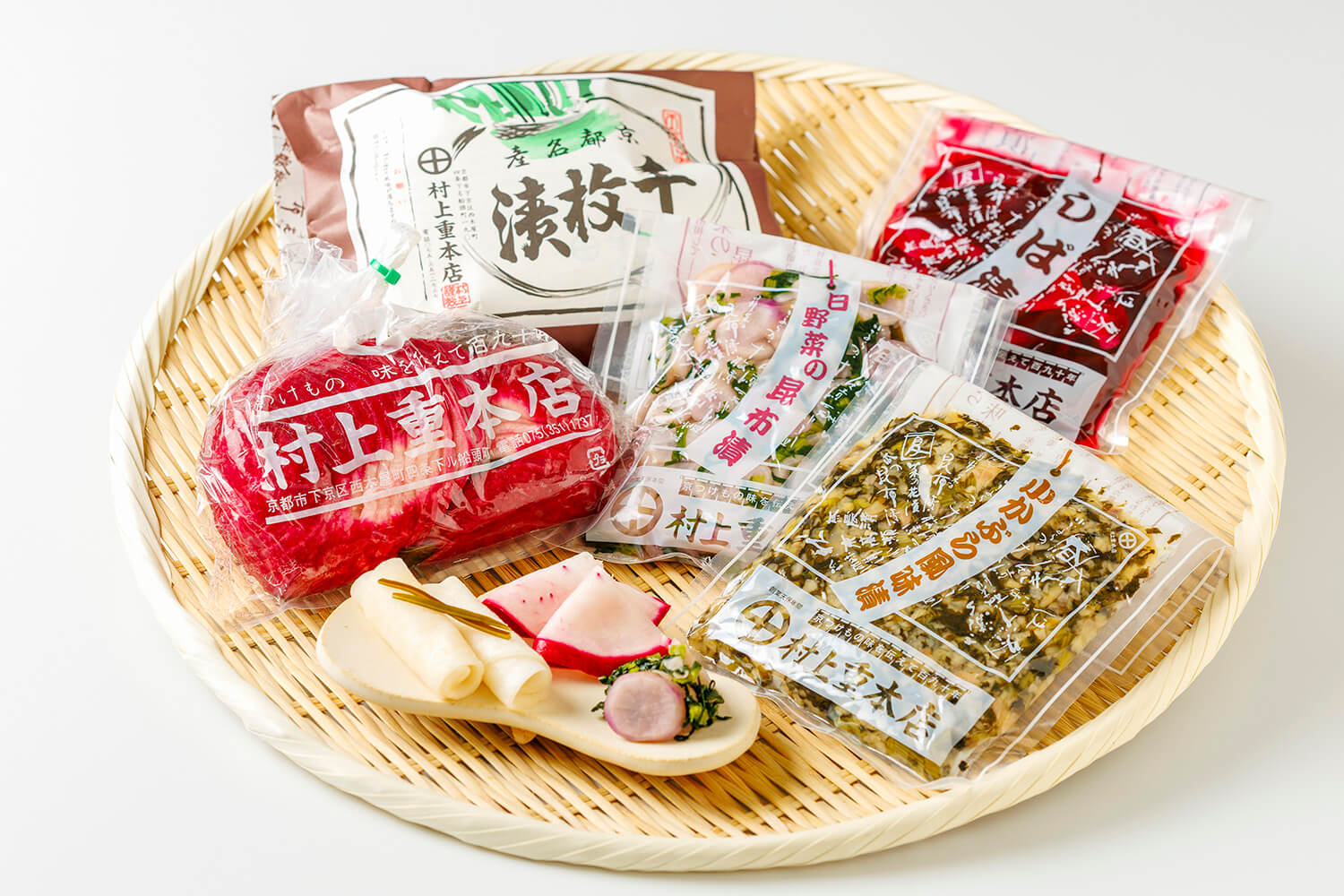
If I look for Pickled Seasonal Vegetables, it's familiar by the shop curtain which left a coat of arm of "in a circle, ten" undyed, and "Murakami Shigemoto store" in Nishiki shop town is recommended. The noted store where I sold the here where I started the business and received lord's guarantee in Satsuma (in 1832) in 1832 with narazuke pickles in summer and winter senmaizuke as a speciality lengthily and improved. The work was expanded into seasonal pickles soon, and it was existence necessary to a dining table of Kyoto. The senmaizuke born at Rakuchu in Bakumatsu is one of sign goods, and the original recipe out of which I get the charm of the Shogo-in turnip fully by "salt and seaweed" is a popular secret. The traditional vegetables by which winter is also showy "in seaweed of beet" and Shiga in other eyes "in seaweed of Hino rape" are also local specialty. The sour taste is suppressed, ginger and Japanese ginger, KIKA, can, the "small turnip flavor immerse" which mixed "Shibazuke pickles" and small turnip with a fruit of blue perilla and Japanese pepper is popular goods of year-round sale. White rice is full of the gems I come to miss.
[Brand name]* in seaweed,* in seaweed of Hino rape, the small turnip flavor immerse and Shibazuke pickles of senmaizuke* and beet
[Use-by date] about 5 day* and about 1 month
[Dealer] Murakami Shigemoto store and Kyoto Takashimaya B1F Taste hundred pieces.
* winter limited article. Sale in 2023 of "in seaweed of beet" "in seaweed of Hino rape"- winter in 24 ends.

- Murakami Shigemoto store
-
- RU 190, Sendocho under Kyoto center Kyoto city Shimogyo-ku Nishiki shop Shijo of a town MAP
- Hankyu Kyoto line "Kyoto Kawaramachi Station" vanity for about 1 minute on foot and Keihan Main Line "Gion-shijo Station" vanity for about 3 minutes on foot
- 9:00-19:00
- January 1-the 3rd
- 075-351-1737
- I don't have that: A MID parking (contract Parking) is free for 1 hour by purchase of goods.
MAP
- Hoshino ResortsProperty around here

The master of MICHIKU SA who took charge of this article
-
Noriko Yamaguchi.
Edit and lighter. An article of travel, history, traditional culture and arts and crafts is written with a magazine and a web using Kyoto as a foothold. To deal with edit of a book. I like a festival, sake and a container very much. Interpretation information man (English) and international ri Sakashi. Kyoto official approval second kyuu.
 Of MICHIKU SA.
Master
HOSHINOYA Kyoto
The Kyoto center and Ranzan
A Japanese-style hotel of River view of all the rooms located in Ranzan. Beautiful cityscape in four seasons and the quiet extraordinary world can be enjoyed.
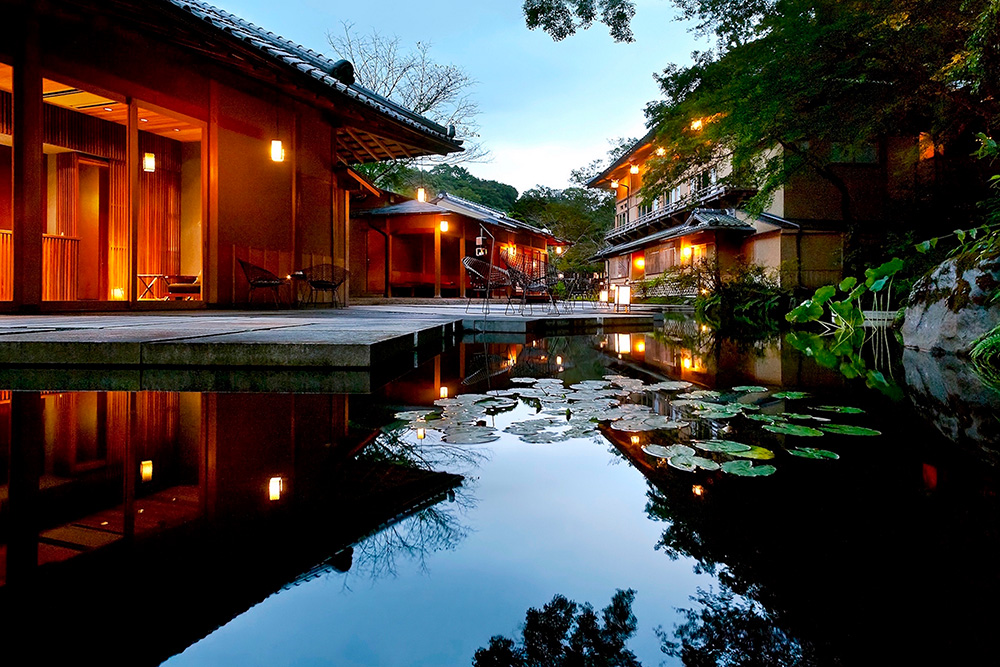
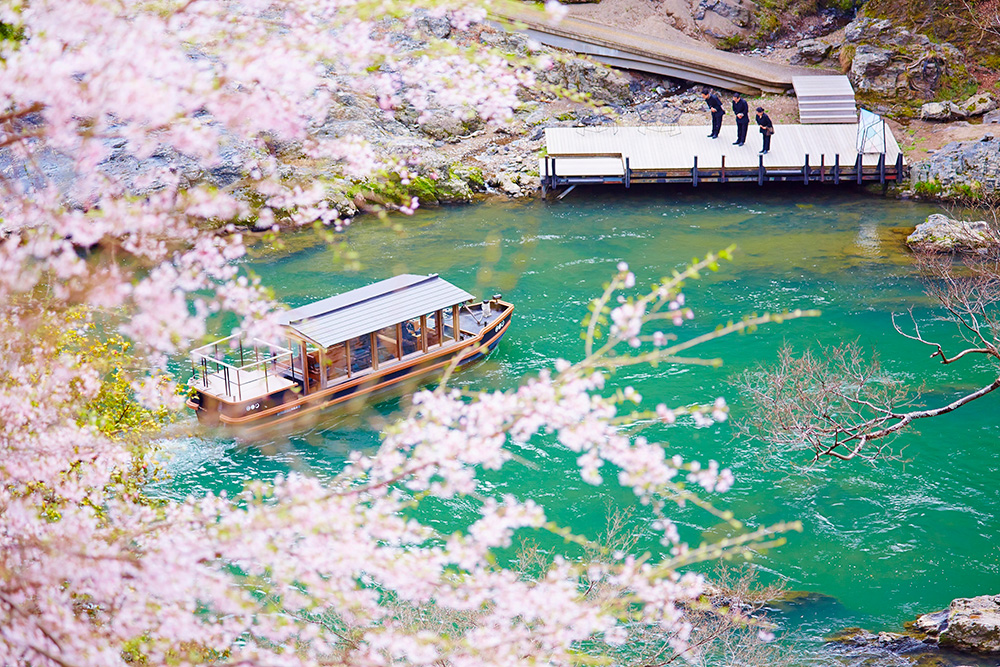
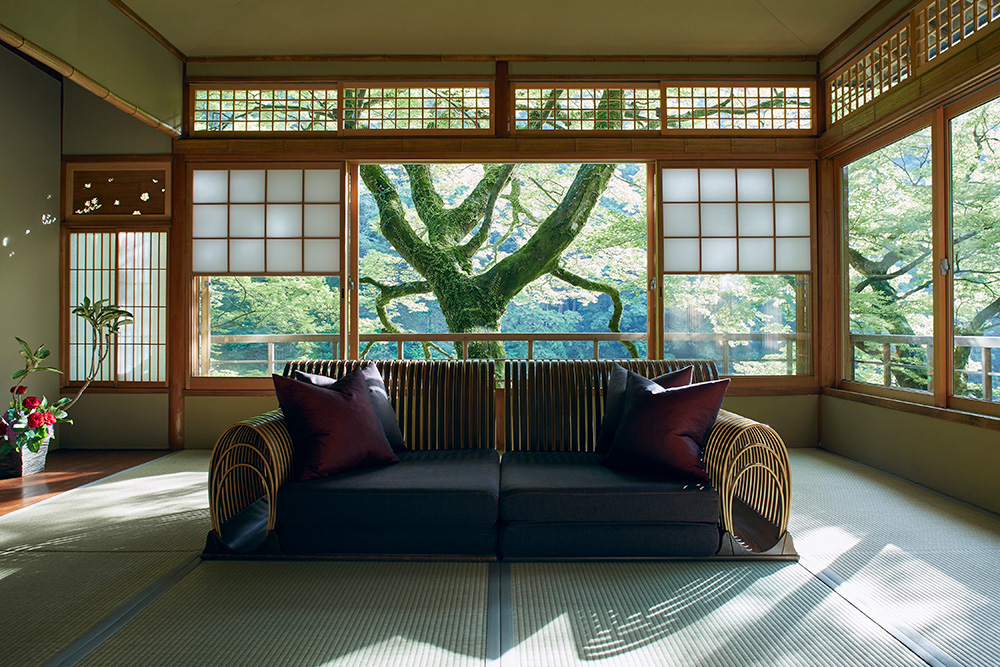
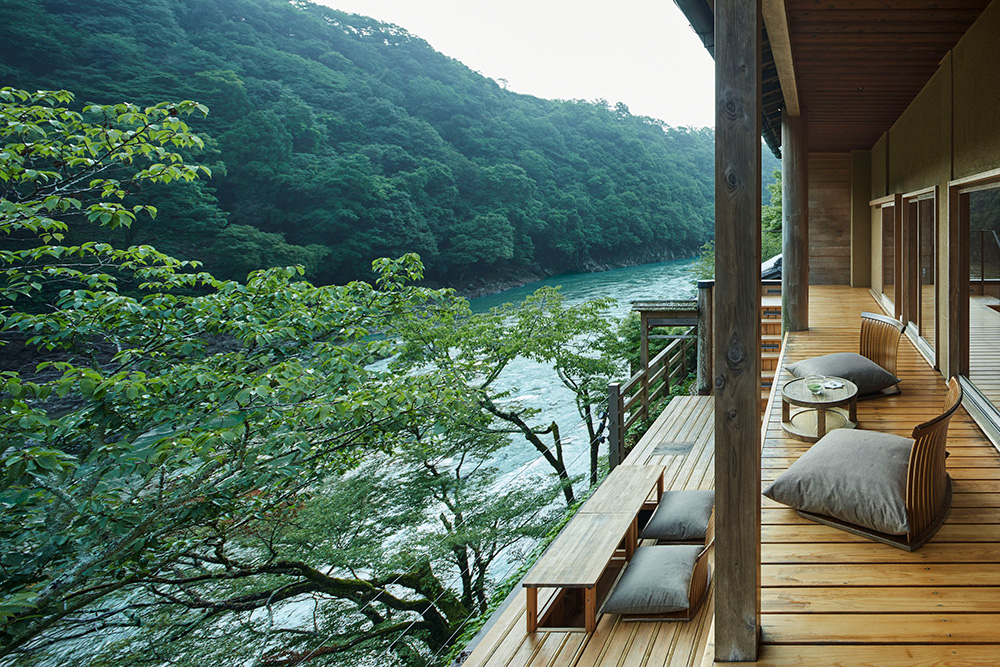
It's a taxi from Direction JRKyoto station, about 30 minutes
- A room charge example
- 1 night, 1 person \33,330-
OMO5 Kyoto Sanjo by Hoshino Resorts
The Kyoto center and Kyoto city
Even the streets where Pontocho and Sanjo big bridge seem to be Kyoto are within the walking range. The past and present are the area which intersects from the latest store to the speciality store in a long-established store.


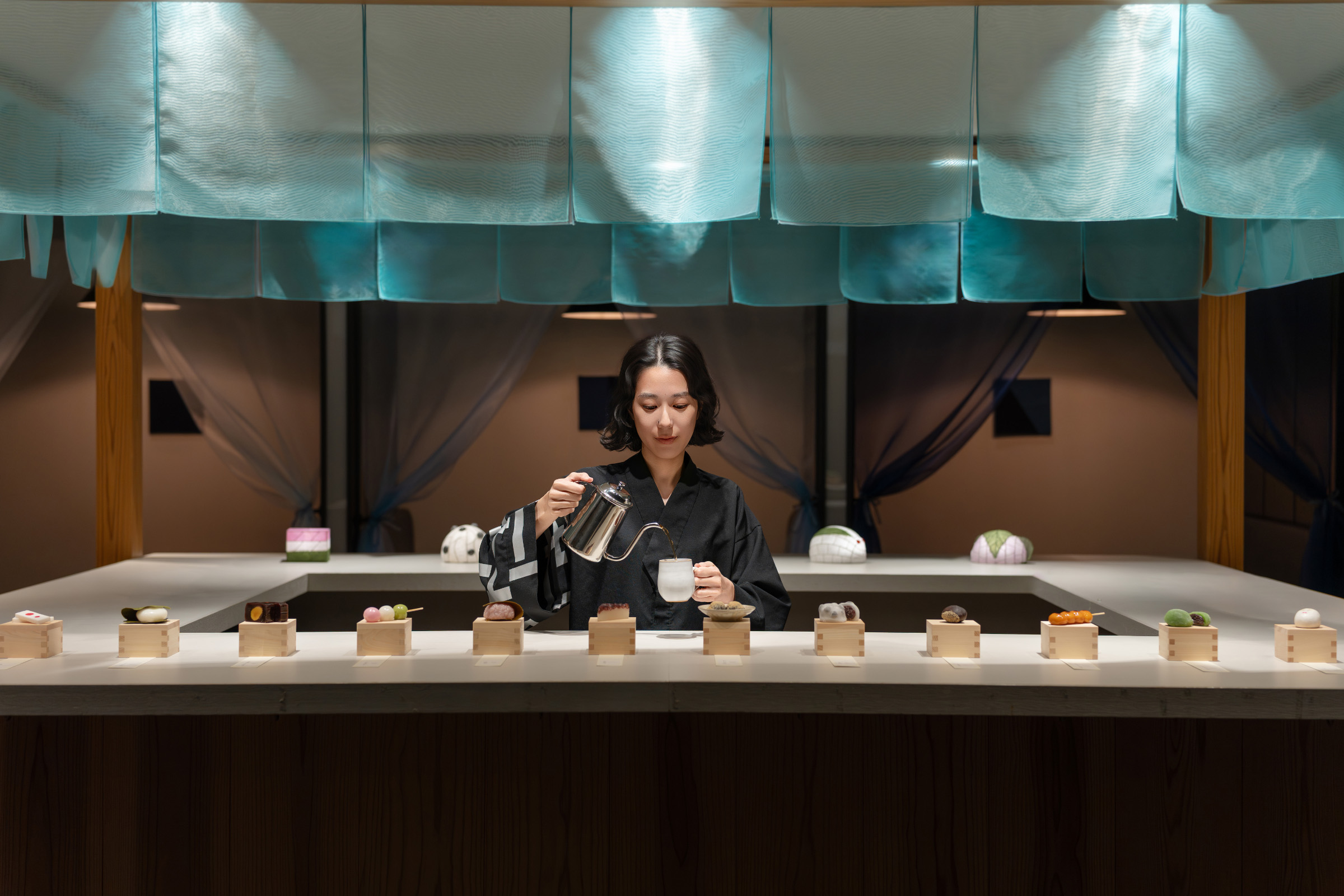
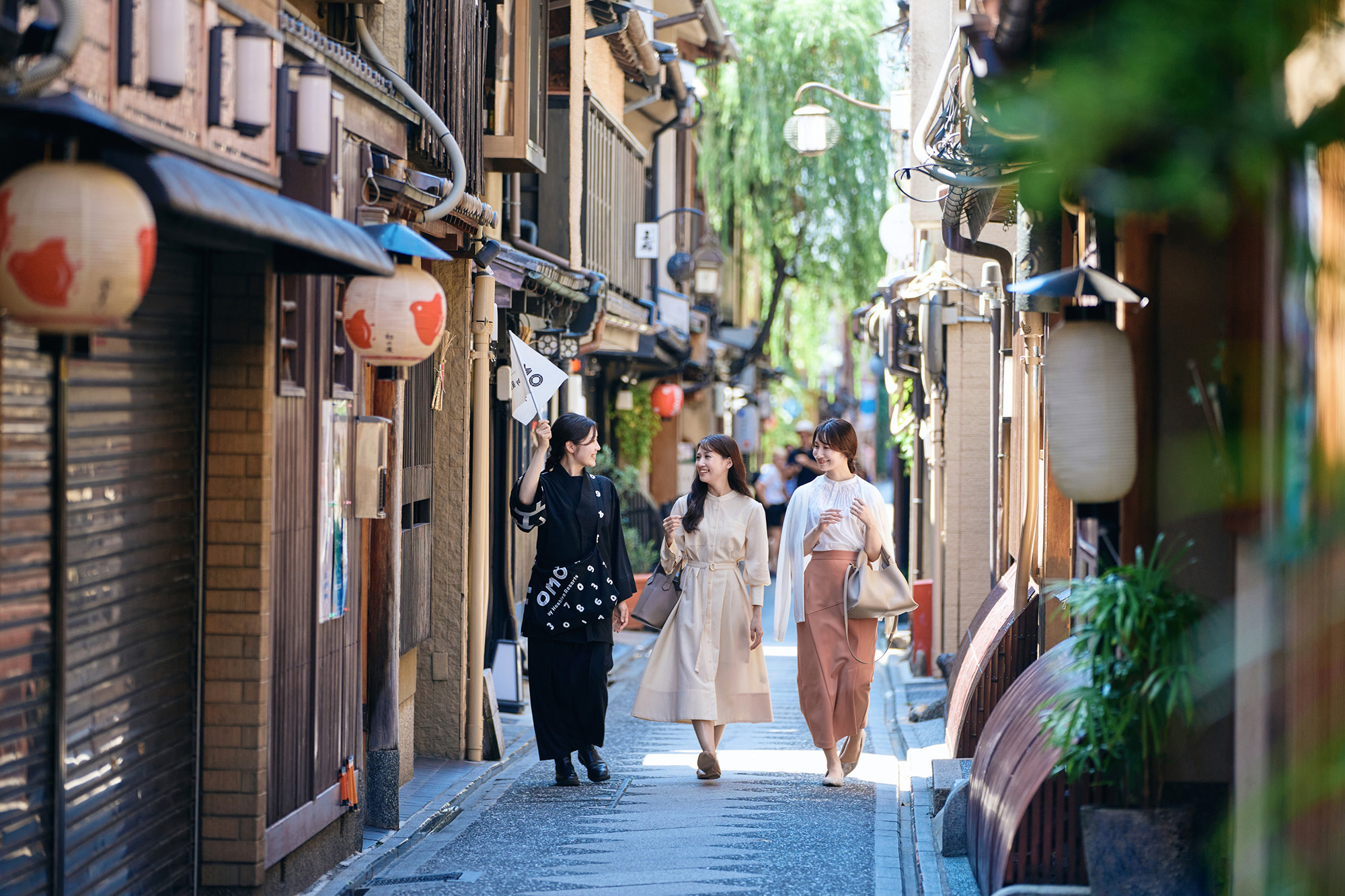
The Direction Kyoto municipal subway Number 3 of Kyoto Shiyakusho-mae Station, from an exit, about 2 minutes on foot
- A room charge example
- 1 night, 1 person \4,000-
OMO5 Kyoto Gion by Hoshino Resorts
The Kyoto center and Kyoto city
Yasaka-jinja which is here along the downtown area which represents Kyoto "Toru Shijo" and is famous for Gion Matsuri is immediateness. Everyone is convenient for sightseeing in visited Yasaka and clear water area sometime.

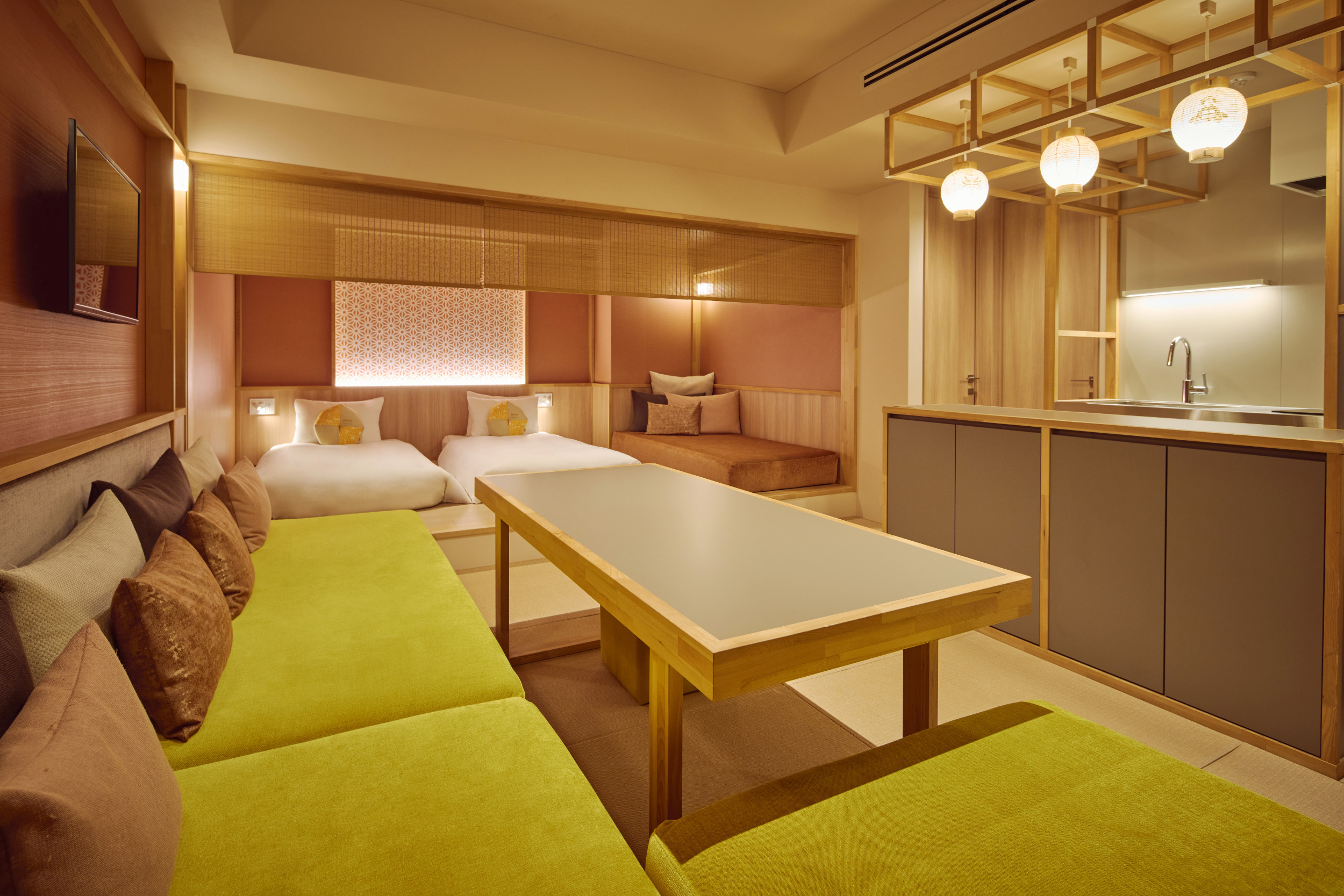
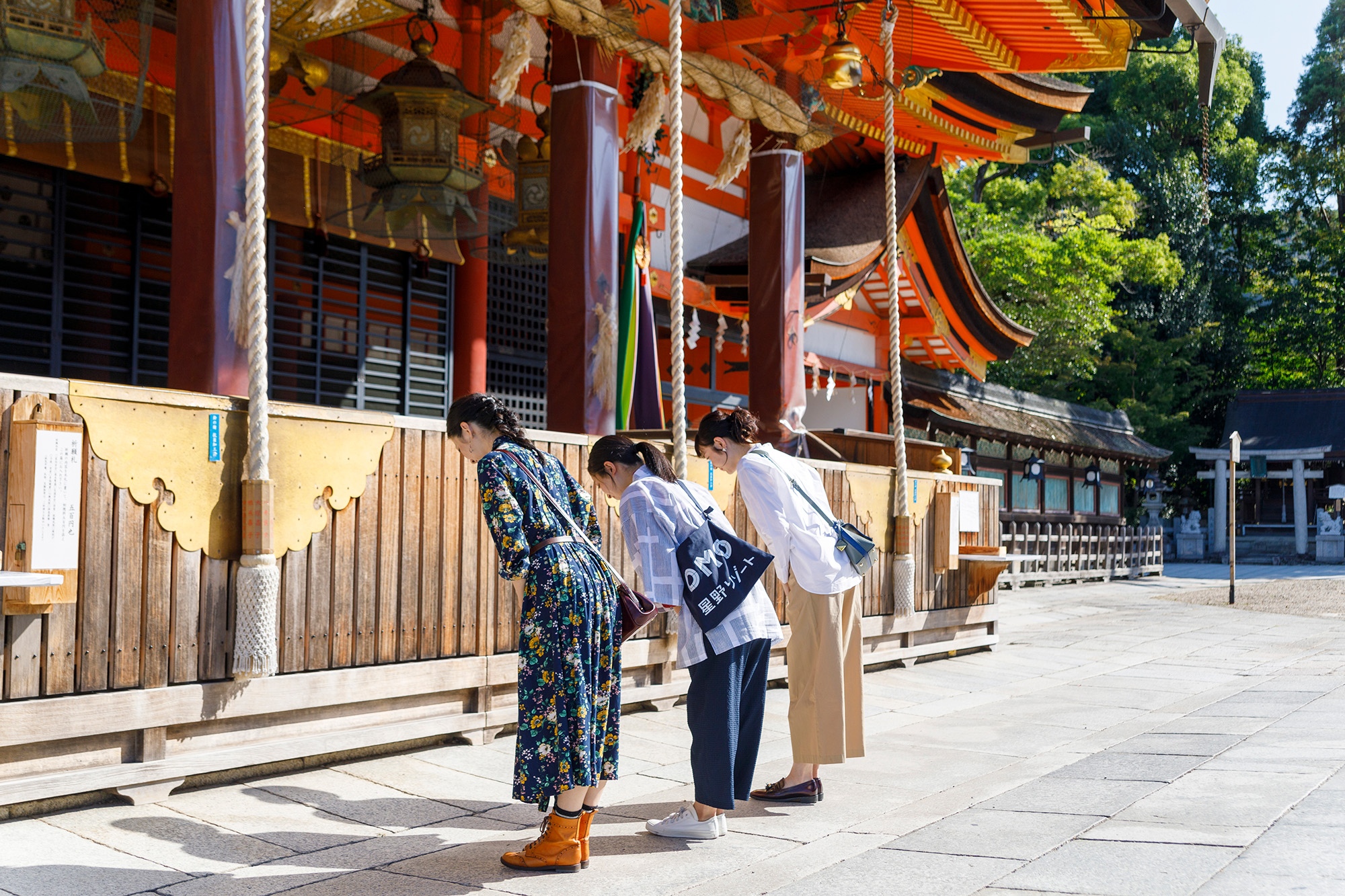

Direction Keihan Main Line Number 7 of Gion-shijo Station, from an exit, about 5 minutes on foot
- A room charge example
- 1 night, 1 person \9,500-