





6 Must-See Tourist Spots to Experience the History and Culture of Hida Takayama
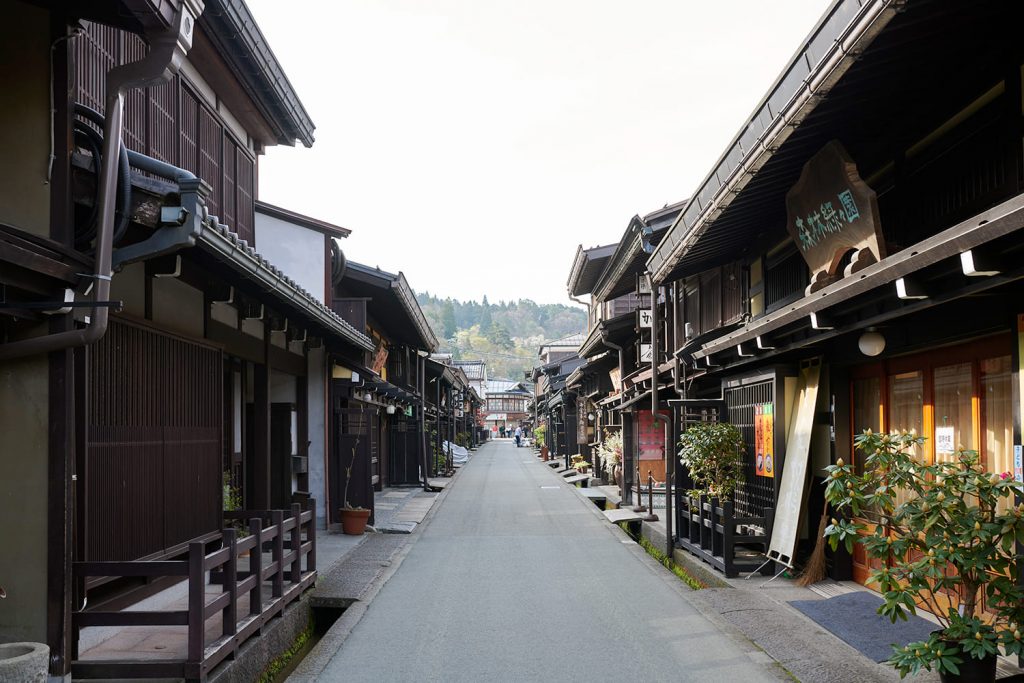
From streets that retain the atmosphere of the Edo period to the shrine that serves as the stage for the magnificent “Takayama Festival” and the only surviving “jinya” (feudal governor’s residence) in Japan, the ancient city of Takayama offers spots where you can experience the unique history and culture of this region.As you stroll through the morning market and the town streets, reflecting on the way of life and craftsmanship passed down through the generations, your travel experience will take on a whole new dimension. Here are six must-visit tourist spots in Takayama.
1Hida Takayama Miyagawa Morning Market
A wealth of Hida Takayama’s bounty on display. A traditional morning market dating back to the Edo period
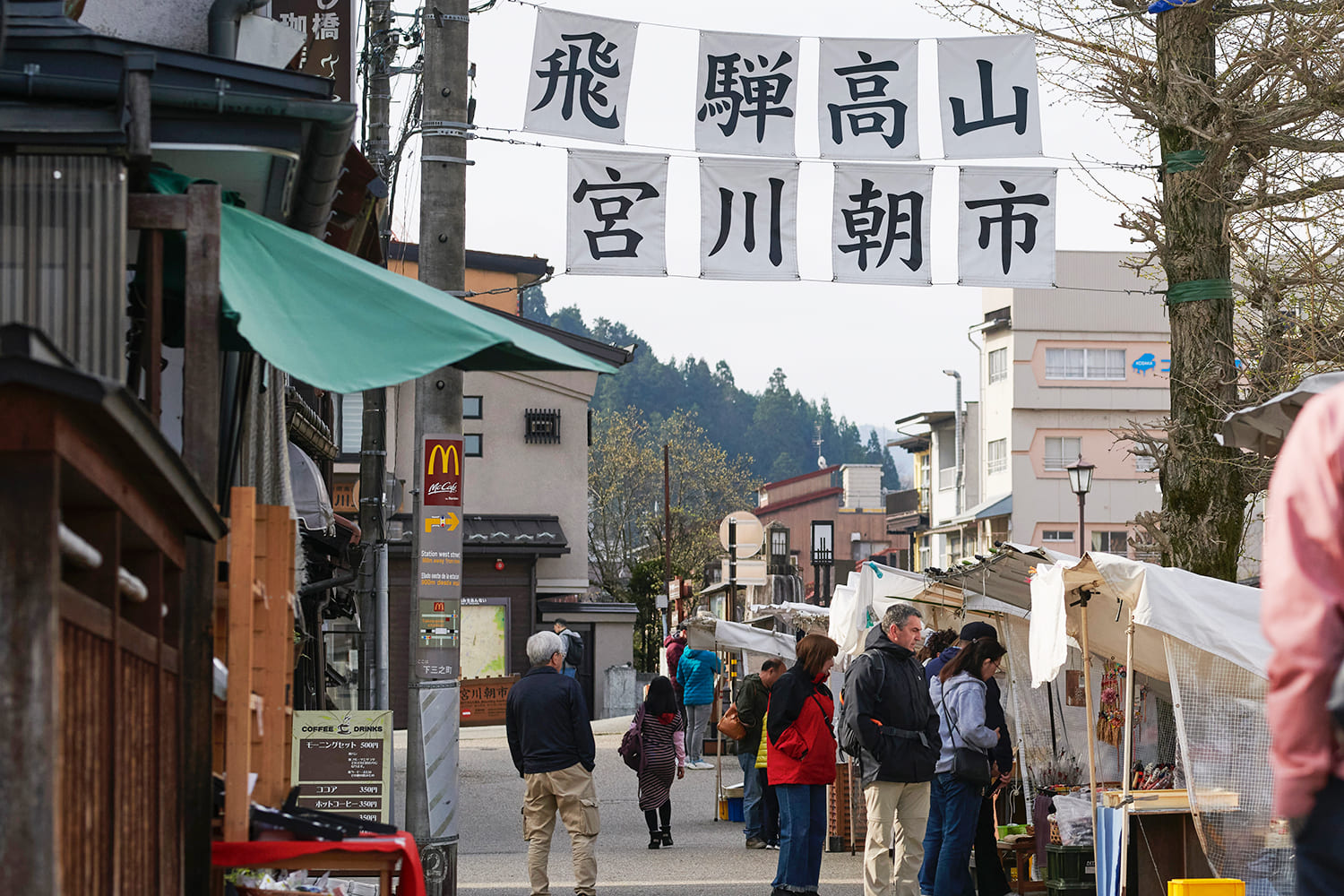
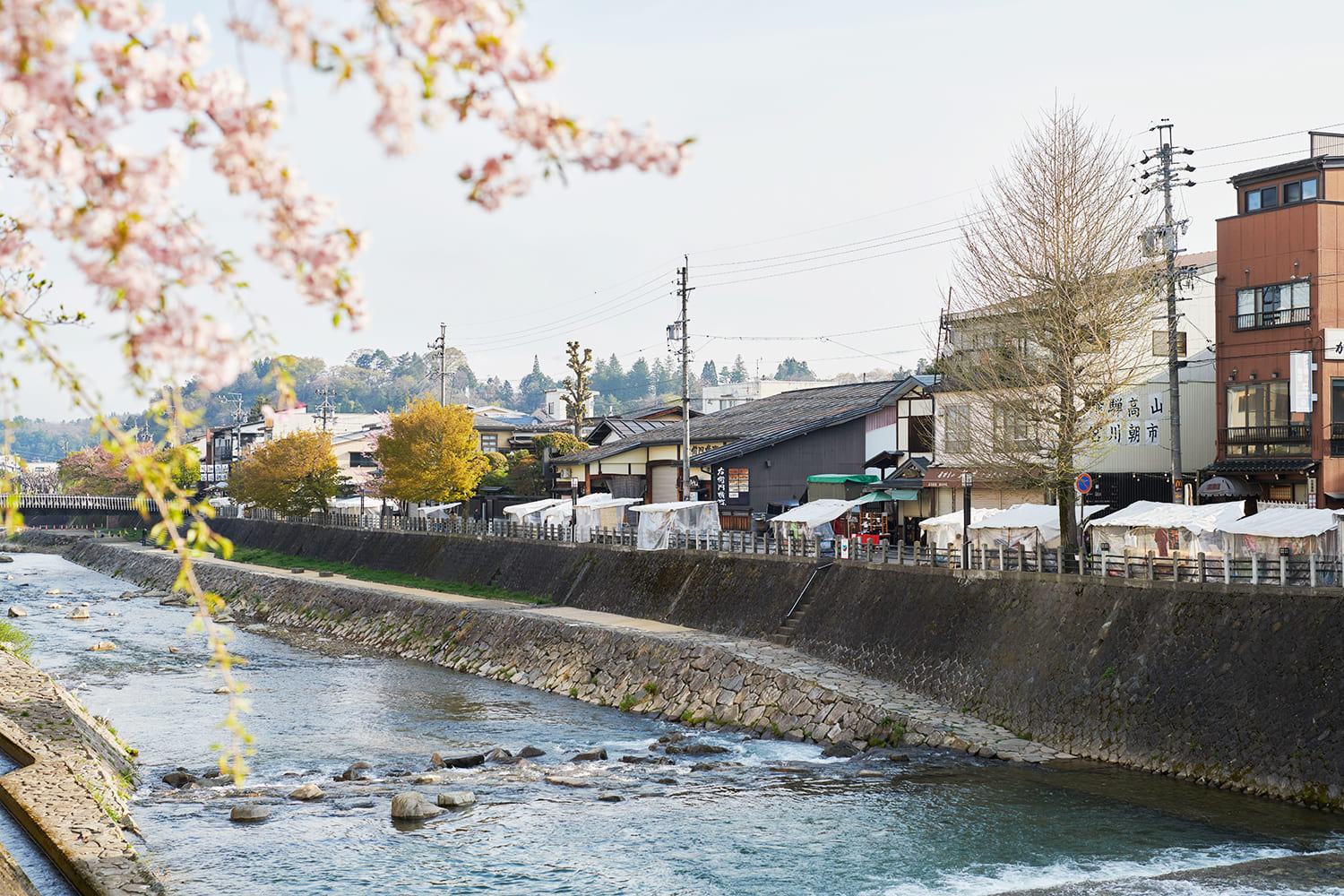
A morning market featuring a row of white-tented stalls stretching approximately 300 meters along the east bank of the Miyagawa River, which flows through downtown Takayama, from Kajiya Bridge to Yayoi Bridge.Its roots trace back to the Kuwa Market, which was held primarily around the Takayama Betsuin Temple during the Edo period, and it has been bustling every morning at its current location since 1962 (Showa 37).
The number of stalls varies by season, but there are usually about 20 to 30.Especially from spring through fall, a diverse array of goods—centered on freshly harvested vegetables and fruits from Hida Takayama—lines the stalls. A unique feature of this morning market is that the farmers’ wives man the stalls themselves and share delicious ways to eat and cook the produce. Sometimes they’ll even throw in a little something extra, allowing you to enjoy warm, friendly interactions.
Enjoy shopping while chatting with local producers
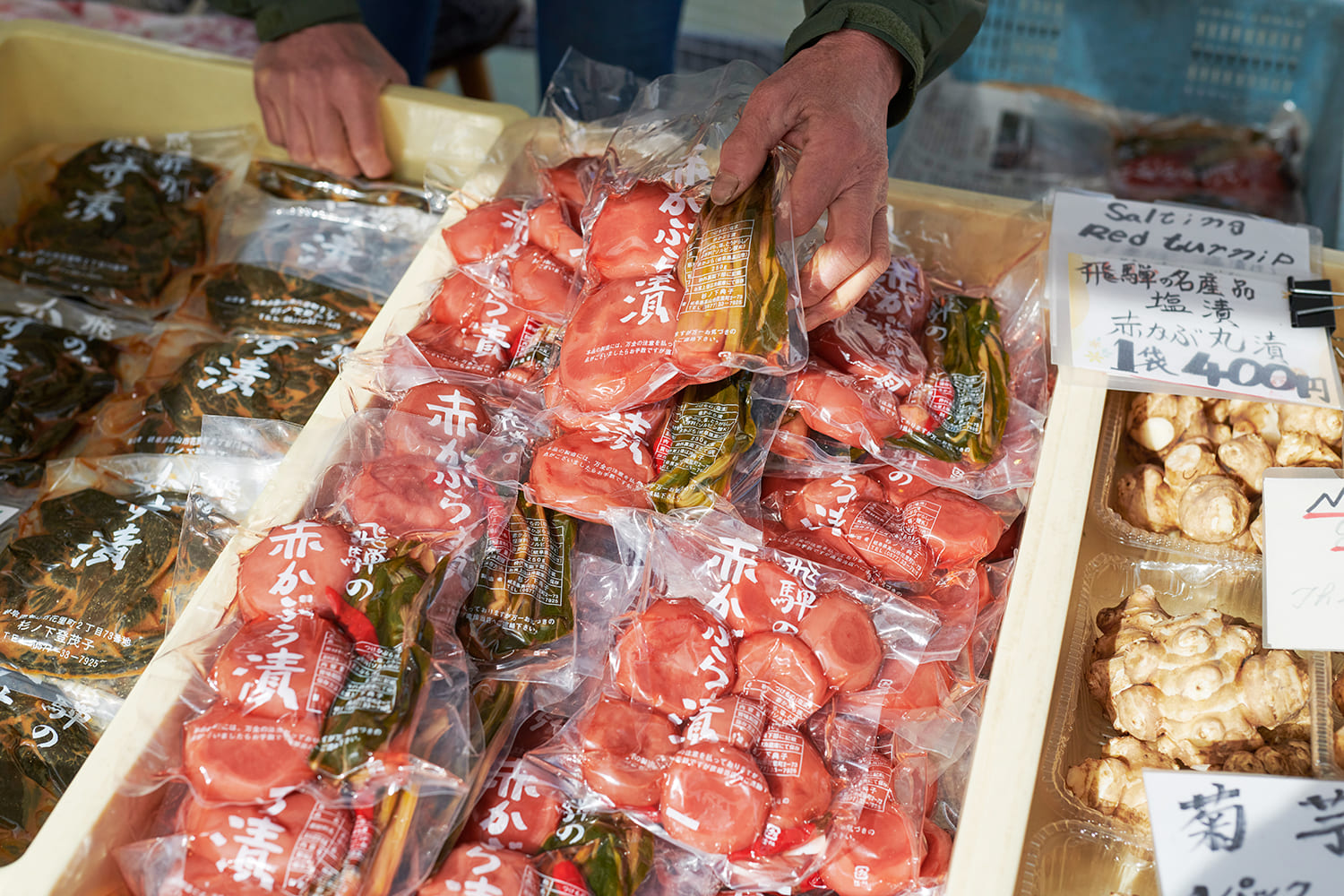
One item that really catches the eye at the morning market is Hida Takayama’s specialty: pickled red turnips. Made using traditional methods of lactic acid fermentation, these pickles have a perfectly balanced saltiness and tartness, making them ideal both as a side dish with rice and as a snack to enjoy with drinks.The flavor varies depending on the maker and the season it’s prepared. Why not find your favorite while enjoying the lively chatter in the Hida dialect?
In addition, you’ll find stalls selling local specialties like mochi made with homegrown rice and kombu, as well as “hooba” miso; handmade goods such as accessories featuring “Sarubobo,” the traditional dolls of the Hida region; and stalls selling flowers and bonsai.Hopping from stall to stall in search of Takayama souvenirs is one of the true joys of travel.

Local Guide
The lineup of vendors varies depending on the season and weather—including farmers who set up shop only during the off-season—so you’ll discover something new every time you visit. We also recommend the gourmet treats you can enjoy on the spot, such as mitarashi dango, takoyaki, mini taiyaki, and espresso.
- Hida Takayama Miyagawa Morning Market
-
 Along the Miyagawa River, Shimo-Sanno-cho, Takayama City, Gifu Prefecture MAP
 About a 10-minute walk from JR Takayama Station
 7:00 a.m.–12:00 p.m.; December–March: 8:00 a.m.–12:00 p.m.
 Open daily
 None
None
2Historic Townscape
Step back in time to the Edo period in this historic district lined with traditional townhouses
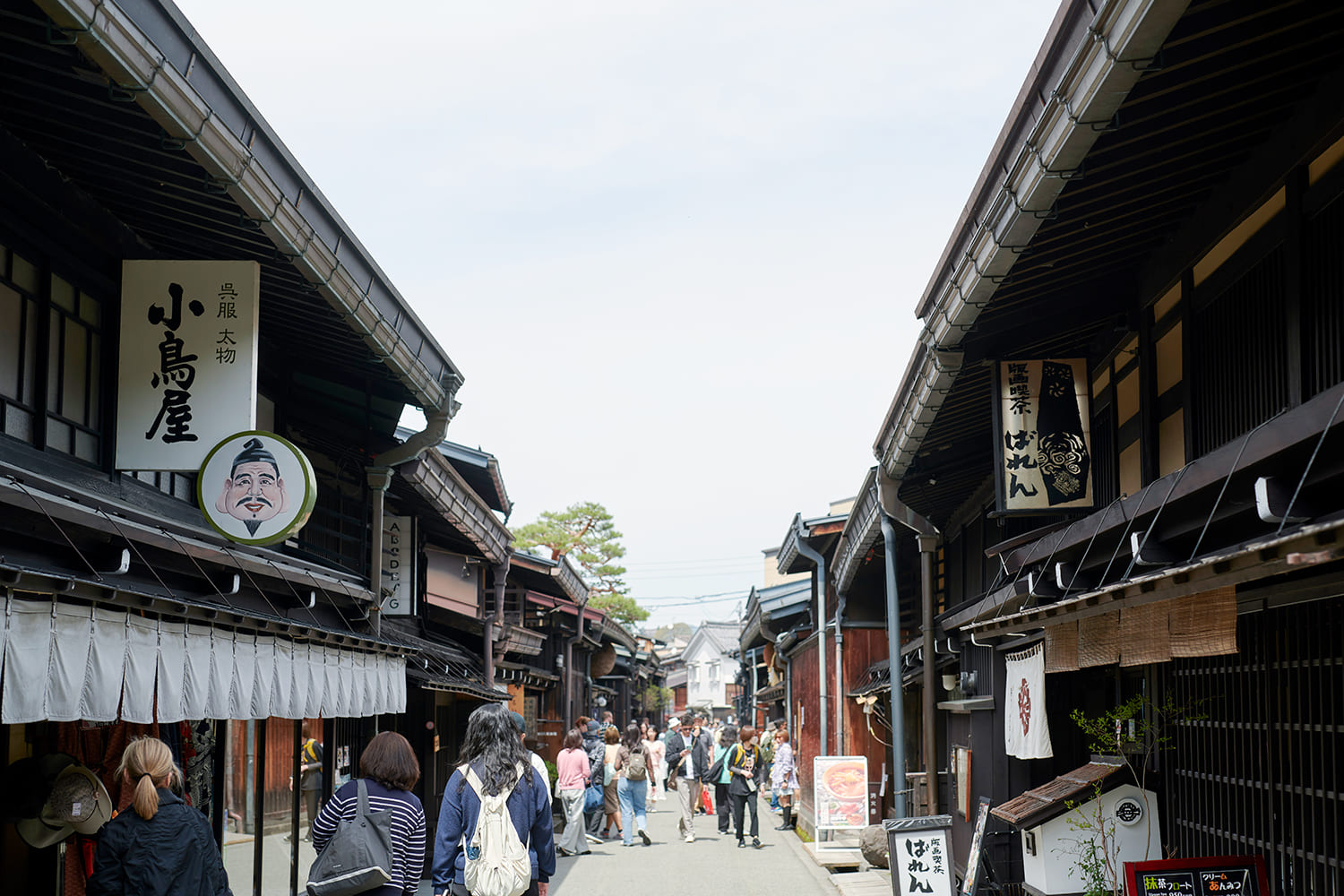
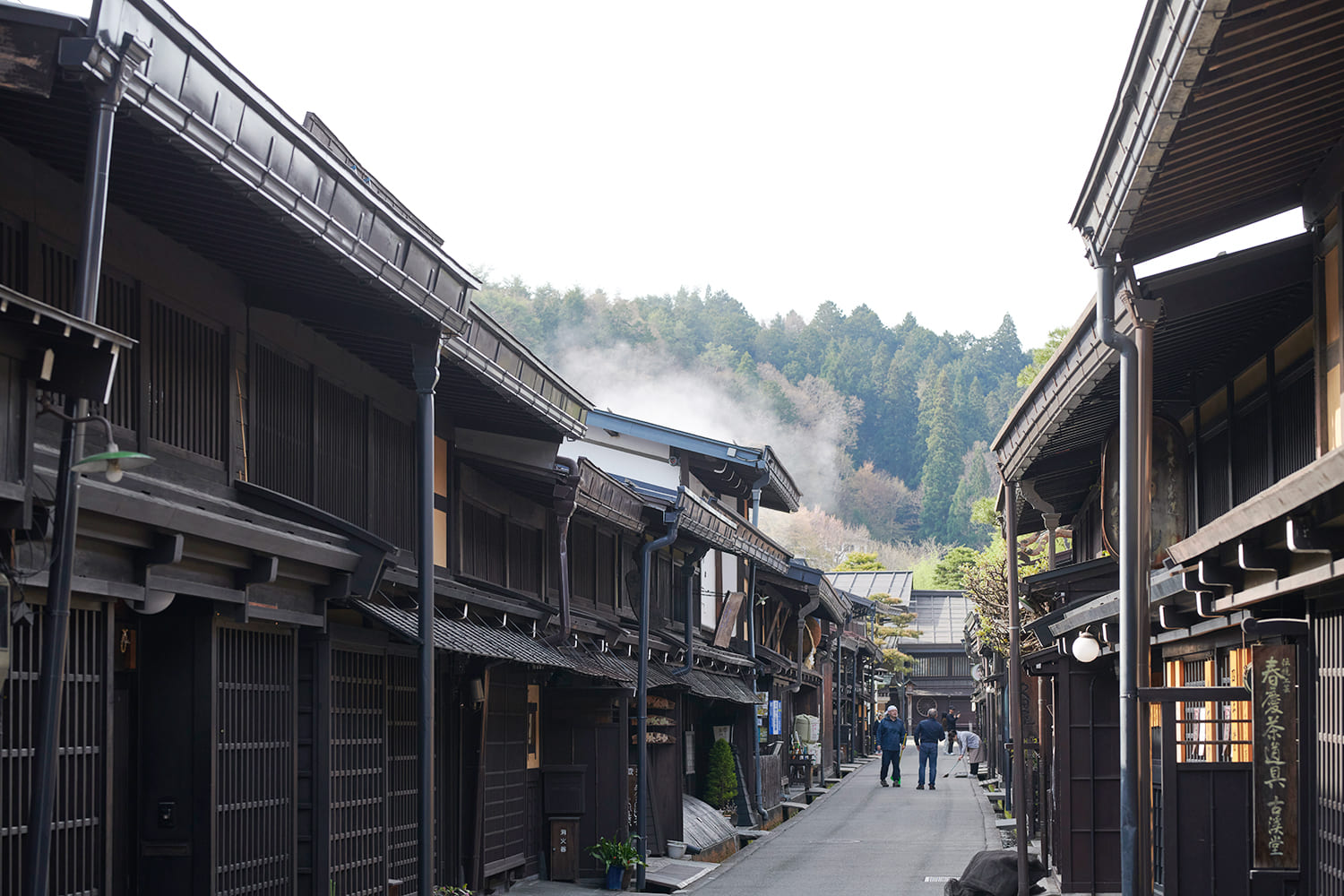
On the east side of the Miyagawa River, Sanmachi-dori—once the merchant district of Takayama Castle Town—is a nostalgic area lined with traditional townhouses featuring lattice windows and irrigation canals running beneath the eaves.The townhouses are built to span the full width of their lots, and the unified streetscape—with eaves all at the same height—strongly evokes the atmosphere of the Edo period.From the Edo period through the early Meiji era, the area was struck by repeated major fires, and many of the surviving traditional townhouses were built after Meiji 8. Preservation efforts, led primarily by the float groups of the “Takayama Festival,” continue, and the area has been designated as an Important Preservation District for Groups of Traditional Buildings.
Featuring traditional crafts, local sake, and gourmet foods from Hida Takayama
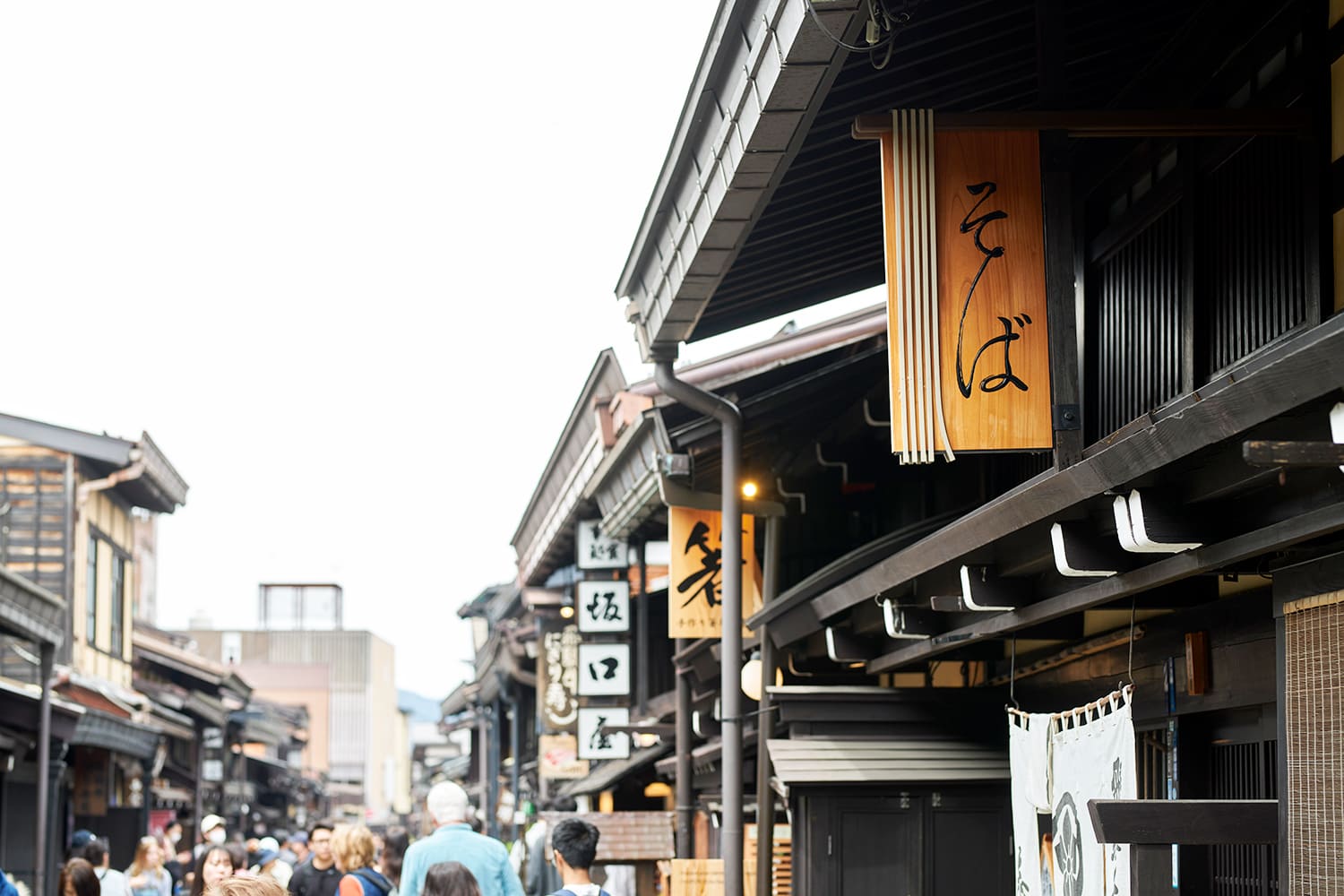
The streets are lined with shops selling traditional Hida Takayama crafts such as Hida Shunkei and Shibukusa-yaki pottery, as well as retro tea houses, cafes, and restaurants serving tofu dishes and handmade soba noodles.Another distinctive feature is the seven sake breweries that have been in operation since the Edo and Meiji periods; visitors can enjoy tasting sessions of premium sake—each brewery showcasing its own unique character—as well as brewery tours. Additionally, there are spots serving mitarashi dango and Hida beef nigiri. It’s a delight to be able to casually sample the flavors of Takayama.
Local Guide
True to its three-star rating in the “Michelin Green Guide Japan,” the market attracts not only Japanese visitors but also many international tourists. If you want to enjoy the quiet townscape, we recommend visiting between 8:00 and 9:00 a.m. Since it’s just a short walk from the Hida Takayama Miyagawa Morning Market, it’s also perfect for a morning stroll.
- Old Townscape
-
- Kamisanno-cho to Kamiichino-cho areas, Takayama City, Gifu Prefecture MAP
- About a 10-minute walk from JR Takayama Station
- Approx. 9:00 AM–6:00 PM (varies by store)
- Usually Tuesdays or Wednesdays (varies by store)
- None
3Sakurayama Hachiman Shrine
A historic shrine known as the venue for the autumn “Takayama Festival”
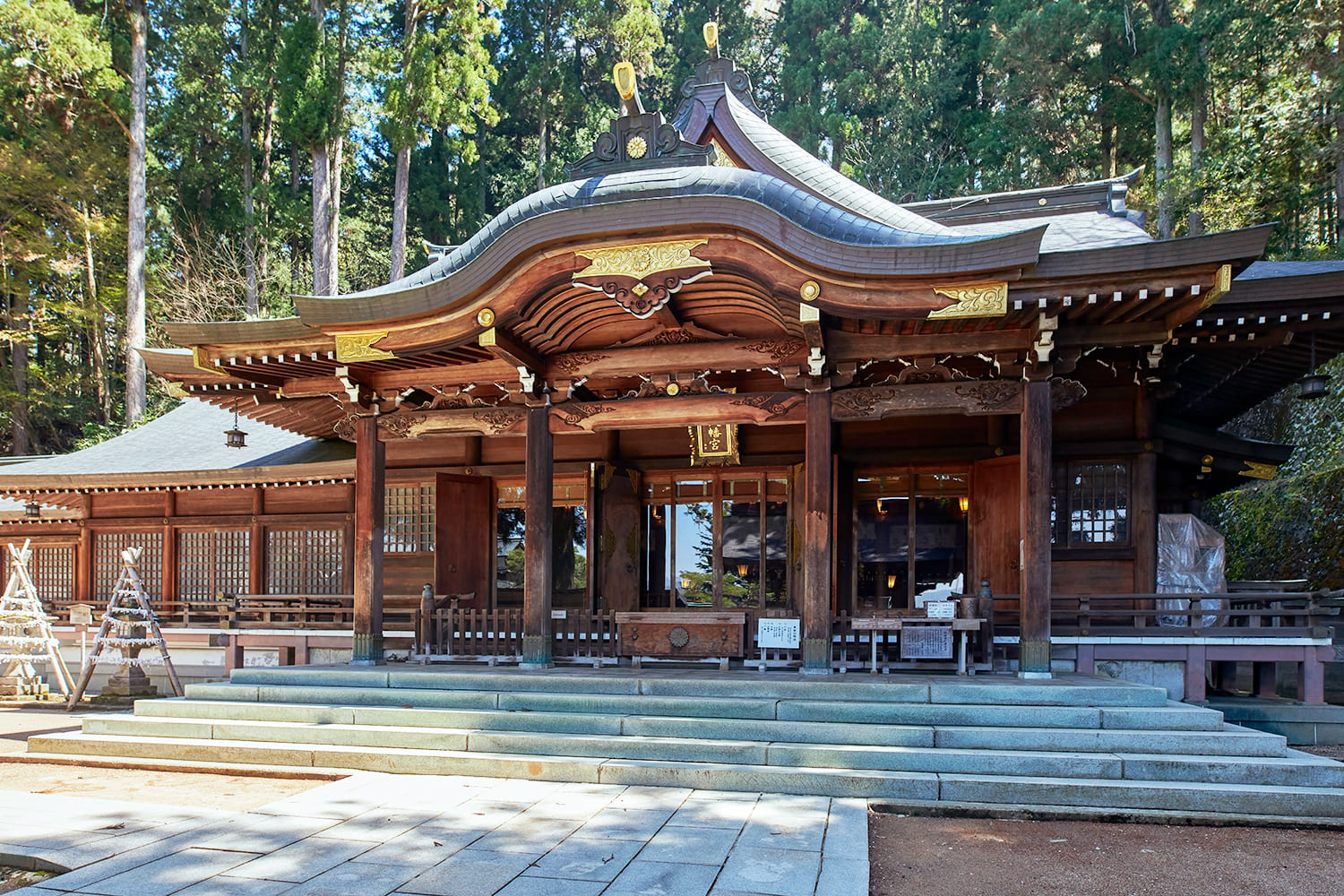
A large torii gate stands near the clear waters of the Miyagawa River. At the end of the picturesque approach lies Sakurayama Hachiman Shrine, affectionately known to locals as “Hachiman-sama.”This historic shrine, said to have been founded in 377 AD, is surrounded by lush greenery and enveloped in refreshing air.
It serves as the guardian deity of the northern half of the former Takayama castle town, and its annual grand festival is the “Hachiman Festival”—part of the Autumn Takayama Festival, which is designated as an Important Intangible Folk Cultural Property and is also registered as a UNESCO World Heritage Site.Held every year on October 9 and 10, the sight of 11 magnificent, resplendent festival floats gathered together is nothing short of spectacular. It is also known as the venue for the “Karakuri Dedication” performed by the “Hotei-dai” float, which carries mechanical puppets.
Pay your respects at the subsidiary shrines within the grounds as well. Seasonal goshuin stamps are also available
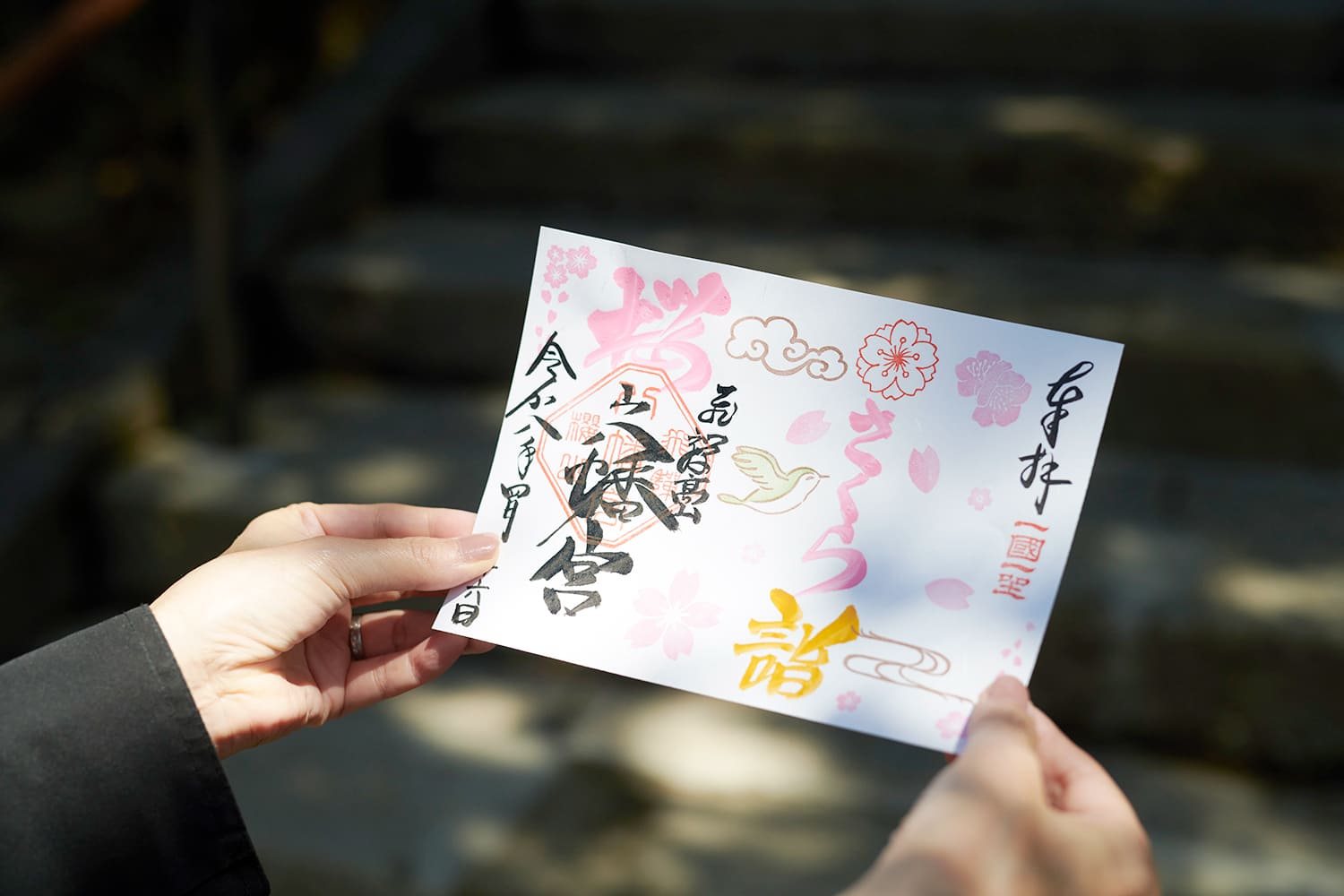
After climbing the large stone steps and paying your respects at the main hall, we recommend visiting the five subsidiary shrines located within the grounds. At Kotohira Shrine—believed to be the birthplace of the Sarubobo faith—the ceiling is decorated with paintings of tengu, and legend has it that if you bite a piece of paper and throw it at the tengu’s face, your illness will be cured.
The shrine office offers colorful goshuin stamps that change with the seasons and events—cherry blossoms in spring, wind chimes in summer, and chrysanthemums and autumn foliage in fall. It’s a shrine you’ll want to visit throughout the different seasons.
Local Guide
This lovely shrine delights the eyes with colorful seasonal flower-adorned hand-washing basins. The “Sakurayama Wind Chime Festival,” held from mid-July through August, when as many as 2,000 wind chimes adorn the shrine grounds, is a summer tradition in Takayama. On weekends, there are also illuminations and festival events.
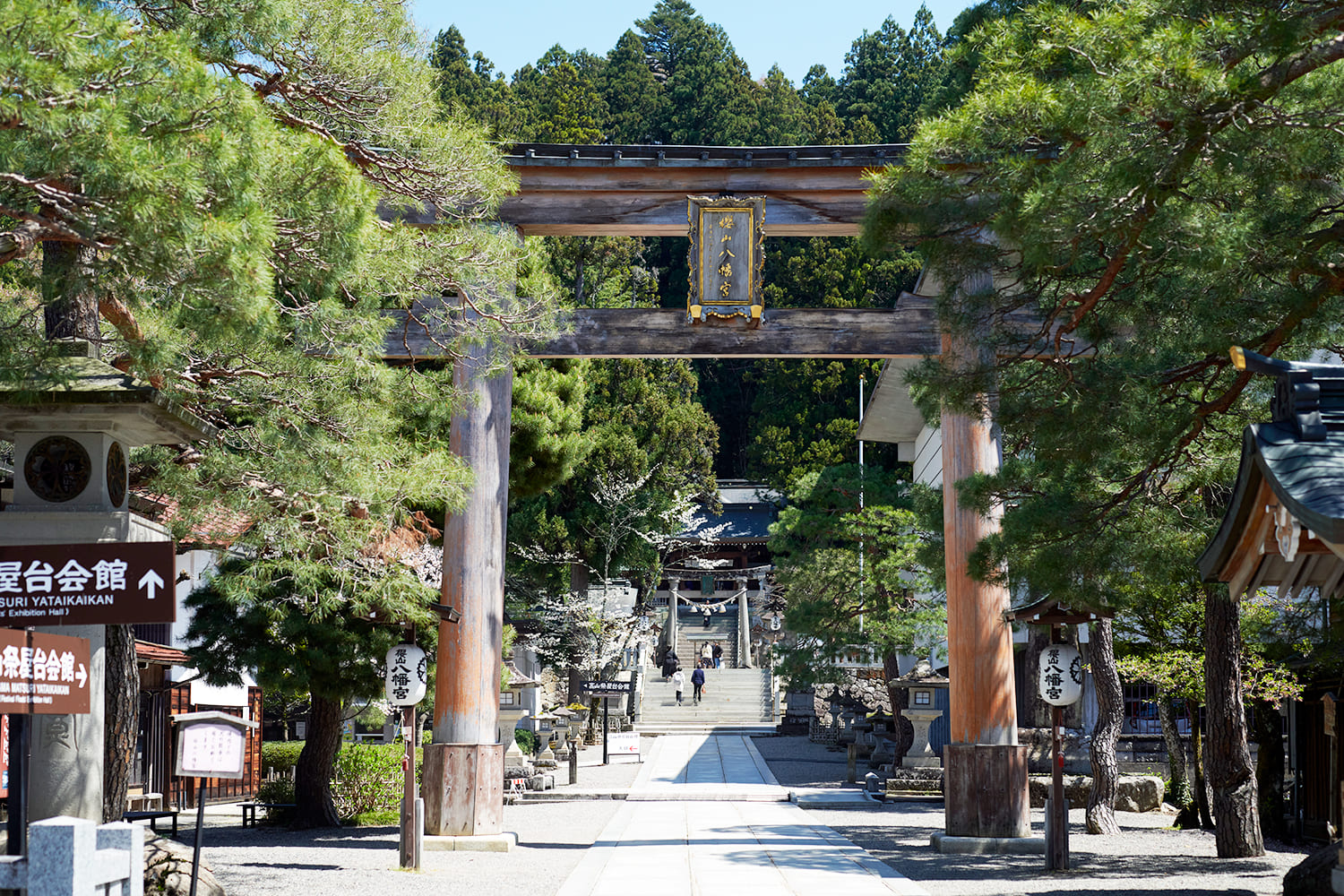
- Sakurayama Hachiman Shrine
-
- 178 Sakura-machi, Takayama City, Gifu Prefecture MAP
- Approx. 20-minute walk from JR Takayama Station
 Take a bus from JR Takayama Station Hakusan Exit, get off at "Daishinmachi 2-chome" and walk about 4 minutes.
 0577-32-0240
- Free
4Takayama Festival Yatai Hall
A spot where you can see the magnificent festival floats—the stars of the “Takayama Festival”—all year round
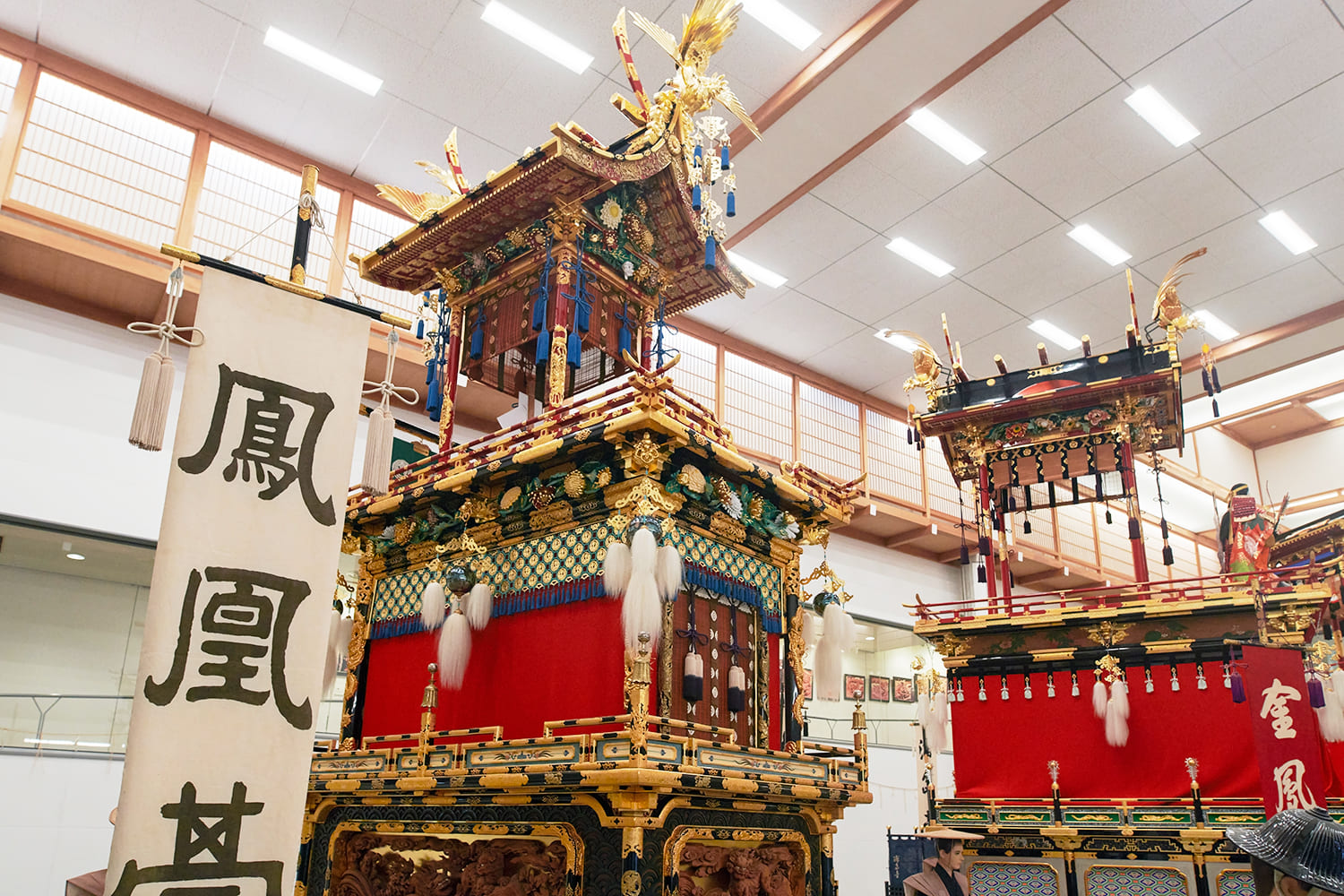
Located on the grounds of “Sakurayama Hachimangu Shrine,” this hall allows year-round viewing of the Takayama Festival floats, which are designated as Important Tangible Folk Cultural Properties of Japan . The exhibits feature the autumn “Takayama Festival” (Hachiman Festival) , and one portable shrine (mikoshi), and the exhibits are rotated every four months.
One weighs 2 to 3 metric tons , and during the festival, about 20 adults pull pull it during the festival. Seeing these floats up close, you’ll fully appreciate their power and splendor. The floats are said to have originated in 1708 (the 5th year of the Hōei era), and while most were completed during the mid-Edo period, they are so magnificent and opulent that they are often referred to as the “moving Yōmeimon Gate.”This is said to be because the “Yatai-gumi”—a local community organization that continues to this day—has refined the designs and decorations with every restoration, driven by the spirit that “our float is the best.”
Admire the intricate and powerful craftsmanship of Hida’s master artisans up close
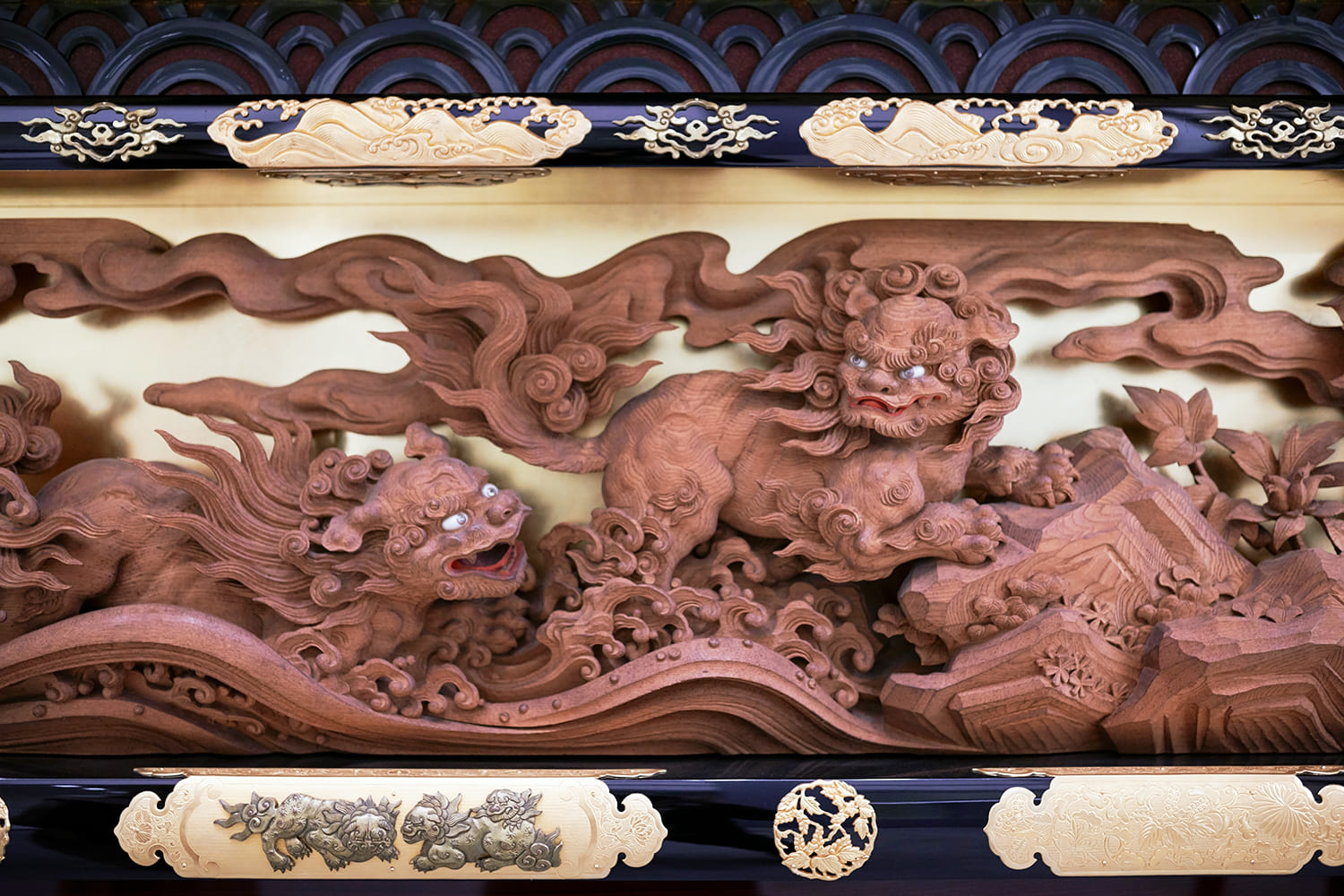
Highlights include the exquisite and beautiful carvings, lacquerwork, and decorative crafts created by the “Hida Masters”—woodworkers who honed their skills while building shrines and temples.From elaborate roof ornaments—such as sea turtles with ears—to the “tsuzure-nishiki” woven curtain depicting a dragon ascending to the heavens, you can take your time observing even the finest details that are rarely visible during the festival itself.
In the audiovisual room, a roughly 10-minute video introduces the Takayama Festival. Viewing this alongside the float exhibition allows you to gain a deeper appreciation of the festival’s charm.
Local Guide
This is a rare spot where you can see authentic festival floats from the Takayama Festival, one of Japan’s Three Great Festivals. If you use the free audio guide, you can hear detailed explanations about the displayed floats, which will deepen your understanding.
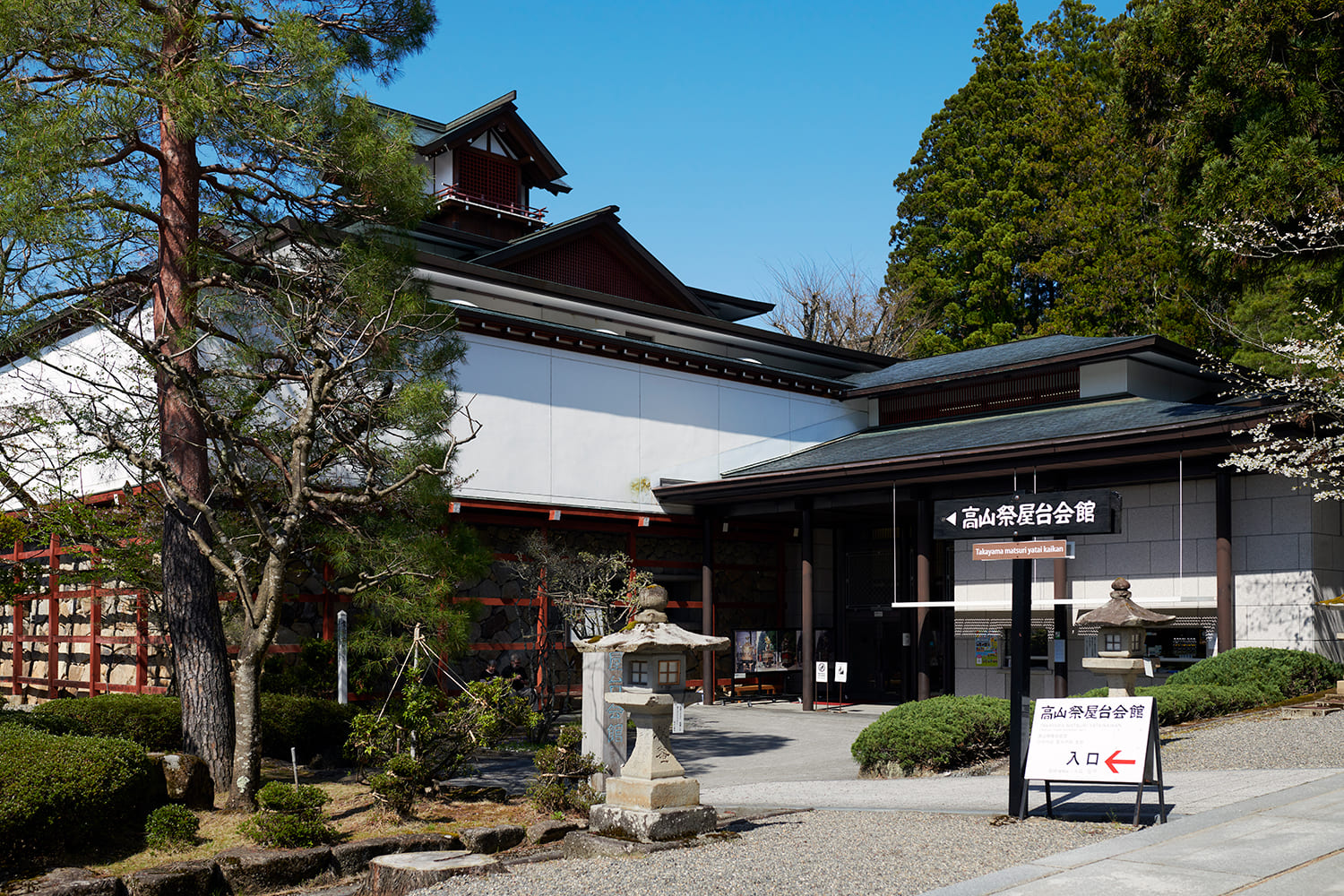
- Takayama Matsuri Yatai Kaikan
-
- 178 Sakura-machi, Takayama City, Gifu Prefecture MAP
- Approximately 7 minutes by car from JR Takayama Station
- Take a bus from JR Takayama Station Hakusan Exit, get off at "Daishinmachi 2-chome" and walk about 4 minutes.
- 9:00-17:00 (December-February: ~16:30)
 Adults 1,000 yen, elementary/junior high school students 500 yen
- 0577-32-5100
- Charged (300 yen per hour)
5Takayama Jinya
The only surviving daikan and gunji office in Japan that preserves its Edo-period appearance
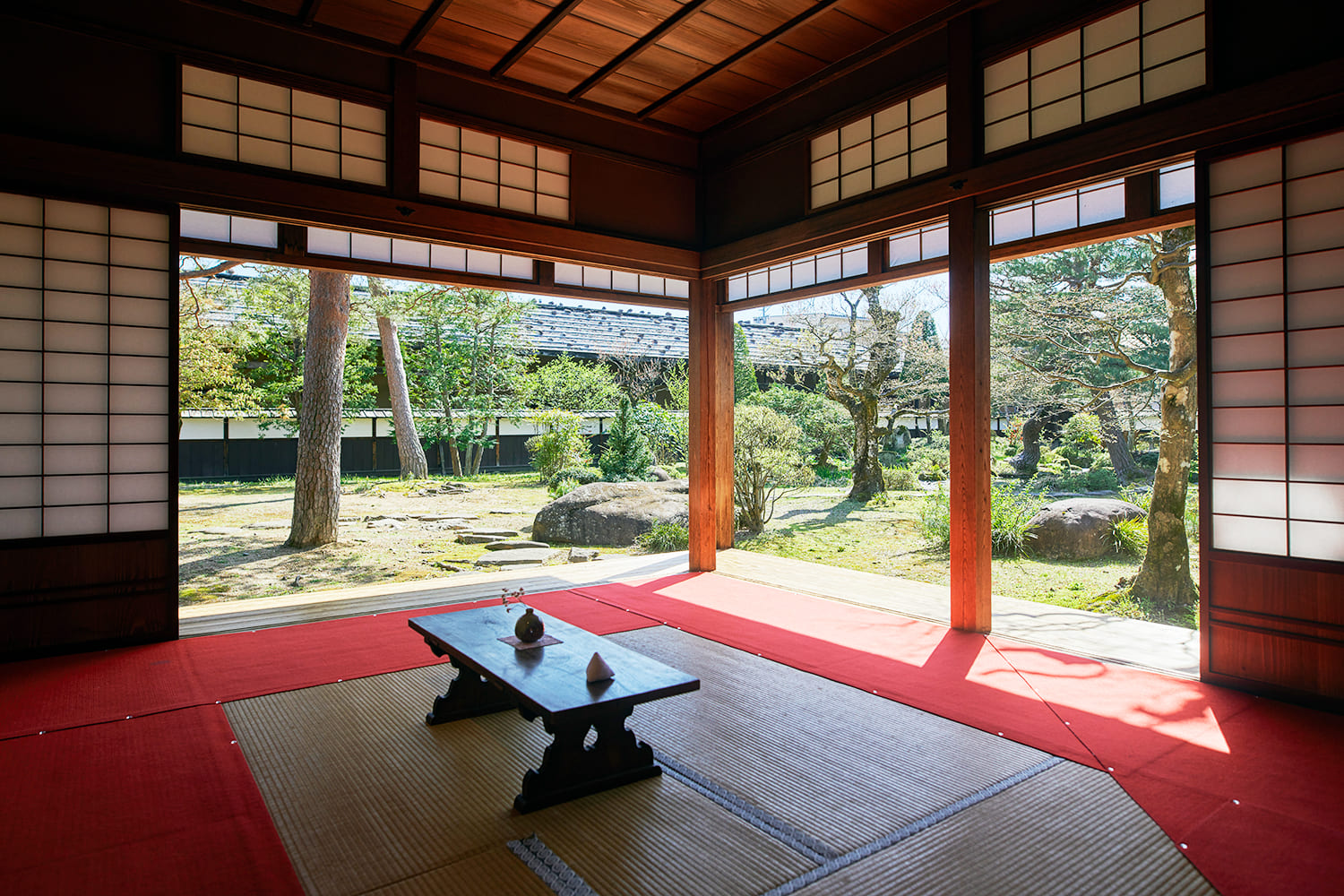
Of the more than 60 daikan and gun-dai offices (shogunate administrative offices) that existed nationwide during the late Edo period, this is the only site where the main buildings from that era still stand.Established in 1692 (Genroku 5) to govern Hida Province—which had become a direct possession of the Tokugawa Shogunate—the Takayama Jinya was not demolished even after the Meiji Restoration and continued to be used as a local government office.Following the relocation of the prefectural offices in 1969 (Shōwa 44), restoration and renovation work was carried out, reviving the Takayama Jinya as it appeared during the Edo period.
The Takayama Jinya consists of three buildings: the “Gyokaku” (government office), where the daikan and gun’yō conducted their administrative duties; the “Yakutaku” (official residence), where the daikan, gun’yō, and their families lived; and the “Gokura” (granary), used to store annual rice taxes. Visitors can tour each of these buildings.
Packed with highlights. Trace the history of the government offices
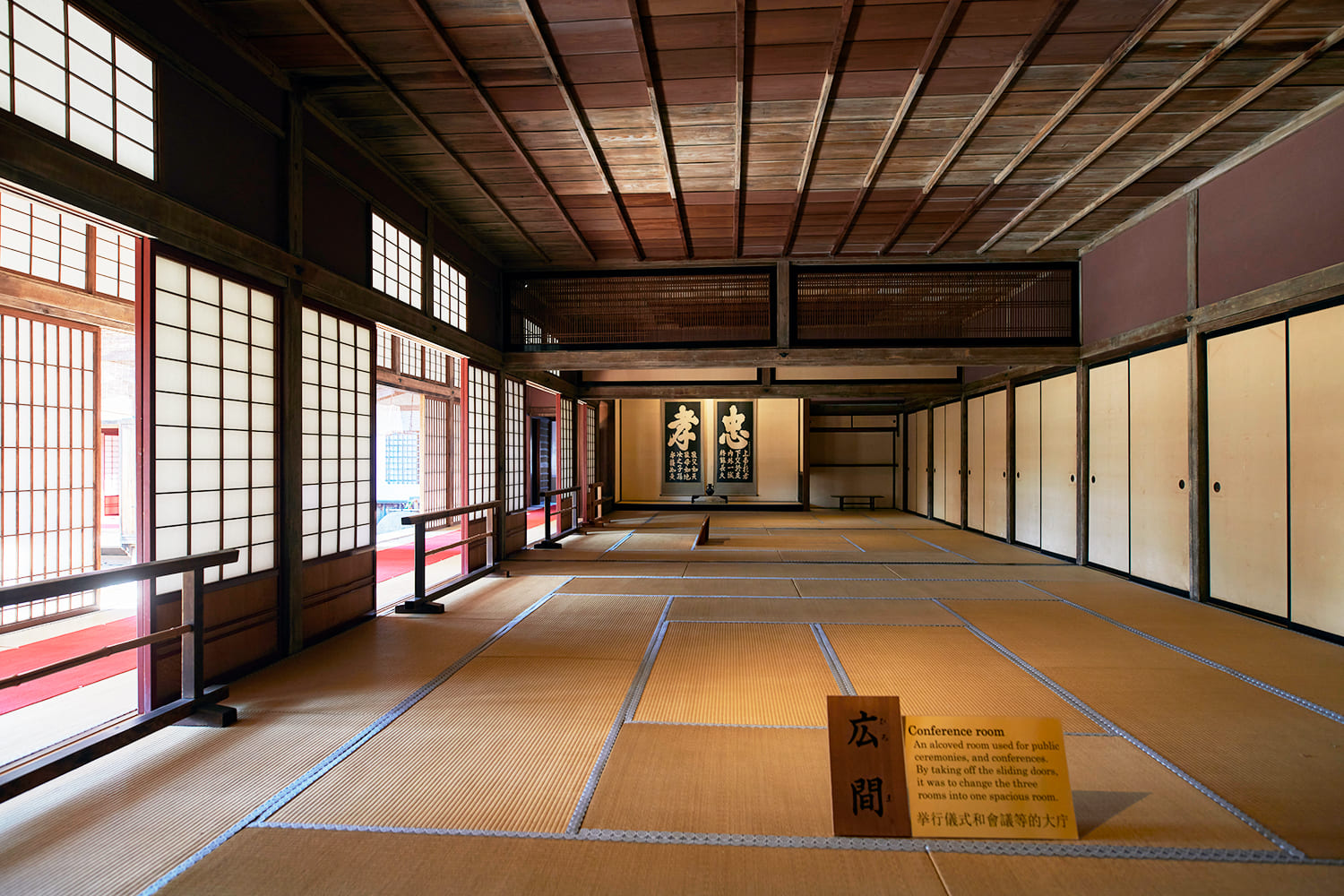
Upon passing through the entrance curtain, the auspicious “Seigaiha” wave pattern painted on the large tokonoma catches the eye. Another characteristic of the Takayama Jinya is the widespread use of nail covers featuring a design called “Mamuki Usagi”—a rabbit facing forward. This motif is said to serve as a charm to ward off evil spirits.
The official residence features a kitchen with a large hearth in the earthen-floored area, suggesting that meals for large groups were prepared here.In the “Goshirazu” (interrogation chamber)—where those who had committed crimes were interrogated and sentenced—torture instruments and prisoner palanquins are on display, conveying the severity of justice in those days. Finally, visit the “Okura,” the oldest and one of the largest surviving Edo-period rice storehouses in Japan. Through the buildings, architectural features, and exhibits from that era, you can learn about the history of Takayama during the Edo period.
Local Guide
The tour takes about 30 minutes, but if you want to take your time, allow about an hour. Free guided tours are also available for groups of one or more. Every morning, the “Takayama Jinya-mae Morning Market” is held in the plaza in front of the main gate, creating a lively atmosphere.
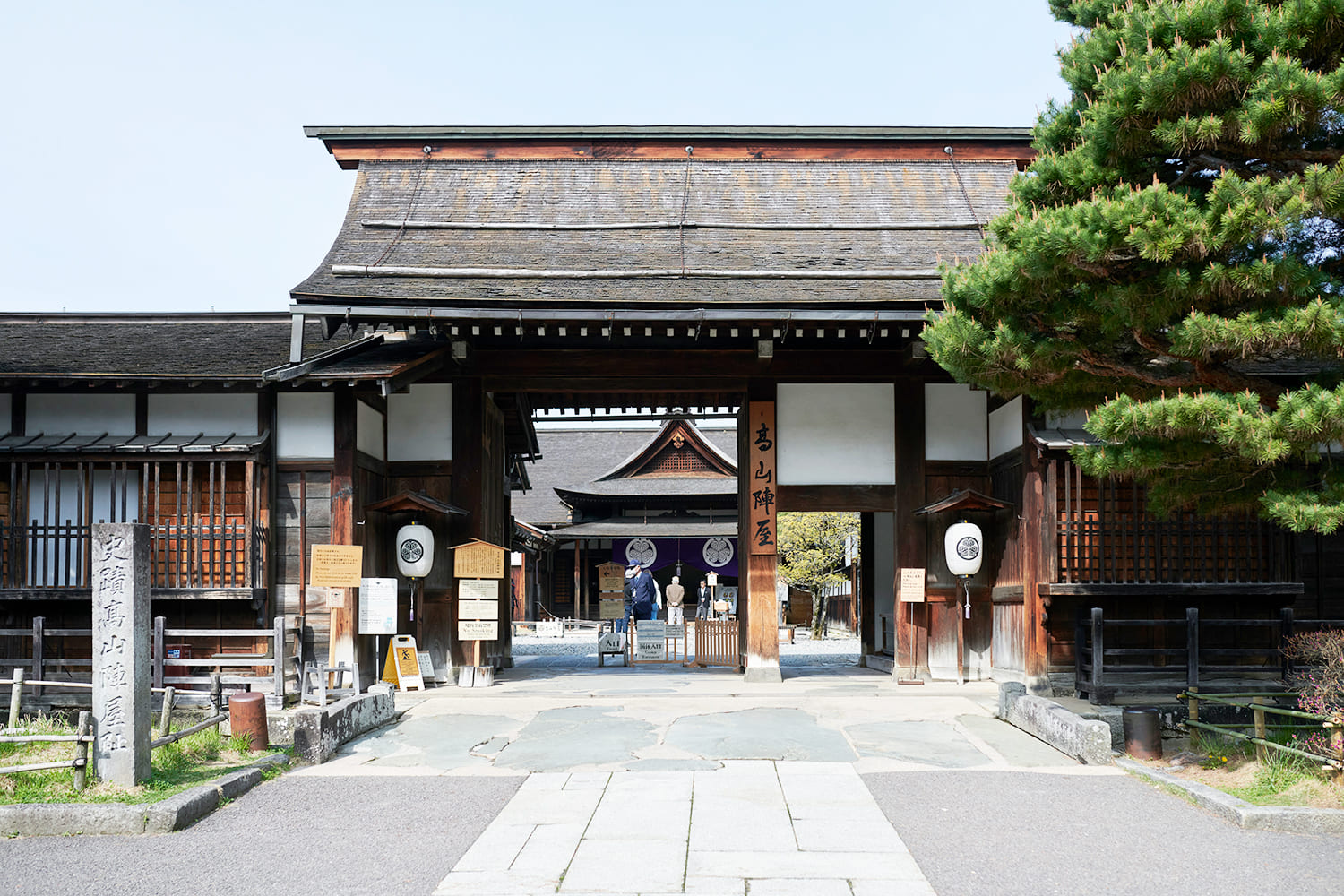
- Takayama Jinya
-
- 1-5 Hachiken-cho, Takayama City, Gifu Prefecture MAP
- About a 10-minute walk from JR Takayama Station
- April–October: 8:45 a.m.–5:00 p.m. (last admission at 4:30 p.m.); November–March: until 4:30 p.m. (last admission at 4:00 p.m.)
- December 29 - January 3
- 500 yen; free for high school students and younger
- 0577-32-0643
- None
6Hida no Sato
An open-air museum showcasing the traditional landscapes of "old, good Japan"
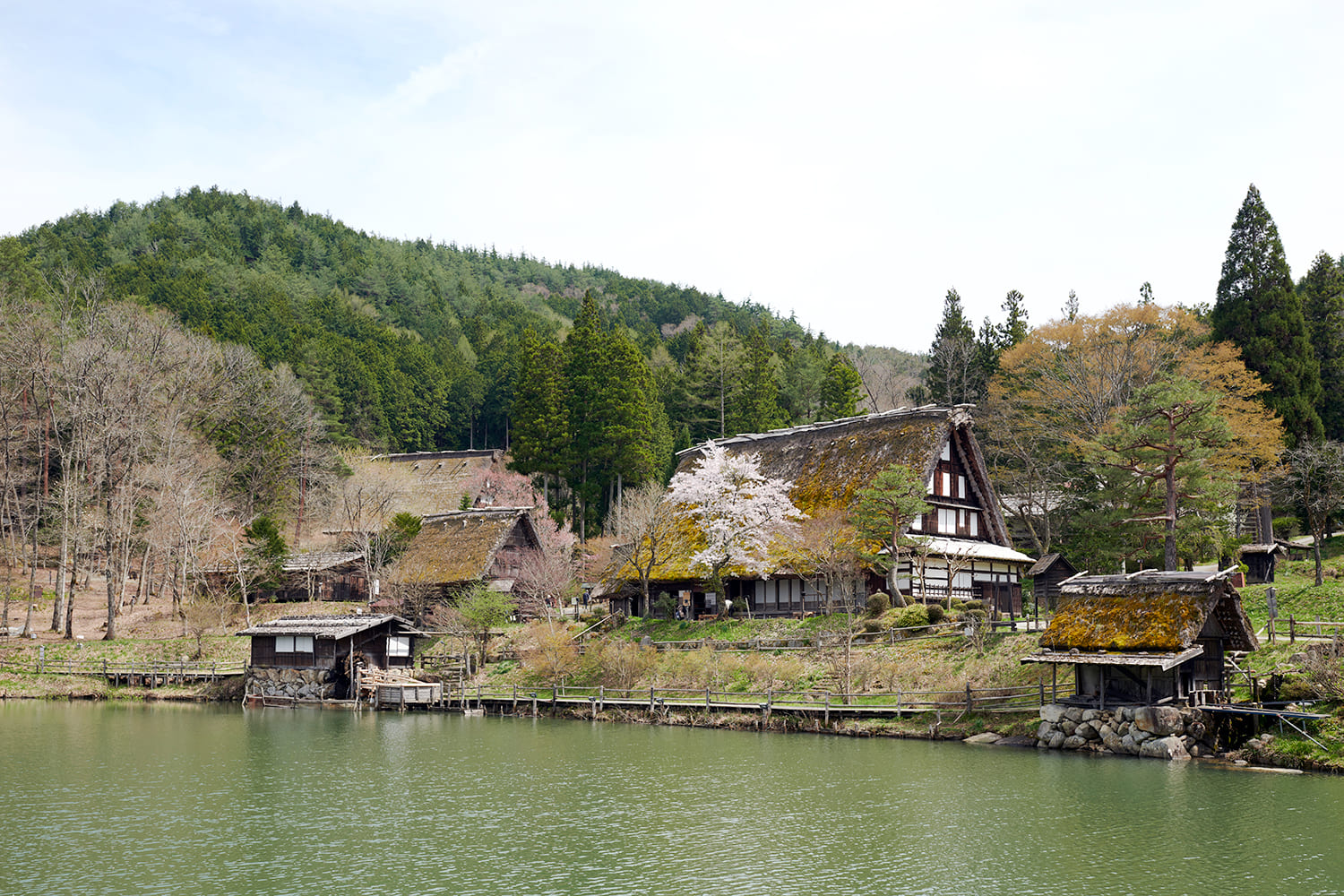
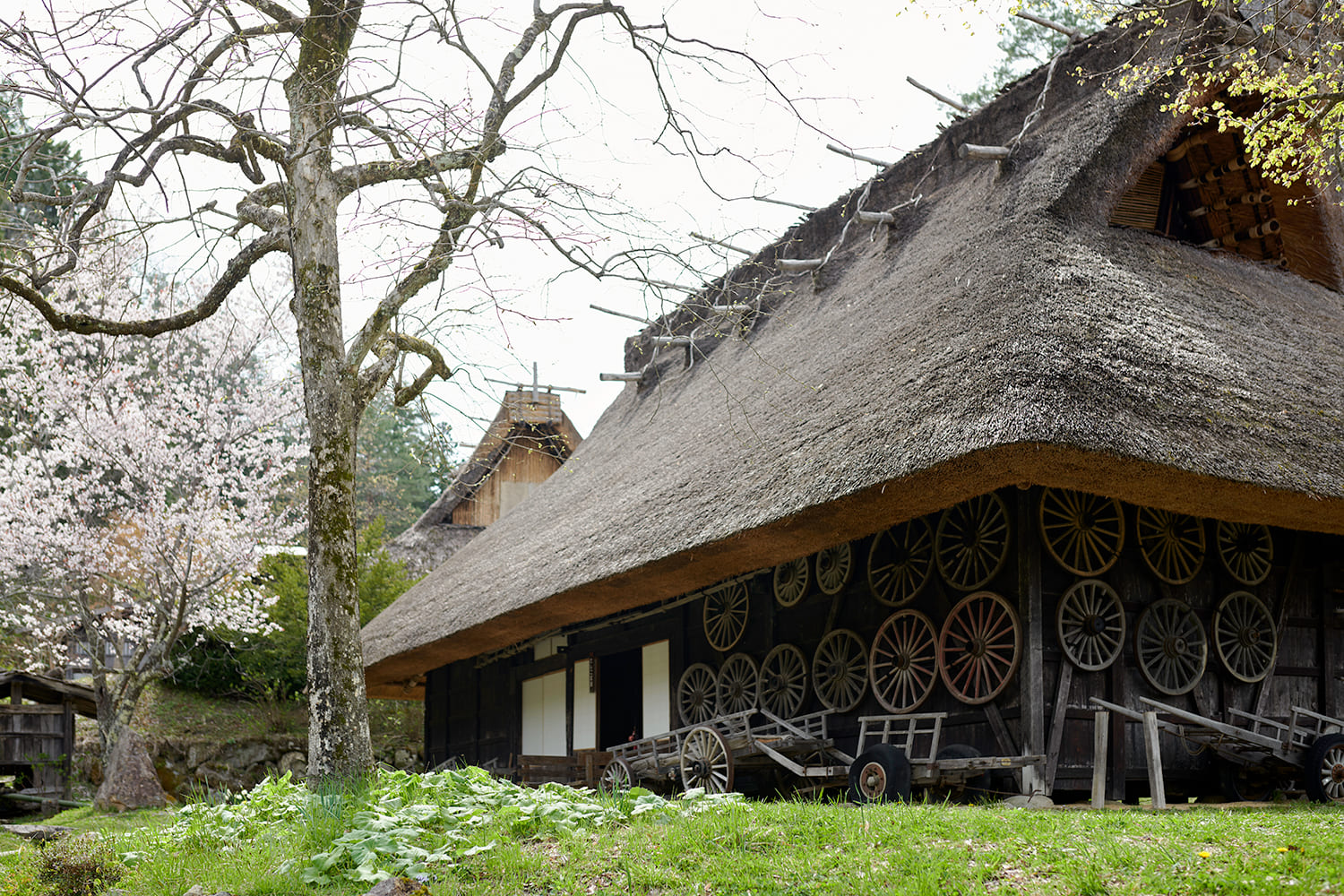
In an effort to preserve valuable cultural heritage that was being lost over time, the village was established in 1971 (Showa 46) on a site spanning approximately 40,000 tsubo.This open-air museum features about 30 buildings—including traditional gasshō-zukuri structures and old farmhouses with thatched roofs—that have been relocated and restored from various parts of Hida, offering a glimpse into mountain village life today. Among them are four buildings designated as Important Cultural Properties of Japan, allowing visitors to observe up close architectural styles adapted to the region’s climate and environment.
The scenery of farmhouses lining the shores of a large pond evokes the nostalgic charm of traditional satoyama landscapes. Take a stroll while enjoying the peaceful scenery that changes with the seasons. Inside the houses, everyday household items and farming tools from that era are on display, offering a glimpse into the wisdom and ingenuity of the people of Hida.
Experience traditional crafts in historic houses. A moment to experience the Hida way of life
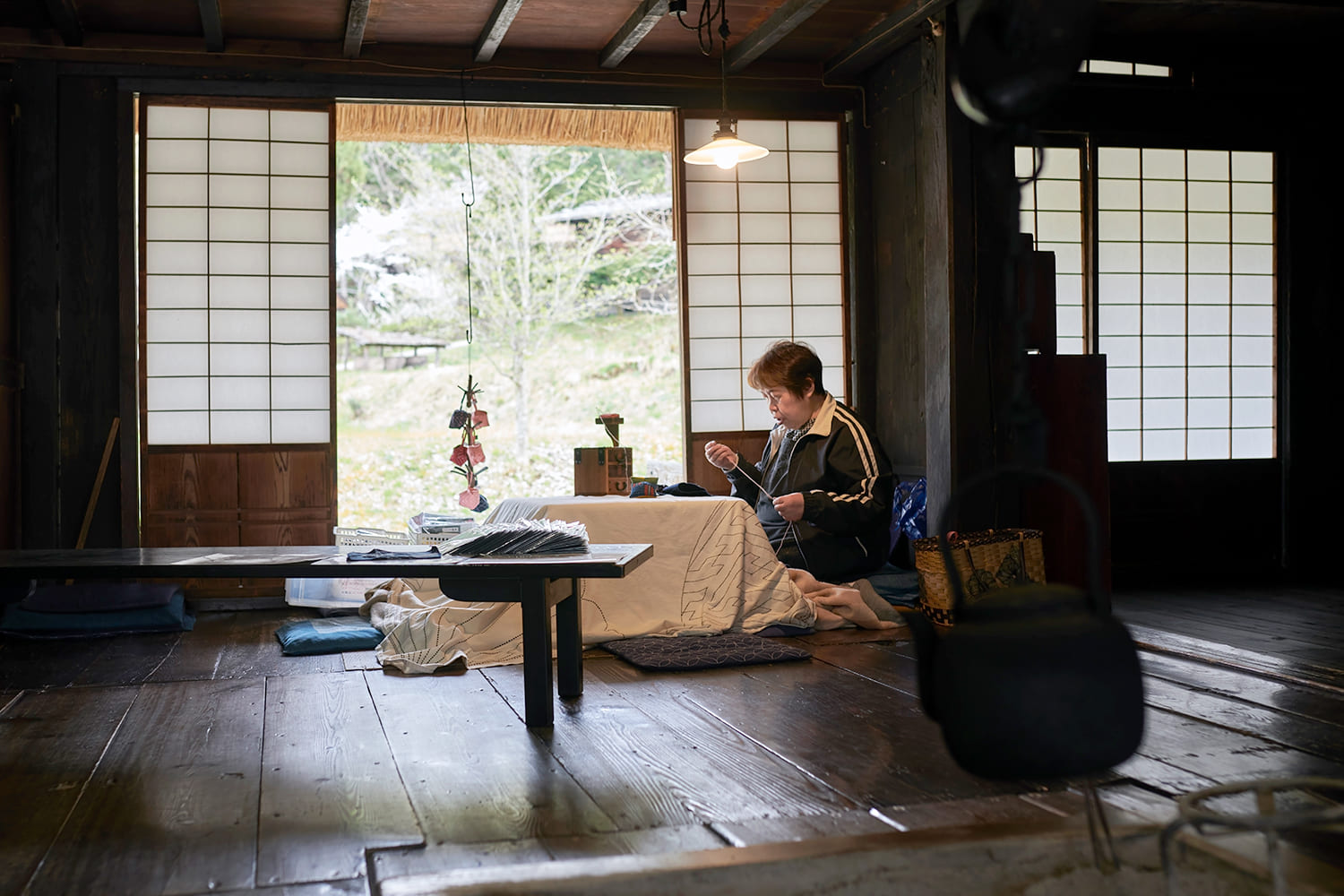
Another attraction is the opportunity to experience the culture passed down through the ages in Hida. You can watch live demonstrations of traditional crafts by master artisans, such as “Ichii-Itto-bori”—carving from yew wood over 400 years old using just a single chisel—as well as Hida-nuri and Hida-Shunkei-nuri lacquerware.
In addition, the Former Tomita House offers hands-on workshops where you can make “Hida Sashiko” coasters or braided cords using the “Hida Takayama Rokutsugumi” technique; the Former Arai House offers weaving on traditional looms; and the Former Nishioka House offers workshops on making straw trivets.By experiencing these crafts inside houses that are hundreds of years old, you’ll gain a deeper appreciation for the way of life and culture that the people of Hida have carefully passed down through the generations.
Local Guide
Another highlight is the rice paddy where “Kurumada”—a circular rice-planting pattern resembling a wheel—has been recreated. Kurumada is a rare practice that currently survives only in Niigata’s Sado Island and Takayama City. Rice planting takes place in early summer, rice harvesting in the fall, and in winter, they even make mochi using the harvested glutinous rice.
- Hida no Sato
-
- 1-590 Kamiokamoto-cho, Takayama City, Gifu Prefecture MAP
- Approximately 7 minutes by car from JR Takayama Station
- Take the bus from JR Takayama Station; get off at “Hida no Sato” and walk about 1 minute
- 8:30-17:00
- Open daily
- 700 yen; elementary and junior high school students: 200 yen
*The Hida Sashiko experience costs 2,000 yen (approx. 1 hour) - 0577-34-4711
- Paid parking (300 yen for standard-sized cars)
 Experience workshops are held on a rotating daily basis; reservations may be required depending on the activity

Local Guide in Charge of This Article
- Makoto Miwa I’m definitely more of a mountain person than a beach person
Hoshino Resorts KAI Okuhida
Okuhida Hot Spring Village, Gifu Prefecture
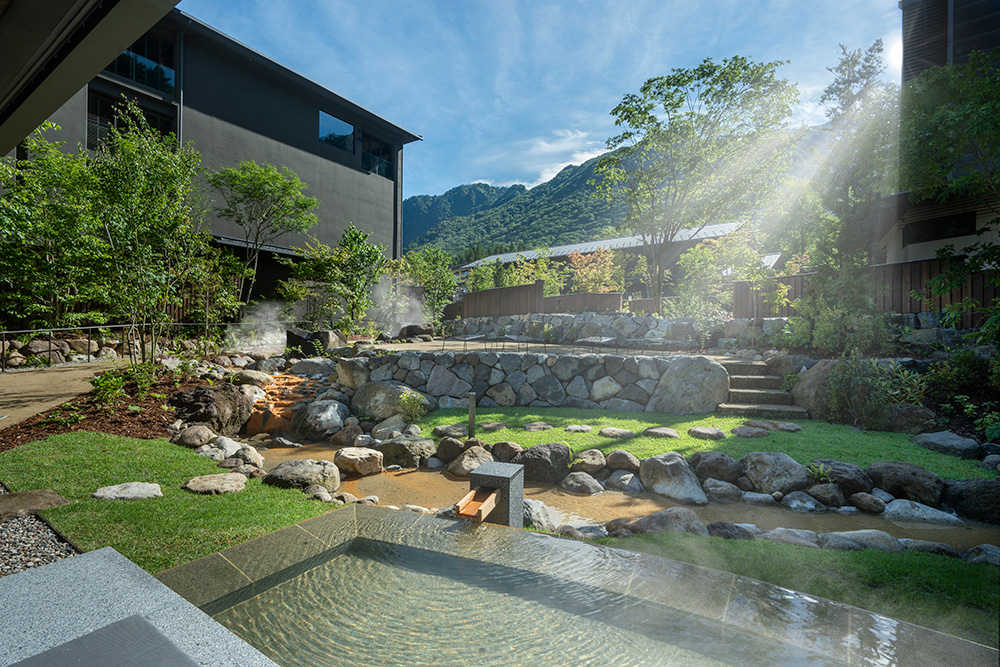
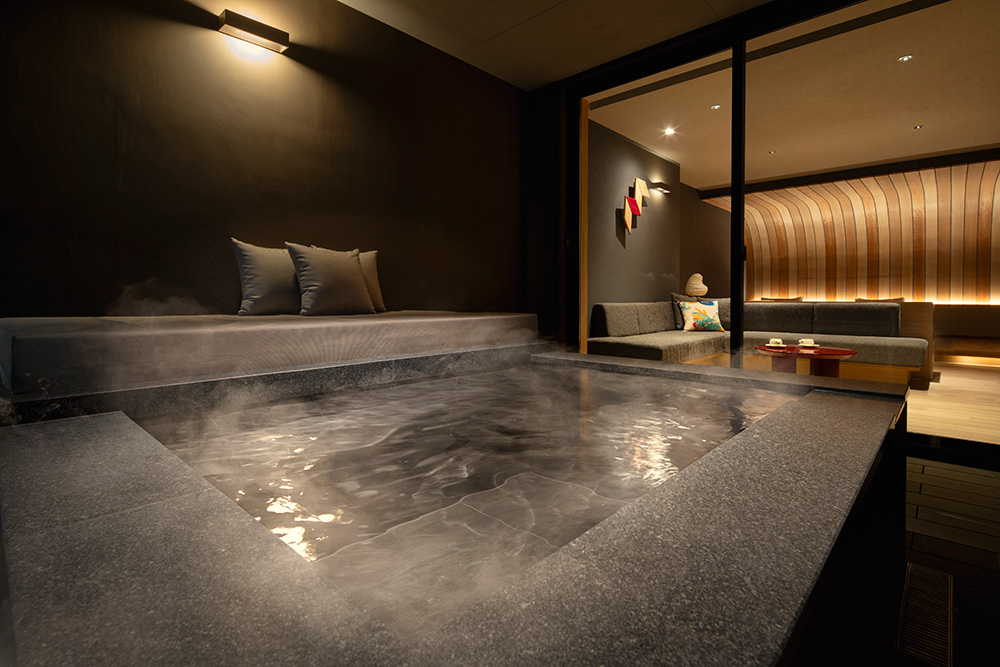
Located in Okuhida Hot Spring Village, which boasts one of the largest hot springs in Japan and is nestled in the bosom of the Northern Alps, this modern inn features beautiful natural woodworking by Hida wood craftsmen.
-1-1.jpg)
Direction Take a local bus from JR Takayama Station, get off at Hirayu Bus Terminal, and walk 3 minutes.
- Sample Room Rates
- Per person, per night Starting at ¥24,000