





8 Recommended Sightseeing Spots in the Kaga Area (Around Yamashiro and Yamanaka Onsen)

In Yamashiro Onsen and Yamanaka Onsen, there are public bathhouses unique to the Hokuriku region called "Soyu," and it is recommended to enjoy the hot springs while strolling through the town. Kaga is also thriving with traditional crafts, and there are plenty of facilities where you can experience its history and culture. Furthermore, we will introduce popular spots including valleys and temples where you can fully enjoy the magnificent nature.
1Yamashiro Onsen Kosoyu
An experiential hot spring museum where you can savor the culture of Yamashiro Onsen

A hot spring facility that recreates a public bathhouse from the Meiji era. The floors and walls of the bathing area are decorated with Kutani-ware tiles, each hand-painted by local artists, faithfully reproducing the designs of that time. The combination of lacquered walls and stained glass creates a retro-modern atmosphere, allowing you to enjoy a bath in a space filled with colorful light. The hot spring water is also traditional, flowing directly from the source, so it is quite hot. There are no washing areas in the bathroom; the proper way to bathe is to pour hot water over yourself before entering the tub.
A rest area with a scenic view where you can relax after a bath

Yamashiro Onsen, which boasts a history of approximately 1,300 years, still retains a townscape known as "Yunogawa," where inns and shops are lined up around the "Koso-yu" public bathhouse. The second floor of the Koso-yu features a tatami-matted rest area where you can relax while gazing out at the streets of Yamashiro Onsen. The exterior of the Koso-yu also recreates the atmosphere of that time, and at night, it is illuminated, creating a magical ambiance. Directly opposite is the "So-yu," a public bathhouse that has long been loved by the locals.

- Yamashiro Onsen Kosoyu
-
 18-128 Yamashiro Onsen, Kaga City, Ishikawa Prefecture MAP
 Approx. 12 minutes by car from JR Kagaonsen Station
 Take a bus from JR Kagaonsen Station, get off at "Yamashiro Onsen," and walk for about 3 minutes
 6:00–22:00 (12:00–22:00 on the 4th Wednesday; 7:00–22:00 from December to February)
 6:00–12:00 on the 4th Wednesday
 Adults (12 and older) 700 yen, ages 6 to under 12 280 yen, ages 3 to under 6 140 yen, under 3 free
 0761-76-0144
 Free
2Ishikawa Prefectural Kutani-yaki Art Museum
Admire Kutani ware in a space where aesthetic consciousness breathes
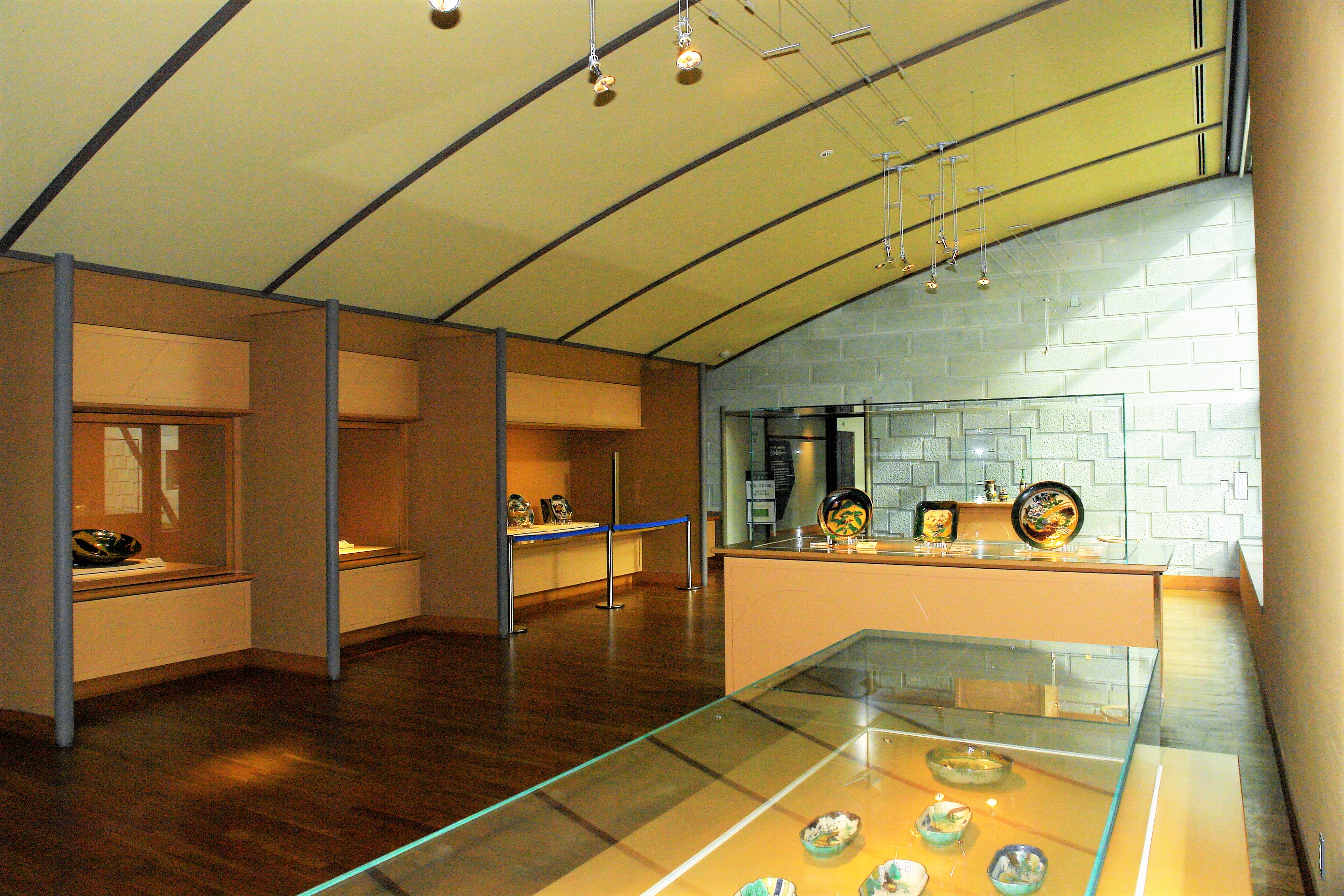
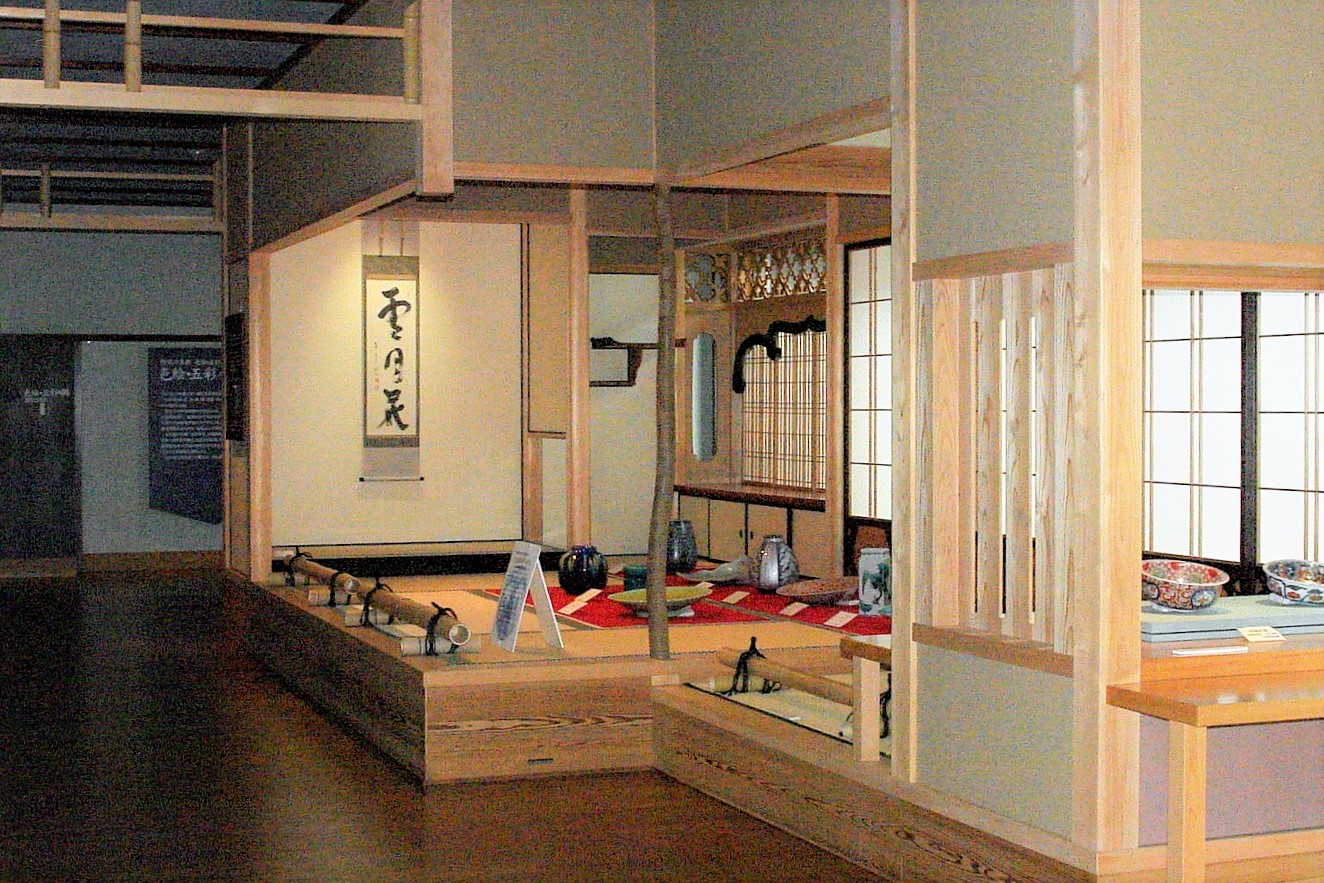
Focusing on "Ko-Kutani," a style of colored porcelain with a tradition spanning over 380 years, the museum exhibits works from kilns that have inherited this style. The permanent exhibition rooms are divided by overglaze enamel styles into the "Aode Room," "Iroe/Gosai Room," and "Akae/Kinran Room," allowing you to enjoy the distinct worlds of Kutani ware painting in each. In addition, the works of modern and contemporary Kutani ware artists are also well worth seeing.
Furthermore, the interior of the museum uses natural materials such as wood, earth, and stone, and with features like plaster walls created by master plasterers and lacquered wood, the building itself is an art space.
A relaxing museum that also features a garden and a tea room
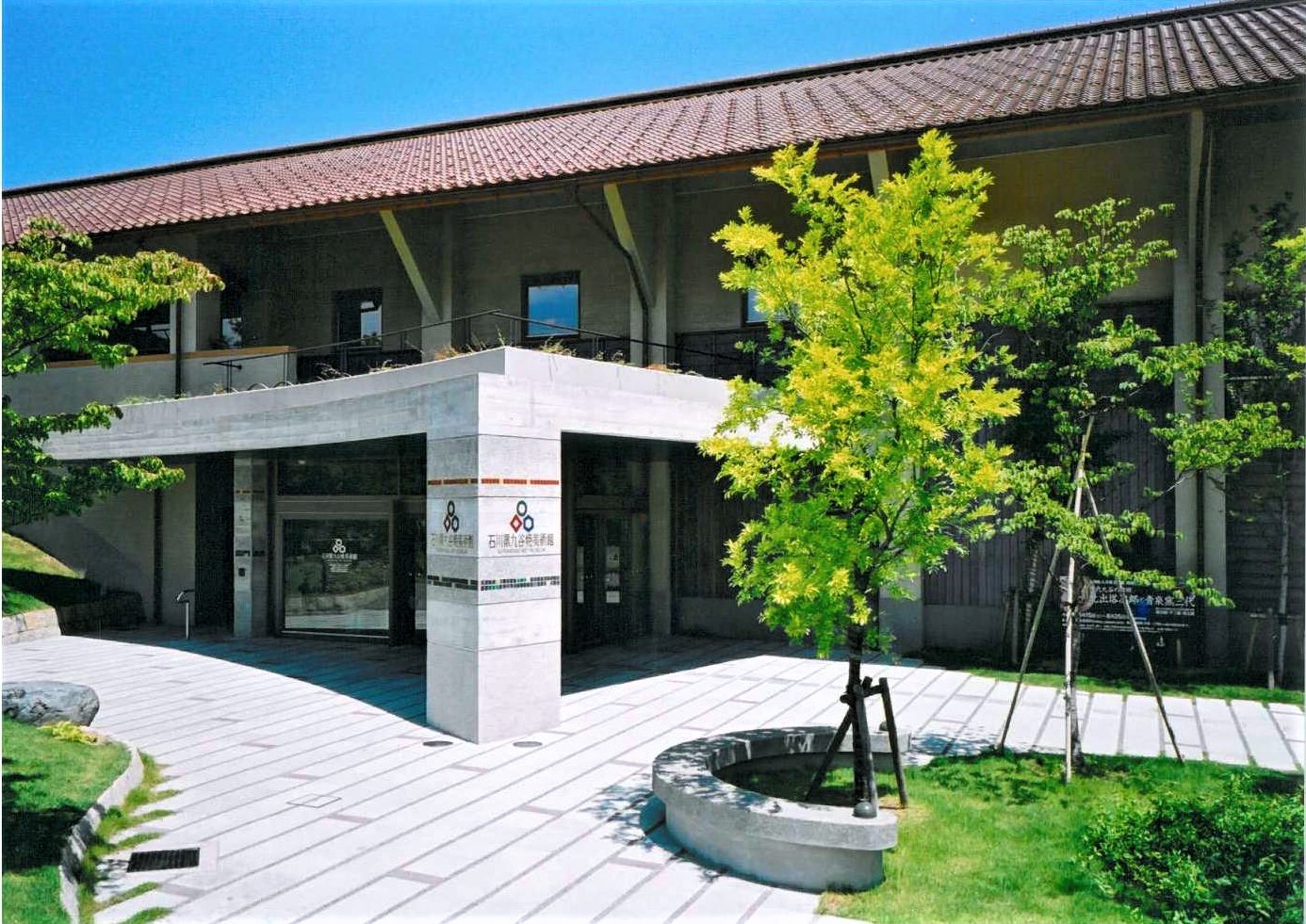
The museum is located within the "Ko-Kutani no Mori Shinsui Park" and is popular as a garden museum where you can also take a stroll. On the second floor, there is a tea room where you can enjoy tea served in Kutani ware vessels, as well as an attached gallery featuring works by artists living in Kaga City. At the museum shop, you can purchase original goods as well as vessels created by contemporary Kutani ware artists.
Also, if the timing is right, guided tours by curators or guides are held within the museum. The tour takes about 30 to 60 minutes, and individuals can participate. Stopping by at the beginning of your trip will deepen your knowledge, making dining at restaurants and staying at inns that use Kutani ware even more enjoyable.
- Kutani Kosen Kiln Exhibition Hall
-
- 1-10-13 Daishoji Chihomachi, Kaga City, Ishikawa Prefecture MAP
- Approx. 7-minute walk from JR Daishoji Station
- 9:00–17:00 (last admission at 16:30)
- Mondays (open if a national holiday)
- Adults: 560 yen, 75 and older: 280 yen, high school students and younger: free
- 0761-72-7466
- Free
 Guided tours are free and require advance reservation
3Kakusenkei Gorge
A scenic valley that represents the Hokuriku region
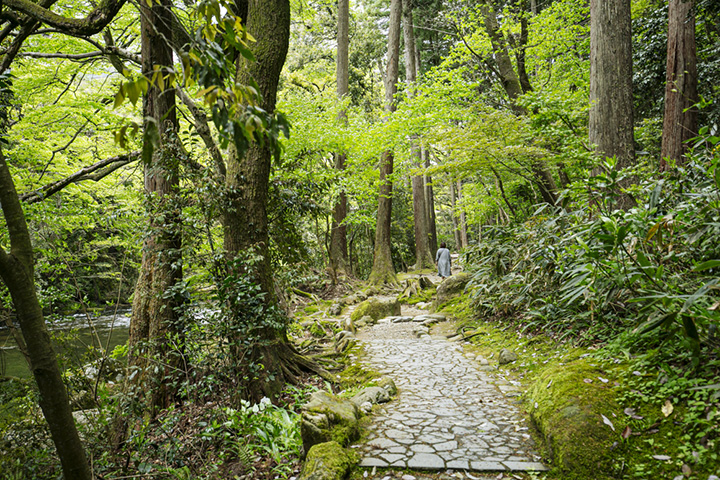
Yamanaka Onsen boasts a history of approximately 1,300 years. Along the middle reaches of the Daishoji River, which flows through the hot spring town, lies the beautiful and nature-rich Kakusenkei Gorge. This 1.3km stretch from Koorogi Bridge upstream to Kurotani Bridge allows visitors to enjoy seasonal scenery while walking along the promenade.
It is also famous as a spot for autumn leaves, which begin to change color in early November and reach their peak in the middle of the month. The combination of the all-cypress Koorogi Bridge and the autumn foliage is particularly spectacular.
Spend a moment on the atmospheric river terrace

Every year from April 1st to November 30th, a "kawadoko" (riverside terrace) opens at the foot of Ayatori Bridge. You can elegantly enjoy sweets in this charming seating area shaded by red umbrellas. Additionally, participating restaurants in the Yamanaka Onsen town offer riverside bento boxes by reservation, which are recommended for takeout to enjoy at the riverside terrace (seating fee required) or your favorite spot.
Furthermore, the gorge is dotted with many attractions, such as Mugenan, which exhibits Kutani ware and works by Ogata Korin in a samurai residence, and Bashodo, which enshrines Matsuo Basho. It is a spot where you will want to spend half a day strolling at a leisurely pace.
- Kakusenkei Gorge
-
- Higashi-machi to Koorogi-machi, Yamanaka Onsen, Kaga City, Ishikawa Prefecture MAP
- From JR Kagaonsen Station, take the Kaga Onsen Bus bound for Kayano for 34 minutes, get off at "Kiku-no-yu-mae," and walk for about 4 minutes
- 0761-78-0330 (Yamanaka Onsen Tourism Association)
- Ayatori-hashi Bridge Parking Lot, free parking for tourists
4Yuge Kaido Street
The main street of Yamanaka Onsen, lined with local gourmet food and specialty products

This is the main street of Yamanaka Onsen, a 600m-long path connecting the public bathhouse "Kiku-no-yu" and the area near Koorogi Bridge. Lined with gallery shops selling Yamanaka lacquerware and Kutani ware, as well as restaurants and cafes, it is perfect for shopping and eating while walking. In front of "Kiku-no-yu," there is a "boiling spot" where the source water of Yamanaka Onsen flows, allowing you to experience making hot spring eggs. It is also recommended to soak your feet in the footbath while waiting for them to boil. In the center of the street stands Hasebe Shrine, which enshrines the founder of Yamanaka Onsen, with its charming shrine building nestled in the greenery of the grounds.
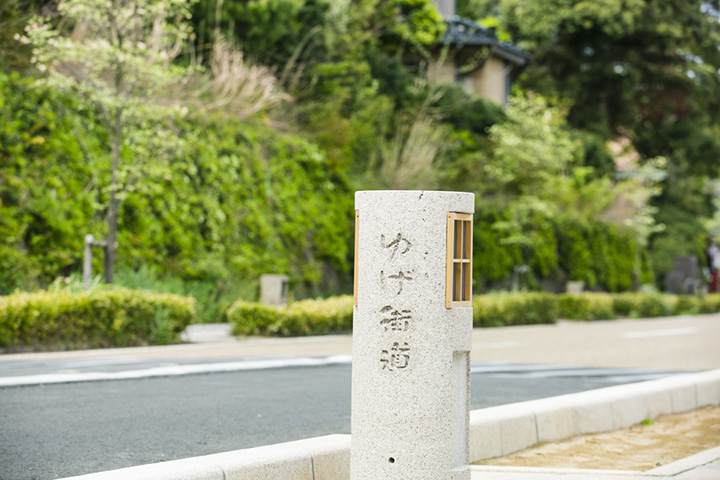
- Yuge Kaido Street
-
- Minamimachi to Yunodemachi, Yamanaka Onsen, Kaga City, Ishikawa Prefecture MAP
- Approx. 20 minutes by car from JR Kagaonsen Station
- Take a bus from JR Kagaonsen Station and get off at "Yamanaka Onsen Bus Terminal," then walk for about 8 minutes
- Varies by store
- Varies by store
- 0761-78-0330 (Yamanaka Onsen Tourism Association)
- Free (Tourist free parking, Koorogi Bridge parking lot, etc.)
5Kayano Osugi (Great Cedar of Kayano)
A natural monument cedar tree that boasts an overwhelming presence
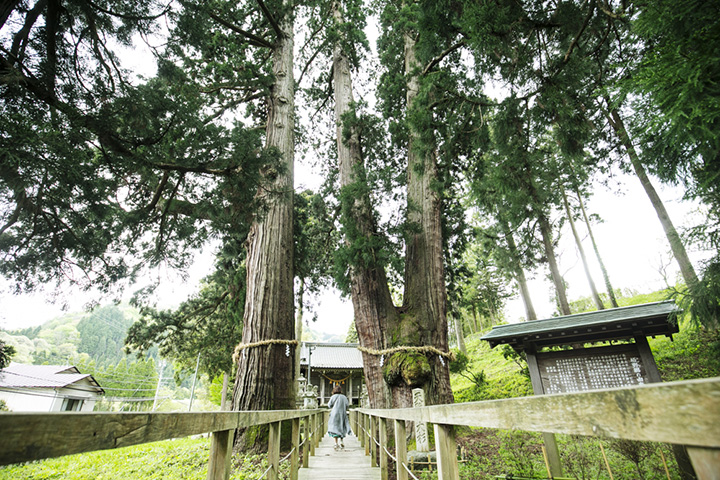
Located about 2 km south of the Yamanaka Onsen town, the "Kayano Osugi" (Great Cedar of Kayano) towers within the grounds of Sugawara Shrine. It is a sacred tree said to be approximately 2,300 years old and is designated as a National Natural Monument. Boasting a trunk circumference of 11.5 meters and a height of 54.8 meters, looking up from directly beneath it fills your field of vision with greenery, creating an impressive sight.
The other three cedars on the grounds are also giant trees designated as Ishikawa Prefecture Natural Monuments under the name "Sugawara Shrine's Great Cedars." The shrine grounds are enveloped in a dense, tranquil atmosphere. A cypress-wood floating bridge spans the approach connecting the torii gate to the main hall, allowing visitors to view the trees up close without damaging them.
After paying your respects, it is also recommended to enjoy the famous kusa-dango (mugwort dumplings) at the "Kayano Osugi Chaya" teahouse located across from the shrine (closed from December 11 to mid-April).
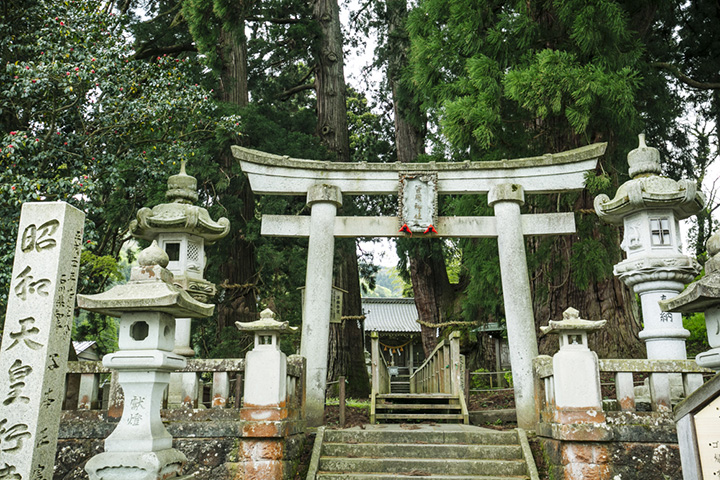
- Kayano Osugi (Great Cedar of Kayano)
-
- 10-1 Kayano-machi, Yamanaka Onsen, Kaga City, Ishikawa Prefecture MAP
- Approx. 20 minutes by car from JR Kagaonsen Station
- Take a bus from JR Kagaonsen Station and get off at "Kayano," then walk for about 2 minutes
- 0761-78-0330 (Yamanaka Onsen Tourism Association)
- Free
6Rosanjin Kyukyo-ato (Former Residence of Rosanjin) Iroha Soan
Tour the precious building where Rosanjin lived for half a year

Rosanjin Kitaoji was an artist who mastered a wide range of fields, including calligraphy, seal carving, painting, ceramics, and cooking. This is the place where Rosanjin, during the time he went by the name Taikan Fukuda, visited Yamashiro Onsen and lived for about half a year starting in the autumn of 1915 (Taisho 4). The charming building was formerly a villa of the "Yoshinoya Ryokan," and the two-story wooden, tile-roofed main house was built in the early Meiji period. It took its current form by connecting the main house and the earthen storehouse with a lobby.
The lobby, featuring large windows, provides a space for viewing the garden. You can spend a relaxing time here while enjoying Kaga roasted tea.
Exhibits and spaces that offer a glimpse into life at the time are the highlights.

This villa served as a cultural salon, and the irori (hearth) room and tea room that served as its stage remain in their original state. The study displays the writing desk and celadon hand warmer (hibachi) that Rosanjin actually used, allowing you to feel the breath of his daily life. The earthen storehouse is open to the public as an exhibition room, permanently displaying numerous works such as the carved "Yoshinoya" signboard made by Rosanjin. In addition, you can enjoy Rosanjin's worldview outside the building as well, including the stone pavement he once walked on, stone monuments, and a crape myrtle tree propagated from the one at his Hoshigaoka Saryo residence.

- Rosanjin Residence Site Iroha Soan
-
- 18-5 Yamashiro Onsen, Kaga City, Ishikawa Prefecture MAP
- Approx. 14 minutes by car from JR Kagaonsen Station
- Take a bus from JR Kagaonsen Station, get off at "Yamashiro Onsen Nishiguchi," and walk for about 3 minutes.
- 9:00–17:00 (Last admission at 16:30)
- Wednesdays (Open if it falls on a public holiday)
- Adults: 560 yen, 75 and older: 280 yen, high school students and younger: free
- 0761-77-7111
- Free
7Natadera Temple
Stroll through the nature-rich temple grounds, where nationally designated important cultural properties are scattered.
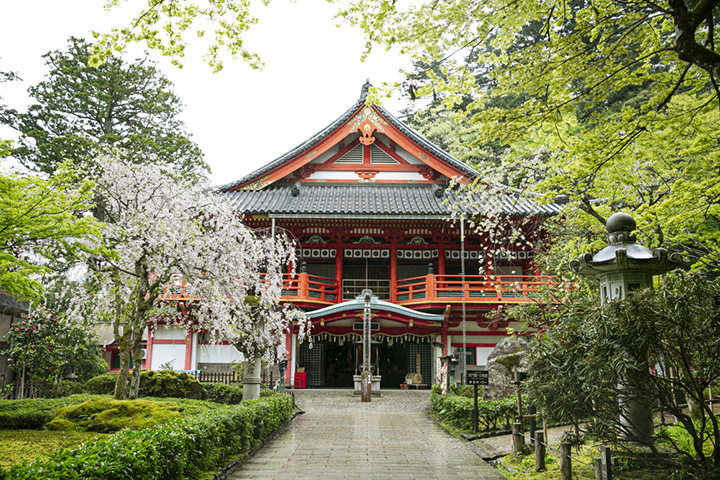
Founded in 717 (the first year of the Yoro era) by the Echizen monk Taicho. After passing through the temple gate, a path stretches straight ahead, surrounded by a forest of cedar and camellia trees, leading to a spacious temple precinct dotted with seven nationally designated Important Cultural Properties and a scenic garden. The main hall is located inside a rock cavern, where the principal image, the Eleven-faced Thousand-armed Kannon Bodhisattva, is enshrined. This stems from the teachings of Jinenchi (natural wisdom), which reveres the sacred Mount Hakusan and respects nature. It has been believed that by performing the "Iwaya Tainai Kuguri" (passage through the womb of the rock cavern), one is reborn and purified of their sins.
Enjoy the magnificent scenery woven by strange rock formations.

Natadera Temple is also featured in the Michelin Green Guide Japon, which rates tourist destinations where visitors can experience rich nature and diverse culture, and its dynamic scenery is a highlight. The "Kigan Yusenkyo," where an Inari shrine is enshrined on the hillside of strange rock formations, can be viewed in its entirety from the observation deck, offering a landscape that lets you feel the mystery of nature. It is also popular as a spot for autumn leaves. Various goshuin (temple seals) are available at the Kondo Kao-den Hall, and you can also purchase Natadera Temple's specialty, sesame tofu.
- Natadera Temple
-
- Yu-122 Natamachi, Komatsu City, Ishikawa Prefecture MAP
- From JR Awazu Station, take the Komatsu Bus Awazu A-line (downbound) for about 10 minutes and get off at "Natadera Temple," which is right there.
- 9:15–16:00
- Adults (junior high school students and older): 1,000 yen, elementary school students: 300 yen, infants: free
- 0761-65-2111
- Free
8Kaga Traditional Crafts Village Yunokuni no Mori
A traditional craft theme park where you can enjoy a variety of experiences.
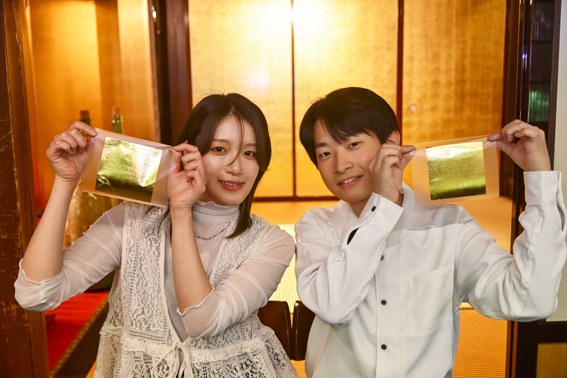
A traditional craft village where you can enjoy over 100 types of experiences across 11 halls, housed in several relocated old folk houses. You can create your own unique works while being taught by professional artisans and staff, including Wajima lacquerware, Kaga Yuzen silk dyeing, Kutani ware, and gold leaf. Another appeal is the ability to experience authentic traditional techniques, such as the chinkin (gold inlay) experience, where gold leaf or gold powder is embedded into items like chopsticks or soup bowls. The scent bag experience, where you blend aromatic woods to create your own fragrance, is popular among women. You can take home everything you make, and items that require time to finish can be shipped to you (shipping fees apply).
Stroll through the tranquil village lined with old folk houses.

Kaga Traditional Crafts Village Yunokuni no Mori boasts an expansive 130,000 tsubo (approx. 430,000 square meters) area, where traditional thatched-roof folk houses from the Edo to Meiji periods are scattered throughout a lush forest. The village features numerous photo spots that take advantage of the seasonal nature and charming townscapes, allowing visitors to enjoy taking pictures against backdrops like the Japanese umbrella path, seasonal flowers, and atmospheric buildings. There is a wide selection of restaurants where you can taste Hokuriku specialties such as Echizen soba and Komatsu udon, and you can also enjoy matcha and sweets at the "Hojo-an" tea house, which uses a building from the mid-Edo period. It is a perfect spot for outings with pets, where even just strolling around is a healing experience.
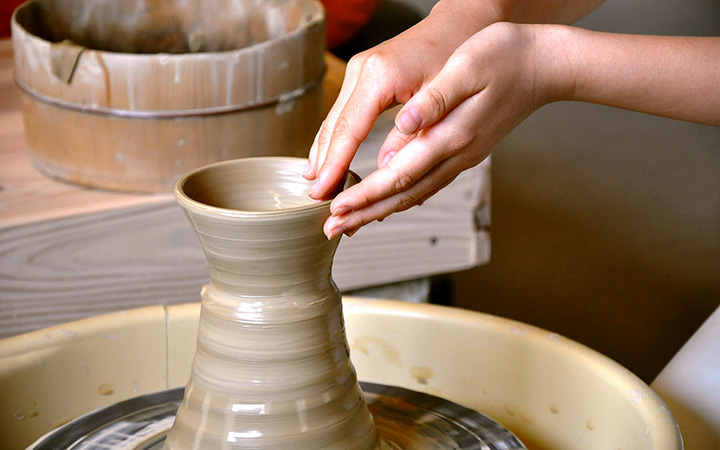
- Kaga Traditional Crafts Village Yunokuni no Mori
-
- Na-3-3 Awazu Onsen, Komatsu City, Ishikawa Prefecture MAP
- Approx. 10 minutes by car from JR Awazu Station
- Take the CANBUS from JR Kagaonsen Station and get off at "Yunokuni no Mori," then walk for 30 seconds
- 9:00–16:30 (Last admission for workshops at 15:00, last admission to the village at 16:00)
- Thursday *Open on public holidays, during Golden Week, and in the summer season
- Adults 550 yen, junior high and high school students 440 yen, ages 4 and up 330 yen
- See website
- Free

Local supporter in charge of this article
- Koya SuzukiActive Kaga Men
KAI Kaga
Yamashiro Onsen, Ishikawa Prefecture
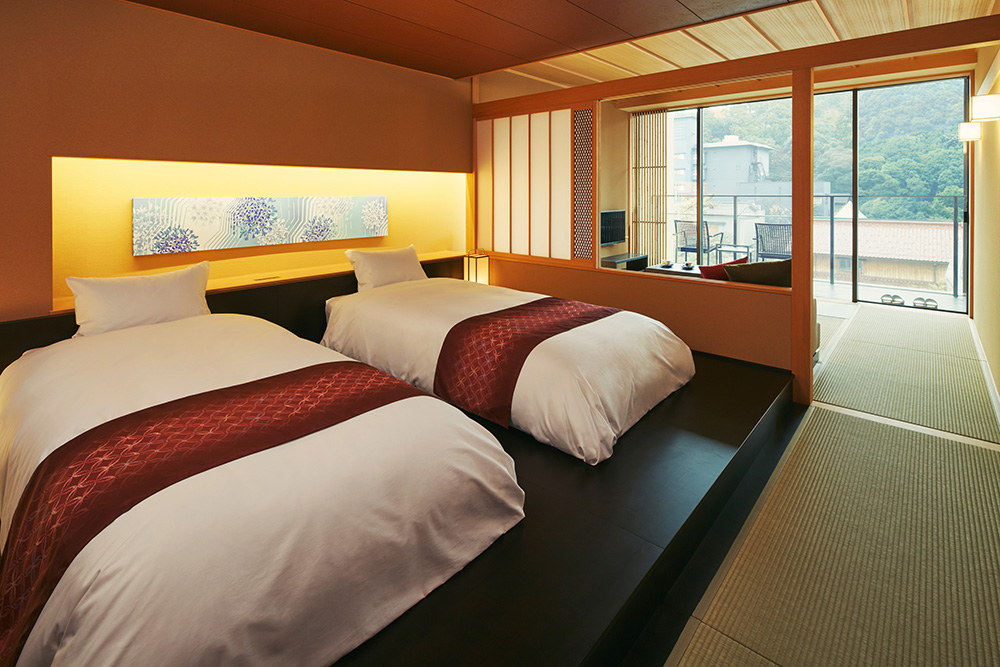
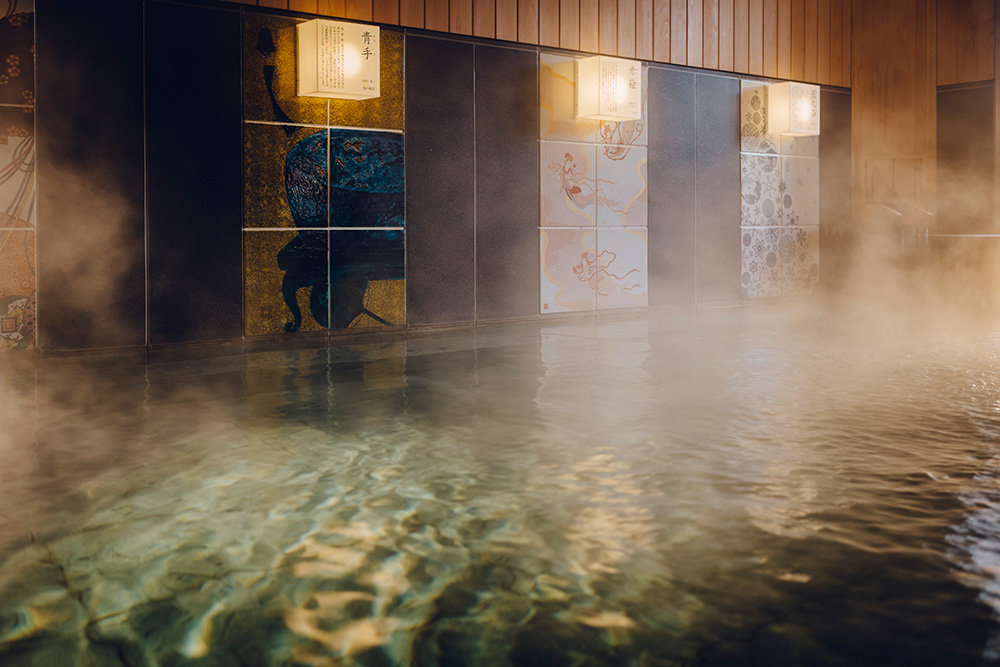
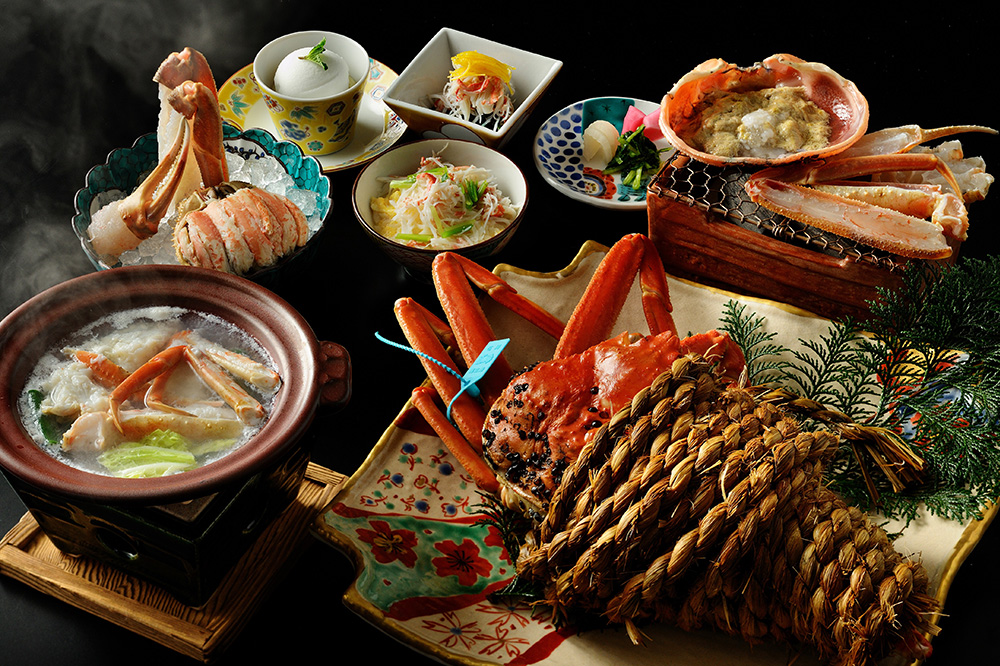
A traditional Kaga hot spring inn where new sensibilities breathe. The traditional architecture building with its impressive red-patterned lattice is a registered tangible cultural property of Japan.
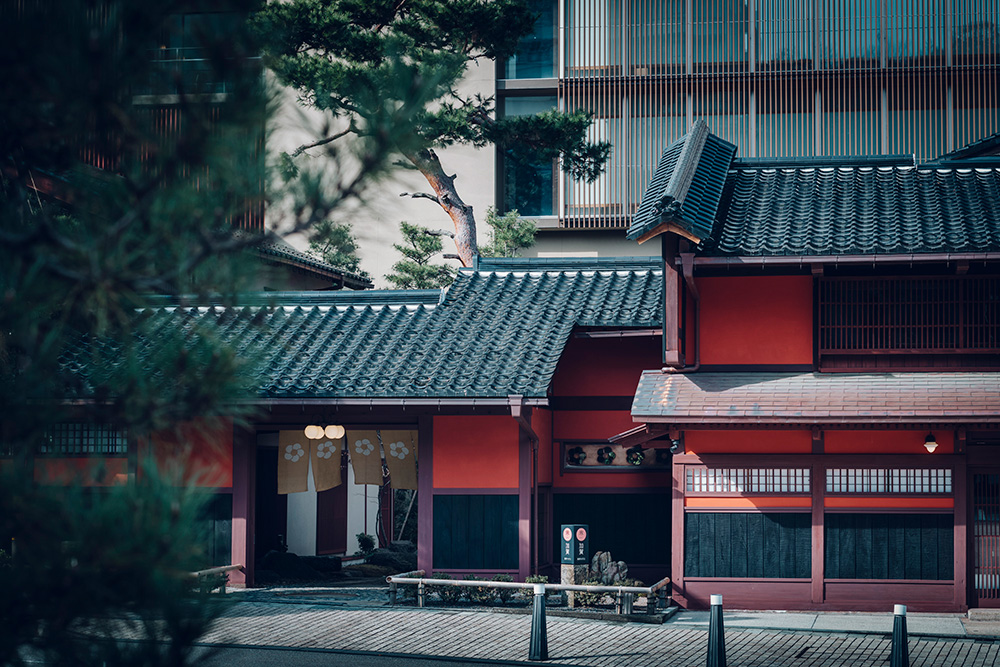
Access About 10 minutes by taxi from Kagaonsen Station on the IR Ishikawa Railway
- Accommodation rate example
- Per person per night From ¥19,000