





RISONARE Shimonoseki Staff Introduce the Highlights and Tips for Exploring Shimonoseki’s “Kaikyokan”
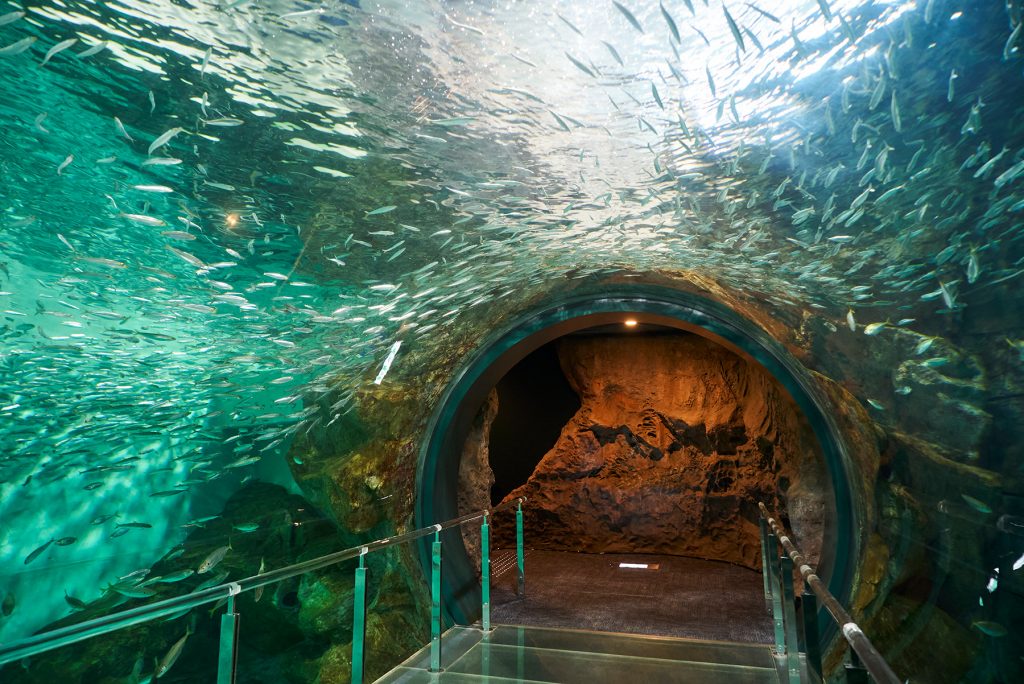
The Shimonoseki Aquarium “Kaikyokan” is a popular aquarium where visitors can experience the unique charms of Shimonoseki, including exhibits that recreate the rich marine environment of the Kanmon Strait and one of Japan’s premier pufferfish displays. Furthermore, with the addition of a new exhibition area in August 2025, the aquarium has become even more impressive than ever.
In this article, staff members from RISONARE Shimonoseki—who know Kaikyokan inside and out—share tips on how to efficiently explore the aquarium in a limited amount of time, along with their recommended highlights. Whether you’re visiting for the first time or have been here many times before, we’ll highlight must-see spots that will help you discover new charms.
Tips for Efficiently Exploring Kaikyokan
About Kaikyokan
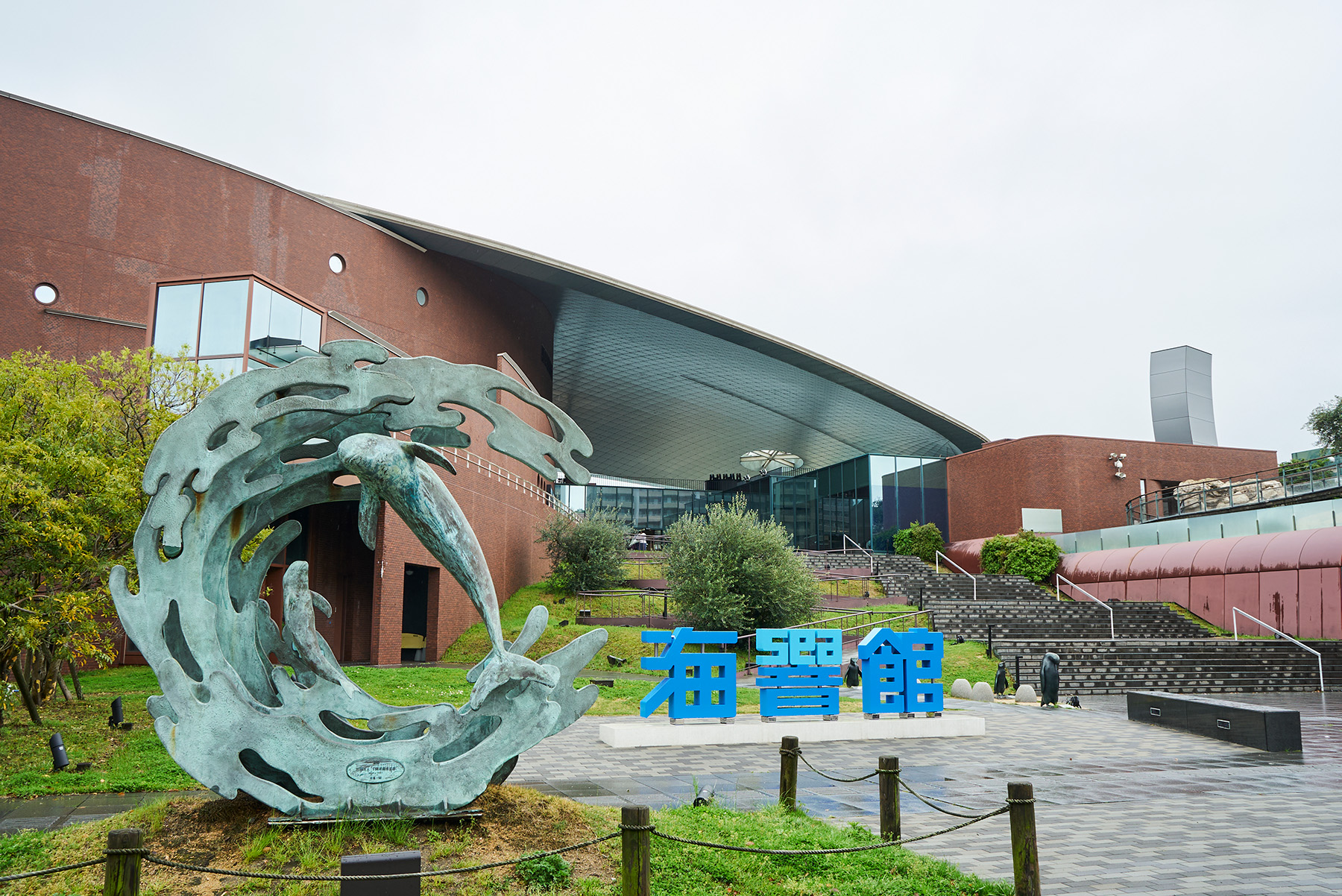
The Shimonoseki Aquarium “Kaikyokan” is located about a 5-minute walk from RISONARE Shimonoseki, on the waterfront alongside Karato Market and the seaside mall “Kamon Wharf.”
While it is known as the aquarium with the world’s largest number of pufferfish species on display, it offers a truly diverse array of attractions, including exhibits that faithfully recreate the waters of the Kanmon Strait, collaborative performances featuring dolphins and sea lions, and Japan’s only full-body skeleton of a blue whale.Another highlight is the exhibits that allow visitors to observe the natural behaviors and ecosystems of the creatures; you can see them up close and make new discoveries every time you visit.
Another key feature is the attention to detail, including tank heights designed to match the eye level of young children, as well as thoughtful exhibition methods and barrier-free accessibility. It’s an aquarium where everyone—from children to adults—can enjoy themselves comfortably.

Local Guide
Supporters
Kaikyokan reopened in August 2025 following renovation work. Throughout the facility, there are captivating displays—such as the sloped escalator, where a combination of sound, light, and video creates an immersive experience that makes you feel as if you’re diving into the ocean.
Tips for Efficiently Exploring Kaikyokan
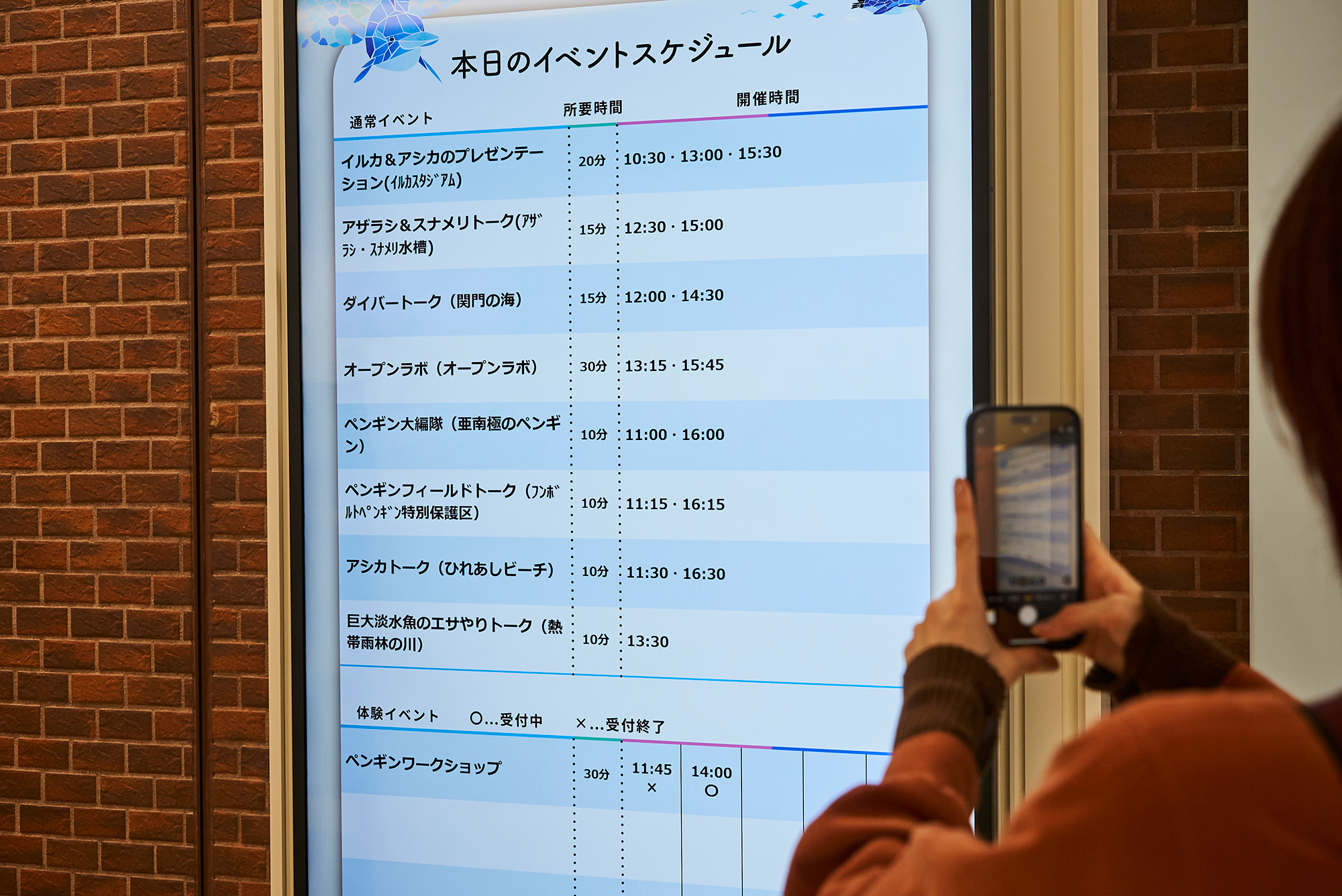
To make the most of your limited time and efficiently explore the facility, start by checking the day’s event schedule. Beginning with the “Dolphin & Sea Lion Presentation” at 10:30 a.m., various events are held in the penguin and sea lion exhibit areas, so the key is to time your visit around the programs you want to see and explore the exhibits in between.
Also, the morning is the best time to see the animals in action. You can watch penguins preening their feathers, and if you’re lucky, you might even catch a rare sight of a pufferfish inflating itself. If you have time to spare, we recommend visiting right after the museum opens (usually at 9:30 a.m.).
Since each event is held twice daily, if you’re visiting in the afternoon, time your visit to coincide with the dolphin and sea lion presentation starting at 3:30 PM—that way, you can enjoy the park to the fullest until closing time.
*Event times and frequencies may vary depending on the season .
Local Guide
Supporters
The morning is a great time to visit with children, as you can see the marine creatures moving about energetically. In the evening, the museum has a calmer atmosphere, making it perfect for adults to enjoy at a leisurely pace.
See and Experience! Must-See Highlights at Kaikyokan
The “Kanmon Strait Tank,” which recreates the underwater world of the Kanmon Strait right before your eyes
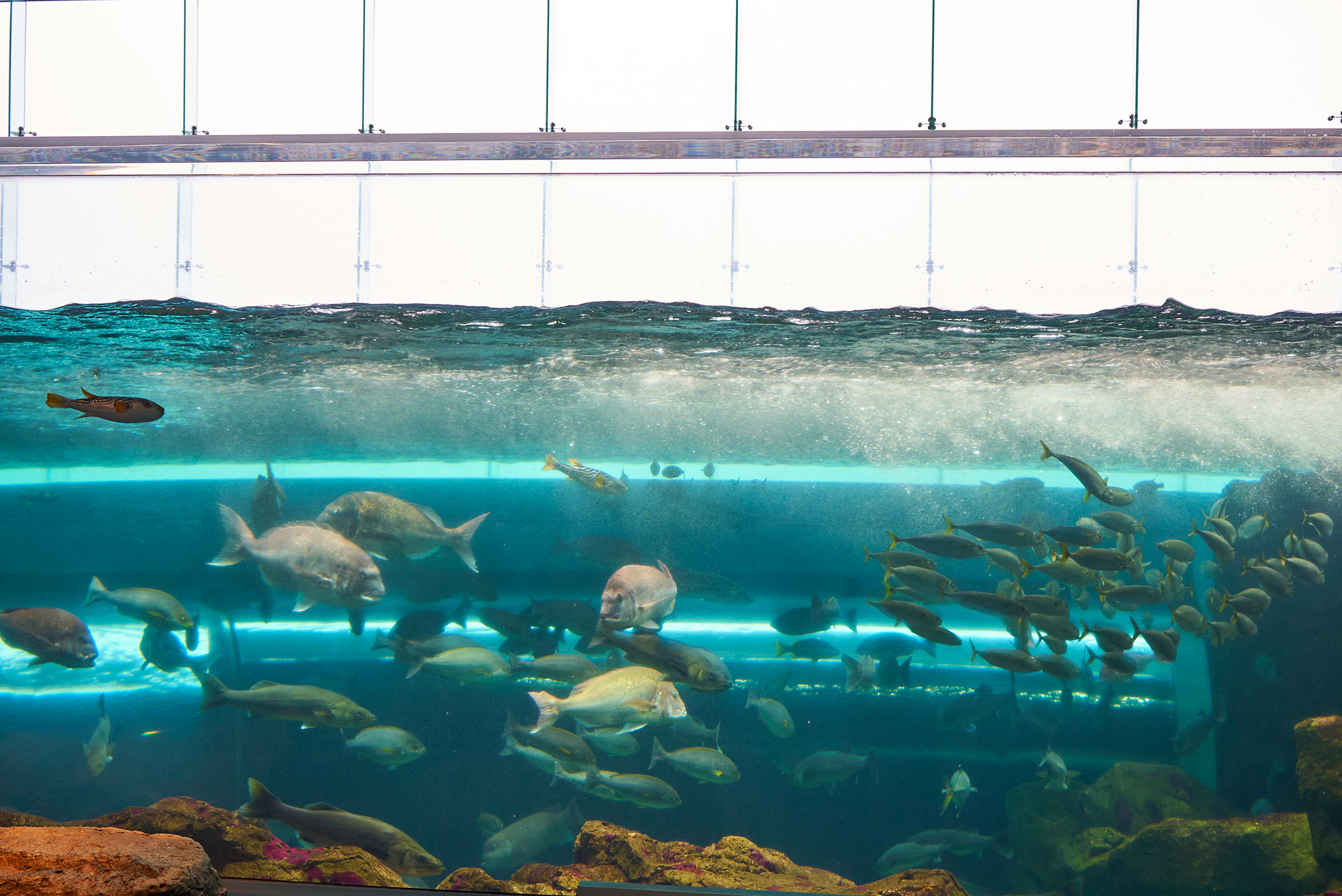
This is one of Kaikyokan’s signature exhibits, themed around the Kanmon Strait. With an actual view of the Kanmon Strait stretching across the background of the tank, you’ll feel as if you’re diving into the ocean itself.
Inside the tank, a special pump is used to faithfully recreate the fierce currents of the Kanmon Strait. While fish such as black sea bream, sea bass, and red sea bream swim about, grouper and flounder lurk in the lower layers, and the imposing spotted eagle ray glide majestically right before your eyes. You can experience the coexistence of a diverse array of marine life in a highly immersive setting.
Furthermore, the tanks flanking the Kanmon Strait tank—the one on the right recreating the Sea of Japan, where green sea turtles swim leisurely, and the one on the left recreating the Seto Inland Sea, where massive schools of sardines swim in unison—allow you to enjoy the unique fish species found in each of these regions.
Local Guide
Supporters
“Diver Talk,” where a diver uses an underwater microphone to introduce the fish in the tanks, is a popular event that the whole family can enjoy.
The “World of Pufferfish” area, home to about 100 species of pufferfish
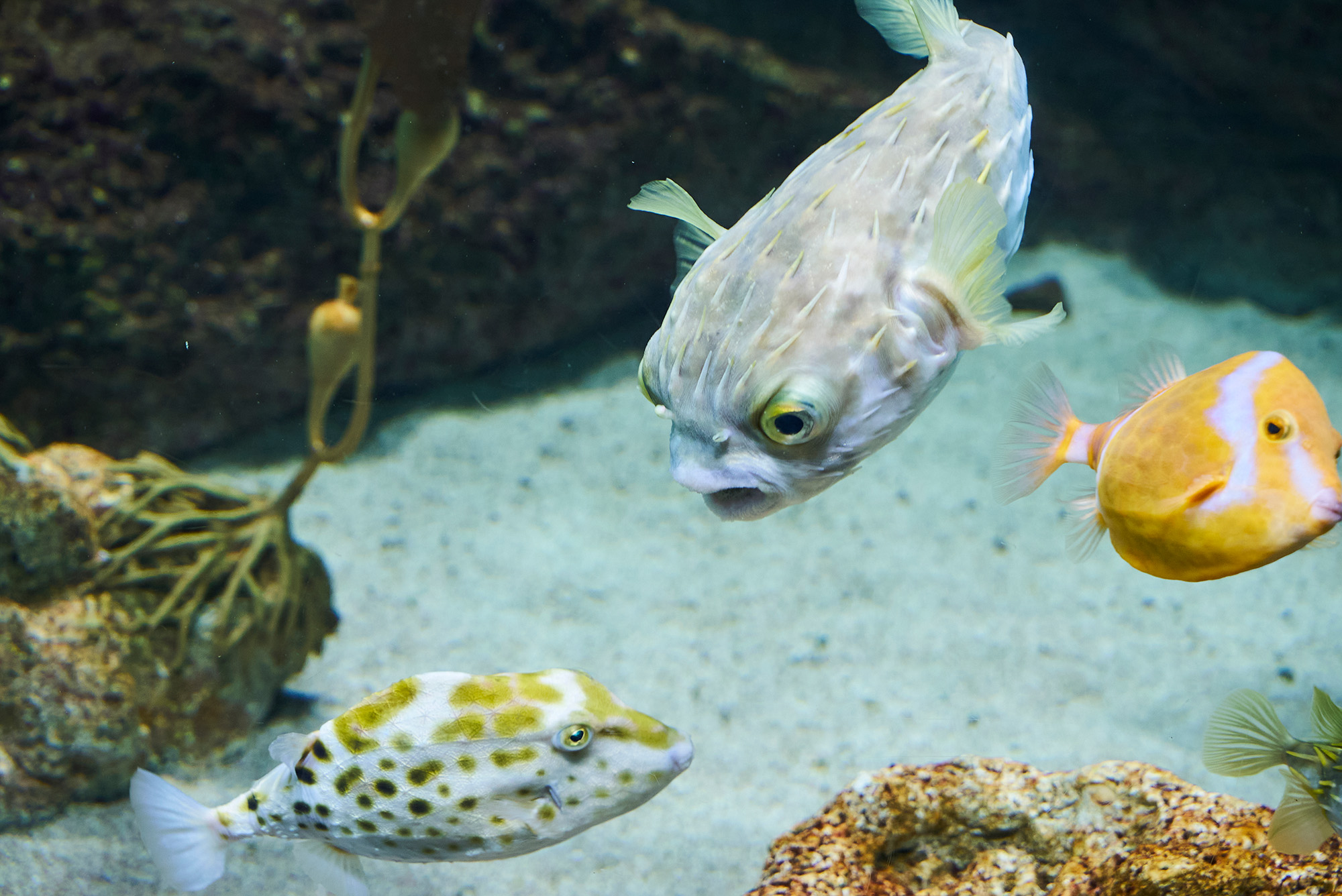
The main attraction of Kaikyokan is the “ World’s Pufferfish” area—the museum’s main attraction—features approximately 100 species of pufferfish, including those ” area—Kaikyokan’s top attraction—features approximately 100 species of pufferfish and related creatures, including those found in the waters off Japan.
The exhibition begins with the tank housing the tiger pufferfish—known as the “King of Pufferfish” and the species with the highest volume of trade in Shimonoseki. The attraction lies in the rich variety of species on display, ranging from popular favorites like the sunfish and the porcupinefish—which are actually related to pufferfish—to a rare species of the genus Tsubasamonogara, said to be the world’s first live exhibition of its kind.You can also learn interesting facts about their ecology and venom, the connection between Shimonoseki and pufferfish, and the mysteries of their anatomy through skeletal specimens.
Be sure to find your favorite “favorite pufferfish” among this diverse group of unique pufferfish.
*Please note that some species may not be on display depending on the condition of the animals.
Local Guide
Supporters
Some of the pufferfish on display were caught by fishermen from Shimonoseki in the Kanmon Strait. Apparently, whenever they catch a rare fish, they always contact the aquarium first.
“Penguin Village,” boasting one of the largest exhibition areas in the country
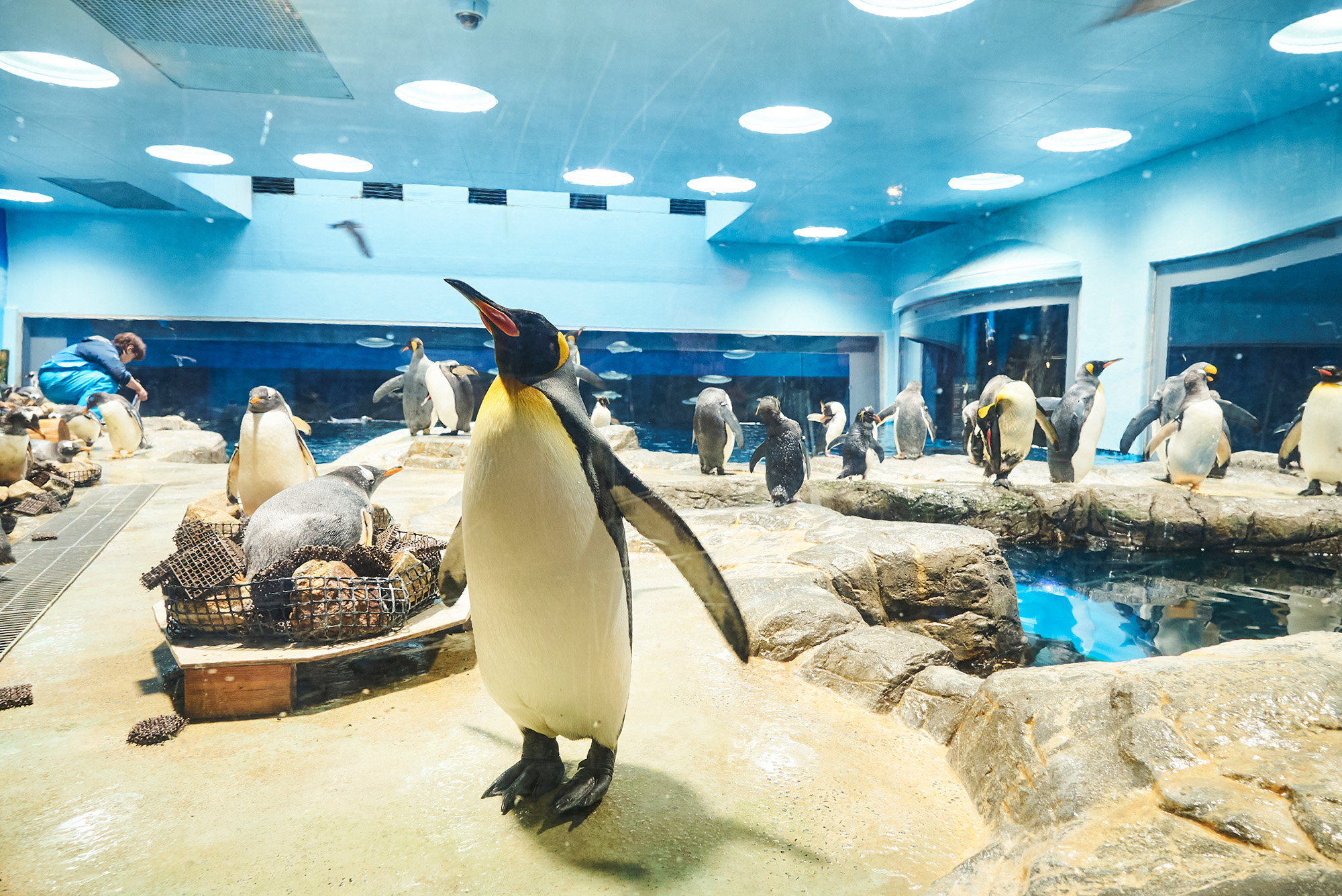
The penguin exhibit area is divided into two sections: the indoor “Subantarctic Penguins” exhibit, home to Gentoo penguins and others, and the outdoor “Humboldt Penguin Special Protection Zone.”
The highlight of the Subantarctic area is one of the world’s largest tanks, boasting a maximum depth of 6 meters. Watching the penguins swim freely underwater is a refreshing experience for visitors. During breeding season, you can also observe them building nests and raising their eggs up close through the glass.
Meanwhile, the Humboldt Penguin Special Protection Area recreates the environment of Argentina’s Algarrobo Island. In this natural setting featuring rocky outcrops and nesting burrows, you can observe the penguins in their natural state. There is also a learning space where you can deepen your knowledge of penguins while playing an original board game or have fun taking commemorative photos while wearing a penguin costume.
Local Guide
Supporters
Humboldt penguins, also known as “burrowing penguins,” dig their own holes to build nests. You can observe the differences in each penguin’s personality based on the depth of their burrows and the way they carry torn-off plants.
“Fin-Foot Beach,” a new sea lion exhibit opened in 2025
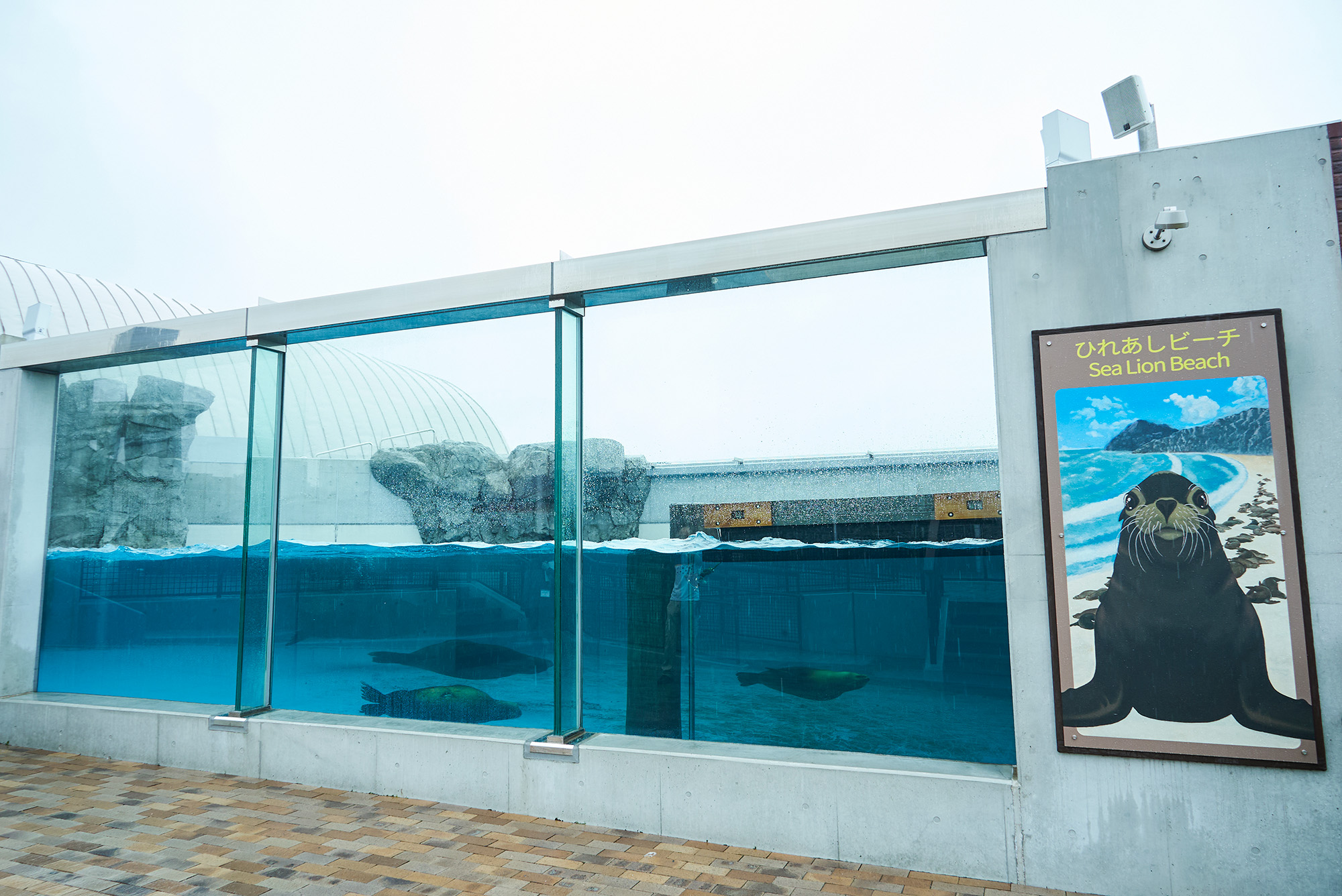
This new exhibition and breeding property for California sea lions was created as part of the August 2025 renovation. It is modeled after the sandy beaches of Magdalena Island on Mexico’s California Peninsula.
The highlight is an exhibit that recreates a diverse range of environments, including a pool, rafts floating on the water’s surface, a sandy area, and the shoreline. Visitors can enjoy watching the expressive sea lions as they relax and play in various spots.The tank’s glass is exceptionally clear, allowing for a crisp view from any angle. In the future, visitors may even be able to witness births and the rearing of pups.
In addition, a roughly 10-minute “Sea Lion Talk” is held, where you can learn about California sea lions in an engaging way.
Local Guide
Supporters
Until now, sea lions could only be seen during special events, but with the reopening, a new exhibition and breeding property has been established. You can now observe the sea lions’ natural expressions as they relax and go about their business at their own pace right in front of visitors.
“Dolphin Stadium,” where you can enjoy joint performances by dolphins and sea lions
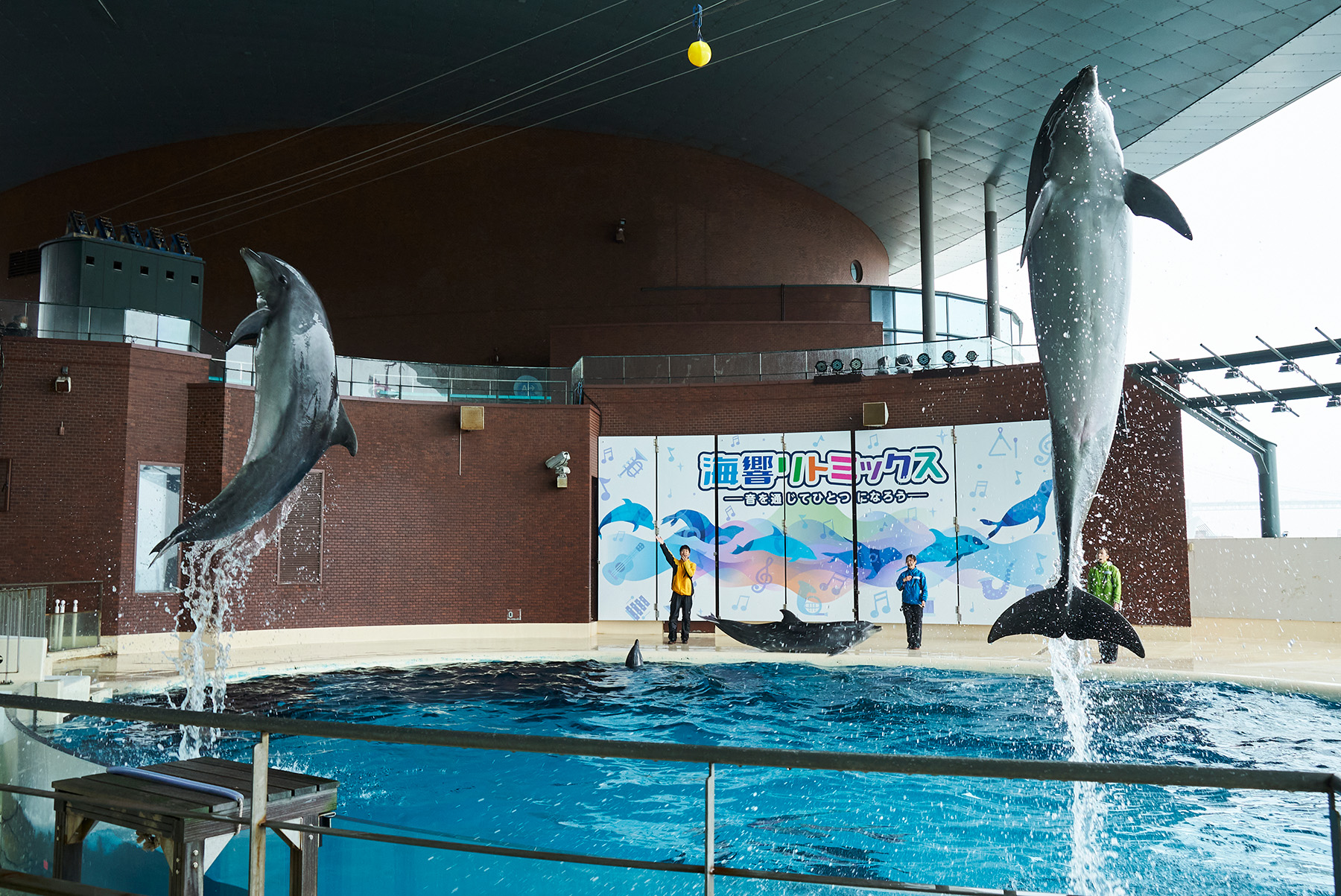
The Dolphin Stadium hosts the “Dolphin & Sea Lion Presentation.” Against the backdrop of the Kanmon Strait, the show features dynamic dolphin jumps and ball-handling performances. In particular, the collaboration between dolphins and sea lions—in which they signal to one another—is a rare sight in Japan and a highlight unique to Kaikyokan.
Event themes vary by season; for example, “Sea Resonance Rhythmics: Let’s Become One Through Sound” features a captivating performance where music, the sounds of dolphins and sea lions, and the audience’s clapping blend together, uniting the entire venue.
For a slightly more niche experience, we recommend heading to the “Dolphin Pool” on the first floor during the event.From the first floor, you can view the dolphins performing underwater in the same pool where the event takes place. Watching them build up speed at an astonishing rate as they prepare to jump, or swim vigorously back to their trainers, is truly spectacular. While you won’t hear the music or announcements from this vantage point, you’ll be able to witness the dolphins’ incredible athleticism up close.
Local Guide
Supporters
The show lasts about 20 minutes. Dolphins and sea lions take turns performing right before your eyes. You won’t be able to take your eyes off them for even a moment!
“Komatsu★Waro Hall,” the only place in Japan to display a full-body skeleton specimen (actual specimen) of a blue whale
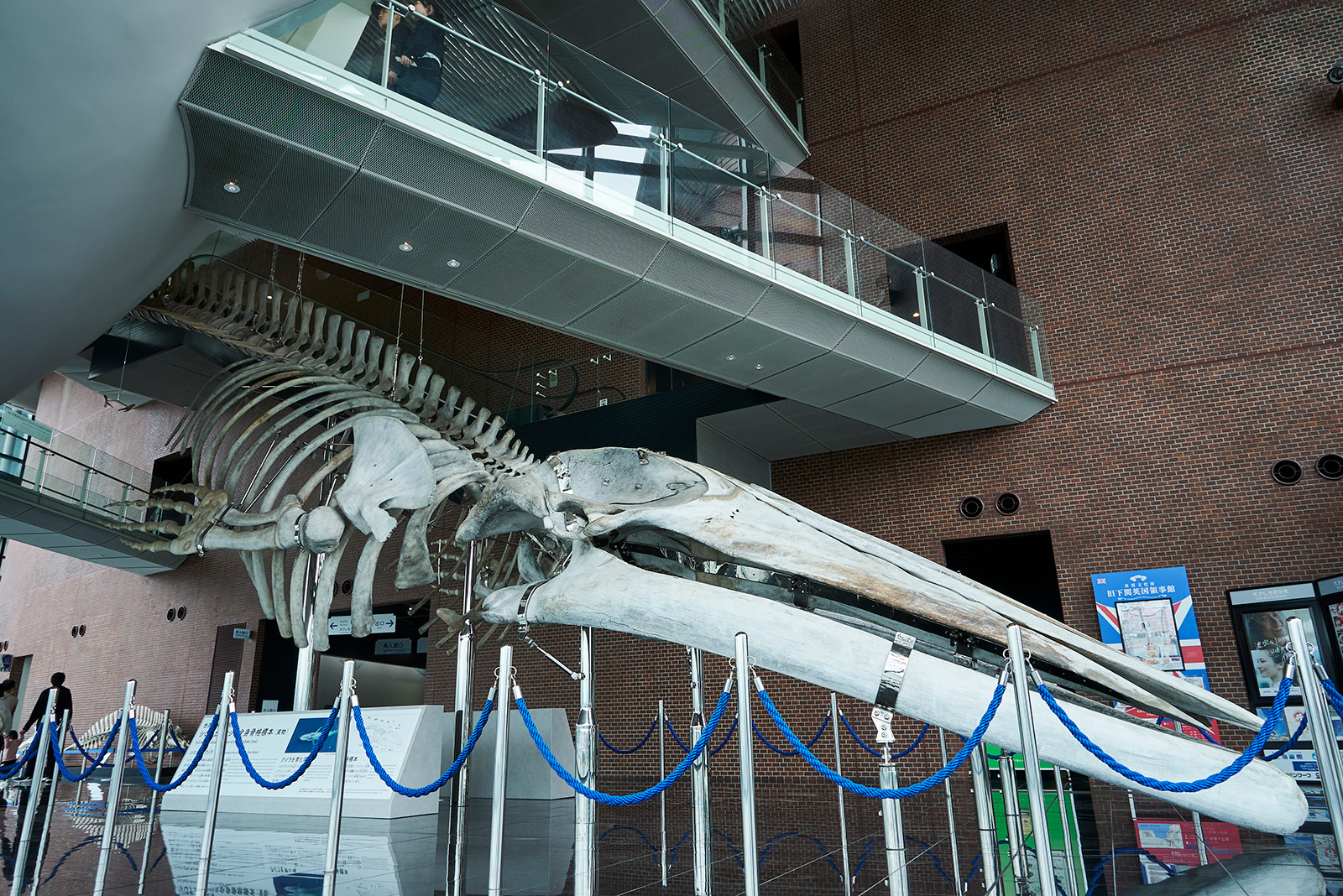
At the aquarium’s exit is the “Komatsu ★ Warō Hall,” a spacious atrium with free admission. In the center of the hall stands the skeletal specimen of a blue whale, estimated to have been approximately 26 meters long in life; its overwhelming scale makes it one of the iconic highlights of Kaikyokan.It is also known as the only full-body skeleton of a blue whale on display anywhere in Japan. Visitors can view it from different heights and angles via the ramps on the second and third floors and the observation deck.
This blue whale skeleton is from an individual caught in the North Atlantic off the coast of Norway in the early 1880s and is currently on loan courtesy of the Tromsø Museum at the Arctic University of Norway.
Local Guide
Supporters
The hall is named after Mr. Komatsu, who contributed to making the display of the full-body blue whale skeleton possible, and Mr. Lars Varlo, a specimen researcher at the University of the Arctic in Norway. Be sure to see this precious blue whale skeleton up close.
The “Strait Observation Deck,” where you can take a break while gazing out at the Kanmon Strait
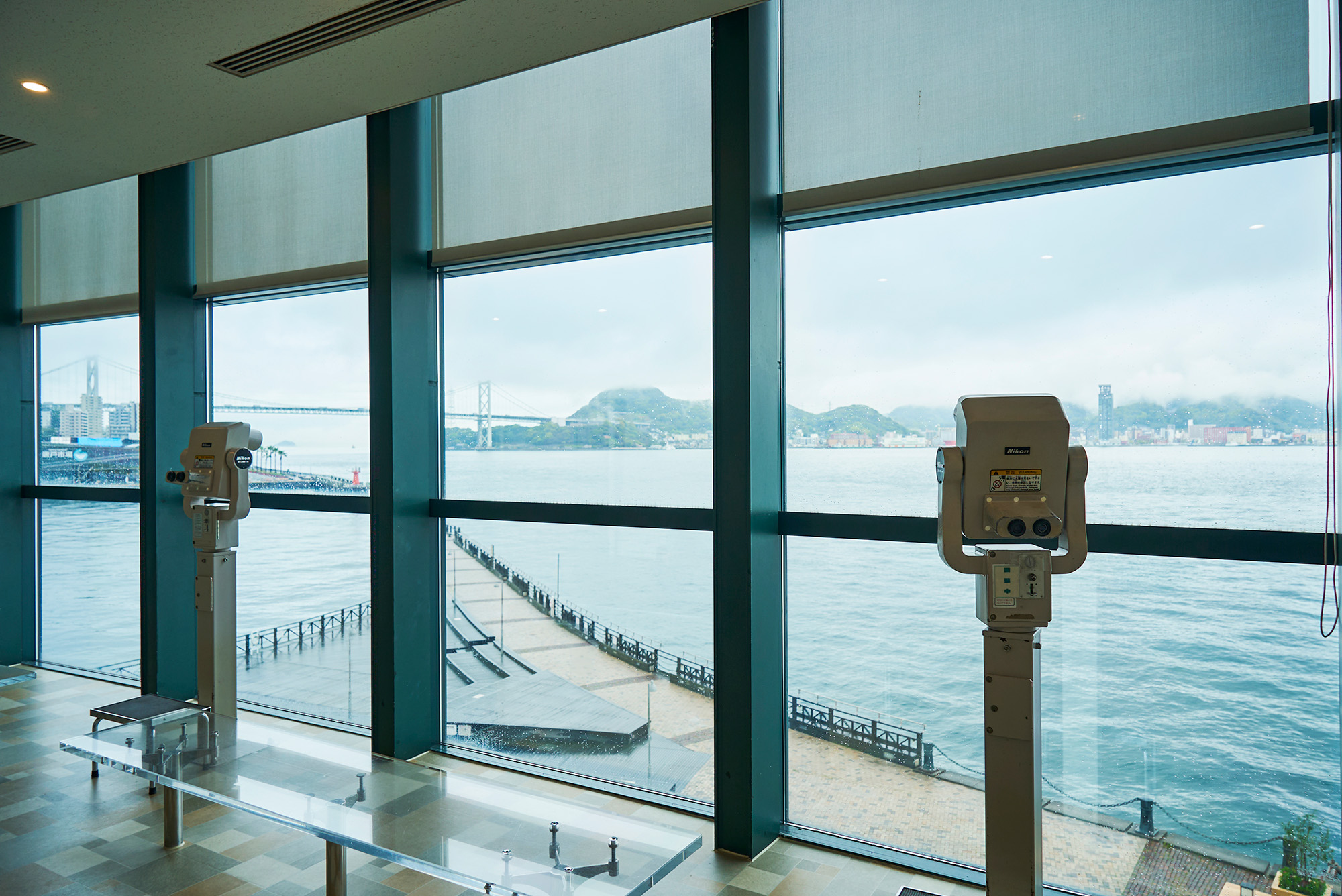
On the second and third floors, there is a hemispherical “Strait Observation Deck” designed to resemble a ship floating on the sea. It is a spacious viewing spot offering a panoramic view of the Kanmon Strait spreading out before you; through the large windows, you can enjoy the sight of passing ships and the ever-changing scenery of the strait as the day progresses. It’s also a great place to take a leisurely break while touring the fish exhibits.
Additionally, directly beneath the deck, a full-body skeleton of a blue whale is on display, allowing you to admire its majestic form from a different angle than on the first floor.
Local Guide
Supporters
There are several other rest areas inside the museum, but please note that eating and drinking are not permitted inside the building. You can eat and drink at the “Roof Terrace,” where you can enjoy views of the Kanmon Strait.
Pick Up Original Merchandise at the “Naminowa” Shop
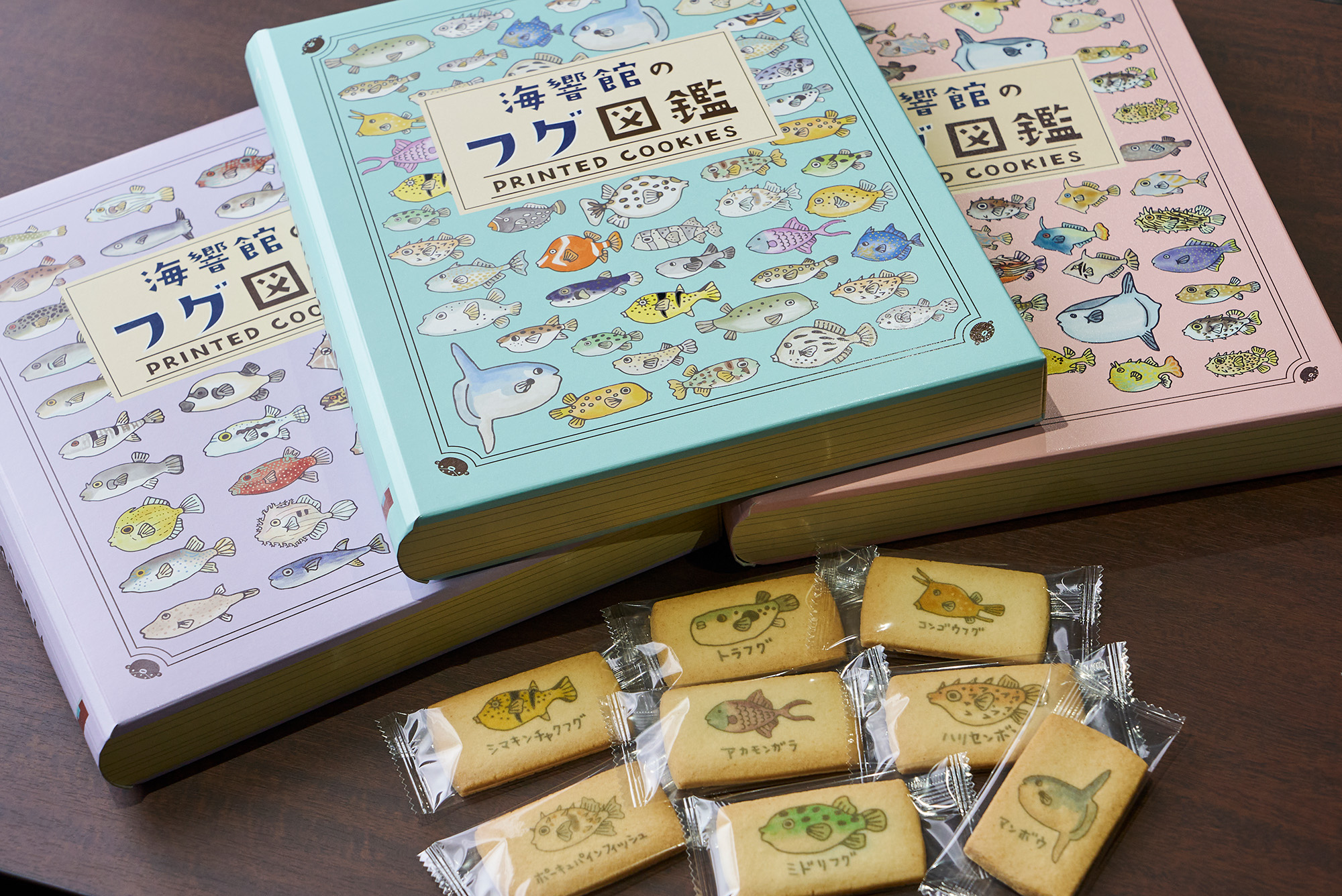
After enjoying the fish exhibits, it’s time to look for souvenirs. The “naminowa” shop offers a wide variety of items, including original merchandise—such as snacks and stuffed animals—for which Kaikyokan staff were involved in everything from product planning to design. One item that’s particularly worth checking out is the “Pufferfish Picture Book Cookies.”This individually wrapped pack contains 32 cookies, each featuring a different illustration of a pufferfish. Some of the illustrations are faithful representations of the pufferfish on display at Kaikyokan. Since each cookie is labeled with the name of the pufferfish it depicts, you can learn about the different species while enjoying them.
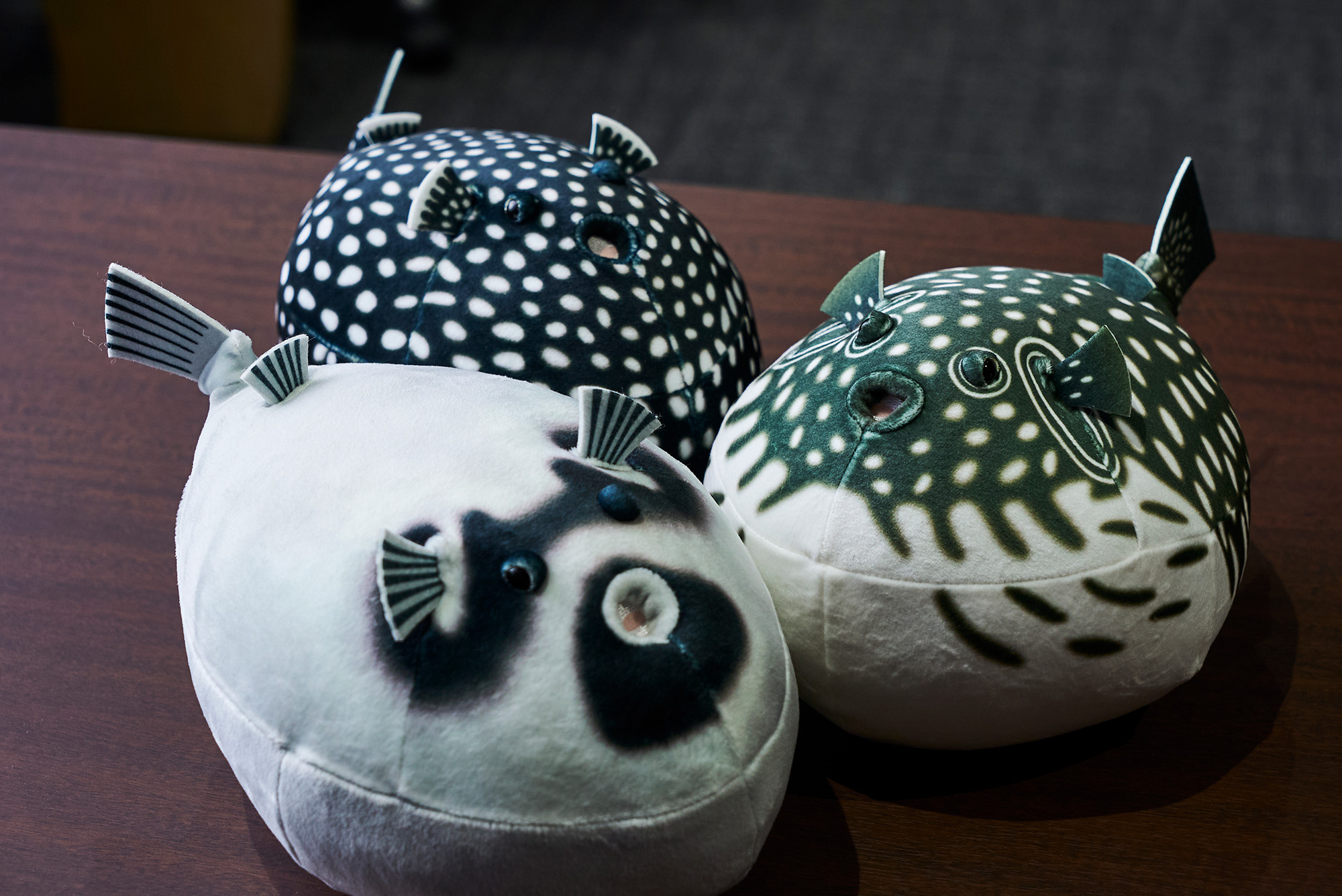
Don’t miss the plush toys featuring marine creatures. We especially recommend the “Pufferfish Plush Toy,” supervised by Kaikyokan’s exhibition staff members—who are passionate about pufferfish , , carefully recreating the pufferfish’s distinctive puffed-up shape and tooth structure down to the finest details. It’s a meticulously crafted product designed for maximum realism.
There’s also a wide selection of other items you’ll want to pick up, such as the “Sophia the Sea Lion” plush toy—created in collaboration with “Yogibo,” an American brand known for its beanbag chairs and home decor—and the “Sea Lion Headpiece” with its adorably round eyes.
Why not take home a memento of your encounter with the marine creatures at Kaikyokan along with your favorite merchandise?
Local Guide
Supporters
The museum is lined with items that are sure to get both children and adults excited. With their unique marine creatures and crystal-clear blue accents, these items will serve as a reminder of the fun times you spent at Kaikyokan.
- Shimonoseki Aquarium “Kaikyokan”
-
 6-1 Aruka Port, Shimonoseki City, Yamaguchi Prefecture
 About a 5-minute walk from RISONARE Shimonoseki
 Take the bus from JR Shimonoseki Station, get off at “Kaikyokan-mae,” and walk about 5 minutes
 9:30 AM–5:30 PM (Last admission at 5:00 PM)
 No holidays
 083-228-1100
 None (Paid parking available nearby)
RISONARE Shimonoseki Hosts “Kaikyokan Lectures” Every Night

Every night at 8:00 PM at RISONARE Shimonoseki, we host the “Kaikyokan Lecture” every night at 8:00 PM. Hotel staff—who have been trained by Kaikyokan staff on pufferfish—serve as guides, providing a fun introduction to the ecology and characteristics of pufferfish through interactive quizzes. This approximately 30-minute program is free for all hotel guests and requires no reservation.
If you attend the lecture before visiting Kaikyokan, you’ll be able to connect what you’ve learned with the exhibits, making your observation of the pufferfish even more fascinating. This will make your time at the aquarium even more rewarding.
The workshop is held in the front desk area, so please feel free to drop by after dinner.
Local Guide
Supporters
If you participate in a workshop, you’ll receive an original bingo card featuring 16 different types of pufferfish. When you visit Kaikyokan, you can enjoy playing bingo while observing the pufferfish in person.

Local Guide who was in charge of this article
- Mayumi Fujita Leave your Yamaguchi Prefecture travel information to us!
RISONARE Shimonoseki
Shimonoseki, Yamaguchi Prefecture
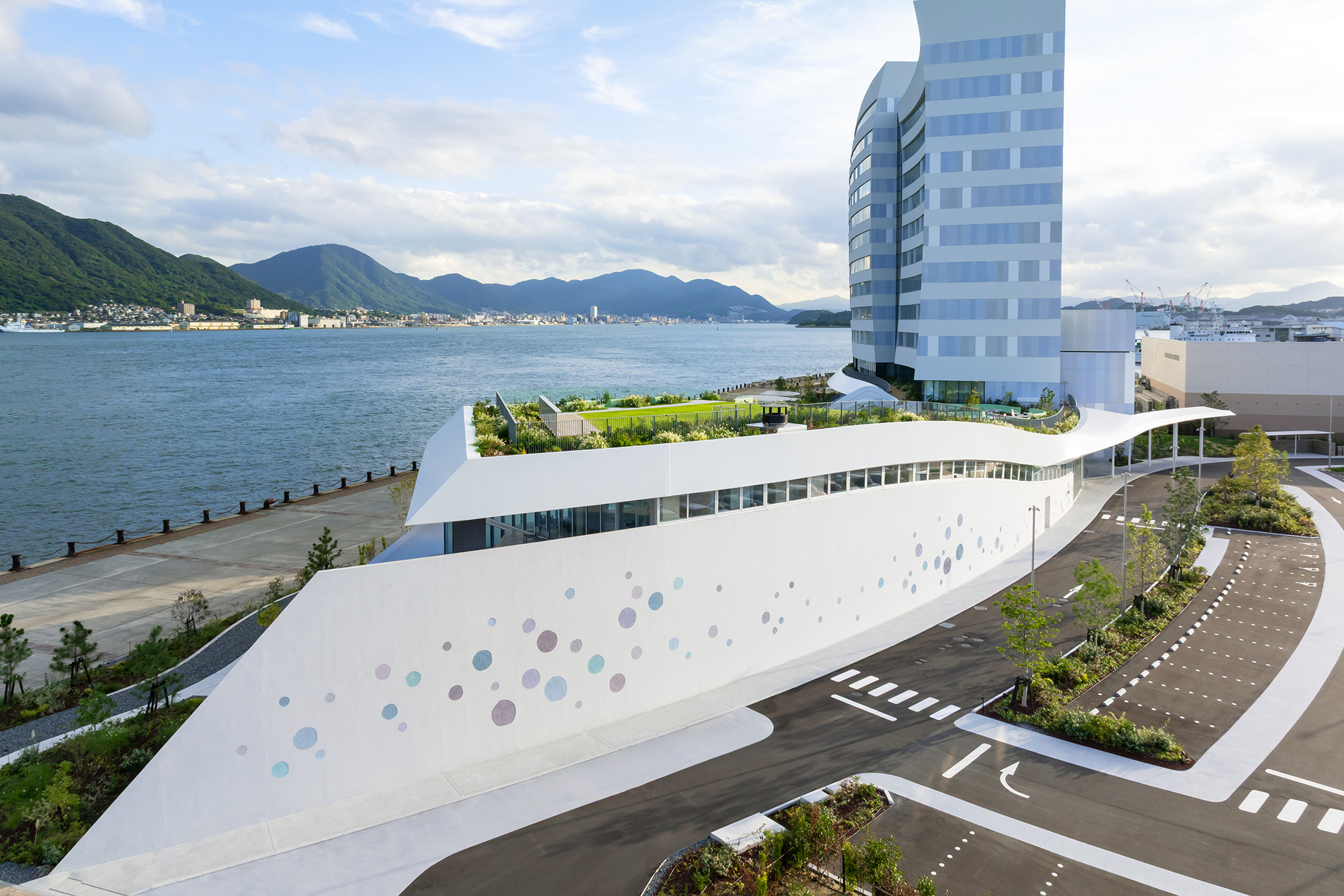
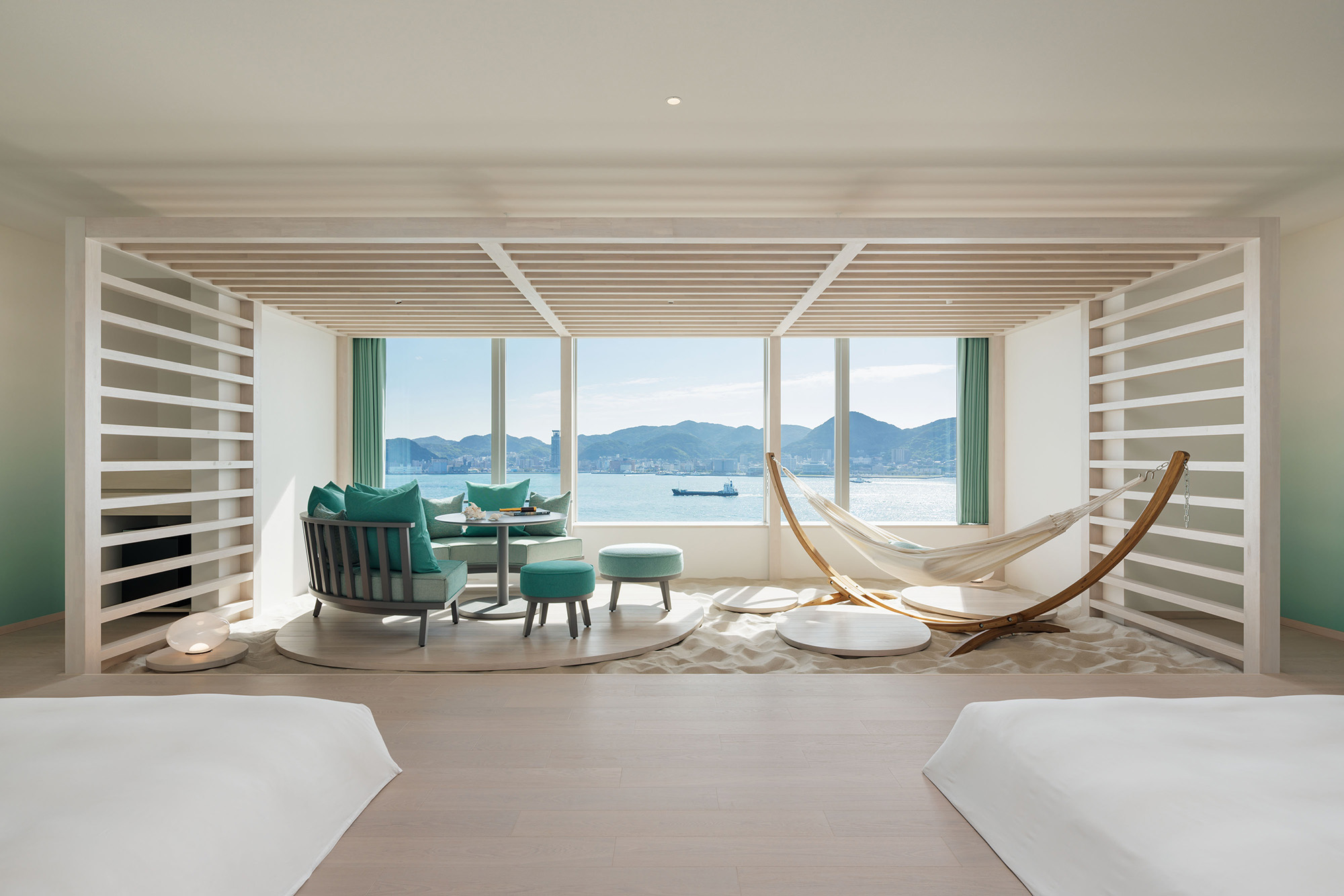
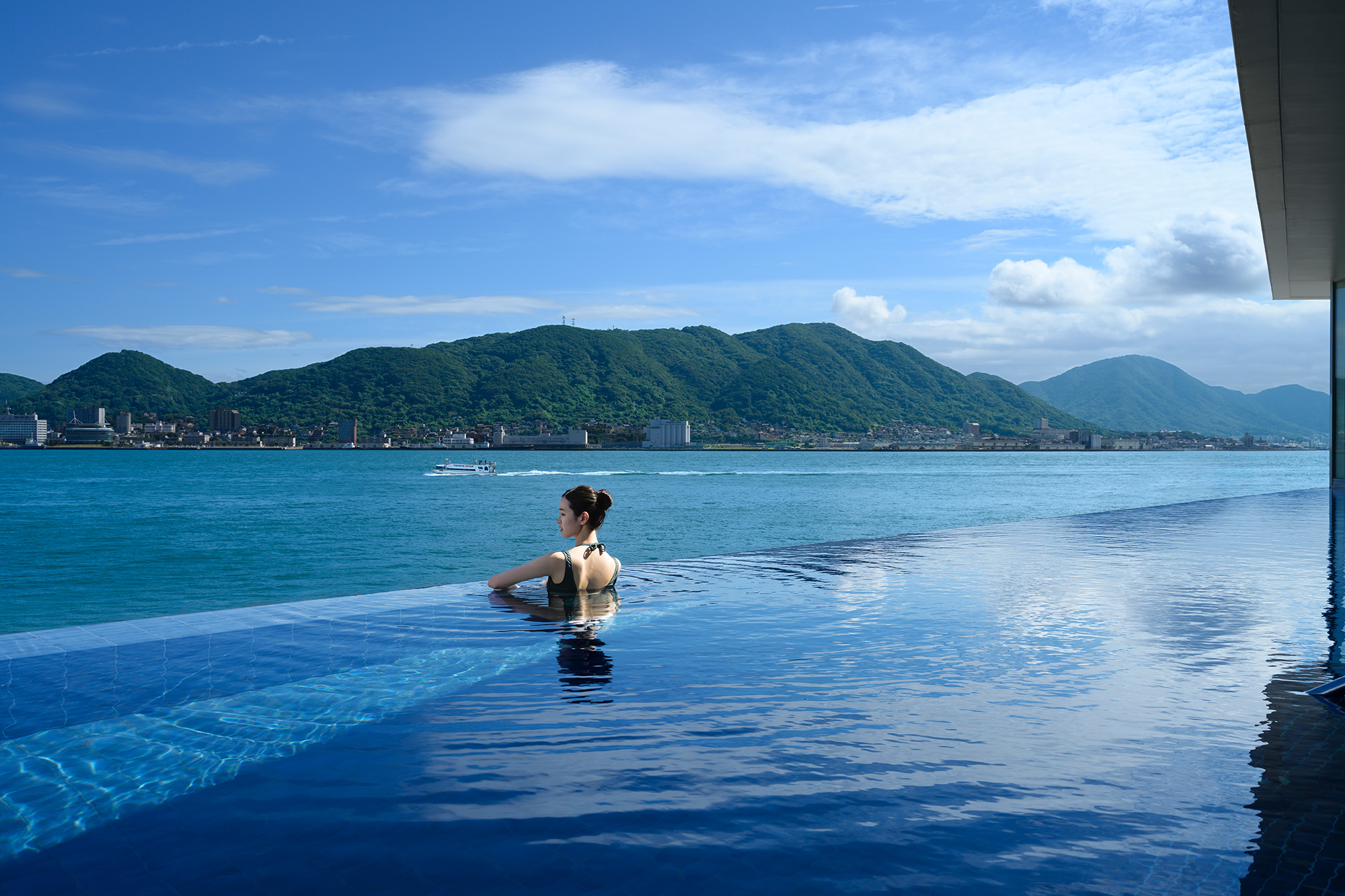
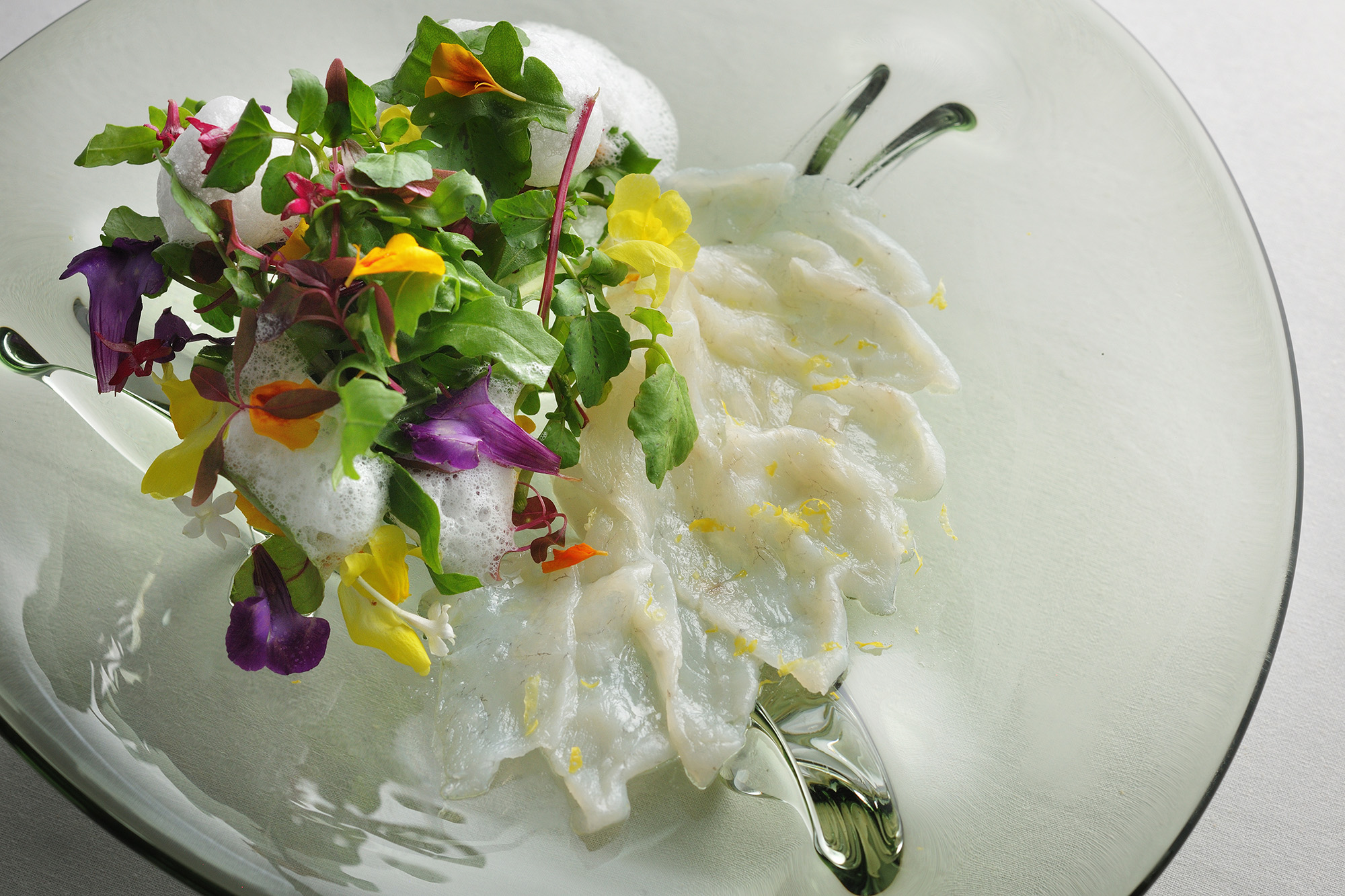
A hotel with a perfect location overlooking the Kanmon Straits, where you can fully enjoy your stay.
Access by bus About 10 minutes by bus from JR Shimonoseki Station.
- Example of Accommodation Rates
- 1 person per night From 12,000 yen