





Know the temperature and clothing in Nasu Highlands!


Nasu Highlands is located in the town of Nasu in northern Tochigi Prefecture. Located within the Nikko National Park area where the Nasu mountain range rises, this highland area stretches on the southern slopes of an active volcano, Mt. Chausu (1,915 m above sea level), which is still smoking. The area is cool in summer and enjoyable for skiing in winter when there is snowfall, and is rich in natural blessings in all four seasons.
The climate of Nasu Highlands is plateau-type, cool and low humidity. Temperatures vary widely from season to season and from day to night, and in summer, visitors need to watch out for thunderstorms. Be sure to dress appropriately for each weather condition.
<Temperatures and Clothing in Nasu Highlands
Spring (March to May) temperatures and clothing in Nasu Kogen

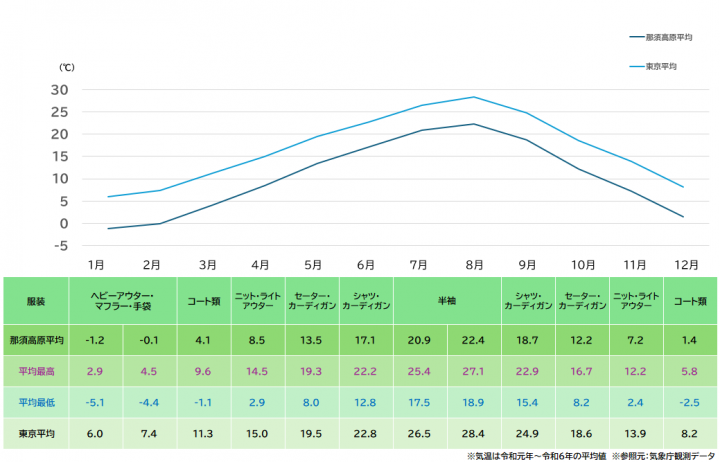
The average low temperature in March is -1.1°C. There is still snow on the Nasu Highlands, so even at this time of year, you can enjoy skiing and snow-viewing baths at hot springs. Heavy outerwear, such as down coats, is essential, and midwinter attire is best. The snow begins to melt and plants start to sprout in late March.Cherry blossoms begin to bloom in mid-April, and at an elevation of about 500 m, the Yaeyama cherry trees reach their peak during Golden Week. By mid-May, when the 200,000 azaleas of the “Hachiman Azalea Grove” are in full bloom, temperatures rise and the weather becomes pleasantly warm.The average high temperature is close to 19°C, so you can get by in long-sleeved T-shirts during the day, but temperatures drop sharply after sunset. The average low is around 8°C, so you’ll need to keep your coat on. Be sure to dress in layers that are easy to put on and take off, keeping these temperature fluctuations in mind.
Summer (June-August) Temperatures and Clothing in Nasu Highlands

The Nasu Highlands are at their best during the dazzling green of summer. The average temperature in June is about 17.1°C, with many sunny days and consistently refreshing weather. It’s the perfect season to enjoy leisure activities at lakes and in forests, as well as ranch experiences and highland hikes.
The rainy season arrives around late June, when hydrangeas color the Nasu Highway.Until around mid-July, when the rainy season ends, it’s a good idea to bring a windbreaker or similar jacket to protect against the chill from rain and wind.
The average temperature in August is 22.4°C. This comfortable summer retreat is bustling with visitors. With an average high of 27.1°C, you can enjoy daytime activities in the great outdoors in short sleeves.However, since UV levels are said to be about 10% higher than at lower elevations, UV protection is essential. Also, because the temperature difference between day and night is about 10°C, be sure to bring a light jacket for evening outings, such as firefly viewing or fireworks festivals.
Autumn (September-November) Temperatures and Clothing in Nasu Highlands

The average temperature in September is 18.7°C. On some days, temperatures drop to around 10°C in the mornings and evenings, bringing a sudden sense of autumn. In late September, the autumn foliage begins near the peaks of the Nasu Mountains, and by mid-October, the slopes are dyed in a beautiful gradient of vibrant colors.The average temperature during this period is about 12°C. When visiting famous autumn foliage spots such as Mount Chausu or “Nasu Heisei no Mori,” be sure to bring outerwear like a knit cardigan or trench coat. If you plan to venture near the summit, carrying a scarf is a good way to stay warm.
November marks the arrival of winter. The first snow is observed in the Nasu mountain range in early November, and by late November, minimum temperatures in the highlands drop below freezing, with frost heaves appearing. We recommend packing for winter, such as layering a sweater under a thick coat.
Winter (December to March) Temperatures and Clothing in Nasu Highlands

In December, there are often days when the average temperature drops below 0°C. Snow begins to fall in mid-month, transforming the landscape into a winter wonderland. In January and February, temperatures drop even further, bringing bitter cold.With snow depths ranging from 10 to 30 cm, be sure to take thorough precautions against the cold: wear snow boots, and dress in heat-retaining base layers under a down coat, along with gloves, a scarf, and hand warmers. Also, if you’re driving, you’ll need to equip your vehicle with snow tires or chains.
The Nasu Highlands are full of winter-exclusive activities, such as skiing and strawberry picking. In particular, this is the perfect time to go on a hot spring tour of Nasu Onsen, which boasts 11 renowned hot springs, including “Shika-no-Yu,” a spring with a history dating back approximately 1,390 years. Unlike the bustling summer crowds, you can enjoy a peaceful moment in the hot spring town blanketed in deep snow.

Local Guide who was in charge of this article
Hoshino Resorts RISONARE Nasu
Nasu-gun, Tochigi Prefecture
About 90 minutes from Tokyo. A highland resort in Nasu, nestled in the forest.


Access by bus Approx. 35 min. by shuttle bus from JR Nasu Shiobara Sta.
- Example of Accommodation Rates
- 1 person per night From 13,637 yen